
❌

Normale Ansicht

Apple Reportedly Planning Large iPhone 18 Production Run

Apple is reportedly preparing a substantial production run for the standard iPhone 18, following the iPhone 17's success as the world's best-selling smartphone.
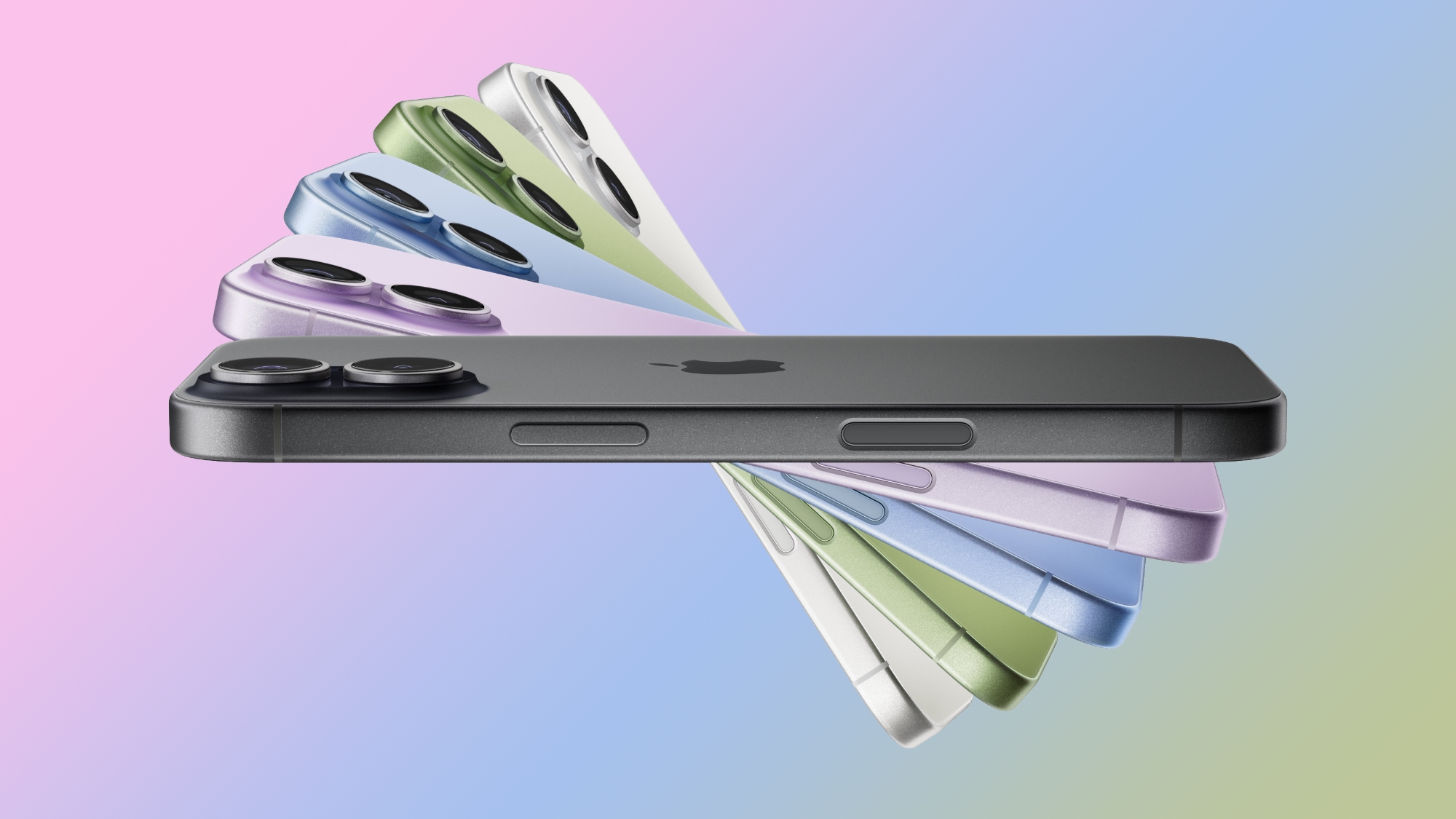

In a new Weibo post, the leaker known as "Fixed Focus Digital" claimed that production of the standard ‌iPhone 18‌ is scheduled to start in late November, describing the volume of inventory being prepared as "quite large."

Its predecessor has likely given Apple considerable reason for confidence. Following the ‌iPhone 17‌'s initial pre-order weekend, Apple reportedly instructed two suppliers to increase daily output by at least 30%, according to The Information. Counterpoint Research later reported that the standard ‌iPhone 17‌ led global smartphone sales in both the first and second quarters of 2026. It accounted for 6% of worldwide smartphone unit sales in each quarter, outselling even the ‌iPhone 17‌ Pro Max and ‌iPhone 17‌ Pro.

The ‌iPhone 18‌ is expected to retain a broadly similar design, with potential upgrades including a smaller Dynamic Island, the A20 chip, and Apple's C2 modem. It is expected to be unveiled alongside the iPhone 18e and iPhone Air 2 in spring 2027. A late-November production start would give Apple several months to build inventory ahead of launch.
Related Roundup: iPhone 18
Related Forum: iPhone

This article, "Apple Reportedly Planning Large iPhone 18 Production Run" first appeared on MacRumors.com

Discuss this article in our forums
  •  

PhoneBack – halbe Hülle, neues Anfassgefühl

30. September 2026 um 18:41

Nicht im ersten, nicht im zweiten, sondern erst im dritten Jahr sehe ich andere Hüllenanbieter, die das Konzept der PhoneBacks adaptieren. Die „halben Hüllen“ bleiben eine meiner Lieblingsideen für ein Case.

Damit fasst und fühlt sich die Rückseite neu an, wenn man sich an der Farbe sattgesehen oder am Aluminium sattgefasst hat. Es ist nämlich vollkommen legitim, sich für einen frischen Look & Feel ein neues Case zu leisten.

Die Magnete, die Süti hier integriert, bleiben enorm stark – inzwischen existiert sogar eine PopSocket-Edition. Wenn diese fürs 18er zum Verkaufsstart vorrätig gewesen wäre, hätte ich sie diesmal wahrscheinlich ausprobiert. Das Angebot fürs neue iPhone-Modell ist ohnehin noch limitiert; „Frosted Cold Foam“ gefällt mir mit Milchglas-Effekt allerdings ziemlich gut.

Diese Materialrückseite passt für mich zum neuen Burgunder; griffiger macht sie das Telefon aber nicht. Dafür muss man beispielsweise zu „Silicone“ greifen. Außerdem zu beachten: Je nach Telefongröße und Material kommen zwischen 40 und 50 g obendrauf.

Das Gewicht bringen natürlich auch klassische Rundum-Hüllen auf die Waage. Deshalb ist es für mich ein gigantischer Vorteil, die alternative Rückseite so mühelos auf- und wieder abzusatteln.

  •  

iPhone 18 Pro: Everything M6 Tells Us About the A20 Chip

Apple announced the M6 chip last week, just ahead of its September iPhone event, providing the clearest indication yet of what the A20 will bring to the iPhone 18 lineup.


Apple silicon generations share much of their architecture across the A-series and the M-series, so a new A-series chip normally functions as a partial preview of the M-series chip that follows it. This year the order reversed; the M6 was revealed on August 25, ahead of the A20 Pro expected in the iPhone 18 Pro this month.

Recent reports place the A20 Pro at up to 18% faster and up to 30% more power efficient than the A19 Pro, which is broadly similar to the M6 over the M5.

Apple's First 2nm iPhone Chip


The M6 is Apple's first chip built on TSMC's 2nm (N2) process, with the second almost certain to be the A20. Being a smaller manufacturing process, N2 has higher transistor density, allowing Apple to pack more performance into a smaller area.

Apple has historically debuted new nodes on the A-series, since iPhone volume validates yields, so introducing N2 in an $899 Mac mini represents a change. As such, reports that the A20 and A20 Pro will move to N2 are now supported by a shipping product rather than analyst predictions. The consequence for the iPhone event is that the "Apple's first 2nm chip" claim is no longer available.

Dual Neural Engine?


The iPhone's Neural Engine has remained at 16 cores and approximately 35 trillion operations per second since the A17 Pro, spanning three generations. The M6 introduces a Dual 16-core Neural Engine, which Apple says system frameworks can address simultaneously for up to 2x the peak compute of previous generations.

The change corresponds with the reported move to WMCM packaging, which integrates memory onto the same wafer as the CPU, GPU, and Neural Engine to shorten the path between them. It is possible that die area and thermal constraints may limit a dual engine to the A20 Pro.

GPU AI Gains Are Now Incremental


Apple said the M5 delivered over 4x the peak GPU compute for AI compared to the M4, reflecting the introduction of Neural Accelerators within each GPU core. The M6 is rated at nearly 30% over the M5.

The A19 Pro recorded a comparable 4x improvement on the iPhone 17 Pro last September for the same architectural reason. Second-generation Neural Accelerators consequently appear to represent a refinement rather than another step change, suggesting the A20 Pro will not repeat the A19 Pro's headline figure.

Graphics Improvements Should Carry Across


The M6 adds 50% increased geometry rates, an updated shader core architecture, revised Dynamic Caching, and hardware-accelerated ray tracing. These are architectural changes and comparable graphics work has historically appeared across both the A-series and M-series within the same generation.

Memory Bandwidth Suggests a Modest A20 Gain


Memory bandwidth determines how quickly data moves between the memory and the processor, and it is the main constraint on running large language models on device. The M6 provides up to 170GB/s, which Apple describes as a 10% increase over the M5's 153.6GB/s.

That increase is small enough to indicate Apple is using a faster grade of the same LPDDR5X memory rather than moving to the newer LPDDR6 standard, which would have delivered a far larger jump. Reports indicate Apple is sourcing high-speed LPDDR5X from Samsung for the ‌iPhone 18‌ lineup, and the M6 is consistent with that.

The implication for the A20 is that memory bandwidth is unlikely to improve dramatically. The A19 Pro is rated at 76.8GB/s, and a similar 10% uplift would take the A20 Pro to roughly 85GB/s. Any meaningful gain in how quickly the ‌iPhone 18 Pro‌ loads and runs on-device models is therefore more likely to come from WMCM packaging shortening the distance data travels than from the memory itself.

AV1 Encode Remains Absent


The M6 Media Engine supports hardware-accelerated H.264, HEVC, ProRes, and ProRes RAW, with AV1 decode but no AV1 encode, matching the M5. The omission on a new process node in a desktop chip makes its inclusion in the A20 Pro highly unlikely.
Related Roundups: iPhone 18, iPhone 18 Pro
Related Forum: iPhone

This article, "iPhone 18 Pro: Everything M6 Tells Us About the A20 Chip" first appeared on MacRumors.com

Discuss this article in our forums

  •  
❌