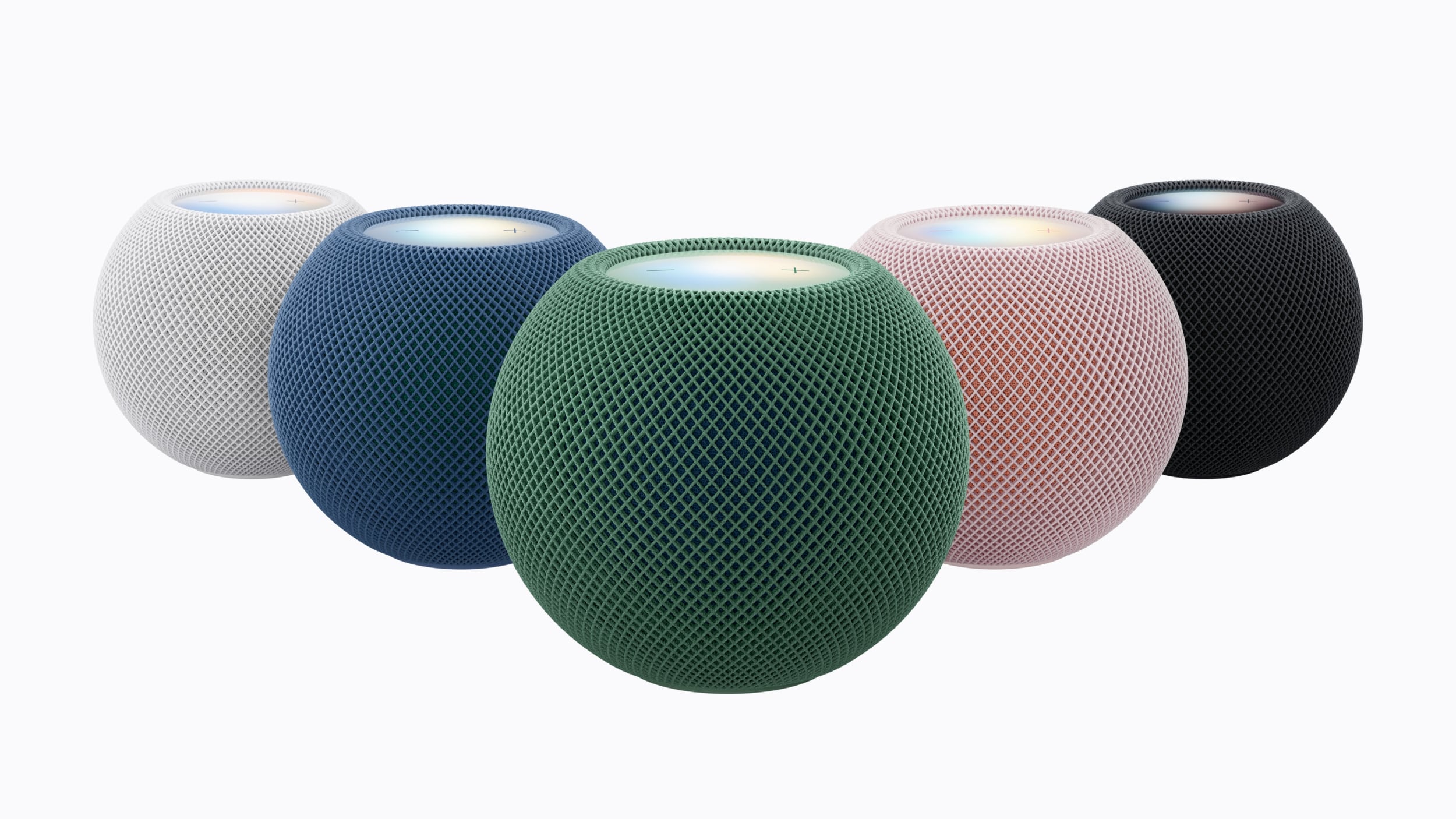
Apple today announced a new HomePod mini equipped with Siri AI, new colors, and improved audio experiences. The new HomePod mini has an S10 chip that supports advanced computational audio, and Apple says it optimizes dynamic range, loudness, and acoustic performance in real-time.
A Sound Glow feature turns the HomePod mini's top into a "visual canvas" that glows and animates in sync with music, reacting to bass and treble. It uses colors generated from the song's album artwork for a unique experience for each song.
Four HomePod minis can be paired together to create a four-speaker surround sound with the latest Apple TV 4K, which Apple also announced today. The speakers and the Apple TV are able to recognize their position in the room and levels are calibrated to the space. The HomePod mini also works as a speaker for the Mac.
Siri AI will be available in a future software update, and will work when the HomePod mini is paired with an Apple Intelligence-enabled iPhone or iPad. It will be able to recognize up to six users by voice and connect to their device for personalized information like Messages.
As with the prior version of the HomePod mini, the new model is able to serve as a home hub and control smart home devices. It supports Sound Recognition and can listen for smoke or carbon monoxide alarms, sending an alert if one is detected.
The HomePod mini 2 comes in pink, green, blue, white, and midnight and will launch on October 30. It's priced at $149 and pre-orders open now.
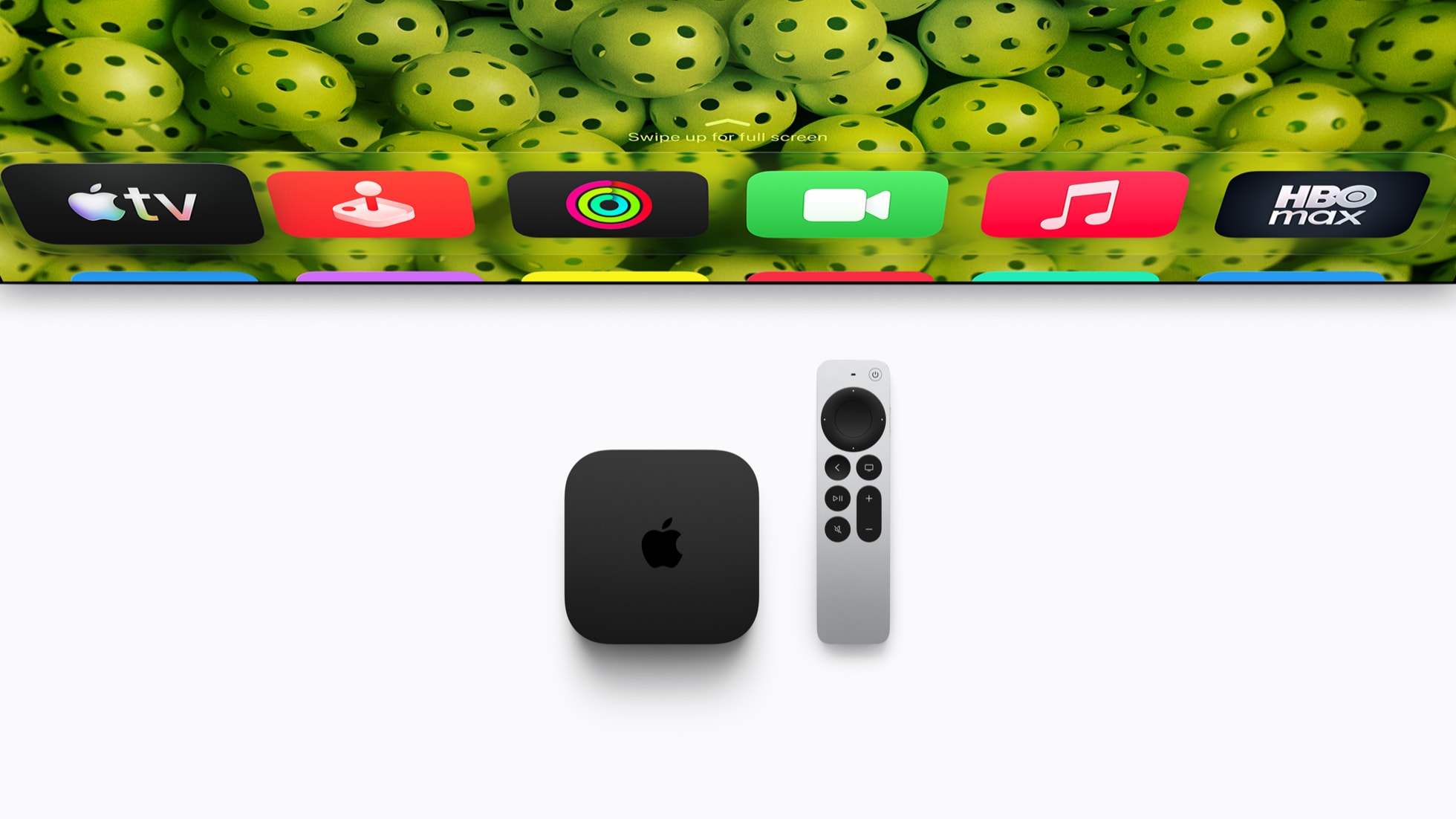
Apple today announced the fourth-generation Apple TV 4K, with key features including an A19 chip, Siri AI support, an updated Siri Remote that has Find My support with Precision Finding, built in far-field microphones, support for surround sound with four HomePods in front and rear pairs, and more.
The A19 chip in the new Apple TV 4K delivers up to 50% faster CPU performance and up to twice as fast graphics performance compared to the previous-generation model with the A15 Bionic chip, according to Apple. With the A19 chip, the Apple TV likely has an increased 8GB of RAM as well, up from 4GB in the previous model.
The more personalized and intelligent Siri AI powered by Apple Intelligence is now on Apple TV. The new Apple TV 4K has three far-field microphones that allow users to talk to Siri AI in a hands-free manner, but the updated Siri Remote still has a microphone and a Siri button on its side if you prefer to use the assistant that way.
For example, Apple said users can simply ask Siri which Apple TV shows won at the Emmy Awards this year and see poster art pulled directly from the Apple TV app, along with relevant suggestions like "more award-winning comedies."
Siri AI support does not require the new model. According to Apple, it is available in beta on the Apple TV 4K (2nd generation) and later running an upcoming tvOS 27.2 beta. At launch, Siri AI on the Apple TV will be limited to English in the U.S., Australia, Canada, India, New Zealand, Singapore, South Africa, and the U.K.
Siri AI on the Apple TV requires a paired iPhone or iPad that supports Apple Intelligence.
As for the far-field microphones, Apple explained that "advanced echo cancellation intelligently isolates a user's voice from background sound to deliver crystal-clear 'Hey Siri' or 'Siri' recognition, even while audio is playing."
Far-field Siri is supported when tvOS is set to English, Mandarin Chinese, Dutch, Finnish, French, German, Hebrew, Norwegian, or Swedish.
Beyond the microphones and the status light now being centered on the front of the Apple TV 4K, there are no other obvious external design changes compared to the previous model. A future teardown will reveal internal changes.
The updated Siri Remote now supports the Precision Finding feature in the Find My app, making it easier to find. The remote now has a speaker built into it, allowing you to play a sound through the Find My app to help with locating it. The remote's overall design has not changed, and it still has a USB-C charging port.
For the first time, users can create a four-speaker surround sound experience with the new Apple TV 4K and the new HomePod mini 2 and the existing second-generation full-sized HomePod. You can have HomePod mini 2 speakers in front-left, front-right, rear-left, and right-right positions, or you can mix and match HomePod mini and HomePod speakers, so long as the front and rear pairs match. For example, you could have two full-sized HomePods up front and two HomePod mini 2 speakers in the rear.
The new Apple TV 4K can be pre-ordered starting today and launches on Friday, November 13. In the U.S., pricing is set at $299, with only a single configuration available now with 128GB of storage, Wi-Fi 7 support, and a Gigabit Ethernet port. The device is also equipped with a rear HDMI 2.1 port and supports Bluetooth 6.
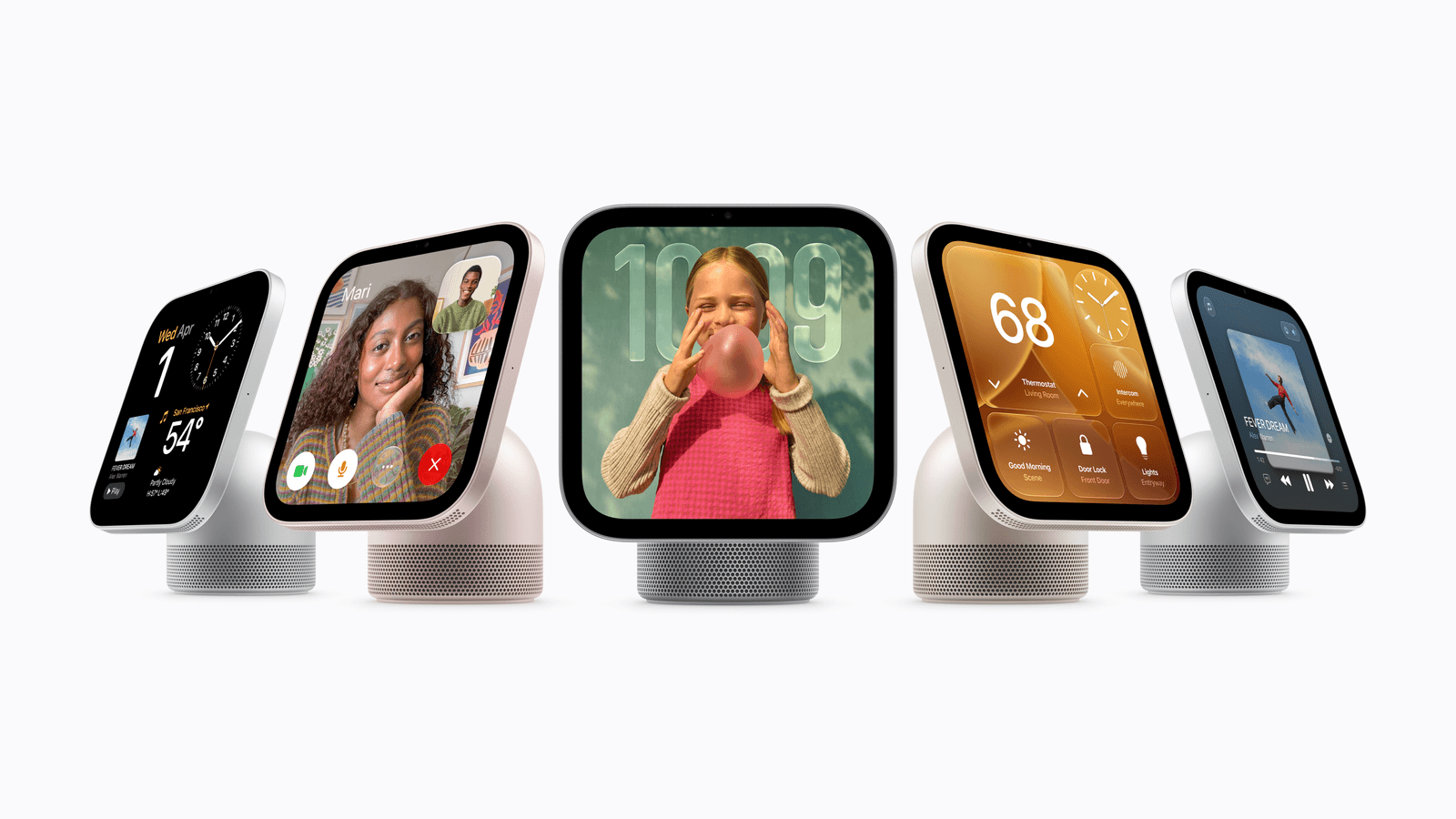
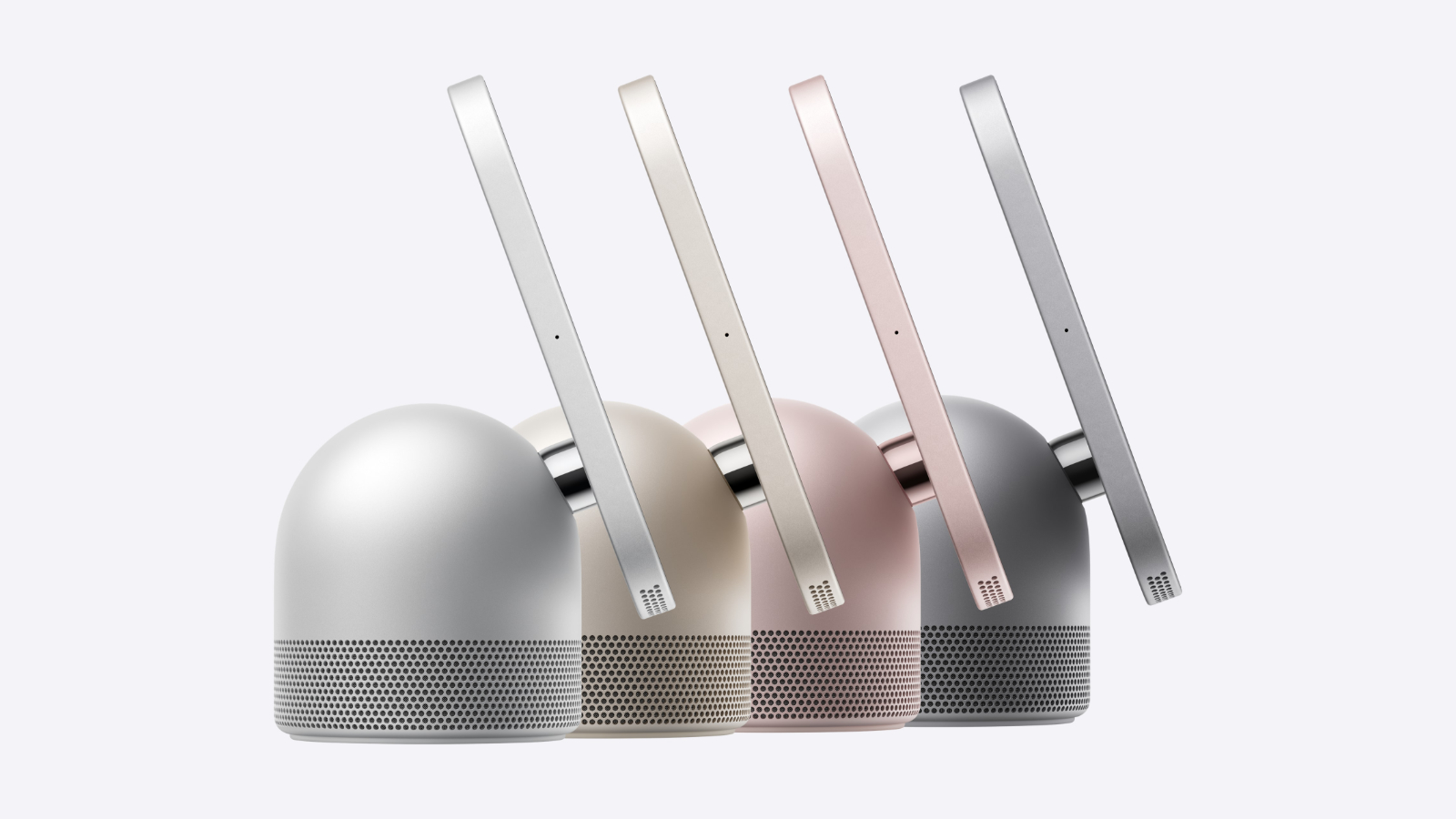
Apple today announced the "HomeView," an all-new kind of smart home hub featuring a 7-inch Liquid Retina display and Siri AI.
Apple's senior vice president of Worldwide Marketing Greg Joswiak said:
Apple HomeView is designed to be shared by everyone in the home yet feel completely personal to each user. It recognizes your face to shift from a household screen to your own experience, fills the room with incredible sound, keeps you connected to the people who matter most with FaceTime, and makes it easy to control your smart home. And it's powered by Apple Intelligence with Siri AI at its core, drawing on personal context from your iPhone to help you find what you need and get more done, all while keeping everyone's information private and secure.
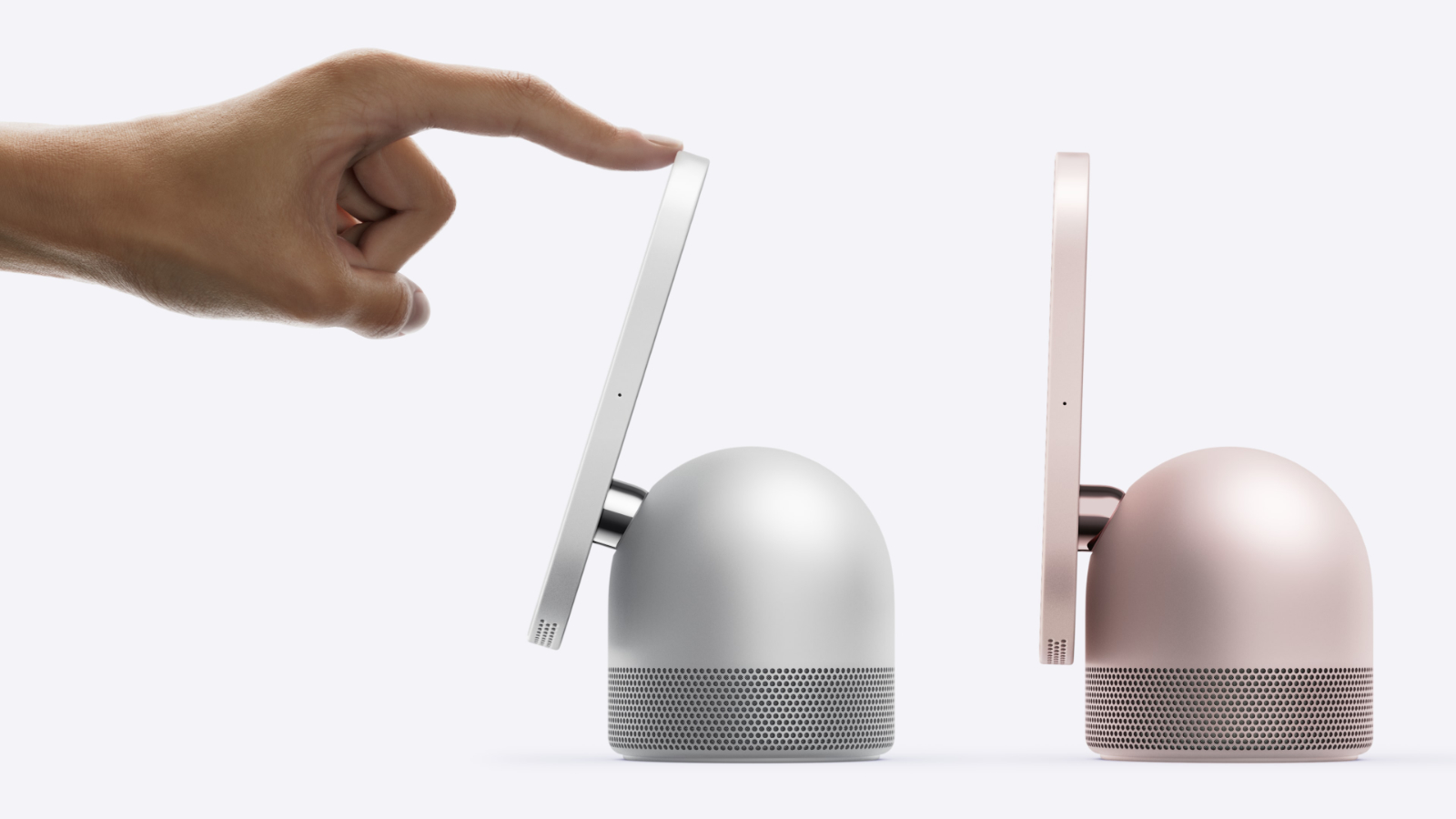
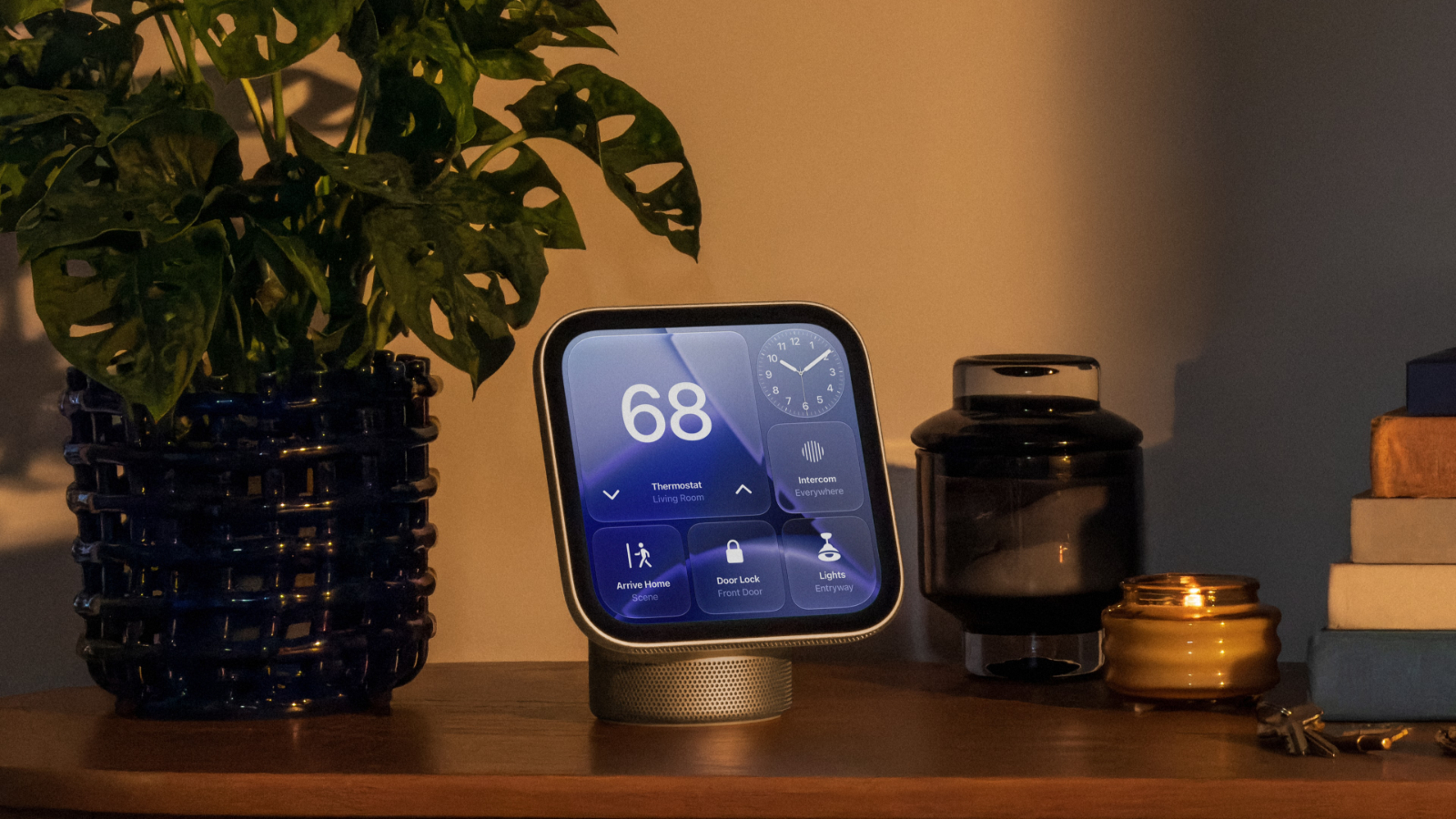
The HomeView features an aluminum design, with the display connected to a domed speaker base by a stainless steel tilting hinge. Apple says it is ideal for a kitchen counter, nightstand, or side table. The 7-inch Liquid Retina display features True Tone and automatic brightness between 0.3 nits and 500 nits, making it ideal for low-light environments.
A custom-engineered acoustic system with two full-range drivers delivers "room-filling" Spatial Audio. A down-firing woofer and two force-cancelling passive radiators are built directly into the base. With Handoff, users can continue listening to audio from their iPhone by placing it in front of the HomeView. It also supports multiroom audio.
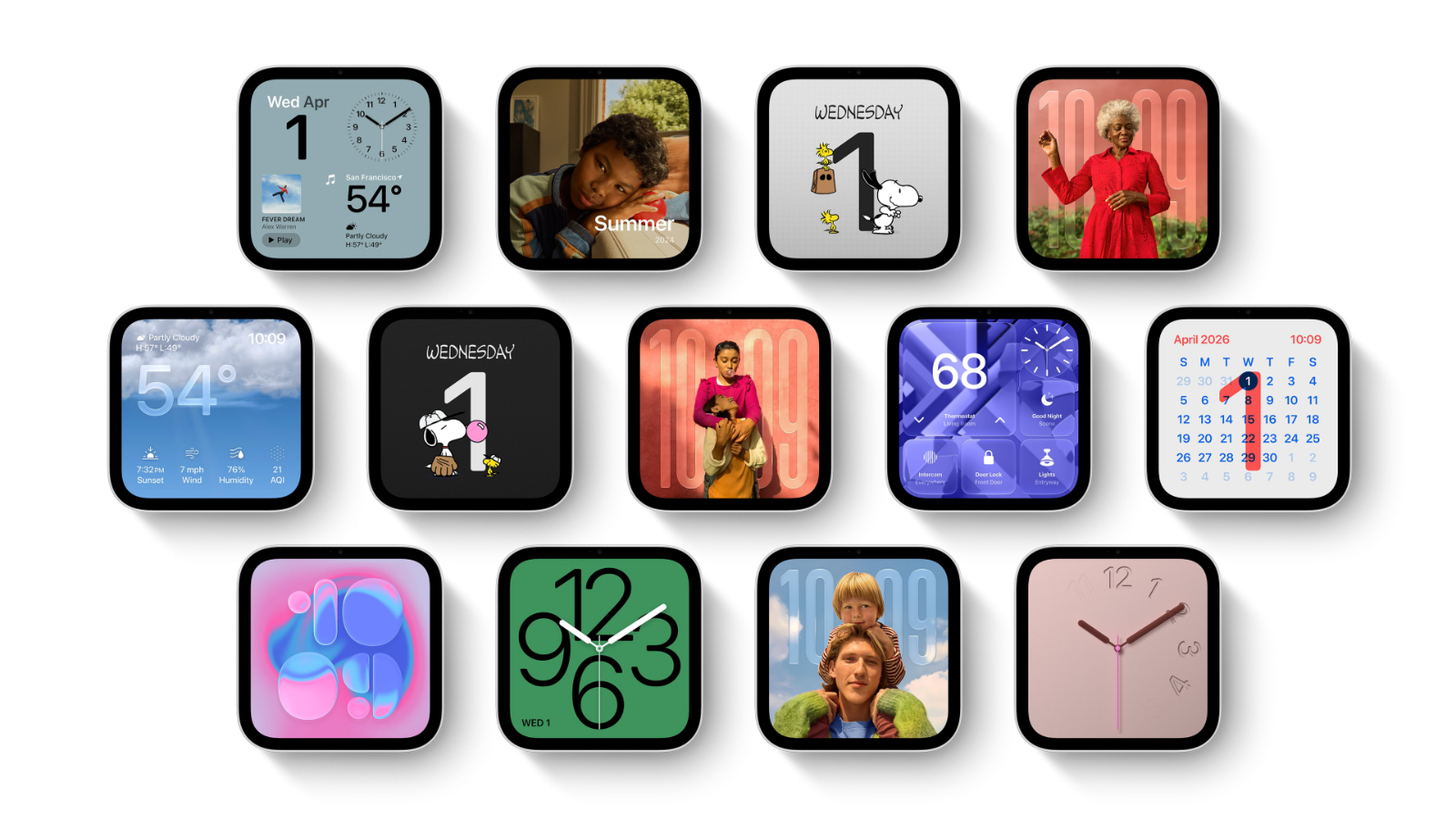
The HomeView features faces that display information at a glance, including a Photos face, a "Flow" face that dynamically responds to movement, a Snoopy face that reflects context like the time of day and weather, a Home Modular face that offers instant access to smart home accessories, a Home Camera face that can livestream up to nine video feeds simultaneously, and more.
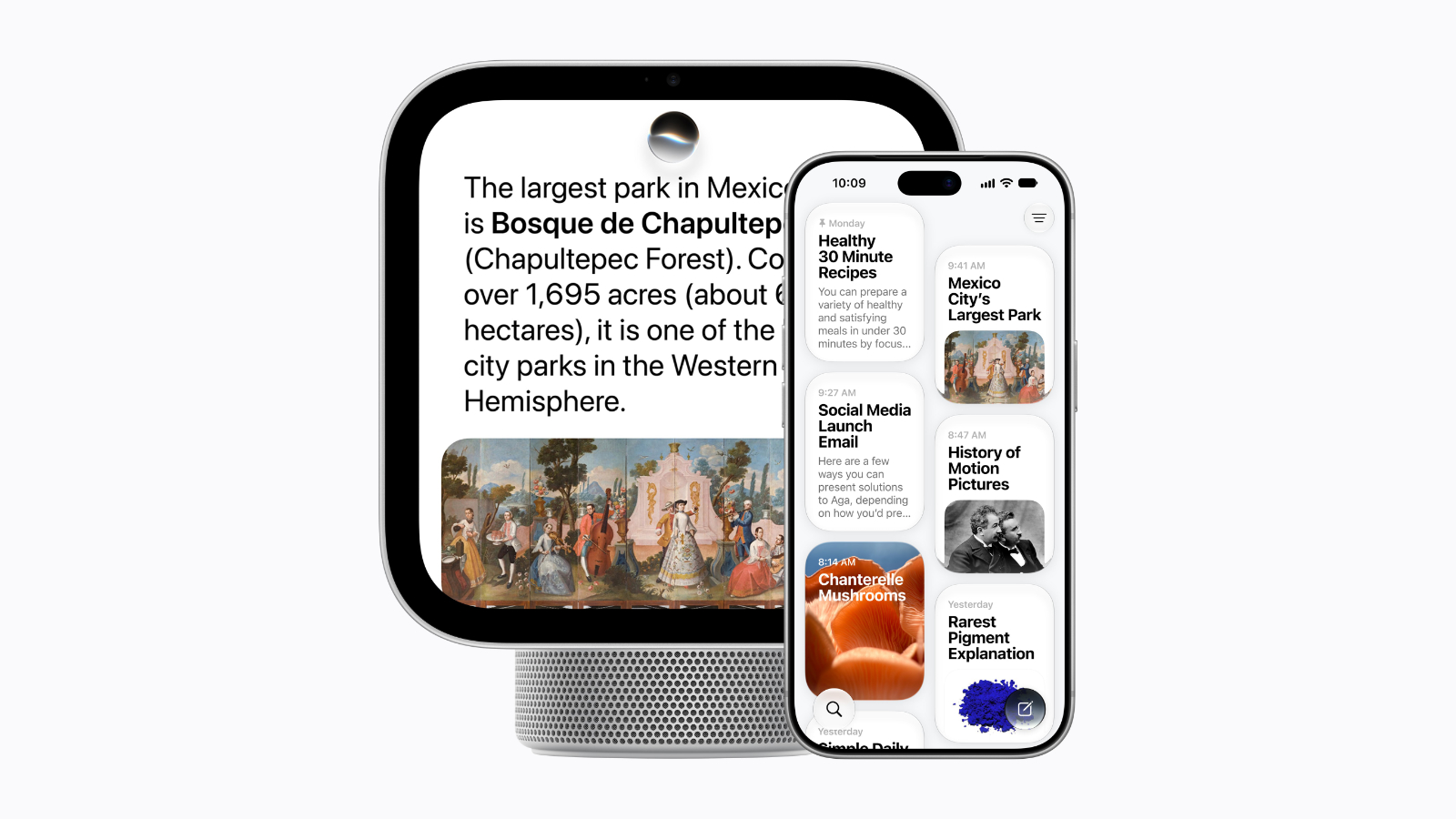
The HomeView's interface adjusts based on a user's distance, showing larger, simpler information from across a room and richer detail as a user steps closer. The device recognizes up to six people and delivers a personalized experience. Each user has their own Home Screen with apps and widgets. Apple says that personal content remains private, while shared photo albums and music can be enjoyed by all users, including guests.
The device features Siri AI, and used with an Apple Intelligence-compatible iPhone or iPad, Siri AI can take action across apps and surface relevant information from Messages and Calendar, Apple Music playlists, and more. Users can also customize the expressiveness and pace of Siri's voice on their paired and compatible device. Siri AI conversations sync across devices.
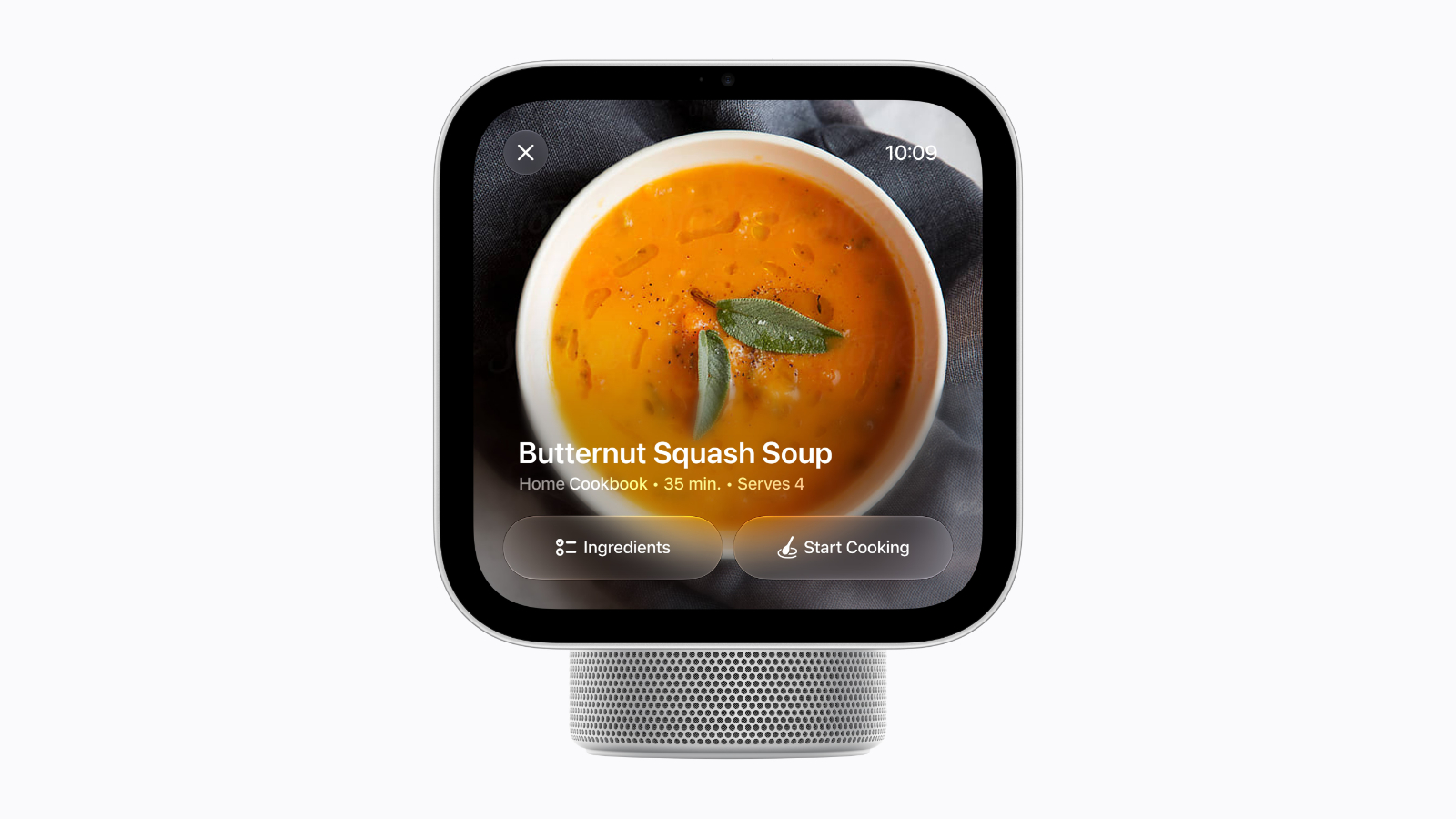
Apple also said that "HomeView is the perfect sous chef," with the ability to convert recipes from the web into step-by-step instructions with hands-free timer controls and ingredient tracking. Moreover, the HomeView offers FaceTime and Center Stage, as well as Intercom for sending a quick message in the household.
The tabletop version is available in silver, starlight, rose pink, and space gray, including matching cables. A wall-mounted version is available in silver and space gray only. It can be attached using three mount options from Schneider Home. The wall-mounted version delivers "rich sound" with two custom drivers and computational audio tuned specifically for on-wall placement.
The HomeView costs $299. Pre-orders start today, with launch on November 13. It is not available in the EU.
Apple's September event will take place on Wednesday, September 9 at 10:00 a.m. Pacific Time. Apple will announce its 2026 iPhone lineup, and this year is a big one. Along with the slab-style iPhones we've been using for years, Apple is going to debut its first foldable device. We'll also get new Apple Watches, a new set of AirPods, and possibly some other surprises.
Everything we expect to see at the "Surprise and Shine" event is below.
Foldable iPhone
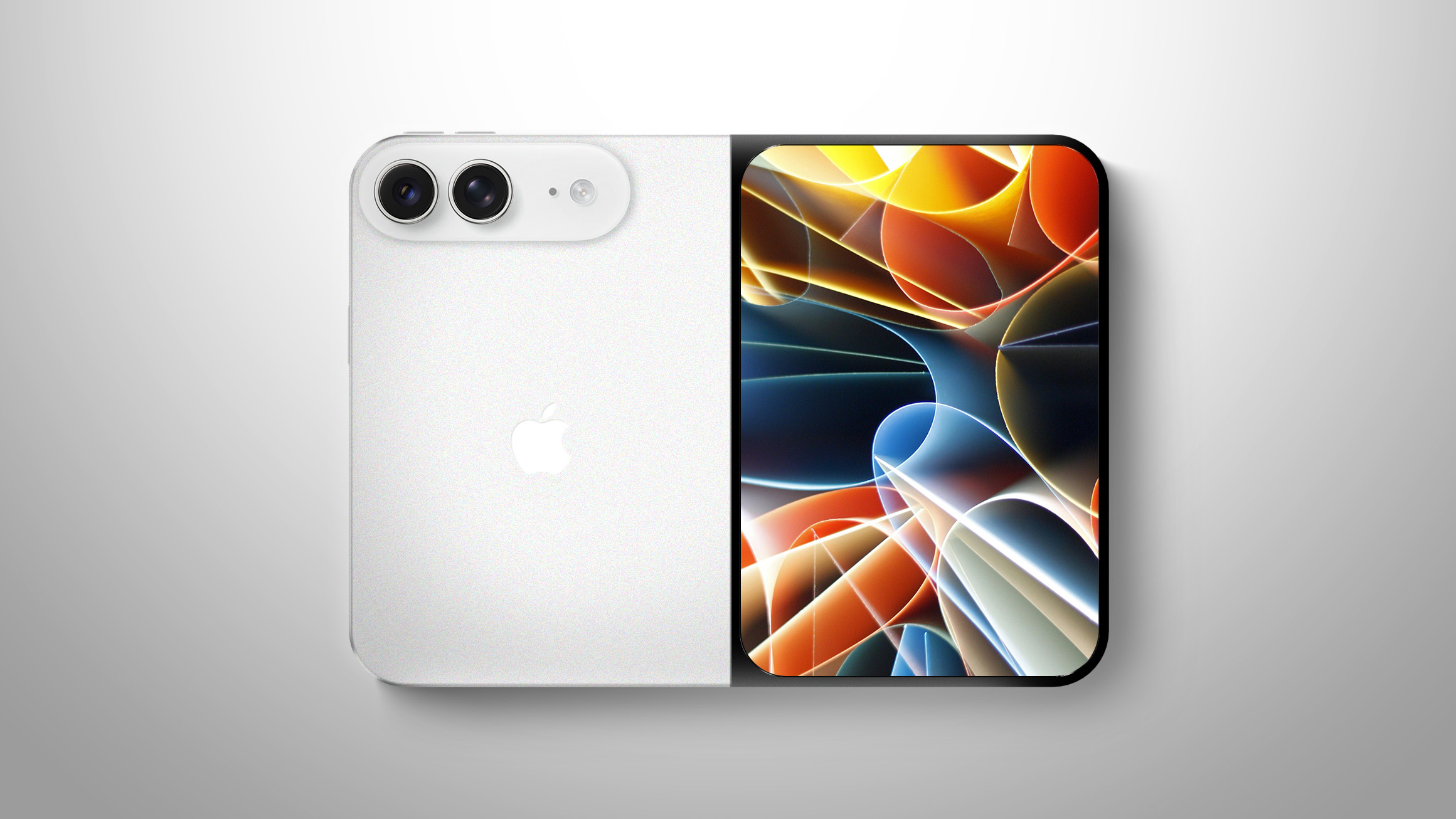
Apple's 2026 iPhone lineup will include its first foldable device. We don't know what Apple will call it, but rumors suggest it might be named the iPhone Ultra.
Apple has designed a book-style foldable that has an iPad-like layout when it's opened up. It will have a ~5.5-inch OLED outer display, which is what you'll use when the iPhone is closed. It will unfold into a larger OLED display that's approximately 7.8 inches.
The design is wider than it is tall when it's open, and you can picture it as something like an iPad mini that folds in half. Samsung's recent Galaxy Z Fold8 matches the foldable iPhone rumors, so it may be the best look at the size and layout of Apple's device.
Apple wanted a crease-free design, but that doesn't seem to be possible with a foldable yet. The iPhone Ultra will instead have a minimal crease and a durable liquid metal hinge. Foldables are delicate and hinges can be a weak point, so Apple focused on durability. Rumors indicate Apple could have some tricks to keep the crease less visible over time, such as optically clear adhesive that will fill in any micro-cracks caused by repeated folding.
When unfolded, the iPhone Ultra could be as thin as 4.5mm, making it Apple's thinnest iPhone to date. That would make it 9mm when folded, which is close to the thickness of the 8.75mm iPhone 17 Pro Max. With a chassis that thin, Apple had to make design compromises.
There is reportedly no space for the TrueDepth camera system for Face ID, so it's going to use Touch ID instead. There will be a Touch ID side button, similar to the iPad Air and iPad mini. Though Face ID isn't included, there will be front cameras for both the inner and outer displays.
Apple also didn't have room for a three-lens rear camera system, so the iPhone Ultra won't have a telephoto lens. Rumors suggest it will have an Ultra Wide lens and a Wide lens located on the back of the device, so the rear camera works whether the iPhone Ultra is folded or unfolded.
The iPhone Ultra will have a 2nm A20 Pro chip. The A20 Pro is expected to be around 18 percent faster and up to 30 percent more power efficient than the A19 Pro, and it could have a 7-core GPU, a wider memory interface, and a larger L2 cache for its efficiency cores. We're expecting 12GB of RAM.
Apple's 2026 iPhones could use its house-designed C2 modem, which is expected to be faster and more efficient than the C1X. It's not yet clear if Apple has added mmWave technology to the C2, and if it hasn't, foldable iPhone models sold in the U.S. could use Qualcomm modems instead. mmWave 5G isn't widely used outside of the U.S., but it is an expected feature for U.S. iPhones. The other alternative is limiting the foldable iPhone to sub–6GHz 5G speeds worldwide.
Each half of the iPhone Ultra will have a battery inside, and it could have a total capacity in the 5,400 to 5,800 mAh range. The iPhone 17 Pro Max has a 5,088 mAh battery for comparison.
Apple isn't taking risks with color. The iPhone Ultra will come in silver/white and a second color that's been described as a very deep shade of indigo that's close to black.
Software could make or break the iPhone Ultra, and Apple has been telling developers to design their apps for a variety of sizes and aspect ratios to accommodate the two foldable screens. The iPhone Ultra is likely to support multitasking, side-by-side apps, and sidebars, much like the iPad.
Apple's first foldable won't be cheap. According to rumors, it will cost at least $2,000, and higher-capacity models could be upwards of $2,500.
iPhone 18 Pro and iPhone 18 Pro Max
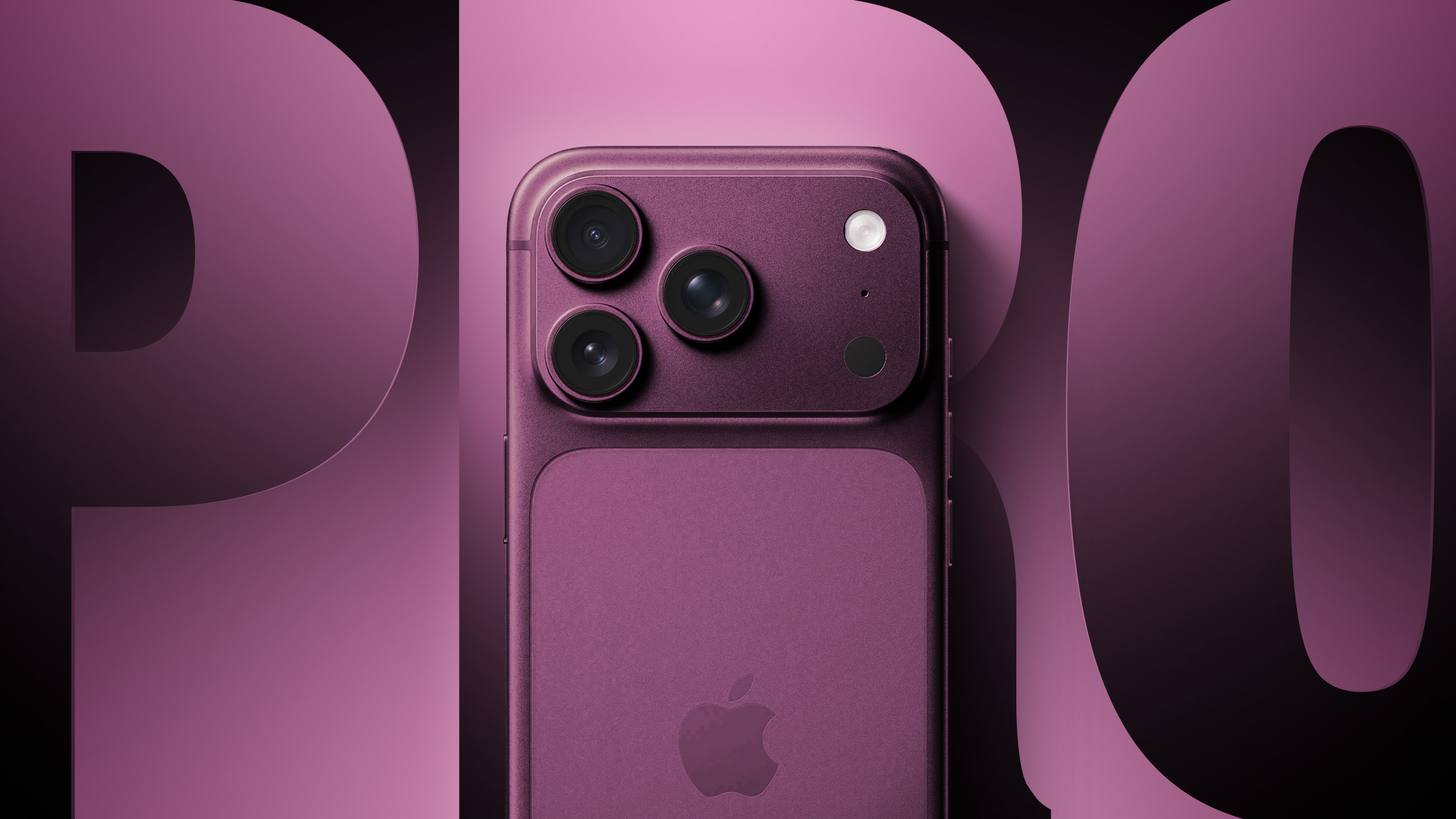
The iPhone 18 Pro models will look a lot like the iPhone 17 Pro models, with no major design changes expected. There are rumors that the iPhone 18 Pro Max might be a little bit thicker and heavier because of a larger battery, but iPhone 17 Pro cases are expected to fit the iPhone 18 Pro models. The camera plateau could be slightly thicker to accommodate a new variable aperture lens.
Apple has new colors planned, including a dark cherry shade, light blue, and silver. Rumors suggest there won't be a black iPhone 18 Pro option.
With the iPhone 17 Pro models, there's a clear color contrast between the frosted glass back and the aluminum casing, but that might be more subtle with the iPhone 18 Pro. While the overall shape isn't being updated, the iPhone 18 Pro and Pro Max could have a smaller Dynamic Island. There were early rumors about under-display Face ID with no Dynamic Island at all, but that's not going to happen.
There may be a noticeable increase in battery life due to the larger capacity battery rumored for the 18 Pro Max (5,567 mAh), plus efficiency improvements from the 2nm A20 Pro chip it's supposed to get and an upgrade in display technology. Rumors say Apple is using an LTPO+ display that's more efficient than the current OLED display.
Apple plans to upgrade the main rear camera with a DSLR-like variable aperture, giving users more control over the light that reaches the lens. An option for a smaller aperture in bright lighting could improve exposure, while a larger aperture in lower lighting conditions would let in more light to reduce grain and produce sharper images. A variable aperture also gives more control over background blur. Some rumors suggest this might be a feature exclusive to the iPhone 18 Pro Max, but it's not clear if that's accurate.
Apple could use a three-layer stacked image sensor developed by Samsung, which would make the camera more responsive and improve low-light performance. The Telephoto lens could have a wider aperture to let in more light, but no changes are rumored for the Ultra Wide lens or the front-facing camera.
There might be changes to the Camera Control button. Apple is supposedly simplifying it to eliminate the capacitive layer that lets you swipe to adjust camera settings on the button.
As with the foldable iPhone, some or all of the iPhone 18 Pro models could get Apple's C2 modem, but again, it's possible U.S. models will have Qualcomm modems for mmWave 5G.
Compared to the iPhone 17 Pro models, the iPhone 18 Pro models will be more expensive. Apple is paying more for memory and storage, and prices for Macs and iPads already went up. We could see a price increase ranging from $100 to $300.
Apple Watch Series 12
The Apple Watch Series 12 won't design changes, but Apple could bring back the ceramic case option. We're expecting an updated processor that could bring improvements to health and fitness tracking.
Apple is testing a feature that would let the heart rate sensor continuously collect data throughout the day, powering a new Health app feature that could show wellness-related info similar to what the Oura Ring offers.
Apple Watch Ultra 4
Like the Apple Watch Series 12, the Apple Watch Ultra 4 will have no major changes. It's likely to get the same upgraded processor and related changes.
AirPods 5
References to AirPods 5 were found in the macOS 26.7 release candidate, and the new earbuds could launch alongside the iPhone 18 Pro models. Apple could add an updated H3 chip for improved sound quality and lower latency, and we're likely to still get an ANC version and a non-ANC version.
Possible Product Launches
Home hub - Apple is working on a home hub with a 7-inch square display, an integrated camera, presence detection sensors, and more. It will control smart home devices, but it will also run apps. Rumors suggest it can be used to make video calls, play content, and interact with Siri AI, the new version of Siri in iOS 27. Apple has been waiting to launch the home hub because Siri AI is a central feature of the new device.
Apple TV 4K - There's a new Apple TV with a faster processor in the works, and it could come at the September event. No design changes are expected, but an updated chip could support Siri AI and new gameplay features. There are also signs of a new remote in Apple code.
HomePod mini - The HomePod mini is due for a refresh, and it's also expected to get a faster processor. We haven't heard word of design changes, but it could come in new colors.
Software Updates
At the September 9 event, Apple will announce the release dates for iOS 27, iPadOS 27, macOS Golden Gate, tvOS 27, watchOS 27, and visionOS 27. Apple will also likely seed release candidate versions of the updates to developers and public beta testers following the event.
Based on historical release timelines, iOS 27 and its sister updates could come out as soon as September 14.
What Not to Expect
There are several other products rumored to be launching before the end of 2026, but they'll likely come at a second event in October or November. There's also a notable omission from the lineup, because Apple is going to delay the iPhone 18.
iPhone 18 - The standard iPhone 18 will not launch in September 2026, with Apple instead planning to debut it in spring 2027 alongside the iPhone 18e and the iPhone Air 2. In the fall, we're only getting the iPhone 18 Pro, iPhone 18 Pro Max, and foldable iPhone.
Apple Watch SE 4 - There won't be a new Apple Watch SE 4 this year.
M6 MacBook Pro - A new entry-level MacBook Pro with an M6 chip is coming before the end of the year, but not at the September event.
M6 iMac - There's also an M6 iMac rumored to be coming in 2026, but Apple is likely to hold a Mac event to announce it, or do it via press release at a later date.
OLED MacBook Pro - We've been waiting on an OLED touchscreen MacBook Pro, and it's rumored for late 2026 or early 2027. It's not a candidate for Apple's September event.
OLED iPad mini - There's an OLED iPad mini in development, and it's expected to launch before the end of October. It's another one that's unlikely for an iPhone event.
Apple's New CEO
New Apple CEO John Ternus has presented at Apple events before, but the iPhone event will be the first he hosts as CEO in place of Tim Cook.
Cook was Apple's CEO for 15 years, so a transition to Ternus leading an event is a major change.
Cook is now Apple's executive chairman, and he may not make an appearance during the event at all.
iPhone Preorders
Apple almost always holds preorders on the Friday after an event, but this year, that Friday is 9/11. It's unlikely Apple will do iPhone preorders on Friday because of the date, so orders could happen on Saturday instead. The last time iPhone preorders overlapped with the 9/11 date in 2015, Apple pushed orders to Saturday.
If Apple follows the same pattern, the iPhone 18 Pro models and the iPhone Ultra could be available for preorder on Saturday, September 12. Back in 2015, Apple started preorders at 12:01 a.m. Pacific Time, but in recent years, preorders have started at 5:00 a.m. Pacific Time. Preorders this year could take place at 5:00 a.m. on September 12.
The new iPhones will likely launch on Friday, September 18, regardless of preorder date.
How to Watch
Apple's "Surprise and Shine" event will start at 10:00 a.m. Pacific Time on Wednesday, September 9. Apple will livestream the event on its website, on YouTube, and through the Apple TV app on supported devices.
For those unable to watch the livestream, MacRumors will have full event coverage on MacRumors.com and the MacRumorsLive X account. We'll also take a much closer look at all of the new products after the event.

 Anmelden