❌

Lese-Ansicht

The MacRumors Show: Tyler Stalman Talks iPhone 18 Pro's Camera

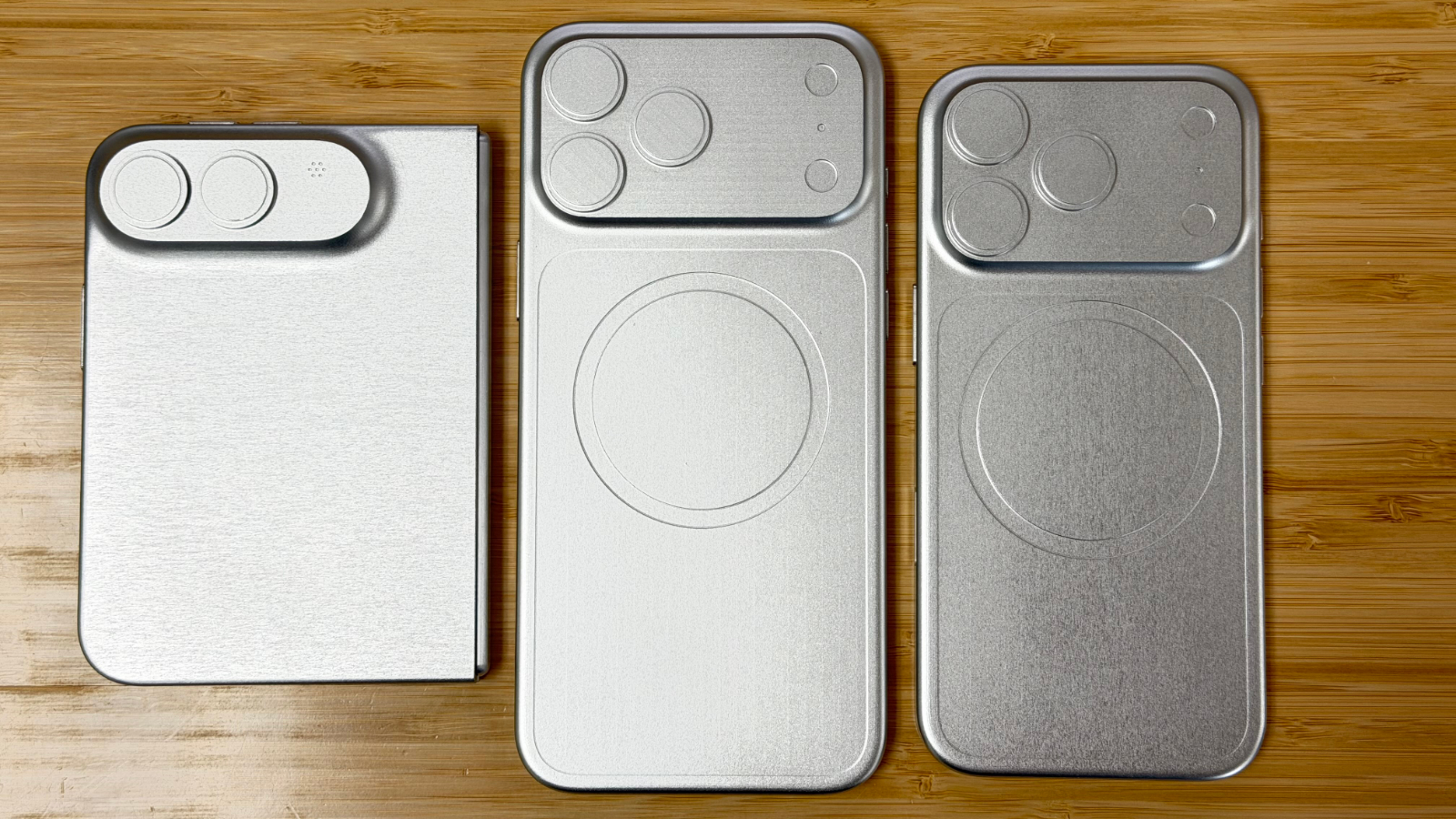
Photographer and videographer Tyler Stalman joins us on this week's episode of The MacRumors Show to examine whether the iPhone 18 Pro's camera is a compelling reason to upgrade, how its new features affect everyday shooting, and what photographers gain or give up with the iPhone Duo.


The ‌iPhone 18 Pro‌'s Main camera combines a new 48-megapixel sensor, a faster variable-aperture lens, and updated image processing. The variable aperture offers settings of ƒ/1.48, ƒ/1.8, ƒ/2.8, and ƒ/4.0. The iPhone 17 Pro has a fixed ƒ/1.78 aperture, so the new lens's widest setting admits about 45% more light on aperture values alone, or just over half an exposure stop. Apple claims around 50% better low-light performance for the complete Main camera system.

At ƒ/2.8 or ƒ/4.0, people standing at different distances in a group shot can remain sharper, provided there is enough light to compensate for the smaller opening. A narrower aperture can also let video use a slower shutter speed in bright conditions, producing more natural motion blur. At ƒ/1.48, the camera has more light for indoor photos and potentially shorter Night mode exposures. The wider opening should also reduce the need for Night mode at all in some situations. The camera defaults to ƒ/1.8, close to the 17 Pro's fixed aperture, but the new sensor and processing still affect photos taken at that setting.

The Pro Controls add manual aperture, shutter speed, and white balance adjustments, plus a live histogram directly in the native Camera app. Users can pin their most-used settings to the top of the viewfinder, which is a major practical improvement for professionals. For example, shutter speed offers control over frozen action or intentional motion blur, while white balance can help stop greenery being made too blue by automatic settings or maintain a consistent look between video clips.

Photographic Styles 3 goes further with the ability to adjust tone and color while preserving skin tones, and new controls add Soft Skin, Glow, and Film textures, with grain that can be paired with any of them. The Film setting aims to reproduce more of an analog photograph's character, including its grain and the glow around bright highlights. The strength of the effects can be adjusted, and the style can be changed after capture. Tyler has tested the ‌iPhone 18 Pro‌'s film look against a film SLR loaded with Kodak Portra 400.

Apple Reference Image signs data from the ‌iPhone 18 Pro‌'s new Main camera sensor at capture, creating a secure digital negative that can be compared with an editable photo. Meanwhile, iOS 27's Photos tools can change perspective with Reframe, generate scenery beyond a picture's original edges with Extend, or remove larger objects with Clean Up. Reference Image leaves room for creative editing while giving photographers a way to show what the sensor captured, provided they enabled the mode before taking the shot.

Meanwhile, the iPhone Duo's camera system has a 48-megapixel Main camera with a fixed ƒ/1.6 aperture and the same 48-megapixel Ultra Wide camera as the ‌iPhone 18 Pro‌. Its Main camera shares a 26mm focal length, ƒ/1.6 aperture, and Hybrid Focus Pixels with the iPhone 17e, leading some to question why Apple's most expensive iPhone appears to have camera hardware similar to an entry-level model. That said, the Duo has sensor-shift optical image stabilization, which the 17e lacks, and Apple has not disclosed enough sensor details to establish that the two phones use identical hardware.

Compared with the ‌iPhone 18 Pro‌, the ‌iPhone Duo‌ also lacks a dedicated Telephoto lens, variable aperture, manual Pro Controls, Reference Image, and professional formats including ProRAW and ProRes. The ‌iPhone Duo‌'s folding design makes a different case for its camera. Smart Take can capture a group photo when everyone is posing, Kid Cue plays animations on the outer display to draw a child's attention, and Duo Preview lets subjects see a live view of a photo being taken of them with the rear camera. The phone can also stand partly open for hands-free shots.

Looking to the future, Apple is rumored to be working on a custom image sensor that could arrive as soon as next year with the 20th-anniversary iPhone.

See more of Tyler's work over on his YouTube channel or on X @stalman. The MacRumors Show has its own YouTube channel, so make sure you're subscribed to keep up with new episodes and clips.


You can also listen to ‌The MacRumors Show‌ on Apple Podcasts, Spotify, Overcast, or other podcast apps. You can also copy our RSS feed directly into your player.


If you haven't already listened to the previous episode of The MacRumors Show, catch up to hear our ‌iPhone Duo‌ debate and discussion about early impressions of the AirPods 5, and the merits of Apple's latest iPhone and Apple Watch upgrades.

Subscribe to ‌The MacRumors Show‌ for new episodes every week, where we discuss some of the topical news breaking here on MacRumors, often joined by interesting guests such as Michael Fisher, Kayci Lacob, Kevin Nether, John Gruber, Mark Gurman, Jon Prosser, Luke Miani, Matthew Cassinelli, Brian Tong, Quinn Nelson, Jared Nelson, Eli Hodapp, Mike Bell, Sara Dietschy, iJustine, Jon Rettinger, Andru Edwards, Arnold Kim, Ben Sullins, Marcus Kane, Christopher Lawley, Frank McShan, David Lewis, Sam Kohl, Federico Viticci, Thomas Frank, Jonathan Morrison, Ross Young, Ian Zelbo, and Rene Ritchie.

‌The MacRumors Show‌ is on X @MacRumorsShow, so be sure to give us a follow to keep up with the podcast. You can also email us at podcast@macrumors.com or head over to The MacRumors Show forum thread. Remember to rate and review the podcast, and let us know what subjects and guests you would like to see in the future.
Related Roundup: iPhone 18 Pro
Related Forum: iPhone

This article, "The MacRumors Show: Tyler Stalman Talks iPhone 18 Pro's Camera" first appeared on MacRumors.com

Discuss this article in our forums
  •  

iPad Mini 8 Leaked: A20 Pro Chip, Landscape Camera, and More

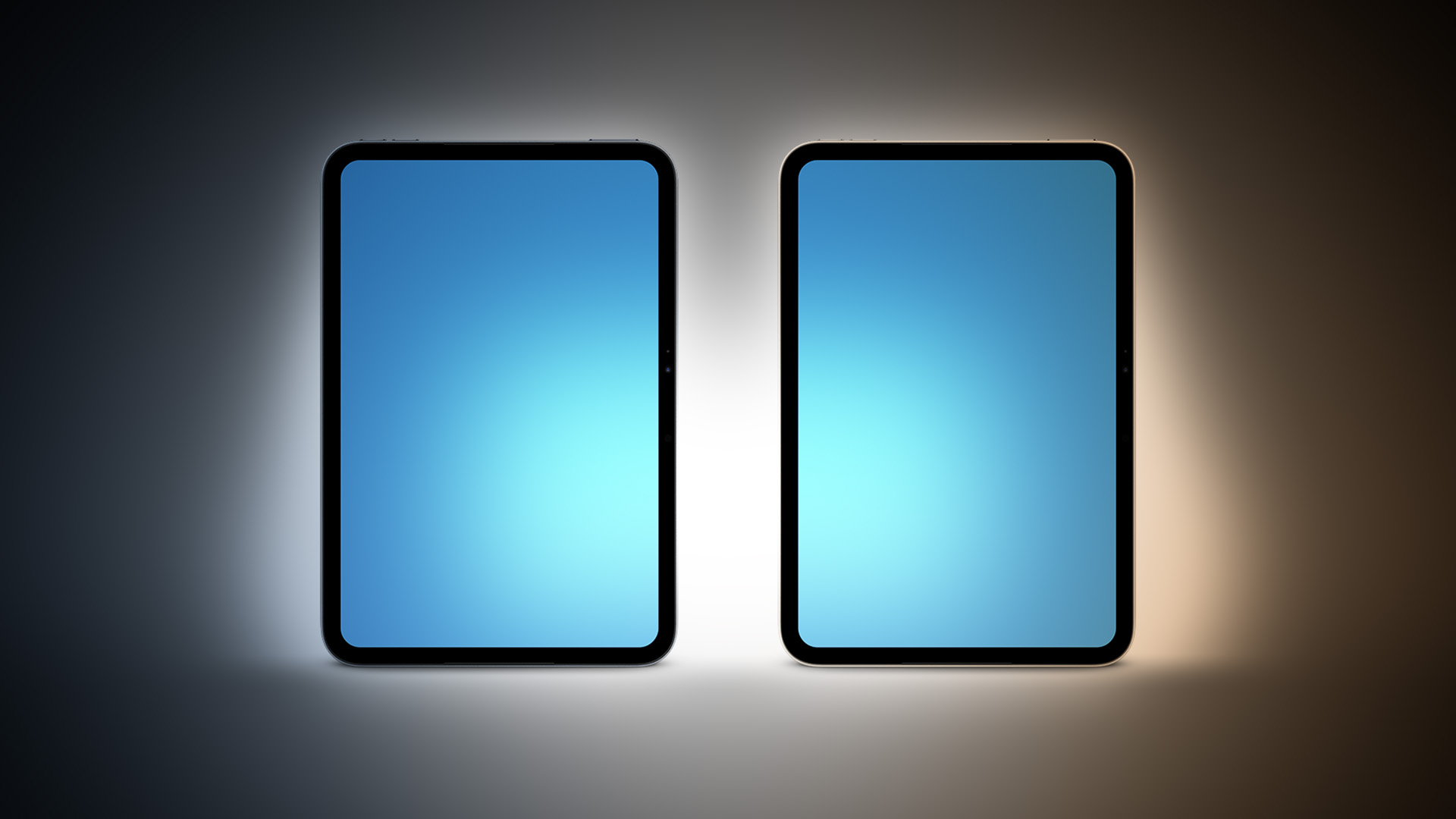
Apple's next-generation iPad mini will feature the A20 Pro chip, a rearranged front-facing camera, and a new speaker system, leaked code reveals.


The information originates from Apple's own code (spotted by MacRumors contributor Aaron Perris) and also shows clear product images of the new ‌iPad mini‌. Although images of the device only show the front, leaving any design changes of the rear or side profile unknown, there are still visible changes.

The new ‌iPad mini‌ features a landscape front-facing camera, making it the final iPad to transition to this positioning. It also has a small groove cut out of the top of the display glass, just like the iPhone, presumably for the speaker. The volume buttons and power button remain on the top of the device.

We are not sharing the exact details of the files, but their presence in Apple's code suggests that the product is likely to launch soon.

Bloomberg's Mark Gurman previously reported that the next-generation ‌iPad mini‌ will feature water resistance and an all new vibration-based speaker, so the icons appear to corroborate that claim.

The new ‌iPad mini‌ is rumored to feature a slightly larger screen, an OLED display, and more. Gurman expects it to launch by the end of October.
Related Roundup: iPad mini
Buyer's Guide: iPad Mini (Don't Buy)
Related Forum: iPad

This article, "iPad Mini 8 Leaked: A20 Pro Chip, Landscape Camera, and More" first appeared on MacRumors.com

Discuss this article in our forums
  •  

Exclusive: First Look at HomePod Mini 2 in Three New Colors

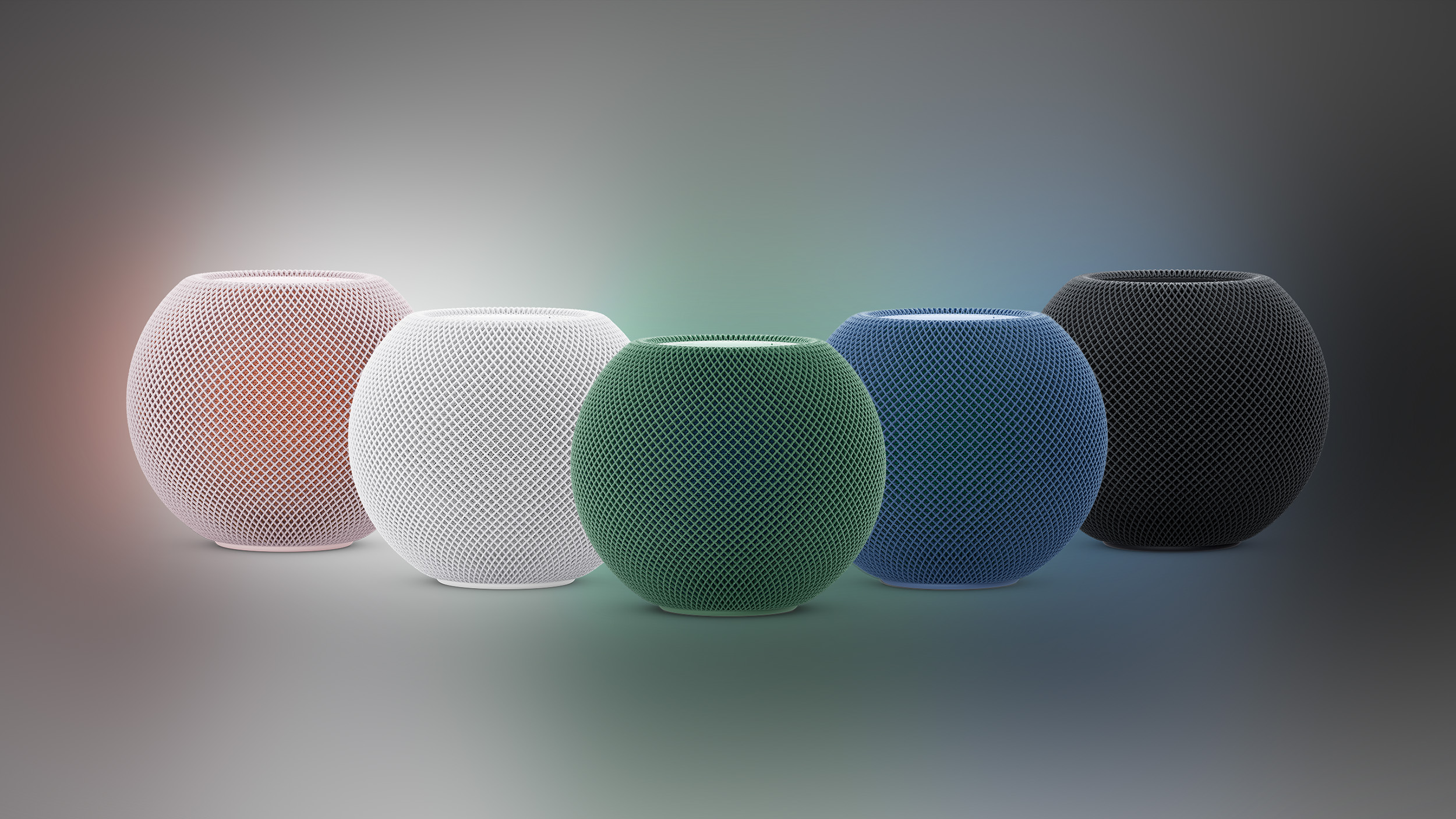
Apple's new HomePod mini will share the same design as the original model and come in five colors, MacRumors has found.


The information originates from Apple's own code (spotted by MacRumors contributor Aaron Perris) and shows clear product images of the new models in all of their colors. The above image contains Apple's own icons, which specifically refer to a "‌HomePod mini‌ 2."

The new ‌HomePod mini‌ will come in green, pink, blue, white, and black. The current model comes in yellow, orange, blue, white, and midnight. The new blue is slightly lighter than the current offering.

We are not sharing the exact details of the files, but their presence in Apple's code suggests that the product is likely to launch soon.

Apple announced the original ‌HomePod mini‌ in October 2020 for $99. Available initially in white and space gray, the 3.3-inch speaker features a fabric-covered spherical design and a backlit touch surface for playback and volume controls. Its S5 chip powers computational audio, while a full-range driver, two passive radiators, and an acoustic waveguide deliver 360-degree sound. It also offers Siri, smart home control, multiroom audio, stereo pairing with a second ‌HomePod mini‌, and Intercom messages between Apple devices. Apple later raised the price to $129.

Apple has been rumored to be working on a new ‌HomePod mini‌ model for several years. A new chip is almost certain to come to the device, along with support for Siri AI. It is expected to launch before the end of 2026.
Related Roundup: HomePod mini

This article, "Exclusive: First Look at HomePod Mini 2 in Three New Colors" first appeared on MacRumors.com

Discuss this article in our forums
  •  

Apple Watch Ultra 2 vs. Ultra 4 Buyer's Guide: Should You Upgrade?

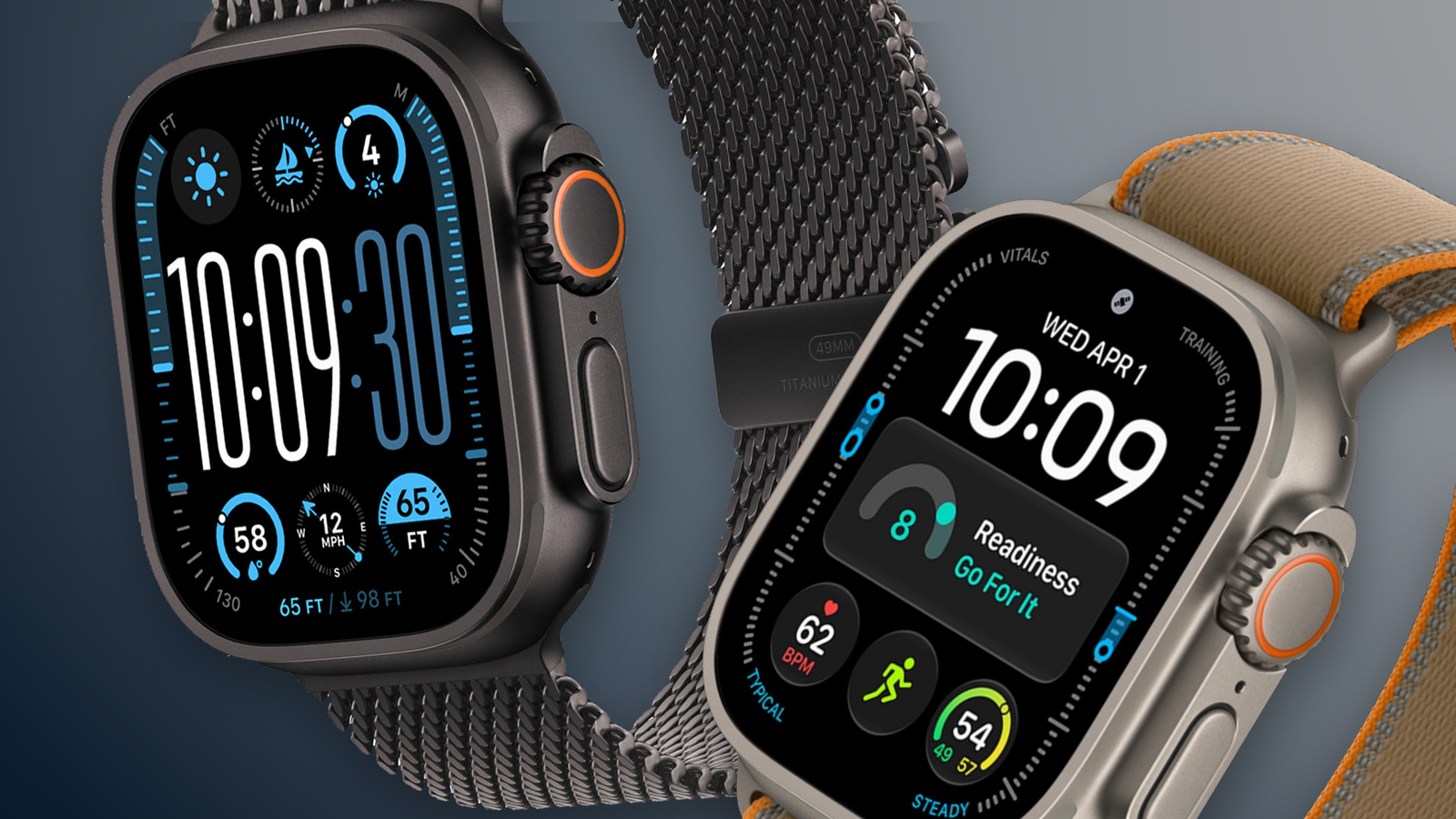
The Apple Watch Ultra 4 arrives three years after the Ultra 2. Across those two generations, Apple added satellite connectivity, a larger display, new health sensors, and longer battery life. Are those changes enough to justify replacing an Ultra 2 or paying more for the newest model?


Both watches retain a 49mm titanium case, an Action button, a siren, a 3,000-nit display, dual-frequency GPS, and support for recreational diving to 40 meters. The Apple Watch Ultra 4 starts at $799 in the U.S. Apple has discontinued the Ultra 2, although its refurbished store currently lists it from $589. Here are the key differences between the two models:


Apple Watch Ultra 2 ‌Apple Watch Ultra 4‌
LTPO2 OLED display with always-on Wide-angle LTPO3 ‌OLED‌ display with 1Hz always-on refresh
410 by 502 pixels; 1,185 sq mm display area 422 by 514 pixels; 1,245 sq mm display area (5% larger)
S9 chip S11 chip
2GB RAM 4GB RAM
Electrical heart sensor and third-generation optical heart sensor Health Sensing System with new electrical and always-on optical heart sensors
Background heart-rate measurements Background heart-rate measurements every five seconds
Heart-rate variability (HRV) measurements More frequent measurements of overall HRV and Recovery HRV
Overnight Vitals view Overnight and daytime Vitals views
Readiness app
Step tracking More accurate all-day step tracking and a Steps watch-face complication
LTE and UMTS cellular connectivity LTE and 5G cellular connectivity
Emergency SOS, Messages, and Find My via satellite
Audio Intelligence: Sound Recognition, automatic music identification, Live Rewind, and Siri Recap
Up to 36 hours of normal use Up to 50 hours of normal use
Up to 72 hours in Low Power Mode Up to 84 hours in Low Power Mode
Up to 12 hours of standard outdoor workout tracking Up to 18 hours of standard outdoor workout tracking
Up to 17 hours of outdoor workout tracking in Low Power Mode with full GPS and heart-rate readings Up to 25 hours in Extended Workout mode with full GPS and heart-rate readings
Up to 35 hours of outdoor workout tracking with fewer GPS and heart-rate readings Up to 45 hours in Max Extended Workout mode, with GPS readings every second
Charges from 0 to 80% in about one hour Charges from 0 to 80% in about 45 minutes
Natural titanium: 61.4 grams; black titanium: 61.8 grams Natural titanium: 63.0 grams; black titanium: 63.1 grams
Dual-frequency GPS supporting GPS, GLONASS, Galileo, QZSS, and BeiDou Dual-frequency GPS supporting GPS, Galileo, QZSS, and BeiDou
Now discontinued Starts at $799


Is It Worth Upgrading From Ultra 2 to Ultra 4?


Most Apple Watch Ultra 2 owners should keep their watch if its battery still covers their usual days and workouts. It supports watchOS 27 and ‌Siri‌ AI, and continues to get new features through software updates.

The new Health Sensing System is the strongest reason to upgrade an Ultra 4. It measures heart rate every five seconds throughout the day and collects HRV data more frequently, enabling Recovery HRV, daytime Vitals, and the Readiness app. If you will use those insights to adjust your training or better understand changes in your daily condition, the ‌Apple Watch Ultra 4‌ offers a substantially improved health-tracking experience.

The S11 chip strengthens the case to upgrade. Alongside twice the memory, it enables more accurate all-day step counts, a Steps complication, and Audio Intelligence. Sound Recognition can alert you to important surrounding sounds on your wrist, while music recognition can identify songs automatically.

Satellite connectivity and longer battery life add further reasons to switch, especially if you spend time beyond cellular coverage or record long workouts. Apple's ratings increase from 36 to 50 hours of normal use and from 12 to 18 hours of standard outdoor workout tracking. The slightly larger display and faster charging are welcome improvements, but the new sensing and chip-enabled features make the bigger difference.

Should You Buy an Ultra 2 or Ultra 4?


For most people buying an Apple Watch Ultra now, future-proofing is the strongest reason to choose the latest model. Its S11 chip, 4GB of RAM, and Health Sensing System already enable Readiness, more detailed recovery metrics, and Audio Intelligence features. Live Rewind and ‌Siri‌ Recap are due later in 2026. If you plan to keep your watch for several years through successive software updates, that newer hardware makes the $799 model easier to justify.

The Apple Watch Ultra 2 remains a credible value option at a substantial discount. At Apple's current $589 refurbished price, it costs $210 less than a new Ultra 4 while retaining the same design and core features. Choose it if those existing capabilities meet your needs and you are comfortable passing up the Ultra 4's hardware-exclusive features.
Related Roundup: Apple Watch Ultra 4
Related Forum: Apple Watch

This article, "Apple Watch Ultra 2 vs. Ultra 4 Buyer's Guide: Should You Upgrade?" first appeared on MacRumors.com

Discuss this article in our forums
  •  

Full iPhone 4 'Antennagate' Q&A Video Surfaces After 16 Years

A 47-minute video of the Q&A session from Apple's 2010 iPhone 4 "antennagate" press conference has surfaced on YouTube, showing Steve Jobs, Tim Cook, and Bob Mansfield answering reporters' questions.


The recording was highlighted by Daring Fireball's John Gruber, who attended the event. Apple called the July 16, 2010 press conference amid complaints that holding the iPhone 4 in a particular way could reduce its cellular signal.

Jobs used his prepared presentation to announce free cases for eligible customers and a 30-day return option. Apple later posted video of that presentation, but left out the Q&A, which was documented at the time through written reports and photographs.

Among the exchanges now visible is a question from Gruber at about 18:45 asking whether the three executives used cases on their own iPhone 4s. Jobs, Cook, and Mansfield each hold up an uncased phone. Jobs later gives a lengthy answer about what Apple learned from the controversy, including why the company waited to gather more data before holding the press conference.

Near the end of the recording, Jobs explains Apple's strategy of owning or controlling the core technology behind its products, and why the growing importance of software made that approach valuable for consumer electronics. Gruber says he does not know where the recording came from or why it has surfaced only now.
This article, "Full iPhone 4 'Antennagate' Q&A Video Surfaces After 16 Years" first appeared on MacRumors.com

Discuss this article in our forums
  •  

Apple Watch Series 12 and Ultra 4 Get Wave of New Bands

The Apple Watch Series 12 and Apple Watch Ultra 4 feature a refreshed band lineup for the fall, adding new colors and materials.


Here's a breakdown of what's new across the band lineup:


  • Sport Band: New Navy Blue, Magenta, Olive, Burgundy, Wildflower Blue, Pale Succulent, Sand, and Black colors for Apple Watch Series 12.

  • Sport Band (ceramic hardware): Sand and Navy Blue to match the new ceramic Apple Watch Series 12 models; not available as a standalone purchase.

  • Sport Loop: New Olive, Burgundy, Limestone, Magenta, and Chambray Blue colors, plus a new inkjet-printed plaid pattern in Burgundy and Light Umber.

  • Nike Sport Band and Nike Sport Loop: Five new colors; Essential White, Chalk Calm, Pavement Grey, After Dark Black, and Green Spark.

  • Milanese Loop: New Radiant Gold and Natural colors to match the titanium case, plus a new Dark Bronze option, priced at $99.

  • Link Bracelet: A new stainless steel bracelet in Radiant Gold and Natural, priced at $349.

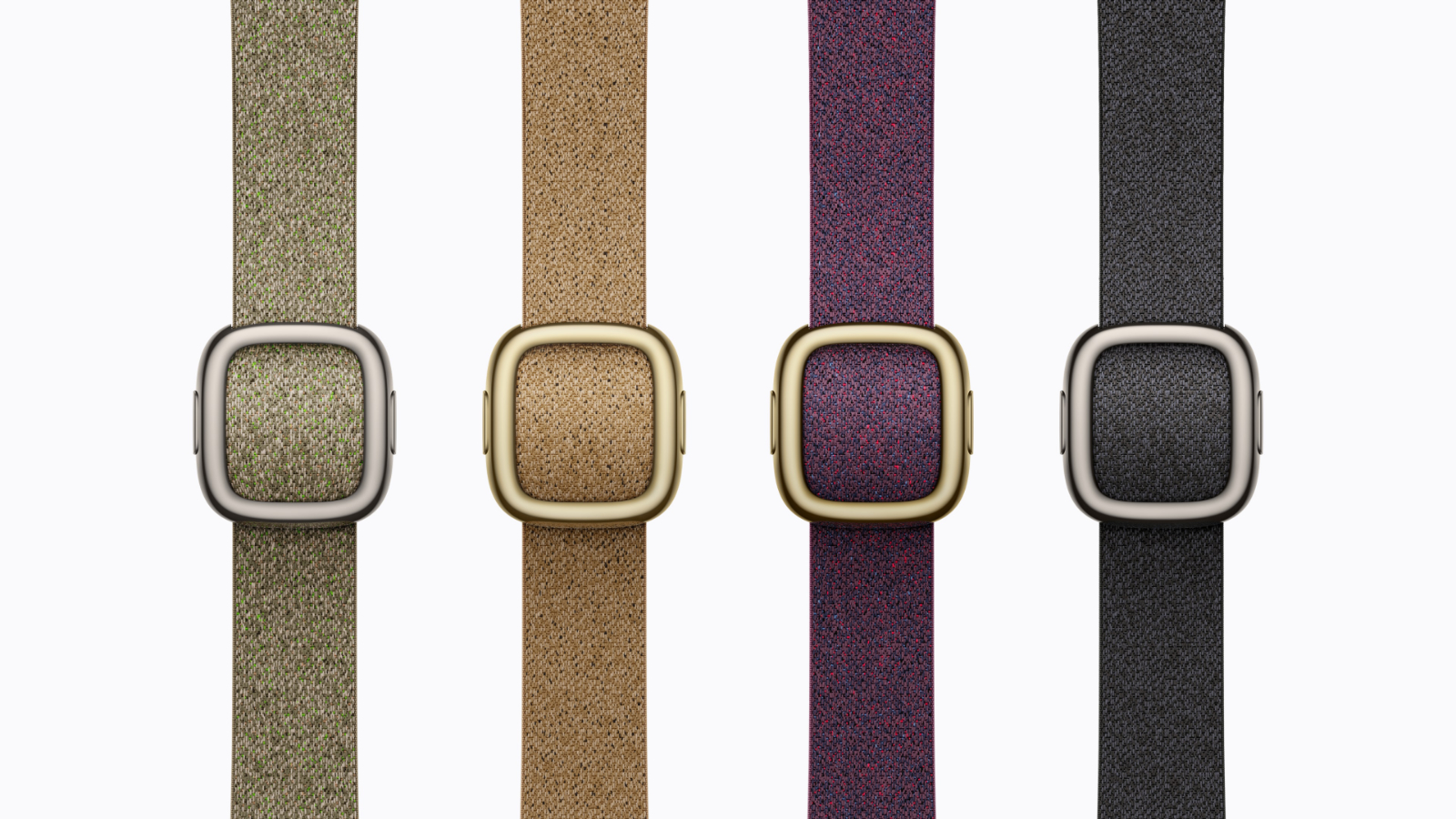
  • Modern Buckle: New woven material with flecks of color, in Mulberry, Camel, Sage, and Navy Blue, now available with gold hardware for the first time alongside natural hardware, priced at $199 (42mm only).

  • Magnetic Link: Available in Wildflower Blue, Burgundy, Camel, and Midnight, priced at $99.

  • Solo Loop: New Wildflower Blue, Burgundy, Olive, and Navy Blue colors, priced at $49.

  • Braided Solo Loop: New Olive, Magenta, Wildflower Blue, Burgundy, Navy Blue, and Black colors, priced at $99.

  • Trail Loop: New Dark Umber, Sand, and Burgundy colors for the Apple Watch Ultra 4, priced at $99 (49mm only).

  • Alpine Loop: New Desert, Dark Olive, and Burgundy colors for the Ultra 4, priced at $99 (49mm only).

  • Ocean Band: Now made from a translucent silicone material, offered in Translucent Gray, Translucent Kelp, and Translucent Black, priced at $99 (49mm only).

  • Hermès Noir Satin Clou de Selle: A new band with a gold-finish clasp and saddle stud, exclusively paired with the new Hermès radiant gold titanium case, priced at $499.

  • Hermès Rocabar Club: A new knitted H pattern band inspired by horse-jumping competitions, in four Bleu Nuit colorways paired with Gris Titane, Orange, Bleu Brighton, and Vert accents, priced at $499.

  • Hermès En Mer: A new water-resistant knit band for the Apple Watch Ultra 4 with a pillowed stripe and titanium buckle, in Argile, Bordeaux, Bleu Nuit, and Orange colorways, priced at $549 (49mm only).

  • Hermès Scub'H Diving: A new rubber band for the Ultra 4 with circular porthole-like cutouts, in Vert Vertigo, Gris Titane, and Bleu De Malte colorways, priced at $549 (49mm only).

  • Hermès Grand H Titane: A new titanium version of the Grand H bracelet for the Apple Watch Ultra 4, priced at $2,199 (49mm only).

  • Hermès Kilim Single Tour: Bleu De Malte, Cuivre, and Béton colorways, priced at $499.


The new Apple Watch bands are available to order today, with availability in stores beginning Friday, September 18.
Related Forum: Apple Watch

This article, "Apple Watch Series 12 and Ultra 4 Get Wave of New Bands" first appeared on MacRumors.com

Discuss this article in our forums
  •  

Apple Watch Series 12 Comes in New Finishes, Including Ceramic

Apple Watch Series 12 comes in a refreshed selection of case finishes and materials, including ceramic.


Here's a breakdown of the case types, finishes, and pricing across the new Apple Watch lineup:

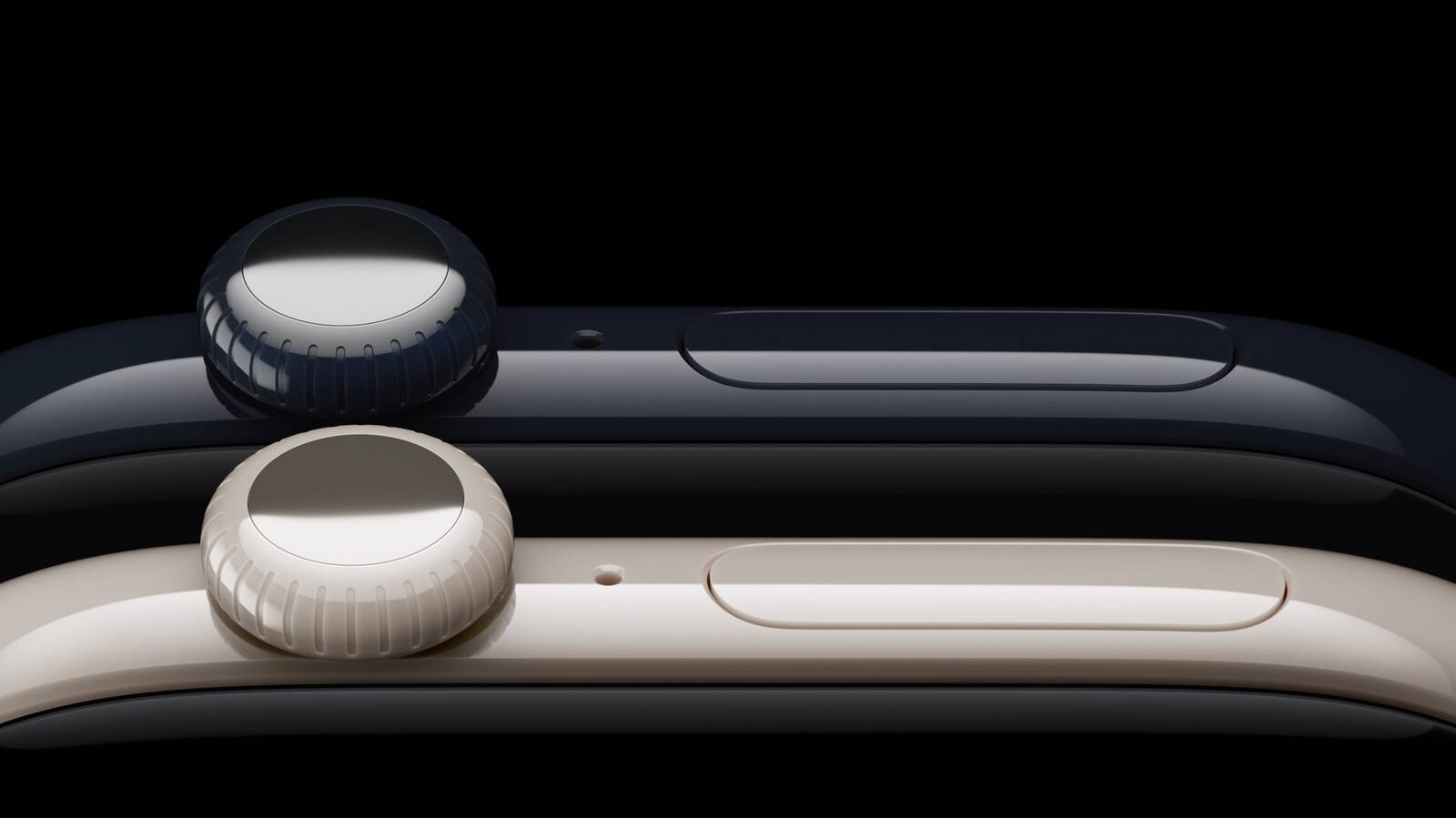
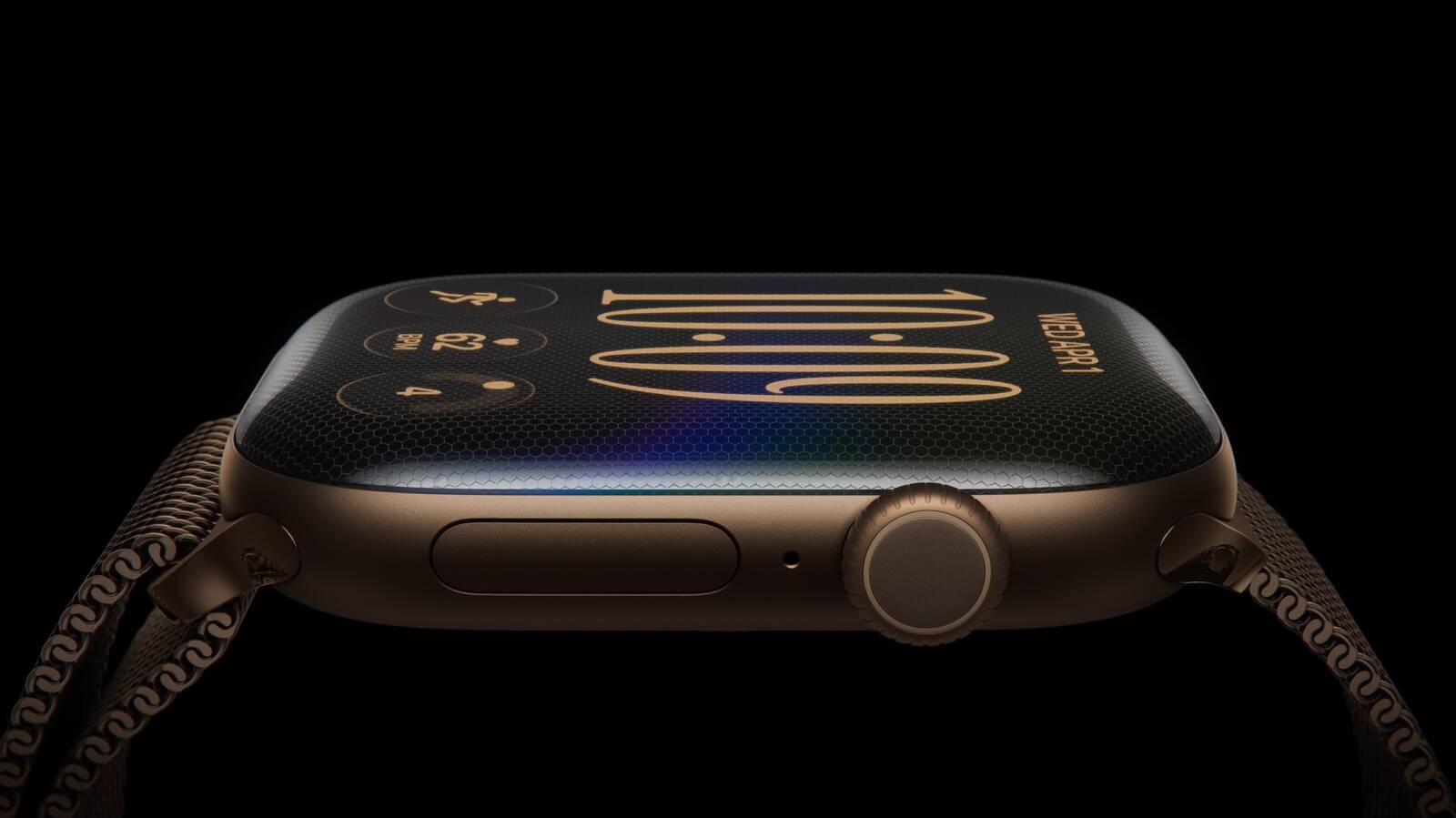
  • Apple Watch Series 12 (aluminum): Available in space gray, black, light gold, and dark bronze (starts at $399).

  • Apple Watch Series 12 (titanium): Available in radiant gold and natural (starts at $699).

  • Apple Watch Series 12 (ceramic): Available in pearl white and night blue (starts at $899).

  • Apple Watch Ultra 4 (titanium): Available in natural and black finishes (starts at $799).

  • Apple Watch Hermès Series 12 (titanium): Available in radiant gold and silver (starts at $1,399).
  • Apple Watch Hermès Ultra 4 (titanium): Available in natural titanium (starts at $1,499).


The ceramic finish returns with the Series 12 this year, pairing with sand and navy blue Sport Bands that feature a ceramic pin-and-tuck closure to match the case.

Pre-orders for both Apple Watch Series 12 and Apple Watch Ultra 4 are open today, with availability beginning Friday, September 18.
Related Roundup: Apple Watch 11

This article, "Apple Watch Series 12 Comes in New Finishes, Including Ceramic" first appeared on MacRumors.com

Discuss this article in our forums
  •  

Three All-New 'Audio Intelligence' Features Arrive With Apple Watch Series 12 and Ultra 4

Apple today announced "Audio Intelligence," a new suite of Apple Intelligence-powered features for the Apple Watch Series 12 and Apple Watch Ultra 4 that use the built-in microphone to help users catch missed moments in conversation and stay aware of important sounds.


The Apple Watch's Audio Intelligence comprises four features:


  • Siri Recap: Uses ambient listening to generate high-level notes from conversations, such as takeaways from a team meeting or a parent-teacher conference, producing an Apple Intelligence-generated title, summary, and key points reviewable in the Siri app.

  • Live Rewind: Lets users "go back in time for 15 seconds," transcribing and displaying what was just said in a conversation with a double press of the Digital Crown.

  • Shazam: Automatically identifies music playing nearby and surfaces the song title and artist on the Music Recognition widget in the Smart Stack.

  • Sound Recognition: Brings sound alerts to Apple Watch for users who are deaf or hard of hearing, listening for sirens, alarms, doorbells, a baby crying, and more, even when their iPhone isn't nearby.


Apple emphasized that ‌Siri‌ Recap is opt-in and configurable, telling users they "control if and when ‌Siri‌ Recap takes notes." Users can set it to always listen or schedule it for specific contexts, such as only at work or never at night, and can toggle it on or off at any time from Control Center. Apple reiterated that none of the Audio Intelligence features create or store audio recordings, with raw audio processed in an isolated Secure Exclave on the S11 chip and deleted immediately after use.

Audio Intelligence and ‌Siri‌ AI both require an Apple Intelligence-enabled iPhone, with Live Rewind and ‌Siri‌ Recap limited to the iPhone 16 or later (excluding the iPhone 16e).

The features arrive in beta later this year, starting in English, with additional languages to follow, and will not initially be available in the EU.
Related Forum: Apple Watch

This article, "Three All-New 'Audio Intelligence' Features Arrive With Apple Watch Series 12 and Ultra 4" first appeared on MacRumors.com

Discuss this article in our forums
  •  

Apple Watch Series 12 and Ultra 4 Offer These Eight New Health and Fitness Features

The Apple Watch Series 12 and Ultra 4 offer a range of new health and fitness features. Here's everything that's new.


Apple today revealed the following features for the two new devices:


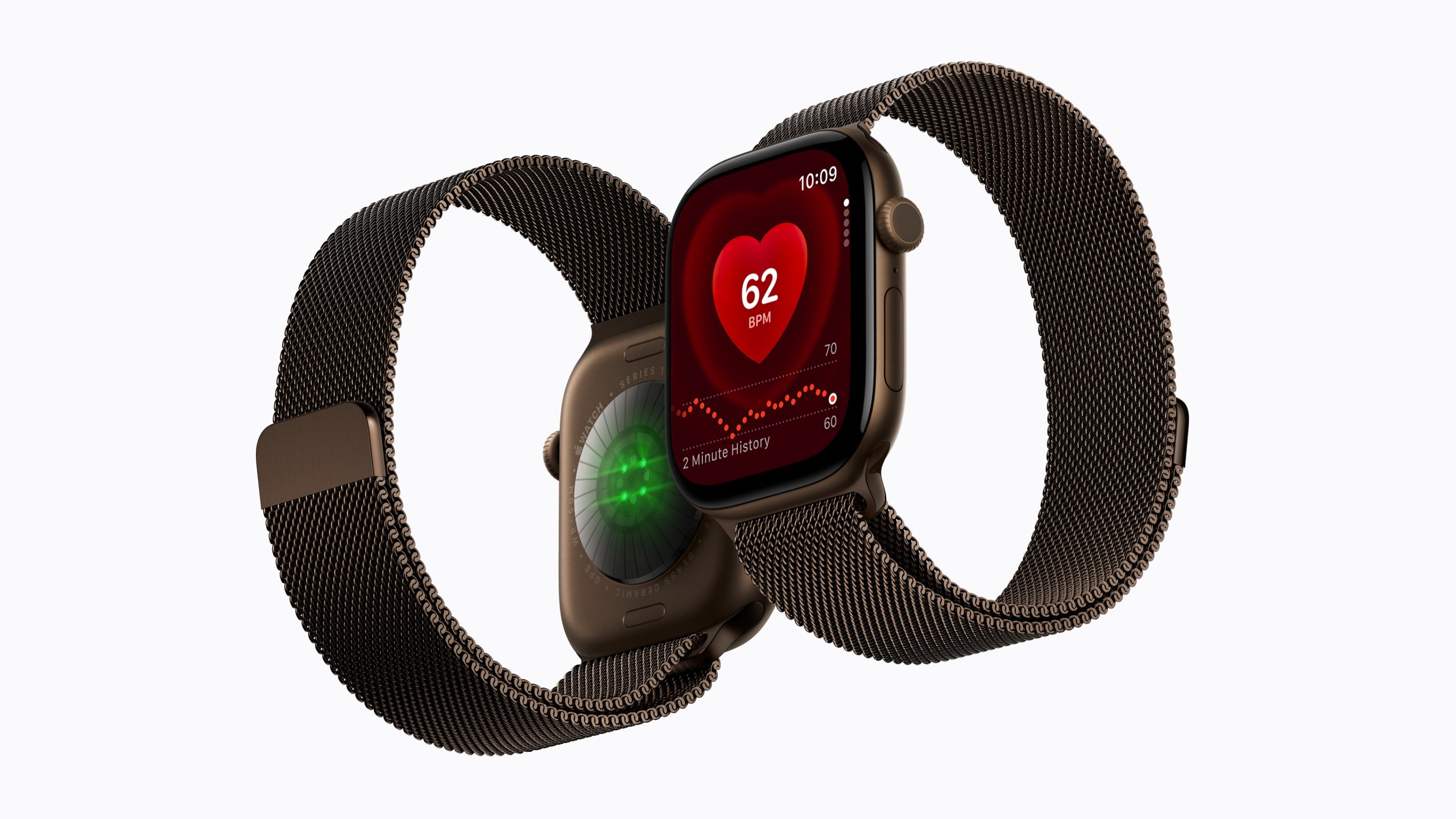
  • New "Health Sensing System": A redesigned sensor architecture with three main improvements, including increased electrode surface area for better ECG skin contact, photodiodes arranged in a ring for more efficient light capture, and larger, more power-efficient green LEDs for accurate heart rate readings during motion.

  • Continuous heart rate sensing: Heart rate is now measured every five seconds throughout the day, 60 times more frequently than before, viewable via a new watch face complication.

  • Higher-frequency HRV: Heart rate variability is sampled up to 24 times more often, with separate recovery and overall HRV values shown in a new section of the Heart Rate app.

  • Daytime vitals view: A new toggle lets users switch between overnight and daytime vitals, potentially catching shifts in metrics before they show up in overnight readings.

  • VO2 Max test: A new test has users set up their iPhone to watch them perform a series of exercises, delivering results immediately alongside data from their Apple Watch.

  • Most accurate step tracking: A redesigned pedometer model with new machine learning algorithms improves distance accuracy for indoor workouts and all-day step counts.

  • Steps complication: A brand-new watch face complication, enabled by the S11 chip, lets users track their step count in real time.

  • Longer workout battery life: Up to 10 hours during an outdoor workout, 25% more than the previous model, with 15 minutes of charging now delivering up to 12 hours of extra battery. The Apple Watch Ultra 4 goes further, with up to 50 hours of everyday battery life, 84 hours in Low Power Mode, and a new Max Extended Workout mode rated for up to 45 hours of outdoor tracking; 15 minutes of charging adds up to 18 hours of battery.


The Apple Watch Series 12 starts at $399 and the Apple Watch Ultra 4 starts at $799, with pre-orders for both open today and availability beginning Friday, September 18.
Related Forum: Apple Watch

This article, "Apple Watch Series 12 and Ultra 4 Offer These Eight New Health and Fitness Features" first appeared on MacRumors.com

Discuss this article in our forums
  •  

AirPods 5 Include ANC as Standard, Pricier Variant Now Gatekeeps Wireless Charging Instead

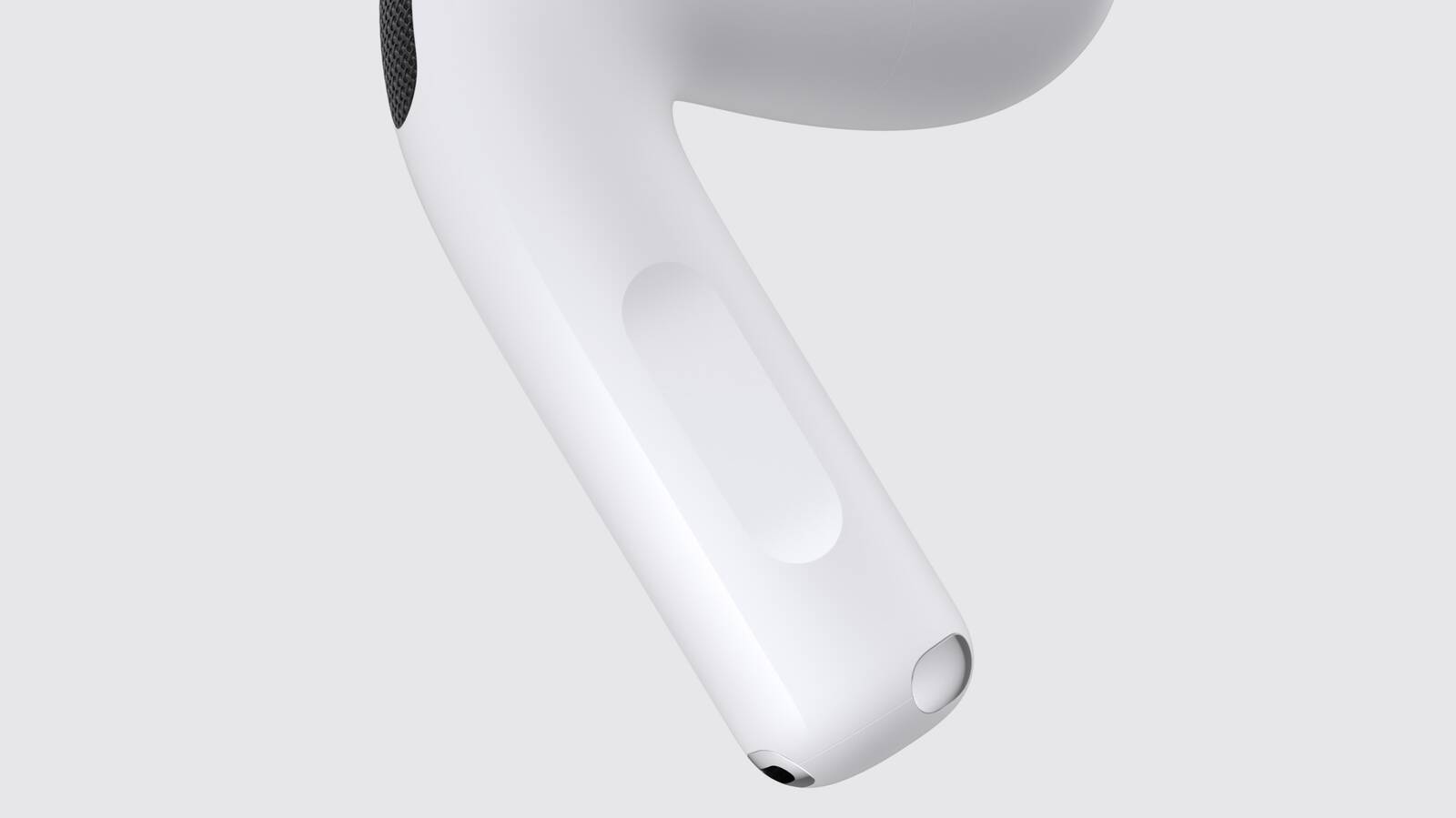
Apple no longer charges extra for Active Noise Cancellation on AirPods, folding it into the $129 AirPods 5 instead of reserving it for the higher-end model.


Apple today announced the AirPods 5. ANC now comes standard on the base model rather than being exclusive to its pricier variant, as it was with the outgoing AirPods 4, which cost $129 without ANC and $179 with it.

There is still a pricier version of the AirPods 5, called "AirPods 5 with Wireless Charging Case." This model starts at $149 and includes a force sensor with swiping volume controls, an hour of additional battery life with ANC enabled, and wireless charging. The ‌AirPods 4‌ with ANC were priced at $179.

AirPods 5 are available for pre-order starting today, with both the $129 and $149 models arriving in stores on Friday, September 18.
Related Roundup: AirPods 4
Buyer's Guide: AirPods (Caution)
Related Forum: AirPods

This article, "AirPods 5 Include ANC as Standard, Pricier Variant Now Gatekeeps Wireless Charging Instead" first appeared on MacRumors.com

Discuss this article in our forums
  •  

iPhone 18 Pro: Everything M6 Tells Us About the A20 Chip

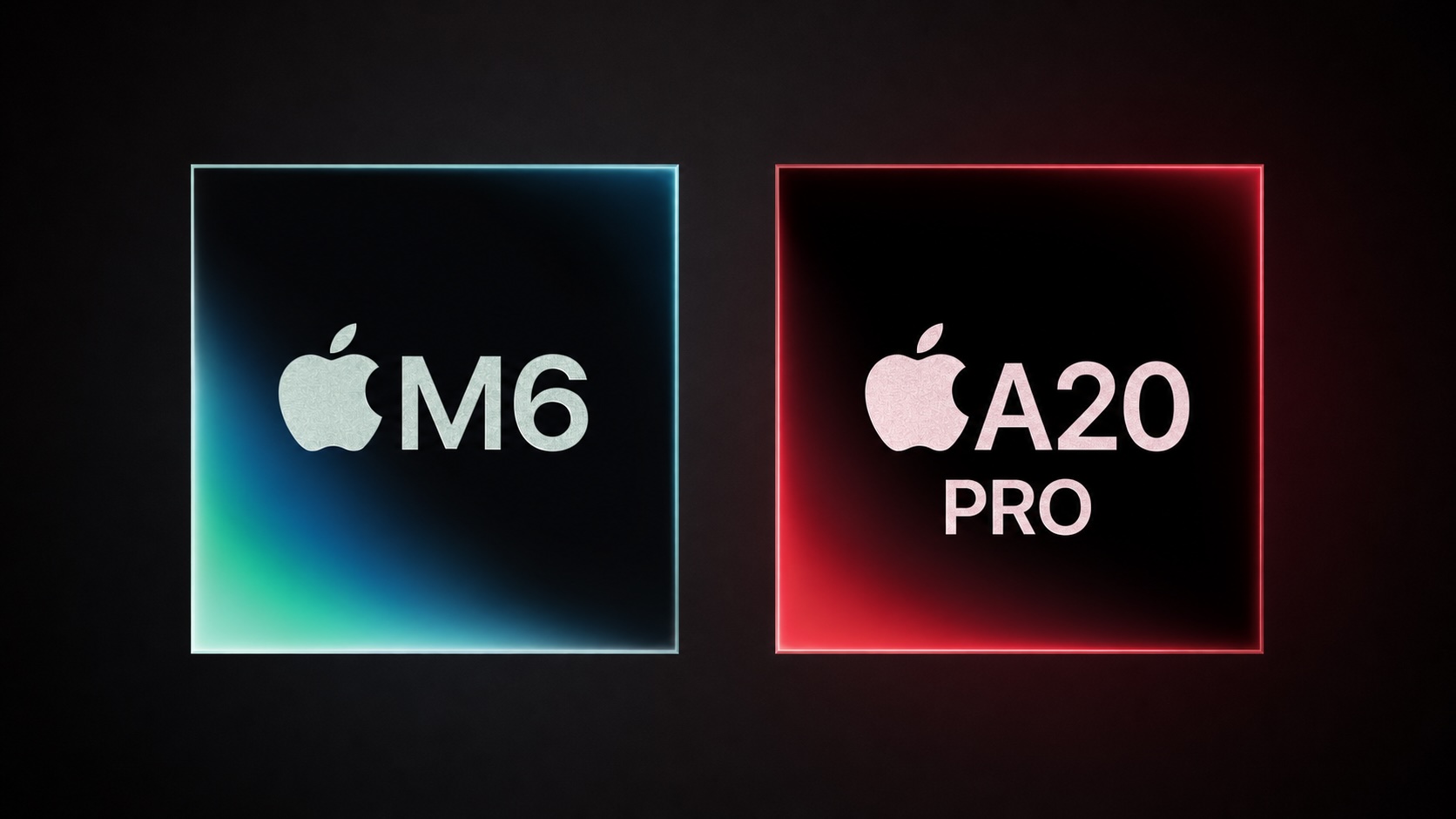
Apple announced the M6 chip last week, just ahead of its September iPhone event, providing the clearest indication yet of what the A20 will bring to the iPhone 18 lineup.


Apple silicon generations share much of their architecture across the A-series and the M-series, so a new A-series chip normally functions as a partial preview of the M-series chip that follows it. This year the order reversed; the M6 was revealed on August 25, ahead of the A20 Pro expected in the iPhone 18 Pro this month.

Recent reports place the A20 Pro at up to 18% faster and up to 30% more power efficient than the A19 Pro, which is broadly similar to the M6 over the M5.

Apple's First 2nm iPhone Chip


The M6 is Apple's first chip built on TSMC's 2nm (N2) process, with the second almost certain to be the A20. Being a smaller manufacturing process, N2 has higher transistor density, allowing Apple to pack more performance into a smaller area.

Apple has historically debuted new nodes on the A-series, since iPhone volume validates yields, so introducing N2 in an $899 Mac mini represents a change. As such, reports that the A20 and A20 Pro will move to N2 are now supported by a shipping product rather than analyst predictions. The consequence for the iPhone event is that the "Apple's first 2nm chip" claim is no longer available.

Dual Neural Engine?


The iPhone's Neural Engine has remained at 16 cores and approximately 35 trillion operations per second since the A17 Pro, spanning three generations. The M6 introduces a Dual 16-core Neural Engine, which Apple says system frameworks can address simultaneously for up to 2x the peak compute of previous generations.

The change corresponds with the reported move to WMCM packaging, which integrates memory onto the same wafer as the CPU, GPU, and Neural Engine to shorten the path between them. It is possible that die area and thermal constraints may limit a dual engine to the A20 Pro.

GPU AI Gains Are Now Incremental


Apple said the M5 delivered over 4x the peak GPU compute for AI compared to the M4, reflecting the introduction of Neural Accelerators within each GPU core. The M6 is rated at nearly 30% over the M5.

The A19 Pro recorded a comparable 4x improvement on the iPhone 17 Pro last September for the same architectural reason. Second-generation Neural Accelerators consequently appear to represent a refinement rather than another step change, suggesting the A20 Pro will not repeat the A19 Pro's headline figure.

Graphics Improvements Should Carry Across


The M6 adds 50% increased geometry rates, an updated shader core architecture, revised Dynamic Caching, and hardware-accelerated ray tracing. These are architectural changes and comparable graphics work has historically appeared across both the A-series and M-series within the same generation.

Memory Bandwidth Suggests a Modest A20 Gain


Memory bandwidth determines how quickly data moves between the memory and the processor, and it is the main constraint on running large language models on device. The M6 provides up to 170GB/s, which Apple describes as a 10% increase over the M5's 153.6GB/s.

That increase is small enough to indicate Apple is using a faster grade of the same LPDDR5X memory rather than moving to the newer LPDDR6 standard, which would have delivered a far larger jump. Reports indicate Apple is sourcing high-speed LPDDR5X from Samsung for the ‌iPhone 18‌ lineup, and the M6 is consistent with that.

The implication for the A20 is that memory bandwidth is unlikely to improve dramatically. The A19 Pro is rated at 76.8GB/s, and a similar 10% uplift would take the A20 Pro to roughly 85GB/s. Any meaningful gain in how quickly the ‌iPhone 18 Pro‌ loads and runs on-device models is therefore more likely to come from WMCM packaging shortening the distance data travels than from the memory itself.

AV1 Encode Remains Absent


The M6 Media Engine supports hardware-accelerated H.264, HEVC, ProRes, and ProRes RAW, with AV1 decode but no AV1 encode, matching the M5. The omission on a new process node in a desktop chip makes its inclusion in the A20 Pro highly unlikely.
Related Roundups: iPhone 18, iPhone 18 Pro
Related Forum: iPhone

This article, "iPhone 18 Pro: Everything M6 Tells Us About the A20 Chip" first appeared on MacRumors.com

Discuss this article in our forums
  •  

The MacRumors Show: iPhone 18 Pro Event Expectations

Ahead of Apple's "Surprise and shine" event on September 9, we talk through everything to expect on this week's episode of The MacRumors Show.


The event begins at 10:00 a.m. Pacific Time at the Apple Park campus in Cupertino, California, and will be streamed on Apple's website, on YouTube, and through the Apple TV app. It is the first keynote since John Ternus succeeded Tim Cook as chief executive on September 1. Rumors suggest at least six new products will arrive at the event.

The Apple Watch Series 12 is expected to add a new chip, improved fitness tracking, better battery life, continuous heart-rate collection, and redesigned Health and Fitness experiences. A ceramic case option may return in white or dark gray, but no major redesign or Touch ID is now expected.

The Apple Watch Ultra 4 should receive the same new chip and health upgrades, again without a redesign. Apple may also expand its existing satellite connectivity features on the device with satellite Apple Maps and photo sharing in Messages.

AirPods 5 is expected to arrive in two versions, with and without active noise cancellation. Both may use an H3 chip for improved sound and lower latency, but are not expected to add the AirPods Pro 3's heart-rate sensor.

The iPhone 18 Pro should retain the iPhone 17 Pro's design while gaining an A20 Pro chip on TSMC's 2nm process, with RAM integrated on the same wafer. Other expected upgrades include a LTPO+ display, Samsung image sensor, simplified Camera Control without a capacitive layer, a narrower Dynamic Island, 12GB of RAM, 256GB base storage, and 5G satellite internet. It may use Apple's C2 modem outside the U.S., while U.S. models will likely retain Qualcomm hardware for mmWave connectivity.

The ‌iPhone 18 Pro‌ Max should share the smaller models's upgrades while adding a 5,391mAh battery in China and 5,567mAh battery in the U.S.. It may be thicker, heavier, and around 243 grams, with a variable-aperture main camera that could be exclusive to the larger device.

The foldable iPhone, likely called the "iPhone Ultra," is expected to be the biggest announcement, using a wide passport-style design with 5.5-inch outer and 7.8-inch inner displays, an iPad-like 4:3 aspect ratio, and a nearly invisible screen crease. It may feature a titanium-and-aluminum chassis, liquid-metal hinge, vapor-chamber cooling, A20 Pro chip, dual 5,400mAh to 5,800mAh batteries, ‌Touch ID‌ power button instead of Face ID, rear wide and ultra wide cameras, dual selfie cameras in hole-punch cutouts, and the Camera Control button, with 256GB, 512GB, and 1TB storage options. It is also expected to be more repairable than rival foldables.

The MacRumors Show has its own YouTube channel, so make sure you're subscribed to keep up with new episodes and clips.


You can also listen to ‌The MacRumors Show‌ on Apple Podcasts, Spotify, Overcast, or other podcast apps. You can also copy our RSS feed directly into your player.


If you haven't already listened to the previous episode of The MacRumors Show, catch up to hear our discussion about the new Mac mini and Mac Studio, the M6 and M5 Ultra chips, and invites to Apple's September event.

Subscribe to ‌The MacRumors Show‌ for new episodes every week, where we discuss some of the topical news breaking here on MacRumors, often joined by interesting guests such as Michael Fisher, Kayci Lacob, Kevin Nether, John Gruber, Mark Gurman, Jon Prosser, Luke Miani, Matthew Cassinelli, Brian Tong, Quinn Nelson, Jared Nelson, Eli Hodapp, Mike Bell, Sara Dietschy, iJustine, Jon Rettinger, Andru Edwards, Arnold Kim, Ben Sullins, Marcus Kane, Christopher Lawley, Frank McShan, David Lewis, Tyler Stalman, Sam Kohl, Federico Viticci, Thomas Frank, Jonathan Morrison, Ross Young, Ian Zelbo, and Rene Ritchie.

‌The MacRumors Show‌ is on X @MacRumorsShow, so be sure to give us a follow to keep up with the podcast. You can also email us at podcast@macrumors.com or head over to The MacRumors Show forum thread. Remember to rate and review the podcast, and let us know what subjects and guests you would like to see in the future.
Related Roundup: iPhone 18 Pro

This article, "The MacRumors Show: iPhone 18 Pro Event Expectations" first appeared on MacRumors.com

Discuss this article in our forums

  •  

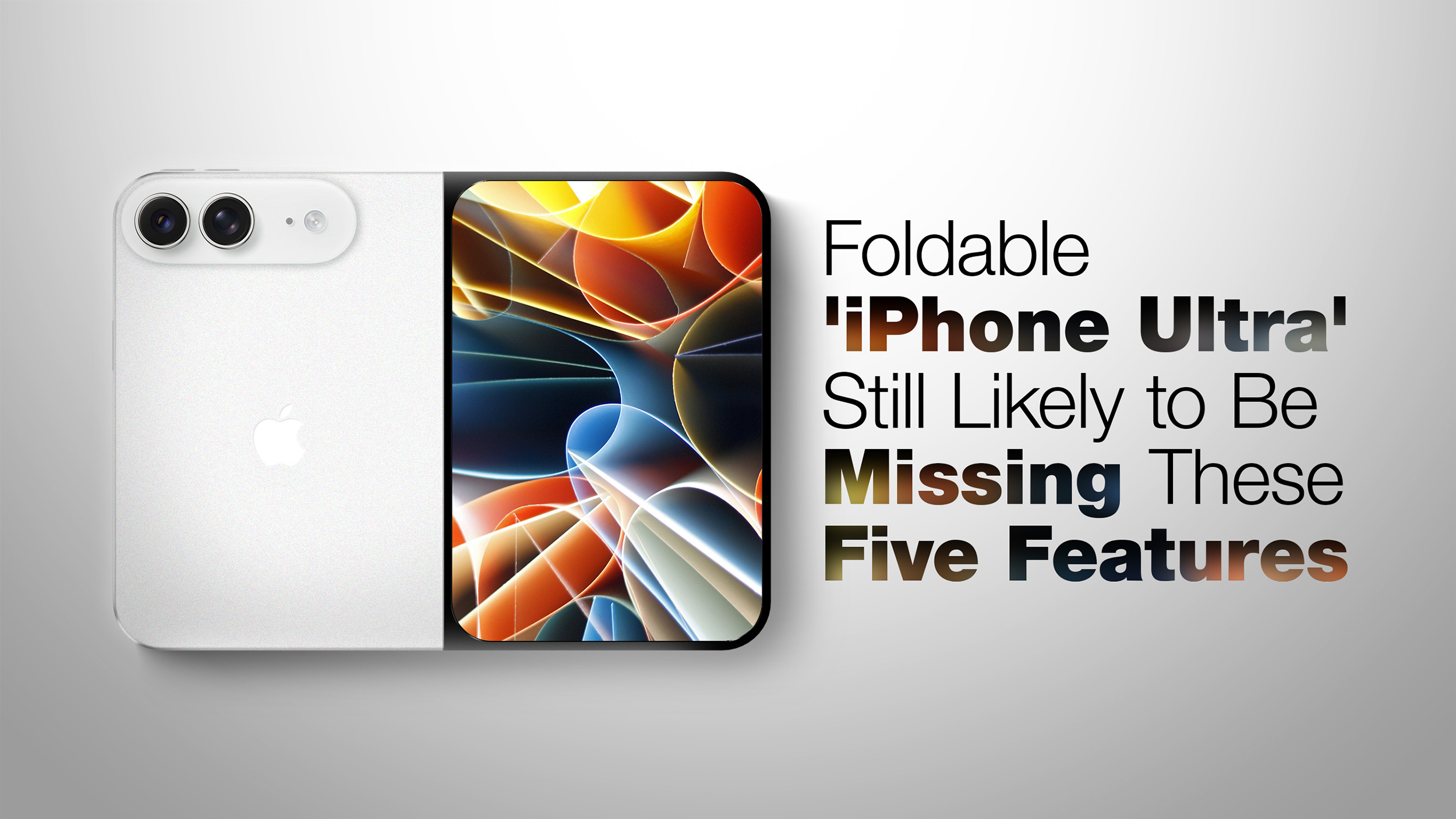
Foldable 'iPhone Ultra' Still Likely to Be Missing These Five Features

Apple's first foldable iPhone, dubbed the "iPhone Ultra," is expected to launch without at least four features that will be present on the iPhone 18 Pro models, despite a price tag of at least $2,000.


The iPhone Air lacks Ultra Wide and Telephoto rear cameras, a SIM card slot, and stereo speakers. With a super thin design, a titanium frame, and a glass back, the ‌iPhone Ultra‌ is expected to be very similar to the ‌iPhone Air‌ in terms of design, and it is possible that similar concessions will be present on the device. There are no indications that the ‌iPhone Ultra‌ will be missing stereo speakers, but it is not out of the question given the other compromises Apple has chosen to make. Based on over a year of reports and rumors, the ‌iPhone Ultra‌ could be missing the following features:


  • Face ID/TrueDepth camera array

  • Telephoto camera/third rear camera

  • Action button

  • Physical SIM card slot

  • mmWave 5G


MagSafe was originally in question earlier in the rumor cycle.


Face ID


The ‌iPhone Ultra‌ is believed to be too thin to accommodate Apple's TrueDepth camera array, which is required for ‌Face ID‌ authentication, so Apple is expected to revert to a Touch ID side button instead.

There will still be a front-facing camera for both displays, with the inner one rumored to be a 24-megapixel under-display sensor, but biometric authentication will be handled by the fingerprint reader.

The last flagship iPhone with Touch ID was 2016's iPhone 7. The ‌iPhone 18 Pro‌ models are moving in the opposite direction, apparently relocating ‌Face ID‌'s flood illuminator beneath the screen to shrink the Dynamic Island.

Telephoto Camera


As visible on dummy models shared by Sonny Dickson, Vadim Yuryev, and others, the ‌iPhone Ultra‌ is expected to sport only two rear cameras. These are believed to be 48-megapixel Wide and Ultra Wide lenses, with no third Telephoto camera of the kind found on the Pro models.

Bloomberg's Mark Gurman said last month that the people who have used the device are impressed by it, but singled out the camera system as the most likely disappointment for buyers.

Action Button


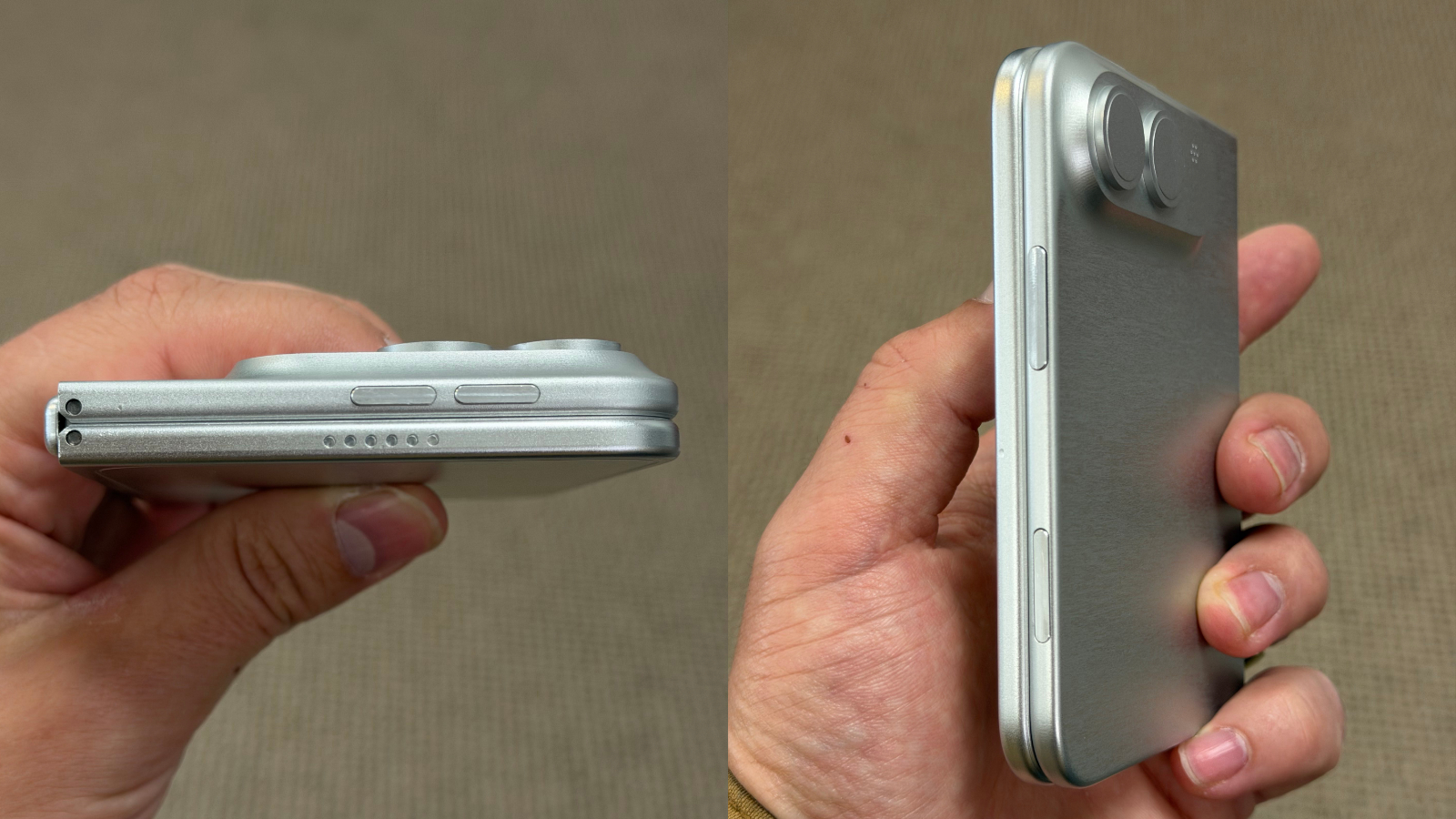
Dummy models continue to point to the absence of the Action button. A power button and volume buttons are clearly visible, with the volume buttons located on the top edge of the device and aligned to the right, similar to the iPad mini, but the left edge appears to be entirely bare. That would make the ‌iPhone Ultra‌ the first iPhone with no Action button or silent switch, some three years after Apple introduced the Action button on the iPhone 15 Pro as a replacement for the switch.

The unusual button layout was first rumored by Weibo leaker "Instant Digital," who said that the motherboard sits on the right side of the device. Rather than run cables across the display to the left side, where the volume buttons are located on every other iPhone, Apple is said to have decided to run them directly upwards to maximize internal space.

Image via Vadim Yuryev.


SIM Card Slot


Rumors indicate that the ‌iPhone Ultra‌ will also lack a SIM card slot, just like the ‌iPhone Air‌, being compatible with eSIM only. Gurman and analyst Ming-Chi Kuo both expect the device to be eSIM only in every market where it launches.

mmWave 5G Connectivity


The device is likely to miss mmWave 5G if it features Apple's in-house C2 modem as rumored, since reports indicate the C2 may still lack mmWave capability. ‌iPhone 18 Pro‌ models sold in the United States are expected to retain Qualcomm hardware because they support the mmWave bands used by American carriers. Apple does not sell mmWave-capable iPhones outside the U.S.

The ‌iPhone Ultra‌'s C2-based configuration would therefore advance Apple's modem transition, just like the ‌iPhone Air‌, but could limit the device to sub-6GHz 5G.

MagSafe?


Bloomberg's ‌Mark Gurman‌ has now indicated that ‌MagSafe‌ will make it into the device after all. Speaking in an interview with Tom's Guide, Gurman said "all indications that I've heard is that ‌MagSafe‌ is in for this foldable phone," pointing to the fact that Apple managed to fit the magnet array into the ‌iPhone Air‌.

The uncertainty stemmed from the dummy models of the device that emerged earlier this year. Units shared by Dickson and Yuryev showed no indentations for the internal ‌MagSafe‌ magnets, while the mock ‌iPhone 18 Pro‌ and ‌iPhone 18 Pro‌ Max units shown alongside them clearly did. Leaked cases for the foldable, on the other hand, included a magnetic ring, leaving the question open until recently.

Image via Vadim Yuryev.


Price and Launch


The rumored starting price for the ‌iPhone Ultra‌ varies, but reports agree that it will not be below $1,999, with Kuo placing it somewhere between $2,000 and $2,500. The iPhone 17 Pro starts at $1,099 and has all of the above features, and while the ‌iPhone 18 Pro‌ is expected to see a price increase of $200 to $300, the ‌iPhone Ultra‌'s compromises could still prove controversial.

Apple will almost certainly unveil the device alongside the ‌iPhone 18 Pro‌ and ‌iPhone 18 Pro‌ Max at its "Surprise and Shine" event on Wednesday, September 9.
Related Roundup: iPhone Fold

This article, "Foldable 'iPhone Ultra' Still Likely to Be Missing These Five Features" first appeared on MacRumors.com

Discuss this article in our forums

  •  
❌