❌

Normale Ansicht

Google Translate uses AI to help you practice pronunciation

Google is celebrating Translate’s 20th birthday by launching pronunciation practice, which the company says is one of the most requested features for the product. The feature is only rolling out on Android at the moment for English, Spanish and Hindi in the US and India. If it’s available for you, you’ll see a button at the bottom of the app that says “Practice,” which gives you the option to either “pronounce” what you’ve translated or to “listen” to how it’s actually pronounced by native speakers.

If you choose the “pronounce” option, Translate will listen to you speak and then use artificial intelligence to analyze how you said the words to provide instance feedback. It will then show you a phonetic spelling of how specific words should be pronounced. In the example Google provided, for instance, the speaker pronounced the Spanish word for juice as “jugo” with the English “j” sound instead of with the Spanish “j” sound. So, Translate spells it out as “HU-go” in its pronunciation suggestion.

Google said around third of users on mobile use Translate to practice speaking and listening in order to be able to hold real-world conversations, making this new feature a very useful addition. The company also revealed other stats about the app. Apparently, it now supports over 250 languages, including some endangered and indigenous ones, and has over 1 billion monthly user who have been translating over 1 trillion words every month.

This article originally appeared on Engadget at https://www.engadget.com/ai/google-translate-uses-ai-to-help-you-practice-pronunciation-160000542.html?src=rss

©

  •  

Union accuses Apple of unlawful discrimination against represented workers

The International Association of Machinists and Aerospace Workers (IAM) union has accused Apple of unlawfully discriminating against the unionized employees of the company’s Towson, Maryland retail store. IAM has filed an unfair labor practice charge against Apple with the National Labor Relations Board (NLRB) after the company announced on April 9 that it was shutting down three of its US stores. One of those locations was the Towson retail outlet, which employed nearly 90 workers and became the first Apple Store in the country to unionize back in 2022.

In its complaint, IAM said that Apple didn’t offer the employees it represents the transfer opportunities it provided to non-unionized employees from its other stores. Unlike those non-represented employees, Towson personnel were allegedly told that they had to reapply for positions through the same process as external candidates. “Apple is denying union-represented workers the same opportunities it is giving to others — and doing so because these workers chose to organize,” the organization said. “That is discrimination, and it is exactly what federal labor law is designed to prevent.”

In addition to the Towson location, Apple also shut down its stores in Trumbull, CT, Escondito, CA. Back when the closures were announced, IAM said that “Apple’s claim that the collective bargaining agreement prevents relocation is simply false and raises serious concerns that [the] closure is a cynical attempt to bust the union.”

This article originally appeared on Engadget at https://www.engadget.com/big-tech/union-accuses-apple-of-unlawful-discrimination-against-represented-workers-094531505.html?src=rss

©

  •  

Tesla is giving away one year free Supercharging with Model 3 Premium and Performance purchases

Tesla completely ended its free lifetime Supercharging offer way back in 2018, but it has given customers the perk for certain promotions since then. It brought back free Supercharging for Model S and X a couple of times in 2019, for instance. The automaker’s latest offer is for new purchases for a Model 3 Premium or Performance vehicle in North America. On its website, Tesla has announced that it’s including one year of free supercharging with a Model 3 Premium or Performance, though the offer is “subject to change or end at any time.”

As Electrek notes, this is a nice freebie to have but most likely not a deciding factor for people who charge at home. For those who don’t have access to a home charger, however, this could represent significant savings.

The free Supercharging offer starts at delivery and cannot be postponed or redeemed for cash. Owners will also still have to pay certain fees, such as congestions fees that the automaker adds if a vehicle remains plugged into a Supercharger after its battery reaches 80 percent when a site is busy. The offer doesn’t apply to vehicles used for commercial purposes, such as ridesharing, taxi and delivery services, as well. As for those who traded in their gas vehicles to get the 2,000-mile Supercharging incentive, they can enjoy this freebie first and redeem those miles after their first year of ownership.

This article originally appeared on Engadget at https://www.engadget.com/transportation/evs/tesla-is-giving-away-one-year-free-supercharging-with-model-3-premium-and-performance-purchases-144431817.html?src=rss

©

  •  

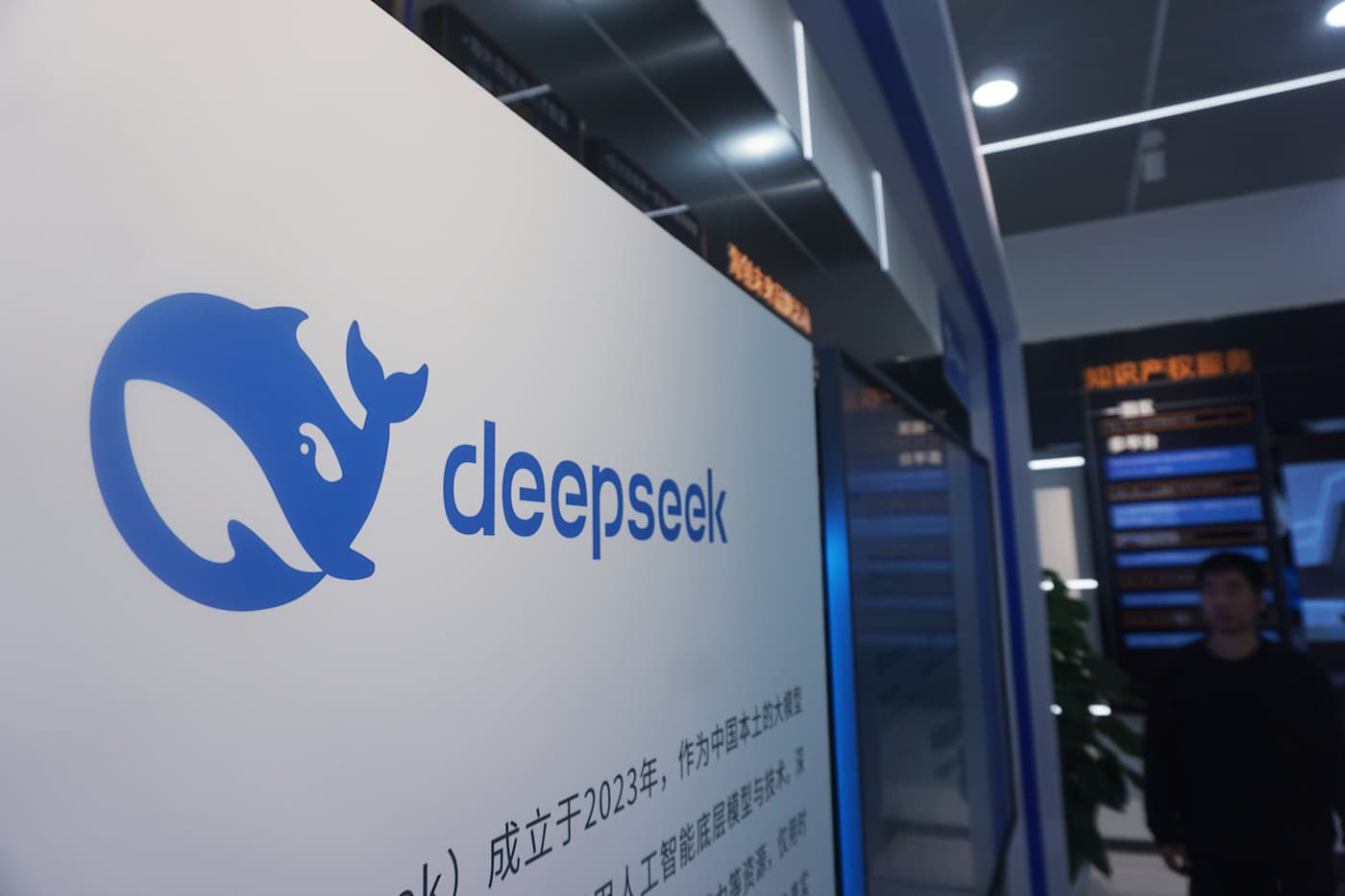
DeepSeek promises its new AI model has 'world-class' reasoning

DeepSeek has released its latest AI models, the V4 Pro and Flash versions, a bit over a year after it went viral and became the top rated free app on Apple's App Store in the US. “Welcome to the era of cost-effective 1 million context length,” DeepSeek said in its announcement. Context length is what you call the maximum number of tokens that an AI model can remember, so the bigger it is, the more coherent and consistent an AI is when it comes to extended conversations. OpenAI’s recently announced GPT‑5.5 has a context window ranging from 400,000 to 1 million, for instance.

The new model is still open-source, allowing users to download its code and modify it if they want. DeepSeek says V4 Pro has enhanced agentic capabilities and claims that it rivals top closed-source models when it comes to reasoning. It also says that it trails only Gemini-3.1-Pro in rich world knowledge. Meanwhile, V4 Flash isn’t quite as powerful as the V4 Pro, but it has faster response times. Still, its reasoning abilities closely approach V4 Pro, DeepSeek says, and it performs on par with with the Pro version on simple Agent tasks.

Shortly after DeepSeek topped the App Store charts, it was banned for use by US federal agencies and on government-owned devices. Authorities believed it was a national security risk and posed a threat to US AI stocks. South Korea also paused downloads of its app over privacy concerns.

🚀 DeepSeek-V4 Preview is officially live & open-sourced! Welcome to the era of cost-effective 1M context length.

🔹 DeepSeek-V4-Pro: 1.6T total / 49B active params. Performance rivaling the world's top closed-source models.
🔹 DeepSeek-V4-Flash: 284B total / 13B active params.… pic.twitter.com/n1AgwMIymu

— DeepSeek (@deepseek_ai) April 24, 2026

This article originally appeared on Engadget at https://www.engadget.com/ai/deepseek-promises-its-new-ai-model-has-world-class-reasoning-115733512.html?src=rss

©

  •  

X finally adds custom timelines

Nikita Bier, X’s head of product, has announced the launch of custom timelines, which lets you curate what you see on your feed based on your topics of interest. He called the update “one of the biggest changes to X” and a ”huge undertaking” that took the team “many months” to develop. The feature lets you pin specific topics to your home tab, so you can switch from one to the other to see the latest discussions about your interests and hobbies.

Bier said that X’s custom timelines is “powered by Grok's understanding of every post with the algorithm's personalization.” You have 75 topics to choose from, including food, art, photography, business, finance, movies and TV. As you’d expect, the personalization aspect of the feature works better if it’s a topic you already engage with regularly. X’s new feature is similar to Bluesky’s and Threads’ custom feeds, which also allow you to pin topic-based timelines to the home screens of the apps, and which their users have been enjoying since 2023 and 2024, respectively.

At the moment, X’s custom timelines is still in its early access phase and is only available to Premium subscribers on iOS. It will be rolling out to Premium users on Android “very soon,” as well. Bier has also announced that X has released a tool to snooze topics on the For You tab. With the tool, you’ll be able to hide certain topics, such as politics or sports, for 24 hours from your feed. It’s now available for Premium users on iOS and the web.

Ladies and gentlemen, today we're launching one of our biggest changes to 𝕏

Introducing Custom Timelines

This feature allows you to pin a specific topic to your home tab. With support for over 75 topics, you can dive deep into your favorite niche on X.

It's powered by Grok's… pic.twitter.com/9jkIEXvubj

— Nikita Bier (@nikitabier) April 21, 2026

This article originally appeared on Engadget at https://www.engadget.com/social-media/x-finally-adds-custom-timelines-103130966.html?src=rss

©

  •  

Amazon allegedly pressured companies to raise product prices with other retailers

Rob Bonta, the Attorney General of California, has released an unredacted copy of a legal document that the state filed in relation to its lawsuit against Amazon, containing details of the company’s alleged price fixing scheme. In it, the state of California accuses the e-commerce company of reaching out to brands and asking them to “fix” the retail prices of their products on competitors’ websites. Due to Amazon’s “overwhelming bargaining leverage” and out of fear of punishment, the brands agree to raise their products’ prices on other retailers like Walmart and Target or to remove them altogether, the filing reads.

California filed an antitrust lawsuit accusing Amazon of price fixing back in 2022. It said the company prevented sellers from offering lower prices on other sites and that vendors risked losing buy buttons and prominent listings if they defied Amazon. In February this year, Bonta filed for a preliminary injunction, asking the court to put a stop to Amazon’s “illegal conduct” while the state’s lawsuit is ongoing and waiting to go to trial next year.

In the unredacted filing, California said that Amazon instructs vendors and brands to increase their prices on other retailers and threatens them with “significant penalties for failure to comply.” State officials gave several examples in the filing, including one incident wherein Amazon allegedly emailed security systems provider Arlo.

The company talked to Arlo about “external price matching,” along with a screenshot of one of its cameras on Walmart, noting that its price of $549.93 “did not go back up.” Arlo reportedly responded that it would get it addressed, and Amazon told the company to “get [it] corrected by EOD.” Afterward, Arlo sent Amazon a screenshot, showing the same Walmart page now listing the camera’s price at $649.99. Amazon ended the conversation by thanking Arlo for its “quick action.” Other samples include Amazon asking Levi’s to “resolve” the lower prices of its khaki pants on Walmart and Hanes to increase the prices of its clothing items on Walmart and Target.

Amazon shrugged off the filing’s release and called California’s case against the company weak. “The Attorney General’s motion is a transparent attempt to distract from the weakness of its case, coming more than three years after filing its complaint and based on supposedly ‘new’ evidence it has had for years,” an Amazon spokesperson told Engadget. “Amazon is consistently identified as America’s lowest-priced online retailer, and we’re proud of the low prices customers find when shopping in our store. Amazon looks forward to responding in court at the appropriate time.”

This article originally appeared on Engadget at https://www.engadget.com/big-tech/amazon-allegedly-pressured-companies-to-raise-product-prices-with-other-retailers-115302642.html?src=rss

©

  •  

Instagram says a bug turned your photos black and white

If Instagram has been turning your color photo posts into black and white recently, don’t worry, there’s no problem with your camera or your account. The Meta-owned app has confirmed to Engadget that the issue is caused by a bug that’s affecting HDR photos in particular. "Earlier today, a technical issue caused some HDR photos to appear incorrectly as black-and-white for a subset of accounts,” Instagram has told us. However, we see complaints dated April 18 and 19, so the issue has been going on a bit longer for some people.

Regardless of when the bug started causing problems, the Instagram team said it has since corrected the issue. If your posts are still showing up in black and white, Instagram said the fix will automatically turn your affected photo posts back to their original state over the next few hours. “We apologize for any inconvenience,” they added.

This article originally appeared on Engadget at https://www.engadget.com/apps/instagram-says-a-bug-turned-your-photos-black-and-white-061802389.html?src=rss

©

  •  

Anthropic will ask Claude users to verify their identities 'for a few use cases'

Anthropic has started rolling out identity verification on Claude “for a few use cases.” The company didn’t list out those use cases in its announcement, but we’ve asked it for details and will update this post when we hear back. Anthropic says you might see a verification prompt upon “accessing certain capabilities,” asking you to verify your identity. You would have to show a valid and physical government-issued photo ID. You’d also have take a selfie with your phone or computer camera that the system will compare against the ID you present. 

The news, as you’d expect, wasn’t well-received. Many users are questioning the necessity of identity verification to be able to use an AI chatbot, especially if Anthropic already has their credit cards on file as paying subscribers. People are also criticizing Anthropic’s decision to use Persona Identities, which also provides age verification services for OpenAI and Roblox. One of Persona’s major investors is venture firm Founders Fund, which was co-founded by Peter Thiel, who’s also the co-founder and chairman of surveillance company Palantir. 

Palantir’s customers are mostly federal agencies and government offices, including the FBI, the CIA and US Immigration and Customs Enforcement. Most criticisms against the company center around the services it provides those customers, as they’re mainly used to expand government surveillance using its facial recognition and AI technologies. 

In its announcement, Anthropic said that Persona will be the one handling your IDs and selfies. It will not copy and store those images. It also said that Persona is “contractually limited” in how it can use your data and that all data passing through its process is “encrypted in transit and at rest.” Anthropic emphasized that it will not use your identity data to train its models and that it will not share your data with anyone else. 

Update April 16, 2026, 11:35AM ET: Reached for comment, an Anthropic spokesperson told Engadget that "this applies to a small number of cases where we see activity that indicates potentially fraudulent or abusive behavior, which violates our usage policy."

This article originally appeared on Engadget at https://www.engadget.com/ai/anthropic-will-ask-claude-users-to-verify-their-identities-for-a-few-use-cases-115754092.html?src=rss

©

© picture alliance via Getty Images

07 March 2026, Bavaria, Munich: The logo of the Claude app can be seen on the display of a smartphone in Munich (Bavaria, Germany) on March 7, 2026, while a finger taps on the app's icon. Claude is an AI chatbot and a large language model (LLM, artificial intelligence, chatbot) developed by Anthropic, a company founded by former OpenAI employees. (icon, pointing finger, company, symbol image, symbol photo, illustration, symbolic photo, illustrative photo, theme image, general image, theme photo) Photo: Matthias Balk/dpa (Photo by Matthias Balk/picture alliance via Getty Images)
  •  

YouTube now lets you hide Shorts

You now have the power to remove short-form videos from your YouTube feed if you don’t want to see them. YouTube has rolled out the capability to set your Shorts feed limit to zero minutes, which could help you stop doomscrolling, at least on mobile. The video-sharing platform originally launched a Shorts feed limit back in October last year, but the lowest option you could choose was 15 minutes. Once 15 minutes are up, you’ll get a pop-up reminding you to take a break.

Earlier this year, it integrated the feature with parental controls, allowing guardians to set time limits for younger users. YouTube said back then that parents will soon see the option to set the timer to zero. Now, the Shorts timer is live not just for parents, but for all users. We can confirm that we’re now seeing the zero minutes option in our (adult) account and were able to activate it for ourselves. When you select it, you may see a notice that says “Scrolling is paused but you may still see individual Shorts.” You may also have to refresh your app before short-form videos disappear from your feed.

To be able to block stop Shorts from showing up for you, go to your Setting page in the YouTube app for mobile. Look for “Time management” and scroll down to “Daily limits,” where you can find the “Shorts feed limit” section. If you don’t want to get rid of Shorts altogether, you can choose from any of the other options, with two hours being the maximum time available.

This article originally appeared on Engadget at https://www.engadget.com/apps/youtube-now-lets-you-hide-shorts-085538825.html?src=rss

©

  •  

Google removes Doki Doki Literature Club! from the Play Store

Google has removed popular psychological horror game Doki Doki Literature Club! from the Play Store. According to Dan Salvato, who led its development team, and publisher Serenity Forge, Google told them the visual novel was removed because it violated its Terms of Service in its depiction of sensitive themes. The game is “widely celebrated for portraying mental health in a way that meaningfully connects deeply with players around the world,” they said in their announcement. Its free version, which came out first, has been downloaded at least 30 million times, while the paid “Plus” version has had at least one million downloads. The visual novel has repeatedly made Engadget’s lists of favorite games over the years.

Doki Doki Literature Club! has the drawing style and the makings of a typical dating sim, but players find themselves confronted with serious themes, including depression and suicide, soon after starting. Its Play listing was appropriately marked as “Mature 17+,” which means that children won’t be able to download it if their devices have parental controls. In addition, the developers clearly communicate that the game tackles serious issues. "This game is not suitable for children or those who are easily disturbed" is the first line of the game. "In-game content warnings for such material can be enabled in the Settings menu at any time,” it also warns players. In settings, there’s link to a page that lists content warnings that apply to the visual novel.

We’ve asked Google for a statement on why the game was removed, and we’ll update this post when we hear back. Salvator and Serenity Forge said they’re doing everything they can to “find a path forward for getting DDLC reinstated on the Google Play Store.” They’re also looking at other methods of distribution for Android devices. At the moment, the game’s Play listing shows that it’s still not available, but it’s still out on Steam, PlayStation, Switch eshop and iOS.

This article originally appeared on Engadget at https://www.engadget.com/gaming/google-removes-doki-doki-literature-club-from-the-play-store-080615951.html?src=rss

©

  •  

OpenAI 'pauses' its Stargate UK data center plan

OpenAI is putting the brakes on Stargate UK, according to Bloomberg. That’s the company’s AI infrastructure project with NVIDIA that’s meant to help the UK build out its sovereign computing capabilities. The company announced Stargate UK back in September, but it launched a strategic partnership with the UK government months before that. Stargate UK would enable the government to run top AI models locally from data centers inside the region, “particularly for specialist use cases where jurisdiction matters.” But now OpenAI is pausing the project due to high cost of energy and regulatory issues.

In a statement provided to the publication, the company said that it still sees a “huge potential for the UK‘s AI future.” It added that “AI compute is foundational to that goal” and that it continues “to explore Stargate UK and will move forward when the right conditions such as regulation and the cost of energy enable long-term infrastructure investment.”

Upon announcing Stargate UK, OpenAI said that it would offer the same deal to other countries that want to expand their sovereign AI capabilities. It’s unclear if those plans are affected, as well, but it’s worth noting that the initiative, OpenAI for Countries, is also working with Australia, Greece, the UAE, Slovakia, Kazakhstan and other regions.

This article originally appeared on Engadget at https://www.engadget.com/ai/openai-pauses-its-stargate-uk-data-center-plan-115626978.html?src=rss

©

  •  

Google bakes NotebookLM, its research tool, into Gemini

Google has fully integrated NotebookLM, its AI-powered research tool, into the Gemini app. The company launched a standalone NotebookLM app last year, but as it said in its announcement, “keeping track of everything can be a challenge.” It added NotebookLM as a source in the Gemini app last year, but now you can create notebooks right inside the chatbot.

You can now find the option to create a new notebook in Gemini’s side panel and then select “Add sources” that the tool can use, such as PDFs, documents, website URLs, YouTube videos and even copy-pasted text. NotebookLM will use information from those sources to create a searchable repository of information for you, and you can ask Gemini to create things like reviewers, infographics and video and audio overviews that turn your uploaded information into an easy-to-understand format. Take note, however, that Google warns users within the NotebookLM interface that it can be inaccurate, and that it’s best if you double-check information it puts out.

The company is rolling out NotebookLM’s full integration into Gemini this week for Google AI Ultra, Pro and Plus subscribers on the web. It will be available on mobile, in more locations and to free users over the coming weeks.

This article originally appeared on Engadget at https://www.engadget.com/ai/google-bakes-notebooklm-its-research-tool-into-gemini-101850634.html?src=rss

©

  •  

Amazon is cutting off support for older Kindles

If you’re using an older Kindle, you may want to check what year it was released. Amazon has sent out emails to some of its users, with a warning that it’s discontinuing support for Kindle ereaders and Fire tables released in 2012 or earlier. You can still read books you’ve already downloaded on those devices, but you’ll no longer be able to purchase, borrow or download new ones, starting on May 20, 2026. In addition, if the device has an issue that can only be solved by a factory reset, doing so will brick it. Deregestering it will also render it unusable. On Kindle Fire devices, users won’t be able to purchase or download content anymore, but other services would remain functional.

The affected models include the very first Kindle, Kindle 2, Kindle DX, Kindle Keyboard, Kindle 4, Kindle Touch, Kindle 5 and the first version of Kindle Paperwhite. We’ve asked Amazon why it decided to cut off support for those models, and the company told us: “These models have been supported for at least 14 years — some as long as 18 years — but technology has come a long way in that time…”

Amazon also told Engadget that this only affects approximately 3 percent of its current users, whom it’s now urging to upgrade. In its email, it gives them a promo code for 20 percent off select Kindle devices, as well as ebook credits if they purchase a new model by June 20. “Our newer Kindle devices bring meaningful improvements in screen quality, performance and accessibility — and you'll have access to your complete Kindle library and the Kindle Store,” the company wrote.

Update 04/08/26 8:23AM ET: Added information we received from Amazon.

This article originally appeared on Engadget at https://www.engadget.com/mobile/amazon-is-cutting-off-support-for-older-kindles-115653205.html?src=rss

©

  •  

WhatsApp adds a better, native interface for CarPlay

Meta has released a new version of WhatsApp for CarPlay that has much better integration that its previous version. As MacRumors and 9to5Mac report, the new app gives users access to a native interface. The old WhatsApp for CarPlay is mostly limited to Siri-operated features. Users can, for instance, ask Siri to compose messages or place calls for them. The new interface has a contact info section, where they can see the profiles of people saved in their account, as well as a favorite contacts section that makes it easy to find users they usually message or call.

Users can also find a list of their recent chats and call history within the app. Plus, they’ll see new shortcut buttons for sending messages via dictation or for placing a call, in case they don’t want or can’t give verbal Siri commands. Meta has been beta testing the new app since at least last week. Now that it’s available, users can have access to all the features we’ve listed by updating their iOS app and connecting to their infotainment systems. OpenAI also recently rolled out ChatGPT's Voice mode to CarPlay, allowing drivers to hold a conversation with the chatbot while on the road.

This article originally appeared on Engadget at https://www.engadget.com/apps/whatsapp-adds-a-better-native-interface-for-carplay-112127361.html?src=rss

©

  •  

Apple's controversial Fitness VP Jay Blahnik is retiring

Jay Blahnik, who served as Apple’s Fitness chief for almost 13 years, has announced that he’s retiring this July. According to The New York Times, Blahnik told employees in an email that he was leaving “to spend time with his family and make an exciting move to New York City.” Blahnik is retiring less than a year after The Times reported on allegations that he was "verbally abusive, manipulative and inappropriate” towards his employees, creating a toxic workplace environment.

Approximately 10 out of the 100 employees under his leadership had reportedly sought extended leaves of absence for mental health concerns since 2022. One employee had sued him and Apple, accusing him of bullying her, and the case will go to trial in 2027. Apple had also allegedly settled a complaint by another employee, accusing him of sexual harassment. The company had conducted an internal investigation after employees reported him, The Times said, and found no evidence of wrongdoing from his side. Employees told the publication that they felt Apple was more concerned with protecting the image of a notable executive than addressing their issues.

Blahnik oversaw the company’s Fitness+ subscription service during his time with the company. Prior to that, he helped create Apple Watch’s fitness features and was also known for creating Apple’s famous activity rings.

This article originally appeared on Engadget at https://www.engadget.com/big-tech/apples-controversial-fitness-vp-jay-blahnik-is-retiring-115232410.html?src=rss

©

  •  

The Artemis II mission has started its 10-day journey around the moon

The Artemis II mission successfully launched into space on April 1, at 6:35pm Eastern time, from Launch Complex 39B at the Kennedy Space Center in Florida. It will take NASA astronauts Reid Wiseman, Victor Glover, Christina Koch, as well as Canadian Space Agency astronaut Jeremy Hansen, on a 10-day trip around the moon. This mission is the first crewed Artemis flight and will lay the groundwork for future trips to the moon itself, the first flight with a crew onboard the SLS rocket and Orion spacecraft system and our first foray into deep space since the Apollo program.

A few hours into their journey, and the astronauts could already see majestic views of our planet. However, the astronauts also reported a problem with their waste‑management system, which is the first real toilet installed on a deep-space mission. The astronauts thankfully have a backup option: Waste collection bags that Apollo crews had used and had previously discarded on the lunar surface.

The Orion spacecraft successfully separated from the upper stage of the rocket, and the "proximity operations" test is underway. The Artemis II astronauts are manually piloting Orion similarly to how they would if they were docking with another spacecraft. pic.twitter.com/RWW4RSyaoq

— NASA (@NASA) April 2, 2026

By 10:43PM Eastern, the Orion spacecraft carrying the four astronauts successfully separated from the upper stage of the Space Launch System rocket. Glover then started manually piloting the capsule to demonstrate and test how Orion would move and dock with the future lunar landers that will be built by SpaceX and Blue Origin. You can watch the events that happened within the first few hours of the mission below. The crew and their Orion capsule are expected to slash down into the Pacific Ocean on April 10.

This article originally appeared on Engadget at https://www.engadget.com/science/space/the-artemis-ii-mission-has-started-its-10-day-journey-around-the-moon-033412865.html?src=rss

©

  •  

An immersive 'Black Mirror Experience' is launching in Montreal

Banijay is launching the Black Mirror Experience, starting with Montreal in May with additional locations to be announced in the future. Specifically, it will be produced by Banijay Live Studio, the new subsidiary of the production company that owns Black Mirror, in partnership with VR firm Univrse. The studio describes it as an interactive virtual reality experience that blends “physical space and VR… designed to blur the lines of fiction and reality in which you become the main character.” While it is based on the hit TV show, you apparently don’t need any prior knowledge of the series to be able to enjoy it.

The experience, which will span 60 minutes, can accommodate one person and groups of up to six people. Players 12-years-old and above are welcome to participate. It puts the players in the showroom of a fictional tech giant called Phaethon that’s unveiling the LifeAgent, a robotic AI companion that’s supposed to make their owners’ life easier. LifeAgent does a full-body scan of its owner so it would know their needs before they do. But in true Black Mirror fashion, “once it sees through [their] eyes, it knows exactly how to help… whether [they] asked it to or not.”

You can take part in the event at Infinity Experiences in Montreal, where you’ll be able to play it in French, English and Spanish.

This article originally appeared on Engadget at https://www.engadget.com/entertainment/streaming/an-immersive-black-mirror-experience-is-launching-in-montreal-115915992.html?src=rss

©

  •  

Watch the first crewed Artemis mission take flight

Artemis II, the first crewed mission under the Artemis program, is scheduled to launch today, April 1. NASA is opening a two-hour window for its lift off, starting at 6:24 PM Eastern time, at the Kennedy Space Center in Florida. The agency said the forecast for launch day “shows an 80 percent chance of favorable weather conditions” and that, on March 31, its engineers had finished critical health checks on the Space Launch System rocket that the mission will use.

On the evening of March 31, the engineers shifted the launch system into its final configuration. In the early hours of April 1, they will activate the ground launch sequencer. You can start watching Artemis II’s launch event at 7:45AM ET when the Artemis team will load propellant into the SLS rocket. Full launch coverage begins at 12:50 PM ET on NASA+, Amazon Prime or the YouTube video embedded below.

The Artemis II mission will take NASA astronauts Reid Wiseman, Victor Glover, Christina Koch, as well as Canadian Space Agency astronaut Jeremy Hansen on a 10-day trip around the moon. It will be NASA’s first flight with a crew onboard the SLS rocket and Orion spacecraft system, and it will be humanity’s first foray into deep space since the Apollo program. During their 10-day mission, the astronauts will observe how journeys beyond Earth’s orbit affect human health. Artemis II was supposed to launch in February, but the attempt had failed due to a hydrogen leak. Another attempt in March was delayed yet again due a helium issue. If the launch doesn’t take place today as planned, NASA’s next launch opportunity is on April 6.

This article originally appeared on Engadget at https://www.engadget.com/science/space/watch-the-first-crewed-artemis-mission-take-flight-092800981.html?src=rss

©

  •  

Intel says Crimson Desert devs ignored offers of help to support Arc GPUs

It doesn’t sound like Crimson Desert, the recently released prequel to Black Desert Online, will support Intel Arc GPUs anytime soon, if at all. On the game’s FAQ page, its developer Pearl Abyss advised players expecting Arc support to apply for a refund. “If you purchased the game expecting Intel Arc support, please refer to the refund policy of the platform where the game was purchased for available options,” the company wrote. Apparently, though, it’s not from lack of guidance from Intel. The chipmaker told Wccftech that it reached out to Pearl Abyss “many times” over the past several years.

The Intel spokesperson said that the company has tried to help the developer “test, validate, and optimize support for Intel graphics” for years. Intel also tried to provide the developer “early hardware, drivers, and engineering resources” across several generations of GPUs, “including Alchemist, Battlemage, Meteor Lake, and Lunar Lake.” The chipmaker said it’s “hugely disappointed that players using Intel graphics hardware” can’t play the game, but that it remains “ready to assist Pearl Abyss” however it can. It also advised players to reach out directly to the developer for “details on the choice not to enable Intel support at launch.”

Pearl Abyss, of course, doesn’t have the obligation to tweak the game so that it runs on PCs with Intel Arc GPUs. The good news is that since the title came out just a few days ago, it will still be easy to get a refund. Steam, where Crimson Desert is now one of the top-selling games, issues refunds within two weeks of purchase.

This article originally appeared on Engadget at https://www.engadget.com/gaming/pc/intel-says-crimson-desert-devs-ignored-offers-of-help-to-support-arc-gpus-155514896.html?src=rss

©

  •  

Blue Origin also wants to put AI data centers in space

Blue Origin has revealed its plans for an orbital AI data center system in a new filing with the Federal Communications Commission. The company has asked the agency for permission to deploy 51,600 satellites, as reported by the Wall Street Journal and SpaceNews. Called Project Sunrise, the initiative aims to launch and operate a constellation of satellites that can deliver computing capacity for artificial intelligence uses.

Project Sunrise’s satellites will be placed in sun-synchronous orbits at altitudes between 311 and 1,118 miles. Each layer in the constellation will have between 300 to 1,000 satellites and will be approximately 3 to 6 miles apart. In its filing, Blue Origin said the constellation would complement terrestrial data centers.

The satellites will, of course, will be fitted with solar panels to be able to gather energy from the sun. Blue Origin explained that the orbital AI data center will lower the “marginal cost of compute capacity compared to terrestrial alternatives,” because the satellites will be powered by the sun, won’t need land and won’t need grid infrastructure. Project Sunrise will “enable US companies developing and using AI to flourish, accelerating breakthroughs in machine learning, autonomous systems and predictive analytics,” Blue Origin added.

By filing its request with the FCC, Blue Origin has officially joined SpaceX in the list of companies looking to build an AI data center in space. In January, SpaceX asked the FCC for permission to deploy 1 million satellites for its constellation. The company justified at the time that “orbital data centers are the most efficient way to meet the accelerating demand for AI computing power.”

This article originally appeared on Engadget at https://www.engadget.com/science/space/blue-origin-also-wants-to-put-ai-data-centers-in-space-115614142.html?src=rss

©

  •  
❌