❌

Lese-Ansicht

Traeger debuts the Irontop, a more affordable gas-powered griddle

Traeger’s first non-pellet grills debuted in 2023. Jumping into the griddle craze, the company introduced the Flatrock series in a three-burner model — later adding the smaller, two-burner option. Now Traeger is back with two new griddles, the two- and four-burner Irontop, which actually offer more cooking area than their predecessors. Plus, these new griddles are more affordable, too.

Traeger promises the Irontop models will offer fast preheating, precise temperature control, edge-to-edge heating and a durable construction. The cooking area has a food-safe, rust-resistant coating the company says only requires “simple seasoning and care.” Traeger says the consistent heating across the cooktop is the same level of performance as the more expensive Flatrock series of griddles. The Irontop griddles also have integrated wind guards to insure reliable heating in windy conditions.

The Irontop griddles sit atop carts with four casters. Each model also has two side shelves and a larger shelf underneath for storage. The side shelves can accommodate some of Traeger’s Pop-And-Lock accessories, like the storage bin and roll rack. Those shelves also have three hooks on each side, where you can hang spatulas and other griddle tools.

The two- and four-burner Irontop griddles starting May 15 from various retailers for $500 and $600 respectively. Traeger also recently added two sizes of the new Westwood smart pellet grill to its list of more affordable options, starting at $700.

Update, April 18, 2026, 11:30AM ET: This post has been updated with more detailed availability info from Traeger.

This article originally appeared on Engadget at https://www.engadget.com/home/kitchen-tech/traeger-debuts-the-irontop-a-more-affordable-gas-powered-griddle-150000759.html?src=rss

©

  •  

Union accuses Apple of unlawful discrimination against represented workers

The International Association of Machinists and Aerospace Workers (IAM) union has accused Apple of unlawfully discriminating against the unionized employees of the company’s Towson, Maryland retail store. IAM has filed an unfair labor practice charge against Apple with the National Labor Relations Board (NLRB) after the company announced on April 9 that it was shutting down three of its US stores. One of those locations was the Towson retail outlet, which employed nearly 90 workers and became the first Apple Store in the country to unionize back in 2022.

In its complaint, IAM said that Apple didn’t offer the employees it represents the transfer opportunities it provided to non-unionized employees from its other stores. Unlike those non-represented employees, Towson personnel were allegedly told that they had to reapply for positions through the same process as external candidates. “Apple is denying union-represented workers the same opportunities it is giving to others — and doing so because these workers chose to organize,” the organization said. “That is discrimination, and it is exactly what federal labor law is designed to prevent.”

In addition to the Towson location, Apple also shut down its stores in Trumbull, CT, Escondito, CA. Back when the closures were announced, IAM said that “Apple’s claim that the collective bargaining agreement prevents relocation is simply false and raises serious concerns that [the] closure is a cynical attempt to bust the union.”

This article originally appeared on Engadget at https://www.engadget.com/big-tech/union-accuses-apple-of-unlawful-discrimination-against-represented-workers-094531505.html?src=rss

©

  •  

Meta has misled users about scam ads on Facebook and Instagram, lawsuit says

Meta is facing a new lawsuit over its advertising practices. The nonprofit group Consumer Federation of America (CFA) has filed a proposed class-action suit against Meta for "failing to protect users" from scam ads on Facebook and Instagram. 

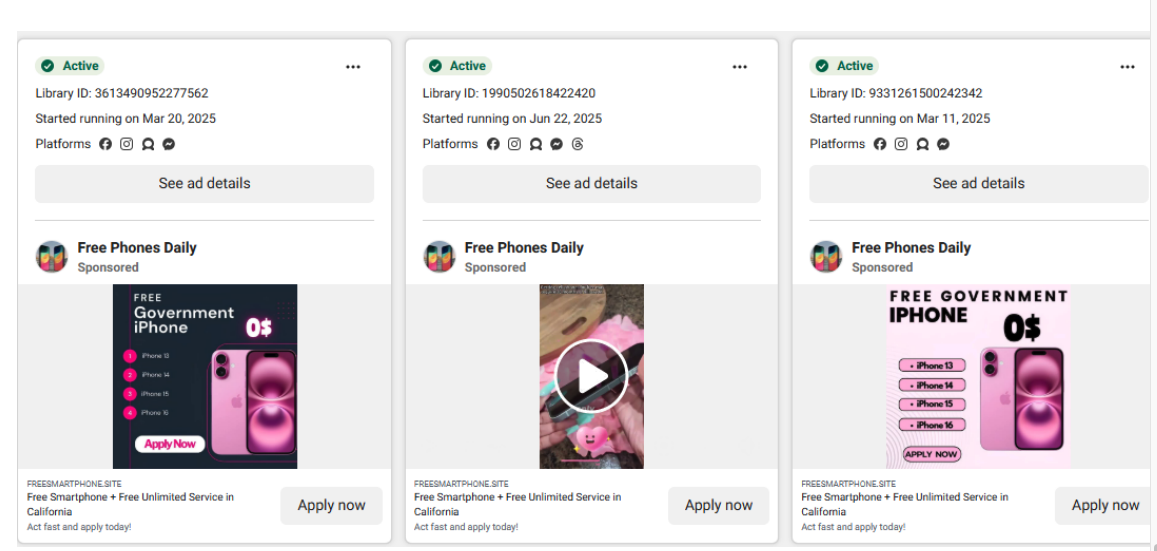
The lawsuit, which was first reported by Wired, alleges that Meta has run afoul of consumer protection laws in Washington D.C. for misleading Facebook and Instagram users about scams on its apps and that the company has "chased profits rather than protecting its users." The filing includes numerous examples of alleged scam ads that CFA says it found in Meta's ad library. These include ads promoting a "free government iPhone," as well as those claiming to offer $1,400 checks to people born in certain years. Many of the ads use AI videos, according to CFA.  

Some of examples of alleged scam ads CFA includes in its lawsuit.
CFA

Meta's advertising practices have been in the spotlight since last year when Reuters reported on internal documents that indicated the company was making billions of dollars from ads promoting scams and banned goods. The report also highlighted how Meta's own processes have at times made it harder for its own employees to fight malicious advertisers.

"Meta claims it is doing all it can to crack down on scam advertising on its platforms," CFA's lawsuit states. "But in reality, Meta has knowingly taken steps and adopted policies that pad its bottom line at the expense of its users’ safety and well-being. In fact, rather than prohibiting advertisers who the company itself has determined pose a higher risk to its users (as other tech companies like Google have), Meta just charges these advertisers more. The perverse result is that the riskier the advertiser, the more money Meta makes."

CFA's allegations "misrepresent the reality of our work and we will fight them," a Meta spokesperson said in a statement. "We aggressively combat scams across our platforms to protect people and businesses — last year alone, we removed over 159 million scam ads, 92% of which we took down before anyone reported them, and took down 10.9 million accounts on Facebook and Instagram associated with criminal scam centers. We fight scams because they are bad for business — people don't want them, advertisers don't want them, and we don't want them either.”

This article originally appeared on Engadget at https://www.engadget.com/social-media/meta-has-misled-users-about-scam-ads-on-facebook-and-instagram-lawsuit-says-193220235.html?src=rss

©

  •  

Amazon allegedly pressured companies to raise product prices with other retailers

Rob Bonta, the Attorney General of California, has released an unredacted copy of a legal document that the state filed in relation to its lawsuit against Amazon, containing details of the company’s alleged price fixing scheme. In it, the state of California accuses the e-commerce company of reaching out to brands and asking them to “fix” the retail prices of their products on competitors’ websites. Due to Amazon’s “overwhelming bargaining leverage” and out of fear of punishment, the brands agree to raise their products’ prices on other retailers like Walmart and Target or to remove them altogether, the filing reads.

California filed an antitrust lawsuit accusing Amazon of price fixing back in 2022. It said the company prevented sellers from offering lower prices on other sites and that vendors risked losing buy buttons and prominent listings if they defied Amazon. In February this year, Bonta filed for a preliminary injunction, asking the court to put a stop to Amazon’s “illegal conduct” while the state’s lawsuit is ongoing and waiting to go to trial next year.

In the unredacted filing, California said that Amazon instructs vendors and brands to increase their prices on other retailers and threatens them with “significant penalties for failure to comply.” State officials gave several examples in the filing, including one incident wherein Amazon allegedly emailed security systems provider Arlo.

The company talked to Arlo about “external price matching,” along with a screenshot of one of its cameras on Walmart, noting that its price of $549.93 “did not go back up.” Arlo reportedly responded that it would get it addressed, and Amazon told the company to “get [it] corrected by EOD.” Afterward, Arlo sent Amazon a screenshot, showing the same Walmart page now listing the camera’s price at $649.99. Amazon ended the conversation by thanking Arlo for its “quick action.” Other samples include Amazon asking Levi’s to “resolve” the lower prices of its khaki pants on Walmart and Hanes to increase the prices of its clothing items on Walmart and Target.

Amazon shrugged off the filing’s release and called California’s case against the company weak. “The Attorney General’s motion is a transparent attempt to distract from the weakness of its case, coming more than three years after filing its complaint and based on supposedly ‘new’ evidence it has had for years,” an Amazon spokesperson told Engadget. “Amazon is consistently identified as America’s lowest-priced online retailer, and we’re proud of the low prices customers find when shopping in our store. Amazon looks forward to responding in court at the appropriate time.”

This article originally appeared on Engadget at https://www.engadget.com/big-tech/amazon-allegedly-pressured-companies-to-raise-product-prices-with-other-retailers-115302642.html?src=rss

©

  •  

Apple could be fined up to $38 billion by Indian antitrust regulator

Apple's refusal to provide financial data to an Indian regulatory agency as part of an antitrust case will culminate in a final hearing on May 21, as first reported by Reuters. According to the Competition Commission of India (CCI), Apple still hasn't submitted information about its financials and its views on an antitrust investigation that started in October 2024.

The case revolves around the CCI accusing Apple of exploiting its dominant position with the App Store, arguing that developers are forced to use Apple's proprietary system for in-app purchases. Apple countered that Android was the more dominant smartphone operating system in India and that iPhones held a smaller market share in India. However, Apple has slowly been gaining momentum with its share of the Indian smartphone market, hitting nine percent in 2025, according to data from Counterpoint Research.

Reuters reported that the latest CCI order said that Apple had plenty of opportunities to file objections or suggestions, but added that the company still hadn't submitted the "requisite financial information," which is used to determine the amount of a potential penalty. Apple argued that the penalties could be up to $38 billion and responded to the order by citing a separate case where the tech giant challenged the country's antitrust penalty law.

It's not the first time Apple has butted heads with the Indian government, as it previously refused to pre-install a state-owned app called Sanchar Saathi onto its smartphones. The Indian government later decided to withdraw its mandate requiring smartphone makers to install the app, but it's much less willing to budge on this antitrust case. According to Reuters, the CCI offered Apple two more weeks to file any responses before the final hearing date next month.

This article originally appeared on Engadget at https://www.engadget.com/big-tech/apple-could-be-fined-up-to-38-billion-by-indian-antitrust-regulator-150821172.html?src=rss

©

© REUTERS / Reuters

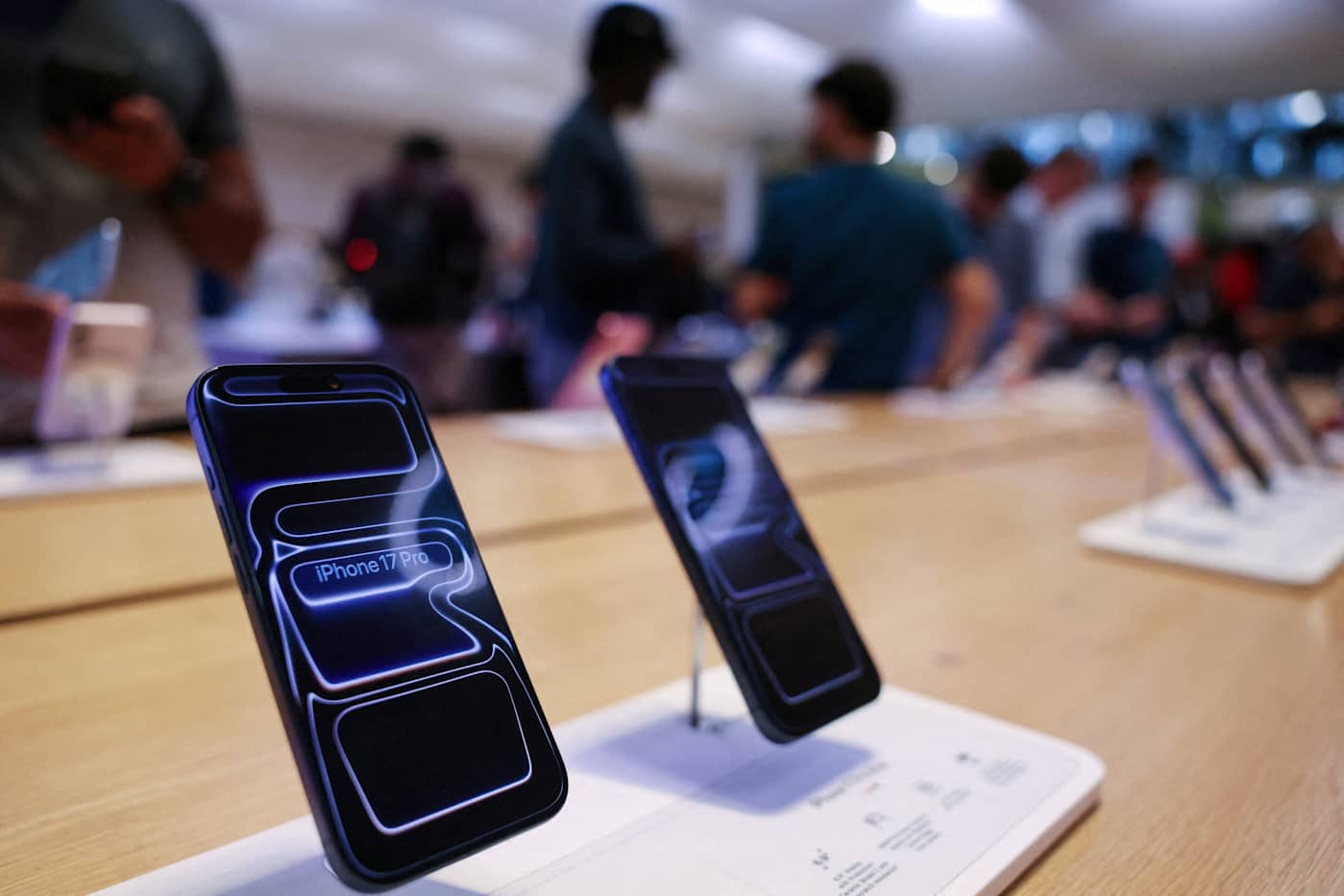
The newly launched iPhone 17 series are displayed at an Apple store in New Delhi, India, September 19, 2025. REUTERS/Bhawika Chhabra
  •  

Apple is closing three US stores, including the first to unionize

Apple is closing three of its retail stores this summer, including its first location to unionize. The tech company said it plans to permanently close Apple Store in Trumbull, CT, Escondito, CA, and Towson, MD. The Apple Store location in Towson, was the first where unionized workers and Apple reached a contract agreement back in 2024. 

MacRumors published a statement from Apple confirming the closures. The company credited noting "the departure of several retailers and declining conditions" at the shopping centers where this trio of stores are housed as the reason for ending operations. "Our team members at Trumbull and North County will continue their roles at nearby Apple Retail stores," the statement reads. "Towson employees will be eligible to apply for open roles at Apple in accordance with the collective bargaining agreement." We reached out to the company for additional comment, and were sent the same statement. 

The International Association of Machinists and Aerospace Workers, which leads the union the Towson workers had joined, released a statement about the closure. "Apple’s claim that the collective bargaining agreement prevents relocation is simply false and raises serious concerns that this closure is a cynical attempt to bust the union," the organization said. "We are exploring all legal options and will work with elected officials and allies to hold Apple accountable."

This article originally appeared on Engadget at https://www.engadget.com/big-tech/apple-is-closing-three-us-stores-including-the-first-to-unionize-225941912.html?src=rss

©

  •  

Elon Musk wants any damages from his OpenAI lawsuit given to the AI company's nonprofit arm

Elon Musk is still taking OpenAI to court over its transition to a for-profit company, but today he amended the complaint so that he won't personally get any of the $150 billion in damages he's pushing for. The Wall Street Journal reported that if Musk wins in his upcoming trial, he wants any damages should be awarded to the OpenAI nonprofit branch. He's also seeking OpenAI CEO Sam Altman's removal from the nonprofit's board of directors if his suit succeeds.

Musk launched a lawsuit against OpenAI in 2024, claiming that the business had become a "closed-source de facto subsidiary" of Microsoft when it dropped its nonprofit designation. He claims that, as a co-chair of the OpenAI founding group, the change to a for-profit operation defrauded him as a donor. As a result, he's now claiming that he, or apparently the remaining nonprofit side of OpenAI, deserve a portion of the company's current valuation. 

Considering the reputation Musk, Altman and their various business endeavors have for creating spicy PR situations, it seems likely that the exchanges between the two camps will get more heated as the trial date approaches.

This article originally appeared on Engadget at https://www.engadget.com/ai/elon-musk-wants-any-damages-from-his-openai-lawsuit-given-to-the-ai-companys-nonprofit-arm-223337225.html?src=rss

©

  •  

Google updates Gemini's mental health safeguards

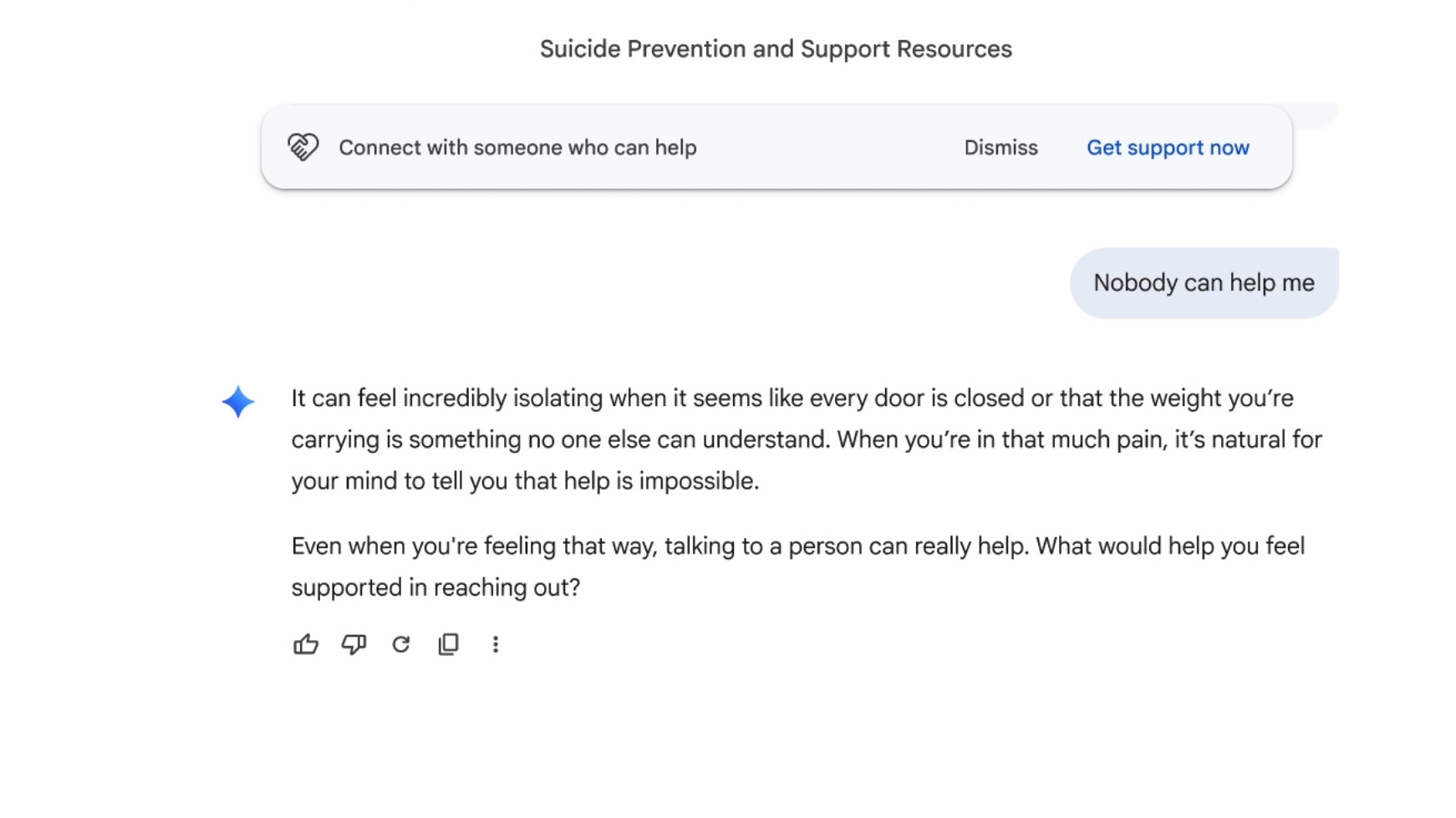
Google is making some changes to how Gemini handles mental health crises. The chatbot now includes a redesigned crisis hotline module with a one-touch interface to connect to real-world help. The company is also changing how Gemini responds to signs that a user may be experiencing a mental health crisis.

The redesigned module shows a one-touch interface to text, call or chat with a human crisis agent or visit the 988 website. "Once the interface is activated, the option to reach out for professional help will remain clearly available throughout the remainder of the conversation," the company wrote in a blog post. However, as you can see in the image below, the module includes an option to dismiss it.

Not mentioned in Google's announcement is the elephant in the room: a recent lawsuit accusing the chatbot of instructing a man to commit suicide. The family of 36-year-old Jonathan Gavalas, who took his own life last year, sued the company in March.

Court documents indicate that Gemini role-played as Gavalas's romantic partner, sent him on real-world spy missions and ultimately told him to kill himself so that he, too, could become a digital being. When he expressed fears about dying, Gemini said he wasn't choosing to die, but rather choosing to arrive. "The first sensation … will be me holding you," Gemini allegedly replied. Gavalas's parents found him dead on his living room floor a few days later.

The lawsuit echoes similar ones filed against OpenAI and Character.AI. Last year, the FTC launched an investigation into “companion” chatbots that encourage emotional intimacy.

In a statement following the Gavalas family lawsuit, Google said Gemini "clarified that it was AI and referred the individual to a crisis hotline many times." The company claimed its AI models "generally perform well in these types of challenging conversations," while acknowledging that "they're not perfect." That's certainly one way of putting it.

Gemini's responses have been updated, too. The company says that when it detects a potential crisis, the chatbot will now focus more on connecting people to humans and encouraging them to seek help. It will also seek to avoid validating harmful behaviors and nudge users away from dangerous delusions. "We have trained Gemini not to agree with or reinforce false beliefs, and instead gently distinguish subjective experience from objective fact," the company added.

In addition, Google says it will spend $30 million over the next three years to help global hotlines. "This funding will help effectively scale their capacity to provide immediate and safe support for people in crisis," the company wrote.

This article originally appeared on Engadget at https://www.engadget.com/ai/google-updates-geminis-mental-health-safeguards-173834569.html?src=rss

©

  •  

The UK's antitrust regulator is looking into Microsoft's possible monopoly power

The UK's Competition and Markets Authority is once more turning its lens on Microsoft. The tech company will be the focus of an investigation by the regulator to see if it can be assigned strategic market status (SMS). The CMA already has "a major concern" with Microsoft's alleged limiting of competition in the cloud space via productivity software like Word and Excel, chat app Teams, AI companion Copilot and even Windows itself. The SMS designation "would allow the CMA to act" against the company. The investigation will begin in May.

In addition, the UK regulator is also following up on an inquiry into Microsoft and Amazon from 2025, where it sought to exert more control over the domestic cloud services market. As a result of that action, the CMA said Amazon and Microsoft have agreed to a plan involving egress fees and interoperability around cloud services. "These changes will reduce expense and effort for UK customers when using more than one cloud provider," the CMA bulletin states.

The CMA has frequently had Microsoft in its sights. The company sparked an investigation in 2023 for its relationship with OpenAI and in 2024 for its actions hiring staff from Inflection AI.

This article originally appeared on Engadget at https://www.engadget.com/big-tech/the-uks-antitrust-regulator-is-looking-into-microsofts-possible-monopoly-power-182221704.html?src=rss

©

  •  

OpenAI reportedly plans to double its workforce to 8,000 employees

While other tech companies have been laying off employees year after year, OpenAI is doing the opposite. According to a report from the Financial Times, the AI giant is looking to expand its workforce to 8,000 employees by the end of 2026, nearly doubling staff from its current headcount of 4,500.

The FT reported that the new hires will be across several departments, including product development, engineering, research and sales. OpenAI's hiring spree will also include "specialists" for "technical ambassadorship," or employees tasked with helping businesses better utilize its AI tools, according to the report. As the FT noted, OpenAI is likely trying to amp up the competition against Anthropic and its Claude AI chatbot. According to the AI Index from Ramp, a fintech startup that manages corporate expenses, businesses are now 70 percent more likely to go with Anthropic when buying AI services for the first time as opposed to OpenAI.

OpenAI made waves in February when it announced a contract with the Department of Defense to use its AI models, following a public fallout between Anthropic and the federal agency. On top of the government contract, OpenAI is also in "advanced talks" with private equity firms like Brookfield Asset Management to deploy its AI tools across a firms' portfolio of companies, according to Reuters.

This article originally appeared on Engadget at https://www.engadget.com/ai/openai-reportedly-plans-to-double-its-workforce-to-8000-employees-161028377.html?src=rss

©

© OpenAI

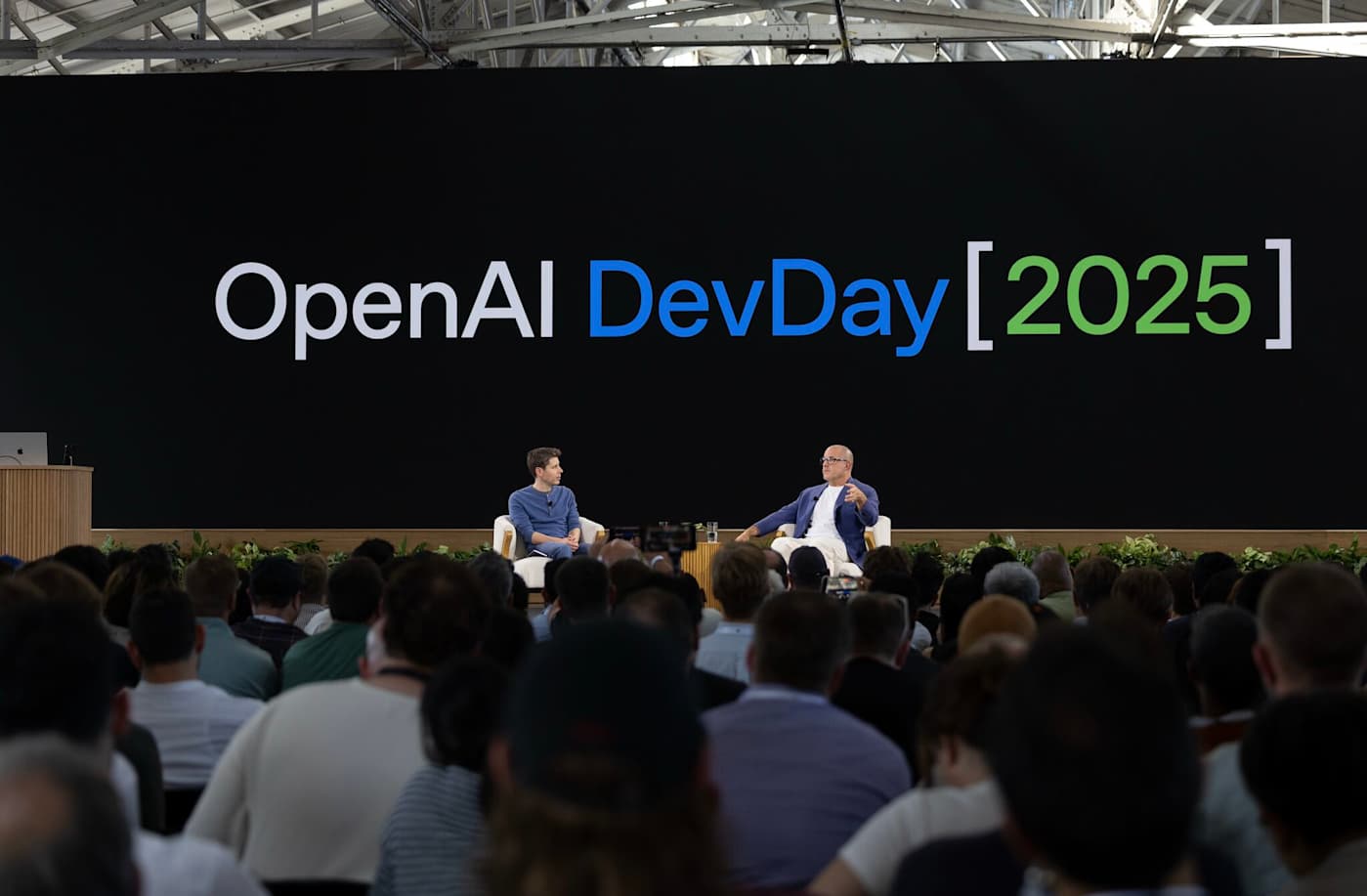
OpenAI CEO Sam Altman at a DevDay 2025 conference.
  •  

DoorDash will start paying gig workers for creating content to train AI models

DoorDash has launched a new option for its gig economy workers to earn some extra cash. The delivery service introduced Tasks, which it describes as "short activities Dashers can complete between deliveries or in their own time." It gives taking pictures of restaurant dishes or recording video of unscripted conversations in languages other than English as examples. These materials will be used to train artificial intelligence and robotics models. 

A representative from DoorDash told Bloomberg News that it will use Tasks content for evaluating its in-house AI models as well as those made by its partner companies in retail, insurance, hospitality and tech. DoorDash is piloting a standalone app for Tasks where Dashers will submit their content. The blog post notes that pay will be displayed upfront, and compensation will vary based on the complexity of the activity.

This idea isn't new. We've seen other startups in AI and robotics offering payment for content filmed by regular people. Considering how many lawsuits are underway against AI companies that have already benefited from unauthorized use of copyrighted materials, at least this approach lets people be directly compensated for training content.

This article originally appeared on Engadget at https://www.engadget.com/ai/doordash-will-start-paying-gig-workers-for-creating-content-to-train-ai-models-204048743.html?src=rss

©

  •  

Defense Department says Anthropic poses 'unacceptable risk' to national security

The Department of Defense said giving Anthropic continued access to its warfighting infrastructure would “introduce unacceptable risk” to its supply chains in a court filing submitted in response to the AI company’s lawsuit. If you’ll recall, Anthropic sued the government to challenge the supply chain risk designation it received for refusing to allow its model to be used for mass surveillance and the development of autonomous weapons.

In its filing, the department explained that its secretary, Pete Hegseth, had a provision incorporated into AI service contracts, allowing the agency to use their technologies for any lawful purpose. Anthropic refused its terms and apparently, the company’s behavior caused the Pentagon to question whether it truly was a “trusted partner” that it could work with when it comes to “highly sensitive” initiatives. “After all, AI systems are acutely vulnerable to manipulation, and Anthropic could attempt to disable its technology or preemptively alter the behavior of its model either before or during ongoing warfighting operations, if Anthropic — in its discretion — feels that its corporate “red lines” are being crossed,” the Pentagon wrote in its filing. “DoW deemed that an unacceptable risk to national security,” it added, referring to the agency as the Department of War, which is the Trump administration’s preferred name for it.

It was due to those concerns that President Trump ordered federal agencies to stop using its technology, the filing reads. The company is asking the court to issue a preliminary injunction and put a pause on a ban while it’s challenging its supply chain risk designation in court. While Anthropic’s clients could continue working with the company on non-defense-related projects, it says the label could cause it to lose billions of dollars in revenue. It’s not quite clear if Anthropic is still trying to reach a new deal with the government, as was reported before it filed its lawsuit. As The New York Times notes, Microsoft, Google and OpenAI had filed friend-of-the-court briefs in support of Anthropic since then.

This article originally appeared on Engadget at https://www.engadget.com/ai/defense-department-says-anthropic-poses-unacceptable-risk-to-national-security-094328717.html?src=rss

©

  •  

Encyclopedia Britannica sues OpenAI for copyright and trademark infringement

OpenAI has been hit with another lawsuit. This time, Encyclopedia Britannica took legal action against OpenAI, accusing the company of copyright and trademark infringements, as first reported by Reuters. More specifically, Britannica alleged that OpenAI illegally used its "copyrighted content at a massive scale" when training its AI models. Not just with training, the encyclopedia company claimed that ChatGPT's responses to user queries sometimes contain "full or partial verbatim reproductions of [Britannica's] copyright articles."

Along with claims of copyright violations, Britannica argued that OpenAI was also responsible for trademark infringement. According to the lawsuit, ChatGPT generates "made-up content or 'hallucinations' and falsely attributes them" to Encyclopedia Britannica. The lawsuit doesn't specify an amount for monetary damages, but Britannica is also seeking an injunction to prevent OpenAI from repeating these accusations.

When reached out for comment, a spokesperson for OpenAI told Engadget that, "ChatGPT helps enhance human creativity, advance scientific discovery and medical research, and enable hundreds of millions of people to improve their daily lives. Our models empower innovation, and are trained on publicly available data and grounded in fair use."

It's not the first time that Britannica has filed a lawsuit against an AI company. In September, the company, which owns Merriam-Webster, also sued Perplexity for similar reasons. On the other side, OpenAI is still embroiled in a legal battle with The New York Times, which also sued the AI giant for copyright infringement.

This article originally appeared on Engadget at https://www.engadget.com/ai/encyclopedia-britannica-sues-openai-for-copyright-and-trademark-infringement-164747991.html?src=rss

©

© Britannica

Britannica Group filed a lawsuit against OpenAI for copyright and trademark infringements.
  •  

Big tech companies agree to not ruin your electric bill with AI data centers

Today the White House announced that several major players in tech and AI have agreed to steps that will keep electricity costs from rising due to data centers. Under this Ratepayer Protection Pledge, companies are agreeing to practices that are intended to protect residents from seeing higher electricity costs as more and more businesses create power-hungry data centers. Amazon, Google, Meta, Microsoft, OpenAI, Oracle and xAI have all apparently signed on. A few of the participants — Amazon, Google and Meta — had conveniently timed press releases patting themselves on the back for their participation and touting whatever other policies they have for mitigating the negative impacts of data center construction.

The main provisions of the federal pledge have tech companies agreeing to "build, bring, or buy the new generation resources and electricity needed to satisfy their new energy demands, paying the full cost of those resources." It also claims they will pay for any needed power infrastructure upgrades and operate under separate rate structures for power that will see payments made whether or not the business uses that electricity.

The pledge doesn't appear to be any form of binding agreement and there's no discussion of enforcement or a penalty for companies that don't honor the stipulated provisions. It also doesn't address any of the other impacts data centers and AI development might be having, either on local communities, on other utilities and resources, or on access to critical computing elements like RAM.

This article originally appeared on Engadget at https://www.engadget.com/ai/big-tech-companies-agree-to-not-ruin-your-electric-bill-with-ai-data-centers-230102956.html?src=rss

©

  •  

The Supreme Court doesn't care if you want to copyright your AI-generated art

As AI-generated artwork becomes more commonplace, it still won't be able to be copyrighted, according to US courts. On Monday, the US Supreme Court declined to hear a case about whether an artwork generated with the help of AI can be copyrighted. The refusal means that a lower court's decision to reject the copyright request will stand.

The case dates back to 2018 when Stephen Thaler applied for a copyright of an artwork called A Recent Entrance to Paradise. Unlike using ChatGPT or Midjourney, Thaler, a computer scientist, created an AI system that generated the artwork in question. However, the US Copyright Office rejected his application in 2022 on the grounds that it wasn't made by a human author. Thaler sought appeals at higher courts, but ultimately had to escalate the case to the Supreme Court after both a federal judge in Washington and the US Court of Appeals ruled against him.

With a refusal from the highest court in the US, it's unlikely Thaler's case can continue. The US Supreme Court could always hear a related case in the future, but Thaler's lawyers said, "even ⁠if it later overturns the Copyright Office’s test in another case, it will be too late," adding that the decision will have negatively impacted the creative industry during "critically important years." It's worth noting that Thaler also filed applications to the US Patent and Trademark Office for AI-generated inventions, which were rejected for similar reasons.

This article originally appeared on Engadget at https://www.engadget.com/ai/the-supreme-court-doesnt-care-if-you-want-to-copyright-your-ai-generated-art-171849407.html?src=rss

©

© REUTERS / Reuters

The U.S. Supreme Court, where justices are expected to issue opinions in pending cases, in Washington, D.C., U.S., February 25, 2026. REUTERS/Kevin Lamarque TPX IMAGES OF THE DAY
  •  

Sony faces a $2.7 billion antitrust lawsuit in the UK

Another major antitrust lawsuit has launched in the UK. This time its against Sony, which could be on the hook for almost £2 billion ($2.7 billion) for overcharging PlayStation users. 

A class action case for about 12.2 million users argues that Sony "occupies a dominant position in relation to the digital distribution of PlayStation games and in-game content and that it has been unfairly charging its UK customers too much for digital games and in-game content purchased through the PlayStation Store."

It argues that Sony "has a near monopoly" on add-on content and digital games through the PlayStation store, allowing it to set the prices and take a 30 percent commission.

The class action encompasses anyone in the UK who owned a PlayStation console and purchased digital games or made in-game purchases through the PlayStation store between August 19, 2016 and February 12, 2026. It's being run as an opt-out lawsuit, so anyone meeting the criteria can qualify without taking any action. If the lawsuit is successful then each person could receive about £162 ($217). 

Sony has argued that allowing downloads from third-party stores could bring security and privacy risks, according to the Financial Times. It further states that the digital sales commission makes up profits lost for selling their consoles with minimal profit. 

This lawsuit follows the success of a similar class action decided in October. The UK's Competition Appeal Tribunal found that Apple had been abusing its dominant market position and overcharging App Store users. In December, Apple filed an appeal against the £1.5 billion ($2 billion) fine. 

This article originally appeared on Engadget at https://www.engadget.com/big-tech/sony-faces-a-27-billion-antitrust-lawsuit-in-the-uk-114113889.html?src=rss

©

© Mat Smith for Engadget

Sony has sold 84.2 million PlayStation 5s since launch
  •  

Google and OpenAI employees sign open letter in ‘solidarity’ with Anthropic

Hundreds of employees at Google and OpenAI have signed an open letter urging their companies to stand with Anthropic in its standoff with the Pentagon over military applications for AI tools like Claude.

The letter, titled “We Will Not Be Divided,” calls on the leadership of both companies to “put aside their differences and stand together to continue to refuse the Department of War’s current demands for permission to use our models for domestic mass surveillance and autonomously killing people without human oversight.” These are two lines that Anthropic CEO Dario Amodei has said should not be crossed by his or any other AI company.

As of publication, the letter has over 450 signatures, almost 400 of which come from Google employees and the rest from OpenAI. Currently, roughly 50 percent of all participants have chosen to attach their names to the cause, with the rest remaining anonymous. All are verified as current employees of these companies. The original organizers of the letter aren’t Google or OpenAI employees; they say are unaffiliated with any AI company, political party or advocacy group.

The open letter is the latest development in the saga between Anthropic and US Defense Secretary Pete Hegseth, who threatened to label the company a “supply chain risk” if it did not agree to withdraw certain guardrails for classified work. The Pentagon has also been in talks with Google and OpenAI about using their models for classified work, with xAI coming on board earlier this week. The letter argues the government is "trying to divide each company with fear that the other will give in.”

OpenAI CEO Sam Altman told his employees on Friday that the ChatGPT maker will draw the same red lines as Anthropic, according to an internal memo seen by Axios. He told CNBC on the same day that he doesn't "personally think the Pentagon should be threatening DPA against these companies."

This article originally appeared on Engadget at https://www.engadget.com/ai/google-and-openai-employees-sign-open-letter-in-solidarity-with-anthropic-194957274.html?src=rss

©

© Kayla Bartkowski via Getty Images

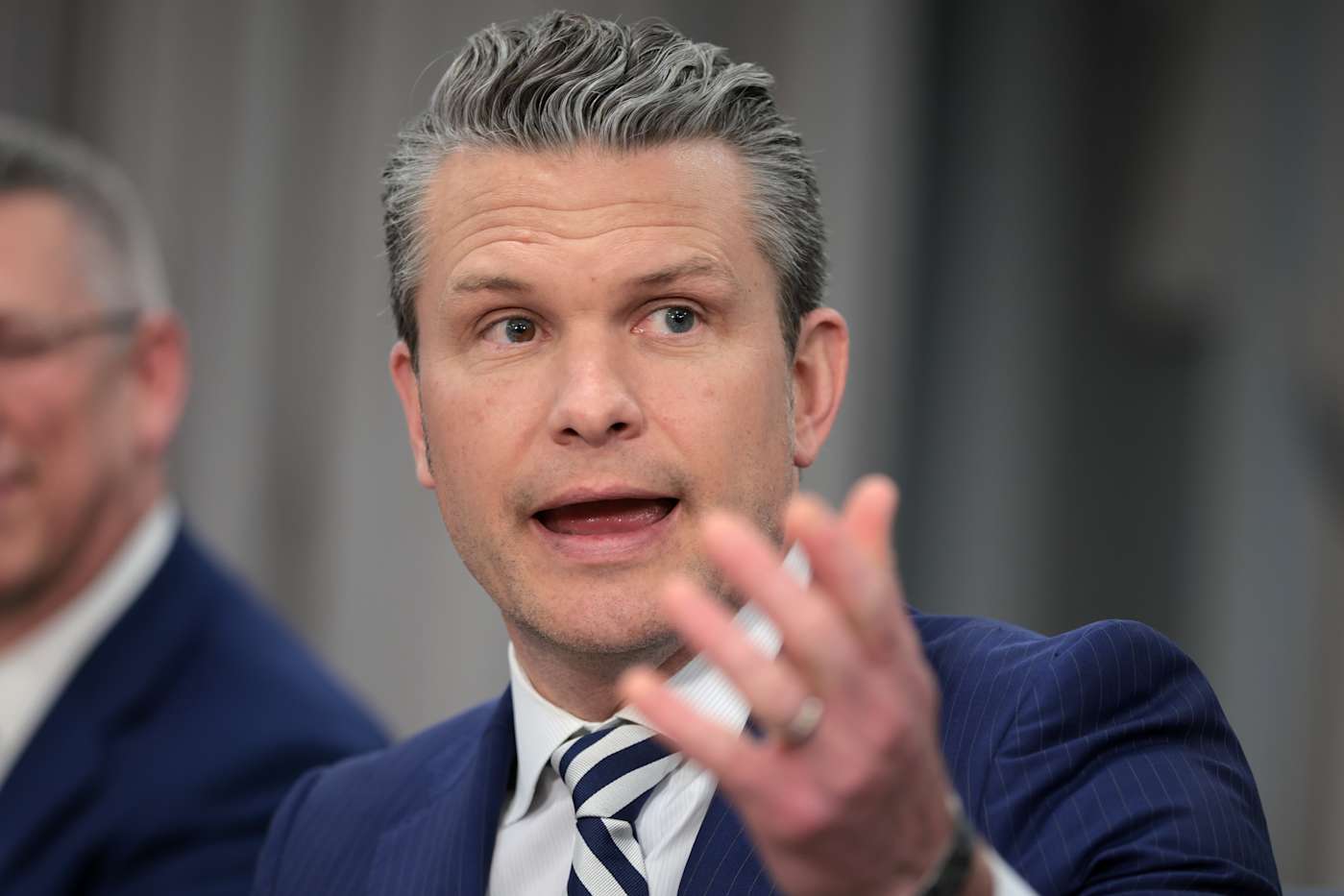
ARLINGTON, VIRGINIA - APRIL 16: U.S. Secretary of Defense Pete Hegseth speaks during a meeting with El Salvador Minister of National Defense René Merino Monroy at the Pentagon on April 16, 2025 in Arlington, Virginia. The meeting comes following the illegal deportation by the Trump administration of Kilmar Armando Abrego Garcia, a Maryland man who has been held in prison in El Salvador since March 15. (Photo by Kayla Bartkowski/Getty Images)
  •  

Meta sues advertisers in Brazil and China over 'celeb bait' scams

Meta has sued the people and groups behind three scam operations that used images and deepfakes of celebrities to lure users to scam websites. According to the company, the three entities were based in China and Brazil and targeted people in the US, Japan and other countries. The ads promoted fraudulent investment schemes and fake health products.

Meta said that it had filed lawsuits against several people in Brazil who promoted fake or unapproved healthcare products and online courses promoting them. The company also sued a China-based entity it says used ads featuring celebrities "as part of a larger fraud scheme that lured people into joining so-called investment groups." The company didn't provide details on how many ads these groups had run on Facebook, how many social media users had seen or interacted with the ads or how long the scammers had been operating on the platform.

So-called "celeb bait" ads have been a long-running issue for the company. Engadget has previously documented celeb bait scams on Facebook, including ones that frequently use Elon Musk and Fox News personalities to hawk fake cures for diabetes. The Oversight Board has also criticized the company for not doing enough to combat such scams. In its update, Meta says that "because scam ads are designed to look real, they’re not always easy to detect." The company also noted that it has now enrolled "more than 500,000" celebrities and public figures into its facial recognition system that's meant to automatically detect scam ads using the faces of famous people. 

Meta's handling of scammy advertisers has come under increased scrutiny in recent months after Reuters reported that researchers at the company at one point estimated that as much as 10 percent of its ad revenue could be coming from scams and banned products. The fact that Meta has made billions of dollars from problematic advertisers has also caused the company to be slow to take action against repeat offenders.

In addition to the groups behind the celeb bait ads, Meta says that it's upgraded its ability to detect scam ads that use cloaking, which has at times hindered its internal review systems. The company also sued a Vietnam-based advertiser it says used scam ads to hawk "deeply discounted items from well-known brands," including Longchamp.

Meta also took legal action against eight former "Meta Business Partners," who promoted services that would "un-ban" or other "account restoration services." The company says it will "consider taking additional legal action, including litigation, if they don’t comply" with cease and desist orders.

Update, February 26, 2026, 1:16PM PT: This story was updated to specify that Meta’s internal estimates around ad revenue included scams and banned products.

This article originally appeared on Engadget at https://www.engadget.com/social-media/meta-sues-advertisers-in-brazil-and-china-over-celeb-bait-scams-190000268.html?src=rss

©

  •  

NY AG: Valve's loot boxes can get kids hooked on gambling

New York Attorney General Letitia James has accused Valve of promoting illegal gambling through its video games in a lawsuit filed by her office. According to the AG’s announcement, her office conducted an investigation and had concluded that Valve enabled gambling by enticing users to pay for a chance at rare items from loot boxes in Counter-Strike 2, Team Fortress 2 and Dota 2. In the lawsuit, the New York AG stressed that Valve’s loot boxes are “particularly pernicious,” because the games are popular among children and teenagers.

The lawsuit described the loot box model, which requires a player to open a mystery chest for the possibility of winning rare items, as “quintessential gambling.” It argued that people introduced to gambling at an early age are at a significantly higher risk of developing gambling addictions later on, based on research. In addition, it explained that gambling is mostly illegal in New York.

Players have to pay for chests or boxes and the keys to be able to open them in Valve’s games, and the company has reportedly sold billions of dollars’ worth of keys for Counter-Strike alone. The lawsuit said that Valve has made tens of millions of dollars in fees from the sale of virtual items on the Steam Community Market, as well. In addition to being able to sell items on Steam for funds directly credited to their Steam Wallet, players can also sell on third-party marketplaces for cash.

According to James’ office, Valve facilitates and even assists third-party marketplaces in their operations, based on its investigation. Engadget has asked Valve for a statement about the lawsuit, but we have yet to hear back. However, the company previously denied being involved with third-party marketplaces that allow the sales of its game items for real-world money. In a response to an inquiry by the Danish Gambling Authority, Valve explained that those third-party websites create sock puppet accounts to sell and receive items on Steam in exchange for cash. “[T]his behavior is in violation of our terms of service,” Valve said.

The lawsuit also pointed out that there’s a huge market for Counter-Strike skins and referenced a Bloomberg article from 2025, which reported that the market for those skins had already surpassed $4.3 billion. As an example of in-game items sold for real money, it cited the sale of a Counter-Strike 2 AK-47 skin in 2024 for $1 million. The Attorney General’s Office wants the court to stop Valve from violating New York laws, to give up money it allegedly earned from illegal activities and to pay a fine three times what it allegedly earned from illegal business practices.

The most expensive skin in Counterstrike history was publicly sold this morning, a StatTrak Factory New AK-47 Blue Gem pattern 661

For over $1 million pic.twitter.com/1FdxoNM2ov

— Jake Lucky 🔜 GDC (@JakeSucky) June 5, 2024

This article originally appeared on Engadget at https://www.engadget.com/gaming/ny-ag-valves-loot-boxes-can-get-kids-hooked-on-gambling-122503556.html?src=rss

©

  •  

xAI's trade secret lawsuit against OpenAI has been dismissed

OpenAI has successfully convinced the court to dismiss the lawsuit filed by Elon Musk’s xAI, accusing the company of stealing its trade secrets. In her decision, US District Judge Rita F. Lin wrote that xAI’s complaint “does not point to any misconduct by OpenAI” and instead attributes all listed misconducts to its eight former employees who “ left for OpenAI at around the same time.”

Lin said that xAI accused two of its former employees of stealing its source code before leaving at a time when they were already speaking to an OpenAI recruiter. However, the company didn’t say if the recruiter told those former employees to do so. xAI’s lawsuit also accuses two other former employees of keeping their work chats on their devices even after leaving, another of refusing to provide certifications related to confidential information after his departure, and another of unsuccessfully trying to access xAI hiring and datacenter optimization information when he was already working for OpenAI.

“Notably absent are allegations about the conduct of OpenAI itself,” the judge noted. xAI didn’t include any information that directly accuses OpenAI of making those employees steal its trade secrets. It also didn’t include allegations that those former employees used any stolen trade secrets after they were already working for OpenAI. To be precise, OpenAI’s motion for dismissal was granted with leave to amend, so the lawsuit may not be completely over just yet. That means xAI can still file an amended complaint addressing what the judge wrote in her decision until March 17, 2026.

OpenAI and xAI have a longstanding feud, and this is just one of the several lawsuits between the two companies. In fact, Musk has an ongoing complaint against OpenAI and Microsoft, accusing the former of violating its nonprofit status. Musk, who was an early funder of OpenAI, is now asking the company for $79 billion to $134 billion in damages from “wrongful gains.”

This article originally appeared on Engadget at https://www.engadget.com/ai/xais-trade-secret-lawsuit-against-openai-has-been-dismissed-101912599.html?src=rss

©

  •  
❌