Researchers using the James Webb Space Telescope have found a galaxy that is offering new data about the early stages of the universe's existence. The latest discovery shared by astronomers is about a bright galaxy dubbed MoM-z14. According to the team, this galaxy existed 280 million years after the Big Bang.
The sounds like a long time, but in the context of the universe's estimated 13.8 billion years of existence, that's actually one of the closest examples astronomers have found to the Big Bang's occurrence. As a result, MoM-z14 can offer some insights and some surprises about what the early stages of the universe entailed.
"With Webb, we are able to see farther than humans ever have before, and it looks nothing like what we predicted, which is both challenging and exciting," lead author Rohan Naidu of Massachusetts Institute of Technology said. The findings about this galaxy were published in the Open Journal of Astrophysics.
The scientists were able to date MoM-z14 with Webb's Near-Infrared Spectrograph instrument, analyzing how light from the galaxy changed wavelengths as it traveled to reach the telescope. One of the initial questions sparked by this bright galaxy centers on the presence of nitrogen. Some early galaxies, including MoM-z14, have revealed higher nitrogen concentrations than scientists had projected was possible. Another topic of interest is about reionization, or the process of stars producing enough light or energy to permeate the dense hydrogen fog that existed in the early universe.
“It’s an incredibly exciting time, with Webb revealing the early Universe like never before and showing us how much there still is to discover” said Pennsylvania State University graduate student and team member Yijia Li.
This article originally appeared on Engadget at https://www.engadget.com/science/space/astronomers-share-new-insights-about-the-early-universe-via-the-webb-space-telescope-213311848.html?src=rss
Here's a use of AI that appears to do more good than harm. A pair of astronomers at the European Space Agency (ESA) developed a neural network that searches through space images for anomalies. The results were far beyond what human experts could have done. In two and a half days, it sifted through nearly 100 million image cutouts, discovering 1,400 anomalous objects.
The creators of the AI model, David O'Ryan and Pablo Gómez, call it AnomalyMatch. The pair trained it on (and applied it to) the Hubble Legacy Archive, which houses tens of thousands of datasets from Hubble's 35-year history. "While trained scientists excel at spotting cosmic anomalies, there's simply too much Hubble data for experts to sort through at the necessary level of fine detail by hand," the ESA wrote in its press release.
After less than three days of scanning, AnomalyMatch returned a list of likely anomalies. It still requires human eyes at the end: Gómez and O'Ryan reviewed the candidates to confirm which were truly abnormal. Among the 1,400 anomalous objects the pair confirmed, more than 800 were previously undocumented.
Most of the results showed galaxies merging or interacting, which can lead to odd shapes or long tails of stars and gas. Others were gravitational lenses. (That's where the gravity of a foreground galaxy bends spacetime so that the light from a background galaxy is warped into a circle or arc.) Other discoveries included planet-forming disks viewed edge-on, galaxies with huge clumps of stars and jellyfish galaxies. Adding a bit of mystery, there were even "several dozen objects that defied classification altogether."
"This is a fantastic use of AI to maximize the scientific output of the Hubble archive," Gómez is quoted as saying in the ESA's announcement. "Finding so many anomalous objects in Hubble data, where you might expect many to have already been found, is a great result. It also shows how useful this tool will be for other large datasets."
This article originally appeared on Engadget at https://www.engadget.com/ai/astronomers-discover-over-800-cosmic-anomalies-using-a-new-ai-tool-205135155.html?src=rss
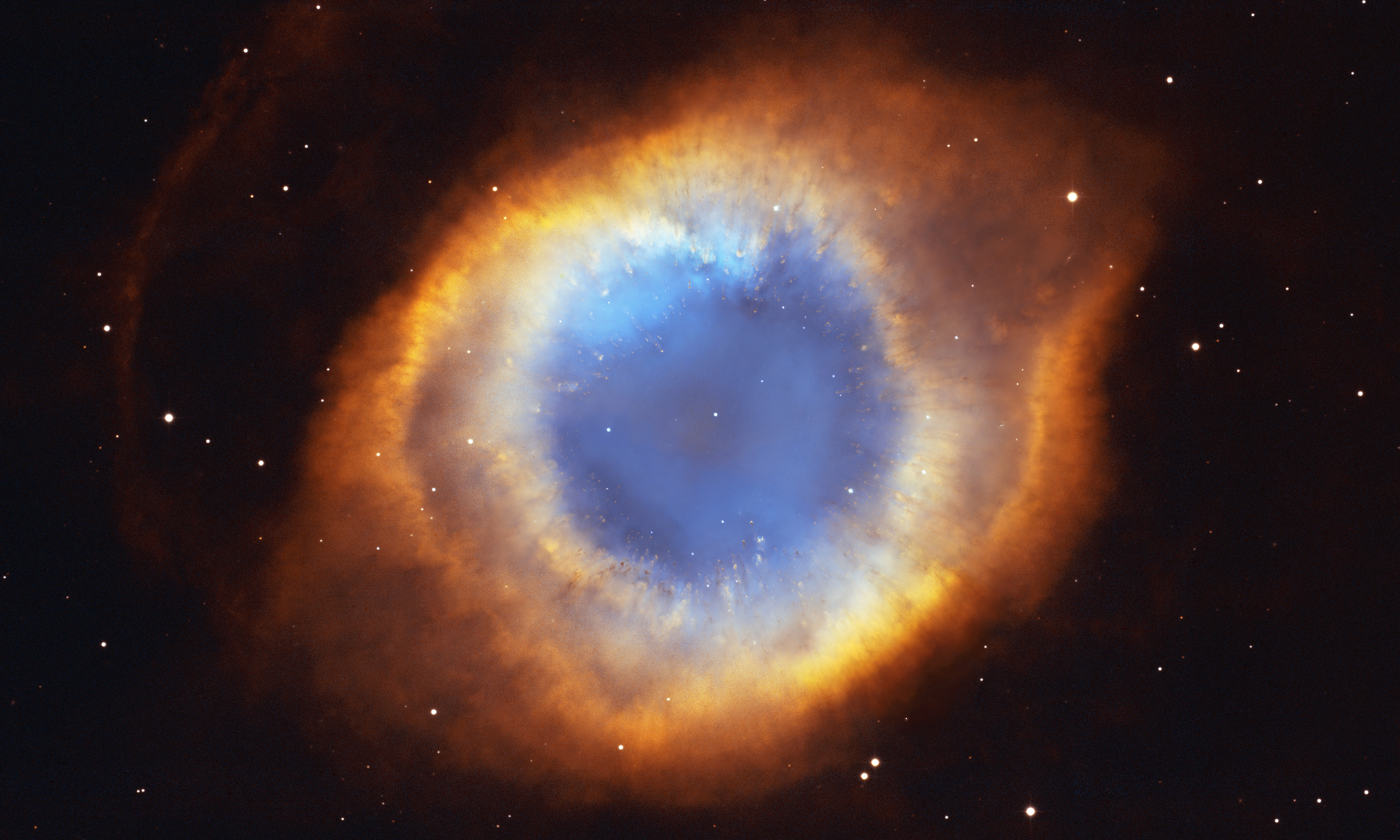
Sometimes, you just need to give your mind a little vacation. And these days, outer space sounds like as good a destination as any. Thankfully, the James Webb Space Telescope (JWST) is here to give us a dazzling new image of the Helix Nebula.
Discovered in the early 19th century, the Helix Nebula resides in the constellation Aquarius. (Cue The 5th Dimension.) At about 655 light-years away, it's one of Earth's closest planetary nebulae. When zoomed farther out, it's easy to see why it's been nicknamed the Eye of God or Eye of Sauron. This 2004 image from the Hubble telescope illustrates that.
A wider view of the same nebula from 2004
NASA / ESA / C.R. O'Dell (Vanderbilt University) / M. Meixner / P. McCullough / G. Bacon ( STSI)
What we're seeing in the nebula is, in a sense, a moment of death that lays the groundwork for a new birth. The dying star (out of frame in the closer new image) sheds its outer layers. As expelled gas and dust cool, they provide raw material that could someday form new stars and perhaps planetary systems.
The new image from Webb's NIRCam (Near-Infrared Camera) provides a much closer, higher-resolution view.
Pillar-like reddish knots in the Helix Nebula
Those pillars you see are called cometary knots, and this image is our best view of those to date. "Here, blistering winds of hot gas from the dying star are crashing into colder shells of dust and gas that were shed earlier in its life, sculpting the nebula's remarkable structure," the ESA wrote in its press release.
The knots' colors represent temperature and chemistry. Hints of blue indicate the hottest gas (energized by ultraviolet light). The yellow regions, where hydrogen atoms form molecules, are farther from the nebula's nucleus (and therefore cooler). On the edges, reddish-orange regions depict the coolest material, where gas thins and dust begins to form.
This article originally appeared on Engadget at https://www.engadget.com/science/space/earth-is-having-some-issues-so-lets-enjoy-the-webb-telescopes-new-nebula-image-181049901.html?src=rss
After a tumultuous 2025 that saw it lose around 4,000 employees, NASA finally has an operating budget for 2026, and one that largely preserves its scientific capabilities. On Thursday, the Senate passed an appropriations bill funding NASA, alongside the National Science Foundation and a handful of other federal agencies.
Going into the appropriations process, the president called for a 24 percent year over year reduction to NASA's total operating budget. As part of that plan, the White House wanted to reduce the Science Mission Directorate's funding by nearly half, a move that would have forced NASA to cancel 55 ongoing and planned missions, including efforts like OSIRIS-APEX. The bill effectively rejects President Trump's plan, reducing NASA's total operating budget by just 1.6 percent year over year to $24.4 billion.
Per the new appropriations, NASA's science budget will stand at $7.25 billion, 1.1 percent less relative to fiscal 2024, while shuffling the remaining funds to focus on different priorities. For instance, the House and Senate allocated $874 million (+8.7 percent) for the agency's heliophysics work; planetary sciences, which oversees missions like New Horizons, was cut to $2.5 billion (-6.5 percent) compared to 2024. At the same time, NASA's STEM engagement office, which the president proposed eliminating, escaped unscathed with its funding maintained at parity.
"It's almost everything we had been asking for, and it's very encouraging to see a House and Senate run by the president's own party agreeing that we need to keep investing in things like NASA science," says Casey Dreier, chief of policy at the Planetary Society, a nonprofit founded by Carl Sagan that advocates for the exploration and study of space. "It contains very clear and direct language that not only is this funding made available to these projects, but that it will be spent on the initiatives that Congress states."
Lawmakers also rejected Trump's effort to scuttle the Space Launch System after its third flight. NASA's heavy-lift rocket is billions of dollars over budget, but remains — as of now — the only spacecraft ready to ferry astronauts to the Moon. Compared to the rest of NASA, the fate of the SLS was never really in doubt. Senator Ted Cruz (R-TX) secured funding for the rocket as part of Trump's Big Beautiful Bill. "I've been saying for a long time you should never underestimate the political coalition behind the SLS, and I think that was very much validated this year," says Dreier.
More importantly, it appears the Goddard Space Flight Center will be safe from further damage. Over the summer, the future of the facility, known for its work on projects like the James Webb Space Telescope, was put in jeopardy. By some estimates, the campus has lost a third of its staff due to workforce cuts, and dozens of buildings, including some 100 laboratories, have been shut down by management. One of the casualties was NASA's largest library, which houses irreplaceable documents chronicling the history of the space race. As part of a "consolidation" effort, many of those documents will be thrown out.
Under the appropriations bill, the Senate has directed NASA to “preserve all the technical and scientific world-class capabilities at Goddard.” It has also instructed the agency to ensure employees of the Goddard Institute for Space Studies are able to continue their work with "minimal disruption." The New York-based office, one of America's leading climate labs, was sent into limbo last spring after the Trump administration moved to shut it down.
The bill also provides a lifeline for NASA's to bring back samples of Martian dirt collected by the Perseverance rover. Congress has effectively cancelled the official program tied to that ambition, the Mars Sample Return (MSR), but has set aside $110 million for the agency to continue developing technologies for future science missions to the Red Planet. MSR advocates have argued the mission could lead to significant scientific discoveries, but Dreier notes the program was "ripe for cancellation" after it became mired in mismanagement.
"I worry MSR now has this stink of bloat, excess cost and threat of overruns that are really going to make it challenging to restart this without having a dramatically different approach," says Dreier, adding that deciding what to do with mission will likely be top of mind for the agency's new administrator, Jared Isaacman.
The 2026 budget leaves NASA with fewer resources. Even in areas where Congress allocated the same amount of funds as it did in 2024, the agency will need to do more with less due to inflation. Compared to the absolute blood bath that would have been Trump's proposed budget, a marginal funding cut is the best case scenario given the circumstances, but the circumstances remain less than ideal.
"There will be another presidential budget request coming out in the next couple of months," Dreier said. "They could do this all over again if they wanted to."
In the immediate future, NASA and its employees are at least protected from the potential fallout of another impending government shutdown. Congress has until January 30 to fully fund the federal government, and as of earlier this week, it has yet to find a way forward on appropriations for agencies like the Department of Labor.
Correction 9:05PM ET: A previous version of this article incorrectly stated Casey Dreier’s surename as Drier. We regret the error.
This article originally appeared on Engadget at https://www.engadget.com/science/space/senate-passes-minibus-bill-funding-nasa-rejecting-trumps-proposed-cuts-231605536.html?src=rss
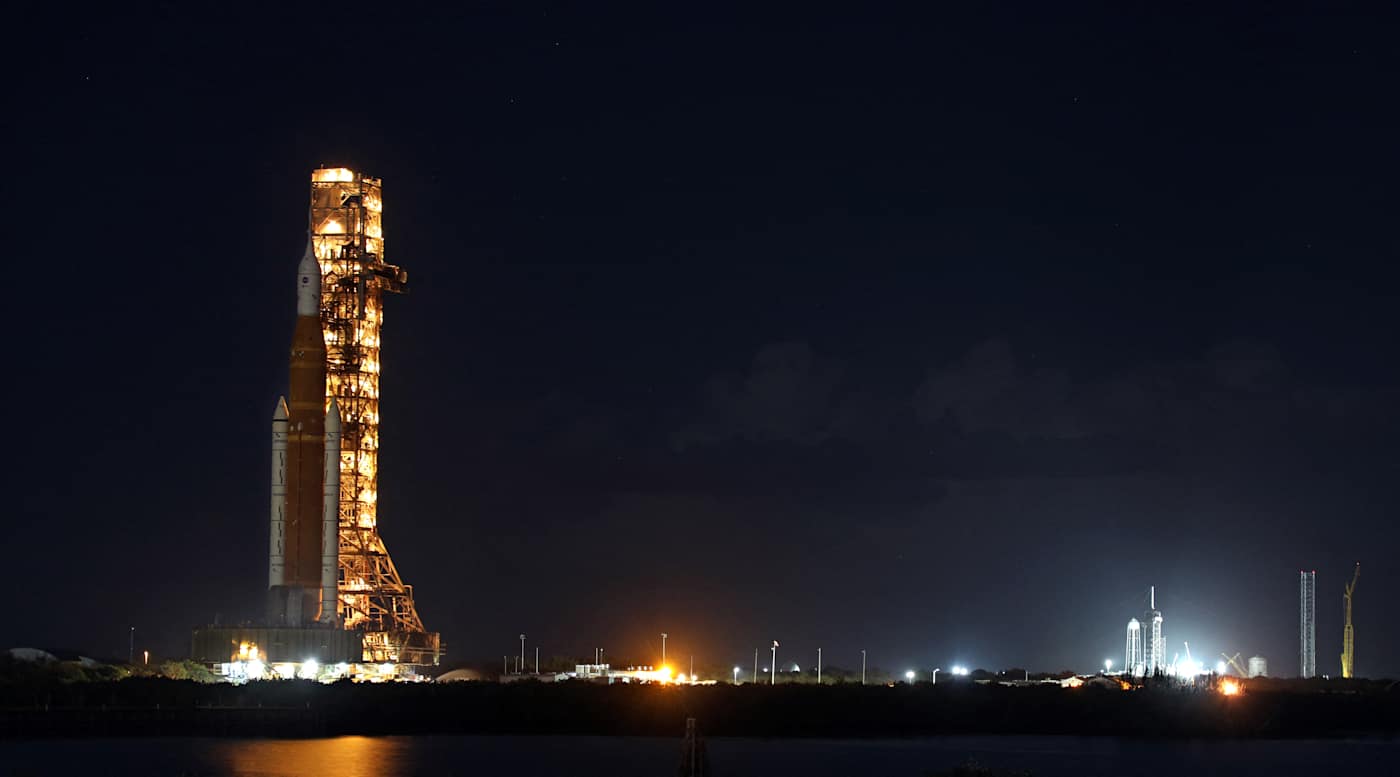
Back in 2024, NASA announced that the Artemis 2 mission was going to be pushed back to April 2026. Now, the agency says it could launch as early as February, with the first flight opportunity being on February 6. NASA is currently making the final preparations for the mission and will soon roll out the Space Launch System (SLS) rocket and the Orion spacecraft to their launch pad at the Kennedy Space Center in Florida. The spacecraft system’s four-mile journey from the assembly building to Launch Pad 39B will take up to 12 hours. NASA is targeting a date no earlier than January 17, with the exact day depending on the weather and on the possible need for additional time to address technical issues.
Artemis 2 is the first crewed mission to the moon since the Apollo program’s final flight in 1972. The 10-day mission will have four astronauts on board who’ll be testing if Orion’s critical life support systems can sustain human passengers on future longer duration missions. They will first orbit the Earth twice before making their way 4,700 miles beyond the far side of the moon. If the SLS and Orion system is rolled out as planned, NASA intends to conduct a wet dress rehearsal at the end of January. The agency will load cryogenic propellants into the rocket and will do a full launch countdown during the rehearsal to prepare for the real event.
This article originally appeared on Engadget at https://www.engadget.com/science/space/nasa-makes-final-preparations-for-its-first-crewed-moon-mission-in-over-50-years-150000825.html?src=rss
NASA has postponed an International Space Station (ISS) spacewalk that was scheduled for Thursday. "The agency is monitoring a medical concern with a crew member that arose Wednesday afternoon aboard the orbital complex," the agency wrote. On Thursday, NASA added that ending Crew-11's mission early was on the table.
The unnamed crew member is stable, according to NASA. Space News notes that Kimiya Yui of the Japan Aerospace Exploration Agency (JAXA) was heard on an open comms channel on Wednesday requesting a private medical conference with a flight surgeon. However, those requests are routine on the ISS, so we can’t assume the events were related.
"The matter involved a single crew member who is stable," NASA wrote. "Safely conducting our missions is our highest priority, and we are actively evaluating all options, including the possibility of an earlier end to Crew-11's mission."
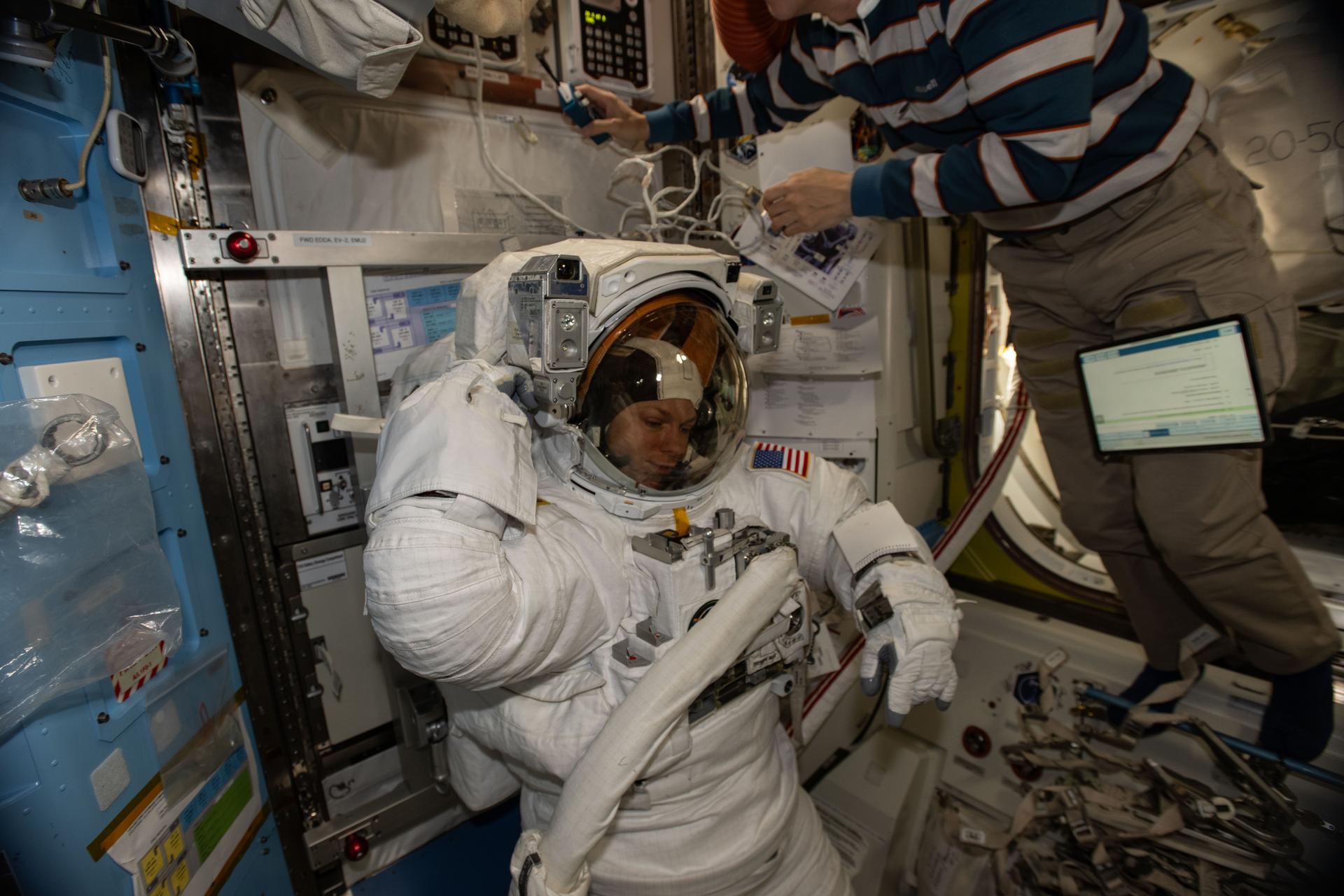
NASA astronaut Zena Cardman in her pressurized spacesuit, checking its comms and power systems ahead of the (now postponed) spacewalk
NASA
Crew-11 was scheduled to remain on board the ISS until at least the second half of February. Its replacement, Crew-12, isn't slated to blast off until February 15 at the earliest.
NASA astronauts Mike Fincke and Zena Cardman had planned to exit the airlock on Thursday for the six-and-a-half-hour spacewalk. The short trip’s mission was to install a kit and cables in preparation for a new roll-out solar array that will arrive on a future mission.
The agency said it will provide further updates within 24 hours.
This article originally appeared on Engadget at https://www.engadget.com/science/space/nasa-delays-spacewalk-due-to-a-medical-concern-with-a-crew-member-171900024.html?src=rss

 Anmelden