
❌

Normale Ansicht

Amazon will reportedly cut its USPS shipments by at least two-thirds

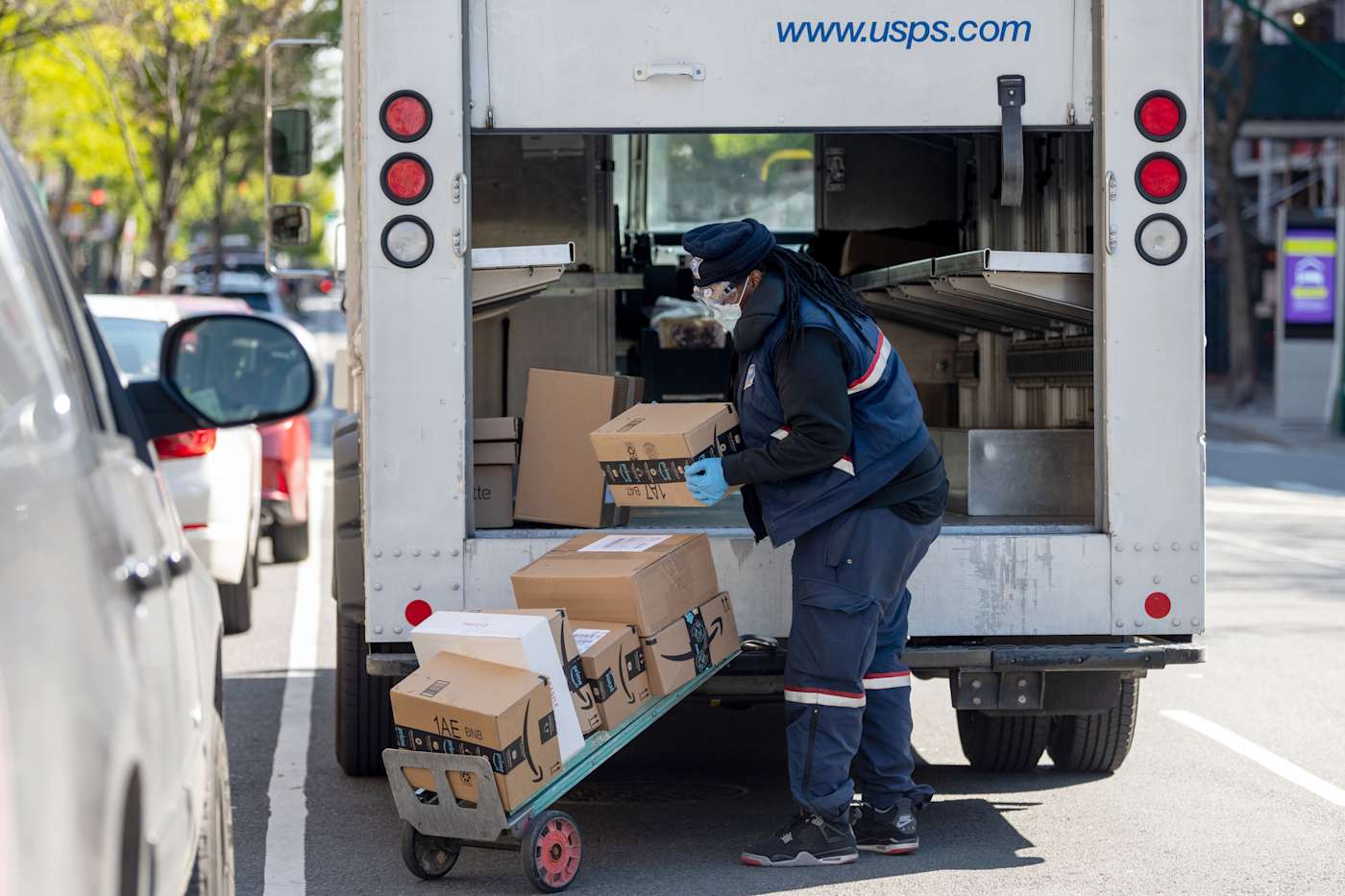
A recent change in how the US Postal Service handles shipping partners appears to have forced Amazon to make alternative plans. The company reportedly plans to cut the number of packages it ships through USPS by at least two-thirds later this year. It says the decision came after USPS ended negotiations “at the eleventh hour” in favor of a new bidding process.

On Tuesday, the Wall Street Journal reported that Amazon plans to reduce the shipments it hands off to USPS. Last year, the company accounted for nearly 15 percent of the Postal Service’s package deliveries. Cutting that by nearly two-thirds diminishes one of the USPS’s most reliable sources of revenue. In fiscal 2025, the agency reported a net loss of $9 billion.

Amazon’s current contract with USPS ends on September 30. In a public response to the WSJ story, the company said it notified USPS in October 2025 that it would need to complete a new deal by December. “You can't add capacity for hundreds of millions of packages overnight — it requires major capital investment, long-term infrastructure planning, hiring, and logistics coordination,” Amazon wrote.

According to Amazon, USPS then pulled the plug on negotiations at the last second. “We negotiated with [USPS] in good faith for more than a year to reach a deal that would bring them billions in revenue and believed we were heading toward an agreement,” Amazon wrote in a statement. “Our goal was to increase our volumes with USPS, not reduce them — until USPS abruptly walked away at the eleventh hour in December.”

FILE - Postmaster General David Steiner speaks at an event marking the 250th anniversary of postal service's founding, July 23, 2025, in Washington. (AP Photo/Cliff Owen, File)
Postmaster General David Steiner (AP Photo/Cliff Owen, File)
ASSOCIATED PRESS

That’s when Postmaster General David Steiner implemented a new bidding process for last-mile deliveries, replacing a long-established one where USPS negotiated with shipping partners individually. He described the move as “a fair bidding process that enables the marketplace to find the best mix of local shipping attributes for the best volume-driven pricing.” Steiner was appointed to the post in May 2025, following the departure of former head Louis DeJoy.

Amazon said it submitted a bid in February using the new system but hasn’t heard back. “This creates significant uncertainty for our long-term network planning,” the company said. “Despite this, we participated in good faith and submitted a bid in February 2026. We've received no response.”

USPS plans to announce the bidding results in Q2 2026. Contracts are expected to be finalized by Q3. Despite apparently moving forward with the contingency plan, Amazon said it’s still “ready to continue this partnership.”

As for Postmaster Steiner, he spent Tuesday asking Congress to loosen USPS regulations and let him raise prices. Warning that the agency will “run out of cash” in about a year, he told a House subcommittee that he wants to raise the agency’s current $15 billion debt cap. He also asked for the ability to increase postage prices and reform its retiree pension obligations.

This article originally appeared on Engadget at https://www.engadget.com/big-tech/amazon-will-reportedly-cut-its-usps-shipments-by-at-least-two-thirds-200915702.html?src=rss

©

  •  

The Defense Department reportedly plans to train AI models on classified military data

The Pentagon is making plans to have AI companies train versions of their models specifically for military use on classified information, according to the MIT Technology Review. If true, it wouldn’t come as a surprise, seeing as the US is aiming to become an “AI-first" warfighting force, based on the statement [PDF] released by Secretary of Defense Pete Hegseth earlier this year.

The department is already using AI models in the military: For instance, the US reportedly used Anthropic’s Claude to help with the capture of Venezuelan President Nicolás Maduro and with its attack on Iran, even after President Trump ordered federal agencies to ban its technology. But models trained on actual classified data could give more accurate and detailed responses, say, for situations similar to what happened in the past that aren’t public information.

MIT Tech Review says the department is looking to conduct the training in a secure data center that’s allowed to host classified government projects. The Pentagon would train copies of AI models, but it would remain the only owner of any data used for training. In rare cases, someone from the AI company could be granted the appropriate security clearance to see classified information.

Aalok Mehta, who previously led AI policy efforts at Google and OpenAI, told the publication that training models on classified data carries certain risks. It’s not that the information could go public, since the the models trained would be versions made specifically for military purposes. However, if the same model is used across the whole Defense Department, for instance, personnel without the correct clearance level could end up getting information that they weren’t supposed to have access to.

If the initiative pushes through, the department would likely be training models from OpenAI and xAI, which recently signed agreements with the agency. Anthropic, which has long worked with the government, might not be part of this project. The company refused to allow its technology to be used for mass surveillance and the development of autonomous weapons, and Trump ordered all federal offices to ban it as a result.

This article originally appeared on Engadget at https://www.engadget.com/ai/the-defense-department-reportedly-plans-to-train-ai-models-on-classified-military-data-120332113.html?src=rss

©

  •  

Defense Department says Anthropic poses 'unacceptable risk' to national security

The Department of Defense said giving Anthropic continued access to its warfighting infrastructure would “introduce unacceptable risk” to its supply chains in a court filing submitted in response to the AI company’s lawsuit. If you’ll recall, Anthropic sued the government to challenge the supply chain risk designation it received for refusing to allow its model to be used for mass surveillance and the development of autonomous weapons.

In its filing, the department explained that its secretary, Pete Hegseth, had a provision incorporated into AI service contracts, allowing the agency to use their technologies for any lawful purpose. Anthropic refused its terms and apparently, the company’s behavior caused the Pentagon to question whether it truly was a “trusted partner” that it could work with when it comes to “highly sensitive” initiatives. “After all, AI systems are acutely vulnerable to manipulation, and Anthropic could attempt to disable its technology or preemptively alter the behavior of its model either before or during ongoing warfighting operations, if Anthropic — in its discretion — feels that its corporate “red lines” are being crossed,” the Pentagon wrote in its filing. “DoW deemed that an unacceptable risk to national security,” it added, referring to the agency as the Department of War, which is the Trump administration’s preferred name for it.

It was due to those concerns that President Trump ordered federal agencies to stop using its technology, the filing reads. The company is asking the court to issue a preliminary injunction and put a pause on a ban while it’s challenging its supply chain risk designation in court. While Anthropic’s clients could continue working with the company on non-defense-related projects, it says the label could cause it to lose billions of dollars in revenue. It’s not quite clear if Anthropic is still trying to reach a new deal with the government, as was reported before it filed its lawsuit. As The New York Times notes, Microsoft, Google and OpenAI had filed friend-of-the-court briefs in support of Anthropic since then.

This article originally appeared on Engadget at https://www.engadget.com/ai/defense-department-says-anthropic-poses-unacceptable-risk-to-national-security-094328717.html?src=rss

©

  •  
❌