❌

Normale Ansicht

Google to Provide Pentagon with Gemini-powered AI agents

Google is rolling out Gemini AI agents to the Department of Defense's more than 3 million civilian and military employees, according to Bloomberg. The agents will initially operate on unclassified networks, with talks underway to expand them to classified and top-secret systems, according to Emil Michael, the Under Secretary of Defense for Research and Engineering.

Eight pre-built agents will automate tasks like summarizing meeting notes, building budgets and checking proposed actions against the national defense strategy. Google Vice President Jim Kelly said in a blog post on Tuesday that Defense Department personnel can also create custom agents using natural language.

Google's AI chatbot, accessible through the Pentagon's GenAI.mil portal, has been used by 1.2 million Defense Department employees for unclassified work since December, with personnel running 40 million unique prompts and uploading more than 4 million documents. Training has reportedly not kept pace with adoption, however, as only 26,000 people have completed AI training since December, but future sessions are fully booked, something that suggests more employees are getting on board.

The expansion comes as the Pentagon rapidly broadens its AI partnerships after its standoff with Anthropic, which refused to remove guardrails against domestic surveillance and autonomous weapons from its technology. The Pentagon has since classified the American AI company as a "supply chain risk," which Anthropic will fight in court. Roughly 900 Google and 100 OpenAI employees have since signed an open letter urging their employers to hold firm on the same guardrails. Google quietly altered its "AI Principles" regarding these exact uses in early February.

The Department of Defense has since struck deals with OpenAI and xAI for restricted networks. Google itself faced internal backlash over Pentagon work in 2018 when thousands of employees protested Project Maven, a program that used AI to analyze drone video feeds. It did not renew that contract but has since loosened its restrictions on military work.

This article originally appeared on Engadget at https://www.engadget.com/ai/google-to-provide-pentagon-with-gemini-powered-ai-agents-161037444.html?src=rss

©

© Bill Clark via Getty Images

UNITED STATES - SEPTEMBER 24: Aerial view of the Pentagon building photographed on Sept. 24, 2017. (Photo By Bill Clark/CQ Roll Call)
  •  

X says it suspended 800 million accounts in 2024 over spam and manipulation

X has told UK’s MPs or Members of Parliament that it suspended 800 million accounts to combat state-backed campaigns on the website, according to The Guardian. Wifredo Fernández, X’s head of global government affairs, told the officials that the suspensions happened over a 12-month period in 2024 and that the accounts were suspended for violating X’s rules on platform manipulation and spam. Russia was allegedly behind most of the accounts that were flooding the website with spam, followed by state actors from China and Iran.

The Russian accounts were trying to “stoke division” and disseminate a “particular type of narrative” to manipulate the 2024 US Presidential Elections, he told MPs on the foreign affairs committee during a video call. Fernández also claimed that the attempts to manipulate discussions and spam on the service aren’t done yet. “There are efforts every single day to create inauthentic networks of accounts,” he said. Apparently, X suspended an additional “several hundred million accounts” last year as well, presumably also due to foreign state-backed manipulation campaigns.

To note, Statista estimates the number of users on X to be 429 million in early 2024. The Guardian also says the platform has approximately 300 million monthly users worldwide.

This article originally appeared on Engadget at https://www.engadget.com/apps/x-says-it-suspended-800-million-accounts-in-2024-over-spam-and-manipulation-123000201.html?src=rss

©

  •  

FAA opens up real world testing for air taxi startups

US regulators have approved eight pilot programs across 26 states that will allow Archer, Joby and other eVTOL companies to finally start testing aircraft this summer, according to a US Department of Transportation (DoT) press release. That will allow those manufacturers to run trials for use cases like urban air taxi services, regional passenger transportation, cargo, emergency medical operations and autonomous flight technology. 

The new projects were made possible by the White House's Advanced Air Mobility and eVTOL Integration Pilot Program (e-IPP) approved last year to allow certification for such aircraft to progress after being stuck in the mud for years. "By safely testing the deployment of these futuristic air taxis and other AAM vehicles, we can fundamentally improve how the traveling public and products move," US Transportation Secretary Sean Duffy said at the time. 

Other FAA aircraft partners include Beta, Electra, Elroy Air, Wisk, Ampaire and Reliable Robotics. Key pilot programs were approved for the Texas, Utah, Pennsylvania, Louisiana and North Carolina Departments of Transportation, along with New York and New Jersey Port Authority and the City of Albuquerque. We've already glimpsed some of the ideas, like Archer's plan to use air taxis between New York's major airports and city heliports.

A number of eVTOL startups have launched in recent years, but so far none of the aircraft have received "type certificates" for carrying passengers or other commercial purposes. Archer and Joby are the farthest along in that process, having been granted the FAA's final airworthiness criteria — the final step before full approval. 

The delays are mostly about safety and working eVTOL planes into existing aviation flows. "The gap isn't technical capability anymore. It's regulatory synchronization," the FAA's Kalea Texeira said last year on LinkedIn. "[That includes factors like] vertiports. Energy supply chains. Part 135 [commercial] integration. Pilot training frameworks that match the aircraft timeline." In the same post, Texeira added that Joby wouldn't certify until mid-2027 at the earliest, with Archer following in 2028.

The new program could help accelerate plane-makers' plans. In a YouTube video, Beta CEO Kyle Clark said selection for the program will help his company start operations a year earlier than it previously expected. Archer, meanwhile, compared the program to robotaxi testing and said it will help build trust with the public for its Midnight aircraft. "This is the clearest sign yet... that bringing air taxis to market in the United States is a real priority," said Archer CEO Adam Goldstein.

This article originally appeared on Engadget at https://www.engadget.com/transportation/faa-opens-up-real-world-testing-for-air-taxi-startups-112219316.html?src=rss

©

© Archer

Archer and United show off planned routes for New York air taxi service
  •  

TikTok can continue its operations in Canada after agreeing to enhanced security measures

TikTok doesn’t have to close its offices in Canada after all. The country will allow TikTok to keep its business operational after a national security review, Minister of Industry Mélanie Joly has announced. This is a complete 180 of the country’s decision back in 2024 to order TikTok to shut down its operations, citing unspecified “national security risks” posed by the company and its China-based parent ByteDance. Canadian authorities said back then that their decision was based on evidence collected by the country’s security and intelligence community.

As Bloomberg notes, the order was paused shortly after Mark Carney replaced Justin Trudeau as Prime Minister in early 2025. Carney was the first Canadian PM to visit China in years and had a discussion with President Xi Jinping about tariffs. Joly said TikTok will be allowed to operate in Canada with new enhancements in data security and regulatory oversight. To start with, it will have to implement privacy-enhancing technologies to reduce the risk of unauthorized access that compromise Canadians’ personal information. It will also have to add enhanced protections for minors and ensure transparency by letting an independent third party “audit and continuously verify data access controls.”

“…this decision will protect Canadian jobs, ensuring that TikTok Canada maintains a physical presence in Canada, with commitments to invest in its cultural sector,” Joly said in a statement. “TikTok Canada will support the growth of Canadian creators, artists and cultural organizations, while strengthening the production and accessibility of Canadian cultural content in both official and Indigenous languages across the country.”

This article originally appeared on Engadget at https://www.engadget.com/apps/tiktok-can-continue-its-operations-in-canada-after-agreeing-to-enhanced-security-measures-095239399.html?src=rss

©

  •  

Dutch intelligence services warn of Russian hackers targeting Signal and WhatsApp

The Netherlands’ military intelligence service and domestic intelligence agency have issued a join warning claiming that Russian hackers have launched "a large-scale global cyber campaign to gain access to Signal and WhatsApp accounts belonging to dignitaries, military personnel and civil servants." According to the Dutch alert, hackers are imitating support chatbots to trick key targets into revealing their PINs for those communication platforms, which allows the bad actors to access incoming messages.

Last year in the US, the Pentagon advised members not to use Signal after the platform was subjected to similar phishing scams by Russian hackers. (Although the same US military leaders proved capable of creating their own security breaches without foreign interference just days prior.) 

Having another national government raise concerns about Signal and WhatsApp phishing scams offers yet another reminder to never provide security details or click links without a check on who is really asking for your info.

This article originally appeared on Engadget at https://www.engadget.com/cybersecurity/dutch-intelligence-services-warn-of-russian-hackers-targeting-signal-and-whatsapp-203707202.html?src=rss

©

  •  

Anthropic sues US government over supply chain risk designation

Anthropic has filed a lawsuit to prevent the Pentagon from adding the company it a national security blocklist. This comes days after the Department of Defense sent a letter to Anthropic confirming the company was labeled a supply chain risk; at the time CEO Dario Amodei had all but guaranteed Anthropic would fight back with legal action.

The lawsuit claims the designation is unlawful and violated free speech and due process rights. “These actions are unprecedented and unlawful. The Constitution does not allow ​the government to wield its enormous power to punish a company for its protected speech," Anthropic said in a statement published by Reuters.

Engadget received the following statement from an Anthropic spokesperson:

 “Seeking judicial review does not change our longstanding commitment to harnessing AI to protect our national security, but this is a necessary step to protect our business, our customers, and our partners. We will continue to pursue every path toward resolution, including dialogue with the government.” 

The lawsuit characterizes the government’s actions as an “unprecedented and unlawful [...] campaign of retaliation.” It goes on to say that “the Constitution does not allow the government to wield its enormous power to punish a company for its protected speech. No federal statute authorizes the actions taken here."

Today’s legal action comes after several weeks of back-and-forth between the AI company and the government. In late February, news broke that the Department of Defense and Defense Secretary Pete Hegseth were pressuring Anthropic to remove certain safeguards from its AI systems, but Amodei made it clear the company would refuse to allow its model to be used for mass surveillance or development of autonomous weapons.

On the February 27 deadline, Amodei refused to budge, leading Hegseth to threaten the company with the supply chain risk designation; he also said the US government would cancel its $200 million contract with the company. The same day, President Trump ordered all federal agencies to cease using Anthropic as well. Despite all this, according to the lawsuit, Anthropic had agreed to “collaborate with the Department on an orderly transition to another AI provider willing to meet its demands.”

Anthropic rival OpenAI stepped into this chaos and quickly made a deal with the Department of Defense. At the time, OpenAI CEO Sam Altman said that two of OpenAI’s most important safety principles are “prohibitions on domestic mass surveillance and human responsibility for the use of force, including for autonomous weapon systems” — the same issues that got Anthropic in hot water. OpenAI then doubled down on the surveillance issue, writing into its contract that “the AI system shall not be intentionally used for domestic surveillance of U.S. persons and nationals.”

Depsite this, OpenAI’s head of robotics hardware resigned from the company this weekend in response to the Defense Department deal. Caitlin Kalinowski wrote on X that “surveillance of Americans without judicial oversight and lethal autonomy without human authorization are lines that deserved more deliberation than they got.”

This article originally appeared on Engadget at https://www.engadget.com/ai/anthropic-sues-us-government-over-supply-chain-risk-designation-152838128.html?src=rss

©

  •  

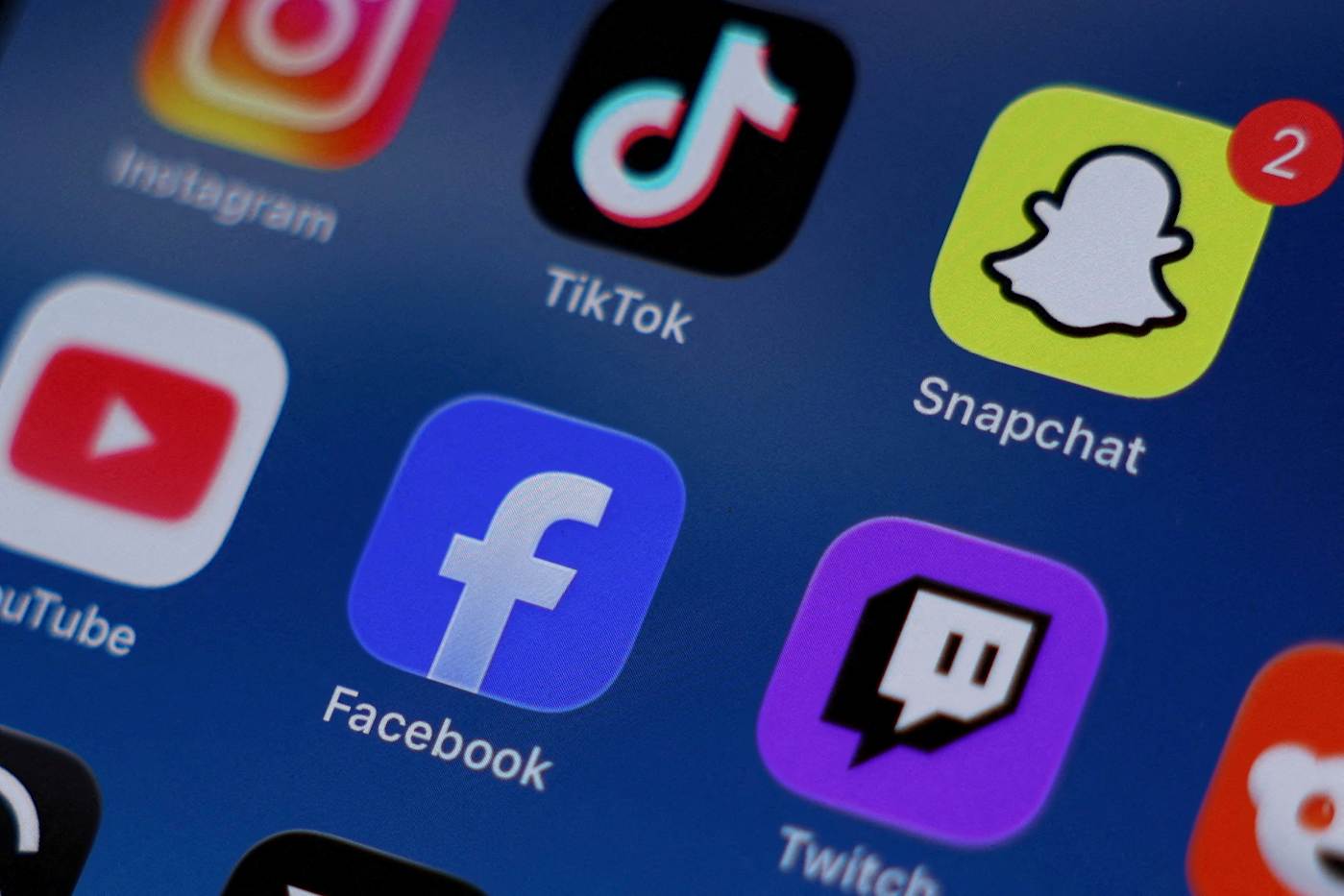
Indonesia announces a social media ban for anyone under 16

Following in the footsteps of Australia, Indonesia will be the latest country to limit social media usage for children under 16. Meutya Hafid, Indonesia's communication and digital affairs minister, announced that a new government regulation will require "high-risk" platforms to delete any accounts from Indonesia that are under 16, starting on March 28.

Hafid said in the announcement that the implementation would be done in stages, starting with major platforms like YouTube, TikTok, Facebook, Instagram, Threads, X, Roblox and Bigo Live, a live-streaming platform based in Singapore. The minister added that all platforms will have to fulfill compliance obligations from the Indonesian government, but didn't specify what they were. In response to the ban, a Meta spokesperson told The New York Times that the company hasn't received an official regulation from the country yet and was awaiting details.

While Australia was the first country to implement such a sweeping ban on social media, many other countries are currently in the process of doing the same. Spain's Prime Minister Pedro Sanchez announced last month that the country is also ready to ban social media for users under 16, while Malaysia's cabinet approved a similar ban that will reportedly go into effect sometime this year.

This article originally appeared on Engadget at https://www.engadget.com/social-media/indonesia-announces-a-social-media-ban-for-anyone-under-16-174634956.html?src=rss

©

© Reuters / Reuters

FILE PHOTO: Instagram, TikTok, Snapchat, YouTube, Facebook, Twitch and Reddit applications are displayed on a mobile phone ahead of new law banning social media for users under 16 in Australia, in this picture illustration taken on December 9, 2025. REUTERS/Hollie Adams/Illustration//File Photo
  •  
❌