Canada has agreed to drastically reduce its tariffs on imported Chinese EVs from 100 percent to 6.1 percent as part of a
between the two countries. In return, China will be reducing tariffs on Canadian canola seeds from 84 percent to about 15 percent.
The move is a break from the United States, which maintains a 100 percent tariff on EVs from China, effectively banning them in the country. Mexico currently tariffs the vehicles at 50 percent after
last year.
Under the agreement, which Canadian Prime Minister Mark Carney
"preliminary," Canada will allow up to 49,000 Chinese EVs into the country, with that number rising to 70,000 after five years. Until now the three major North American trading partners had been aligned in trying to protect their domestic electric vehicle manufacturing. Chinese EV companies benefit from
, and as such can often be priced at a far better value than domestic alternatives.
“Our relationship has progressed in recent months with China. It is more predictable and you see results coming from that,” Carney
. A warmer relationship may be forming in response to the Trump administration's
, with China hoping that alienated nations may
with the Eastern power.
As to concerns that cheaper electric vehicles from China could hurt the Canadian auto market, the prime minister was unconcerned, saying "it’s still in low, single-digit proportion of the size of the Canadian auto sector," Carney added, “Canadians buy about 1.8 million autos a year.” China remains Canada’s second-largest trading partner after the United States.
This article originally appeared on Engadget at https://www.engadget.com/transportation/evs/canada-cuts-tariffs-on-chinese-evs-as-part-of-new-deal-174241990.html?src=rss
After a tumultuous 2025 that saw it lose around 4,000 employees, NASA finally has an operating budget for 2026, and one that largely preserves its scientific capabilities. On Thursday, the Senate passed an appropriations bill funding NASA, alongside the National Science Foundation and a handful of other federal agencies.
Going into the appropriations process, the president called for a 24 percent year over year reduction to NASA's total operating budget. As part of that plan, the White House wanted to reduce the Science Mission Directorate's funding by nearly half, a move that would have forced NASA to cancel 55 ongoing and planned missions, including efforts like OSIRIS-APEX. The bill effectively rejects President Trump's plan, reducing NASA's total operating budget by just 1.6 percent year over year to $24.4 billion.
Per the new appropriations, NASA's science budget will stand at $7.25 billion, 1.1 percent less relative to fiscal 2024, while shuffling the remaining funds to focus on different priorities. For instance, the House and Senate allocated $874 million (+8.7 percent) for the agency's heliophysics work; planetary sciences, which oversees missions like New Horizons, was cut to $2.5 billion (-6.5 percent) compared to 2024. At the same time, NASA's STEM engagement office, which the president proposed eliminating, escaped unscathed with its funding maintained at parity.
"It's almost everything we had been asking for, and it's very encouraging to see a House and Senate run by the president's own party agreeing that we need to keep investing in things like NASA science," says Casey Dreier, chief of policy at the Planetary Society, a nonprofit founded by Carl Sagan that advocates for the exploration and study of space. "It contains very clear and direct language that not only is this funding made available to these projects, but that it will be spent on the initiatives that Congress states."
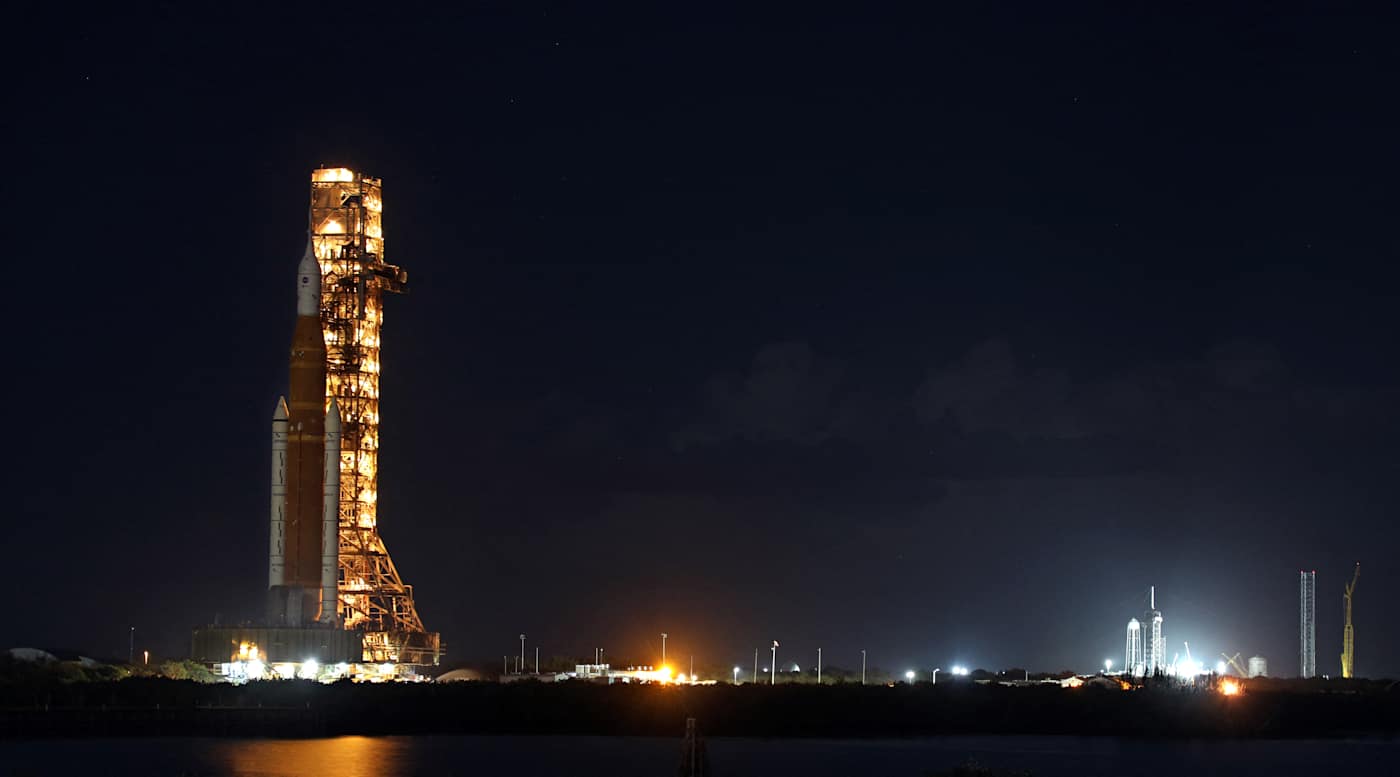
Lawmakers also rejected Trump's effort to scuttle the Space Launch System after its third flight. NASA's heavy-lift rocket is billions of dollars over budget, but remains — as of now — the only spacecraft ready to ferry astronauts to the Moon. Compared to the rest of NASA, the fate of the SLS was never really in doubt. Senator Ted Cruz (R-TX) secured funding for the rocket as part of Trump's Big Beautiful Bill. "I've been saying for a long time you should never underestimate the political coalition behind the SLS, and I think that was very much validated this year," says Dreier.
More importantly, it appears the Goddard Space Flight Center will be safe from further damage. Over the summer, the future of the facility, known for its work on projects like the James Webb Space Telescope, was put in jeopardy. By some estimates, the campus has lost a third of its staff due to workforce cuts, and dozens of buildings, including some 100 laboratories, have been shut down by management. One of the casualties was NASA's largest library, which houses irreplaceable documents chronicling the history of the space race. As part of a "consolidation" effort, many of those documents will be thrown out.
Under the appropriations bill, the Senate has directed NASA to “preserve all the technical and scientific world-class capabilities at Goddard.” It has also instructed the agency to ensure employees of the Goddard Institute for Space Studies are able to continue their work with "minimal disruption." The New York-based office, one of America's leading climate labs, was sent into limbo last spring after the Trump administration moved to shut it down.
The bill also provides a lifeline for NASA's to bring back samples of Martian dirt collected by the Perseverance rover. Congress has effectively cancelled the official program tied to that ambition, the Mars Sample Return (MSR), but has set aside $110 million for the agency to continue developing technologies for future science missions to the Red Planet. MSR advocates have argued the mission could lead to significant scientific discoveries, but Dreier notes the program was "ripe for cancellation" after it became mired in mismanagement.
"I worry MSR now has this stink of bloat, excess cost and threat of overruns that are really going to make it challenging to restart this without having a dramatically different approach," says Dreier, adding that deciding what to do with mission will likely be top of mind for the agency's new administrator, Jared Isaacman.
The 2026 budget leaves NASA with fewer resources. Even in areas where Congress allocated the same amount of funds as it did in 2024, the agency will need to do more with less due to inflation. Compared to the absolute blood bath that would have been Trump's proposed budget, a marginal funding cut is the best case scenario given the circumstances, but the circumstances remain less than ideal.
"There will be another presidential budget request coming out in the next couple of months," Dreier said. "They could do this all over again if they wanted to."
In the immediate future, NASA and its employees are at least protected from the potential fallout of another impending government shutdown. Congress has until January 30 to fully fund the federal government, and as of earlier this week, it has yet to find a way forward on appropriations for agencies like the Department of Labor.
Correction 9:05PM ET: A previous version of this article incorrectly stated Casey Dreier’s surename as Drier. We regret the error.
This article originally appeared on Engadget at https://www.engadget.com/science/space/senate-passes-minibus-bill-funding-nasa-rejecting-trumps-proposed-cuts-231605536.html?src=rss
President Trump has signed a proclamation imposing a 25 percent tariff on “certain advanced computing chips,” the White House has announced. As The New York Times notes, the administration previously threatened much bigger and broader tariffs for chips. Trump even said that he was going to impose a 100 percent tariff on companies unless they invest on semiconductor manufacturing in the United States.
The new tariff will only affect advanced chips imported into the US and are meant to be re-exported to other countries to sell. In its announcement, the White House specifically named AMD MI325X and NVIDIA H200 as two products that will be affected by the tariff. The president recently approved H200 for export to China, saying that it isn’t NVIDIA’s most advanced AI chip anyway and that the company now has newer and more powerful products, such as its Blackwell semiconductors. “[W]e're going to be making 25 percent on the sale of those chips, basically,” Trump said.
Semiconductors imported into the US for use in products to be sold in America or for use in data centers in the country, will not be affected by the new tariff. “This tariff will not apply to chips that are imported to support the buildout of the US technology supply chain and the strengthening of domestic manufacturing capacity for derivatives of semiconductors,” the White House wrote. But that could still change: The administration said that it may still impose broader tariffs on semiconductor imports and the products that use them in the near future.
This article originally appeared on Engadget at https://www.engadget.com/big-tech/trump-administration-imposes-a-25-percent-tariff-on-high-end-chips-140000138.html?src=rss

 Anmelden