Now that Artemis II is all wrapped up, NASA has begun its post-game performance analyses of all the systems that worked together to get four astronauts safely to the moon and back earlier this month. In addition to taking humans farther than ever before, Artemis II served as a crucial test flight for upcoming crewed missions that are planned for as soon as 2027 and 2028, the latter being NASA's ambitious target for landing astronauts on the lunar surface. So far, the Orion spacecraft and the SLS rocket seem to have fared pretty well.
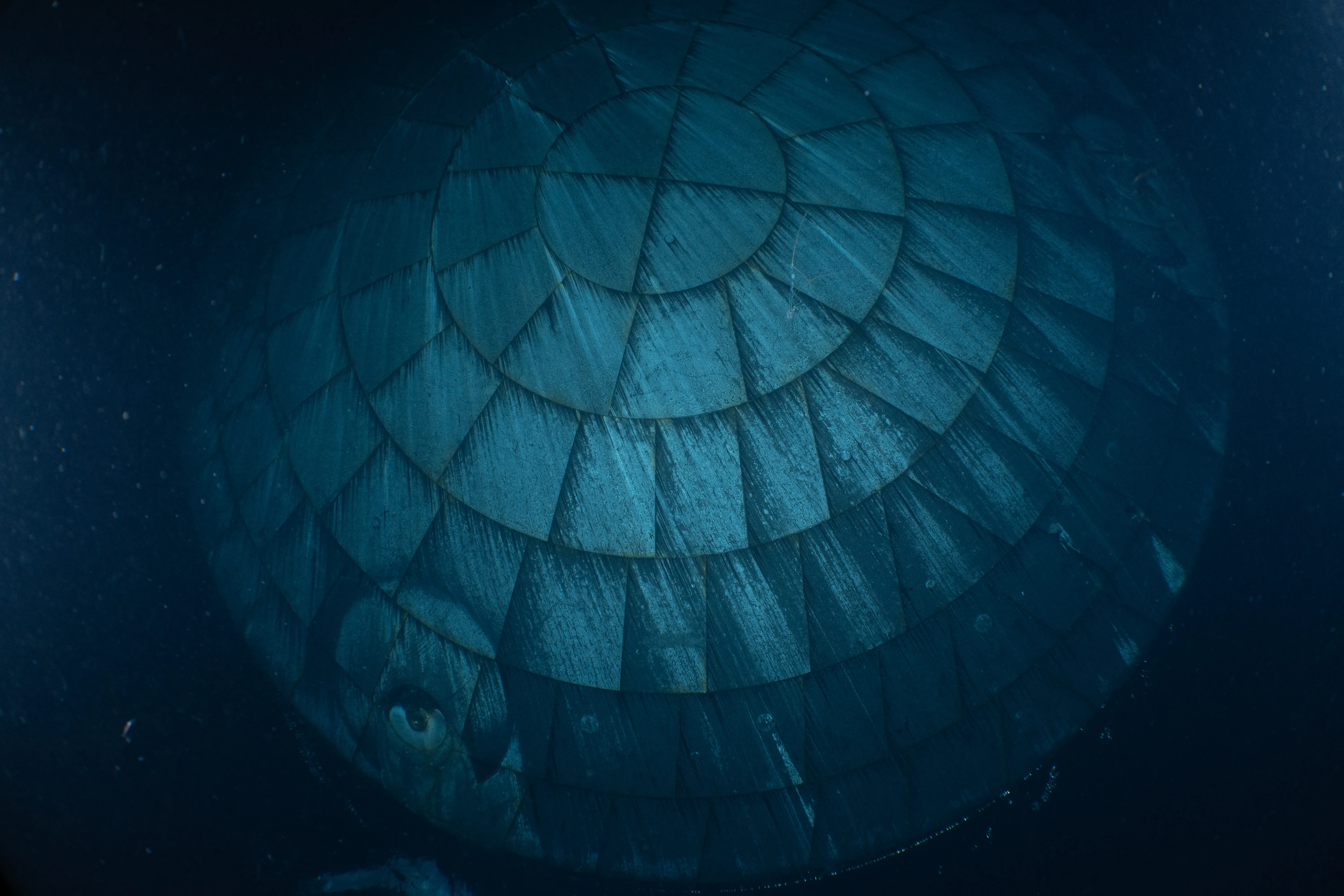
NASA says its initial assessments of the crew capsule show its heat shield "performed as expected, with no unusual conditions identified," and it didn't exhibit as much char loss as seen in the uncrewed Artemis I test. (Navy divers snapped some really cool pictures of the heat shield underwater after splashdown, as seen below). Splashdown went according to plan, with Orion landing 2.9 miles from its targeted landing site, according to NASA, and its entry interface velocity "was within one mile-per-hour of predictions."
US Navy
NASA says the SLS rocket performed well, too. It still has tests to run, but, "At main engine cutoff, when the core stage’s RS-25 liquid engines shutdown, the spacecraft was traveling at over 18,000 miles per hour, achieving its insertion velocity for orbit, and executing a precise bullseye for its intended location," the space agency noted in a blog post.
One thing that we know did cause some issues, though, was the toilet system. Shortly after launch, the astronauts reported problems with the urine vent line, which mission specialist Christina Koch was able to troubleshoot with help from the ground crew. But, everyone would like to avoid that on the next mission, so NASA now has teams checking out the hardware and data to identify what went wrong and how to prevent it.
Watch the Earthset
The Artemis II astronauts have continued to share glimpses into their journey around the moon, and this week, the mission's commander, Reid Wiseman posted an incredible video of the Earth setting behind the moon, as seen from the Orion spacecraft. Humans haven't seen that phenomenon firsthand in over 50 years, since the last Apollo mission. Read more about that here.
Only one chance in this lifetime…
Like watching sunset at the beach from the most foreign seat in the cosmos, I couldn’t resist a cell phone video of Earthset. You can hear the shutter on the Nikon as @Astro_Christina is hammering away on 3-shot brackets and capturing those… pic.twitter.com/8aWnaFJ69c
While ten days might not seem like that long of a time to be in space, it still does things to the body, and returning to Earth has been a bit of an adjustment for the crew. Astronaut Koch last week posted a video of herself struggling through a tandem walk exercise with her eyes closed, taken after her return to Earth. "When people live in microgravity, the systems in our body that have evolved to tell our brains how we’re moving, the vestibular organs, don’t work correctly," she explained in the caption. "Our brains learn to ignore those signals and so when we first get back to gravity, we are heavily reliant on our eyes to orient ourselves visually."
This article originally appeared on Engadget at https://www.engadget.com/science/nasas-initial-takeaways-from-the-artemis-ii-mission-and-more-science-stories-160000808.html?src=rss
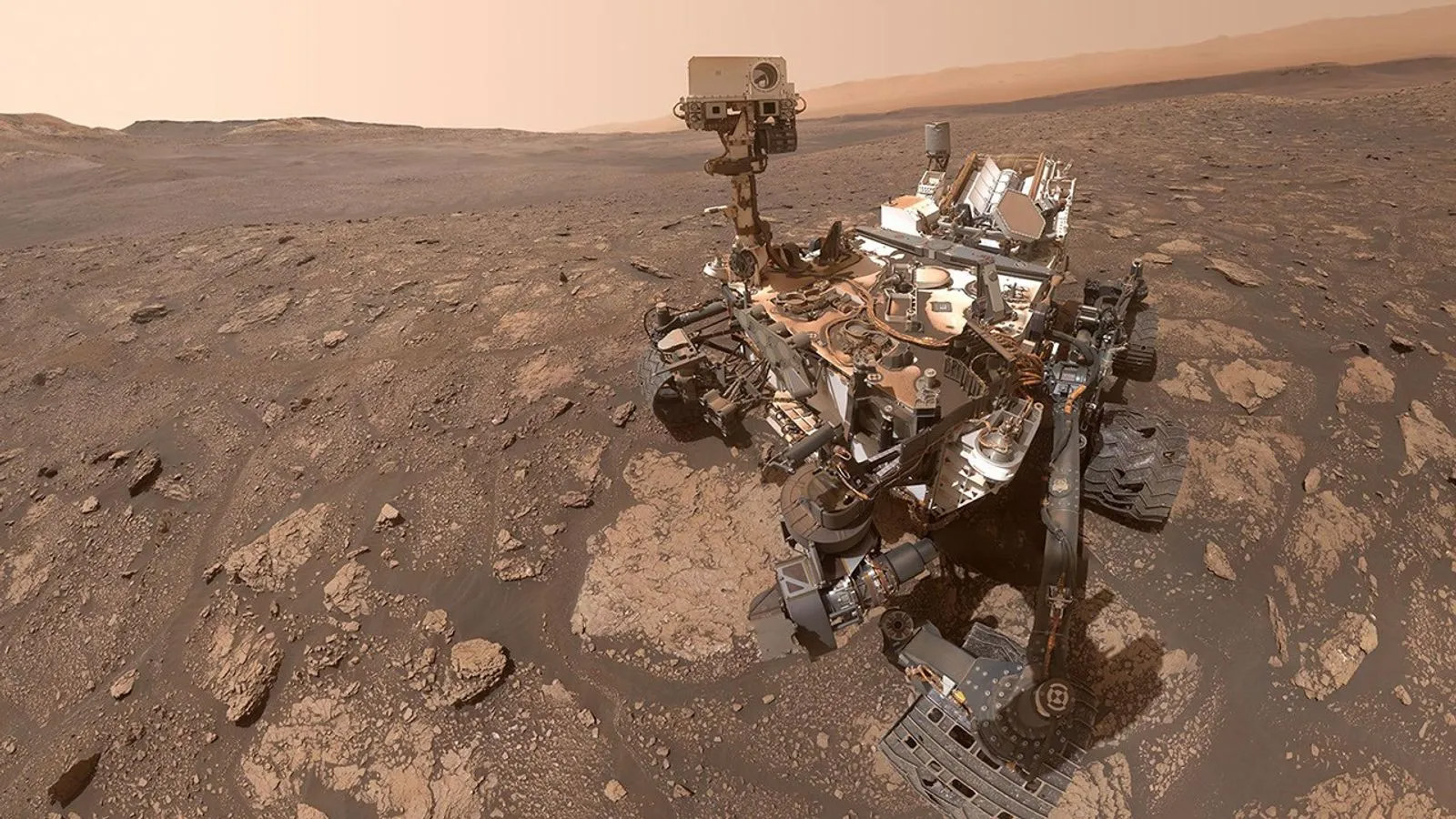
The search for signs of life on Mars continues to yield promising data. A first-of-its-kind wet chemistry experiment, published Tuesday in Nature, confirmed the presence of essential ingredients of life preserved in ancient Martian sandstones.
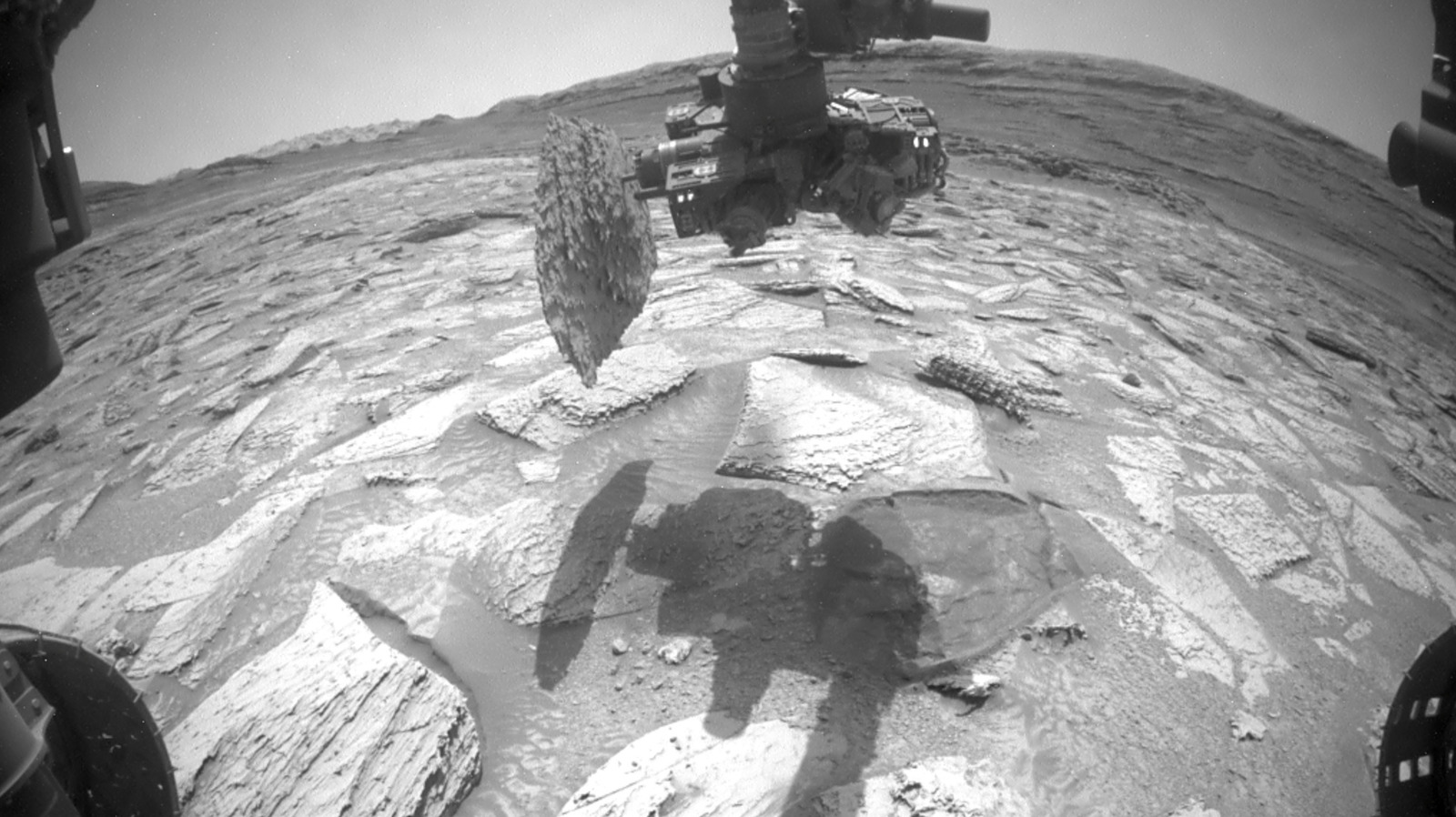
The molecules were found inside 3.5-billion-year-old sandstone. NASA's Curiosity rover collected the clay-filled rocks from an area called Glen Torridon, inside Mars' enormous Gale Crater. The rover's Sample Analysis at Mars (SAM) mobile instrument suite analyzed the data.
The experiment was unique as the first off-Earth study to use the chemical tetramethylammonium hydroxide (TMAH). The reagent allows Curiosity to break down larger organic molecules on the Martian surface, reducing them to something the rover's instruments can read.
It revealed the presence of over 20 different organic molecules. Among the data was confirmation of naphthalene and benzothiophene, some of the largest and most complex organic compounds discovered on the Red Planet. The experiment also yielded the first detection of a possible N-heterocycles, which DNA and RNA are built upon.
<p></p>
NASA
“That detection is pretty profound because these structures can be chemical precursors to more complex nitrogen-bearing molecules,” the paper’s lead author, Amy Williams, wrote in NASA’s announcement. “Nitrogen heterocycles have never been found before on the Martian surface or confirmed in Martian meteorites.”
As with previous discoveries of organic material on Mars, this one is not yet the smoking gun we've been waiting for. But it adds to a growing body of evidence that, at a minimum, the foundations of life as we know it were present on an ancient version of the planet. The study also confirms that organic material can survive on Mars for billions of years, which will encourage future experiments.
The paper's authors say the data will help NASA to optimize its second (and final) TMAH experiment on Curiosity. It also opens the door to future TMAH tests on the Rosalind Franklin Mars rover and the Dragonfly mission to Saturn's moon, Titan. Both missions are scheduled for 2028 at the earliest.
This article originally appeared on Engadget at https://www.engadget.com/science/space/nasas-curiosity-rover-found-promising-organic-chemicals-on-mars-174514375.html?src=rss
The FAA is calling the incident a "mishap" and is beginning an investigation to "enhance public safety, determine the root cause of the event and identify corrective actions to avoid it from happening again." The organization said in a statement that a "return to flight is based on the FAA determining that any system, process or procedure related to the mishap does not affect public safety."
The company hasn't provided any information as to what happened with New Glenn that made it mess up the positioning. It was supposed to position a satellite into a 285 mile orbit after completing two burns, but telemetry data shows that the satellite only reached a 95 mile orbit, which is not sustainable.
This was New Glenn's third mission, and not the first time the rocket has been grounded by the FAA. Blue Origin was unable to land it after the debut launch and it wasn't allowed to fly again for nearly three months. The agency hasn't announced when the rocket will be cleared to fly this time, so we don't know if it will put a crimp in Blue Origin's plans to launch a bunch of Amazon Leo broadband satellites. That mission is currently scheduled for later this year and will use the New Glenn rocket.
This article originally appeared on Engadget at https://www.engadget.com/science/space/the-faa-grounds-blue-origin-new-glenn-rocket-after-failure-to-put-payload-in-orbit-173016117.html?src=rss
The Artemis II astronauts are settling back into life on Earth, but we're not quite tired yet of hearing about their amazing journey. There's a new PBS documentary now streaming on YouTube that dives into the Artemis program and the latest efforts to send humans to the moon again. Also this week, NASA shared some awesome images of a comet flying into the sun, the nonprofit American Rivers released its annual report on the most endangered rivers in the US and ESA posted a throwback image of Mars to highlight some interesting changes down on the surface. Here are the science stories that caught our attention this week.
A comet grazes too close to the sun
Earlier this month, a recently discovered comet made a close approach to the sun — but it couldn't handle the heat. NASA has shared incredible images of the encounter that took place on April 4, showing the comet exploding into dust as it swings around our star. As NASA notes in a social media post, this was "its first and last observed flyby of the Sun."
The comet, C/2026 A1 (also known as MAPS) was first spotted on January 13 of this year. As it neared the sun, it was observed by a slew of instruments: NASA and ESA's SOHO (Solar and Heliospheric Observatory) spacecraft, NASA's STEREO (Solar Terrestrial Relations Observatory) and NASA's PUNCH (Polarimeter to Unify the Corona and Heliosphere). This allowed for views of its passage from multiple angles. Seen in a narrow-field coronagraph view captured by SOHO, the comet appears to plunge directly into the sun. But, the wide view from NASA's STEREO shows it actually swinging closely around the sun before breaking apart.
🧵2/4
This close-up coronagraph view from NASA/ESA’s SOHO spacecraft shows comet C/2026 A1 (MAPS) approaching the Sun on April 4.
MAPS was one of a family of comets aptly called Kreutz sungrazing comets, and according to Karl Battams, the principal investigator for SOHO’s coronagraph, its destruction occurred likely several hours before what would have been its closest approach.
Potomac named most endangered river in the US
The nonprofit conservation organization American Rivers has released its 2026 report on the most endangered rivers in the country, and data centers play a major role in the status of its top pick. According to American Rivers, the Potomac River is the most endangered in the US due both to the threat of sewage pollution from aging pipe systems and the "unprecedented surge in data center development" in its vicinity.
The Potomac River basin spans parts of Pennsylvania, Maryland, Virginia, West Virginia and Washington, DC. In January, the catastrophic failure of the Potomac Interceptor wastewater pipe in Montgomery County, Maryland dumped hundreds of millions of gallons of untreated sewage into the Potomac River and the Chesapeake and Ohio (C&O) Canal, causing bacteria levels to hit over 4,000 times the safe recreational limit at sites closest to the incident, according to the report. The Potomac Interceptor is over 60 years old, and is just one of many in the region that is at or past the 50-year service life, American Rivers notes.
On top of that, data center development in places like Virginia and Maryland has skyrocketed, which could put a strain on local water and energy sources. Data centers also have potential to cause further pollution to the river.
"The region currently has over 300 data centers and is on track to have a total of about 1,000 centers occupying roughly 200 million square feet of buildings — enough to cover 3,472 football fields — on an estimated 20,000 acres of land," the report explains. "These facilities pose a significant and growing threat to both water quality and water quantity, yet are being approved without meaningful transparency, regulatory review, and assessment of cumulative impacts."
The organization is calling for Congress to reauthorize infrastructure funding bills so aging systems can be upgraded, and for regulators in these states to require transparency about data centers' resource use, along with comprehensive environmental assessments before development plans are approved.
Mars ash: then vs now
ESA/DLR/FU Berlin
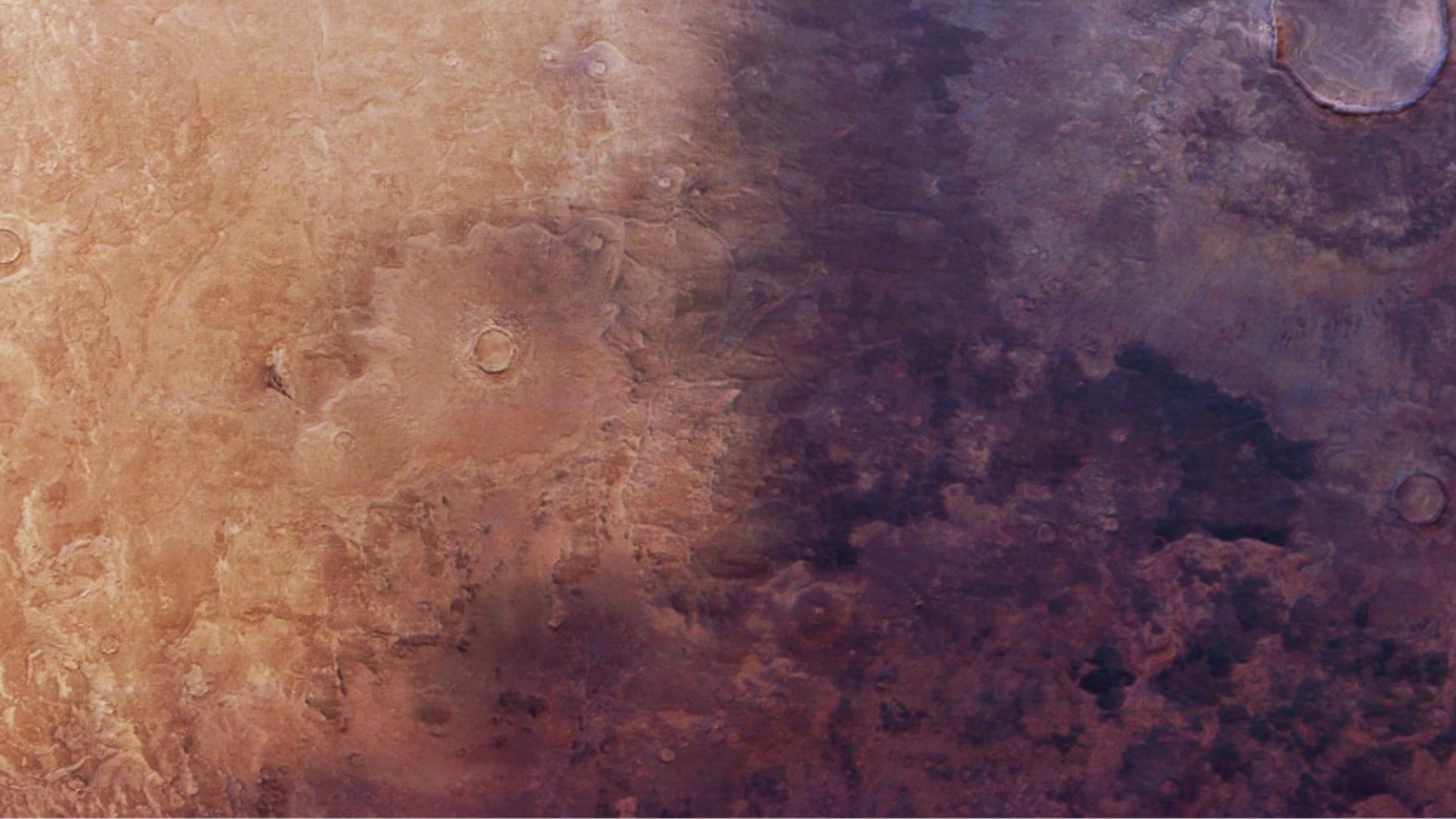
The European Space Agency this week shared a look at how a region on Mars has changed since it was observed by NASA’s Viking orbiters way back in 1976. New images captured by ESA's Mars Express spacecraft show how dark volcanic ash has encroached upon a swath of land in an area known as the Utopia Planitia basin. If you visit the blog post, you'll find a side by side comparison of images from the two time periods.
It's a rare example of an observable change on the surface of the red planet that's occurred over such a short period of time, ESA notes. The agency explains, "The spread of the ash over the last 50 years has two possible explanations: either it has been picked up and moved about by martian winds, or the ochre dust that previously covered the dark ash has been blown away."
Before you go, be sure to check these stories out too:
This article originally appeared on Engadget at https://www.engadget.com/science/a-comet-gets-destroyed-by-the-sun-data-centers-endanger-the-potomac-river-and-more-science-news-160000714.html?src=rss
The crew of NASA's Artemis II mission have safely returned to Earth, but if your Moon fever has yet to break, or you're curious to get a big picture view of how the second of a planned five Moon missions was pulled off, PBS has a new documentaryyou'll want to watch. The hour-long Return to the Moon was produced for PBS' NOVA and aired on TV on April 15, but you can view the episode in its entirety on YouTube right now.
Return to the Moon covers the history of NASA's Artemis program, and specifically the planning and preparation that went into Artemis II. Per the documentary's official description:
Follow the four members of the Artemis II crew as they embark on a perilous 10-day journey to orbit the Moon, venturing beyond Earth orbit for the first time since Apollo and farther into the Solar System than any humans have gone before. And get an inside look at the preparations needed to overcome the extreme engineering challenges of human-crewed spaceflight, all the way from launch to splashdown.
The last Apollo mission was in 1972, so Artemis II getting a group of four astronauts anywhere near the Moon has naturally generated a lot of excitement. The crew flew further away from Earth than anyone has gone so far, captured some stunning photos of both the Moon and our home planet and managed to make everyone feel better about their dislike of Microsoft Outlook. Few Moon missions have been as well-documented or relatable.
This article originally appeared on Engadget at https://www.engadget.com/science/the-pbs-artemis-ii-documentary-is-streaming-on-youtube-210347406.html?src=rss
NASA has confirmed the pending launch of the European Space Agency's (ESA) Rosalind Franklin rover, which is being sent to Mars. The current plan is to launch via a SpaceX Falcon Heavy rocket from Kennedy Space Center. The timing is still being worked out, but the space agency says this won't happen until at least 2028.
This is a partnership between NASA and the ESA, with the European agency providing the rover, the spacecraft and the lander. The US will provide braking engines for the lander, heater units for the rover's internal systems and, of course, assistance with the actual launch.
The rover will be outfitted with scientific instruments to look for signs of ancient life on the red planet. These include a state-of-the-art mass spectrometer and an organic molecule analyzer, which will come in handy as the vehicle collects samples at the Oxia Planum landing site.
This is a mission that has suffered years of delays for all kinds of wild reasons. It was actually first conceived all the way back in 2001. The rover mission was originally scheduled for 2009, after NASA came on board. Budget constraints forced NASA to drop out in 2012, so Russia signed on as the ESA's launch partner.
In the middle of a historic mission back to the Moon, this Administration is proposing to a 47% cut to NASA science and a 23% cut to NASA’s budget overall. Last week’s launch showed our country and world what we’re capable of when we work together toward a common goal. None of… pic.twitter.com/zW3i3iFaEQ
This article originally appeared on Engadget at https://www.engadget.com/science/space/nasa-restarts-work-to-support-europes-uncrewed-trip-to-mars-after-years-of-setbacks-161524488.html?src=rss
The Artemis II mission successfully launched into space on April 1, at 6:35pm Eastern time, from Launch Complex 39B at the Kennedy Space Center in Florida. It will take NASA astronauts Reid Wiseman, Victor Glover, Christina Koch, as well as Canadian Space Agency astronaut Jeremy Hansen, on a 10-day trip around the moon. This mission is the first crewed Artemis flight and will lay the groundwork for future trips to the moon itself, the first flight with a crew onboard the SLS rocket and Orion spacecraft system and our first foray into deep space since the Apollo program.
A few hours into their journey, and the astronauts could already see majestic views of our planet. However, the astronauts also reported a problem with their waste‑management system, which is the first real toilet installed on a deep-space mission. The astronauts thankfully have a backup option: Waste collection bags that Apollo crews had used and had previously discarded on the lunar surface.
The Orion spacecraft successfully separated from the upper stage of the rocket, and the "proximity operations" test is underway. The Artemis II astronauts are manually piloting Orion similarly to how they would if they were docking with another spacecraft. pic.twitter.com/RWW4RSyaoq
By 10:43PM Eastern, the Orion spacecraft carrying the four astronauts successfully separated from the upper stage of the Space Launch System rocket. Glover then started manually piloting the capsule to demonstrate and test how Orion would move and dock with the future lunar landers that will be built by SpaceX and Blue Origin. You can watch the events that happened within the first few hours of the mission below. The crew and their Orion capsule are expected to slash down into the Pacific Ocean on April 10.
This article originally appeared on Engadget at https://www.engadget.com/science/space/the-artemis-ii-mission-has-started-its-10-day-journey-around-the-moon-033412865.html?src=rss
Artemis II, the first crewed mission under the Artemis program, is scheduled to launch today, April 1. NASA is opening a two-hour window for its lift off, starting at 6:24 PM Eastern time, at the Kennedy Space Center in Florida. The agency said the forecast for launch day “shows an 80 percent chance of favorable weather conditions” and that, on March 31, its engineers had finished critical health checks on the Space Launch System rocket that the mission will use.
On the evening of March 31, the engineers shifted the launch system into its final configuration. In the early hours of April 1, they will activate the ground launch sequencer. You can start watching Artemis II’s launch event at 7:45AM ET when the Artemis team will load propellant into the SLS rocket. Full launch coverage begins at 12:50 PM ET on NASA+, Amazon Prime or the YouTube video embedded below.
The Artemis II mission will take NASA astronauts Reid Wiseman, Victor Glover, Christina Koch, as well as Canadian Space Agency astronaut Jeremy Hansen on a 10-day trip around the moon. It will be NASA’s first flight with a crew onboard the SLS rocket and Orion spacecraft system, and it will be humanity’s first foray into deep space since the Apollo program. During their 10-day mission, the astronauts will observe how journeys beyond Earth’s orbit affect human health. Artemis II was supposed to launch in February, but the attempt had failed due to a hydrogen leak. Another attempt in March was delayed yet again due a helium issue. If the launch doesn’t take place today as planned, NASA’s next launch opportunity is on April 6.
This article originally appeared on Engadget at https://www.engadget.com/science/space/watch-the-first-crewed-artemis-mission-take-flight-092800981.html?src=rss
Remember when Japan sent a spacecraft to an asteroid 180 million miles away to scoop some dirt off the surface? Six years on from its arrival to Earth, that sample has yielded some insights about what may have seeded life on our planet. Read on to learn more about the latest findings, and other science news we found interesting this week.
DNA ingredients on Ryugu
In 2020, a capsule from the Japanese space probe Hayabusa2 returned to Earth with samples collected from the surface of asteroid Ryugu, and scientists have spent the subsequent years analyzing those materials for clues about the conditions that existed in the early solar system. This week, researchers from Japan reported an exciting discovery: the Ryugu samples contain the five building blocks of DNA and RNA. The findings, coupled with those from other recent studies, could put us closer to understanding how the ingredients for life first made it to Earth billions of years ago.
The study, published in the journal Nature Astronomy, found the nucleobases adenine, guanine, cytosine, thymine and uracil — all of which were also found in samples gathered from a different asteroid, Bennu, last year, and before that in meteorites dubbed Murchison and Orgueil. This suggests these nucleobases were widespread in the early solar system, and supports the hypothesis that carbonaceous asteroids like Ryugu and Bennu transported them to Earth, the authors explain in the paper. Ammonia was discovered in the samples as well, which may play a role in how these nucleobases formed.
The discovery of these building blocks "does not mean that life existed on Ryugu," Toshiki Koga, the study's lead author from the Japan Agency for Marine-Earth Science and Technology, told AFP. "Instead, their presence indicates that primitive asteroids could produce and preserve molecules that are important for the chemistry related to the origin of life."
Bacteria collaborate to eat plastic waste
Researchers in Germany have identified a trio of bacteria that can digest a common plastic additive, but only when working together. The study published in the journal Frontiers in Microbiologyfound that a "consortium" of bacterial strains (two from species in the genus Pseudomonas and one from Microbacterium)was able to break down several phthalate esters (PAEs), which are often used to make plastic materials more flexible. These chemicals are increasingly finding their way into the environment as plastic pollution grows, and research suggests they can have harmful effects on human health and that of wildlife.
The team focused on microbes that could be found right at home in their own lab, taking a sample of biofilm that had formed on the polyurethane tubing of a bioreactor. This sample was then incubated in a growth medium containing the PAE diethyl phthalate (DEP) as the main source of carbon and energy. They eventually ended up with a stable culture of bacteria that could break down DEP, as long as the DEP concentration didn't exceed 888 milligrams per liter, according to a press release. The consortium could gobble up all the DEP in 24 hours at 30 degrees C. It was also able to grow on the PAEs dimethyl phthalate, dipropyl phthalate and dibutyl phthalate.
The researchers identified the bacteria in the consortium through DNA sequencing, but found that they were not individually able to tackle the PAEs, suggesting they break down the chemicals through a "cooperative process" known as cross-feeding. The consortium could make for another tool in the pollution-fighting toolbox, with potential to help break down PAEs in contaminated areas or speed up the degradation of plastics that contain PAEs by making them more brittle. "This approach may also be effective in treating industrial plastic waste streams," they note.
Hubble witnesses a breakup
Newly released images from the Hubble Space Telescope show the unexpected breakup of Comet C/2025 K1 (ATLAS) — Comet K1, for short — as it made its way out of the solar system back in November. A team of researchers that initially set out to observe a different comet ended up switching targets due to technical issues, only to catch Comet K1 right after it started crumbling. Hubble captured three 20-second images between November 8 and November 10 2025, the first of which the team estimates was about eight days after the fragmenting started. During the observation period, one of the comet's smaller pieces began to break up too. Talk about being in the right place at the right time.
"Never before has Hubble caught a fragmenting comet this close to when it actually fell apart," said John Noonan, a research professor in the Department of Physics at Auburn University, in a statement. "Most of the time, it’s a few weeks to a month later. And in this case, we were able to see it just days after." You can read more about the rare sighting here.
Before you go, be sure to check these stories out too:
This article originally appeared on Engadget at https://www.engadget.com/science/dna-building-blocks-on-asteroid-ryugu-bacteria-that-eat-plastic-waste-and-more-science-news-150000975.html?src=rss
Blue Origin has revealed its plans for an orbital AI data center system in a new filing with the Federal Communications Commission. The company has asked the agency for permission to deploy 51,600 satellites, as reported by the Wall Street Journaland SpaceNews. Called Project Sunrise, the initiative aims to launch and operate a constellation of satellites that can deliver computing capacity for artificial intelligence uses.
Project Sunrise’s satellites will be placed in sun-synchronous orbits at altitudes between 311 and 1,118 miles. Each layer in the constellation will have between 300 to 1,000 satellites and will be approximately 3 to 6 miles apart. In its filing, Blue Origin said the constellation would complement terrestrial data centers.
The satellites will, of course, will be fitted with solar panels to be able to gather energy from the sun. Blue Origin explained that the orbital AI data center will lower the “marginal cost of compute capacity compared to terrestrial alternatives,” because the satellites will be powered by the sun, won’t need land and won’t need grid infrastructure. Project Sunrise will “enable US companies developing and using AI to flourish, accelerating breakthroughs in machine learning, autonomous systems and predictive analytics,” Blue Origin added.
By filing its request with the FCC, Blue Origin has officially joined SpaceX in the list of companies looking to build an AI data center in space. In January, SpaceX asked the FCC for permission to deploy 1 million satellites for its constellation. The company justified at the time that “orbital data centers are the most efficient way to meet the accelerating demand for AI computing power.”
This article originally appeared on Engadget at https://www.engadget.com/science/space/blue-origin-also-wants-to-put-ai-data-centers-in-space-115614142.html?src=rss
NASA and ESA have released new images from the Hubble Space Telescope of a comet breaking up as it exits the solar system, captured as part of study recently published in the journal Icarus. The images are notable not only because they offer a more detailed view of the inside of a comet, which could offer new information about the early days of the universe, but also because they were taken by accident.
Photographing K1, or "Comet C/2025 K1" as it's officially known, wasn't the original intention of the study. "This comet [was] observed because our original comet was not viewable due to some new technical constraints after we won our proposal," John Noonan, a research professor in the Department of Physics at Auburn University in Alabama said. "We had to find a new target — and right when we observed it, it happened to break apart, which is the slimmest of slim chances."
The comet broke up over a period of days into "at least four pieces," each with a "fuzzy envelope of gas and dust" around them, with Hubble specifically capturing the disassembly from November 8 through November 10, 2025. K1 was interesting before it started to crumble because at "around 8 kilometers across" (about 5 miles), it's larger than the average comet, and having footage of it shattering will likely offer new insights into the physics of comets in general. Additionally, the lack of carbon in the gases released by the comet as it broke is apparently "chemically very strange," which suggests the composition of K1 could bear scientific fruit, too.
Hubble has tracked comets of different sizes and compositions for years. Studying them remains a focus because comets are frequently made of ice and rock from the primordial period when solar systems were first forming. The ESA hopes to dramatically expand our understanding of that period with its "Comet Interceptor" mission, which is supposed to launch in 2028 or 2029, and aims to use photos captured from multiple angles to create a 3D model of a comet.
This article originally appeared on Engadget at https://www.engadget.com/science/space/hubble-catches-rare-view-of-a-comet-crumbling-185817544.html?src=rss
When NASA crashed a spacecraft into the asteroid moonlet Dimorphos in 2022, it altered both Dimorphos' orbit around its parent asteroid, Didymos, and the two objects' orbit around the sun, according to new research. NASA's Jet Propulsion Laboratory (JPL) said in a press release that this "marks the first time a human-made object has measurably altered the path of a celestial body around the Sun." It's a promising result as scientists work to find a feasible method of defending Earth from hazardous space objects.
The Double Asteroid Redirection Test (DART) mission was designed to demonstrate one possible way of deflecting such an object, targeting the non-threatening moonlet Dimorphos, which is about 560 feet wide. NASA quickly declared it a success after its initial analysis showed the planned collision shortened Dimorphos' orbit around Didymos, the larger of the two objects in the binary asteroid system. In a follow-up study published in 2024, a team at NASA's JPL reported that Dimorphos' orbital period had been trimmed by about 33 minutes, as its path was nudged roughly 120 feet closer to Didymos than before. The latest study now indicates that the whole binary system was affected, not just Dimorphos.
Didymos and Dimorphos have a 770-day orbital period around the sun, which lead author Rahil Makadia said has been changed by "about 11.7 microns per second, or 1.7 inches per hour." That might not sound like much, but according to Makadia, “Over time, such a small change in an asteroid’s motion can make the difference between a hazardous object hitting or missing our planet.”
This article originally appeared on Engadget at https://www.engadget.com/science/space/nasas-dart-spacecraft-changed-a-binary-asteroids-orbit-around-the-sun-in-a-first-for-a-human-made-object-210529924.html?src=rss
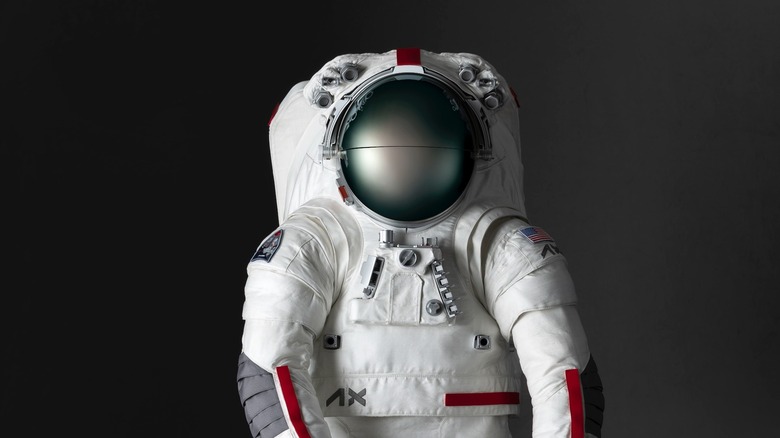
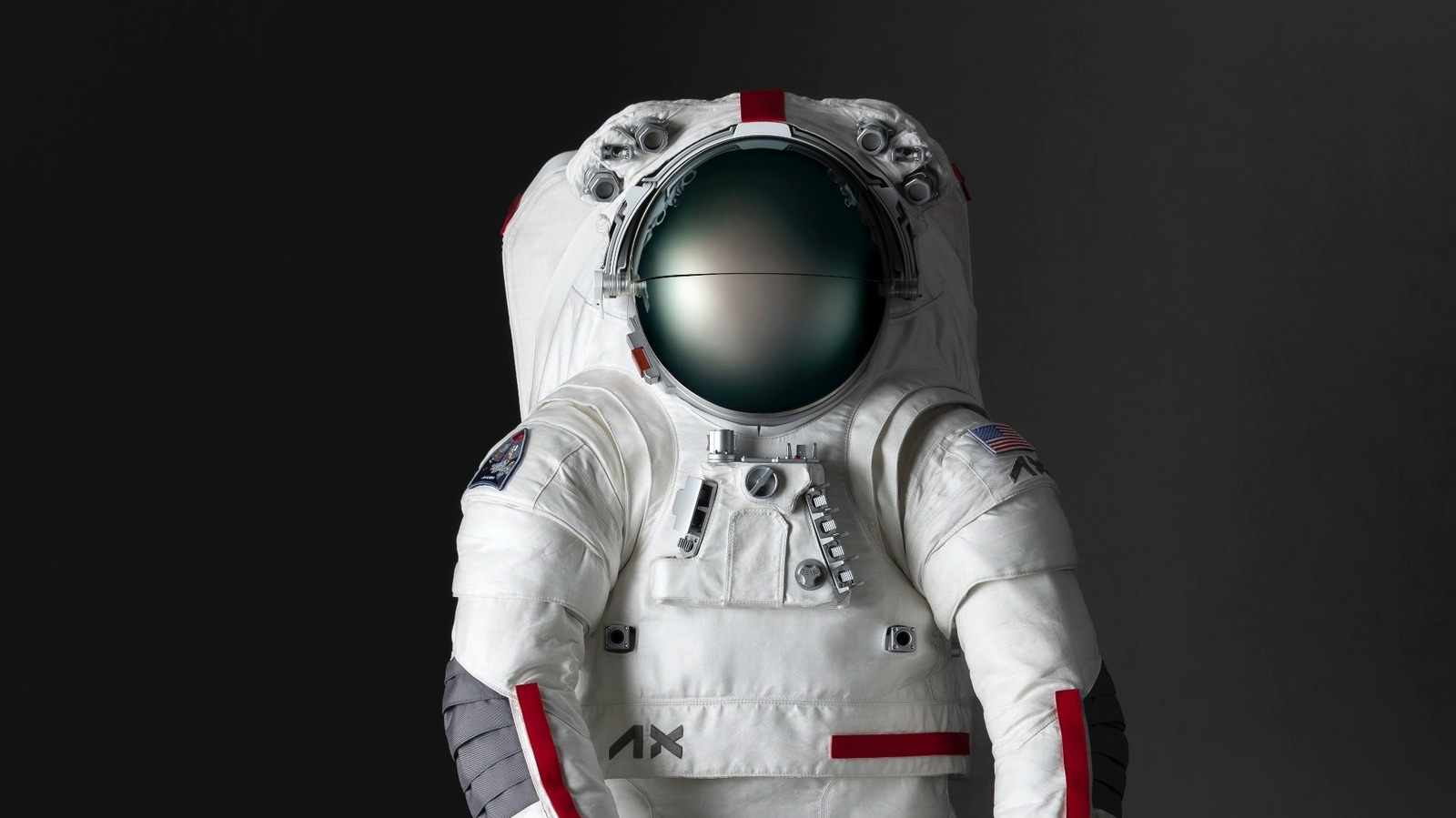
NASA is making major changes to its Artemis Moon program. On Friday, Administrator Jared Isaacman announced the space agency would carry out an additional flight in 2027 to test commercial lunar landers from SpaceX and/or Blue Origin. The new mission will take the place of Artemis 3, which previously would have seen NASA attempt to land on the Moon for the first time since 1972. The flight will also see the agency test a new spacesuit made by Axiom Space.
As part of the new plan, the redesigned Artemis 3 mission will give NASA the chance to test at least one lander in the relative safety of low Earth orbit. NASA will attempt to return humans to the Moon during Artemis 4 sometime in 2028, with the potential for another mission as early as later that same year. Per CBS News, the decision comes after NASA's Aerospace Safety Advisory Plan said the agency's existing mission plan was too risky.
"NASA must standardize its approach, increase flight rate safely, and execute on the President’s national space policy. With credible competition from our greatest geopolitical adversary increasing by the day, we need to move faster, eliminate delays, and achieve our objectives," said Isaacman. "Standardizing vehicle configuration, increasing flight rate and progressing through objectives in a logical, phased approach, is how we achieved the near-impossible in 1969 and it is how we will do it again."
The change of plan also comes as Artemis 2 has faced multiple delays in recent months. The Space Launch System (SLS) heavy-lift rocket has, once again, proven to be temperamental. NASA had planned to launch Artemis 2 in early February, but pushed the flight back after it caught a hydrogen leak during a fueling test. More recently, NASA delayed the mission to give its engineers time to fix a helium pressurization issue in the upper stage of the SLS. At the earliest, the mission can now get underway on April 1.
This article originally appeared on Engadget at https://www.engadget.com/science/nasa-overhauls-artemis-program-delaying-moon-landing-to-2028-164255318.html?src=rss
NASA recently ended a manned mission to the International Space Station (ISS) a month early, citing a medical issue with one of the astronauts. The space agency just revealed that the impacted astronaut was Mike Fincke. This was the first medical evacuation in the history of the ISS.
NASA wrote a statement saying that the astronaut experienced an unknown medical event on January 7 "that required immediate attention" from his fellow crew members. Fincke added that his "status quickly stabilized" thanks to the "quick response and the guidance" of the flight surgeons.
However, the incident did force NASA to cancel a spacewalk planned for January 8. Soon after that, the agency announced it would be ending the Crew-11 mission a month early. The four-person crew included Fincke, NASA astronaut Zena Cardman, Japanese astronaut Kimiya Yui and Russian cosmonaut Oleg Platonov.
They had been living and working aboard the ISS since August and were expected to stay until February. The crew returned on January 15, which was a decision made by NASA's chief health and medical officer. Once the crew had landed, administrator Jared Isaacman said it was a "serious situation" but didn't go into any detail.
Fincke has said he is currently "doing very well" and still participating in standard post-flight reconditioning at NASA's Johnson Space Center in Houston. "Spaceflight is an incredible privilege, and sometimes it reminds us just how human we are," he said. "Thank you for all your support."
We don't know what medical issue Fincke is going through, and it's certainly his business and not ours. In any event, we wish for a speedy recovery.
NASA also moved up the launch of Crew-12 to replace the prematurely-returned astronauts. That team docked at the ISS on February 14 and are scheduled to stay on the space station for around eight months.
This article originally appeared on Engadget at https://www.engadget.com/science/space/the-astronaut-whose-illness-forced-an-early-return-from-the-iss-was-mike-fincke-163752239.html?src=rss
 Anmelden