❌

Normale Ansicht

Anthropic will ask Claude users to verify their identities 'for a few use cases'

Anthropic has started rolling out identity verification on Claude “for a few use cases.” The company didn’t list out those use cases in its announcement, but we’ve asked it for details and will update this post when we hear back. Anthropic says you might see a verification prompt upon “accessing certain capabilities,” asking you to verify your identity. You would have to show a valid and physical government-issued photo ID. You’d also have take a selfie with your phone or computer camera that the system will compare against the ID you present. 

The news, as you’d expect, wasn’t well-received. Many users are questioning the necessity of identity verification to be able to use an AI chatbot, especially if Anthropic already has their credit cards on file as paying subscribers. People are also criticizing Anthropic’s decision to use Persona Identities, which also provides age verification services for OpenAI and Roblox. One of Persona’s major investors is venture firm Founders Fund, which was co-founded by Peter Thiel, who’s also the co-founder and chairman of surveillance company Palantir. 

Palantir’s customers are mostly federal agencies and government offices, including the FBI, the CIA and US Immigration and Customs Enforcement. Most criticisms against the company center around the services it provides those customers, as they’re mainly used to expand government surveillance using its facial recognition and AI technologies. 

In its announcement, Anthropic said that Persona will be the one handling your IDs and selfies. It will not copy and store those images. It also said that Persona is “contractually limited” in how it can use your data and that all data passing through its process is “encrypted in transit and at rest.” Anthropic emphasized that it will not use your identity data to train its models and that it will not share your data with anyone else. 

Update April 16, 2026, 11:35AM ET: Reached for comment, an Anthropic spokesperson told Engadget that "this applies to a small number of cases where we see activity that indicates potentially fraudulent or abusive behavior, which violates our usage policy."

This article originally appeared on Engadget at https://www.engadget.com/ai/anthropic-will-ask-claude-users-to-verify-their-identities-for-a-few-use-cases-115754092.html?src=rss

©

© picture alliance via Getty Images

07 March 2026, Bavaria, Munich: The logo of the Claude app can be seen on the display of a smartphone in Munich (Bavaria, Germany) on March 7, 2026, while a finger taps on the app's icon. Claude is an AI chatbot and a large language model (LLM, artificial intelligence, chatbot) developed by Anthropic, a company founded by former OpenAI employees. (icon, pointing finger, company, symbol image, symbol photo, illustration, symbolic photo, illustrative photo, theme image, general image, theme photo) Photo: Matthias Balk/dpa (Photo by Matthias Balk/picture alliance via Getty Images)
  •  

Tech companies are teaming up to combat scammers

A coalition of Big Tech companies is working on a more comprehensive solution to combat online scams. As first reported by Axios, Google, Microsoft, LinkedIn, Meta, Amazon, OpenAI, Adobe, Levi Strauss & Co, Target, Pinterest and Match Group announced the signing of the Industry Accord Against Online Scams and Fraud. The new agreement is meant to put up a united industry-wide front against online fraud and scams, particularly those from sophisticated criminal networks that use multiple platforms.

According to the Axios report, the measures will include adding fraud detection tools, introducing new user security features, and requiring more robust verification for financial transactions. The agreement will also set up best practices for scam detection, prevention and reporting, while encouraging the sharing of information between companies and law enforcement. On the policy side, the coalition will call on the governments to "declare scam prevention a national priority," according to Axios. While these measures are extensive, the report noted that they're all voluntary since the accord doesn't mention any penalties if the companies don't follow through.

Many of the companies involved in the new accord already have experience in dealing with scams found on their own platforms. Earlier this month, Meta announced several new features across Facebook, Messenger and WhatsApp that would alert users about suspicious friend requests or accounts. Last year, LinkedIn introduced a new verification requirement for company recruiters or executives to address scams targeting job seekers on its platform.

Update, March 18, 2026, 9:40AM: This article has been updated to add additional members of the accord and to include its full name, the Industry Accord Against Online Scams and Fraud. 

This article originally appeared on Engadget at https://www.engadget.com/cybersecurity/tech-companies-are-teaming-up-to-combat-scammers-144616545.html?src=rss

©

© REUTERS / Reuters

FILE PHOTO: People pose for a photo in front of a sign of Meta, the new name for the company formerly known as Facebook, at its headquarters in Menlo Park, California, U.S. October 28, 2021. REUTERS/Nathan Frandino/File Photo
  •  

TurboTax Deluxe is on sale for $45 before tax season

Tax season is fast approaching, and unfortunately for 2026, Direct File isn't an option anymore. The free, government-provided service was shut down, so you'll need to look to other federal programs, including IRS Free File, to file your paperwork. If you don't qualify for Free File, TurboTax might be your best bet for a relatively cheap, efficient way to file your taxes. While it pains us to suggest you give money to a company that has spent decades lobbying to ensure America's tax system remains a nightmare, we can at least help you save a bit of cash if you've determined TurboTax is a necessary expense for you this year.

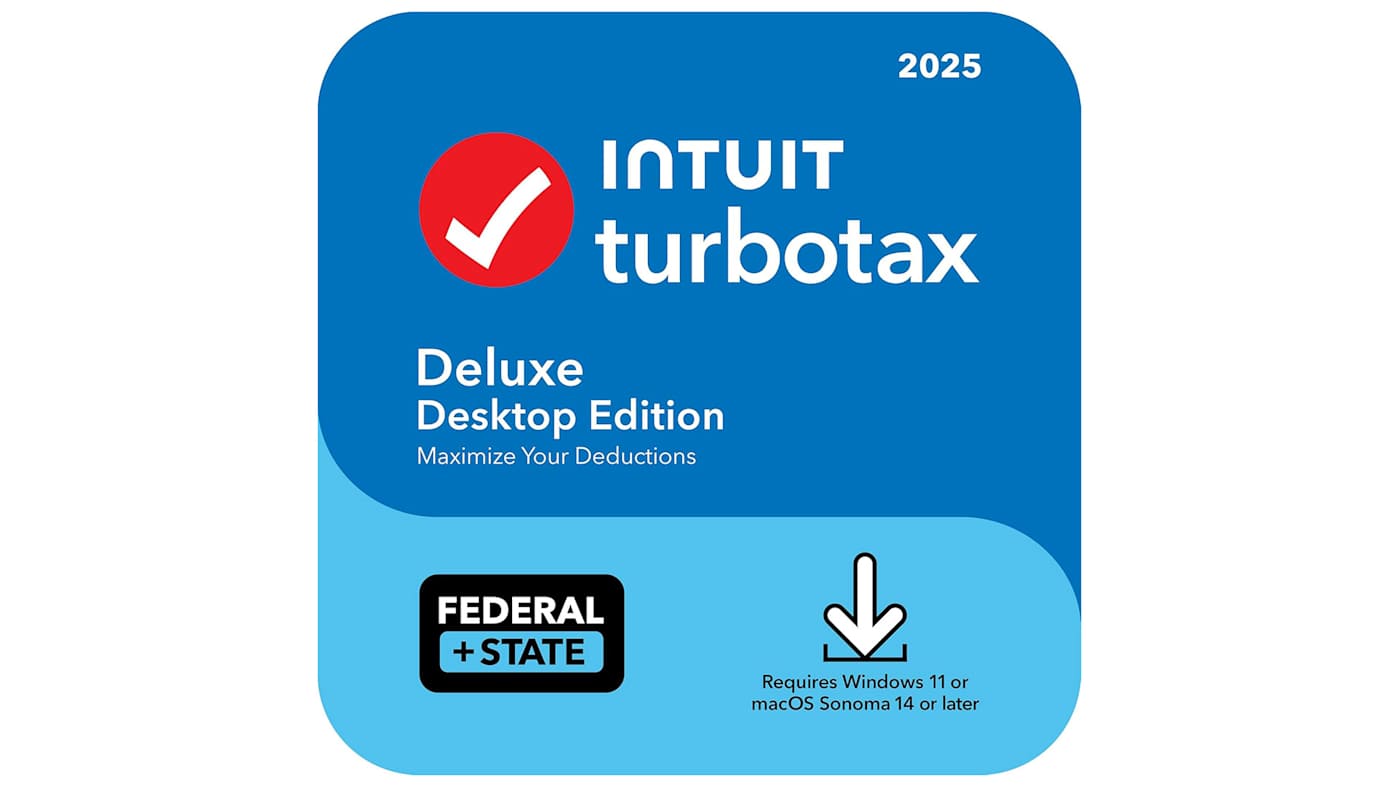
Right now, Amazon has discounted the deluxe desktop edition of TurboTax by 44 percent. That gets you $35 off software that normally costs $80, which you can use to file both your individual state and federal taxes. For most Americans, that should cover their needs.

However, if you're self-employed, you'll need to pony up for the more expensive Business version of TurboTax, which is currently 42 percent off, or $54 off. One last thing to note: you'll need a PC with either Windows 11 or macOS Sonoma to run the software, so an older machine won't do, unfortunately.

Follow @EngadgetDeals on X for the latest tech deals and buying advice.

This article originally appeared on Engadget at https://www.engadget.com/deals/turbotax-deluxe-is-on-sale-for-45-before-tax-season-204848947.html?src=rss

©

© Intuit

TurboTax
  •  
❌