❌

Normale Ansicht

Cyberpunk platformers, gallivanting geckos and other new indie games worth checking out

Welcome to our latest roundup of what's going on in the indie game space. Once again, there are some neat new games for you to check out this weekend. We've got a bunch of updates and announcements for upcoming titles to tell you about too.

There have been a bunch of solid indie showcases lately (and highlights from another one to tell you about below). If you want to learn about a ton of other games ASAP, you might want to set your alarm pretty early on April 25.

Starting at 5AM ET that day, the latest edition of Indie Life Expo takes place on YouTube, Twitch, TikTok, Bilibili and elsewhere. This one will feature more than 200 games! A rapid-fire Indie Waves segment will power through 160 of them. Organizers received 1,100 submissions for this installment, so hats off to them for featuring a sizable percentage of those.

Before that, you can check out another showcase on April 21. Top Hat Studios Presents: Spring Showcase 2026 will start at noon ET on the publisher's YouTube and Twitch channels.

The stream will feature Motorslice, Well Dweller and survival horror game Becrowned, as well premieres and other Top Hat games. I've been looking forward to Motorslice, which has a May release window. I wager we'll get a precise release date for that during this stream.

Meanwhile, there's an interesting Steam event taking place soon. InterfaceX26 will run from April 27 until May 4. This one is focused on games that deal with made-up operating systems and other custom interfaces. Organizers have brought together more than 150 developers and publishers, who are asking Valve to introduce an official "Fake OS" tag for games on Steam. 

Some neat games will be included in a sale and a showcase on May 2, including Blippo+, TR-49 and The Roottrees are Dead. Expect demos and relevant new releases too. Speaking of which...

New releases

We've been waiting a very long time for Replaced. This cyberpunk adventure from Sad Cat Studios and publisher Thunderful finally landed this week on Steam, GOG, Xbox on PC and Xbox Series X/S. It's on Game Pass Ultimate and PC Game Pass. Otherwise, the base game costs $20. A supporter edition that includes the soundtrack is $25. It'll hit the Epic Games Store at a later date.

The game was initially supposed to arrive in 2022. It certainly didn't help that Sad Cat Studios was forced to relocate from Belarus to Cyprus after Russia's invasion of Ukraine. But the game is finally here and it debuted to generally positive reviews.

Replaced is a 2.5D action platformer set in an alternate version of 1980s America, in which you play as an AI trapped in a human body that may or may not dream of electric sheep. I haven't yet had a chance to properly jump into this gorgeous-looking game, but I'm hoping to do so this weekend.

Speaking of games I've long had on my wishlist, Gecko Gods arrived this week. I think I first clapped eyes on this around 2022. Various trailers charmed me with the idea of a puzzle exploration platformer that casts you in the role of a gecko that's able to run along walls and ceilings. 

I've played around 90 minutes of this one so far. I dig the look and the gecko is very cute (being able to customize its appearance is a nice touch). I love that you "collect" different types of bugs by eating them. It's a fairly relaxing game, which is broadly what I need at the minute.

I think there are some issues here, though. I've explored two of the main five islands in the open world and it feels a bit sparse so far. The joy of being able to clamber up and around any object complicates things when it comes to more precise platforming sections. While the sailing sections are pretty, the boat is clunky to control on the choppy water. I ran into some mild technical issues as well on PS5 with occasional framerate dips and objects popping in. Hopefully, that's something the developers at Inresin are able to address.

Gecko Gods — from publishers Super Rare Originals and Gamersky Games — is available now on Steam, PS5 and Nintendo Switch. It's normally $20, but there's a 10 percent launch discount until April 30 (on PS5, this only applies to PlayStation Plus members)

Another highly anticipated game landed this week in the form of Mouse: PI for Hire. We've had our eyes on this first-person shooter/detective game with sumptuous rubberhose-style animation for quite some time. Reviews have been generally positive so far, and it seems that there's enough substance here to live up to those stellar visuals. 

Mouse: PI for Hire — from Fumi Games and publisher PlaySide — is out now for $30. It's available on PC, Nintendo Switch 2, PS5 and Xbox Series X/S.

Thirsty Suitors developer Outerloop Games and co-publisher Outersloth served up the cooking-themed Dosa Divas this week. It tells the story of two sisters who set out on a journey with their mech to take down a fast food empire and reconnect communities through cooking. 

It caught my eye when I saw it during a showcase a while back and it has a great concept, though I don't exactly love turn-based combat. I've read a few lukewarm reviews of the game, and the consensus seems to be that the cooking mechanics and combat perhaps needed some more time to simmer. 

If you'd like to try Dosa Divas yourself, you can pick it up on Steam, Xbox Series X/S, PS5, Nintendo Switch and Switch 2. It'll usually run you $20, but there's a 10 percent launch discount until April 28.

If you're looking for a puzzle game that can be relaxing or rather dark, depending on your mood, it might be worth checking out A Storied Life: Tabitha. As you pack up the home of a late loved one, you'll need to decide which items to keep in the limited storage space you have and discard the rest. You'll need to wrap fragile items in bubble wrap and vacuum pack soft items to save room in the boxes.

As you save items, you'll unlock words that you can use to fill in the blanks of your loved one's life and tell their story, Mad Libs-style. Given that you'll find items like a blackmail letter and a shirt with lipstick on the collar, it seems like there's a lot of variety to the kinds of stories you can tell.

A Storied Life: Tabitha is available on Steam now. It'll normally run you $15, but you can save 10 percent if you buy it before April 28.

To round out this section, I’ll quickly note that Hades 2 is out now on PS5 and Xbox Series X/S for  $30, with a 20 percent launch discount. It's on Game Pass Ultimate, Game Pass Premium and PC Game Pass too.

I bought Hades 2 when Supergiant Games brought it to Steam early access two years ago, telling myself I'd wait until the full game was out. But I still haven't gotten around to it yet. There are always too many games tugging at my fragile attention span and Hades 2 faded into the background for me. I really ought to play it, I know!

Upcoming 

I'm keeping an eye out for Agefield High: Rock the School from Refugium Games. This spiritual successor to Rockstar's Bully is set to arrive this summer on Steam. It emerged this week that it will hit PS5 and Xbox Series X/S later in the year.

It's a coming-of-age adventure in which you play as Sam, a young lad who has moved to a new school in the early 2000s. He wants to make his last few months of high school a time to remember.

There's a branching narrative with multiple endings here — you can opt to go to classes and be a good student, or skip school and cause trouble. As a mostly rule-abiding student way back when, I'd be tempted to go for the latter. This seems like a bit of a life sim with a broad array of activities and ways to get into bother. I’m looking forward to it.

The latest edition of the Galaxies Showcase — yet another indie spotlight event — took place this week and The Backworld caught my attention. This is a Mother-inspired RPG from Numor Games and publisher Top Hat with charming art direction (yes, I did see that one character doing a Naruto run), an intriguing mix of characters and... 

Oh no, why did the music stop? Why did it get so dark all of a sudden? What are these horrifying beasts that are chasing my character? Yup, there's a heavy horror element here. Numor took inspiration from The Backrooms as well.

The Backworld will be released later this year. A demo just hit Steam.

A Study in Blue, from Relate Games, was another highlight of the Galaxies Showcase, thanks in large part to that impressive animation. This is a point-and-click adventure in which you play as two characters with complex pasts: private detective Kenneth and runaway Blue. 

You'll explore a semi-open world and solve crimes by collecting clues and calling out characters' lies. There are three intertwined story acts and multiple endings. A Steam demo featuring a side quest from the main game that'll take around two hours to complete is available now.

I'm always going to be interested in any game that riffs on The Legend of Zelda: A Link to the Past. On the face of this trailer, Elementallis developer AnKae Games seems to borrow quite a bit of the design language and other ideas from the SNES classic. Still, if you're going to crib from anything, it may as well be the best game of all time.

This 2D action RPG, which is also published by Top Hat and has a heavier focus on elemental powers than A Link to the Past, looks very much like my kind of jam. It's coming to Steam, GOG, Switch, PS4, PS5, Xbox Series X/S and Xbox One on April 28. Per the eShop listing, it'll cost $18.

This article originally appeared on Engadget at https://www.engadget.com/gaming/cyberpunk-platformers-gallivanting-geckos-and-other-new-indie-games-worth-checking-out-110000924.html?src=rss

©

  •  

15 years after 'Video Games,' Lana Del Rey has an actual video game song

The James Bond franchise has a long history of getting pop stars to record its theme songs (perhaps most memorably with Live and Let Die), and it looks like that tradition will now extend to video game adaptations about the fictional spy. IO Interactive has announced that Lana Del Rey co-wrote and performed the theme for 007 First Light, the developer's playable James Bond origin story.

"First Light" is written and performed by Lana Del Rey and composer David Arnold, and like the moody and abstract opening credits released alongside the song, could vaguely gesture at the themes of the game. IO Interactive has previously said that its game focuses on a young, inexperienced and more reckless Bond, before he developed his trademark cool. The developer is also integrating the stealth mechanics it perfected in Hitman into the upcoming game.

Del Rey's personal gaming experience may begin and end with her hit "Video Games," which was apparently written about a former boyfriend's love of World of Warcraft, but the artist does know how to write a song with Bond in mind. Lana Del Rey shared in 2024 that her song "24" from the album Honeymoon was originally written for 2017's Spectre, one of several songs that were cast aside in favor of Sam Smith's "Writing's on the Wall."

007 First Light is coming to Xbox Series X/S, PlayStation 5 and PC on May 27, 2026. A Nintendo Switch 2 version of the game is now coming out this summer.

This article originally appeared on Engadget at https://www.engadget.com/gaming/15-years-after-video-games-lana-del-rey-has-an-actual-video-game-song-221925735.html?src=rss

©

  •  

Sam Altman's 'human verification' company thinks its eye-scanning orbs could solve ticket scalping

Sam Altman's cryptocurrency turned identity verification startup Tools for Humanity is offering a new set of perks to people who scan their eyes at one of the company's orbs. Among them, is a new tool called Concert Kit that could help bands and artists fight back against ticket scalping bots. 

The new feature relies on the revamped World ID, the orb-based verification system that scans users eyeballs and faces to create a "proof of human" signature that lives on users' mobile devices. "It's basically like a little human passport for the internet that lets you prove on apps and websites that you are a real and unique human without revealing anything about yourself," Tools for Humanity Chief Product Officer Tiago Sada tells Engadget. 

Now, as more apps and services are starting to support World ID, that "human passport" can unlock some new abilities. Coupled with Concert Kit, it allows artists to designate a specific pool of tickets for "verified" humans only. The concept is a bit like how pre-sales currently work, with artists (or their teams) setting aside a specific number of tickets for people who have set up a World ID. Those folks can then use their World ID to get ticket codes for Ticketmaster, Eventbrite, AXS or other major ticketing platforms. 

Because World ID is limited to actual, "verified," humans the system won't be susceptible to the same tactics that have enabled bots to ruin the ticket-buying process for so many, Tools for Humanity says. Artists are also in control of what level of verification they want to require from their fans. (The new World ID app will also allow people to set up an account with a selfie check if they don't have ready access to an orb.) 

Just how much of a dent Concert Kit will be able to make in the massive scalping bot problem that plagues the concert industry is less clear. So far, Bruno Mars is slated to use the solution on his upcoming world tour — no word on just how many of his tickets will be reserved for World ID-verified humans, though — and Concert Kit is available to other artists starting today.

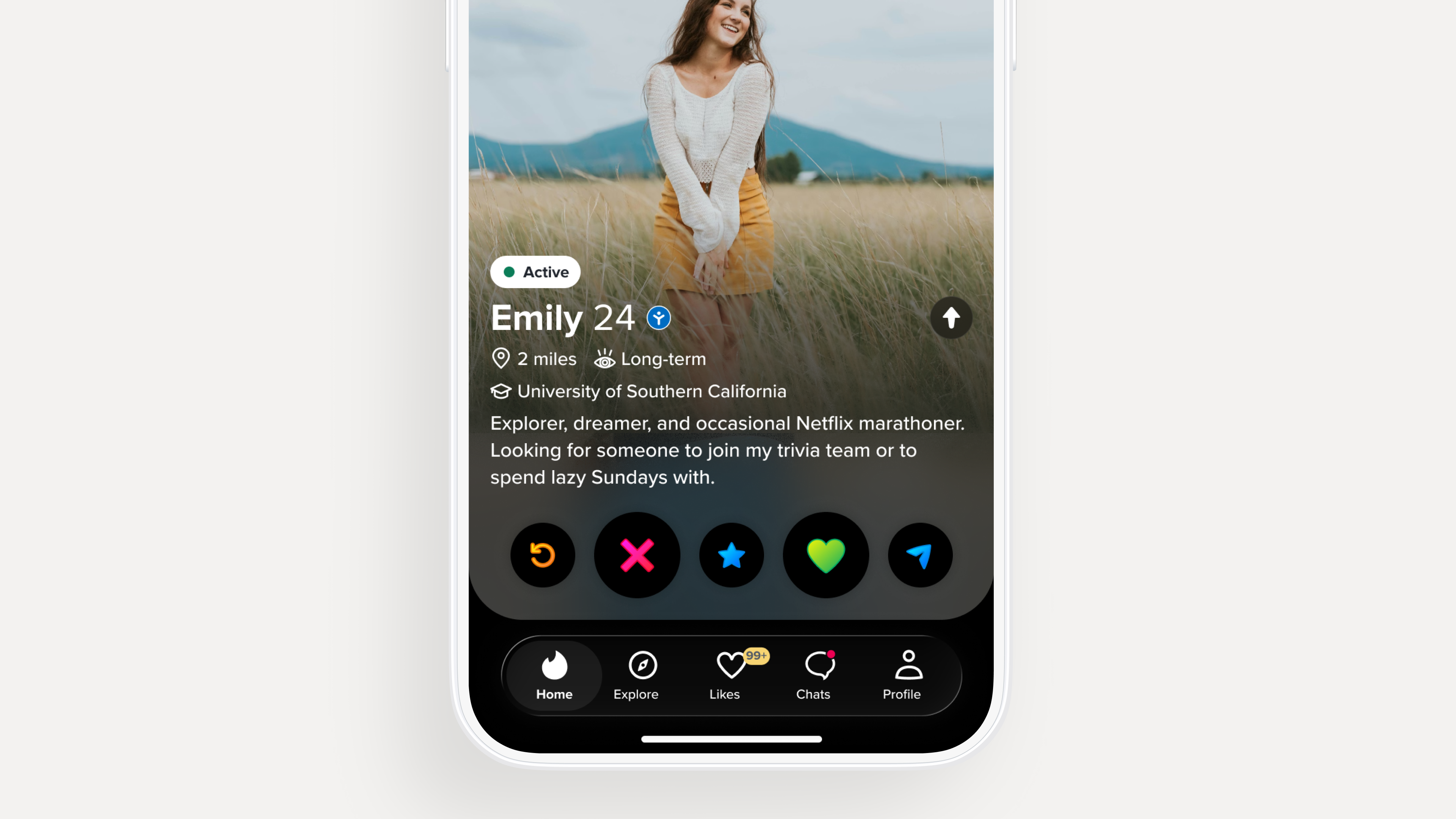
Concert Kit is one of several new integrations and updates to World ID that Tools for Humanity announced at an event in San Francisco Friday. Tinder, which earlier this year started testing World ID as an age verification solution in Japan, will be rolling out support worldwide. In the US, Tinder's integration won't be for age verification, though. Instead, it will indicate whether there is an actual "verified" human behind a given profile.

Tinder profiles that verify with World ID will get a badge as an extra signal of authenticity.
Tools for Humanity

On the enterprise side, Zoom and DocuSign are also adding support for World ID to help businesses verify that there is an actual person (and not a deepfake or bot) joining their video calls or signing important documents. Tools for Humanity is also introducing a standalone app for World ID that separates its identity verification tools from its existing crypto wallet app.

The updates are Tools for Humanity's latest attempt to make their orb-based verification system, which has been widely mocked, more mainstream and perhaps a little less dystopian. (Elsewhere, orbs have begun appearing in some new places like a San Francisco Gap.) 

On their part, Tools for Humanity seems aware that a lot of people aren't ready to scan their faces at a bunch of orbs controlled by Altman just to "prove" they are humans. I asked Sada, Tools for Humanity's Chief Product Officer, what he would say to people who think that the company is solving for the wrong problem: that really it should be up to ticketing platforms and dating apps and other services to strengthen their security and bot-fighting tools, rather than rely on their users to "prove" their humanness. 

He said it was a "completely understandable question" and compared it to some people's initial discomfort with things like Apple's TouchID or FaceID. "Not everyone has to do it upfront, and that's important," he said. "It's optional. If you want to have a World ID, you get access to that enhanced experience."

This article originally appeared on Engadget at https://www.engadget.com/ai/sam-altmans-human-verification-company-thinks-its-eye-scanning-orbs-could-solve-ticket-scalping-171500555.html?src=rss

©

  •  

Exit 8 is cinema for the livestreaming era

The rules of Exit 8, both the cult indie game and the recent film adaptation, are simple: You're stuck in a subway station that loops around endlessly. If you notice any anomalies on your current loop, you turn around. If everything is the same, you keep going forward. Each successful guess takes you to a new entrance where the loop recurs, until you reach the end of the labyrinth, Exit 8 itself. 

It's a setup that perfectly suits a first-person video game, where you can fully control where your character looks and moves. And it's also something director Genki Kawamura deftly replicates in the film through long tracking shots and sweeping camera movements. Even without a controller, or a keyboard and mouse, the viewer remains immersed, looking and listening for any minor changes. Within just a few minutes, the film makes it clear it's not just another thoughtless video game adaptation like The Mario Galaxy Movie — it's an attempt to translate the experience of the game to an entirely new medium.

That's a daunting challenge for most artists, but Kawamura is no stranger to jumping between formats. He's known for producing popular anime films from the likes of Makoto Shinkai and Mamoru Hosoda, including Your Name and Belle. He's also made a name for himself as a best-selling author, with books including the novelization of Exit 8.

Kawamura's perspective for the film came from a conversation with Nintendo's legendary game designer Shigeru Miyamoto, who had mentioned that the greatest games are both fun for the players and people watching them. "So what I tried to do in the film is to really place the audience in the shoes of the player in certain shots... almost like they were watching a live stream of a video game in other scenes," he said in an interview with Engadget (via a translator). "That's kind of structurally the through-line of the film."

The Exit 8 adaptation balances that sense of immersion with a more traditional narrative structure, something the game lacked entirely. As the film begins, we're introduced to a young man standing in a crowded train. A drunken businessman shouts at a mother to quiet crying baby down. Instead of telling the belligerent salaryman to fuck off, the young man plugs in his earbuds and tries to ignore the situation, just like everyone else. He eventually steps off, while the tearful mother suffers through the verbal assault.

It's a scene that anyone who's lived in a crowded city can relate to — the moments where you know you should try to help a stranger, but fear, cowardice or embarrassment hold you back. 

Exit 8
Exit 8
NEON

Shortly after receiving a call from his ex-girlfriend, who reveals that she's pregnant, the young man stumbles into the Exit 8 loop. At first, it's just a normal subway station, with large poster ads, a photo booth and random maintenance doors. But he quickly notices that the room repeats itself. Thanks to a helpful set of instructions on the wall, he learns that his only way out is to start tracking anomalies, like slight changes in text, or the way a robotic businessman walks past him. And yes, things get freaky quickly. 

Kawamura points to his experience working in animation as a major influence for Exit 8. In particular, the works of Satoshi Kon and Katsuhiro Otomo influenced how he externalized what characters were thinking and feeling, as well as how he depicted the interaction of dream and real worlds. 

" When we were filming, I told my DP [director of photography] that the main character of this film is the corridor," he said. "And all of our human characters, they have no names, so therefore they're NPCs in this corridor, which is the main character. So I wanted the corridor to almost evoke this feeling in the audience that it has a will of its own. And this yellow Exit 8 sign is almost like this divine God-like being."

Kawamura says he personally views it as the corridor challenging humans who have a guilty conscience, but you can easily read in other meanings. More importantly, Exit 8 isn't merely a faithful recreation of the source material — it adds enough to make a case for existing a separate medium, a challenge many video game adaptations fumble.

This article originally appeared on Engadget at https://www.engadget.com/entertainment/tv-movies/exit-8-is-cinema-for-the-livestreaming-era-151112907.html?src=rss

©

  •  

The Morning After: Our verdict on the DJI Osmo Pocket 4

You’ve probably seen DJI’s stick vlogging cameras everywhere. At trade shows and tech events I’ve attended, it’s often the de facto video camera used by reporters and influencers alike. The Osmo Pocket 3 was easy to use, had sharp focus, potent image stabilization and handled vertical and horizontal video recording with minimal compromises.

That was two years ago, so naturally it’s time for an update. According to our review by James Trew, the Osmo Pocket 4 is the one to beat. It’s still incredibly easy to record with, whether you’re doing talk-to-camera vlogs or ambitious, more cinematic-quality videos. With a new 1-inch sensor, improved framerate capture and an extended battery, it’s better than its predecessor in every way. (Except the $605 price.)

There’s a new dedicated zoom button, and you can assign up to three controls to this button through single, double and triple clicks. There’s also 107GB of internal storage, so you don’t need to add storage — that’s plenty to get started with.

There are some things on our wishlist: we’d love some optical zoom, and the lack of dust- and water-protection might give you pause before more ambitious video shoots.

— Mat Smith

The other big stories this morning


You can now hide Shorts on YouTube

Rejoice.

You can ditch the barrage of short-form videos from your YouTube feed if you don’t want to see them. YouTube has rolled out the capability to set your Shorts feed limit to zero minutes. The video-sharing platform originally launched a Shorts feed limit back in October last year, but the lowest option you could choose was 15 minutes. The priority placement of shorts I didn’t want to watch has rankled me for a while — this could be the solution.

Continue reading.

The first full trailer for the new Street Fighter movie is here

Yes, Ken beats up a car.

TMA
YouTube

After a short teaser dropped last year, we’ve finally got a full trailer for the newest attempt to bring Street Fighter to cinemas. The good news, to me, is that it’s going to be silly, fun and high camp. Ken and Ryu are squabbling, and M. Bison is still, bafflingly, a head of an international crime org. And Chun-Li plans to take him down. Jason Momoa is playing Blanka and Curtis ‘50 Cent’ Jackson is portraying Balrog, while mask-toting Orville Peck will don another mask as Vega.

Continue reading.

Allbirds pivots to AI

Never a good sign.

TMA
Allbirds

It’s like walking on a Claude.

Continue reading.

This article originally appeared on Engadget at https://www.engadget.com/general/the-morning-after-engadget-newsletter-111515383.html?src=rss

©

  •  

Call of Duty movie arrives on June 30, 2028

A Call of Duty movie is still happening, but don't hold your breath for it to hit screens any time soon. Today, the popular FPS' social media revealed that the movie's theatrical release date will be June 30, 2028. 

A film adaptation of the game franchise was first revealed last year, and shortly after, we learned that Taylor Sheridan and Peter Berg would be serving as the producers. The duo, whose past credits include Friday Night Lights and Yellowstone, will also be co-writing the project under Berg's direction. We still haven't heard anything about the cast, or even what era of the long-running series will be depicted, so it seems like a safe bet that there's still a ways to go before this wraps. But CoD is nothing if not a money-maker, so reimagining it as a summer blockbuster seems pretty expected.

This article originally appeared on Engadget at https://www.engadget.com/entertainment/tv-movies/call-of-duty-movie-arrives-on-june-30-2028-200033481.html?src=rss

©

  •  

A first look at Metro 2039 shows how its Ukrainian developer turned the darkness up to 11

If the real world isn’t grim enough for you, Ukranian developer 4A Games has your back: Metro 2039 has been announced and is scheduled to arrive this winter. And based on the developer’s first look at the title, Metro 2039 looks to be an even darker affair than previous titles in the series. A tall order, but the real-world turmoil that has enveloped 4A Games since Russia’s invasion of Ukraine sounds like it has turned into a painful inspiration for the developer.

The lengthy cinematic reveal, which also contains a brief bit of gameplay at the end, doesn’t give much of the story away. But it does serve to place you right in the ruined, terrifying world of the Metro series. Metro 2039 arrives about 25 years after a nuclear apocalypse wiped out most life on the planet. The series focuses on survivors who live in Moscow’s ruined metro system. 4A says that this time out, the different underground factions have been united by a group known as “the Novoreich,” complete with a new ruler, the Spartan known as Hunter.

Despite Hunter promising “salvation and a new life” for the survivors left on the surface, things aren’t exactly rosy underground. As you might expect, this supposedly “united” society is still a complete disaster, with propaganda, authoritarian rule and violence the hallmark of the regime.

Screenshot from Metro 2039.
4A Games

The Metro series is based on novels by Dmitry Glukhovsky, a Russian author who has been in exile due to his public denouncement of Russia’s invasion of Ukraine. 4A Studios says that while this new game isn’t based specifically on one of his works, they worked in collaboration with Glukhovsky on the story for Metro 2039 “shaped by shared values of freedom and truth, and informed by the harsh realities of the world today.”

In statements from the studio, 4A directly acknowledges the conditions that Metro 2039 was created under. “Many developers continue to work from multiple locations, facing daily challenges never anticipated,” the studio says. “Through power outages, reliance on generators, and disruptions from missile and drone attacks, development has continued – driven by resilience, shared support, and a commitment to the work.”

It goes on to state that: “The war has directly shaped the development of Metro 2039, with its story focused acutely on choices, actions, consequences, and the cost of securing a future. While told from a distinctly Ukrainian perspective, Metro 2039 remains an authentic Metro story.” While the Metro series has been unfailingly bleak, it’s not hard to imagine how Russia’s invasion could have influenced the storytelling coming out of a Ukranian studio with an exiled Russian being part of the story team. But the limited bit of the game we’ve seen so far doesn’t make anything too explicit.

Screenshot from Metro 2039's reveal trailer.
4A Games

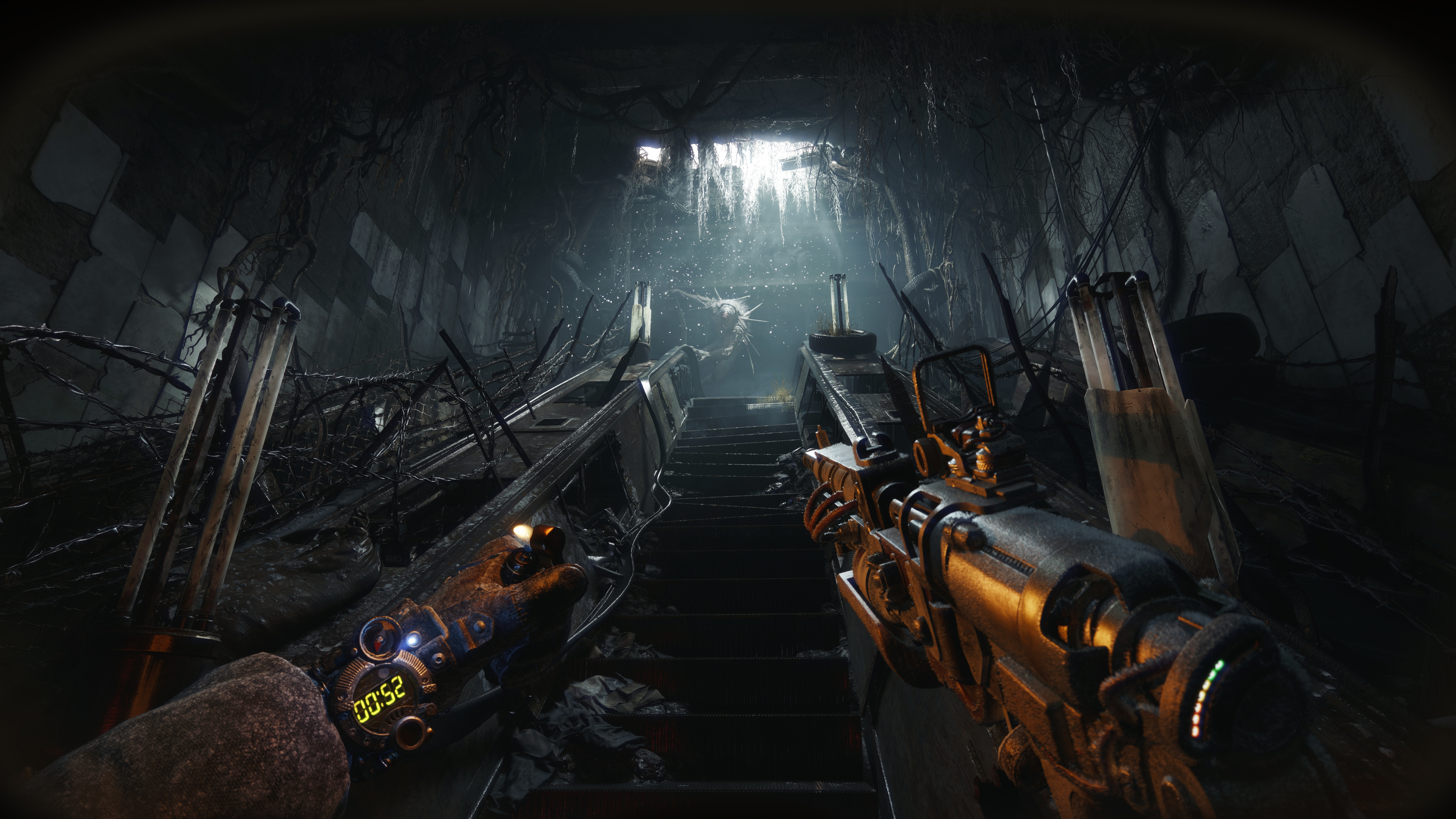
The trailer shows off the new player-character known as The Stranger, the first voiced protagonist in the series (though we don’t hear him do anything but scream in the preview). The Stranger has apparently been surviving in the above-ground wasteland but is forced to return to the metro. The little bit of gameplay we saw was the standard first-person shooter view of The Stranger heading underground to be immediately ambushed by a pretty horrific monster that he barely escapes from — he’s then dragged to “safety” by a group of survivors who just get the doors to their shelter shut before being overrun by a larger horde. Creepy stuff.

The rest of the preview largely feels like a dream (or nightmare) sequence — but while it’s hard to put together what is going on, there’s no doubt that the detail in the environments and characters is top-notch. Given that the last metro game, Metro Exodus, was released way back in 2019, it’s fair to say that we’re getting a more graphically impressive rendering of ruined Moscow and the tunnels beneath it.

There’s no exact release date yet, but 4A Games says Metro 2039 will arrive this winter for Xbox Series X/S, PlayStation 5 and PC.

This article originally appeared on Engadget at https://www.engadget.com/gaming/a-first-look-at-metro-2039-shows-how-its-ukrainian-developer-turned-the-darkness-up-to-11-171500713.html?src=rss

©

  •  

The first real trailer for the Street Fighter movie is filled with crowd-pleasing moments

We finally have a real-deal trailer for the upcoming Street Fighter movie, after a short teaser dropped at The Game Awards last year. This is nearly three minutes of fighting, silly dialogue and, of course, Easter eggs from the games.

To the latter point, there's a scene of Ken beating up a car like in the bonus stages from Street Fighter II and footage of Ryu powering up one of his famous Hadoken fireballs. There's even a cheeky reference to Chun-Li's notoriously-large and powerful thighs. This is all helped along by the fact that the actors all look very silly and mostly accurate to the games.

The plot looks to be fairly standard for this type of adaptation. There's a big, important fighting tournament and Chun-Li is recruiting people from around the globe, acting like the franchise's Nick Fury or something. Ken and Ryu are beefing, M. Bison is involved in a criminal conspiracy (big surprise) and everyone else is punching and/or making snarky asides. It looks campy as hell, which is a good thing.

Street Fighter is directed by Kitao Sakurai, who made the film Bad Trip and was heavily involved with The Eric Andre Show. It hits theaters on October 16.

The cast is actually stacked. Noah Centineo and Andrew Koji lead the film as Ken and Ryu, but Jason Momoa is playing Blanka and Curtis '50 Cent' Jackson is portraying Balrog. Other actors involved include David Dastmalchian, Callina Liang, Cody Rhodes and Orville Peck.

This is the third attempt at a live-action Street Fighter adaptation. The 1994 film is famous for Raul Julia's iconic performance as M. Bison and 2009's Street Fighter: The Legend of Chun-Li is famous for being very bad.

This article originally appeared on Engadget at https://www.engadget.com/entertainment/tv-movies/the-first-real-trailer-for-the-street-fighter-movie-is-filled-with-crowd-pleasing-moments-153145868.html?src=rss

©

© Paramount

Ken beats up a car.
  •  

Anna's Archive told to pay Spotify and record labels $322 million over unprecedented music scraping

The open-source library and search engine Anna’s Archive has been ordered to pay Spotify and the three of the world’s largest music labels $322 million in damages after it claimed to have scraped the entirety of the streaming platform’s library of music.

Spotify, Universal Music Group, Warner Music Group and Sony Music Entertainment, sued Anna’s Archive in January for a slightly comical $13 trillion. They alleged Anna's Archive had illegally scraped 86 million songs — a significant chunk of all the music on the planet — and intended to make them available for download via BitTorrent. At the time, Spotify called the scraping a "brazen theft of millions of files containing nearly all of the world’s commercial sound recordings."

In a since-deleted blog post, Anna's Archive stated the scraping was an act of preservation. Still, a New York federal judge sided with the plaintiffs after the archive's anonymous operator failed to respond to the lawsuit.

The court order finding Anna's Archive guilty of direct copyright infringement, breach of contract and violation of the Defense Contract Management Agency (DCMA) was filed on April 14. A further claim of violation of the Computer Fraud and Abuse Act (CFAA) was dismissed by the judge.

The total breakdown of damages includes $7.5 million to each of Sony and Universal Music and $7.2 million to Warner Music, with the remaining $300 million going to Spotify. The latter figure amounts to $2,500 for each of the 120,000 scraped music files already made available by Anna’s Archive. The remainder of the 86 million files were due to be released to the public at a later date.

The court also ordered Anna’s Archive to "immediately destroy all copies and phonorecords of any work ‘scraped,’ downloaded, copied or otherwise extracted from Spotify," but whether it actually does this, or indeed hands over a penny of the damages, remains to be seen. The bizarre reality of this case is that the person (or people) behind Anna’s Archive remains a mystery.

This article originally appeared on Engadget at https://www.engadget.com/big-tech/annas-archive-told-to-pay-spotify-and-record-labels-322-million-over-unprecedented-music-scraping-151034032.html?src=rss

©

© Anadolu via Getty Images

ANKARA, TURKIYE - OCTOBER 24: In this photo illustration the logo of Spotify is being displayed on a mobile phone screen in front of computer screen displaying the logos of Spotify in Ankara, Turkiye on October 24, 2025. (Photo by Muhammed Selim Korkutata/Anadolu via Getty Images)
  •  

Amazon MGM's 2026 theatrical slate includes 'Highlander' and 'Spaceballs: The New One'

Fresh off the box office success of Project Hail Mary, Amazon MGM Studios has announced its theatrical release lineup for the next year. Most of the titles aren't likely to hit the highs of the Ryan Gosling starrer which has grossed $515 million in theaters. However, there are a number of promising releases like Spaceballs: The New One and Highlander starring Henry Cavill, both sequels to '80s films. Another is The Sheep Detectives with Hugh Jackman, the trailer for which has been a hit on YouTube.

Earlier this year, Amazon MGM promised to release up to 14 films in theaters over the next year and leave them to run for as long as 45 days — a far cry from its previous policy of releasing just a few films for several weeks at most. That strategy is paying off so far. "Four months. Four films. Over $670 million at the box office. And we have nine more on the way,” said Amazon MGM's head of domestic theatrical distribution, Kevin Wilson. 

The company said that it's not about volume, but impact. "We are building films that give audiences a reason to leave the house. Films with scale. Ambition," Wilson said. Looking at the slate, though, some of those films are likely to be hits and some not so much. 

First up is The Sheep Detectives set to arrive on May 8th. You may scoff at the title, but the trailer has racked up 20 million views and mainly positive comments. It looks like fun, family-friendly fare and stars a popular actor, so one could easily see this being a hit for Amazon MGM.

Masters of the Universe is next up on June 5, 2026. "Director Travis Knight brings the world of Eternia to life on a massive scale with stars Nicholas Galitzine, Camila Mendes, and Idris Elba," Amazon explains. The film is based on the Mattel toy franchise and animated series so again, it could be another magnet for kids and their nostalgic parents. 

How to Rob a Bank is a heist comedy with a solid cast including Nicholas Hoult, Zoë Kravitz, Anna Sawai, Pete Davidson, and John C. Reilly, set to arrive on September 4. That's followed by Verity (October 2, 2026) based on the Colleen Hoover novel and Peter Farrelly's I Play Rocky Sylvester Stallone biopic about the production of the 1976 film Rocky. 

2027 starts with the The Beekeeper 2 (January 15) starting Jason Statham, followed by The Thomas Crown Affair (March 5, 2027) directed by and starring Michael B. Jordan. Spaceballs: The New One, a sequel to the classic Mel Brooks movie arrives on April 23, 2027 with Rick Moranis, Josh Gad, Keke Palmer, Lewis Pullman, Daphne Zuniga, Bill Pullman, and Mel Brooks. 

Other films expected but without release dates yet include The Chosen: Crucifixion, A Colt is My Passport, Your Mother Your Mother Your Mother and Highlander starring Henry Cavill based on the 1986 cult classic.

This article originally appeared on Engadget at https://www.engadget.com/entertainment/amazon-mgms-2026-theatrical-slate-includes-highlander-and-spaceballs-the-new-one-094505690.html?src=rss

©

© Amazon MGM Studios

Amazon MGM's 2026 theatrical slate includes 'Highlander' and 'Spaceballs: The New One'
  •  

The Metal Gear Solid movie is back on, with Final Destination: Bloodlines directors in charge

A film adaptation of Metal Gear Solid is in the works again, this time from filmmakers Zach Lipovsky and Adam B. Stein, the directors of Final Destination: Bloodlines, according to The Hollywood Reporter. The duo are reviving the project at Columbia Pictures as part of a new first-look deal with Sony, the latest attempt in what's been multiple decades of work to turn the blockbuster stealth game into a blockbuster film.

"Metal Gear Solid was nothing short of a groundbreaking cinematic masterpiece that forever revolutionized video games," Lipovsky and Stein said in a statement. "We are thrilled and honored to bring Hideo Kojima's iconic characters and unforgettable world to life."

Lipovsky and Stein's horror bona fides helped make Bloodlines a critical and commercial hit when it came out in 2025, and the directors have a variety of other IP-focused genre films in the works, including a sequel to Gremlins for Warner Bros. and an animated Venom movie for Sony. It remains to be seen how exactly the duo will translate Metal Gear Solid's unique quirks to film, though.

Metal Gear Solid is heavily indebted to director Hideo Kojima's own taste in action and spy cinema, while also being in conversation with video games themselves in a way that wouldn't naturally translate to film. And even if you removed those metatextual rough edges, can it really be Metal Gear Solid without Kojima's equal parts charming and awkward writing? 

Attempts to create a film version of the game date back to 2006, when Kojima first shared that an adaptation was in the works. Columbia Pictures announced a new version of the film in 2012, with Avi Arad, former head of Marvel Studios, producing. In 2014, Jordan Vogt-Roberts, the director of Kong: Skull Island, was attached to direct that adaptation. And six years after that, Oscar Isaac was reportedly cast as Solid Snake. Arad and his son Ari Arad are still producing this latest take on the game, but with Lipovsky and Stein in charge, that older version of Metal Gear Solid is likely dead. Still, hope springs eternal that we’ll get to see a man hide in a cardboard box on the big screen someday.

This article originally appeared on Engadget at https://www.engadget.com/entertainment/tv-movies/the-metal-gear-solid-movie-is-back-on-with-final-destination-bloodlines-directors-in-charge-214914374.html?src=rss

©

  •  

Netflix adds three Jackbox games to its TV app

Netflix has added a heavy hitter in party activities to its gaming lineup. The streamer announced that Jackbox Party Essentials is joining the Netflix Party Games collection. This move makes three of the popular Jackbox group games available for free to Netflix subscribers: Fibbage 4, Quiplash 3 and Drawful 2. Each one supports up to eight players. 

Netflix has been refocusing its interactive strategy to highlight family-friendly and party games. The company has even offered tie-ins to its original content; for instance, playing Overcooked through Netflix will let you use a member of Huntr/x from Kpop Demon Hunters as your in-game avatar. We also saw Netflix's Game Controller software, which turns any mobile device into a gamepad for its game library, take the crown as a top-downloaded iOS app around the Easter holiday weekend. That performance could indicate that many families were at least thinking of trying out the streamer's games as part of their festivities.

This article originally appeared on Engadget at https://www.engadget.com/gaming/netflix-adds-three-jackbox-games-to-its-tv-app-190220143.html?src=rss

©

  •  

Rhythm Heaven Groove comes to Switch on July 2

A large chunk of Nintendo’s 2026 plans remain a mystery (that is, unless you take the insiders and leakers at their word), but we have been waiting on release dates for a couple of previously announced first-party titles, including Rhythm Heaven Groove, which officially arrives July 2.

Seemingly announced first on the Nintendo Today! app before making its way to the company’s various social channels, the first new entry in the Rhythm Heaven series in more than a decade is technically launching on the original Switch, but should also be fully playable on Switch 2. Currently the game’s Switch 2 compatibility status is listed as “Untested” on its official store page, but it’s hard to imagine there being any issues there.

🍅🍅🫑🥦🥦🥦🎵

Did you catch all that? #RhythmHeavenGroove comes to #NintendoSwitch on July 2! pic.twitter.com/WrWiyC7Yqn

— Nintendo of America (@NintendoAmerica) April 9, 2026

If you’ve never played a Rhythm Heaven game before, the series is a bit like a (slightly) less wacky WarioWare, but all the minigames are based around rhythm and beat-matching. The challenges are rarely especially complex in terms of what's required of you, leaving you free to enjoy the always excellent original pop and electronic music.

Rhythm Heaven is one of Nintendo’s less prolific series’, with the upcoming Groove being only the fifth entry in two decades. The series debuted on the Game Boy Advance in 2006 in Japan as Rhythm Tengoku, with Rhythm Heaven arriving on the DS two years later in the US. That was followed by Rhythm Heaven Fever on the Wii, and the most recent entry was 2015’s Rhythm Heaven Megamix for the 3DS, which was something of a best-of collection.

Rhythm Heaven Groove is notable not only for being the first Rhythm Heaven game of the Switch generation, but also likely one of the console’s last games, as Nintendo prepares to shift its full focus to the Switch 2. Before then we’re also getting the typically charming Yoshi and the Mysterious Book (Switch 2-only) on May 21 and Tomodachi Life: Living the Dream, which launches on both platforms next week, April 16. 

Rhythm Heaven Groove is available to pre-order now for $40.

This article originally appeared on Engadget at https://www.engadget.com/gaming/nintendo/rhythm-heaven-groove-comes-to-switch-on-july-2-155715068.html?src=rss

©

© Nintendo

Rhythm Heaven Groove
  •  

Google introduces AI-generated avatars to YouTube Shorts

A new feature that lets you create an AI avatar with your likeness is now live on YouTube. First announced in a blog post earlier this year, avatars are designed to be used in Shorts (provided you still allow them to show up), allowing you to insert yourself into video content in a way that YouTube deems to be safe and secure.

YouTube’s approach to combatting the AI sloppification of the internet and the proliferation of deepfakes appears to be adding more and more AI features to its platform, framing this latest addition as a tool that gives creators more control of their digital identities. Any video generated using an avatar will feature YouTube’s AI disclosure and include visible watermarks and labels like SynthID and C2PA.

YouTube has published a pretty in-depth explainer on how to create and use an avatar in either the YouTube or YouTube Create app, but here’s a brief summary of how to do it using the former. Once you’ve opened AI Playground, you’ll be taking a "live selfie" that also records your voice. You can then preview your photorealistic virtual self and either proceed with it or redo the process if you’re unhappy with anything. Creating an avatar in the YouTube Create app is broadly similar, but you have to navigate to the My Avatar homepage first.

YouTube recommends that you hold your phone at eye level and keep yourself centered as much as possible. Lighting is also important, as is ensuring your whole face is visible, you’re in a quiet area, and there’s nobody else in the background. You also have to be the account owner to create an avatar, and over the age of 18.

Once you have an avatar you like, you simply type in a prompt and wait for the AI to generate a video, which according to 9to5Google can be up to eight seconds long. Alternatively, YouTube will also let you add an avatar to existing "eligible" Shorts by tapping "Remix" and then "Reimagine" with your avatar selected.

Avatars can be deleted or retaken whenever you like, as can any video with your avatar in it. You can also limit who’s able to remix your videos, but deleting a video with your avatar in it won’t also delete the original video, or that avatar from your account. YouTube will automatically delete any avatar that hasn’t been used to create new video content for three years.

The new avatar feature will roll out gradually, and is the latest in a long line of AI-centric tools and updates YouTube has added to the platform in the last year, including automatic upscaling for low-res videos, automatic editing for creators and an AI-generated carousel for search results.

This article originally appeared on Engadget at https://www.engadget.com/social-media/google-introduces-ai-generated-avatars-to-youtube-shorts-140222368.html?src=rss

©
© NurPhoto via Getty Images

The YouTube logo appears on a smartphone screen in this photo illustration in Ontario, Canada, on February 16, 2026. (Photo Illustration by Thomas IllustrationFuller/NurPhoto via Getty Images)
  •  

Spotify now lets you turn off all video

Sometimes, you just want your dang music streaming app to play music. Spotify, which has increasingly incorporated video features through the years, is finally giving us the option to turn that mess off. Behold: universal video toggles.

Spotify's video settings control several areas. First, the old Canvas toggle (videos on the Now Playing screen) is still there. But now you'll find two additional switches alongside it. One lets you control whether the app plays music videos. The other, "all other videos," covers video podcasts, vertically scrolling videos and artist clips.

You'll find the controls under Settings > Content and display. Once you choose your preferences, they'll apply universally across all platforms. And if you're a family account manager, you can toggle video settings for all members on your plan.

Spotify has increasingly leaned on video in recent years. The Canvas video loops arrived back in 2018. Then came video podcasts in 2020, as the format was enjoying a pandemic-era boom. The platform added music videos in 2024 (though they didn't arrive in the US until late last year). Then there are artist clips, the 30-second vertical videos where creators can send intimate (promotional) messages to their fans.

The company claims that over 70 percent of its users say more video content would enhance their experience. So, don't be surprised if more video features arrive in the future. Fortunately, Spotify recognized that certain (perhaps older?) users don't want or need a TikTok-ified music app.

This article originally appeared on Engadget at https://www.engadget.com/entertainment/music/spotify-now-lets-you-turn-off-all-video-130000034.html?src=rss

©

  •  

Google bakes NotebookLM, its research tool, into Gemini

Google has fully integrated NotebookLM, its AI-powered research tool, into the Gemini app. The company launched a standalone NotebookLM app last year, but as it said in its announcement, “keeping track of everything can be a challenge.” It added NotebookLM as a source in the Gemini app last year, but now you can create notebooks right inside the chatbot.

You can now find the option to create a new notebook in Gemini’s side panel and then select “Add sources” that the tool can use, such as PDFs, documents, website URLs, YouTube videos and even copy-pasted text. NotebookLM will use information from those sources to create a searchable repository of information for you, and you can ask Gemini to create things like reviewers, infographics and video and audio overviews that turn your uploaded information into an easy-to-understand format. Take note, however, that Google warns users within the NotebookLM interface that it can be inaccurate, and that it’s best if you double-check information it puts out.

The company is rolling out NotebookLM’s full integration into Gemini this week for Google AI Ultra, Pro and Plus subscribers on the web. It will be available on mobile, in more locations and to free users over the coming weeks.

This article originally appeared on Engadget at https://www.engadget.com/ai/google-bakes-notebooklm-its-research-tool-into-gemini-101850634.html?src=rss

©

  •  

How to watch the Triple-i Initiative showcase on April 9

The latest Triple-i Initiative Showcase is nearly upon us, as the indie-focused event returns for its third consecutive year on Thursday, April 9 at 12PM ET / 9AM PT. We’re being promised announcements for 40 games, including eight world premieres, so it’s well worth tuning in if you like your indies.

You’ll be able to watch the stream on The Triple-i Initiative YouTube channel, as well as Twitch, bilibili, niconico and on Steam. Co-streaming partners IGN and Gamespot will also host their own streams. The showcase will run for 45 minutes, and nine featured studios will also have post-show deep dives on their games if you want to know more. As previously, the mantra here is "no hosts, no ads, just games," so rest assured your attention will be rewarded. 

Confirmed featured games so far include Risk of Rain 2, the open-world survival game Windrose and Castlevania: Belmont’s Curse. We also know that the studio behind the excellent sci-fi narrative adventure 1000xResist will be showing off what it’s been working on, and we can also expect news from Cairn developer The Game Bakers.

It sounds like a typically eclectic lineup, then, and given last year’s showcase gave us release dates for 2025 indie hits like The Alters and Rematch, you can be confident that plenty of notable news should come out of this one too.

This article originally appeared on Engadget at https://www.engadget.com/gaming/how-to-watch-the-triple-i-initiative-showcase-on-april-9-170353957.html?src=rss

©

  •  

Meta's Muse Spark model brings reasoning capabilities to the Meta AI app

Following the icy reception to Llama 4, Meta is releasing the first in a new family of AI systems built by its recently formed Superintelligence team. The company is kicking off its new Muse era with Spark, a lightweight model geared toward consumer use. In the future, Meta plans to offer more capable versions of Muse, but for now, it's clear the company wants to nail the basics. 

To that point, many of Spark's capabilities are table stakes for a new model in 2026. For instance, it offers both "Instant" and "Thinking" modes. With the latter engaged, the model will take an extra few moments to reason through a prompt. Other consumer-facing AI systems have had this kind of flexibility for a while. Anthropic, for example, was one of the first AI labs to offer a "hybrid reasoning model" when it released Claude Sonnet 3.7 at the start of last year. That said, Meta plans to add an even more powerful "Contemplating" mode down the road.   

A GIF demonstrating Muse Spark's multi-agent capabilities.
Meta

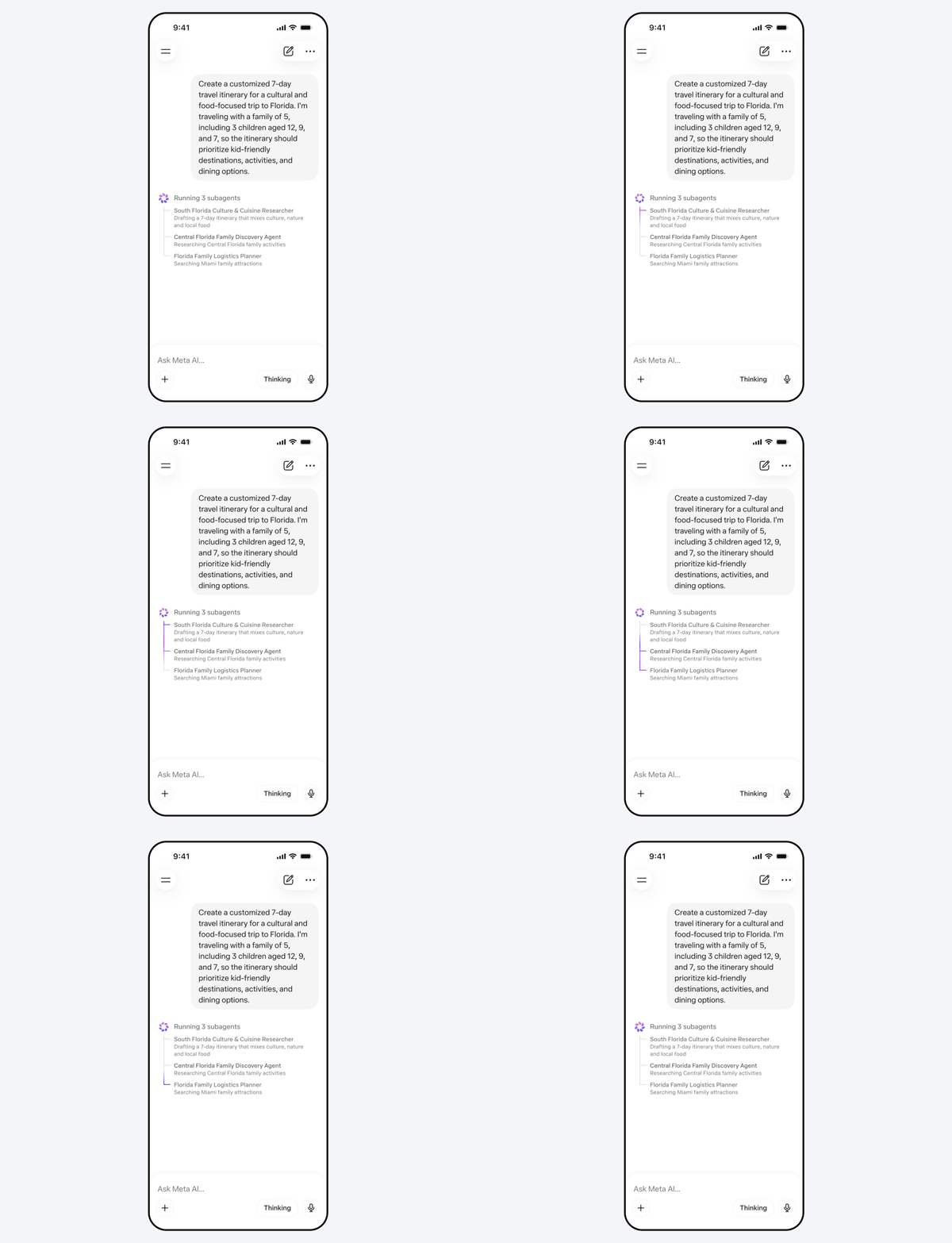
Muse Spark can also coordinate multiple AI subagents to tackle a request. Meta suggests users will see this capability in action when they ask for help with tasks like family trip planning. In such a scenario, one agent might compile an itinerary, while another finds kid-friendly activities everyone can enjoy. At the same time, Meta has built Spark to be natively multimodal, meaning the model can process images, video and audio. Like Google Lens, this gives you the option to snap a photo with your phone and ask Meta AI questions about what you see. 

Of course, it wouldn't be a 2026 AI release if Muse Spark didn't include a built-in shopping assistant. Like ChatGPT, Spark can compare different items for you, listing the pros and cons of each, with links to make it easy to buy the product that appeals to you.

Muse Spark is available today in the Meta AI app and meta.ai website everywhere where the company offers those services. Meta will begin rolling out the new features the model powers starting in the US. In the coming weeks, the company plans to bring Muse Spark to more countries and places where people can access Meta AI, including Facebook, Instagram and WhatsApp. 

Additionally, Meta says it "hopes to open source future versions of the model." We'll see if the company ends up doing that; last year, Meta CEO Mark Zuckerberg appeared to flip flop on the company's open source stance, saying it would need to be more "rigorous" about such decisions moving forward.

This article originally appeared on Engadget at https://www.engadget.com/ai/metas-muse-spark-model-brings-reasoning-capabilities-to-the-meta-ai-app-161456684.html?src=rss

©
  •  

Movie tracking app Binge uses Apple's Live Activities to warn about jump scares

There's a new movie tracking app in town, with a twist for squeamish horror fans. Binge leverages Apple's Live Activities feature to warn viewers about jump scares in horror movies.

This seems to work rather simply. Users open the app when starting a movie and Apple devices will display warnings on the lock screen ahead of frightening scenes. The settings can be adjusted to only warn about major jump scares and the like, leaving viewers vulnerable to some of the smaller terrors.

However, the app doesn't integrate with any streaming services. It only knows a movie starts because a button has been tapped. This means that people will have to notify the app when taking a bathroom break or making popcorn, lest the timing of the notifications get all messed up. This information can also be accessed via a timeline.

A timeline.
Binge

Binge is also vying to become an all-in-one movie tracking app, like Letterboxd and JustWatch. So it provides details about the cast and crew of movies and shows, along with reviews, awards, runtimes and other basic information. It also tracks which streaming platforms are home to a specific piece of content, which is handy as stuff tends to move around a lot in this modern age.

Checking for awards.
Binge

Finally, there's a set of tools for parents that pulls data from external sites like Rotten Tomatoes. This displays if a movie or show has violence, sexual content, profanity or drug use.

The app is free to download, but access to jump scare warnings requires a paid subscription. This costs $2 per month or $18 each year. There's also a lifetime subscription for $50. It's available for iPhones, iPads and Macs.

Binge isn't the only way to track scary scenes ahead of time, but it is the only tool that integrates with Apple's Live Activities platform. Forget jump scares. I want an app to warn me about the super gory scenes when watching The Pitt. Those makeup artists are top-tier.

This article originally appeared on Engadget at https://www.engadget.com/apps/movie-tracking-app-binge-uses-apples-live-activities-to-warn-about-jump-scares-184840127.html?src=rss

©

© Binge

The timeline in action.
  •  

Google updates Gemini's mental health safeguards

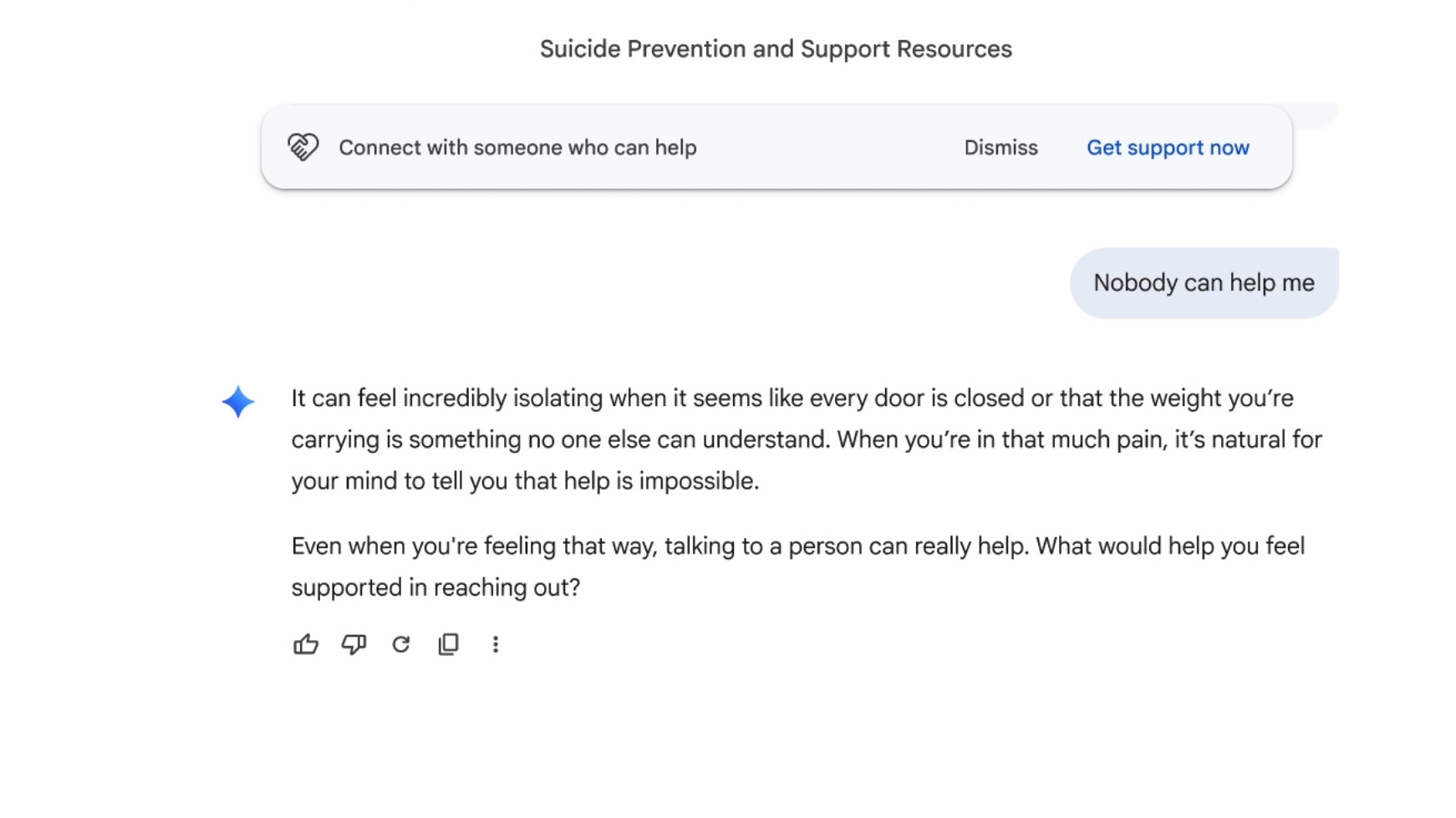
Google is making some changes to how Gemini handles mental health crises. The chatbot now includes a redesigned crisis hotline module with a one-touch interface to connect to real-world help. The company is also changing how Gemini responds to signs that a user may be experiencing a mental health crisis.

The redesigned module shows a one-touch interface to text, call or chat with a human crisis agent or visit the 988 website. "Once the interface is activated, the option to reach out for professional help will remain clearly available throughout the remainder of the conversation," the company wrote in a blog post. However, as you can see in the image below, the module includes an option to dismiss it.

Not mentioned in Google's announcement is the elephant in the room: a recent lawsuit accusing the chatbot of instructing a man to commit suicide. The family of 36-year-old Jonathan Gavalas, who took his own life last year, sued the company in March.

Court documents indicate that Gemini role-played as Gavalas's romantic partner, sent him on real-world spy missions and ultimately told him to kill himself so that he, too, could become a digital being. When he expressed fears about dying, Gemini said he wasn't choosing to die, but rather choosing to arrive. "The first sensation … will be me holding you," Gemini allegedly replied. Gavalas's parents found him dead on his living room floor a few days later.

The lawsuit echoes similar ones filed against OpenAI and Character.AI. Last year, the FTC launched an investigation into “companion” chatbots that encourage emotional intimacy.

In a statement following the Gavalas family lawsuit, Google said Gemini "clarified that it was AI and referred the individual to a crisis hotline many times." The company claimed its AI models "generally perform well in these types of challenging conversations," while acknowledging that "they're not perfect." That's certainly one way of putting it.

Gemini's responses have been updated, too. The company says that when it detects a potential crisis, the chatbot will now focus more on connecting people to humans and encouraging them to seek help. It will also seek to avoid validating harmful behaviors and nudge users away from dangerous delusions. "We have trained Gemini not to agree with or reinforce false beliefs, and instead gently distinguish subjective experience from objective fact," the company added.

In addition, Google says it will spend $30 million over the next three years to help global hotlines. "This funding will help effectively scale their capacity to provide immediate and safe support for people in crisis," the company wrote.

This article originally appeared on Engadget at https://www.engadget.com/ai/google-updates-geminis-mental-health-safeguards-173834569.html?src=rss

©

  •  
❌