❌

Normale Ansicht

The NSA is reportedly using Anthropic's new model Mythos

Despite the months-long feud between Anthropic and the Pentagon, the National Security Agency is using the AI company's new Mythos Preview, according to Axios, which spoke to two sources with knowledge of the matter. Anthropic announced Mythos Preview at the beginning of April, describing it as a general-purpose language model that is "strikingly capable at computer security tasks." But back in February, Trump ordered all government agencies to stop using Anthropic's services after the company refused to budge on certain safeguards for military uses during contract talks. 

The news comes days after Anthropic CEO Dario Amodei met with White House chief of staff Susie Wiles and other officials, reportedly to discuss Mythos. The White House later said the meeting on Friday was "productive and constructive," though President Trump said he had "no idea" about it when asked by reporters, Reuters reports. According to Axios' sources, the NSA is one of the roughly 40 organizations Anthropic gave access to Mythos Preview, and one said it's "being used more widely within the department" too. 

The company is still embroiled in a legal battle with the US government. Anthropic filed lawsuits against the Department of Defense in two courts in March after the Trump administration labeled it a "supply chain risk," and the Pentagon filed a response shortly after. While Anthropic was granted a preliminary injunction by one court to temporarily block this designation, federal judges in the other denied its motion to lift the label. 

This article originally appeared on Engadget at https://www.engadget.com/ai/the-nsa-is-reportedly-using-anthropics-new-model-mythos-211502787.html?src=rss

©

  •  

Palantir posted a manifesto that reads like the ramblings of a comic book villain

In case you haven't gotten around to reading Palantir CEO Alex Karp and Nicholas W. Zamiska's 2025 book, The Technological Republic, (because why would you do that to yourself?), the company best known for supplying AI-driven defense and surveillance software to the likes of the US Army, ICE and NYPD shared a 1,000-word X post this weekend covering its main points. The entire thing is both bizarre and deeply concerning. "The ability of free and democratic societies to prevail requires something more than moral appeal,” one of the 22 points states. "It requires hard power, and hard power in this century will be built on software."

The book is billed as "a passionate call for the West to wake up to our new reality," and other excerpts in the social media post include assertions such as: "Free email is not enough. The decadence of a culture or civilization, and indeed its ruling class, will be forgiven only if that culture is capable of delivering economic growth and security for the public"; "National service should be a universal duty"; "The postwar neutering of Germany and Japan must be undone"; and "Some cultures have produced vital advances; others remain dysfunctional and regressive."

The statement criticizes the West’s resistance to "defining national cultures in the name of inclusivity," as well as the treatment of billionaires and the "ruthless exposure of the private lives of public figures." It's a lot to take in, and it should make crystal clear what Palantir stands for to anyone who somehow didn't already know. Here's the post, in full:

Because we get asked a lot.

The Technological Republic, in brief.

1. Silicon Valley owes a moral debt to the country that made its rise possible. The engineering elite of Silicon Valley has an affirmative obligation to participate in the defense of the nation.

2. We must rebel against the tyranny of the apps. Is the iPhone our greatest creative if not crowning achievement as a civilization? The object has changed our lives, but it may also now be limiting and constraining our sense of the possible.

3. Free email is not enough. The decadence of a culture or civilization, and indeed its ruling class, will be forgiven only if that culture is capable of delivering economic growth and security for the public.

4. The limits of soft power, of soaring rhetoric alone, have been exposed. The ability of free and democratic societies to prevail requires something more than moral appeal. It requires hard power, and hard power in this century will be built on software.

5. The question is not whether A.I. weapons will be built; it is who will build them and for what purpose. Our adversaries will not pause to indulge in theatrical debates about the merits of developing technologies with critical military and national security applications. They will proceed.

6. National service should be a universal duty. We should, as a society, seriously consider moving away from an all-volunteer force and only fight the next war if everyone shares in the risk and the cost.

7. If a U.S. Marine asks for a better rifle, we should build it; and the same goes for software. We should as a country be capable of continuing a debate about the appropriateness of military action abroad while remaining unflinching in our commitment to those we have asked to step into harm’s way.

8. Public servants need not be our priests. Any business that compensated its employees in the way that the federal government compensates public servants would struggle to survive.

9. We should show far more grace towards those who have subjected themselves to public life. The eradication of any space for forgiveness—a jettisoning of any tolerance for the complexities and contradictions of the human psyche—may leave us with a cast of characters at the helm we will grow to regret.

10. The psychologization of modern politics is leading us astray. Those who look to the political arena to nourish their soul and sense of self, who rely too heavily on their internal life finding expression in people they may never meet, will be left disappointed.

11. Our society has grown too eager to hasten, and is often gleeful at, the demise of its enemies. The vanquishing of an opponent is a moment to pause, not rejoice.

12. The atomic age is ending. One age of deterrence, the atomic age, is ending, and a new era of deterrence built on A.I. is set to begin.

13. No other country in the history of the world has advanced progressive values more than this one. The United States is far from perfect. But it is easy to forget how much more opportunity exists in this country for those who are not hereditary elites than in any other nation on the planet.

14. American power has made possible an extraordinarily long peace. Too many have forgotten or perhaps take for granted that nearly a century of some version of peace has prevailed in the world without a great power military conflict. At least three generations — billions of people and their children and now grandchildren — have never known a world war.

15. The postwar neutering of Germany and Japan must be undone. The defanging of Germany was an overcorrection for which Europe is now paying a heavy price. A similar and highly theatrical commitment to Japanese pacifism will, if maintained, also threaten to shift the balance of power in Asia.

16. We should applaud those who attempt to build where the market has failed to act. The culture almost snickers at Musk’s interest in grand narrative, as if billionaires ought to simply stay in their lane of enriching themselves . . . . Any curiosity or genuine interest in the value of what he has created is essentially dismissed, or perhaps lurks from beneath a thinly veiled scorn.

17. Silicon Valley must play a role in addressing violent crime. Many politicians across the United States have essentially shrugged when it comes to violent crime, abandoning any serious efforts to address the problem or take on any risk with their constituencies or donors in coming up with solutions and experiments in what should be a desperate bid to save lives.

18. The ruthless exposure of the private lives of public figures drives far too much talent away from government service. The public arena—and the shallow and petty assaults against those who dare to do something other than enrich themselves—has become so unforgiving that the republic is left with a significant roster of ineffectual, empty vessels whose ambition one would forgive if there were any genuine belief structure lurking within.

19. The caution in public life that we unwittingly encourage is corrosive. Those who say nothing wrong often say nothing much at all.

20. The pervasive intolerance of religious belief in certain circles must be resisted. The elite’s intolerance of religious belief is perhaps one of the most telling signs that its political project constitutes a less open intellectual movement than many within it would claim.

21. Some cultures have produced vital advances; others remain dysfunctional and regressive. All cultures are now equal. Criticism and value judgments are forbidden. Yet this new dogma glosses over the fact that certain cultures and indeed subcultures . . . have produced wonders. Others have proven middling, and worse, regressive and harmful.

22. We must resist the shallow temptation of a vacant and hollow pluralism. We, in America and more broadly the West, have for the past half century resisted defining national cultures in the name of inclusivity. But inclusion into what?

Excerpts from the #1 New York Times Bestseller The Technological Republic: Hard Power, Soft Belief, and the Future of the West, by Alexander C. Karp & Nicholas W. Zamiska

This article originally appeared on Engadget at https://www.engadget.com/big-tech/palantir-posted-a-manifesto-that-reads-like-the-ramblings-of-a-comic-book-villain-181947361.html?src=rss

©

  •  

Judge sides with creators of banned ICE trackers who allege DHS and DOJ violated their First Amendment rights

A judge has granted the makers of the "ICE Sightings - Chicagoland" Facebook group and the Eyes Up app a preliminary injunction to stop the Trump administration from coercing platforms to take these projects down. Judge Jorge L. Alonso of the United States District Court for the Northern District of Illinois found that the plaintiffs, Kassandra Rosado and Kreisau Group, are likely to succeed in their case, which alleges that the government suppressed protected speech under the First Amendment by strong-arming Facebook and Apple into removing ICE monitoring efforts. 

Both Eyes Up and ICE Sightings - Chicagoland use publicly available information to keep tabs on ICE activity. But after pressure from Trump officials, they were removed from Apple's App Store and Facebook, respectively. Similar apps including ICEBlock and Red Dot were also taken down from the App Store and Google Play. The lawsuit cites social media posts by former US Attorney General Pam Bondi and former Secretary of Homeland Security Kristi Noem that demanded and took credit for the removal of these apps. In a document filed on Friday, Alonso called these posts "thinly veiled threats."

The Foundation for Individual Rights and Expression (FIRE), which is defending the plaintiffs, wrote in a post on X that it is "extremely encouraged by this ruling." It continued, "Even though it’s not the end of the case, it bodes well for the future of our legal fight to ensure that the First Amendment protects the right to discuss, record, and criticize what law enforcement does in public."

This article originally appeared on Engadget at https://www.engadget.com/apps/judge-sides-with-creators-of-banned-ice-trackers-who-allege-dhs-and-doj-violated-their-first-amendment-rights-191701801.html?src=rss

©

  •  

NASA restarts work to support Europe's uncrewed trip to Mars after years of setbacks

NASA has confirmed the pending launch of the European Space Agency's (ESA) Rosalind Franklin rover, which is being sent to Mars. The current plan is to launch via a SpaceX Falcon Heavy rocket from Kennedy Space Center. The timing is still being worked out, but the space agency says this won't happen until at least 2028.

This is a partnership between NASA and the ESA, with the European agency providing the rover, the spacecraft and the lander. The US will provide braking engines for the lander, heater units for the rover's internal systems and, of course, assistance with the actual launch.

The rover will be outfitted with scientific instruments to look for signs of ancient life on the red planet. These include a state-of-the-art mass spectrometer and an organic molecule analyzer, which will come in handy as the vehicle collects samples at the Oxia Planum landing site.

This is a mission that has suffered years of delays for all kinds of wild reasons. It was actually first conceived all the way back in 2001. The rover mission was originally scheduled for 2009, after NASA came on board. Budget constraints forced NASA to drop out in 2012, so Russia signed on as the ESA's launch partner.

During this period, the mission experienced technical malfunctions which forced additional delays. The ESA suspended its partnership with Russia in 2022 after the country invaded Ukraine. This left the mission in doubt until 2024, when NASA came back into the fold.

In the middle of a historic mission back to the Moon, this Administration is proposing to a 47% cut to NASA science and a 23% cut to NASA’s budget overall. Last week’s launch showed our country and world what we’re capable of when we work together toward a common goal. None of… pic.twitter.com/zW3i3iFaEQ

— Senator Mark Kelly (@SenMarkKelly) April 10, 2026

However, the setbacks didn't even end there. The Trump administration has repeatedly tried to end NASA's involvement with the project, and many others, via stark budget cuts. The current proposal was made while the Artemis II crew was on their mission around the Moon, according to a report by The Register. Here's hoping the launch actually happens in 2028.

This article originally appeared on Engadget at https://www.engadget.com/science/space/nasa-restarts-work-to-support-europes-uncrewed-trip-to-mars-after-years-of-setbacks-161524488.html?src=rss

©

© ESA

A rover on a fake Mars.
  •  

Greece will ban all kids under 15 from using social media

Greece will ban children under the age 15 from using social media starting next year. Prime Minister Kyriakos Mitsotakis made the announcement in a video posted to TikTok, in which he referenced anxiety, sleep problems and addictive design features as reasons for the ban.

Greece has been proactive in its approach to tackling excessive screen time for children, having already banned mobile phones in schools in 2024. While the PM chose not to name any platforms, he said he was concerned about children comparing themselves to others on social media and taking online comments to heart.

"Greece will be ​among the first countries to take ​such an initiative," Mitsotakis said. "I am certain, ​however, that it will not be the last. Our ⁠goal is to push the European Union in this direction as well."

As reported by The New York Times, Greece’s digital governance minister, Dimitris Papastergiou, said that social media companies would be legally required to uphold the new restrictions by verifying the ages of their users. Failure to comply would lead to fines under the EU’s Digital Services Act. Parents would also need to download an app called Kids Wallet, backed by the state, that could be paired to their child’s device and block access. The finer details of how the ban would be enforced are still being worked out by decision-makers.

The PM conceded that he would likely incur the wrath of his country’s young children, but there’s widespread support for the plans from Greece’s adult population, according to an opinion poll published by ALCO in February. Greece follows in the footsteps of Indonesia, Austria and Australia, all of which have introduced similar bans of their own in the last year. The UK is also considering bringing in tighter restrictions on children under the age of 16 using social media.

This article originally appeared on Engadget at https://www.engadget.com/social-media/greece-will-ban-all-kids-under-15-from-using-social-media-154850415.html?src=rss

©

© NurPhoto via Getty Images

A smartphone displays a folder of social media applications, including TikTok, Instagram, Facebook, X, Snapchat, and YouTube, with a blurred ''no under-16'' sign in the background, in Creteil, France, on March 31, 2026. Australia's eSafety Commission warns social media platforms about their failure to enforce the country's ban on under-16 users. (Photo by Samuel Boivin/NurPhoto via Getty Images)
  •  

Iran threatens imminent attacks on US tech companies in the Middle East

The Islamic Revolutionary Guard Corps (IRGC), a branch of Iran's armed forces, has threatened to target US tech companies' operations in the Middle East. It told employees of 18 companies — including Apple, Google, Meta and NVIDIA — “to leave their workplaces immediately to save their lives,” as CBS News reported. Those living close to the companies' facilities in the region were instructed to evacuate immediately as well. Microsoft, Oracle, Tesla, HP, Intel, Palantir, Boeing, Dell, Cisco and IBM are also among the companies that the IRGC named.

"Since the main element in designing and tracking terror targets are American [information and communications technology] and AI companies, in response to this terrorist operation, from now on the main institutions effective in terrorist operations will be our legitimate targets," the IRGC said in a statement. The military force warned it will start targeting the companies on Wednesday evening if more Iranian leaders are killed.

Iran previously pledged to attack companies and banks tied to the US and Israel, though the warning it issued on Tuesday had a specific deadline. Earlier this month, Iranian drones struck Amazon data centers in Bahrain and the United Arab Emirates, disrupting Amazon Web Services operations in the region. 

The US reportedly used Anthropic's AI in its initial airstrikes against Iran at the onset of the war in late February. Israel has been using a new AI platform of its own to help it track the movements of Iranian officials. 

This article originally appeared on Engadget at https://www.engadget.com/big-tech/iran-threatens-imminent-attacks-on-us-tech-companies-in-the-middle-east-184841155.html?src=rss

©

  •  

The White House proposes new AI policy framework that supersedes state laws

The White House has announced a new AI policy framework that calls for Congress to craft federal regulation that overrules state AI laws. The Trump administration has made multiple attempts to overrule more restrictive state-level AI regulation, but has failed so far, most notably in the passing of the “One Big Beautiful Bill.”

The framework focuses on a variety of topics, covering everything from child privacy to the use of AI in the workforce. “Importantly, this framework can succeed only if it is applied uniformly across the United States,” The White House writes. “A patchwork of conflicting state laws would undermine American innovation and our ability to lead in the global AI race.”

In terms of child privacy protections, the framework ask for Congress to require companies to provide tools like “screen time, content exposure and account controls” while also affirming that “existing child privacy protections apply to AI systems,” including limits on how data is collected and used for AI training. The framework also says carveout states should be allowed to enforce “their own generally applicable laws protecting children, such as prohibitions on child sexual abuse material, even where such material is generated by AI.”

The energy-use and environmental impact of AI infrastructure is a going concern, but the White House’s policy proposals are primarily worried about the cost of data centers. The framework suggests federal AI regulation should make sure that higher electricity costs aren’t passed on to people living near data centers, while streamlining the process for permitting AI infrastructure construction, so companies can pursue “on-site and behind-the-meter power generation.” The framework also calls for fewer restrictions on the software-side of AI development, proposing “regulatory sandboxes for AI applications” and asking Congress to “provide resources to make federal datasets accessible to industry and academia in AI-ready formats.”

While a recently AI bill from Senator Marsha Blackburn (R-Ten.) attempts to eliminate Section 230, a piece of a larger law that says platforms can’t be held responsible for the speech they host, the framework appears to propose the opposite. “Congress should prevent the United States government from coercing technology providers, including AI providers, to ban, compel or alter content based on partisan or ideological agendas,” the White House writes. The framework is similarly hands-off when it comes to copyright and the use of intellectual property to train AI. “Although the Administration believes that training of AI models on copyrighted material does not violate copyright laws,” the White House writes, it supports the issue being settled in court rather than by legislation. Though, the White House does think Congress should “consider enabling licensing frameworks” so IP holders can bargain for compensations from AI providers.

The clincher in the White House’s proposal is the idea that federal regulation should preempt state law, specifically so that states don’t “regulate AI development,” don’t “unduly burden American’s use of AI for activity that would be lawful if performed without AI” and don’t punish AI companies “for a third party’s unlawful conduct involving their models.” The idea that AI companies aren’t liable for the illegal or harmful uses of their products is particularly problematic because it lies at the heart of multiple intersecting issues with AI right now, including it being used to generate sexually explicit images of children and allegedly playing a role in the suicide of users.

Ultimately, though, the framework might be too contradictory to be useful, Samir Jain, the Vice President of Policy for the Center for Democracy and Technology, writes in a statement to Engadget:

The White House’s high-level AI framework contains some sound statements of principles, but its usefulness to lawmakers is limited by its internal contradictions and failure to grapple with key tensions between various approaches to important topics like kids’ online safety. It rightly says that the government should not coerce AI companies to ban or alter content based on ‘partisan or ideological agendas,’ yet the Administration’s ‘woke AI’ Executive Order this summer does exactly that. On preemption, the framework asserts that states should not be permitted to regulate AI development, but at the same time rightly notes that federal law should not undermine states’ traditional powers to enforce their own laws against AI developers. States are currently leading the fight to protect Americans from harms that AI systems can create, and Congress has twice correctly decided not to pursue broad preemption.

President Donald Trump has attempted to have an active role in how AI is developed and regulated in the US with mixed results, primarily because, as Jain notes, Congress has been unwilling to give up states’ right to regulate the technology on their own terms. Without that, its hard to say how much of the framework will actually make it into federal law.

This article originally appeared on Engadget at https://www.engadget.com/ai/the-white-house-proposes-new-ai-policy-framework-that-supersedes-state-laws-192251995.html?src=rss

©

  •  

States are suing the EPA for relinquishing its role as a greenhouse gas emissions regulator

California, Massachusetts, Connecticut and New York are leading a group of 20 other states in suing the US Environmental Protection Agency for renouncing its ability to regulate greenhouse gas emissions, The New York Times reports. The lawsuit specifically argues that the EPA's decision to rescind a 2009 study that determined greenhouse gases are dangerous to public health was illegal. The study, which is the source of what's called the "Endangerment Finding," was one of several justifications — along with things like the Clean Air Act — for the agency's ability to regulate emissions.

Rescinding the finding nullified the EPA's evidence for things like emissions standards and a variety of other regulations that attempted to reduce the amount of greenhouse gases produced by the automotive, coal and oil industries. The Trump administration framed the rollback as a cost-saving measure, but it was also a major blow to the government's ability to fight climate change. Greenhouse gases, which include things like carbon dioxide, methane and nitrous oxide, collect in the atmosphere and warm the planet, upsetting weather patterns and negatively impacting the environment. Determining the changes caused by greenhouse gases posed a risk to public health gave the EPA the authority to regulate them under its existing mandate to address air pollution. An authority it could have again, depending on the result of this litigation.

Of course, winning a lawsuit isn't necessary to restore the EPA's role in fighting climate change. Congress could do that now by passing a new law. The legal route is just faster, and potentially riskier. The New York Times writes that this new lawsuit was filed in the US Court of Appeals for the District of Columbia, and could ultimately be combined with an existing lawsuit from environmental groups. Depending on how the case fairs in the lower court, it may eventually be appealed to the US Supreme Court, who could decide on an even more restrictive interpretation of the EPA's role. 

Under President Donald Trump, the EPA has already rolled back clean water rules and attempted to stifle research. The Trump administration has separately tried to undermine the authority of independent agencies like the EPA and FTC, something the Supreme Court has yet to determine to be illegal.

This article originally appeared on Engadget at https://www.engadget.com/science/states-are-suing-the-epa-for-relinquishing-its-role-as-a-greenhouse-gas-emissions-regulator-221425064.html?src=rss

©

  •  

Amazon will reportedly cut its USPS shipments by at least two-thirds

A recent change in how the US Postal Service handles shipping partners appears to have forced Amazon to make alternative plans. The company reportedly plans to cut the number of packages it ships through USPS by at least two-thirds later this year. It says the decision came after USPS ended negotiations “at the eleventh hour” in favor of a new bidding process.

On Tuesday, the Wall Street Journal reported that Amazon plans to reduce the shipments it hands off to USPS. Last year, the company accounted for nearly 15 percent of the Postal Service’s package deliveries. Cutting that by nearly two-thirds diminishes one of the USPS’s most reliable sources of revenue. In fiscal 2025, the agency reported a net loss of $9 billion.

Amazon’s current contract with USPS ends on September 30. In a public response to the WSJ story, the company said it notified USPS in October 2025 that it would need to complete a new deal by December. “You can't add capacity for hundreds of millions of packages overnight — it requires major capital investment, long-term infrastructure planning, hiring, and logistics coordination,” Amazon wrote.

According to Amazon, USPS then pulled the plug on negotiations at the last second. “We negotiated with [USPS] in good faith for more than a year to reach a deal that would bring them billions in revenue and believed we were heading toward an agreement,” Amazon wrote in a statement. “Our goal was to increase our volumes with USPS, not reduce them — until USPS abruptly walked away at the eleventh hour in December.”

FILE - Postmaster General David Steiner speaks at an event marking the 250th anniversary of postal service's founding, July 23, 2025, in Washington. (AP Photo/Cliff Owen, File)
Postmaster General David Steiner (AP Photo/Cliff Owen, File)
ASSOCIATED PRESS

That’s when Postmaster General David Steiner implemented a new bidding process for last-mile deliveries, replacing a long-established one where USPS negotiated with shipping partners individually. He described the move as “a fair bidding process that enables the marketplace to find the best mix of local shipping attributes for the best volume-driven pricing.” Steiner was appointed to the post in May 2025, following the departure of former head Louis DeJoy.

Amazon said it submitted a bid in February using the new system but hasn’t heard back. “This creates significant uncertainty for our long-term network planning,” the company said. “Despite this, we participated in good faith and submitted a bid in February 2026. We've received no response.”

USPS plans to announce the bidding results in Q2 2026. Contracts are expected to be finalized by Q3. Despite apparently moving forward with the contingency plan, Amazon said it’s still “ready to continue this partnership.”

As for Postmaster Steiner, he spent Tuesday asking Congress to loosen USPS regulations and let him raise prices. Warning that the agency will “run out of cash” in about a year, he told a House subcommittee that he wants to raise the agency’s current $15 billion debt cap. He also asked for the ability to increase postage prices and reform its retiree pension obligations.

This article originally appeared on Engadget at https://www.engadget.com/big-tech/amazon-will-reportedly-cut-its-usps-shipments-by-at-least-two-thirds-200915702.html?src=rss

©

  •  

The Defense Department reportedly plans to train AI models on classified military data

The Pentagon is making plans to have AI companies train versions of their models specifically for military use on classified information, according to the MIT Technology Review. If true, it wouldn’t come as a surprise, seeing as the US is aiming to become an “AI-first" warfighting force, based on the statement [PDF] released by Secretary of Defense Pete Hegseth earlier this year.

The department is already using AI models in the military: For instance, the US reportedly used Anthropic’s Claude to help with the capture of Venezuelan President Nicolás Maduro and with its attack on Iran, even after President Trump ordered federal agencies to ban its technology. But models trained on actual classified data could give more accurate and detailed responses, say, for situations similar to what happened in the past that aren’t public information.

MIT Tech Review says the department is looking to conduct the training in a secure data center that’s allowed to host classified government projects. The Pentagon would train copies of AI models, but it would remain the only owner of any data used for training. In rare cases, someone from the AI company could be granted the appropriate security clearance to see classified information.

Aalok Mehta, who previously led AI policy efforts at Google and OpenAI, told the publication that training models on classified data carries certain risks. It’s not that the information could go public, since the the models trained would be versions made specifically for military purposes. However, if the same model is used across the whole Defense Department, for instance, personnel without the correct clearance level could end up getting information that they weren’t supposed to have access to.

If the initiative pushes through, the department would likely be training models from OpenAI and xAI, which recently signed agreements with the agency. Anthropic, which has long worked with the government, might not be part of this project. The company refused to allow its technology to be used for mass surveillance and the development of autonomous weapons, and Trump ordered all federal offices to ban it as a result.

This article originally appeared on Engadget at https://www.engadget.com/ai/the-defense-department-reportedly-plans-to-train-ai-models-on-classified-military-data-120332113.html?src=rss

©

  •  

Defense Department says Anthropic poses 'unacceptable risk' to national security

The Department of Defense said giving Anthropic continued access to its warfighting infrastructure would “introduce unacceptable risk” to its supply chains in a court filing submitted in response to the AI company’s lawsuit. If you’ll recall, Anthropic sued the government to challenge the supply chain risk designation it received for refusing to allow its model to be used for mass surveillance and the development of autonomous weapons.

In its filing, the department explained that its secretary, Pete Hegseth, had a provision incorporated into AI service contracts, allowing the agency to use their technologies for any lawful purpose. Anthropic refused its terms and apparently, the company’s behavior caused the Pentagon to question whether it truly was a “trusted partner” that it could work with when it comes to “highly sensitive” initiatives. “After all, AI systems are acutely vulnerable to manipulation, and Anthropic could attempt to disable its technology or preemptively alter the behavior of its model either before or during ongoing warfighting operations, if Anthropic — in its discretion — feels that its corporate “red lines” are being crossed,” the Pentagon wrote in its filing. “DoW deemed that an unacceptable risk to national security,” it added, referring to the agency as the Department of War, which is the Trump administration’s preferred name for it.

It was due to those concerns that President Trump ordered federal agencies to stop using its technology, the filing reads. The company is asking the court to issue a preliminary injunction and put a pause on a ban while it’s challenging its supply chain risk designation in court. While Anthropic’s clients could continue working with the company on non-defense-related projects, it says the label could cause it to lose billions of dollars in revenue. It’s not quite clear if Anthropic is still trying to reach a new deal with the government, as was reported before it filed its lawsuit. As The New York Times notes, Microsoft, Google and OpenAI had filed friend-of-the-court briefs in support of Anthropic since then.

This article originally appeared on Engadget at https://www.engadget.com/ai/defense-department-says-anthropic-poses-unacceptable-risk-to-national-security-094328717.html?src=rss

©

  •  

Trump administration will reportedly get $10 billion for brokering the TikTok deal

There may have been some extra incentive for the Trump administration to get the TikTok US deal done. According to a report from The Wall Street Journal, the Trump administration is set to receive a total of $10 billion in the deal that allowed TikTok to remain in the US. The new investors who acquired stakes in the US entity of TikTok already paid a $2.5 billion fee to the administration when the deal closed in January, but WSJ's latest report noted that the group of investors would continue to make payments until the total hits $10 billion.

After a group of investors, which includes Oracle along with the Silver Lake and MGX investment firms, acquired stakes in the US-based TikTok entity called TikTok USDS Joint Venture, the WSJ previously reported that the administration would receive a "multibillion-dollar fee" for its work on the deal. To better contextualize the recently-revealed $10 billion fee the Trump administration is receiving, the US entity of TikTok was valued at $14 billion by Vice President JD Vance.

The Trump administration has previously involved itself in major deals with other US corporations. Last year, the administration invested $8.9 billion into Intel and received a nearly 9 percent equity stake. In terms of unprecedented windfalls, the Trump administration also received a Boeing 747-8 as a gift from the Qatari government in May.

This article originally appeared on Engadget at https://www.engadget.com/big-tech/trump-administration-will-reportedly-get-10-billion-for-brokering-the-tiktok-deal-180954979.html?src=rss

©

© REUTERS / Reuters

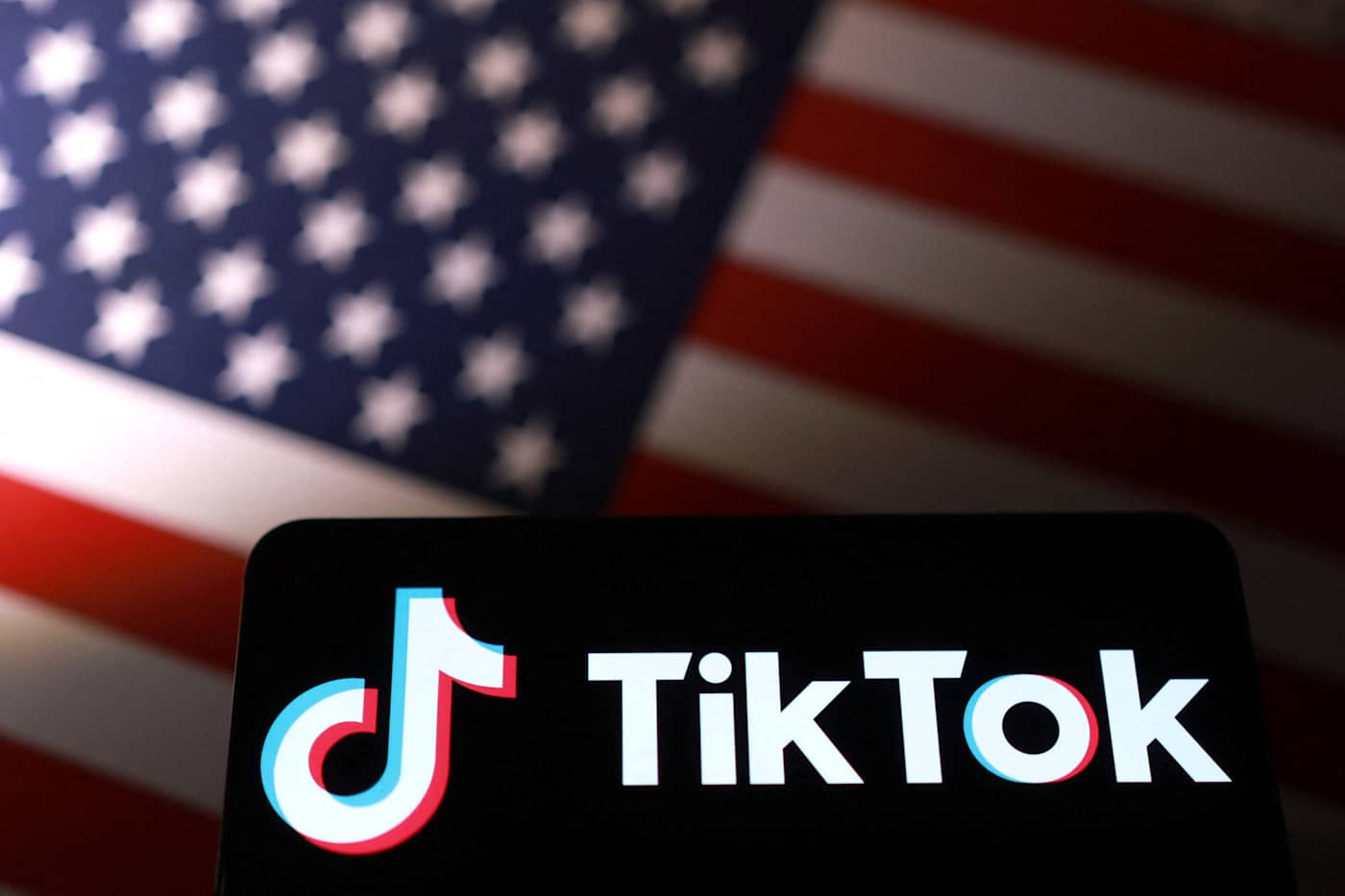
TikTok logo is placed on a U.S. flag in this illustration taken September 24, 2025. REUTERS/Dado Ruvic/Illustration
  •  

Google to Provide Pentagon with Gemini-powered AI agents

Google is rolling out Gemini AI agents to the Department of Defense's more than 3 million civilian and military employees, according to Bloomberg. The agents will initially operate on unclassified networks, with talks underway to expand them to classified and top-secret systems, according to Emil Michael, the Under Secretary of Defense for Research and Engineering.

Eight pre-built agents will automate tasks like summarizing meeting notes, building budgets and checking proposed actions against the national defense strategy. Google Vice President Jim Kelly said in a blog post on Tuesday that Defense Department personnel can also create custom agents using natural language.

Google's AI chatbot, accessible through the Pentagon's GenAI.mil portal, has been used by 1.2 million Defense Department employees for unclassified work since December, with personnel running 40 million unique prompts and uploading more than 4 million documents. Training has reportedly not kept pace with adoption, however, as only 26,000 people have completed AI training since December, but future sessions are fully booked, something that suggests more employees are getting on board.

The expansion comes as the Pentagon rapidly broadens its AI partnerships after its standoff with Anthropic, which refused to remove guardrails against domestic surveillance and autonomous weapons from its technology. The Pentagon has since classified the American AI company as a "supply chain risk," which Anthropic will fight in court. Roughly 900 Google and 100 OpenAI employees have since signed an open letter urging their employers to hold firm on the same guardrails. Google quietly altered its "AI Principles" regarding these exact uses in early February.

The Department of Defense has since struck deals with OpenAI and xAI for restricted networks. Google itself faced internal backlash over Pentagon work in 2018 when thousands of employees protested Project Maven, a program that used AI to analyze drone video feeds. It did not renew that contract but has since loosened its restrictions on military work.

This article originally appeared on Engadget at https://www.engadget.com/ai/google-to-provide-pentagon-with-gemini-powered-ai-agents-161037444.html?src=rss

©

© Bill Clark via Getty Images

UNITED STATES - SEPTEMBER 24: Aerial view of the Pentagon building photographed on Sept. 24, 2017. (Photo By Bill Clark/CQ Roll Call)
  •  

X says it suspended 800 million accounts in 2024 over spam and manipulation

X has told UK’s MPs or Members of Parliament that it suspended 800 million accounts to combat state-backed campaigns on the website, according to The Guardian. Wifredo Fernández, X’s head of global government affairs, told the officials that the suspensions happened over a 12-month period in 2024 and that the accounts were suspended for violating X’s rules on platform manipulation and spam. Russia was allegedly behind most of the accounts that were flooding the website with spam, followed by state actors from China and Iran.

The Russian accounts were trying to “stoke division” and disseminate a “particular type of narrative” to manipulate the 2024 US Presidential Elections, he told MPs on the foreign affairs committee during a video call. Fernández also claimed that the attempts to manipulate discussions and spam on the service aren’t done yet. “There are efforts every single day to create inauthentic networks of accounts,” he said. Apparently, X suspended an additional “several hundred million accounts” last year as well, presumably also due to foreign state-backed manipulation campaigns.

To note, Statista estimates the number of users on X to be 429 million in early 2024. The Guardian also says the platform has approximately 300 million monthly users worldwide.

This article originally appeared on Engadget at https://www.engadget.com/apps/x-says-it-suspended-800-million-accounts-in-2024-over-spam-and-manipulation-123000201.html?src=rss

©

  •  

FAA opens up real world testing for air taxi startups

US regulators have approved eight pilot programs across 26 states that will allow Archer, Joby and other eVTOL companies to finally start testing aircraft this summer, according to a US Department of Transportation (DoT) press release. That will allow those manufacturers to run trials for use cases like urban air taxi services, regional passenger transportation, cargo, emergency medical operations and autonomous flight technology. 

The new projects were made possible by the White House's Advanced Air Mobility and eVTOL Integration Pilot Program (e-IPP) approved last year to allow certification for such aircraft to progress after being stuck in the mud for years. "By safely testing the deployment of these futuristic air taxis and other AAM vehicles, we can fundamentally improve how the traveling public and products move," US Transportation Secretary Sean Duffy said at the time. 

Other FAA aircraft partners include Beta, Electra, Elroy Air, Wisk, Ampaire and Reliable Robotics. Key pilot programs were approved for the Texas, Utah, Pennsylvania, Louisiana and North Carolina Departments of Transportation, along with New York and New Jersey Port Authority and the City of Albuquerque. We've already glimpsed some of the ideas, like Archer's plan to use air taxis between New York's major airports and city heliports.

A number of eVTOL startups have launched in recent years, but so far none of the aircraft have received "type certificates" for carrying passengers or other commercial purposes. Archer and Joby are the farthest along in that process, having been granted the FAA's final airworthiness criteria — the final step before full approval. 

The delays are mostly about safety and working eVTOL planes into existing aviation flows. "The gap isn't technical capability anymore. It's regulatory synchronization," the FAA's Kalea Texeira said last year on LinkedIn. "[That includes factors like] vertiports. Energy supply chains. Part 135 [commercial] integration. Pilot training frameworks that match the aircraft timeline." In the same post, Texeira added that Joby wouldn't certify until mid-2027 at the earliest, with Archer following in 2028.

The new program could help accelerate plane-makers' plans. In a YouTube video, Beta CEO Kyle Clark said selection for the program will help his company start operations a year earlier than it previously expected. Archer, meanwhile, compared the program to robotaxi testing and said it will help build trust with the public for its Midnight aircraft. "This is the clearest sign yet... that bringing air taxis to market in the United States is a real priority," said Archer CEO Adam Goldstein.

This article originally appeared on Engadget at https://www.engadget.com/transportation/faa-opens-up-real-world-testing-for-air-taxi-startups-112219316.html?src=rss

©

© Archer

Archer and United show off planned routes for New York air taxi service
  •  

TikTok can continue its operations in Canada after agreeing to enhanced security measures

TikTok doesn’t have to close its offices in Canada after all. The country will allow TikTok to keep its business operational after a national security review, Minister of Industry Mélanie Joly has announced. This is a complete 180 of the country’s decision back in 2024 to order TikTok to shut down its operations, citing unspecified “national security risks” posed by the company and its China-based parent ByteDance. Canadian authorities said back then that their decision was based on evidence collected by the country’s security and intelligence community.

As Bloomberg notes, the order was paused shortly after Mark Carney replaced Justin Trudeau as Prime Minister in early 2025. Carney was the first Canadian PM to visit China in years and had a discussion with President Xi Jinping about tariffs. Joly said TikTok will be allowed to operate in Canada with new enhancements in data security and regulatory oversight. To start with, it will have to implement privacy-enhancing technologies to reduce the risk of unauthorized access that compromise Canadians’ personal information. It will also have to add enhanced protections for minors and ensure transparency by letting an independent third party “audit and continuously verify data access controls.”

“…this decision will protect Canadian jobs, ensuring that TikTok Canada maintains a physical presence in Canada, with commitments to invest in its cultural sector,” Joly said in a statement. “TikTok Canada will support the growth of Canadian creators, artists and cultural organizations, while strengthening the production and accessibility of Canadian cultural content in both official and Indigenous languages across the country.”

This article originally appeared on Engadget at https://www.engadget.com/apps/tiktok-can-continue-its-operations-in-canada-after-agreeing-to-enhanced-security-measures-095239399.html?src=rss

©

  •  

Dutch intelligence services warn of Russian hackers targeting Signal and WhatsApp

The Netherlands’ military intelligence service and domestic intelligence agency have issued a join warning claiming that Russian hackers have launched "a large-scale global cyber campaign to gain access to Signal and WhatsApp accounts belonging to dignitaries, military personnel and civil servants." According to the Dutch alert, hackers are imitating support chatbots to trick key targets into revealing their PINs for those communication platforms, which allows the bad actors to access incoming messages.

Last year in the US, the Pentagon advised members not to use Signal after the platform was subjected to similar phishing scams by Russian hackers. (Although the same US military leaders proved capable of creating their own security breaches without foreign interference just days prior.) 

Having another national government raise concerns about Signal and WhatsApp phishing scams offers yet another reminder to never provide security details or click links without a check on who is really asking for your info.

This article originally appeared on Engadget at https://www.engadget.com/cybersecurity/dutch-intelligence-services-warn-of-russian-hackers-targeting-signal-and-whatsapp-203707202.html?src=rss

©

  •  

Anthropic sues US government over supply chain risk designation

Anthropic has filed a lawsuit to prevent the Pentagon from adding the company it a national security blocklist. This comes days after the Department of Defense sent a letter to Anthropic confirming the company was labeled a supply chain risk; at the time CEO Dario Amodei had all but guaranteed Anthropic would fight back with legal action.

The lawsuit claims the designation is unlawful and violated free speech and due process rights. “These actions are unprecedented and unlawful. The Constitution does not allow ​the government to wield its enormous power to punish a company for its protected speech," Anthropic said in a statement published by Reuters.

Engadget received the following statement from an Anthropic spokesperson:

 “Seeking judicial review does not change our longstanding commitment to harnessing AI to protect our national security, but this is a necessary step to protect our business, our customers, and our partners. We will continue to pursue every path toward resolution, including dialogue with the government.” 

The lawsuit characterizes the government’s actions as an “unprecedented and unlawful [...] campaign of retaliation.” It goes on to say that “the Constitution does not allow the government to wield its enormous power to punish a company for its protected speech. No federal statute authorizes the actions taken here."

Today’s legal action comes after several weeks of back-and-forth between the AI company and the government. In late February, news broke that the Department of Defense and Defense Secretary Pete Hegseth were pressuring Anthropic to remove certain safeguards from its AI systems, but Amodei made it clear the company would refuse to allow its model to be used for mass surveillance or development of autonomous weapons.

On the February 27 deadline, Amodei refused to budge, leading Hegseth to threaten the company with the supply chain risk designation; he also said the US government would cancel its $200 million contract with the company. The same day, President Trump ordered all federal agencies to cease using Anthropic as well. Despite all this, according to the lawsuit, Anthropic had agreed to “collaborate with the Department on an orderly transition to another AI provider willing to meet its demands.”

Anthropic rival OpenAI stepped into this chaos and quickly made a deal with the Department of Defense. At the time, OpenAI CEO Sam Altman said that two of OpenAI’s most important safety principles are “prohibitions on domestic mass surveillance and human responsibility for the use of force, including for autonomous weapon systems” — the same issues that got Anthropic in hot water. OpenAI then doubled down on the surveillance issue, writing into its contract that “the AI system shall not be intentionally used for domestic surveillance of U.S. persons and nationals.”

Depsite this, OpenAI’s head of robotics hardware resigned from the company this weekend in response to the Defense Department deal. Caitlin Kalinowski wrote on X that “surveillance of Americans without judicial oversight and lethal autonomy without human authorization are lines that deserved more deliberation than they got.”

This article originally appeared on Engadget at https://www.engadget.com/ai/anthropic-sues-us-government-over-supply-chain-risk-designation-152838128.html?src=rss

©

  •  

Indonesia announces a social media ban for anyone under 16

Following in the footsteps of Australia, Indonesia will be the latest country to limit social media usage for children under 16. Meutya Hafid, Indonesia's communication and digital affairs minister, announced that a new government regulation will require "high-risk" platforms to delete any accounts from Indonesia that are under 16, starting on March 28.

Hafid said in the announcement that the implementation would be done in stages, starting with major platforms like YouTube, TikTok, Facebook, Instagram, Threads, X, Roblox and Bigo Live, a live-streaming platform based in Singapore. The minister added that all platforms will have to fulfill compliance obligations from the Indonesian government, but didn't specify what they were. In response to the ban, a Meta spokesperson told The New York Times that the company hasn't received an official regulation from the country yet and was awaiting details.

While Australia was the first country to implement such a sweeping ban on social media, many other countries are currently in the process of doing the same. Spain's Prime Minister Pedro Sanchez announced last month that the country is also ready to ban social media for users under 16, while Malaysia's cabinet approved a similar ban that will reportedly go into effect sometime this year.

This article originally appeared on Engadget at https://www.engadget.com/social-media/indonesia-announces-a-social-media-ban-for-anyone-under-16-174634956.html?src=rss

©

© Reuters / Reuters

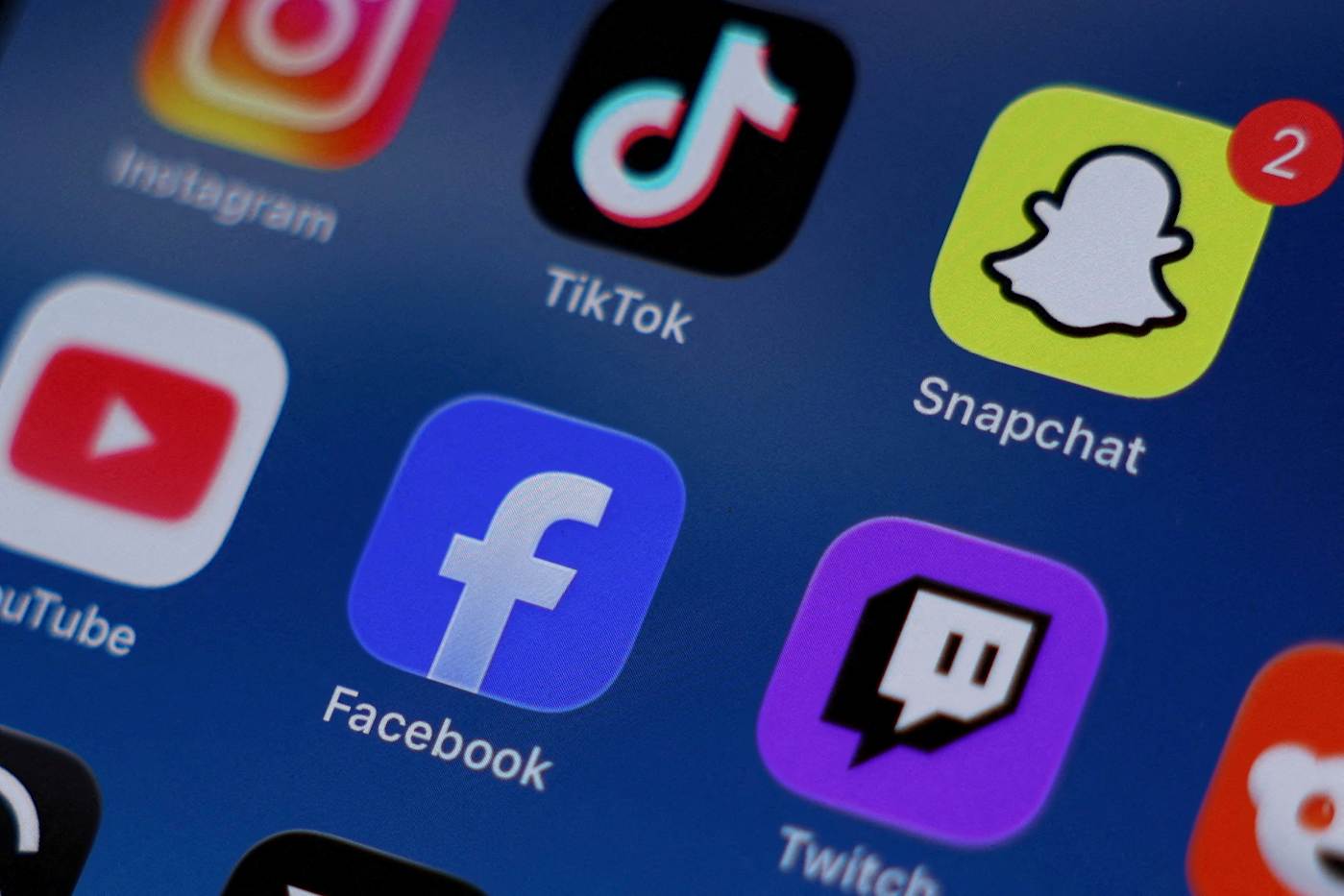
FILE PHOTO: Instagram, TikTok, Snapchat, YouTube, Facebook, Twitch and Reddit applications are displayed on a mobile phone ahead of new law banning social media for users under 16 in Australia, in this picture illustration taken on December 9, 2025. REUTERS/Hollie Adams/Illustration//File Photo
  •  

Bill Gates-backed TerraPower begins nuclear reactor construction

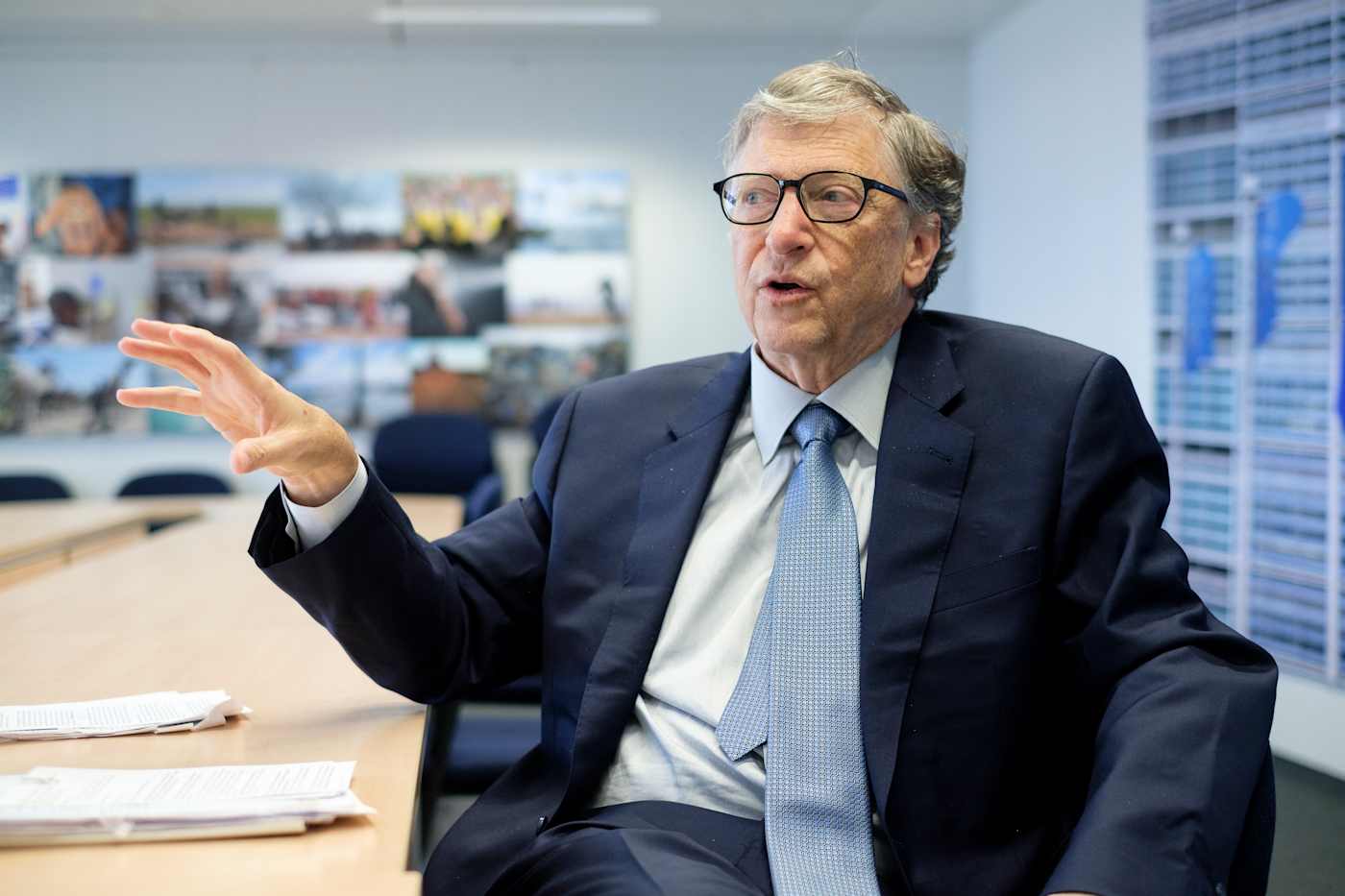
The Nuclear Regulatory Commission has granted approval to TerraPower to begin construction of a reactor in Wyoming. The project is the first new US commercial nuclear reactor in about a decade, according to The New York Times. TerraPower was founded by Bill Gates, and it took years for the business to receive regulatory approval for this construction effort.

TerraPower is part of a push to create more efficient and less expensive nuclear facilities as an alternative power source, particularly as AI companies and data center construction places more demands on the US' current infrastructure. TerraPower's project involves tech it has dubbed Natrium in its planned reactor. Using this liquid sodium approach rather than a traditional light-water reactor is part of how the company aims to reduce costs and time frames.

Advocates see nuclear reactors as a way to generate power without the climate impact of coal or gas plants. Critics point to the safety risks as a severe downside to this approach, while others question whether the creation and disposal of nuclear waste counter the environmental gains. The Gates-backed operation still isn't coming in cheap. The proposed facility could cost at least $4 billion and still faces logistical challenges before coming online as planned in 2031.

This article originally appeared on Engadget at https://www.engadget.com/big-tech/bill-gates-backed-terrapower-begins-nuclear-reactor-construction-221132639.html?src=rss

©

  •  
❌