❌

Normale Ansicht

ByteDance is selling its Moonton game unit to Savvy Games for a cool $6 billion

Following discussions first reported on earlier this year, ByteDance has agreed to sell its games unit Moonton to Savvy Games Group for $6 billion. Moonton is known for mobile titles popular in Asia like Mobile Legends: Bang Bang, which has been downloaded 1.5 billion times. The transaction is set to be finalized in the "near future," according to an internal memo from Moonton's CEO seen by Bloomberg. 

ByteDance has been winding down its gaming arm and shopping Moonton since 2023, just two years after it first acquired the developer. Around that same period, the TikTok parent was shuttering its Nuverse gaming arm, which published notable titles like Marvel Snap and Ragnarok X: Next Generation. The company has since shifted its focus to AI, competing with Chinese rivals to develop chatbots and foundational models. 

Savvy Games, which is owned by Saudi Arabia's Public Investment Fund (PIF), has been going in the opposite direction. Last year the company (via its subsidiary Scopely) acquired Pokémon Go developer Niantic for $3.5 billion. PIF was also among the key investors that purchased Electronic Arts in a blockbuster $55 billion deal last year. The Saudi fund holds a 7.5 percent stake in Nintendo as well.  

The sale is the latest chapter in the recent gaming industry consolidation that saw around 45,000 jobs lost in a brutal three-year period between 2022 and 2025. According to a recent GDC study, one-third of US video game industry workers were laid off over the last two years. 

This article originally appeared on Engadget at https://www.engadget.com/gaming/bytedance-is-selling-its-moonton-game-unit-to-savvy-games-for-a-cool-6-billion-124131595.html?src=rss

©

© Steve Dent for Engadget

Mobile Legends: Bang Bang
  •  

Rivian will provide 50,000 robotaxis to Uber in a deal worth $1.25 billion

Rivian and Uber have entered into a major partnership, with the former to provide the latter with 50,000 robotaxis in a deal worth $1.25 billion in funding. This starts with Uber purchasing 10,000 Rivian R2 robotaxis, which will be deployed in San Francisco and Miami by 2028.

If all goes well, Uber will scoop up 40,000 more robotaxis by 2030. The company plans to scale the initiative to 25 major cities by 2031. The full $1.25 billion investment is contingent on several autonomous milestones, according to a report by Yahoo Finance. However, Uber has already committed $300 million as an initial investment, though this is subject to regulatory approval.

A fleet of R2 Robotaxis is coming exclusively to @Uber. ⚡🌿

Today, we announced a partnership to help both companies accelerate their autonomous vehicle plans across 25 cities in the US, Canada and Europe by the end of 2031. https://t.co/6WazhobMyr pic.twitter.com/9fzgmIsOd5

— Rivian (@Rivian) March 19, 2026

The announcement actually caused Rivian's stock to surge by ten percent before settling down to around four percent. This speaks to optimism surrounding the deal, given that just about every other stock is on the downswing at the moment due to certain geopolitical concerns.

This isn't Uber's only partnership for this type of thing. It's a giant company with robotaxi hands in a number of cookie jars. The rideshare platform recently unveiled its own in-house robotaxi fleet, which is a design partnership with Lucid and Nuro.

Our partner @nvidia has long helped power the AV ecosystem

Now we’re working together to bring fully NVIDIA-driven L4 robotaxis to the @Uber platform across 28 cities by 2028, starting in LA and SF next year https://t.co/CeaxZ7dL8Z pic.twitter.com/2d2Fhol5S0

— Andrew Macdonald (@andrewgordonmac) March 16, 2026

It also announced a partnership with NVIDIA to develop software-driven autonomous vehicles, which will begin deployment in Los Angeles and San Francisco by the first half of 2027. Uber even teamed up with Waymo to bring robotaxis to cities like Atlanta and Austin.

As for Rivian, the company is slowly but surely becoming the "cool" American EV maker, a position once held by Tesla. It just announced pricing and availability for the long-anticipated R2 electric SUV. It arrives this spring, with a starting cost of $58,000. A cheaper model is expected to go on sale in 2027.

This article originally appeared on Engadget at https://www.engadget.com/transportation/evs/rivian-will-provide-50000-robotaxis-to-uber-in-a-deal-worth-125-billion-153856638.html?src=rss

©

© Rivian

Five vehicles.
  •  

Trump administration will reportedly get $10 billion for brokering the TikTok deal

There may have been some extra incentive for the Trump administration to get the TikTok US deal done. According to a report from The Wall Street Journal, the Trump administration is set to receive a total of $10 billion in the deal that allowed TikTok to remain in the US. The new investors who acquired stakes in the US entity of TikTok already paid a $2.5 billion fee to the administration when the deal closed in January, but WSJ's latest report noted that the group of investors would continue to make payments until the total hits $10 billion.

After a group of investors, which includes Oracle along with the Silver Lake and MGX investment firms, acquired stakes in the US-based TikTok entity called TikTok USDS Joint Venture, the WSJ previously reported that the administration would receive a "multibillion-dollar fee" for its work on the deal. To better contextualize the recently-revealed $10 billion fee the Trump administration is receiving, the US entity of TikTok was valued at $14 billion by Vice President JD Vance.

The Trump administration has previously involved itself in major deals with other US corporations. Last year, the administration invested $8.9 billion into Intel and received a nearly 9 percent equity stake. In terms of unprecedented windfalls, the Trump administration also received a Boeing 747-8 as a gift from the Qatari government in May.

This article originally appeared on Engadget at https://www.engadget.com/big-tech/trump-administration-will-reportedly-get-10-billion-for-brokering-the-tiktok-deal-180954979.html?src=rss

©

© REUTERS / Reuters

TikTok logo is placed on a U.S. flag in this illustration taken September 24, 2025. REUTERS/Dado Ruvic/Illustration
  •  

OpenAI secures another $110 billion in funding from Amazon, NVIDIA and SoftBank

OpenAI just announced a massive funding round of $110 billion, which is one of the biggest investment rounds in Silicon Valley history. The investors feature many of the usual suspects, including Amazon with $50 billion, NVIDIA with $30 billion and SoftBank with $30 billion. This investment brings OpenAI to a $730 billion valuation

"We’re super excited about this deal," OpenAI CEO Sam Altman told CNBC. "AI is going to happen everywhere." That last statement seems more like a threat than a boast, but I digress.

Beyond the funding round, OpenAI has announced strategic partnerships with both NVIDIA and Amazon. This will involve Amazon Web Services (AWS) running OpenAI models for enterprise customers to "build generative AI applications and agents at production scale." It also names AWS as the exclusive third-party cloud distribution provider for OpenAI Frontier, which is an agentic enterprise platform.

OpenAI has also committed to consuming 2 gigawatts of Amazon's Trainium capacity, which is the company's custom-designed AI training accelerator. In other words, Amazon is spending a lot of money on OpenAI and then OpenAI will turn around and spend a lot of money with Amazon. The AI funding ouroboros continues.

It's also worth noting that Amazon's investment in OpenAI will be staggered. The funding begins with $15 billion, but the remaining $35 billion will only be invested when certain conditions are met.

Oddly, it's been reported that one condition is that OpenAI achieves artificial general intelligence. AGI is when AI evolves to or beyond human-level abilities, at which point the entire world turns into rainbows and everyone gets a pony. This could happen later this year, according to those bullish on the technology, or never, according to many researchers. Sam Altman said it was coming in 2025 but has since grown weary of the term.

The new partnership with NVIDIA evolves the long-standing collaboration between the two companies. OpenAI has pledged to consume 2 gigawatts of training capacity on NVIDIA's Vera Rubin systems and an additional 3 gigawatts of computing resources, likely in the form of GPUs, to run specific AI inference tasks. In other words, NVIDIA is spending a lot of money on OpenAI and then OpenAI will turn around and spend a lot of money with NVIDIA. The ouroboros must feed.

As for revenue, OpenAI has forecast a massive loss of $14 billion in 2026. It lost around $5 billion in 2024 and reports estimate a loss of $8 billion in 2025. Despite this trajectory, the company claims it'll be raking in $100 billion in revenue by 2029.

This article originally appeared on Engadget at https://www.engadget.com/ai/openai-secures-another-110-billion-in-funding-from-amazon-nvidia-and-softbank-171006356.html?src=rss

©

© Unsplash / Levart_Photographer

Logo on a phone.
  •  

Kalshi fined a MrBeast editor for insider trading

Kalshi, one of several online prediction markets that have exploded in popularity in the last few years, has suspended one of YouTube MrBeast's video editors for insider trading, NPR reports. Besides being suspended from the platform for two years, Kalshi says the editor will also be required to pay a financial penalty that's five times his initial trade size.

The editor, Artem Kaptur, traded in markets related to YouTube and specifically, MrBeast. Kalshi says his transactions were initially flagged because of his "near-perfect trading success on markets with low odds, which were statistically anomalous." Because trades are public on Kalshi, multiple users also flagged the trades as suspicious. Kalshi learned Kaptur was an employee of MrBeast during its investigation and determined he "likely had access to material non-public information connected to his trading." Perhaps unsurprisingly, trading with insider information violates Kalshi's rules.

Kalshi says that it reported the insider trading to the Commodity Futures Trading Commission (CFTC) and plans to donate the over $20,000 Kaptur has been fined to "a non-profit that provides consumer education on derivatives markets." In a statement provided to NPR, Beast Industries, MrBeast's production company, said it has a zero-tolerance policy for insider trading. "We have a longstanding policy in place against employees using proprietary company information in order to safeguard the highest standards and ethics throughout our organization," Beast Industries said. 

Separately, Kalshi has also suspended and fined a politician who was running to be Governor of California. "In May, our Surveillance Department saw an online video by a candidate for Governor of California that appeared to show him trading on his own candidacy," Kalshi says. "We immediately froze his account and opened an investigation. The candidate was initially cooperative and acknowledged that this violated the exchange rules. As a candidate in a race, you can (and probably should) follow and use Kalshi’s market forecast, but you should not trade on it."

Like other prediction markets, Kalshi lets users make trades based on a variety of different subjects and events. For example, you could participate in a market focused on the results of a basketball game, or something more unusual, like who'll win the current season of Survivor. Despite resembling gambling, online predictive markets aren't currently regulated by state gambling laws, and instead classify bets as a type of futures contract, placing them under the purview of the CFTC. That hasn't stopped states from trying to regulate prediction markets anyway. For example, Nevada sued Kalshi for operating a sports gambling market without a permit earlier in February.

This article originally appeared on Engadget at https://www.engadget.com/big-tech/kalshi-fined-a-mrbeast-editor-for-insider-trading-191027814.html?src=rss

©

  •  

EU reportedly opens another probe into Google's ads pricing

The European Commission has opened a new probe into Google, this time focused on the company's massive online advertising business, Bloomberg reports. European Union regulators have already fined Google billions for violating the Digital Markets Act, and being found guilty of anticompetitive behavior in online advertising could add to that total.

While the Commission has yet to announce a formal investigation, Bloomberg writes that it has started contacting Google's customers and competitors for information about its dominance across multiple online advertising markets. Regulators are particularly concerned that Google could be "artificially increasing the clearing price" of ad auctions "to the detriment of advertisers." If the company is found to be violating the EU's competition rules, Google could be fined 10 percent of its global annual sales.

Google's approach to advertising to minors was reportedly already under investigation by the EU as of December 2024, and besides fines, regulators have ordered the company to open up Android to competing AI assistants and share search data with rivals. In the US, there's also precedent for finding Google's approach to online advertising anticompetitive.

A US federal judge found that Google is a monopolist in online advertising in April 2025, the conclusion of a legal battle that started with a Department of Justice lawsuit accusing the company of dominating the ad market and using its control to charge more and keep a larger portion of ad sales. The DOJ ultimately wants Google to sell its ad tech business, but a final decision hasn't been reached as to how the company's anticompetitive behavior should be remedied.

This article originally appeared on Engadget at https://www.engadget.com/big-tech/eu-reportedly-opens-another-probe-into-googles-ads-pricing-194435095.html?src=rss

©

  •  

Disney announces Josh D’Amaro will be its new CEO after Iger departs

Stop me if you've heard this one before. Disney has announced a successor to outgoing CEO Bob Iger, effective in March. Josh D’Amaro, current chairman of Disney Experiences, was tapped for the role in a unanimous vote by the company's board of directors.

D’Amaro has been at Disney for 28 years, where he oversaw theme parks, cruises and consumer products including video games. The company had previously appointed Bob Chapek, the Disney Parks chairman at the time, as successor to Bob Iger in 2020. At the time, Iger had served as CEO since 2005. But Chapek only lasted until 2022, when Bob Iger returned to take the helm once again amid company struggles. Disney formed a committee to find an appropriate successor in 2023, with Iger mentoring potential candidates along the way.

Iger's time at the helm saw the media giant make a number of significant moves such as launching the Disney+ streaming service, buying Hulu and acquiring 20th Century Fox's film and television studios. Iger will continue to serve as a board member and senior advisor until his retirement at the end of the year.

This article originally appeared on Engadget at https://www.engadget.com/entertainment/disney-announces-josh-damaro-will-be-its-new-ceo-after-iger-departs-161616420.html?src=rss

©

© Kéoma Oran / Unsplash

A Disney sign at the entrance to a Disney store.
  •  

OnlyFans is reportedly in talks to sell a 60 percent stake to a San Francisco investment firm

OnlyFans is looking to cash out once again, but this time in a deal that would value it at several billion dollars less than a potential sale that previously fell through. As reported by TechCrunch, the online platform known for subscription-based pornographic content is in talks to sell a majority stake to Architect Capital, an investment firm based in San Francisco.

According to the report, the proposed deal includes $3.5 billion in equity and $2 billion in debt, which values OnlyFans at $5.5 billion. TechCrunch also reported that Architect Capital and OnlyFans are currently in exclusive talks, where the website's owner can't negotiate with other potential buyers for a certain amount of time.

With no set timeline yet for the deal, the deal is far from an official closing. Last year, OnlyFans' owner Leonid Radvinsky was also negotiating with another investment firm, Forest Road Company, to sell the platform. Although that deal never went through, the talks leading up to the sale valued OnlyFans at a much higher $8 billion. The London-based website, which still doesn't want to be known as just a porn site, is still growing and reported a nine percent increase in gross revenue for its 2024 fiscal year, earning more than $7.2 billion.

This article originally appeared on Engadget at https://www.engadget.com/social-media/onlyfans-is-reportedly-in-talks-to-sell-a-60-percent-stake-to-a-san-francisco-investment-firm-191842666.html?src=rss

©

© OnlyFans

An OnlyFans logo stylized with pictographs.
  •  

Apple just reported its best-ever quarter for iPhone sales

Apple shared its latest quarterly financial results today and the news is once again very, very good for the Cupertino company. The quarter ending December 27, 2025 marked "the best-ever quarter" for iPhones, which generated a record high revenue of nearly $85.27 billion for the business. Apple doesn't disclose the number of devices sold any more, but even with the prices for many of its latest generation of smartphones surpassing $1,000 a pop, that's still got to be a heck of a lot of iPhones. 

"The demand for iPhone was simply staggering," CEO Tim Cook said on the conference call to discuss the results. "This is the strongest iPhone lineup we've ever had and by far the most popular."

That wasn't the only massive number in the earnings report. Services revenue also logged its biggest quarter yet, growing 14 percent over the same period last year to reach just over $30 billion. It was also Apple's biggest quarter to date for total revenue, which was nearly $143.76 billion for the already fabulously wealthy company.

This article originally appeared on Engadget at https://www.engadget.com/mobile/smartphones/apple-just-reported-its-best-ever-quarter-for-iphone-sales-234135513.html?src=rss

©

  •  

Apple acquires Q.ai for a reported $2 billion

Apple has acquired Israel-based startup Q.ai, a move that could provide a much-needed boost to the tech giant's capabilities in artificial intelligence. Although Apple has not disclosed terms of the deal, sources told Financial Times that the arrangement is reportedly valued at nearly $2 billion. If that figure is accurate, the Q.ai acquisition marks Apple's second largest acquisition to date, followed by its purchase of Beats for $3 billion back in 2014.

Johny Srouji, Apple’s senior vice president of hardware technologies, said in a statement that Q.ai "is a remarkable company that is pioneering new and creative ways to use imaging and machine learning." Apple hasn't shared any specifics about how it plans to leverage the startup, but its past work indicates the possibility of Apple moving deeper into AI-powered wearables. "Patents filed by Q.ai show its technology being used in headphones or glasses, using 'facial skin micro movements' to communicate without talking," the Times reported. 

The startup's founding team, including CEO Aviad Maizels, will join Apple as part of the deal. This acquisition marks Maizels' second sale to Apple; he previously founded a three-dimensional hearing business called PrimeSense that Apple bought back in 2013.

For several months, many tech insiders have speculated that an acquisition might be Apple's best path forward to catching up in the AI race. In the company's Q3 earnings call in July 2025, CEO Tim Cook acknowledged that "We’re open to M&A that accelerates our roadmap." A deal like this one could eventually lead to Apple developing its own fully in-house AI chatbot rather than relying on a competitor like Google to power artificial intelligence in its Siri assistant.

This article originally appeared on Engadget at https://www.engadget.com/big-tech/apple-acquires-qai-for-a-reported-2-billion-190017949.html?src=rss

©

  •  

Tesla is killing off its Model S and X cars to make robots

Tesla will “basically stop the production” of its Model S and X electric vehicles next quarter, CEO Elon Musk has announced at the automaker’s earnings call for the 2025 fiscal year. “It’s time to bring the Model S and X program to a end with an honorable discharge, because we’re really moving into a future that’s based on autonomy,” Musk said. You can still buy the vehicles as long as there are units to be sold, and Tesla promises to support them for as long as people have them. Once they’re gone, though, they’re gone for good, because Tesla is converting their production space in the company’s Fremont factory into a space for the manufacturing of Optimus humanoid robots.

Model S is Tesla’s second vehicle and has been in production since 2012, while the Model X SUV has been in production since 2015. Their shine has faded over the years, however, and the newer Model 3 and Y now make up the bulk of the company’s sales. For the entirety of 2025, for instance, Tesla delivered 1,585,279 Model 3 and Y vehicles but only sold 418,227 Model S and X units. The company also had to stop selling Model S and X in China in mid-2025, because they were being imported from the US and were subject to China’s tariffs that were put in place in response to US President Donald Trump’s tariffs on imported goods.

In the call, Musk said that Tesla’s long-term goal is to be able to manufacture 1 million Optimus robots in the current Model S and X production space. At the World Economic Forum in Davos, Switzerland a few days ago, the CEO announced that Tesla will start selling Optimus to the public by the end of next year. Musk has big plans for Optimus and once said that it’s bound to become the “biggest product of all time,” bigger than cellphones, “bigger than anything.” But the humanoid robot has been failing to live up to the hype during demonstrations, and Musk is known for his overly optimistic timelines.

The company’s earnings report has also revealed that Tesla invested $2 billion in Musk’s other company, xAI. Tesla’s shareholders notably sued Musk in 2024 for starting xAI, which they argued is a direct competition to the automaker. The CEO has been claiming for years, after all, that Tesla is an AI company and not just an EV-maker. Still, Tesla’s shareholders approved Musk’s $1 trillion pay package in late 2025 on the condition that the company reaches a market value of $8.5 trillion.

This article originally appeared on Engadget at https://www.engadget.com/transportation/evs/tesla-is-killing-off-its-model-s-and-x-cars-to-make-robots-010621101.html?src=rss

©

  •  

Yahoo is adding generative AI to its search engine

Yahoo has announced a new AI-powered "answer engine", dubbed Yahoo Scout. The new tool is available now in beta and is powered by Anthropic's Claude.

The company says Scout "synthesizes" info from the web, as well as Yahoo's own data and content when constructing responses to user's natural-language search queries. Yahoo says the interface will include interactive digital media, structured lists and tables and visible source links aimed at making answers easier to verify. (Disclosure: Yahoo is the parent company of Engadget.)

Alongside Scout, Yahoo is announcing an "intelligence platform" across its varied products. This will include features like AI summaries in Yahoo Mail, “key takeaways” in Yahoo News and game breakdowns in Yahoo Sports. Scout will also integrate into Yahoo Shopping to offer insights and shoppable links, and Yahoo Finance, where it can populate company financials, analyst ratings and explain stock moves as they occur. Yahoo says the answer engine behind Scout will become more personalized and focus on "deeper experiences" as time goes on.

Google offered a glimpse of generative AI in search back in 2023, and the company's AI Mode for search was made widely available in the US last year. The company has been similarly at work integrating its AI model across its product portfolio, including Gmail and shopping.

This article originally appeared on Engadget at https://www.engadget.com/ai/yahoo-is-adding-generative-ai-to-its-search-engine-172706249.html?src=rss

©

© Yahoo

Yahoo Scout on mobile
  •  

US Congress members call for 'thorough review' of EA's $55 billion sale

Before Electronic Arts goes private in a groundbreaking sale, some US lawmakers are pleading for some federal oversight. Democratic members of the US Congress, as part of the Congressional Labor Caucus, penned a letter asking the Federal Trade Commission to "thoroughly review" the $55 billion acquisition of EA.

EA confirmed the sale to the Public Investment Fund, or the sovereign wealth fund of Saudi Arabia, Silver Lake and Affinity Partners in September, but the deal is expected to close in the first quarter of 2027. Before the official change of ownership, the 46 House Democrats who signed the letter to the FTC are calling for more scrutiny into the impacts of the deal. 

The letter noted some of the most consequential effects, including the worsening of an unstable industry, the potential for more layoffs and increased market dominance for EA. "We respectfully urge the Commission to conduct a thorough investigation into the labor market consequences of this proposed acquisition, including EA’s existing wage-setting power, the likelihood of post-transaction layoffs, the degree of labor-market concentration in relevant geographic and occupational markets, and the role of cross-ownership in shaping labor outcomes," the letter read.

The letter already earned support from the Communications Workers of America union, who also supported a petition from the United Video Games union. As spotted by Eurogamer, the petition calls on regulators and elected officials to "scrutinize this deal and ensure that any path forward protects jobs and preserves creative freedom."

This article originally appeared on Engadget at https://www.engadget.com/gaming/us-congress-members-call-for-thorough-review-of-eas-55-billion-sale-175851429.html?src=rss

©

© REUTERS / Reuters

Electronic Arts logo is seen in front of the logos of PIF (Public Investment Fund), Silver Lake and Affinity Partners in this illustration taken September 30, 2025. REUTERS/Dado Ruvic/Illustration
  •  

TikTok finalizes deal for its US entity

After years of uncertainty over TikTok's future in the United States, a deal for the app's US business has been finalized. The new US entity is called TikTok USDS Joint Venture. ByteDance has retained a 19.9 percent percent stake in the new business, with the rest controlled by a group of non-Chinese investors, including Oracle, Silver Lake and MGX, an Emirati-state owned investment firm, all of which have a 15 percent stake. Dell CEO Michael Dell and other investors have smaller stakes in the new company. 

The terms of the deal were first leaked last month, after TikTok CEO Shou Chew reportedly told employees in a memo that TikTok and ByteDance had agreed to a group of investors. This ends a lengthy saga and months of slow progress as the agreement was being worked out, ensuring that the app will remain available in the US after years of being on the verge of a ban in the country.

President Donald Trump, who had tried to ban the app during his first term in office, praised the deal in a post on Truth Social. "It will now be owned by a group of Great American Patriots and Investors, the Biggest in the World, and will be an important Voice," he wrote."I only hope that long into the future I will be remembered by those who use and love TikTok."

According to TikTok’s announcement, the joint venture will protect American users’ data with Oracle's secure US cloud environment. It will also retrain TikTok’s algorithm on US users’ data and will be in charge of content moderation in the US. The entity promises interoperability, as well, promising that users will still get international content and, if they’re a creator, viewers. “The safeguards provided by the Joint Venture will also cover CapCut, and Lemon8 and a portfolio of other apps and websites in the US,” TikTok said.

The new entity will be overseen by a seven-member board of directors, most of whom are Americans. It includes, Shou Chew, the Chief Executive Officer of TikTok, Silver Lake co-CEO Egon Durban, Oracle Executive Vice President Kenneth Glueck and MGX Chief Strategy and Safety Officer David Scott. Adam Presser, who had previously been head of operations and trust and safety at TikTok, is the CEO of TikTok USDS Joint Venture.

Exactly what the new joint venture means for US users of TikTok is unclear. Shortly after the deal was announced, TikTok introduced new terms of service for US users. As the BBC notes, the new terms include provisions relating to use of the app by kids under 13 (they are limited to the "Under 13 Experience") and that the "TikTok USDS Joint Venture does not endorse any content" in the app. The company hasn’t announced specific changes to the app’s algorithm or other core features.

Update, January 23, 2026, 10:58AM PT: This post was updated to add a statement from President Trump, and with additional information about TikTok’s new terms of service.

This article originally appeared on Engadget at https://www.engadget.com/big-tech/tiktok-finalizes-deal-for-its-us-entity-010543484.html?src=rss

©

  •  

Vimeo lays off most of its staff just months after being bought by private equity firm

Vimeo just got hit by a brutal round of layoffs, according to a report by Business Insider. Staffers are posting on various social media sites that the layoffs have impacted most of the company, including the entire video team. Vimeo is a video-hosting platform, so that sounds bad.

“Yesterday, following Vimeo’s recent acquisition by a private equity firm, I learned that I, along with a large portion of the company, was impacted by layoffs,” wrote the company’s former vice president of Global Brand & Creative, Dave Brown. He is referring to a firm called Bending Spoons that bought Vimeo for $1.38 billion in the latter half of 2025.

We don't know why parent company Bending Spoons conducted such a massive round of layoffs, but the equity firm is known for purchasing tech companies and aggressively cutting costs via layoffs. It did the same thing to Evernote back in 2023 and WeTransfer in 2024. Engadget has reached out to Vimeo to inquire about the exact number of employees that were laid off and will update this post when we hear back.

"I can confirm that a layoff was announced at Vimeo on January 20, 2026. To respect the privacy of those departing, we cannot provide additional details at this time,” a Bending Spoons spokesperson told Gizmodo in an emailed statement. "Going forward, Bending Spoons remains committed to growing Vimeo to meet the needs of its diverse user base."

Reviving this account to say: Almost everyone at Vimeo was laid off yesterday, including the entire video team. If you're looking for talented engineers, there are a few on the market.

Sucks to see something I built killed by private equity in a technology company skin suit.

— Derek Buitenhuis (@daemon404) January 21, 2026

It's good to know the company "remains committed to growing Vimeo" after firing just about everyone that works there. One former employee said on X that it "sucks to see something I built killed by private equity in a technology company skin suit."

Vimeo has been around a long time. The platform was founded a full year before YouTube and has positioned itself as being a premium alternative for hosting creative and business-adjacent videos. We have no idea what it'll look like with a minimal staff and no video team.

This article originally appeared on Engadget at https://www.engadget.com/big-tech/vimeo-lays-off-most-of-its-staff-just-months-after-being-bought-by-private-equity-firm-184556023.html?src=rss

©

© Vimeo

A logo.
  •  

David Ellison extends deadline for Warner Bros. Discovery takeover offer

Paramount Skydance CEO David Ellison is apparently still hopeful that investors will approve his $108.4 billion hostile takeover of Warner Bros. Discovery. Paramount Skydance announced Thursday that it's extending its all-cash offer to acquire the storied studio, and giving investors until February 20, 2026 to accept. The company's previous offer expired on January 21, but with a lawsuit in the works and a revised Netflix deal to compete with, Paramount Skydance wants to stay in the conversation.

Netflix and Warner Bros. Discovery originally announced their $82.7 billion acquisition agreement in December 2025. Netflix's deal is for a significant portion, but notably not all, of Warner Bros. Discovery as it exists today. If approved, the streaming service would acquire Warner Bros. film studios, New Line Cinema, HBO, HBO Max, the company's theme parks, game studios and select linear channels like TNT, but not the collection of reality TV and news programming that Warner Bros. Discovery calls “Global Networks.”

Paramount Skydance made its competing offer of $108.4 billion for all of Warner Bros. Discovery a few days later in December, with the recommendation that shareholders reject the Netflix deal. To add pressure, Paramount Skydance also sued Warner Bros. Discovery in January alleging that the company had not provided adequate information about why it favored Netflix over Paramount. Beyond offering more money, Paramount contends its deal is more likely to be approved by regulators because owning Warner Bros. doesn't "entrench Netflix's market dominance." Warner Bros. Discovery claims that funding for Paramount's deal "remains inadequate" and that the company is uncertain Paramount Skydance will actually be able to complete the deal.

David Ellison was previously able to merge Skydance with Paramount using the financial backing of his billionaire father Larry Ellison, and the Ellison family's friendly relationship with the Trump administration. Promising to make sure that CBS News represents "a diversity of viewpoints” via a newly appointed ombudsman, and that the merged Paramount Skydance won't create any diversity, equity and inclusion programs was enough to get the FCC to approve the merger. Ellison might have thought acquiring Warner Bros. Discovery would be equally easy, but at least so far that hasn't worked out as planned.

This article originally appeared on Engadget at https://www.engadget.com/entertainment/david-ellison-extends-deadline-for-warner-bros-discovery-takeover-offer-204752313.html?src=rss

©

  •  

Mark Zuckerberg announces new 'Meta Compute' initiative for its data center and AI projects

On the heels of Mark Zuckerberg announcing that Meta's former board member, Dina Powell McCormick, would be formally joining the company as president and vice chairman, the CEO has shared new details about her purview at the company. The executive will play a key role overseeing Meta's sprawling infrastructure investments as part of a newly announced initiative called Meta Compute.

"Meta is planning to build tens of gigawatts this decade, and hundreds of gigawatts or more over time," Zuckerberg said in an update. "How we engineer, invest, and partner to build this infrastructure will become a strategic advantage."

Zuckerberg said that Meta's head of global engineering Santosh Janardhan will lead the "top-level initiative" and that recent hire and former Safe Superintelligence CEO Daniel Gross will "lead a new group responsible for long-term capacity strategy, supplier partnerships, industry analysis, planning, and business modeling." McCormick is expected to "work on partnering with governments and sovereigns to build, deploy, invest in, and finance Meta's infrastructure."

Meta has been investing heavily in infrastructure to fuel its AI "superintelligence" ambitions. The company also recently announced three agreements to buy massive amounts of nuclear power to help power its data centers. Zuckerberg has previously said he expects Meta to spend $600 billion on AI infrastructure and jobs by 2028.

This article originally appeared on Engadget at https://www.engadget.com/ai/mark-zuckerberg-announces-new-meta-compute-initiative-for-its-data-center-and-ai-projects-192100086.html?src=rss

©

  •  

Paramount won't quit, files suit against Warner Bros. Discovery over rejected bid

Paramount Skydance just does not want to take no for an answer. After having multiple bids to acquire Warner Bros. Discovery (WBD) rejected, including a recent hostile bid that the WBD board recommended that shareholders reject, Paramount is turning to the courts and mounting a proxy fight.

In a letter to shareholders on Monday, Paramount CEO David Ellison said the company has filed suit in Delaware Chancery Court seeking more disclosure about WBD’s pending Netflix deal and the process that led to its acceptance. Paramount argues WBD hasn’t provided “basic information” shareholders need to evaluate competing offers, including how WBD valued the planned cable-networks spinout Discovery Global (or Global Networks, depending on the filing). The Netflix acquisition would leave Discovery Global to become its own publicly traded company, while the Paramount offer included these assets.

Paramount is also escalating the corporate pressure campaign, with Ellison saying it intends to nominate a slate of directors for election at WBD’s 2026 annual meeting. The end goal would be installing a board that would “engage” on Paramount’s offer under the terms of WBD’s merger agreement with Netflix.

If WBD were to call a special meeting to approve the Netflix transaction before the annual meeting, Paramount says it will solicit proxy votes against the deal. It also plans to push a bylaw change requiring shareholders to approve any separation of Discovery Global. This change seems like Paramount stoking the flames (whether real or imagined) surrounding shareholders having their WBD shares bought out without the value of Discovery Global built-in under the Netflix merger.

Paramount remains convinced that its offer is "superior" to that of Netflix, while WBD maintains Paramount's bid offers "insufficient value" and that Paramount has failed to submit a true best proposal "despite clear direction from WBD on both the deficiencies and potential solutions." The lawsuit now aims to force WBD to spell out exactly how it arrived at recommending the Netflix deal over Paramount's bid.

WBD expressed concerns over whether a potential Paramount deal would even reach closing, citing the substantial debt the smaller studio would have to take on to pull off a leveraged buyout.

This article originally appeared on Engadget at https://www.engadget.com/entertainment/paramount-wont-quit-files-suit-against-warner-bros-discovery-over-rejected-bid-175317166.html?src=rss

©

© REUTERS / Reuters

A Paramount water tower is shown on the Paramount studio lot in Hollywood before the Paramount Global $8.4 billion merger with Skydance Media is expected to be completed this week, in Los Angeles, California, U.S., August 5, 2025. After the deal closes, the company will be renamed Paramount Skydance Corp.  REUTERS/Mike Blake
  •  

Meta appoints ex-Trump and Bush official as its new president and vice chairman

Meta has appointed Dina Powell McCormick, a banking executive and former Republican White House official, as its new president and vice-chairman. The company said McCormick will help guide its overall strategy and execution as a part of the management team.

“Dina’s experience at the highest levels of global finance, combined with her deep relationships around the world, makes her uniquely suited to help Meta manage this next phase of growth as the company’s president and vice chairman,” said Meta Founder and CEO Mark Zuckerberg.

McCormick was a partner at Goldman Sachs and ran its Global Sovereign investment banking business. She was most recently vice chair, president and head of global client services at merchant bank BDT & MSD Partners. McCormick was also deputy national security advisor to President Donald Trump during his first term and held several roles during the George W. Bush administration, including assistant secretary of state for Secretary of State Condoleezza Rice. She is married to Sen. Dave McCormick (R-PA).

Meta’s new president joined the company’s board last April, but she resigned in December. Just a few weeks later, McCormick has taken on a higher-profile role at Meta. 

McCormick is the second former Trump official that Meta has appointed to a prominent role this month. Last week, the company hired Curtis Joseph Mahoney, who was most recently a corporate vice president and general counsel at Microsoft, as its chief legal officer. Mahoney was a deputy US trade representative during the first Trump administration.

This article originally appeared on Engadget at https://www.engadget.com/big-tech/meta-appoints-ex-trump-and-bush-official-as-its-new-president-and-vice-chairman-151048263.html?src=rss

©

  •  

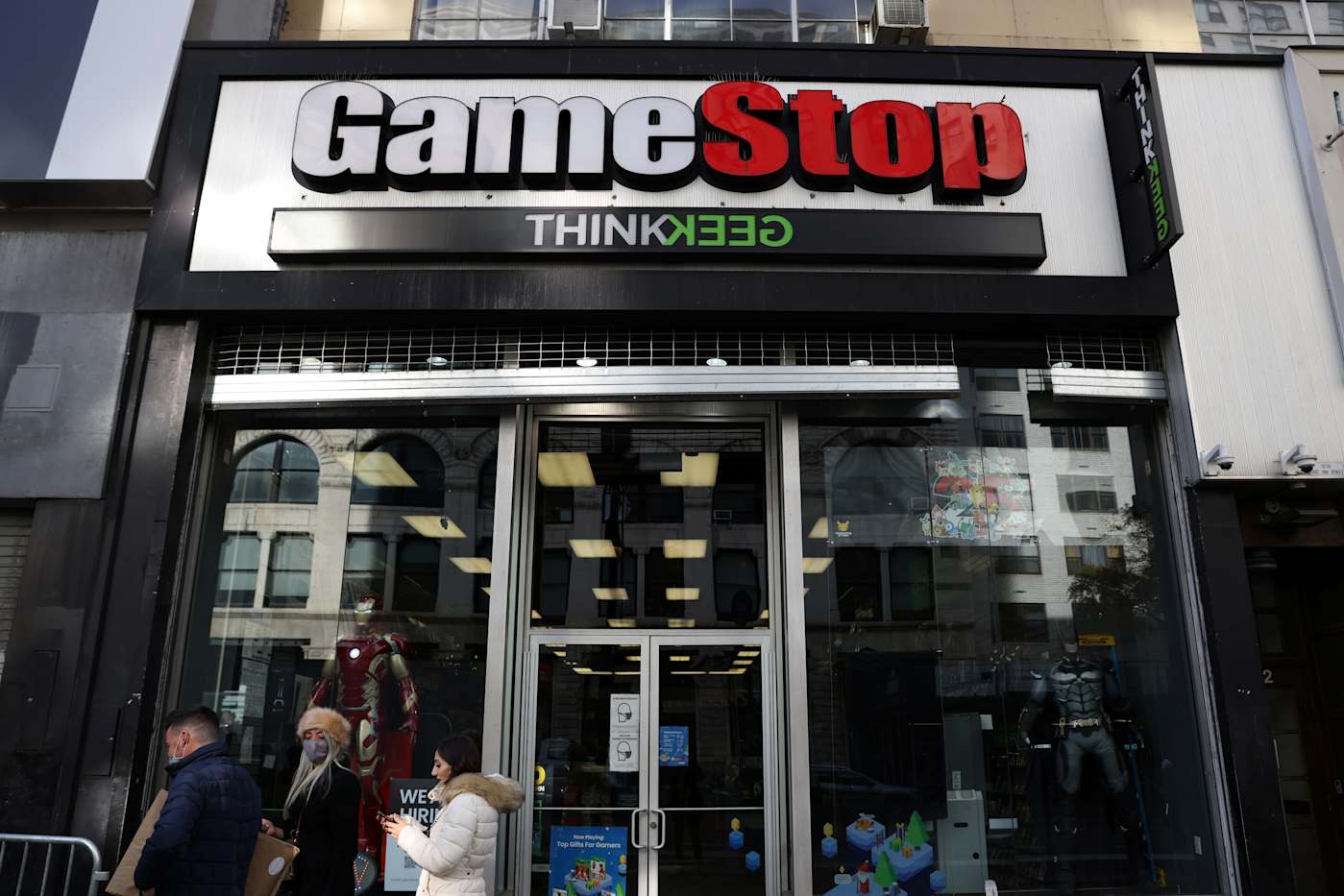
GameStop reportedly shuts down more than 400 US stores

Your neighborhood GameStop might be on the chopping block, along with more than 400 other retail locations across the US. As first reported by Polygon, the retailer is pursuing a severe cost-saving measure by closing up several hundred physical locations. According to a blog that keeps track of GameStop closures, there are 410 locations that are confirmed to be closing or are already closed, along with another 11 that are reportedly also on their way, as of January 10. 

As Polygon indicated, these closings aren't much of a surprise considering GameStop's SEC filing for December 2025 indicated that it would "anticipate closing a significant number of additional stores in fiscal 2025," which ends on January 31, 2026. The same filing detailed that the company's board would pay out the GameStop CEO, Ryan Cohen, up to $35 billion in stock options, given that he increases the retailer's market cap to $100 billion.

While the blog covers only closures in the US, the SEC filing also noted that GameStop is planning to reduce its presence in several other European countries and Canada. Even though GameStop saw a historic spike in market value in 2021, it has struggled with the brand's direction, as seen with failed attempts at offering a crypto locker and an NFT marketplace.

This article originally appeared on Engadget at https://www.engadget.com/gaming/gamestop-reportedly-shuts-down-more-than-400-us-stores-210632743.html?src=rss

©

© REUTERS / Reuters

People walk by a GameStop in Manhattan, New York, U.S., December 7, 2021. REUTERS/Andrew Kelly
  •  
❌