It's only been two years since Dune: Part Twotook over multiplexes, but we already have a trailer for the third installment. The appropriately-named Dune: Part Three is an adaptation of Frank Herbert's Dune Messiah book from 1969.
Just like the book, the latest film takes place a number of years after Dune: Part Two. "If the first movie was contemplation, a boy exploring a new world, and the second one is a war movie, this one is a thriller," according to The Hollywood Reporter. "It is action-packed and tense. More muscular.”
Despite the time jump, most primary actors are returning. This includes Timothée Chalamet, Zendaya and Javier Bardem. Anya Taylor-Joy, who briefly appeared in the second film, is also coming back. The same goes for Jason Momoa, despite his Duncan Idaho character dying in the first film. Book readers will likely understand what that means.
The trailer also highlights the antagonist Scytale, as portrayed by Robert Pattinson. He should be a more nuanced villain than Baron Harkonnen, though that's not exactly a high bar.
The release date is coming up fast. Dune: Part Three hits theaters on December 18. That's this year. Villeneuve had intended to take a break after making the second one to focus on a smaller and more personal film, but said that he kept "waking in the middle of the night" with potential images from the third installment.
This article originally appeared on Engadget at https://www.engadget.com/entertainment/tv-movies/the-dune-part-three-trailer-introduces-robert-pattinsons-villainous-new-character-173758393.html?src=rss
You can sum up the gamer response to NVIDIA's DLSS 5 announcement with the ever-relevant Fallout 4 meme: "Everyone disliked that." Across social media and Reddit last night, I couldn't find anyone who's genuinely positive about the potential for DLSS 5, which uses AI to add "photorealistic" lighting and materials to in-game models and environments. Instead, it's mostly complaints about the feature being another avenue for AI slop. And you know what? I agree.
It's not unusual to see gamers being reflexively angry about new technology on the internet, especially when it's being pitched by NVIDIA as the “biggest breakthrough in computer graphics” since its RTX 20-series GPUs arrived in 2018 with real-time ray tracing. There was plenty of suspicion around DLSS's original AI upscaling model, as well as the "fake" frames generated by later iterations. But the few demos we've seen of DLSS 5 basically look like "yassified" AI filters for popular games.
Leon and Grace from Resident Evil: Requiem have more distinct facial and hair detail, but they look a bit too slick. There are more wrinkles on an old woman in Hogwarts Legacy. And the face, hair and clothing from a Starfield character gain an uncanny sheen.
None of the demos have the immediate impact of the Star Wars real-time ray tracing short ILMxLab produced with NVIDIA seven years ago. That demonstration showed us glorious reflections and lighting effects we'd never seen before in real-time. The DLSS 5 demos, on the other hand, don't look much different from the AI filters that make you look more presentable for Zoom calls. There's no genuine excitement for DLSS 5, just NVIDIA telling us that it's groundbreaking.
There's also plenty of concern about DLSS 5 straying from an artist's original intent, as well as a potential homogenization of game visuals if every developer starts using the feature. NVIDIA claims developers will have "detailed controls for intensity, color grading and masking," which will help DLSS 5 stay in line with a game's aesthetic. But we don't have any direct developer experience with the feature yet — some artists may want far more control than NVIDIA wants to give.
The difference between DLSS 5 and earlier versions NVIDIA's upscaling is like the difference between generative AI and more traditional machine learning models. NVIDIA relied on the latter to make low-resolution textures and models appear sharper, and later to insert generated frames to smooth out gameplay and raise your fps count. As Wirecutter and former Polygon editor Arthur Gies points out, you could argue those features were in service of delivering what developers originally intended. But DLSS 5's neural model applies its concept of "photorealism" on top of what games are rendering -- it's like watching a Pixar movie that let OpenAI's Sora do a final visual pass.
Part of the negative response towards DLSS 5 may stem from a widespread anti-gen AI sentiment, but that doesn’t devalue the criticisms either. Similar to AI generated text, images and video, there’s a dehumanizing aspect about DLSS 5. It can erase the work of human artists (despite how much control NVIDIA claims they have), and it also feels like a calculated attempt to appeal to gamers who just want shinier graphics. NVIDIA showed off how generative AI could be used to create dialog and voices for NPCs last year at CES, but that was also widely disliked (and I called it a genuine nightmare).
Of course, I can’t fully judge DLSS 5 until I see it in action beyond a short demo. But I think the visceral disgust is an important indicator that many gamers aren’t onboard with the AI-powered future NVIDIA is trying to sell us. And perhaps the idea of chasing “photorealism” may be a bit of a fool’s errand. It may be appropriate for some games, but as Nintendo and indie PC devs have shown, you can also make some of the best games of all time without striving for realism. Tears of the Kingdom could use a better framerate and higher resolution textures, but it certainly doesn’t need DLSS 5.
This article originally appeared on Engadget at https://www.engadget.com/gaming/pc/gamers-are-right-to-be-disgusted-by-nvidias-dlss-5-151105593.html?src=rss
Just months after announcing DLSS 4.5 at CES, NVIDIA has unveiled its next major upscaling technology, DLSS 5. The company is doubling-down on AI for this next iteration, claiming DLSS 5 “infuses pixels with photoreal lighting and materials” using a real-time neural rendering model when it arrives this fall.
So what does this mean in practice? In an on-stage demo at NVIDIA’s GTC 2026 keynote, CEO Jensen Huang showed off the technology with Resident Evil: Requiem, Hogwarts Legacy and Starfield. DLSS 5 adds a noticeable amount of detail to character’s hair and skin tone, but it also appears it’s being compared to those games without any DLSS features turned on. It’s unclear how much of a difference it makes compared to DLSS 4.5 with path tracing and all of its features turned on.
“DLSS 5 takes a game’s color and motion vectors for each frame as input, and uses an AI model to infuse the scene with photoreal lighting and materials that are anchored to source 3D content and consistent from frame to frame,” NVIDIA said in a blog post. The company also notes that the technology runs in real time, and it works at up to 4K.
Huang showed off DLSS 5 while running a system with two RTX 5090 GPUs. Eventually, it will be able to run on a single video card (though I’d imagine it would have to be almost as powerful as two 5090s). Huang also paints DLSS 5 as a step towards offering Hollywood-like quality for real-time rendering, without the need for the GPU horsepower required by studios. It sounds a bit like a generative AI video model that can be directly controlled by developers, instead of just AI prompts.
NVIDIA, never shy from self-aggrandizing, claims DLSS 5 is also the “biggest breakthrough in computer graphics” since real-time ray tracing arrived in 2018. But given that ray tracing itself hasn’t been mainstream for many gamers, it’ll be interesting to see if there’s any interest in NVIDIA’s AI-produced pixels.
This article originally appeared on Engadget at https://www.engadget.com/gaming/pc/nvidia-claims-dlss-5-will-deliver-photoreal-image-quality-with-ai-this-fall-193452088.html?src=rss
Firefly aired for just one season in 2002 before Fox canceled it. In the 24 years since, the sci-fi show has skyrocketed in popularity and now fans are finally getting more. Nathan Fillion has announced that an animated Firefly series is currently in advanced development, Deadline first reported.
Fillion shared the news at AwesomeCon during a live taping of his podcast Once We Were Spacemen with his Firefly co-stars Gina Torres, Morena Baccarin, Summer Glau, Sean Maher, Jewel Staite and Alan Tudyk. Tudyk co-hosts the podcast, in which the duo look back at their careers and interview past coworkers. Each of the actors present at AwesomeCon are expected to voice the animated versions of their characters.
This isn't one of those maybe one day it will happen announcements, with many steps already being taken. The animated reboot is under the direction of showrunners Tara Butters (Agent Carter, Reaper) and Marc Guggenheim (DC's Legends of Tomorrow, Arrow) — original creator Joss Whedon is not involved, but has given his blessing. It has early concept art from ShadowMachine, an Oscar- and Emmy-winning animation studio. Fillion is producing the show through Collision33, his production company, and with 20th Television Animation. There's even already a script in place.
According to Fillion, the one thing left is a home for the series. He and his co-stars took to Once We Were Spacemen's Instagram to provide more details and implore FireFly fans to show demand for the reboot.
Firefly took place in 2517, centuries after a universal civil war. It followed a group of people living aboard a transport ship, Serenity, flying through the galaxy. In 2005, the show got a sequel in the form of a movie, Serenity.
This article originally appeared on Engadget at https://www.engadget.com/entertainment/tv-movies/firefly-is-getting-rebooted-as-an-animated-series-120604649.html?src=rss
Ahead of its acquisition by Paramount Skydance, Warner Bros. dominated the 2026 Oscars with 11 wins primarily for Ryan Coogler's Sinners and Paul Thomas Anderson's One Battle After Another. Netflix also put in a strong showing with seven Academy Awards, including two for KPop Demon Hunters and three for Guillermo Del Toro's Frankenstein.
All told, dedicated streaming services chalked up eight awards, but were shut out of the major prizes. Frankenstein took the trophies for for Best Production Design, Best Costume Design and Best Makeup and Hairstyling, while KPop Demon Hunters took Best Animated Feature and Best original Song. Netflix also took prizes for All The Empty Rooms (Best Documentary Short Film) and The Singers (Best Live Action Short Film). Apple TV garnered the other streaming service Oscar for F1 (Best Sound).
Warner Bros. dominated the more prestigious awards. The studio took its first Oscar for Best Picture (One Battle After Another) since Argo won in 2012, while also winning Anderson the prizes for Best Director and Best Adapted Screenplay, and giving Sean Penn the Best Supporting Actor Oscar. Sinners, meanwhile, won for Best Cinematography, giving Autumn Durald Arkapaw the first ever win for a woman and woman of color in that category. Michael B. Jordan took the Best Actor prize for that film, while Director Ryan Coogler won for Best Original Screenplay.
Other notable acting prizes were won by Jessie Buckley (Best Actress, Hamnet) and Amy Madigan (Best Support Actress, Weapons).
Host Conan O'Brien joked that it was the "first time in a theater" for Netflix CEO Ted Sarandos. It remains to be seen, however, whether Netflix losing out to Paramount Skydance on the Warner Bros. acquisition will be to the film industry's benefit or detriment. One clear loser of late is broadcast television as the 2026 Oscars will be the third-to-last aired by Walt Disney's ABC, with YouTube set to stream the ceremony exclusively starting in 2029.
This article originally appeared on Engadget at https://www.engadget.com/entertainment/warner-bros-dominates-oscars-with-11-wins-ahead-of-its-acquisition-by-paramount-093916527.html?src=rss
HOLLYWOOD, CALIFORNIA - MARCH 15: Lynette Howell Taylor onstage during the 98th Oscars at Dolby Theatre on March 15, 2026 in Hollywood, California. (Photo by Richard Harbaugh/Bill Barnes/The Academy/Getty Images)
A month after Seedance 2.0's launch in China sparked cease-and-desist letters from Disneyand Paramount Skydance over its use of copyrighted materials, its developer ByteDance has reportedly hit pause on the release of the AI video tool in other regions. According to The Information, which spoke to two anonymous sources with knowledge of the matter, ByteDance has suspended Seedance 2.0's global rollout. Engadget has reached out to ByteDance for comment and will update this story if we hear back with more information.
Seedance 2.0 caught heat from Hollywood studios almost immediately upon its release, after user-generated videos including a viral AI clip of Brad Pitt fighting Tom Cruise sparked concerns that copyrighted works were used in training the model. In February, ByteDance told the BBC that it is "taking steps to strengthen current safeguards as we work to prevent the unauthorised use of intellectual property and likeness by users." It's unclear when exactly ByteDance planned to release the tool more widely.
This article originally appeared on Engadget at https://www.engadget.com/ai/bytedance-has-reportedly-suspended-the-global-rollout-of-its-new-ai-video-generator-212326112.html?src=rss
You're responsible for your own Spotify algorithm now. On stage at SXSW, Spotify's co-CEO, Gustav Söderström, announced the Taste Profile feature, which allows users to personally customize exactly what they want to listen to, whether it's music, audiobooks or podcasts. This AI-powered feature is still in beta, and it will be available to Premium users in New Zealand in the coming weeks.
From its short video demo, Spotify's Taste Profile feature will show you a summary of your listening habits and offer a "Tell us more" prompt at the bottom. With the new prompt, users can inform the AI what they want to see more of or if they want to get rid of a genre that keeps popping up in their algorithm. Spotify said that the Taste Profile will take into consideration more ambiguous prompts, too, like if you're training for a marathon and want upbeat music or want to listen to news podcasts during your commute to work. Spotify added that Taste Profile is an optional feature, and unwilling users can "leave it and enjoy Spotify as usual."
With Taste Profile, Spotify is continuing its momentum of offering AI features, like the Prompted Playlist feature that was made available last month. Unlike the existing AI Playlist feature, Prompted Playlist lets you put in specific requests to generate a playlist, like only including songs from a specific TV show. Like Taste Profile, the Prompted Playlist feature saw beta testing in New Zealand first, before expanding to US and Canadian users a month later.
This article originally appeared on Engadget at https://www.engadget.com/entertainment/music/spotifys-new-taste-profile-feature-lets-users-fine-tune-their-algorithms-recommendations-191104626.html?src=rss
Josh Wardle had a hell of a tough act to follow. His last game, Wordle, became incredibly popular thanks to its blend of simplicity, clarity and shareability. Over four years (and a seven-figure sale of Wordle to The New York Times) later, Wardle has released his follow-up game.
Like Wordle and its myriad clones, Parseword offers up one puzzle per day. It taps into the mechanics of cryptic crossword clues. So it might ask you to replace one of the words with a synonym, reverse it or find a homophone. You may need to remove letters from a word or combine it with another one to find the answer. There’s a tutorial to help you get to grips with things and hints are available.
Wardle told The New Yorker he was inspired by The Last of Us showrunner Craig Mazin, who he heard discuss the logic behind cryptics on a podcast. Wardle brought in two friends, Chris Dary and Matt Lee, whom he worked with at Reddit to collaborate on the new game. They received permission to use clues from long-time cryptic constructors Emily Cox and Henry Rathvon.
After playing the tutorial and today's puzzle, it seems you may need to be wired in a certain way to play Parseword. It’s certainly less approachable than Wordle. At first glance, it’s hard to see this reaching the same kind of mass appeal as Wardle’s previous game. (Fittingly enough, Parseword feels like a game geared toward New Yorker readers.)
Of course, countless other casual daily games that aim to replicate the success of Wordle have popped up over the last few years, from Quordle, Bracket City and Framed to the Times’ own Connections, Strands and Pips. Catfishing, which asks you to guess Wikipedia article subjects based on their categories, is a new favorite of mine. I still miss the original Heardle, though.
This article originally appeared on Engadget at https://www.engadget.com/gaming/wordles-creator-is-back-with-a-new-game-and-its-a-real-chin-scratcher-182639801.html?src=rss
The Super Mario Galaxy Movieis nearly upon us, as the hotly-anticipated sequel arrives in theaters on April 1. Nintendo recently dropped the final trailer for the film, which is filled with quick visual gags and nods to the source material.
There aren't too many actual reveals in this footage, as it covers a lot of the same ground as previous trailers. However, it does show that fan favorite Lumalee is returning as a prison guard of some sort, reversing the storyline from the original film in which the cheerfully nihilistic creature was trapped in a cage.
Nintendo also released a larger presentation that featured the aforementioned trailer, but also included interviews with actors and franchise creator Shigeru Miyamoto. We did get some news in this video.
It was revealed that the long-tongued dinosaur Yoshi will be voiced by Donald Glover. So it's likely the dino will be saying a lot more than "Yoshi" over and over. Actor Luis Guzman will also be playing Wart, the primary antagonist from Super Mario Bros. 2. Issa Rae will be on hand to voice Honey Queen, the gigantic bee character from the Super Mario Galaxy games.
It was even confirmed by lead actors Chris Pratt and Charlie Day that Luigi would be on hand for the entire adventure this time, and not confined to a cage-based subplot. I didn't realize Luigi's role in the first film was enough of a controversy to warrant this kind of mention, but here we are.
Illumination CEO Chris Meledandri also appeared in the video, assuring viewers that there are still "some big surprises" waiting in the actual film. To that end, there's been a rumor floating around that Fox McCloud from the Starfox franchise would be showing up. Is this the start of a Nintendo cinematic universe that will culminate in 10 years with a Super Smash Bros. movie? Stranger things have happened.
This article originally appeared on Engadget at https://www.engadget.com/entertainment/tv-movies/heres-the-final-trailer-for-the-super-mario-galaxy-movie-181819593.html?src=rss
Nintendo's next platform adventure, Yoshi and the Mysterious Book, will be released for Switch 2 on May 21. The company announced the release date as part of its annual Mar10 Day celebration. This is a made-up holiday that exists because the date spelled out like that sort of looks like the word Mario.
In any event, there's a new trailer for the perpetually hungry dinosaur's latest adventure. It looks super cute. It sort of resembles a children's picture book come to life. Yoshi games typically boast unique graphical styles, with past entries featuring entire worlds made of yarn, cardboard and more. Even the very first Yoshi platformer, Super Mario World 2: Yoshi's Island, featured a kind of hand-drawn aesthetic.
The gameplay looks to be somewhat unique, with a reduced emphasis on chucking eggs. Many of the game's creatures grant Yoshi special abilities when they hop on the dino for a ride. This reminds me of another Nintendo-branded glutton, Kirby.
Today's trailer also shows Yoshi gobbling up an enemy and encountering a foul and bitter taste, giving the little cutie a momentary stomach ache. I guess Yoshi's palette has become more refined since the last game.
This has already been a big week for the anthropomorphic dinosaur. Nintendo recently dropped another trailer for The Super Mario Galaxy Movie and it was revealed that Donald Glover will be voicing Yoshi. That film hits theaters on April 1, which is just a few weeks away.
This article originally appeared on Engadget at https://www.engadget.com/gaming/nintendo/yoshi-and-the-mysterious-book-will-be-released-for-switch-2-on-may-21-164753150.html?src=rss
Meta is snapping up Moltbook, a Reddit-like social network for AI agents that has been around since January and remains completely ridiculous. The company hasn't disclosed the terms of the deal.
Moltbook and its creators Matt Schlicht and Ben Parr will be joining Meta Superintelligence Labs (MSL) when the deal closes. That's expected to happen in the coming days, according to Axios.
“The Moltbook team joining MSL opens up new ways for AI agents to work for people and businesses," a Meta spokesperson told TechCrunch. "Their approach to connecting agents through an always-on directory is a novel step in a rapidly developing space, and we look forward to working together to bring innovative, secure agentic experiences to everyone.”
It seems current Moltbook users will be able to continue interacting with the platform for the time being. Moltbook was built on the back of OpenClaw, a tool that enables people to whip up AI agents that can interact with dozens of different apps. (OpenAI hired the creator of OpenClaw last month.)
Schlicht used OpenClaw to create a bot named “Clawd Clawderberg” and asked it to create a social network for AI agents. And that's how Moltbook came to be.
For what it's worth, Clawd Clawderberg is a play on "Mark Zuckerberg" and Moltbook is a clear riff on "Facebook," so it’s somewhat fitting that Schlicht vibe-coded his way to a job at Meta. It also emerged that it was relatively easy for humans to pose as AI agents and post on Moltbook. Again, all of this is deeply, deeply absurd.
This article originally appeared on Engadget at https://www.engadget.com/ai/meta-is-buying-moltbook-the-ridiculous-social-network-populated-by-ai-bots-152732453.html?src=rss
Shazam is now available within ChatGPT, if you don’t want to launch the music discovery app on your phone for, well, reasons. You will have to link the Shazam app with the chatbot first from its Apps page, after which you can summon it in-chat to identify whatever song is playing. To summon Shazam in-chat, you can use prompts like “Shazam, what’s playing?” or “Shazam, what is this song?”
A box will pop up that you can tap on to launch the music discovery service, which will then listen to the tune playing. ChatGPT will display the song’s name, artist and artwork, along with the option to save the song to Shazam. Take note that the feature will work within ChatGPT even if you don’t have the music discovery app downloaded on your device, which does make it useful if you’re using a phone with full memory. The Shazam integration has started rolling out globally within ChatGPT on iOS, Android and the web.
This article originally appeared on Engadget at https://www.engadget.com/apps/you-can-now-use-chatgpt-to-open-shazam-instead-of-just-opening-shazam-114000363.html?src=rss
Tech has a bad (and deserved) reputation as a sleep killer. Blue light, incessant scrolling and information onslaught conspire to keep us on edge and exiled from dreamland. But a few gadgets and apps out there may actually help us sleep. We’ve tried many such products over the years and have gathered the ones that actually did some good in this list. But first, take the arguably most important step towards good sleep: Use the sleep schedule on your phone (Android, iPhone). Once you’ve done that, check out the best sleep gadgets below and prepare to shuffle off to the land of nod.
Best sleep apps and gadgets
This article originally appeared on Engadget at https://www.engadget.com/the-10-best-sleep-apps-and-gadgets-for-a-better-nights-sleep-in-2026-114742582.html?src=rss
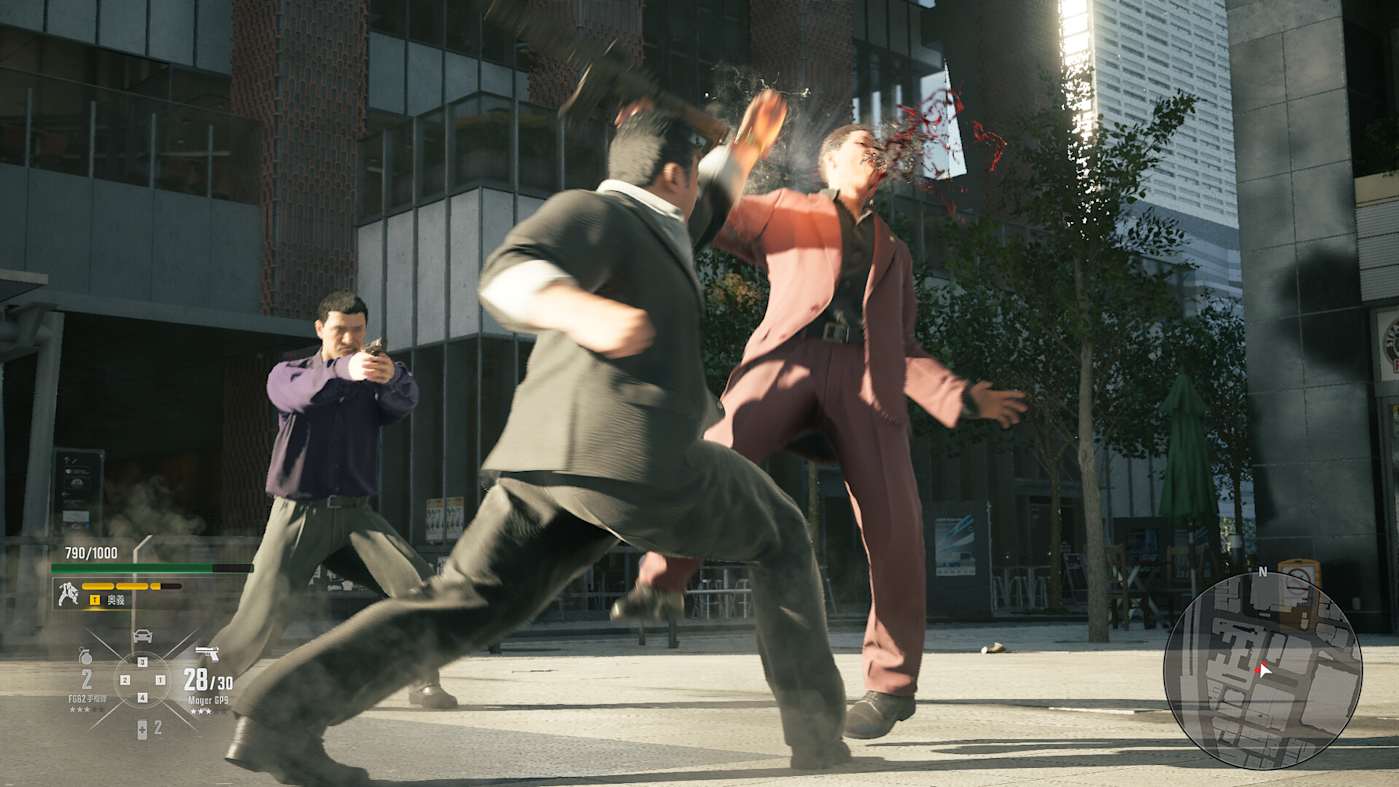
The hype for Gang of Dragon, the debut game from Nagoshi Studio, may already be getting derailed. According to a Bloomberg report, Chinese tech giant NetEase is going to stop financing Nagoshi Studio starting in May. Bloomberg confirmed the news with the studio's employees and a NetEase spokesperson.
The report explained that NetEase decided to cut funding to Nagoshi Studio, which was founded in 2021 by Yakuza franchise creator Toshihiro Nagoshi, after finding out the studio needed $44.4 million to complete the project. Bloomberg reported that Nagoshi Studio is trying to find new sponsors but hasn't had any success so far. The report also added that the studio can continue the project on its own, but would be responsible for paying NetEase for any associated costs to hold onto the brand or assets.
While Nagoshi Studio may have been working on Gang of Dragon since the studio's creation, the general public got a better look at the title through a trailer announcement during The Game Awards 2025. The action-adventure game set in Tokyo would star Ma Dong-Seok, a South Korean actor who starred in Train to Busan and Marvel's Eternals. As of now, Nagoshi Studio might be at risk of joining other casualties stemming from NetEase's executive decisions, like when the tech giant decided to shut down Ouka Studio in 2024.
This article originally appeared on Engadget at https://www.engadget.com/gaming/netease-is-reportedly-pulling-funding-for-yakuza-creators-studio-182945690.html?src=rss
Roblox has launched a feature powered by AI that can rephrase inappropriate language in real time. The online game has been using AI filters to block out any language that goes against its policy for a while now, but it has been replacing censored chats with a series of hash signs (####). Roblox admits that encountering too many hashmarks can be disruptive and make conversations hard to follow. This new feature will instead replace words and phrases with what the AI deems as more appropriate substitutes.
Rajiv Bhatia, Roblox’s Chief Safety Office, said the game is starting with profanity. For instance, if a user sends “Hurry TF up” in chat, the system will replace it with “Hurry up!” Everyone in the chat will see a note when a message has been rephrased, and the sender will see what language was edited out. A user who keeps cursing in chat will still be penalized for breaking Roblox policy even if the AI rephrases their messages. “As these systems scale, they create a flywheel for civility, where real-time feedback helps users learn and adopt our Community Standards,” Bhatia said in a blog post.
Rephrasing has been rolled out to chats between age-checked users in similar age groups and in all the languages the game’s translation tool supports. Roblox introduced a mandatory age verification system back in January after reports came out that it has a “pedophile problem,” with adult players allegedly using the game to groom children. Kids under 13 can no longer use in-game chat outside of certain experiences, while everyone else can chat with players around their age. Age check, however, hasn’t stopped authorities from suing Roblox: LA County, in a lawsuit filed in February, said Roblox knows its platform “makes children easy prey for pedophiles.” Louisiana’s AG has also just filed a lawsuit, saying Roblox “created a public park and filled it with sex predators that are preying on… children.”
This article originally appeared on Engadget at https://www.engadget.com/gaming/roblox-introduces-real-time-ai-powered-chat-rephraser-for-inappropriate-language-160000063.html?src=rss
Welcome to our latest roundup of what's going on in the indie game space. We've got a lot of new and upcoming games to highlight this week, and those are on top of all of our coverage of the Nintendo Indie World stream the other day. Nintendo packed a lot of news into that 18-minute stream, including the sudden arrivals of three great games — Blue Prince, Minishoot' Adventures and Öoo — on Switch and/or Switch 2.
The company revealed release dates for a bunch of games we've had on our radar, such as InKonbini: One Store. Many Stories (April 30), Mixtape (May 7), Denshattack! (June 17) and Ratatan (July 16). Release windows for several games were confirmed as well, including Toem 2 and Grave Seasons, both of which will be out this summer.
Meanwhile, if you have a Playdate (or have been meaning to get one), be sure to check out the third anniversary sale on the Playdate Catalog storefront this weekend. There are lots of good deals and we've got some suggestions for you.
Elsewhere, speedrunners will be showing off their skills in AAA games, indies and everything in between during the Frost Fatales event from Games Done Quick. From March 8-14, you can watch women and femme speedrunners tear through the likes of Undertale, Strange Antiquities, An Airport for Aliens Currently Run by Dogs, Tunic, Hollow Knight and Windswept. It's a charity event that will be raising funds for the National Women's Law Center.
On that note, there’s a Women's Day sale on Steam that’s running until March 15. There are discounts on tons of games from women and gender marginalized-led teams as well as demos for upcoming titles. Among the games on sale are Dredge (60 percent off), Overcooked 2 (75 percent off), The Wandering Village (50 percent off), Dogpile (35 percent off) and Consume Me (35 percent off).
New releases
Slay the Spire has helped to popularize the roguelite deckbuilder genre since its early access debut in 2017. Mega Crit is back for another bite at the cherry with Slay the Spire 2, which hit Steam in early access this week for $25. The studio says the price will increase after early access.
The studio expects the sequel to remain in early access for between one and two years, though it won't release the full version until the game "feels great." During the early access period, Mega Crit is going to try some experimental features and "exotic designs," while pinpointing niche issues and getting feedback from players to "make sure the game is headed in the right direction."
Perhaps the biggest change in the sequel is the addition of a co-op mode for up to four players. There are new cards (including multiplayer-specific ones), characters and enemies in the mix as well, of course.
Demons have descended on Toronto and his Sex Bom-omb bandmates have been kidnapped, so it's up to Scott Pilgrim and his allies to save the day. Scott Pilgrim EX is the franchise's latest side-scrolling fighter, following on from Scott Pilgrim vs the World: The Game.
This entry is from Tribute Games, which has a pretty great recent track record when it comes to co-op beat-'em-ups after Marvel Cosmic Invasionand Teenage Mutant Ninja Turtles: Shredder’s Revenge. This time around, the studio teamed up with Scott Pilgrim creator Bryan Lee O’Malley to develop a new storyline.
I haven't had time to jump into Scott Pilgrim EX yet, unfortunately, but I'm really looking forward to doing that soon. When I do, I'll be instalocking Roxie Richter as my character. Gonna listen to “Black Sheep” a bunch in the meantime.
Planet of Lana II: Children of the Leaf is at the top of my to-play list this weekend. I adored the first entry from Wishfully and Thunderful Publishing a few years ago, and I've heard that the sequel is even better.
This is a narrative-driven adventure platformer in the vein of Limbo and Inside. As in the first game, you'll be evading dangerous robots after the antagonist weaponizes technology to exploit the resources of Lana's home planet. I'm sure that doesn't have any parallels with our reality.
Planet of Lana II looks just as gorgeous as the first game. Lana is said to be more agile this time and is capable of moves like wall jumps. Her companion, Mui, remains available to help her solve puzzles and survive this dangerous world.
Planet of Lana II is out now on Steam, Switch, Switch 2, PS4, PS5, Xbox One and Xbox Series X/S for $20. The Steam, Switch and Switch 2 versions have a 10 percent launch discount. You can get that same discount on PlayStation if you're a PS Plus member. The game is also available on Game Pass Ultimate and PC Game Pass.
The Legend of Khiimori hit Steam and Epic Games Store in early access this week for $30. It's an open-world adventure game in which you take on the role of a courier rider in 13th-century Mongolia. You can breed and train horses with special abilities to help you explore this landscape and carry out deliveries.
You'll need to set up camp and craft critical items on your journeys, and you'll need to be on the defensive against dangerous wildlife. There are also evil spirits to fend off in order to liberate corrupted zones.
There's a lot going on here and, evidently, a lot more to come. Developer Aesir Interactive plans to add a string of features during the early access phase (which is expected to last for around a year), including racing, falconry, a "peaceful mode" and character and horse customization.
Lost and Found Co. is a lovely-looking hidden object game from Bit Egg and co-publisher Gamirror Games. It's on Steam for PC and Mac for $18, though there's a 10 percent discount until March 19.
I love this trailer for Lost and Found Co. It's full of charming animations and neat details, like a comic book-style series of panels that helps tell the story. You play as Ducky, a duck who has turned into a human intern at a startup that helps people get their lost items back. That sentence alone has me smiling.
In the wake of Blippo+, another game that debuted on the Playdate has now landed on PC (Steam and Itch), Mac (via Steam and the Mac App Store) and Nintendo Switch. Ratcheteer DX typically costs $13, but there's a 25 percent launch discount on all storefronts except the App Store.
The original version of Ratcheteer made its bow in Playdate season one, meaning that every owner of the little yellow console has access to it. You play as a young mechanic who — like the rest of humanity — lives underground to stay safe from an eternal winter. However, after the power plant and water treatment plant go out of commission, it's up to you to fix them. That kickstarts a top-down pixel-art adventure in the vein of the early Legend of Zelda games that should take you about four to five hours to finish.
This updated game from Shaun Inman, composer Matt Grimm and illustrator Charlie Davis is available in color — with filters that include the 1-bit Playdate look — and it has a CD-quality version of the soundtrack. It's the first game that publisher (and Playdate maker) Panic has made in house that's landed on Steam and consoles. I've only played a little of Ratcheteer DX so far but it seems just as delightful as the original version, so I'm eager to keep going with it.
On another day, I might have wrapped up this section with a feel-good game like Lost and Found Co. Not this time. Instead, here's a bird-spotting psychological horror walking sim.
The one-minute launch trailer for Birds Watching, from Studio Ortica, is about one-60th as long as the game's runtime. It's full of creepy details, like a giant bird with humanoid legs. The tone is unnerving, but it absolutely caught my attention.
Birds Watching is out now on Steam for $5. You can get it for 10 percent off until March 13.
Upcoming
This trailer for My Little Puppy (which premiered during the Indie World showcase) captured my whole damn heart. Korean developer Dreamotion created the game by "adding dreams and hopes to the story I shared with Bong-gu, a dog who I adopted and raised," the studio's Junyoung Lee said. After crossing the rainbow bridge, the game's version of Bong-gu eventually picks up the scent of his dad and sets out on an adventure to rescue his human. I'm crying in the club at my desk.
My Little Puppy is coming to Switch on May 29. It's already available on Steam for $25.
Lunacy Studios is a studio that boasts developers with experience on the likes of Star Wars: Battlefront, Mass Effect, Assassin’s Creed Brotherhood and Life is Strange. Its first game is The House of Hikmah, which is coming to Steam on April 8.
This is a story-driven 3D adventure game that takes place in a setting inspired by the Islamic Golden Age. You take on the role of Maya, a 14-year-old who is looking for answers after her father passes away. He left Maya with an elemental heirloom that she can use to solve puzzles and she can use wind channels to help her traverse the environments.
I can't speak to how authentic its representation of the Islamic Golden Age is, but the setup and art direction of this game have me intrigued. It certainly doesn't hurt that Austin Wintory (Journey, Sword of the Sea, The Pathless) composed the music.
I got completely hooked on Ball x Pitand I'm looking forward to trying out MLB The Show 26. So, I really think there should be more ball-based games. And, look at that, here's a first peek at Ballgame from new studio Human Computer.
In this physics platformer, you play as a sentient ball. As is the case in golf, the idea is to get to the hole in as few shots as possible. Also like in golf, that's harder than it might seem at first. The levels pull in elements from a range of inspirations, including pachinko, pinball, skeeball and many other types of ball games. Among other things, you'll skim across water, bounce off of bumpers and float in bubbles.
There are arcade minigames where you can earn a type of currency that you can use to unlock upgrades, custom looks and dozens of other balls. It all seems quite chaotic at first glance. I live for chaos. I'm in.
To wrap things up for this week, here's a nifty teaser trailer for Echobreaker, a precision platformer with an isometric perspective. The aim is to reach the goal as quickly as possible. You'll use powerups to help you do that. You'll also need to battle enemies along the way.
I had no trouble following what was happening at any given moment in this short clip. I think the perspective here makes things interesting. There have been a bunch of high-octane first-person platformers in recent years. I think that being able to see the action from above helps make it clearer to me what's going on here. The clean, futuristic art style helps too.
Echobreaker, which is from Upstream Arcade and publisher Weekend Games, is slated to hit Steam later this year.
This article originally appeared on Engadget at https://www.engadget.com/gaming/slay-the-spire-2-scott-pilgrim-ex-and-other-new-indie-games-worth-checking-out-120000884.html?src=rss
Netflix's library of streamable party games is expanding today with a custom version of Overcooked! All You Can Eat. Netflix launched its cloud gaming program with games like Lego Party and Tetris Time Warp, but Overcooked feels a bit unique because it features a roster of Netflix-affiliated characters from KPop Demon Hunters and Stranger Things.
For the uninitiated, Overcooked plays like a more manic version of Diner Dash, where teams attempt to prepare food together in increasingly elaborate kitchens filled with obstacles. The original version of Overcooked! All You Can Eat was released in 2020, and includes DLC and stages from previous versions of the game. Netflix's version bundles in the same content, and "10 Netflix celebrity chefs" including "Dustin, Eleven, Lucas, and the Demogorgon from Stranger Things," and "half-dozen faces from KPop Demon Hunters," like "Mira, Rumi, Zoey, Jinu, Derpy and Sussie." Like Netflix's other streaming games, playing Overcooked also requires you to use a connected smartphone as a controller.
This article originally appeared on Engadget at https://www.engadget.com/gaming/netflixs-version-of-overcooked-lets-you-play-as-huntrx-212515187.html?src=rss
Jurors in a New Mexico child safety trial heard testimony from Meta CEO Mark Zuckerberg today. During pre-recorded testimony, Zuckerberg was repeatedly asked about the company's understanding of social media addiction and other issues that had been studied by its researchers.
During the deposition, which was recorded last March, Zuckerberg was asked about numerous findings from researchers at Meta who studied how the company's apps affect users and teens. The CEO downplayed the significance of many of these documents.
Early in the testimony, which was viewed by Engadget on Courtroom View Network, Zuckerberg was questioned about a document on the effect of feedback on Facebook users. The document stated that "contributors on Facebook are likely to learn to associate the act of posting with feedback" which will "lead contributors to seek rewards by visiting the site more often.” Zuckerberg said he wasn’t “sure if that's actually how it works in practice, but I agree that you're summarizing what they appear to be saying.”
Later, the CEO was questioned about a document that graphed the proportion of 11 and 12-year-olds who were monthly active users on Instagram. The chart indicated that at the time, around 20 percent of 11-year-olds were monthly users of the service. "I agree that the graph says that, I am not familiar with what methodology we were using to estimate this," Zuckerberg said. "I assume that if we had direct knowledge that any given person was under the age of 13, that we would have them removed from our services."
New Mexico's attorney general sued the company in 2023 for alleged lapses in child safety, including facilitating predators' access to minors and building features it knew were addictive. In court, Meta's lawyers and executives have disputed the idea that social media should be considered an "addiction." In public statements, the company has said that lawsuits have relied on "cherry-picked quotes and snippets of conversations taken out of context" and that it "has consistently put teen safety ahead of growth for over a decade."
As with his recent testimony in a separate trial over social media addiction in Los Angeles, Zuckerberg repeatedly rejected the "characterization" of questions that were posed to him. And he said that Meta's goal was to make its apps "useful" rather than to increase the amount of time people spend with them.
Zuckerberg was also questioned about a document written by a company researcher that stated "there is increasing scientific evidence, particularly in the US, … that the average net effect of Facebook on people's well being is slightly negative." The CEO said that "my understanding is that the general consensus view is not that."
It's not the first time a Meta executive has tried to downplay the significance of internal research. The company used a similar strategy in 2021 after former employee turned whistleblower Frances Haugen disclosed documents showing that Facebook's researchers had found that Instagram made some teen girls feel worse about themselves.
Zuckerberg's testimony was played one day after jurors heard recorded testimony from Instagram chief Adam Mosseri. The exec was also asked about Haugen's disclosures and Meta's response to them. Some of those disclosures were based on "problematic research," he said. "Most research is surveys. We run hundreds of surveys every month."
This article originally appeared on Engadget at https://www.engadget.com/social-media/mark-zuckerberg-downplays-metas-own-research-in-new-mexico-child-safety-trial-222924340.html?src=rss
The official title is Assassin's Creed: Black Flag Resynced, and that's about all we know for sure. The company released some concept art but it's just protagonist Edward Kenway hanging out on a boat.
We don't know when Ubisoft will release this thing into the world, but the company did recently say that a previously unannounced game would be released by the end of the coming financial year, which happens on March 31, 2027. At that time, Black Flag Resynced had yet to be officially announced. It's possible we could be playing this thing sooner rather than later, particularly if the company has been working on it for years.
This announcement came as part of a franchise roadmap, which included a slight mention of the next mainline Assassin's Creed entry. This is being developed under the name Codename Hexe, with Ubisoft promising a "unique, darker, narrative-driven Assassin's Creed experience set during a pivotal moment in history."
The creative director of that one, Clint Hocking, recently left the company after a 20-year tenure. He's been replaced by Jean Guedson, who had the same job for the original Black Flag 13 years ago.
This article originally appeared on Engadget at https://www.engadget.com/gaming/ubisoft-confirms-assassins-creed-black-flag-remake-193629862.html?src=rss
Humble Games' library has returned home, so to speak. Indie publisher Good Games Group (GGG), led by former Humble leaders, has acquired the full back catalog of over 50 Humble Games titles from Ziff Davis. Alongside the purchase, GGG has rebranded to Balor Games, positioning itself as a force in "triple-I" gaming.
"For the developers we have worked with over the years, this moment is a reunion," Balor Games CEO Alan Patmore wrote in a statement. "[It has] the same leadership and the same commitment to thoughtful publishing remain in place. What changes is our scale and our focus. Balor Games is built for inventors and backed by believers. To that end, it exists to be a seal of quality for independent games."
The Humble Games lineup includes (among others) Slay the Spire, A Hat in Time, SIGNALIS, Forager, Coral Island, Monaco and Wizard of Legend. Separate from the Humble transaction, Balor also bought the complete catalog of Firestoke Games (which shut down last August) and publishing rights to Fights in Tight Spaces. In total, the young studio now owns the publishing rights to over 60 indie titles.
Humble Games is separate from the Humble Bundle storefront. The latter is still owned by Ziff Davis.
Alan Patmore (l) and Mark Nash
Balor Games
The seemingly happy ending comes after quite the rocky road. In July 2024, Ziff Davis laid off all 36 employees of Humble Games. But later that year, Humble Games' former leaders (Patmore and Mark Nash) formed GGG and cut a deal to help manage their old studio's back catalog. Now, with Ziff Davis in a selling mood, that library is back in Patmore and Nash's hands. Balor Games, it is.
The pair view the newly anointed Balor as a developer-friendly publishing house. As for its name, Balor is a supernatural being in Irish mythology. It's sometimes depicted as having three eyes. Triple-eye, triple-I… Clever devils!
The triple-I moniker is a more recent addition to the gaming lexicon. It typically means something defined by indie creativity and passion — with a budget far less than AAA but more than a tiny two-person passion project. (Balor says it's about "high-quality, impactful games.") You wouldn't be blamed for wondering how that's different from AA. But the slant here is to define the genre less by budget and more by "indie" intangibles.
Nash detailed the company's vision in an interview with GamesIndustry.biz (which, curiously, is a Ziff Davis property). "We felt that what's becoming more and more critical is that as game development becomes more diverse, more complicated, and expectations continue to rise, we feel it's important that a publisher can match the needs of each individual project," Nash said. "We are spending a considerable amount of time with anyone we are partnering with, figuring out what they need specifically."
This article originally appeared on Engadget at https://www.engadget.com/gaming/humble-games-former-bosses-buy-the-studios-back-catalog-183831194.html?src=rss

 Anmelden