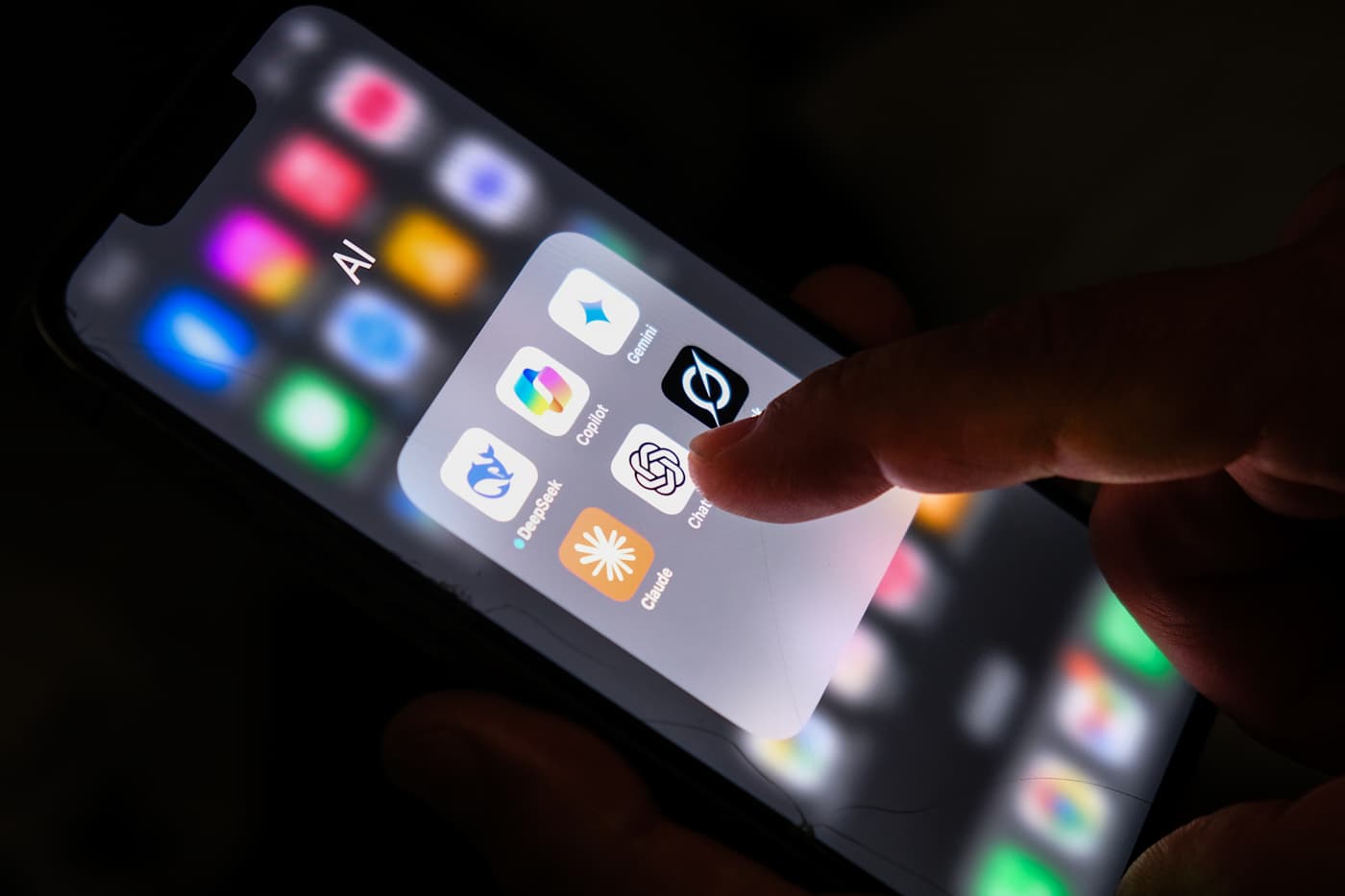
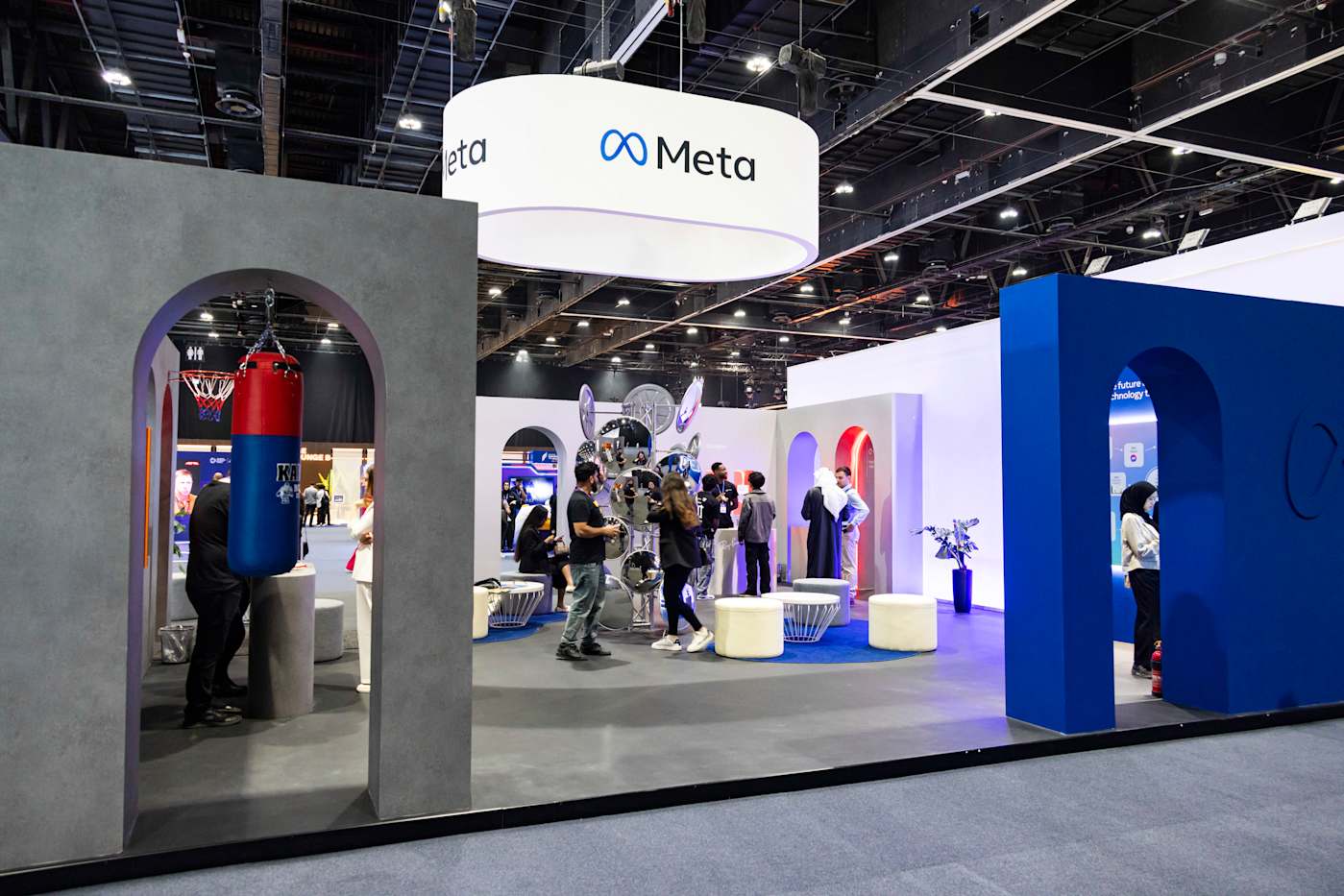
Meta has started rolling out an experimental AI shopping tool to some users in the US, according to Bloomberg. At the moment, it’s reportedly only showing up on desktop browsers when select users visit Meta AI on the web. They’ll know if they have access to the feature if they see the “Shopping research” button inside the query text box. The company has confirmed that it was testing the feature, Bloomberg said, but it didn’t say when a wider release will happen.
When users ask for product suggestions, the chatbot will show them a carousel with product images and their pricing, along with a link to the e-commerce website and information about the brand. Meta AI will also include a short explanation why it recommended the item. If Meta AI can see a user’s information, such as their gender and location data, it can tailor responses for them. Bloomberg said it replied with a selection of women’s puffer jackets from shops that ship to New York, based on the tester’s profile. Users cannot check out from within the Meta AI interface, but they can click on the links it provides to shop online.
Mark Zuckerberg previously told investors that Meta is launching agentic shopping tools during an earnings call earlier this year. It doesn’t come as a surprise that the company is working on them, when rival AI companies already offer the same tools. OpenAI rolled out a dedicated shopping assistant for ChatGPT just before Black Friday last year, shortly after Google launched its own shopping tools for Gemini. Perplexity also released an AI shopping assistant at the same time.
This article originally appeared on Engadget at https://www.engadget.com/ai/meta-starts-testing-its-ai-shopping-assistant-120148124.html?src=rss
OpenAI’s Sam Altman said the company will amend its deal with the Defense Department (or the Department of War) to explicitly prohibit the use of its AI system on mass surveillance against Americans. Altman has published an internal memo previously sent to employees on X, telling them that the company will tweak the agreement to add language to make that point especially clear. Specifically, it says:
“Consistent with applicable laws, including the Fourth Amendment to the United States Constitution, National Security Act of 1947, FISA Act of 1978, the AI system shall not be intentionally used for domestic surveillance of U.S. persons and nationals.
For the avoidance of doubt, the Department understands this limitation to prohibit deliberate tracking, surveillance, or monitoring of U.S. persons or nationals, including through the procurement or use of commercially acquired personal or identifiable information.”
Altman has also claimed in the memo that the agency affirmed that its services will not be used by its intelligence agencies, including the NSA, without a modification to their contract. He added that if he received what he believed was an unconstitutional order, he would rather go to jail than follow it.
In addition, the OpenAI CEO has admitted in the memo that the company shouldn’t have rushed to get the deal out on Friday, February 27, since the issues were “super complex and demand clear communication.” Altman explained that the company was “trying to de-escalate things and avoid a much worse outcome” but it “looked opportunistic” in the end. If you’ll recall, OpenAI announced the partnership shortly after President Trump ordered all US government agencies to stop using Claude and any other Anthropic services. To note, Anthropic started working with the US government in 2024.
The Defense Department and Secretary Pete Hegseth had been pressuring Anthropic with to remove its AI’s guardrails so that it can be used for all “lawful” purposes. Those include mass surveillance and the development of fully autonomous weapons. Anthropic refused to bow down to Hegseth’s demands and in a statement said that “no amount of intimidation or punishment” will change its “position on mass domestic surveillance or fully autonomous weapons.” Trump issued the order as a result. The Defense Department had also taken the first steps to designate Anthropic as a “supply chain risk,” which is typically reserved for Chinese companies believed to be working with their country’s government.
Altman said that in his conversations with US officials, he reiterated that Anthropic shouldn’t be designated as a supply chain risk and that he hoped the Defense Department would offer it the same deal OpenAI agreed to. In an AMA session on X over the weekend, Altman clarified that he didn’t know the details of Anthropic’s agreement and how it differed from the one OpenAI signed. But if it had been the same, he thought Anthropic should have agreed to it.
After the news broke out about OpenAI’s deal, Anthropic climbed its way to the number one spot of the App Store's Top Free Apps leaderboard, beating out both ChatGPT and Google Gemini. Anthropic, capitalizing on Claude’s sudden popularity, launched a memory import tool to make switching to its chatbot from another company’s easier. Meanwhile, uninstalls for ChatGPT’s jumped by 295 percent day-over-day, according to Sensor Tower.
Here is re-post of an internal post:
We have been working with the DoW to make some additions in our agreement to make our principles very clear.
1. We are going to amend our deal to add this language, in addition to everything else:
This article originally appeared on Engadget at https://www.engadget.com/ai/openai-will-amend-defense-department-deal-to-prevent-mass-surveillance-in-the-us-050637400.html?src=rss
Lenovo has given the Yoga 9i 2-in-1 Aura Edition a refresh for 2026 and launched the new device at this year’s Mobile World Congress. The convertible laptop comes with a new Canvas Mode when the Yoga Pen Gen 2 case it’s bundled with is attached to the A-cover. When you lay the device down on a flat surface with the case attached, you’ll get a slight elevation on the display, which may make it easier to sketch or draw.
The Copilot+ laptop is powered by Intel Core Ultra Series 3 processors with integrated graphics, has up to 32GB in memory and runs Windows 11. Its 14-inch screen has a resolution of 2,880 x 1,800 pixels, has a variable refresh rate of 120 Hz and supports multi-touch. In addition to the new Canvas Mode, the device also supports Tablet, Tent, Stand and traditional Laptop Modes like its predecessors do. The Yoga 9i 2-in-1 Aura Edition Gen 11 will be available in May, with prices starting at $1,949.
Lenovo has also launched the new Yoga Pro 7a at MWC 2026. This Copilot+ laptop is powered by AMD Ryzen AI Max+ Series processors and comes with up to 128GB of RAM, so it can be used for heavy AI tasks. It has a 15.3-inch 2.5K PureSight Pro OLED display and is equipped with a big Force Pad trackpad that doubles as a drawing tablet. You can get the device starting in August this year for at least $2,099.
For a more affordable option, there’s the new IdeaPad Slim 5i Ultra laptop, which also has Copilot+ features. It’s powered by Intel Core Ultra processors and comes with either a WUXGA OLED or a WQXGA IPS LCD 14-inch display that has a VRR of 120 Hz. The device was designed for portability, with its thinnest part measuring just 11.9 mm in depth, and weighs 2.5 lbs. It will be available starting in October for at least $799.
Another affordable option is the new Idea Tab Pro Gen 2, which is specifically targeted towards students. It’s powered by theSnapdragon 8s Gen 4 Mobile Platform and has a 13-inch 3.5K display. The Tab Pro Gen 2 is Lenovo’s first tablet to ship with its Qira AI assistant and the company’s AI tools. It will be sold with a Lenovo Tab Pen Plus included for $419 starting in July.
This article originally appeared on Engadget at https://www.engadget.com/computing/laptops/lenovo-unveils-the-2026-refresh-of-its-yoga-9i-2-in-1-convertible-laptop-at-mwc-230100644.html?src=rss
OpenAI has reached an agreement with the Defense Department to deploy its models in the agency’s network, company chief Sam Altman has revealed on X. In his post, he said two of OpenAI’s most important safety principles are “prohibitions on domestic mass surveillance and human responsibility for the use of force, including for autonomous weapon systems.” Altman claimed the company put those principles in its agreement with the agency, which he called by the government’s preferred name of Department of War (DoW), and that it had agreed to honor them.
The agency has closed the deal with OpenAI, shortly after President Donald Trump ordered all government agencies to stop using Claude and any other Anthropic services. If you’ll recall, US Defense Secretary Pete Hegseth previously threatened to label Anthropic “supply chain risk” if it continues refusing to remove the guardrails on its AI, which are preventing the technology to be used for mass surveillance against Americans and in fully autonomous weapons.
It’s unclear why the government agreed to team up with OpenAI if its models also have the same guardrails, but Altman said it’s asking the government to offer the same terms to all the AI companies it works with. Jeremy Lewin, the Senior Official Under Secretary for Foreign Assistance, Humanitarian Affairs, and Religious Freedom, said on X that DoW “references certain existing legal authorities and includes certain mutually agreed upon safety mechanisms” in its contracts. Both OpenAI and xAI, which had also previously signed a deal to deploy Grok in the DoW’s classified systems, agreed to those terms. He said it was the same “compromise that Anthropic was offered, and rejected.”
Anthropic, which started working with the US government in 2024, refused to bow down to Hegseth. In its latest statement, published just hours before Altman announced OpenAI’s agreement, it repeated its stance. “No amount of intimidation or punishment from the Department of War will change our position on mass domestic surveillance or fully autonomous weapons,” Anthropic wrote. “We will challenge any supply chain risk designation in court.”
Altman added in his post on X that OpenAI will build technical safeguards to ensure the company’s models behave as they should, claiming that’s also what the DoW wanted. It’s sending engineers to work with the agency to “ensure [its models’] safety,” and it will only deploy on cloud networks. As The New York Timesnotes, OpenAI is not yet on Amazon cloud, which the government uses. But that could change soon, as company has also just announced forming a partnership with Amazon to run its models on Amazon Web Services (AWS) for enterprise customers.
Tonight, we reached an agreement with the Department of War to deploy our models in their classified network.
In all of our interactions, the DoW displayed a deep respect for safety and a desire to partner to achieve the best possible outcome.
This article originally appeared on Engadget at https://www.engadget.com/ai/openai-strikes-a-deal-with-the-defense-department-to-deploy-its-ai-models-054441785.html?src=rss
OpenAI has vowed to strengthen its safety protocols and to notify law enforcement of credible threats sooner in a letter addressed to Canadian authorities, according to Politico andThe Washington Post. If you’ll recall, Canadian politicians summoned the company’s leaders after reports came out that it didn’t notify authorities when it banned the account owned by the Tumbler Ridge, British Columbia mass shooting suspect back in 2025. Some of OpenAI’s leaders have already met with Candian officials, and British Columbia Premier David Eby said Sam Altman had also agreed to meet with him.
While OpenAI has yet to announce changes to its rules, Ann O’Leary, its vice president of global policy, reportedly wrote in the letter that the company will tweak its detection systems so that they can better prevent banned users from coming back to the platform. Apparently, after OpenAI banned the shooter’s original account due to “potential warnings of committing real-world violence,” the perpetrator was able to create another account. The company only discovered the second account after the shooter’s name was released, and it has since notified authorities.
Further, OpenAI will now notify authorities if it detects “imminent and credible” threats in ChatGPT conversations, even if the user doesn’t reveal “a target, means, and timing of planned violence.” O’Leary explained that if the new rules had been in effect when the shooter’s account was banned in 2025, the company would have notified the police. OpenAI will also establish a point of contact for Canadian law enforcement so it can quickly share information with authorities when needed.
The Canadian government sees OpenAI’s decision not to report the shooter’s original account as a failure. It threatened to regulate AI chatbots in the country if their creators cannot show that they have proper safeguards to protect its users. It’s unclear at the moment if OpenAI also plans to roll out the same changes in the US and elsewhere in the world.
This article originally appeared on Engadget at https://www.engadget.com/ai/openai-will-notify-authorities-of-credible-threats-after-canada-mass-shooters-second-account-was-discovered-112706548.html?src=rss
Google has launched its new image generation model, the Nano Banana 2, which is powered by Gemini 3.1 Flash Image. The company says the new model has the capabilities, world knowledge and reasoning of Nano Banana Pro, but it can accomplish tasks at “lightning-fast speed.” That enables rapid editing and the quick creation of various iterations using a single prompt.
Nano Banana 2 will give more people access to capabilities that were previously exclusive to the Pro model. That includes Pro’s ability to pull real-time information and images from web searches to create, say, infographics and diagrams. It will also be able to generate texts on images for marketing materials and greeting cards.
Google says Nano Banana 2 can maintain character resemblance for up to five characters in a single workflow, which could be especially valuable if you’re using it to create storyboards or visual stories. It can follow precise instructions for complex requests, as well, and can generate input with up to 4K in resolution with richer textures and sharper details than its predecessors could.
Nano Banana Pro could already generate images so realistic, it’s almost impossible to tell that they were AI-generated. Google even had to limit its use due to high demand. Whether Nano Banana 2 can generate images that are markedly better than what Pro could create — and whether we could still tell if an image was made by AI — remains to be seen. The new model will replace Nano Banana Pro in the Gemini app, but Google AI Pro and Ultra subscribers will retain access to Nano Banana Pro for specialized tasks. It will also be the default model in Search for AI Mode and Lens, as well as in Google’s Flow AI creative studio.
This article originally appeared on Engadget at https://www.engadget.com/ai/googles-nano-banana-2-is-a-faster-version-of-nano-banana-pro-160000695.html?src=rss
New York Attorney General Letitia James has accused Valve of promoting illegal gambling through its video games in a lawsuit filed by her office. According to the AG’s announcement, her office conducted an investigation and had concluded that Valve enabled gambling by enticing users to pay for a chance at rare items from loot boxes in Counter-Strike 2, Team Fortress 2and Dota 2. In the lawsuit, the New York AG stressed that Valve’s loot boxes are “particularly pernicious,” because the games are popular among children and teenagers.
The lawsuit described the loot box model, which requires a player to open a mystery chest for the possibility of winning rare items, as “quintessential gambling.” It argued that people introduced to gambling at an early age are at a significantly higher risk of developing gambling addictions later on, based on research. In addition, it explained that gambling is mostly illegal in New York.
Players have to pay for chests or boxes and the keys to be able to open them in Valve’s games, and the company has reportedly sold billions of dollars’ worth of keys for Counter-Strike alone. The lawsuit said that Valve has made tens of millions of dollars in fees from the sale of virtual items on the Steam Community Market, as well. In addition to being able to sell items on Steam for funds directly credited to their Steam Wallet, players can also sell on third-party marketplaces for cash.
According to James’ office, Valve facilitates and even assists third-party marketplaces in their operations, based on its investigation. Engadget has asked Valve for a statement about the lawsuit, but we have yet to hear back. However, the company previously denied being involved with third-party marketplaces that allow the sales of its game items for real-world money. In a response to an inquiry by the Danish Gambling Authority, Valve explained that those third-party websites create sock puppet accounts to sell and receive items on Steam in exchange for cash. “[T]his behavior is in violation of our terms of service,” Valve said.
The lawsuit also pointed out that there’s a huge market for Counter-Strike skins and referenced a Bloomberg article from 2025, which reported that the market for those skins had already surpassed $4.3 billion. As an example of in-game items sold for real money, it cited the sale of a Counter-Strike 2 AK-47 skin in 2024 for $1 million. The Attorney General’s Office wants the court to stop Valve from violating New York laws, to give up money it allegedly earned from illegal activities and to pay a fine three times what it allegedly earned from illegal business practices.
The most expensive skin in Counterstrike history was publicly sold this morning, a StatTrak Factory New AK-47 Blue Gem pattern 661
This article originally appeared on Engadget at https://www.engadget.com/gaming/ny-ag-valves-loot-boxes-can-get-kids-hooked-on-gambling-122503556.html?src=rss
Spotify is rolling out a new feature that’s meant to make transitions in between tracks even smoother. If you’ll recall, the streaming service released the ability to create customized transitions within playlists in August last year. It gave people a way to create uninterrupted progressions and eliminate awkward silences between songs. Now, Premium users will be able to make sure the songs in their playlists flow seamlessly even further by reordering tracks based on their keys and BPM or beats per minute.
The new feature can rearrange playlists with one tap. All paying users have to do is tap Mix on one of their playlists and then tap the Edit button. From there, they can scroll down to find the Smart Reorder option. Tapping Smart Reorder will automatically rearrange songs according to their keys and BPM without users having to do anything else. They just have to click Save so that the change to their playlist takes effect.
Spotify says users have streamed over 220 hours of their mixed playlists since it introduced custom transitions last year. It also listed some of the most popular ones on the platform, including The Weeknd’s Wake Me Up transitioning into After Hours and Flo Rida’s Low into Rihann’s S&M.
This article originally appeared on Engadget at https://www.engadget.com/entertainment/music/spotify-can-reorder-your-playlists-by-bpm-and-key-140000101.html?src=rss
OpenAI has successfully convinced the court to dismiss the lawsuit filed by Elon Musk’s xAI, accusing the company of stealing its trade secrets. In her decision, US District Judge Rita F. Lin wrote that xAI’s complaint “does not point to any misconduct by OpenAI” and instead attributes all listed misconducts to its eight former employees who “ left for OpenAI at around the same time.”
Lin said that xAI accused two of its former employees of stealing its source code before leaving at a time when they were already speaking to an OpenAI recruiter. However, the company didn’t say if the recruiter told those former employees to do so. xAI’s lawsuit also accuses two other former employees of keeping their work chats on their devices even after leaving, another of refusing to provide certifications related to confidential information after his departure, and another of unsuccessfully trying to access xAI hiring and datacenter optimization information when he was already working for OpenAI.
“Notably absent are allegations about the conduct of OpenAI itself,” the judge noted. xAI didn’t include any information that directly accuses OpenAI of making those employees steal its trade secrets. It also didn’t include allegations that those former employees used any stolen trade secrets after they were already working for OpenAI. To be precise, OpenAI’s motion for dismissal was granted with leave to amend, so the lawsuit may not be completely over just yet. That means xAI can still file an amended complaint addressing what the judge wrote in her decision until March 17, 2026.
OpenAI and xAI have a longstanding feud, and this is just one of the several lawsuits between the two companies. In fact, Musk has an ongoing complaint against OpenAI and Microsoft, accusing the former of violating its nonprofit status. Musk, who was an early funder of OpenAI, is now asking the company for $79 billion to $134 billion in damages from “wrongful gains.”
This article originally appeared on Engadget at https://www.engadget.com/ai/xais-trade-secret-lawsuit-against-openai-has-been-dismissed-101912599.html?src=rss
You can get any of the Samsung Galaxy Book 6 models in the US, starting on March 11. In fact, you can make a reservation right now through Samsung’s website and its experience stores. The company launched the Book 6 series of laptops, namely the basic Book 6, the Book 6 Pro and the Book 6 Ultra, at CES earlier this year. They’re powered by Intel’s new Core Ultra Series 3 processors, which were also announced at CES and which promise great graphics and battery life.
All three models come in grey and with AI features, such as AI Select and Search that you can use to look for information using natural language. The basic Book 6 laptop will set you back at least $1,050, while the Book 6 Pro’s prices start at $1,600. The Book 6 Ultra will cost you at least $2,450. The Galaxy Book 6 Pro will be available in 14- and 16-inch versions and will come equipped with up to Core Ultra X7 processors and Intel Arc graphics. Meanwhile, you can equip the 16-inch Galaxy Book 6 Ultra with up to Core Ultra X9 processors. The most expensive Book 6 promises significant performance improvements, thanks to its new 5th-generation MPU, Intel Arc graphics and NVIDIA’s RTX 50 series GPUs.
The Book 6 Ultra and the 16-inch Pro have slimmer profiles than their predecessors, though the former has a more traditional laptop shape and the latter looks more like the MacBook Air. It’s worth noting that Samsung redesigned the Ultra’s components across a larger surface area so that it can distribute heat more evenly. Both the Book 6 Pro and Ultra can last for up to 30 hours of video playback, since they feature Samsung’s longest-lasting batteries yet. Both models also come with AMOLED 2X (2,880 x 1,800) displays with refresh rates going up to 120Hz.
This article originally appeared on Engadget at https://www.engadget.com/computing/laptops/samsung-galaxy-book-6-series-will-be-available-in-the-us-starting-on-march-11-125140613.html?src=rss
The US State Department is building a web portal, where Europeans and anyone else can see online content banned by their governments, according to Reuters. It was supposed to be launched at Munich Security Conference last month, but some state department officials reportedly voiced their concerns about the project. The portal will be hosted on freedom.gov, which currently just shows the image above. “Freedom is Coming,” the homepage reads. “Information is power. Reclaim your human right to free expression. Get Ready.”
Reuters says officials discussed making a virtual private network function available on the portal and making visitors’ traffic appear as if they were from the US, so they could see anything unavailable to them. While it’s a state department project, The Guardian has traced the domain to the Cybersecurity and Infrastructure Security Agency (CISA), which is a component of the US Department of Homeland Security. Homeland also serves as the administrator for the Immigration and Customs Enforcement (ICE).
The project could drive the wedge further between the US and its European allies. European authorities don’t usually order broad censorships preventing their citizens from being able to access large parts of the internet. Typically, they only order the blocking of hate speech, terrorist propaganda, disinformation and anything illegal under the EU’s Digital Services Act or the UK’s Online Safety Act.
“If the Trump administration is alleging that they’re gonna be bypassing content bans, what they’re gonna be helping users access in Europe is essentially hate speech, pornography, and child sexual abuse material,” Nina Jankowicz, who served as the executive director of Homeland Security’s Disinformation Governance Board, told The Guardian. The board was very short-lived and was disbanded a few months after it was formed, following complaints by Republican lawmakers that it would impinge on people’s rights to free speech.
When asked about the project, the state department said it didn’t have a program specifically meant to circumvent censorship in Europe. But the spokesperson said: “Digital freedom is a priority for the State Department, however, and that includes the proliferation of privacy and censorship-circumvention technologies like VPNs."
This article originally appeared on Engadget at https://www.engadget.com/big-tech/us-website-freedomgov-will-allow-europeans-to-view-hate-speech-and-other-blocked-content-130000014.html?src=rss
Bixby isn’t typically part of the conversation when it comes to virtual assistants for mobile devices, but Samsung is clearly hoping that you would use it more. The company has launched the latest version of Bixby with the new One UI 8.5 beta, and it has been tweaked to work as a “conversational agent.” Samsung says you’ll now be able to talk to it and give it tasks using natural language, like how you’d talk to other people or, these days, to chatbots.
You don’t have to remember exact commands or names for specific settings. You can just describe what you want to happen, such as “I don’t want the screen to time out while I’m still looking at it.” Bixby will then automatically turn on the “Keep Screen on While Viewing” setting. If you ask it a question, such as “Why is my phone screen always on when it’s inside my pocket,” it could provide several solutions you can choose from.
In addition, the assistant can now access new and up-to-date information on the web. You do searches without opening a browser, and Bixby will display web results right within its interface. At the moment, the updated Bixby is only available in Samsung’s home country of Korea, as well as in Germany, India, Poland, the UK and the US, but company will roll it out more widely in the future.
This article originally appeared on Engadget at https://www.engadget.com/mobile/smartphones/samsung-updates-bixby-to-become-more-conversational-112649179.html?src=rss
Meta is reportedly gearing up to enter another segment of the wearables market. According to The Information, the company is planning to release its first smartwatch sometime this year. Meta has revived its smartwatch initiative internally called “Malibu 2,” The Information says, which will come with Meta AI and health tracking.
The same publication reported back in 2021 that Meta was working on a smartwatch powered by an open-source version of Android. Over the next year, more details of its possible features emerged, including reports that it had a detachable camera and that Meta was developing a model with up to three cameras. But in 2022, the company was believed to have put the project on hold to focus on other wearable devices.
The Information says the decision to pause its smartwatch project was made as part of a broader cut in spending in the Reality Labs division. If you’ll recall, Meta laid off more than 1,000 employees from Reality Labs in January, because the division was hemorrhaging money. Mark Zuckerberg said during an earnings call after the layoffs started that when it comes to Reality Labs, the company was focusing most of its investment “towards glasses and wearables going forward.”
At the moment, Meta’s wearable products are comprised of virtual reality headsets and smartglasses. They include the Meta Ray-Bans, which are a hit in the US. Meta reportedly has four augmented reality and mixed-reality glasses in development, but it’ll take some time until we see them. Based on previous reports, it pushed back the unveiling of its next mixed reality headset model codenamed “Phoenix” to early 2027.
This article originally appeared on Engadget at https://www.engadget.com/wearables/meta-reportedly-plans-to-release-a-smartwatch-this-year-121247838.html?src=rss
Tesla has stopped using the term “Autopilot” to sell its cars in California, thereby avoiding a 30-day sales and manufacturing ban in the state. If you’ll recall, a California administrative law judge ruled in December that the automaker misled consumers by using the terms “Autopilot” and “Full Self-Driving.” The judge recommended the suspension, but the California DMV gave Tesla 60 days to remove any untrue and misleading language in its marketing materials. In its announcement, the DMV said Tesla has taken corrective action and has stopped using Autopilot for marketing. Prior to that, the automaker has already clarified that driver supervision is still needed with Full Self-Driving.
The judge was ruling on a complaint the DMV made back in 2022, wherein the agency accused Tesla of making and disseminating misleading statements. It argued that starting in May 2021, Tesla used deceptive marketing materials with the labels “Autopilot” and “Full Self-Driving Capability,” as well as claimed that the “system is designed to be able to conduct short and long-distance trips with no action required by the person in the driver’s seat.” In reality, the vehicles equipped with those features “could not at the time of those advertisements, and cannot now, operate as autonomous vehicles,” the DMV said.
A ban in California could have had a huge effect on the company, seeing as the state accounts for nearly a third of its sales in the country. Tesla also recently announced that it will stop the production of its Model S and X cars to turn its Fremont, California factory where they were being manufactured into a space for the production of its Optimus humanoid robots. Tesla has huge plans for Optimus and intends to start selling the robot to the public by the end of 2027.
This article originally appeared on Engadget at https://www.engadget.com/transportation/evs/tesla-stops-using-autopilot-to-promote-its-evs-in-california-112533060.html?src=rss
YouTube is experiencing an outage across the United States, with users in other countries like Canada, India, the Philippines, Australia and Russia also having problems with accessing the website. The issue seems to have started at around 8 PM Eastern time and reached 338,000 reports on Downdetector before starting to taper down. More users reported having issues accessing the app, but I personally lost access to the web homepage first.
As of 9:22 PM, users are still reporting being unable to access YouTube on Reddit. As of 9:33 PM, users are complaining that they still can’t access the service, though others say it’s back up for them. Some people are reporting partial restoration of service, with the homepage now being accessible but not seeing any recommended videos.
Downdetector also got thousands of reports of Google being down at around 8 PM Eastern time. As of 9:53 PM, Engadget Managing Editor Cherlynn Low reports that both YouTube and Google Home Assistant are still inaccessible for her. As of 10:12PM Eastern, Team YouTube posted on X that the issue has been completely fixed. While it didn’t say why YouTube went down, the team acknowledged the problem before 9PM and posted an update 20 minutes later that its recommendation system was having issues, even though its homepage was back.
Update, February 17, 2026, 10:27 PM ET: YouTube says the issue has been completely fixed.
Update, February 17, 2026, 10:08 PM ET: Updated with reports that certain Google services are also down for some users.
Update, February 17, 2026, 9:34 PM ET: Updated with reports from users.
Update, February 17, 2026, 9:26 PM ET: Updated to correct time of outage, added new countries where it’s out and added new reports of YouTube still being inaccessible.
This article originally appeared on Engadget at https://www.engadget.com/big-tech/youtube-was-down-for-thousands-of-users-in-the-us-020718788.html?src=rss
Don’t expect the Steam Deck to be easier to get anytime soon. Valve has posted a notice on the Steam Deck page with a warning that the handheld gaming console “may be out of stock intermittently” in certain regions “due to memory and storage shortages.” The company also reiterated that the more affordable Steam Deck LCD is no longer in production and will no longer be available once stocks run out. Valve started phasing out the LCD console back in December, which means the OLED handhelds are now the only choice for gamers who want to get a Steam Deck. The company’s notice comes after it completely ran out of Steam Deck units a few days ago.
RAM and storage shortages are plaguing tech manufacturers due to massive demand for those components from the artificial intelligence industry. AI companies have been snapping up available memory chips and hard drives for their rapid infrastructure buildouts, leaving everyone else short. In fact, we couldn’t find any deals for RAM last Black Friday, and Samsung global marketing leader Wonjin Lee warned at CES 2026 that memory price hikes are on the horizon.
Valve also had to delay the release of the Steam Machine and the Steam Frame VR headset due to industry-wide memory and storage shortages. It had intended to start shipping those devices in early 2026, but it admitted in its announcement that it has to rethink their launch date and pricing, insinuating that they could be priced higher than the company had planned,
This article originally appeared on Engadget at https://www.engadget.com/gaming/valve-admits-steam-deck-availability-is-affected-by-memory-and-storage-shortages-102913993.html?src=rss
The Crew-12 mission, SpaceX’s 20th human spaceflight, launched at 5:15 AM Eastern on February 13 from Cape Canaveral in Florida. It’s expected to dock with the International Space Station today, February 14, at 3:15 PM, and you can watch the event below as it happens. By the time the mission’s Dragon capsule docks with the ISS, it will have traveled approximately 34 hours since lift off. Inside are NASA astronauts Jessica Meir and Jack Hathaway, European Space Agency’s Sophie Adenot and Roscosmos cosmonaut Andrey Fedyaev.
The four spacefarers are joining the three remaining passengers onboard the ISS after Crew-11 flew back to Earth a month earlier than planned. If you’ll recall, NASA made the decision to cut their mission short after one of the crew members had a medical issue that instruments on the ISS aren’t capable of diagnosing. While the crew member was stable, the agency decided to bring the whole mission home out of an abundance of caution.
Crew-12 will be staying on the ISS for eight months and will conduct a number of scientific experiments, including ones related to human health and ones meant to advance technologies for future missions to the moon and Mars. They will study how pneumonia-causing bacteria can lead to long-term heart damage, for instance, and will also look into how a person’s physical characteristics can affect blood flow during spaceflight. NASA’s live coverage for the docking starts at 1:15 PM.
This article originally appeared on Engadget at https://www.engadget.com/science/space/watch-the-nasa-spacex-crew-12-mission-dock-with-the-iss-180000450.html?src=rss
The Department of Homeland Security (DHS) has reportedly been asking tech companies for information on accounts posting anti-ICE sentiments. According to The New York Times, DHS has sent hundreds of administrative subpoenas to Google, Reddit, Discord and Meta over the past few months. Homeland Security asked the companies for names, email addresses, telephone numbers and any other identifying detail for accounts that have criticized the US Immigration and Customs Enforcement agency or have reported the location of its agents. Google, Meta and Reddit have complied with some of the requests
Administrative subpoenas are different from warrants and are issued by the DHS. The Times says they were rarely used in the past and were mostly sent to companies for the investigation of serious crimes, such as child trafficking. Apparently, though, the government has ramped up its use in the past year. “It’s a whole other level of frequency and lack of accountability,” Steve Loney, a senior supervising attorney for ACLU, told the publication.
Companies can choose whether to comply with the authorities or not, and some of them give the subject of a subpoena up to 14 days to fight it in court. Google told The Times that its review process for government requests is “ designed to protect user privacy while meeting [its] legal obligations” and that it informs users when their accounts have been subpoenaed unless it has been legally ordered not to or in exceptional circumstances. “We review every legal demand and push back against those that are overbroad,” the company said.
Some of the accounts that were subpoenaed belong to users posting ICE activity in Montgomery County, Pennsylvania on Facebook and Instagram in English and Spanish. The DHS asked Meta for their names and details on September 11, and the users were notified about it on October 3. They were told that if Meta didn’t receive documentation that they were fighting the subpoena in court within 10 days, Meta will give Homeland Security the information it was asking for. The ACLU filed a motion for the users in court, arguing that the DHS is using administrative subpoenas as a tool to suppress speech of people it didn’t agree with.
In late January, Meta started blocking links to ICE List, a website that lists thousands of ICE and Border Patrol agents’ names. A few days ago, House Judiciary Committee member Jamie Raskin (D-MD) also asked Apple and Google to turn over all their communication with the US Department of Justice to investigate the removal of ICE-tracking apps from their respective app stores.
This article originally appeared on Engadget at https://www.engadget.com/big-tech/homeland-security-has-reportedly-sent-out-hundreds-of-subpoenas-to-identify-ice-critics-online-135245457.html?src=rss
A few days ago, a Redditor posted in the community for DoorDash drivers that they received an offer to close a Waymo vehicle’s door. The job paid a guaranteed fee of $6.25 with a $5 extra on top of it after the DoorDasher verifies that it has been completed. Waymo has confirmed to 404Media and TechCrunch that, yes, it is indeed paying Dashers to shut the doors of its self-driving cars. And it makes sense because, well, there’s nobody to do it otherwise if a passenger accidentally leaves it open.
The Alphabet subsidiary and DoorDash told the publications that it’s currently running a pilot program in Atlanta, wherein if one of its vehicle’s doors is left ajar, nearby Dashers are notified. Waymo’s self-driving vehicles can’t leave if one of its doors remains open, so the company is framing the program as a way to enhance its fleet’s efficiency. Waymo told 404Media that the program started earlier this year and that payments are structured to ensure “competitive and fair compensation for Dashers.”
To note, this isn’t the first time the two companies have teamed up. In October 2025, Waymo’s self-driving cars became a delivery option for DoorDash customers in Phoenix, Arizona. To get a Waymo delivery, customers will have to choose “opt in to autonomous delivery” during checkout and to physically retrieve their order from the car’s trunk when it arrives.
This article originally appeared on Engadget at https://www.engadget.com/transportation/doordashers-are-getting-paid-to-close-waymos-self-driving-car-doors-122711640.html?src=rss
Death Stranding 2: On the Beachwill be available on PC starting on March 19, Kojima Productions has announced at State of Play. The studio worked with Dutch video game developer Nixxes Software, which Sony acquired in 2021 to help bring PlayStation games to PCs. The sequel to the first Death Stranding is set in Australia almost a year after the events of the original game. It still features a post-apocalyptic world inhabited by strange creatures, and you’ll still control Sam Porter Bridges to connect survivors in the continent to the chiral network communications system.
Kojima Production says the PC version of the game will come with a bunch of improvements, will work with NVIDIA, AMD and Intel Upscaler and FrameGen, and will have uncapped framerates. It will support 4K gaming and will come with support for ultrawide monitors with 21:9 aspect ratio, as well as for super ultrawidescreen monitors with 32:9 aspect ratio for PC. When it comes to audio, the PC version of the game supports 3D audio via Dolby Access and DTS Sound Unbound, as well as Windows Sonic for headphones. You can play using a mouse and a keyboard if you wish, but you can also play with a DualSense controller.
You’ll be able to pre-purchase Death Stranding 2: On the Beach starting today for $70 on Steam or Epic Games and receive extra in-game items. The Digital Deluxe edition, which comes with more in-game extras, will set you back $10 more.
This article originally appeared on Engadget at https://www.engadget.com/gaming/pc/death-stranding-2-for-pc-arrives-on-march-19-095157946.html?src=rss

 Anmelden