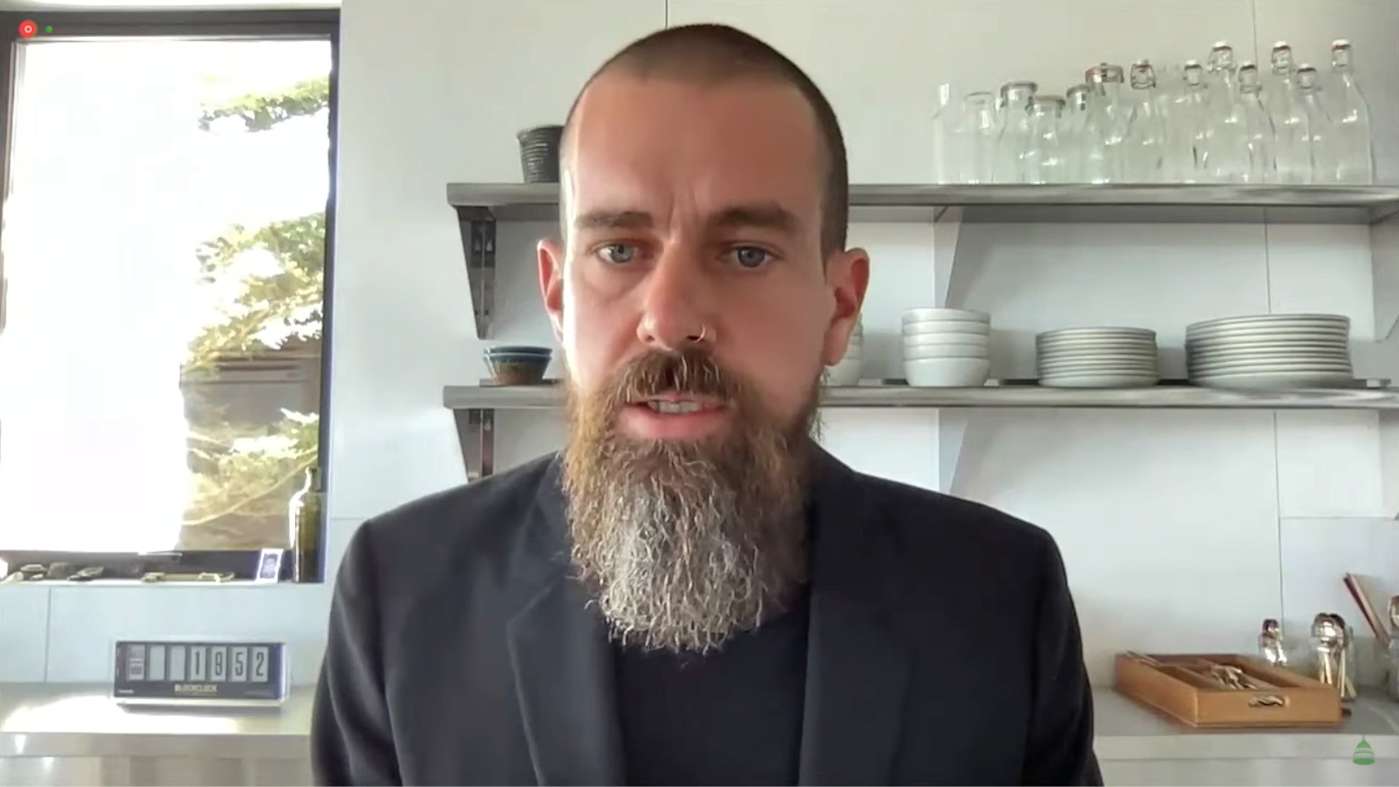
Block is the latest business to announce layoffs, with the operator of payment platforms Square and Cash App opting to cut jobs in favor of using more AI tools. The financial tech company, helmed by Twitter founder Jack Dorsey, is slashing its current staff of 10,000 to "just under 6,000." CNBC highlighted a letter Block sent to shareholders announcing the decision to nearly halve its workforce. According to the message from Dorsey:
"The core thesis is simple. Intelligence tools have changed what it means to build and run a company. We're already seeing it internally. A significantly smaller team, using the tools we're building, can do more and do it better. And intelligence tool capabilities are compounding faster every week."
We learned last year that Block had developed an AI agent called "codename goose" for interacting with LLMs. Leadership is clearly putting high expectations on that project and any other in-house tools to fill the shoes of thousands. "intelligence will be at the core of how the entire company works. How we make decisions, how we build trust and manage risk, how we build products, and how we serve customers," the shareholder letter states.
Block also reported its latest financial results today. It finished the 2025 financial year with operating income (profit after expenses) of $1.71 billion.
This isn't the first time the fintech company has made deep cuts in its employee count. Layoffs numbering about 1,000 were rumored both in 2024 and 2025.
This article originally appeared on Engadget at https://www.engadget.com/apps/block-the-parent-of-square-and-cash-app-is-laying-off-over-4000-people-223343068.html?src=rss
French AA gaming developer and accessory manufacturer Nacon has filed for insolvency after its majority shareholder Bigben failed to make a loan repayment, the company said in a press release. "To date, the company reports available assets do not allow it to meet its liabilities," Nacon wrote. The objective with insolvency, it said, was to allow "continued operation, protect employees and maintain jobs while renegotiating with its creditors."
Nacon is behind the games Styx: Blades of Greed and was set to publish Terminator: Survivors before that title was delayed. It published Hell is Us last year to some praise, but Test Drive Unlimited Solar Crown was buggy on release and failed to find much of an audience. The company will stream its next Nacon Connect presentation on March 4, and will supposedly show off some new games and footage for previously revealed games like Endurance Motorsport Series and Cthulhu: The Cosmic Abyss.
The company also makes hardware like controllers and headsets and racing sim accessories via its Revosim brand. Those products never really caught on with mainstream gamers but did have some success with the pro gaming crowd.
With Nacon's insolvency, the future of those games and accessories is now in question. A court will decide on the company's insolvency request at a hearing in early March, but in the meantime, trading of its shares is suspended.
This article originally appeared on Engadget at https://www.engadget.com/gaming/gaming-accessory-maker-and-publisher-nacon-files-for-insolvency-104832702.html?src=rss
Kalshi, one of several online prediction markets that have exploded in popularity in the last few years, has suspended one of YouTube MrBeast's video editors for insider trading, NPR reports. Besides being suspended from the platform for two years, Kalshi says the editor will also be required to pay a financial penalty that's five times his initial trade size.
The editor, Artem Kaptur, traded in markets related to YouTube and specifically, MrBeast. Kalshi says his transactions were initially flagged because of his "near-perfect trading success on markets with low odds, which were statistically anomalous." Because trades are public on Kalshi, multiple users also flagged the trades as suspicious. Kalshi learned Kaptur was an employee of MrBeast during its investigation and determined he "likely had access to material non-public information connected to his trading." Perhaps unsurprisingly, trading with insider information violates Kalshi's rules.
Kalshi says that it reported the insider trading to the Commodity Futures Trading Commission (CFTC) and plans to donate the over $20,000 Kaptur has been fined to "a non-profit that provides consumer education on derivatives markets." In a statement provided to NPR, Beast Industries, MrBeast's production company, said it has a zero-tolerance policy for insider trading. "We have a longstanding policy in place against employees using proprietary company information in order to safeguard the highest standards and ethics throughout our organization," Beast Industries said.
Separately, Kalshi has also suspended and fined a politician who was running to be Governor of California. "In May, our Surveillance Department saw an online video by a candidate for Governor of California that appeared to show him trading on his own candidacy," Kalshi says. "We immediately froze his account and opened an investigation. The candidate was initially cooperative and acknowledged that this violated the exchange rules. As a candidate in a race, you can (and probably should) follow and use Kalshi’s market forecast, but you should not trade on it."
Like other prediction markets, Kalshi lets users make trades based on a variety of different subjects and events. For example, you could participate in a market focused on the results of a basketball game, or something more unusual, like who'll win the current season of Survivor. Despite resembling gambling, online predictive markets aren't currently regulated by state gambling laws, and instead classify bets as a type of futures contract, placing them under the purview of the CFTC. That hasn't stopped states from trying to regulate prediction markets anyway. For example, Nevada sued Kalshi for operating a sports gambling market without a permit earlier in February.
This article originally appeared on Engadget at https://www.engadget.com/big-tech/kalshi-fined-a-mrbeast-editor-for-insider-trading-191027814.html?src=rss
OnlyFans is looking to cash out once again, but this time in a deal that would value it at several billion dollars less than a potential sale that previously fell through. As reported by TechCrunch, the online platform known for subscription-based pornographic content is in talks to sell a majority stake to Architect Capital, an investment firm based in San Francisco.
According to the report, the proposed deal includes $3.5 billion in equity and $2 billion in debt, which values OnlyFans at $5.5 billion. TechCrunch also reported that Architect Capital and OnlyFans are currently in exclusive talks, where the website's owner can't negotiate with other potential buyers for a certain amount of time.
With no set timeline yet for the deal, the deal is far from an official closing. Last year, OnlyFans' owner Leonid Radvinsky was also negotiating with another investment firm, Forest Road Company, to sell the platform. Although that deal never went through, the talks leading up to the sale valued OnlyFans at a much higher $8 billion. The London-based website, which still doesn't want to be known as just a porn site, is still growing and reported a nine percent increase in gross revenue for its 2024 fiscal year, earning more than $7.2 billion.
This article originally appeared on Engadget at https://www.engadget.com/social-media/onlyfans-is-reportedly-in-talks-to-sell-a-60-percent-stake-to-a-san-francisco-investment-firm-191842666.html?src=rss
As a former Mint user, I had to find a new budgeting app not too long ago. Intuit, parent company of Mint, shut down the service in March 2024, and prompted users to transition to its other financial app, Credit Karma. However, after testing Credit Karma myself, I found it to be a poor Mint replacement — that meant I needed to branch out and look elsewhere for a trusted app to track all of my financial accounts, monitor my credit score, follow a monthly spending plan and set goals like building a rainy-day fund and paying down my mortgage faster.
I tried out Mint's top competitors in the hopes that I'd be able to find a new budgeting app that could handle all of my financial needs. Hopefully my journey can help you find the best budgeting app for you and your money as well.
Best budget apps of 2026
Other budgeting apps we tested
PocketGuard
PocketGuard used to be a solid free budget tracker, but the company has since limited its “free” version to just a free seven-day trial. Now, you’ll have to choose between two plans once the trial is over: a $13 monthly plan or a $75 annual plan. When I first tested it, I found it to be more restricted than NerdWallet, but still a decent option. The main overview screen shows you your net worth, total assets and debts; net income and total spending for the month; upcoming bills; a handy reminder of when your next paycheck lands; any debt payoff plan you have; and any goals. Like some other apps, including Quicken Simplifi, PocketGuard promotes an “after bills” approach, where you enter all of your recurring bills, and then PocketGuard shows you what’s left, and that’s what you’re supposed to be budgeting: your disposable income.
Although PocketGuard’s UI is easy enough to understand, it lacks polish. The “accounts” tab is a little busy, and doesn’t show totals for categories like cash or investments. Seemingly small details like weirdly phrased or punctuated copy occasionally make the app feel janky. More than once, it prompted me to update the app when no updates were available. The web version, meanwhile, feels like the mobile app blown up to a larger format and doesn’t take advantage of the extra screen real estate. Ultimately, now that the free tier is gone, it just doesn’t present the same value proposition as it once did.
How we test budgeting apps
Before I dove in and started testing out budgeting apps, I had to do some research. To find a list of apps to try out, I consulted trusty ol’ Google (and even trustier Reddit); read reviews of popular apps on the App Store; and also asked friends and colleagues what budget tracking apps (or other budgeting methods) they might be using for money management. Some of the apps I found were free and these, of course, show loads of ads (excuse me, “offers”) to stay in business. But most of the available apps require paid subscriptions, with prices typically topping out around $100 a year, or $15 a month. (Spoiler: My top pick is cheaper than that.)
All of the services I chose to test needed to do several things: import all of your account data into one place; offer budgeting tools; and track your spending, net worth and credit score. Except where noted, all of these apps are available for iOS, Android and on the web.
Once I had my shortlist of six apps, I got to work setting them up. For the sake of thoroughly testing these apps, I made a point of adding every account to every budgeting app, no matter how small or immaterial the balance. What ensued was a veritable Groundhog Day of two-factor authentication. Just hours of entering passwords and one-time passcodes, for the same banks half a dozen times over. Hopefully, you only have to do this once.
Budgeting app FAQs
What is Plaid and how does it work?
Each of the apps I tested uses the same underlying network, called Plaid, to pull in financial data, so it’s worth explaining what it is and how it works. Plaid was founded as a fintech startup in 2013 and is today the industry standard in connecting banks with third-party apps. Plaid works with over 12,000 financial institutions across the US, Canada and Europe. Additionally, more than 8,000 third-party apps and services rely on Plaid, the company claims.
To be clear, you don’t need a dedicated Plaid app to use it; the technology is baked into a wide array of apps, including all of the budgeting apps listed in this guide. Once you find the “add an account” option in whichever one you’re using, you’ll see a menu of commonly used banks. There’s also a search field you can use to look yours up directly. Once you find yours, you’ll be prompted to enter your login credentials. If you have two-factor authentication set up, you’ll need to enter a one-time passcode as well.
As the middleman, Plaid is a passthrough for information that may include your account balances, transaction history, account type and routing or account number. Plaid uses encryption, and says it has a policy of not selling or renting customer data to other companies. However, I would not be doing my job if I didn’t note that in 2022 Plaid was forced to pay $58 million to consumers in a class action suit for collecting “more financial data than was needed.” As part of the settlement, Plaid was compelled to change some of its business practices.
In a statement provided to Engadget, a Plaid spokesperson said the company continues to deny the allegations underpinning the lawsuit and that “the crux of the non-financial terms in the settlement are focused on us accelerating workstreams already underway related to giving people more transparency into Plaid’s role in connecting their accounts, and ensuring that our workstreams around data minimization remain on track.”
Why did Mint shut down?
When parent company Intuit announced in December 2023 that it would shut down Mint, it did not provide a reason why it made the decision to do so. It did say that Mint's millions of users would be funneled over to its other finance app, Credit Karma. "Credit Karma is thrilled to invite all Minters to continue their financial journey on Credit Karma, where they will have access to Credit Karma’s suite of features, products, tools and services, including some of Mint’s most popular features," Mint wrote on its product blog. In our testing, we found that Credit Karma isn't an exact replacement for Mint — so if you're still looking for a Mint alternative, you have some decent options.
What about Rocket Money?
Rocket Money is another free financial app that tracks spending and supports things like balance alerts and account linking. If you pay for the premium tier, the service can also help you cancel unwanted subscriptions. We did not test it for this guide, but we'll consider it in future updates.
This article originally appeared on Engadget at https://www.engadget.com/apps/best-budgeting-apps-120036303.html?src=rss
Apple shared its latest quarterly financial results today and the news is once again very, very good for the Cupertino company. The quarter ending December 27, 2025 marked "the best-ever quarter" for iPhones, which generated a record high revenue of nearly $85.27 billion for the business. Apple doesn't disclose the number of devices sold any more, but even with the prices for many of its latest generation of smartphones surpassing $1,000 a pop, that's still got to be a heck of a lot of iPhones.
"The demand for iPhone was simply staggering," CEO Tim Cook said on the conference call to discuss the results. "This is the strongest iPhone lineup we've ever had and by far the most popular."
That wasn't the only massive number in the earnings report. Services revenue also logged its biggest quarter yet, growing 14 percent over the same period last year to reach just over $30 billion. It was also Apple's biggest quarter to date for total revenue, which was nearly $143.76 billion for the already fabulously wealthy company.
This article originally appeared on Engadget at https://www.engadget.com/mobile/smartphones/apple-just-reported-its-best-ever-quarter-for-iphone-sales-234135513.html?src=rss
Apple has acquired Israel-based startup Q.ai, a move that could provide a much-needed boost to the tech giant's capabilities in artificial intelligence. Although Apple has not disclosed terms of the deal, sources told Financial Times that the arrangement is reportedly valued at nearly $2 billion. If that figure is accurate, the Q.ai acquisition marks Apple's second largest acquisition to date, followed by its purchase of Beats for $3 billion back in 2014.
Johny Srouji, Apple’s senior vice president of hardware technologies, said in a statement that Q.ai "is a remarkable company that is pioneering new and creative ways to use imaging and machine learning." Apple hasn't shared any specifics about how it plans to leverage the startup, but its past work indicates the possibility of Apple moving deeper into AI-powered wearables. "Patents filed by Q.ai show its technology being used in headphones or glasses, using 'facial skin micro movements' to communicate without talking," the Times reported.
The startup's founding team, including CEO Aviad Maizels, will join Apple as part of the deal. This acquisition marks Maizels' second sale to Apple; he previously founded a three-dimensional hearing business called PrimeSense that Apple bought back in 2013.
For several months, many tech insiders have speculated that an acquisition might be Apple's best path forward to catching up in the AI race. In the company's Q3 earnings call in July 2025, CEO Tim Cook acknowledged that "We’re open to M&A that accelerates our roadmap." A deal like this one could eventually lead to Apple developing its own fully in-house AI chatbot rather than relying on a competitor like Google to power artificial intelligence in its Siri assistant.
This article originally appeared on Engadget at https://www.engadget.com/big-tech/apple-acquires-qai-for-a-reported-2-billion-190017949.html?src=rss
After years of uncertainty over TikTok's future in the United States, a deal for the app's US business has been finalized. The new US entity is called TikTok USDS Joint Venture. ByteDance has retained a 19.9 percent percent stake in the new business, with the rest controlled by a group of non-Chinese investors, including Oracle, Silver Lake and MGX, an Emirati-state owned investment firm, all of which have a 15 percent stake. Dell CEO Michael Dell and other investors have smaller stakes in the new company.
The terms of the deal were first leaked last month, after TikTok CEO Shou Chew reportedly told employees in a memo that TikTok and ByteDance had agreed to a group of investors. This ends a lengthy saga and months of slow progress as the agreement was being worked out, ensuring that the app will remain available in the US after years of being on the verge of a ban in the country.
President Donald Trump, who had tried to ban the app during his first term in office, praised the deal in a post on Truth Social. "It will now be owned by a group of Great American Patriots and Investors, the Biggest in the World, and will be an important Voice," he wrote."I only hope that long into the future I will be remembered by those who use and love TikTok."
According to TikTok’s announcement, the joint venture will protect American users’ data with Oracle's secure US cloud environment. It will also retrain TikTok’s algorithm on US users’ data and will be in charge of content moderation in the US. The entity promises interoperability, as well, promising that users will still get international content and, if they’re a creator, viewers. “The safeguards provided by the Joint Venture will also cover CapCut, and Lemon8 and a portfolio of other apps and websites in the US,” TikTok said.
The new entity will be overseen by a seven-member board of directors, most of whom are Americans. It includes, Shou Chew, the Chief Executive Officer of TikTok, Silver Lake co-CEO Egon Durban, Oracle Executive Vice President Kenneth Glueck and MGX Chief Strategy and Safety Officer David Scott. Adam Presser, who had previously been head of operations and trust and safety at TikTok, is the CEO of TikTok USDS Joint Venture.
Exactly what the new joint venture means for US users of TikTok is unclear. Shortly after the deal was announced, TikTok introduced new terms of service for US users. As the BBCnotes, the new terms include provisions relating to use of the app by kids under 13 (they are limited to the "Under 13 Experience") and that the "TikTok USDS Joint Venture does not endorse any content" in the app. The company hasn’t announced specific changes to the app’s algorithm or other core features.
Update, January 23, 2026, 10:58AM PT: This post was updated to add a statement from President Trump, and with additional information about TikTok’s new terms of service.
This article originally appeared on Engadget at https://www.engadget.com/big-tech/tiktok-finalizes-deal-for-its-us-entity-010543484.html?src=rss
“Yesterday, following Vimeo’s recent acquisition by a private equity firm, I learned that I, along with a large portion of the company, was impacted by layoffs,” wrote the company’s former vice president of Global Brand & Creative, Dave Brown. He is referring to a firm called Bending Spoons that bought Vimeo for $1.38 billion in the latter half of 2025.
We don't know why parent company Bending Spoons conducted such a massive round of layoffs, but the equity firm is known for purchasing tech companies and aggressively cutting costs via layoffs. It did the same thing to Evernote back in 2023 and WeTransfer in 2024. Engadget has reached out to Vimeo to inquire about the exact number of employees that were laid off and will update this post when we hear back.
"I can confirm that a layoff was announced at Vimeo on January 20, 2026. To respect the privacy of those departing, we cannot provide additional details at this time,” a Bending Spoons spokesperson told Gizmodoin an emailed statement. "Going forward, Bending Spoons remains committed to growing Vimeo to meet the needs of its diverse user base."
Reviving this account to say: Almost everyone at Vimeo was laid off yesterday, including the entire video team. If you're looking for talented engineers, there are a few on the market.
Sucks to see something I built killed by private equity in a technology company skin suit.
It's good to know the company "remains committed to growing Vimeo" after firing just about everyone that works there. One former employee said on X that it "sucks to see something I built killed by private equity in a technology company skin suit."
Vimeo has been around a long time. The platform was founded a full year before YouTube and has positioned itself as being a premium alternative for hosting creative and business-adjacent videos. We have no idea what it'll look like with a minimal staff and no video team.
This article originally appeared on Engadget at https://www.engadget.com/big-tech/vimeo-lays-off-most-of-its-staff-just-months-after-being-bought-by-private-equity-firm-184556023.html?src=rss
Paramount Skydance CEO David Ellison is apparently still hopeful that investors will approve his $108.4 billion hostile takeover of Warner Bros. Discovery. Paramount Skydance announced Thursday that it's extending its all-cash offer to acquire the storied studio, and giving investors until February 20, 2026 to accept. The company's previous offer expired on January 21, but with a lawsuit in the works and a revised Netflix deal to compete with, Paramount Skydance wants to stay in the conversation.
Netflix and Warner Bros. Discovery originally announced their $82.7 billion acquisition agreement in December 2025. Netflix's deal is for a significant portion, but notably not all, of Warner Bros. Discovery as it exists today. If approved, the streaming service would acquire Warner Bros. film studios, New Line Cinema, HBO, HBO Max, the company's theme parks, game studios and select linear channels like TNT, but not the collection of reality TV and news programming that Warner Bros. Discovery calls “Global Networks.”
Paramount Skydance made its competing offer of $108.4 billion for all of Warner Bros. Discovery a few days later in December, with the recommendation that shareholders reject the Netflix deal. To add pressure, Paramount Skydance also sued Warner Bros. Discovery in January alleging that the company had not provided adequate information about why it favored Netflix over Paramount. Beyond offering more money, Paramount contends its deal is more likely to be approved by regulators because owning Warner Bros. doesn't "entrench Netflix's market dominance." Warner Bros. Discovery claims that funding for Paramount's deal "remains inadequate" and that the company is uncertain Paramount Skydance will actually be able to complete the deal.
David Ellison was previously able to merge Skydance with Paramount using the financial backing of his billionaire father Larry Ellison, and the Ellison family's friendly relationship with the Trump administration. Promising to make sure that CBS News represents "a diversity of viewpoints” via a newly appointed ombudsman, and that the merged Paramount Skydance won't create any diversity, equity and inclusion programs was enough to get the FCC to approve the merger. Ellison might have thought acquiring Warner Bros. Discovery would be equally easy, but at least so far that hasn't worked out as planned.
This article originally appeared on Engadget at https://www.engadget.com/entertainment/david-ellison-extends-deadline-for-warner-bros-discovery-takeover-offer-204752313.html?src=rss
We now have some idea of what's at stake in the longstanding feud between Elon Musk and OpenAI. As first reported by Bloomberg, the latest filing, as part of a lawsuit that accuses the AI giant of abandoning its non-profit status, claims that Musk is owed anywhere between $79 billion and $134 billion in damages from the "wrongful gains" of OpenAI and Microsoft.
Musk claimed in the filing that he's entitled to a portion of OpenAI's recent valuation at $500 billion, after contributing $38 million in "seed funding" during the AI company's startup years. Along with providing "roughly 60 percent of the nonprofit's seed funding," Musk offered recruiting of key employees, introductions with business contacts and startup advice, according to the filing. The monetary estimate comes from C. Paul Wazzan, a financial economist who's serving as Musk's expert in the case. According to Wazzan's calculations, OpenAI earned between $65.5 billion and $109.43 billion in wrongful gains, while Microsoft saw between $13.3 billion and $25.06 billion.
The lawsuit between Elon Musk and OpenAI dates back to March 2024, when the xAI CEO first filed a legal action claiming that OpenAI violated its non-profit status. Musk later added Microsoft as another defendant and even tried to get an injunction when OpenAI announced efforts to reorganize its corporate structure. Besides this suit, Musk has named OpenAI in another legal battle, accusing the company, along with Apple, of monopolistic practices that prevent xAI from getting a fair shot in the App Store.
This article originally appeared on Engadget at https://www.engadget.com/big-tech/elon-musk-is-looking-for-a-134-billion-payout-from-openai-and-microsoft-171824945.html?src=rss
Tesla CEO Elon Musk attends a cabinet meeting held by U.S. President Donald Trump at the White House in Washington, D.C., U.S., April 30, 2025. REUTERS/Evelyn Hockstein
Verizon is offering a very small mea culpa after Wednesday's massive outage, which drew more than 1.5 million reports on Downdetector and lasted hours. Initially, the carrier posted on X that it will offer a $20 credit, but customers must redeem it in the myVerizon app. The company then said the credit could be claimed though customer service (via phone or chat), but our editors’ attempts to do so via chat were met with a message to wait for a text with further instructions.
Engadget editors began receiving the texts this morning (Jan 16) with a link to redeem. From there, you need to log into your account and visit the Account Overview section. Up top, there should be a Take Action or Mobile Actions button with a red notification circle. Click that and you’ll see a pop-up about the credit and a Redeem Now button. After you click that, you’re done, and Verizon says you should see the credit in one or two billing cycles. Of course, you’ll want to keep an eye out that it actually happens and contact the company if it doesn’t show up.
"This credit isn’t meant to make up for what happened. No credit really can," the company wrote. "But it’s a way of acknowledging your time and showing that this matters to us." Incensed customers have largely replied with incredulity, both at the miniscule amount, and that it isn't being applied automatically. The entire redemption process takes a few clicks and about a minute to complete, which makes it even more frustrating that it can’t be automatically applied to every customer’s bill.
Update, January 15 2026, 11:57 PM ET: Verizon says the credit can be claimed through customer service via phone, chat and online in addition to the myVerizon app.
Update, January 16 2026, 10:29 AM ET: This story has been updated with detailed info about the redemption process which Verizon now says is completed with a link that will be texted to customers.
This article originally appeared on Engadget at https://www.engadget.com/mobile/how-to-claim-verizons-20-credit-for-wednesdays-service-outage-171909695.html?src=rss
The US and Taiwan have signed an agreement that will see a multi-billion dollar investment into domestic development of semiconductors and related infrastructure. The US Department of Commerce announced that Taiwanese businesses will make an upfront investment of at least $250 billion into their US production capacity, while Taiwan's government will provide credit guarantees of at least another $250 billion in support of the semiconductor industry and supply chain in the US.
In exchange, Taiwan will receive a better deal on tariffs. Reciprocal tariffs will be limited to 15 percent, compared with the previous 20 percent rate. Generic pharmaceuticals and their generic ingredients, aircraft components, and unavailable natural resources will be not be subjected to reciprocal tariffs under the arrangement. Taiwanese companies with US production will also see increased import amounts without being charged duties under the Section 232 framework.
According to reports from CNBC, Taiwan Semiconductor Manufacturing Company (TSNC) is already in position to take advantage of the new trade agreement with further expansion in Arizona. The major Taiwanese chip manufacturer had previously committed to investing $100 billion in its US operations over four years. Commerce Secretary Howard Lutnick told CNBC in an interview that the current US government wants to bring 40 percent of Taiwan's semiconductor supply chain stateside, continuing to use tariffs as an incentive. "If they don’t build in America, the tariff’s likely to be 100 percent,” Lutnick said.
This article originally appeared on Engadget at https://www.engadget.com/computing/a-250-billion-trade-deal-will-see-taiwan-bring-more-semiconductor-production-to-the-us-224326501.html?src=rss
On the heels of Mark Zuckerberg announcing that Meta's former board member, Dina Powell McCormick, would be formally joining the company as president and vice chairman, the CEO has shared new details about her purview at the company. The executive will play a key role overseeing Meta's sprawling infrastructure investments as part of a newly announced initiative called Meta Compute.
"Meta is planning to build tens of gigawatts this decade, and hundreds of gigawatts or more over time," Zuckerberg said in an update. "How we engineer, invest, and partner to build this infrastructure will become a strategic advantage."
Zuckerberg said that Meta's head of global engineering Santosh Janardhan will lead the "top-level initiative" and that recent hire and former Safe Superintelligence CEO Daniel Gross will "lead a new group responsible for long-term capacity strategy, supplier partnerships, industry analysis, planning, and business modeling." McCormick is expected to "work on partnering with governments and sovereigns to build, deploy, invest in, and finance Meta's infrastructure."
Meta has been investing heavily in infrastructure to fuel its AI "superintelligence" ambitions. The company also recently announced three agreements to buy massive amounts of nuclear power to help power its data centers. Zuckerberg has previously said he expects Meta to spend $600 billion on AI infrastructure and jobs by 2028.
This article originally appeared on Engadget at https://www.engadget.com/ai/mark-zuckerberg-announces-new-meta-compute-initiative-for-its-data-center-and-ai-projects-192100086.html?src=rss
Paramount Skydance just does not want to take no for an answer. After having multiple bids to acquire Warner Bros. Discovery (WBD) rejected, including a recent hostile bid that the WBD board recommended that shareholders reject, Paramount is turning to the courts and mounting a proxy fight.
In a letter to shareholders on Monday, Paramount CEO David Ellison said the company has filed suit in Delaware Chancery Court seeking more disclosure about WBD’s pending Netflix deal and the process that led to its acceptance. Paramount argues WBD hasn’t provided “basic information” shareholders need to evaluate competing offers, including how WBD valued the planned cable-networks spinout Discovery Global (or Global Networks, depending on the filing). The Netflix acquisition would leave Discovery Global to become its own publicly traded company, while the Paramount offer included these assets.
Paramount is also escalating the corporate pressure campaign, with Ellison saying it intends to nominate a slate of directors for election at WBD’s 2026 annual meeting. The end goal would be installing a board that would “engage” on Paramount’s offer under the terms of WBD’s merger agreement with Netflix.
If WBD were to call a special meeting to approve the Netflix transaction before the annual meeting, Paramount says it will solicit proxy votes against the deal. It also plans to push a bylaw change requiring shareholders to approve any separation of Discovery Global. This change seems like Paramount stoking the flames (whether real or imagined) surrounding shareholders having their WBD shares bought out without the value of Discovery Global built-in under the Netflix merger.
Paramount remains convinced that its offer is "superior" to that of Netflix, while WBD maintains Paramount's bid offers "insufficient value" and that Paramount has failed to submit a true best proposal "despite clear direction from WBD on both the deficiencies and potential solutions." The lawsuit now aims to force WBD to spell out exactly how it arrived at recommending the Netflix deal over Paramount's bid.
WBD expressed concerns over whether a potential Paramount deal would even reach closing, citing the substantial debt the smaller studio would have to take on to pull off a leveraged buyout.
This article originally appeared on Engadget at https://www.engadget.com/entertainment/paramount-wont-quit-files-suit-against-warner-bros-discovery-over-rejected-bid-175317166.html?src=rss
A Paramount water tower is shown on the Paramount studio lot in Hollywood before the Paramount Global $8.4 billion merger with Skydance Media is expected to be completed this week, in Los Angeles, California, U.S., August 5, 2025. After the deal closes, the company will be renamed Paramount Skydance Corp. REUTERS/Mike Blake
Meta has appointed Dina Powell McCormick, a banking executive and former Republican White House official, as its new president and vice-chairman. The company said McCormick will help guide its overall strategy and execution as a part of the management team.
“Dina’s experience at the highest levels of global finance, combined with her deep relationships around the world, makes her uniquely suited to help Meta manage this next phase of growth as the company’s president and vice chairman,” said Meta Founder and CEO Mark Zuckerberg.
McCormick was a partner at Goldman Sachs and ran its Global Sovereign investment banking business. She was most recently vice chair, president and head of global client services at merchant bank BDT & MSD Partners. McCormick was also deputy national security advisor to President Donald Trump during his first term and held several roles during the George W. Bush administration, including assistant secretary of state for Secretary of State Condoleezza Rice. She is married to Sen. Dave McCormick (R-PA).
Meta’s new president joined the company’s board last April, but she resigned in December. Just a few weeks later, McCormick has taken on a higher-profile role at Meta.
McCormick is the second former Trump official that Meta has appointed to a prominent role this month. Last week, the company hired Curtis Joseph Mahoney, who was most recently a corporate vice president and general counsel at Microsoft, as its chief legal officer. Mahoney was a deputy US trade representative during the first Trump administration.
This article originally appeared on Engadget at https://www.engadget.com/big-tech/meta-appoints-ex-trump-and-bush-official-as-its-new-president-and-vice-chairman-151048263.html?src=rss
Your neighborhood GameStop might be on the chopping block, along with more than 400 other retail locations across the US. As first reported by Polygon, the retailer is pursuing a severe cost-saving measure by closing up several hundred physical locations. According to a blog that keeps track of GameStop closures, there are 410 locations that are confirmed to be closing or are already closed, along with another 11 that are reportedly also on their way, as of January 10.
As Polygon indicated, these closings aren't much of a surprise considering GameStop's SEC filing for December 2025 indicated that it would "anticipate closing a significant number of additional stores in fiscal 2025," which ends on January 31, 2026. The same filing detailed that the company's board would pay out the GameStop CEO, Ryan Cohen, up to $35 billion in stock options, given that he increases the retailer's market cap to $100 billion.
While the blog covers only closures in the US, the SEC filing also noted that GameStop is planning to reduce its presence in several other European countries and Canada. Even though GameStop saw a historic spike in market value in 2021, it has struggled with the brand's direction, as seen with failed attempts at offering a crypto locker and an NFT marketplace.
This article originally appeared on Engadget at https://www.engadget.com/gaming/gamestop-reportedly-shuts-down-more-than-400-us-stores-210632743.html?src=rss
Apple announced today JPMorgan Chase will be the new issuer for the Apple Card. The official news arrived shortly after The Wall Street Journalreported that the two businesses had reached a deal regarding Apple's credit card service. According to the tech company, the transition to the new provider should take about two years to complete, but customers can continue to use their Apple Cards as usual during the interim. Apple has already published an FAQ about the change, but the main takeaway is that the status quo is currently continuing and customers will receive information at a later date if any action is required. Mastercard will remain the Apple Card payment network under the new partnership.
Goldman Sachs was Apple's collaborator when it launched the Apple Card in 2019. We've seen signs for a few years, though, that Goldman Sachs had been looking for a way out of its arrangement. Apple didn't disclose many details around either the current or future deals for its credit card, however the WSJ report claims the negotiations with JPMorgan Chase have been underway for more than a year. Sources told the publication that Goldman Sachs is offloading about $20 billion in outstanding customer balances at a discount of more than $1 billion.
This article originally appeared on Engadget at https://www.engadget.com/big-tech/jpmorgan-chase-is-taking-over-the-apple-card-232711979.html?src=rss

 Anmelden