❌

Normale Ansicht

Meta sues advertisers in Brazil and China over 'celeb bait' scams

Meta has sued the people and groups behind three scam operations that used images and deepfakes of celebrities to lure users to scam websites. According to the company, the three entities were based in China and Brazil and targeted people in the US, Japan and other countries. The ads promoted fraudulent investment schemes and fake health products.

Meta said that it had filed lawsuits against several people in Brazil who promoted fake or unapproved healthcare products and online courses promoting them. The company also sued a China-based entity it says used ads featuring celebrities "as part of a larger fraud scheme that lured people into joining so-called investment groups." The company didn't provide details on how many ads these groups had run on Facebook, how many social media users had seen or interacted with the ads or how long the scammers had been operating on the platform.

So-called "celeb bait" ads have been a long-running issue for the company. Engadget has previously documented celeb bait scams on Facebook, including ones that frequently use Elon Musk and Fox News personalities to hawk fake cures for diabetes. The Oversight Board has also criticized the company for not doing enough to combat such scams. In its update, Meta says that "because scam ads are designed to look real, they’re not always easy to detect." The company also noted that it has now enrolled "more than 500,000" celebrities and public figures into its facial recognition system that's meant to automatically detect scam ads using the faces of famous people. 

Meta's handling of scammy advertisers has come under increased scrutiny in recent months after Reuters reported that researchers at the company at one point estimated that as much as 10 percent of its ad revenue could be coming from scams and banned products. The fact that Meta has made billions of dollars from problematic advertisers has also caused the company to be slow to take action against repeat offenders.

In addition to the groups behind the celeb bait ads, Meta says that it's upgraded its ability to detect scam ads that use cloaking, which has at times hindered its internal review systems. The company also sued a Vietnam-based advertiser it says used scam ads to hawk "deeply discounted items from well-known brands," including Longchamp.

Meta also took legal action against eight former "Meta Business Partners," who promoted services that would "un-ban" or other "account restoration services." The company says it will "consider taking additional legal action, including litigation, if they don’t comply" with cease and desist orders.

Update, February 26, 2026, 1:16PM PT: This story was updated to specify that Meta’s internal estimates around ad revenue included scams and banned products.

This article originally appeared on Engadget at https://www.engadget.com/social-media/meta-sues-advertisers-in-brazil-and-china-over-celeb-bait-scams-190000268.html?src=rss

©

  •  

NY AG: Valve's loot boxes can get kids hooked on gambling

New York Attorney General Letitia James has accused Valve of promoting illegal gambling through its video games in a lawsuit filed by her office. According to the AG’s announcement, her office conducted an investigation and had concluded that Valve enabled gambling by enticing users to pay for a chance at rare items from loot boxes in Counter-Strike 2, Team Fortress 2 and Dota 2. In the lawsuit, the New York AG stressed that Valve’s loot boxes are “particularly pernicious,” because the games are popular among children and teenagers.

The lawsuit described the loot box model, which requires a player to open a mystery chest for the possibility of winning rare items, as “quintessential gambling.” It argued that people introduced to gambling at an early age are at a significantly higher risk of developing gambling addictions later on, based on research. In addition, it explained that gambling is mostly illegal in New York.

Players have to pay for chests or boxes and the keys to be able to open them in Valve’s games, and the company has reportedly sold billions of dollars’ worth of keys for Counter-Strike alone. The lawsuit said that Valve has made tens of millions of dollars in fees from the sale of virtual items on the Steam Community Market, as well. In addition to being able to sell items on Steam for funds directly credited to their Steam Wallet, players can also sell on third-party marketplaces for cash.

According to James’ office, Valve facilitates and even assists third-party marketplaces in their operations, based on its investigation. Engadget has asked Valve for a statement about the lawsuit, but we have yet to hear back. However, the company previously denied being involved with third-party marketplaces that allow the sales of its game items for real-world money. In a response to an inquiry by the Danish Gambling Authority, Valve explained that those third-party websites create sock puppet accounts to sell and receive items on Steam in exchange for cash. “[T]his behavior is in violation of our terms of service,” Valve said.

The lawsuit also pointed out that there’s a huge market for Counter-Strike skins and referenced a Bloomberg article from 2025, which reported that the market for those skins had already surpassed $4.3 billion. As an example of in-game items sold for real money, it cited the sale of a Counter-Strike 2 AK-47 skin in 2024 for $1 million. The Attorney General’s Office wants the court to stop Valve from violating New York laws, to give up money it allegedly earned from illegal activities and to pay a fine three times what it allegedly earned from illegal business practices.

The most expensive skin in Counterstrike history was publicly sold this morning, a StatTrak Factory New AK-47 Blue Gem pattern 661

For over $1 million pic.twitter.com/1FdxoNM2ov

— Jake Lucky 🔜 GDC (@JakeSucky) June 5, 2024

This article originally appeared on Engadget at https://www.engadget.com/gaming/ny-ag-valves-loot-boxes-can-get-kids-hooked-on-gambling-122503556.html?src=rss

©

  •  

xAI's trade secret lawsuit against OpenAI has been dismissed

OpenAI has successfully convinced the court to dismiss the lawsuit filed by Elon Musk’s xAI, accusing the company of stealing its trade secrets. In her decision, US District Judge Rita F. Lin wrote that xAI’s complaint “does not point to any misconduct by OpenAI” and instead attributes all listed misconducts to its eight former employees who “ left for OpenAI at around the same time.”

Lin said that xAI accused two of its former employees of stealing its source code before leaving at a time when they were already speaking to an OpenAI recruiter. However, the company didn’t say if the recruiter told those former employees to do so. xAI’s lawsuit also accuses two other former employees of keeping their work chats on their devices even after leaving, another of refusing to provide certifications related to confidential information after his departure, and another of unsuccessfully trying to access xAI hiring and datacenter optimization information when he was already working for OpenAI.

“Notably absent are allegations about the conduct of OpenAI itself,” the judge noted. xAI didn’t include any information that directly accuses OpenAI of making those employees steal its trade secrets. It also didn’t include allegations that those former employees used any stolen trade secrets after they were already working for OpenAI. To be precise, OpenAI’s motion for dismissal was granted with leave to amend, so the lawsuit may not be completely over just yet. That means xAI can still file an amended complaint addressing what the judge wrote in her decision until March 17, 2026.

OpenAI and xAI have a longstanding feud, and this is just one of the several lawsuits between the two companies. In fact, Musk has an ongoing complaint against OpenAI and Microsoft, accusing the former of violating its nonprofit status. Musk, who was an early funder of OpenAI, is now asking the company for $79 billion to $134 billion in damages from “wrongful gains.”

This article originally appeared on Engadget at https://www.engadget.com/ai/xais-trade-secret-lawsuit-against-openai-has-been-dismissed-101912599.html?src=rss

©

  •  

Mark Zuckerberg testifies in social media addiction trial that Meta just wants Instagram to be 'useful'

Mark Zuckerberg took the stand Wednesday in a high-profile jury trial over social media addiction. In an appearance that was described by NBC News as "combative," the Facebook founder reportedly said that Meta's goal was to make Instagram "useful" not increase the time users are spending in the app. 

On the stand, Zuckerberg was questioned about a company document that said improving engagement was among "company goals," according to CNBC. But Zuckerberg claimed that the company had "made the conscious decision to move away from those goals, focusing instead on utility," according to The Associated Press. "If something is valuable, people will use it more because it’s useful to them,” he said. 

The trial stems from a lawsuit brought by a California woman identified as "KGM" in court documents. The now 20-year-old alleges that she was harmed as a child by addictive features in Instagram, YouTube, Snapchat and TikTok. TikTok and Snap opted to settle before the case went to trial. 

Zuckerberg was also asked about previous public statements, including his remarks on Joe Rogan's podcast last year that he can't be fired by Meta's board because he controls a majority of the voting power. According to The New York Times, Zuckerberg accused the plaintiffs' lawyer of "mischaracterizing" his past comments more than a dozen times.  

Zuckerberg's appearance in court also apparently prompted the judge to warn people in the courtroom not to record the proceedings using AI glasses. As CNBC notes, members of Zuckerberg's entourage were spotted wearing Meta's smart glasses as the CEO was escorted into the courthouse. It's unclear if anyone was actually using the glasses in court, but legal affairs journalist Meghann Cuniff reported that the judge was particularly concerned about the possibility of jurors being recorded or subjected to facial recognition. (Meta's smart glasses do not currently have native facial recognition abilities, but recent reports suggest the company is considering adding such features.)

The Los Angeles trial has been closely watched not just because it marked a rare in-court appearance for Zuckerberg. It's among the first of several cases where Meta will face allegations that its platforms have harmed children. In this case and in a separate proceeding in New Mexico, Meta's lawyers have cast doubt on the idea that social media should be considered a real addiction. Instagram chief Adam Mosseri previously testified in the same Los Angeles trial that Instagram isn't "clinically addictive."

This article originally appeared on Engadget at https://www.engadget.com/social-media/mark-zuckerberg-testifies-in-social-media-addiction-trial-that-meta-just-wants-instagram-to-be-useful-234332316.html?src=rss

©

  •  

Tesla stops using 'Autopilot' to promote its EVs in California

Tesla has stopped using the term “Autopilot” to sell its cars in California, thereby avoiding a 30-day sales and manufacturing ban in the state. If you’ll recall, a California administrative law judge ruled in December that the automaker misled consumers by using the terms “Autopilot” and “Full Self-Driving.” The judge recommended the suspension, but the California DMV gave Tesla 60 days to remove any untrue and misleading language in its marketing materials. In its announcement, the DMV said Tesla has taken corrective action and has stopped using Autopilot for marketing. Prior to that, the automaker has already clarified that driver supervision is still needed with Full Self-Driving.

The judge was ruling on a complaint the DMV made back in 2022, wherein the agency accused Tesla of making and disseminating misleading statements. It argued that starting in May 2021, Tesla used deceptive marketing materials with the labels “Autopilot” and “Full Self-Driving Capability,” as well as claimed that the “system is designed to be able to conduct short and long-distance trips with no action required by the person in the driver’s seat.” In reality, the vehicles equipped with those features “could not at the time of those advertisements, and cannot now, operate as autonomous vehicles,” the DMV said.

A ban in California could have had a huge effect on the company, seeing as the state accounts for nearly a third of its sales in the country. Tesla also recently announced that it will stop the production of its Model S and X cars to turn its Fremont, California factory where they were being manufactured into a space for the production of its Optimus humanoid robots. Tesla has huge plans for Optimus and intends to start selling the robot to the public by the end of 2027.

This article originally appeared on Engadget at https://www.engadget.com/transportation/evs/tesla-stops-using-autopilot-to-promote-its-evs-in-california-112533060.html?src=rss

©

  •  

Valve admits Steam Deck availability is affected by memory and storage shortages

Don’t expect the Steam Deck to be easier to get anytime soon. Valve has posted a notice on the Steam Deck page with a warning that the handheld gaming console “may be out of stock intermittently” in certain regions “due to memory and storage shortages.” The company also reiterated that the more affordable Steam Deck LCD is no longer in production and will no longer be available once stocks run out. Valve started phasing out the LCD console back in December, which means the OLED handhelds are now the only choice for gamers who want to get a Steam Deck. The company’s notice comes after it completely ran out of Steam Deck units a few days ago.

RAM and storage shortages are plaguing tech manufacturers due to massive demand for those components from the artificial intelligence industry. AI companies have been snapping up available memory chips and hard drives for their rapid infrastructure buildouts, leaving everyone else short. In fact, we couldn’t find any deals for RAM last Black Friday, and Samsung global marketing leader Wonjin Lee warned at CES 2026 that memory price hikes are on the horizon.

Valve also had to delay the release of the Steam Machine and the Steam Frame VR headset due to industry-wide memory and storage shortages. It had intended to start shipping those devices in early 2026, but it admitted in its announcement that it has to rethink their launch date and pricing, insinuating that they could be priced higher than the company had planned,

This article originally appeared on Engadget at https://www.engadget.com/gaming/valve-admits-steam-deck-availability-is-affected-by-memory-and-storage-shortages-102913993.html?src=rss

©

  •  

DoorDashers are getting paid to close Waymo's self-driving car doors

A few days ago, a Redditor posted in the community for DoorDash drivers that they received an offer to close a Waymo vehicle’s door. The job paid a guaranteed fee of $6.25 with a $5 extra on top of it after the DoorDasher verifies that it has been completed. Waymo has confirmed to 404Media and TechCrunch that, yes, it is indeed paying Dashers to shut the doors of its self-driving cars. And it makes sense because, well, there’s nobody to do it otherwise if a passenger accidentally leaves it open.

The Alphabet subsidiary and DoorDash told the publications that it’s currently running a pilot program in Atlanta, wherein if one of its vehicle’s doors is left ajar, nearby Dashers are notified. Waymo’s self-driving vehicles can’t leave if one of its doors remains open, so the company is framing the program as a way to enhance its fleet’s efficiency. Waymo told 404Media that the program started earlier this year and that payments are structured to ensure “competitive and fair compensation for Dashers.”

To note, this isn’t the first time the two companies have teamed up. In October 2025, Waymo’s self-driving cars became a delivery option for DoorDash customers in Phoenix, Arizona. To get a Waymo delivery, customers will have to choose “opt in to autonomous delivery” during checkout and to physically retrieve their order from the car’s trunk when it arrives.

This article originally appeared on Engadget at https://www.engadget.com/transportation/doordashers-are-getting-paid-to-close-waymos-self-driving-car-doors-122711640.html?src=rss

©

  •  

EU reportedly opens another probe into Google's ads pricing

The European Commission has opened a new probe into Google, this time focused on the company's massive online advertising business, Bloomberg reports. European Union regulators have already fined Google billions for violating the Digital Markets Act, and being found guilty of anticompetitive behavior in online advertising could add to that total.

While the Commission has yet to announce a formal investigation, Bloomberg writes that it has started contacting Google's customers and competitors for information about its dominance across multiple online advertising markets. Regulators are particularly concerned that Google could be "artificially increasing the clearing price" of ad auctions "to the detriment of advertisers." If the company is found to be violating the EU's competition rules, Google could be fined 10 percent of its global annual sales.

Google's approach to advertising to minors was reportedly already under investigation by the EU as of December 2024, and besides fines, regulators have ordered the company to open up Android to competing AI assistants and share search data with rivals. In the US, there's also precedent for finding Google's approach to online advertising anticompetitive.

A US federal judge found that Google is a monopolist in online advertising in April 2025, the conclusion of a legal battle that started with a Department of Justice lawsuit accusing the company of dominating the ad market and using its control to charge more and keep a larger portion of ad sales. The DOJ ultimately wants Google to sell its ad tech business, but a final decision hasn't been reached as to how the company's anticompetitive behavior should be remedied.

This article originally appeared on Engadget at https://www.engadget.com/big-tech/eu-reportedly-opens-another-probe-into-googles-ads-pricing-194435095.html?src=rss

©

  •  

TikTok US launches a local feed that leverages a user's exact location

TikTok US just launched a local feed for users to "get the inside scoop on must-try restaurants, shops, museums and events." This is done by leveraging the exact location of people that are using the app and comes after a change in the platform's terms of service that says the app can do just that. The platform's terms of service used to note that it could collect approximate locations, but the sale to US investors looks to have changed that to precise locations.

This is an opt-in feature, despite the app potentially collecting this data whether the feed is activated or not. The feed is set to "off" by default, but can be changed via a trip to settings.

The local feed doesn't show your neighbors or people you might vibe with to help solve that pesky loneliness epidemic. Instead, it prioritizes local businesses and will highlight nearby events, shopping suggestions and restaurants to try.

The feed.
TikTok

This looks to be part of a broader push to attract small businesses to the app, both as content producers and as advertisers. As TechCrunch notes, this could also help insulate the company from future regulation and increased scrutiny, as it could point to the many small businesses that rely on its services. 

TikTok states that over 7.5 million businesses use the platform in the US to reach customers. However, this data is sourced from an Oxford Economics report from before a group of investors finalized a deal for the US version of the app.

Supporting local businesses is a noble goal, but users will have to consider whether or not the value of a dedicated feed is worth the privacy risk. Oracle is a prominent investor in the new American TikTok, and company founder Larry Ellison once said "citizens will be on their best behavior" when they are being constantly surveilled.

This local feed isn't exactly a new idea. TikTok has been trying something similar in Europe since the tail-end of last year. It has shown up in the UK, France, Italy and Germany.

This article originally appeared on Engadget at https://www.engadget.com/big-tech/tiktok-us-launches-a-local-feed-that-leverages-a-users-exact-location-170651916.html?src=rss

©

© NurPhoto via Getty Images

The TikTok logo displays on the screen of a smartphone placed on a reflective surface onto which the US flag is projected. The social network TikTok experiences technical failures and massive malfunctions following the acquisition and transfer of the Chinese app by an American consortium, in Creteil, France, on January 27, 2026. (Photo by Samuel Boivin/NurPhoto via Getty Images)
  •  

Lyft rolls out teen accounts with enhanced safety protections

Lyft has officially introduced teen accounts for ages 13 to 17. This is a rideshare feature in which teenagers can request their own rides, which is similar to Uber's pre-existing platform.

Teens request the rides on their own, but parents can keep an eye on things every step of the way. Lyft says that parents or guardians can see every ride in real time and manage the account. They also get updates at pickup and drop-off and the app allows communication with the driver when needed.

This is a rideshare service for teens, so there are several new safety features. The drivers must "meet the highest standards" on the platform. Lyft says they get annual background checks and must have "proven safe driving records, positive passenger interactions and experience behind the wheel."

The teens have to enter a PIN to ensure the correct rider gets in the car, which is something Lyft has been experimenting with for adults. Audio recording of the ride is on by default, for an added layer of safety.

Lyft Teen is available right now, though not everywhere. The company has launched the platform in 200 markets, including New York City, Chicago, Atlanta and Miami, among others. It's coming to more cities as the year winds on.

This article originally appeared on Engadget at https://www.engadget.com/apps/lyft-rolls-out-teen-accounts-with-enhanced-safety-protections-110002761.html?src=rss

©

© Unsplash / Thought Catalog

A person holding the Lyft app on a phone.
  •  

Apple just made Xcode better for vibe coding

Apple has just released Xcode 26.3, and it's a big step forward in terms of the company's support of coding agents. The new release expands on the AI features the company introduced with Xcode 26 at WWDC 2025 to give systems like Claude and ChatGPT more robust access to its in-house IDE. 

With the update, Apple says Claude and OpenAI's Codex "can search documentation, explore file structures, update project settings, and verify their work visually by capturing Xcode Previews and iterating through builds and fixes." This is in contrast to earlier releases of Xcode 26 where those same agents were limited in what they could see of a developer's Xcode environment, restricting their utility. According to Apple, the change will give users tools they can use to streamline their processes and work more efficiently than before.

Developers can add Claude and Codex to their Xcode terminal from the Intelligence section of the app's setting menu. Once a provider is selected, the interface allows users to also pick their preferred model. So if you like the outputs of say GPT 5.1 over GPT 5.2, you can use the older system. 

The tighter integration with Claude and Codex was made possible by Model Context Protocol (MCP) servers Apple has deployed. MCP is a technology Anthropic debuted in fall 2024 to make it easier for large language models like Claude to share data with third-party tools and systems. Since its introduction, MCP has become an industry standard — with OpenAI, for instance, adopting the protocol last year to facilitate its own set of connections. 

Apple says it worked directly with Anthropic and OpenAI to optimize token usage through Xcode, but the company’s adoption of MCP means developers will be able to add any coding agent that supports the protocol to their terminal in the future. Xcode 26.3 is available to download for all members of the Apple Developer Program starting today, with the Mac Store availability “coming soon.”

This article originally appeared on Engadget at https://www.engadget.com/ai/apple-just-made-xcode-better-for-vibe-coding-195653049.html?src=rss

©

  •  

Publishers are blocking the Internet Archive for fear AI scrapers can use it as a workaround

The Internet Archive has often been a valuable resource for journalists, from it's finding records of deleted tweets or providing academic texts for background research. However, the advent of AI has created a new tension between the parties. A few major publications have begun blocking the nonprofit digital library's access to their content based on concerns that AI companies' bots are using the Internet Archive's collections to indirectly scrape their articles.

"A lot of these AI businesses are looking for readily available, structured databases of content," Robert Hahn, head of business affairs and licensing for The Guardian, told Nieman Lab. "The Internet Archive’s API would have been an obvious place to plug their own machines into and suck out the IP."

The New York Times took a similar step. "We are blocking the Internet Archive's bot from accessing the Times because the Wayback Machine provides unfettered access to Times content — including by AI companies — without authorization," a representative from the newspaper confirmed to Nieman Lab. Subscription-focused publication the Financial Times and social forum Reddit have also made moves to selectively block how the Internet Archive catalogs their material.

Many publishers have attempted to sue AI businesses for how they access content used to train large language models. To name a few just from the realm of journalism:

Other media outlets have sought financial deals before offering up their libraries as training material, although those arrangements seem to provide compensation to the publishing companies rather than the writers. And that's not even delving into the copyright and piracy issues also being fought against AI tools by other creative fields, from fiction writers to visual artists to musicians. The whole Nieman Lab story is well worth a read for anyone who has been following any of these creative industries’ responses to artificial intelligence.

This article originally appeared on Engadget at https://www.engadget.com/ai/publishers-are-blocking-the-internet-archive-for-fear-ai-scrapers-can-use-it-as-a-workaround-204001754.html?src=rss

©

  •  

Music publishers sue Anthropic for $3 billion over ‘flagrant piracy’

A group of music publishers led by Concord Music Group and Universal Music Group are suing Anthropic, according to a report by Reuters. The suit accuses the AI company of illegally downloading more than 20,000 copyrighted songs, including sheet music, lyrics and compositions.

These songs were then allegedly fed into the chatbot Claude for training purposes. There are some iconic tunes named by Universal in the suit, including tracks by The Rolling Stones, Neil Diamond and Elton John, among many others. Concord is an independent publisher that handles artists like Common, Killer Mike and Korn.

The publishers issued a statement saying that the damages could amount to more than $3 billion. This would make it one of the largest non-class action copyright cases in US history.

"While Anthropic misleadingly claims to be an AI 'safety and research' company, its record of illegal torrenting of copyrighted works makes clear that its multibillion-dollar business empire has in fact been built on piracy," the lawsuit says.

The suit was filed by the same legal team as last year's Bartz v. Anthropic case. The music publishers say they found that Anthropic had been illegally downloading thousands of songs during the discovery process of that suit.

For the unfamiliar, the Bartz v. Anthropic case ended with an award of $1.5 billion to impacted writers after it was found that the company had illegally downloaded their published works for similar training purposes. The terms of that agreement dictated that the 500,000 authors involved in the case would get $3,000 per work. The $1.5 billion looks like a big number, but not so much when broken down like that. Also, Anthropic is worth around $350 billion.

In the Bartz case, Judge William Alsup ruled that it was legal for Anthropic to train its models on copyrighted content but not legal to acquire that content via piracy. We'll have to wait and see how this new suit shakes out. The legal precedent here seems to suggest that if Anthropic would have just spent a buck on each copyrighted song, then they'd be in the clear. That's an odd distinction when it comes to building an entire company around snatching up copyrighted content, but whatever.

This article originally appeared on Engadget at https://www.engadget.com/ai/music-publishers-sue-anthropic-for-3-billion-over-flagrant-piracy-185459358.html?src=rss

©

© Anthropic

A logo.
  •  

Google will pay $135 million to settle illegal data collection lawsuit

Google has agreed to a preliminary $135 million settlement in a class action lawsuit brought by Android users who accused it of harvesting their data without consent. The suit alleged that since November 12, 2017, Google has been illegally collecting cellular data from phones purchased through carriers, even when apps were closed or location features were disabled.

As reported by Reuters, the affected users believed Google using their data for marketing and product development meant it was guilty of "conversion." In US law, conversion occurs when one party takes the property of another with "the intent to deprive them of it" or "exert property rights over it."

Subject to approval from a judge, a settlement of $135 million was filed in a San Jose federal court earlier this week. The payout would be one of, if not the largest ever in a case of this nature, according to Glen Summers, a lawyer for the plaintiffs.

Each user involved in the lawsuit would be entitled to up to $100 from Google, which denies any wrongdoing and has agreed to seek consent during the setup process of a new phone from now on. A toggle will be added to enable users to easily disable data transfer, while the Alphabet-owned company will also adjust its terms of service accordingly. A trial is scheduled for August 5.

This is the second settlement this week for Google. On January 26, the company also agreed to a $68 million settlement regarding claims that Google Assistant had been spying on users after being triggered by what it had misheard as wake words. Again, Google denied any wrongdoing in the class action suit.

This article originally appeared on Engadget at https://www.engadget.com/big-tech/google-will-pay-135-million-to-settle-illegal-data-collection-lawsuit-133012112.html?src=rss

©

© Reuters / Reuters

A Google logo is seen at a company research facility in Mountain View, California, U.S., May 13, 2025. REUTERS/Carlos Barria
  •  

LinkedIn will let you show off your vibe coding expertise

LinkedIn has long been a platform for showing off professional accomplishments. Now, the company is leaning into the rise of vibe coding by allowing users to show off their proficiency with various AI coding tools directly on their profiles.

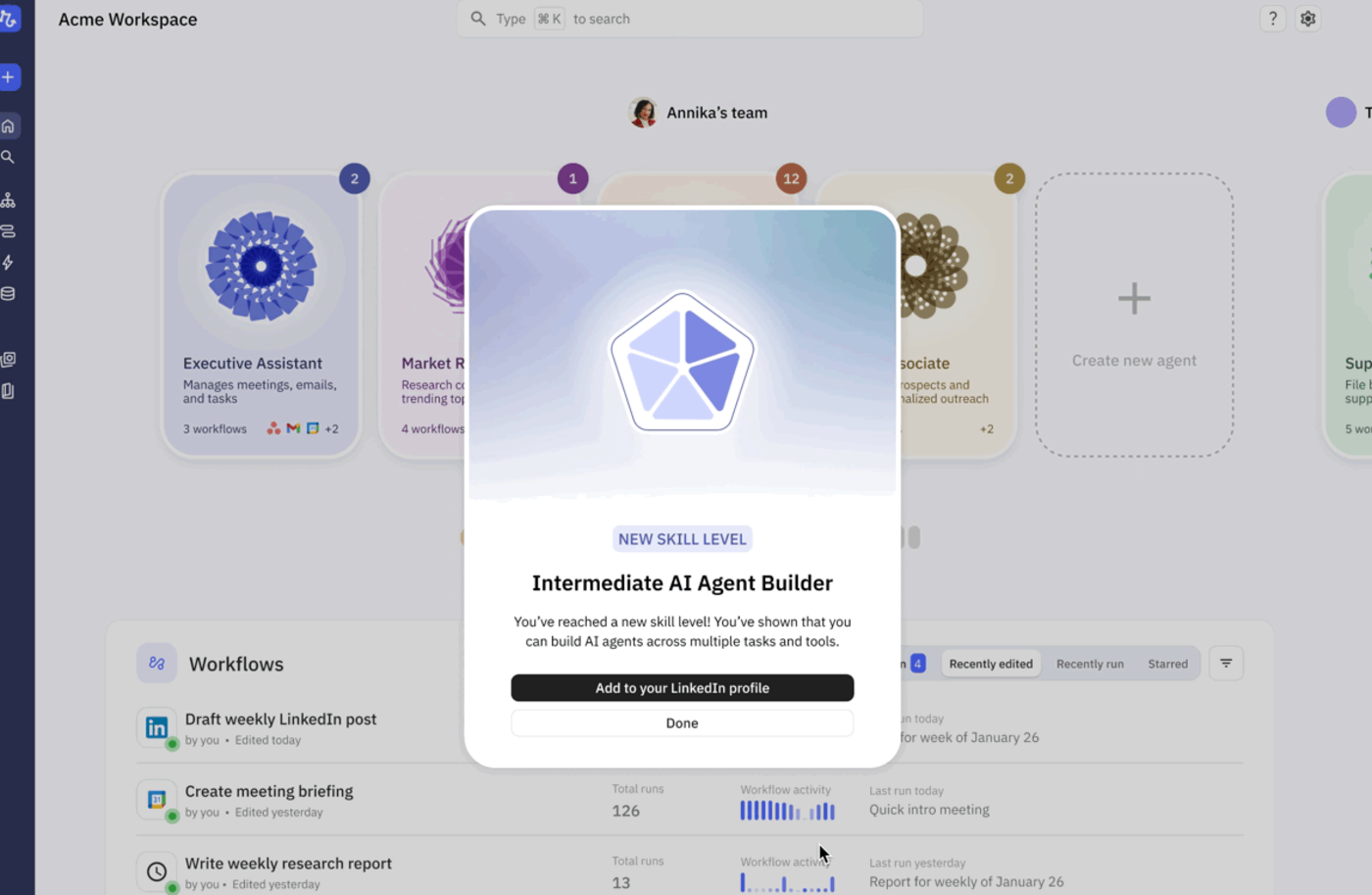
The company is partnering with Replit, Lovable, Descript and Relay.app  on the feature and is working on integrations with fellow Microsoft-owned GitHub as well as Zapier.  LinkedIn has always allowed users to add various skills and certifications to their profiles. But what makes the latest update a bit different is that users aren't self-reporting their own qualifications. Instead, LinkedIn is allowing the companies behind the AI tools to assess an individual's relative skill and assign a level of proficiency that goes directly to their profile. 

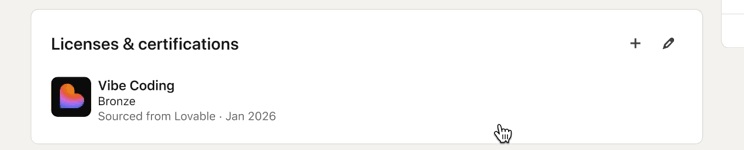
For example, AI app maker Lovable could award someone a "bronze" in "vibe coding," while the platform Replit uses numerical levels and Relay.app may determine that someone is an "intermediate" level "AI Agent Builder," according to screenshots shared by LinkedIn. These levels should dynamically update as people get more experience using the relevant tools, according to LinkedIn.

Lovable's vibe coding rating system.
LinkedIn

Of course, the update also comes at a time when companies have used these same kinds of AI tools to lay off thousands of workers. So while there's may be value in showing off your vibe coding skills, there are still many workers who likely aren't as excited about  ceding more ground to AI. When I asked, LinkedIn's head of career products Pat Whealan about this he said that 

 AI-specific skills are an increasingly important signal to recruiters and the latest update will make it easier for them to assess candidates' skills. But he added that the intention isn't to make AI-specific skills the sole focus. "This is less about replacing any of those other existing signals, and more about showing new ways that people are doing work," he tells Engadget. "And how do we give a verifiable signal to both hirers and other people looking at their profile, that they actually are using these tools on a regular basis."


This article originally appeared on Engadget at https://www.engadget.com/ai/linkedin-will-let-you-show-off-your-vibe-coding-expertise-140000776.html?src=rss

©

  •  

TikTok settles to avoid major social media addiction lawsuit

TikTok has reached a settlement in a closely-watched lawsuit over social media addiction, narrowly avoiding a trial that's scheduled to begin jury selection Tuesday. Terms of the deal, which was reported by The New York Times, weren't disclosed. 

TikTok's settlement comes about one week after Snap reached a settlement in the same case. The trial is expected to move forward in Los Angeles with Meta and YouTube as the only defendants. Mark Lanier, a lawyer for the plaintiff, said in a statement to NYT that they were "pleased" with the settlement and that it was "a good resolution." TikTok didn't immediately respond to a request for comment. 

The trial stems from a 2023 lawsuit brought by a California woman known in court documents as "K.G.M." She sued Meta, Snap, TikTok and YouTube and alleged that their platforms were addictive and had harmed her as a child. The judge in the case previously ordered the companies' executives, including Mark Zuckerberg and Adam Mosseri, to testify. YouTube's top exec, Neal Mohan, is also likely to testify, according to The New York Times. 

The lawsuit is the first among several high-profile cases against social media companies to go to trial this year. Meta is expected to head to court in New Mexico in early February in a case brought by the state's attorney general, who has alleged that Facebook and Instagram have facilitated harm to children. TikTok and Snap are collectively facing more than a dozen other trials in California courts this year.

This article originally appeared on Engadget at https://www.engadget.com/social-media/tiktok-settles-to-avoid-major-social-media-addiction-lawsuit-183943927.html?src=rss

©

  •  

The EU tells Google to give external AI assistants the same access to Android as Gemini has

The European Commission has started proceedings to ensure Google complies with the Digital Markets Act (DMA) in certain ways. Specifically, the European Union’s executive arm has told Google to grant third-party AI services the same level of access to Android that Gemini has. "The aim is to ensure that third-party providers have an equal opportunity to innovate and compete in the rapidly evolving AI landscape on smart mobile devices," the Commission said in a statement. 

The company will also have to hand over "anonymized ranking, query, click and view data held by Google Search" to rival search engines. The Commission says this will help competing companies to optimize their services and offer more viable alternatives to Google Search. 

"Today’s proceedings under the Digital Markets Act will provide guidance to Google to ensure that third-party online search engines and AI providers enjoy the same access to search data and Android operating system as Google's own services, like Google Search or Gemini," said Henna Virkkunen, the Commission’s executive vice-president for tech sovereignty, security and democracy. "Our goal is to keep the AI market open, unlock competition on the merits and promote innovation, to the benefit of consumers and businesses."

The Commission plans to wrap up these proceedings in the next six months, effectively handing Google a deadline to make all of this happen. If the company doesn't do so to the Commission's satisfaction, it may face a formal investigation and penalties down the line. The Commission can impose fines of up to 10 percent of a company's global annual revenue for a DMA violation.

Google was already in hot water with the EU for allegedly favoring its own services — such as travel, finance and shopping — over those from rivals and stopping Google Play app developers from easily directing consumers to alternative, cheaper ways to pay for digital goods and services. The bloc charged Google with DMA violations related to those issues last March. 

In November, the EU opened an investigation into Google's alleged demotion of commercial content on news websites in search results. The following month, it commenced a probe into Google's AI practices, including whether the company used online publishers' material for AI Overviews and AI Mode without "appropriate compensation" or offering the ability to opt out.

This article originally appeared on Engadget at https://www.engadget.com/ai/the-eu-tells-google-to-give-external-ai-assistants-the-same-access-to-android-as-gemini-has-154157081.html?src=rss

©

  •  

Apple will begin showing more App Store ads starting in March

More ads are coming to App Store search results starting in March, Apple shared on an advertising help page. The company first said that it would increase the number of App Store ads last month, and this new rollout of search ads will begin on Tuesday, March 3, according to a developer email viewed by MacRumors.

"Search is the way most people find and download apps on the App Store, with nearly 65 percent of downloads happening directly after a search," Apple says. "To help give advertisers more opportunities to drive downloads from search results, Apple Ads will introduce additional ads across search queries." Up until this point, ads for related apps have appeared at the top of search results, but now they'll also appear "further down in search results," according to Apple.

App Store activity makes up a significant portion of what Apple calls its "services" business. The company makes money on every App Store transaction, whether it's an app download or an in-app purchase, and increasingly, by selling ad space to companies looking to reach users. App Store ads are hardly new, but the number of ads has steadily increased over the years. Apple added ads to the Today tab in 2022 — a space that's already home to editorial curation that doubles as marketing — and in 2025, Bloomberg reported the company planned to bring ads to Apple Maps.

Apple's decision to rebrand its advertising business from Apple Search Ads to Apple Ads in April 2025 was maybe the best indication that the company was interested in expanding the number of places it would help partners try and reach customers. And it makes sense: the company's billions of devices, each pre-installed with default apps, are some of the most valuable real estate it owns.

This article originally appeared on Engadget at https://www.engadget.com/apps/apple-will-begin-showing-more-app-store-ads-starting-in-march-192031226.html?src=rss

©

  •  

OpenAI is launching age prediction for ChatGPT accounts

OpenAI is the latest company to hop on the bandwagon of gating access by users' age. The AI business is beginning a global rollout of an age prediction tool to determine whether or not a user is a minor. “The model looks at a combination of behavioral and account-level signals, including how long an account has existed, typical times of day when someone is active, usage patterns over time,and a user’s stated age,” the company’s announcement states. If an individual is incorrectly characterized by ChatGPT as underage, they will need to submit a selfie to correct the mistake through the Persona age verification platform. 

Most AI companies have been willing to push new features first and then attempt to layer on a patchwork of protections and safety guards on top of them after they cause harm. OpenAI was implicated in a wrongful death suit for a teen who allegedly used ChatGPT to plan his suicide, and only in the following months began pondering automatic restrictions on content for underage users and launching a mental health advisory council. In this instance, OpenAI is attempting to prepare for the launch of an "adult mode" that will allow users to create and consume content that would be dubbed NSFW. Considering how well a similar change has been going over at Roblox, another platform with a shaky history around protecting minors, it seems probable that underage users will find ways to circumvent the existing tools if they want to use ChatGPT as adults.

This article originally appeared on Engadget at https://www.engadget.com/ai/openai-is-launching-age-prediction-for-chatgpt-accounts-222650340.html?src=rss

©

  •  

The Morning After: Elon Musk wants a $134 billion payout from OpenAI and Microsoft

Part of a lawsuit accusing OpenAI of abandoning its non-profit status claims Musk is owed anywhere from $79 billion to $134 billion in damages for the “wrongful gains” of OpenAI and Microsoft.

Musk claims in the filing that he’s entitled to a chunk of the company’s recent $500 billion valuation, after contributing $38 million in “seed funding” during the AI company’s early years. It wasn’t just money — according to the filing, Musk helped advise on key employee recruitment, introductions with business contacts and startup advice.

If this sounds familiar, it’s because the lawsuit dates back to March 2024. It’s still going.

— Mat Smith

The other big stories (and deals) this morning


Anthropic opens up Claude Cowork to anyone with a $20 subscription

Anthropic’s AI assistant can handle simple tasks on your PC for you.

TMA
Engadget

Claude Cowork, Anthropic’s AI assistant for handling simple tasks on your computer, is now available to anyone with a $20-per-month Pro subscription. It was previously an exclusive feature for its Max subscribers, who pay a minimum of $100 per month.

As a reminder, the intriguing part of Claude Cowork is its ability to work on its own. If you have the macOS Claude app and a Pro subscription, you can prompt Claude Cowork to work on tasks on your local computer, like creating documents based on files you have saved or organizing your folders. Don’t expect it to deal with high-level PC work just yet, but it can handle simple organizational tasks.

Continue reading.


Dr. Gladys West, whose mathematical models inspired GPS, dies at 95

Her decades-long career finally received wider recognition in 2018.

Pioneering mathematician Dr. Gladys West has passed away at the age of 95. Her name may not be familiar to you, but her contributions will be. West’s work laid the foundation for the global positioning system, GPS, we all use (sometimes daily). Beyond DoorDash requests and Google Maps navigation, GPS is now an essential component of industries ranging from aviation to emergency response systems.

Continue reading.


ASUS will not release any new smartphones this year

Will the company be joining the likes of LG?

TMA
Engadget

ASUS might step back from smartphones. According to translations of recent quotes from Chair Jonney Shih, the company does not plan to release new phone models in the future. Previous reports suggested ASUS would not introduce any smartphones in 2026, but Shih’s recent comments indicate the pause may last longer, if not indefinitely. We’ve reached out to ASUS for additional comment. It's not like the company changes its mind...

Continue reading.

This article originally appeared on Engadget at https://www.engadget.com/general/the-morning-after-engadget-newsletter-121509123.html?src=rss

©

  •  
❌