This week, Meta CEO Mark Zuckerberg testified in a landmark social media trial, claiming the company only wanted to make Instagram "useful" and not addictive. In this episode, we chat about Zuck's testimony and the potential implications of this trial for social media companies. Also, we dive into the latest effects of the RAMaggedon RAM shortage, including a potential PlayStation 6 delay and a dire future for practically every consumer electronics company.
Mark Zuckerberg testifies that Instagram was meant to be “useful,” not addictive in social media addiction trial – 1:27
Meta reportedly plans to launch a smartwatch later this year – 13:23
The RAMageddon will likely kill some small consumer electronics companies – 15:54
Apple could unveil a MacBook, new M5 Pro chip, and iPhone 17e at March 4th event – 26:26
Google’s Pixel 10a arrives on March 5 – 32:17
Email leaked to 404 media suggests Ring had plans to use its Search Party function for wider surveillance – 34:48
Listener mail – 45:14
Working on – 48:40
Pop culture picks – 49:04
Credits
Host: Devindra Hardawar Producer: Ben Ellman Music: Dale North and Terrence O’Brien
This article originally appeared on Engadget at https://www.engadget.com/ai/engadget-podcast-instagram-on-trial-and-the-ramaggedon-rages-on-131526178.html?src=rss
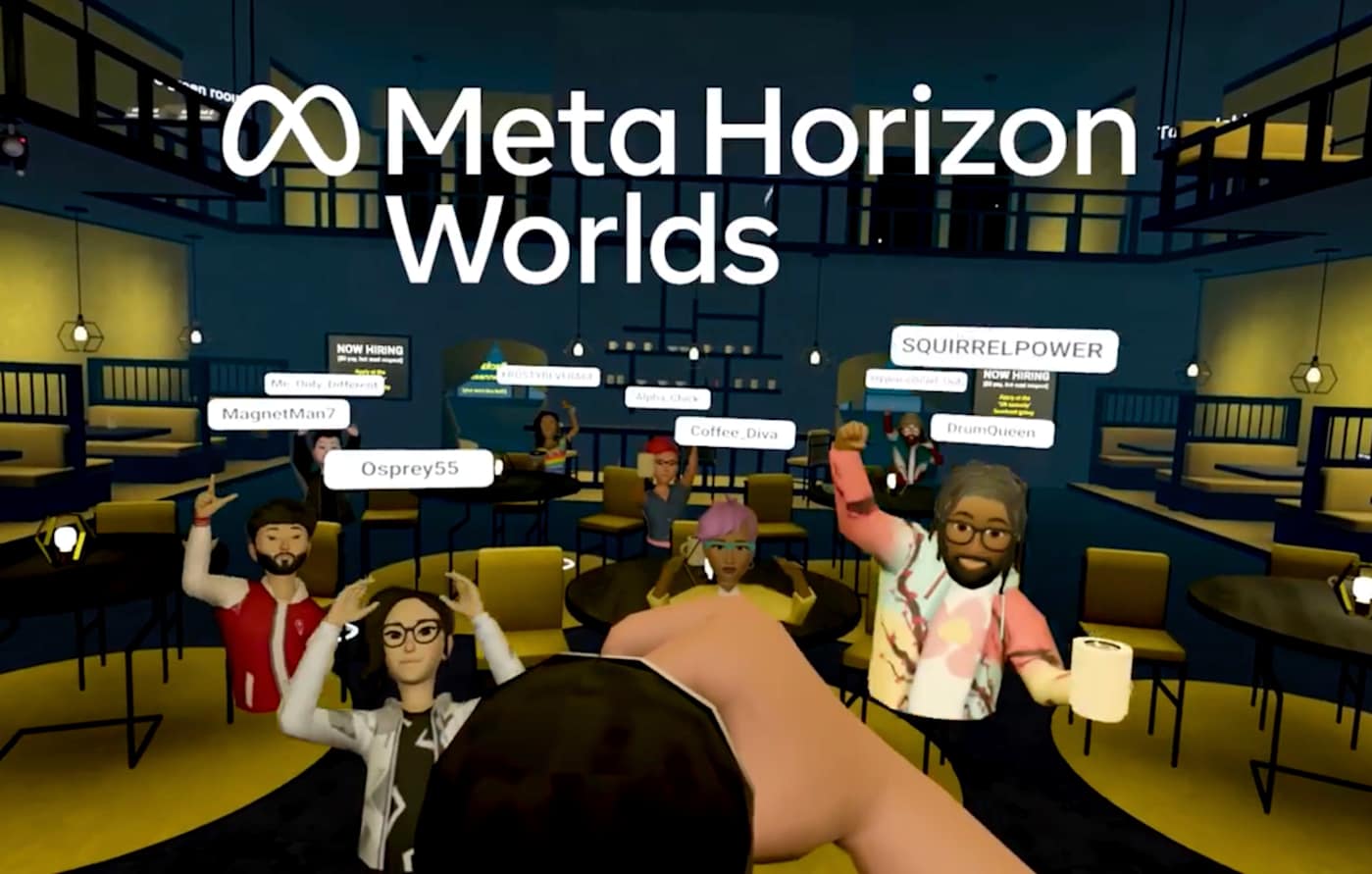
Meta is formally sectioning off Horizon Worlds, the closest thing it has to a metaverse, from its Quest VR platform, according to a new blog post from Samantha Ryan, Meta's VP of Content, Reality Labs. While the decision runs counter to Meta's original plan to own an immersive virtual world that could serve as the future home for all online interaction, it fits with the recent cuts it made to its costly Reality Labs division, and Mark Zuckerberg's public commitment to focus the company on AI hardware like smart glasses going forward.
"We’re explicitly separating our Quest VR platform from our Worlds platform in order to create more space for both products to grow," Ryan writes in the blog post. "We’re doubling down on the VR developer ecosystem while shifting the focus of Worlds to be almost exclusively mobile. By breaking things down into two distinct platforms, we’ll be better able to clearly focus on each."
Meta has been developing mobile and web versions of Horizon Worlds in parallel with its VR app since at least 2023. Switching Worlds to being a mobile-first software platform isn't good for VR diehards, but it does make it a more natural competitor to something like Roblox or Fortnite, which also offer user-created and monetizable worlds and games. It's also a business Meta believes it can more easily scale because of its ability to connect games to "billions of people on the world’s biggest social networks."
While Meta shuttered several of its own VR game studios earlier this year, it still wants to support third-party developers publishing games on its platform. The company says new monetization tools, better discoverability, a "Deals" tab and more ways for developers to talk to their customers should help make a difference. Maintaining the Quest's library of games could also be critical going forward. Business Insider reported in December 2025 that Meta was working on a gaming-focused Quest headset, and Meta CTO Andrew Bosworth confirmed earlier this February that the company still had multiple Quest devices on its roadmap.
This article originally appeared on Engadget at https://www.engadget.com/ar-vr/metas-metaverse-is-going-mobile-first-233030532.html?src=rss
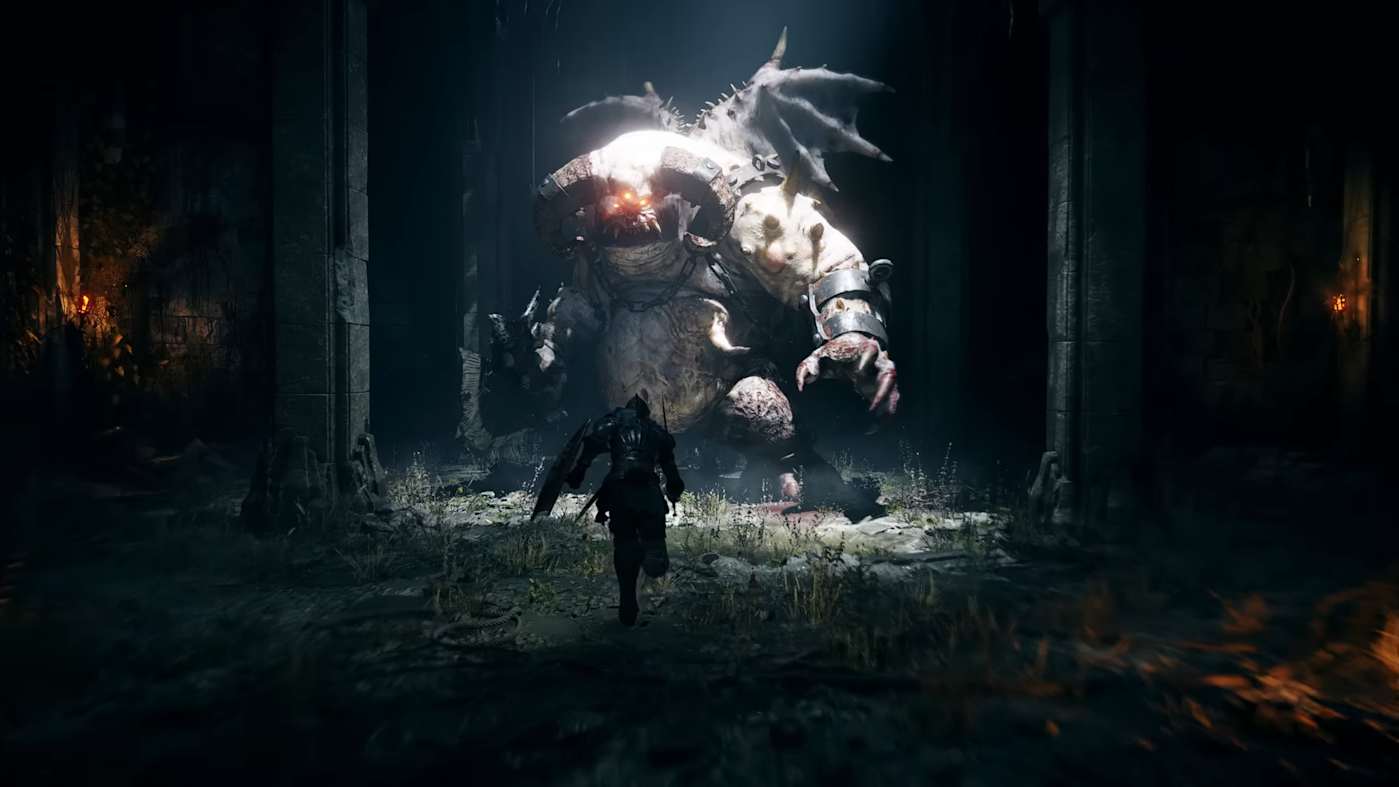
Sony is closing Bluepoint Games, the studio behind the Shadow of the Colossus and Demon's Souls remakes, Bloomberg reports. Bluepoint's last major project was God of War: Ragnarok from 2022, which it co-developed with Sony Santa Monica.
According to Bloomberg, Sony decided to shut down the studio following "a recent business review." Around 70 employees will lose their jobs as part of the studio closure, which will officially happen in March. "Bluepoint Games is an incredibly talented team and their technical expertise has delivered exceptional experiences for the PlayStation community," Sony said in a statement to Bloomberg. "We thank them for their passion, creativity and craftmanship."
Following their work on Ragnarok, Bluepoint was reportedly tasked with developing a live-service game set in the God of War universe. That title was cancelled in 2025, alongside another game from Bend Studio. In the context of Sony's other live-service failures, the decision wasn't surprising. Sony shut down the servers for multiplayer shooter Concord just two weeks after its release. Not long after, it also closed Firewalk Studios, the developer behind the game.
Bluepoint Games was originally acquired by Sony in 2021, when it seemed like the studio's expertise in remaking and remastering classic PlayStation games could be a major asset going forward. Why that changed isn't entirely clear, but Sony's mismanagement of its pivot into and out of publishing premium online multiplayer games may have played a role. Some of Sony's studios are still experimenting with live-service mechanics. Guerilla Games recently announced an online co-op game set in its Horizon universe. Destiny 2 developer Bungie is also releasing its extraction shooter Marathon in March.
This article originally appeared on Engadget at https://www.engadget.com/gaming/playstation/sony-is-shutting-down-the-studio-behind-the-demons-souls-remake-195234213.html?src=rss
Toy Fair 2026 just wrapped earlier this week and while I would have liked to spend even more time there, I have my own kids (and all their toys and trinkets) to look after. That said, there were a ton of cool new products on display at the Javits Center in New York City that set the stage for the rest of the year, so here's a quick look at some of the most interesting releases from the largest toy show in the Western Hemisphere.
To celebrate the 40th anniversary of Transformers: The Movie, Hasbro is launching an apology tour to make up for traumatizing theatergoers with the death of the most beloved Autobot back in 1986. To kick things off, Hasbro is releasing a handful of new figures alongside re-releases for some popular bots including Astrotrain, Skywarp, Snarl and Shockwave. I want to give a special shout-out to the model for Kranix, which looks incredibly accurate, as if he just leapt off the movie screen. And even though his duck-billed spaceship alt-mode might look a bit awkward, I wouldn't have it any other way.
The crown jewel of the line might be a near-life-size version of The Matrix of Leadership, which measures more than 15 inches wide and even plays Stan Bush's iconic song "The Touch" with the push of a button. Unfortunately, the appeal of the Matrix is so powerful that it's already sold out, including at third-party retailers like Big Bad Toy Store, which thankfully is still taking pre-orders for the rest of the lineup after the initial stock from Hasbro dried up.
A collection of some of the new F1 Hot Wheels cars for 2026.
Sam Rutherford for Engadget
Hot Wheels has big plans for 2026 including a new line of Pantone-colored cars, Brick Shop models like the Elite Series Aston Martin (which comes with its own 1:64 scale car) and a Monster Truck Mutant Chaos set with actual slime. However, I'd argue the company's new F1 offerings are the cream of the crop. Not only are there a bunch of incredibly detailed 1:64 scale racecars with metal bodies, real rubber tires and accurate livery for all the big teams, there's also a new Downhill Circuit Race course that comes with three official vehicles (Mercedes, Haas and Ferrari) featuring multiple levels and the ability to overtake or crash into other cars. If you're like a lot of Americans who have recently fallen down the F1 rabbit hole due to Netflix's Drive to Survive, these new officially licensed miniatures are sure to hit the spot.
The first five-pack set of cars is available now, with more arriving later this spring before the Downhill Circuit Race course drives by sometime this fall.
Darth Vader's TIE fighter is an all-in-one set, which means it comes included with one of Lego's Smart Bricks, which isn't true for every kit.
Lego
We've been eagerly awaiting the first batch of playsets featuring Lego's nifty Smart Brick after it debuted at CES. But now that the company has detailed eight new sets featuring its latest innovation, we're even more intrigued. For me, the three standout kits are the Millennium Falcon, Luke's Red Five X-Wing and Darth Vader's TIE fighter because acting out the Death Star trench run complete with reactive lights and sounds will never get old. I also have a soft spot for the Ewok minifigs that come with the AT-ST set. Alternatively, the Mos Eisley Cantina kit seems like a great way to highlight the smart brick's ability to play music or kick out some rowdy droids. The one thing to look out for, though, is the tag on the set that says whether it's Smart Play compatible or if it's an all-in-one set, because the former will need Smart Bricks from other kits to deliver Lego's newfound interactivity.
Pre-orders for these are live now, with sets slated to ship on March 1.
All the new K-pop Demon Hunters toys
The HUNTR/X Battle Rumi Deluxe Fashion Doll (right) might be my favorite of the bunch.
Sam Rutherford for Engadget
Rumi, Mira and Zoey may have been the biggest breakout stars of 2025 and Mattel is looking to keep that momentum going with a ton of new toys and figures for everyone's favorite demon hunters. There are three new singing dolls that can belt out the trio's hit "Golden" at the touch of a button and a deluxe figure of Rumi complete with her Four Tiger Sword. There are also a ton of other dolls and miniatures showcasing HUNTR/X, the Saja Boys and more. The one downside is that these products aren't coming out until the fall, so you'll have to tide yourself over with other K-pop-themed products for now.
If Rosalina isn't careful, Yoshi will become the biggest draw of the new Mario movie.
Spin Masters
Yoshi seems poised to steal the spotlight from Rosalina in the upcoming Super Mario Galaxy Movie and this release from Spin Masters is only reinforcing the lovable green dino's aura. From inside his shell, Yoshi can burst out with his signature yell. After that, you can pat his nose to make his eyes light up or get him to rock when he's really happy. But if you want one, you're going to have to be vigilant. Pre-orders are already sold out, so you'll need to keep a close eye on retailers like Walmart when he officially goes on sale on February 20.
Not only do the SolarFlowers look great, they're educational too.
Thames & Kosmos
Technically, these went on sale last month, but Thames & Kosmos' SolarFlowers caught my eye again at Toy Fair due to their combination of art and science. Available in four different styles, each kit features a model that you can build yourself or with your kids (recommended age 8+) that turns into a lasting showpiece. After putting the kinetic sculpture together, you can connect the included solar panel to bring the whole kit to life (no batteries required) and make the flowers spin for perpetual entertainment.
Honorable mentions
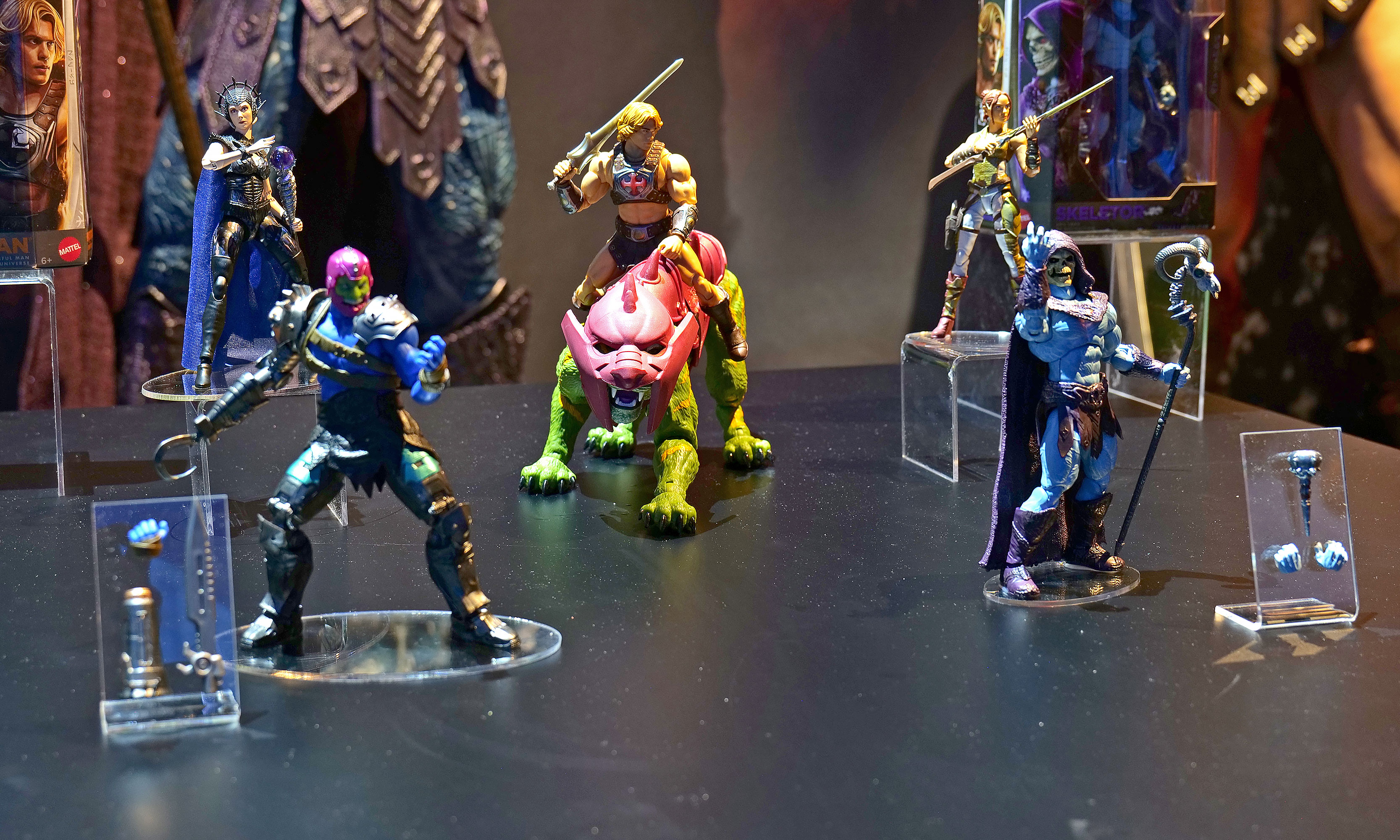
Upcoming Masters of the Universe figures
Some upcoming figures from Mattel's line of Masters of the Universe figures.
Sam Rutherford for Engadget
As someone who grew up during the 80s and 90s, I'm trying to be optimistic about He-Man's return to the big screen later this summer and Mattel's new line of figures is certainly helping. To help prime people for the movie, there's a big range of upcoming toys highlighting He-Man, Skeletor, Battle Cat and more, all of which I would have absolutely loved as a kid. Those will be available later this spring.
It's hard to gauge the excitement of toys aimed at one-year-olds when they can't read or get into Toy Fair. But as the parent of a toddler, I adore the partnership between Fisher-Price and Nintendo that has resulted in a line of Mario-themed Little People. All the big names are here, including Peach, Luigi and Bowser and there's even a couple of super cute playsets to go with them. But perhaps the best part is that a six-pack of figures and Bower's Airship costs under $25, which means your kid could be in for hours of fun without you spending a ton of money.
This article originally appeared on Engadget at https://www.engadget.com/entertainment/here-are-my-favorite-things-from-toy-fair-2026-183356720.html?src=rss
Meta is reportedly gearing up to enter another segment of the wearables market. According to The Information, the company is planning to release its first smartwatch sometime this year. Meta has revived its smartwatch initiative internally called “Malibu 2,” The Information says, which will come with Meta AI and health tracking.
The same publication reported back in 2021 that Meta was working on a smartwatch powered by an open-source version of Android. Over the next year, more details of its possible features emerged, including reports that it had a detachable camera and that Meta was developing a model with up to three cameras. But in 2022, the company was believed to have put the project on hold to focus on other wearable devices.
The Information says the decision to pause its smartwatch project was made as part of a broader cut in spending in the Reality Labs division. If you’ll recall, Meta laid off more than 1,000 employees from Reality Labs in January, because the division was hemorrhaging money. Mark Zuckerberg said during an earnings call after the layoffs started that when it comes to Reality Labs, the company was focusing most of its investment “towards glasses and wearables going forward.”
At the moment, Meta’s wearable products are comprised of virtual reality headsets and smartglasses. They include the Meta Ray-Bans, which are a hit in the US. Meta reportedly has four augmented reality and mixed-reality glasses in development, but it’ll take some time until we see them. Based on previous reports, it pushed back the unveiling of its next mixed reality headset model codenamed “Phoenix” to early 2027.
This article originally appeared on Engadget at https://www.engadget.com/wearables/meta-reportedly-plans-to-release-a-smartwatch-this-year-121247838.html?src=rss
Mark Zuckerberg took the stand Wednesday in a high-profile jury trial over social media addiction. In an appearance that was described byNBC News as "combative," the Facebook founder reportedly said that Meta's goal was to make Instagram "useful" not increase the time users are spending in the app.
On the stand, Zuckerberg was questioned about a company document that said improving engagement was among "company goals," according to CNBC. But Zuckerberg claimed that the company had "made the conscious decision to move away from those goals, focusing instead on utility," according to The Associated Press. "If something is valuable, people will use it more because it’s useful to them,” he said.
The trial stems from a lawsuit brought by a California woman identified as "KGM" in court documents. The now 20-year-old alleges that she was harmed as a child by addictive features in Instagram, YouTube, Snapchat and TikTok. TikTok and Snap opted to settle before the case went to trial.
Zuckerberg was also asked about previous public statements, including his remarks on Joe Rogan's podcast last year that he can't be fired by Meta's board because he controls a majority of the voting power. According to The New York Times, Zuckerberg accused the plaintiffs' lawyer of "mischaracterizing" his past comments more than a dozen times.
Zuckerberg's appearance in court also apparently prompted the judge to warn people in the courtroom not to record the proceedings using AI glasses. As CNBC notes, members of Zuckerberg's entourage were spotted wearing Meta's smart glasses as the CEO was escorted into the courthouse. It's unclear if anyone was actually using the glasses in court, but legal affairs journalist Meghann Cuniff reported that the judge was particularly concerned about the possibility of jurors being recorded or subjected to facial recognition. (Meta's smart glasses do not currently have native facial recognition abilities, but recent reports suggest the company is considering adding such features.)
The Los Angeles trial has been closely watched not just because it marked a rare in-court appearance for Zuckerberg. It's among the first of several cases where Meta will face allegations that its platforms have harmed children. In this case and in a separate proceeding in New Mexico, Meta's lawyers have cast doubt on the idea that social media should be considered a real addiction. Instagram chief Adam Mosseri previously testified in the same Los Angeles trial that Instagram isn't "clinically addictive."
This article originally appeared on Engadget at https://www.engadget.com/social-media/mark-zuckerberg-testifies-in-social-media-addiction-trial-that-meta-just-wants-instagram-to-be-useful-234332316.html?src=rss
Google has announced that using its newly incorporated Lyria 3 model, Gemini users will be able to generate 30-second music tracks based on a prompt, or remix an existing track to their liking. The new model builds on Gemini's pre-existing ability to generate text, images and video, and will also be available in YouTube's "Dream Track" feature, where it can be used to generate detailed backing tracks for Shorts.
Like some other music generation tools, prompting Gemini doesn't require a lot of detail to produce serviceable results. Google's example prompt is "a comical R&B slow jam about a sock finding their match," but after playing with Lyria 3, you can definitely get more granular about individual elements of a track — changing the tempo or the style of drumming, for example — if you want to. Outside of text, Gemini can also generate music based on a photo or video, and tracks can be paired with album art created by Google's Nano Banana image model.
Google says that Lyria 3 improves on its previous audio generation models in its ability to create more "realistic and musically complex" tracks, give prompters more control over individual components of a song and automatically generate lyrics. Gemini's outputs are limited to 30-second clips for now, but given how Google's promotional video shows off the feature, it's not hard to imagine those clips getting longer or the model getting incorporated into other apps, like Google Messages.
Like Gemini's other AI-generated outputs, songs made with Lyria 3 are also watermarked with Google's SynthID, so a Gemini clip can't as easily be passed off as a human one. Google started rolling out its SynthID Detector for identifying AI-generated content at Google I/O 2025. The sample tracks Google included alongside its announcement are convincing, but you might not need the company's tool to notice their machine-made qualities. The instrumental parts of Gemini’s clips often sound great, but the composition of the lyrics Lyria 3 produces sounds alternately corny and strange.
If you're curious to try Lyria 3 for yourself, Google says you can prompt tracks in Gemini starting today, provided you're 18 years or older and speak English, Spanish, German, French, Hindi, Japanese, Korean or Portuguese.
This article originally appeared on Engadget at https://www.engadget.com/ai/gemini-can-now-generate-a-30-second-approximation-of-what-real-music-sounds-like-204445903.html?src=rss
Netflix has been in the game adaptation business for a while now, but until recently most of its attention had been on adapting video games. That’s still very much happening, but the streaming giant is also now buying up rights for board game IP too, with the latest being Asmodee’s Ticket to Ride.
Netflix will look to greenlight a number of projects spanning TV, film and "additional formats," it wrote in a press release. The first of these will be a feature film written by Ben Mekler and Chris Amick. Ticket to Ride creator Alan R. Moon will serve as an executive producer on the project, which will be the game’s first on-screen adaptation. Exactly what it will look like is not yet clear, but the internet already has plenty of theories.
Ticket to Ride is a train-themed turn-based strategy and route-building game first released over 20 years ago. Since then it has gone on to ship more than 20 million copies and has been translated into over 30 languages. It’s also been given the video game adaptation treatment before.
This is actually the second of Asmodee’s IP that Netflix has acquired the rights to, after announcing last year that Catanwill also be making its way to screens in various forms. And it isn’t just interested in scripted TV and movie opportunities. In early 2025, the company also signed a deal with Hasbro to adapt Monopolyinto a TV game show.
This article originally appeared on Engadget at https://www.engadget.com/entertainment/netflix-is-adapting-the-board-game-ticket-to-ride-180505164.html?src=rss
Web designers of the world: The Automattic-owned WordPress.com is further embracing AI on its platform. On Tuesday, it expanded its one-off AI site builder into a persistent AI assistant for editing and media creation.
In the site editor, the AI assistant can help with site-wide structure and design choices. For example, you can ask the chatbot to "give me more font options that feel clean and professional or “change my site colors to be brighter and bolder." It also includes image generation and writing assistance, such as "rewrite this to sound more confident." (Who needs learning when you have automation!)
The assistant can also now be integrated into your site's media library. It can generate new images or make prompted edits to your existing ones. Examples include "update this image to be black and white" or "replace this stack of pancakes with waffles." (Just don't fake that if your business sells breakfast food, okay?) WordPress says the assistant understands your website's look and brand and can tailor the media accordingly.
WordPress also added the AI assistant to the platform's team chat, Block Notes. You can summon the chatbot from within your team chat threads.
The tool is available for WordPress.com's Business or Commerce plans. (Or, if you made your site using the AI builder, it's enabled by default, no matter which plan you use.) The feature works best with the platform's block themes; it's much more limited with classic ones. You'll find the toggle to activate the AI assistant in your site settings under the "AI tools" section.
This article originally appeared on Engadget at https://www.engadget.com/ai/wordpress-adds-an-ai-assistant-174719676.html?src=rss
Fans of The Mandalorian and his tiny green apprentice Grogu are getting their best look yet at the duo's upcoming theatrical adventure, set for release this spring. It’s hard to believe that it's been just over six years since the last Star Wars movie was released in theaters, followed by wall-to-wall coverage of so-called Star Wars Fatigue.
The newest trailer, released today, clocks in at just over two minutes long and offers some new footage and details to sink our teeth into. Picking up after the events of the Disney+ series The Mandalorian, the Empire has collapsed and Din Djarin (Pedro Pascal) and Grogu are tasked with taking out a bevy of baddies from gangsters to war criminals for the New Republic. Colonel Ward, new to the Star Wars universe and played by Sigourney Weaver, tells Djarin, "This isn't about revenge, it's about preventing another war."
Jeremy Allen White will also star in the film, as Rotta the Hutt, Jabba's son, who we briefly see battling Din Djarin in a colosseum of sorts. Notably, at one point we see Djarin on his knees before Jabba sans helmet, so we'll definitely be getting some moments of Pedro Pascal unfiltered by Beskar. Like any Star Wars adventure, we see flashes of some new creatures that our heroes will face. Most importantly, we see Grogu being downright adorable, playing with buttons on the ship, commandeering a flying bassinet, and snacking on a cookie.
The Mandalorian and Grogu hits theaters on May 22 and, according to the trailer, was shot at least in part for IMAX.
This article originally appeared on Engadget at https://www.engadget.com/entertainment/tv-movies/the-first-full-trailer-for-the-mandalorian-and-grogu-is-here-164244117.html?src=rss
Bloober Team has revealed Layers of Fear 3 following a Valentine's Day countdown that started at the beginning of 2026. The new chapter will include not only a game but a novel and music, the company said in a press release.
The developer revealed the new IP via a live-action teaser, with an actor reading lines from William Blake's poem, The Sick Rose. A painting then fell from the wall, and the actor then turned over an hourglass with red sand, with a tagline stating "The door won't stay closed." No gameplay or other information like the release date was revealed.
What Bloober did say, though, is that it would launch new Layers of Fear non-game content, including a novel by horror writer, poet and vocalist Marta Bijan. The company also announced that it would release the soundtracks for Layers of Fear,The Medium and Cronos both in digital and physical (CD and vinyl) editions.
The new title is likely to be eagerly anticipated given Bloober's form of late. The company recently released its Silent Hill 2 remake, Cronos: The New Dawn and a new Switch 2 Layers of Fear 2 version called Layers of Fear: The Final Masterpiece Edition. The original Layers of Fearcame out back in 2016 and is considered one of the better horror titles of recent years, thanks to an expertly crafted narrative and psychedelic thrills and chills. The sequel moved to a creepy ocean liner and was equally well-received.
Update Feb. 16, 2026 at 3:06PM ET: The headline was updated with the correct game name.
This article originally appeared on Engadget at https://www.engadget.com/gaming/layers-of-3-revealed-via-a-mysterious-trailer-and-poem-153021903.html?src=rss
For most adventure games, the long-term goal can often focus on solving a grand mystery or chasing a lost artifact of the past. But for the upcoming Mixtape, from publisher Annapurna Interactive, it sets its sights on the misadventures of young friends enjoying their last days together before moving on. It's the type of narrative adventure game that shines a light on how good music can bring people together, and how much fun getting into trouble can be.
From developer Beethoven and Dinosaur, the Australian creative team behind The Artful Escape, Mixtape is, in many ways, a tribute to classic '90s Americana and an ode to the rebellious youth of the average suburb. I recently got to play the latest build of Mixtape and spoke with game director Johnny Galvatron about the making of their latest game. Along with sharing his favorite '80s and ’90s films that helped shape his vision, he also explained how tough yet rewarding it is to make "idleness" in video games compelling.
"Idleness is hard to explore as a video game, and one of the interesting things about being a teenager is you just hang out a lot, and sometimes it just sucks," said Galvatron. "So I love that we made a game that shows that idleness.”
“I think it can be a really hard balance to make something that is based on what is really a hangout film, something like Wayne's World or Richard Linklater's Dazed and Confused, but to have that be paced well and to be exciting for a video game was a real challenge."
Set in the 1990s, Rockford and her friends Slater and Cassandra prepare for one last hurrah before heading into adulthood. With Rockford deciding to make a daring move to New York City to hopefully connect with her music idol, the crew reminisces on the good times they had going for late-night fast food runs, evading the police in shopping carts, and first kisses with their crushes – and all to the tune of their favorite songs.
Beethoven & Dinosaur
On the surface, Mixtape is an interactive coming-of-age story about a crew of rebellious teens, with memories serving as playable mini-games and interludes that capture their feelings at the time. But that's actually what makes this interactive trip down memory lane so compelling. These segments are presented as exaggerated memories of the past, fueled by the music of Devo, Joy Division, and Siouxsie and the Banshees. They’re emotional, poignant moments for these characters, tapping into the idea of how moments from our youth seemed bigger and grander than they actually were.
One section I enjoyed playing was an interactive head-bobbing segment where the crew drove across town to get fast food. Different buttons corresponded to fist-pumping and head-bobbing actions, but there were no specific directions, so I just had to go with the flow. This scene was a great bit of comedy that showed off how goofy Rockford and her friends could get while vibing, but it was also a fun callback to films like Pulp Fiction, which used rear-projection sets to simulate car driving scenes (the memory even plays out on a film set). Another segment focused on a photo booth with Rockford and Slater, which put them in a position to capture the best or funniest shots.
But it's not all fun and games with the crew. One segment focused on the friends tossing toilet paper rolls around their school principal's home, which quickly takes a turn for the worse when one of them decides to take the blame to spare Rockford from expulsion. It's a surprisingly heartfelt and sad moment, but it also foreshadows a simmering conflict for these characters.
It's clear that Mixtape seeks to capture the experiences of a particular era, and that the developers themselves had a particular fondness for American movies and pop culture of the time. It captures the feeling of the so-called MTV generation and the intersection of media and the emotional expression of youth during this period. This is also evident in the game's use of a "mixed media, liquid television" editing style, which intercuts clips from TV shows and movies to emphasize emotional and comedic beats.. Rockford even does a Ferris Bueller-style narration for the players.
Given that video game-to-movie adaptations have never been more popular, game director Johnny Galvatron has also had some talks about a potential movie adaptation.
"Obviously, Annapurna is also a film company, and they have those kinds of connections, and let me tell you, those meetings are fun as fuck," said the director. "When people pitch you stuff, it's super cool. I would just say that, yes, I can see it coming. I would probably be totally hands-off on it."
“When you develop video games, you should be changing them to work better within the medium," he continued. "I think when they try to adhere too closely to the way a game works, that can sometimes break down. But yeah, I think if there were to be some adaptation stuff for Mixtape, probably, and I will stay clear of it."
Beethoven & Dinosaur
Mixtape feels like a heartfelt tribute to the '90s. While nostalgia bait is increasingly common these days, I felt there's a much deeper message under the hood, and getting to take part in these larger-than-life days of being a young adult has really got me excited for what's to come. I'm hoping the final game will deliver an adventure where I can really savor those listless hangouts with friends.
Mixtape is set to be released on PC, PlayStation 5, and Xbox Series X|S later this year.
This article originally appeared on Engadget at https://www.engadget.com/gaming/the-creators-of-mixtape-want-to-make-a-great-hangout-video-game-140026928.html?src=rss
ByteDance released Seedance 2.0 less than a week ago and enraged artists everywhere with a viral clip AI-generated clip of Tom Cruise and Brad Pitt fighting. Unsurprisingly, the AI video-making tool has reportedly already received multiple cease-and-desist letters around copyright infringement. Now, it appears ByteDance is going to curb the new media generator's use of prohibited content.
In a statement to the BBC, ByteDance said, "We are taking steps to strengthen current safeguards as we work to prevent the unauthorised use of intellectual property and likeness by users." It added that the company "respects intellectual property rights and we have heard the concerns regarding Seedance 2.0." However, when pressed for more information on exactly how they would do this, ByteDance didn't respond.
ByteDance's vague pledge follows a cease-and-desist letter from the Walt Disney Company on Friday. Disney claimed that Seedance 2.0 uses "a pirated library of Disney's copyrighted characters from Star Wars, Marvel, and other Disney franchises, as if Disney's coveted intellectual property were free public domain clip art." Disney included example videos that included its copyrighted characters, such as Spider-Man and Darth Vader.
Paramount Skydance has also reportedly issued a cease-and-desist letter to ByteDance to stop Seedance 2.0 from using its materials, according to the BBC.
This article originally appeared on Engadget at https://www.engadget.com/ai/bytedance-promises-to-tighten-up-its-new-ai-video-generator-after-viral-cruise-vs-pitt-clip-112941384.html?src=rss
Disney is going after another generative AI tool, accusing ByteDance and its recently released Seedance 2.0 of using its copyrighted material without permission. As first reported on by Axios, the Walt Disney Company sent a cease-and-desist letter to ByteDance, claiming the Chinese company developed its Seedance tool "with a pirated library of Disney's copyrighted characters from Star Wars, Marvel, and other Disney franchises, as if Disney's coveted intellectual property were free public domain clip art."
The letter, which was obtained by Axios, included examples of Seedance videos featuring copyrighted Disney characters, including Spider-Man, Darth Vader, Peter Griffin and more. Even though ByteDance just released Seedance 2.0 on Thursday, it's already earned praise, but also indignation from Hollywood studios, when it comes to its AI-generating capabilities.
With the strong early momentum, Seedance has already found itself in hot water with one of the largest media companies in the world. However, it's not the first time that Disney has threatened legal action against an AI company, since Character.AI received a cease-and-desist letter for the same offense in September. A few months later, Disney even accused Google of copyright infringement when training its AI models. On the other hand, Disney partnered with OpenAI in a three-year licensing agreement that allows the AI giant to generate images and videos using that highly sought-after intellectual property.
This article originally appeared on Engadget at https://www.engadget.com/ai/disney-accuses-bytedance-of-virtual-smash-and-grab-when-using-copyrighted-works-to-train-its-ai-191116136.html?src=rss
OpenAI's GPT-4o may have survived its first brush with going offline, but it won't be as lucky this time. OpenAI has officially retired GPT-4o, the ChatGPT model that was seen as more conversational and notoriously sycophantic, on February 13. The news of GPT-4o's end was first announced in a post on the OpenAI website in January, but the discontinuation also included GPT-5, GPT-4.1, GPT-4.1 mini, and OpenAI o4-mini from ChatGPT.
It's not the first time that OpenAI has delisted GPT-4o as an option for ChatGPT. In August, the AI giant sunsetted the GPT-4o model in favor of rolling out and prioritizing the latest GPT-5 model at the time. However, a wave of user complaints led OpenAI to restore access to GPT-4o but with no guarantee that it'll be around forever.
This time around, OpenAI doesn't seem very open to preserving access to GPT-4o, especially since it'll serve only a small portion of the user base. The company wrote on its website that "the vast majority of usage has shifted to GPT‑5.2, with only 0.1 percent of users still choosing GPT‑4o each day." On top of that, OpenAI is facing several wrongful death lawsuits that specifically mention the GPT-4o model. Despite the two weeks of notice before GPT-4o's last day online, there is still a vocal group of users mourning the loss of their AI boyfriends and even calling for OpenAI to open-source their preferred model.
This article originally appeared on Engadget at https://www.engadget.com/ai/openai-has-officially-retired-the-controversial-gpt-4o-model-181553067.html?src=rss
Welcome to our latest roundup of what's going on in the indie game space. A whole bunch of compelling games arrived this week, and Sony dropped some news about more that are on the way to PS5 and other platforms during its State of Play stream on Thursday.
For one thing, I didn’t have a prequel for Neva, one of my favorite games of the last few years on my bingo card. I’m very much looking forward to checking out that DLC next week.
It’s really neat that Motion Twin and Evil Empire — the studios behind Dead Cells and its expansions, respectively — are getting to make a proper Castlevania game. While it might not be developing many games in-house anymore, giving external studios the chance to run with its franchises is a very smart move on Konami’s part. Not least because we’re getting a Silent Hill game set in Scotland as well.
I’ve had Big Walk on my radar since the game was first shown off at The Game Awards a couple of years back. This is a co-op multiplayer game from Untitled Goose Game studio House House and publisher Panic in which you'll go on adventures with your friends and help each other through puzzles and other challenges using voice, text chat and gestures. You can just hang out with your buds and watch the sunset or put their binoculars into the ocean too.
Expect Big Walk to arrive later this year on PS5 (including as a Monthly Game for all PS Plus members), Steam and Epic Games Store. There will be support for cross-platform play between PS5 and PC.
Also, Remedy Entertainment is technically an indie studio. As such, I can mention here that I cannot wait for Control Resonant, which is probably going to break my brain with all the perspective shifting Remedy showed off in the gameplay trailer.
New releases
As with any successful heist, planning and execution are equally paramount in Relooted. Setting things up properly before hightailing it out of a museum with artifacts reminds me a bit of Teardown albeit without all the voxel destruction. But Relooted is a lot more than that.
It’s an anti-colonialist story in which parkour enthusiast Nomali and her crew take back African artifacts (all of which exist in real life) from Western museums. I did encounter some performance issues while playing on PC, but that didn't take too much away from the enjoyable, in-the-moment action and having to adjust escape routes on the fly when things go awry. Nor did the framerate drops detract one bit from the important story that South African studio Nyamakop is telling here.
Relooted is out now on Steam, Epic Games Store and Xbox Series X/S. It typically costs $15, but there's a 10 percent discount on Steam until February 24. It's available on Game Pass Ultimate and PC Game Pass.
Little Nightmares and Little Nightmares 2 developer Tarsier Studios is back with another slice of atmospheric horror. In Reanimal, two siblings set out to save their missing friends and escape from an island they once called home. However, they'll have to face a litany of dangers, including a lot of creepy creatures.
I haven't played Reanimal yet, but the various trailers have have always grabbed my attention. It's out now on Steam, PS5, Xbox Series X/S and Nintendo Switch 2 for $40.
Reanimal has single-player, couch co-op and online co-op modes. A friend pass that allows you to invite a pal to play with you online at no extra cost should be available soon.
Mewgenicshad been in the works for a very long time before it arrived this week. It was initially announced in 2012 when co-developer Edmund McMillen was still part of Super Meat Boy studio Team Meat. After years of Mewgenics being in development hell amid McMillen focusing on projects such as The Binding of Isaac: Rebirth, he's finally seen the game through with the help of longtime collaborator Tyler Glaiel.
This is a turn-based strategy roguelike in which players breed cats and then take kitties with wild mutations and blends of powers into combat. There's a lot to explore and discover here. McMillen and Glaiel claim the main campaign runs for over 200 hours. Having more than 10 character classes (each with 75 unique abilities), more than 900 items and hundreds of bosses and enemies could well ensure that things stay fresh enough to justify that run time.
Reviews have largely been positive for this one, though the humor didn't click for some critics. Mewgenics is out now on Steam. It usually costs $30, but you can save $3 if you buy it by February 24.
Rogue Point is a co-op shooter for up to four players that’s worth paying attention to, in large part because it’s from the team behind Black Mesa, the fan remake of Half-Life. It's now available in early access on Steam, typically for $20, though there's a 15 percent discount until February 26.
This appears to be in the vein of tactical shooters like Ubisoft's Tom Clancy games. There are objective-based missions and a Counter-Strike-style economy for unlocking and upgrading gear. While there are only four maps as things stand, Crowbar Collective has implemented a system that randomizes the layouts to keep things fresh.
Upcoming
Steam Next Fest is almost upon us. Many developers and publishers are preparing to release demos for their games, but some are arriving ahead of the event, such as one for Starship Troopers: Ultimate Bug War! The demo is a blast and it feels like the kind of retro Starship Troopers shooter I wish we'd had in the late '90s.
I really enjoy Helldivers 2, which takes a lot of inspiration from Starship Troopers. In turn, this game draws from Helldivers 2, with features like tossing a flare to tell a support craft to send gear down to the planet's surface. I just wish the mech was a bit more fun and effective to use.
If you would like to know more about this game from Warhammer 40,000: Boltgun developer Auroch Digital and publisher Dotemu, you can check out the demo on Steam. Starship Troopers: Ultimate Bug War! is coming to Steam, GOG, PS5, Xbox Series X/S and Nintendo Switch 2 on March 16.
A demo for a line-based puzzle title called Rope popped up on Steam this week ahead of the full game's arrival in April for about $3.50. The aim is to connect ropes of the same color to clear them. More rules will be introduced over time to make the game more challenging.
While Rope looks charming enough, I mainly wanted to include it in this week’s roundup because I thought developer Ikuo's comments in the press release were quite lovely.
"My games are neither flashy nor extravagant. Instead, I focus on preserving the essence of play. Like hide‑and‑seek or tag — simple rules that draw you in until you forget the time," Ikuo said. "Rope brings that timeless spirit of play into a modern puzzle game. It is intuitive, endlessly replayable and quietly absorbing. I aimed to create a small, understated experience that stays with players long after they put it down. I hope this game leaves even a small impression on someone’s heart."
The Mermaid Mask is a project that SFB Games put on the backburner after another one of their games became a hit (that would be Crow Country, which was one of our favorite games of 2024).
This point-and-click puzzle game is the latest installment in the long-running Detective Grimoire series. A teaser trailer doesn't give away too much, but I do enjoy what we see of the hand-drawn 2D animation here.
Here's hoping this is a worthy follow-up to Tangle Tower, an Apple Arcade game we enjoyed very much. We'll find out for sure when The Mermaid Mask lands on PC and consoles this summer. In the meantime, you can check out an updated demo that just hit Steam ahead of Next Fest.
The premise of The Stairwell is practically identical to that of The Exit 8. You walk through a small, contained scene multiple times. If everything looks okay, keep walking forward. If something is out of the ordinary, you turn around. Just try not to miss many anomalies. Rather than walk through corridors as in The Exit 8 (the film adaptation of which looks pretty promising), The Stairwell sees you going up or down a seemingly infinite tower as you try to reach the goal.
This anomaly game, which is from Hidden Palace, has been on Steam since last year. It’s coming to PS5 on February 19. Expect jump scares.
Let's wrap things up for this week with an arcade game that requires just two inputs: one button to turn left, and another to veer right. You can't control the speed of your craft in Ship v Maze. All you can do to avoid crashing and ending your run is to react quickly enough to steer your ship through various obstacles. It's all about putting your reflexes to the test.
Ship v Maze is from Cosmic Droplet (aka solo developer Frederic Vanmol), It'll hit Steam on April 2 for $4. A demo is available now.
This article originally appeared on Engadget at https://www.engadget.com/gaming/playstation/relooted-reanimal-and-other-new-indie-games-worth-checking-out-120000234.html?src=rss
You've seen this movie before: A disheveled man (Sam Rockwell) busts into a restaurant, threatening to blow up the joint unless a crew of people joins him. Like Groundhog Day, he's been through this countless times before, and he immediately starts recounting otherwise unknowable details to convince the diner patrons. Like 12 Monkeys, he's from the future — the timely twist in Good Luck, Have Fun, Don't Die is that, rather than a world-ending virus, he needs help preventing a humanity-ending AI from being born.
Good Luck is more of a primal scream than a thoughtful articulation about where everything went wrong. There's a bit of "old man yells at cloud" energy here (director Gore Verbinski is 61, and screenwriter Matthew Robinson is 47), but it fits the film's satirical tone. Looking around at the world today, who doesn't wish they could warn their past selves about the tech industry and the new ruling class it helped breed.
Rockwell's character eventually wrangles a ragtag crew of future saviors: Mark and Janet (Michael Pena and Zazie Beetz), a married couple of high school teachers; Susan (Juno Temple), a distraught mother; and Ingrid (Haley Lu Richardson), a sad woman wearing a princess dress. There's also Asim Chaudhry's Scott, who mostly serves as comic relief, but doesn't get any real backstory like the others.
Good Luck wastes no time fleshing out its present near-dystopia in episodic chapters. It turns out Mark and Janet are also on the run from smartphone-obsessed high schoolers, who spend their days scrolling through endless TikTok-like feeds. Susan is forced to confront a horrific situation around her son (I won't get into specifics here, but it's a distinctly American phenomenon). And Ingrid is literally allergic to Wi-Fi and smart devices, which makes it hard to fit into the modern world.
Each of these scenarios play out like mini Black Mirror episodes. Everything is heightened to the absurd, and all the problems can be traced back to unchecked technological encroachment and capitalism. Nothing subtle there. The glimpses of an apocalyptic future are even less so — all we see are destroyed cities, people trapped in VR headsets (which place them in an AI-generated reality) and robots hunting down anti-AI humans.
Sam Rockwell in Good Luck, Have Fun, Don't Die.
Briarcliff Entertainment
Good Luck is at its best when it's simply having fun. As Rockwell and crew make their way to their final destination — a child who is about to invent true AI — they encounter pig-faced assassins, Stepford-esque parents and an adorably horrific kaiju. Even when faced with half-baked scripts, Verbinski always manages to impress visually (think back to the creepiness of TheRing, or the wildly entertaining set pieces in Pirates of the Caribbean). That's as true as ever here, where the final scene evokes the hyper-tech chaos of Akira.
As much as Good Luck, Have Fun, Don’t Die, evokes classic sci-fi, it still can’t hold a candle to the sheer terror of seeing AI unleash a nuclear bomb in Terminator 2. And despite its zanines, it doesn’t reach the madcap heights of Gilliam’s Brazil or 12 Monkeys. But if you’re sick of having AI products shoved down your throat, and you think the notion of “true AI” is a farce, it’s a fun way to channel your rage.
This article originally appeared on Engadget at https://www.engadget.com/entertainment/tv-movies/good-luck-have-fun-dont-die-rails-against-ai-in-style-154437854.html?src=rss
Meta went to court this week in two major trials over alleged harms facilitated by its platform. In New Mexico, the state's attorney general has accused the company of facilitating child exploitation and harming children through addictive features. In a separate case in Los Angeles, a California woman sued the company over mental health harms she says she suffered as the result of addictive design choices from Meta and others.
In both cases, Meta has disputed the idea that social media should be considered an "addiction." On the stand this week, Instagram chief Adam Mosseri said that social media isn't "clinically addictive," comparing it to being "addicted" to a Netflix show.
In opening statements in the New Mexico trial, Meta's lawyer Kevin Huff went further. He told the jury that "social media addiction is not a thing" because it's not in the Diagnostic and Statistical Manual of Mental Disorders (DSM), the handbook used by mental health professionals in the US.
"According to the American Psychiatric Association, they don't recognize the concept of social media addiction in the same way as addiction to drugs and alcohol," Huff said during opening arguments that were broadcast by Courtroom View Network. "What you see on the screen is what's called the DSM, which is basically the official manual for recognized mental disorders. The American Psychiatric Association studied this and decided that social media addiction is not a thing."
But the American Psychiatric Association (APA) has never said that social media addiction doesn't exist. The organization provides information and resources about social media addiction on its website. "Social media addiction is not currently listed as a diagnosis in the DSM-5-TR—but that does not mean it doesn’t exist," the APA said in a statement to Engadget.
Dr. Tania Moretta, a clinical pyschophysiology researcher who has studied social media addiction, agrees. "The absence of a DSM classification does not mean that a behavior cannot be addictive, maladaptive or clinically significant," she told Engadget. That argument, she said, "reflects a misunderstanding" of how psychiatry professionals define and classify conditions. "Diagnostic manuals formalize scientific consensus; they do not define the boundaries of legitimate scientific inquiry. Many maladaptive behaviors and clinically significant symptom patterns are studied and treated well before receiving official classification."
Meta's critics have long claimed that the company has profited from addictive features that hook children and teens. The trials in Los Angeles and New Mexico are just the start of several court battles over the issue. The social media company is also facing a high-profile trial with school districts in June, and lawsuits from 41 state attorneys general.
Moretta said that social media addiction is a field that requires more study, but that there is already evidence that it can have harmful effects on some people. "At present, from a scientific perspective, there is documented evidence that social media use disorder is associated with both psychophysiological alterations, including changes in reward/motivational and inhibitory/regulatory systems, and clinically significant negative impacts on functioning (e.g., sleep disturbances, psychological distress, impairment in social, academic, or occupational domains)," she said. "The key question is not whether all social media use is addictive, but whether a subset of users exhibits patterns consistent with behavioral addiction models and whether specific platform design features may exacerbate vulnerability in predisposed individuals."
Both trials are ongoing and expected to last the next several weeks. In New Mexico, jurors have already heard from former employee turned whistleblower Arturo Bejar and former exec Brian Boland, both of whom have publicly criticized the company for not prioritizing safety. In Los Angeles, Mosseri's testimony has wrapped up, but Meta CEO Mark Zuckerberg is expected to testify next week. The trials will also feature extensive internal documents from Meta, including details about the company's own research into the mental health impacts of its platform on young people.
This article originally appeared on Engadget at https://www.engadget.com/social-media/meta-really-wants-you-to-believe-social-media-addiction-is-not-a-real-thing-130000257.html?src=rss
There's a new AAA John Wick game coming with Keanu Reaves portraying the main character both in voice and likeness, Lionsgate and Saber Interactive announced. Currently untitled, it's in development for PS5, Xbox Series X and S, and PC, and will be a single-player third-person experience designed for "mature" audiences. So far, there's no release date.
"The new single-player third-person action game will combine John Wick’s unparalleled, adrenaline-fueled 'gun-fu' fighting style with Saber’s proven reputation for creating thrilling gaming experiences that leave players craving more," the companies said in an announcement post. They added that franchise director Chad Stahelski and star Keanu Reeves are both involved in the game’s production, with Reeves reprising his character's look, voice and more.
The story is original and "addresses a significant time in John Wick's life," according to the game's director Jesus Iglesias. It will include both familiar film characters and new ones created for the game. As for gameplay, it will offer "a hard-hitting gun-fu combat system, jaw-dropping camerawork, intense driving experiences, cinematic storytelling, and a bold range of atmospherically immersive environments," the team said.
Saber Interactive is the developer behind Warhammer 40,000: Space Marine 2 and is also developing the upcoming titles Jurassic Park: Survival and John Carpenter's Toxic Commando. It will be the first John Wick game since John Wick Hex, which came out in 2019 but was recently delisted.
This article originally appeared on Engadget at https://www.engadget.com/gaming/theres-a-new-john-wick-game-on-the-way-103900064.html?src=rss
Marvel Tōkon: Fighting Souls was first announced last year as a tag fighting game feature superheroes including Captain America, Ms Marvel and Spider-Man, with a launch sometime in 2026. We expected more details to be revealed at Sony's State of Play yesterday and indeed they were. The game will arrive August 6 on PS5 and PC and include the Unbreakable X-Men's Storm, Magik, Wolverine, and Danger.
The trailer teases each character's fighting style, with Magik and Wolverine using a more in-your-face melee fighting style. Storm and Danger, meanwhile, offer more diverse attack abilities, with Storm manipulating wind and lightning and Magik deploying sorcery skills. We also saw a team-based finisher attack with all four characters joining forces to unleash a flurry of attacks. The trailer also revealed that Marvel Tōkon: Fighting Souls will offer an Episode Mode with a "new form of storytelling adapted for a modern video game format" that marries Manga with American comics.
MARVEL Tōkon: Fighting Souls launches on August 6, 2026 for PS5 and PC. Pre-orders open February 19, 2026 at the PlayStation Store and PC storefronts. It will be sold in three versions: the $60 Standard Edition, $85 Digital Deluxe Edition (includes the full game, all pre-order incentives, a Year 1 Characters and Stage Pass) and Howard the Duck and Cosmo. Finally, the $100 Ultimate Edition includes all the preceding, plus costumes for Storm, Captain America, Doctor Doom, Iron Man, and Spider-Man, along with an Animated Chromatic color unlock for all 20 launch characters.
This article originally appeared on Engadget at https://www.engadget.com/gaming/marvel-tokon-fighting-souls-lands-on-ps5-and-pc-august-6-with-x-men-in-tow-095235773.html?src=rss

 Anmelden