Web designers of the world: The Automattic-owned WordPress.com is further embracing AI on its platform. On Tuesday, it expanded its one-off AI site builder into a persistent AI assistant for editing and media creation.
In the site editor, the AI assistant can help with site-wide structure and design choices. For example, you can ask the chatbot to "give me more font options that feel clean and professional or “change my site colors to be brighter and bolder." It also includes image generation and writing assistance, such as "rewrite this to sound more confident." (Who needs learning when you have automation!)
The assistant can also now be integrated into your site's media library. It can generate new images or make prompted edits to your existing ones. Examples include "update this image to be black and white" or "replace this stack of pancakes with waffles." (Just don't fake that if your business sells breakfast food, okay?) WordPress says the assistant understands your website's look and brand and can tailor the media accordingly.
WordPress also added the AI assistant to the platform's team chat, Block Notes. You can summon the chatbot from within your team chat threads.
The tool is available for WordPress.com's Business or Commerce plans. (Or, if you made your site using the AI builder, it's enabled by default, no matter which plan you use.) The feature works best with the platform's block themes; it's much more limited with classic ones. You'll find the toggle to activate the AI assistant in your site settings under the "AI tools" section.
This article originally appeared on Engadget at https://www.engadget.com/ai/wordpress-adds-an-ai-assistant-174719676.html?src=rss
Snapchat is taking a page out of Meta's handbook. The social media platform has announced it will launch creator subscriptions for users. Meta-owned Instagram and Facebook currently offer a similar feature.
On Snapchat, creator subscriptions will give users access to exclusive content across Snaps and Stories. They will also get priority replies and go ad-free on stories. Snapchat pitches the new feature as great way to give creators "freedom to experiment" and "build a recurring income stream" — all good things for keeping people on your platform.
Creators can choose exactly how much they want to charge subscribers per month. They can spread these figures out across Snapchat's recommended tiers.
Snap
Starting February 23, select US-based Snapchat creators will be able to offer subscriptions. In the US, iOS users should then be able to subscribe to their accounts. The feature should expand to Canada, France, and the UK in the coming weeks.
This article originally appeared on Engadget at https://www.engadget.com/social-media/snapchat-is-rolling-out-creator-subscriptions-152114731.html?src=rss
Meta went to court this week in two major trials over alleged harms facilitated by its platform. In New Mexico, the state's attorney general has accused the company of facilitating child exploitation and harming children through addictive features. In a separate case in Los Angeles, a California woman sued the company over mental health harms she says she suffered as the result of addictive design choices from Meta and others.
In both cases, Meta has disputed the idea that social media should be considered an "addiction." On the stand this week, Instagram chief Adam Mosseri said that social media isn't "clinically addictive," comparing it to being "addicted" to a Netflix show.
In opening statements in the New Mexico trial, Meta's lawyer Kevin Huff went further. He told the jury that "social media addiction is not a thing" because it's not in the Diagnostic and Statistical Manual of Mental Disorders (DSM), the handbook used by mental health professionals in the US.
"According to the American Psychiatric Association, they don't recognize the concept of social media addiction in the same way as addiction to drugs and alcohol," Huff said during opening arguments that were broadcast by Courtroom View Network. "What you see on the screen is what's called the DSM, which is basically the official manual for recognized mental disorders. The American Psychiatric Association studied this and decided that social media addiction is not a thing."
But the American Psychiatric Association (APA) has never said that social media addiction doesn't exist. The organization provides information and resources about social media addiction on its website. "Social media addiction is not currently listed as a diagnosis in the DSM-5-TR—but that does not mean it doesn’t exist," the APA said in a statement to Engadget.
Dr. Tania Moretta, a clinical pyschophysiology researcher who has studied social media addiction, agrees. "The absence of a DSM classification does not mean that a behavior cannot be addictive, maladaptive or clinically significant," she told Engadget. That argument, she said, "reflects a misunderstanding" of how psychiatry professionals define and classify conditions. "Diagnostic manuals formalize scientific consensus; they do not define the boundaries of legitimate scientific inquiry. Many maladaptive behaviors and clinically significant symptom patterns are studied and treated well before receiving official classification."
Meta's critics have long claimed that the company has profited from addictive features that hook children and teens. The trials in Los Angeles and New Mexico are just the start of several court battles over the issue. The social media company is also facing a high-profile trial with school districts in June, and lawsuits from 41 state attorneys general.
Moretta said that social media addiction is a field that requires more study, but that there is already evidence that it can have harmful effects on some people. "At present, from a scientific perspective, there is documented evidence that social media use disorder is associated with both psychophysiological alterations, including changes in reward/motivational and inhibitory/regulatory systems, and clinically significant negative impacts on functioning (e.g., sleep disturbances, psychological distress, impairment in social, academic, or occupational domains)," she said. "The key question is not whether all social media use is addictive, but whether a subset of users exhibits patterns consistent with behavioral addiction models and whether specific platform design features may exacerbate vulnerability in predisposed individuals."
Both trials are ongoing and expected to last the next several weeks. In New Mexico, jurors have already heard from former employee turned whistleblower Arturo Bejar and former exec Brian Boland, both of whom have publicly criticized the company for not prioritizing safety. In Los Angeles, Mosseri's testimony has wrapped up, but Meta CEO Mark Zuckerberg is expected to testify next week. The trials will also feature extensive internal documents from Meta, including details about the company's own research into the mental health impacts of its platform on young people.
This article originally appeared on Engadget at https://www.engadget.com/social-media/meta-really-wants-you-to-believe-social-media-addiction-is-not-a-real-thing-130000257.html?src=rss
Threads users have been complaining about its recommendation algorithm pretty much since the beginning of the platform. At some point, this turned into a meme, with users writing posts jokingly addressed to the algorithm in which they requested to see more posts about the topics they're actually interested in.
Now, Meta is turning those "Dear algorithm" posts into an official feature that it says will allow Threads users to tune their recommendations in real time. With the change, users can write a post that begins with "dear algo" to adjust their preferences. For example, you could write "dear algo, show me more posts about cute cats." You can also ask to see fewer posts about topics you don't want to see, like "dear algo, stop showing me posts about sick pets."
You can track your requests to the algorithm in the app's settings in order to revisit them or remove them. You can also retweet other users' "dear algo" posts to have those topics reflected in your feed. Importantly, "dear algo" requests are temporary and only last for three days at a time, which Meta says is meant to keep the algorithm feel fresher and more flexible.
The rollout of the feature follows a limited test late last year. Now, "dear algo" posts will work for Threads users in the US, UK, Australia and New Zealand with more countries coming "soon."
This article originally appeared on Engadget at https://www.engadget.com/social-media/meta-turned-threads-algorithm-complaints-into-an-official-feature-180000236.html?src=rss
YouTube Music has started putting lyrics — a previously free feature introduced in 2020 — behind a paywall, according to multiple users and 9to5Google. In the latest update, the “Lyrics” tab in the Now Playing screen displays a warning message: “You have [x] views remaining. Unlock lyrics with Premium.” Free users get lyrics for five songs, then after that, will only see a few lines before the rest of the song is blurred.
Google has been testing the feature since at least September with a limited number of users, according to previous reports. It’s been speculated that YouTube may have made the change to recuperate costs spent with lyric aggregators like Musixmatch. Spotify also put lyrics behind its Premium paywall in 2024, but a user backlash forced it to reinstate the feature for free users.
Google has yet to confirm the change, and while it appears to be a larger rollout, the feature change could still be in testing. YouTube Music’s Premium subscription costs $10.99 in the US with ad-free playback, offline downloads, AI features and more — the same as its main rivals Spotify, Apple Music and Amazon Music.
This article originally appeared on Engadget at https://www.engadget.com/entertainment/music/youtube-music-starts-limiting-lyrics-for-free-users-101258311.html?src=rss
Kris Marszalek, CEO and co-founder of crypto and stock trading platform Crypto.com, has bought an expensive website. In this case it's AI.com, valued at one point at $100 million, which will serve as the online home for his new company of the same name. The website launch is being paired with a Super Bowl ad that will air this Sunday.
AI.com's main offering is an AI agent that "operates on the user’s behalf — organizing work, sending messages, executing actions across apps, building projects, and more." It's a similar concept to what companies like OpenAI, Anthropic and Google are promising with their own agents and agentic features, and notably lacking in hard details. Users can make multiple agents with AI.com and have them do a variety of tasks — the company's press release mentions trading stocks and updating a dating profile, for example — while remaining permission-based and private. It's not clear if AI.com is offering its own AI models or licensing those offered by other companies, but clearly whatever it offers, both for free and via a planned paid subscription, will be flexible.
Like Crypto.com's big push into the mainstream during late 2021 and early 2022, AI.com is arriving at a particularly hype-filled time in the AI industry. Anthropic's Claude Code and Claude Cowork tools have been taken up as evidence that AI might actually make people more productive, so AI.com's decision to push an agent of its own is timely.
Of course, after Crypto.com's big Matt Damon ad in 2021, and Super Bowl ad in 2022, Bitcoin prices hit an all-time low in June 2022. Ironically, Marszalek's AI.com is also launching during a particularly nasty "crypto winter" which has lowered the price of Bitcoin to under $66,000, a steep drop from the $127,000 it cost in October 2025. That's not to suggest the AI.com CEO is a groundhog for deflating hype balloons. More likely, it's a sign that the future of AI could be as unpredictable and volatile as cryptocurrency.
This article originally appeared on Engadget at https://www.engadget.com/ai/the-cryptocom-guy-bought-aicom-and-a-super-bowl-ad-234325394.html?src=rss
The Internet Archive has often been a valuable resource for journalists, from it's finding records of deleted tweets or providing academic texts for background research. However, the advent of AI has created a new tension between the parties. A few major publications have begun blocking the nonprofit digital library's access to their content based on concerns that AI companies' bots are using the Internet Archive's collections to indirectly scrape their articles.
"A lot of these AI businesses are looking for readily available, structured databases of content," Robert Hahn, head of business affairs and licensing for The Guardian, told Nieman Lab. "The Internet Archive’s API would have been an obvious place to plug their own machines into and suck out the IP."
The New York Times took a similar step. "We are blocking the Internet Archive's bot from accessing the Times because the Wayback Machine provides unfettered access to Times content — including by AI companies — without authorization," a representative from the newspaper confirmed to Nieman Lab. Subscription-focused publication the Financial Times and social forum Reddit have also made moves to selectively block how the Internet Archive catalogs their material.
Many publishers have attempted to sue AI businesses for how they access content used to train large language models. To name a few just from the realm of journalism:
The New York Times and the Chicago Tribune sued Perplexity
Other media outlets have sought financial deals before offering up their libraries as training material, although those arrangements seem to provide compensation to the publishing companies rather than the writers. And that's not even delving into the copyright and piracy issues also being fought against AI tools by other creative fields, from fiction writers to visual artists to musicians. The whole Nieman Labstory is well worth a read for anyone who has been following any of these creative industries’ responses to artificial intelligence.
This article originally appeared on Engadget at https://www.engadget.com/ai/publishers-are-blocking-the-internet-archive-for-fear-ai-scrapers-can-use-it-as-a-workaround-204001754.html?src=rss
The first of the new features is a sidebar. Available to all Gemini in Chrome users, the interface allows you to chat with Gemini and keep a conversation going across multiple tabs. Google suggests the sidebar is useful for multitaskers. "Our testers have been using it for all sorts of things: comparing options across too-many-tabs, summarizing product reviews across different sites, and helping find time for events in even the most chaotic of calendars," the company writes.
Now you can access Nano Banana, Google's in-house image generator, directly from Chrome. No need to go to the Gemini app.
Google
The sidebar is also where you access the second new feature Google is adding to Chrome. Following its successful rollout within the Gemini app, Nano Banana, Google's in-house image generator, is available directly inside of the browser. With the addition, you won't need to open a new tab when you want Gemini to make you an AI image. You also won't need to download and upload a file when you want Gemini to edit an existing image for you. Instead, you can complete both of those tasks from any of your open tabs, thanks to the new sidebar.
Looking forward, Google plans to bring Personal Intelligence, which debuted inside of the Gemini app at the start of January, to Chrome in the coming months. Once the feature arrives, it will allow the browser to remember past conversations you've had with Gemini. In turn, Google says this will lead to a more personalized Chrome. "Personal Intelligence in Chrome transforms the browsing experience from a general purpose tool into a trusted partner that understands you and provides relevant, proactive, and context-aware assistance," the company said.
In the meantime, Gemini in Chrome already supports Google's Connected Apps feature, which allows the assistant to pull information from the company's other services, including Gmail and Calendar. During a press briefing, a Google employee demoed this feature by asking Gemini to pull up the dates of when their children would be on March break. Without telling the assistant where to look, Gemini sourced the correct time frame from the employee's email inbox.
A new sidebar interface allows Chrome users to access Gemini from any of their open tabs.
Google
Last but not least, Google is previewing a new auto browse feature inside of Chrome. In the demo the company showed, an employee asked Gemini to find and buy them the same winter jacket they bought a few seasons ago. The assistant first drafted a plan outlining how best to tackle the request. It reasoned the best place to start was with a search of the employee's email inbox to determine the correct model and size of jacket. It then went shopping.
While Gemini was working on this task, the employee was free to continue browsing in Chrome. At several points in the process, the assistant would stop before continuing to obtain the employee's permission to move forward. For instance, it paused when it needed login credentials, and again when it needed a credit card number to complete the purchase.
Judging from the demo, it will probably take you less time to do your online shopping and other browser tasks on your own. Google suggests the feature will appeal to those who are creatures of habit. Say you often order the same produce from a grocery delivery service every week, Gemini can automate the ordering. Plus, the feature is in preview, so early testers probably won't be too put off by Gemini's slow pace. In any case, Google AI Pro and Ultra subscribers in the US can try auto browse starting today.
This article originally appeared on Engadget at https://www.engadget.com/ai/google-brings-its-nano-banana-image-generator-to-chrome-180000104.html?src=rss
LinkedIn has long been a platform for showing off professional accomplishments. Now, the company is leaning into the rise of vibe coding by allowing users to show off their proficiency with various AI coding tools directly on their profiles.
The company is partnering with Replit, Lovable, Descript and Relay.app on the feature and is working on integrations with fellow Microsoft-owned GitHub as well as Zapier. LinkedIn has always allowed users to add various skills and certifications to their profiles. But what makes the latest update a bit different is that users aren't self-reporting their own qualifications. Instead, LinkedIn is allowing the companies behind the AI tools to assess an individual's relative skill and assign a level of proficiency that goes directly to their profile.
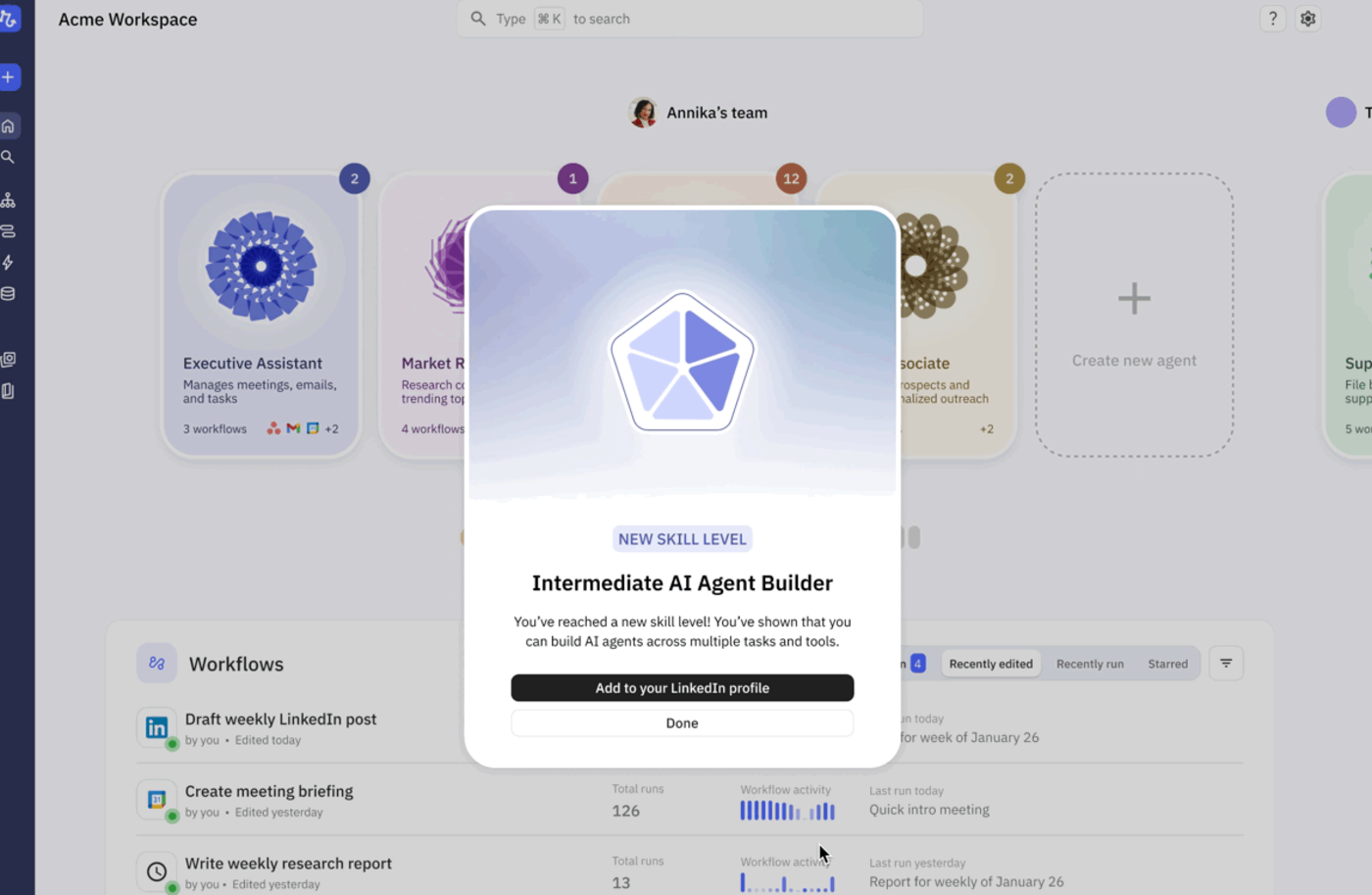
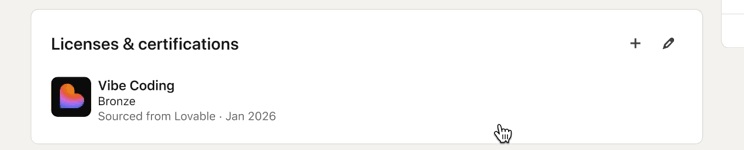
For example, AI app maker Lovable could award someone a "bronze" in "vibe coding," while the platform Replit uses numerical levels and Relay.app may determine that someone is an "intermediate" level "AI Agent Builder," according to screenshots shared by LinkedIn. These levels should dynamically update as people get more experience using the relevant tools, according to LinkedIn.
Lovable's vibe coding rating system.
LinkedIn
Of course, the update also comes at a time when companies have used these same kinds of AI tools to lay off thousands of workers. So while there's may be value in showing off your vibe coding skills, there are still many workers who likely aren't as excited about ceding more ground to AI. When I asked, LinkedIn's head of career products Pat Whealan about this he said that
AI-specific skills are an increasingly important signal to recruiters and the latest update will make it easier for them to assess candidates' skills. But he added that the intention isn't to make AI-specific skills the sole focus. "This is less about replacing any of those other existing signals, and more about showing new ways that people are doing work," he tells Engadget. "And how do we give a verifiable signal to both hirers and other people looking at their profile, that they actually are using these tools on a regular basis."
This article originally appeared on Engadget at https://www.engadget.com/ai/linkedin-will-let-you-show-off-your-vibe-coding-expertise-140000776.html?src=rss
Meta has faced some serious questions about how it allows its underage users to interact with AI-powered chatbots. Most recently, internal communications obtained by the New Mexico Attorney General's Office revealed that although Meta CEO Mark Zuckerberg was opposed to the chatbots having "explicit" conversations with minors, he also rejected the idea of placing parental controls on the feature.
Reutersreported that in an exchange between two unnamed Meta employees, one wrote that we "pushed hard for parental controls to turn GenAI off – but GenAI leadership pushed back stating Mark decision.” In its statement to the publication, Meta accused the New Mexico Attorney General of "cherry picking documents to paint a flawed and inaccurate picture." New Mexico is suing Meta on charges that the company “failed to stem the tide of damaging sexual material and sexual propositions delivered to children;” the case is scheduled to go to trial in February.
Despite only being available for a brief time, Meta's chatbots have already accumulated quite a history of behavior that veers into offensive if not outright illegal. In April 2025, The Wall Street Journal released an investigation that found Meta's chatbots could engage in fantasy sex conversations with minors, or could be directed to mimic a minor and engage in sexual conversation. The report claimed that Zuckerberg had wanted looser guards implemented around Meta's chatbots, but a spokesperson denied that the company had overlooked protections for children and teens.
Internal review documents revealed in August 2025 detailed several hypothetical situations of what chatbot behaviors would be permitted, and the lines between sensual and sexual seemed pretty hazy. The document also permitted the chatbots to argue racist concepts. At the time, a representative told Engadget that the offending passages were hypotheticals rather than actual policy, which doesn't really seem like much of an improvement, and that they were removed from the document.
Despite the multiple instances of questionable use of the chatbots, Meta only decided to suspend teen accounts' access to them last week. The company said it is temporarily removing access while it develops the parental controls that Zuckerberg had allegedly rejected using.
"Parents have long been able to see if their teens have been chatting with AIs on Instagram, and in October we announced our plans to go further, building new tools to give parents more control over their teens’ experiences with AI characters," a representative from Meta said. "Last week we once again reinforced our commitment to delivering on our promise of parental controls for AI, pausing teen access to AI characters completely until the updated version is ready."
New Mexico filed this lawsuit against Meta in December 2023 on claims that the company's platforms failed to protect minors from harassment by adults. Internal documents revealed early on in that complaint revealed that 100,000 child users were harassed daily on Meta's services.
Update, January 27, 2025, 6:52PM ET: Added statement from Meta spokesperson.
Update, January 27, 2025, 6:15PM ET: Corrected misstated timeline of the New Mexico lawsuit, which was filed in December 2023, not December 2024.
This article originally appeared on Engadget at https://www.engadget.com/social-media/mark-zuckerberg-was-initially-opposed-to-parental-controls-for-ai-chatbots-according-to-legal-filing-230110214.html?src=rss
Meta has started blocking links to ICE List, a website that compiles information about incidents involving Immigrations and Customs Enforcement (ICE) and Border Patrol agents, and lists thousands of their employees' names. It seems that the latter detail is what caused Meta to take action in a move that was first reported byWired.
ICE List is a crowdsourced Wiki that describes itself as "an independently maintained public documentation project focused on immigration-enforcement activity" in the US. "Its purpose is to record, organize, and preserve verifiable information about enforcement actions, agents, facilities, vehicles, and related incidents that would otherwise remain fragmented, difficult to access, or undocumented," its website states.
Along with notable incidents, the website also lists the names of individual agents associated with ICE, CBP and other DHS agencies. According to Wired, the website's creators said much of that information had come from a "leak," though it appears to be based largely on public LinkedIn profiles. As Wired notes:
The site went viral earlier this month when it claimed to have uploaded a leaked list of 4,500 DHS employees to its site, but a WIRED analysis found that the list relied heavily on information the employees shared publicly about themselves on sites such as LinkedIn.
Links to ICE List have been spreading widely for several weeks, including on Meta's platforms. There are numerous links to the website on Threads, some of which go back several weeks. Now though, clicking on previously-shared links instead results in a message that the link can't be opened. Users who try to share new links on Threads or Facebook also see error messages. "Posts that look like spam according to our Community Guidelines are blocked on Facebook and can't be edited," the notice says.
When reached for comment, a Meta spokesperson pointed to the company's privacy policy barring the disclosure of personally identifiable information (PII). The company didn't address why it chose to start blocking the website after several weeks, or whether it considers public LinkedIn profiles to be in violation of its rules against doxxing.
It is, however, not the first time Meta has opted to remove users' posts tracking information about ICE actions. The social network previously took down a Facebook group that tracked ICE sightings in Chicago after pressure from the Justice Department.
Have a tip for Karissa? You can reach her by email, on X, Bluesky, Threads, or send a message to @karissabe.51 to chat confidentially on Signal.
This article originally appeared on Engadget at https://www.engadget.com/social-media/meta-blocks-links-to-ice-list-a-wiki-that-names-agents-231410653.html?src=rss
After adding Personal Intelligence to Gemini as an opt-in experience, Google has announced that it’s also integrating the feature into AI Mode in Search. What Personal Intelligence does is pull information from your Google apps to tailor its responses based on your history and interests. For Search, in particular, you can allow Personal Intelligence to look for information in your Gmail accounts and Google Photos libraries.
If you use AI Mode to shop for clothes with the new feature enabled, for instance, Google could recommend items or models from a brand you previously purchased from. If it sees plane tickets or other reservations in Gmail, Google could also recommend specific items based on your destination and the season if you’re clothes shopping for that trip.
Personal Intelligence is powered by Google’s Gemini 3 AI model. The company says it doesn’t train its models using information from your Gmail inbox or Google Photos library, but it does use your prompts and AI Mode’s responses. Google also warned that sometimes, the feature’s recommendations could feel inaccurate because it could not fully comprehend the context or could make incorrect connections between separate topics.
At the moment, Personal Intelligence is an experimental feature that’s rolling out in Labs starting today. Google AI Pro and Ultra subscribers in the US, who use the service in English, will automatically have access to it and be able to connect AI Mode to Gmail and Google Photos. It will only be available to personal Google accounts, however, and not for Workspace accounts just yet.
This article originally appeared on Engadget at https://www.engadget.com/ai/ai-mode-in-google-search-can-now-pull-context-from-your-other-apps-160000103.html?src=rss
The festive lights, time off and cute scarfs can only conceal the truth for so long: Winter can be pretty bleak. I don't mean to be a downer, but it's cold all of the time, dark most of the time and this lasts far beyond the most wonderful time of the year. Here at Engadget, we've tried so many tools and products to make winter more bearable from therapy lamps to heaters. We've invested in tea sets, wrapped ourselves in heated blankets and learned to grow herbs indoors — really, anything that will make these three-plus months more bearable, we've tried.
Here, you'll find some of the best winter tech getting us at Engadget through the coldest months, plus a number of recommendations from our other gift guides that will get anyone through the winter warm, comfortable and content.
Best winter tech and gear
This article originally appeared on Engadget at https://www.engadget.com/home/smart-home/the-best-winter-tech-for-2026-to-help-get-you-through-the-coldest-months-130009890.html?src=rss
YouTube is just as wary of the rise of AI slop as you, and that’s why more AI-generated content is coming to the platform in the near future. In a lengthy blog post outlining YouTube’s 2026 plans, CEO Neal Mohan said the company will continue to embrace this new "creative frontier" by soon allowing its creators to throw together Shorts using their AI-generated likeness.
Mohan didn’t elaborate further about how this feature will work when it launches, but acknowledged the "critical" issue of deepfakes currently polluting the web, and reaffirmed his company’s support for new legislation such as the NO FAKES Act. YouTube also allows its own creators to protect themselves against unauthorized use of their likeness using a detection feature that scans newly uploaded videos for matches.
Other fresh AI (note: in no way slop) features referenced in the post include the currently-in-beta no-code Playables platform, which lets you make games using Gemini 3 with a single text prompt, as well as new music creation tools. At the same time, Mohan said YouTube is building on its existing systems designed to combat spam, clickbait and "low quality AI content." He added that an average of six million daily viewers watched more than 10 minutes of AI autodubbed content in December, despite the issues that rival platforms have had with similar features.
Mohan didn’t say when we can expect the new AI likeness generation feature for Shorts, but if that sounds like the sort of content you’d rather not encounter on your lunch break, here’s a little PSA: the company now allows you to omit its short-form videos from your YouTube search results altogether.
This article originally appeared on Engadget at https://www.engadget.com/entertainment/youtube/youtube-ceo-promises-more-ai-features-in-2026-162409452.html?src=rss
After testing the feature for the last six months or so, Netflix said it will bring vertical videos to its mobile app sometime later in 2026, TechCrunch reported. So far, the feature has been used to show clips promoting Netflix films and TV shows, letting you swipe to move to the next one à la TikTok or YouTube Shorts.
Going forward, though, it could also serve as a promotion tool for new types of programs. “You can imagine us bringing more clips based on new content types, like video podcasts,” co-CEO Greg Peters said in an earnings call.
That was another subject of discussion, as Netflix is taking on YouTube with new video podcasts. The company debuted the first of those originals last week, including shows from sports commentator Michael Irvin and comedian Peter Davidson. It’s also offering hosting content like the Bill Simmons Podcast and other shows from The Ringer.
Despite increasing competition from YouTube and other social media networks, Netflix is doing all right. In 2025, the company saw $45.2 billion revenue including $1.5 billion in ad dollars from its lower tier subscriptions. The streamer counted 325 million paid subscribers around the world at the end of last year.
This article originally appeared on Engadget at https://www.engadget.com/entertainment/streaming/netflix-mobile-app-redesign-will-offer-deeper-integration-of-vertical-video-120000820.html?src=rss
The UK government has announced a consultation, asking people for their feedback on whether to introduce a social media ban for children under 16 years old. It would also explore how to enforce that limit, how to limit tech companies from being able to access children’s data and how to limit “infinite scrolling,” as well as access to addictive online tools. In addition to seeking feedback from parents and young people themselves, the country’s ministers are going to visit Australia to see the effects of the country’s social media ban for kids, according to Financial Times.
Australia's minimum age social media ban went into effect on December 10. It’s the first of its kind and covers several social media platforms, including Facebook, X, TikTok, Twitch, Snapchat, YouTube and Reddit. Just recently, Meta shut down nearly 550,00 accounts, most of which were on Instagram, to comply with the new law.
The UK passed the Online Safety Act in 2023 and has been enforcing its rules since. Last year, for instance, it started requiring websites that publish pornography to conduct age checks for users. But British politician Liz Kendall said parents still have serious concerns about the content their children can consume online. As The Guardian notes, the announcement for a consultation comes just before the House of Lords votes on an amendment to the Children’s Wellbeing and Schools Bill. The amendment is seeking a social media ban on children under 16, which will be enacted within a year if and when the bill passes.
This article originally appeared on Engadget at https://www.engadget.com/social-media/the-uk-is-mulling-an-australia-like-social-media-ban-for-users-under-16-130000446.html?src=rss
Meta’s Threads is pulling further ahead of Elon Musk’s X on mobile, based on recent estimates from analytics firm Similarweb, Forbes reports. In the first stretch of January, Threads averaged roughly 143 million daily active users worldwide on mobile devices, compared with about 126 million for X.
Similarweb’s year-over-year snapshot shows Threads growing sharply, up 37.8 percent year-over-year, while X’s daily mobile audience fell 11.9 percent across the same period. The picture is more mixed in the US, where X still holds a narrow edge on mobile. Similarweb data puts X at about 21.2 million daily active US mobile users in early January versus roughly 19.5 million for Threads.
However, Threads’ US mobile usage has risen substantially faster over the past year, surging almost 42 percent to X's 18 percent. X remains far larger on desktop, where it draws around 150 million daily users or visits worldwide, while Threads’ web presence sits at just 9 million.
Forbes also reported on Similarweb data for Bluesky, another competing text-based platform started by Twitter founder Jack Dorsey. Dorsey left the board in the summer of 2024, later telling Pirate Wireshe believed Bluesky was "literally repeating all the mistakes we made as a company," in reference to Twitter. The social network opened registrations in 2024, and sits now with a daily mobile user base of 3.6 million, which Similarweb says is down 44.4 percent year-over-year.
X has found itself in hot water yet again over xAI's Grok chatbot, which was altering pictures of women on the platform to create lewd images at the request of users without the consent of those pictured. In some cases, the chatbot also altered the images of underage girls. The uproar in response led the company to shut off image generation for nonsubscribers and place firmer guardrails on what types of images can be generated. The delayed action came after weeks of Grok creating tens of thousands of these images, and after the Attorney General of California launched an investigation.
This article originally appeared on Engadget at https://www.engadget.com/social-media/threads-has-more-global-daily-users-than-x-on-mobile-for-the-first-time-144936831.html?src=rss
X seems to be working again after struggling with an outage that took the service offline and made it slow to load for much of the morning. According to X’s developer platform page, there is an ongoing incident related to streaming endpoints that’s caused increased errors. The incident started at 7:39AM PT, according to the page.
That roughly coincides with a spike in reports at Down Detector. The issues seemed to be somewhat intermittent. At some points, X’s website loaded partially and only showed older posts. At other times, the app and website failed to load at all.
As of 9:30AM PT, X’s Explore and trending pages were loading, but the “following” tab wasn’t showing posts and instead suggested users “find some people and topic to follow” (as shown in the screenshot below).
Posts aren't loading.
X
As of 11:15AM PT, X’s developer site was still indicating ongoing issues, so there may still be some lingering problems even though the website seems to be functioning normally again. Reports on Down Detector have also dropped off considerably.
X didn’t immediately respond to a request for comment on the outage. As TechCrunch notes, this is the second time this week that X has experienced significant issues. The service also went down for many users around the world on Tuesday.
Bluesky changed its profile photo earlier in the week.
X
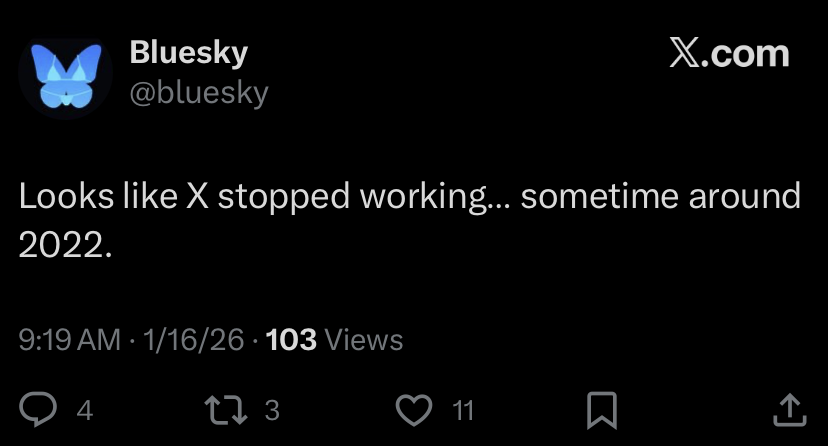
But while the latest issues were widespread, some posts are were still managing to go through. Rival Bluesky, which earlier in the week changed its profile picture on X to its butterfly logo in a bikini, took the opportunity to throw some shade.
At 1PM PT, X updated its status page to indicate the issue had been resolved after nearly six hours. It didn’t elaborate on the underlying cause.
Update, January 16, 2026, 2:09PM PT: Updated with the latest information from X’s status page.
This article originally appeared on Engadget at https://www.engadget.com/social-media/x-is-fully-online-after-going-down-for-most-of-the-morning-171843711.html?src=rss
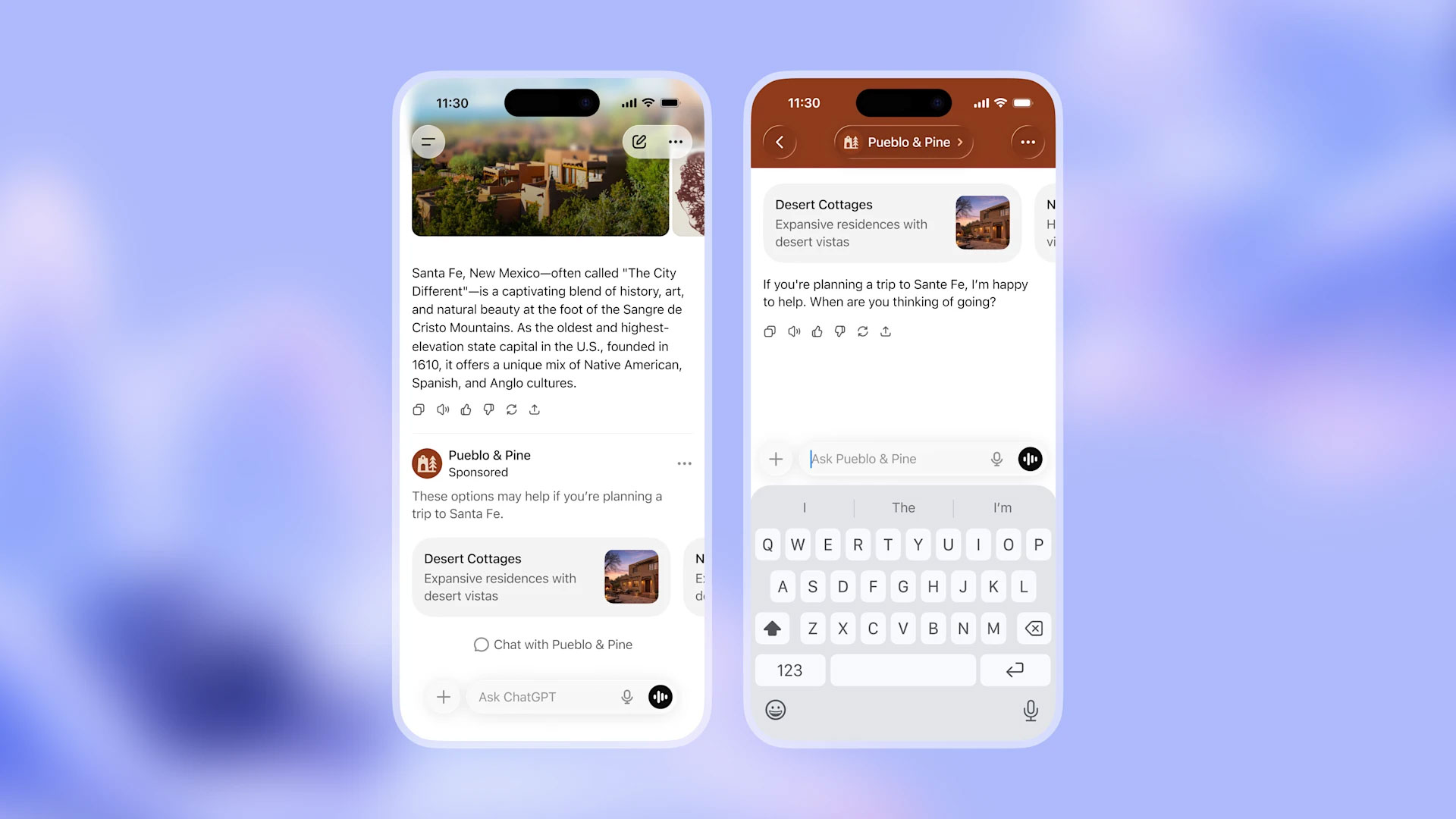
OpenAI plans to start testing ads inside of ChatGPT "in the coming weeks." In a blog post published Friday, the company said adult users in the US of its free and Go tiers (more on the latter in a moment) would start seeing sponsored products and services appear below their conversations with its chatbot. "Ads will be clearly labeled and separated from the organic answer," OpenAI said, adding any sponsored spots would not influence the answers ChatGPT generates. "Answers are optimized based on what's most helpful to you."
OpenAI says people won't see ads appear when they're talking to ChatGPT about sensitive subjects like their health, mental state of mind or current politics. The company also won't show ads to teens under the age of 18. As for privacy, OpenAI states it won't share or sell your data with advertisers. The company will also give users the option to disable ad personalization and clear the data it uses to generate sponsored responses. "We’ll always offer a way to not see ads in ChatGPT, including a paid tier that’s ad-free," OpenAI adds. Users can dismiss ads, at which point they'll be asked to explain why they didn't engage with it.
Users will be able to ask follow-up questions about sponsored content.
OpenAI
"Given what AI can do, we're excited to develop new experiences over time that people find more helpful and relevant than any other ads. Conversational interfaces create possibilities for people to go beyond static messages and links," OpenAI said. However, the company was also quick to note its "long-term focus remains on building products that millions of people and businesses find valuable enough to pay for."
To that point, OpenAI said it would also make its ChatGPT Go subscription available to users in the US. The company first launched the tier in India last August, marketing it as a low-cost alternative to its more expensive Plus and Pro offerings. In the US, Go will cost $8 per month — or $12 less than the monthly price of the Plus plan — and offer 10 times higher rate limits for messages, file uploads and image creation than the free tier. The subscription also extends ChatGPT's memory and context window, meaning the chatbot will be better at remembering details from past conversations. That said, you'll see ads at this tier. To go ad-free, you'll need to subscribe to one of OpenAI's more expensive plans. For consumers, that means either the Plus or Pro plans.
According to reports, OpenAI had been testing ads inside of ChatGPT since at least the end of last year. As companies continue to pay a high cost for model training and inference, all chatbots are likely to feature ads in some form.
This article originally appeared on Engadget at https://www.engadget.com/ai/openai-is-bringing-ads-to-chatgpt-192831449.html?src=rss
Although X removed Grok’s ability to create nonconsensual digitally undressed images on the social platform, the standalone Grok app is another story. It reportedly continues to produce “nudified” deepfakes of real people. And now, Ashley St. Clair, a conservative political strategist and mother of one of Elon Musk’s 14 children, has sued xAI for nonconsensual sexualized images of her that Grok allegedly produced.
In the court filing, St. Clair accused xAI’s Grok chatbot of creating and disseminating deepfakes of her “as a child stripped down to a string bikini, and as an adult in sexually explicit poses, covered in semen, or wearing only bikini floss.” In some cases, the chatbot allegedly produced bikini-clad deepfakes of St. Clair based on a photo of her as a 14-year-old. “People took pictures of me as a child and undressed me. There’s one where they undressed me and bent me over, and in the background is my child’s backpack that he’s wearing right now,” she said.
“I am also seeing images where they add bruises to women, beat them up, tie them up, mutilated,” St. Clair told The Guardian. “These sickos used to have to go to the dark depths of the internet, and now it is on a mainstream social media app.”
St. Clair said that, after she reported the images to X, the social platform replied that the content didn’t violate any policies. In addition, she claims that X left the images posted for up to seven days after she reported them. St. Clair said xAI then retaliated against her by creating more digitally undressed deepfakes of her, therefore “making [St. Clair] the laughingstock of the social media platform.”
She accused the company of then revoking her X Premium subscription, verification checkmark and ability to monetize content on the platform. “xAI further banned [her] from repurchasing Premium,” St. Clair’s court filing states.
On Wednesday, X said it changed its policies so that Grok would no longer generate sexualized images of children or nonconsensual nudity “in those jurisdictions where it’s illegal.” However, the standalone Grok app reportedly continues to undress and sexualize photos when prompted to do so.
Neither Apple nor Google has removed the Grok app despite explicit policy violations.
Anna Moneymaker via Getty Images
Apple and Google have thus far done, well, absolutely nothing. Despite the multi-week outrage over the deepfakes — and an open letter from 28 advocacy groups — neither company has removed the X or Grok apps from their app stores. Both the App Store and Play Store have policies that explicitly prohibit apps that generate such content.
Neither Apple nor Google has responded to multiple requests for comment from Engadget. That includes a follow-up email sent on Friday, regarding the Grok app continuing to “nudify” photos of real women and other people.
“If you are a woman, you can’t post a picture, and you can’t speak, or you risk this abuse,” St. Clair told The Guardian. “It’s dangerous, and I believe this is by design. You are supposed to feed AI humanity and thoughts, and when you are doing things that particularly impact women, and they don’t want to participate in it because they are being targeted, it means the AI is inherently going to be biased.”
Speaking about Musk and his team, she added that “these people believe they are above the law, because they are. They don’t think they are going to get in trouble, they think they have no consequences.”
This article originally appeared on Engadget at https://www.engadget.com/ai/the-mother-of-one-of-elon-musks-children-is-suing-xai-over-nonconsensual-deepfake-images-191451979.html?src=rss

 Anmelden