
❌

Lese-Ansicht

AI company deletes the 3 million OKCupid photos it used for facial recognition training

When online platforms violate their own privacy policies to sell your photos, have no fear: They just might have to pay an undisclosed settlement fee 12 years later. (Who says justice is dead?) According to Reuters, AI company Clarifai says it has deleted 3 million profile photos taken from dating site OkCupid in 2014. It follows a settlement reached last month between the FTC and Match Group, OkCupid's owner.

The Delaware-based Clarifai reportedly certified the data deletion to the FTC on April 7. The company also confirmed to US Representative Lori Trahan (D-MA) that it deleted any models that trained on the data. Clarifai told the representative's office that it hadn't shared the data with third parties.

The FTC opened the investigation in 2019, after The New York Times reported that Clarifai had built a training database using OkCupid dating profile photos. The behavior was a direct violation of OkCupid’s privacy policy. Court documents reviewed by Reuters reveal that Clarifai asked OkCupid executives for the data in 2014. Apparently, they obliged.
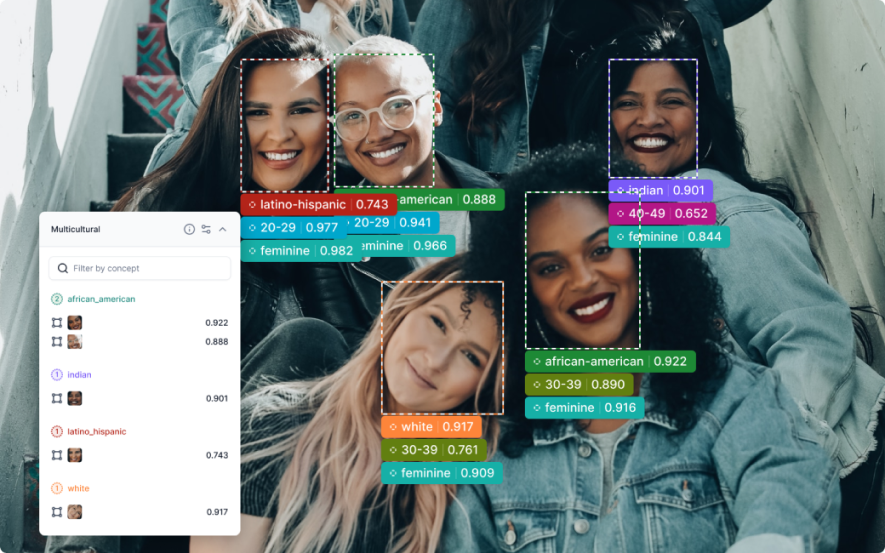
Five people sitting on stairs. Creepy boxes surround their faces, estimating age, race and gender.
<p>Clarifai uses this creepy facial profiling example to sell its services.</p>
Clarifai

"We're ⁠collecting data now and just realized that OkCupid must have a HUGE amount of awesome data for this," Clarifai founder Matthew Zeiler wrote in an email to OkCupid co-founder Maxwell Krohn. The AI startup used the dating site's images to build a facial recognition service that can identify a person's age, gender and race. (Another brilliant and totally ethical idea from Clarifai, tapping into unsecured city surveillance cameras without authorization, was reportedly shuttered.)

Zeiller suggested to The New York Times in 2019 that people needed to, well, get over it. "There has to be some level of trust with tech companies like Clarifai to put powerful technology to good use, and get comfortable with that," the AI founder declared. Some of OkCupid's founders were reportedly investors in Clarifai.

As part of the settlement, the FTC "permanently prohibited" OkCupid from misrepresenting its data collection and privacy controls. TechCrunch notes how strange it is to use that as a penalty, given that FTC rules already bar that behavior.

This article originally appeared on Engadget at https://www.engadget.com/ai/ai-company-deletes-the-3-million-okcupid-photos-it-used-for-facial-recognition-training-195223996.html?src=rss

©
  •  

NASA's Curiosity Rover found promising organic chemicals on Mars

The search for signs of life on Mars continues to yield promising data. A first-of-its-kind wet chemistry experiment, published Tuesday in Nature, confirmed the presence of essential ingredients of life preserved in ancient Martian sandstones.

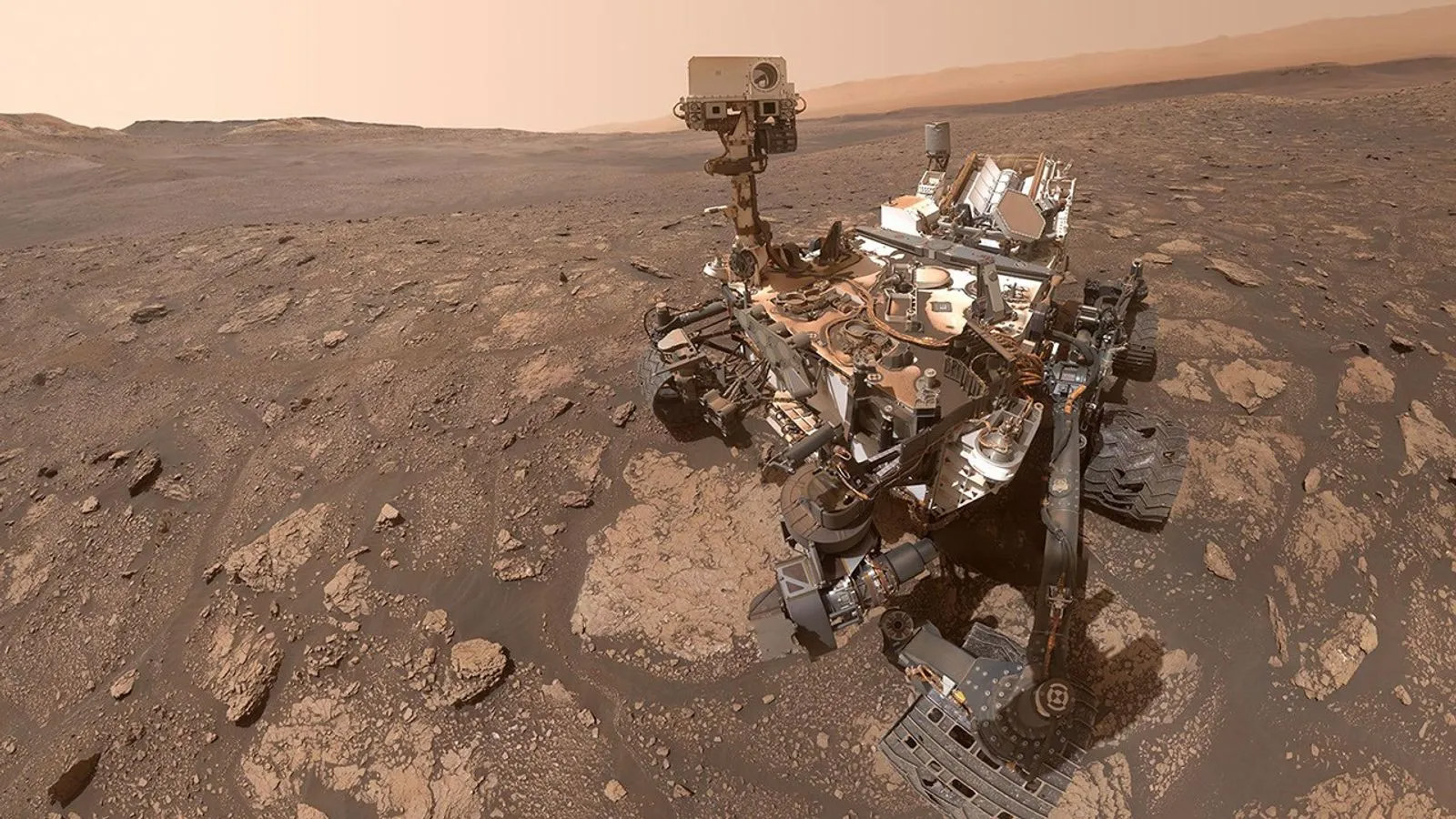
The molecules were found inside 3.5-billion-year-old sandstone. NASA's Curiosity rover collected the clay-filled rocks from an area called Glen Torridon, inside Mars' enormous Gale Crater. The rover's Sample Analysis at Mars (SAM) mobile instrument suite analyzed the data.

The experiment was unique as the first off-Earth study to use the chemical tetramethylammonium hydroxide (TMAH). The reagent allows Curiosity to break down larger organic molecules on the Martian surface, reducing them to something the rover's instruments can read.

It revealed the presence of over 20 different organic molecules. Among the data was confirmation of naphthalene and benzothiophene, some of the largest and most complex organic compounds discovered on the Red Planet. The experiment also yielded the first detection of a possible N-heterocycles, which DNA and RNA are built upon.

A "selfie" taken by the Curiosity rover on Mars. The rover sits on the reddish-brown, rocky surface.
<p></p>
NASA

“That detection is pretty profound because these structures can be chemical precursors to more complex nitrogen-bearing molecules,” the paper’s lead author, Amy Williams, wrote in NASA’s announcement. “Nitrogen heterocycles have never been found before on the Martian surface or confirmed in Martian meteorites.”

As with previous discoveries of organic material on Mars, this one is not yet the smoking gun we've been waiting for. But it adds to a growing body of evidence that, at a minimum, the foundations of life as we know it were present on an ancient version of the planet. The study also confirms that organic material can survive on Mars for billions of years, which will encourage future experiments.

The paper's authors say the data will help NASA to optimize its second (and final) TMAH experiment on Curiosity. It also opens the door to future TMAH tests on the Rosalind Franklin Mars rover and the Dragonfly mission to Saturn's moon, Titan. Both missions are scheduled for 2028 at the earliest.

This article originally appeared on Engadget at https://www.engadget.com/science/space/nasas-curiosity-rover-found-promising-organic-chemicals-on-mars-174514375.html?src=rss

©

  •  
❌