
 Anmelden
NASA's Curiosity Rover found promising organic chemicals on Mars
The search for signs of life on Mars continues to yield promising data. A first-of-its-kind wet chemistry experiment, published Tuesday in Nature, confirmed the presence of essential ingredients of life preserved in ancient Martian sandstones.
The molecules were found inside 3.5-billion-year-old sandstone. NASA's Curiosity rover collected the clay-filled rocks from an area called Glen Torridon, inside Mars' enormous Gale Crater. The rover's Sample Analysis at Mars (SAM) mobile instrument suite analyzed the data.
The experiment was unique as the first off-Earth study to use the chemical tetramethylammonium hydroxide (TMAH). The reagent allows Curiosity to break down larger organic molecules on the Martian surface, reducing them to something the rover's instruments can read.
It revealed the presence of over 20 different organic molecules. Among the data was confirmation of naphthalene and benzothiophene, some of the largest and most complex organic compounds discovered on the Red Planet. The experiment also yielded the first detection of a possible N-heterocycles, which DNA and RNA are built upon.
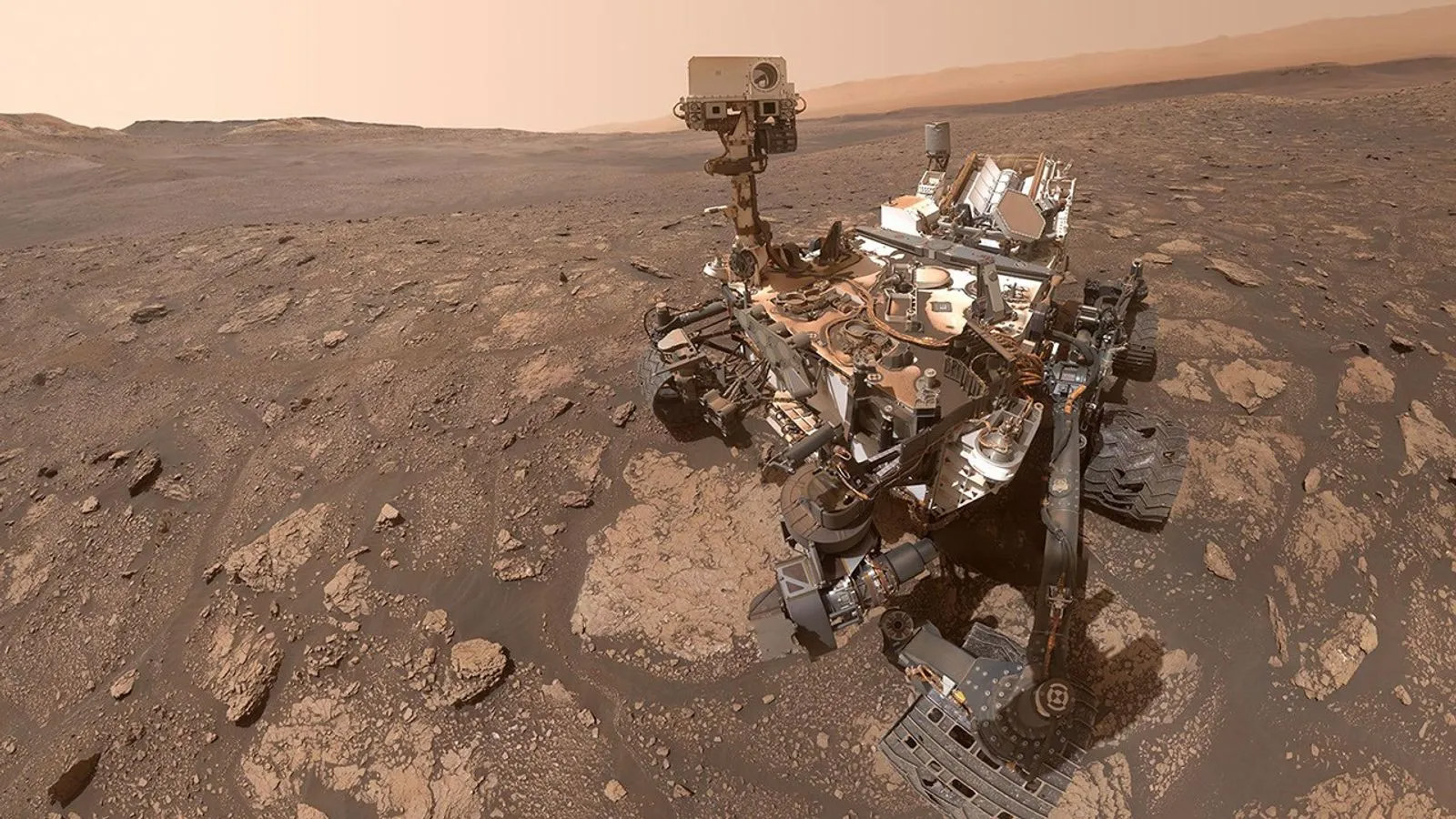
“That detection is pretty profound because these structures can be chemical precursors to more complex nitrogen-bearing molecules,” the paper’s lead author, Amy Williams, wrote in NASA’s announcement. “Nitrogen heterocycles have never been found before on the Martian surface or confirmed in Martian meteorites.”
As with previous discoveries of organic material on Mars, this one is not yet the smoking gun we've been waiting for. But it adds to a growing body of evidence that, at a minimum, the foundations of life as we know it were present on an ancient version of the planet. The study also confirms that organic material can survive on Mars for billions of years, which will encourage future experiments.
The paper's authors say the data will help NASA to optimize its second (and final) TMAH experiment on Curiosity. It also opens the door to future TMAH tests on the Rosalind Franklin Mars rover and the Dragonfly mission to Saturn's moon, Titan. Both missions are scheduled for 2028 at the earliest.
This article originally appeared on Engadget at https://www.engadget.com/science/space/nasas-curiosity-rover-found-promising-organic-chemicals-on-mars-174514375.html?src=rss
©


