❌

Lese-Ansicht

Gamers are right to be disgusted by NVIDIA's DLSS 5

You can sum up the gamer response to NVIDIA's DLSS 5 announcement with the ever-relevant Fallout 4 meme: "Everyone disliked that." Across social media and Reddit last night, I couldn't find anyone who's genuinely positive about the potential for DLSS 5, which uses AI to add "photorealistic" lighting and materials to in-game models and environments. Instead, it's mostly complaints about the feature being another avenue for AI slop. And you know what? I agree.

It's not unusual to see gamers being reflexively angry about new technology on the internet, especially when it's being pitched by NVIDIA as the “biggest breakthrough in computer graphics” since its RTX 20-series GPUs arrived in 2018 with real-time ray tracing. There was plenty of suspicion around DLSS's original AI upscaling model, as well as the "fake" frames generated by later iterations. But the few demos we've seen of DLSS 5 basically look like "yassified" AI filters for popular games.

Leon and Grace from Resident Evil: Requiem have more distinct facial and hair detail, but they look a bit too slick. There are more wrinkles on an old woman in Hogwarts Legacy. And the face, hair and clothing from a Starfield character gain an uncanny sheen.

None of the demos have the immediate impact of the Star Wars real-time ray tracing short ILMxLab produced with NVIDIA seven years ago. That demonstration showed us glorious reflections and lighting effects we'd never seen before in real-time. The DLSS 5 demos, on the other hand, don't look much different from the AI filters that make you look more presentable for Zoom calls. There's no genuine excitement for DLSS 5, just NVIDIA telling us that it's groundbreaking.

There's also plenty of concern about DLSS 5 straying from an artist's original intent, as well as a potential homogenization of game visuals if every developer starts using the feature. NVIDIA claims developers will have "detailed controls for intensity, color grading and masking," which will help DLSS 5 stay in line with a game's aesthetic. But we don't have any direct developer experience with the feature yet — some artists may want far more control than NVIDIA wants to give.

The difference between DLSS 5 and earlier versions NVIDIA's upscaling is like the difference between generative AI and more traditional machine learning models. NVIDIA relied on the latter to make low-resolution textures and models appear sharper, and later to insert generated frames to smooth out gameplay and raise your fps count. As Wirecutter and former Polygon editor Arthur Gies points out, you could argue those features were in service of delivering what developers originally intended. But DLSS 5's neural model applies its concept of "photorealism" on top of what games are rendering -- it's like watching a Pixar movie that let OpenAI's Sora do a final visual pass.

Part of the negative response towards DLSS 5 may stem from a widespread anti-gen AI sentiment, but that doesn’t devalue the criticisms either. Similar to AI generated text, images and video, there’s a dehumanizing aspect about DLSS 5. It can erase the work of human artists (despite how much control NVIDIA claims they have), and it also feels like a calculated attempt to appeal to gamers who just want shinier graphics. NVIDIA showed off how generative AI could be used to create dialog and voices for NPCs last year at CES, but that was also widely disliked (and I called it a genuine nightmare).

Of course, I can’t fully judge DLSS 5 until I see it in action beyond a short demo. But I think the visceral disgust is an important indicator that many gamers aren’t onboard with the AI-powered future NVIDIA is trying to sell us. And perhaps the idea of chasing “photorealism” may be a bit of a fool’s errand. It may be appropriate for some games, but as Nintendo and indie PC devs have shown, you can also make some of the best games of all time without striving for realism. Tears of the Kingdom could use a better framerate and higher resolution textures, but it certainly doesn’t need DLSS 5.

This article originally appeared on Engadget at https://www.engadget.com/gaming/pc/gamers-are-right-to-be-disgusted-by-nvidias-dlss-5-151105593.html?src=rss

©

  •  

NVIDIA claims DLSS 5 will deliver 'photoreal' image quality with AI this fall

Just months after announcing DLSS 4.5 at CES, NVIDIA has unveiled its next major upscaling technology, DLSS 5. The company is doubling-down on AI for this next iteration, claiming DLSS 5 “infuses pixels with photoreal lighting and materials” using a real-time neural rendering model when it arrives this fall.

So what does this mean in practice? In an on-stage demo at NVIDIA’s GTC 2026 keynote, CEO Jensen Huang showed off the technology with Resident Evil: Requiem, Hogwarts Legacy and Starfield. DLSS 5 adds a noticeable amount of detail to character’s hair and skin tone, but it also appears it’s being compared to those games without any DLSS features turned on. It’s unclear how much of a difference it makes compared to DLSS 4.5 with path tracing and all of its features turned on.

“DLSS 5 takes a game’s color and motion vectors for each frame as input, and uses an AI model to infuse the scene with photoreal lighting and materials that are anchored to source 3D content and consistent from frame to frame,” NVIDIA said in a blog post. The company also notes that the technology runs in real time, and it works at up to 4K.

Huang showed off DLSS 5 while running a system with two RTX 5090 GPUs. Eventually, it will be able to run on a single video card (though I’d imagine it would have to be almost as powerful as two 5090s). Huang also paints DLSS 5 as a step towards offering Hollywood-like quality for real-time rendering, without the need for the GPU horsepower required by studios. It sounds a bit like a generative AI video model that can be directly controlled by developers, instead of just AI prompts.

NVIDIA, never shy from self-aggrandizing, claims DLSS 5 is also the “biggest breakthrough in computer graphics” since real-time ray tracing arrived in 2018. But given that ray tracing itself hasn’t been mainstream for many gamers, it’ll be interesting to see if there’s any interest in NVIDIA’s AI-produced pixels.

This article originally appeared on Engadget at https://www.engadget.com/gaming/pc/nvidia-claims-dlss-5-will-deliver-photoreal-image-quality-with-ai-this-fall-193452088.html?src=rss

©

  •  

MacBook Pro M5 Max 16-inch review: Still the pinnacle

We've loved Apple's 2021-era MacBook Pro design from the start, and the M5 Max edition is once again the professional notebook to beat. But it's hard to deny that the star of Apple's recent laptop rollout wasn't its most powerful Pro systems — all eyes were on the $599 MacBook Neo. The MacBook Pro's next time to shine is likely this fall, when Apple is expected to finally deliver OLED models and a dynamic touchscreen interface.  (I’ve argued before that, at this point, Apple has no excuse not to give us touchscreen Macs.)

This generation of MacBook Pro might just be the last gasp of the 2021 remodel. It's still an incredibly powerful machine that's been honed to near-perfection, but if you're looking for something that feels truly new, it may be worth waiting several months. 

It's not too surprising to see the M5 Pro and Max MacBook Pros be relatively low-key efforts. Apple launched the M5 14-inch MacBook last fall with a mere press release. But at least that model delivered a noticeable leap in graphics performance. The new M5 Pro and Max chips are a bit faster than before, but they don't really have any major features to call out. (Unless you're super excited about Neural Accelerators for AI work.)

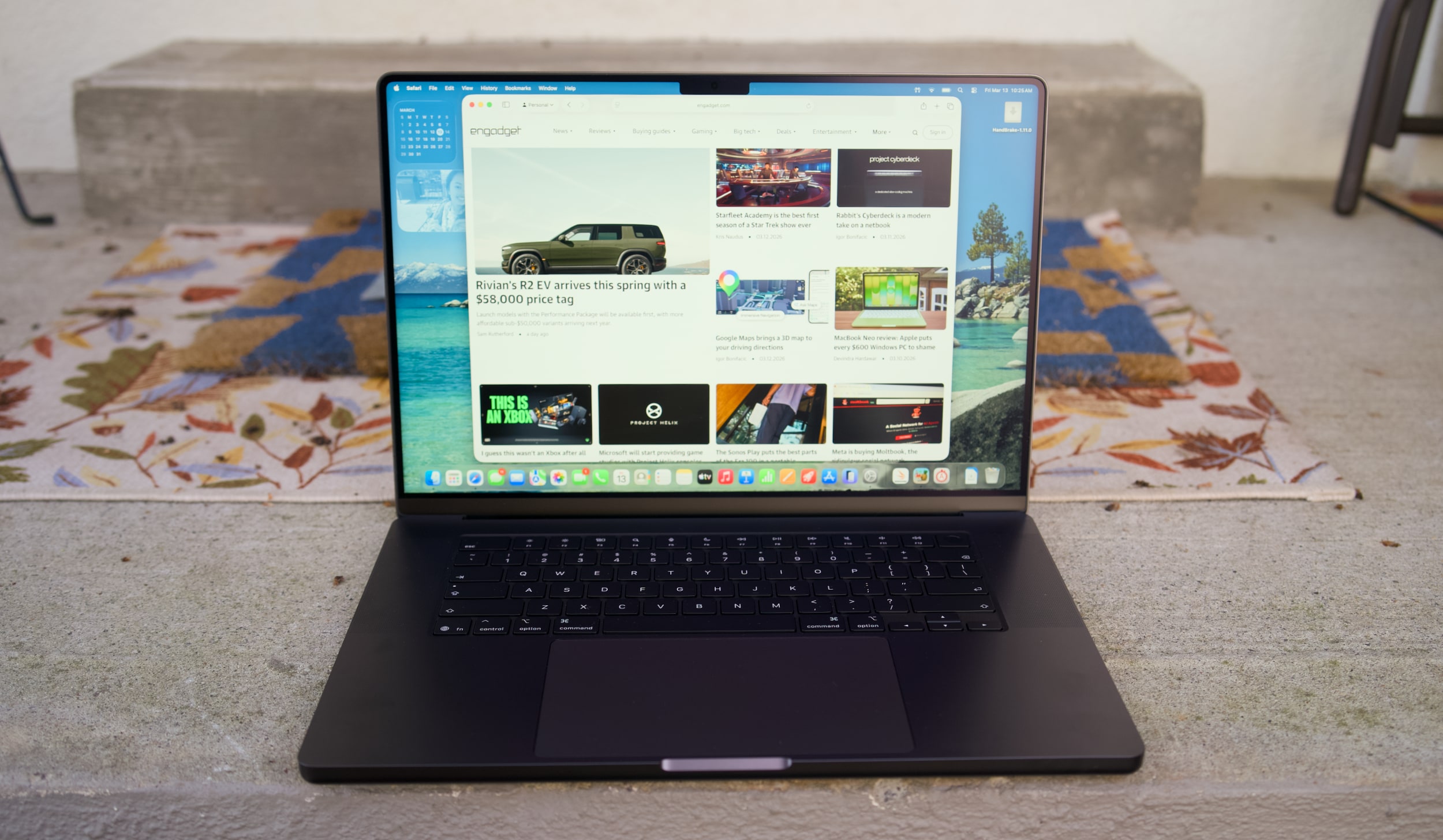
I don't want to sound like I'm complaining too much, though. The 16-inch M5 Max MacBook Pro I'm reviewing is still a gorgeous laptop, with an overall design that most premium Windows PC makers are still trying to copy. Apple's unibody metal frame design still feels rock solid. There's a generous amount of ports, including three Thunderbolt 5 USB-C connections, HDMI, a headphone jack and a SD card reader. Its 16-inch Liquid RetinaXDR screen also looks incredible, thanks to its bright Mini LED backlighting, and there's once again a nano-texture option to reduce glare. 

What else could you want in a laptop? I suppose there's the lingering feeling that an OLED screen would look better, with sharper contrast and pure black levels. But you'd be hard pressed to find much else to complain about with the MacBook Pro's screen. I'm also intrigued to see how Apple implements a touchscreen interface alongside macOS in upcoming MacBook Pros, but I'll admit, I haven't really been compelled to touch this laptop's display much. 

Touchscreens always seemed like a quixotic effort for laptops — they're nice to have, but Microsoft has been trying to shove them into PCs for 15 years now. The addition of touchscreens really didn't improve the overall Windows experience much. So I wasn't surprised to see Apple take its time bringing the technology to macOS — if you really want to swipe around screens, just get an iPad.

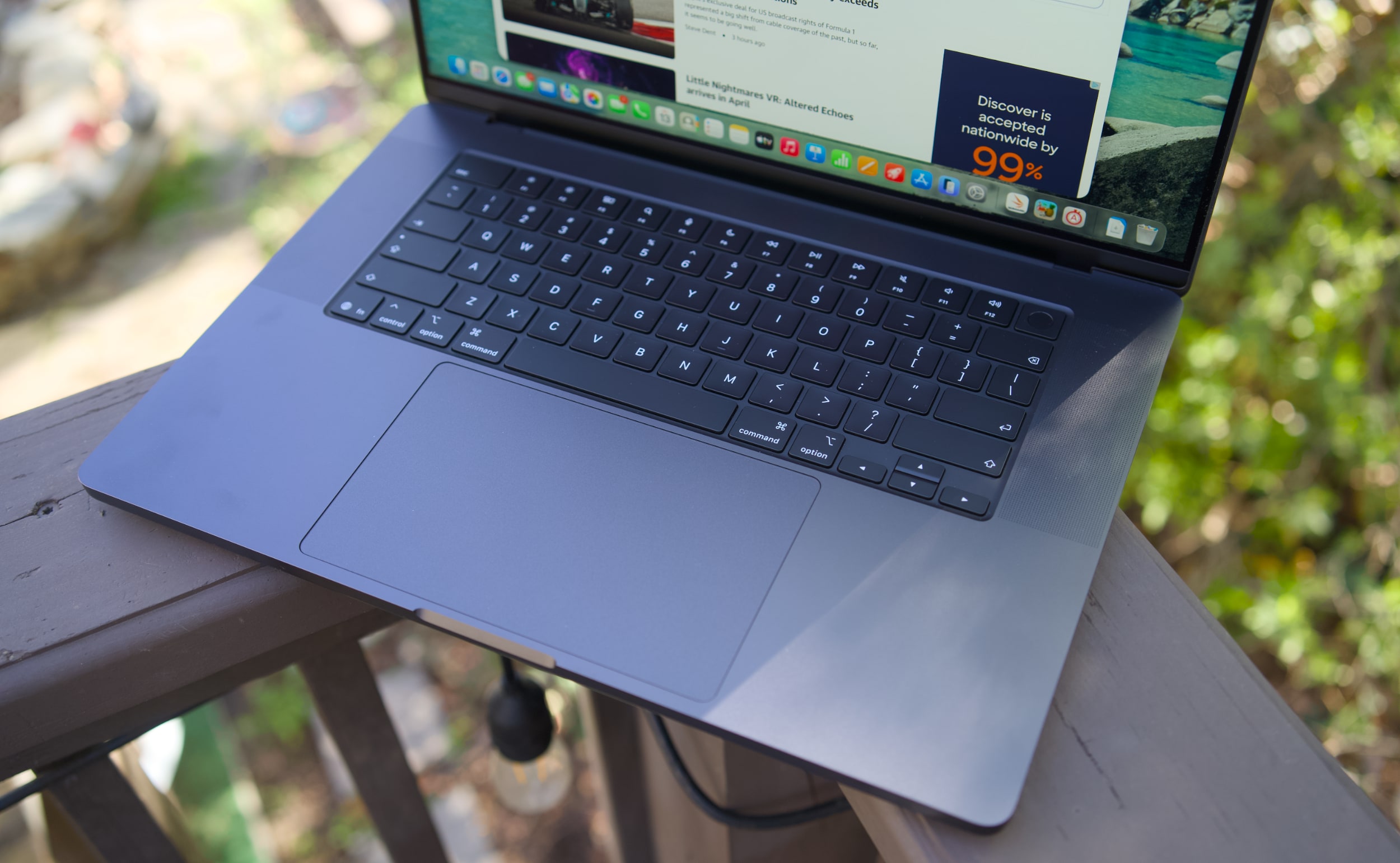
MacBook Pro 16-inch (2026, M5 Max) keyboard and trackpad
Devindra Hardawar for Engadget

But back to this MacBook Pro: I still love everything about Apple's current design. Sure, the keyboard could have a bit more depth, but it withstood my furious typing like a champ. (Unlike Dell's XPS 14, which tried so hard to be a MacBook Pro-killer.) And the MacBook Pro's glass touchpad is still one of the best I've ever seen in a laptop.

Our review unit was also equipped with 32GB of RAM, a 4TB SSD, a 40-core GPU and Apple’s $150 nano-texture display upgrade, bringing the total for this M5 Max system to a whopping $6,149. That may seem excessive to most consumers, but for creative professionals who actually need the power of the M5 Max chip, it’s not that unusual. You can also save over $1,000 by opting for the M5 Pro chip instead. 

So what does the M5 Max bring to the party? Obviously, it's speedier than the M4 Max. Our review unit was 30 percent faster than the M4 Max-equipped MacBook Studio in the Geekbench 6 multi-threaded CPU benchmark. It's only 10 percent faster in Geekbench's single-threaded test, but that still gives Apple room to claim that it has the fastest chip core around. If you've got an M4 Max machine, you certainly don't need to dump it for this lineup. But if you've been hammering on an M1 Max or M2 Max system for years, you'll see some meaningful benefits from upgrading now.

Computer

Geekbench 6

Geekbench 6 GPU

Cinebench 2024

Apple MacBook Pro 16-inch (M5 Max, 2026)

4,338/ 29,261

145,309

192/2,150 | GPU: 22,374

Apple MacBook Pro 14-inch (M5, 2025)

4,310/18,003

48,840

197/1,034 | GPU: 6,143

Apple MacBook Pro 16-inch (M4 Pro, 2026)

3,925/22,456

70,197

178/1,689 GPU 9,295

Apple MacBook Pro 16-inch (M3 Max, 2024)

3,202/21,312

92,344

143/1,686 GPU 13,182

Apple says this new line of MacBook Pros also feature its latest SSD technology, which is up to twice as fast as before. Our review unit reached 13.8 GB/s write speeds and 13 GB/s read speeds in the ATTO disk speed test, whereas previous MacBook Pros hovered around 6 GB/s for read/write speeds. If you're working with huge data files every day, you'll likely notice the difference. Another benefit to the new hardware? Apple is now equipping every MacBook Pro with 1TB of storage by default. 

All of the M5 chips feature faster GPUs than before, but that's less noticeable on the M5 Max. I've never had trouble running a high-end game like Lies of P on the M2, M3 or M4 Max hardware, and once again it still runs incredibly well with the M5 Max in its native resolution, and with all of the graphics settings cranked up. All I'm looking for is a smooth 60 fps frame rate, and the MacBook Pros have delivered on that for years. macOS isn't the sort of platform where you'll be playing many high fps games, but the MacBook Pro's 120Hz refresh rate is equipped to handle them.

MacBook Pro 16-inch (2026, M5 Max) on a doorstep.
Devindra Hardawar for Engadget

Beyond raw performance, the MacBook Pro continues to be a joy to use. Its screen is gloriously bright, and its smooth refresh rate makes scrolling through documents and websites easy on the eyes. Its six-speaker setup remains the best audio experience I've ever heard on a laptop, allowing for crisp, detailed and surprisingly dynamic bass. When I'm too lazy to cast music to my Sonos speakers, I can still have a decent jam session on the MacBook Pro's built-in setup.

It's hard to improve much on the 30 hours and 16 minutes of battery life we saw on last year's 16-inch MacBook Pro, but the M5 Max model managed to beat that by 30 minutes. Realistically, it means you can likely use the MacBook Pro for a few days without needing to recharge, assuming you're not doing heavy-duty work the entire time.

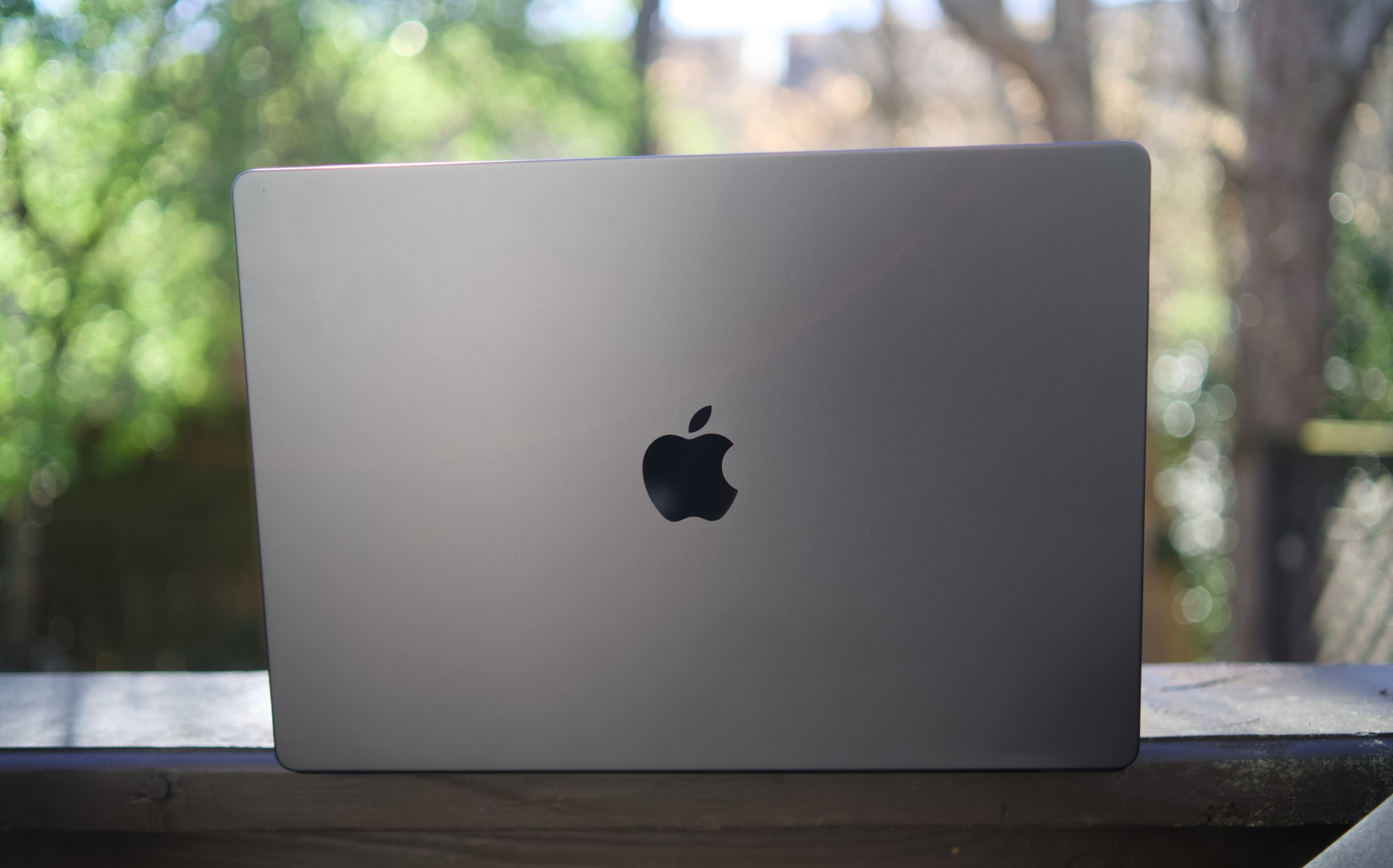
MacBook Pro 16-inch (2026, M5 Max)
Devindra Hardawar for Engadget

You don't need me to sell you on the MacBook Pro; all you need to know is that the M5 Max actually delivers. Given how well the standard M5 14-inch MacBook Pro performed, I'd also expect a decent speed bump from the M5 Pro model. The only downside to the M5 systems is that they'll feel out of date quickly if the rumored OLED and touchscreen models arrive later this year. But if you need the best performance now, it's hard to go wrong with any MacBook Pro.


This article originally appeared on Engadget at https://www.engadget.com/computing/laptops/macbook-pro-m5-max-16-inch-review-still-the-pinnacle-120000325.html?src=rss

©

  •  
❌