❌

Lese-Ansicht

This haptic wristband pairs with Meta smart glasses to decode facial expressions

It's only been a few months since Meta announced that it would open its smart glasses platform to third-party developers. But one startup at CES is already showing off how the glasses can help power an intriguing set of accessibility features.

Hapware has created Aleye, a haptic wristband that, when paired with Ray-Ban Meta smart glasses, can help people understand the facial expressions and other nonverbal cues of the people they are talking to. The company says the device could help people who are blind, low vision or neurodivergent unlock a type of communication that otherwise wouldn't be available.

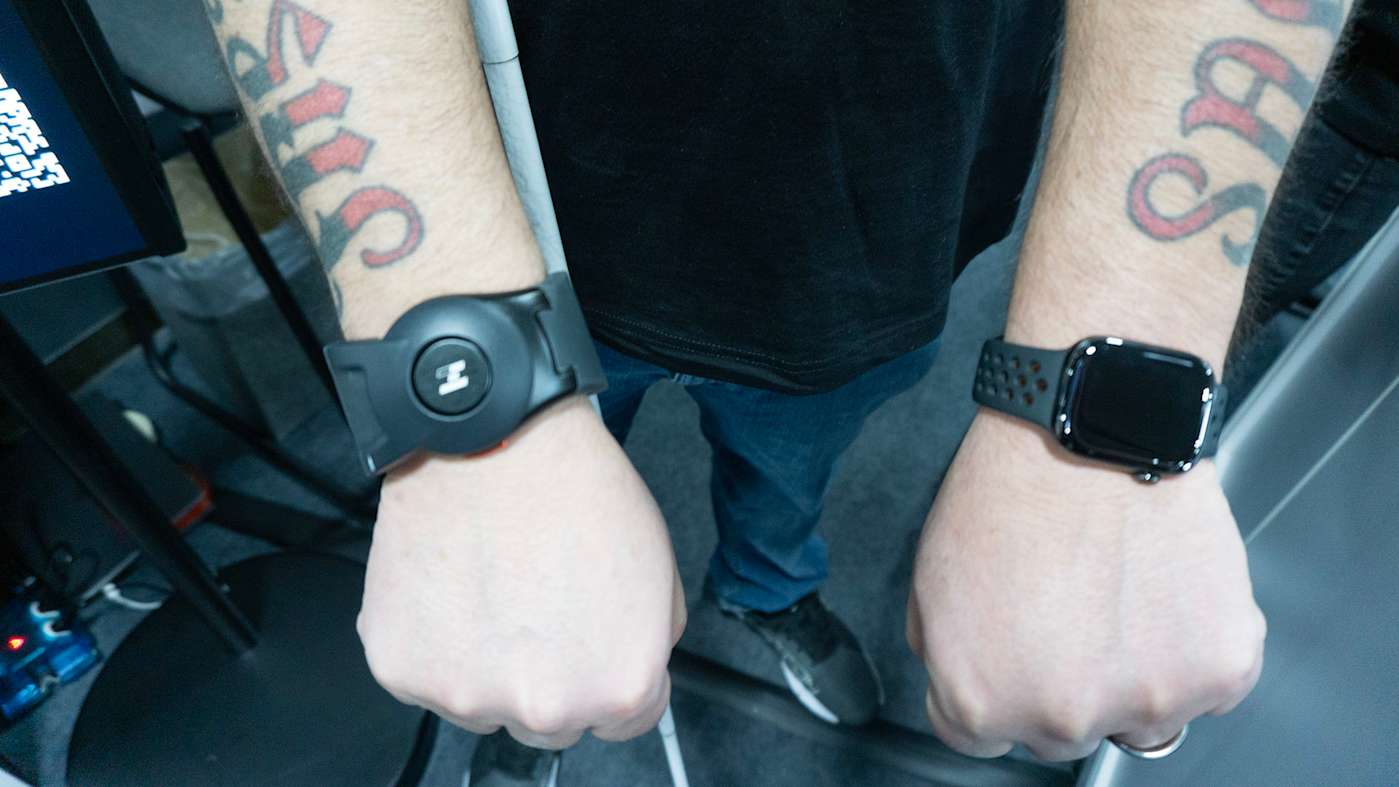
Aleye is a somewhat chunky wristband that can vibrate in specific patterns on your wrist to correspond to the facial expressions and gestures of the person you're talking to. It uses the Meta Ray-Ban glasses's computer vision abilities to stream video of your conversation to the accompanying app, which uses an algorithm to detect facial expressions and gestures.
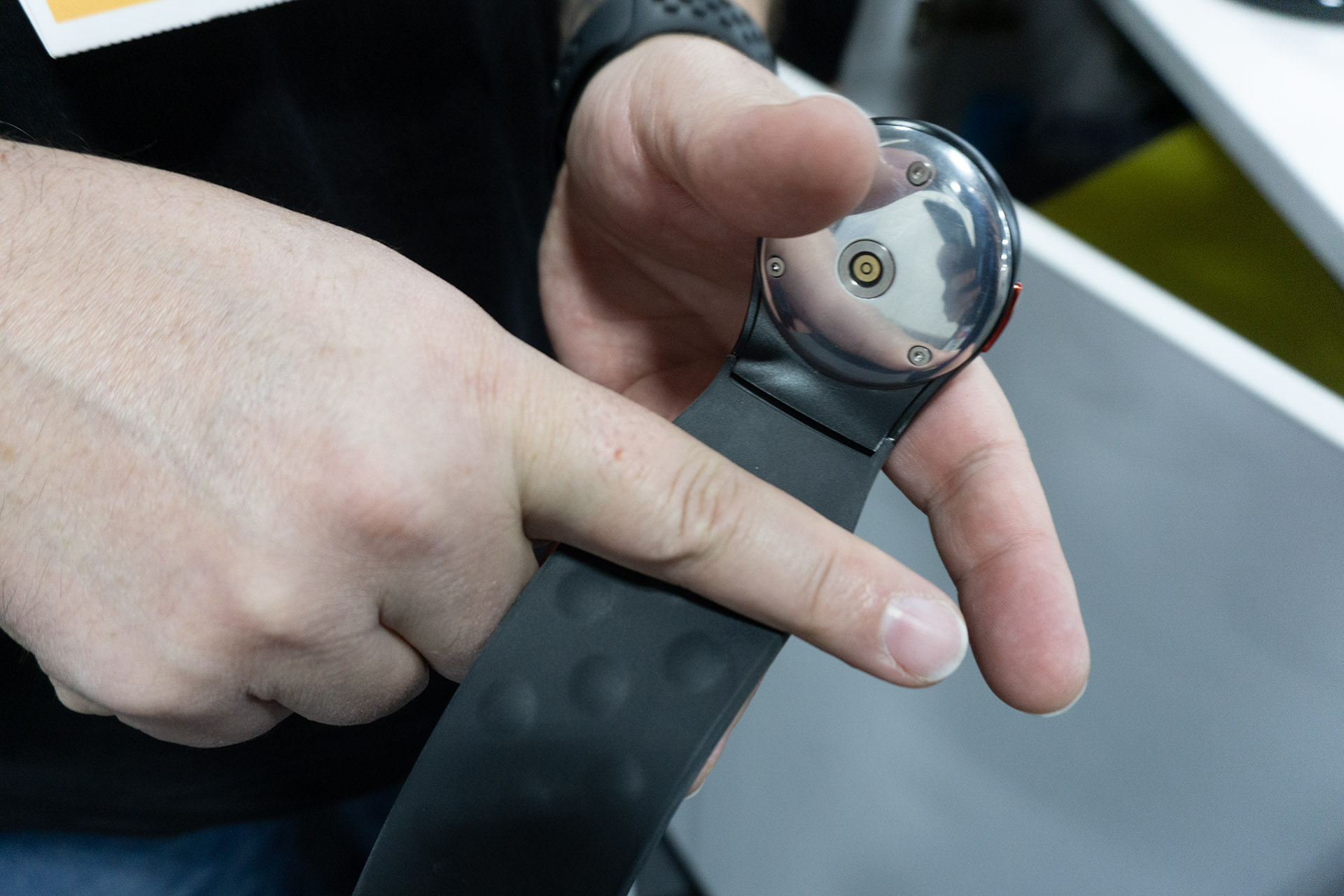
The bumps on the underside of the Aleye vibrate to form unique patterns.
Karissa Bell for Engadget

Users can customize which expressions and gestures they want to detect in the app, which also provides a way for people to learn to distinguish between the different patterns. Hapware CEO Jack Walters said in their early testing people have been able to learn a handful of patterns within a few minutes. The company has also tried to make them intuitive. "Jaw drop might feel like a jaw drop, a wave feels more like a side to side haptics," he explains.

The app is also able to use Meta AI to give vocal cues about people's expressions, though Hapware's CTO Dr. Bryan Duarte told me it can get a bit distracting to talk to people while the assistant is babbling in your ear. Duarte, who has been blind since a motorcycle accident at the age of 18, told me he prefers Aleye to Meta AI's other accessibility features like Live AI. "It will only tell me there's a person in front of me," he explains. "It won't tell me if you're smiling. You have to prompt it every time, it won't just tell you stuff."

Hapware has started taking pre-orders for the Aleye, which starts at $359 for the wristband or $637 for the wristband plus a year subscription to the app (a subscription is required and otherwise will cost $29 a month). A pair of Ray-Ban Meta glasses is also not included, though Meta has also been building a number of its own accessibility features for the device.
This article originally appeared on Engadget at https://www.engadget.com/wearables/this-haptic-wristband-pairs-with-meta-smart-glasses-to-decode-facial-expressions-214305431.html?src=rss

©

  •  

LG's CLOiD robot can fold laundry and serve food… very slowly

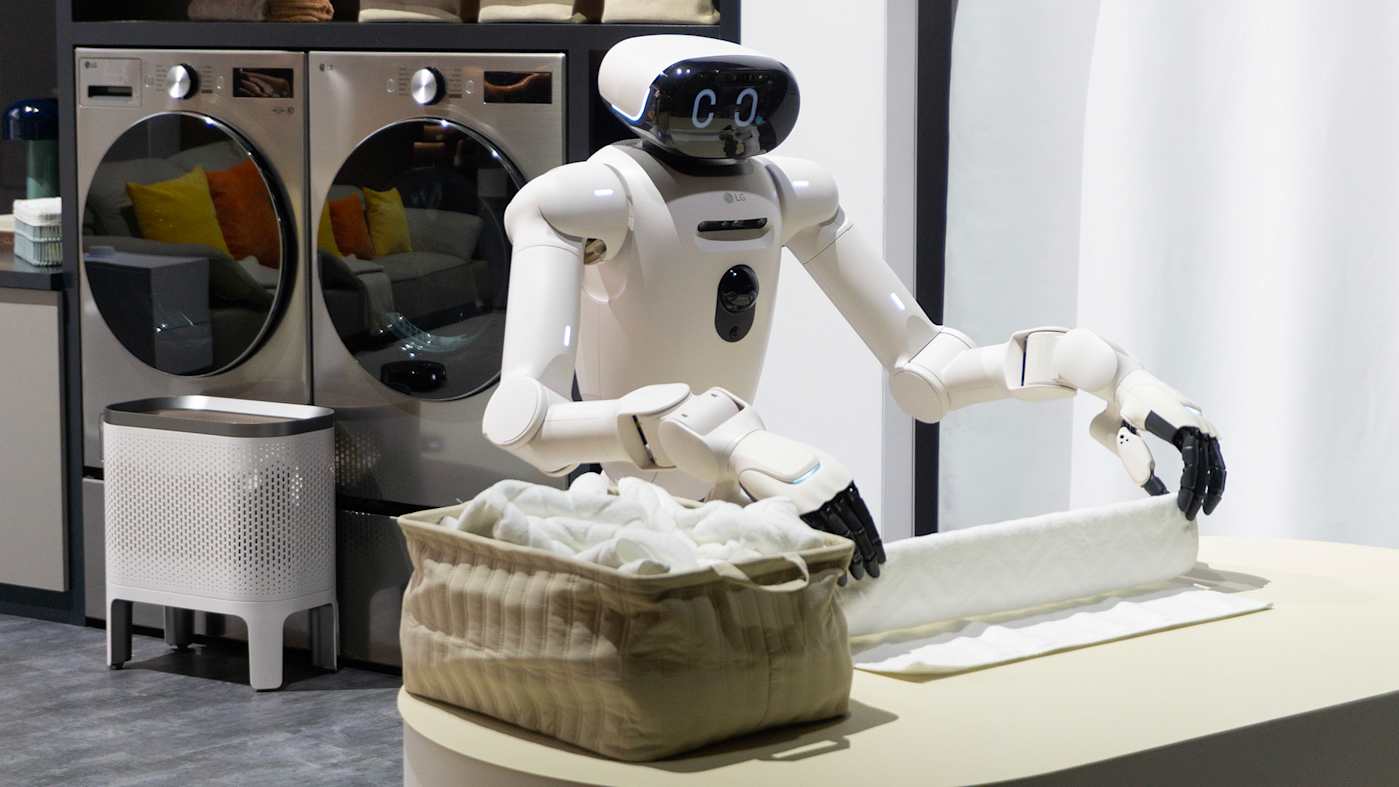
When LG announced that it would demo a laundry-folding, chore-doing robot at CES 2026, I was immediately intrigued. For years, I've wandered the Las Vegas Convention Center halls and wondered when someone might create a robot that can tackle the mundane but useful tasks I despise like folding laundry. With CLOiD (pronounced like "Floyd"), LG has proven that this is theoretically possible, but probably not likely to happen any time soon. 

I went to the company's CES booth to watch its demonstration of CLOiD's abilities, which also include serving food, fetching objects and fitness coaching. During a very carefully choreographed 15-minute presentation, I watched CLOiD grab a carton of milk out of the fridge, put a croissant in an oven, sort and fold some laundry and grab a set of keys off a couch and hand them to the human presenter.

Throughout the demonstration, LG showed off how its own appliances can play along with the robot. When it rolled over to the fridge, the door automatically opened, as did the oven. When the LG-branded robot vacuum needed to move around a hamper, CLOiD helpfully cleared the path. But the robot also moved very slowly, which you can see in the highlight video below. 

The appliance maker is selling the setup as a part of its vision for a "zero labor home" where its appliances and, I guess, robotics technology can come together to take care of all your chores and household upkeep. Maybe I'm jaded from a decade of watching CES vaporware, but I left the slick demo thinking the concept is unlikely to amount to much anytime soon.

On one hand, it is exciting to see robots competently performing tasks that would actually be useful to most people. But this technology is still far from accessible. Even LG isn't making any firm commitments about CLOiD's future as anything more than a CES demo. The company has instead said that CLOiD is a signal of its interest in creating "home robots with practical functions" and "robotized appliances," like fridges with doors that can open automatically. 

That may be a more reasonable target for the company (and yet another way for LG to sell us more appliance upgrades). But it's still pretty far from anything approaching the fantasy of a "zero labor home."

This article originally appeared on Engadget at https://www.engadget.com/home/smart-home/lgs-cloid-robot-can-fold-laundry-and-serve-food-very-slowly-181902306.html?src=rss

©

  •  

These robotic sneakers gave me a surprising boost at CES

I'll admit that I've always kind of taken walking for granted. Other than a knee injury more than a decade ago, my ability to walk long distances has largely been limited only by my own choices. That's not the case for everyone, though. And robotics company Dephy has created a pair of robotic sneakers, called the Sidekick, that are meant to help people who want to walk more than their bodies might otherwise be capable of.

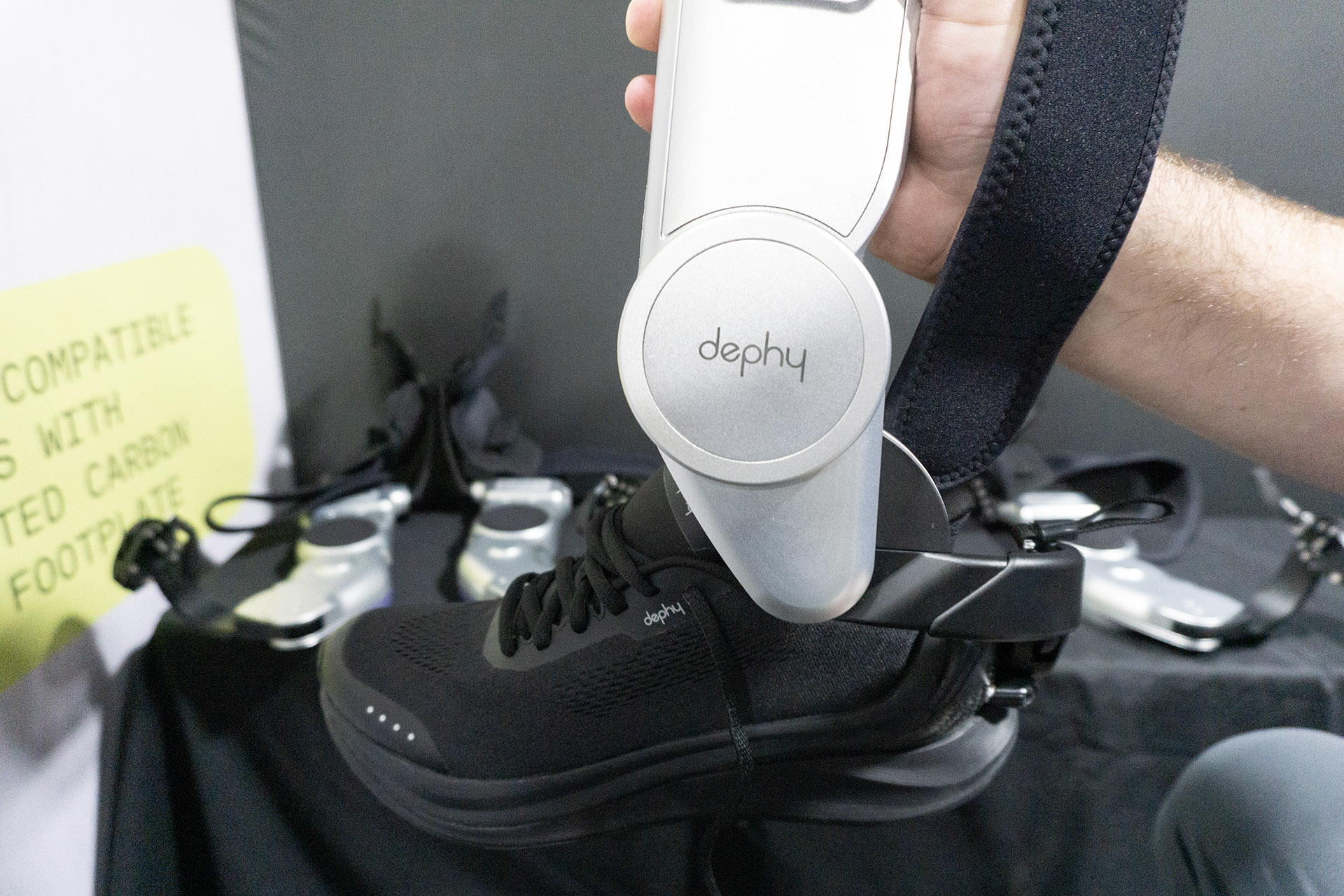
The system consists of two parts: an ankle-worn exoskeleton and a special pair of sneakers that attach to it. The exoskeleton hooks onto the back of the shoe and is secured with a strap around your calf. The battery powered device is equipped with sensors that can detect and adapt to the wearer's gait in order to deliver an extra "boost" with each step. 

The whole setup is pricey, at $4,500, but Dephy is betting that people who have "personal range anxiety" might be willing to pay for the extra confidence the Sidekick can provide. "This is a device that's kind of like [having] an extra calf muscle," Dephy CEO Luke Mooney told me. 

The Sidekick.
The Sidekick.
Karissa Bell for Engadget

I was able to take the Sidekick for a spin around the CES showfloor and it was a truly surprising sensation. The best way I can describe walking with the Sidekick powered on is that with every step forward there's a noticeable upward push from under your heel. It wasn't enough to throw me off balance, but it did feel a bit strange.

The Sidekick has adjustable power levels based on how much help you might need. At the highest level, it definitely felt unnecessarily pushy. The lower levels were still noticeable but felt less disruptive. I just felt… bouncy. Later, when Mooney turned off the power entirely, I noticed that my feet felt weirdly heavy in a way they hadn't just a few minutes before. 

Mooney was quick to tell me that I'm not Dephy's target demographic. "A lot of times people who are fit, or like athletes, actually struggle to adopt to the technology because their body's so in tune with how they move," he said. "Whereas folks who are not as physically active and fit, their body's ready to accept help."

The company's technology will be used in products more focused on athletic performance, however. Dephy has partnered with Nike on its upcoming robotic sneaker currently known as Project Amplify. Mooney declined to share details on the collaboration, but the shoemaker has claimed that some early testers have been able to improve their mile times by two minutes. 

I tried the Sidekick early in the day. Several hours later, though, when I was walking between the Las Vegas Conventions Center halls for the third or fourth time, I started thinking about those robotic sneakers again. I was getting close to 10,000 steps and hadn't sat down for hours. My feet were sore. I remembered that strange, bouncy boost and thought it sounded kind of nice.

This article originally appeared on Engadget at https://www.engadget.com/wearables/these-robotic-sneakers-gave-me-a-surprising-boost-at-ces-174500005.html?src=rss

©

  •  
❌