❌

Lese-Ansicht

Meta is testing a WhatsApp Plus subscription that mostly focuses on cosmetic upgrades

Meta is testing out a premium version of its messaging app, called WhatsApp Plus, that will include several paywalled features. As first spotted by WABetaInfo, Meta is currently rolling out a paid version of WhatsApp, which features mostly cosmetic upgrades. According to the Help Center page, WhatsApp Plus subscribers will get access to premium stickers that can have special effects and the ability to personalize the app's themes and icons.

Beyond the decorative elements, WhatsApp Plus users can pin up to 20 chats, set a premium ringtone for certain contacts and further customize chat lists with alerts, ringtones and themes. According to WABetaInfo, WhatsApp is exploring more features for its premium plan, but there's no exact pricing announced yet. Subscription costs currently range from 229 Pakistani Rupees, or less than $1, to €2.49, or around $3, according to WABetaInfo.

Meta isn't paywalling any of WhatsApp's basic functions, so the ability to send messages, make voice calls and take advantage of end-to-end encryption remains free. However, the introduction of WhatsApp Plus follows Meta also trialing Instagram Plus, which previewed premium features like Stories that last longer than 24 hours and sending "super hearts." The prices haven't been announced for Instagram Plus either, but WABetaInfo reported that Meta may offer one-month trials for any interested users of WhatsApp Plus.

This article originally appeared on Engadget at https://www.engadget.com/apps/meta-is-testing-a-whatsapp-plus-subscription-that-mostly-focuses-on-cosmetic-upgrades-175452371.html?src=rss

©

© WhatsApp

WhatsApp on a smartphone showing off text stickers.
  •  

Deezer says AI-made songs make up 44 percent of daily uploads

AI-generated music is spreading like wildfire, according to Deezer, who reported receiving nearly 75,000 uploads of AI-made tracks a day on its platform. The alternative music streaming service based in Paris published a report revealing that 44 percent of its daily uploads are AI-generated songs, accumulating to around 2 million flagged songs a month. If that figure doesn't alarm you, Deezer said that more than 13.4 million songs were detected and flagged as AI-generated across 2025.

Those statistics are made possible with Deezer's patent-pending AI music detection tool, which was launched in January 2025. A few months following the release, Deezer announced that it saw around 20,000 AI-generated tracks uploaded a day, which made up roughly 18 percent of its overall uploads. Despite the swell of AI music on its platform, Deezer said that only about 1 to 3 percent of total streams on the platform involve AI-generated music and that a majority of these streams are marked as fraudulent and demonetized.

Deezer said its proprietary tool can detect AI-generated music, particularly from two of the most popular offerings right now: Suno and Udio. Despite these two AI music tools getting hit with lawsuits in their early days, some major record labels have had a change of heart and later struck deals with the startups. On the other hand, other music streaming platforms are employing their own verification tools to fortify the floodgates holding back music made by AI. Similar to Deezer, Coda Music uses "AI Artist" labels and even let users flag suspicious artists.

This article originally appeared on Engadget at https://www.engadget.com/entertainment/music/deezer-says-ai-made-songs-make-up-44-percent-of-daily-uploads-163642921.html?src=rss

©

© Deezer

An alert on the Deezer platform that shows when an album has tracks generated with AI.
  •  

Apple could be fined up to $38 billion by Indian antitrust regulator

Apple's refusal to provide financial data to an Indian regulatory agency as part of an antitrust case will culminate in a final hearing on May 21, as first reported by Reuters. According to the Competition Commission of India (CCI), Apple still hasn't submitted information about its financials and its views on an antitrust investigation that started in October 2024.

The case revolves around the CCI accusing Apple of exploiting its dominant position with the App Store, arguing that developers are forced to use Apple's proprietary system for in-app purchases. Apple countered that Android was the more dominant smartphone operating system in India and that iPhones held a smaller market share in India. However, Apple has slowly been gaining momentum with its share of the Indian smartphone market, hitting nine percent in 2025, according to data from Counterpoint Research.

Reuters reported that the latest CCI order said that Apple had plenty of opportunities to file objections or suggestions, but added that the company still hadn't submitted the "requisite financial information," which is used to determine the amount of a potential penalty. Apple argued that the penalties could be up to $38 billion and responded to the order by citing a separate case where the tech giant challenged the country's antitrust penalty law.

It's not the first time Apple has butted heads with the Indian government, as it previously refused to pre-install a state-owned app called Sanchar Saathi onto its smartphones. The Indian government later decided to withdraw its mandate requiring smartphone makers to install the app, but it's much less willing to budge on this antitrust case. According to Reuters, the CCI offered Apple two more weeks to file any responses before the final hearing date next month.

This article originally appeared on Engadget at https://www.engadget.com/big-tech/apple-could-be-fined-up-to-38-billion-by-indian-antitrust-regulator-150821172.html?src=rss

©

© REUTERS / Reuters

The newly launched iPhone 17 series are displayed at an Apple store in New Delhi, India, September 19, 2025. REUTERS/Bhawika Chhabra
  •  

Beijing's robot half-marathon is back for its second year with far less embarassing results

To make up for an incredibly laughable inaugural event, Beijing is running back its humanoid robot half-marathon. Fortunately, the event that pits humanoid robots made by Chinese companies against each other across 13 miles went a lot smoother this year.

This year's half-marathon hosted more than 100 competitors, with first place going to Honor, better known for its smartphones, and its red-clad robot named Lightning. Living up to the name, the gold medalist finished the race in 50 minutes and 26 seconds. That's several minutes faster than the human record that was recently set by Uganda's Jacob Kiplimo last month.

Honor swept the other podium spots, with the important caveat that they all navigated the course autonomously, according to the state-sponsored television news agency CCTV. That's a massive improvement over last year, where the fastest time among 21 robots was achieved by Tiangong Ultra with a record of two hours and 40 minutes. Last year's event saw many of the bipedal robots receiving assistance from human operators who ran alongside them, as well as some comical mishaps, like falling at the starting line.

However, the BBC reported that around 40 percent of the robots competed autonomously this year, while the rest were remote-controlled. Despite the rapid improvements, this year's event still had its fair share of crashes, even from Honor's robots.

This article originally appeared on Engadget at https://www.engadget.com/ai/beijings-robot-half-marathon-is-back-for-its-second-year-with-far-less-embarassing-results-191308396.html?src=rss

©

© REUTERS / Reuters

A Lightning humanoid robot by Honor crosses the finish line of the second Beijing E-Town Half Marathon and Humanoid Robot Half Marathon in Beijing, China April 19, 2026. REUTERS/Maxim Shemetov
  •  

The next Mac Studio and MacBook Pro releases could be postponed by several months

Anyone looking to upgrade to the next Mac Studio or MacBook Pro might have to wait a little longer, thanks to the ongoing global memory shortage. As reported by Bloomberg's Mark Gurman, "at least two of the company's upcoming machines ... could debut a little later than the company initially planned," referencing the refreshes to Apple's desktop and its laptop that's expected to get a touchscreen.

Bloomberg reported that the upcoming Mac Studio, which follows up the current lineup in the M4 Max and M3 Ultra configurations, was first expected to release in the middle of the year. However, Apple is already dealing with shortages of its existing Mac Studio stock, likely due to the device being a popular choice for anyone running local AI models. With no stop to the shortage in sight, Gurman predicted that the refreshed Mac Studio's release could be postponed to around October instead.

It's not just Apple's desktop offerings being affected. Gurman also reported that the release of the next MacBook Pro could be delayed. While Gurman said the release timeline of the touchscreen MacBook Pro could be between the end of 2026 to early 2027, he's now predicting that it would arrive toward the later end of that timeline. Of course, Apple isn't the only consumer tech company heavily affected by the RAM shortage. However, Apple can at least take advantage of its successful MacBook Neo release amidst the memory shortage crisis affecting all laptop makers.

This article originally appeared on Engadget at https://www.engadget.com/computing/the-next-mac-studio-and-macbook-pro-releases-could-be-postponed-by-several-months-173120187.html?src=rss

©

© Apple

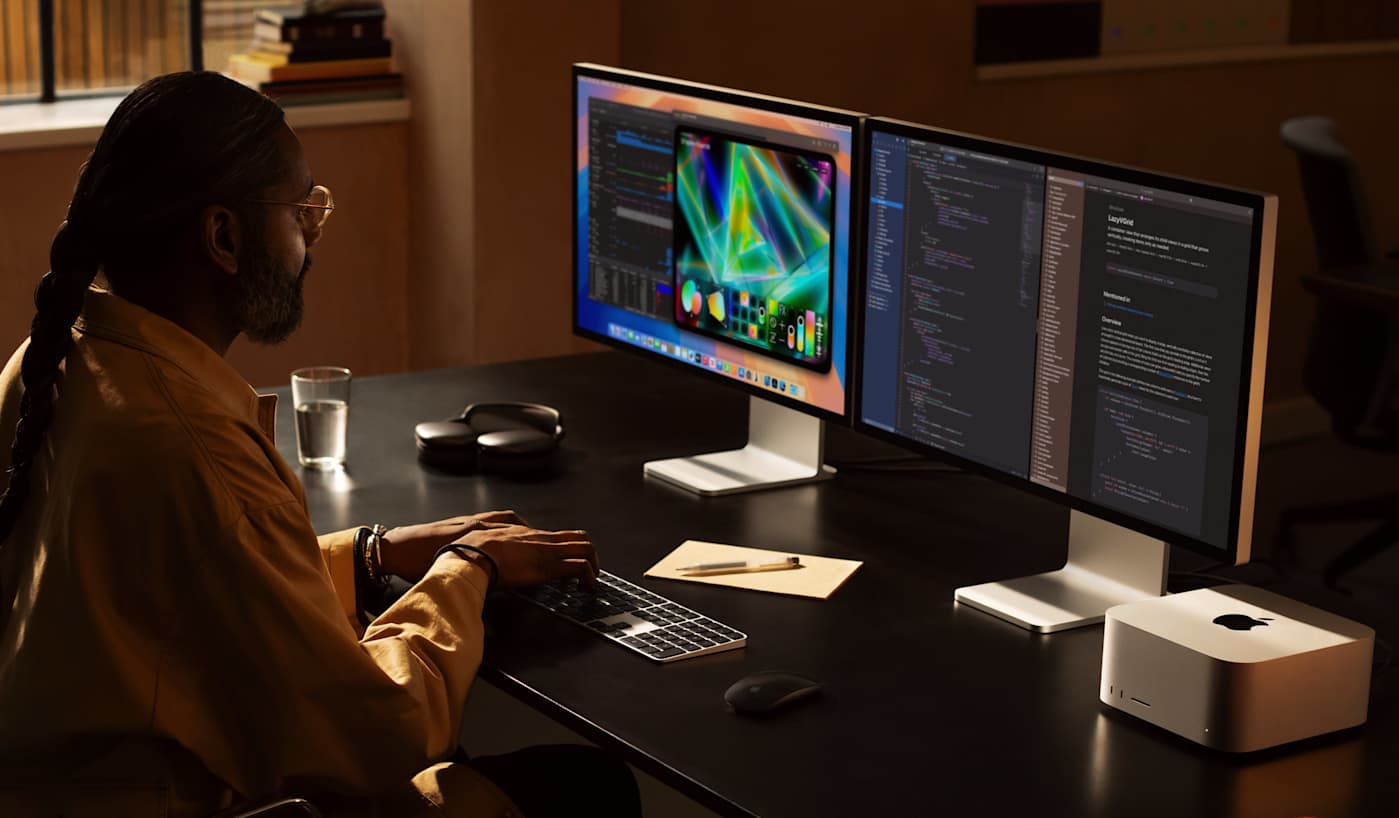
Someone using the Mac Studio paired with two displays.
  •  

Tesla is rolling out its Robotaxi service to Dallas and Houston

Tesla is expanding its Robotaxi footprint across Texas by introducing availability in both Dallas and Houston. As announced in a post on X, the EV maker is rolling out its Robotaxis to small sections of the Texas cities, as detailed by two maps of its new service areas. 

The first Robotaxi rides started in Austin, Texas where Tesla is headquartered, but the service's launch was paired with a "Tesla Safety Monitor," or a supervising human in the passenger seat. Earlier this year, Tesla began to transition away from including safety monitors, leaving its Robotaxis to operate unsupervised and fully autonomous. In the latest announcement on X, Tesla also showed off a 360-degree panning shot with no safety monitor, but the company hasn't stated if its Dallas and Houston service will have in-car human supervision. It's worth nothing that Tesla previously admitted that some of its Robotaxis are sometimes driven remotely by human operators.

With the Robotaxi expansion into Dallas and Houston, Tesla is encroaching on Waymo's autonomous ride-hailing service that entered the same markets in February of this year. Looking ahead, Tesla is also targeting the Bay Area market in California for its Robotaxi expansion. While the company has received approvals to operate a ride-hailing service in California, it still doesn't have authorization for autonomous taxis in the state yet.

This article originally appeared on Engadget at https://www.engadget.com/transportation/tesla-is-rolling-out-its-robotaxi-service-to-dallas-and-houston-160742941.html?src=rss

©

© Tesla

A woman using a laptop in the passenger seat of a Tesla robotaxi
  •  

SNK's Neo Geo console remake works with original cartridges and HDMI

Not everyone had the money for the original Neo Geo Advanced Entertainment System when it released in the '90s, but there's still a chance to experience it as an adult with disposable income. SNK and Plaion Replai, who is also behind the all-black remake of the Commodore 64, announced a faithful remake of the high-end retro console, called the Neo Geo AES+.

To bring the original console into the modern day, the collaborating companies added HDMI compatibility for resolutions up to 1080p and DIP switches on the bottom of the console to allow for language selection, overclocking and switching display modes. Rounding out the upgrades, SNK and Plaion Replai included a permanent way to retain high scores on a memory card and a low-power usage mode. For the purists out there, the Neo Geo AES+ still works on those chunky CRT displays since it has the original AV output.

Preorders are currently open for two versions of the Neo Geo AES+, including an all-white 35th anniversary edition bundle that includes an Arcade Stick, a limited-edition Metal Slug game cartridge and a memory card, for $349.99. The standard edition in classic black will only come with an arcade stick, but will be available for $249.99. Coinciding with the console release, Replai Plaion will release 10 modernized game cartridges, including Metal Slug, The King of Fighters 2002 and other classics, for $89.99 each. If you think those prices are high, don't forget the original Neo Geo AES' release price was $649.99. The Neo Geo AES+ is set to start shipping on November 12.

This article originally appeared on Engadget at https://www.engadget.com/gaming/snks-neo-geo-console-remake-works-with-original-cartridges-and-hdmi-194509442.html?src=rss

©

© Plaion Replai

The Neo Geo AES+ anniversary bundle in white.
  •  

Apple avoids a second import ban for its redesigned smartwatches in latest court ruling

Apple has secured a major victory for its redesigned smartwatches as per the latest decision from the US International Trade Commission. The federal agency ruled against reinstating an import ban on Apple Watches, allowing the tech giant to continue selling its devices with a reworked blood-oxygen monitoring technology.

The ITC decided to terminate the case and refer to a preliminary ruling from one of its judges in March that claimed that Apple's redesigned smartwatches don't infringe on patents held by Masimo, the medical tech company that has long been embroiled in lawsuits surrounding the Apple Watch. Apple thanked the ITC in a statement, adding that "Masimo has waged a relentless legal campaign against Apple and nearly all of its claims have been rejected." We reached out to Masimo for comment and will update the story when we hear back.

The latest decision could offer some closure to the longstanding legal feud between Masimo and Apple. The patent battle dates back to 2021 with Masimo's first filing against Apple that requested an import ban on Apple Watches. The ITC ended up ruling that Apple violated Masimo's patents, resulting in the previous import ban and the Apple Watch maker redesigning the blood-oxygen reading feature in certain models. However, Masimo wasn't satisfied with this conclusion and sought another import ban on the updated Apple Watch models. Now that the ITC has ruled against that, Masimo is left with the option to appeal the decision with the US Court of Appeals for the Federal Circuit.

While Masimo may currently be on the losing side of this legal battle, it's confronting Apple on multiple fronts. In November, a federal jury sided with Masimo and ruled that Apple has to pay $634 million in a separate patent infringement case.

This article originally appeared on Engadget at https://www.engadget.com/wearables/apple-avoids-a-second-import-ban-for-its-redesigned-smartwatches-in-latest-court-ruling-175600668.html?src=rss

©

© REUTERS / Reuters

FILE PHOTO: The series 11 Apple watch sits on display at the Apple Store in New York City, U.S., September 19, 2025. REUTERS/Shannon Stapleton/File Photo
  •  

DOJ refuses to help French authorities in criminal probe of X

The US Department of Justice is siding with X, as the social media platform owned by Elon Musk navigates a criminal investigation unfolding in France. As first reported by The Wall Street Journal, the Justice Department characterized the French probe as "an effort to entangle the United States in a politically charged criminal proceeding aimed at wrongfully regulating through prosecution the business activities of a social media platform.”

France launched its investigation into X in July, accusing the platform of manipulating its algorithm and "fraudulent data extraction." Months later, French authorities raided X's office in Paris and issued summonses to Musk and Linda Yaccarino, the former CEO of X, to appear for interviews on April 20 as part of the probe. According to WSJ, French officials are also investigating X for other charges, including disseminating CSAM and Holocaust denial. However, France's latest move to ask the Department of Justice for assistance has been stonewalled.

“This investigation seeks to use the criminal legal system in France to regulate a public square for the free expression of ideas and opinions in a manner contrary to the First Amendment of the United States Constitution," the DOJ wrote in letter, as seen by WSJ.

An xAI official told WSJ that it's "grateful to the Justice Department for rejecting this effort by a prosecutor in Paris to compel our CEO and several employees to sit for interviews." The company spokesperson also said there was "no wrongdoing" and that it was a "baseless investigation."

This article originally appeared on Engadget at https://www.engadget.com/social-media/doj-refuses-to-help-french-authorities-in-criminal-probe-of-x-162654518.html?src=rss

©

© Reuters / Reuters

Police stand guard at the U.S. Department of Justice in Washington, D.C., April 6, 2026. REUTERS/Kevin Lamarque
  •  

Crimson Desert developer apologizes and promises to replace AI-generated art

The developer behind the open-world RPG Crimson Desert has issued an official apology after players discovered several instances of AI-generated art in the game. Pearl Abyss posted on X that it released the game with some 2D visual props that were made with "experimental AI generative tools" and forgot to replace them before launch.

We would like to address questions regarding the use of AI in Crimson Desert.

During development, some 2D visual props were created as part of early-stage iteration using experimental AI generative tools. These assets helped us rapidly explore tone and atmosphere in the earlier…

— Crimson Desert (@CrimsonDesert_) March 22, 2026

Just a day after Crimson Desert's launch, players took to social media to post reports of potential generative AI usage. Pearl Abyss said on X that "following reports from our community, we have identified that some of these assets were unintentionally included in the final release." Now, the game's Steam page has an AI generated content disclosure, which says that, "generative AI technology is used in a supplementary capacity during the creation of some 2D prop assets" which are later replaced.

Moving forward, Pearl Abyss said it will conduct a "comprehensive audit of all in-game assets and are taking steps to replace any affected content." The developer said that these updated assets will roll out in upcoming patches, and that the team would internally review how it communicates with its player base to provide more "transparency and consistency."

Pearl Abyss isn't the only developer to fail to disclose the use of AI-generated assets in its games. Late last year, Sandfall Interactive was stripped of its Game of the Year and Debut Game awards from the Indie Game Awards for the use of generative AI in Clair Obscur: Expedition 33 for placeholder textures that were mistakenly left in the game. Like Pearl Abyss, Arc Raiders' developer Embark Studios is going back and replacing AI-generated material in its game after some backlash from its player base.

This article originally appeared on Engadget at https://www.engadget.com/gaming/crimson-desert-developer-apologizes-and-promises-to-replace-ai-generated-art-183716439.html?src=rss

©

© Pearl Abyss

Gameplay screenshot of Crimson Desert showing player on a horse in front of a mountain landscape.
  •  

Elon Musk announces Terafab project he claims will be the 'largest chip manufacturing facility ever'

Elon Musk has announced the Terafab project, a joint venture between Tesla, SpaceX and xAI, to build the "largest chip manufacturing facility ever." In his usual grandiose fashion, Musk claims Terafab is the next step towards harnessing the power of the sun and creating a "galactic civilization."

Musk, CEO of all three companies, announced plans for the Terafab in a livestream on X. As the name implies, the project's ultimate goal is to produce a terawatt of computing power each year so that it can match the companies' growing demand for chips. Musk explained during the livestream that he's grateful to existing supply chain partners like Samsung, TSMC and Micron, but the current capacity of chip manufacturers only adds up to about two percent to what Tesla and SpaceX needs in terms of future computing power needs.

"We either build the Terafab or we don't have the chips," Musk said during the event. "And we need the chips so we're going to build the Terafab."

The Terafab project, estimated to cost at least $20 billion, will start with the Advanced Technology Fab in Austin, Texas, where Tesla is already headquartered. Musk said that the two types of chips will be produced in the Terafab: one for terrestrial purposes, like to power Full Self-Driving or Optimus robots, and another more high-powered, durable chip to be used in space. If you're wondering what Musk has in store for space, the SpaceX CEO filed an application with the Federal Communications Commission to launch a million satellites to create an "orbital data center" earlier this year. As promising as this sounds, it's worth noting that Musk has previously overpromised and underdelivered on other projects, like the Hyperloop, a $40,000 Cybertruck and fully autonomous driving.

This article originally appeared on Engadget at https://www.engadget.com/science/elon-musk-announces-terafab-project-he-claims-will-be-the-largest-chip-manufacturing-facility-ever-171718545.html?src=rss

©

© Terafab

Terafab's logo with Elon Musk's companies below it.
  •  

Reddit is weighing identity verification methods to combat its bot problem

There could be one more step required before creating an account and posting on Reddit in the future. According to Reddit's CEO, Steve Huffman, the social media platform is exploring different ways to verify a user is human and not a bot. When asked by the TBPN podcast how to confirm that it's a human using Reddit, Huffman responded with several verification methods with varying degrees of heavy-handedness.

RDDT requiring Face ID was not something I had on my bingo card but something has got to be done about all the fake / botted content — I just don't know how to sell face-scanning to redditors or even lurkers. https://t.co/7e7K3Di4ip

— Alexis Ohanian 🗽 (@alexisohanian) March 21, 2026

"The most lightweight way is with something like Face ID or Touch ID," Huffman said during the interview. "They actually require a human presence, like a human has to touch, or do or look at something, so that actually just proves there's a person there or gets you pretty far."

Besides these passkey methods that use biometrics data, Huffman said there are other options like relying on third-party services that are decentralized or don't require ID. On the other end of the spectrum, Huffman also mentioned more burdensome options, like ID-checking services.

Recent years have brought a rise in bots flooding social media platforms including Reddit, where they've even been used to conduct secret experiments. It doesn't sound like Reddit has landed on how to verify its users' human identity yet, but Huffman did emphasize that the platform still wants to prioritize anonymity for its users. However, verifying humanity through identifiable and personal data could end up as a dealbreaker for Reddit users who value the anonymity of the platform. 

"Part of our promise for our users is we don't know your name but we do want to know you're a person," Huffman said. "It'll be an evolution for us for a while, and probably every platform to find the right middle ground here."

Reddit co-founder and former executive chair, Alexis Ohanian, said on X that Reddit requiring Face ID wasn't something he expected but agreed that something had to be done about the fake content from bots, adding that, "I just don't know how to sell face-scanning to Redditors or even lurkers." We reached out to Reddit's communications team and will update the story when we hear back.

This article originally appeared on Engadget at https://www.engadget.com/social-media/reddit-is-weighing-identity-verification-methods-to-combat-its-bot-problem-195814671.html?src=rss

©

© Reddit

Reddit's Snoo with a detective hat and magnifying glass.
  •  

Apple considered buying Halide to upgrade its native Camera app

A legal feud between the co-founders of Lux Optics, the developer behind the Halide camera app, revealed that Apple was close to acquiring the company. As first reported by The Information, Apple held acquisition talks for Lux Optics, which also developed the Kino, Spectre and Orion apps, in the summer of 2025.

According to The Information, the deal eventually fell through in September of that year, but the potential acquisition could've provided Apple with the third-party software to improve its own built-in camera app. Apple is already rumored to be introducing variable aperture to its upcoming iPhone 18 Pro models, so it's not surprising that the iPhone maker was looking for software with advanced features to match its possibly upgraded camera hardware.

Despite Apple's interest, Lux Optics' co-founders, Ben Sandofsky and Sebastiaan de With concluded that future updates to Halide could increase the company's valuation and ended the acquisition talks. According to the lawsuit between the co-founders, Sandofsky started investigating de With for the alleged misuse of company funds shortly after the talks with Apple ended. Afterwards, de With was fired from Lux Optics and later joined Apple's design team. While Halide may remain third-party software for iPhones and iPads, users can still look forward to some software improvements to the built-in camera app, since that's reportedly one of Apple's priorities.

This article originally appeared on Engadget at https://www.engadget.com/apps/apple-considered-buying-halide-to-upgrade-its-native-camera-app-175139818.html?src=rss

©

© Halide

Halide app running on iPhone 17e
  •  

OpenAI reportedly plans to double its workforce to 8,000 employees

While other tech companies have been laying off employees year after year, OpenAI is doing the opposite. According to a report from the Financial Times, the AI giant is looking to expand its workforce to 8,000 employees by the end of 2026, nearly doubling staff from its current headcount of 4,500.

The FT reported that the new hires will be across several departments, including product development, engineering, research and sales. OpenAI's hiring spree will also include "specialists" for "technical ambassadorship," or employees tasked with helping businesses better utilize its AI tools, according to the report. As the FT noted, OpenAI is likely trying to amp up the competition against Anthropic and its Claude AI chatbot. According to the AI Index from Ramp, a fintech startup that manages corporate expenses, businesses are now 70 percent more likely to go with Anthropic when buying AI services for the first time as opposed to OpenAI.

OpenAI made waves in February when it announced a contract with the Department of Defense to use its AI models, following a public fallout between Anthropic and the federal agency. On top of the government contract, OpenAI is also in "advanced talks" with private equity firms like Brookfield Asset Management to deploy its AI tools across a firms' portfolio of companies, according to Reuters.

This article originally appeared on Engadget at https://www.engadget.com/ai/openai-reportedly-plans-to-double-its-workforce-to-8000-employees-161028377.html?src=rss

©

© OpenAI

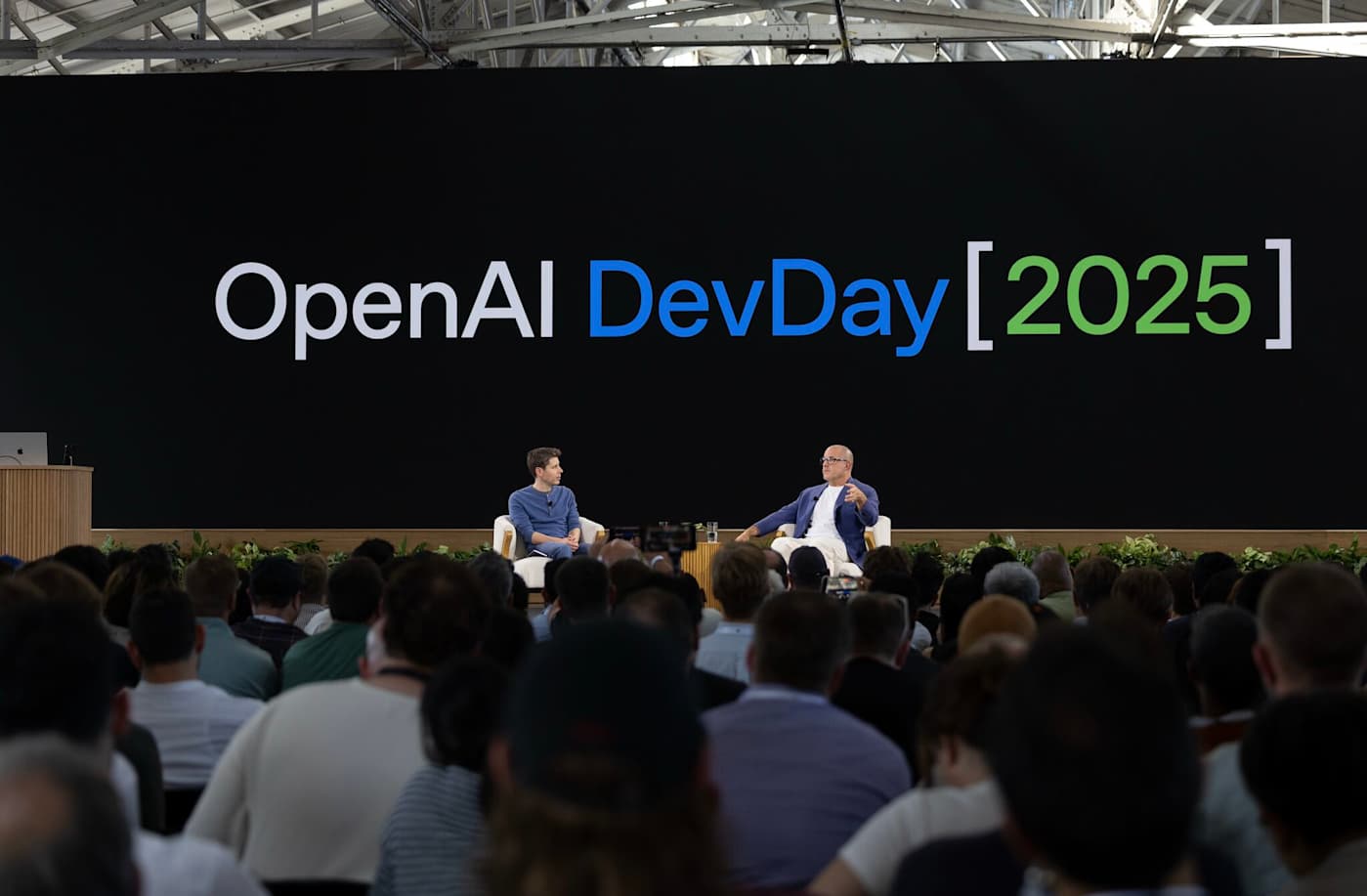
OpenAI CEO Sam Altman at a DevDay 2025 conference.
  •  

Apple acquires popular video editing software company MotionVFX

Apple's latest acquisition could be a hint towards improvements for Final Cut Pro. The tech giant acquired MotionVFX, as seen on the company's website and first reported by MacRumors, which is known for providing plugins, templates, visual effects and more to video editors. MotionVFX currently offers its software for a handful of video-editing apps, like DaVinci Resolve and Adobe Premiere, but is also listed as a trusted Apple partner and found in the Final Cut Pro ecosystem of third-party products.

Apple hasn't revealed an acquisition price nor details of the deal. On its website announcement, MotionVFX wrote that it's "thrilled to embrace" similar values seen with Apple products and that it's the "beginning of something wonderful."

Considering a lot of MotionVFX's tools are designed for Final Cut Pro and Apple's Motion app, we could see native integration of popular visual effects and templates into Apple's app interfaces. It's worth noting that MotionVFX already offers an extension that creates a panel directly in Final Cut Pro for users to browse, download and apply visual effects from its repository. The acquisition could also hint at Apple trying to make its Creator Studio more enticing in the future, since it includes both Final Cut Pro and Motion. However, there hasn't been any clarity on what will happen to MotionVFX's monthly or annual subscription plans, nor its support for competing products.

This article originally appeared on Engadget at https://www.engadget.com/apps/apple-acquires-popular-video-editing-software-company-motionvfx-175429480.html?src=rss

©

© MotionVFX

MotionVFX's dashboard on a MacBook
  •  

Encyclopedia Britannica sues OpenAI for copyright and trademark infringement

OpenAI has been hit with another lawsuit. This time, Encyclopedia Britannica took legal action against OpenAI, accusing the company of copyright and trademark infringements, as first reported by Reuters. More specifically, Britannica alleged that OpenAI illegally used its "copyrighted content at a massive scale" when training its AI models. Not just with training, the encyclopedia company claimed that ChatGPT's responses to user queries sometimes contain "full or partial verbatim reproductions of [Britannica's] copyright articles."

Along with claims of copyright violations, Britannica argued that OpenAI was also responsible for trademark infringement. According to the lawsuit, ChatGPT generates "made-up content or 'hallucinations' and falsely attributes them" to Encyclopedia Britannica. The lawsuit doesn't specify an amount for monetary damages, but Britannica is also seeking an injunction to prevent OpenAI from repeating these accusations.

When reached out for comment, a spokesperson for OpenAI told Engadget that, "ChatGPT helps enhance human creativity, advance scientific discovery and medical research, and enable hundreds of millions of people to improve their daily lives. Our models empower innovation, and are trained on publicly available data and grounded in fair use."

It's not the first time that Britannica has filed a lawsuit against an AI company. In September, the company, which owns Merriam-Webster, also sued Perplexity for similar reasons. On the other side, OpenAI is still embroiled in a legal battle with The New York Times, which also sued the AI giant for copyright infringement.

This article originally appeared on Engadget at https://www.engadget.com/ai/encyclopedia-britannica-sues-openai-for-copyright-and-trademark-infringement-164747991.html?src=rss

©

© Britannica

Britannica Group filed a lawsuit against OpenAI for copyright and trademark infringements.
  •  

Tech companies are teaming up to combat scammers

A coalition of Big Tech companies is working on a more comprehensive solution to combat online scams. As first reported by Axios, Google, Microsoft, LinkedIn, Meta, Amazon, OpenAI, Adobe, Levi Strauss & Co, Target, Pinterest and Match Group announced the signing of the Industry Accord Against Online Scams and Fraud. The new agreement is meant to put up a united industry-wide front against online fraud and scams, particularly those from sophisticated criminal networks that use multiple platforms.

According to the Axios report, the measures will include adding fraud detection tools, introducing new user security features, and requiring more robust verification for financial transactions. The agreement will also set up best practices for scam detection, prevention and reporting, while encouraging the sharing of information between companies and law enforcement. On the policy side, the coalition will call on the governments to "declare scam prevention a national priority," according to Axios. While these measures are extensive, the report noted that they're all voluntary since the accord doesn't mention any penalties if the companies don't follow through.

Many of the companies involved in the new accord already have experience in dealing with scams found on their own platforms. Earlier this month, Meta announced several new features across Facebook, Messenger and WhatsApp that would alert users about suspicious friend requests or accounts. Last year, LinkedIn introduced a new verification requirement for company recruiters or executives to address scams targeting job seekers on its platform.

Update, March 18, 2026, 9:40AM: This article has been updated to add additional members of the accord and to include its full name, the Industry Accord Against Online Scams and Fraud. 

This article originally appeared on Engadget at https://www.engadget.com/cybersecurity/tech-companies-are-teaming-up-to-combat-scammers-144616545.html?src=rss

©

© REUTERS / Reuters

FILE PHOTO: People pose for a photo in front of a sign of Meta, the new name for the company formerly known as Facebook, at its headquarters in Menlo Park, California, U.S. October 28, 2021. REUTERS/Nathan Frandino/File Photo
  •  

Arc Raiders replaced some of its AI-generated voice lines, using professional actors instead

In an unexpected twist, humans have taken some jobs back from AI. Embark Studios' CEO Patrick Söderlund recently told GamesIndustry.biz that the studio "re-recorded" some of the AI-generated voice lines in Arc Raiders with human voices, only after its successful launch in October.

"There is a quality difference," Söderlund told GamesIndustry.biz. "A real professional actor is better than AI; that's just how it is."

With Arc Raiders' player count peaking at nearly half a million users on Steam, the game's breakout success was still marred by its use of text-to-speech AI. While there was no generative AI used for the visuals of the extraction shooter, Embark Studios paid its actors for approval to license their voices for text-to-speech AI, according to Söderlund. Even though Söderlund said that the text-to-speech AI was reserved for lines "that aren't as essential to the immersion of the experience," many players weren't happy with this creative decision.

Responding to the criticism, Embark Studios is seemingly reversing course and relying more on its voice actors. Söderlund said that the studio pays its voice actors for their time in the recording booth and will "continue to bring many of them back as we carry on updating the game." However, it's important to note that Söderlund told GamesIndustry.biz that "some" of the AI-generated lines were replaced by voice actors, which could indicate that the studio isn't looking to completely ditch its text-to-speech AI anytime soon.

This article originally appeared on Engadget at https://www.engadget.com/gaming/arc-raiders-replaced-some-of-its-ai-generated-voice-lines-with-professional-actors-184915627.html?src=rss

©
© Embark Studios

Gameplay screenshot of Embark Studios' Arc Raiders extraction shooter.
  •  

Anthropic is doubling Claude's usage limits during off-peak hours for the next two weeks

To capitalize on Claude's recent spike in popularity, Anthropic is offering a limited-time promotion that doubles usage limits for anyone using its AI chatbot during off-peak hours. From March 13 to March 27, users on Free, Pro, Max, and Team plans will get double the usage limits in a five-hour window when using Claude outside weekday hours between 8 AM and 2 PM ET. According to Anthropic, the promotion is automatic, and users don't have to enable anything to get the benefits.

A small thank you to everyone using Claude: We’re doubling usage outside our peak hours for the next two weeks. pic.twitter.com/W7TEBPditq

— Claude (@claudeai) March 14, 2026

Anthropic said that this promotion applies to anyone using Claude on web, desktop or mobile, but also with Cowork, Claude Code, Claude for Excel and Claude for PowerPoint. Previously, Anthropic offered a similar event from December 25 to December 31, doubling usage limits for Pro, Max 5x or Max 20x subscribers. However, Anthropic is targeting an even wider audience with its latest promotion since only Enterprise users are excluded this time around.

Anthropic is marketing the promotion as a "small thank you to everyone using Claude," but it's likely tied to its ongoing battle with the Department of Defense. After refusing to remove certain AI safeguards for the Department of Defense, Anthropic was listed as a supply chain risk and lost its contract with the federal agency. In turn, OpenAI signed a deal with the Department of Defense, leading to many users deciding to boycott ChatGPT in favor of Claude and other AI chatbot options.

This article originally appeared on Engadget at https://www.engadget.com/ai/anthropic-is-doubling-claudes-usage-limits-during-off-peak-hours-for-the-next-two-weeks-163645928.html?src=rss

©

© Anthropic

Promotional image of Claude getting double usage limits for a limited time.
  •  

Spotify’s new Taste Profile feature lets users fine-tune their algorithm’s recommendations

You're responsible for your own Spotify algorithm now. On stage at SXSW, Spotify's co-CEO, Gustav Söderström, announced the Taste Profile feature, which allows users to personally customize exactly what they want to listen to, whether it's music, audiobooks or podcasts. This AI-powered feature is still in beta, and it will be available to Premium users in New Zealand in the coming weeks.

From its short video demo, Spotify's Taste Profile feature will show you a summary of your listening habits and offer a "Tell us more" prompt at the bottom. With the new prompt, users can inform the AI what they want to see more of or if they want to get rid of a genre that keeps popping up in their algorithm. Spotify said that the Taste Profile will take into consideration more ambiguous prompts, too, like if you're training for a marathon and want upbeat music or want to listen to news podcasts during your commute to work. Spotify added that Taste Profile is an optional feature, and unwilling users can "leave it and enjoy Spotify as usual."

With Taste Profile, Spotify is continuing its momentum of offering AI features, like the Prompted Playlist feature that was made available last month. Unlike the existing AI Playlist feature, Prompted Playlist lets you put in specific requests to generate a playlist, like only including songs from a specific TV show. Like Taste Profile, the Prompted Playlist feature saw beta testing in New Zealand first, before expanding to US and Canadian users a month later.

This article originally appeared on Engadget at https://www.engadget.com/entertainment/music/spotifys-new-taste-profile-feature-lets-users-fine-tune-their-algorithms-recommendations-191104626.html?src=rss

©

© Spotify

Spotify will let users edit their listening preferences for music, podcasts and audiobooks with the Taste Profile feature.
  •  
❌