Kalshi, one of several online prediction markets that have exploded in popularity in the last few years, has suspended one of YouTube MrBeast's video editors for insider trading, NPR reports. Besides being suspended from the platform for two years, Kalshi says the editor will also be required to pay a financial penalty that's five times his initial trade size.
The editor, Artem Kaptur, traded in markets related to YouTube and specifically, MrBeast. Kalshi says his transactions were initially flagged because of his "near-perfect trading success on markets with low odds, which were statistically anomalous." Because trades are public on Kalshi, multiple users also flagged the trades as suspicious. Kalshi learned Kaptur was an employee of MrBeast during its investigation and determined he "likely had access to material non-public information connected to his trading." Perhaps unsurprisingly, trading with insider information violates Kalshi's rules.
Kalshi says that it reported the insider trading to the Commodity Futures Trading Commission (CFTC) and plans to donate the over $20,000 Kaptur has been fined to "a non-profit that provides consumer education on derivatives markets." In a statement provided to NPR, Beast Industries, MrBeast's production company, said it has a zero-tolerance policy for insider trading. "We have a longstanding policy in place against employees using proprietary company information in order to safeguard the highest standards and ethics throughout our organization," Beast Industries said.
Separately, Kalshi has also suspended and fined a politician who was running to be Governor of California. "In May, our Surveillance Department saw an online video by a candidate for Governor of California that appeared to show him trading on his own candidacy," Kalshi says. "We immediately froze his account and opened an investigation. The candidate was initially cooperative and acknowledged that this violated the exchange rules. As a candidate in a race, you can (and probably should) follow and use Kalshi’s market forecast, but you should not trade on it."
Like other prediction markets, Kalshi lets users make trades based on a variety of different subjects and events. For example, you could participate in a market focused on the results of a basketball game, or something more unusual, like who'll win the current season of Survivor. Despite resembling gambling, online predictive markets aren't currently regulated by state gambling laws, and instead classify bets as a type of futures contract, placing them under the purview of the CFTC. That hasn't stopped states from trying to regulate prediction markets anyway. For example, Nevada sued Kalshi for operating a sports gambling market without a permit earlier in February.
This article originally appeared on Engadget at https://www.engadget.com/big-tech/kalshi-fined-a-mrbeast-editor-for-insider-trading-191027814.html?src=rss
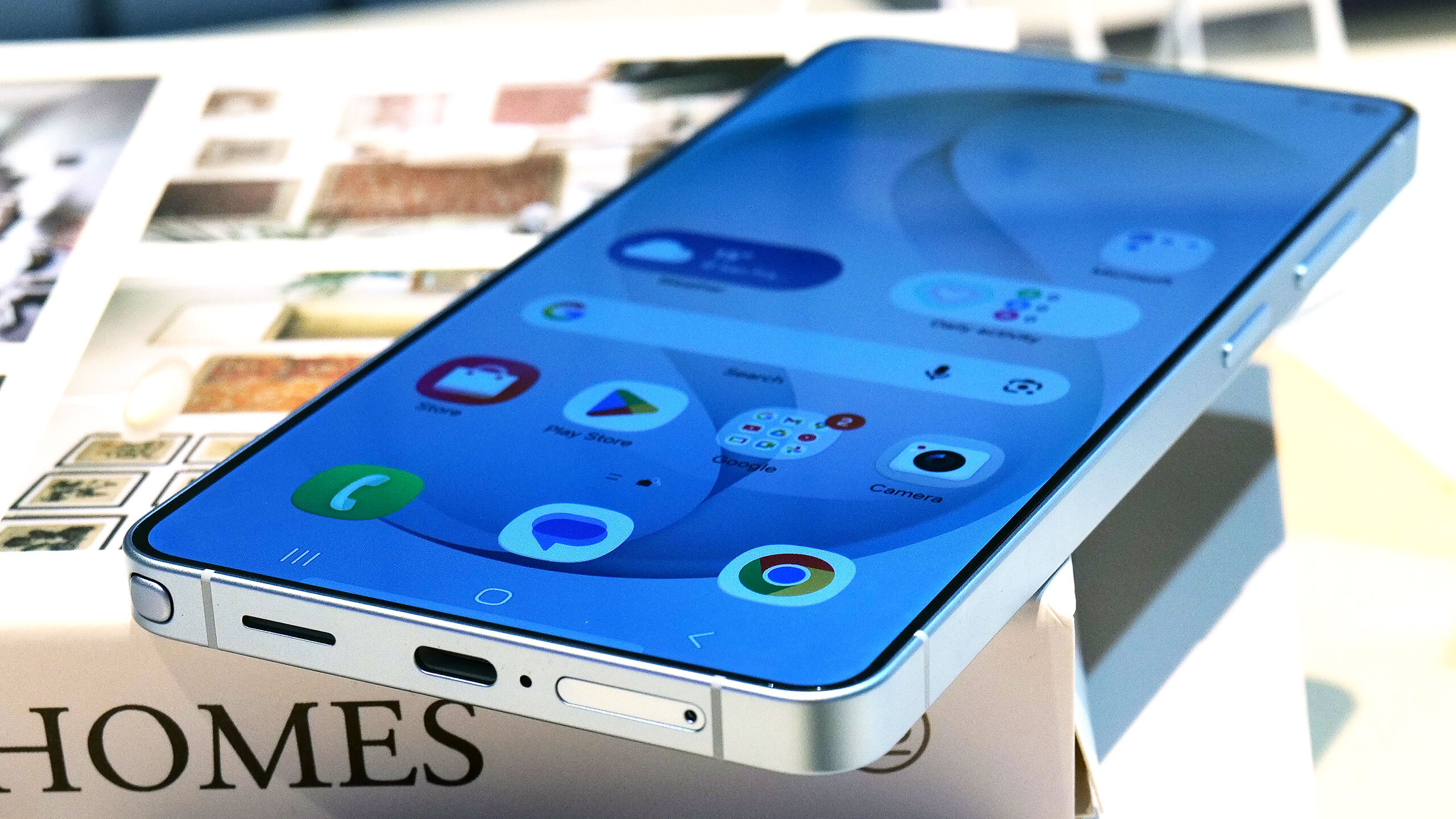
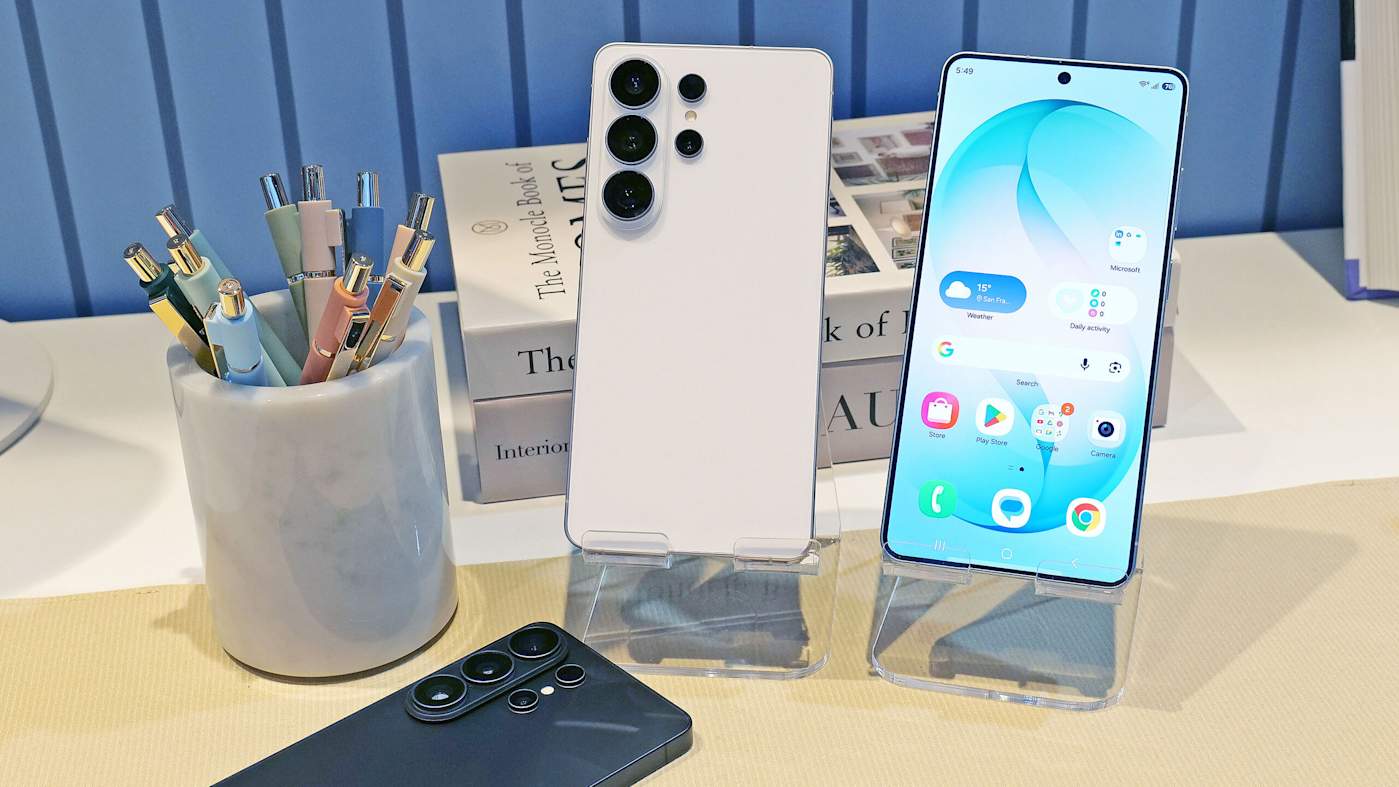
Samsung has announced the latest version of its flagship smartphone, the Samsung Galaxy S26 Ultra, and just like last year, the high-end phone is where the company is making some of its biggest changes. The S26 Ultra includes a new processor, a new privacy-focused display technology, an improved camera system and like Samsung's other phones, a crop of new AI-powered software features.
On first blush, the Galaxy S26 Ultra isn't all that different from the Galaxy S25 Ultra. Samsung is still using a 6.9-inch QHD+ AMOLED screen, with an 120Hz refresh rate and support for an S Pen stylus. The S26 Ultra also features the same flat sides, utter lack of Qi2-compatible magnets and pronounced camera bump. Despite those similarities, the new flagship does have some differences: for one, it's ever so slightly thinner at 0.31-inches than the S25 Ultra was at 0.32-inches. It also comes with an aluminum frame rather than the titanium frame of the previous generation. For stylus fans, the new S Pen has a curved top that lets it better match the curves of the S26 Ultra. Biggest of all, Samsung's new phone includes "Privacy Display," a new technology that lets the phone limit how much of its screen is visible when you're not looking directly at it.
Sam Rutherford for Engadget
Inside, the Galaxy S26 Ultra uses Qualcomm's new Snapdragon 8 Elite Gen 5 for Galaxy chip, a modified version of the flagship mobile chip it debuted last year, and either 12 or 16GB of RAM. In terms of storage, the Galaxy S26 Ultra can come with either 256GB, 512GB or 1TB of memory. Regardless of which version you pick, you'll get a 5,000mAh battery with support for Samsung's wired and wireless fast charging, and Wireless PowerShare for topping up accessories like wireless earbuds.
The Galaxy S26 Ultra, just like the S25 Ultra before it, includes an array of four cameras on the back and one selfie camera on the front. The phone features a 200MP f/1.4 wide, 50MP f/1.9 ultra-wide, 10MP f/2.4 3x telephoto, 50MP f/2.9 periscope telephoto and 12MP f/2.2 selfie camera. If you were to just look at just the megapixel counts of the phone, they're identical to last year's model. Samsung's major tweaks are to the aperture of both the wide and periscope cameras, which should let them capture more light.
Sam Rutherford for Engadget
Of course, plenty of the flashiest parts of Samsung's new smartphone are software features. The improved photo and video performances of the Galaxy S26 Ultra's cameras is partially driven by software tweaks. Samsung is also adopting Perplexity as a second, system-level AI assistant. The AI can be called with a button press or "Hey Plex," powers improvements to Bixby and can act inside Samsung apps. That doesn't mean Gemini isn't still available, though. Google's AI will gain the ability to handle things like booking a rideshare or filling an online grocery cart in the background on the Galaxy S26 Ultra.
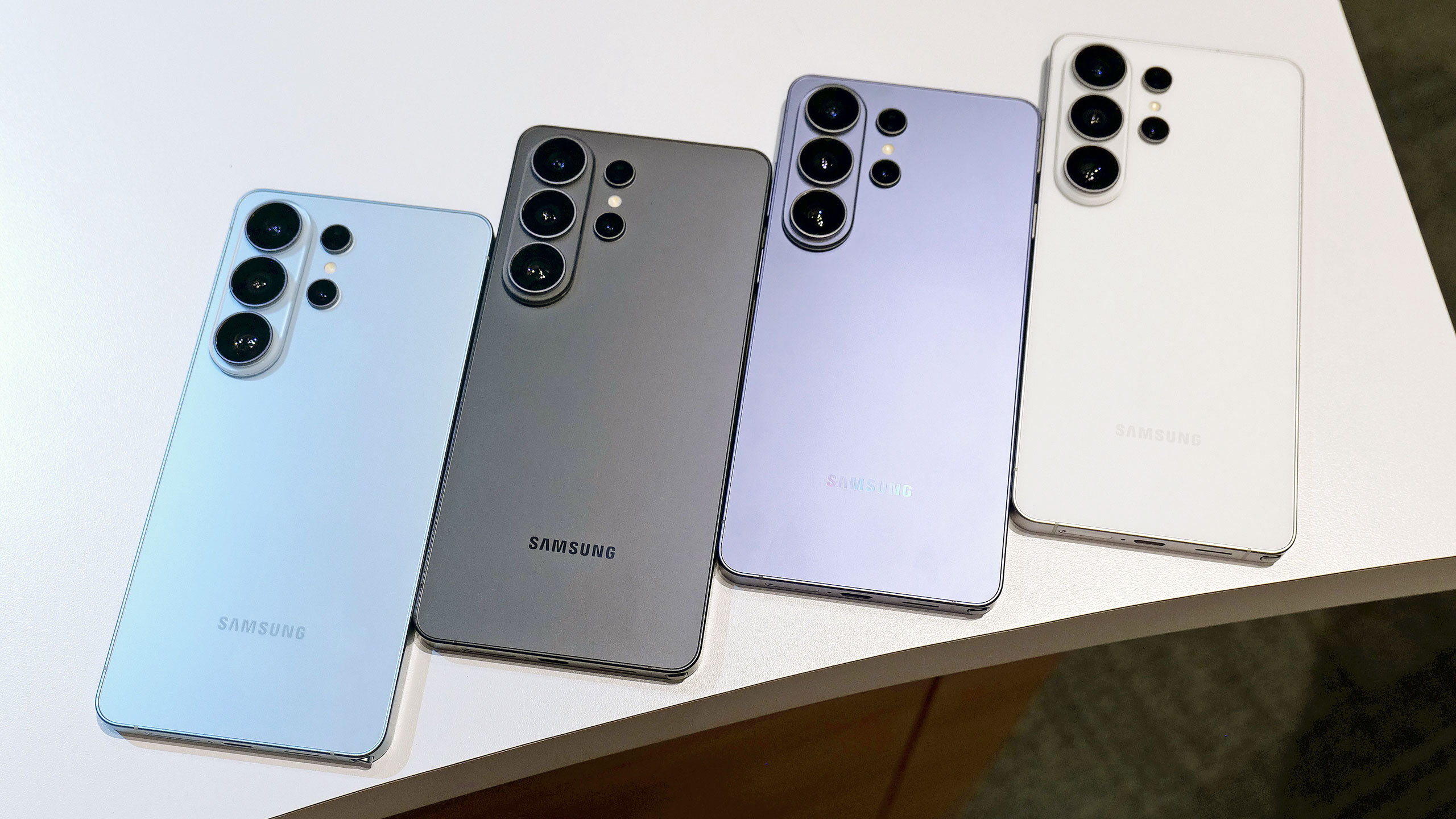
The Galaxy S26 Ultra starts at $1,300 and is available to pre-order today in a purple-ish "Cobalt Violet," light blue "Sky Blue," black, white and exclusively through Samsung's online store, "Silver Shadow" and "Pink Gold." The phone will become generally available on March 11.
This article originally appeared on Engadget at https://www.engadget.com/mobile/smartphones/samsungs-galaxy-s26-ultra-offers-a-subtle-set-of-hardware-improvements-180000725.html?src=rss
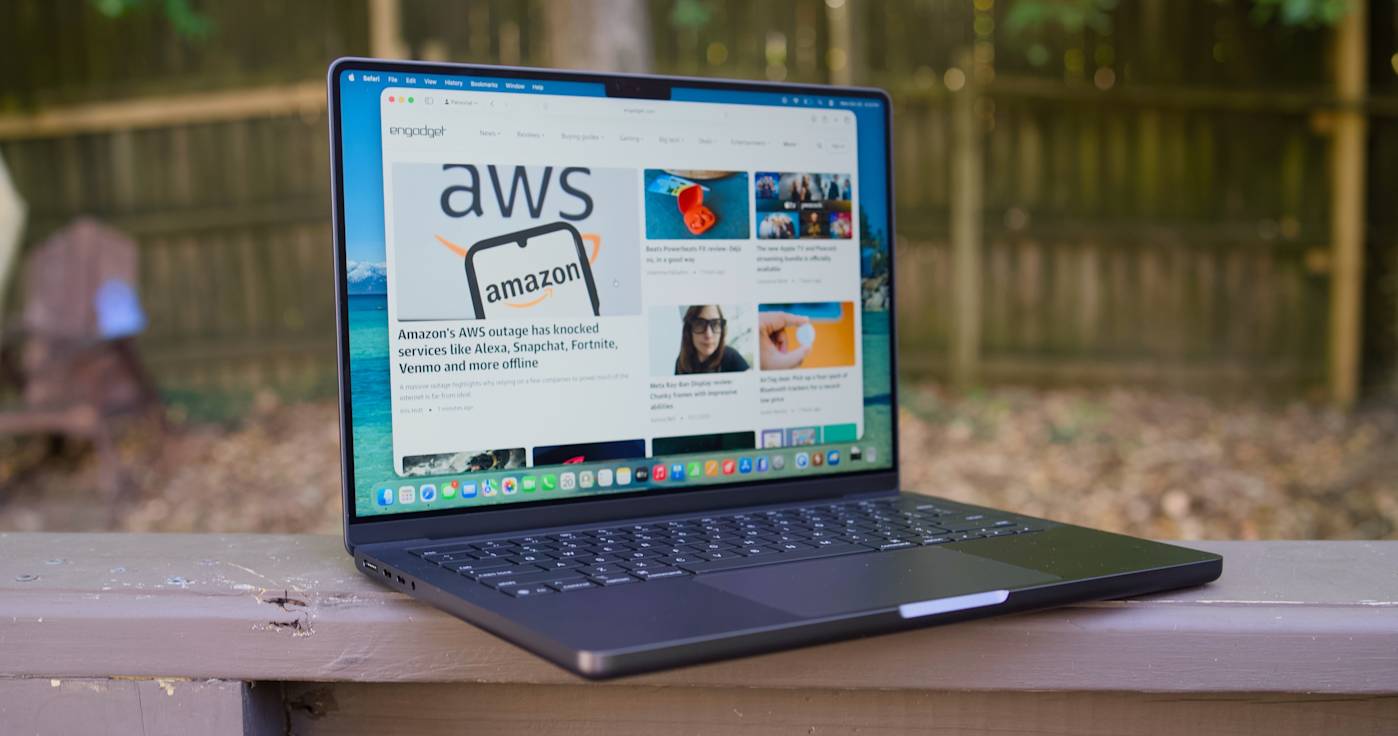
Apple's plan to add touchscreens to its premium MacBook Pros is coming into focus. Bloomberg reports that when the new laptops launch this fall, they'll feature a Dynamic Island, not unlike Apple's iPhones, and an interface that changes depending on where you touch your Macbook's screen.
This "dynamic interface" is reportedly designed to make the transition between mouse input and touch input smoother on Apple's new laptops. Bloomberg says that if users touch an onscreen button, the version of macOS running on these new MacBook Pros will be able to pull up a contextual menu "that provides more relevant options for touch commands." Parts of the interface, like macOS' menu bar, will also be able to enlarge to make menu items easier to select with a finger. Those tweaks are on top of the expected features from touchscreen Apple products, like smooth scrolling and the ability to pinch and zoom into and out of images, files and web pages. The only thing missing from these increasingly iPad-like laptops, per Bloomberg, will be a touchscreen keyboard, because they'll already have a more comfortable physical keyboard attached.
To make these new laptops extra enticing, both the 14-inch and 16-inch touchscreen MacBook Pros will feature OLED screens for the first time, likely the reason Apple will be able to include a Dynamic Island-style webcam in the first place. Up until now, the company has offered OLED screens on its iPhones, Apple Watches and more recently the iPad Pro, but it hasn't brought the display technology to laptops. That could reportedly change with these new MacBook Pros.
Plenty of Windows laptops include touchscreens, and Microsoft and its partners have incorporated dynamic interface elements in the past to make these touchscreens more natural to use with Windows. Apple is late to the party in this respect, but it's also potentially set up to succeed. Much of modern macOS already looks touch-friendly, and Apple's has expended significant effort making it possible to port touch-based iPad apps to macOS and develop applications across platforms. That, paired with the right interface, could make the experience of using a touchscreen MacBook nicer out of the box, even if it doesn't get rid of the awkwardness of reaching over your keyboard to touch a screen.
This article originally appeared on Engadget at https://www.engadget.com/computing/laptops/apples-touchscreen-macbook-will-reportedly-have-a-dynamic-interface-231929456.html?src=rss
Three years after announcing plans to produce a film based on the viral YouTube short, The Backrooms (Found Footage) in 2023, A24 has released the first teaser for its adaptation. Backrooms, as the film is now called, is directed by the short's original creator, Kane Parsons, and will be released on May 29, 2026.
The teaser offers little to go on for anyone who hasn't watched the original short or the series of videos Parsons made after it, but it is replete with The Backrooms' hallmark: ominous liminal spaces. Layered over footage of stranger and stranger rooms (or perhaps one room becoming the platonic empty retail spaces popularized by short), the voice of Chiwetel Ejiofor tells the film's other star, Renate Reinsve, about a "place" he discovered that's full of rooms.
Parsons' original video is inspired by a creepypasta called "The Backrooms" that originated on the forum 4chan in 2019. The YouTube series expanded on the basic concept of a liminal space that exists outside reality with monsters and a mysterious company researching The Backrooms. It's unclear how much of that larger lore will be incorporated into the feature film adaptation, but since the teaser is missing the digital video filter that gave the YouTube short its distinct look, it seems possible Parsons could be going for something a bit different. Well that, and the fact the film stars two Oscar-nominated actors.
This article originally appeared on Engadget at https://www.engadget.com/entertainment/tv-movies/heres-the-first-teaser-for-a24s-adaptation-of-the-backrooms-194300513.html?src=rss
Meta is formally sectioning off Horizon Worlds, the closest thing it has to a metaverse, from its Quest VR platform, according to a new blog post from Samantha Ryan, Meta's VP of Content, Reality Labs. While the decision runs counter to Meta's original plan to own an immersive virtual world that could serve as the future home for all online interaction, it fits with the recent cuts it made to its costly Reality Labs division, and Mark Zuckerberg's public commitment to focus the company on AI hardware like smart glasses going forward.
"We’re explicitly separating our Quest VR platform from our Worlds platform in order to create more space for both products to grow," Ryan writes in the blog post. "We’re doubling down on the VR developer ecosystem while shifting the focus of Worlds to be almost exclusively mobile. By breaking things down into two distinct platforms, we’ll be better able to clearly focus on each."
Meta has been developing mobile and web versions of Horizon Worlds in parallel with its VR app since at least 2023. Switching Worlds to being a mobile-first software platform isn't good for VR diehards, but it does make it a more natural competitor to something like Roblox or Fortnite, which also offer user-created and monetizable worlds and games. It's also a business Meta believes it can more easily scale because of its ability to connect games to "billions of people on the world’s biggest social networks."
While Meta shuttered several of its own VR game studios earlier this year, it still wants to support third-party developers publishing games on its platform. The company says new monetization tools, better discoverability, a "Deals" tab and more ways for developers to talk to their customers should help make a difference. Maintaining the Quest's library of games could also be critical going forward. Business Insider reported in December 2025 that Meta was working on a gaming-focused Quest headset, and Meta CTO Andrew Bosworth confirmed earlier this February that the company still had multiple Quest devices on its roadmap.
This article originally appeared on Engadget at https://www.engadget.com/ar-vr/metas-metaverse-is-going-mobile-first-233030532.html?src=rss
Sony is closing Bluepoint Games, the studio behind the Shadow of the Colossus and Demon's Souls remakes, Bloomberg reports. Bluepoint's last major project was God of War: Ragnarok from 2022, which it co-developed with Sony Santa Monica.
According to Bloomberg, Sony decided to shut down the studio following "a recent business review." Around 70 employees will lose their jobs as part of the studio closure, which will officially happen in March. "Bluepoint Games is an incredibly talented team and their technical expertise has delivered exceptional experiences for the PlayStation community," Sony said in a statement to Bloomberg. "We thank them for their passion, creativity and craftmanship."
Following their work on Ragnarok, Bluepoint was reportedly tasked with developing a live-service game set in the God of War universe. That title was cancelled in 2025, alongside another game from Bend Studio. In the context of Sony's other live-service failures, the decision wasn't surprising. Sony shut down the servers for multiplayer shooter Concord just two weeks after its release. Not long after, it also closed Firewalk Studios, the developer behind the game.
Bluepoint Games was originally acquired by Sony in 2021, when it seemed like the studio's expertise in remaking and remastering classic PlayStation games could be a major asset going forward. Why that changed isn't entirely clear, but Sony's mismanagement of its pivot into and out of publishing premium online multiplayer games may have played a role. Some of Sony's studios are still experimenting with live-service mechanics. Guerilla Games recently announced an online co-op game set in its Horizon universe. Destiny 2 developer Bungie is also releasing its extraction shooter Marathon in March.
This article originally appeared on Engadget at https://www.engadget.com/gaming/playstation/sony-is-shutting-down-the-studio-behind-the-demons-souls-remake-195234213.html?src=rss
Google has announced that using its newly incorporated Lyria 3 model, Gemini users will be able to generate 30-second music tracks based on a prompt, or remix an existing track to their liking. The new model builds on Gemini's pre-existing ability to generate text, images and video, and will also be available in YouTube's "Dream Track" feature, where it can be used to generate detailed backing tracks for Shorts.
Like some other music generation tools, prompting Gemini doesn't require a lot of detail to produce serviceable results. Google's example prompt is "a comical R&B slow jam about a sock finding their match," but after playing with Lyria 3, you can definitely get more granular about individual elements of a track — changing the tempo or the style of drumming, for example — if you want to. Outside of text, Gemini can also generate music based on a photo or video, and tracks can be paired with album art created by Google's Nano Banana image model.
Google says that Lyria 3 improves on its previous audio generation models in its ability to create more "realistic and musically complex" tracks, give prompters more control over individual components of a song and automatically generate lyrics. Gemini's outputs are limited to 30-second clips for now, but given how Google's promotional video shows off the feature, it's not hard to imagine those clips getting longer or the model getting incorporated into other apps, like Google Messages.
Like Gemini's other AI-generated outputs, songs made with Lyria 3 are also watermarked with Google's SynthID, so a Gemini clip can't as easily be passed off as a human one. Google started rolling out its SynthID Detector for identifying AI-generated content at Google I/O 2025. The sample tracks Google included alongside its announcement are convincing, but you might not need the company's tool to notice their machine-made qualities. The instrumental parts of Gemini’s clips often sound great, but the composition of the lyrics Lyria 3 produces sounds alternately corny and strange.
If you're curious to try Lyria 3 for yourself, Google says you can prompt tracks in Gemini starting today, provided you're 18 years or older and speak English, Spanish, German, French, Hindi, Japanese, Korean or Portuguese.
This article originally appeared on Engadget at https://www.engadget.com/ai/gemini-can-now-generate-a-30-second-approximation-of-what-real-music-sounds-like-204445903.html?src=rss
Texas is suing Wi-Fi router maker TP-Link for deceptively marketing the security of its products and allowing Chinese hacking groups to access Americans' devices, Attorney General Ken Paxton has announced. Paxton originally started looking into TP-Link in October 2025. Texas Governor Greg Abbott later prohibited state employees from using TP-Link products in January of this year.
TP-Link is no longer owned by a Chinese company and its products are assembled in Vietnam, but Paxton's lawsuit claims that because the company's "ownership and supply-chain are tied to China" it's subject to the country's data laws, which require companies to comply with requests from Chinese intelligence agencies. The lawsuit also says that firmware vulnerabilities in TP-Link's hardware have already "exposed millions of consumers to severe cybersecurity risks."
TP-Link provided the following statement to Engadget in response to the lawsuit:
The claims made by the Texas Attorney General’s office are without merit and will be proven false. TP-Link Systems Inc. is an independent American company. Neither the Chinese government nor the CCP exercises any form of ownership or control over TP-Link, its products, or its user data. TP-Link’s founder and CEO, Jeffrey Chao, resides in Irvine, CA, and is not and never has been a member of the CCP. To ensure the highest level of security, our core operations and infrastructure are located entirely within the United States, and all U.S. users' networking data is stored securely on Amazon Web Services servers. We will continue to vigorously defend our reputation as a trusted provider of secure connectivity for American families.
TP-Link was reportedly being investigated at the federal level in 2024 after its devices were connected to the massive "Salt Typhoon" hack that accessed data from multiple US telecom companies. Despite all signs pointing to the federal government getting ready to ban TP-Link in 2025, Reuters reports that the Trump administration paused plans to ban the company’s routers in early February, ahead of a meeting between President Donald Trump and President Xi Jinping.
Update, February 17, 3:38PM ET: Added statement from TP-Link.
This article originally appeared on Engadget at https://www.engadget.com/cybersecurity/texas-ag-sues-tp-link-over-purported-connection-to-china-193802258.html?src=rss
Coming off the success of Slient Hill f,which moved the series’ psychological horror to the Japanese countryside, Konami, Annapurna Interactive and developer Screen Burn Interactive have chosen a foggy island as the setting for Silent Hill: Townfall.
The first gameplay trailer for Townfall, introduced during Sony’s latest State of Play, follows Simon Ordell, a man who keeps mysteriously waking up in the water off the coast of the empty island town of St. Amelia. In the trailer, Simon hides from monsters, peers at a portable television, swings a fire axe, and deals with the psychological turmoil typical of a Silent Hill protagonist, all in first person, one of the unique twists of this new game.
Silent Hill: Townfall was originally announced alongside Silent Hill f and the remake of Silent Hill 2 in 2022. The game is developed by Screen Burn Interactive (formerly known as No Code), the creators of Observation and Stories Untold. Konami will share more details about Townfall’s gameplay and story in an upcoming Silent Hill Transmission presentation later today.
Silent Hill: Townfall is coming to PlayStation 5 in 2026.
This article originally appeared on Engadget at https://www.engadget.com/gaming/playstation/silent-hill-townfall-takes-the-series-trademark-fog-to-an-eerie-coastal-community-233324897.html?src=rss
When it launched in 2021, Kena: Bridge of Spirits was an early example of the graphical power of the PS5 thanks to its Pixar-adjacent animation and over-the-top effects. Based on a surprise trailer at Sony's latest State of Play, it seems like its sequel, Kena: Scars of Kosmora, could up the ante when it launches later this year.
Scars of Kosmora follows spirit guide Kena to a mysterious island called Kosmora, where a powerful spirit breaks her staff and forces her to embrace a new style of spirit guiding (and presumably a collection of new game mechanics). Like the first game, Scars of Kosmora looks to be filled with lush visuals and cute Spirit Companions, but also a surprising amount of boss battles. Developer Ember Lab's new trailer heavily emphasizes the game's updated combat, which seems like it'll play a big role in the sequel.
According to a post on the PlayStation Blog, it sounds like manipulating the elements will also be a major focus. "We’ve added new elemental gameplay to bring strategy and depth when facing the threats of Kosmora," developer Ember Lab says. "These new combat skills, elemental infusions and use of your Spirit Companions will be key to overcoming challenging encounters and epic boss fights."
Kena: Scars of Kosmora is coming to PlayStation 5 and PC in 2026.
This article originally appeared on Engadget at https://www.engadget.com/gaming/playstation/kena-scars-of-kosmora-is-coming-out-later-this-year-224006963.html?src=rss
The European Commission has opened a new probe into Google, this time focused on the company's massive online advertising business, Bloomberg reports. European Union regulators have already fined Google billions for violating the Digital Markets Act, and being found guilty of anticompetitive behavior in online advertising could add to that total.
While the Commission has yet to announce a formal investigation, Bloomberg writes that it has started contacting Google's customers and competitors for information about its dominance across multiple online advertising markets. Regulators are particularly concerned that Google could be "artificially increasing the clearing price" of ad auctions "to the detriment of advertisers." If the company is found to be violating the EU's competition rules, Google could be fined 10 percent of its global annual sales.
Google's approach to advertising to minors was reportedly already under investigation by the EU as of December 2024, and besides fines, regulators have ordered the company to open up Android to competing AI assistants and share search data with rivals. In the US, there's also precedent for finding Google's approach to online advertising anticompetitive.
A US federal judge found that Google is a monopolist in online advertising in April 2025, the conclusion of a legal battle that started with a Department of Justice lawsuit accusing the company of dominating the ad market and using its control to charge more and keep a larger portion of ad sales. The DOJ ultimately wants Google to sell its ad tech business, but a final decision hasn't been reached as to how the company's anticompetitive behavior should be remedied.
This article originally appeared on Engadget at https://www.engadget.com/big-tech/eu-reportedly-opens-another-probe-into-googles-ads-pricing-194435095.html?src=rss
Less than a week after Valve admitted that the current shortage (and growing prices) of RAM were affecting its hardware plans, the Steam Deck is completely sold out. The Steam Deck has gone in and out of stock in the past, but as Kotaku notes, the timing does raise the question whether Valve's RAM issues could also be impacting its Linux handheld.
The 256GB Steam Deck LCD, and both the 512GB and 1TB models of the Steam Deck OLED, are completely sold out on Steam. Valve announced that it was discontinuing the LCD versions of its handheld and selling through its remaining inventory in December 2025, so the fact that the 256GB Steam Deck model is currently sold out isn't surprising. That both OLED versions are also unavailable at the same time, though, is a bit more unusual.
Engadget has contacted Valve for more information about the availability of the Steam Deck. We'll update this article if we hear back.
When Valve announced the Steam Machine, Steam Controller and Steam Frame, the company notably left pricing and availability off the table, presumably because tariffs and access to RAM were leaving those details in flux. The company's announcement last week that the memory and storage shortage had pushed back its plans and would likely impact prices more or less confirmed that. At no point did Valve mention that the Steam Deck would be similarly affected, but maybe it should have.
The rising cost of RAM has already forced other PC makers to adjust the pricing of their computers. Framework announced in January that it was raising the price of its Framework Desktop by as much as $460. Some analysts assume that the memory shortage driven by the AI industry could lead to higher prices and even an economic downturn in the wider PC industry. Ideally, the Steam Deck being out of stock is a temporary issue rather than a sign that Valve is doing something drastic. If things continue as they are, however, changes to the Steam Deck likely won't be off the table.
This article originally appeared on Engadget at https://www.engadget.com/gaming/pc/the-great-ramaggedon-of-2026-might-have-just-claimed-the-steam-deck-211958306.html?src=rss
Amazon has announced that it will bring its same-day prescription delivery service to 4,500 new cities and towns by the end of 2026. The company originally launched Amazon Pharmacy in 2020 with a two-day delivery option, and has continued to increase the availability and delivery speed of the service in the years that followed, including expanding access to nearly half of all US residents in 2024.
The company's announcement doesn't break down all the new cities same-day deliveries will be available in, but does note that the delivery option is coming to Idaho and Massachusetts for the first time. In the past, access to same-day deliveries has been determined by where Amazon has fulfillment centers that it can open pharmacies in. Amazon Pharmacy also offers next-day delivery and in some cities, the ability to pick up prescriptions from Amazon's OneMedical offices.
Amazon reportedly applied for Amazon Pharmacy trademarks in the UK, Canada and Australia in 2020, but has yet to expand its prescription delivery service to those regions. In 2023, Amazon launched RxPass, a separate $5 per month subscription that lets Amazon Prime customers order from a collection over 50 common medications for a flat fee. Amazon began letting Medicare recipients access the subscription in 2024.
This article originally appeared on Engadget at https://www.engadget.com/big-tech/amazons-same-day-prescription-deliveries-are-coming-to-even-more-cities-192221224.html?src=rss
Kris Marszalek, CEO and co-founder of crypto and stock trading platform Crypto.com, has bought an expensive website. In this case it's AI.com, valued at one point at $100 million, which will serve as the online home for his new company of the same name. The website launch is being paired with a Super Bowl ad that will air this Sunday.
AI.com's main offering is an AI agent that "operates on the user’s behalf — organizing work, sending messages, executing actions across apps, building projects, and more." It's a similar concept to what companies like OpenAI, Anthropic and Google are promising with their own agents and agentic features, and notably lacking in hard details. Users can make multiple agents with AI.com and have them do a variety of tasks — the company's press release mentions trading stocks and updating a dating profile, for example — while remaining permission-based and private. It's not clear if AI.com is offering its own AI models or licensing those offered by other companies, but clearly whatever it offers, both for free and via a planned paid subscription, will be flexible.
Like Crypto.com's big push into the mainstream during late 2021 and early 2022, AI.com is arriving at a particularly hype-filled time in the AI industry. Anthropic's Claude Code and Claude Cowork tools have been taken up as evidence that AI might actually make people more productive, so AI.com's decision to push an agent of its own is timely.
Of course, after Crypto.com's big Matt Damon ad in 2021, and Super Bowl ad in 2022, Bitcoin prices hit an all-time low in June 2022. Ironically, Marszalek's AI.com is also launching during a particularly nasty "crypto winter" which has lowered the price of Bitcoin to under $66,000, a steep drop from the $127,000 it cost in October 2025. That's not to suggest the AI.com CEO is a groundhog for deflating hype balloons. More likely, it's a sign that the future of AI could be as unpredictable and volatile as cryptocurrency.
This article originally appeared on Engadget at https://www.engadget.com/ai/the-cryptocom-guy-bought-aicom-and-a-super-bowl-ad-234325394.html?src=rss
Apple plans to allow third-party voice-controlled AI apps in CarPlay, Bloomberg reports. Siri is the default voice assistant for things like controlling music and looking up directions, but future AI apps in CarPlay could handle the complicated, open-ended requests Siri can't answer.
The expanded support would let developers like OpenAI or Google offer versions of their ChatGPT and Gemini apps for CarPlay. Similar functionality is possible just by connecting a smartphone to a car over Bluetooth and using an AI app's voice mode, but CarPlay support would presumably make the process a little more seamless.
Not so seamless that it replaces Siri, however. Bloomberg writes that these third-party apps won't be able to replace the Siri button in the CarPlay interface or use their own wake words ("Hey Google," etc.). Instead, anyone who wants to spend a long drive talking to Gemini will have to open the app first. That could cut down on the utility of using one of these apps, but Apple presumably wants to get Siri to a place where CarPlay users prefer it as their in-car assistant anyway.
Apple and Google recently announced that Gemini would power future versions of Siri and Apple Foundation Models, the AI models underpinning Apple Intelligence. The delayed, updated version of Siri Apple introduced alongside Apple Intelligence in 2024 is supposed to be able to take actions on user's behalf, work across apps and understand the context of what's on screen, all things Gemini can currently do. Reports suggest Apple wants to eventually use Google's Gemini models to transform Siri into a proper conversational chatbot, too. That future version of the voice assistant could be right at home in CarPlay.
This article originally appeared on Engadget at https://www.engadget.com/transportation/apple-will-reportedly-allow-third-party-ai-assistants-in-carplay-213432646.html?src=rss
Disney+ subscribers in some European countries have lost access to advanced HDR features like Dolby Vision, TechRadar and FlatpanelsHD report. The issue was first spotted by German Disney+ subscribers on Reddit, but currently also impacts subscribers in Portugal, Poland, France and the Netherlands, according to FlatpanelsHD.
"Dolby Vision support for content on Disney+ is currently unavailable in several European countries due to technical challenges," Disney said in a statement. "We are actively working to restore access to Dolby Vision and will provide an update as soon as possible. 4K UHD and HDR support remain available on supported devices."
If the issue is in fact a technical one, it seems like it could be around for the long-term. Disney has removed any reference to Dolby Vision from its Disney+ video quality support page in Germany. As of now, the company lists HDR10 as its default HDR format, despite Dolby Vision support being a feature of Disney+ for several years now.
FlatpanelsHD writes that the real issue might be legal, rather than technological. A company called InterDigital won an injunction in a German court against Disney in November 2025 because it violated at least one of the company's patents on streaming video technology. The injunction specifically requires Disney to stop violating InterDigital's patent on "a method for dynamically overlaying a first video stream with a second video stream comprising, for example, subtitles." It's not entirely clear how that plays into the company offering Dolby Vision in Europe, but it would explain why subscribers in Germany were some of the first people to notice Dolby Vision's absence.
Engadget has contacted Disney for more information about Disney+'s missing HDR support and whether InterDigital's injunction played a role. We'll update this article if we hear back.
Mentions of Dolby Vision were also stripped out of the US version of Disney+'s video quality support page. InterDigital hasn't won an injunction in the US, but the company is pursuing a patent case against Disney in the United States District Court for the Central District of California. That doesn't necessarily mean Dolby Vision support will be taken from US subscribers next, but it does suggest there's more happening here than just technical challenges.
Update, February 6, 3:44PM ET: The original version of this article included mention of Disney+ losing HDR10+ support in Europe, but Disney says it never offered HDR10+ in that region. The article has been updated accordingly.
This article originally appeared on Engadget at https://www.engadget.com/entertainment/streaming/disney-loses-access-to-dolby-vision-in-some-european-countries-193930702.html?src=rss
The Steam Machine is back from the dead. Not as a Valve-supported program for manufacturers to create living room PCs, but instead a home console sibling to the Steam Deck. Valve introduced its second attempt at ruling the living room in a surprise hardware announcement in November 2025, and paired the new Steam Machine with a new Steam Controller and a wireless VR headset it calls the Steam Frame. Since the announcement, as is often the case with Valve, some details remain elusive, however.
While we wait for the release of the company's new hardware lineup in 2026, and more information straight from the horse's mouth, here's everything we know about the hardware, software and price of the Steam Machine.
What's the Steam Machine's hardware like?
Valve
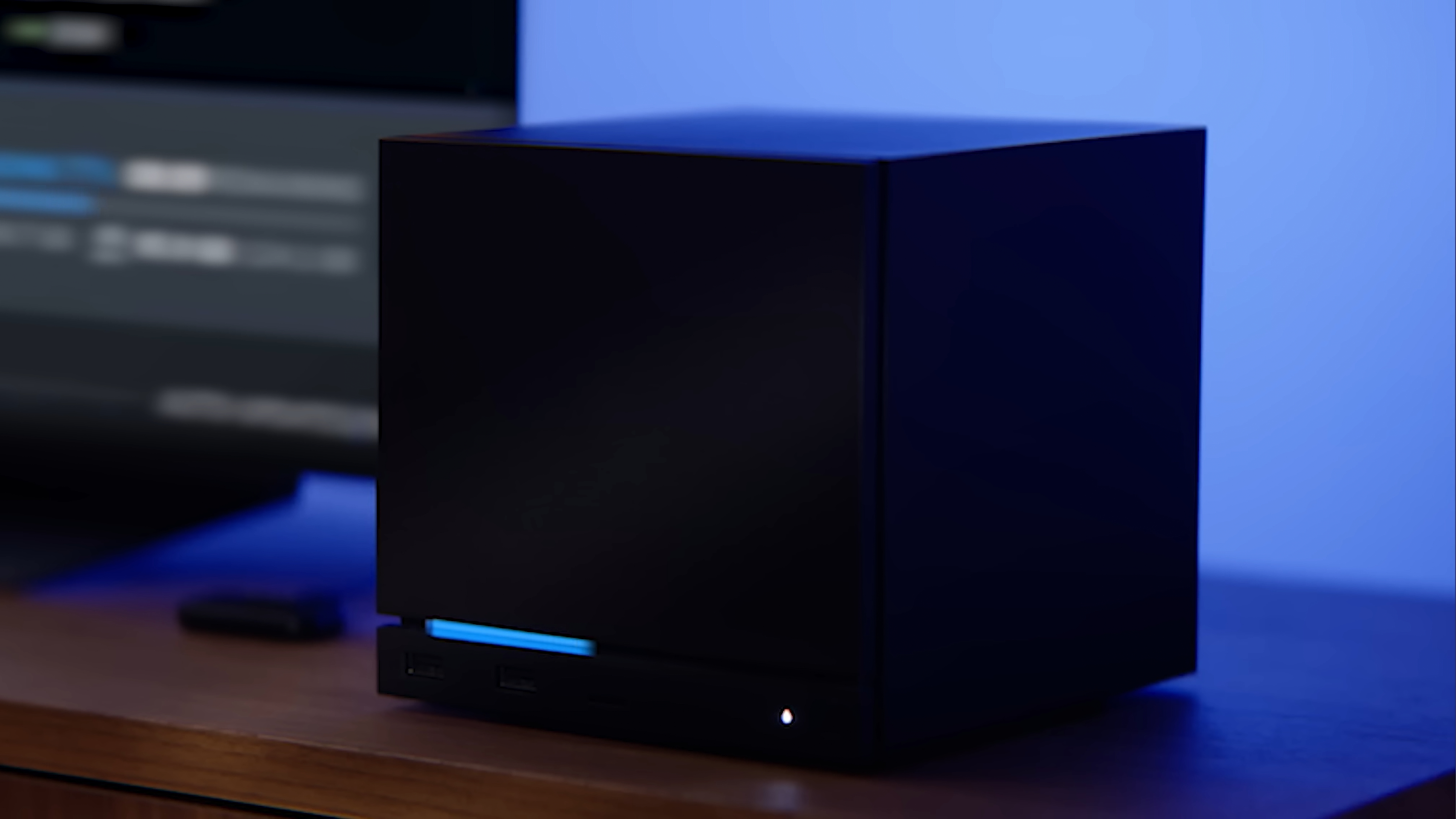
Like the Steam Deck, the Steam Machine is utilitarian and bespoke. The PC is a black, 5.98 x 6.39 x 6.14 inch (152 x 162.4 x 156mm) box, with ports and a grille for a fan in the back and a removable faceplate and customizable LED light strip in the front. Inside, Valve says the Steam Machine features a "semi-custom" AMD Zen 4 CPU with six cores and up to 4.8GHz clock speeds, and a "semi-custom" RDNA3 AMD GPU, along with 16GB DDR RAM, 8GB GDDR6 VRAM and either 512GB or 2TB of storage.
While these specs make the Steam Machine more powerful than the aging Steam Deck (which shipped in 2022 with its own custom AMD chip) Valve has been careful not to oversell the capabilities of the box. In a blog post, the company said that "the majority of Steam titles play great at 4K 60FPS" using AMD's FidelityFX Super Resolution (FSR) frame generation and upscaling technology, but some titles require more upscaling than others, and it "may be preferable to play at a lower framerate with [variable refresh rate] to maintain a 1080p internal resolution."
In a hands-on preview of the Steam Machine, Digital Foundry expressed concern with what Valve's claims and the device's stated specs could mean for future performance. "The decision to opt for 8GB of GDDR6 memory has been proven to be a limiting factor on many modern mainstream triple-A games and falls short of the maximum VRAM pools and memory bandwidth available on both Xbox Series X and base PS5," Digital Foundry writes.
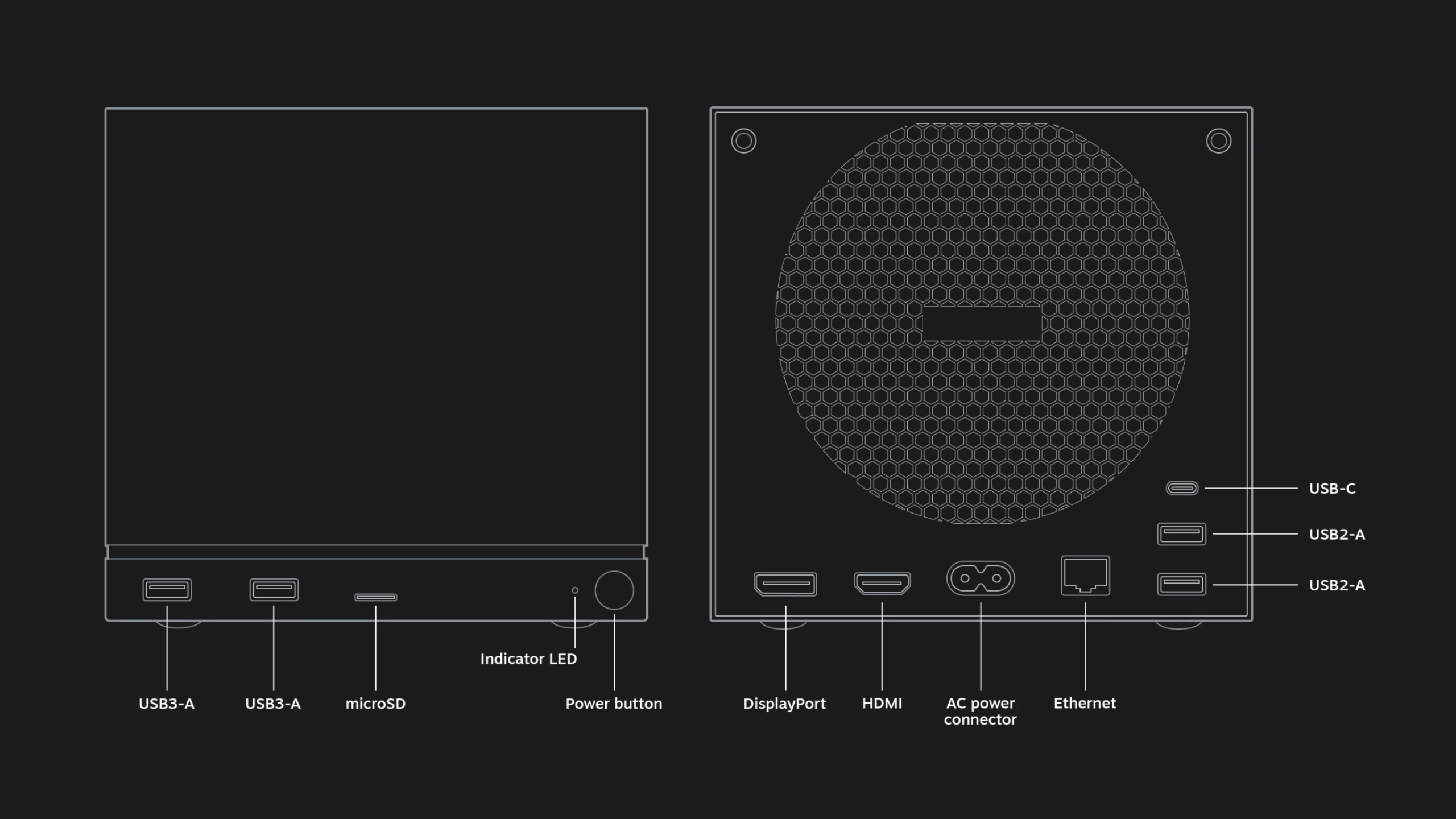
The Steam Machine supports Bluetooth 5.3, Wi-Fi 6E and includes an integrated 2.4GHz adapter for the new Steam Controller. In terms of port selection, there's DisplayPort 1.4 and HDMI 2.0 inputs for connecting the box to external monitors and TVs, four USB-A ports (divided between two USB 2.0 ports and two USB 3.2 Gen 1 ports) and one USB-C port on the back.
Engadget will have to try out the Steam Machine to really know what it's capable of, but there's nothing to suggest it couldn't be as flexible as the Steam Deck, especially with more power to play with.
What games will be able to run on the Steam Machine?
Valve
Any game that runs on SteamOS, Valve's Linux-based operating system, will run on the Steam Machine, provided the device's technical specs will support it. For games running natively on Linux, the Steam Machine will download the Linux version. For Windows games and everything else, it'll be able to use Steam's built-in Proton compatibility layer to translate games to Linux, just like the Steam Deck does.
Proton is developed by both Valve and CodeWeavers, the team behind the macOS compatibility app CrossOver. Valve's compatibility layer translates a game's API calls and other software features into something Linux understands, essentially tricking the game into thinking it's running on Windows when it isn't. Proton has worked remarkably well so far, in some cases helping some PC games run more efficiently on Linux than they do on Windows, but it does have some limitations. Because some anti-cheat software doesn't support Linux, many competitive multiplayer games aren't playable on SteamOS. Valve hopes the Steam Machine will help change that.
"While [the] Steam Machine also requires dev participation to enable anti-cheat, we think the incentives for enabling anti-cheat on Machine to be higher than on Deck as we expect more people to play multiplayer games on it," Valve told Eurogamer. "Ultimately we hope that the launch of Machine will change the equation around anti-cheat support and increase its support."
To help users find what games work well on the Steam Machine, Valve plans to expand its program for verifying games on the Steam Deck to include the Steam Machine and Steam Frame. Valve looks at things like controller support, the default resolution of the game, whether or not it requires a separate launcher and whether the game and its middleware work with Proton to determine a game's rating. Then the company sorts games into four categories: Verified (where the game works with Steam hardware at launch), Playable (where a user might have to make modifications to run smoothly), Unplayable (where some or all of the game doesn't function) and Unknown.
According to an announcement Valve sent to developers, games that were Verified for the Steam Deck will automatically be verified for the Steam Machine. The system is helpful, but far from definitive — some Unplayable games are in fact playable — which is why online, community-run databases like ProtonDB fill in the gaps with more granular information.
How much will the Steam Machine cost and when will it launch?
Valve
Valve hasn't announced a price or a release date for the Steam Machine or any of its new hardware. In terms of price, however, the company has suggested it might not be a deal in quite the same way the $399 Steam Deck LCD was. Valve designer Pierre-Loup Griffais told The Verge that the "Steam Machine’s pricing is comparable to a PC with similar specs" and that its price would be "positioned closer to the entry level of the PC space" but be "very competitive with what you a PC you could build yourself from parts."
That means the Steam Machine will likely cost more than the $499 PS5, and that the rising costs of memory could make it even more expensive. Valve has already publicly admitted that memory and storage shortages are affecting its plans. In February, the company said that it was delaying the launch of its hardware (though it still hopes to ship in the first half of 2026) and rethinking pricing, particularly around the Steam Machine and Steam Frame, because of the "limited availability and growing prices" of critical components like RAM.
The changes Framework had to make to the pricing of the Framework Desktop are an illustrative example of the position Valve is in. Framework pitched its compact desktop PC as being great for gaming, with an AMD Ryzen AI Max chip (originally meant for gaming laptops) and a minimum of 32GB of RAM that lets it run games at 1440p. The company originally sold the base configuration of the Framework Desktop for $1,099, but announced in January 2026 that it would now cost $1,139 due to the rising cost of RAM. The price situation got even worse for configurations with more RAM. A Framework Desktop with 128GB of RAM now costs $2,459.
The blame for rising costs lies squarely with the AI industry, whose demand for RAM has led to the collapse of consumer RAM brands and a dearth of true deals on the in-demand component. At this point, PC makers have no solution to the problem other than riding the shortage out and raising prices. Valve clearly isn't immune to those same issues.
That doesn't rule out the company offering its Linux PC at multiple different price points, or in some kind of bundle deal with multiple pieces of new Steam hardware. But it does mean that the Steam Machine will likely be priced like a premium device. Same for the Steam Controller and Steam Frame. In the case of the Frame, UploadVR reports that Valve wants to sell the headset for less than the $1,000 Valve Index, but that doesn't mean it won't be significantly more expensive than the $300 Meta Quest 3S.
What accessories will work with the Steam Machine?
Valve
The Steam Machine is designed to work with a variety of different Bluetooth controllers and other wireless accessories, and also whatever you can plug into its multiple USB-A ports and single USB-C port. With a built-in 2.4GHz Steam Controller dongle inside the Steam Machine, Valve's controller should be an ideal option for controlling games, particularly because of its multiple control options, like touchpads and gyroscopes. Support for Steam Link, Valve's tech for streaming PC games over local wireless, means you can also send games from a Steam Machine to the Steam Deck, Steam Frame or the Steam Link app and play them there.
This article originally appeared on Engadget at https://www.engadget.com/gaming/pc/everything-we-know-about-valves-new-steam-machine-200458817.html?src=rss
2K owner Take-Two has paused development on Borderlands 4 for the Nintendo Switch 2, the company shared during its Q3 2026 earnings presentation. The Switch 2 port was originally planned to be released on October 3, 2025, a few weeks after the game's September 12 launch on all other platforms, but was indefinitely delayed on September 23.
"We made the difficult decision to pause development on that SKU," Take-Two told Variety. "Our focus continues to be delivering quality post-launch content for players on the ongoing improvements to optimize the game. We’re continuing to collaborate closely with our friends at Nintendo. We have PGA Tour 2K25 coming out and WWE 2K26, and we're incredibly excited about bringing more of our titles to that platform in the future."
When the Borderlands 4 Switch 2 port was originally delayed, the game's developer Gearbox shared that the port needed "additional development and polish time" and that it hoped to "better align this release with the addition of cross saves." In Take-Two's Q2 earnings presentation on November 6, 2025, the Switch 2 port was still listed as having a "TBA" release date. The lack of mention in the company's Q3 presentation and Take-Two's comment to Variety pretty much confirm that if a Switch 2 version happens, it won't be anytime soon. The official Borderlands 4 post-release content roadmap currently lists plans for paid and free story DLC and raid bosses, but nothing related to additional ports of the game.
Grand Theft Auto VI's planned November 19 release date is still on the books, however. Rockstar Games' next blockbuster title was originally supposed to be released in fall 2025, before it was delayed to May 2026 last May. The game was delayed a second and final time — at least for now — in November 2025, to its current November 2026 release date.
There's still room for another delay, but in the earnings statement Take-Two projected confidence, sharing that Rockstar would start marketing the game this summer. The franchise remains a cash cow, so it’s only natural the company would want to get the rollout of Grand Theft Auto VI right. As part of its earnings presentation, Take-Two shared that Grand Theft Auto V, which was originally released all the way back in 2013, has sold 225 million units.
This article originally appeared on Engadget at https://www.engadget.com/gaming/take-two-hit-pause-on-the-switch-2-port-of-borderlands-4-222546776.html?src=rss
Meta is being sued by Solos, a rival smart glasses maker, for infringing on its patents, Bloomberg reports. Solos is seeking "multiple billions of dollars" in damages and an injunction that could prevent Meta from selling its Ray-Ban Meta smart glasses as part of the lawsuit.
Solos claims that Meta's Ray-Ban Meta Wayfarer Gen 1 smart glasses violate multiple patents covering "core technologies in the field of smart eyewear." While less well known than Meta and its partner EssilorLuxottica, Solos sells multiple pairs of glasses with similar features to what Meta offers. For example, the company's AirGo A5 glasses lets you control music playback and automatically translate speech into different languages, and integrates ChatGPT for answering questions and searching the web.
Beyond the product similarities, Solos claims that Meta was able to copy its patents because Oakley (an EssilorLuxottica subsidiary) and Meta employees had insights into the company's products and road map. Solos says that in 2015, Oakley employees were introduced to the company's smart glasses tech, and were even given a pair of Solos glasses for testing in 2019. Solos also says that a MIT Sloan Fellow who researched the company's products and later became a product manager at Meta, brought knowledge of the company to her role. According to the logic of Solos' lawsuit, by the time Meta and EssilorLuxottica were selling their own smart glasses, "both sides had accumulated years of direct, senior-level and increasingly detailed knowledge of Solos' smart glasses technology."
Engadget has asked both Meta and EssilorLuxottica to comment on Solos' claims. We'll update this article if we hear back.
While fewer people own Ray-Ban Meta smart glasses than use Instagram, Meta considers the wearable one of its few hardware success stories. The company is so convinced it can make smart glasses happen that it recently restructured its Reality Labs division to focus on AI hardware like smart glasses and hopefully build on its success.
This article originally appeared on Engadget at https://www.engadget.com/wearables/a-rival-smart-glasses-company-is-suing-meta-over-its-ray-ban-products-205000997.html?src=rss
More ads are coming to App Store search results starting in March, Apple shared on an advertising help page. The company first said that it would increase the number of App Store ads last month, and this new rollout of search ads will begin on Tuesday, March 3, according to a developer email viewed by MacRumors.
"Search is the way most people find and download apps on the App Store, with nearly 65 percent of downloads happening directly after a search," Apple says. "To help give advertisers more opportunities to drive downloads from search results, Apple Ads will introduce additional ads across search queries." Up until this point, ads for related apps have appeared at the top of search results, but now they'll also appear "further down in search results," according to Apple.
App Store activity makes up a significant portion of what Apple calls its "services" business. The company makes money on every App Store transaction, whether it's an app download or an in-app purchase, and increasingly, by selling ad space to companies looking to reach users. App Store ads are hardly new, but the number of ads has steadily increased over the years. Apple added ads to the Today tab in 2022 — a space that's already home to editorial curation that doubles as marketing — and in 2025, Bloomberg reported the company planned to bring ads to Apple Maps.
Apple's decision to rebrand its advertising business from Apple Search Ads to Apple Ads in April 2025 was maybe the best indication that the company was interested in expanding the number of places it would help partners try and reach customers. And it makes sense: the company's billions of devices, each pre-installed with default apps, are some of the most valuable real estate it owns.
This article originally appeared on Engadget at https://www.engadget.com/apps/apple-will-begin-showing-more-app-store-ads-starting-in-march-192031226.html?src=rss

 Anmelden