❌

Lese-Ansicht

The Morning After: Elon Musk wants a $134 billion payout from OpenAI and Microsoft

Part of a lawsuit accusing OpenAI of abandoning its non-profit status claims Musk is owed anywhere from $79 billion to $134 billion in damages for the “wrongful gains” of OpenAI and Microsoft.

Musk claims in the filing that he’s entitled to a chunk of the company’s recent $500 billion valuation, after contributing $38 million in “seed funding” during the AI company’s early years. It wasn’t just money — according to the filing, Musk helped advise on key employee recruitment, introductions with business contacts and startup advice.

If this sounds familiar, it’s because the lawsuit dates back to March 2024. It’s still going.

— Mat Smith

The other big stories (and deals) this morning


Anthropic opens up Claude Cowork to anyone with a $20 subscription

Anthropic’s AI assistant can handle simple tasks on your PC for you.

TMA
Engadget

Claude Cowork, Anthropic’s AI assistant for handling simple tasks on your computer, is now available to anyone with a $20-per-month Pro subscription. It was previously an exclusive feature for its Max subscribers, who pay a minimum of $100 per month.

As a reminder, the intriguing part of Claude Cowork is its ability to work on its own. If you have the macOS Claude app and a Pro subscription, you can prompt Claude Cowork to work on tasks on your local computer, like creating documents based on files you have saved or organizing your folders. Don’t expect it to deal with high-level PC work just yet, but it can handle simple organizational tasks.

Continue reading.


Dr. Gladys West, whose mathematical models inspired GPS, dies at 95

Her decades-long career finally received wider recognition in 2018.

Pioneering mathematician Dr. Gladys West has passed away at the age of 95. Her name may not be familiar to you, but her contributions will be. West’s work laid the foundation for the global positioning system, GPS, we all use (sometimes daily). Beyond DoorDash requests and Google Maps navigation, GPS is now an essential component of industries ranging from aviation to emergency response systems.

Continue reading.


ASUS will not release any new smartphones this year

Will the company be joining the likes of LG?

TMA
Engadget

ASUS might step back from smartphones. According to translations of recent quotes from Chair Jonney Shih, the company does not plan to release new phone models in the future. Previous reports suggested ASUS would not introduce any smartphones in 2026, but Shih’s recent comments indicate the pause may last longer, if not indefinitely. We’ve reached out to ASUS for additional comment. It's not like the company changes its mind...

Continue reading.

This article originally appeared on Engadget at https://www.engadget.com/general/the-morning-after-engadget-newsletter-121509123.html?src=rss

©

  •  

The Morning After: ASUS stops making some NVIDIA GPUs due to memory supply crunch

If you thought we were exaggerating, the hunger for memory and GPUs is making many companies reassess their priorities. YouTube channel Hardware Unboxed discovered ASUS has stopped producing the RTX 5070 Ti and 5060 Ti 16GB due to the ongoing memory crunch. Both GPUs are 16GB models, making them more expensive to manufacture in the current climate.

“Demand for GeForce RTX GPUs is strong, and memory supply is constrained. We continue to ship all GeForce SKUs and are working closely with our suppliers to maximize memory availability,” an NVIDIA spokesperson told Engadget.

At CES 2026, we saw PCs and computing in the next 12 months will have higher prices and more limited availability for consumers. At the end of 2025, RAM prices skyrocketed, driven by demand from AI data centers. That’s not stopping anytime soon.

— Mat Smith

The other big stories (and deals) this morning


Matthew McConaughey just trademarked himself

In the fight against AI.

TMA
Getty

Matthew McConaughey filed trademark applications to prevent AI companies from using his likeness without permission, and the US Patent and Trademark Office has approved eight so far.

Trademarks were for video and audio clips featuring the actor staring, smiling and talking. One was for an audio recording of him saying “alright, alright, alright,” his catchphrase from the movie Dazed and Confused. Under the law, it’s already prohibited for companies to steal someone’s likeness to sell products. However, given the vague rules governing the use of someone’s likeness, McConaughey is taking a proactive approach. McConaughey himself is an investor in ElevenLabs and has partnered with the AI startup to create a Spanish version of his newsletter. Está bien, está bien, está bien.

Continue reading.


Amazon is making a Fallout competition reality TV show

Addiction! Radiation poisoning! Skeletal law enforcement?

TMA
AMAZON

The second season of Amazon’s excellent Fallout show is currently streaming, but the company is already looking to generate more revenue from its license to the well-regarded game series. Prime Video has greenlit an unscripted reality show titled Fallout Shelter. It will be a 10-episode run with Studio Lambert, the team behind reality projects including Squid Game: The Challenge and The Traitors.

Continue reading.


X says Grok will no longer edit images of real people into bikinis

But image generation isn’t going anywhere.

Following numerous complaints and several state and national investigations, X is revising its policies on Grok’s image-editing capabilities. New safeguards will place Grok’s image-generating features behind X’s subscription offering, and it will geoblock all users’ ability to generate images of real people in… well, less clothing, in regions where it’s illegal.

California Attorney General Rob Bonta cited one analysis that found “more than half of the 20,000 images generated by xAI between Christmas and New Year depicted people in minimal clothing.” That’s been the primary use?

Continue reading.

This article originally appeared on Engadget at https://www.engadget.com/general/the-morning-after-engadget-newsletter-121506027.html?src=rss

©

© Devindra Hardawar for Engadget

NVIDIA RTX 5070 Ti
  •  

The Morning After: Apple will use Gemini to power Siri AI

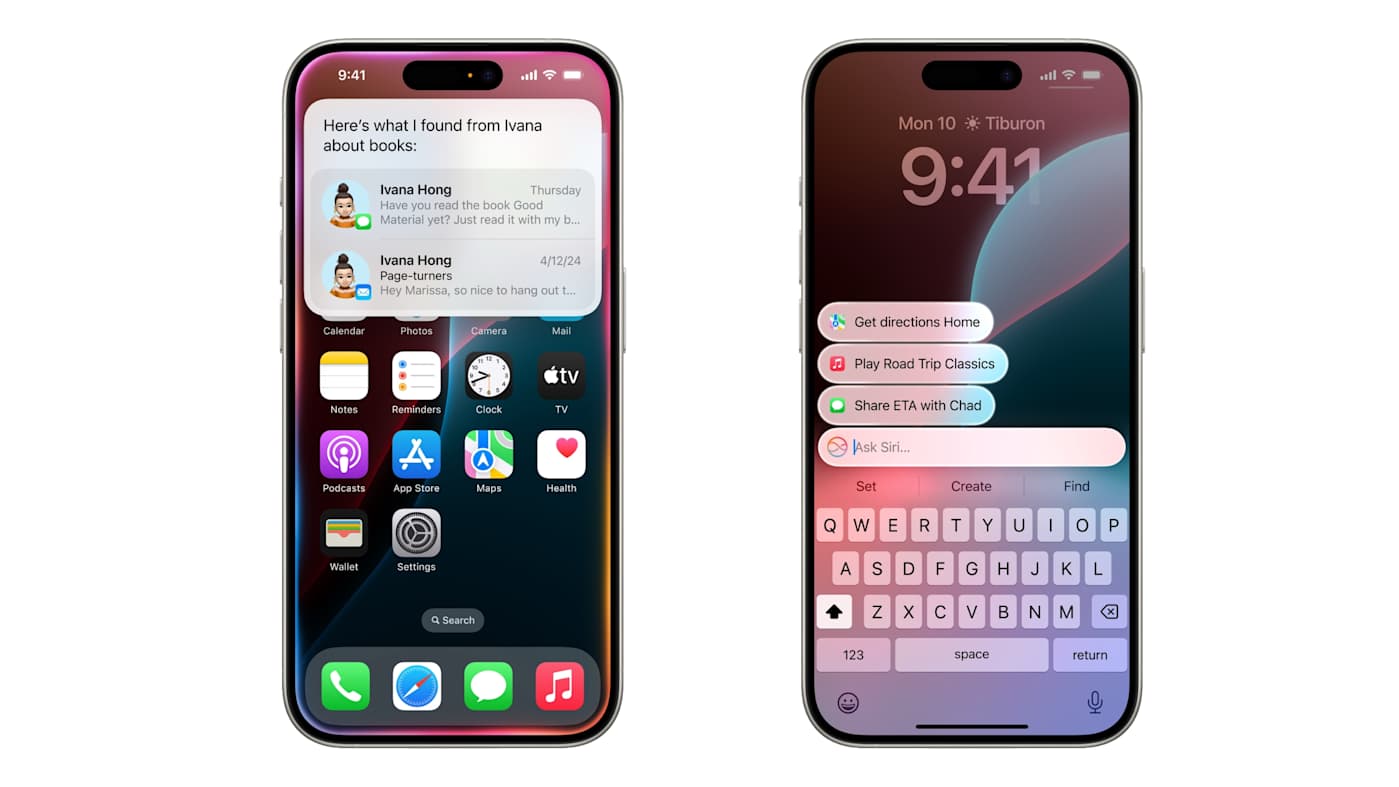
Apple and Google have confirmed that Gemini’s models power the new version of Siri and other generative AI features. CNBC broke the news, but Apple and Google soon followed up with a lengthy joint statement. Here’s part of it: “Apple determined that Google’s Al technology provides the most capable foundation for Apple Foundation Models… Apple Intelligence will continue to run on Apple devices and Private Cloud Compute, while maintaining Apple’s industry-leading privacy standards.”

In June, it was reported that Apple was considering partnerships with OpenAI and Anthropic for Siri (the voice assistant can currently tap ChatGPT for certain queries as part of Apple Intelligence). Two months later, Google emerged as a contender. Another report suggested Apple might build the new Siri using a custom version of Gemini — and that it would pay Google around $1 billion a year for the privilege. However, no official deal numbers were shared.

It’s also notable that current iPhones have direct access to OpenAI’s ChatGPT. But how long for?

— Mat Smith

The other big stories this morning


Netflix wins 7 awards at the Golden Globes

Adolescence and KPop Demon Hunters picked up several each.

TMA
Netflix

Netflix’s hit show Adolescence received four awards, including best limited or anthology series. It also won best actor (Stephen Graham), supporting actor (Owen Cooper) and supporting actress (Erin Doherty) in a miniseries or television film.

KPop Demon Hunters — which my nieces refuse to stop talking about — won best animated feature and best original song. “I just want to say this award goes to people who have had doors closed on them, and I can confidently say rejection is redirection. So never give up.”

It’s not all good news. Netflix also won best performance in stand-up comedy on television for Ricky Gervais: Mortality. Apple and HBO Max each won three, and Hulu got one award on the night.

Continue reading.


NASA makes final preparations for its first crewed moon mission in over 50 years

The agency is targeting a February launch date for Artemis 2.

A few years ago, NASA announced it was pushing the Artemis 2 mission back to April 2026. The agency now says it could launch as early as February. NASA is finalizing preparations for the mission and will soon roll out the Space Launch System (SLS) rocket and the Orion spacecraft to the launch pad at the Kennedy Space Center in Florida.

Artemis 2 is the first crewed mission to the moon since the Apollo program’s final flight in 1972. The 10-day mission will have four astronauts, who’ll test whether Orion’s critical life-support systems can sustain human passengers on future longer-duration missions. They will first orbit the Earth twice before making their way 4,700 miles beyond the far side of the moon.

Continue reading.


Lego’s first Pokémon sets are now available for pre-order

Pikachu, Eevee, Venusaur, Charizard and Blastoise will ship February 27.

TMA
Lego

Pre-orders for the first three Lego-Pokémon kits are open now. One of the debut pocket monsters is, of course, Pikachu. You can build the 2,050-piece kit to show Pikachu either at rest or leaping out of an open Poké Ball into battle. It costs $200.

There’s also a 587-piece model of Eevee, for $60. On the bigger side is a set featuring a trio of Pokémon: Venusaur, Charizard and Blastoise. This kit has 6,838 pieces and can show the group together in battle formation or separately in their own mini environments. It retails for $650 and is a bit much.

Continue reading.

This article originally appeared on Engadget at https://www.engadget.com/general/the-morning-after-engadget-newsletter-151521620.html?src=rss

©

© Apple

Two screenshots illlustrating Siri's promised ability to understand personal context.
  •  

The Morning After: The best of CES 2026

We’re wrapping up coverage of the biggest tech show in the world. CES 2026 is almost over, and while we have more stories and wrap-ups to come, here are the most interesting products we’ve spotted, written about and critiqued/praised. That includes our picks for the best of CES. We gave out 15 awards as well as our best of show, and you might be surprised by some of our picks — I know I was.

Read on for some of the best things to come out of Las Vegas this week, but first up, our Best of the Best winner, which was Lego Smart Play. As Engadget’s editor-in-chief Aaron Souppouris put it, “Lego could almost be seen as the antithesis of the typical CES product.”

Regardless of trends, Lego has always persisted. And in 2026, it’s getting much smarter.

TMA
Lego

The system consists of a Smart Brick, Tags and Minifigures. They’re packed with modern technology, so they can respond to how you play with them or the sets you build. The Smart Brick has a 4.1mm ASIC chip, which Lego says is smaller than a standard Lego stud. It senses things like motion, orientation and magnetic fields, but also has a tiny built-in speaker, which produces audio “tied to live play actions,” not just canned clips.

It’s hard to explain it in only a few words (we’ve got a deep-dive hands-on right here), but what immediately drew me in was the lack of smartphone pairing and screens. The ability of each part to detect and interact with others can lead to some ridiculous setups, whether it’s ducks and police officers or a helicopter or an X-Wing.

Naturally, it’s a little pricier than basic Lego, but not out of the realm of being a special gift or birthday present. One of the first sets, with a smart Darth Vader Minifigure, one Smart Brick and one Smart Tag, is $70.

We'll be back to our regularly scheduled newsletter next week. Have a great weekend!

— Mat Smith

The other big stories (and deals) this morning


All the winners at CES 2026

Wait, IKEA?

TMA
Engadget

With no further ado, here are our winners.

Best robot: Switchbot Onero H1

Best accessibility tech: WheelMove

Best TV: LG’s Wallpaper TV

Best AI hardware: Subtle Voicebuds

Best smart home: IKEA Matter-compatible smart home

TMA
Engadget

Best home theater: Samsung HW-QS90H

Best audio: Shokz OpenFit Pro

Best outdoor tech: Tone Outdoors T1

Best toy: Lego Smart Play

Best PC or laptop: Dell XPS 14 + 16

Best health tech: Eyebot eye test booth

Best gaming tech: ASUS ROG Zephyrus Duo

Best mobile tech: Samsung Galaxy Z TriFold

Most promising concept: Lenovo Legion Pro Rollable

Best emerging technology: IXI autofocus lenses


Everything NVIDIA announced at CES 2026

NVIDIA has started production of its Vera Rubin supercomputer.

TMA
Engadget

On Monday, which feels like an age ago, Jensen Huang shared the latest from NVIDIA. While the presentation was more a refresher than a barrage of new announcements, it was a pretty low-key presentation, with lots of AI chat. One announcement was Alpamayo, a family of open-source reasoning models designed to guide autonomous vehicles through difficult driving situations. The centerpiece is Alpamayo 1, a 10-billion-parameter chain-of-thought system NVIDIA says can drive more like a human.

When it comes to tech we all might use, we had to wait for a separate event, when NVIDIA announced DLSS 4.5 and G-Sync Pulsar. For both features, you’ll need a 50-series GPU. You got one, right?

Continue reading.

This article originally appeared on Engadget at https://www.engadget.com/general/the-morning-after-engadget-newsletter-193045065.html?src=rss

©

  •  

IXI’s autofocusing lenses are almost ready to replace multifocal glasses

While wave upon wave of smartglasses and face-based wearables crash on the shores of CES, traditional glasses really haven’t changed much over the hundreds of years we’ve been using them. The last innovation, arguably, was progressive multifocals that blended near and farsighted lenses — and that was back in the 1950s. It makes sense that autofocusing glasses maker IXI thinks it’s time to modernize glasses.

After recently announcing a 22-gram (0.7-ounce) prototype frame, the startup is here in Las Vegas to show off working prototypes of its lenses, a key component of its autofocus glasses, which could be a game-changer. 

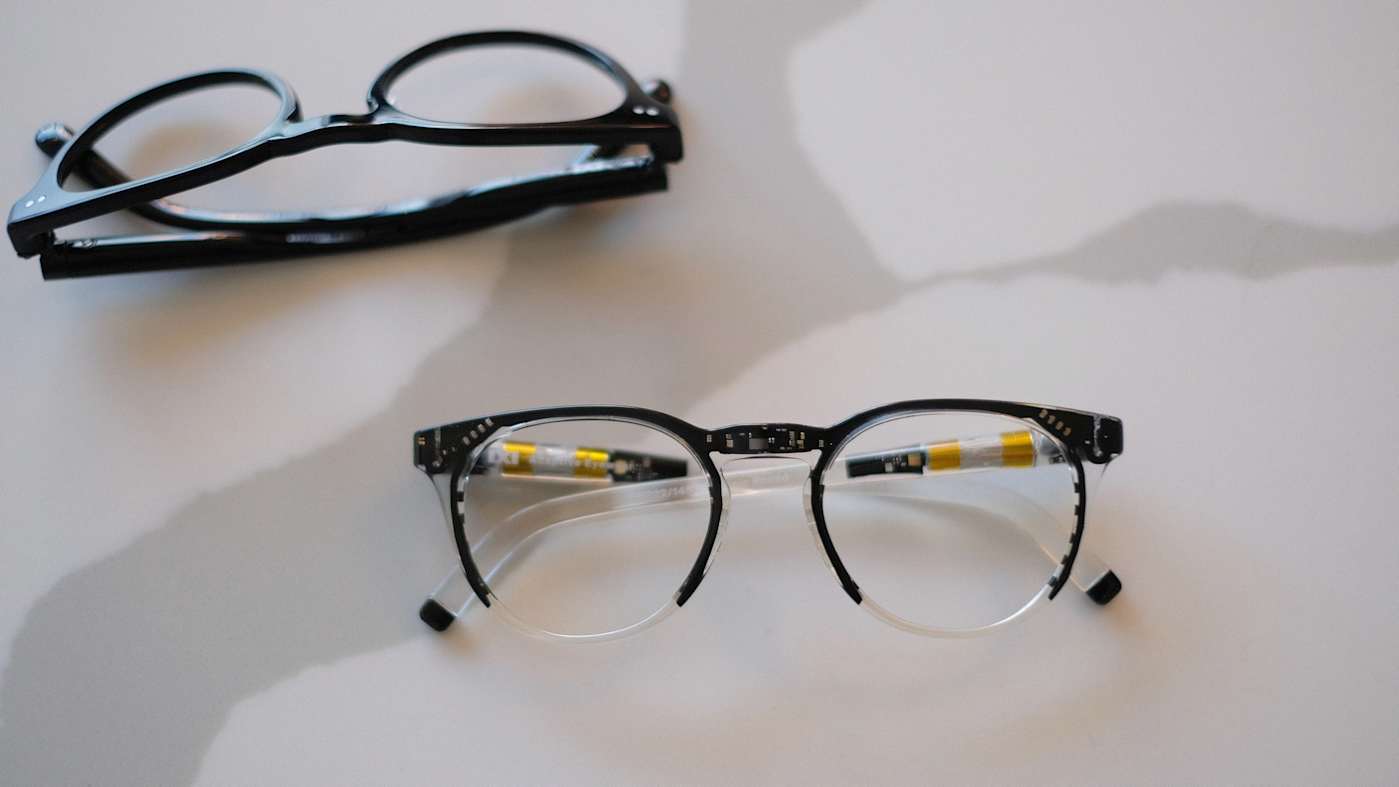
IXI’s glasses are designed for age-related farsightedness, a condition that affects many, if not most people over 45. They combine cameraless eye tracking with liquid crystal lenses that automatically activate when the glasses detect the user’s focus shifting. This means that, instead of having two separate prescriptions, as in multifocal or bifocal lenses, IXI’s lenses automatically switch between each prescription. Crucially — like most modern smartglasses — the frames themselves are lightweight and look like just another pair of normal glasses.

IXI autofocus lenses
Mat Smith for Engadget

With a row of prototype frames and lenses laid out in front of him, CEO and co-founder Niko Eiden explained the technology, which can be separated into two parts. First, the IXI glasses track the movement of your eyes using a system of LEDs and photodiodes, dotted around the edges of where the lenses sit. The LEDs bounce invisible infrared light off the eyes and then measure the reflection, detecting the subtle movements of your eye and how both eyes converge when focusing on something close.

Using infrared with just a "handful of analog channels" takes far less power than the millions of pixels and 60-times-per-second processing required by camera-based systems. IXI’s system not only tracks eye movements, but also blinking and gaze direction, while consuming only 4 milliwatts of power.

IXI autofocus lenses
Mat Smith for Engadget

Most of the technology, including memory, sensors, driving electronics and eye tracker, is in the front frame of the glasses and part of the arms closest to the hinge. The IXI prototype apparently uses batteries similar in size to those found in AirPods, which gives some sense of the size and weight of the tech being used. The charging port is integrated into the glasses’ left arm hinge. Naturally, this does mean they can’t be worn while charging. IXI says that a single charge should cover a whole day’s usage.

The prototype frames I saw this week appeared to be roughly the same weight as my traditional chunky specs. And while these are early iterations, IXI’s first frames wouldn’t look out of place in a lineup of spectacle options.

The team has also refined the nose pieces and glasses arms to accommodate different face shapes. Apparently, when testing expanded from Finland to the UK, British faces were “...different.” A little harsh when talking to me, a Brit.

Eiden pulled out some prototype lenses, made up of layers of liquid crystal and a transparent ITO (indium tin oxide) conductive layer. This combination is still incredibly thin, and it was amazing to watch the layers switch almost instantly into a prescription lens. It seemed almost magical. As they’re so thin, they can be easily integrated into lenses with existing prescriptions. It can also provide cylindrical correction for astigmatism too.

Autofocus lenses could eliminate the need for multiple pairs of glasses, such as bifocals and progressives. Even if the glasses were to run out of power, they’d still function as a pair of traditional specs with your standard prescription, just lacking the near-sighted boost. IXI’s sensor sensitivity can also offer insight into other health conditions, detect dry eyes, estimate attentiveness and, by tracking where you’re looking, even posture and neck movement. According to Eiden, blink rate changes with focus, daydreaming and anxiety, and all that generates data that can be shown in the companion app.

IXI autofocus lenses
Mat Smith for Engadget

Hypothetically, the product could even potentially adapt prescriptions dynamically, going beyond the simple vision correction of Gen 1. For example, it could offer stronger corrections as your eyes get fatigued through the day.

IXI appears to be putting the pieces in place to make these glasses a reality. It still needs to obtain the necessary medical certifications in order to sell its glasses and get all the production pieces in place. It’s already partnered with Swiss lens-maker Optiswiss for manufacturing. Eiden says the final product will be positioned as a high-end luxury glasses option, selling through existing opticians. The company hopes to finally launch its first pair sometime next year.

This article originally appeared on Engadget at https://www.engadget.com/wearables/ixis-autofocusing-lenses-multifocal-glasses-ces-2026-212608427.html?src=rss

©

© Mat Smith for Engadget

IXI autofocus lenses
  •  

Samsung Display at CES 2026: Playful demos and mysterious prototypes

Samsung Display is the part of its giant parent company that makes OLEDs, LCDs and other screens for both Samsung devices and anyone else that can afford them. This year, it’s going all-in on OLEDs of the future. And that meant things like foldable displays with invisible creases, robots hurling basketballs at supertough OLED panels, and OLED screens packed into baffling form factors for no good reason.

Creases

Samsung Display at CES 2026
Samsung Display

The “seamless” foldable display that might be a part of a future foldable iPhone disappeared from the booth during our tour, reappearing when it was time to leave. (This is an image provided by Samsung Display.) The device was labelled as an R&D concept, but it somehow disguised the crease in the center of the main display, making the (unlabelled) Galaxy Z Fold on the left look like a messy first-iteration foldable. There's still a crease there Will it actually form part of Apple’s foray into foldables, or just part of the Z Fold 8?

Why not both?

Put an OLED on it

Samsung Display at CES 2026
Mat Smith for Engadget

This isn’t a record player you’ll ever buy. You don’t need an OLED display on the side of your wireless headphones, but you could have them. I liked the cute OLED pendants; a customizable near-future button badge, but a lot of this is just devices for the sake of making them.

The booth tour had a small segment dedicated to portable gaming OLED, adding more possibilities whether that’s an eye-sight for FPS games or extra HUD for the most important info.

The world’s brightest OLED TV

Samsung Display at CES 2026
Mat Smith for Engadget

Reaching 4,500-nit brightness, I had to squint when sat in front of this beastly OLED. For reference, consumer-level TVs typically peak at around 2,700 nits. Compared to other display technologies, OLED can achieve deeper contrast and more accurate color reproduction, but it often lacks the brightness of rival TV technologies. Not for this prototype. Let me get my sunglasses.

Kobe!

Samsung Display at CES 2026
Mat Smith for Engadget

I didn’t consider OLED displays to be more fragile than other display technology, but that didn’t stop Samsung Display from installing a robot arm that throws a basketball at a hoop with a backboard made of 18 foldable OLEDs. With a bang, making Samsung Display execs and engineers nearby increasingly anxious as the days of CES go on.

Foldables have come a long way

Samsung Display at CES 2026
Mat Smith for Engadget

After Samsung finally solved the problem of weight and thickness with the Galaxy Z Fold 7, it made life hard for itself again with the TriFold, with 50 percent more foldable screen. But it's worth seeing how Samsung’s foldables have evolved over the past few years. A solid reminder that the first Galaxy Fold (2019) was beefy.

The next big thing in gaming displays

Samsung Display at CES 2026
Mat Smith for Engadget

Samsung Display has begun mass production of its 360Hz QD-OLED panel, with new “V-Stripe” RGB pixel structures. Inside each pixel, subpixels are vertically aligned, which appears to improve the clarity of text edges and other small contrast objects. While it was framed at the booth as a boon for office workers, a corner was dedicated to gaming applications.

Screens across your sedan

Samsung Display at CES 2026
Mat Smith for Engadget

Digital cockpits are the lifeblood of a CES showfloor, and Samsung Display’s version is predictably loaded with yet more OLEDs. The centerpiece is a “Flexible L” display that flows into the dashboard. A dedicated 13.8-inch display on the passenger side also slides out of the dash.

This article originally appeared on Engadget at https://www.engadget.com/home/home-theater/samsung-display-ces-2026-playful-demos-and-mysterious-prototypes-220407696.html?src=rss

©

© Mat Smith for Engadget

Samsung Display at CES 2026
  •  
❌