
❌

Lese-Ansicht

Die Aboverlängerung für Kagi steht an

Nächste Woche verlängert sich Kagi; es ist bemerkenswert, wie viel weniger klassische Websuchen ich inzwischen darüber (und generell) absetze. In den letzten Jahren waren es noch konstant 600 Anfragen pro Monat.
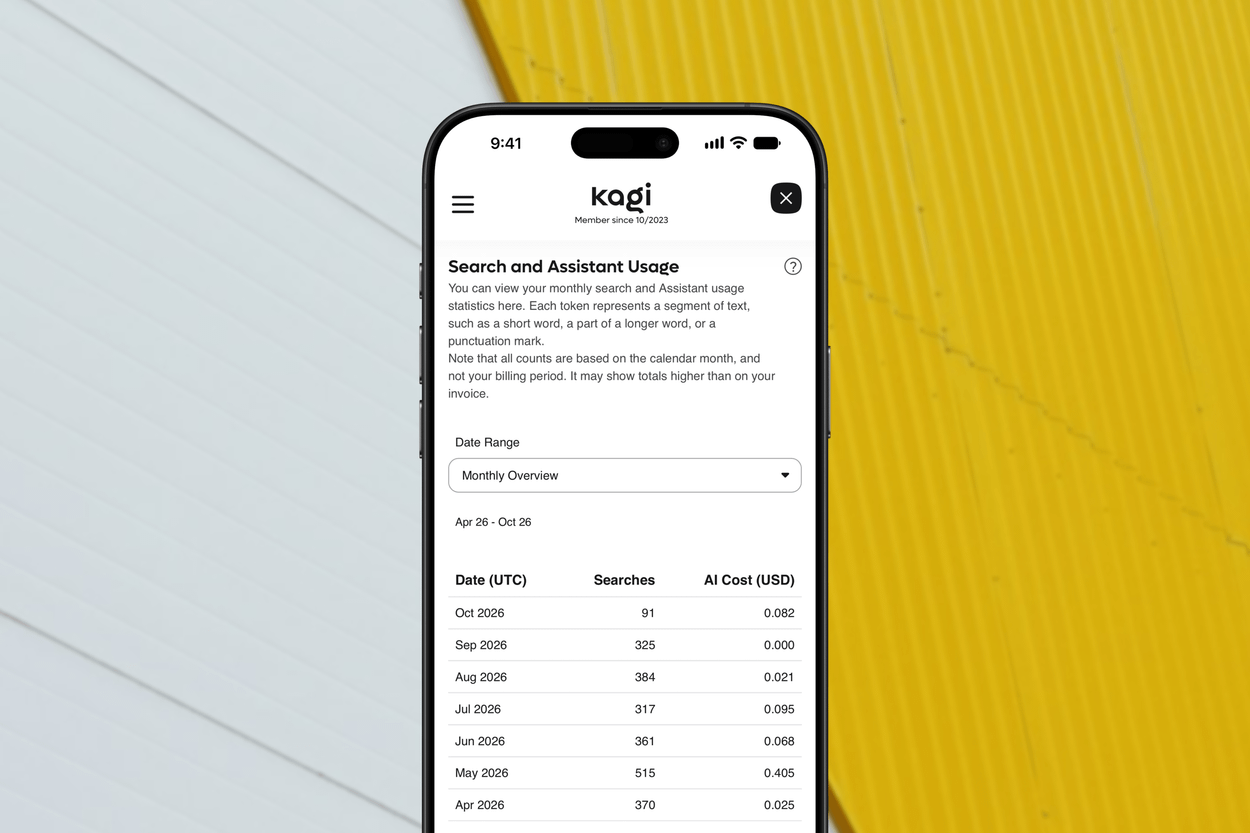
A smartphone displaying a webpage from Kagi showing search and assistant usage statistics by month from April to October 2026, including the number of searches and AI cost in USD. The background is a close-up of a wall with diagonal light gray and yellow panels.

Kagi diversifiziert – zu Recht. Die systemweiten Übersetzungen unter iOS sind für mich tatsächlich alltagsbereichernd. News und Summarize sehe ich dagegen als nette Dreingaben. Die Suchergebnisse von Hand auszusortieren, was vor Jahren noch ein entscheidendes Alleinstellungsmerkmal war, ist inzwischen zu viel Arbeit. „The Slop is real.“

Wenn ich über das Abo nachdenke, steht die Frage im Raum: Was sind die Alternativen? Wohin stecke ich traditionelle Websuchen?

Natürlich kenne ich DuckDuckGo, Ecosia und andere esoterische Suchmasken. Ich kann deren Qualität nicht beurteilen, bin aber nicht (mehr) bereit, zugekleisterte Webseiten und werbefinanzierte Ergebnisse zu akzeptieren.

Klar, das typische KI-Abo knabbert am Wert des Kagi-Abos. Kagi ist durch weniger Nutzung nicht schlechter, fühlt sich aber weniger wertvoll an.

Mit Spannung lese ich ihr Changelog; ab und zu klicke ich durch den Discord. Dort passiert viel, auch wenn mich vieles davon nicht betrifft / interessiert.

Andererseits fühlt es sich mindestens falsch an, den großen AI-Buden das typische Suchmaschinen-Geschäft komplett zu überlassen. Nicht alles kann (und sollte!) eine Websuche mit ChatGPT sein.

Und wenn’s inzwischen nur 10 Suchen pro Tag sind, bleiben es 10 Suchanfragen, mit denen ich qualitativ zufrieden bin. Dieses Empfinden lässt sich nicht ausschließlich numerisch messen.
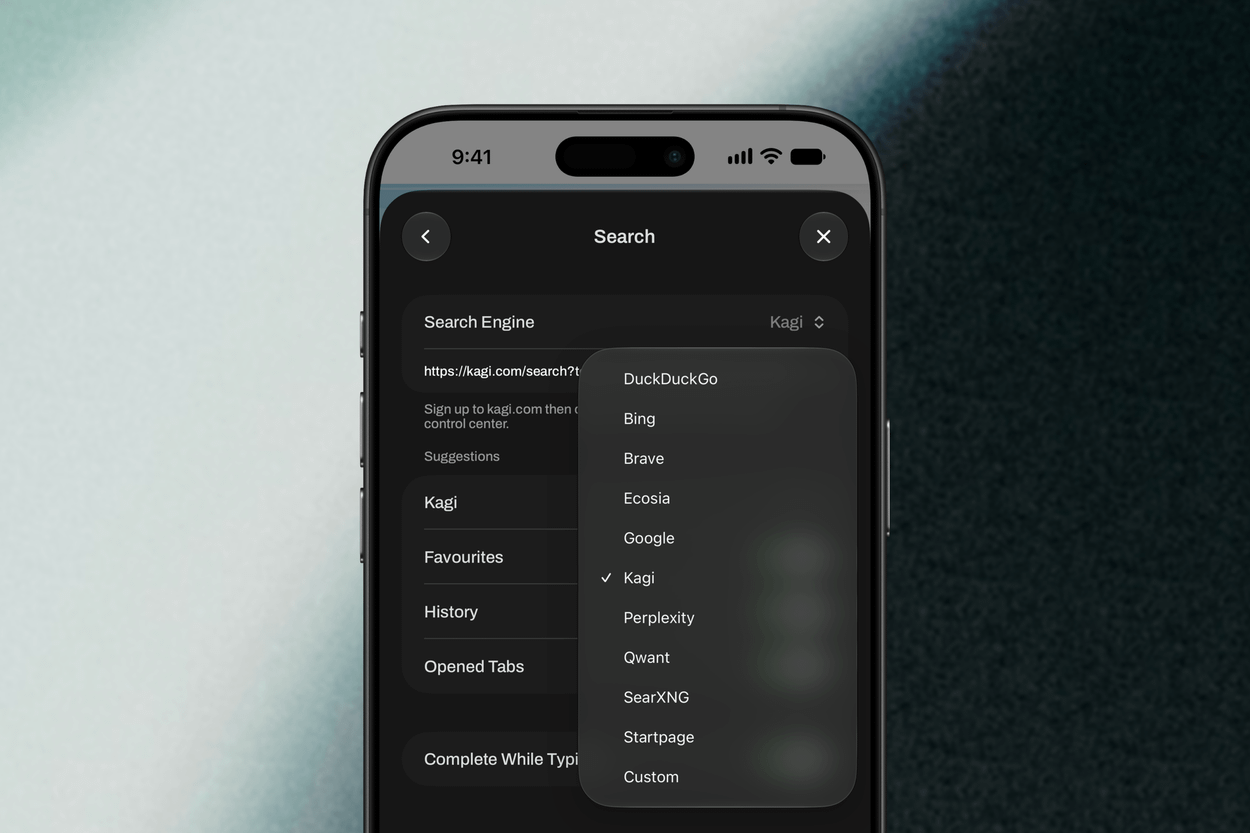
A smartphone screen showing a search settings menu with a dropdown list of search engines, including DuckDuckGo, Bing, Brave, Ecosia, Google, Kagi, Perplexity, Qwant, SearXNG, Startpage, and Custom. The selected search engine is Kagi.

Durch meinen Umstieg auf Quiche (am iPhone) muss ich mich dort auch nicht mit einer suboptimalen Safari-Extension behelfen. Apple sollte wirklich mehr alternative Suchmaschinen für iOS zur Auswahl stellen!

Das Abo brauche ich mir aber nicht schönreden; ich hätte überhaupt kein Problem, diese Subscription zu pausieren. Kagi erbringt eine bezahlte Dienstleistung; ich fühle mich hier keinem (guten) Zweck verpflichtet.

Gleichzeitig bleibt es eine der wenigen Suchmaschinen, bei denen die Entwicklung tatsächlich spannend bleibt. Das betrifft nicht nur Kagi selbst, sondern auch die Zukunft der Websuche, die sich nach über 30 Jahren grundlegend ändert.
  •  

ChatGPT in Siri 'Persistently Underperforming,' Says OpenAI

OpenAI saw disappointing results working with Apple to integrate ChatGPT in Siri, according to court documents filed [PDF] in its ongoing legal fight with Elon Musk's company SpaceXAI (xAI at the time the lawsuit was filed).


Apple added ChatGPT to ‌Siri‌ in December 2024, but users had to go through a multistep opt-in process, which added a layer of friction. By January 2025, OpenAI said the integration was "off to a slow start" and the company cut its forecast for the number of incremental logged-in weekly active users that it expected to get from the partnership.

Much of the filing is redacted, but OpenAI said that by the time Musk's companies filed an antitrust lawsuit against Apple and OpenAI, "it was clear that Apple's integration of ChatGPT was dramatically underperforming." In a later section of the filing, OpenAI said again that the Apple integration was "persistently underperforming," leading to a March 2026 conversation between Apple and OpenAI that is redacted.

OpenAI asked Apple for a two-year exclusivity period, but Apple refused. The agreement between the two companies explicitly said the deal was non-exclusive and Apple had the right to "integrate products or services that provide the same or similar functionality as [ChatGPT]." Apple told OpenAI that it planned to integrate one provider and then add more, and it made similar statements publicly when announcing the feature. Apple also signed a deal with Google, and Apple's newest models are based on Gemini.

OpenAI's filing disputes many of the claims in the xAI lawsuit. Musk alleged OpenAI and Apple had an exclusive deal and that the agreement harmed xAI's growth and customer acquisition. OpenAI says the contract proves there was no exclusive deal, and even if there were, xAI can't prove harm because the ChatGPT ‌Siri‌ integration just didn't draw many new ChatGPT users.
Even if the Court assumes that Apple users who elect to use ChatGPT through Apple Intelligence are foreclosed from OpenAI's rivals (which they are not), the amount of foreclosure caused by the Agreement is indisputably de minimis. While Plaintiffs' experts declined to calculate foreclosure shares, OpenAI's expert, Dr. Catherine Tucker, calculated the share of GenAI consumers who accessed ChatGPT through Apple Intelligence across multiple metrics using the same data and market definition relied upon by Plaintiffs' experts. On these assumptions, Dr. Tucker found foreclosure shares of [REDACTED] across all metrics, consistent with OpenAI's internal view that Apple Intelligence saw minimal usage.

Musk's companies dropped their claims against Apple earlier this month, leaving OpenAI as the sole defendant in the lawsuit. OpenAI's filing asks the court to toss out xAI's claims prior to the trial planned for January 2027.
This article, "ChatGPT in Siri 'Persistently Underperforming,' Says OpenAI" first appeared on MacRumors.com

Discuss this article in our forums

  •  
❌