❌

Normale Ansicht

Google and the Pentagon sign classified deal to give the Department of Defense unfettered access to its AI models

Google has signed a deal that allows the US Department of Defense to use its AI models for "any lawful government purpose." This is according to a report by The Information, which also notes that the full details of the contract are classified.

An anonymous source within the company has suggested that the two entities have agreed that the search giant's AI tech shouldn't be used for domestic mass surveillance or autonomous weapons "without appropriate human oversight and control." However, the contract also reportedly doesn't give Google "any right to control or veto" anything the government decides to do. In other words, the famously trustworthy US government will just have to be taken at its word. 

“We believe that providing API access to our commercial models, including on Google infrastructure, with industry-standard practices and terms, represents a responsible approach to supporting national security,” a Google spokesperson told Reuters. The spokesperson also echoed that the company holds the opinion that AI shouldn't be used for mass surveillance or autonomous weaponry without appropriate human oversight. Some might argue that the technology shouldn't be used for that stuff at all, oversight or not.

More than 560 Google employees have signed an open letter urging CEO Sundar Pichai to reject the US government's use of the company's AI technology for classified military operations. pic.twitter.com/GLyzlA1Dfd

— Yahoo Finance (@YahooFinance) April 27, 2026

To that end, nearly 600 Google employees just penned an open letter to CEO Sundar Pichai to urge the company against making this kind of deal with the Pentagon. This stems from concerns that the tech would be used in "inhumane or extremely harmful ways." 

"Human lives are already being lost and civil liberties put at risk at home and abroad from misuses of the technology we are playing a key role in building," the letter states. "As people working on AI, we know that these systems can centralize power and that they do make mistakes."

Google will join OpenAI and Elon Musk's xAI in this endeavor, as they both have made classified AI deals with the US government. Anthropic had a deal in place, but refused the government's demands to remove weapon and surveillance-related safeguards. 

NEW: Trump to blacklist Anthropic in the most consequential and controversial policy decision to date at the intersection of artificial intelligence and national security.

With @m_ccuri, as ever https://t.co/z3FDEHdsOx

— Dave Lawler (@DavidLawler10) February 27, 2026

That refusal annoyed President Trump and the Pentagon so much that Anthropic was entirely blacklisted from federal use. This doesn't exactly sound like the actions of a government that is dedicated to "appropriate human oversight and control" of dangerous AI military tech. Engadget has reached out to Google to ask for more specifics and will update this post when we hear back. 

This article originally appeared on Engadget at https://www.engadget.com/ai/google-and-the-pentagon-sign-classified-deal-to-give-the-department-of-defense-unfettered-access-to-its-ai-models-155211834.html?src=rss

©

© Chip Somodevilla via Getty Images

WASHINGTON, DC - SEPTEMBER 04: Google CEO Sundar Pichai (L) talks with U.S. Energy Secretary Chris Wright following a meeting of the White House Task Force on Artificial Intelligence Education in the East Room of the White House on September 04, 2025 in Washington, DC. This was the second meeting of the task force since it was created as a part of President Donald Trump's April executive order "Advancing Artificial Intelligence Education For American Youth." (Photo by Chip Somodevilla/Getty Images)
  •  

Trump administration is paying more companies to abandon offshore wind projects

The Trump Administration has signed deals with two major energy companies to abandon their respective offshore wind farms, with both firms agreeing to invest in oil and gas projects instead.

The separate agreements were detailed in a press release from the Interior Department, which named Bluepoint Wind and Golden State Wind as the companies that have voluntarily agreed to end their current leases for a combined $885 million. Both firms have also said they don’t intend to pursue any new offshore wind projects in the US going forward.

Bluepoint Wind is an early-stages wind farm located off the coast of New Jersey and New York, while Golden State Wind, which is similarly in its infancy, is off California’s central coast. The government will provide dollar-for-dollar reimbursements of what each lease cost when they were agreed under the Biden administration, which Interior Secretary Doug Burgum said were "only viable when propped up by massive taxpayer subsidies."

Global Infrastructure Partners (GIP), which co-owns Bluepoint Wind with Ocean Winds, will invest up to $765 million into a liquefied natural gas (LNG) facility in the US. Ocean Winds is also one half of the 50/50 partnership that owns Golden State Wind, which will recover approximately $120 million in lease fees after investing in further oil and gas projects along the Gulf Coast.

The deals are similar in structure to the one the Trump administration agreed last month with French energy giant TotalEnergies, reaffirming the government’s seemingly unwavering commitment to outright rejecting clean energy in favor of doubling down on fossil fuels. Meanwhile, the accuracy of President Trump’s claims about climate change and the cost of renewable energy continues to be challenged.

This article originally appeared on Engadget at https://www.engadget.com/science/trump-administration-is-paying-more-companies-to-abandon-offshore-wind-projects-150216769.html?src=rss

©

© STRF/STAR MAX/IPx

Photo by: STRF/STAR MAX/IPx 2026 4/23/26 Wind turbines operate in Absecon, New Jersey, generating electricity as part of the region's renewable energy infrastructure. Wind energy reduces reliance on fossil fuels, though turbines have been associated with bird and bat mortality.
  •  

Trump has terminated several members of the independent National Science Board

As reported by several outlets, the Trump administration dismissed members of the National Science Board (NSB), which is tasked with establishing policies for the National Science Foundation. It's not clear how many members have been dismissed. According to screenshots shared with The Washington Post, board members received a message that their position was "terminated, effective immediately.

The NSB establishes policies for the National Science Foundation (NSF), the independent US agency responsible for apportioning about 25 percent of federal support towards research conducted by the country's colleges and universities. The foundation has existed for over 75 years and has contributed to the development of MRIs and cellphones, among other breakthroughs. Up to 25 active members can head the NSB, however, the current board only has 22 members; the NSF's former director, Sethuraman Panchanathan, abruptly resigned last year.

In response, Congresswoman Zoe Lofgren called the latest decision a "real bozo the clown move" in a statement. "This is the latest stupid move made by a president who continues to harm science and American innovation," Lofgren, who also serves as the Ranking Member of the House's Science, Space and Technology Committee, added in the statement. "It unfortunately is no surprise a president who has attacked NSF from day one would seek to destroy the board that helps guide the Foundation."

It's unclear if the NSB's next scheduled board meeting for May 5 will take place. When asked about the recent terminations and the next meeting, the NSB referred to the White House for additional details. We've reached out to the Trump administration for confirmation and will update the story when we hear back.

This article originally appeared on Engadget at https://www.engadget.com/science/trump-has-terminated-several-members-of-the-independent-national-science-board-170405205.html?src=rss

©

© National Science Foundation

The logos of the National Science Foundation and National Science Board next to each other.
  •  

Maine governor vetoes bill temporarily banning large data centers in the state

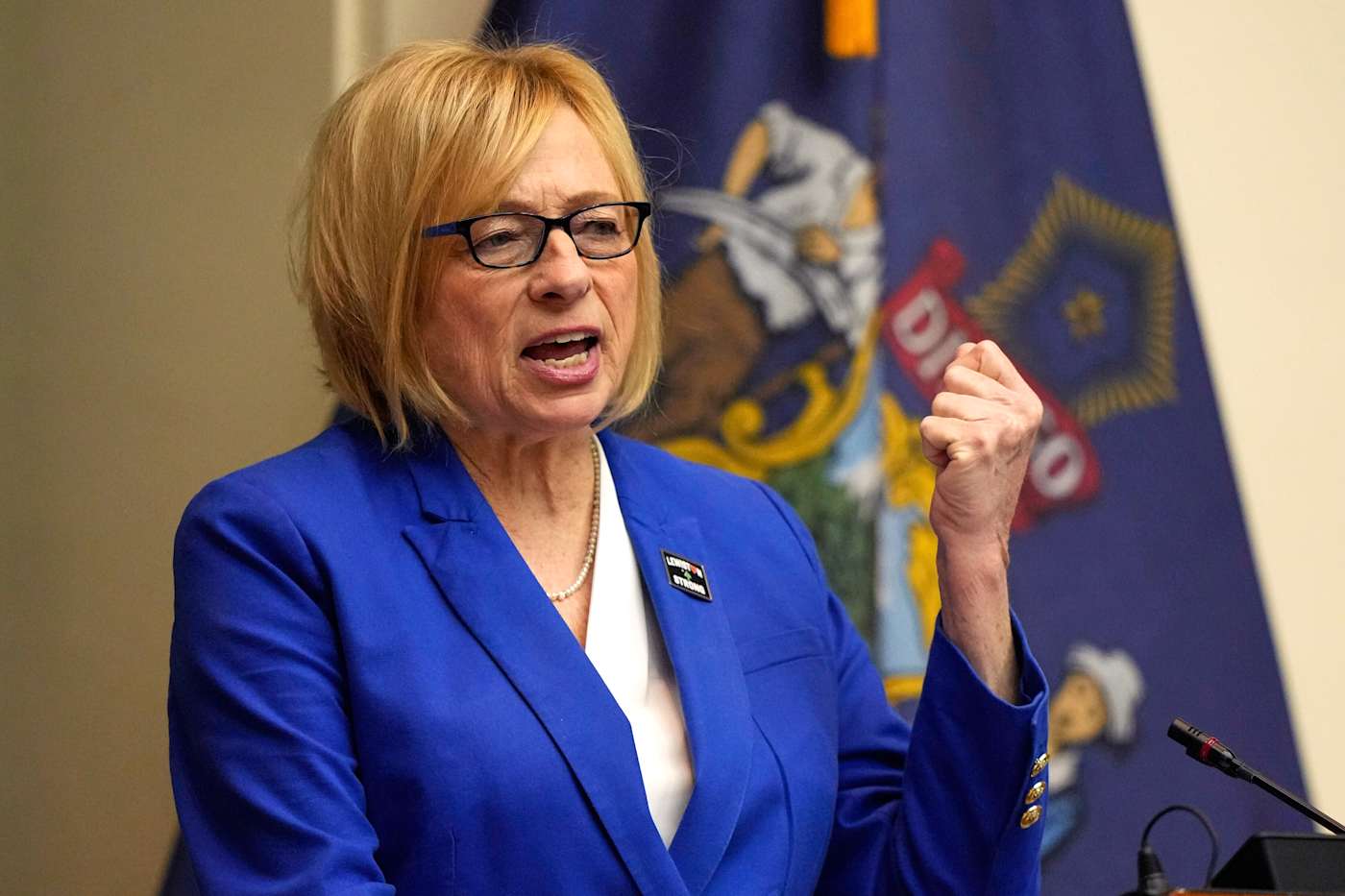
The governor of Maine, Janet Mills, has vetoed a bill that halts the construction of large data centers in the state until the fall of 2027. While the bill passed both houses of the Maine's legislature on April 14, and Mills has suggested she'd support a temporary moratorium, the governor wanted a bill that would exempt an existing data center project in Jay, Maine.

The bill specifically blocked the construction of data centers that consume 20 megawatts of power or more and directs state agencies and other entities to not issue permits unless proposed projects fall under those energy needs. Passing the bill would also require the creation of a "Maine Data Center Coordination Council" that would "provide strategic input, facilitate coordinated state planning considerations and evaluate policy tools to address data center opportunities and related benefits and risks to the State."

While Mills killed this attempt at data center regulation, she said she would sign an executive order calling for the creation of a council like the one proposed in the bill. She also signed LD 713, a bill that prohibits data centers from participating in Maine’s business development tax incentive programs.

Maine is far from the only state pursuing data center bans or temporary blocks. There are at least 12 other states exploring similar legislation, like New York, where lawmakers recently introduced a bill that would block the construction of new data centers for at least three years. At the federal level, Senator Bernie Sanders (I-VT) and Representative Alexandria Ocasio-Cortez (D-NY) endorsed a bill that would not only create a moratorium on new data center construction, but also any upgrades to existing facilities.

Any desire to slow down AI development or the infrastructure that makes it possible runs counter to the demands of tech companies, and the perspective of the Trump administration, who's actively encouraging faster AI buildout in the US. President Donald Trump's recent AI framework even called for the process of building and powering data centers to be streamlined in March.

This article originally appeared on Engadget at https://www.engadget.com/ai/maine-governor-vetoes-bill-temporarily-banning-large-data-centers-in-the-state-210407936.html?src=rss

©

  •  

The DOJ is backing xAI in its lawsuit against Colorado

The Department of Justice has announced that it's intervening on the behalf of xAI in the company's recent lawsuit against the state of Colorado. xAI first filed the suit in early April in response to a recent Colorado law that requires developers of "high-risk" AI systems (for example, ones used in healthcare, employment or housing) to both disclose and mitigate the risk of algorithmic discrimination in their systems. The law is set to go into effect in June, and the DOJ is now asking a Colorado District Court to declare it unconstitutional.

In xAI's original argument, Colorado Bill SB24-205 violated the company's First Amendment rights by forcing its developers to change how they create AI products and compelling them to align their products with Colorado's views on diversity and discrimination. The DOJ acknowledges those concerns in its complaint, but specifically focuses its argument on the idea that the law violates the Equal Protection Clause of the Fourteenth Amendment.

According to the DOJ, because the law relies on demographics and "statistical disparities" as evidence of discrimination, it will essentially require developers to distort an AI system's outputs and "discriminate based on race, sex, religion and other protected characteristics," a violation of the Fourteenth Amendment. The department also positions Colorado's law as a risk to "the United States' position as the global AI leader," a title the current administration is committed to protecting. 

As both an AI cheerleader and enabler, the Trump administration has been particularly sensitive to the notion of diversity, equity and inclusion being incorporated into AI. President Donald Trump signed several executive orders following the announcement of his "AI Action Plan" in 2025 that specifically called for government agencies to use AI tools that avoid "ideological dogmas such as DEI." He also called for the creation of a task force that could challenge state AI regulation in favor of a federal regulatory framework for AI. The irony is that the DOJ's argument, and the administration's stance in general, are equally idealogical, just in a way that's ahistorical, and ignores the downstream effects of discrimination in the US.

This article originally appeared on Engadget at https://www.engadget.com/ai/the-doj-is-backing-xai-in-its-lawsuit-against-colorado-200500890.html?src=rss

©

  •  
❌