❌

Normale Ansicht

15 years after 'Video Games,' Lana Del Rey has an actual video game song

The James Bond franchise has a long history of getting pop stars to record its theme songs (perhaps most memorably with Live and Let Die), and it looks like that tradition will now extend to video game adaptations about the fictional spy. IO Interactive has announced that Lana Del Rey co-wrote and performed the theme for 007 First Light, the developer's playable James Bond origin story.

"First Light" is written and performed by Lana Del Rey and composer David Arnold, and like the moody and abstract opening credits released alongside the song, could vaguely gesture at the themes of the game. IO Interactive has previously said that its game focuses on a young, inexperienced and more reckless Bond, before he developed his trademark cool. The developer is also integrating the stealth mechanics it perfected in Hitman into the upcoming game.

Del Rey's personal gaming experience may begin and end with her hit "Video Games," which was apparently written about a former boyfriend's love of World of Warcraft, but the artist does know how to write a song with Bond in mind. Lana Del Rey shared in 2024 that her song "24" from the album Honeymoon was originally written for 2017's Spectre, one of several songs that were cast aside in favor of Sam Smith's "Writing's on the Wall."

007 First Light is coming to Xbox Series X/S, PlayStation 5 and PC on May 27, 2026. A Nintendo Switch 2 version of the game is now coming out this summer.

This article originally appeared on Engadget at https://www.engadget.com/gaming/15-years-after-video-games-lana-del-rey-has-an-actual-video-game-song-221925735.html?src=rss

©

  •  

The PBS Artemis II documentary is streaming on YouTube

The crew of NASA's Artemis II mission have safely returned to Earth, but if your Moon fever has yet to break, or you're curious to get a big picture view of how the second of a planned five Moon missions was pulled off, PBS has a new documentary you'll want to watch. The hour-long Return to the Moon was produced for PBS' NOVA and aired on TV on April 15, but you can view the episode in its entirety on YouTube right now.

Return to the Moon covers the history of NASA's Artemis program, and specifically the planning and preparation that went into Artemis II. Per the documentary's official description:

Follow the four members of the Artemis II crew as they embark on a perilous 10-day journey to orbit the Moon, venturing beyond Earth orbit for the first time since Apollo and farther into the Solar System than any humans have gone before. And get an inside look at the preparations needed to overcome the extreme engineering challenges of human-crewed spaceflight, all the way from launch to splashdown.

The last Apollo mission was in 1972, so Artemis II getting a group of four astronauts anywhere near the Moon has naturally generated a lot of excitement. The crew flew further away from Earth than anyone has gone so far, captured some stunning photos of both the Moon and our home planet and managed to make everyone feel better about their dislike of Microsoft Outlook. Few Moon missions have been as well-documented or relatable.

This article originally appeared on Engadget at https://www.engadget.com/science/the-pbs-artemis-ii-documentary-is-streaming-on-youtube-210347406.html?src=rss

©

  •  

A lot of you panic-bought PCs to avoid RAMaggedon 2026

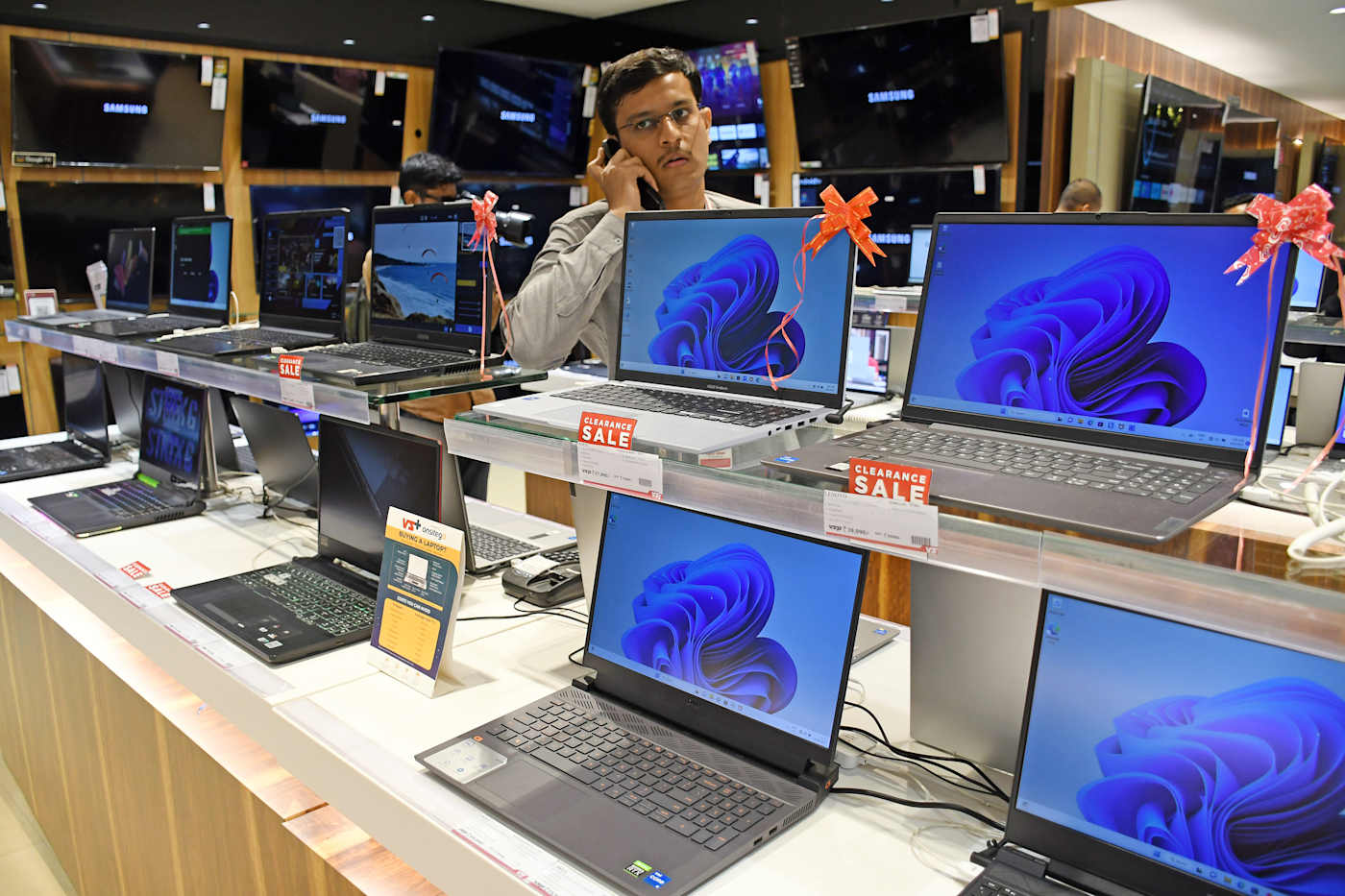
The specter of price hikes caused by the current AI-driven demand for memory and storage appears to have convinced a fair share of people to buy a new computer. According to data analyzed by Counterpoint Research, global PC shipments grew around 3.2 percent year-over-year in Q1 2026, "driven by pre-emptive buying before memory-led price increases hit the retail level" and Microsoft forcing some customers to upgrade by ending support for Windows 10 last year.

Sales hit 63.3 million units during the first quarter, Counterpoint says, and were particularly concentrated in five high-end PC makers: Lenovo, ASUS, Apple, HP and Dell. Of the five, Lenovo commands the most PC market share at 26 percent, but sales increased for almost all of the companies, save for HP, whose year-over-year sales technically declined by 5 percent. Of particular note, Apple's PC sales grew by 11 percent, likely on the strength of the M5 updates it made to the MacBook Pro and MacBook Air, and the introduction of the affordable $600 MacBook Neo. Counterpoint suggests the updates could drive even further sales growth next quarter. 

Even with positive sales, the PC industry as a whole is by no means out of the woods. "The aggressive expansion in AI infrastructure investment is driving up overall component costs, which will likely impact the pricing of CPUs and other key components in [PCs]," Counterpoint Senior Analyst Minsoo Kang says. "Ultimately, the sustained upward pressure on costs and the resulting hike in retail prices are expected to have a significant negative impact on the PC market’s growth in 2026."

A general sense that the worst is yet to come is consistent with what other analysts have warned about the current shortages of RAM and storage. In December 2025, IDC predicted that PC shipments could drop as much as 8.9 percent in 2026 in response to the price of RAM, and later revised its prediction to 11.6 percent this past March. Even if consumers aren't feeling the worst of these price hikes just yet, new announcements of price increases seem to arrive like clockwork every few weeks — for example, this week, Meta raised the price of its Quest headsets — which means if they aren't feeling them now, they will soon.

This article originally appeared on Engadget at https://www.engadget.com/computing/a-lot-of-you-panic-bought-pcs-to-avoid-ramaggedon-2026-200237204.html?src=rss

©

  •  

TCL's RGB-Mini LED TVs will start at $8,000

TCL introduced its new flagship X11L SQD-Mini LED TV at CES 2026, and now a few months later, the company is ready to expand its lineup with more SQD-Mini LED models and its first RGB-Mini LED TV. All sizes of the TCL QM8L SQD-Mini LED TV are available now. Meanwhile, both the TCL QM7L SQD-Mini LED TVs and the RM9L RGB-Mini LED TVs are available to pre-order.

SQD-Mini LED panels are TCL's latest iteration of its Mini LED display technology, where "SQD" stands for "Super Quantum Dot," a layer of tiny crystal dots that help filter the light from the LEDs in the company's panels. TCL claims its SQD-Mini LED screens are more color accurate than its previous models without losing out on HDR contrast. The TCL QM8L has an anti-reflective SQD-Mini LED panel, up to 4,000 discrete dimming zones, up to 6,000 nits of peak brightness and support for Dolby Vision 2 Max after a software update. The TCL QM7L also has an anti-reflective SQD-Mini LED panel, up to 2,100 discrete dimming zones, up to 3,000 nights of peak brightness and support for Dolby Vision IQ. Both TVs feature Audio by Bang & Olufsen and run the latest version of Google TV with support for Gemini.

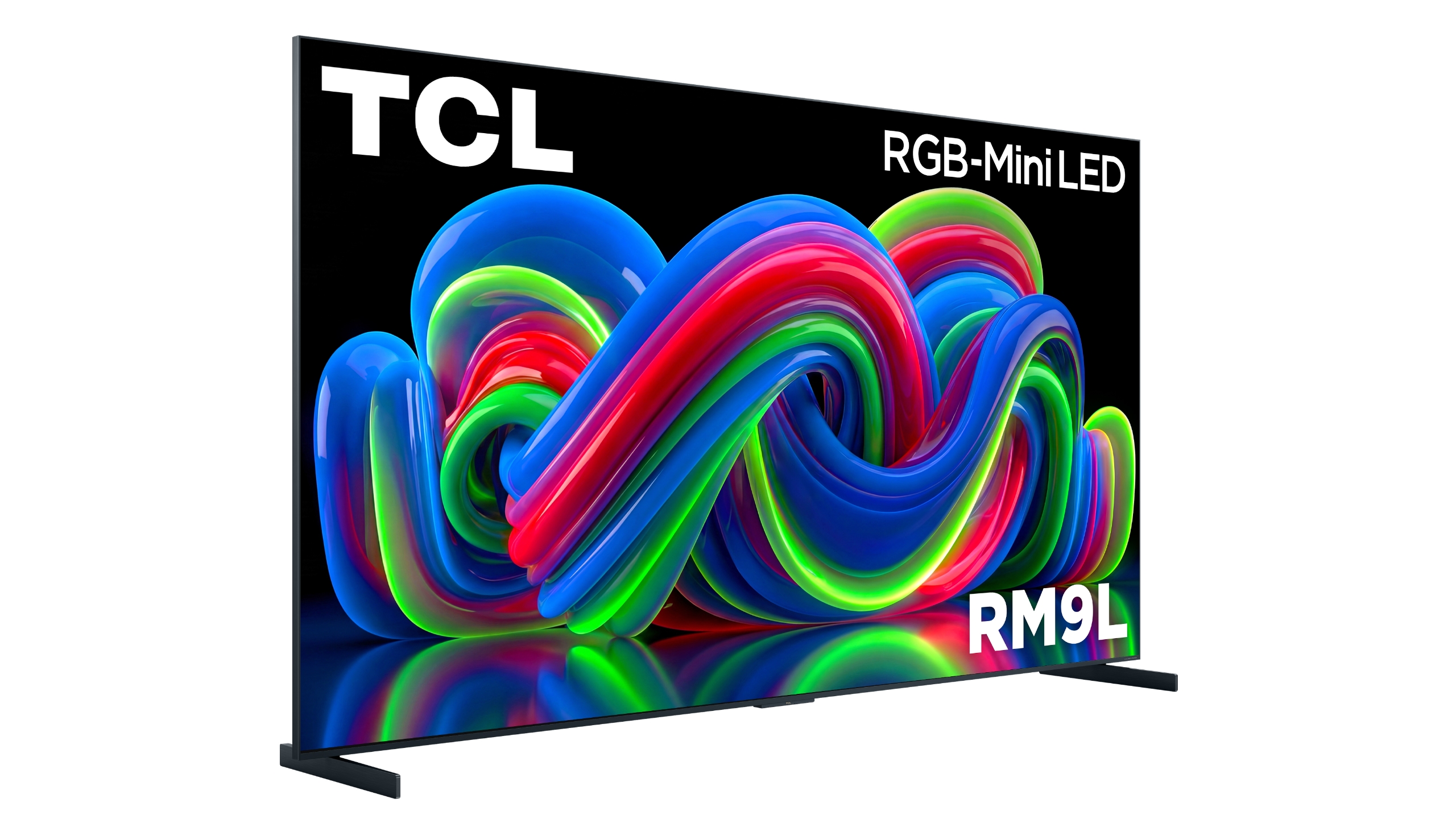
A TCL RM9L RGB-Mini LED TV angled to the left on a white background.
TCL

Like other TV makers at CES 2026, TCL also capitalized on the growing trend of Micro RGB or RGB Mini LED panels. Rather than use a layer of white or blue LEDs that are transformed with quantum dots and color filters, TCL's RGB-Mini LED starts with discrete red, green and blue LEDs to produce richer color. The TCL RM9L features the company's new RGB-Mini LED display with an anti-reflective layer, over 3,800 discrete local dimming zones, up to 6,000 nits of peak brightness and support for Dolby Vision 2 after a software update. The TV also features Bang & Olufsen audio and Google TV with Gemini support.

TCL says the QM8L is available to order now starting at $2,500 for the 65-inch model, $3,000 for the 75-inch model, $4,000 for the 85-inch model and $6,000 for the 98-inch model. The TCL QM7L, meanwhile, is available to pre-order starting at $1,200 for the 55-inch model and goes as high as $4,000 for the 98-inch model. If you're curious about TCL's new RGB-Mini LED displays, the TCL RM9L is available to pre-order starting at $8,000 for the 85-inch model and up to an eye-popping $30,000 for a 115-inch model.

This article originally appeared on Engadget at https://www.engadget.com/home/home-theater/tcls-rgb-mini-led-tvs-will-start-at-8000-130000543.html?src=rss

©

  •  

Reed Hastings is leaving Netflix after 29 years

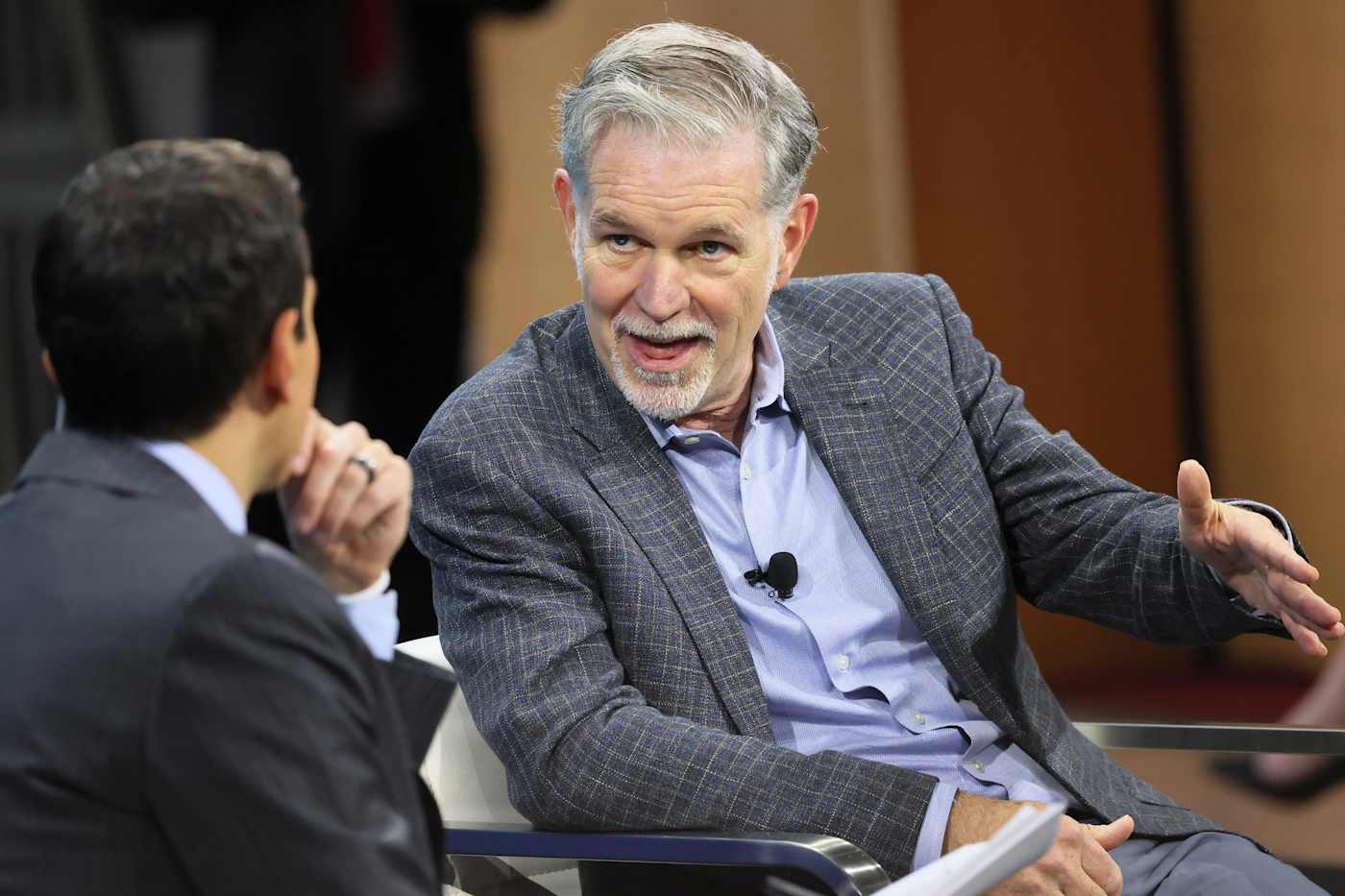
Netflix co-founder and current chairman Reed Hastings is leaving the streaming company’s board in June to focus on "his philanthropy and other pursuits," according to a shareholder letter released alongside Netflix's Q1 earnings. Hastings has served as chairman of Netflix's board since 2023, a role he assumed after stepping down as co-CEO and promoting Greg Peters in his place.

"Netflix changed my life in so many ways, and my all‑time favorite memory was January 2016, when we enabled nearly the entire planet to enjoy our service," Hastings said in a statement. "My real contribution at Netflix wasn’t a single decision; it was a focus on member joy, building a culture that others could inherit and improve, and building a company that could be both beloved by members and wildly successful for generations to come. A special thanks to Greg and Ted, whose commitment to Netflix’s greatness is so strong that I can now focus on new things."

Hastings founded Netflix in 1997 as a DVD-by-mail rental service with his co-founder and the company's first CEO Marc Randolph. In 1999, Hastings became CEO, and eventually led the company through its transformation into a streaming service in 2007. Netflix started producing its own television series and movies in 2013, and in 2020, the company's board named Ted Sarandos as Hasting's co-CEO, in part to oversee its growing production business. Hastings stepped down as co-CEO in 2023 to become Netflix’s executive chairman, as then COO Greg Peters was promoted to co-CEO. Among his other contributions, Hasting is also the architect of Netflix's infamous "culture memo," which codified the company's high-performance culture.

While he'll no longer be on Netflix's board, Hastings still has a seat on the board of AI startup Anthropic and media and financial software company Bloomberg. Netflix, for its part, is continuing to expand outside of the television and film business Hastings helped build, by offering a selection of curated party games, a growing library of video podcasts and live sports.

This article originally appeared on Engadget at https://www.engadget.com/entertainment/streaming/reed-hastings-is-leaving-netflix-after-29-years-213136444.html?src=rss

©

  •  

Gemini can now draw on your Google data to personalize the images it generates

Your Google Photos library could soon influence the kind of images you can generate with Gemini. After letting users personalize the AI assistant's responses with data from Gmail, Search and YouTube, Google says it's bringing that same "Personal Intelligence" to Nano Banana 2 to make it easier for users to create personalized images with the AI model.

The goal is to have the data affiliated with your Google account — your YouTube history, emails, Google Photos, etc. — provide context to Nano Banana 2 so you don't have to. Rather than prompting Gemini's image generation model with information about you or photos of your belongings, a direction to "create a picture of my desert island essentials" should produce an image that includes the things you care about without any extra context. Similarly, if you use labels in Google Photos to identify people or pets, you can tell Gemini to "create a hand-drawn illustration of mom," and it should be able to use Google Photo's labels to find the right reference photo and create an image of the right person.

A gif of someone generating an image with Gemini using Personal Intelligence.
Google

If Gemini creates images that don't look right, you can still send a follow-up prompt to refine the result, or select a new source image from Google Photos with the "+" button. Google says you can also click the "Sources" button to view what images the AI referenced in the first place, or ask it directly for the attribution and sources used for a specific image.

Personalized user data is one of the unique advantages Google has over companies offering competing AI assistants, so expanding Personal Intelligence to an already popular feature like image generation is a natural way to build on that lead. For now, this more personalized version of Nano Banana 2 is available in the Gemini app for eligible AI Pro and AI Ultra subscribers. Google says the feature will come to Gemini in Chrome and other users "soon."

This article originally appeared on Engadget at https://www.engadget.com/ai/gemini-can-now-draw-on-your-google-data-to-personalize-the-images-it-generates-160000269.html?src=rss

©

  •  
❌