❌

Normale Ansicht

YouTube and FIFA partner up for the 2026 World Cup

FIFA is turning to streaming platforms to maximize its return on the 2026 World Cup. Two months after announcing a "Preferred Platform" partnership with TikTok, the organization has now struck a similar deal with YouTube.

Broadcasting rights are FIFA’s largest revenue stream for the tournament — and media companies pay top dollar for that access. So, deals like this with streaming platforms help sweeten the package for broadcasters looking to boost their reach.

What does that look like for those watching from home? FIFA says its media partners will have the option of streaming "a select number of matches in full" on their YouTube channels. They can also live-stream the first 10 minutes of every match, presumably serving as a hook to coax viewers to finish the match on television. In addition, FIFA's media partners will get access to "every angle" of match footage to craft custom content.

"As the world's attention turns to the action in Canada, Mexico and the United States, this collaboration with YouTube reinforces our ambition to maximise the tournament's impact across the ever-evolving media landscape," FIFA Secretary General Mattias Grafström said. He says the partnership will offer "fans everywhere easy access to an immersive view of the biggest single-sport event in history."

The World Cup runs from June 11 to July 19. Matches will take place in 16 cities across Canada, Mexico, and the US.

This article originally appeared on Engadget at https://www.engadget.com/entertainment/streaming/youtube-and-fifa-partner-up-for-the-2026-world-cup-170200470.html?src=rss

©

  •  

Apple and Nike team up for a new Powerbeats Pro 2 colorway

Apple and Nike are at it again. But this time, their collaboration doesn't involve Apple Watch bands or a shoe-tracking iPod. Instead, the companies are launching a new color option for Beats' fitness-focused earphones. Meet the Powerbeats Pro 2 - Nike Special Edition.

"This isn't just a new colorway," Beats CMI Chris Thorne wrote in a press release. "It's a collision of two brands that define performance, culture and sports — the attributes of today's athlete."

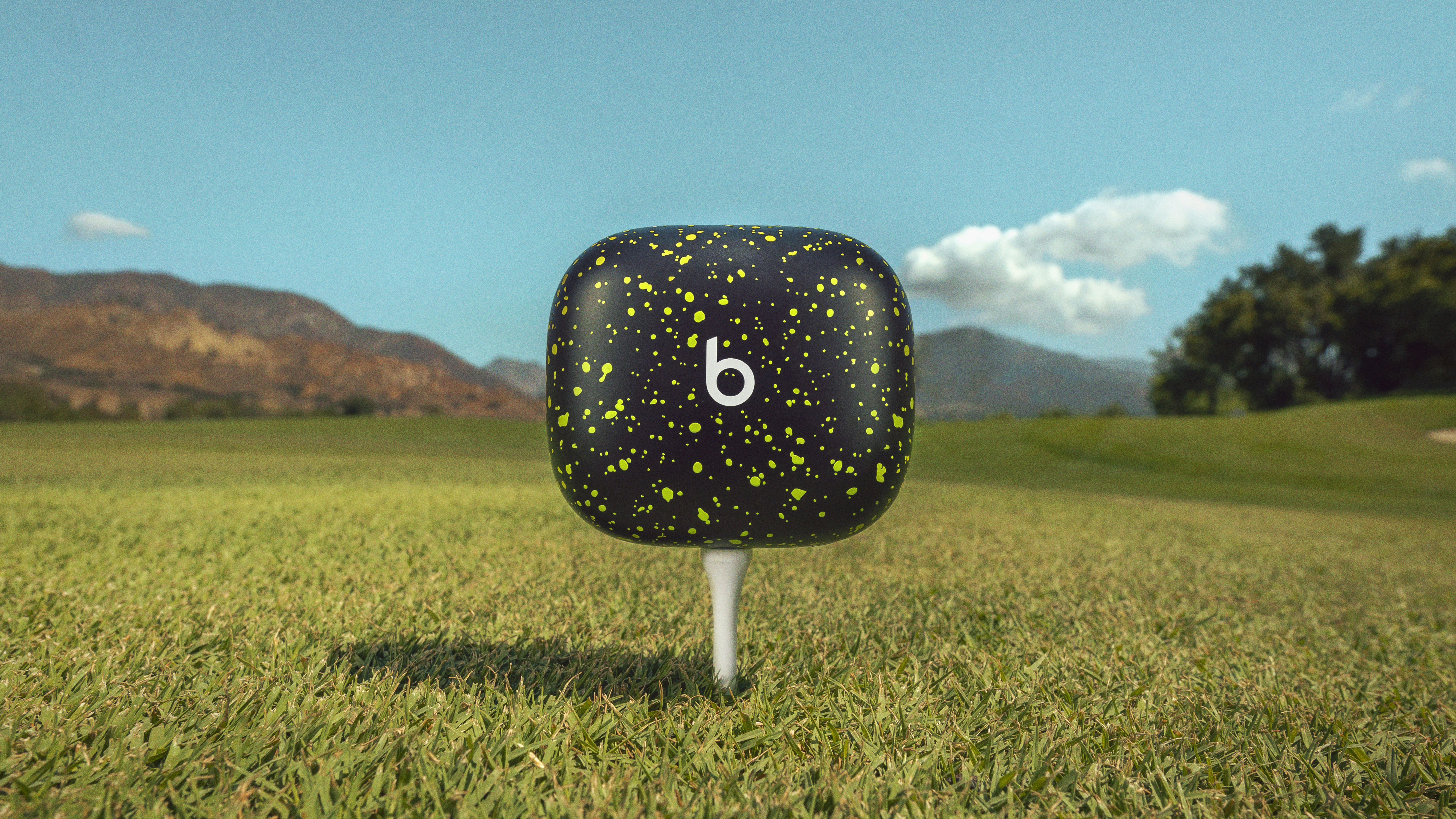
Okay, cool, but marketing-speak aside, this is, in fact, just a new colorway. However, depending on your taste, it might be one you're into. Nike's "Volt" palette takes center stage, with its love-it-or-hate-it electric yellow-green motif. The two companies share logo duties, with the Beats "b" on the left bud and Nike's swoosh on the right. Meanwhile, the charging case takes you to Speckle City, looking like something Jackson Pollock flung a can of leftover shoe paint onto.

Powerbeats Pro 2 - Nike Special Edition
Apple / Nike

Otherwise, these are the same Powerbeats Pro 2 earphones that launched last year. You get heart-rate tracking, decent ANC and Spatial Audio. You can revisit Billy Steele's review for more details on the earphones.

To help move the product, Beats and Nike called upon an athlete they both sponsor: a little-known hooper named LeBron James. The Lakers vet stars in a new ad, where he uses the Nike Powerbeats to tune out the noise with a little help from Lionel Ritchie.

You can watch the commercial below — and order the new colorway from Apple’s and Nike's respective websites on March 20. The Nike Special Edition Powerbeats Pro costs the same $250 as the standard version. However, this is a limited-edition variant, so there's no guarantee it will be around for long.

This article originally appeared on Engadget at https://www.engadget.com/audio/headphones/apple-and-nike-team-up-for-a-new-powerbeats-pro-2-colorway-140000882.html?src=rss

©

  •  

Marshall adds a junior-sized party speaker to its lineup

Marshall is launching a smaller companion for its highly rated Bromley 750 party speaker. The new Bromley 450 retains the larger model’s guitar-amp motif but comes in a petite, less expensive package.

The Bromley 450 carries over its larger sibling’s 360-degree audio trickery. Like equivalents from other companies, Marshall’s “True Stereophonic 360-degree sound” fools your brain into perceiving more directionality than its form factor allows. Lighting effects (“inspired by ‘70s stage shows”) also carry over from the larger model. However, this new speaker lacks the “sound character” control found in the Bromley 750.

Marshall says you can expect over 40 hours of playtime. If your party somehow goes on longer than that, you can swap out its battery on the fly (using the same one found in the Bromley 750). Or, you know, just plug it into a power outlet. And if your event turns into a performance, you’re covered with mic and instrument inputs.

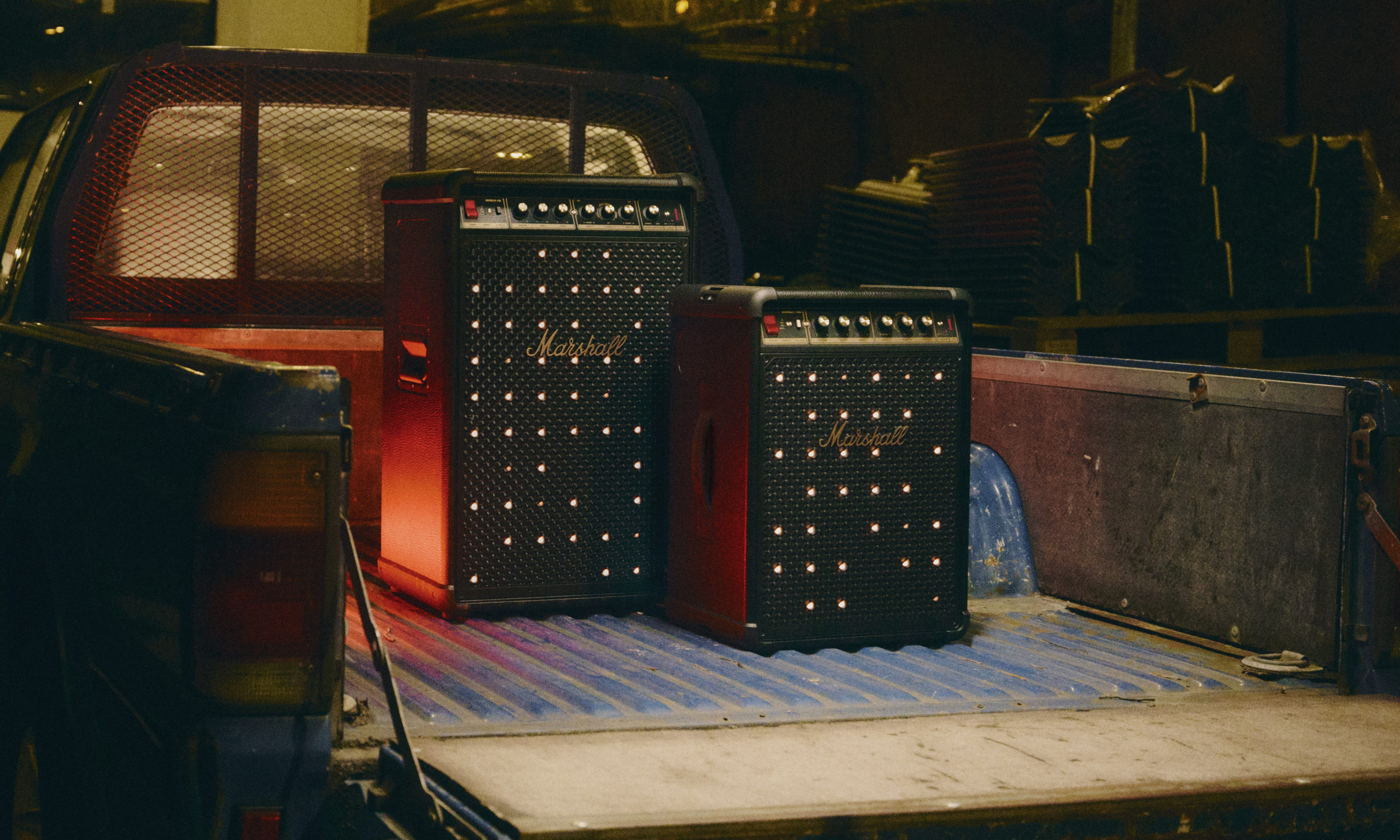
Two party speakers sitting in the back of a rusty old pickup truck.
The Bromley 750 (left) and Bromley 450
Marshall

The Bromley 450 measures 360 x 261 x 492mm, making it about 25 percent shorter than its big brother. At just under 27 lbs, it only weighs about half as much. That helps to explain Marshall’s decision not to include wheels on this model. (But don’t worry, it still has a handle.) The speaker has an IP55 rating for dust and water resistance.

The Marshall Bromley 450 may be less expensive than its larger counterpart, but it still costs a pretty penny. It’ll set you back $800 when it goes on sale on March 31. You can order it on Marshall’s website and from select retail partners (including Best Buy, Sweetwater and Crutchfield).

This article originally appeared on Engadget at https://www.engadget.com/audio/speakers/marshall-adds-a-junior-sized-party-speaker-to-its-lineup-120000871.html?src=rss

©

  •  

NVIDIA and Bolt team up for European robotaxis

At GTC 2026, NVIDIA and Bolt announced what they hope will be a symbiotic partnership. Bolt gets NVIDIA technology that would be costly and impractical to build on its own. Meanwhile, NVIDIA not only gains a major customer but also access to the European rideshare company’s driving data.

Bolt says its fleet data will build a "learning engine" for autonomous vehicles (AVs) using NVIDIA tech. The rideshare company will use NVIDIA Cosmos to curate and search driving data. It will tap into NVIDIA Omniverse to reconstruct digital twins of real-world driving logs, then use Cosmos again to generate and augment data at scale.

NVIDIA's Alpamayo model, designed specifically for AVs, will help the AI learn how to drive safely and appropriately in European cities. Finally, Bolt will integrate NVIDIA's Drive Hyperion platform into its AVs.

"Autonomous vehicles require a full-stack approach that unifies AI models, high-performance compute, and a robust sensor architecture," NVIDIA EMEA Automotive VP Philippe Van Den Berge said. "By combining Bolt's real-world operational data with the NVIDIA Drive Hyperion platform, AI infrastructure, and open models & libraries across Omniverse, Cosmos, and Alpamayo, we're enabling a scalable foundation for safe, high-performance autonomous mobility services designed for the complexity and diversity of European roads."

Bolt has been busy gearing up for an autonomous future. In late 2025, it announced partnerships with Pony.ai and Stellantis.

The companies haven't announced a timeline for when we can expect to see NVIDIA-powered Bolt robotaxis in European cities. However, they promise that Bolt's fleet data will comply with GDPR standards. They also say they’ll provide open-source access to European universities and small- and medium-sized businesses.

This article originally appeared on Engadget at https://www.engadget.com/transportation/evs/nvidia-and-bolt-team-up-for-european-robotaxis-220100551.html?src=rss

©

  •  
❌