❌

Normale Ansicht

Google to Provide Pentagon with Gemini-powered AI agents

Google is rolling out Gemini AI agents to the Department of Defense's more than 3 million civilian and military employees, according to Bloomberg. The agents will initially operate on unclassified networks, with talks underway to expand them to classified and top-secret systems, according to Emil Michael, the Under Secretary of Defense for Research and Engineering.

Eight pre-built agents will automate tasks like summarizing meeting notes, building budgets and checking proposed actions against the national defense strategy. Google Vice President Jim Kelly said in a blog post on Tuesday that Defense Department personnel can also create custom agents using natural language.

Google's AI chatbot, accessible through the Pentagon's GenAI.mil portal, has been used by 1.2 million Defense Department employees for unclassified work since December, with personnel running 40 million unique prompts and uploading more than 4 million documents. Training has reportedly not kept pace with adoption, however, as only 26,000 people have completed AI training since December, but future sessions are fully booked, something that suggests more employees are getting on board.

The expansion comes as the Pentagon rapidly broadens its AI partnerships after its standoff with Anthropic, which refused to remove guardrails against domestic surveillance and autonomous weapons from its technology. The Pentagon has since classified the American AI company as a "supply chain risk," which Anthropic will fight in court. Roughly 900 Google and 100 OpenAI employees have since signed an open letter urging their employers to hold firm on the same guardrails. Google quietly altered its "AI Principles" regarding these exact uses in early February.

The Department of Defense has since struck deals with OpenAI and xAI for restricted networks. Google itself faced internal backlash over Pentagon work in 2018 when thousands of employees protested Project Maven, a program that used AI to analyze drone video feeds. It did not renew that contract but has since loosened its restrictions on military work.

This article originally appeared on Engadget at https://www.engadget.com/ai/google-to-provide-pentagon-with-gemini-powered-ai-agents-161037444.html?src=rss

©

© Bill Clark via Getty Images

UNITED STATES - SEPTEMBER 24: Aerial view of the Pentagon building photographed on Sept. 24, 2017. (Photo By Bill Clark/CQ Roll Call)
  •  

Google brings Gemini-powered content creation tools to Docs, Sheets, Slides and Drive

Google is rolling out a batch of Gemini updates across its Workspace apps that give the AI assistant the ability to generate first drafts in Docs, build entire spreadsheets in Sheets, design presentations in Slides and answer questions about files stored in Drive. The features started rolling out on March 10 in beta for Google AI Ultra and Pro subscribers and Gemini Alpha business customers, in English only.

In Docs, a new "Help me create" tool produces a formatted first draft by pulling context from Drive, Gmail, Chat and the web based on a user's prompt. Gemini can also match the writing style or formatting of a reference document. Google says more than a third of new Docs are created from copies of existing files, so the formatting tool is meant to cut down on that manual work. In Sheets, Gemini can now construct an entire spreadsheet from a natural language prompt, drawing data from a user's files and emails, as well as Google Chat and the web.

A "Fill with Gemini" feature auto-populates table cells, which Google says is nine times faster than manual entry based on a 95-person study (this sounds profoundly unscientific, so take these claims with a grain of salt). Sheets also gained optimization tools powered by Google DeepMind and Google Research that can solve problems like employee scheduling through written prompts. In Slides, Gemini can generate individual slides that match an existing deck's theme, with full presentation generation from a single prompt coming later.

Google Drive is getting AI Overviews in search results, similar to a feature the company recently added to Gmail, along with a new "Ask Gemini" tool that lets users query their files, emails and calendar. The Drive features will be released first only for customers in the US, unlike the rest of these updates.

This article originally appeared on Engadget at https://www.engadget.com/ai/google-brings-gemini-powered-content-creation-tools-to-docs-sheets-slides-and-drive-144705622.html?src=rss

©

© SOPA Images via Getty Images

UKRAINE - 2021/10/06: In this photo illustration a Google Drive logo is seen on a smartphone and a pc screen. (Photo Illustration by Pavlo Gonchar/SOPA Images/LightRocket via Getty Images)
  •  

Hyper Light Drifter studio workers form union after rounds of layoffs

Workers at Heart Machine, the independent studio behind Hyper Light Drifter and Solar Ash, have formed a union with Communications Workers of America (CWA) Local 9003. The wall-to-wall unit covers all 13 frontline employees at the studio, which voluntarily recognized the union in February after a supermajority of eligible workers voted for the measure.

The organizing effort follows a rough stretch at Heart Machine, after the studio laid off employees in November 2024, then announced in October 2025 that it would end development on its early access title Hyper Light Breaker and cut further staff.

"I decided to get involved in organizing my studio because I've seen so many peers in the industry stand up to protect the craft we all care so deeply about. Watching that momentum grow made me realize that if we love this work, we have to protect it, especially now," said Steph Aligbe, a gameplay tools engineer at the studio.

Heart Machine joining the CWA extends the union's gaming footprint even further. The union counts thousands of employees at Microsoft subsidiaries among its members, as well as staff at EA, Id Software and others. CWA also runs the United Videogame Workers, a direct-join union that launched in 2025, allowing individual game workers in the US and Canada to sign up on their own without elections or employer consent. Large gaming studios like Ubisoft have been undergoing a seemingly endless string of layoffs, and workers are increasingly demanding to have their voices heard.

This article originally appeared on Engadget at https://www.engadget.com/gaming/hyper-light-drifter-studio-workers-form-union-after-rounds-of-layoffs-165828565.html?src=rss

©

© Heart Machine

Hyper Light Breaker
  •  

Amazon’s Zoox will test its robotaxis in Dallas and Phoenix

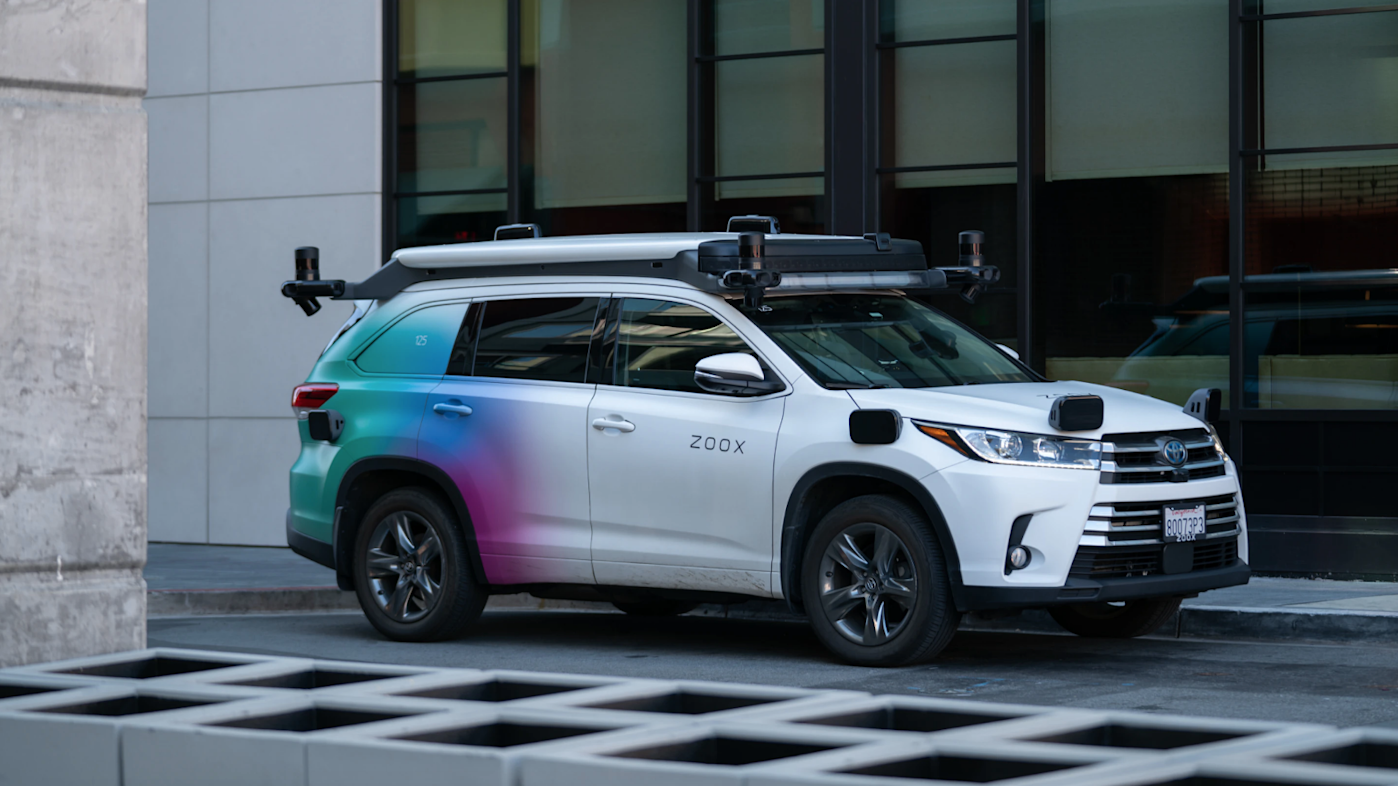
Amazon’s self-driving subsidiary Zoox announced on Monday that it will begin testing its autonomous vehicles in Dallas and Phoenix. The company will initially deploy retrofitted Toyota Highlander SUVs with human safety drivers to map the new cities before eventually rolling out its purpose-built robotaxis.

Zoox says these two cities will offer a chance to test its sensors and battery performance in unique conditions its cars haven't yet encountered in existing markets. Phoenix experiences extreme heat, dust and high-speed roads, while Dallas has more sprawling roads and varied weather compared to other cities where Zoox operates. The company is also opening new depots in both cities and a command hub in Scottsdale, Arizona which will handle fleet operations, remote guidance and rider support.

The move brings Zoox’s footprint (between actual launches and test markets) to 10 US cities. It's other areas of operation are Las Vegas, San Francisco, Seattle, Austin, Miami, Los Angeles, Atlanta and Washington, DC. Amazon acquired the self-driving startup for $1.3 billion in 2020 and has been steadily expanding its reach, with the company saying its fleet has driven over one million autonomous miles and served more than 300,000 riders to date.

Zoox’s expansion comes as competition in the robotaxi market intensifies. Alphabet-owned Waymo has continued its rapid spread across the US, while Tesla's Robotaxis launched last year, though those are currently limited to parts of Austin, Texas. US regulators are set to hold a self-driving safety forum on Tuesday, with the CEOs of Waymo, Zoox and Aurora all expected to attend.

The regulatory framework has dragged behind the rapid rollout of these vehicles as companies test and iterate the technology on public streets. Just in the last year, autonomous vehicles have struck a child near a school, blocked emergency services responding to a mass shooting and, at least in the case of Teslas, appear to be crashing at higher rates than human drivers.

This article originally appeared on Engadget at https://www.engadget.com/big-tech/amazons-zoox-will-test-its-robotaxis-in-dallas-and-phoenix-143828899.html?src=rss

©

© Zoox

A vehicle.
  •  
❌