❌

Normale Ansicht

A rival smart glasses company is suing Meta over its Ray-Ban products

Meta is being sued by Solos, a rival smart glasses maker, for infringing on its patents, Bloomberg reports. Solos is seeking "multiple billions of dollars" in damages and an injunction that could prevent Meta from selling its Ray-Ban Meta smart glasses as part of the lawsuit.

Solos claims that Meta's Ray-Ban Meta Wayfarer Gen 1 smart glasses violate multiple patents covering "core technologies in the field of smart eyewear." While less well known than Meta and its partner EssilorLuxottica, Solos sells multiple pairs of glasses with similar features to what Meta offers. For example, the company's AirGo A5 glasses lets you control music playback and automatically translate speech into different languages, and integrates ChatGPT for answering questions and searching the web.

Beyond the product similarities, Solos claims that Meta was able to copy its patents because Oakley (an EssilorLuxottica subsidiary) and Meta employees had insights into the company's products and road map. Solos says that in 2015, Oakley employees were introduced to the company's smart glasses tech, and were even given a pair of Solos glasses for testing in 2019. Solos also says that a MIT Sloan Fellow who researched the company's products and later became a product manager at Meta, brought knowledge of the company to her role. According to the logic of Solos' lawsuit, by the time Meta and EssilorLuxottica were selling their own smart glasses, "both sides had accumulated years of direct, senior-level and increasingly detailed knowledge of Solos' smart glasses technology."

Engadget has asked both Meta and EssilorLuxottica to comment on Solos' claims. We'll update this article if we hear back.

While fewer people own Ray-Ban Meta smart glasses than use Instagram, Meta considers the wearable one of its few hardware success stories. The company is so convinced it can make smart glasses happen that it recently restructured its Reality Labs division to focus on AI hardware like smart glasses and hopefully build on its success.

This article originally appeared on Engadget at https://www.engadget.com/wearables/a-rival-smart-glasses-company-is-suing-meta-over-its-ray-ban-products-205000997.html?src=rss

©

  •  

Apple will begin showing more App Store ads starting in March

More ads are coming to App Store search results starting in March, Apple shared on an advertising help page. The company first said that it would increase the number of App Store ads last month, and this new rollout of search ads will begin on Tuesday, March 3, according to a developer email viewed by MacRumors.

"Search is the way most people find and download apps on the App Store, with nearly 65 percent of downloads happening directly after a search," Apple says. "To help give advertisers more opportunities to drive downloads from search results, Apple Ads will introduce additional ads across search queries." Up until this point, ads for related apps have appeared at the top of search results, but now they'll also appear "further down in search results," according to Apple.

App Store activity makes up a significant portion of what Apple calls its "services" business. The company makes money on every App Store transaction, whether it's an app download or an in-app purchase, and increasingly, by selling ad space to companies looking to reach users. App Store ads are hardly new, but the number of ads has steadily increased over the years. Apple added ads to the Today tab in 2022 — a space that's already home to editorial curation that doubles as marketing — and in 2025, Bloomberg reported the company planned to bring ads to Apple Maps.

Apple's decision to rebrand its advertising business from Apple Search Ads to Apple Ads in April 2025 was maybe the best indication that the company was interested in expanding the number of places it would help partners try and reach customers. And it makes sense: the company's billions of devices, each pre-installed with default apps, are some of the most valuable real estate it owns.

This article originally appeared on Engadget at https://www.engadget.com/apps/apple-will-begin-showing-more-app-store-ads-starting-in-march-192031226.html?src=rss

©

  •  

Darth Maul's standalone series premieres on Disney+ on April 6

Darth Maul, the beloved, sometimes spider-legged former Sith Lord first introduced in Star Wars: Episode 1 — The Phantom Menace, is officially getting his own animated spin-off on April 6, 2026, based on a new teaser trailer published by Disney. Star Wars: Maul — Shadow Lord was originally announced at Star Wars Celebration in 2025, and is set after Maul's arc in Star Wars: The Clone Wars but before his appearance in Star Wars: Rebels.

The 10-episode series covers Maul's plot to rebuild his criminal syndicate "on a planet untouched by the Empire," according to Lucasfilm. "There, he crosses paths with a disillusioned young Jedi Padawan who may just be the apprentice he is seeking to aid him in his relentless pursuit for revenge." Shadow Lord will premiere with two episodes on April 6, and will stream two episodes a week on Disney+ through May 6.

Like most of Disney's popular animated Star Wars shows, Maul — Shadow Lord is created by Dave Filoni, a George Lucas supplicant, co-creator of The Clone Wars and newly minted President and Chief Creative Officer at Luscafilm. Besides picking up the story threads he helped establish in his previous animated work, Maul — Shadow Lord could be representative of the work that will define his tenure: stories that play in the pre-existing Star Wars sandbox.

Since completing their sequel trilogy in 2019 with Star Wars: The Rise of Skywalker, Disney and Lucasfilm have struggled to define what the future of their franchise will actually be. New projects have languished in pre-production, interesting TV shows have gotten cancelled and the only things that seem to come out with any consistency are spin-offs of The Mandalorian and The Clone Wars. Disney and Lucasfilm will release The Mandalorian and Grogu on May 22, 2026, the first new Star Wars movie to hit theaters in seven years. The Shawn Levy-directed Star Wars: Starfighter, the first film set chronologically after the events of Rise of Skywalker, is slated to premiere on May 28, 2027.

This article originally appeared on Engadget at https://www.engadget.com/entertainment/streaming/darth-mauls-standalone-series-premieres-on-disney-on-april-6-224036720.html?src=rss

©

  •  

David Ellison extends deadline for Warner Bros. Discovery takeover offer

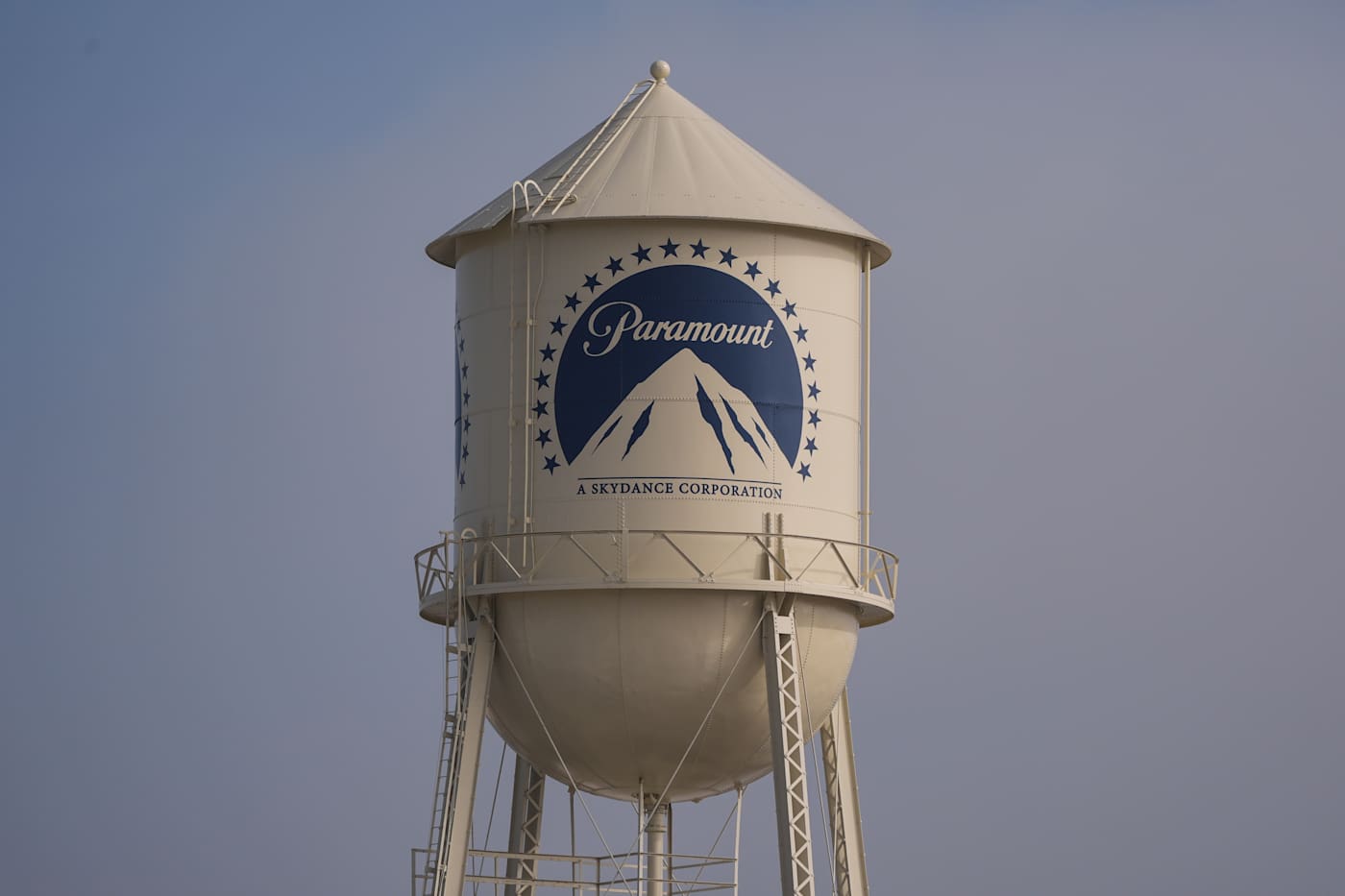
Paramount Skydance CEO David Ellison is apparently still hopeful that investors will approve his $108.4 billion hostile takeover of Warner Bros. Discovery. Paramount Skydance announced Thursday that it's extending its all-cash offer to acquire the storied studio, and giving investors until February 20, 2026 to accept. The company's previous offer expired on January 21, but with a lawsuit in the works and a revised Netflix deal to compete with, Paramount Skydance wants to stay in the conversation.

Netflix and Warner Bros. Discovery originally announced their $82.7 billion acquisition agreement in December 2025. Netflix's deal is for a significant portion, but notably not all, of Warner Bros. Discovery as it exists today. If approved, the streaming service would acquire Warner Bros. film studios, New Line Cinema, HBO, HBO Max, the company's theme parks, game studios and select linear channels like TNT, but not the collection of reality TV and news programming that Warner Bros. Discovery calls “Global Networks.”

Paramount Skydance made its competing offer of $108.4 billion for all of Warner Bros. Discovery a few days later in December, with the recommendation that shareholders reject the Netflix deal. To add pressure, Paramount Skydance also sued Warner Bros. Discovery in January alleging that the company had not provided adequate information about why it favored Netflix over Paramount. Beyond offering more money, Paramount contends its deal is more likely to be approved by regulators because owning Warner Bros. doesn't "entrench Netflix's market dominance." Warner Bros. Discovery claims that funding for Paramount's deal "remains inadequate" and that the company is uncertain Paramount Skydance will actually be able to complete the deal.

David Ellison was previously able to merge Skydance with Paramount using the financial backing of his billionaire father Larry Ellison, and the Ellison family's friendly relationship with the Trump administration. Promising to make sure that CBS News represents "a diversity of viewpoints” via a newly appointed ombudsman, and that the merged Paramount Skydance won't create any diversity, equity and inclusion programs was enough to get the FCC to approve the merger. Ellison might have thought acquiring Warner Bros. Discovery would be equally easy, but at least so far that hasn't worked out as planned.

This article originally appeared on Engadget at https://www.engadget.com/entertainment/david-ellison-extends-deadline-for-warner-bros-discovery-takeover-offer-204752313.html?src=rss

©

  •  
❌