❌

Normale Ansicht

1Password adds an extra layer of phishing protection

1Password has a new tool designed to counteract the advantages AI has given to phishing scammers. A new feature for the company's browser extension gives you a "second pair of eyes" to help you catch a bogus website before entering your login info.

Before AI, phishing attempts often included telltale signs like obvious typos or rudimentary graphic design. Now that AI makes it much easier to design and code convincingly, scams are on the rise. According to Fortune, 60 percent of companies reported an increase in fraud-related losses from 2024 to 2025. And the advent of AI browsers could make things even worse.

“Our new phishing feature adds an extra layer of protection,” 1Password says. Once the feature is activated, the extension actively watches for suspicious sign-ins. To be clear, even before this feature's arrival, 1Password wouldn't autofill saved credentials for a bogus website impersonating it. But that still left room for people to manually paste their login info, handing it over to those with the worst intentions.

That moment when you try to paste your login manually is where the new feature comes in. "The website you're on isn't linked to a login in 1Password," the feature's warning pop-up reads. "Make sure you trust this site before continuing."

1Password says that's the "breakthrough" moment that can help you avoid a major hassle. "That single moment of pause, that tiny bit of friction, is often all it takes to disrupt the attackers' entire plan."

The new feature is available today. You can enable it in the 1Password browser extension's settings. Under the Notifications section, activate the setting for "Warn about pasted logins on non-linked websites."

This article originally appeared on Engadget at https://www.engadget.com/cybersecurity/1password-adds-an-extra-layer-of-phishing-protection-140000293.html?src=rss

©

  •  

Spotify's Prompted Playlist lets you describe exactly what you want to hear

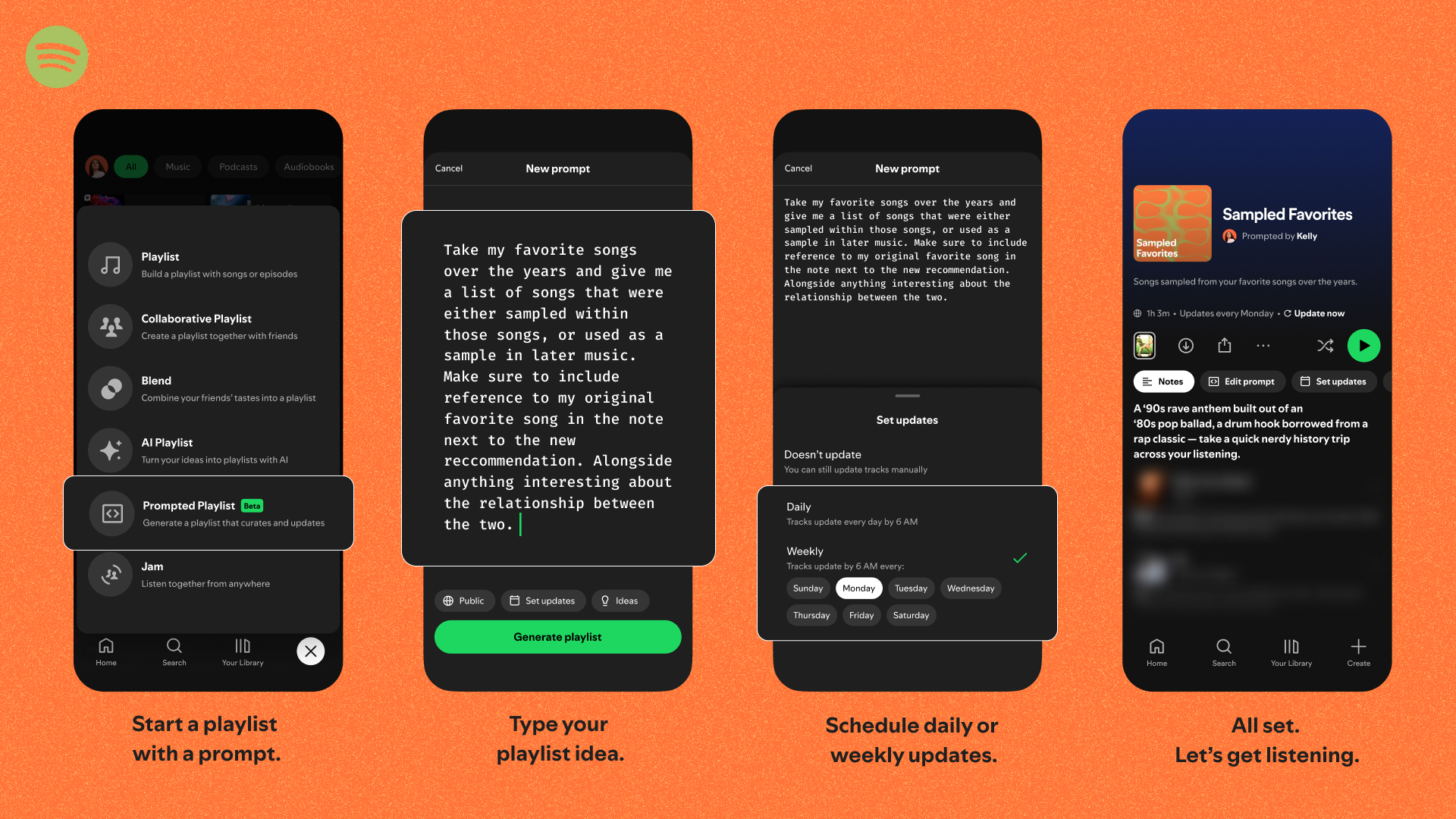
Ahead of its upcoming price hike, Spotify is rolling out a more advanced AI playlist feature in the US and Canada. Prompted Playlist, which the company trialed in New Zealand late last year, lets subscribers "control the Spotify algorithm," as the company describes it. "You're not just asking for music, you're shaping how Spotify goes about discovering it for you."

For example, you can guide it to make a playlist of songs you've saved to your Library but haven't listened to yet. (It can tap into your entire Spotify history.) Or, you can tell it to round up songs from a specific television show or movie. (It uses real-time information about pop culture, charts, and history.)

The feature includes options to refresh the playlist over time (daily or weekly). You can edit each playlist's prompt at any time. Each track will include a short note to explain why it was chosen.

Four screens showing the steps to produce a Spotify Prompted Playlist
The standard AI Playlist creator will remain alongside the new Prompted Playlist.
Spotify

Spotify says beta testers have used Prompted Playlist to revisit songs tied to specific moments and filter out tracks they've overplayed lately. "Others are asking for long, lyric-free electronic playlists to power through a workday, or mixing in artists connected to current pop culture moments and viral trends," the company wrote.

There's room for some confusion here because Spotify already has an "AI Playlist" feature. That simpler type will stick around alongside the new "Prompted" variety, which allows for finer tuning and can sift through more data.

Prompted Playlist will be available to Spotify Premium subscribers in the US and Canada "by the end of the month." Once you have access, you can try it by tapping Create, then selecting Prompted Playlist.

This article originally appeared on Engadget at https://www.engadget.com/audio/spotifys-prompted-playlist-lets-you-describe-exactly-what-you-want-to-hear-140000153.html?src=rss

©

  •  

Apple is reportedly developing a wearable AI pin

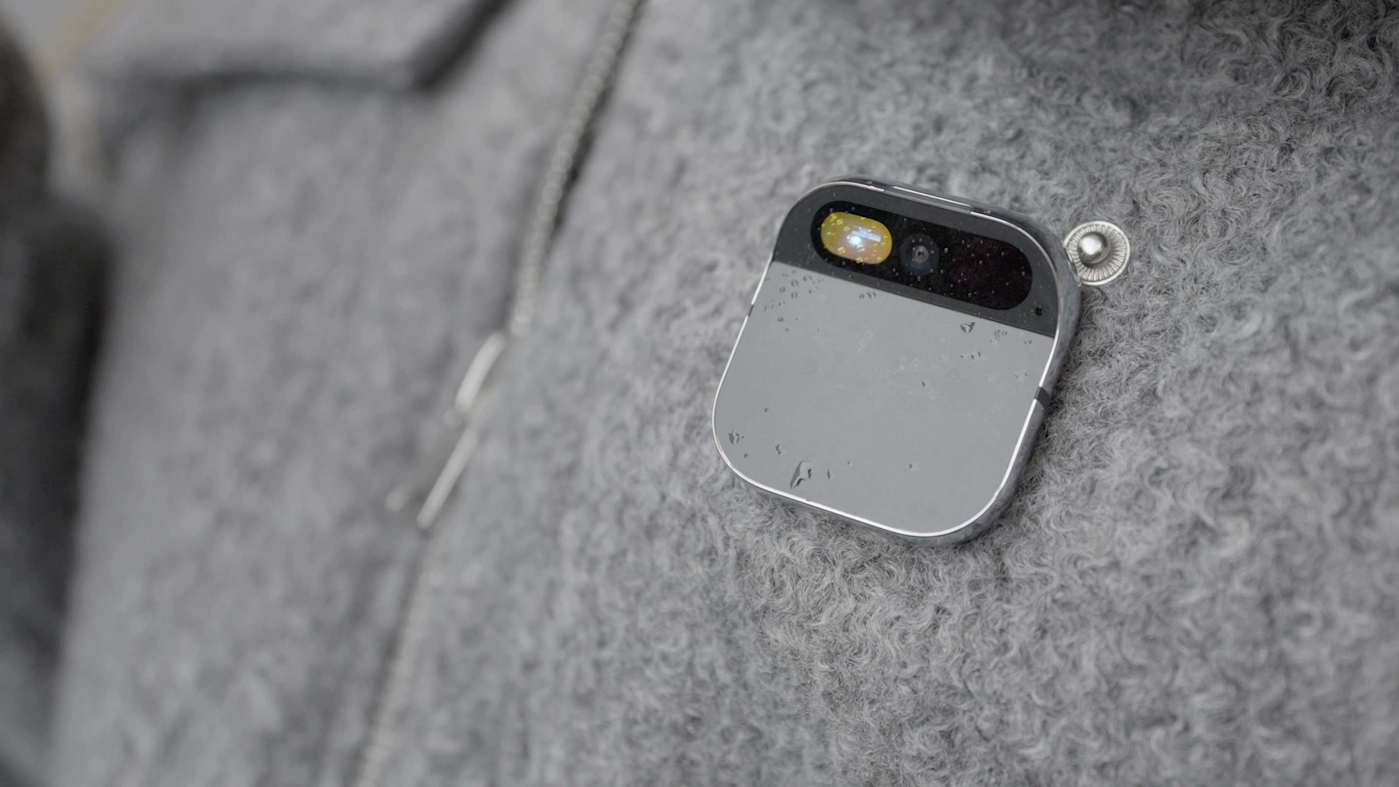
Apple will reportedly try to succeed where Humane failed (miserably). On Wednesday, The Information reported that the iPhone maker is working on an AI pin. The wearable is said to resemble a slightly thicker AirTag and include multiple cameras, a speaker, microphones, and wireless charging.

The report coincides with another from Bloomberg that claims that Apple will revamp Siri as a ChatGPT-style chatbot. When combined with the recent announcement that Google's Gemini will power Siri AI, it looks like the company is finally making a more defined play for a piece of the generative AI pie. On the other hand, the wearable pin is reportedly only in the very early stages and could still be canceled.

The pin is described as a thin, flat, circular disc with an aluminum and glass exterior. It includes two cameras (standard and wide-angle) for taking photos and videos of the user's surroundings. It also has three microphones. It includes a speaker and a physical button along one edge. It has a magnetic inductive charging interface, similar to the Apple Watch's charging mechanism.

Given the way Apple markets itself as a privacy-focused company, it will be interesting to see how the company pitches the public on what sounds like an incognito recording device. Although on that note, the App Store still hosts the Grok app, which egregiously violates privacy by generating nearly-nude deepfakes of real people — despite Apple's rules explicitly prohibiting such apps.

The Information says Apple could release its AI pin as early as 2027. The company sounds confident in the device's appeal, as it reportedly plans to produce around 20 million units at launch.

This article originally appeared on Engadget at https://www.engadget.com/wearables/apple-is-reportedly-developing-a-wearable-ai-pin-204705065.html?src=rss

©

  •  

Meta is expanding Threads ads to all users globally

Threads has grown enough for Meta to fully integrate it into its advertising machine. On Wednesday, the company said that, with the platform now hosting 400 million monthly active users, ads are expanding globally to all users. The inevitable move follows a test in 30 countries early last year.

Ads on Threads are powered by Meta's AI-powered advertising system. They'll use the "same level of personalization" (i.e., tracking and profiling) as Facebook and Instagram. Image, video and carousel ad formats will all appear natively in Threads feeds.

Meta said the ad expansion will begin next week, but the full rollout will take months. "Ads on Threads expansion to all users will be gradual, with ad delivery initially remaining low as we reach global user availability in the coming months," the company wrote in a blog post.

This article originally appeared on Engadget at https://www.engadget.com/social-media/meta-is-expanding-threads-ads-to-all-users-globally-183900226.html?src=rss

©

  •  

Earth is having some issues, so let's enjoy the Webb telescope's new nebula image

Sometimes, you just need to give your mind a little vacation. And these days, outer space sounds like as good a destination as any. Thankfully, the James Webb Space Telescope (JWST) is here to give us a dazzling new image of the Helix Nebula.

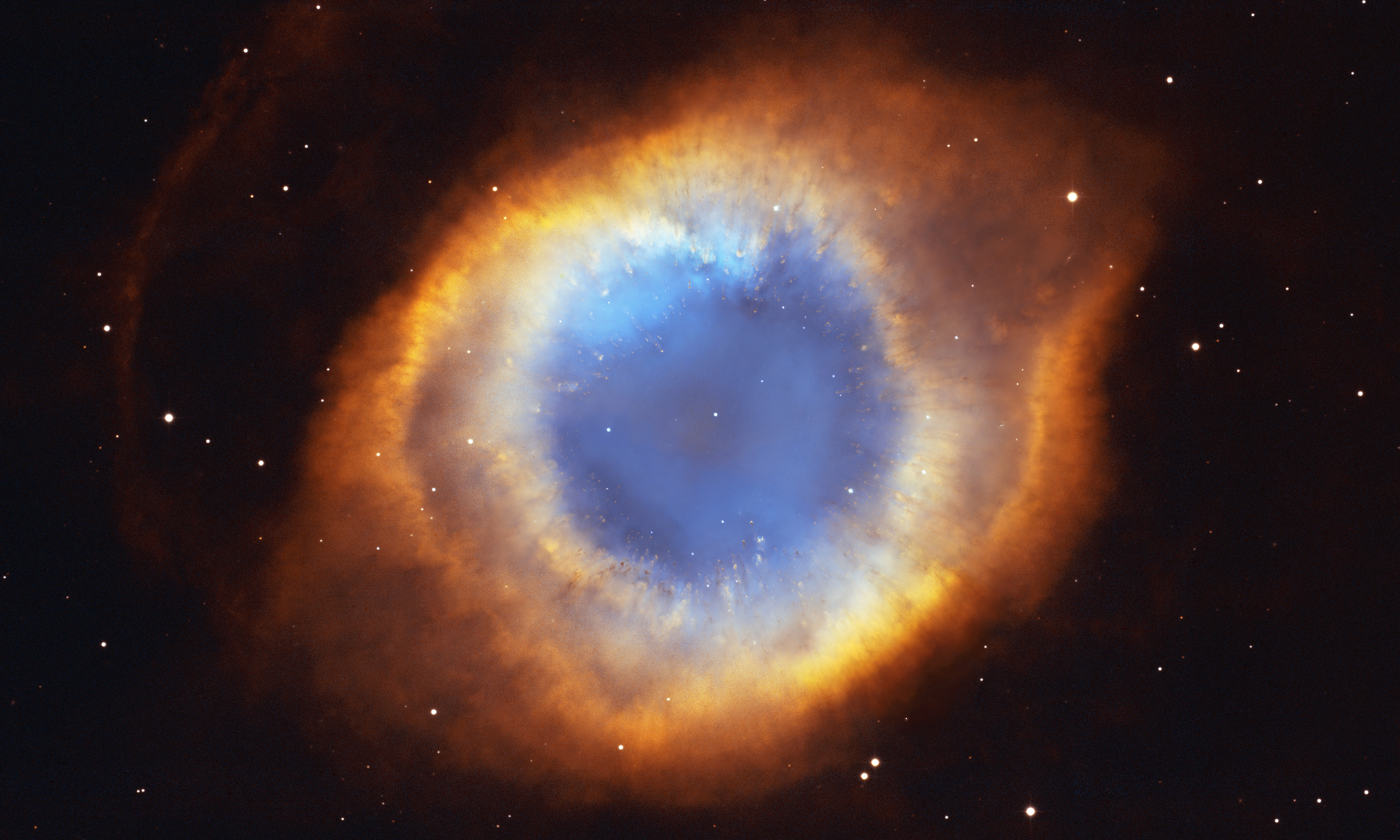
Discovered in the early 19th century, the Helix Nebula resides in the constellation Aquarius. (Cue The 5th Dimension.) At about 655 light-years away, it's one of Earth's closest planetary nebulae. When zoomed farther out, it's easy to see why it's been nicknamed the Eye of God or Eye of Sauron. This 2004 image from the Hubble telescope illustrates that.

An eye-like nebula in space
A wider view of the same nebula from 2004
NASA / ESA / C.R. O'Dell (Vanderbilt University) / M. Meixner / P. McCullough / G. Bacon ( STSI)

What we're seeing in the nebula is, in a sense, a moment of death that lays the groundwork for a new birth. The dying star (out of frame in the closer new image) sheds its outer layers. As expelled gas and dust cool, they provide raw material that could someday form new stars and perhaps planetary systems.

The new image from Webb's NIRCam (Near-Infrared Camera) provides a much closer, higher-resolution view.

Pillar-like reddish knots in the Helix Nebula

Those pillars you see are called cometary knots, and this image is our best view of those to date. "Here, blistering winds of hot gas from the dying star are crashing into colder shells of dust and gas that were shed earlier in its life, sculpting the nebula's remarkable structure," the ESA wrote in its press release.

The knots' colors represent temperature and chemistry. Hints of blue indicate the hottest gas (energized by ultraviolet light). The yellow regions, where hydrogen atoms form molecules, are farther from the nebula's nucleus (and therefore cooler). On the edges, reddish-orange regions depict the coolest material, where gas thins and dust begins to form.

This article originally appeared on Engadget at https://www.engadget.com/science/space/earth-is-having-some-issues-so-lets-enjoy-the-webb-telescopes-new-nebula-image-181049901.html?src=rss

©

  •  
❌