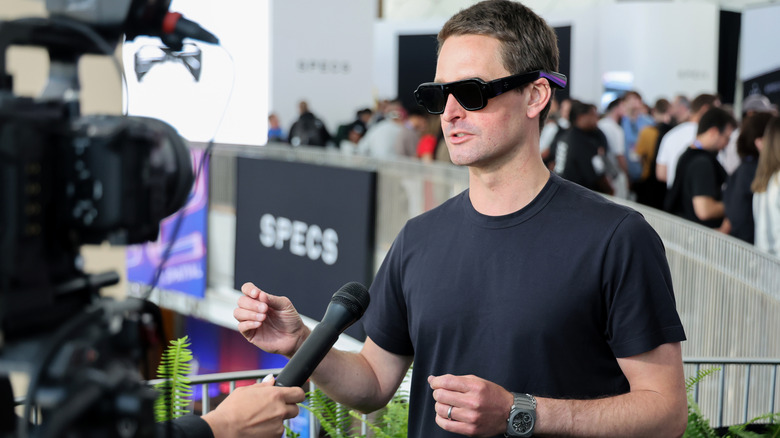
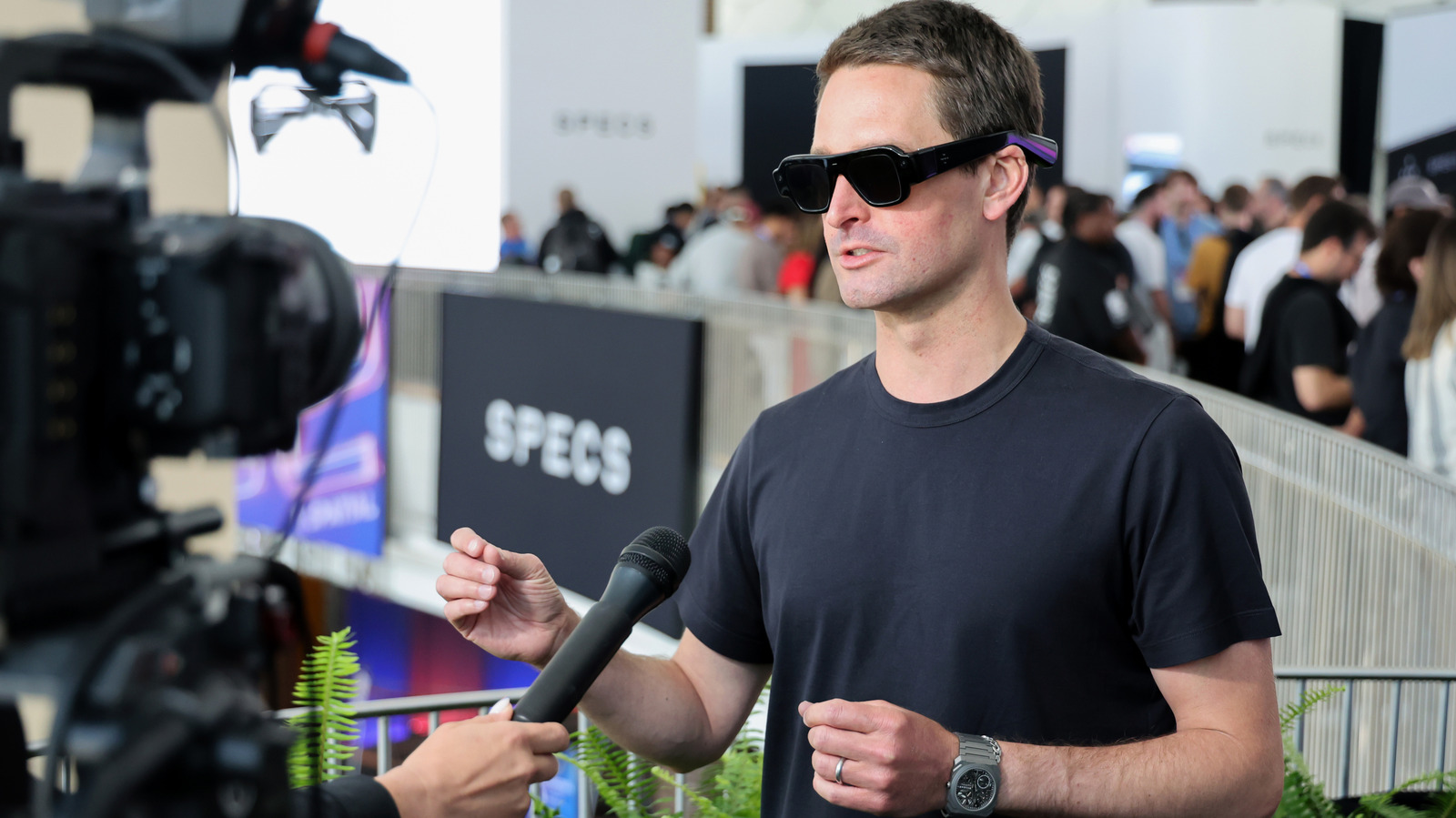
A pair of prototype Ray Ban Meta glasses at AWE 2026 show that NFC charging can achieve similar performance to the pogo pins common in smart glasses today.
SpaceX and AI company Cursor have struck a new partnership that could see the owner of X buy the AI company for $60 billion later this year. "SpaceXAI and @cursor_ai are now working closely together to create the world’s best coding and knowledge work AI," SpaceX wrote in a post on X.
SpaceXAI and @cursor_ai are now working closely together to create the world’s best coding and knowledge work AI.
The combination of Cursor’s leading product and distribution to expert software engineers with SpaceX’s million H100 equivalent Colossus training supercomputer will…
According to SpaceX, the deal allows for it to either invest $10 billion into the company known for its AI coding tool, or acquire it entirely "later this year" for $60 billion. If an acquisition were to happen, it's not clear at what point Cursor could officially join the fold of Elon Musk's rapidly expanding and increasingly enmeshed web of companies. SpaceX bought xAI, the billionaire's AI company that also controls X, earlier this year. SpaceX is currently getting ready to go public this summer in what will likely be the biggest initial public offering (IPO) in history.
Cursor, which has reportedly been in talks to raise its own $2 billion round of funding, is known for its AI coding tool of the same name that's become the vibe coding platform of choice for many developers. It allows people to use either its own models or those from other leading AI companies, including OpenAI, Google, Anthropic and xAI.
In a statement, Cursor said its partnership with SpaceX will "accelerate our model training efforts" while addressing infrastructure-related issues that have slowed it down in the past. "We've wanted to push our training efforts much further, but we've been bottlenecked by compute," the company said. "With this partnership, our team will leverage xAI's Colossus infrastructure to dramatically scale up the intelligence of our models for coding and beyond."
This article originally appeared on Engadget at https://www.engadget.com/ai/spacex-and-cursor-strike-partnership-that-might-end-in-a-60-billion-acquisition-232131487.html?src=rss
Meta is facing a new lawsuit over its advertising practices. The nonprofit group Consumer Federation of America (CFA) has filed a proposed class-action suit against Meta for "failing to protect users" from scam ads on Facebook and Instagram.
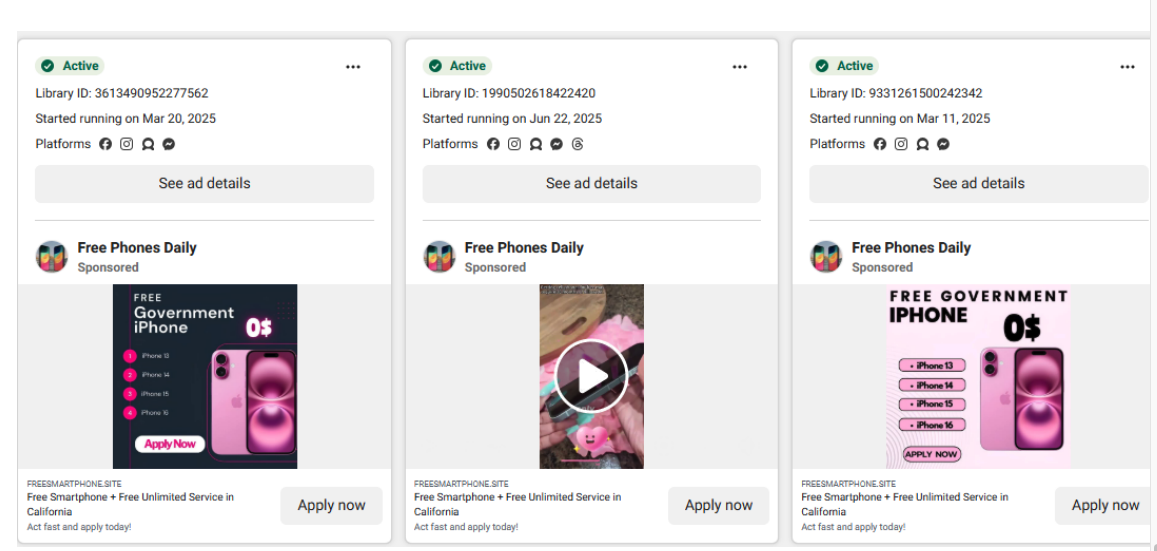
The lawsuit, which was first reported by Wired, alleges that Meta has run afoul of consumer protection laws in Washington D.C. for misleading Facebook and Instagram users about scams on its apps and that the company has "chased profits rather than protecting its users." The filing includes numerous examples of alleged scam ads that CFA says it found in Meta's ad library. These include ads promoting a "free government iPhone," as well as those claiming to offer $1,400 checks to people born in certain years. Many of the ads use AI videos, according to CFA.
Some of examples of alleged scam ads CFA includes in its lawsuit.
CFA
Meta's advertising practices have been in the spotlight since last year when Reuters reported on internal documents that indicated the company was making billions of dollars from ads promoting scams and banned goods. The report also highlighted how Meta's own processes have at times made it harder for its own employees to fight malicious advertisers.
"Meta claims it is doing all it can to crack down on scam advertising on its platforms," CFA's lawsuit states. "But in reality, Meta has knowingly taken steps and adopted policies that pad its bottom line at the expense of its users’ safety and well-being. In fact, rather than prohibiting advertisers who the company itself has determined pose a higher risk to its users (as other tech companies like Google have), Meta just charges these advertisers more. The perverse result is that the riskier the advertiser, the more money Meta makes."
CFA's allegations "misrepresent the reality of our work and we will fight them," a Meta spokesperson said in a statement. "We aggressively combat scams across our platforms to protect people and businesses — last year alone, we removed over 159 million scam ads, 92% of which we took down before anyone reported them, and took down 10.9 million accounts on Facebook and Instagram associated with criminal scam centers. We fight scams because they are bad for business — people don't want them, advertisers don't want them, and we don't want them either.”
This article originally appeared on Engadget at https://www.engadget.com/social-media/meta-has-misled-users-about-scam-ads-on-facebook-and-instagram-lawsuit-says-193220235.html?src=rss
Mastodon seems to be recovering after a Distributed Denial of Service (DDoS) attack that took down its primary mastodon.social instance. As TechCrunch notes, the platform began reporting issues early Monday morning as much of the Mastodon-operated server became inaccessible.
It's not clear who might be behind the attack, but Mastodon's head of communications Andy Piper described it as a "major" incident. A couple hours later, Mastodon shared on a status page that it had implemented countermeasures and that users should be able to access mastodon.social once again. Piper said that "some ongoing instability is a possibility" as the site recovered. It's unclear if any other instances of the service were also targeted; mastodon.social is run directly by the nonprofit and is the largest server on the federated platform.
Mastodon is the second decentralized platform to be targeted with a DDoS in recent days. Last week, Bluesky also dealt with a significant DDoS incident that took parts of the service offline for several hours. The company posted what it said was its final update Monday morning, saying that its service had "remained stable" and that there was "no evidence of unauthorized access to private user data." A few hours later, however, it seemed Bluesky was once again experiencing some issues, though the cause was unclear. Its official status page was down, and a post from its server status account indicated that there were "elevated errors and timeouts on some Bluesky-hosted services." Bluesky said it was investigating.
This article originally appeared on Engadget at https://www.engadget.com/social-media/mastodon-was-hit-by-a-major-ddos-attack-that-briefly-took-down-parts-of-the-service-204823221.html?src=rss
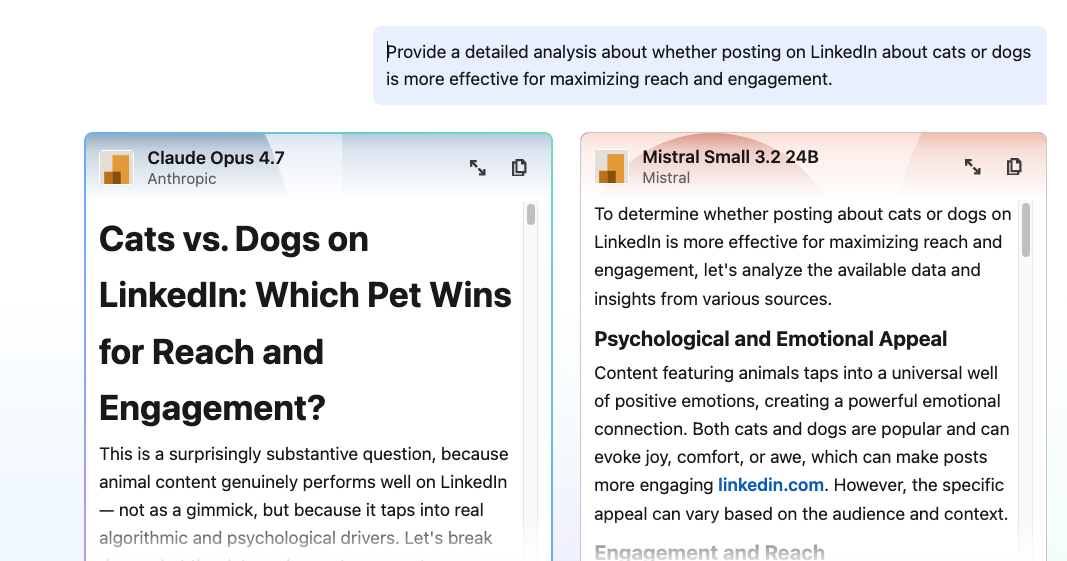
You can now use LinkedIn to test out some of the latest AI models from OpenAI, Anthropic, Google, Microsoft and other companies without having to worry about token limits or paying for an extra subscription. The professional network is experimenting with a new feature that allows people to test AI platforms' latest offerings within LinkedIn.
It’s called Crosscheck, and it's rolling out now to anyone with a LinkedIn Premium subscription in the United States. The feature is meant to be a kind of "blind taste test" for AI models, according to the company's Chief Product Officer Hari Srinivasan. Users start with a prompt and get two answers, each of which is provided by a different model. It's only after choosing which model you like better that you can see the underlying models behind each.
Srinivasan says that Crosscheck is still an "early product" from LinkedIn Labs and that "there’s work to do to make it faster and add more models and question types." But it already seems to support a fairly wide range of models. In my initial tests of the feature I saw multiple answers generated by Anthropic models, as well as those from Google, MoonshotAI, Mistral and Amazon. Crosscheck will also have its own leaderboard that tracks how people in different industries are rating the various models.
After you choose an answer you like better, LinkedIn will show which model provided each answer.
LinkedIn Screenshot
Crosscheck only supports text-based prompts, so you can't generate images, upload files or use some of the more advanced tools that would be available natively on the AI platforms themselves. But there are no limits on the number of text-based chats you can have, so you don't have to worry about token limits or signing up for a pricey subscription if you find a model that's helpful.
LinkedIn is, however, sharing data back to the respective AI companies who will presumably use information gleaned from LinkedIn usage to improve their products. "Anonymized data is shared with model builders to help them understand how their models are performing amongst different occupations," the company explains. "No personally identifiable information is shared with model builders."
While Crosscheck is initially only available to LinkedIn Premium subscribers in the United States, the company plans to expand the the feature to more countries and free users “soon.”
This article originally appeared on Engadget at https://www.engadget.com/ai/linkedins-crosscheck-feature-lets-premium-subscribers-test-ai-models-for-free-183949210.html?src=rss
Sam Altman's cryptocurrency turned identity verification startup Tools for Humanity is offering a new set of perks to people who scan their eyes at one of the company's orbs. Among them, is a new tool called Concert Kit that could help bands and artists fight back against ticket scalping bots.
The new feature relies on the revamped World ID, the orb-based verification system that scans users eyeballs and faces to create a "proof of human" signature that lives on users' mobile devices. "It's basically like a little human passport for the internet that lets you prove on apps and websites that you are a real and unique human without revealing anything about yourself," Tools for Humanity Chief Product Officer Tiago Sada tells Engadget.
Now, as more apps and services are starting to support World ID, that "human passport" can unlock some new abilities. Coupled with Concert Kit, it allows artists to designate a specific pool of tickets for "verified" humans only. The concept is a bit like how pre-sales currently work, with artists (or their teams) setting aside a specific number of tickets for people who have set up a World ID. Those folks can then use their World ID to get ticket codes for Ticketmaster, Eventbrite, AXS or other major ticketing platforms.
Because World ID is limited to actual, "verified," humans the system won't be susceptible to the same tactics that have enabled bots to ruin the ticket-buying process for so many, Tools for Humanity says. Artists are also in control of what level of verification they want to require from their fans. (The new World ID app will also allow people to set up an account with a selfie check if they don't have ready access to an orb.)
Just how much of a dent Concert Kit will be able to make in the massive scalping bot problem that plagues the concert industry is less clear. So far, Bruno Mars is slated to use the solution on his upcoming world tour — no word on just how many of his tickets will be reserved for World ID-verified humans, though — and Concert Kit is available to other artists starting today.
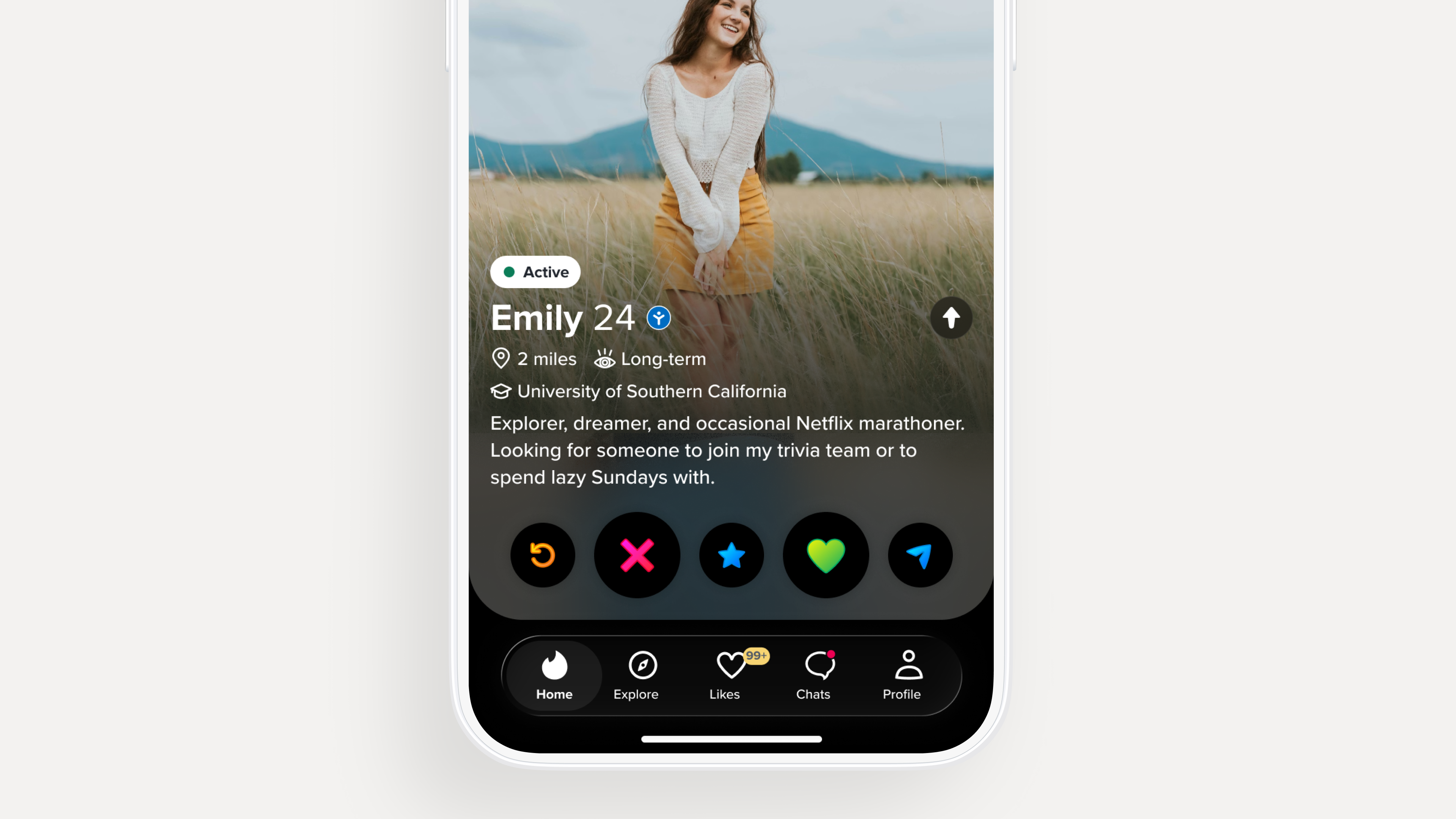
Concert Kit is one of several new integrations and updates to World ID that Tools for Humanity announced at an event in San Francisco Friday. Tinder, which earlier this year started testing World ID as an age verification solution in Japan, will be rolling out support worldwide. In the US, Tinder's integration won't be for age verification, though. Instead, it will indicate whether there is an actual "verified" human behind a given profile.
Tinder profiles that verify with World ID will get a badge as an extra signal of authenticity.
Tools for Humanity
On the enterprise side, Zoom and DocuSign are also adding support for World ID to help businesses verify that there is an actual person (and not a deepfake or bot) joining their video calls or signing important documents. Tools for Humanity is also introducing a standalone app for World ID that separates its identity verification tools from its existing crypto wallet app.
The updates are Tools for Humanity's latest attempt to make their orb-based verification system, which has been widely mocked, more mainstream and perhaps a little less dystopian. (Elsewhere, orbs have begun appearing in some new places like a San Francisco Gap.)
On their part, Tools for Humanity seems aware that a lot of people aren't ready to scan their faces at a bunch of orbs controlled by Altman just to "prove" they are humans. I asked Sada, Tools for Humanity's Chief Product Officer, what he would say to people who think that the company is solving for the wrong problem: that really it should be up to ticketing platforms and dating apps and other services to strengthen their security and bot-fighting tools, rather than rely on their users to "prove" their humanness.
He said it was a "completely understandable question" and compared it to some people's initial discomfort with things like Apple's TouchID or FaceID. "Not everyone has to do it upfront, and that's important," he said. "It's optional. If you want to have a World ID, you get access to that enhanced experience."
This article originally appeared on Engadget at https://www.engadget.com/ai/sam-altmans-human-verification-company-thinks-its-eye-scanning-orbs-could-solve-ticket-scalping-171500555.html?src=rss
Meta is starting to test a long-overdue facelift for Threads on web. The company's head of Threads Connor Hayes showed off a new look for the web version of Threads that finally adds direct messaging and makes it easier to navigate between multiple feeds.
The new layout adds a bunch of new shortcuts to the site's left rail, including saved posts, insights, activity, and the ability to move between different feeds. Those features have all been accessible on web before, but many were hard to find. For example, the only way to currently get to "insights" is to navigate to your own profile or save it as a "pinned" column. Most importantly, though, the update finally adds the Threads inbox, which has not been available to web users even though the feature was added to the app last June.
It's not clear when the new look will roll out, but Hayes said Meta has already started to test it and that the company will "be investing more here going forward." The last time the Threads website got a major update was last April, which added some basic functionality. But since then, Meta has focused much of its efforts on the Threads app, rather than the website. Some newer features, like disappearing "ghost posts," are able to be viewed on the web but can only be created in the app.
Speaking of the Threads app, the web updates come one day after Hayes previewed some tweaks to how replies look on mobile. With the change, replies under a post will be indented slightly to make it easier to follow conversations. That change is rolling out now on iOS and currently "testing" on Android.
This article originally appeared on Engadget at https://www.engadget.com/social-media/meta-is-giving-threads-on-web-a-redesign-that-finally-adds-direct-messages-192903284.html?src=rss
 Anmelden