Valve's Steam Controller will hit the market on Monday, May 4, for a going price of $99 in the United States. The Steam Controller does precisely what it says: It communicates with anything running Steam or the Steam Link app, so this includes PCs, Macs, mobile devices and the Steam Deck.
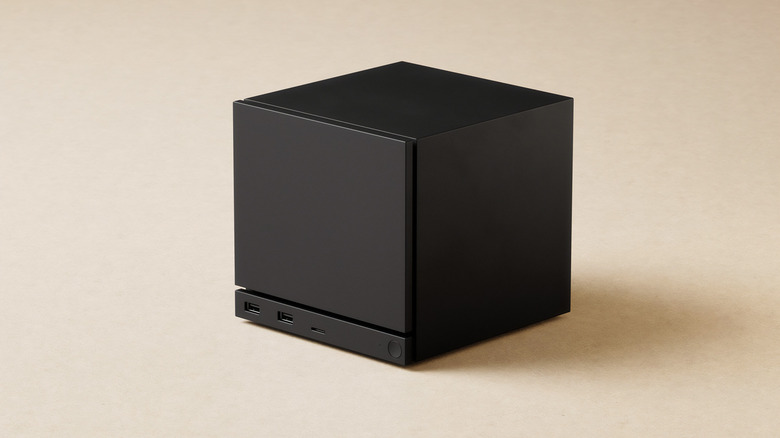
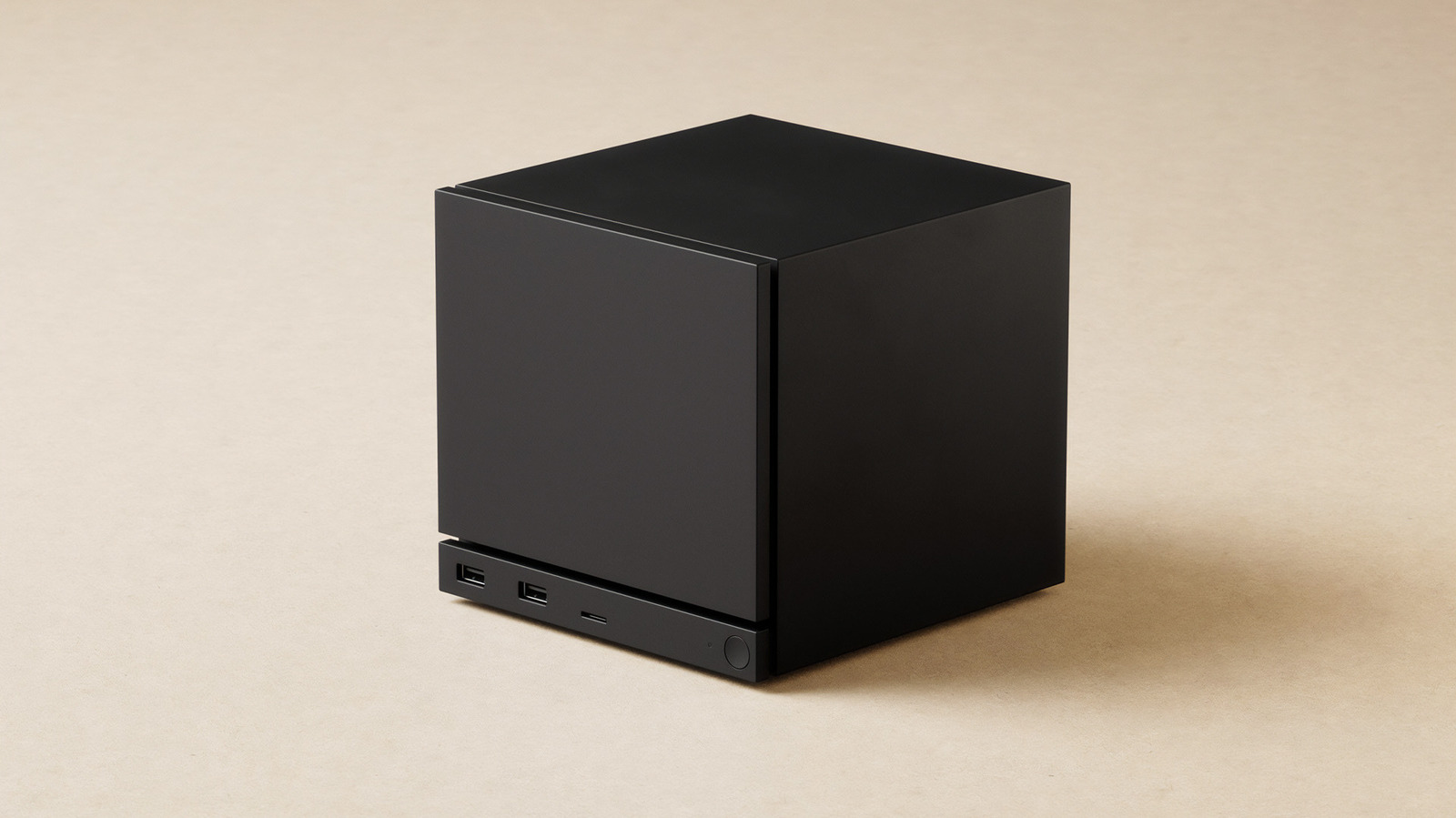
Eventually, the Steam Controller will connect to the new Steam Machine console and Steam Frame VR headset, but neither of these products have solid release dates just yet. They were originally slated to come out in early 2026 alongside the Steam Controller, but we're nearly five months into the year and only a third of that promise is poised to be fulfilled. Valve in March said it hopes to ship in 2026, dropping the "early" bit.
As noted in our review, the Steam Controller is a solid gamepad, especially for the price. It feels and looks a lot like a Steam Deck, complete with two trackpads beneath a pair of TMR thumbsticks and a standard face array. It's reactive, ergonomic, and comes with a cute little charging and connection puck that snaps onto the bottom of the gamepad. Just note that the Steam Controller is not a PC controller: It works with Steam, and only Steam. You'll have to add games with their own launchers like Overwatch, Valorant, Minecraft or Fortnite to your Steam library before playing them with Valve's proprietary controller. How convenient — for Valve, at least.
Valve
Worldwide, Steam Controller prices are as follows:
US: $99
Canada: $149 CAD
EU: €99
UK: £85
AUD: 149
PLN: 419
This article originally appeared on Engadget at https://www.engadget.com/gaming/valves-steam-controller-costs-99-and-arrives-may-4-170058529.html?src=rss
Don’t mistake the Steam Controller for a PC controller. Even though its main function is to play PC games, Valve’s new gamepad communicates with Steam, and only Steam. This is not a general controller for your PC, Android or iOS devices, and it’s certainly not compatible with any console on the market today, unless you count the handheld Steam Deck. In order to play a game with the Steam Controller, you have to boot it up through Steam. (More on this later).
Valve’s end goal for the Steam Controller is compatibility with the Steam Machine, a console that doesn’t yet have a public release date or price point. The Steam Machine will support 4K gaming at 60 fps with FSR, it’ll come with 512GB or 2TB of SSD storage, and it’ll work with the Steam Frame VR headset, as will the Controller. The new Steam Machine was supposed to drop early this year, fulfilling a long-promised dream of PC gaming by moving your entire Steam library to the couch in a compact but powerful box. Due to the memory shortages plaguing the tech industry, the Machine and Frame aren't here yet, so the Steam Controller is the first step in Valve’s hardware takeover of living room territory. It’s due to come out on May 4, priced at $99.
The Steam Controller represents roughly 13 years of R&D, from its first iteration announced in 2013 to the debut of the Steam Deck in 2022, and the refinement period clearly paid off.
The Steam Controller is a tidy chonker of a gamepad with a broad, Duke-like face holding two square trackpads beneath the standard analog sticks and face buttons. Despite its extra girth, the Steam Controller feels light, slim and balanced, even in my smaller-than-average hands. The grips are slender and have four circular rear buttons, two per side, that are super satisfying to click even when they don’t do anything in-game. The bumpers, triggers, D-pad and face buttons are shiny black plastic, and all of the controller’s edges are rounded, allowing for a smooth glide between the bumpers and triggers especially. The trackpads don’t get in the way when you don’t need them, but in-use, they’re incredibly sensitive and kind of mesmerizing. They look and feel just like the trackpads on the Steam Deck, following the trails of your thumbs with miniature popping bubbles.
The Steam Controller uses tunnel magnetoresistance (TMR) joysticks, which are a leveled-up version of Hall effect sticks, offering ultimate precision and long-term stability with no chance of drift. After a few days of use across a range of game genres, including competitive first-person shooters, they’ve proven to be reliable and accurate. In terms of stick precision and feel, I find the Steam Controller is comparable to the Razer Wolverine V3 Pro, my PC gamepad of choice. I otherwise much prefer the swappability, rubberized microswitches and crisp clickiness of Razer’s gamepad — but the Wolverine also costs about $100 more and doesn’t come with trackpad capabilities, so we’ll call it a wash.
Sam Rutherford for Engadget
One of the neatest aspects of the Steam Controller is its charging and connection puck, which plugs into your PC or Steam Deck through a USB cable and enables stable wireless play. The puck snaps onto the belly of the controller for charging, and when you hover the gamepad’s connection point over it, it jumps up and latches on like a cute little sucker fish. I don’t know if this behavior is an intentional selling point, but it certainly is for me. The Steam Controller also connects to devices via Bluetooth or with a cable, and in all configurations it’s performed without issue for me. Of course, Bluetooth mode has the highest latency, so that’s mainly for phones and Steam Link play. The puck can support two Steam Controllers at once. Swapping between Puck and Bluetooth mode is a simple matter of holding the right bumper and A or B, respectively, when you turn the controller on.
Pressing the power button with the Steam logo wakes up the gamepad, and pressing it twice when you’re connected to a PC launches Steam in Big Picture mode. The Steam Controller feels like a natural extension of Valve’s storefront, and with its matte black finish and bubbled edges, it’ll be familiar to anyone who’s fallen in love with a Steam Deck these past few years.
I tested out the controller on my PC with Steam games and non-Steam games (added to my Steam library first, of course — seriously, more on that later), and in my living room with my Steam Deck acting as a makeshift, low-powered Steam Machine. On PC I played The Seance of Blake Manor, Creature Kitchen and Overwatch, and on Steam Deck I played Blake Manor, Demonschool and Balatro. Whether connected with Bluetooth, the puck or USB, the Steam Controller provided seamless play and no noticeable latency. The distance from my couch to the puck nestled behind my Steam Deck is about eight feet, and I didn’t feel a frame drop while cosplaying as a Steam Machine owner. I also never ran into battery issues, but that’s not shocking considering Valve’s claim that the gamepad has more than 35 hours on a single charge. In my testing, the battery barely registered a drop after multiple hours of playtime, and I was happy to snap on the charging puck whenever I wanted to set the controller down.
Sam Rutherford for Engadget
Valve notes the battery life may be lower if playing with the Steam Frame. The Steam Controller has infrared LEDs for tracking, which will obviously drain the battery a little faster. Some VR games may have you waving your controller, as there are gyroscopic sensors in there as well. As the Steam Frame isn’t out, I wasn’t able to test some of the controller’s more interesting features.
Even against players using a keyboard and mouse in competitive Overwatch matches, I won games and earned awards, passing my personal ultimate test of a controller’s capabilities. When it comes to Overwatch, I’m mostly comparing the Steam Controller to Sony’s DualSense, and it feels surprisingly similar. I enjoy the Steam Controller’s smooth slide between the bumpers and triggers, though its haptic feedback is more subtle than the DualSense’s, lacking in the analog sticks particularly. Much like with the Steam Deck, I haven’t found a consistent use case for the trackpads on the Steam Controller, but I appreciate their inclusion, the accessibility factor, and the fact that they aren’t otherwise intrusive. Now, just add a Playdate crank and I’m really sold.
The Steam Controller is a clear and unmistakable signal that Valve is joining the console wars, and perhaps by patient and diligent design, it’s appearing at a vulnerable time. Xbox is fumbling the current generation and attempting to redefine its place in the console market amid a significant leadership shakeup, while Sony and Nintendo are carrying on with standard hardware upgrade cycles in a landscape that’s based less on platform exclusivity every day. Right now there’s room for a robust PC-based storefront to stake its claim on couch gaming, and voila, here’s Valve with the Steam Machine and Steam Controller.
Sam Rutherford for Engadget
Similarly to the way Valve used Half-Life 2 to get people to download Steam in 2004, the Steam Controller pushes players to fully consolidate their PC libraries in its own ecosystem. You’ll have to add games with their own launchers like Overwatch, Valorant, Minecraft and Fortnite to your Steam library before you can play them using Valve’s controller. This is a small inconvenience, since it takes just a few clicks to add a non-Steam game to your profile.
(Welcome to later). However, I don’t enjoy doing it. As I was browsing through files to add Overwatch to my Steam library, I couldn’t help thinking that it would have been pretty easy for Valve to add a switch that would let the Steam Controller communicate with any PC game. Maybe it's a touch of oppositional defiant disorder, but I despise being coerced into behaviors that are designed to serve a corporation’s market control over my own workflow, especially in my personal spaces.
Now more than ever, I value my ability to choose — which businesses I work with, where I store my software, how I play — and the Steam launcher requirement is another small expansion of Valve’s incredible power in the PC games industry. It’s too easy to say, most of my games are already on Steam, no big deal, and use the Controller as an excuse to consolidate them all on Valve’s launcher. Suddenly, Steam is where you begin and end every gaming session, rather than just most. Obviously and especially with the coming rollout of the Steam Machine, this is the reality that Valve wants: a rich industry utterly reliant on its platform of DRM, shitty revenue splits and random opaque censorship. It’s the situation that Microsoft, Apple or Epic also want for themselves, but the main difference is that this future is actually in reach for Valve, and the Steam Controller is a tiny part of the plan. If willing and unforced support of a monopoly makes you bristle as well, feel free to stick with 8BitDo.
Sam Rutherford for Engadget
Truly though, I get it. The Steam Controller doesn’t come with a PC switch because it’s not a PC controller. It’s for controlling Steam, a service that’s become synonymous with PC and handheld gaming, and is now creeping onto the living-room scene. The Steam Controller is designed to follow you everywhere Steam is, for all your gaming needs across every screen forever and always — and there is something soothing about that idea in a Brave New World Soma kind of way. A PC controller? That’s far too limited, from Valve’s perspective.
Encroaching corporate dystopia aside, the Steam Controller is a sturdy and sleek gamepad that stands up to the competition. It’s for Valve diehards, trackpad fanatics and anyone whose main gaming hub is Steam. Which, to be clear, is a massive market that’s only poised to grow.
This article originally appeared on Engadget at https://www.engadget.com/gaming/valve-steam-controller-review-a-gamepad-in-search-of-a-console-170054068.html?src=rss
Thick as Thieves, the magical heist game from a crew of stealth legends at OtherSide Entertainment, is coming to Steam on May 20. OtherSide and publisher Megabit Entertainment announced the release date in a new gameplay trailer during today's Triple-i Initiative showcase (which was packedwithcoolindiegames, as always).
OtherSide was founded by Thief and System Shock 2 veteran Paul Neurath in 2013, and Deus Ex creator Warren Spector joined in 2016. These are two of the developers who shaped the stealth genre as we know it, so Thick as Thieves has a solid foundation. The new trailer showcases the game's fictional Scottish city of Kilcairn, where magic and technology clash against a backdrop of 1910s music and architecture. At launch, Thick as Thieves will feature two thieves, two maps, 16 contracts, six unique pieces of gear and multiple difficulty settings, which alter the layout of each level.
Thick as Thieves has evolved since its introduction at The Game Awards in December 2024. It was originally pitched as a PvPvE game, but it's landing as a solo or two-player experience, with no player-on-player brawls. OtherSide announced the pivot on Steam on April 2, 2026:
"As development progressed and the world of Kilcairn has come to life, we found that we were having more fun with solo and co-op play. So, we’ve taken a decision we feel is right for the game: Thick as Thieves is now focused on two-player co-op and single player. This sharpened focus has allowed us to double down on what makes Thick as Thieves truly special — dynamic stealth gameplay."
A handful of playtesters and early fans expressed their disappointment at the removal of PvP. A developer responded to one question with, "PvPvE may come further down the line."
There's also no word on the console versions of the game. Thick as Thieves was announced for PC, PlayStation 5 and Xbox Series X/S, but today's news suggests it's coming to Steam first (if not only). Details are a bit up in the air at the moment, but hey, at least it's on-brand for the developers of a stealth game to be sneaky.
This article originally appeared on Engadget at https://www.engadget.com/gaming/pc/jazzy-stealth-action-game-thick-as-thieves-hits-pc-on-may-20-193320746.html?src=rss
Resident Evil legend Shinji Mikami's new studio, Unbound Inc., has been acquired by Shift Up, the company behind Stellar Blade and Goddess of Victory: Nikke. Unbound's unannounced games will be fully supported and distributed by South Korean publisher Shift Up, which is led by CEO Hyung-Tae Kim.
Mikami is an icon of Japanese horror as the director of Resident Evil, its 2002 remake and Resident Evil 4, as well as a founder of PlatinumGames and Tango Gameworks. Tango was responsible for The Evil Within series, Ghostwire Tokyo and Hi-Fi Rush. Shift Up recently developed the hit action game Stellar Blade, with Kim as director.
Even with an adorably grotesque introduction video, it's unclear exactly what Unbound is working on at the moment, but the studio is targeting the global PC and console market. Its concepts involve plenty of monsters, as is tradition.
Consider even the surface-level possibilities here: The campy horror of Resident Evil blended with the melodramatic beauty of Stellar Blade. The frenzy of Hi-Fi Rush amped up by the anime stylings of Goddess of Victory: Nikke. The Evil Within III, but make it sexy. These are jokes, but the sentiment remains — this partnership makes a lot of sense and it'll be exciting to see what shakes out.
“We believe we can respect each other as creators and make games together,” Mikami said in a Shift Up blog post about the deal. “And I think with Hyung-Tae, we can even enjoy the hard parts.... Seeing my own vision and ideals come into focus like this, and finding someone whose direction aligns so closely is something I’ve rarely experienced before in my career. I hope we keep building together for a long time.”
It's also heartening to see stability for Mikami's new studio. His previous team, Tango Gameworks, was acquired by Microsoft in 2021, and Mikami left in 2023 after the release of Hi-Fi Rush. Microsoft shuttered Tango in 2024 during a period of mass game industry layoffs, and its remaining team was eventually sold to Krafton. Mikami has been quietly building up his own studio since 2022.
This article originally appeared on Engadget at https://www.engadget.com/gaming/mr-resident-evil-signs-a-deal-with-mr-stellar-blade-180158872.html?src=rss
 Anmelden