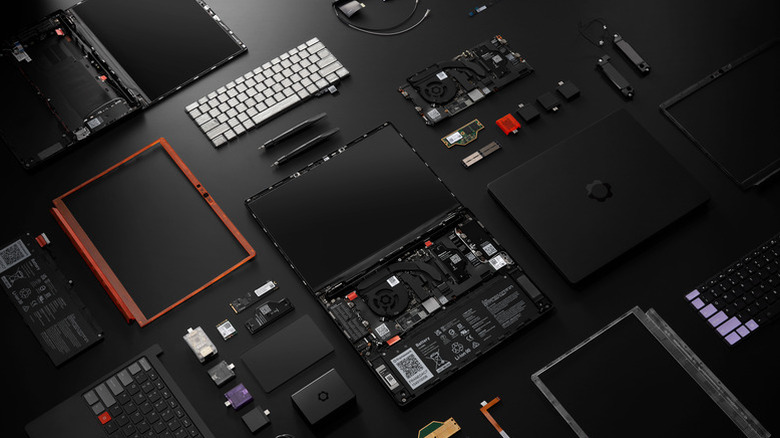
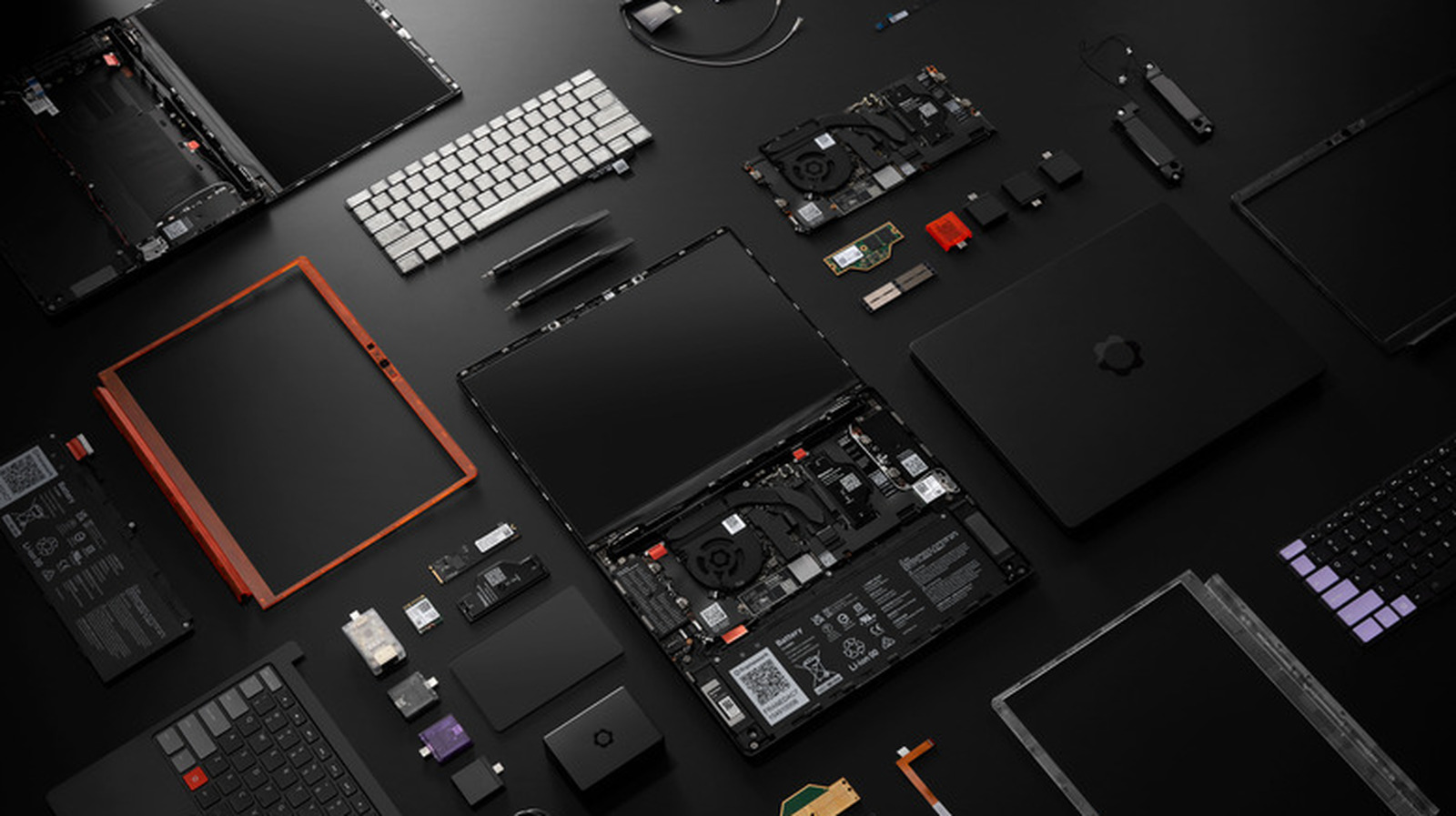
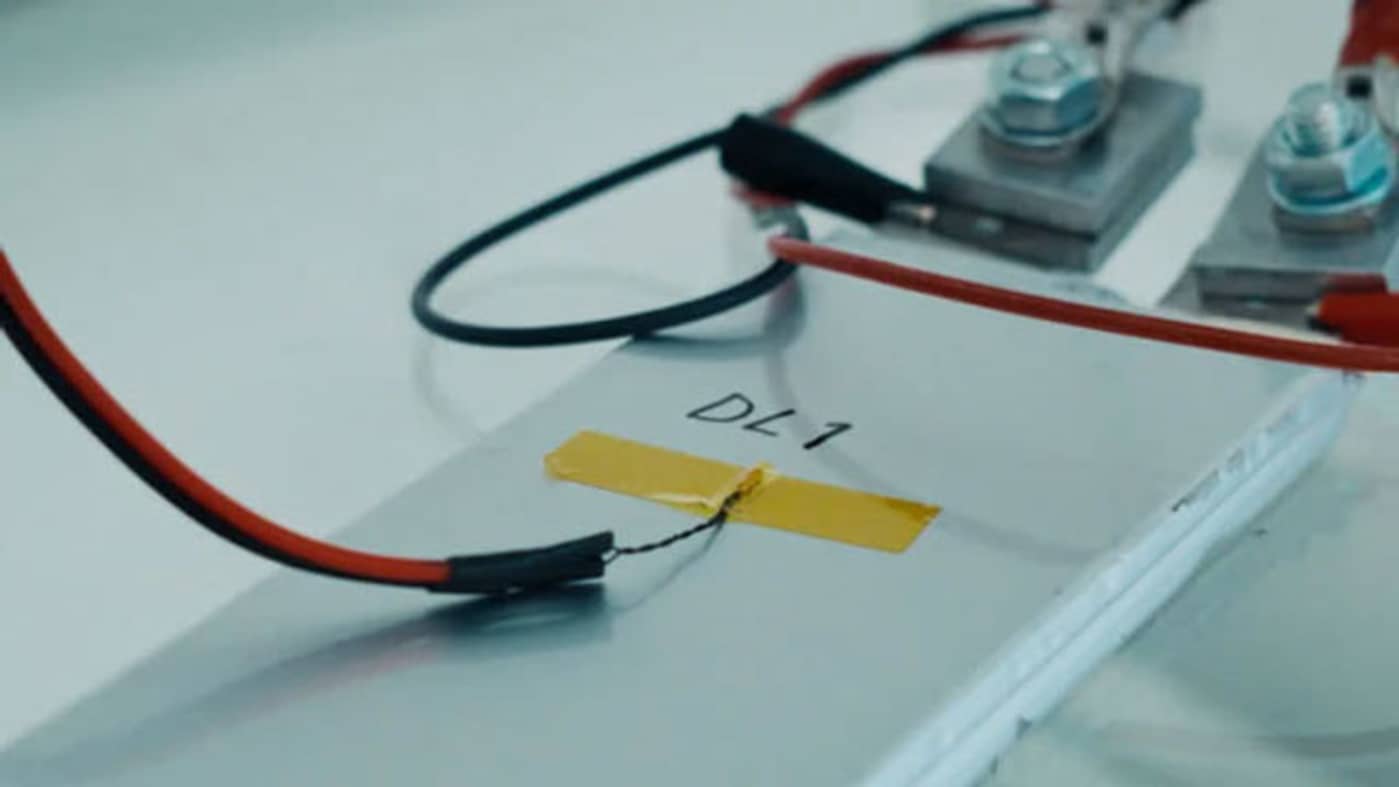
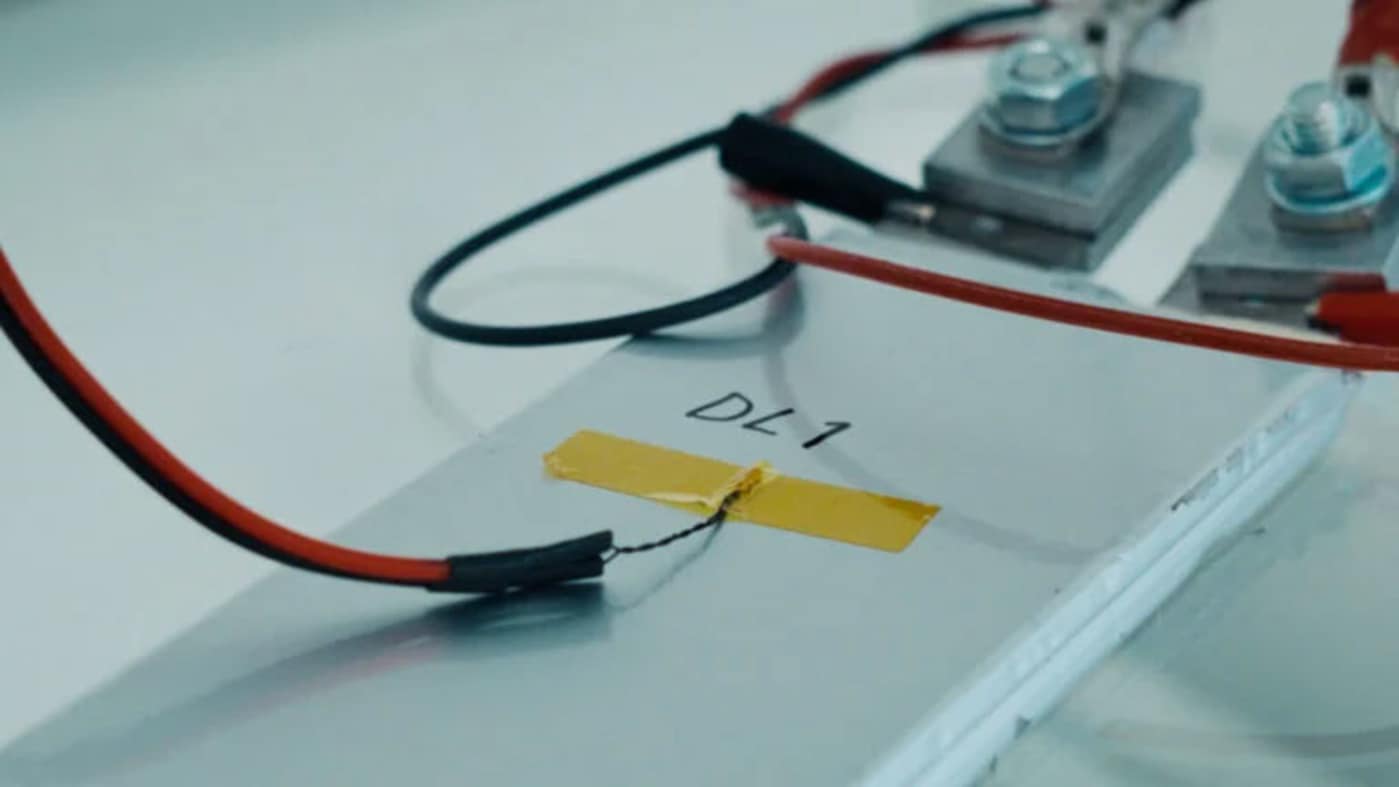
Framework is pushing back shipments of its new Laptop 13 Pro to address issues with its haptic touchpad and display found in the run-up to mass production.
It turns out you can go back again, especially if you win a pile of awards, mint a crop of stars and turn a potentially obscure sitcom into Apple’s biggest hit. The iPhone maker has today announcedTed Lasso season four will debut August 5, with new episodes arriving every Wednesday through October 7. This time out, Ted and Beard have returned to Richmond to take over coaching its women’s team as it languishes in the second division.
Ted Lasso wrapped up its initial three-season arc back in 2023, wrapping up its storylines in a fairly definitive manner. Despite this, Apple wanted to maintain one of its earliest breakout hits and so quickly started making moves to get an additional run under way. Jason Sudekis, Brendan Hunt, Hannah Waddingham, Juno Temple, Brett Goldstein and Jeremy Swift are all returning for the run. But, given the focus on the women’s team, there’s a whole new crop of cast members, including Sex Education’s Tanya Reynolds and Andor’s Faye Marsay.
There are changes behind the scenes too, especially given showrunner Bill Lawrence’s split focus on his current hot streak of shows. Consequently, Jack Burditt, who created Last Man Standing, is taking the role of executive producer —- try not to worry, however, he also worked on Frasier,30 Rock and Unbreakable Kimmy Schmidt. You should check out the teaser trailer below and wonder why Tracy Ullman, who is all over the footage, doesn’t even get so much as a namecheck in Apple TV’s press release.
This article originally appeared on Engadget at https://www.engadget.com/entertainment/streaming/ted-lassos-fourth-season-starts-august-5-150337209.html?src=rss
Amazon has today announced a software update for both the Kindle Colorsoft and Kindle Scribe Colorsoft which will bring dark mode to both e-readers. Even better, users will be able to toggle the settings for specific menus on both devices, so if they want their library dark and their notebook light, they can. Given the option is available on plenty of other Kindle devices, its omission here always felt like something Amazon was just getting around to addressing.
In addition, the update brings Smart Shapes to notebooks, enabling users to add pre-drawn lines, arrows, circles, triangles and rectangles from the toolbar. In addition, a hold-to-snap tool lets you draw a shape freehand, after which point it’ll pull itself into a nice tidy design. Both should help folks who want to add some graphical zing to their note taking who can’t do all those fancy journal designs on their own.
The update is rolling out across the ecosystem across the next few days, further empowering would-be journal scribes using these tablets. For tablets like the Kindle Scribe Colorsoft, it’s clear Amazon needs to build out the Scribe half of the equation, which looks like a poor relative compared to its competition. As Cherlynn Low wrote in her review, it’s a fine e-reader, but one that’s sorely lacking in many areas.
This article originally appeared on Engadget at https://www.engadget.com/general/amazon-brings-dark-mode-to-kindle-colorsoft-and-scribe-colorsoft-130054573.html?src=rss
Framework’s Laptop 13 Pro may be the star of today’s launch, but it is by no means the only product the company is unveiling. We’re also seeing some quality-of-life upgrades for the Laptop 16, a new wireless keyboard and a carrying case. Plus, it’s addressing something a vast number of its own users have demanded for a while: A 10GB Ethernet expansion card.
Laptop 16
Framework
The top deck of the Laptop 16 is sufficiently customizable that you can cram in any number of modules alongside the keyboard and trackpad. If you want an area blank, then you can just put in the requisite spacer, but that creates an unintended problem for some users. CEO Nirav Patel admitted the areas where the modules sit side-by-side can trap some people’s arm hairs, leading to some unplanned depilations when they move away from the deck. To solve this, the company is releasing a new all-in-one trackpad and all-in-one keyboard cover. The trackpad has also been updated to the same haptic model found in the 13 Pro. Plus, it’s now available with a lower-end Ryzen 5 340 mainboard as a more affordable entry level model.
OCuLink Dev kit
At the back of the Laptop 16 is an expansion module slot that either holds a blank unit or the discrete graphics hardware. Last year, the company launched a module with an RTX 5070 inside and, now, it’s started thinking about using it for eGPUs as well. The OCuLink Dev Kit (pictured, above) is a prototype board using OCuLink 8i which can connect directly to your mainboard over its native PCIe lanes.
If you already own a blank module, you won’t need to buy a replacement either. Framework has ensured you can simply drop the OCuLink board into the slots of your existing one. As well as the board, the kit includes an OCuLink Dock that’ll let you slot in any off-the-shelf PCIe card — including GPUs, 100Gb Ethernet and video capture — and run it as if you had your very own desktop.
Sadly, it’s not yet ready for prime time and so far all the company has said is we’ll see more about the hardware “later this year.”
Wireless Touchpad Keyboard
Framework
“There’s one living room keyboard that everyone owns, that Logitech keyboard they haven’t updated in 15 years,” said Patel. “I’ve got two of them, polled the team, and a bunch of them all have the same keyboard,” he added. But Patel’s frustration drove him and his team to build their own, better model, which has been an idea since development work started on the Framework Desktop. It was only when the team learned that the Desktop was being used as a living room PC, however, that they actually brought it to market. It is, in fact, using the same excellent keyboard hardware as found on the Framework Laptop 12, repackaged for its all-in-one form.
Laptop Sleeve
Framework
Framework’s built a laptop sleeve containing extra pockets for your spare expansion cards and screwdriver. Patel said that the real focus was on ensuring the materials used had as small a carbon footprint as possible.
10Gb Ethernet Expansion Card
Framework / WisdPi
Rounding out the announcements is a 10Gb Ethernet expansion card for users who want a faster wired internet experience than the current 2.5Gb model. But this isn’t a Framework product per-se, but was designed and developed by hardware makers Wisdpi. Patel said the community is so passionate that they’re constantly looking at new chip and hardware announcements. They then head to the company’s forums to ask “Hey, like, can we get a Framework version of this?” he explained. The advent of a slender 10Gb Ethernet chip was enough to inspire one third-party developer to build an Expansion Card module to harness it. “Basically, we got in contact with them,” said Patel and offered some guidance to help build the module. And once it was finished, Framework is now acting as a reseller to enable the whole community to easily buy it. Patel admitted that a 10Gb Ethernet Card would inevitably cater to a fairly niche customer, but “love to see a third party come in and fill that gap.”
This article originally appeared on Engadget at https://www.engadget.com/computing/laptops/framework-is-building-an-egpu-kit-for-its-laptop-16-181516238.html?src=rss
Framework’s lineup of modular, repairable laptops has seen the company grow from a niche to the mainstream. Now, the company is launching a pro version of its 13-inch laptop, but it’s still held close to all of its principles. Because while this all-new version has plenty of bells and whistles, almost all of its components are still instantly compatible with the rest of the range. You can take a part from this new 13 Pro, and install it into the first-generation 13 launched back in 2021 without much fuss.
Framework Laptop 13 Pro is touted as a “ground up redesign” of the existing 13, taking into account feedback from its dedicated and passionate users. That includes a far bigger battery, new chassis, new memory, haptic trackpad and a custom touch display. It also comes in black and, even in the press images, it’s immediately clear it’s a better color for the company’s austere industrial design. CEO Nirav Patel smiled knowingly when I said it’s immediately evocative of a ThinkPad, and I mean that in the most complimentary way.
Framework
The biggest change has been to boost the battery to 74Wh to address gripes about longevity. It’s the second time Framework has boosted the cell size, which started at 55Wh and presently runs to 61Wh. To make the battery fit, the bottom of the chassis has been redesigned, filling out the chamfers present on the existing 13. Framework says the Pro’s lifespan will hit 20 hours of uptime while streaming Netflix in 4K, and says it’ll post the videos to YouTube to prove it.
Given the redesigned lower chassis, the new battery is the one part you can’t simply drop into an older machine. “You’ll need the new bottom cover to fit,” explained Patel, “but because we’ve also increased the thickness of the battery, you have to switch over to the new input cover that has the haptic trackpad.” Patel added while you may need to pair up some parts from upgrades, there’s no component that you can’t retrofit. The new chassis means the speakers are now side-firing, and are now Dolby Atmos-certified.
The bigger battery is working in tandem with Intel’s new Core Ultra Series 3 chips which promise to be incredibly efficient. Both Intel and Framework are sure the Panther Lake silicon is going to sip at that beefy battery, but with enough grunt to play AAA games. Users will get the pick of a Core Ultra 5, X7 or X9, with the promise all of them will be able to eat a game like Cyberpunk 2077 for breakfast, lunch and dinner. At the same time, the Pro will also launch with an AMD Ryzen AI 300 series mainboard option, which are the same mainboards found on the 2025 Laptop 13.
Framework
The last major shift has been in the RAM, going from regular SO-DIMMs to LPCAMM2. The newer hardware design enables the use of LPDDR5X RAM with its better power efficiency and faster memory bandwidth. And it’s not soldered to the board, so you can add in more at some unspecified future date. Which is important if, I dunno, for some reason the global RAM market suddenly crunches and you need to mortgage a kidney for a single stick.
Naturally, I wanted to know how this would impact the laptop’s thermals, Framework’s weak spot. Patel said the mainboard’s cooling has been tweaked (once again), this time with some extra help from Intel. He added the Pro he was using to run our call hadn’t spun up its fans in half an hour which, for a Framework, is a big deal. As always, I’ll reserve judgment until I’ve seen the thing in person.
The Pro is also a way for Patel to fix some of the compromises the company had to make at its genesis. “As a startup six years ago, we just didn’t have access,” said Patel, “when we go to a display vendor [now] and say ‘we want a custom panel’ they say ‘okay, let’s talk specs’ rather than ‘who are you?”’ The 13 Pro ships with a 13.5-inch, 3:2, 2,880 x 1,920 touch display with a variable refresh rate between 30 and 120Hz. Its backlight pushes all the way to 700nits, it has a 1800:1 contrast ratio and per-unit color calibration.
I was surprised the 13 Pro has touch given it’s still a 13-inch productivity notebook without a wraparound hinge. “All the way back in 2021, when we first launched, we were getting asked for touch support,” said Patel. But the company was naturally resistant, assuming touch was an unnecessary addition for a machine of this class. It was only when building the Laptop 12 did the team find it to be quite useful. “It was a slam dunk. We know people want it, we used it on the 12, we like it and it doesn’t actually cost that much. Let’s just add it in,” said Patel.
Framework
Framework knows touchpads are a weak spot for Windows laptops when compared to those made by Apple. Consequently, the Pro 13 has a haptic touchpad with four piezo elements that, it’s hoped, will stand shoulder-to-shoulder with a MacBook Pro. The new input cover keeps the came keyboard and fingerprint sensor, wisely not touching a feature that isn’t broken and doesn’t need fixing. What is cool, however, is the more punky gray and black aesthetic on the keyboard that splits the difference between a ThinkPad and a cyberdeck. “A big part of this goes back to the idea to build the ultimate developer laptop,” said Patel.
Existing Framework owners may be concerned about how this will affect their machine’s longevity. The company might not like me saying, but to me, the Pro name is only meaningful if you’re buying a new machine off the shelf with the new features in one package. There’s nothing stopping you from upgrading your existing machine to match the pro in one go, or as your needs evolve. That’s fundamentally the company’s greatest strength, since it has committed to bringing every single one of its existing users along. But doesn’t make for the splashiest headlines when it comes to debut a new product.
Framework Laptop 13 Pro is available to pre-order today, with the first shipments due to start in June. The base-model pre-built Windows system will start at $1,699, while the DIY model will set you back $1,199.
This article originally appeared on Engadget at https://www.engadget.com/computing/laptops/framework-launches-the-laptop-13-pro-with-intels-new-panther-lake-chips-181503934.html?src=rss
Chipolo has built a name for itself as the independent tracking company which happily integrates its products with both Apple and Google’s item-finding networks. Today, it’s announcing a partnership with wallet maker Secrid that, if you haven’t guessed already, sees the pair launch a compatible miniwallet. The Chipolo x Secrid Miniwallet Trackable is tailor-made to suit Chipolo’s Card tracker and accentuate all of its positives.
For instance, the tracker sits on the back of the wallet, with the Find button accessible from the outside to make it easier to find your phone. If you misplace your device, you can simply press the button and follow the noise back to whichever couch cushions it slid between. Even better, the wallet is designed to amplify the Card’s speaker, ensuring you’ll never not hear it when it goes off. The pair claim that the unit will boost the sound by up to 3dB, for the far more likely these days event you misplace your wallet.
The pair are also buffing the hardware’s sustainability credentials, made in the EU from responsibly sourced materials. And the tracker itself is made from 50 percent recycled plastic and has a wirelessly rechargeable battery that’ll regain all of its mojo after just two hours sat on a Qi pad. If any, or all of that, appeals, then you can order it from today for $140, €120 or £120, depending on your local currency.
This article originally appeared on Engadget at https://www.engadget.com/general/chipolo-and-secrid-team-up-for-a-new-trackable-wallet-130035324.html?src=rss
Startup Donut Lab made a splash at the start of the year with some astonishing — and suspicious — claims about its solid state batteries. Now Finnish newspaper Helsingin Sanomat reports an individual has filed a criminal whistleblower complaint against the company over those claims.
Until recently, Lauri Peltola was listed as the Chief Commercial Officer at Nordic Nano — the firm reportedly contracted to handle portions of the manufacturing on Donut's behalf, and which Donut Lab has invested in. He reportedly filed a criminal complaint that Donut Lab’s promises of energy density and longevity have been overstated and that the company lacks the production capacity previously claimed.
HS suggests it has seen copies of internal communications between Donut Lab and two partner companies, CT-Coating and Nordic Nano. The paper says that CT-Coating’s first-generation battery is the one that Donut Lab has been advertising, and is the model it handed to Finnish national lab VTT to test. But, according to the emails viewed by HS, CT-Coating had abandoned development on that cell in favor of a one still in early development, despite Donut Lab’s claim in January that it had a technology ready to enter mass production.
Donut Lab CEO Marko Lehtimäki reportedly told HS he had no knowledge of Peltola’s complaint. Nordic Nano CEO Esa Parjanen, meanwhile, denied Peltola’s accusations, saying that his views were not shared by the company and that Peltola had no involvement with Nordic’s battery project. In a joint public statement Donut Lab and Nordic Nano stated they "do not know the exact nature of the complaint" but denied "having committed any crime or misleading investors." They also describe the complainant (presumably Peltola, though the statement does not name him) as not having "the necessary knowledge of battery technology or the overall picture of the development work."
This article originally appeared on Engadget at https://www.engadget.com/transportation/donut-labs-battery-claims-reportedly-subject-of-whistleblower-complaint-142133269.html?src=rss
In January, a Finnish-Estonian startup proclaimed it had developed a truly solid state battery, a holy grail for the technology industry. Donut Labs’ cell wasn’t just solid state, however. It claimed it was made from cheap and easily available materials, would charge to full in a few minutes and last for hundreds of years. If real, such a device would change the face of the world, which is why plenty of people don’t think it is. And, as the company makes more effort to demonstrate it is telling the truth, the more holes people are finding to poke their fingers into. So, what the hell is going on with Donut Labs’ battery? After many weeks of research, I’m throwing my hands in the air, tired of the endless dog and pony show the company is putting on.
Solid state batteries
Conventional batteries have improved a lot in the last few decades but remain imperfect in many ways. Cells found in electronics and EVs commonly use liquid or gel polymer as an electrolyte. These electrolytes are the cause of thermal runaway, where the heat of a battery increases exponentially, and can become a primary cause of battery failure and fire. Plus, they’re pretty fussy, requiring a consistent temperature for peak performance and to be treated pretty delicately. It’s why the industry has raced to develop a solid state battery that eliminates the liquid or gel polymer.
Because of their higher energy density, solid state batteries should be lighter and smaller per watt than conventional batteries. These benefits would be enjoyed widely but are vital for an EV where weight and size dictate so much of how it operates. Solid state batteries are at far less risk of thermal runaway, and should work in a much wider temperature window. Now, we are already seeing plenty of semi-solid batteries coming into the market, with fully-solid cells expected in the near future. Chinese battery giant CATL told BatteriesNews at the end of 2025 that its first small-scale production of solid state batteries is anticipated to begin in 2027. However, those first production runs are likely to be limited rather than global rollouts.
Donut Lab
Enter Donut Lab. The startup is a subsidiary of Finnish motorcycle maker Verge Motorcycles, famous for its Tron-style hubless (in-wheel) rear-wheel motor. Verge says it has built the “world’s most powerful electric motor family,” and that it made “all the components needed to build an electric vehicle.” Verge’s motors have since been incorporated into Longbow Motors’ recently announced Speedster EV.
At CES 2026, Donut Lab announced it had built the world’s “first full all-solid-state battery.” It said this wasn’t just a prototype, but was “ready to power up production vehicles now.” In a glossy promotional video, the company said it had solved the issues the whole industry had been working to solve for decades. There was nothing but upside, with none of the trade-offs its competitors had been forced to make while developing their own solid state batteries. And, it was ready to be incorporated into EVs starting today. Verge Motorcycles announced it would add the battery into its TS Pro, with shipments expected to begin Q1 2026.
Donut Labs’ battery
The company’s extensive list of claims begins by saying the cell has an energy density of 400Wh per kilogram, roughly twice the energy density of the best lithium ion battery on the market. Right now, you should expect to get around 1,000 charge and discharge cycles out of any half-decent battery. Donut Labs is promising its cell will last for a whopping 100,000 cycles, even if you’re fast-charging the cell. The company promises users will be able to reach an 80 percent charge from zero in around five minutes, and get to full in under six. Donut said the cell offers a “clay-like” freedom of design, adapting to the specific needs of a specific product, rather than the other way around.
Naturally, pumping all of that power into such a small cell will mean it’ll need a lot of babying, right? Not according to Donut Lab, which says its battery will operate in temperatures as low as -30 degrees Celsius (-22 Fahrenheit) or as hot as 100 degrees Celsius (212 Fahrenheit). And, to top it off, it’s made from common, easily-available and cheap materials which are “geopolitically safe,” rather than from rare-earth minerals sometimes held by rival nations. All of that means the cell will be cheaper to produce than the equivalent lithium ion cell and, best of all, Donut said the battery is ready for scaled production.
A battery that promised some of these features would be world-changing; one offering all of them would be world-shattering. It would upend supply chains, shift the global balance of power, potentially eliminate reliance on so-called rare earth minerals and supercharge EV adoption. But Donut Lab offered no proof for its claims, no hint as to what its process was based upon, and no sign it had the manufacturing capacity to deliver on its promises. Naturally, a lot of people just didn’t believe what they were seeing and hearing, and called BS.
People are suspicious
Yang Hongqin, CEO of Chinese battery maker Svolt, was quoted by CarNewsChina as saying “any person with even a basic understanding of the technology would think it’s a scam.” Finnish newspaper Iltalehti reported that CATL’s venture capital head Ulderico Ulissi described the matter as “clearly fake.” That comment prompted Donut CEO Marko Lehtimäki to respond on LinkedIn, saying that Ulissi would “regret the arrogance.” Tom Bötticher, CEO of battery startup Litona, posted on LinkedIn his belief Donut’s technology is actually tied to a company Donut invested in, Nordic Nano. Bötticher found a pitch deck, which is no longer available (but is here at the Internet Archive) which described Nordic’s energy storage technology as a supercapacitor.
Some have pointed out that Lehtimäki has a track record of making strong claims about his products. On May 15, 2025, he announced an AI startup, ASILAB, and said in a similarly glossy launch video that his team had created a “synthetic counterpart” to the human brain. Its first product, ASINOID, Lehtimäki said, is a “dynamic self-developing organism designed to grow in capability and in consciousness.” The company said it would open up access to ASINOID, but I’ve been unable to find any evidence that any such access has been granted. ASILAB has not responded to our request for comment.
In response to the minor social media backlash, Donut Labs went on the offensive. It launched the website IDonutBelieve.com promising a weekly drop of so-called evidence to support its claims. In a polished video introduction, Lehtimäki said the criticism comes from parties with vested interests, such as competitors. He addressed the above attack lines directly, saying people have been assembling theories from scraps of online data to create an untrue picture. He also denied claims the battery was a supercapacitor.
In the same video, Lehtimäki said the media has amplified “so-called experts” from the battery industry, taking their opinions at “face value.” Naturally, rival researchers who would stand to gain by taking down a potential challenger have a natural desire to rubbish Donut’s claims. But because many of them are credentialled experts in the field, their authority was elevated above his own.
Crucially, Lehtimäki said Donut didn’t publish validation tests at the time of announcement as it would have been similarly dismissed by those same biased voices. By holding the proof back, he said it forced Donut’s competitors to essentially show their hand, making it easier to refute them. To do so, Donut engaged VTT Finland, a government-owned research organization which offers testing services to third parties. VTT has conducted specific tests on cells supplied by Donut, the results of which the company has released piecemeal over several weeks.
It’s important to note that VTT’s reports don't make any statements which could be seen to support Donut’s claims. For instance, it says it was asked to “conduct independent charging performance tests on the energy storage devices supplied by the customer, which the customer identified as solid-state battery cells.”
The tests
Donut Lab published a test for five weeks, each one each one designed to show off one key feature of the battery. Test One saw VTT fast charge a cell beyond the limit of a regular battery, after which it still had close to 100% of its charge available for use. In Test Two, VTT charged the cell to full, and then discharged it in high-temperature environments. Once that was done, the cell was charged again at a normal temperature, but researchers noted that the pouch lost vacuum. Donut Lab later said the vacuum loss was caused by the packaging materials not being able to withstand the temperature, rather than an issue with the battery itself.
A VTT spokesperson told me “during the final stage of manufacturing, all gases are removed from the cell, and the cell is sealed tightly under vacuum conditions. The cell feels firm. If the cell loses its vacuum, it usually becomes slightly soft and swollen.” Essentially, if a battery loses its vacuum, it means it’s started swelling, which is visible in the photos from the report. Swelling is fatal to a traditional lithium ion battery and, potentially, the device it’s connected to.
Test Three purported to disprove the idea that Donut was secretly selling a supercapacitor, so VTT charged the cell to full and let it sit idle for 10 days. At the end of that time, the charge level of the battery appeared to hold steady, with a small drop commonly seen in all batteries. Which appeared to confirm the cell was a battery, rather than a capacitor which may struggle to hold its charge over longer periods of time. Test Four was conducted by Donut Lab itself, taking a prototype of its battery in a Verge motorcycle to a fast charger. The cell had a rated capacity of 18kWh and it was charged from 9 percent to 80 percent — around 14.5kWh — in 12 minutes.
Test Five focused on the cell from Test Two which lost its vacuum, to prove it was not broken. VTT’s report says it cycled the broken cell 50 times (up to 90 percent of its full charge) to see what happened. VTT’s researchers said it was possible to cycle the cell, but that its capacity began to degrade after the first few, and by the end of the process, it had fallen to nearly half of its original figure. The cell itself had swelled, however, with VTT saying “the cell thickness had increased by 17 percent, and the cell pouch was firm.” Donut Lab boasted that while a lithium ion battery in this condition would likely explode, its own cell still worked.
When contacted, VTT said it did complete an assignment for Donut Lab but declined to make any specific comment on confidential client assignments.
On March 31, Verge Motorcycles posted a video claiming the TS Pro Gen 2, the first to carry Donut’s solid state battery, was ready to ship. Given March 31 is the last day of Q1, it’s the latest possible day the company could announce this and say it has honored its promise. The accompanying write-up said the bike will ship with either a standard-range 20kWh battery with a range of 350km (217 miles) or a long-range 33kWh battery that should run for 600km (372 miles).
April 1
Then, on April 1, the company posted a video beginning with a fakeout scene of Lehtimäki admitting the whole thing had been a scam. One hard cut later, and the clip pivots into a Q&A, with an off-screen interviewer asking why anyone would believe Lehtimäki on April Fools Day. He dryly responded that people don’t believe him the rest of the time, but that the ambiguity provided by the occasion was a benefit. He would be able to speak more freely with less fear of censure, or so he claimed.
Lehtimäki said the series of I Donut Believe tests already published were another part of his “3D chess” strategy to get battery rivals to show their hand. And that the tests undertaken by VTT were on a first-generation battery while the company was already working on the second. He did concede that the claims around cycle life were based on estimates, and that if they wanted to prove it, they would have needed to start testing a decade or more ago. But he batted away questions about energy density, weight and size, saying you “wouldn’t ask a woman her age, and you never ask a battery its weight.” He added those questions would be answered in future, in more episodes of the I Donut Believe “complete multimedia experience.”
Donut Lab (YouTube)
Consequently, the weekly video series will continue until the full details of the first generation battery have been revealed. Lehtimäki then teased that this cell would be shipping, and the videos will shift focus to the second-generation cell with far better specs. But producing the I Donut Believe series — which, it’s worth mentioning is a marketing function of the company trying to sell us a new product — was costly, and had run over budget, which has led the company to open its own merch store, including $70 t-shirts and $141 hoodies.
If you’re already facing credible accusations of perpetuating a scam, and your big reveal is to double down on misdirection, it’s not a good look. Lehtimäki ended the video by talking about how much better Donut Labs’ second-generation battery was, with a staged outtake showing a notepad listing the specs for a third-generation battery with 1,000 Wh/kg energy density, 100C charge speed and durability for a million cycles — due to be announced at a future CES.
Analysis
The release of these tests has seen interested parts of the internet engage in a near-Zapruder level of interrogation. People have pored over every facet of the reports and videos trying to work out what exactly is inside Donut Lab’s battery. A number of prominent YouTubers have produced deep dives on the matter, each one claiming the cell is real, or not. There are countless Reddit threads where people are picking apart the voltage graphs and claims in the reports. And it seems every week there is a new revelation about what Donut’s technology is and where it came from. Plenty of people online are chasing down threads tied to energy technology companies like Holyvolt and CT-Coating, or examining the charge graphs against a nickel manganese cobalt cell. I’ll spare you the details (for now). Finnish newspaper Kauppalehti decried the results of the fifth test, saying the cell didn’t lose its vacuum. It quoted Finnish battery expert Juho Heiska, who said the company has just used a traditional cell that is sufficiently hardy to withstand this abuse in the short term.
Donut Labs (YouTube)
Even to a non-expert, there’s clearly a gap between what Donut promised and what its tests are showing. For instance, the company said it would be able to fast charge a Verge TS to full in less than 10 minutes. But, in Test Four, it took 12 minutes to get from 9 percent to 80 percent — not a bad charging time, but certainly not as swift as the company pledged. That said, if we take the company’s claims at face value, then being able to fast charge a battery at that sort of speed with just air cooling is noteworthy. At least, it will be if you can do that regularly, and one or two trips to the charger don’t leave you with what Reddit likes to call a Spicy Pillow afterward.
Unfortunately, it’s been difficult to find battery researchers willing to go on the record about Donut Labs. I sought out experts in academia who were not tied to industry backing, and so wouldn’t be accused of having a vested interest in the matter. But all of them refused to go on the record. More than one I contacted said they were well aware of the saga, and had plenty of feelings about the matter. But they were unwilling to expose themselves to the potentially intensive social media scrutiny that comes from weighing in.
I’m Donut skeptical
Personally, I’ve been suspicious of how Donut Labs has gone about demonstrating its technology. After all, if you were actually confident about your product and its technology, you would surely be able to share basic information about it. Table stakes stuff, like the weight and size of the battery cell you handed over for testing. As ElectronicDesign notes, data like that would help us all see if its energy density claims hold water. Instead, the company has engaged in an ornate kabuki which only serves to further undermine its case. You can go a long way on the back of very little trust, but the grander the promises get and the less eager you are to share evidence, the faster that trust evaporates.
And, you know how someone spends a lot of time talking around something, so as to not be caught in a deliberate lie? Donut Labs’ videos can feel a lot like that, since there are so many things it’s intentionally not making clear. Rather than taking the chance to offer even a small amount of substantive evidence to support its initial claims, it has instead moved the goalposts. So, rather than talking about the efficacy of its first-generation product, it’s dangling the second and third in front of us to hopefully distract us.
Look, I want to be even-handed, and give the company the fairest shake that I can, and obviously if the cell can deliver on its promises, I’ll be overjoyed. But we’ve all seen scams before, and until Donut Lab starts offering up a lot more data, it hasn’t earned anything close to the benefit of the doubt.
This article originally appeared on Engadget at https://www.engadget.com/transportation/evs/whats-going-on-with-donut-lab-173007121.html?src=rss
Salesforce has unveiled the newest version of Slack, which comes with a whole host of new AI features to add to its ever-growing catalog. Naturally, many of these tools are embedded into Slackbot, which the company had already pledged to turn into a “personalized AI companion.” The new features include the stuff you’d expect, such as transcription, note taking and deep research, as well as integrations with the rest of the Salesforce family. But it’ll also get “reusable skills,” which sound a lot like automations, where a team can define a task from start to finish, and then the bot will run it whenever it’s called for.
In fact, there’s a big focus on sharing and co-developing tools within organizations, so if you find a prompt that actually gets useful data out of Slackbot, you can share that with your team. And Slackbot will now analyze how you work as it attempts to discern your preferences, workflows and shortcuts. Which, if you read it in one way, sounds as if it’s actively looking to work out how to do your job so it can just replace you. Of course, that probably won’t happen, right? Right?
Salesforce is also using these new Slack tools as a way to gently upsell small businesses toward its bigger products. New Slackbot is equipped with “native customer management,” reading your channels, learning what goes on, and keeping your “deals, contacts and call notes up to date automatically.” In its release, it even says that growing firms can “start simple inside Slack, scale up to Salesforce when ready.” Similarly, every Salesforce customer will now be getting Slack bundled in, to help ensure all of your relationships and work remain in the same place under Slackbot’s helpful eye.
This article originally appeared on Engadget at https://www.engadget.com/general/slacks-upgraded-ai-can-analyze-how-you-work-103007261.html?src=rss
The FBI has confirmed to the Senate it is once again buying data which can be used to track the locations of US citizens. That may have surprised the people who thought the precedent in Carpenter v. United States prohibited it. But while that case examined if it was legal for law enforcement to obtain location data from mobile networks without a warrant, here the FBI and other agencies have found a way to skirt the Fourth Amendment entirely. Over the last few years, they have taken to just buying location data from the same companies which power the enormous online advertising ecosystem.
Where does this data come from?
When your phone is connected to the internet, it broadcasts about itself, and so do the apps and platforms you use. That information includes your IP address and device type, as well as your longitude and latitude if your device has GPS. This data, known as Bidstream, alongside any third party cookies tied to your device, enables the process of Real Time Bidding (RTB). RTB is the process where your attention is auctioned off to the highest bidder in the milliseconds after you’ve loaded a page. In order to make the auctions work, these platforms need to know as much about you as they can.
As I explained in depth back in 2021, data such as your location and IP address is broadcast over the ad networks. This information can also be aggregated, licensed or sold to data brokers who can pair this with any “deterministic data” available. For instance, if you sign up to a platform and tell them your name, email address and annual income, that data could be licensed to a data broker. Even banks looking for new revenue streams are planning to license anonymized customer data to these companies. Data brokers can easily combine the two streams of information to build out a fairly extensive picture of you as a person, and what advertisers will be the most interested in you. Unfortunately, it’s extremely difficult to opt out of this and, even if it were, it would be even more difficult to destroy the data already in circulation.
In 2018 French company Vectaury, which acted as an ad sales intermediary for mobile apps, was inspected by the French data protection regulator. Officials found the company had built a database containing the personal data of 67.6 million people without proper consent.
Data brokers don’t just harvest and hoard this data to make online ad sales, however, they will also license and sell its databases to others. Lawmakers believe that these brokers have sold this data to rival nations looking for ways to spy on US citizens.
How are law enforcement agencies getting it?
In January, 404Media revealed the US Immigration and Customs Enforcement Agency (ICE) bought access to tools supplied by cybersecurity company Penlink. Specifically, it purchased access to tools named Tangles and Webloc, which can be used to surveil large numbers of people at once. The latter tool reportedly has the power to identify smartphones in a given area and time, and can then follow them on their journey through the day and back to their home at night.
Given the secretive nature of its business, Penlink does not reveal much about how its tools operate. A since-removed marketing page says Webloc automatically analyzes “location based information” available in “endless digital channels from the web ecosystem.” And 404Media’s report says these tools access “commercially available smartphone location data,” supplied by third-party data brokers. Forbes reports the system can also pull together data from a variety of sources, including social media, to offer a real-time view of an event. The Texas Observer says Webloc can use this information to enable “warrantless device tracking.”
The Fourth Amendment guarantees the right of the people to be protected from “unreasonable searches and seizures,” made without probable case. But, as Dori H. Rahbar wrote in the Columbia Law Review, “the Fourth Amendment does not regulate open market transactions.” Aaron X Sobel, writing in the Yale Law and Policy Review, described the practice as “end-running warrants,” and urged legislators to close this loophole. The Electronic Frontier Foundation (EFF), is also pushing for legislation under the Fourth Amendment is Not For Sale Act.
It’s not likely that such legislation will be passed for a long time, and a cynic would suggest it’s not possible under the current administration. But, even if it is, it won’t address the bigger issue of the ad tech industry and its partners vacuuming up as much information about us as it can. When these companies — many of which aren’t even known to the public — are able to store up enough information on us that, if they were so motivated, they could follow our path through the day, it’s a sign something is very rotten indeed. If we’re concerned about governments having this sort of access, then we should be equally nervous about anyone else having it as well.
This article originally appeared on Engadget at https://www.engadget.com/cybersecurity/dont-be-surprised-that-the-fbi-is-buying-your-location-data-182047627.html?src=rss
UNITED STATES - MARCH 18: FBI Director Kash Patel testifies during the Senate Select Intelligence Committee hearing on "Worldwide Threats" in the Hart Senate Office Building on Wednesday, March 18, 2026. (Bill Clark/CQ-Roll Call, Inc via Getty Images)
Rode’s not done releasing trimmed-down versions of its production tools with an eye on budget conscious creators. Today, it’s launching Rodecaster Video Core, an all-in-one studio setup which sits below its flagship Rodecaster Video and its (now) mid-range Video S. It’s aimed at folks who are either dipping a toe into this world, or already have audio gear and just want to broaden out to HD video as well. Arguably, the biggest change is the lack of any controls on the hardware itself, as you’ll be running the show entirely from inside the Rodecaster App.
In terms of connectivity, you’ll find three HDMI-in, one HDMI-out, four USB-C, two 3.5mm and two Neutrik combo ports ‘round back. Connect a compatible video device to a USB-C port and you’ll be able to run up to four sources at a time, and you can even use network cameras via Ethernet. Plus, you’ll be able to use the Rode Capture app to wirelessly connect the feed from an iOS device to your setup. And you’ll even be able to set it up to automatically switch between feeds based on audio inputs, reducing your need to micromanage multi-person feeds.
Rode
And, if you’re already rocking one of Rode’s audio consoles, the Rodecaster Sync app will make your life a lot easier. Essentially, if you’ve got a Rodecaster Pro 2 or Duo, you’ll be able to hook it up to your Video Core, allowing you to set shortcuts directly to your pads. In fact, you can run your audio and video setup from the one desk, hopefully reducing the amount of fiddling you need to do in the middle of your stream.
Core is designed to stream straight to YouTube, Twitch and any other platforms you’d care to use instead. You’ll be able to record your footage to an external drive and, thanks yo a new firmware update across the range, you’ll also be able to output a EDL file for DaVinci Resolve. Oh, and you’ll now be able to import media in non-standard resolutions and aspect ratios — such as square footage from social media — which will be automatically scaled and optimized for your show.
Rodecaster Video Core is available to pre-order now for $599, but there’s no word yet on when the sturdy boxes will start winging their way around the world.
This article originally appeared on Engadget at https://www.engadget.com/entertainment/rodes-rodecaster-video-core-makes-livestreaming-even-cheaper-230053061.html?src=rss
Apple just announced the MacBook Neo, a 13-inch laptop offering the full macOS experience for just $599. It is the machine, I’m sure, plenty of the company’s fans have been clamoring for since the dawn of the netbook. I’m equally sure its specs have enough drawbacks to ensure there are still plenty of customers for the more expensive Macbooks; the same cannot be said of the iPad Air.
If you’re looking for a machine that you can actually use meaningfully, the Neo has the Air beat. It has two USB-C ports, 16-hour battery life, a real keyboard, trackpad and the ability to run macOS with proper multitasking. $599 won’t even get you an iPad Air with a keyboard and trackpad, which costs you an extra $270.
Of course, the MacBook Neo is sandbagged in all of the ways Apple will always sandbag a cheaper product. But I do think the company has been smart enough to ensure the base model, which I’m sure will sell a crazy amount, is enough of a computer to matter. The A18 Pro chip will run a lot slower than Apple’s M-Series silicon but raw performance isn’t the big issue. After all, if you're buying this machine as Apple's version of a Chromebook, you’re not going to be compressing 55GB Final Cut Pro files here. This is a machine for light work, the sort of stuff the iPad was always meant to enable, but has never quite been able to.
Apple knows how its A-series chip stack up against low-end laptop CPUs. Given the differences in OS, it’s impossible to make a real comparison yet, but in synthetic benchmarks the A18 Pro outperformed the Intel Core i3-1315U found in plenty of low-end laptops, including the Framework 12. And the A18 Pro only needs 8W to run, compared to the 15W Intel requires, which helps maintain that lovely long battery life. Even with just 8GB RAM, if it can run macOS and its applications at an acceptable level, then you know it’ll go down beautifully with its intended audience.
As an aside, it’s worth saying the Neo’s intended audience is decidedly not the sort of folks who will quibble about the limited USB bandwidth the machine offers. As Devindra Hardawar said last week, the target market for this machine is the same people who bought Walmart’s MacBook Air M1. He also made the point — rightly — that macOS remains unburdened with all of the awful AI features which are making Windows use an increasingly less enjoyable experience. Even so, if you are quibbling about such specs, it’s not as if the iPad Air, with its one USB-C port, offers a meaningful improvement.
I've always hoped and wished the iPad would mature enough to bridge the gap between the tablet and the laptop, but it never did. What Apple did to solve the issue in the end was to just make a laptop as affordable as a tablet.
This article originally appeared on Engadget at https://www.engadget.com/computing/laptops/well-there-goes-any-reason-to-buy-an-ipad-air-165754581.html?src=rss
We’re at the start of another one of those weeks where Apple announces one or two of its lesser products each day. The first pair to break cover is the iPhone 17e and iPad Air M4, with more due to drop as the calendar rolls forward. The iPhone 17e is by far the more interesting gadget, especially as the price remained the same as for the iPhone 16e. Apple is charging $599 for the 17e, even though the base model storage has doubled to a very welcome 256GB.
The 17e also gains several features that were held back from the equivalent budget handset last year. The most notable is perhaps the addition of MagSafe at Qi2 speeds, enabling users to wirelessly charge their device at 15W. Keen-eyed spec-list nerds will also spot Apple’s C1X proprietary wireless chip, which offers comparable speed to the Qualcomm models it will eventually replace, but with far better power efficiency.
The iPad Air, by comparison, is the very model of a modern major iterative spec revision to keep it up to date. The M3 has been upgraded to an M4, and it’ll get the same home grown wireless chips (N1 and C1X), blessing it with Wi-Fi 7 compatibility. Apple is also adding some more RAM to the iPad Air, boosting it from 8GB to 12GB, but without adding any more digits to the price.
As someone who’s still clinging on to an iPhone 14, the generous storage and low cost of the iPhone 17e is intriguing. And it’s a far more attractive package than whatever Apple was trying to offer with the iPhone Air.
Lenovo rocked up to MWC to show off a concept laptop with hot-swappable components, letting users push around their keyboard and displays at will. The company says you can set up the hardware on your desk to suit your needs at any given time. So, if you need a standard laptop, you can do that, or you can put a second display where your keyboard should go and use your keyboard wirelessly. Sadly, it’s a concept, so while you can purr at Lenovo’s engineering prowess you can’t hand it any of your cash to properly own this thing.
Honor made its usual full-court press at MWC, but the star of its own show was the Robot Phone, due to launch later this year. It’s a smartphone with its own articulating camera gimbal which can move around in response to its user’s commands. The Morning After’s own Mat Smith says it’s able to shake and nod its, uh, “head,” and can even dance along to music. And that’s before you get to its real function to, you know, take photos and stuff.
The combined ParaSkyWarDisco would serve 200 million subscribers.
Paramount Sky CEO David Ellison has outlined his vision for his latest toy, Warner Brothers Discovery. He told investors both companies would merge their streaming services, giving it a global audience of around 200 million subscribers. Ellison also pledged to give HBO operational independence, hopefully meaning it won’t be staffed entirely by patronage appointees.
MWC is such a big show it would be impossible to cover everything we’ve reported on in a single newsletter. But, thankfully, we’ve built a roundup of the most important things for you to peruse, especially all of the biggest phones that you aren’t as likely to see on store shelves in the US.
Honor launched the Magic V5 in August 2025 and yet its successor is being announced just seven months later. Speak to Honor’s representatives, and you can imply that it’s racing to push the envelope against both its real competition (Samsung) and its anticipated one (Apple). With so little time between launches, you’ll be unsurprised to learn that little has changed. The only other real reason this device has been pushed out so swiftly is because it’ll help Honor retain the title of making the world’s thinnest foldable. I’ll leave you to decide if you think that’s a valid enough reason to release a whole new smartphone so soon.
Last year, just one of the four Magic V5 colorways measured in at 8.8mm folded and 4.1mm open while the rest clocked in at 9mm and 4.2mm respectively. This year Honor is marking its own homework with a similarly generous spirit, with the white version of the Magic V6 measuring 8.75mm folded and 4.0mm open. The black, gold and red colorways will have to settle for the indignity of measuring 9mm folded and 4.1mm open. Now, I appreciate the engineering savvy necessary to make a device this slim, but this push for more thinness needs to stop. Last year’s Magic V5 crossed the millimeters-wide rubicon from slender to dainty, to the point where, while holding it, I was worried about how durable it was. After all, foldables are regularly put through mechanical stresses that regular phones never have to deal with in normal duty.
Honor says the phone is well built to withstand the rigors of normal life, including a scratch-resistant display cover. The screen is impact-resistant, there’s a far stronger hinge and it’s rated for IP68 and IP69 dust and water resistance. Claims that, I’m sure, will be tested to its limits by sceptical reviewers when the device goes on sale. The company has also been scraping away at the V6’s weight, with the white model weighing in at 219 grams, while the other three colorways are 224 grams. That’s lighter than an iPhone 17 Pro Max (233 grams), and you can bet Honor mentioned that fact in its briefings to the press more than once.
Honor has also seen fit to make some massive design changes to the inside of the V6 to help shrink many of its components. This redesigned internal structure includes a new antenna, speaker chamber, vibration motor, NFC module, SIM card slot and USB-C housing. All of the space vacated by those components has been filled by a new 6,660mAh battery with 25 percent silicon content. Honor says you should expect to be able to play a video on the primary display for 24 hours with that beefy battery.
It’s worth noting only the international version is equipped with this 6,660mAh cell, while the China-only variant gets an even better model. Honor said its domestic edition will have a CATL-manufactured battery with 32 percent silicon content and a rated capacity of more than 7,000mAh.
Honor
“And when Alexander saw the breadth of his domain he wept, seeing as he had no more worlds to conquer.” The quote comes from Die Hard — although it’s an urban myth that film coined the phrase entirely — but the sentiment applies to much of the rest of this handset. The rest of the spec sheet is more or less the same as found on the Magic V5, which itself was a modest revision of its predecessor. Essentially, there aren’t too many more worlds to conquer even at the highest end of smartphone components, so grab your weepin’ tissues.
Dab at the corners of your eyes when you see the cameras are more or less identical both in the main setup and for selfies. There are two 50-megapixel lenses paired with a 64-megapixel telephoto, and up front on both the cover and internal display, there’s a 20-megapixel f/2.2 selfie lens.
You’ll find similarly-meager fare in the list of changes made to the displays, since the primary screen remains the same size and resolution as before. The bezels on the cover screen have been trimmed, so it now measures in at 6.52-inches, up from the 6.43-inch on the V5. But in most of the other ways in which it matters, you’ll find that here it’s business as usual.
The V5 shipped with a Snapdragon 8 Elite, 16GB RAM and 512GB storage, and that was plenty fast enough. The V6 can boast that it’s the first foldable to ship with a Snapdragon 8 Elite Gen 5 (paired with 16GB RAM and 512GB storage). While it is an upgrade on the older SoC, it’s not transformative. Let’s be honest, it’s hard not to see Honor’s desire to shuffle a new handset out the door with some marketing claims comes at the cost of any meaningful substance.
On the software side, it’s business as usual, although one thing caught my eye enough to be worth comment. At several points during Honor’s briefing, the company went hard on the idea that its devices play wonderfully well with Apple’s. If you install Honor Connect onto your iPhone and Mac, you’ll be able to share files, extend your desktop and even control your AirPods. This was something the company has been pushing for a while now, but it surprised me how much it was brought up here.
On one hand, it makes sense that any would-be Apple challenger would offer a friendly way in for iPhone diehards. Tell them that your Android handset will integrate with your existing devices and then hope to show them what you’ve got to offer. On the other, if you’re so eager to tag your gear onto another company’s ecosystem, it doesn’t suggest a lot of confidence in your own. Especially when you’re marketing your pricey, ultra-premium flagship foldable as “an ideal macOS companion” in your own marketing materials. Still, being able to use the V6 as an extended display for your Mac is a cool idea, no matter the broader narrative.
At first blush, Honor’s Magic V6 looks like a phone that exists to satisfy a marketing demand rather than out of necessity. (I’m sure someone will point out that’s the case for a lot of new phones these days, but I’m sure you take my meaning.) To stay ahead of its rivals, it’s nipped and tucked every corner of this phone to within an inch of its life, and the end result is more or less the same handset we saw less than a year ago. That’s not to say it’s a bad phone, the V5 was a lovely piece of kit, but I can’t help but wonder if holding this device back until Honor had more meaningful improvements wouldn’t have been better.
At the time of publication, Honor hasn’t shared pricing and availability information, which we will update here when it’s announced.
This article originally appeared on Engadget at https://www.engadget.com/mobile/smartphones/honors-magic-v6-doesnt-have-a-new-rabbit-to-pull-out-of-its-hat-130048729.html?src=rss
If there’s one thing that stops people using their smart rings over the long term, it’s the battery life. After all, they’re so unobtrusive, it’s easy to forget to drop it on the charging plate every few days. It doesn’t take long for your pricey gadget to become little more than a very expensive piece of jewelry. It’s one of many maladies Ultrahuman is looking to address with the advent of its new Pro, a smart ring boasting up to 15 days of battery life. It even ships with a fancy battery case, which itself includes enough power to last it 45 days, making it easier to keep re-charged on the go.
Ultrahuman Ring Pro hasn’t just got a far bigger battery, it’s been re-engineered from the ground up. The company’s Bhuvan Srinivasan explained the older hardware had been pushed to its limit, especially in terms of the data it could process. Consequently, the Pro is equipped with a dual core processor with on-device machine learning to better crunch the numbers your body is throwing out. Its memory has also been increased, holding up to 250 days of data before it needs to sync with your smartphone. As well as improvements to durability, the new ring is also easier to cut apart in the hopefully rare event your finger, or its battery, begins to swell.
Ultrahuman
I’ll admit, having seen a prototype Pro Charger in person back in January, that it’s the prettiest way to re-juice a smart ring I’ve ever seen. Whereas Samsung and Oura have both opted for discreet, ring box-style hardware, Ultrahuman made something designed to sit on your nightstand. It’s not taking up space just for show, either, since it includes the aforementioned battery, LED charge indicator, speaker and haptics. It’s also got the ability to diagnose and address firmware issues to eliminate worries around firmware issues bricking devices.
Ultrahuman
At the same time, Ultrahuman is pulling the covers off Jade, its new “real time biointelligence AI.” The company promises Jade will be able to “pull real-time actionable insights, and even start breathwork or trigger Afib detection.” Jade is expected to get new features over time, with some examples being ordering good, changing your room temperature or flagging potential health issues. The idea is that Jade will keep a constant eye on your health, pulling in data from the ring, M1 continuous glucose monitor and environmental stats from your Ultrahuman Home.
Naturally, we’ll be getting in the Pro to test and will give our opinions on how effective all of this is when we’ve spent a month or two actually using it. But if you’d rather not wait and you’re based outside the US, you can pre-order the Ultrahuman Ring Pro right now, for $479, with shipments beginning in March. If you already have an Ultrahuman Ring, you can also get a trade-in deal to help cut the cost of the new model.
This article originally appeared on Engadget at https://www.engadget.com/wearables/ultrahumans-new-pro-ring-comes-with-15-days-battery-life-120038820.html?src=rss
 Anmelden