ASUS is often best when it's weird, and this year at CES 2026 the company decided to resurrect one of its weirdest laptops ever: the ROG Zephyrus Duo. Unlike the last model from 2023 that had a smallish, tilting second screen, the 2026 model rocks massive dual 16-inch OLED displays that should make it an ideal content creation and gaming machine. ASUS has now opened up pre-orders for the Zephyrus Duo and revealed that pricing will start at a breathtaking $4,500.
The Zephyrus Duo is the "world's first 16-inch dual-screen gaming laptop," according to ASUS. It boasts a pair of 3K HDR OLED touchscreens that offer a combined 21 inches of diagonal screen space. They're DisplayHDR True Black 1000 certified, and can each hit 1,100 nits of peak HDR brightness. Both offer a 120Hz refresh rate and 0.2ms response time, though only the main screen supports NVIDIA G-Sync.
ASUS
Another important piece is the detachable magnetic Bluetooth keyboard. Despite the thin 5.1mm profile, it offers a generous 1.7mm of key travel and ultra-large touchpad. With the two hinging touch displays and the keyboard, it offers five dedicated operation modes. Dual Screen mode removes the keyboard altogether, Laptop mode provides a standard 16-inch screen and keyboard setup, Sharing mode sets the Duo flat at 180 degrees, Book mode sets both screens in a portrait orientation, and Tent mode has the hinge forming an A-frame.
There's a lot of power under the hood, with a 16-core Intel Core Ultra 9 386H processor paired with an NVIDIA GeForce RTX 5070 or RTX 5090 laptop GPU with a max TGP of 135 watts. The latter is NVIDIA's flagship mobile GPU with the latest AI and gaming features including DLSS 4, frame generation and fourth-gen ray-tracing cores. It also comes with a redesigned motherboard and larger vapor chamber, along with dual fans to keep things cool.
All of that is housed in a CNC-milled aluminum chassis with a new "Stellar Grey" colorway and "Slash" lighting array with 35 discrete zones. The Zyphyrus Duo is now available for pre-order from ASUS or partners including Newegg starting at $4,500 for the RTX 5070Ti version or (brace for it) $5,500 for the RTX 5090 version. Both models come with 32GB of memory and 1TB of PCIe 5.0 storage.
This article originally appeared on Engadget at https://www.engadget.com/computing/laptops/asus-dual-screen-rog-zephyrus-duo-is-now-on-pre-order-starting-at-4500-130041463.html?src=rss
Not long ago, high-quality wireless mic systems cost over $500 and required a bulky transmitter and lav mic wire tucked under the subject’s shirt. DJI’s Mic Mini showed how unnecessary all of that was, combining mic and transmitter into a 0.35-ounce device that delivered high quality sound for under $100.
Now, DJI has released the Mic Mini 2 (around $100) as a mild update to the original at a much lower price. It’s more fashion forward thanks to the colorful new magnetic covers and offers an audio upgrade via new voice tone presets. Those changes make it the best budget wireless mic for new buyers, but it’s not worth the upgrade if you already have a Mic Mini — and DJI’s flagship Mic 3 is better if you can afford it. However, beware that the Mic Mini 2 isn’t currently on sale in the US as it hasn’t yet been certified by the Federal Communications Commission (FCC).
Design and features
The Mic Mini 2 now comes in two packages for smartphone and camera users. One includes a receiver with a 3.5mm mic output for mirrorless cameras, while the other offers a mobile receiver with a USB-C port for smartphones. Both kits include a charging case, one or two transmitters (mics) and a receiver. You also get a magnetic mount, clip mount, black and white magnetic front covers and a windscreen for each mic. The camera kit includes a smartphone adapter as well.
The camera kit contains 10 mic covers in a rainbow of hues that look like they were borrowed from ‘90s iMacs, letting you match a subject’s clothing or add a pop of color. They all have a huge, distracting DJI logo, though, so many creators may want to cover it with a piece of tape. DJI also has optional designer front covers with four very ‘90s looking abstract patterns in several pastel shades, available for around $45.
Steve Dent for Engadget
DJI has changed the transmitter design slightly from the previous model's faceted shape to a flatter design to better accommodate the new magnetic covers. The mic portion also weighs slightly more at 0.39 ounces. Though tiny, each mic is rated to run up to 11.5 hours on a charge, and the receiver is supposed to go for about 10.5 hours with noise cancellation disabled. In my own testing (recording continuously with a looped video as an audio source), I was even able to slightly exceed these times, so you could easily use it for a full shooting day. This is better than nearly all rivals including the Rode Wireless Go III, which is rated for seven hours on a charge. Another wireless mic in this price range, the Hollyland Lark M2, has a stated runtime of 10 hours between charges.
As before, the transmitters and receiver snap into the charging case magnetically. The mobile charging case is small enough to slide into a pants pocket, while the larger camera version fits into a jacket pocket or a bag. On top of being a convenient way to store the transmitters and receiver, they can charge the mics and receiver 3.6 times, giving you 48 hours of use even without a wall plug in sight. It took me about two hours to charge all three devices in the camera case and about an hour to charge the smaller receiver and single transmitter with the mobile case.
The Mic Mini 2 transmitters can be paired directly with smartphones via Bluetooth or you can connect them to DJI cameras like the Osmo Action 6, Osmo 360 and Osmo Pocket 4 via DJI’s OsmoAudio system.
Audio quality
To use the Mic Mini 2, just affix the mics (transmitters) to your subject, either via the clip or magnetic attachment, and turn them on. Then, power up the receiver and connect it to your camera via a 3.5mm cable or plug it into your smartphone’s USB-C port. Everything pairs automatically, and the final step is to adjust the level between -12 db and +12 db using the dial on the side (camera receiver only). Noise reduction is set via a switch on the mobile receiver, or the Mimo app for the camera receiver.
There are a few major differences between DJI’s Mic Mini 2 and the more expensive flagship Mic 3 when it comes to audio specs. The biggest is that the Mic 3 supports 32-bit float internal recording (with 32GB of storage) that eliminates clipping in most situations, even if your levels are too high. It also comes with dynamic gain control to balance volume if your subject tends to lower or raise their voice a lot.
Steve Dent for Engadget
In comparison, the Mic Mini 2 only offers automatic limiting, which does prevent clipping but can reduce audio quality. It also offers no internal recording so you won’t have a backup if your camera or smartphone recording fails. The Mic Mini 2 also lacks an audio level display like the Mic 3.
Despite those limitations, the 48Khz, 24-bit audio quality on the Mic Mini 2 is excellent. I recorded my voice using all three voice tone presets, and found that I could use the “rich” mode (which emphasizes low tones) without the need to do equalization in post. The “regular” setting offers neutral and balanced sound, while the “bright” mode adds clarity in noisy situations. If you prefer doing EQ yourself, the regular mode is best.
A good test of a microphone is to record your voice and then max out EQ levels in a narrow band across a range of frequencies. A mediocre mic will distort audio in more than one range, reducing sound quality. DJI’s Mic Mini 2 performed well here, showing minor distortion for my voice only at one frequency. When I reduced the gain at that range, my voiceovers sounded clear and full.
Another key feature is noise cancellation. DJI’s Mic Mini 2 offers two levels of AI-powered cancellation depending on the amount of background noise. At the low setting, it reduced background noise but produced some distortion. However, the high level noise cancellation distorts audio considerably, so you should only use it in a pinch when noise is excessive. I also tested the Mic Mini 2’s wireless range and was able to record audio at 450 yards away from the receiver as DJI claims, though the device disconnected once at that distance.
The Mic Mini 2 retains other functions from the original Mini like automatic limiting to prevent clipping. It supports two mics at once, and when used in Stereo mode, lets you capture each mic to a separate channel so you can mix them later on. To set those functions, you need to use DJI’s Mimo smartphone app.
Wrap-up
Steve Dent for Engadget
The Mic Mini 2 is now available in Europe and elsewhere but not yet the US due to lack of certification. It costs almost half as much as the Mic Mini did at launch, just €89/£89 for the camera kit with two transmitters and a receiver, or €49/£54 for the mobile kit with one transmitter and a receiver.
Given the features and price, the Mic Mini 2 doesn’t have a lot of competition. One of its main rivals is the Rode Wireless Go III, but that model is double the price and lacks noise cancellation. It does have slightly better audio quality, though. Other options in the same price range from Hollyland, Boya and others either can’t connect to both a camera and smartphone or don’t stack up in terms of sound quality and features.
Overall the Mic Mini 2 offers a great combination of range, audio quality and noise cancellation. It’s not worth an upgrade from the Mic Mini, but if you’re buying your first wireless mic and don’t want to spend a bundle, it’s a great option.
This article originally appeared on Engadget at https://www.engadget.com/audio/dji-mic-mini-2-review-the-tiny-wireless-mic-is-colorful-and-much-cheaper-120046171.html?src=rss
Magic: The Gathering Arena developers at Hasbro subsidiary Wizards of the Coast are set to join the Communications Workers of America (CWA), the union announced. The CWA says it has secured a "supermajority" among workers in favor of unionization for the chapter, called United Wizards of the Coast (UWOTC-CWA). The CWA has filed for a formal election with the National Labor Relations Board (NLRB), but that will be withdrawn if Hasbro voluntarily recognizes the union by May 1st.
"At Wizards, we’re organizing for a say in layoffs, accountability that runs up and down the chain, and a living wage that actually lets people build a life," said UWOTC-CWA member and senior software engineer Damien Wilson. "I’m hopeful about what we can build here and being clear-eyed about why it’s necessary."
Workers have outlined several areas of concern including protections over layoffs and remote work, generative AI guardrails and mandatory crunch time, along with "increased transparency and equity" in the workplace. "This isn’t just something that affects Wizards of the Coast; it’s how most American workplaces are set up," Wilson added. "Unions are the missing counterweight to protect our craft."
The push to unionize was triggered back in 2023 following mass Hasbro layoffs that affected nearly 2,000 workers, software engineers told Kotaku. Developers were also concerned about issues like remote work, saying that Hasbro and Wizards of the Coast decisions "have not aligned with the values of their employees."
The CWA has been involved in recent unionization drives across the games industry, with workers from Blizzard and ID Software, along with indie devs from publishers including Heart Machine recently joining. Over 4,000 workers have organized across the industry as part of CWA's CODE (Campaign to Organize Digital Employees), according to the union. "Every worker deserves job security, fair compensation, and a seat at the table," said CWA District 7 VP Susie McAllister.
This article originally appeared on Engadget at https://www.engadget.com/gaming/magic-the-gathering-arena-developers-intend-to-form-a-union-with-the-cwa-104438341.html?src=rss
Google is determined to impose AI search onto as many of its products as possible, and the latest, er, victim is YouTube. A new feature called "Ask YouTube" will let you pose complex questions and receive "comprehensive results that include video and text, then ask follow ups to dive deeper," Google explained on its YouTube Labs page. The experimental feature is available starting today until June 8 for Premium US subscribers 18 and older.
To use it, first, enable the feature in your account. Then, click on the new "Ask YouTube" button in the search bar and you'll see prompt suggestions, or you can enter your own, like "plan a 3-day road trip between San Francisco and Santa Barbara." After getting the results, you can try follow-up questions or choose from suggested prompts to explore in more detail.
As shown in The Verge's quick test, the prompt "short history of Apollo 11 moon landing" brought up a summary of the mission, along with videos and time stamps for relevant information. Follow-up questions yielded similar results, but some queries just showed a list of videos like you'd see in a classic YouTube search. As happens with AI, one of the searches (around a Steam Controller) yielded factually inaccurate information, according to The Verge's Jay Peters.
Tech companies love AI a lot more than the public, and YouTube users are particularly passionate about hating AI-generated slop. YouTube's AI search function may fare better with subscribers, but only if it helps them find quality content more quickly.
This article originally appeared on Engadget at https://www.engadget.com/apps/youtube-is-testing-an-ai-search-mode-that-feels-more-like-a-conversation-075057461.html?src=rss
Ford Racing's Mustang Cobra Jet 2200 just ran a quarter mile in 6.87 seconds at 221 mph at an NHRA event in Charlotte, setting a new world record for an EV. The run smashed Ford's own previous EV record of 7.62 seconds, set by the Cobra Jet 1800 last September, by an impressive 0.75 seconds.
As the name suggests, Ford's Cobra Jet 2200 puts a massive 2,200 horsepower to the wheels thanks to a newly designed electric motor and inverter combo. Ford elected to use two motors and inverters instead of four of each as before to reduce complexity and boost efficiency to 98 percent. Overall power is up by 600 horsepower, but the motors and inverters weigh half as much as before. Everything runs on a 900-volt architecture and 32 kWh battery that charges in 20 minutes, easily enough for the NHRA's 45-minute turnaround rule.
It's official: The Ford Racing Mustang Cobra Jet 2200 has clocked a new record time of 6.87 at 221 mph - now the quickest electric car on the planet.#FordRacingpic.twitter.com/drmvH2XRp6
The car has some unusual features for an EV like a clutch that lets the driver dump all the power to the road instantly for maximum acceleration. It also uses a multi-speed transmission that allows the car to run in its ideal power band through the duration of the run — reducing the quarter-mile time by up to a second, according to Ford. The battery design also allowed the team to tune weight distribution for optimal traction. Another racing touch is a pyrotechnic circuit breaker that can instantly break the high-voltage connection via a small explosive charge to align with NHRA safety rules.
Some of this tech, like the high-efficiency motors and 900 volt system, could conceivably trickle down to consumer vehicles. Unfortunately, Ford and other US automakers have significantly reduced their investment in BEV technology of late. Ford recently announced that it would reboot the F-150 Lightning as an EREV with a gas generator, while last week GM delayed its next-gen full-size EV pickups and SUVs — all in the face of rapidly rising gasoline prices.
This article originally appeared on Engadget at https://www.engadget.com/transportation/evs/fords-mustang-cobra-jet-sets-a-new-ev-quarter-mile-record-at-687-seconds-112259793.html?src=rss
Anthropic is investigating potential "unauthorized access" to its Claude Mythos model that has been touted for its ability to find cybersecurity flaws, the company told Bloomberg. A group gained access to the model through a third-party contractor portal and by using internet sleuthing tools, according to the report. However, the group is only interested in trying the models and not using them maliciously, according to a person familiar with the matter.
"We're investigating a report claiming unauthorized access to Claude Mythos Previous through one of our third-party vendor environments," Anthropic said in a statement.
The Claude Mythos Preview arrived earlier this month as part of "Project Glasswing" with significant fanfare. Anthropic limited the preview release to a small number of trusted test companies including Amazon, Microsoft, Apple and Cisco. Another was Mozilla, which said the model helped it find and patch 271 Firefox vulnerabilities. A growing number of banks and government agencies have been seeking access as well in order to safeguard their own systems.
However, several unauthorized users (who reportedly have a private chat on Discord), supposedly gained access to Mythos through a developer portal and by making an educated guess as to where the model might be located. That same group may also have access to other unreleased Anthropic models, according to the report.
The new Mythos model has gained notoriety of late for its supposed ability to sniff out security flaws in operating systems and internet browsers. This has prompted some skepticism among security researchers but also fear that AI-generated cyber attacks could become a "real threat," CTO of cloud security firm Edera Alex Zenla recently told Wired. Anthropic was recently designated as a "supply chain risk" by the US Department of Defense, but has been in talks with the Trump administration of late to have that label removed.
This article originally appeared on Engadget at https://www.engadget.com/ai/anthropic-is-investigating-unauthorized-access-of-its-mythos-cybersecurity-tool-091017168.html?src=rss
A smartphone displays the Anthropic logo against a textured hexagonal background in Creteil, France, on April 8, 2026. Anthropic announces the launch of Project Glasswing, a cybersecurity initiative based on the Claude Mythos model to detect and remediate vulnerabilities in critical open-source software. (Photo by Samuel Boivin/NurPhoto via Getty Images)
The Department of Homeland Security (DHS) is reportedly developing smart glasses that could be used to collect intelligence on immigrants and US citizens, journalist Ken Klippenstein reported. The devices would help ICE agents identify "illegal aliens" from a distance by capturing video and comparing it to biometric data like facial recognition and walking gait, according to budget documents seen by Klippenstein. The DHS wants to deploy the "ICE Glasses" by September 2027.
"The project will deliver innovative hardware, such as operational prototypes of smart glasses, to equip agents with real-time access to information and biometric identification capabilities in the field," the document states. The glasses could allow agents to compare observed subjects against existing biometric databases and identify them in real time during interactions.
Such devices could help make surveillance of US residents "ubiquitous," according to the report. "It might be portrayed as seeking to identify illegal aliens on the streets, but the reality is that a push in this direction affects all Americans, particularly protestors," a DHS lawyer speaking on the condition of anonymity told Klippenstein.
The deployment of such devices is worrying to civil liberty groups, particularly in light of recent law enforcement activities under the Trump administration. The FBI was reportedly directed by the Department of Justice to "compile a list of groups or entities" who demonstrate "anti-Americanism," according to a previous Klippenstein investigation.
It's not the first time smart glasses have come up in reports about the DHS. An investigation by The Independent last month found that ICE and Border Patrol agents in six states were using Meta's AI smart glasses of their own accord, in possible violation of DHS rules. Congress has reportedly been notified of the DHS's Ice Glasses project but has yet to comment publicly.
This article originally appeared on Engadget at https://www.engadget.com/wearables/homeland-security-reportedly-wants-to-develop-smart-glasses-for-ice-093449347.html?src=rss
SAN DIEGO, CALIFORNIA - JANUARY 16: The U.S. Department Of Homeland Security logo is displayed at a Citizenship and Immigration Services office on January 16, 2026 in San Diego, CA. (Photo by Kevin Carter/Getty Images)
Blackmagic Design’s DaVinci Resolve is a highly capable free color grading tool with a history dating way back to the ‘80s, but it has never been thought of as a rival to Adobe’s Lightroom due to its video origins. Now, Blackmagic Design has released a new version in beta that may change people’s minds about that. The new Photo page lets you import RAW images then adjust them using Resolve’s powerful color grading tools. You even get access to advanced VFX and AI features not found in Lightroom.
When I saw the new feature, I immediately wondered if I could cancel my $20 per month Adobe Photography subscription (with Lightroom CC and Photoshop CC). Apparently, I'm not alone. After trying it out, I believe that I could do so because photos are secondary to video for me. However, photographers who’ve used Lightroom for a long time would likely find it too painful to switch — at least, for now.
The Photo page and Albums
I tested the new Photo page functions and many of Resolve’s new filter effects, but beware that the first beta is still buggy. I used it inside the $295 DaVinci Resolve Studio app (which includes free updates for life), because it has a few extra features not found in the free version.
With that said, DaVinci Resolve 21 now supports RAW photos from Canon, Fujifilm, Nikon and Sony, with other brands to follow. Blackmagic has pledged to support RAW files for new cameras shortly after they’re released like Adobe does with Lightroom. It also supports TIFFs, JPEGs, HEIFs and other photo file formats.
Steve Dent for Engadget
To organize files, you can think of Resolve’s Projects as equivalent to Lightroom Catalogs. You import photos into a Project just as you do video, by dragging and dropping photos or folders into the media pool or using the “import” function. Resolve’s dedicated Media file management page also supports RAW photos. I find Resolve’s import system to be easier and more logical than Lightroom’s, with less steps required. You can import a full or partial Lightroom catalog into Resolve as well.
Once your photos are in the media pool, you can select and organize them by file name, rating, colors, favorites and other tags. DaVinci Resolve Studio also offers a new feature called AI IntelliSearch that lets you visually identify photos based on their content using terms like “cats” or “dancing.”
Photos can then be moved from the media pool into Albums, a new feature that’s similar to Lightroom’s Collections. Albums activate several photo-specific features in the Color and Edit pages. In Edit, Albums appear as simplified, single-track timelines, with each photo shown as a two second clip. That way, you can work with photos in the Color and Fusion pages just as you do with video.
You can reframe and crop images inside Photo (either by typing in the size or dragging) and make basic RAW-style adjustments for settings like exposure, highlights and shadows. For more advanced grading (like you may do in Lightroom’s Develop), you need to jump into the Color page.
Color and Fusion
On the Color page, you get the same functions for photos as video: primary and log color correction, curves, qualifiers, power windows, noise reduction and sharpening. You can also employ Resolve’s class-leading scopes, including parades, waveforms, vectorscopes and histograms.
Once you’ve created an Album, you can select it at the top of the Color page viewer, just as you would a video timeline. You can also label and sort photos as you do in the Photo page.
Steve Dent for Engadget
Resolve's node-based workflow really shines for photo editing. You can add nodes in series or parallel to build complex grades, then save and apply those grades to multiple images or an entire photo album. Resolve’s system for doing this via “stills” that show your grade is more visual and powerful than the one in Lightroom. You also get support for Resolve’s functions used for video like Look-Up Tables (LUTs) and the new Film Look Creator effect.
All of Resolve’s filter-style effects — like Vignette, Lens Blur and Film Damage — are available directly from the Photo page. Those include some of DaVinci Resolve Studio’s new AI effects (not available in the free version) like AI CineFocus, AI Face Age Transformer and AI Ultrafocus. This gives the app a leg up over Lightroom, which only offers comparable features via third-party plugins.
If you want even more advanced effects, the Fusion page is Resolve’s equivalent to After Effects. There, you’ll find tools like warping, lights and Paint, which lets you do Photoshop-like cloning. Resolve 21 now includes the Krokodove filters with features like warping and text animation.
This raises the question of whether you can do multi-image compositing in the Photo page like you can in Photoshop or After Effects. In short, it’s not possible as Photo only supports one image at a time. However, once you’ve adjusted a RAW image, you can drop it into a video timeline where your color adjustments and other tweaks will carry over. Then, you can stack multiple images and use any of Resolve’s compositing tools from the Edit or Fusion pages. This is pretty clunky compared to using Photoshop, but it’s the only way to combine multiple images for now.
DaVinci's Resolve 21's updated export page for photos
Steve Dent for Engadget
Once you’ve finished grading and adjusting images, there are two ways to export them. One is by the Quick Export function that provides minimal settings like file type, name and resolution. The better method is via Resolve’s Deliver page, which now has dedicated photo functions when you’re working with an Album. There, you can control size parameters like short and long side, width and height or percentage. You can also change the file type, resolution and quality. This function is severely lacking compared to Lightroom though, which offers advanced settings missing from Resolve, like content credentials, watermarking and post-processing.
Finally, another new dedicated feature within the Resolve Photo page is Capture Live View for camera tethering, which only supports Canon and Sony cameras for now. It allows you to connect a camera to your PC via USB-C and control aperture, shutter speed, ISO and exposure compensation directly from the app. You can also view your images using Resolve’s scopes and tweak RAW settings like white balance, temperature, shadows, highlights and more.
Wrap-up
DaVinci Resolve’s new Photo page can do most of what Lightroom does in terms of image adjustments, while adding powerful effects tools that its Adobe counterpart lacks. It’s not yet a substitute for Photoshop, though, as it lacks the organizing, exporting, compositing and pixel-level editing tools found in that app.
For now, the Photo page is ideal for filmmakers who dabble in photo editing, along with hobbyists and power users familiar with Resolve’s formidable grading tools. However, professional photographers may want to stick with Lightroom, because Resolve still lacks certain advanced features, particularly around organization and exporting.
The new DaVinci Resolve Photo page only just launched and is bound to improve greatly over time. If you’re on the fence, download the free version and see if it works for you. A lot of video editors made the same switch from Premiere and have never looked back. Given the current grumbling about Adobe’s subscriptions, I could see many people making the same move from Lightroom to Resolve.
This article originally appeared on Engadget at https://www.engadget.com/apps/davinci-resolve-21-hands-on-a-viable-lightroom-alternative-for-casual-users-160520123.html?src=rss
Blue Origin has successfully reused its first-stage New Glenn booster for the first time after it landed in a cloud of smoke and fire on a recovery ship. It marks the second flight and reuse of Never Tell me the Odds, after the booster was recovered from New Glenn's previous launch in November last year. However, the rocket company's first commercial mission was marred by a failure to place the communications satellite payload into orbit.
The launch went smoothly to start with, with the first-stage GS1 booster separating from New Glenn after three minutes and landing smoothly 10 minutes after launch following two braking burns, as shown in a post on X from Blue Origin's owner, Jeff Bezos.
However, several hours later the Blue Origin team and satellite manufacturer, AST SpaceMobile, announced that the payload had failed to reach orbit. "We have confirmed payload separation," Blue Origin announced on X. "AST SpaceMobile has confirmed the satellite has powered on. The payload was placed into an off-nominal orbit. We are currently assessing and will update when we have more detailed information."
Later on in a press release, AST SpaceMobile revealed that "the satellite separated from the launch vehicle and powered on, [but] the altitude [was] too low to sustain operations with its on-board thruster technology and will de-orbited. The cost of the satellite is expected to be recovered under the company’s insurance policy."
The upper stage was supposed to position the satellite into a 285 mile orbit after completing two burns. It would have then unfolded a 2,400 square-foot antenna and linked with six other satellites in a test for AST's high-speed direct-to-cell network. However, early telemetry data showed that the satellite only reached 95 miles, well below a sustainable orbit. It's not yet clear how the failure occurred.
Despite that, Blue Origin can take some solace in its successful first-stage reuse, particularly since it happened on just the third New Glenn mission (NG-3). It took SpaceX, by comparison, 32 flights before its first successful reflight of a previously flown orbital-class booster.
Blue Origin will definitely want to solve the upper stage issue soon. Its next flight is the first New Glenn launch of Amazon Leo (formerly Project Kuiper) broadband satellites. It plans to put 48 of those into orbit to significantly expand the Starlink rival's constellation, which currently sits at 241 satellites.
This article originally appeared on Engadget at https://www.engadget.com/science/space/blue-origin-landed-its-recycled-new-glenn-booster-but-failed-to-put-payload-in-orbit-055846419.html?src=rss
CAPE CANAVERAL, FLORIDA, UNITED STATES - APRIL 19: A Blue Origin New Glenn rocket carrying an AST SpaceMobile Bluebird 7 satellite launches from pad 36 at Cape Canaveral Space Force Station on April 19, 2026 in Cape Canaveral, Florida. The rocket will carry the second satellite in the AST SpaceMobile next-generation satellite constellation to low Earth orbit. The satellite is designed to support space-based cellular broadband for mobile phones. This is the third launch of a New Glenn rocket. (Photo by Paul Hennesy/Anadolu via Getty Images)
Casely has reannounced a recall of its Power Pods 5,000mAh MagSafe E33A charger after dozens of people were injured and one even killed by the defective devices, the US Consumer Product Safety Commission (USCPSC) announced. It's recommended that you stop using the devices immediately, dispose of them safely and seek a replacement from the manufacturer.
A year ago, Casely and the USPSC published a recall of 429,000 units of the power bank with the model number E33A. That followed 51 incidents of the devices "overheating, expanding or catching fire" and burning users in multiple cases.
However, many of the devices have remained in use and are even more dangerous than initially thought. "In August 2024, a 75-year-old woman from New Jersey, was charging her cell phone with the power bank on her lap when it caught on fire and exploded," the USCPSC reported. "The victim suffered second and third degree burns and later passed away from complications from her injuries." In another incident this year, a 47-year-old woman was charging her phone on a plane when it caught on fire and exploded, giving her first degree burns.
As a result, the recall has been reissued due to "a risk of serious injury or death from fire and burn hazards to consumers," according to the Commission.
The defective Casely Power Pods 5,000mAh charger is identifiable by the Casely embossed logo on the front and model number E33A on the back. It was sold at various online retailers including getcasely.com and Amazon between 2022 and 2024.
Casely is offering free replacement units as a remedy (it's not clear if you can get a full refund). Those seeking one should write "recalled" on the battery pack in permanent marker and submit a photo, along with a second photo showing the E33A model number as pictured above. Owners are instructed to dispose of them by contacting a facility that handles lithium-ion batteries. Do NOT throw them away with regular household waste, recycling, or standard battery disposal bins due to the risk of fire and explosion.
This article originally appeared on Engadget at https://www.engadget.com/general/psa-stop-using-your-casely-power-pods-wireless-charger-immediately-062120825.html?src=rss
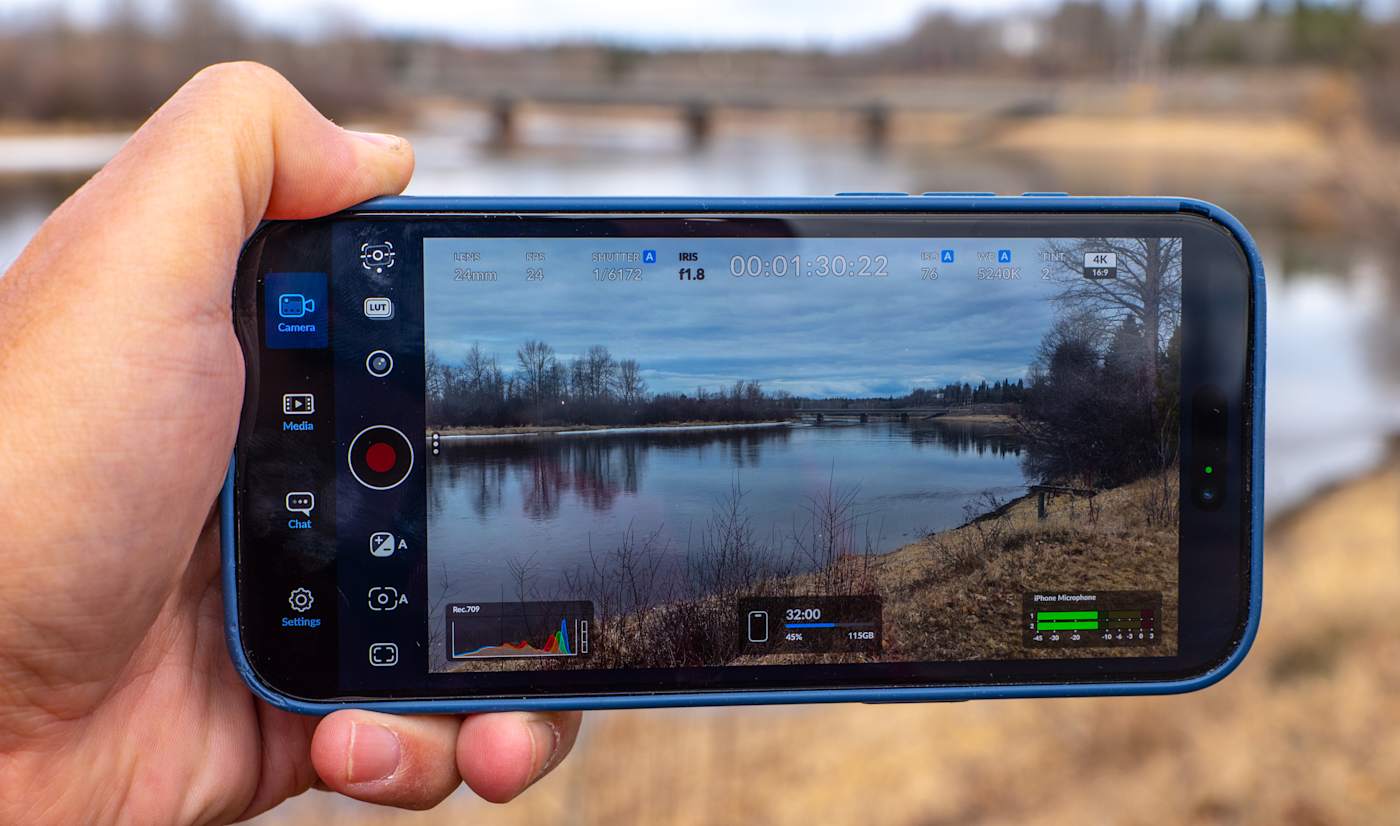
Blackmagic Camera is one of the more powerful third-party smartphone camera apps available and it's now even more useful for solo creators. Blackmagic Design just announced that the latest iOS version 3.3 now supports Apple Watch, letting you control the app and monitor video remotely from your wrist. It also includes ATEM camera control so you can use your iPhone as a live studio camera.
With the new Camera Apple Watch companion app, you can remotely control and monitor your iPhone from anywhere within Wi-Fi range. It lets you start and stop recording, control zoom and adjust settings like frame rate, shutter speed (angle), white balance and ISO with a tap. You can also see a view of your video for framing control, though a Watch screen is probably a bit too small to accurately check focus.
The Watch app will benefit solo creators who want to mount their iPhone on a tripod to record standup or vlogging activities. To set it up, you install the Watch app through your iPhone and it will automatically connect and sync to your device.
Use your iPhone as a broadcast camera? Sure, why not
Blackmagic Design
The other key feature is iPhone control from Blackmagic's ATEM Mini switcher used by streamers and broadcasters. To use it, you need the $420 Blackmagic Camera ProDock that gives your iPhone 17 Pro or iPhone 17 Pro Max an HDMI output, timecode, USB-C and other ports. Blackmagic Camera now lets you connect a single HDMI cable from the ProDock to an ATEM Mini switcher, then adjust settings, trigger recording, focus and zoom. It also offers a DaVinci primary color corrector so you can match and create digital film looks during live production.
Finally, Camera now supports Blackmagic's "Focus and Zoom Demand" controls (a knob and handle) designed for broadcast cameras. When those controls and an iPhone 17 Pro/Pro Max are connected via USB-C to a ProDock as shown above, you can zoom and focus Camera app video without taking your hands off the tripod handles. Together with the ATEM feature, it lets you use an iPhone as a full broadcast camera, which looks slightly weird but is pretty cool.
On top of those features, Blackmagic Design also added ProRes RAW stabilization and general bug fixes and improvements. Blackmagic Camera for iOS 3.3 is available now as a free download from the Apple App Store.
This article originally appeared on Engadget at https://www.engadget.com/apps/blackmagic-camera-for-ios-now-has-a-companion-watch-app-194529980.html?src=rss
Fresh off the box office success of Project Hail Mary, Amazon MGM Studios has announced its theatrical release lineup for the next year. Most of the titles aren't likely to hit the highs of the Ryan Gosling starrer which has grossed $515 million in theaters. However, there are a number of promising releases like Spaceballs: The New One and Highlander starring Henry Cavill, both sequels to '80s films. Another is The Sheep Detectives with Hugh Jackman, the trailer for which has been a hit on YouTube.
Earlier this year, Amazon MGM promised to release up to 14 films in theaters over the next year and leave them to run for as long as 45 days — a far cry from its previous policy of releasing just a few films for several weeks at most. That strategy is paying off so far. "Four months. Four films. Over $670 million at the box office. And we have nine more on the way,” said Amazon MGM's head of domestic theatrical distribution, Kevin Wilson.
The company said that it's not about volume, but impact. "We are building films that give audiences a reason to leave the house. Films with scale. Ambition," Wilson said. Looking at the slate, though, some of those films are likely to be hits and some not so much.
First up is The Sheep Detectives set to arrive on May 8th. You may scoff at the title, but the trailer has racked up 20 million views and mainly positive comments. It looks like fun, family-friendly fare and stars a popular actor, so one could easily see this being a hit for Amazon MGM.
Masters of the Universe is next up on June 5, 2026. "Director Travis Knight brings the world of Eternia to life on a massive scale with stars Nicholas Galitzine, Camila Mendes, and Idris Elba," Amazon explains. The film is based on the Mattel toy franchise and animated series so again, it could be another magnet for kids and their nostalgic parents.
How to Rob a Bank is a heist comedy with a solid cast including Nicholas Hoult, Zoë Kravitz, Anna Sawai, Pete Davidson, and John C. Reilly, set to arrive on September 4. That's followed by Verity (October 2, 2026) based on the Colleen Hoover novel and Peter Farrelly's I Play Rocky Sylvester Stallone biopic about the production of the 1976 film Rocky.
2027 starts with the The Beekeeper 2 (January 15) starting Jason Statham, followed by The Thomas Crown Affair (March 5, 2027) directed by and starring Michael B. Jordan. Spaceballs: The New One, a sequel to the classic Mel Brooks movie arrives on April 23, 2027 with Rick Moranis, Josh Gad, Keke Palmer, Lewis Pullman, Daphne Zuniga, Bill Pullman, and Mel Brooks.
Other films expected but without release dates yet include The Chosen: Crucifixion, A Colt is My Passport, Your Mother Your Mother Your Mother and Highlander starring Henry Cavill based on the 1986 cult classic.
This article originally appeared on Engadget at https://www.engadget.com/entertainment/amazon-mgms-2026-theatrical-slate-includes-highlander-and-spaceballs-the-new-one-094505690.html?src=rss
OpenAI has closed a yawning gap in its ChatGPT subscription pricing with a new $100 per month Pro plan that slots between the $20 per month Plus plan and $200 per month Pro plan. Offering five times more Codex than the $20 option, it appears designed to challenge Anthropic's $100 per month Claude option. "Compared with Claude Code, Codex delivers more coding capacity per dollar across paid tiers," an OpenAI spokesperson told TechCrunch.
So what's the difference between OpenAI's two Pro plans? The $200 version does offer four times the Codex. However, you get the same advanced tools and models with $100 plan, according to OpenAI's product page. To encourage users to jump in, it will offer double the Codex for a limited time, or 10 times what you get with the Plus plan.
Users have been screaming for such a plan for a while now, according to posts on OpenAI's developer community forums. "The Plus plan will continue to be the best offer at $20 for steady, day-to-day usage of Codex, and the new $100 Pro tier offers a more accessible upgrade path for heavier daily use," OpenAI said in a post on X.
With the launch of GPT 5.2 late last year and GPT-5.3-Codex in February, OpenAI significantly boosted the speed and reasoning capabilities of Codex, giving developers a tough choice between ChatGPT and Claude Opus. However, the sticking point for many power users was ChatGPT's $200 per month price — so OpenAI no doubt hopes the new plan will convince those on the fence to switch.
This article originally appeared on Engadget at https://www.engadget.com/ai/openai-has-a-new-100-chatgpt-pro-plan-to-better-match-up-with-claude-062705626.html?src=rss
07 March 2026, Bavaria, Munich: The logo of the ChatGPT app can be seen on the display of a smartphone in Munich (Bavaria, Germany) on March 7, 2026, while a finger taps on the application's icon. ChatGPT, also known as Generative Pretrained Transformer (GPT), is a state-of-the-art AI chatbot (Artificial Intelligence, Chatbot, Large Language Model, LLM) developed by the software company OpenAI. It uses advanced machine learning algorithms to generate human-like responses to a seemingly limitless range of queries. (company, symbol, icon, pointing finger, symbol image, symbol photo, illustration, symbolic photo, illustrative photo, theme image, general image, theme photo) Photo: Matthias Balk/dpa (Photo by Matthias Balk/picture alliance via Getty Images)
This year at CES 2026 everybody was pretty confused about the new "Micro RGB" and "RGB Mini LED" TVs that use similar technology but carry different names. Now, Sony has come up with another label for its own Mini LED TVs with RGB backlighting: True RGB. The idea is to emphasize that the individual red, green and blue LED backlights allow for "purer color, greater brightness, and the largest color volume ever achieved in Sony’s home TV history," the company said.
To be clear, this is not some new technology that Sony just came up with — it's the same Micro RGB tech we saw earlier this year from Samsung, LG, HiSense and others. These TVs use pure red, green and blue LED backlights along with an LCD layer (rather than solid blue LEDs and quantum dots like Mini LED TVs) to produce the final picture. This display tech is supposed to deliver better color accuracy and more brightness than regular Mini LED TVs. (It's not the same as OLED tech, in which each pixel acts as a light source.)
Sony's True RGB backlight tech (right) compared to current Mini LED TVs
Sony
However, Sony says that the way it processes the image makes its True RGB TVs stand out from rivals. To control the LEDs more precisely, it borrowed algorithms from its wildly expensive professional reference monitors. That supposedly allows for more precise color control and higher brightness that allow movies and series to look more like the creators intended. It also reduces the "blooming" that occurs when light leaks into neighboring pixels, while improving color accuracy when viewing the TVs from an angle.
Every TV maker claims to have the best technology, but Sony has a lot of credibility due to its history with cinema cameras, Hollywood productions and reference monitors. We'll have to wait until spring this year to see the new Bravia True RGB TVs for ourselves, but prior to that, the company has promised to release "additional details" about them in the near future.
This article originally appeared on Engadget at https://www.engadget.com/home/home-theater/sony-teases-its-next-gen-true-rgb-mini-led-tv-technology-064732375.html?src=rss
Apple has run into "more issues than expected" with its foldable iPhone that may set back its release, according to Nikkei. The engineering problems reportedly cropped up during the device's early test production phase and may delay first shipments by months, according to multiple sources briefed on the matter. However, a separate report in Bloomberg refutes the gist of Nikkei's claims.
"The current situation could put the mass production timeline at risk," one of Nikkei's sources said. "April will mark a crucial stage of the engineering verification test, and this month till early may is extremely critical." Component suppliers have supposedly been notified that the foldable iPhone's production schedule will be delayed, and Apple is working to address the problems.
In a separate article inBloomberg, however, the usually reliable Apple reporter Mark Gurman wrote that the device is still on track for a September 2026 release. "The company is scheduled to introduce the foldable model in September alongside the iPhone 18 Pro and Pro Max, said the people, who asked not to be identified because the plans haven’t been announced," according to the report.
The complexity of the foldable iPhone's display and other components may "limit initial supply for several weeks," but Apple plans to put it on sale at the same time or shortly after the other non-foldable devices, Gurman wrote. That said, the timing isn't final and issues could still crop up ahead of production. Engadget has reached out to Apple, but so far the company has declined to comment on either the Bloomberg or Nikkei reports.
A foldable iPhone has been rumored since 2017, and Apple's biggest rival, Samsung, released its first one back in 2019. According to multiple sources, Apple was aiming to launch its debut foldable iPhone in fall 2026 alongside the iPhone 18. However, as we detailed in an explainer last month, "the project could slip into 2027 if Apple runs into manufacturing or durability issues, particularly around the hinge or display."
Apple was reportedly prioritizing the foldable iPhone and other premium models for its September event this year due to constrained supplies of components like memory chips. "Apple and the supply chain are working under a pressured timeline and the current solutions are not enough to completely solve the engineering challenge... more time is needed," Nikkei's source stated.
The problems reportedly arose during Apple's production verification tests. That's the fourth of six steps the company's new products must go through before shipping, prior to the key pilot production and mass production phases. Since the foldable would be an all-new design, it would likely need to pass each stage with flying colors before proceeding to the next.
Though likely to account for less than 10 percent of iPhone production, the foldable will be a key product for Apple designed to boost interest in iPhones across its range. Apple reportedly plans to produce seven to eight million of the devices initially, Nikkei reported. Apple has yet to announce the device.
Update April 7, 2026 at 3:02 PM ET: The article has been updated with information from Bloomberg's Mark Gurman stating that the foldable iPhone is still on schedule for a September 2026 launch.
This article originally appeared on Engadget at https://www.engadget.com/mobile/smartphones/apples-foldable-iphone-may-be-delayed-due-to-engineering-snags-073813890.html?src=rss
SHENZHEN, CHINA - MARCH 24: A delivery worker carrying takeout walks while looking at a smartphone past an Apple Store featuring an iPhone 17 advertisement inside a shopping mall on March 24, 2026 in Shenzhen, Guangdong province, China. Apple continues to promote its latest smartphone lineup in China as competition in the consumer electronics market remains intense alongside the growth of app-based delivery services. (Photo by Cheng Xin/Getty Images)
Every now and then, I test a gadget so wild that I can’t believe a company actually made it. Soundcore’s $5,000 Nebula X1 Pro projector is the embodiment of that: an ultra bright projector and a 400-watt Dolby Atmos 7.1 speaker system combined in a massive enclosure. With a fast and flexible setup, it lets you screen movies or watch sports nearly anywhere.
It’s not just a projector crammed into a big speaker system, though. Everything is elegantly integrated and setup is nearly automatic, thanks to the clever design and motorization. The weight and price are the biggest strikes against it, but if you can afford it, and love hosting movie nights, the Nebula X1 Pro is one of the coolest devices you can buy.
Design
Made by Anker sub-brand Soundcore, the Nebula X1 Pro has a professional-looking enclosure housing a Nebula X1 laser projector and five speakers — a subwoofer, two front satellites and two rear satellites. With all that crammed in, the projector is big and heavy at 30 inches high and 72 pounds. Fortunately, it has a pair of wheels on the back and a telescoping handle so it’s easy to roll from room to room or dolly outside. Good luck carrying it up a set of stairs or unloading it from a vehicle by yourself, though.
Steve Dent for Engadget
Soundcore made the Nebula X1 Pro as outdoor-friendly as possible, with IP43 and IP54 ratings on the body and speakers, respectively, to withstand short periods of rain. If you want to use it away from home, the company sells optional kits with a 200-inch inflatable screen or an Anker Solix C1000 battery that can power it for several hours.
The four wireless satellite speakers have seven horizontal and four overhead channels, and the two-speaker subwoofer is inside the main enclosure. The rear speakers pop out of a spring-loaded storage dock with a light press, same for the telescoping speaker legs.
The front satellite speaker docking system is even more slick. To release them, you press a button on top and they fold out of the side via a motorized system. You can either leave them there or detach them at the touch of a button. All speakers can be charged externally over USB-C or inside their docks. They have eight hours of battery life, though I found the bigger front ones held a charge for slightly longer than that.
The X1 Pro also includes a pair of high-quality Soundcore wireless microphones for DJ-ing or karaoke, tucked under the top panel. Those feature AI vocal removal from songs, one-touch reverb and 40 hours of battery life — everything you need for a karaoke party.
There’s only a single HDMI 2.1 port at the back (which is odd considering that the Nebula X1 has two) with eARC support for Dolby Atmos sound. It also comes with two USB-C ports for external file playback, charging and a PC connection. Lastly, the power cable is retractable, which is another nice design touch.
Features
Steve Dent for Engadget
I also reviewed the Nebula X1 projector that's inside the X1 Pro, but here’s a summary in case you missed it. The projector uses Soundcore’s proprietary “LaserForge 2.0” liquid-cooled, triple-laser engine that beams a bright, color-accurate image with very little fan noise (26 db). It promises high native contrast thanks to the 6-blade dynamic iris and NebulaMaster 2.0 image engine. The 0.9:1 to 1.5:1 optical zoom lens allows for flexible installation and employs 14 high-quality, long-lasting glass elements.
The X1 Pro uses the same 0.47-inch DLP chip found in many other projectors (and not the bigger, better 0.67-inch chip coming soon in XGIMI’s Titan Noir). The lasers are beamed through a color phosphor wheel twice to achieve excellent 90 percent color and brightness uniformity across the screen.
The projector’s motorized gimbal tilts 25 degrees upward so you can position it well below the screen. The “spatial adaptation” feature scans the projection area then beams the final image to precisely fit the screen or wall. It worked nicely for me, though overhead lights or other obstacles can throw it off. The projector can adapt to ambient light and the wall color, and another function called Spatial Recall lets you save all your settings for later.
Once I detached them, the speakers paired automatically to the X1 Pro over 5.8Ghz Wi-Fi with no difficulty. I placed them around the room to maximize soundstage, then the Nebula X1 Pro’s “Flexwave” tech used a built-in four-mic array to detect their positions and calibrate the audio. I was seated off to the side, so I used the “smart sweet spot” feature to drag the center point toward my position for optimal sound balance.
Google TV is included, offering a large library of streaming apps and an easy-to-use projector control interface via the included remote (tucked into the top so you hopefully won’t lose it). You get Netflix’s official app with support for 4K Dolby Vision and Dolby Atmos, plus the X1 Pro has Chromecast support and Google Assistant for voice control. The interface can occasionally be sluggish, though Soundcore has improved its latency since I tested the Nebula X1.
Image quality
Steve Dent for Engadget
Even after testing other high-end projectors including Valerion’s VisionMaster Max, the Soundcore Nebula X1 Pro is still the brightest and sharpest I’ve seen. The company’s luminosity claim is accurate; I measured 3,514 ANSI lumens in “Standard” mode from the center of the screen and 3,310 in the cinematic “NebulaMaster” mode. It can output a whopping 4,175 lumens in Conference mode, albeit with a heavy blue color cast.
That brightness allowed me to comfortably watch content on a sunny day with the shades up. The X1 Pro also offers high dynamic contrast up to 56,000:1, aided by the automatic iris and NebulaMaster image engine, which also keeps the image from washing out in daytime conditions.
When used in more ideal dark conditions, the image was bright, sharp and incredibly color accurate. Soundcore claims 110 percent coverage of the challenging BT.2020 HDR color space (with a Delta E less than 0.8), putting the X1 Pro in elite company with a few select models from Samsung, Hisense and a few others. I measured around 94 percent BT.2020 coverage in ISF mode, which falls short of the company’s claim but is still impressive.
The high color accuracy meant that the TV series and movies I watched like Iron Man 2, Dune 2, Andor and F1 looked beautifully cinematic. If the colors aren’t quite to your liking, you can make fine adjustments manually. Like other 4K projectors with a 0.47-inch DLP chip, the X1 has a slight amount of light spill around the edge of the screen, but it’s only noticeable when the projected image is particularly dark.
With HDMI 2.1 the Nebula X1 Pro supports 4K 120 fps sources, but can only display 4K at 60 fps. Because of that, and the relatively high input lag, it’s not ideal for gaming.
Audio
Steve Dent for Engadget
The 400-watt audio setup is what elevates the Nebula X1 Pro above its rivals. Thanks to their Wi-Fi connectivity, the satellites have a latency of just 25 milliseconds, compared to 150 milliseconds or more for typical Bluetooth speakers. That keeps sound and picture perfectly synced, something that can be a problem with other wireless speaker setups.
The X1’s two internal subwoofers can pump out sound as low as 38Hz at up to 87 decibels. That allowed for the loud and punchy (but not boomy) bass I love for action movies like Spider-Man: No Way Home and Once Upon a Time in Hollywood. At the same time, that bass is clear and subtle for less bombastic films like Eternal Sunshine of the Spotless Mind. To avoid vibrating the projector, the subwoofer is mounted on a suspension system, and I found it didn’t affect the picture even during loud scenes.
With the four wireless speakers spread around a big room, I got an outstanding soundstage with Dolby Atmos-supported content including Star Wars: A New Hope and The White Lotus:Season 3. The speakers delivered crisp and accurate highs, while the dedicated front voice drivers let me hear even soft dialogue, though midrange sound could occasionally be a bit tinny. It faithfully reproduced tricky film soundtracks like Lord of the Rings: The Two Towers and did justice to the industrial metal and symphonic music in The Matrix. Yes, you’d get better sound from a dedicated high-end 7.1 Dolby system, but with far more setup hassle and zero portability.
Wrap-up
Steve Dent for Engadget
Soundcore’s Nebula X1 Pro is a home theater marvel that’s so well-designed almost anyone can set it up. By integrating one of the best triple-laser projectors with a 400-watt Dolby Atmos 7.1.4 surround system, and then putting all of that on wheels, you can enjoy an immersive cinema experience nearly anywhere.
This Nebula X1 Pro has no true rivals, but competitors with similar projectors (but no sound systems) include the Valerion VisionMaster Max and XGIMI Horizon 20 Max, both triple-laser systems with comparable brightness and color accuracy. Once you add an audio surround system, though, you’ll be spending the same amount and won’t get the X1 Pro’s convenience and portability.
The catch, of course, is the $5,000 price. However, if you have the money and want the ultimate home theater experience that’s portable and easy to use, Soundcore’s beastly Nebula X1 Pro is actually a good deal.
This article originally appeared on Engadget at https://www.engadget.com/home/home-theater/soundcore-nebula-x1-pro-review-the-king-of-party-projectors-010018484.html?src=rss
Google's $20 per month AI Pro plan, which includes Gemini, Veo and Nano Banana, got a big storage boost and some other new perks. Users of the plan (also available for $200 per year) will see their cloud space jump from 2TB to 5TB at no extra cost. That extra storage can be used not only for AI but also Gmail, Google Drive and Google Photos backups.
Gemini can now pull context from Gmail and the web for Drive, Docs, Slides and Sheets, provide summaries for your Gmail inbox and proofread emails before you send them. It's also introducing additional agentic help with Chrome auto browse "that handles those tedious, multi-step chores — like planning a trip or filling out forms," Google VP Shimrit Ben-Yair wrote on X.
Finally, Google announced that it's bundling its Home Premium subscription into AI Pro, a perk that usually costs $10 per month by itself. The storage and extra features are now available for new and existing subscribers. You may not see the benefits appear in your plan yet but it's definitely not an April Fool's joke, Ben-Yair assured X commenters.
This article originally appeared on Engadget at https://www.engadget.com/ai/googles-20-per-month-ai-pro-plan-just-got-a-big-storage-boost-044502621.html?src=rss
After releasing DLSS 4.5's Super Resolution feature earlier this year, NVIDIA has released an update with DLSS 4.5 features designed to boost frame rates on RTX 50 series cards. Those include DLSS 4.5 Dynamic Multi Frame Generation and DLSS 4.5 Multi Frame Generation 6X. With those, NVIDIA is promising the "smoothest path-traced gaming yet" to unlock the potential for high-refresh 4K 240Hz OLED gaming displays, or 1080p and 1440p monitors at 360Hz and beyond.
The first feature, DLSS 4.5 Dynamic Multi Frame Generation, is like an "automatic transmission" for your RTX 50 series card, NVIDIA said. Rather than multiplying the frame rate by a fixed amount, the AI-powered feature changes it dynamically to strike a balance between refresh rate, image quality and responsiveness. To optimize computing power, it ensures that a game's frame rate doesn't exceed your monitor's native refresh rate, so you won't play at 240 fps on a 120Hz monitor.
The other key feature, Multi Frame Generation 6X, is designed to deliver even higher levels of performance. Based on NVIDIA's second-gen transformer model, along with frame pacing and image quality improvements, the feature boosts the maximum multiplier to 6X, generating up to five extra frames for every natively rendered frame on GeForce RTX 50 series GPUs. That will boost 4K frame rates up to 35 percent "with minimal impact to responsiveness," NVIDIA wrote.
As with Super Resolution, the native frame rate of a game is not accelerated by these features. Rather, the DLSS 4.5 feature uses AI to create interpolated intermediate frames the machine "thinks" should be there. Normally this works fine, but the scheme can create odd artifacts in certain types of scenes, particularly with fine details like rain, hair and phone wires.
Still, the tech allows for smoother gaming with a minimal increase on your GPU's burden. It's now available for NVIDIA RTX 50 series cards, and as NVIDIA announced earlier, there are a number of games supporting the MFG features. Those include 007 First Light (May 27th), CONTROL Resonant, Directive 8020 (May 12th) and Tides of Annihilation.
This article originally appeared on Engadget at https://www.engadget.com/gaming/pc/nvidias-dlss-45-multi-frame-generation-tech-is-now-available-to-boost-your-hz-130035249.html?src=rss
 Anmelden