❌

Normale Ansicht

A comet gets destroyed by the sun, data centers endanger the Potomac River, and more science news

The Artemis II astronauts are settling back into life on Earth, but we're not quite tired yet of hearing about their amazing journey. There's a new PBS documentary now streaming on YouTube that dives into the Artemis program and the latest efforts to send humans to the moon again. Also this week, NASA shared some awesome images of a comet flying into the sun, the nonprofit American Rivers released its annual report on the most endangered rivers in the US and ESA posted a throwback image of Mars to highlight some interesting changes down on the surface. Here are the science stories that caught our attention this week. 

A comet grazes too close to the sun

Earlier this month, a recently discovered comet made a close approach to the sun — but it couldn't handle the heat. NASA has shared incredible images of the encounter that took place on April 4, showing the comet exploding into dust as it swings around our star. As NASA notes in a social media post, this was "its first and last observed flyby of the Sun."

The comet, C/2026 A1 (also known as MAPS) was first spotted on January 13 of this year. As it neared the sun, it was observed by a slew of instruments: NASA and ESA's SOHO (Solar and Heliospheric Observatory) spacecraft, NASA's STEREO (Solar Terrestrial Relations Observatory) and NASA's PUNCH (Polarimeter to Unify the Corona and Heliosphere). This allowed for views of its passage from multiple angles. Seen in a narrow-field coronagraph view captured by SOHO, the comet appears to plunge directly into the sun. But, the wide view from NASA's STEREO shows it actually swinging closely around the sun before breaking apart. 

🧵2/4

This close-up coronagraph view from NASA/ESA’s SOHO spacecraft shows comet C/2026 A1 (MAPS) approaching the Sun on April 4.

After the comet passes behind the disk, only a cloud of dust emerges. pic.twitter.com/PbkzqPnZ5F

— NASA Solar System (@NASASolarSystem) April 16, 2026

MAPS was one of a family of comets aptly called Kreutz sungrazing comets, and according to Karl Battams, the principal investigator for SOHO’s coronagraph, its destruction occurred likely several hours before what would have been its closest approach. 

Potomac named most endangered river in the US

The nonprofit conservation organization American Rivers has released its 2026 report on the most endangered rivers in the country, and data centers play a major role in the status of its top pick. According to American Rivers, the Potomac River is the most endangered in the US due both to the threat of sewage pollution from aging pipe systems and the "unprecedented surge in data center development" in its vicinity. 

The Potomac River basin spans parts of Pennsylvania, Maryland, Virginia, West Virginia and Washington, DC. In January, the catastrophic failure of the Potomac Interceptor wastewater pipe in Montgomery County, Maryland dumped hundreds of millions of gallons of untreated sewage into the Potomac River and the Chesapeake and Ohio (C&O) Canal, causing bacteria levels to hit over 4,000 times the safe recreational limit at sites closest to the incident, according to the report. The Potomac Interceptor is over 60 years old, and is just one of many in the region that is at or past the 50-year service life, American Rivers notes. 

On top of that, data center development in places like Virginia and Maryland has skyrocketed, which could put a strain on local water and energy sources. Data centers also have potential to cause further pollution to the river. 

"The region currently has over 300 data centers and is on track to have a total of about 1,000 centers occupying roughly 200 million square feet of buildings — enough to cover 3,472 football fields — on an estimated 20,000 acres of land," the report explains. "These facilities pose a significant and growing threat to both water quality and water quantity, yet are being approved without meaningful transparency, regulatory review, and assessment of cumulative impacts."

The organization is calling for Congress to reauthorize infrastructure funding bills so aging systems can be upgraded, and for regulators in these states to require transparency about data centers' resource use, along with comprehensive environmental assessments before development plans are approved. 

Mars ash: then vs now

An image of a section in Mars' Utopia Planitia showing tan sand on the left side and dark, purplish ash covering the land on the right, creating a stark contrast
ESA/DLR/FU Berlin

The European Space Agency this week shared a look at how a region on Mars has changed since it was observed by NASA’s Viking orbiters way back in 1976. New images captured by ESA's Mars Express spacecraft show how dark volcanic ash has encroached upon a swath of land in an area known as the Utopia Planitia basin. If you visit the blog post, you'll find a side by side comparison of images from the two time periods.

It's a rare example of an observable change on the surface of the red planet that's occurred over such a short period of time, ESA notes. The agency explains, "The spread of the ash over the last 50 years has two possible explanations: either it has been picked up and moved about by martian winds, or the ochre dust that previously covered the dark ash has been blown away."


Before you go, be sure to check these stories out too:

This article originally appeared on Engadget at https://www.engadget.com/science/a-comet-gets-destroyed-by-the-sun-data-centers-endanger-the-potomac-river-and-more-science-news-160000714.html?src=rss

©

  •  

The new Storm Radar app is a treasure trove of data for weather nerds

The horrible winter of 2026 is behind us in New England; now we’ve moved on to the season where there’s a threat of rain basically every day. Given that, the updated Storm Radar app from The Weather Company (owners of the Weather Channel app) caught my eye. There are tons of good weather apps out there, and I’m the kind of nerd that likes to try them all, and Storm Radar feels pretty unique to me.

The main interface is, as you’d expect, your local radar. Tapping on any point of the map calls up a detailed forecast for that exact point, with data coming via The Weather Company’s “gridded forecast on demand” (FOD) system. The default view is precipitation, but there are multiple other layers you can add including temperature, cloud cover, nearby lighting strikes, wind and so forth. There are also overlays for storm cells being tracked; you can tap on those and see things like the direction, speed and range of the storm.

In addition to that standard radar view, Storm Radar has just added something called high-res single site radar. As the name suggests, it pulls data specifically from a single weather station in much greater detail than the typical radar map; The Weather Company says the standard view is based on its FOD system which uses a variety of sources, including the company’s own APIs.

The single-site radar, on the other hand, includes reflectivity data, which measures the amount of energy returned to a radar receiver from precipitation. The National Oceanic and Atmospheric Administration (NOAA) says reflectivity is “he most frequently used product by forecasters to indicate where precipitation and severe weather is occurring.” That's a level of specificity I find delightful.

Naturally, there’s some AI baked into the updated app as well. In my testing, it responds pretty clearly to natural language questions like “what’s the best time to go for a run.”There’s a more conversational element to the AI experience that should be rolling out in the coming weeks, as well.

Like the standard Weather Channel app, you can use Storm Radar for free, but its most advanced featuers require a premium subscription. $4 a month or $20 per year unlocks all of Storm Radar’s features; you can also get a Weather Channel Premium Pro subscription for $5 a month or $30 a year which includes Storm Radar as well as removing ads and providing more detailed data (like hourly forecasts for eight days rather than two). That pricing is about in line with what other weather apps are charging for premium features these days. So if the basic iPhone weather app isn’t cutting it, Storm Radar may be worth a look. It’s only on iOS for now, but it’ll eventually come to Android too.

This article originally appeared on Engadget at https://www.engadget.com/apps/the-new-storm-radar-app-is-a-treasure-trove-of-data-for-weather-nerds-133646812.html?src=rss

©

  •  

DNA building blocks on asteroid Ryugu, bacteria that eat plastic waste, and more science news

Remember when Japan sent a spacecraft to an asteroid 180 million miles away to scoop some dirt off the surface? Six years on from its arrival to Earth, that sample has yielded some insights about what may have seeded life on our planet. Read on to learn more about the latest findings, and other science news we found interesting this week.  

DNA ingredients on Ryugu

In 2020, a capsule from the Japanese space probe Hayabusa2 returned to Earth with samples collected from the surface of asteroid Ryugu, and scientists have spent the subsequent years analyzing those materials for clues about the conditions that existed in the early solar system. This week, researchers from Japan reported an exciting discovery: the Ryugu samples contain the five building blocks of DNA and RNA. The findings, coupled with those from other recent studies, could put us closer to understanding how the ingredients for life first made it to Earth billions of years ago. 

The study, published in the journal Nature Astronomy, found the nucleobases adenine, guanine, cytosine, thymine and uracil — all of which were also found in samples gathered from a different asteroid, Bennu, last year, and before that in meteorites dubbed Murchison and Orgueil. This suggests these nucleobases were widespread in the early solar system, and supports the hypothesis that carbonaceous asteroids like Ryugu and Bennu transported them to Earth, the authors explain in the paper. Ammonia was discovered in the samples as well, which may play a role in how these nucleobases formed. 

The discovery of these building blocks "does not mean that life existed on Ryugu," Toshiki Koga, the study's lead author from the Japan Agency for Marine-Earth Science and Technology, told AFP. "Instead, their presence indicates that primitive asteroids could produce and preserve molecules that are important for the chemistry related to the origin of life."

Bacteria collaborate to eat plastic waste

Researchers in Germany have identified a trio of bacteria that can digest a common plastic additive, but only when working together. The study published in the journal Frontiers in Microbiology found that a "consortium" of bacterial strains (two from species in the genus Pseudomonas and one from Microbacterium) was able to break down several phthalate esters (PAEs), which are often used to make plastic materials more flexible. These chemicals are increasingly finding their way into the environment as plastic pollution grows, and research suggests they can have harmful effects on human health and that of wildlife. 

The team focused on microbes that could be found right at home in their own lab, taking a sample of biofilm that had formed on the polyurethane tubing of a bioreactor. This sample was then incubated in a growth medium containing the PAE diethyl phthalate (DEP) as the main source of carbon and energy. They eventually ended up with a stable culture of bacteria that could break down DEP, as long as the DEP concentration didn't exceed 888 milligrams per liter, according to a press release. The consortium could gobble up all the DEP in 24 hours at 30 degrees C. It was also able to grow on the PAEs dimethyl phthalate, dipropyl phthalate and dibutyl phthalate.

The researchers identified the bacteria in the consortium through DNA sequencing, but found that they were not individually able to tackle the PAEs, suggesting they break down the chemicals through a "cooperative process" known as cross-feeding. The consortium could make for another tool in the pollution-fighting toolbox, with potential to help break down PAEs in contaminated areas or speed up the degradation of plastics that contain PAEs by making them more brittle. "This approach may also be effective in treating industrial plastic waste streams," they note. 

Hubble witnesses a breakup

Newly released images from the Hubble Space Telescope show the unexpected breakup of Comet C/2025 K1 (ATLAS) — Comet K1, for short — as it made its way out of the solar system back in November. A team of researchers that initially set out to observe a different comet ended up switching targets due to technical issues, only to catch Comet K1 right after it started crumbling. Hubble captured three 20-second images between November 8 and November 10 2025, the first of which the team estimates was about eight days after the fragmenting started. During the observation period, one of the comet's smaller pieces began to break up too. Talk about being in the right place at the right time.

"Never before has Hubble caught a fragmenting comet this close to when it actually fell apart," said John Noonan, a research professor in the Department of Physics at Auburn University, in a statement. "Most of the time, it’s a few weeks to a month later. And in this case, we were able to see it just days after." You can read more about the rare sighting here. 


Before you go, be sure to check these stories out too:

This article originally appeared on Engadget at https://www.engadget.com/science/dna-building-blocks-on-asteroid-ryugu-bacteria-that-eat-plastic-waste-and-more-science-news-150000975.html?src=rss

©

  •  

States are suing the EPA for relinquishing its role as a greenhouse gas emissions regulator

California, Massachusetts, Connecticut and New York are leading a group of 20 other states in suing the US Environmental Protection Agency for renouncing its ability to regulate greenhouse gas emissions, The New York Times reports. The lawsuit specifically argues that the EPA's decision to rescind a 2009 study that determined greenhouse gases are dangerous to public health was illegal. The study, which is the source of what's called the "Endangerment Finding," was one of several justifications — along with things like the Clean Air Act — for the agency's ability to regulate emissions.

Rescinding the finding nullified the EPA's evidence for things like emissions standards and a variety of other regulations that attempted to reduce the amount of greenhouse gases produced by the automotive, coal and oil industries. The Trump administration framed the rollback as a cost-saving measure, but it was also a major blow to the government's ability to fight climate change. Greenhouse gases, which include things like carbon dioxide, methane and nitrous oxide, collect in the atmosphere and warm the planet, upsetting weather patterns and negatively impacting the environment. Determining the changes caused by greenhouse gases posed a risk to public health gave the EPA the authority to regulate them under its existing mandate to address air pollution. An authority it could have again, depending on the result of this litigation.

Of course, winning a lawsuit isn't necessary to restore the EPA's role in fighting climate change. Congress could do that now by passing a new law. The legal route is just faster, and potentially riskier. The New York Times writes that this new lawsuit was filed in the US Court of Appeals for the District of Columbia, and could ultimately be combined with an existing lawsuit from environmental groups. Depending on how the case fairs in the lower court, it may eventually be appealed to the US Supreme Court, who could decide on an even more restrictive interpretation of the EPA's role. 

Under President Donald Trump, the EPA has already rolled back clean water rules and attempted to stifle research. The Trump administration has separately tried to undermine the authority of independent agencies like the EPA and FTC, something the Supreme Court has yet to determine to be illegal.

This article originally appeared on Engadget at https://www.engadget.com/science/states-are-suing-the-epa-for-relinquishing-its-role-as-a-greenhouse-gas-emissions-regulator-221425064.html?src=rss

©
  •  

BMW's i3 is reborn as a sporty 440 mile range EV sedan

After letting us drive a prototype around in the snow earlier this month, BMW has fully unveiled its all-new i3 electric vehicle. It's a far cry from the original funky hatch launched way back in 2013, offering more of everything including power, range and space. It also looks like you'd hope a 3-series EV would: a sporty sedan, minus the polarizing grille on the gas-powered M3. 

The i3 uses BMW's Neue Klasse platform and indeed borrows inspiration from the company's Vision Neue Klasse concept unveiled in 2023. With motors on the front and rear in the 50 xDrive configuration, along with the 800-volt electrical system, it delivers a combined 463 HP and 476 lb-ft of torque, just a touch less than BMW's G80 M3. 

BMW's i3 has been reborn as a sporty 440 mile range EV
BMW

That will make the BMW quick (the automaker didn't say how quick yet), but it will also be efficient. BMW estimates that the i3 will go 440 miles on a charge according to EPA guidelines and offer quick energy replenishment as well via DC charging speeds up to 400kW — up to 30 percent faster than its previous Gen5 tech. The battery pack will also be directly integrated into the chassis to reduce weight and increase torsional rigidity, while allowing bidirectional charging so you'll be able to use it as a battery on wheels to power your home in a blackout. 

Styling-wise, the i3 is much simpler up front with the grille and headlights incorporated as a single unit. A recess down the center of the hood draws your eye to the badge, while giving the EV muscle car allure. The side intakes add to that impression, as do the bulgy fenders, "Le Catellet Blue" metallic paint and optional lighting animations (Relaxed, Excited and Balanced).

BMW's i3 has been reborn as a sporty 440 mile range EV
Fabian Kirchbauer Photography

On the tech side, the i3 supports BMW's Digital Key Plus so you can open the doors or trunk with a smartphone or smartwatch. The interior, meanwhile, looks as futuristic as I've seen in any recent EV thanks to the 17.9-inch Panoramic Vision display that's angled toward the driver, along with an optional 3D heads-up display. The system features a self-learning voice assistant with Amazon Alexa+ AI and supports customizable themes, colors and background images. It also includes a wireless charging pad for your smartphone or other devices.

Inside, you can choose between multifunction and M Sport seats trimmed in different themes, including imitation leather in Agave Green, Digital White, Castanea or Black, or an M Design World theme in Black Veganza with M Performtex material. Alternatively, you can go for the BMW Individual scheme with real black Merino leather. For controls, BMW is using a hybrid system with physical buttons for the hazard lights and parking brake and "Shy Tech" buttons on the steering wheel that activate only when required. 

BMW will start i3 production in August 2026 and deliveries later in the fall, with pricing set to be revealed around that time. From what we've seen so far it's going to offer outstanding performance and range, but don't expect it to be cheap.

BMW's i3 has been reborn as a sporty 440 mile range EV
Fabian Kirchbauer Photography

This article originally appeared on Engadget at https://www.engadget.com/transportation/evs/bmws-i3-is-reborn-as-a-sporty-440-mile-range-ev-sedan-124614369.html?src=rss

©

© Fabian Kirchbauer Photography

BMW's i3 has been reborn as a sporty 440 mile range EV
  •  

Bill Gates-backed TerraPower begins nuclear reactor construction

The Nuclear Regulatory Commission has granted approval to TerraPower to begin construction of a reactor in Wyoming. The project is the first new US commercial nuclear reactor in about a decade, according to The New York Times. TerraPower was founded by Bill Gates, and it took years for the business to receive regulatory approval for this construction effort.

TerraPower is part of a push to create more efficient and less expensive nuclear facilities as an alternative power source, particularly as AI companies and data center construction places more demands on the US' current infrastructure. TerraPower's project involves tech it has dubbed Natrium in its planned reactor. Using this liquid sodium approach rather than a traditional light-water reactor is part of how the company aims to reduce costs and time frames.

Advocates see nuclear reactors as a way to generate power without the climate impact of coal or gas plants. Critics point to the safety risks as a severe downside to this approach, while others question whether the creation and disposal of nuclear waste counter the environmental gains. The Gates-backed operation still isn't coming in cheap. The proposed facility could cost at least $4 billion and still faces logistical challenges before coming online as planned in 2031.

This article originally appeared on Engadget at https://www.engadget.com/big-tech/bill-gates-backed-terrapower-begins-nuclear-reactor-construction-221132639.html?src=rss

©

  •  

Google claims it's building data centers that barely use any water

Google is building another data center in Texas and says this one will use "advanced air-cooling technology" to limit water consumption. Google is claiming that water use will be limited to "critical campus operations" like kitchens.

These specifics follow the previously announced two-year $40 billion investment the company has pledged in the Lone Star State. The company is also touting some 7,800 megawatts of net energy generation and capacity it has contracted with utility providers to add to the Texas grid.

The company's resource-conscious commitments come as communities nationwide are pushing back on data center construction, amid concerns that they are raising electric bills, worsening global greenhouse gas emissions and often using gargantuan amounts of fresh water. But don't worry, because OpenAI CEO Sam Altman says the water concerns are "fake" and that "it also takes a lot of energy to train a human."

A growing number of voices in tech, most notably Tesla CEO Elon Musk, have said that building data centers in space would address many of these concerns. But some experts believe the potential environmental downside could be devastating.

This article originally appeared on Engadget at https://www.engadget.com/ai/google-claims-its-building-data-centers-that-barely-use-any-water-171411965.html?src=rss

©

© Reuters / Reuters

A Google logo is seen at a company research facility in Mountain View, California, U.S., May 13, 2025. REUTERS/Carlos Barria
  •  

New York lawmakers introduce bill that aims to halt data center development for three years

On Friday, New York State Senators Liz Krueger and Kristen Gonzales introduced a bill that would stop the issuance of permits for new data centers for at least three years and ninety days to give time for impact assessments and to update regulations. The bill would require the Department of Environmental Conservation and Public Service Commissions to issue impact statements and reports during the pause, along with any new orders or regulations that they deem necessary to minimize data centers' impacts on the environment and consumers in New York.

The bill would require these departments to study data centers' water, electricity and gas usage, and their impact on the rates of these resources, among other things. The bill, citing a Bloomberg analysis, notes that, "Nationally, household electricity rates increased 13 percent in 2025, largely driven by the development of data centers." New York is the sixth state this year to introduce a bill aiming to put the brakes on data centers, following in the footsteps of Georgia, Maryland, Oklahoma, Vermont and Virginia, according to Wired. It's still very much in the early stages, and is now with the Senate Environmental Conservation Committee for consideration. 

This article originally appeared on Engadget at https://www.engadget.com/big-tech/new-york-lawmakers-introduce-bill-that-aims-to-halt-data-center-development-for-three-years-224005266.html?src=rss

©

  •  

CES: So very big, so little sustainability tech

Every third booth at CES showed off some new AI product or other. If you wanted to find a robotic lawn mower, throw a rock. Humanoid robots, smart locks and super thin TVs were everywhere. But if you went looking for sustainability products, you’re going to have to hunt a bit.

Last year, the Sustainability section at the Las Vegas Convention Center had 20 booths. This year, there were 38, but that’s in part due to the combination of the energy and sustainability categories. So exhibitors like South Korea’s largest electric utility company, a nuclear power company from the same country and lots of battery manufacturers. There was also an AI data platform booth in the section that had nothing to do with sustainability as far as I can tell. Guess the organizers just ran out of room for all the AI.

Within the sustainability section, and at other CES venues, I found a few encouraging displays of sustainable products — organizations and devices that were trying to address the multitude of problems the world is facing when it comes to energy production, climate and pollution.

But none of it quite achieved Engadget’s best of CES status this year. Some of what we saw was utility-scale, some wasn’t quite ready for consumer consumption and other stuff was too niche or had too many caveats to make the list. I won’t go so far as to say sustainability is dead at CES, because that sends me into dark downward spirals, but it’s getting sparse out there, friends.

Here are the companies I saw that had promise and innovative ideas. And gosh darn it, at least these guys are trying.

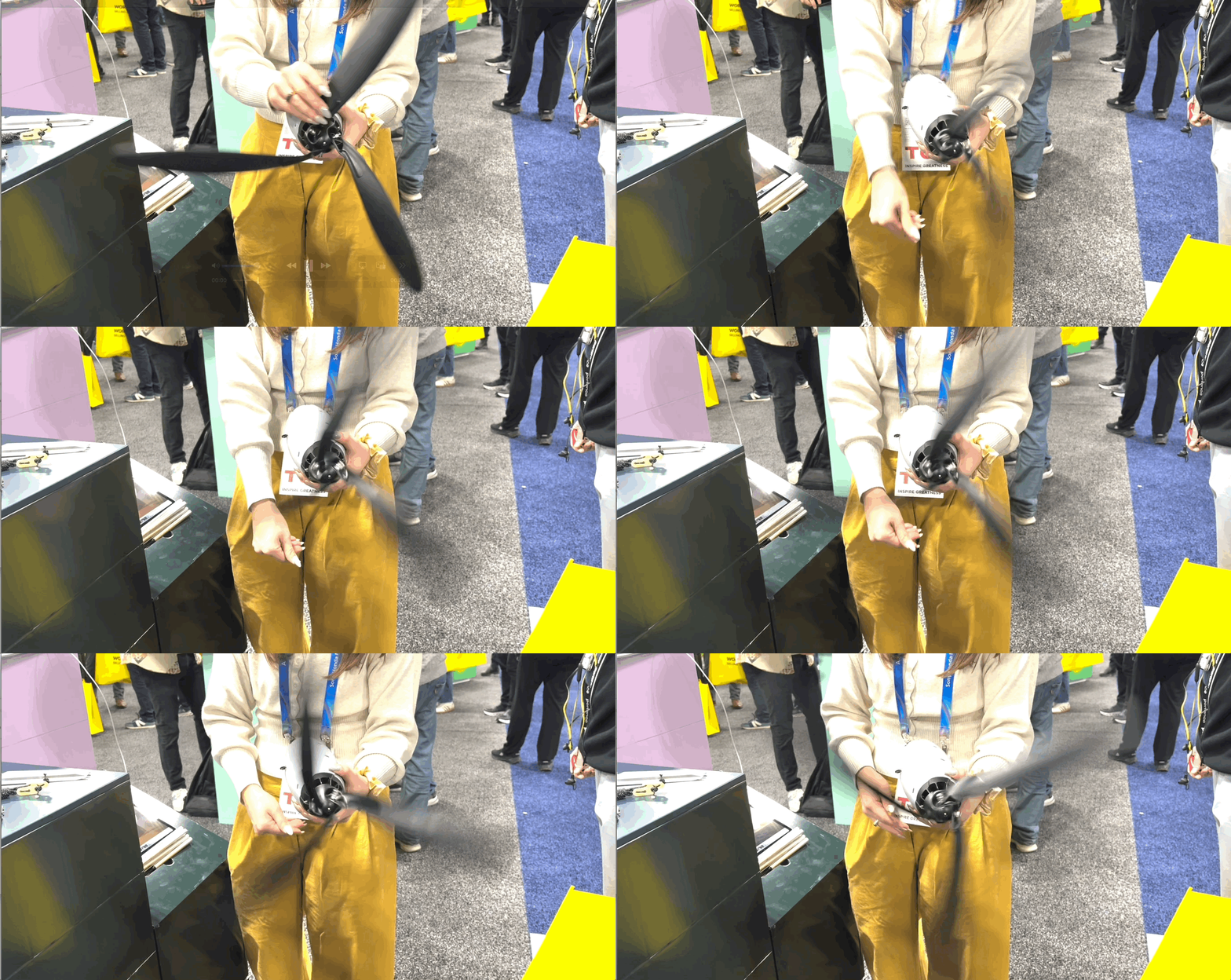
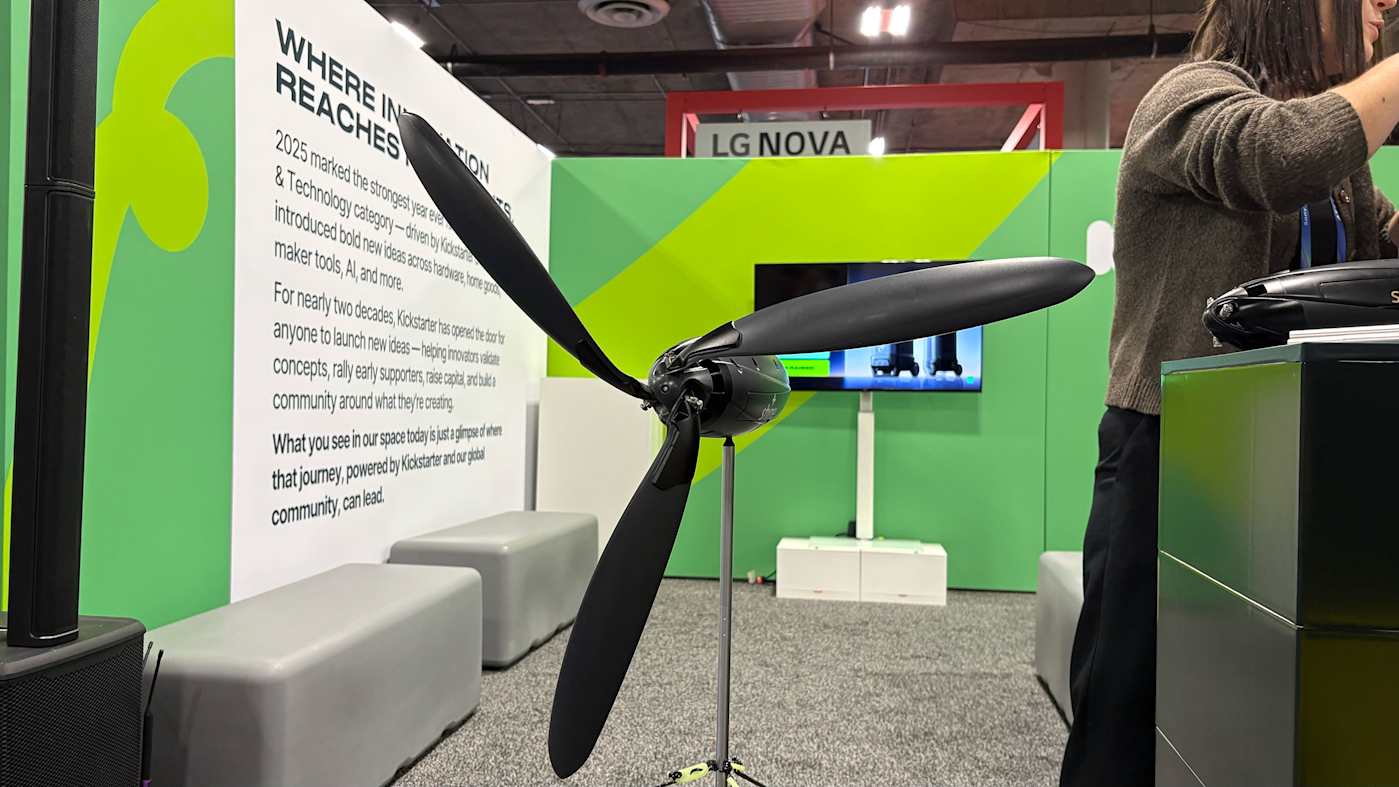
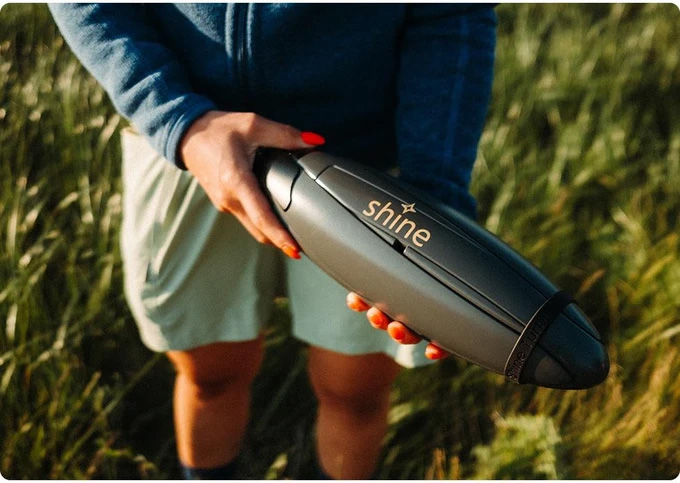
Shine Turbine 2.0

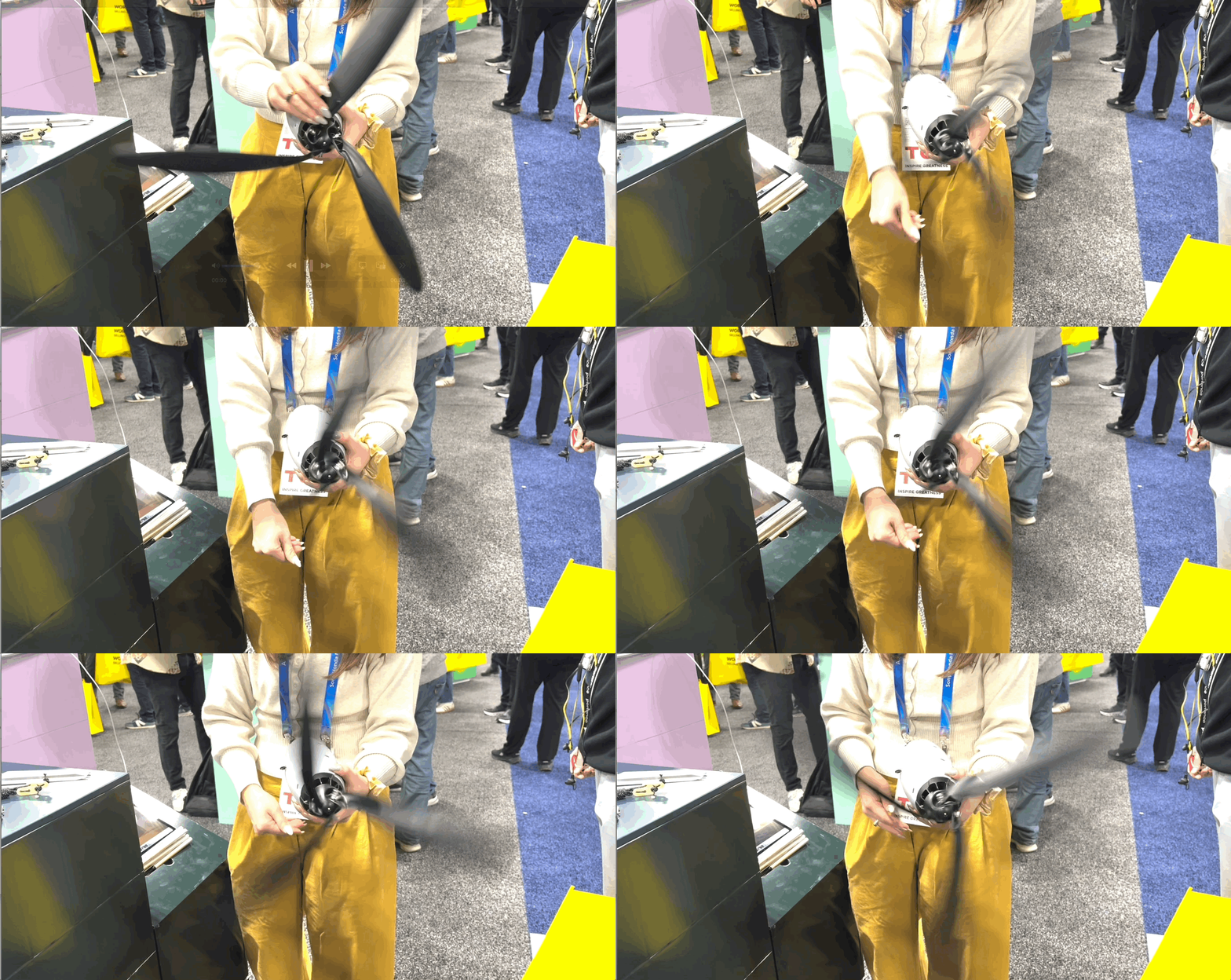
Spinning the Shine Turbine 2.0
Spinning the Shine 2.0 wind turbine
Amy Skorheim for Engadget

This little guy could be a precursor to some serious personal wind power generation. That’s where the company is heading. For now, the Shine 2.0 can use as little as a light breeze to start generating power to charge your smartphones, laptops or even a power station. The whole unit weighs three pounds and sets up in around two minutes. The second generation model can output up to 75 watts and the company is working on a third version that goes up to 100 watts for even more substantial energy production.

Learn more at Shine.

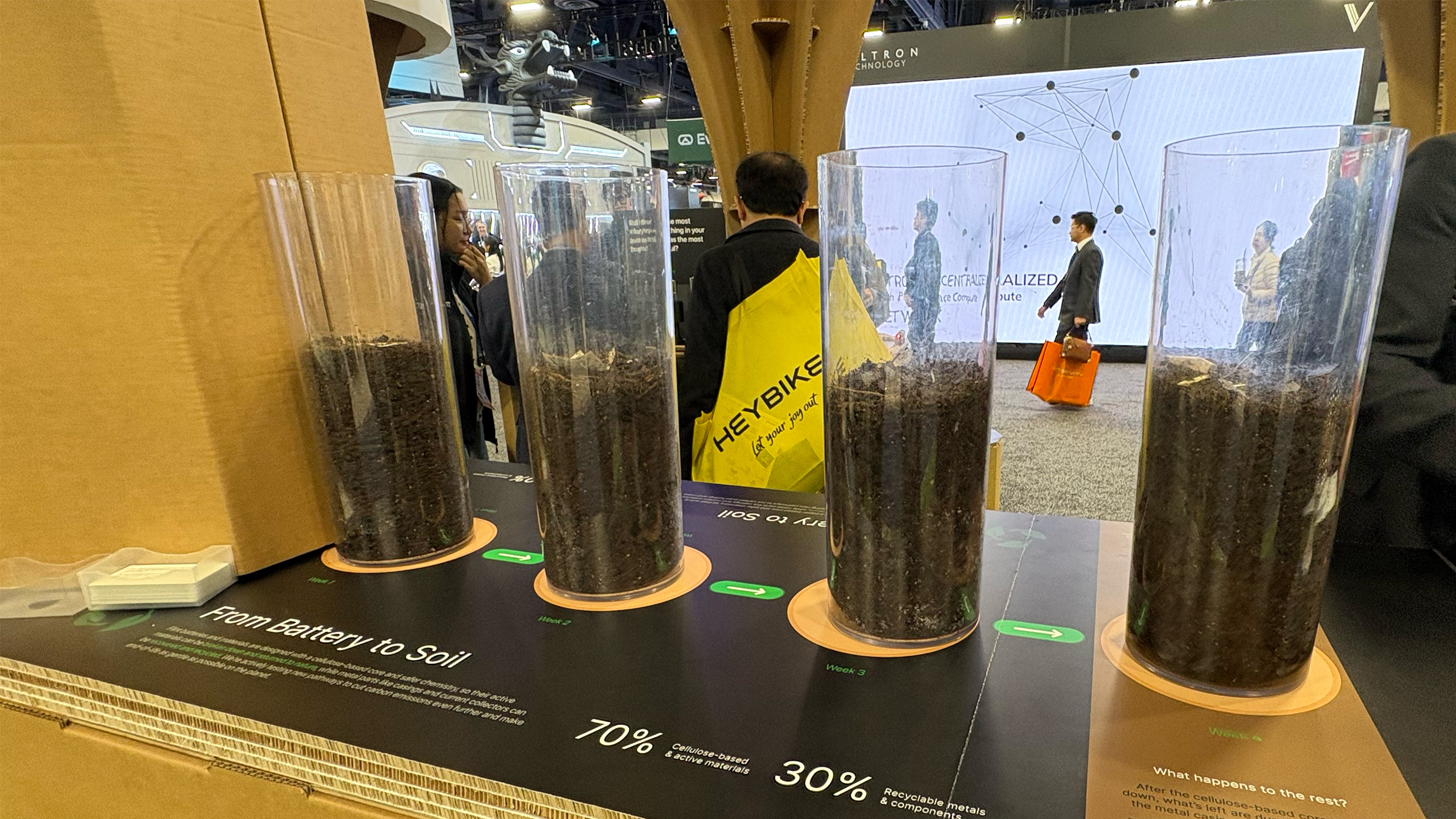
Flint battery tech

Flint batteries break down by 70 percent in four weeks in a compost pile.
Amy Skorheim for Engadget

When I approached Flint’s booth, the rep told me the company made cellulose batteries. And I thought, like paper-wrapped batteries? Nope. The chemicals inside the batteries are made from cellulose. They have a solvent-free, lithium-free, PFAS-free chemistry and break down by 70 percent in four weeks in a composting environment. They use the same basic architecture as a lithium-ion cell, with an anode, cathode and separator with ion transfers between the two. As of now, Flint is focused on partnering with manufacturers, and consumer products are on the horizon.

Learn more at Flint.

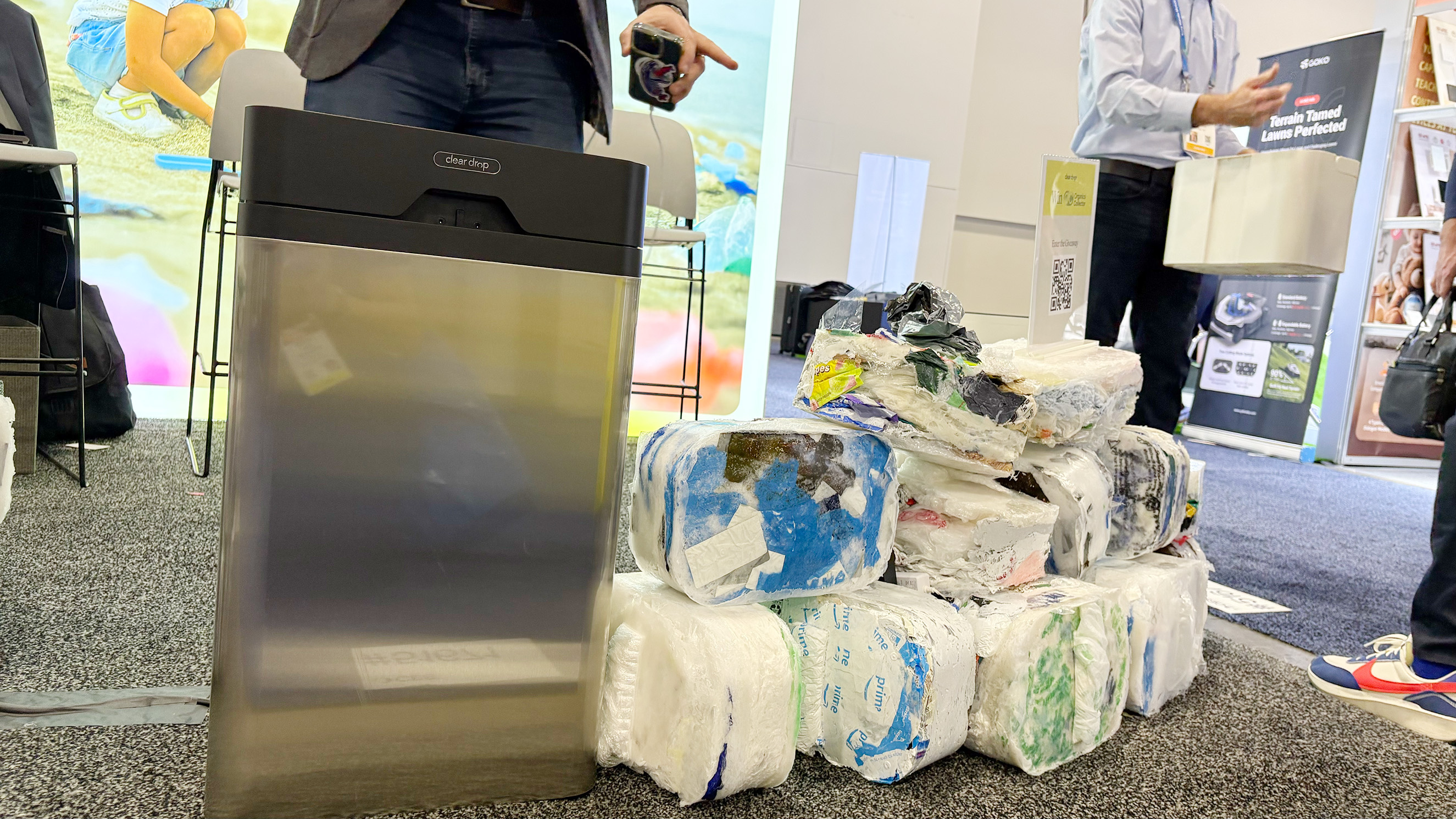
Clear Drop soft plastics compactor

The Clear Drop soft plastics compactor next to a pile of the bricks it produces.
Amy Skorheim for Engadget

The Clear Drop is a soft plastics compactor that creates eight by twelve by four-inch bricks out of hundreds of grocery bags, bubble wrap, ziplocks and plastic packaging. One brick is equivalent to a 30-pound trash bag-worth of bags. Once the brick is created, it can be shipped to one of Clear Drop’s partner facilities in a pre-paid USPS shipping envelope. They currently work with a few US-based recycling facilities and hope to one day create an infrastructure to include municipal recycling.

Learn more at Clear Drop.

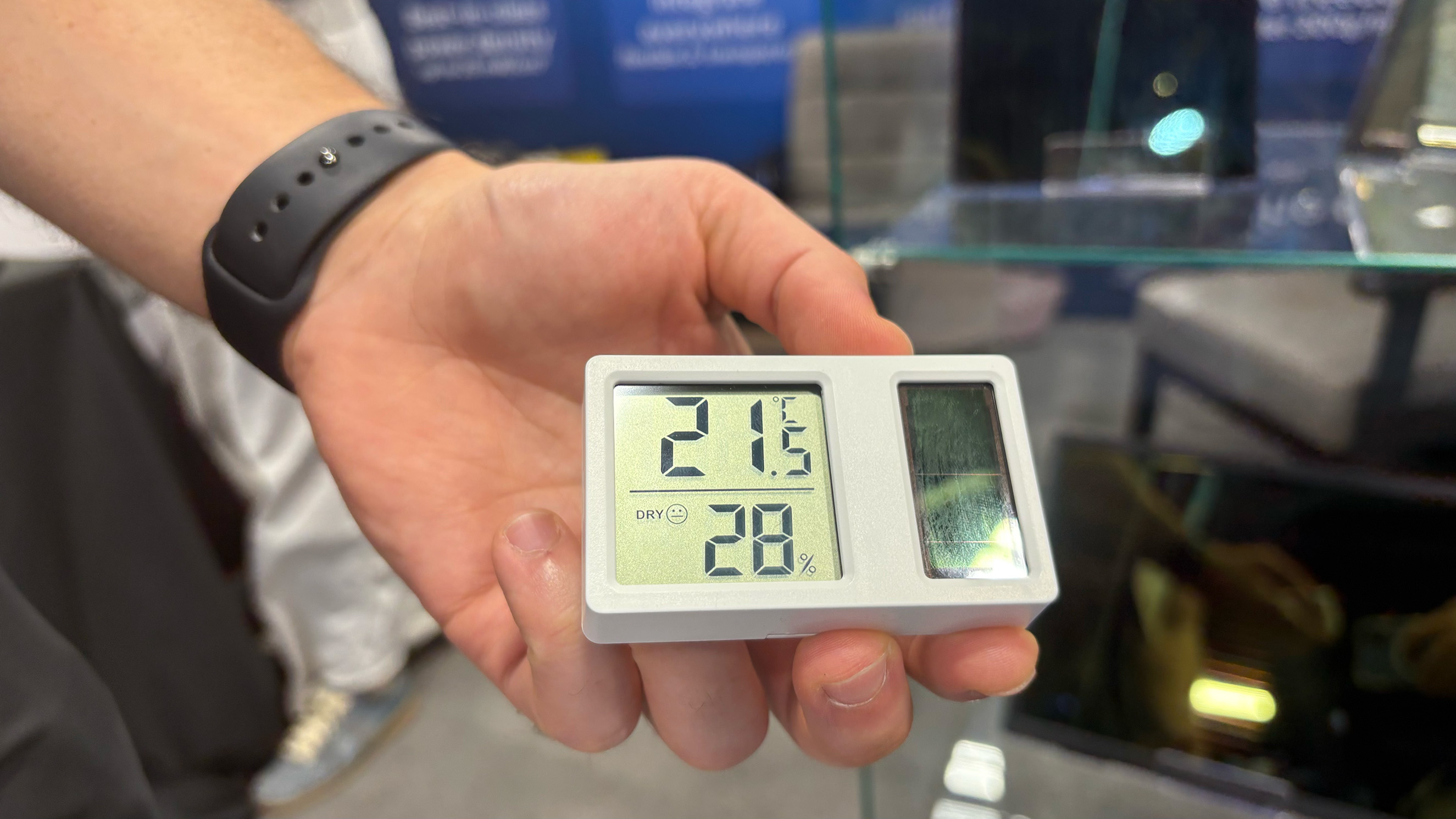
Alpha Power by CPTI

Alpha power by CPTI
Alpha power by CPTI
Amy Skorheim for Engadget

From what I’ve learned at the show, perovskite is the hottest thing in solar right now. It’s a mineral compound that’s been used to create more efficient solar panels. Some so sensitive to light that just indoor illumination is enough to create usable energy. Alpha Power by CPTI creates lightweight, flexible perovskite solar panels that can conform to multiple surfaces. Again, this is a company that’s partnering with manufacturers, so look for panels built into your laptop to charge it under the glare of your too-harsh office lights.

Learn more at CPTI.

Green Vigor

3D models of buildings using Green Vigor technology.
Amy Skorheim for Engadget

Down in the lower levels of the Venetian Expo at CES I found Green Vigor in the Hong Kong pavilion. This small company has two solutions to create energy for buildings by harnessing the potential energy from existing systems. HydroVigor generates power from water systems. So every time someone washes their hands or flushes a toilet in a building, the roof-top system generates a bit of power. CoolVigor uses the same principles to harness energy from HVAC systems. HydroVigor is currently in use in many buildings in Singapore and Hong Kong and they’re working to expand to more buildings globally.

Learn more at GreenVigor.

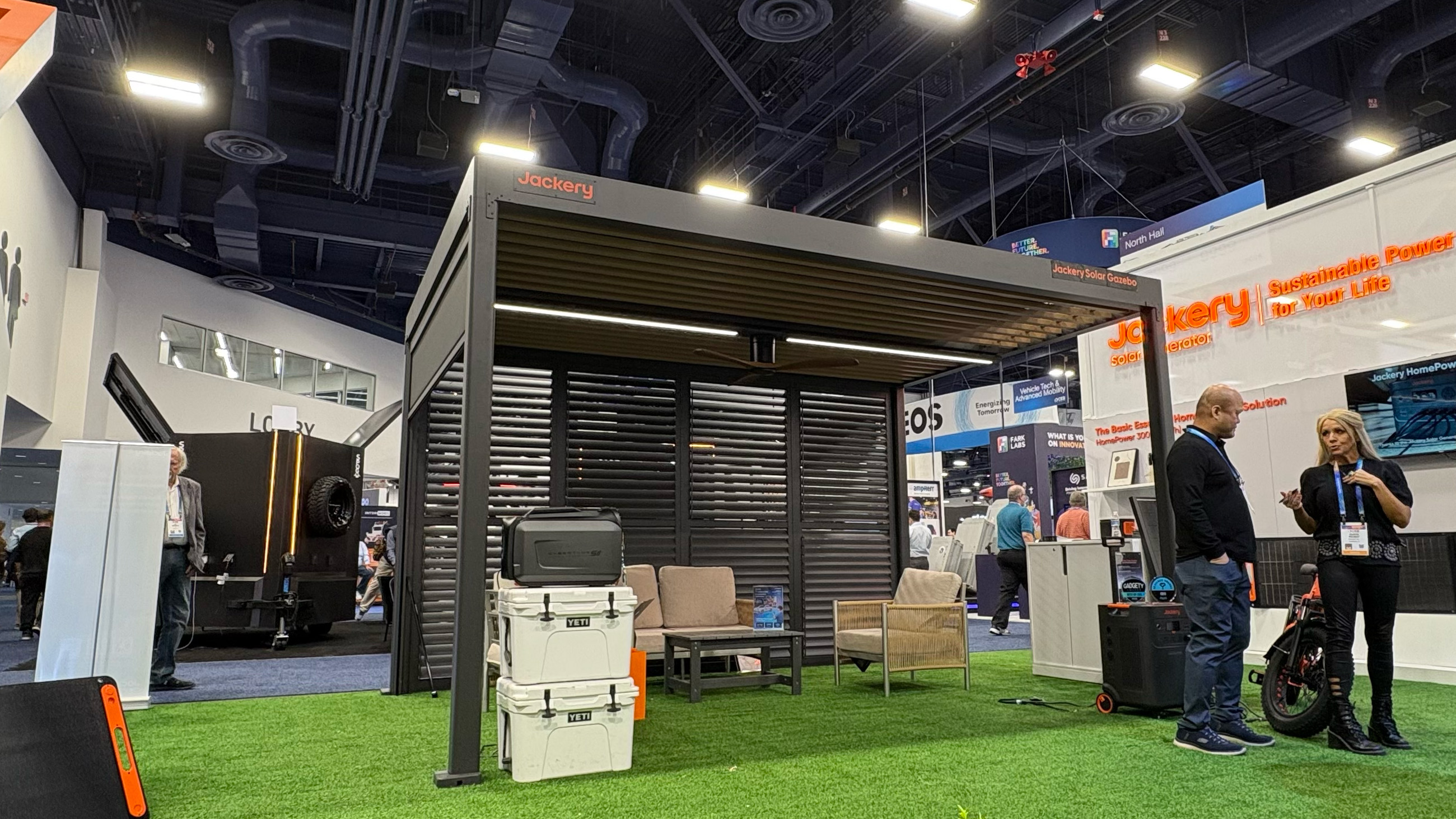
Jackery Solar Gazebo

Jackery's Solar Gazebo.
Amy Skorheim for Engadget

This outdoor hangout spot can produce up to 10kWh of power on a given day. It’s a modular design that lets you choose louvered walls, sunshades, lights and fans when you order it and the solar panels are so strong that a full-sized human Jackery rep was able to stand on a sample panel in front of me and nothing cracked (though the company officially rates it at 20 pounds of snow per square foot). You can use the power directly, tie it into your home system, feed it into the grid or hook it up to one of Jackery’s many power stations to save the power for later. The gazebo costs $12,000 and will ship in mid-2026.

Learn more at Jackery.

Bluetti RV Solar System

Bluetti's DIY RV Solar power system
Amy Skorheim for Engadget

Bluetti, like Jackery, is known for its vast lineup of portable and fixed power stations and batteries. This year, it brought a new power station made with bio-based plastic as well as a DIY system for adding solar power to your existing RV.

Learn more at Bluetti.

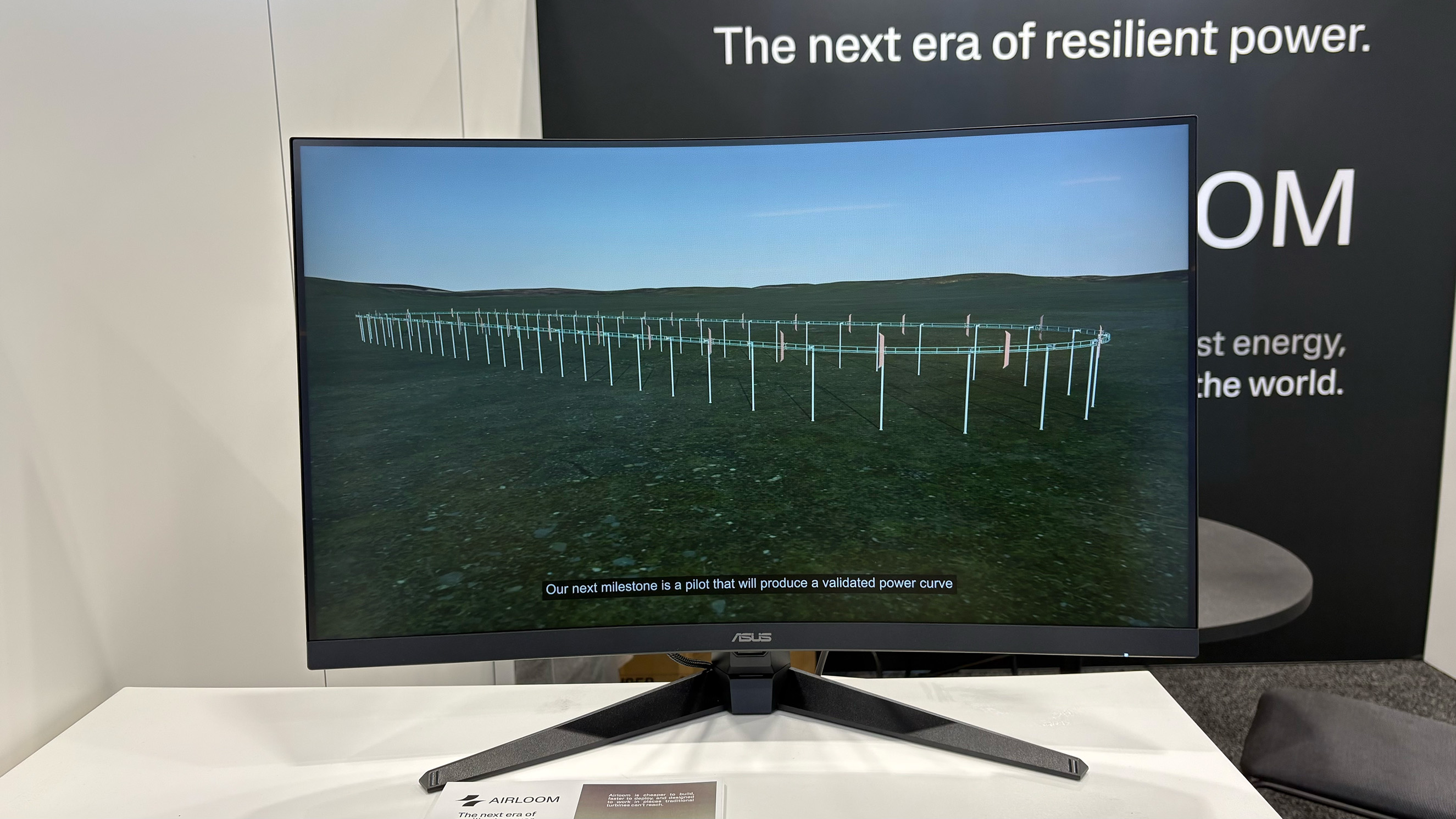
Airloom wind power generation

Airloom's roller coaster-like wind power generator for data centers.
Amy Skorheim for Engadget

Engadget’s Anna Washenko does a great job of explaining the tech behind Airloom. In short it’s a roller coaster for wind that’s comprised of 40 percent less mass than a standard wind turbine and uses 42 percent fewer parts and 96 percent fewer unique parts. That makes it faster to deploy and cheaper to instal. I can also be sited in more places. Again, this is a utility-scale solution, geared towards data centers and their insatiable need for energy to power Very Important AI Things.

Learn more at Airloom.

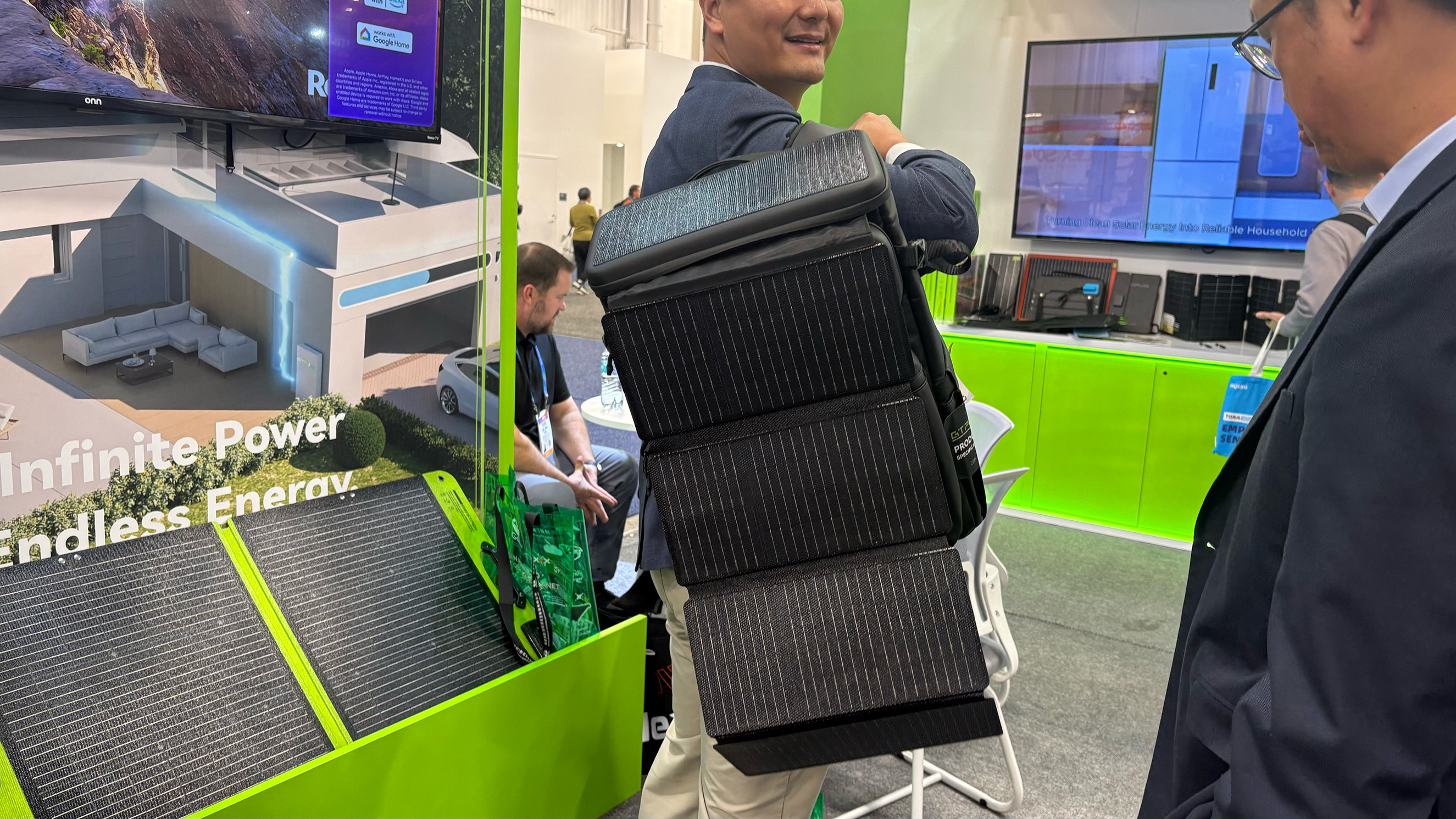
Gaotu Innovation Energy Group

Gaotu had a range of solar products in various formats.
Amy Skorheim for Engadget

If you are looking for a solar-powered anything, hit up Gaotu. At the company’s booth, I saw hats, a fishing chair, a backpack, a sunbrella and a car roof-top enclosure that unfurls to charge up your Tesla. The Shenzhen-based company has been in business for 18 years and plans to just keep sticking solar panels on anything it can.

Learn more at Gaotu.

Segway Muxi cargo e-bike

Segway's latest cargo e-bike
Amy Skorheim for Engadget

The single largest booth in the CES sustainability section was Segway. This year, the company showed off two new e-bikes, which our own Dan Cooper covered. This one here is the Muxi, a cargo bike with an easily swappable battery, an optional passenger seat with foot pegs and an optional middle basket. Plus a beverage cup holder.

Learn more at Segway.

If we don’t all fall into the ocean before then, perhaps CES 2027 will have a stronger showing of sustainability tech. In the meantime, I’ll take a modicum of comfort in these few brave organizations still dedicated to keeping us afloat.

This article originally appeared on Engadget at https://www.engadget.com/science/ces-so-very-big-so-little-sustainability-tech-180000648.html?src=rss

©

  •  

Bluetti's Charger 2 uses solar and engine power to charge your portable battery

If you’re off-roading, it’s a neat idea to use your engine to top up your battery, which prompted Bluetti to launch the Charger. You could hook it to your alternator and draw off energy as you drove to make sure you turned up to your campsite with full batteries. But if you’re also toting around solar panels on your roof, then it’s a shame you can’t also use that power to top up. This omission is what prompted Bluetti to turn up to CES 2026 with the Charger 2, which will take power from your engine and your solar panels at the same time.

Bluetti says the Charger 2’s dual-input architecture will accept 600W from the panels, 800W from the engine. All of that power will charge your batteries significantly faster than the first model, claiming it’s 13 times faster than a standard car charger. In addition, Charger 2 can manage more than one Bluetti power station and expansion batteries, should your power needs stretch. And the system is smart enough to know where the energy is coming from, managing the sources based on their availability. Plus, you can use it to jump start your engine should you need the help.

If you’re a Charger 1 owner and want to upgrade, it’s fairly painless to drop the old unit out in favor of its replacement. It uses the same cabling, so you can just hook the new model to your existing wires without having to get your fingers greasy. To reward that loyalty, the company will sell you an upgrade for $99, at least through February 7.

As for everyone else, you’ll be able to pick up the Charger 2 for $349 through February 7, at which point the price leaps to $499.

This article originally appeared on Engadget at https://www.engadget.com/general/bluettis-charger-2-uses-solar-and-engine-power-to-charge-your-portable-battery-230000270.html?src=rss

©

  •  

The Shine 2.0 is a compact wind turbine for your next camping trip

As power gets more dicey, personal energy generation only gets more appealing. Shine’s compact turbine isn’t going to power your house any time soon (though Rachel Carr, the company’s co-founder told me they have plans in that direction) but it can suck up the energy required to refill a smartphone in as little as 17 minutes. Of course, what it can generate depends on wind speed. That same charge could take as long as 11 hours if there’s only a slight breeze.

That power curve, and its ability to operate at night, sets the turbine apart from solar panels. Of course, on a completely still day, the Shine as inert as a becalmed sailing ship but if the wind picks up even as little as a breeze, it gets to work making power. The turbine even automatically pivots on the included stand to face into the wind.

Shine turbine 2.0
Shine turbine 2.0
Shine

The Shine 2.0 looks like a thin space football and has a screw-off cap that reveals a hollow compartment for the stand and tie downs. The cap then doubles as a key to unlock the blades. It all weighs just three pounds, which is impressively light considering it also houses a 12,000mAh battery that can output up to 75 watts. This is the second version of the turbine and updates include a USB-C port instead of USB-A, as well as app connectivity.

The company claims you can set the entire thing up in around two minutes. I watched the Carr take the turbine from fully closed to unfurled and ready for the stand in about that long. Unfortunately, there was no wind rushing through the CES show floor so I couldn’t see it spin, but Carr was kind enough to spin it for me.

Spinning the Shine Turbine 2.0
Amy Skorheim for Engadget

Possibly the most exciting part is Shine’s plan for more expansive power generation. Shine 3.0, which the company is working on now, will be a 100 to 300 watt system and grid-tied turbines are on the wish list.

Pre orders are now open for the Shine 2.0 through Indiegogo for $399 and units should begin shipping this spring.

Update, January 7 2026, 4:00PM ET: This story has been updated to correct the wattage output and include the co-founder’s name.

This article originally appeared on Engadget at https://www.engadget.com/home/smart-home/the-shine-20-is-a-compact-wind-turbine-for-your-next-camping-trip-191000940.html?src=rss

©

  •  
❌