To make up for an incredibly laughable inaugural event, Beijing is running back its humanoid robot half-marathon. Fortunately, the event that pits humanoid robots made by Chinese companies against each other across 13 miles went a lot smoother this year.
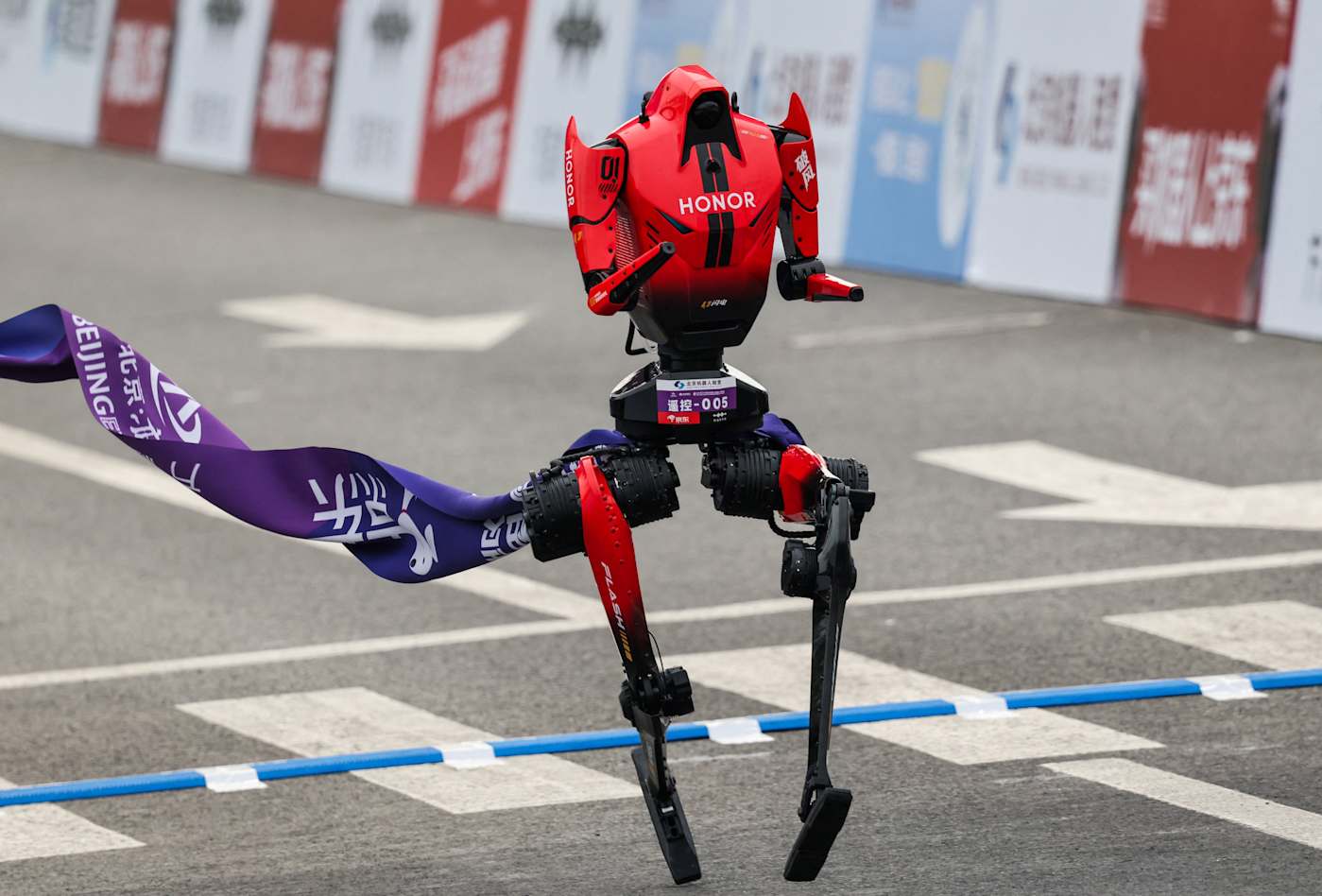
This year's half-marathon hosted more than 100 competitors, with first place going to Honor, better known for its smartphones, and its red-clad robot named Lightning. Living up to the name, the gold medalist finished the race in 50 minutes and 26 seconds. That's several minutes faster than the human record that was recently set by Uganda's Jacob Kiplimo last month.
Honor swept the other podium spots, with the important caveat that they all navigated the course autonomously, according to the state-sponsored television news agency CCTV. That's a massive improvement over last year, where the fastest time among 21 robots was achieved by Tiangong Ultra with a record of two hours and 40 minutes. Last year's event saw many of the bipedal robots receiving assistance from human operators who ran alongside them, as well as some comical mishaps, like falling at the starting line.
However, the BBC reported that around 40 percent of the robots competed autonomously this year, while the rest were remote-controlled. Despite the rapid improvements, this year's event still had its fair share of crashes, even from Honor's robots.
This article originally appeared on Engadget at https://www.engadget.com/ai/beijings-robot-half-marathon-is-back-for-its-second-year-with-far-less-embarassing-results-191308396.html?src=rss
A Lightning humanoid robot by Honor crosses the finish line of the second Beijing E-Town Half Marathon and Humanoid Robot Half Marathon in Beijing, China April 19, 2026. REUTERS/Maxim Shemetov
There's just something magical about a robot that can convert into a car, tank or plane. It seems that Hollywood agrees as there are several major franchises based around that concept. As someone who grew up in the 80s and 90s, Transformers hold a special place in my heart, despite Michael Bay's best efforts at tarnishing its legacy. I spent countless hours as a kid playing with Hasbro and Takara's plastic figures, but there was one type of toy I always wanted but never got: a robot that could transform on its own just like the ones I watched on TV. That changed a few years ago when Robosenlaunched its line of officially licensed auto-converting models, and from what I've seen, its latest release featuring Soundwave might be its best yet.
Design: More than meets the eye
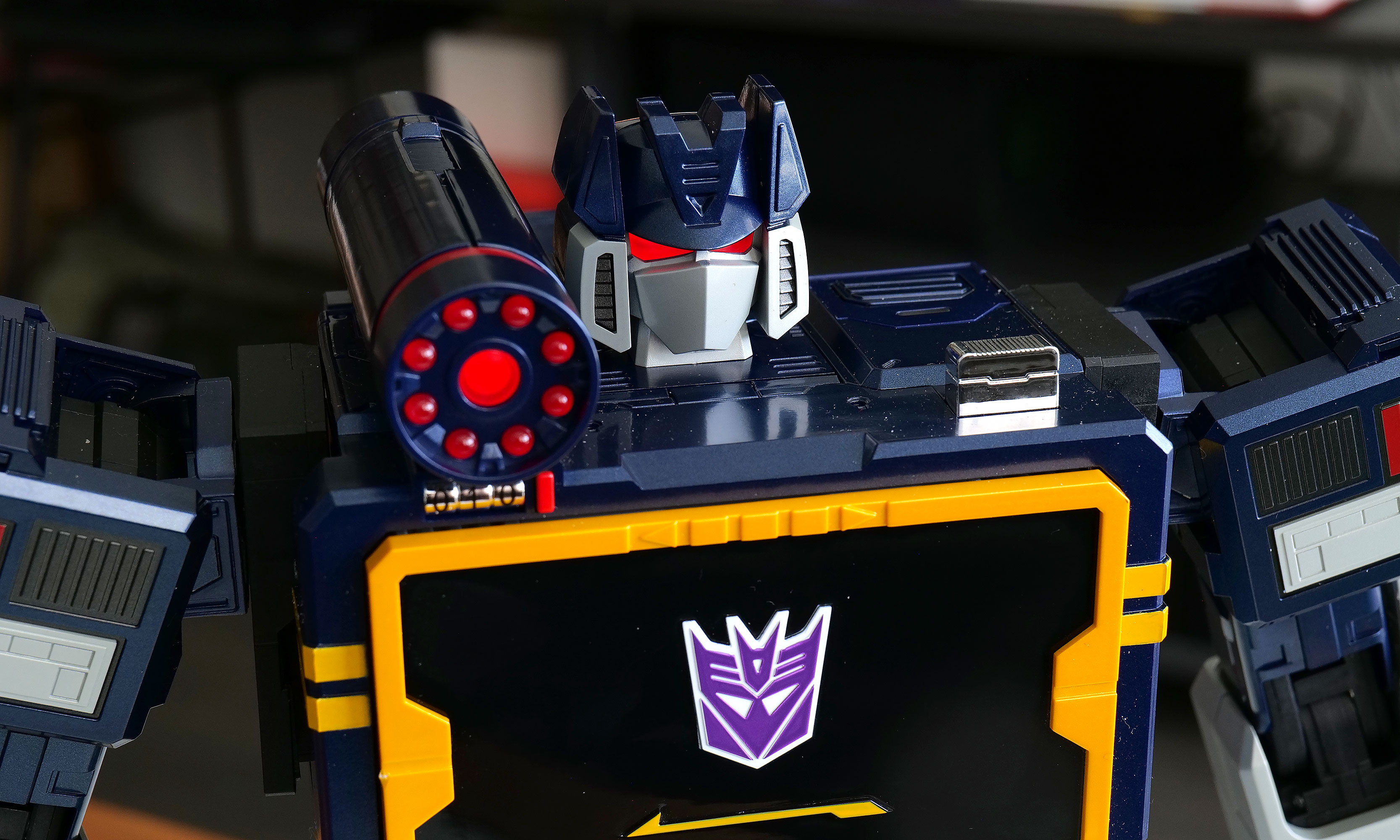
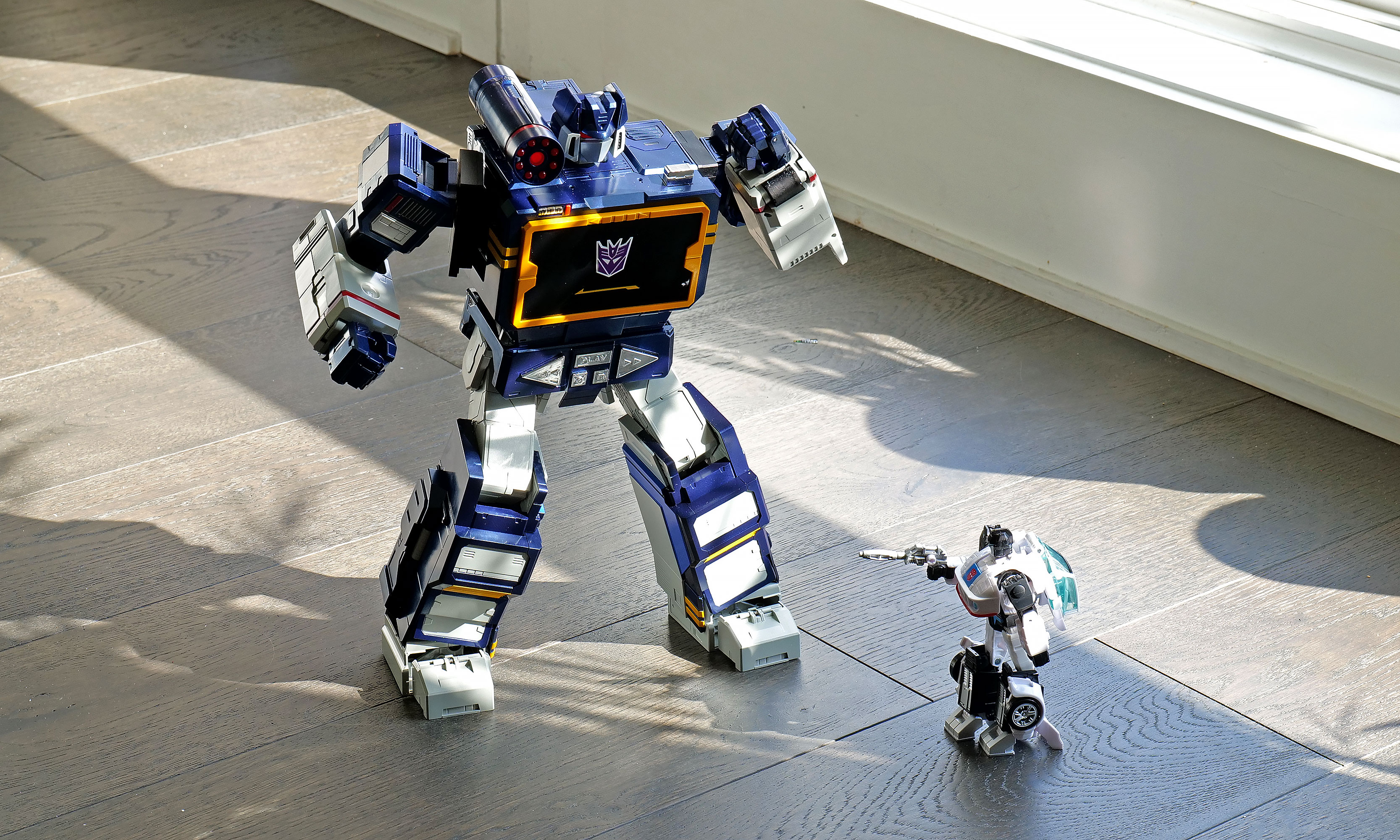
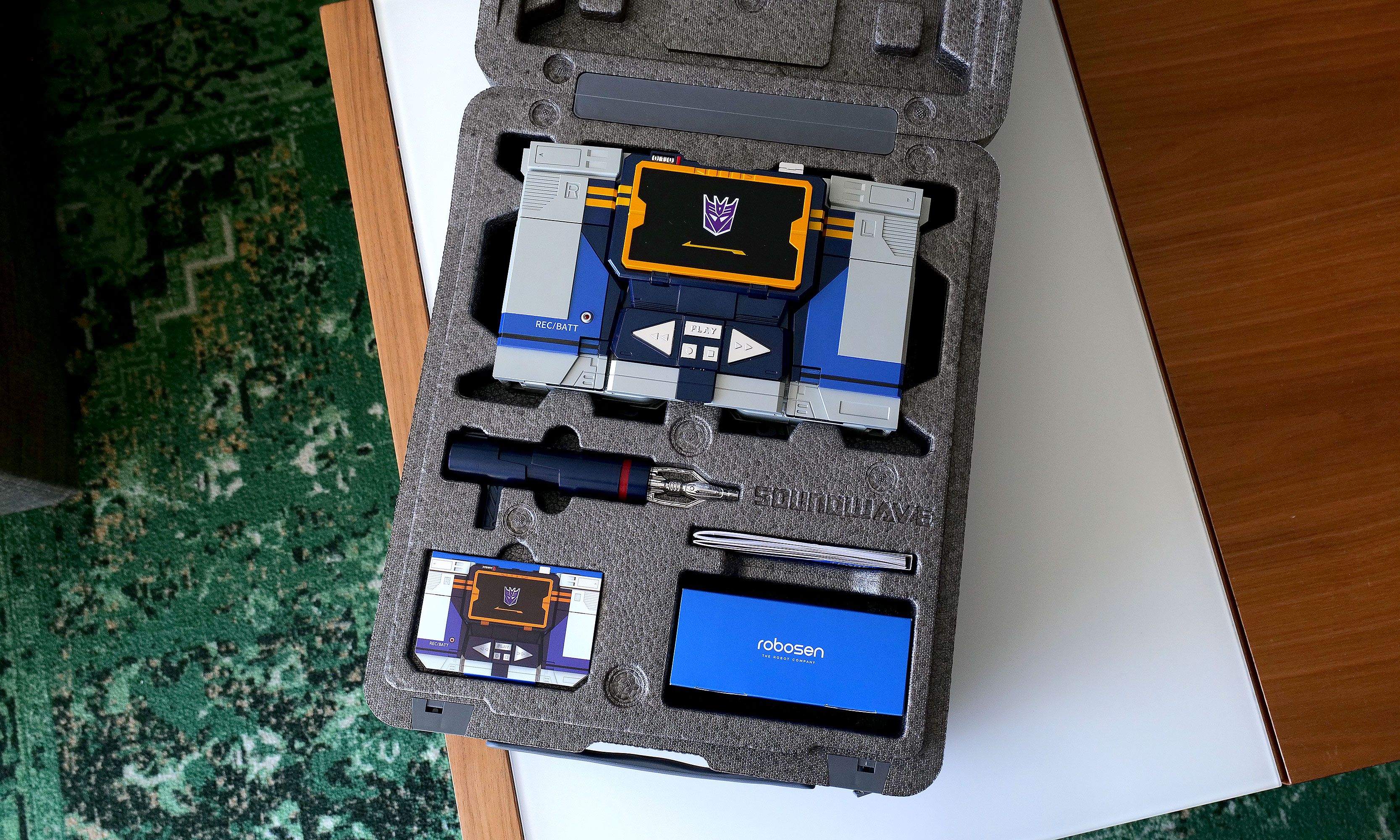
As a follow-up to previous bots featuring Optimus Prime, Megatron, Bumblebee, Grimlock and others, Soundwave was a superior choice, and Robosen has done a more than respectable job of bringing him to life. Not only can he spit out classic lines performed by original voice actor Frank Welker, both his robot and alt modes are a vision straight out of the first-generation (G1) cartoon. Everywhere you look, there are a ton of lovingly crafted details like the working eject button for the cassette slot and all sorts of lights. Robosen's head sculpt is spot on, and it even includes additional LEDs for his eyes and shoulder cannon. Granted, there is a bit of kibble (aka what fans call out of place parts leftover from transformation), like hands that don't properly fold away when Soundwave turns into a boombox, but that's really nitpicking. Between his incredibly accurate design, vocoder-powered vocals and an imposing stature that stands at around 14 inches tall, there's no way you can call this rendition of Soundwave uncharismatic.
A simply superior head sculpt.
Sam Rutherford for Engadget
However, the real magic happens when you turn him on (there's a little button on his back) and say "Hey, Soundwave." From here, you can use more than 50 different voice commands to boss him around like you're the leader of the Decepticons. This includes asking him to say iconic lines, respond to an Autobot attack or just wishing someone a happy birthday. Naturally, the most impressive request is asking him to transform, at which point 28 high-precision servo motors and multiple motion sensors coordinate. This allows Soundwave to convert from boombox mode to robot and back again, complete with the required sound effects. Even as a jaded adult, there's still something incredibly enchanting about watching a Transformer actually transform on its own. But that pales in comparison to the one-of-a-kind reaction my four-year-old son gave me when I repeated the process for him. There was a joy in his face I'm not sure a grown-up can truly express, as he gets to experience this without knowing this bot costs a cool $1,400.
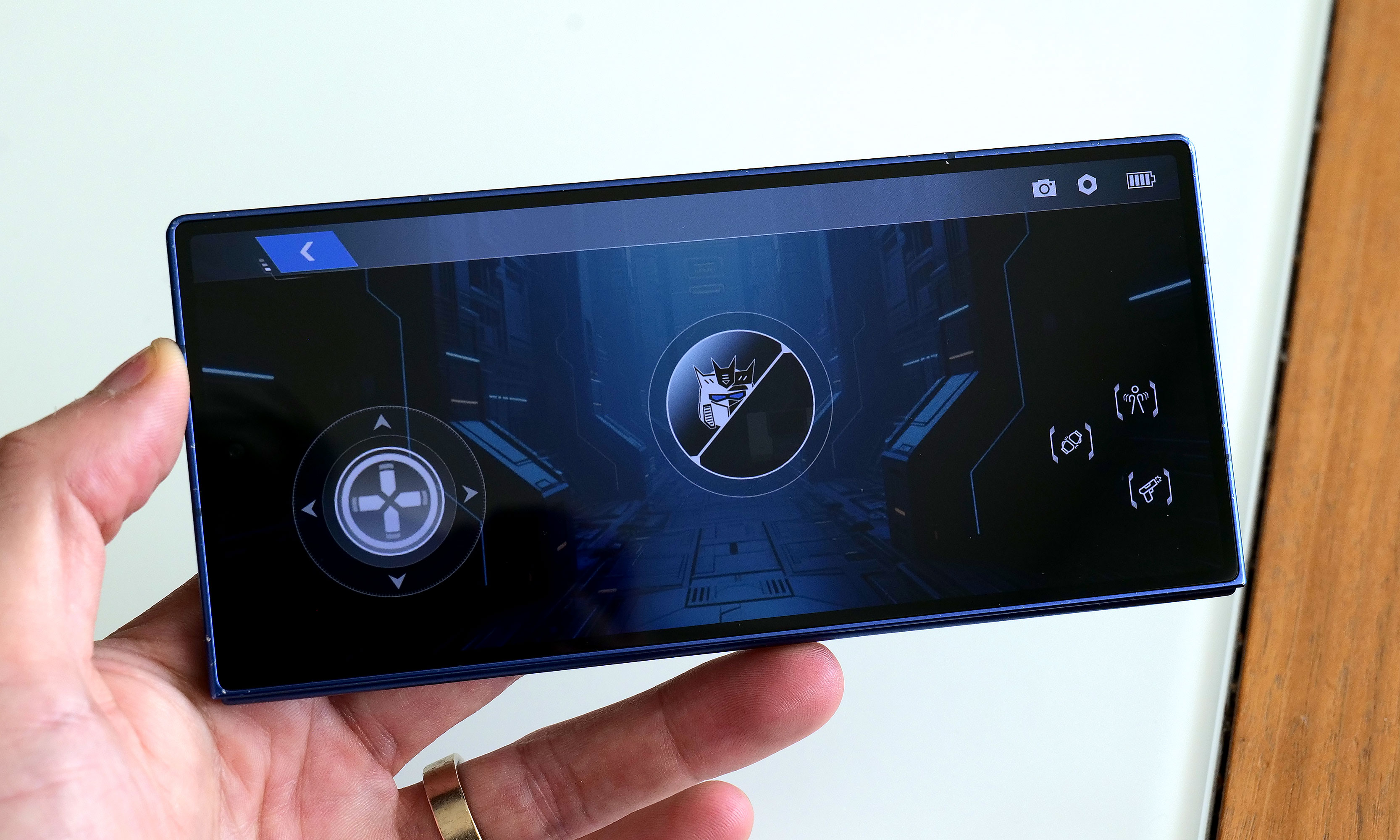
Robosen's free mobile app features a D-pad so you can easily tell the robot where to walk.
Sam Rutherford for Engadget
While testing Soundwave's various commands, I did notice that his voice recognition can be somewhat hit or miss. I found that even a little background noise can cause issues. To be consistently heard, you have to speak louder than you think you should. The real key is being very deliberate with a sharp "Hi" or "Hey" to activate Soundwave's wake phrase properly. Alternatively, if you prefer not to yell at your robots, there's also a free companion app that allows you to send commands by simply pressing a button, which was super easy to set up and quickly became my preferred control scheme.
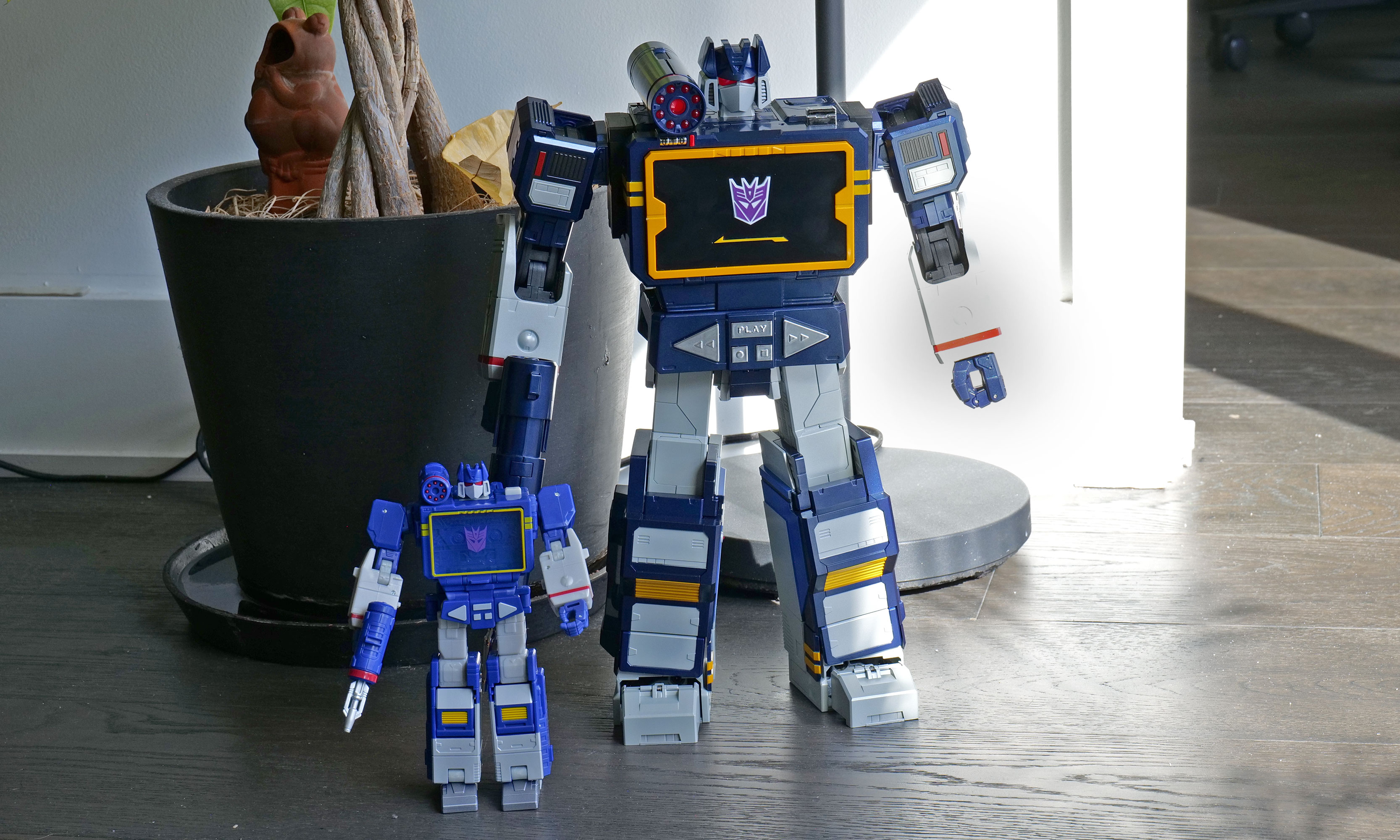
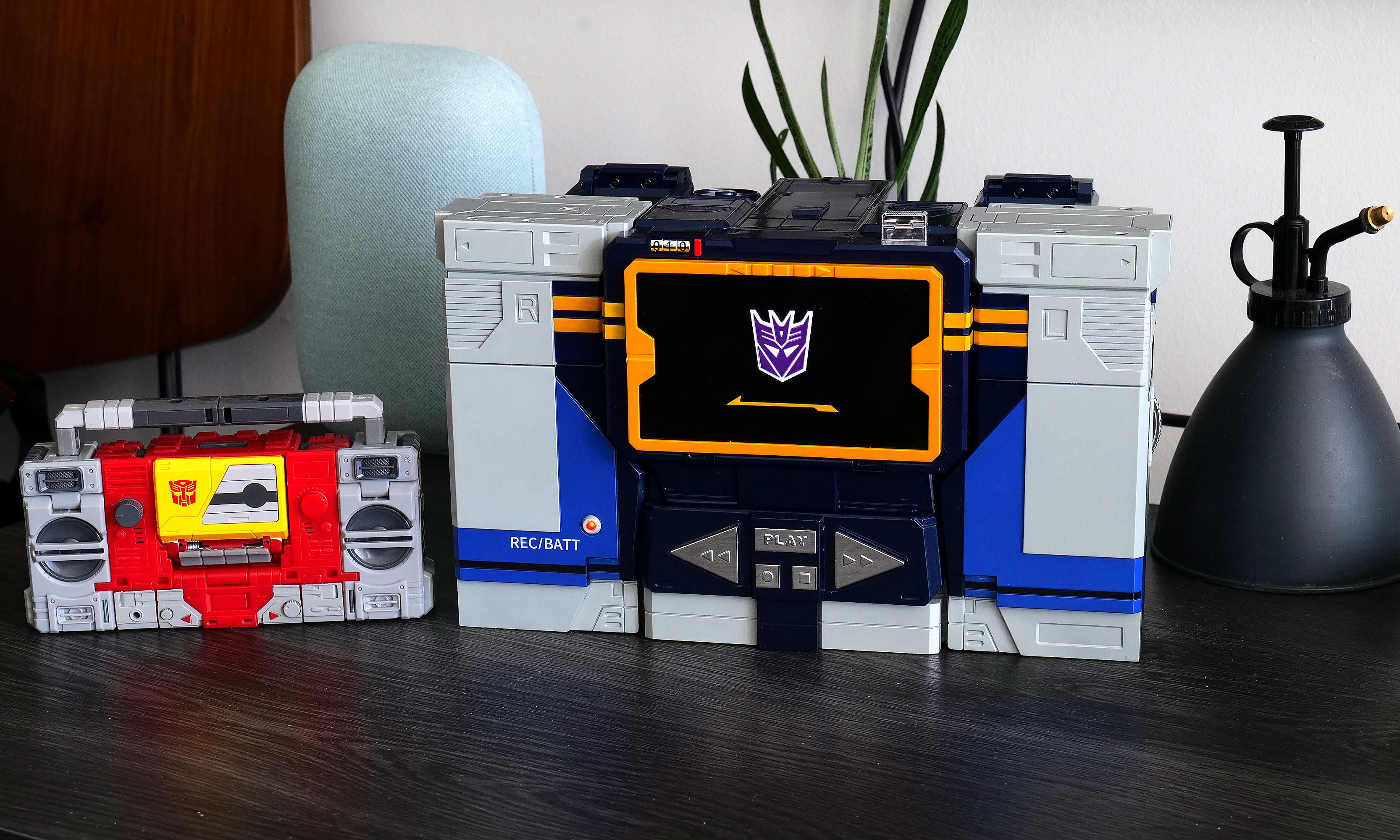
Here is Robosen's version of Soundwave (right) compared to the Studio Series 86 figure (left).
Sam Rutherford for Engadget
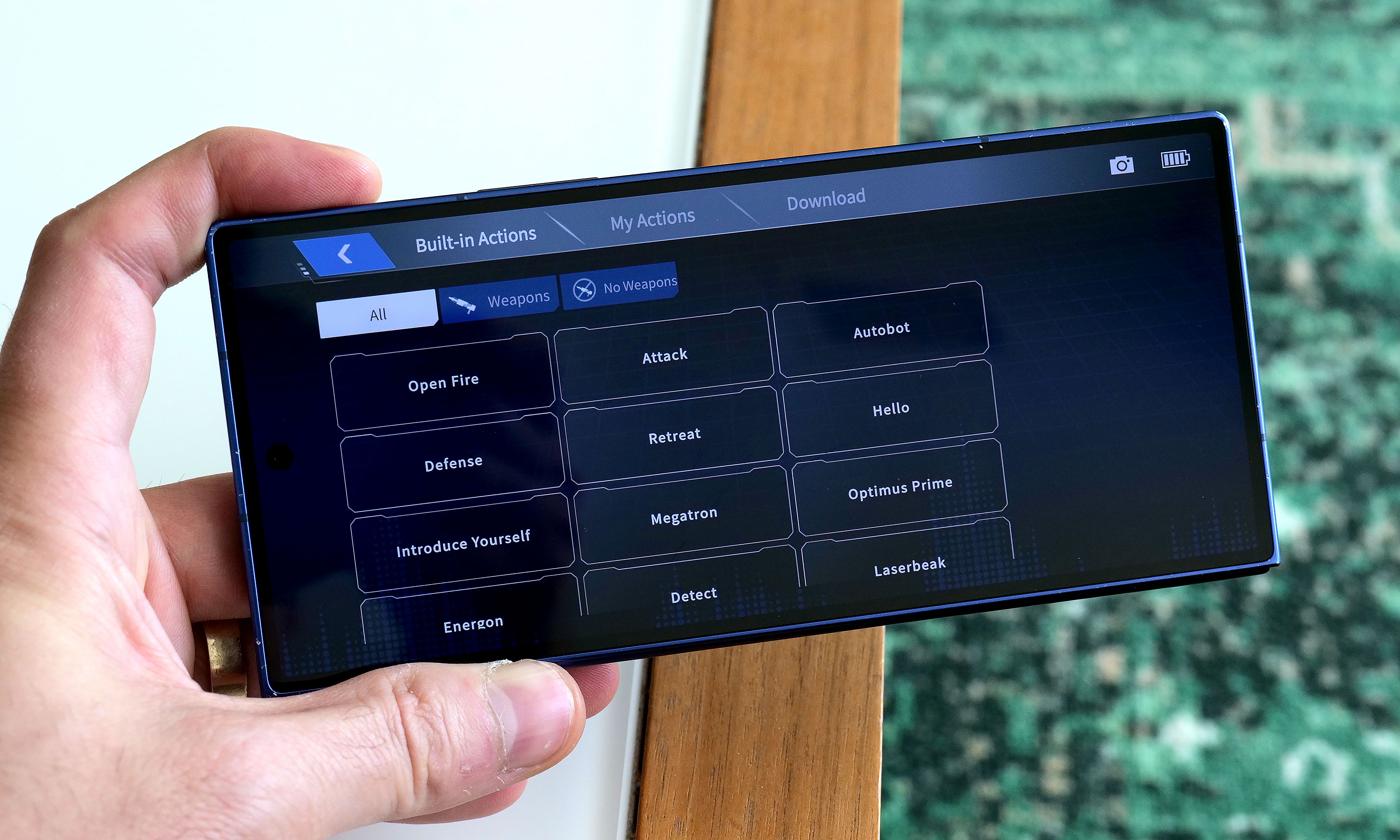
In addition to making it easier to get Soundwave to walk around (it's much more fun to use a virtual D-pad than yell "Walk forward" all the time), the app also provides a more straightforward way of discovering what he can do while reducing the ambiguity of voice commands. There are handy buttons for all his voice lines and poses, plus there’s a toolkit for creating some of your own. You can also download more from the app, though there weren't any for me to test out because Soundwave wasn't officially out yet at the time of writing. There's even a Mini Theatre mode that allows the bot to perform short skits, and if you're lucky enough to own some of Robosen's other Transformers toys, like Megatron, some of these scenes can even be performed in tandem.
I don't think any Autobots have a chance against a Soundwave this big.
Sam Rutherford for Engadget
One awkward thing about Roboen's more sophisticated approach to toy robots is that Soundwave loses some of his structural integrity when his motors are off. For example, when you power him down in robot mode, he bends over backwards and gets stuck halfway between his humanoid and boombox forms. I assume this is to prevent him from falling over, which is a good thing; it just looks kind of weird. On the flip side, if you pick him up while in stereo mode, his limbs tend to droop. However, perhaps the biggest downside to Soundwave is one inherent to his design. Because his alt mode is a boombox instead of a vehicle like Optimus, Bumblebee and others, he can't pull double duty as a remote control car. But what Soundwave lacks in mobility, he makes up for with his signature acoustic skills.
Audio: Not just a bot, he's a real boombox too
From the front, Soundwave's boombox alt mode looks damn near perfect.
Sam Rutherford for Engadget
Soundwave turning into a boombox that can't play music just wouldn't make sense. Thankfully, that's not an issue as this bot's buttons aren't just for show. Hitting Play lets you listen to original tracks from the G1 cartoon, complete with the ability to pause or skip to the next track. You can also hold the record button to save a personal message for later, though I found this feature has a bit of a learning curve as Soundwave tends to cut out one or two seconds from the beginning and end of a clip.
Inside the app, there's also a big list for all of Soundwave's voice lines and poses.
Sam Rutherford for Engadget
Most importantly, if you want Soundwave to play other tunes, you can pair it with your phone or pretty much any other mobile device and use him just like a typical Bluetooth speaker. Now it probably won't be a surprise when I say that Soundwave's audio quality is mediocre at best. With all the various sensors, motors and moving parts, there probably isn't a ton of room for fancy drivers, so things sound tinny and flat. But in a way, that's kind of endearing because the vast majority of portable speakers back in the 80s didn't sound great either. The one thing I wish Robosen had included was a proper cassette player to really capitalize on Soundwave's classic audio capabilities. That said, even though I still have stacks of CDs and DVDs in my house, I don't have any tapes (despite their resurgence), so I get why that feature didn't make it.
Battery life
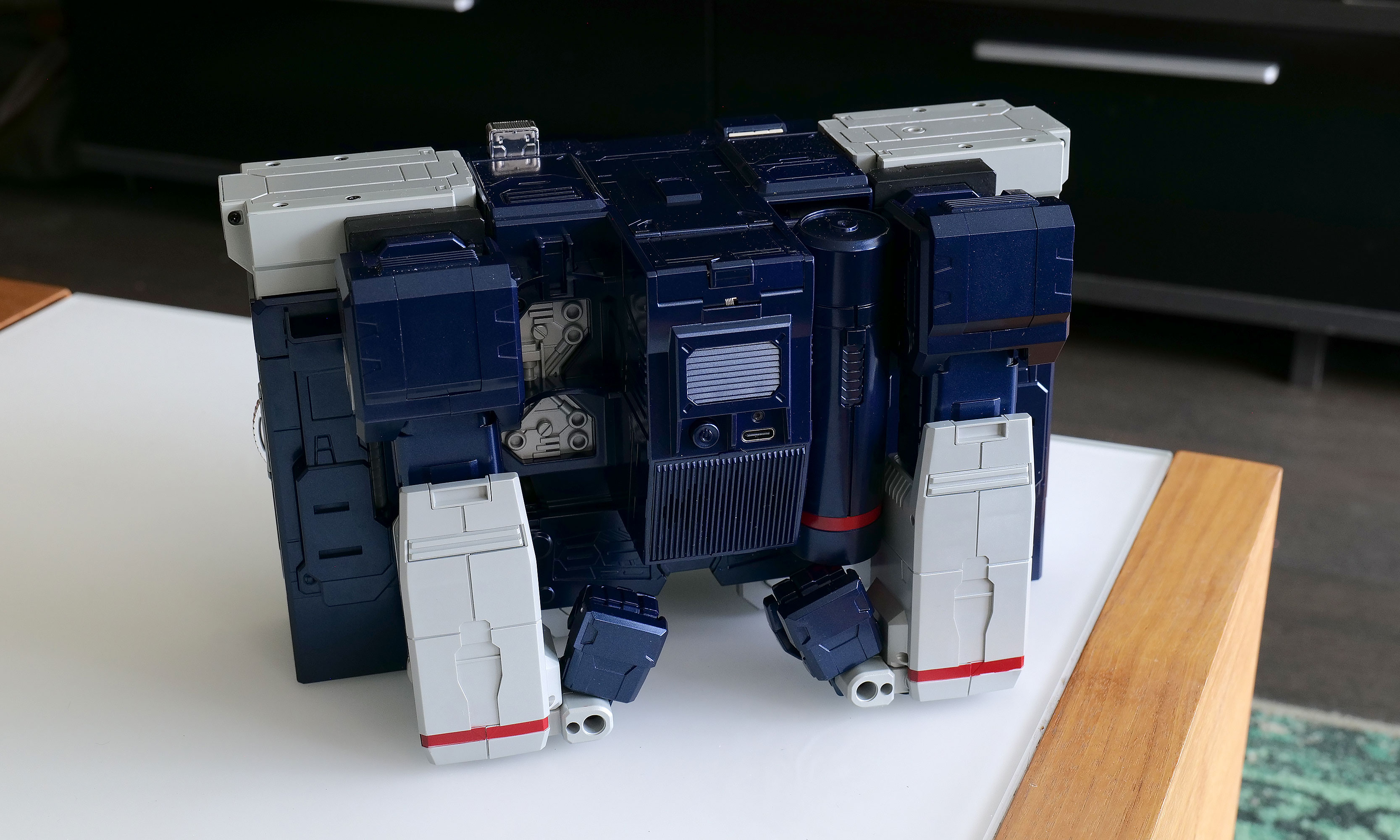
It may not be period accurate, but the addition of a USB-C port around back for power is a really nice touch.
Sam Rutherford for Engadget
Soundwave comes with a built-in 1,650mAh battery which takes about 120 minutes to charge from dead to full while offering a standby time of around 60 minutes. During my testing, I found you can get a solid 20 to 30 minutes of playtime out of him, which felt like plenty. Of course,that depends a ton on how much moving around you tell him to do. And while it certainly isn't period authentic, I really appreciate the inclusion of a USB-C port for charging.
Wrap-up
The funny thing about Robosen's Soundwave is that a toy like this would have been priceless to me as a child. But now that I'm older and I have to attach a value that goes beyond its basic price, things are a lot trickier.
I love Robosen's attention to detail. The figure looks incredible and getting voice lines from the original actor shows there's more than meets the eye to the robot’s design. But most importantly, seeing Soundwave transform on his own and stomp around like he does in the show will never get old.
As you'd expect from a toy this expensive, Robosen's packaging is excellent.
Sam Rutherford for Engadget
On the other hand, $1,400 can buy the whole family a nice three-day vacation or more than two dozen regular Transformers toys. That kind of math makes it difficult to add this Cybertronian to the household register. But for anyone who has a budget similar to a Michael Bay movie, this take on Soundwave really does feel like a dream come true. Aside from some of Robosen's other products, this robot is certainly made of sterner stuff.
This article originally appeared on Engadget at https://www.engadget.com/general/robosen-soundwave-review-a-childhood-dream-made-real-120000804.html?src=rss
Amazon has acquired Rivr, a startup focused on autonomous robotics. Rivr is based in Zurich and was valued at $110 million in a funding round from August 2024, which both Amazon and its CEO's Bezos Expeditions participated in. Financial details of the acquisition were not disclosed.
Rivr's robots have four legs and wheels that allow it to maneuver on stairs and other potentially uneven surfaces. The company just released its second generation of the robot. The purchase will likely further Amazon's capabilities for ever-faster and more efficient package deliveries.
"This acquisition reflects our commitment to a continued investment in research, which we believe has the potential to further improve safety outcomes and the overall delivery experience for delivery service partners and their delivery associates," a representative from Amazon told The Information.
Amazon has been working toward introducing automations and robotics at various stages of its shopping business. It deployed its 1 millionth robot last summer and has future goals for automating 75 percent of all its operations.
This article originally appeared on Engadget at https://www.engadget.com/big-tech/amazon-acquires-autonomous-robotics-startup-rivr-212839750.html?src=rss
While Honor has already made plenty of product announcements, with tablets, foldables and more, its most interesting device at MWC 2026 is the Robot Phone — and maybe the humanoid robot that came alongside it.
After briefly showing off a model at CES, Honor isn't quite ready to launch its Robot Phone. However, we got more specs, tech demos and a closer look following the company's MWC press event in Barcelona. The Robot Phone is currently set to launch later this year.
Image by Mat Smith for Engadget
Honor has put a lot of effort into ensuring its camera gimbal is highly mobile, to the point of creating a tiny personal robot that is, dare I say, adorable? The Robot Phone's pop-up camera can cock its head, shake to say no, nod to agree, and even "flip" – or at least rotate 360 degrees. According to Honor's presentation, it can even bop along to songs. A spokesperson told me that it's got five songs in its repertoire, so it's not clear whether they're programmed for these kind of demos, or will be a feature of the final retail device.
Another demo here at MWC showed how you could make the Robot Phone "sleep" by covering its gimbal eye, though it's odd that the camera is still exposed rather than folded away. My main concern with the Robot Phone is the robustness and durability of its robotic mechanisms. We've lived through several waves of smartphones that attempted much simpler mechanical camera functions and the threat of dust or heavy-handed users can't be ignored.
Image by Mat Smith for Engadget
The company says it's taken what it learned from foldables, regarding high-performance materials and simulation accuracy, and applied it to shrinking the camera module. On stage, Honor CEO James Li revealed what he calls the industry's smallest micro motor, much smaller than a 1-euro coin and, he added, 70 percent smaller than existing micro motors.
As this component has been reduced substantially, the Robot Phone's gimbal will be the industry's smallest 4-degrees-of-freedom gimbal system. That's a spec – we finally got a spec! It'll also offer three-axis stabilization in this tiny camera package, with the primary camera using a 200-megapixel sensor.
The fold-away panel that the primary camera tucks into also reveals more typical cameras, so you're not forced to use the gimbal if you don't need it. Still, that's one very thick camera unit:
Image by Mat Smith for Engadget
Honor has already started building out camera modes and features, with a Super Steady Video mode that enhances stability while swinging the Robot Phone around to capture video. AI Object Tracking will apparently intelligently follow subjects, while AI SpinShot supports intelligent 90-degree and 180-degree rotational movement for more cinematic transitions. We've seen these sorts of pre-programmed movements and functions in full-size phone gimbals and action cams. If Honor can nail it in such a tiny form, it'll be impressive.
Other specifications during Honor's press event were sparse, although the company announced a collaboration with ARRI Image Science to bring its cinematic smarts to the Robot Phone's gimbal camera.
In a press release, Honor's Li said the collaboration would bring ARRI's "cinematic standards and professional workflows" into mobile imaging. It's apparently the first time elements of ARRI Image Science are being integrated into a consumer device. Dr. Benedikt von Lindeiner, VP at ARRI, said the goal is to bring a true cinematic aesthetic, such as "natural color, gentle highlight roll-off, and a sense of depth," to shooting with an Honor smartphone.
Image by Mat Smith
Honor also made a humanoid robot companion for its Robot Phone. The bot took to the stage alongside the Robot Phone, danced alongside human dancers, did a backflip and shook hands with CEO James Li. It didn't say a thing, but fortunately, during some on-the-rails banter between the robot, Robot Phone and Honor's CEO, the Robot Phone was particularly chatty.
Like the many humanoid robots we've reported on and seen in person, Honor hopes to put it to work in both industrial and domestic settings, pitching it as a central part of the company's multi-million-dollar push into AI. For now, it's being called Honor Robot.
This article originally appeared on Engadget at https://www.engadget.com/mobile/smartphones/a-closer-look-at-honors-robot-phone-145935198.html?src=rss
Robotics company Intrinsic has announced it will be folding into Google as the company bets on the future of physical AI in manufacturing. The company focuses on software tools to make robots more affordable and easier to use, as well as using adaptive intelligence to help the robots perform real-world tasks.
Intrinsic was started in 2021 as an Alphabet "Other Bets" project, part of a portfolio of high-risk and potentially high-payoff startups, Waymo among them. The project will now run as a "distinct group" within Google where it will leverage Gemini and Google Cloud while working closely with the Google DeepMind team.
The company describes its platform as "the Android of robotics," offering a universal canvas where developers can build apps for different robots, cameras, sensors and more. Meta has expressed interest in pursuing a similar business model.
Also at the intersection of software and physical AI, the company aims to integrate adaptive intelligence into robots, helping them to perform real-world tasks. The goal is robots that can "perceive, reason and react to changes in processes and their environment."
The acquisition will complement Google's past work in robotics like Boston Dynamics, which it sold off in 2017. The Google DeepMind team has also developed Gemini-based models for robotics in the past.
This article originally appeared on Engadget at https://www.engadget.com/ai/ai-robotics-company-started-by-alphabet-is-joining-google-proper-144421411.html?src=rss
If vacuuming is your least favorite chore, employing a robot vacuum can save you time and stress while also making sure your home stays clean. While once most robo-vacs landed on the higher end of the price spectrum, that’s not the case anymore. Sure, you could pick up a $1,000 cleaning behemoth with mopping features, but it would be incorrect to assume that you need to spend that much money to get a good machine.
Now, you can get an autonomous dirt-sucker with serious cleaning chops for $500 — sometimes even $300 or less. But you get what you pay for in this space; don’t expect affordable robot vacuum cleaners to have all of the bells and whistles that premium machines do, like self-emptying capabilities or advanced dirt detection. After testing dozens of robot vacuums at various price points, I’ve narrowed down our top picks for the best budget robot vacuums you can buy right now.
Best budget robot vacuums for 2026
Are robot vacuums worth it?
Since I've tested dozens of robot vacuums, I'm often asked if these gadgets are "worth it" and I'd say the answer is yes. The biggest thing they offer is convenience: just turn on a robot vacuum and walk away. The machine will take care of the rest. If vacuuming is one of your least favorite chores, or you just want to spend less time keeping your home tidy, semi-autonomous robotic vacuum is a great investment. Many models, albeit more expensive ones, even come with features like a self-empty station to further reduce maintenance.
There are plenty of other good things about them, but before we dive in let’s consider the biggest trade-offs: less power, less capacity and less flexibility. Those first two go hand in hand; robot vacuum cleaners are much smaller than upright vacuums, which leads to less powerful suction. They also hold less dirt because their built-in bins are a fraction of the size of a standard vacuum canister or bag. Fortunately, some models include features like an auto-empty station, which helps with dirt capacity, especially in homes with pet hair.
When it comes to flexibility, robot vacuums do things differently than standard ones. You can control some with your smartphone, set cleaning schedules and more, but robo-vacs are primarily tasked with cleaning floors. On the flip side, their upright counterparts can come with various attachments that let you clean couches, stairs, light fixtures and other hard-to-reach places.
What to look for in a budget robot vacuum
When looking for the best cheap robot vacuum, one of the first things you should consider is the types of floors you have in your home. Do you have mostly carpet, tile, laminate, hardwood? Carpets demand vacuums with strong suction power that can pick up debris pushed down into nooks and crannies. Unfortunately, there isn’t a universal metric by which suction is measured. Some companies provide Pascal (Pa) levels and generally the higher the Pa, the stronger. But other companies don’t rely on Pa levels and simply say their bots have X-times more suction power than other robot vacuums.
So how can you ensure you’re getting the best cheap robot vacuum to clean your floor type? Read the product description. Look for details about its ability to clean hard floors and carpets, and see if it has a “max” mode you can use to increase suction. If you are given a Pa measurement, look for around 2000Pa if you have mostly carpeted floors. Pay attention to the brush roll mechanism as well, especially if you're dealing with dog hair or other stubborn debris that can cause tangles. Many budget models use bristle brushes, while others offer tangle-free designs to minimize maintenance.
You may find some budget robot vacuums also offer vacuum/mop combo capabilities. These bots feature a water tank, which means they can offer mopping functionality, enhancing debris pickup, and resulting in shiny floors. However, these are less common when you’re shopping in the lower price range.
Size is also important for two reasons: clearance and dirt storage. Check the specs for the robot’s height to see if it can get underneath the furniture you have in your home. Most robo-vacs won’t be able to clean under a couch (unless it’s a very tall, very strange couch), but some can get under entryway tables, nightstands and the like. As for dirt storage, look out for the milliliter capacity of the robot’s dustbin — the bigger the capacity, the more dirt the vacuum cleaner can collect before you have to empty it.
You should also double check the Wi-Fi capabilities of the robo-vac you’re eyeing. While you may think that’s a given on all smart home devices, it’s not. Some of the most affordable models don’t have the option to connect to your home Wi-Fi network. If you choose a robot vac like this, you won’t be able to direct it with a smartphone app or with voice controls. Another feature that’s typically reserved for Wi-Fi-connected robots is scheduling because most of them use a mobile app to set cleaning schedules.
But Wi-Fi-incapable vacuums usually come with remote controls that have all the basic functions that companion mobile apps do, including start, stop and return to dock. And if you’re concerned about the possibility of hacking, a robot vac with no access to your Wi-Fi network is the best option.
Obstacle detection and cliff sensors are other key features to look out for. The former helps the robot vacuum navigate around furniture while it cleans, rather than mindlessly pushing its way into it. Many also offer no-go zones, letting you block off areas you don’t want the robot to enter. Meanwhile, cliff sensors prevent robot vacuums from tumbling down the stairs, making them the best vacuum for multi-level homes.
How we test robot vacuums
When we consider which robot vacuums to test, we look at each machine’s specs and feature list, as well as online reviews to get a general idea of its capabilities. With each robot vacuum we review, we set it up as per the instructions and use it for as long as possible — at minimum, we’ll use each for one week, running cleaning cycles daily. We make sure to try out any physical buttons the machine has on it, and any app-power features like scheduling, robot mapping and more.
Since we test robot vacuums in our own homes, there are obstacles already in the machine’s way like tables, chairs and other furniture — this helps us understand how capable the machine is at avoiding obstacles, and we’ll intentionally throw smaller items in their way like shoes, pet toys and more. With robot vacuums that include self-emptying bases, we assess how loud the machine is while emptying contents into the base and roughly how long it takes for us to fill up the bag (or bagless) base with debris.
Robot vacuum maintenance tips
First and foremost, always empty your robot vacuum’s dustbin after every cleaning job, or use a self-empty station if the model supports it. Simply detach and empty the dustbin as soon as the robot is done cleaning, and then reattach it so it's ready to go for the next time. It’s also a good idea to take a dry cloth to the inside of the dustbin every once in a while to remove any small dust and dirt particles clinging to its insides.
In addition, you’ll want to regularly examine the machine’s brushes to see if any human or pet hair has wrapped around them, or if any large debris is preventing them from working properly. Some brushes are better than others at not succumbing to tangled hair, but it’s a good idea to check your robot’s brushes regardless — both their main brush and any smaller, side brushes or corner brushes they have. These parts are often easy to pop off of the machine (because they do require replacements eventually) so we recommend removing each brush entirely, getting rid of any tangles or other debris attached to them and reinstalling them afterwards. If you have a robot vacuum with mopping capabilities, you’ll need to wash the bots’ mop pads too, to avoid any unpleasant smells or tracking mess around your home. Similarly, if your robot vacuum has a water tank, it’s worth washing this out regularly to keep it clean.
Robot vacuums also have filters that need replacing every couple of months. Check your machine’s user manual or the manufacturer’s website to see how long they recommend going in between filter replacements. Most of the time, these filters cannot be washed, so you will need to buy new ones either directly from the manufacturer or from other retailers like Amazon or Walmart.
Budget robot vacuum FAQs
Are budget robot vacuums good for pet hair?
Yes, budget robot vacuums can be good for pet hair. Just keep in mind they generally tend to have lower suction power and smaller dustbins than more expensive (and larger) robot vacuums. If pet hair is your biggest concern, we recommend getting as expensive of a robot vacuum as your budget allows, or consider investing in a cordless vacuum since those tend to be more powerful overall.
How long do budget robot vacuums last per charge?
Budget robot vacuums typically last 40-60 minutes per charge, and the best ones will automatically return to their charging dock when they need more power.
Do budget robot vacuums work on carpets and hardwood floors?
Yes, budget robot vacuums work on both carpets and hardwood floors.
Which budget robot vacuums have mapping features?
Home mapping features are typically exclusive to more expensive robot vacuums. Check the product description of any robot vacuum you're thinking of buying and look for "smart mapping" or "smart home mapping" in the feature list if you want a device that supports it.
Lego unveiled its Smart Play system at CES 2026 earlier this month, with a selection of sets designed for the engaging feature. Now, the toy company has announced five new compatible sets — all Stars Wars themed — available now for pre-order. Anthony Daniels, the original C-3PO, shared the news during the Nuremberg Toy Fair.
The Smart Play system, Lego's newest venture, involves a Smart Brick, Smart Tags and Smart Minifigures. Each Smart Brick has proximity sensors, an accelerometer, a speaker and more. The Smart Tags and Smart Minifigures relay what's happening to the Brick. For example, if you whoosh a spaceship through the air, the Smart Brick should make a sound that imitates that. Vader, of course, also makes his deep breathing sound. Plus, it requires no screens or apps, so the fun remains in its true, tactical form.
The five new Smart Play sets span the Star Wars universe:
These sets join three initially announced Star Wars Smart Play ones: Darth Vader's TIE Fighter ($70), Luke's Red Five X-Wing ($90) and Throne Room Duel & A-Wing ($150). However, these three are "all-in-one" sets, meaning they come with the Smart Bricks. The newly announced options don't come with a Smart Brick, requiring an extra purchase, but will have the Smart Tags and Smart Minifigures that will know what to do.
All of the Smart Play Star Wars sets are available to pre-order as of today. They should be available starting March 1.
This article originally appeared on Engadget at https://www.engadget.com/lego-has-a-new-round-of-star-wars-sets-that-work-with-the-smart-brick-131210482.html?src=rss
Elon Musk just took the stage at the World Economic Forum in Davos, Switzerland and announced that Tesla's Optimus humanoid robot will be sold to the public by the end of next year. Musk is the master of unrealistic timetables, but this may be the nuttiest one yet. These are humanoid robots that are supposed to be able to do just about any task a human can do.
Musk, as usual, gave himself an out if the robots don't start rolling off the assembly line in 2027, saying that they'll only be released when Tesla is "confident that it’s very high reliability, very high safety and the range of functionality is also very high."
He stated that the robots have already begun doing simple tasks in the Tesla factory, but there's no proof of this other than his word. In the real world, Optimus robots have continuously failed to live up to the marketing hype.
If there was any question that Optimus uses teleop for their robots. Here one clearly has a guy take the headset off and it falls over.
There have been plenty of reports suggesting that previous demos of the robots in action were actually smoke and mirrors, as they were being remotely piloted by human operators.
Tesla's stock jumped over three percent upon this announcement because company investors live in a world of magical rainbows, unicorns and robots mixing drinks at home in the year 2027. Musk also recently stated that the robots would be ready for commercial deployment in 2026. That's this year. It's worth noting that the program head for the project, Milan Kovac, recently left the company.
Again, these are autonomous robots that are supposed to be able to perform complex tasks across a wide variety of categories. That'll likely happen someday, but not by 2027. I'm just gonna go ahead and throw Musk's timeline in with "two years to AGI" and "five years until the singularity."
On a related note, the Tesla CEO also said that the long-awaited Cybercab will enter production in April, with a goal of two million vehicles manufactured each year. This isn't quite as far-fetched as the Optimus promise, but that two million number seems highly suspect. Just how many consumers does he think want a car without a steering wheel that only holds two people?
This article originally appeared on Engadget at https://www.engadget.com/big-tech/elon-musk-just-told-davos-that-tesla-will-sell-humanoid-robots-next-year-really-he-swears-192515568.html?src=rss
dpatop - 20 December 2025, Berlin: Tesla's humanoid robot "Optimus" distributes popcorn at a Christmas market stall during its presentation at the Mall of Berlin. Photo: Christoph Soeder/dpa (Photo by Christoph Soeder/picture alliance via Getty Images)
Looking to keep your home clean without having to vacuum and mop every day, pick up dirt, the dinner your child threw on the floor or your furry friend’s endless pet hair? Join the club. Smart home gadgets have come a long way over the years, and that includes robot vacuums. With newer technology including voice controls, object detection and more automation features, investing in a robot vacuum cleaner makes more sense now than ever before. Some of the best robot vacuum cleaners even have mopping capabilities, roller brush options and self-emptying bases, too, and there are plenty that don't cost a fortune either. If you’re ready to adopt a less hands-on approach and let a robot vacuum cleaner do the hard work for you, consider our recommendations below.
Best robot vacuums 2026
Latest robot vacuum news
CES is typically a time for robovac manufacturers to unveil new innovations and this year was no different. Companies like Eufy announced new models, many of which are on the higher end of the price spectrum. Those flagship announcements are often paired with more minor ones that usher in mildly upgraded versions of midrange and entry-level machines.
Now that robot vacuums are ubiquitous, the new models that make headlines tend to have some sort of gimmick like a built-in arm for picking up clothes, or offer (supposedly) top-tier suction power and a slew of extras. They also tend to be super expensive. However, most people will be served just fine with a robot vacuum that doesn’t choke at the first sign of dust bunnies or pet hair, and maybe has mopping capabilities if you want a machine that can tackle hard floors in addition to carpet. Those other innovations are nice-to-haves, not necessities.
Arguably even bigger than CES announcements is the fact that iRobot, a name synonymous with smart cleaning robots, filed for Chapter 11 bankruptcy at the end of 2025. What does that mean for Roomba owners? Not too much immediately, as the company stated that it will continue to operate with “no anticipated disruption to its app functionality, customer programs, global partners, supply chain relationships or ongoing product support." However, this also means that buying a new Roomba in 2026 is a questionable decision.
What to look for in the best robot vacuums
TLDR
Despite companies coming out with gimmicky extras and new software perks in their robot vacuum lineups, the core competency of these devices have remained the same for years: sucking up dirt without needing your attention. You want a robot vacuum with the strongest suction power you can afford. Those with tile and hardwood floors can consider robovacs with mopping capabilities, and those who want peak convenience should opt for a model with a self-emptying base. However, both of those extra features will cost extra.
Floor type
First and foremost, we recommend considering the floors in your home: Do you have carpet throughout, or tile and hardwood floors, or a mix? Robots with stronger suction power will do a better job picking up dirt on carpets as they can get into high piles more easily. Some machines have “max” modes as well, which ups suction power, but also typically eats battery life faster than the “normal” floor cleaning mode.
Vacuum suction
Suction power is an important factor to consider. Unfortunately, there isn’t a standard power scale that all robovacs adhere to, so it’s difficult to compare among a bunch of devices. Some companies provide Pascal (Pa) levels and generally the higher the Pa, the stronger the vacuum cleaner will be. But other companies don’t rely on Pa and simply say their robots have X-times more suction than other robots. If you’re looking for the best vacuum for your needs, it’s helpful to pay attention to real-world testing and how well the machine can pick up fine dust, crumbs and pet hair in an environment similar to that of your home.
Wi-Fi connectivity
Wi-Fi connectivity is a key feature for most robot vacuums. Some of the affordable devices aren’t Wi-Fi connected, so it’s best to double check before you buy something on the low end of affordable. Wi-Fi lets a robot vacuum cleaner do things like communicate with a mobile app, which then allows you to control the device from your phone.
Mapping features and object detection
Past a certain price threshold, you’ll find advanced perks like home mapping features and improved object detection. Home mapping is exactly what it sounds like: The vacuum uses sensors to map your home’s layout as it cleans, allowing you to send it to particular rooms or avoid no-go zones where you don’t want it to roam.
Most robo-vacs have object detection, but some will be better than others at actually avoiding things like chair legs and children’s toys. High-end models even go so far as to promise obstacle avoidance to steer clear of things like pet poop that can potentially ruin your machine.
Mopping capabilities
Mopping features are much more common now in robot vacuums than they were just five years ago. Machines that support this will have a water tank either built into the robot’s chassis, the auto-empty bin or as a separate piece that you swap in for the dustbin when you want to mop your floors. It makes the robo-vac more useful if you have hard floors in your home that you like to keep squeaky clean, but it does require more work on your part.
Filling and emptying the reservoir remains a human’s job for the most part (except on the most expensive machines), as does adding cleaning solutions if the mopping robot comes with this feature to ensure it uses clean water for every cycle.
Self-empty station inclusion
Finally, for peak convenience, consider a robot vacuum that comes with a self-empty station. These are basically garbage bins attached to the machine’s docking station. At the end of each job, the robo-vac automatically empties its small dustbin into the large clean base – that means you won’t have to empty the dustbin yourself and you’ll only have to tend to the base once every few weeks.
Just keep in mind that many self-emptying bins require proprietary garbage bags – another long-term expense you’ll have to factor in (look for mentions of “bagless” to avoid this all together). Also, any vac-and-mop robot with a water tank will not dump its dirty water into the clean base, so you’ll still have to clean up that yourself.
Robot vacuum maintenance tips
First and foremost, always empty your robot vacuum’s dustbin after every cleaning job. If you have a model with a self-emptying base, there’s less work for you to do yourself. If not, simply detach and empty the dustbin as soon as the robot is done cleaning. It’s also a good idea to take a dry cloth to the inside of the dustbin every once in a while to remove any small dust and dirt particles clinging to the insides.
In addition, you’ll want to regularly examine the machine’s brush roll to see if any hair has wrapped around them, or if any large debris is preventing them from working properly. Some brushes are better than others at not succumbing to tangled hair, but it’s a good idea to check your robot’s brushes regardless — both their main brush and any smaller roller brushes or corner brushes they have. These parts are often easy to pop off of the machine (because they do require replacements eventually) so we recommend removing each brush entirely, getting rid of any tangled hair or other debris attached to them and reinstalling them afterwards.
Robot vacuums also have filters that need replacing every couple of months. Check your machine’s user manual or the manufacturer’s website to see how long they recommend going in between filter replacements. Most of the time, these filters cannot be washed, so you will need to buy new ones either directly from the manufacturer or from other retailers like Amazon or Walmart.
How we test robot vacuums
We primarily test robot vacuums by using them as they are intended to be used: in a home, across different types of flooring and in the face of all sorts of messes including pet hair, spilt coffee grounds and other food debris, dust bunnies, stairs (gasp) and more. We set up all robot vacuums according to their provided instructions and run multiple cleaning jobs during a testing period of at least one to two weeks per machine.
If the robot has mopping capabilities, we also test those as well on hardwood and tile flooring. For models with self-emptying bases, we rely on those built-in trash cans for all post-job cleaning, and we make sure to test the robot vacuum's mobile app for usability and convenience. As we're testing, we make note of things like how loud the robot and its components are, how much human attention the robot needs on a regular basis, how the robot handles large messes and big dust bunnies, if the robot gets stuck on rugs, doormats or other furniture and more.
Robot vacuum FAQs
Are robot vacuums worth it?
We tackled this question when we reviewed budget robot vacuums and the answer is yes, especially if vacuuming is one of your least favorite chores. Robots take the hard work out of cleaning your floors – just turn the thing on and watch it go. Any robot vacuum cleaner worth buying is semi-autonomous in that it will suck up dirt around your home until its battery is low and then make its way back to its charging dock. Unlike a regular vacuum, you should only have to interact with it to turn it on, empty its dustbin and untangle it if it were to get stuck somewhere.
That’s not to say robot vacuums are perfect. They’re almost always less powerful and less flexible than traditional vacuums. Since most robo-vacs are much smaller than traditional models, they often don’t have the same level of suction you’ll get in an upright machine. Plus, their dustbins are smaller, so they will need to be emptied more frequently. While Wi-Fi-connected robot vacuums give you the flexibility to start a cleaning job from anywhere using an app, targeting a small area of your home can be more complicated. Some robo-vacs have spot-cleaning features that focus the machine’s attention on a specific area, which almost – but not quite – mimics the spot-cleaning you’d be able to do yourself with a regular or cordless vacuum.
How long do robot vacuums last?
Robot vacuums can last many years, if you take care of them properly. Check out our recommendations for robot vacuum maintenance above, but in a nutshell, you should make sure that you're emptying the machine's bin after every job and periodically cleaning the interior of the bin and the brushes. It's also a good idea to check the user manual to see how often your robot vacuum's filter needs changing.
Do robot vacuums work better than handheld vacuums?
There's no straight answer to this question. Robot vacuums offer more convenience than handheld vacuums, so for those who are looking to automate a chore, that could mean one of these devices works better for them than a standard vacuum. However, handheld vacuum cleaners often have stronger suction power, and they give the user a bit more control. It ultimately depends on how you intend to use your main vacuum cleaner and what you want to prioritize most.
How often do you have to clean a robot vacuum?
Cleaning a robot vacuum isn’t too much of a chore, but you’ll want to give it a little TLC every few weeks or so, depending on how often you’re running it and how much dirt it’s picking up. The dustbin usually needs to be emptied after each cleaning run, especially if you have pets or lots of carpet where dirt can hide. Many newer models have self-emptying docks, which means you won’t have to empty the dustbin yourself after every use, but the main bin will still need a good clean once a month or so. Also, it’s a good idea to check the side brushes and main brush for any hair tangles or debris every couple of weeks to keep things running smoothly.
What are the negatives of robot vacuums?
Robot vacuums won’t work for everyone. One of the biggest drawbacks is that they usually don’t have the same suction power as a full-sized upright vacuum or even a cordless stick vacuum, so they might struggle with deep-cleaning thick carpets. They’re also designed for floors only, so if you’re looking to clean furniture, stairs or other tricky spots, you’ll still need a traditional vacuum to do that. Plus, they can sometimes get stuck or miss spots, especially if you’ve got a lot of furniture or obstacles in the way. While their sensors help, they might still bump into things or need a little help getting out of tight spots. And while most have decent dirt detection features, they’re best for keeping things tidy rather than doing heavy-duty cleaning.
Apple and Google have confirmed that Gemini’s models power the new version of Siri and other generative AI features. CNBC broke the news, but Apple and Google soon followed up with a lengthy joint statement. Here’s part of it: “Apple determined that Google’s Al technology provides the most capable foundation for Apple Foundation Models… Apple Intelligence will continue to run on Apple devices and Private Cloud Compute, while maintaining Apple’s industry-leading privacy standards.”
In June, it was reported that Apple was considering partnerships with OpenAI and Anthropic for Siri (the voice assistant can currently tap ChatGPT for certain queries as part of Apple Intelligence). Two months later, Google emerged as a contender. Another report suggested Apple might build the new Siri using a custom version of Gemini — and that it would pay Google around $1 billion a year for the privilege. However, no official deal numbers were shared.
It’s also notable that current iPhones have direct access to OpenAI’s ChatGPT. But how long for?
Netflix’s hit show Adolescence received four awards, including best limited or anthology series. It also won best actor (Stephen Graham), supporting actor (Owen Cooper) and supporting actress (Erin Doherty) in a miniseries or television film.
KPop Demon Hunters — which my nieces refuse to stop talking about — won best animated feature and best original song. “I just want to say this award goes to people who have had doors closed on them, and I can confidently say rejection is redirection. So never give up.”
It’s not all good news. Netflix also won best performance in stand-up comedy on television for Ricky Gervais: Mortality. Apple and HBO Max each won three, and Hulu got one award on the night.
The agency is targeting a February launch date for Artemis 2.
A few years ago, NASA announced it was pushing the Artemis 2 mission back to April 2026. The agency now says it could launch as early as February. NASA is finalizing preparations for the mission and will soon roll out the Space Launch System (SLS) rocket and the Orion spacecraft to the launch pad at the Kennedy Space Center in Florida.
Artemis 2 is the first crewed mission to the moon since the Apollo program’s final flight in 1972. The 10-day mission will have four astronauts, who’ll test whether Orion’s critical life-support systems can sustain human passengers on future longer-duration missions. They will first orbit the Earth twice before making their way 4,700 miles beyond the far side of the moon.
Pre-orders for the first three Lego-Pokémon kits are open now. One of the debut pocket monsters is, of course, Pikachu. You can build the 2,050-piece kit to show Pikachu either at rest or leaping out of an open Poké Ball into battle. It costs $200.
There’s also a 587-piece model of Eevee, for $60. On the bigger side is a set featuring a trio of Pokémon: Venusaur, Charizard and Blastoise. This kit has 6,838 pieces and can show the group together in battle formation or separately in their own mini environments. It retails for $650 and is a bit much.
CES always has its share of attention-grabbing robots. But this year in particular seemed to be a landmark year for robotics. The advancement in AI technology has not only given robots better “brains,” it’s enabled new levels of autonomy and given rise to an ambitious, if sometimes questionable, vision for our robot-filled future.
From sassy humanoids to AI-powered pets and chore-handling assistants, we sought out as many cute, strange and capable robots as we could find in Las Vegas. These are the ones that made the biggest impression.
Agibot Humanoids
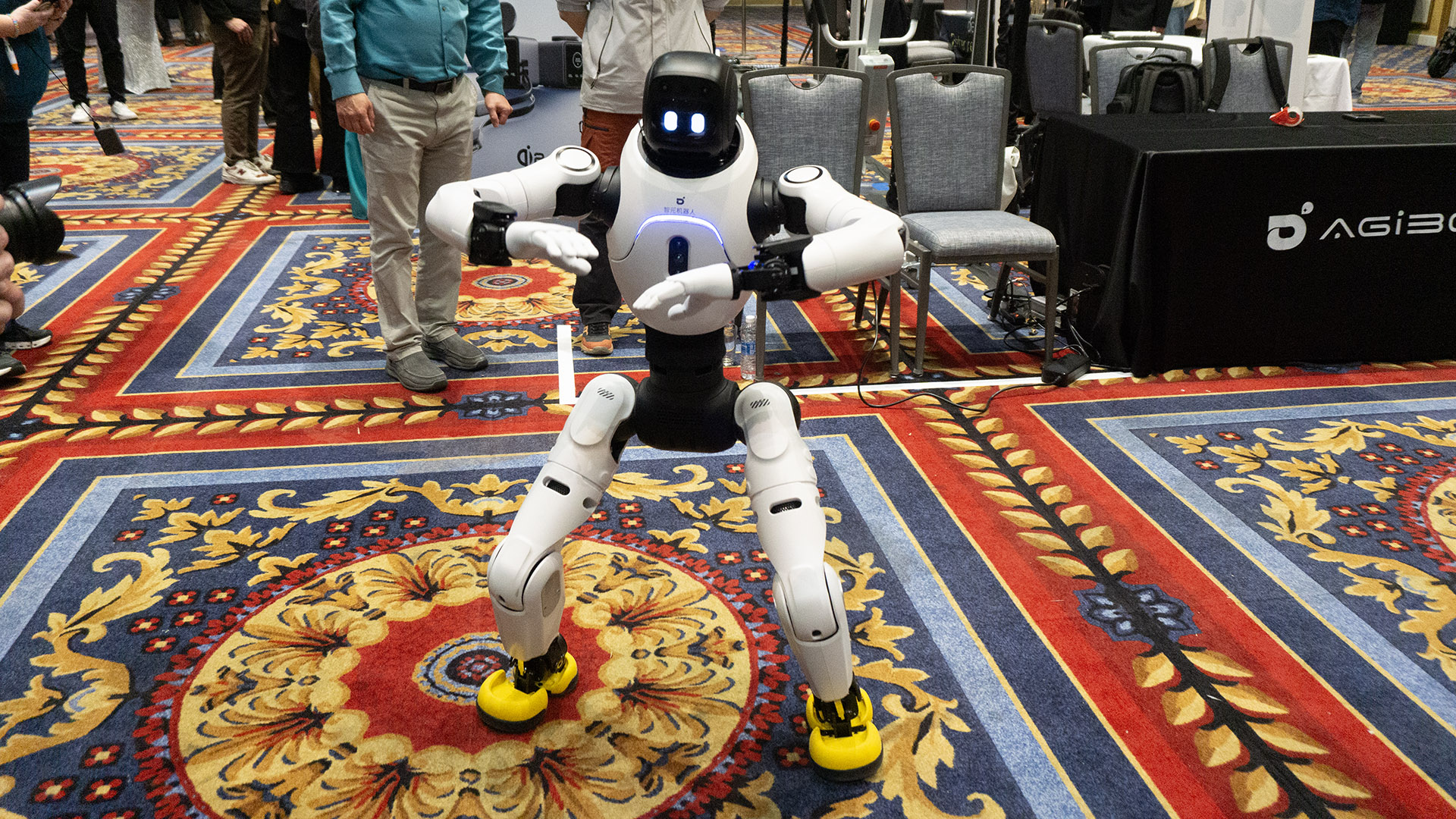
Agibot's X2 humanoid robot.
Karissa Bell for Engadget
Of all the humanoids we saw at CES, Agibot's made the biggest impression. The company was showing off two models: the larger A2 and the smaller X2 (pictured above). The latter impressed us with its dance moves — the company told us it can learn surprisingly complex choreography — but the A2 turned out to be surprisingly capable at chatting up CES goers.
Later in the show, we came across the A2 at IntBot's booth, where the company had custom versions of both Agibot humanoids "running" their booth. I spent several minutes talking with "Nylo" and was genuinely impressed by its conversational skills, even if its roasts could use a little work. — Karissa Bell, Senior Reporter
Dreame's robo vac arms and legs
Dreame was back this year with some wild robot vacuums. The company showed of the Cyber 10 Ultra, a robot vacuum with a multipurpose extendable arm. The arm, which we got a glimpse of at last year's show, can pick up stuff, but it also has its own cleaning attachments, allowing the robot to clean hard-to-reach corners and other spots that wouldn't otherwise be accessible.
Dreame also brought its latest wild concept, the Cyber X, which has legs that propel it up and down full-size staircases. The legs are somewhat unsettling — they look alarmingly similar to mini chainsaws — but watching it glide up and down stairs was impressive all the same. — KB
OlloBot
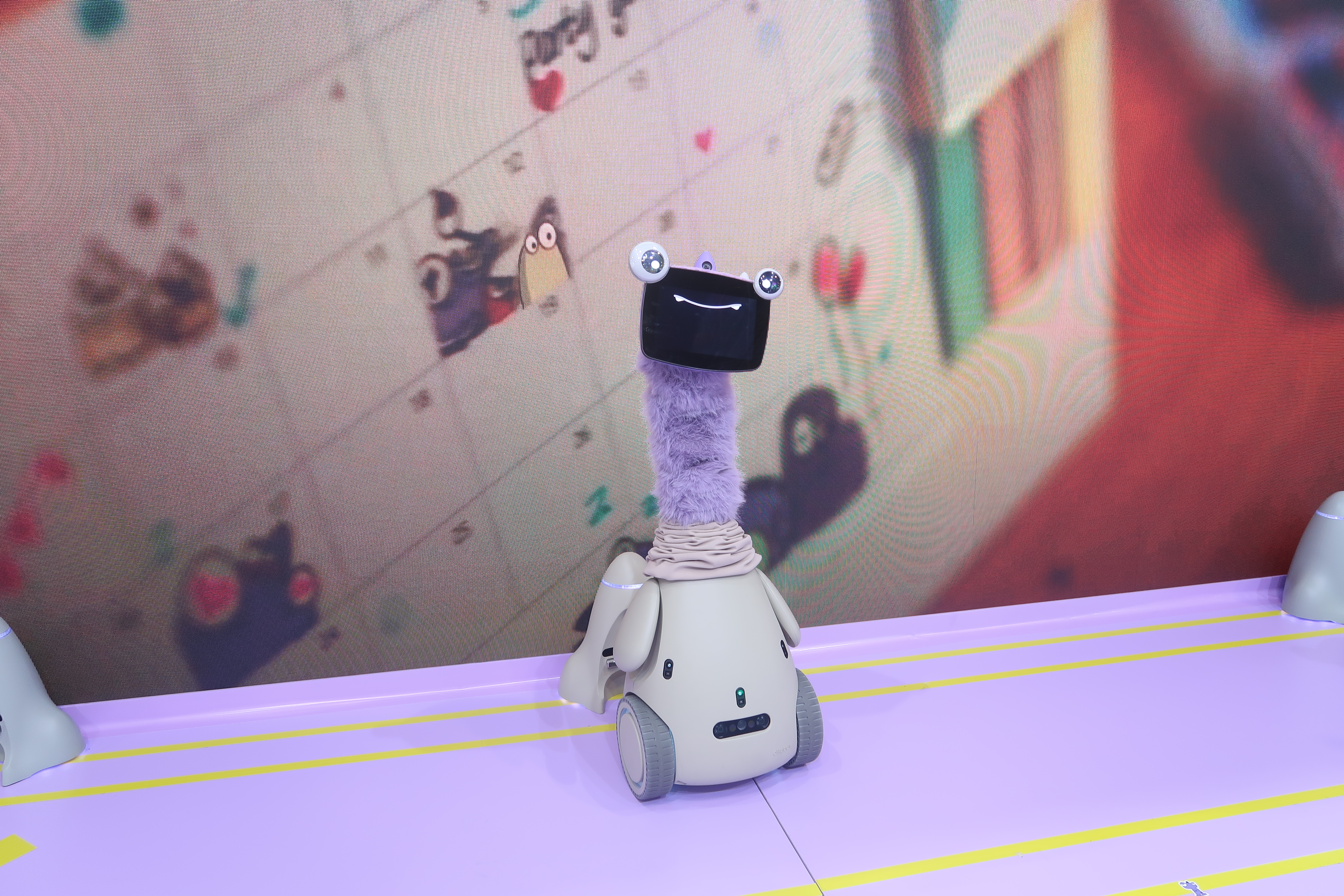
The long neck version of OlloBot.
Cheyenne MacDonald for Engadget
OlloBot is one of those semi-ridiculous CES robots that's just impossible not to smile at. It has the goofiest face, with top-sitting frog eyes slapped onto a tablet where its mouth is displayed. Then, on top of that, it has a patch of soft fur on its neck and nowhere else on its body, which is penguin shaped and complete with flappy little arms. There are two versions of OlloBot, one that's short with a fixed neck and another where the neck can stretch out to make it much taller. And of course, it can be dressed up in silly outfits.
It's a family-focused robot that responds to voice commands and touch, and is meant to capture memories as they happen, snapping pics and videos for its diary of notable moments. It can be used to make calls and control smart home devices. Everything is stored locally in its removable heart module, and there's a companion app for additional interactions. — Cheyenne MacDonald, Weekend Editor
Rovie
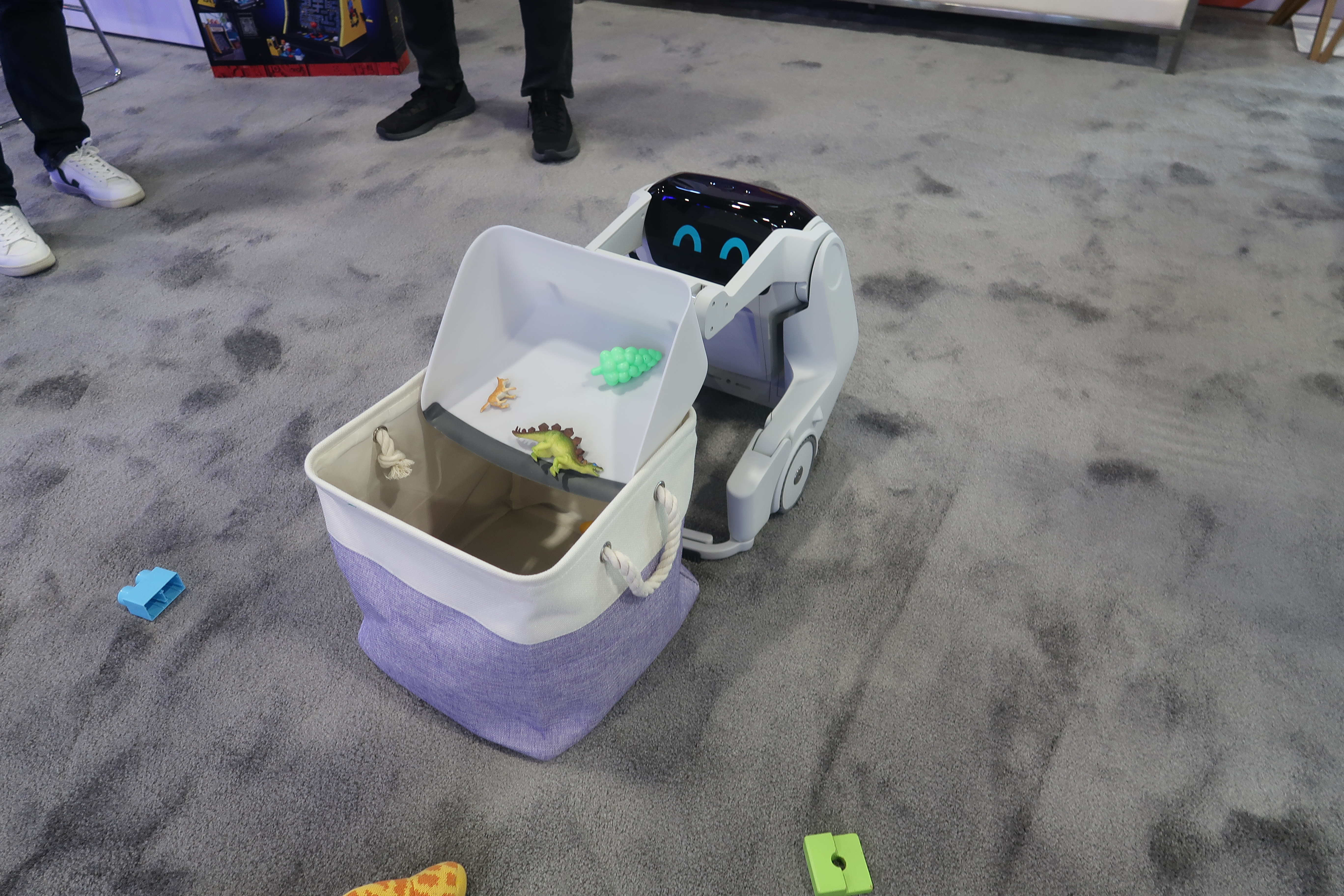
A robot with a dust pan like appendage dumps toys into a bin.
Cheyenne MacDonald for Engadget
Sure, we've seen multiple robots (particularly robovacuums) that can pick objects up off the floor and put them away to make homes tidier, but this one is cute and has a little face. Instead of using an arm to grab one thing at a time, Clutterbot's Rovie has a dustpan-style tray with two sweepers that fold out from its front. It drives around and, using computer vision, identifies toys that have been left on the floor and scoops them up. Then, it dumps them in a designated bin where they're consolidated and out of the way.
It's still in the R&D phase, a team member said when I visited the booth, but this is one I'm hoping to see become a real, purchasable product soon. For parents of small children who are constantly leaving their toys around, it would be pretty convenient to have a tiny robot picking up after them. Also for me, who doesn't have children but a very sweet and hardworking cat who loves to steal socks and then deliver them as if they're her kills, leaving socks scattered all over the house. Clutterbot team, if you're reading this, please add socks to the list of items Rovie can sweep up. — CM
Saros Rover
Not to be outdone, Roborock also brought a stairclimbing robot vacuum to CES, Saros Rover. And, unlike Dreame's prototype, the Roborock can also clean the stairs while it climbs. No word on when it will be available or how much it might cost (probably a lot!) but the company says it is "a real product in development." -KB
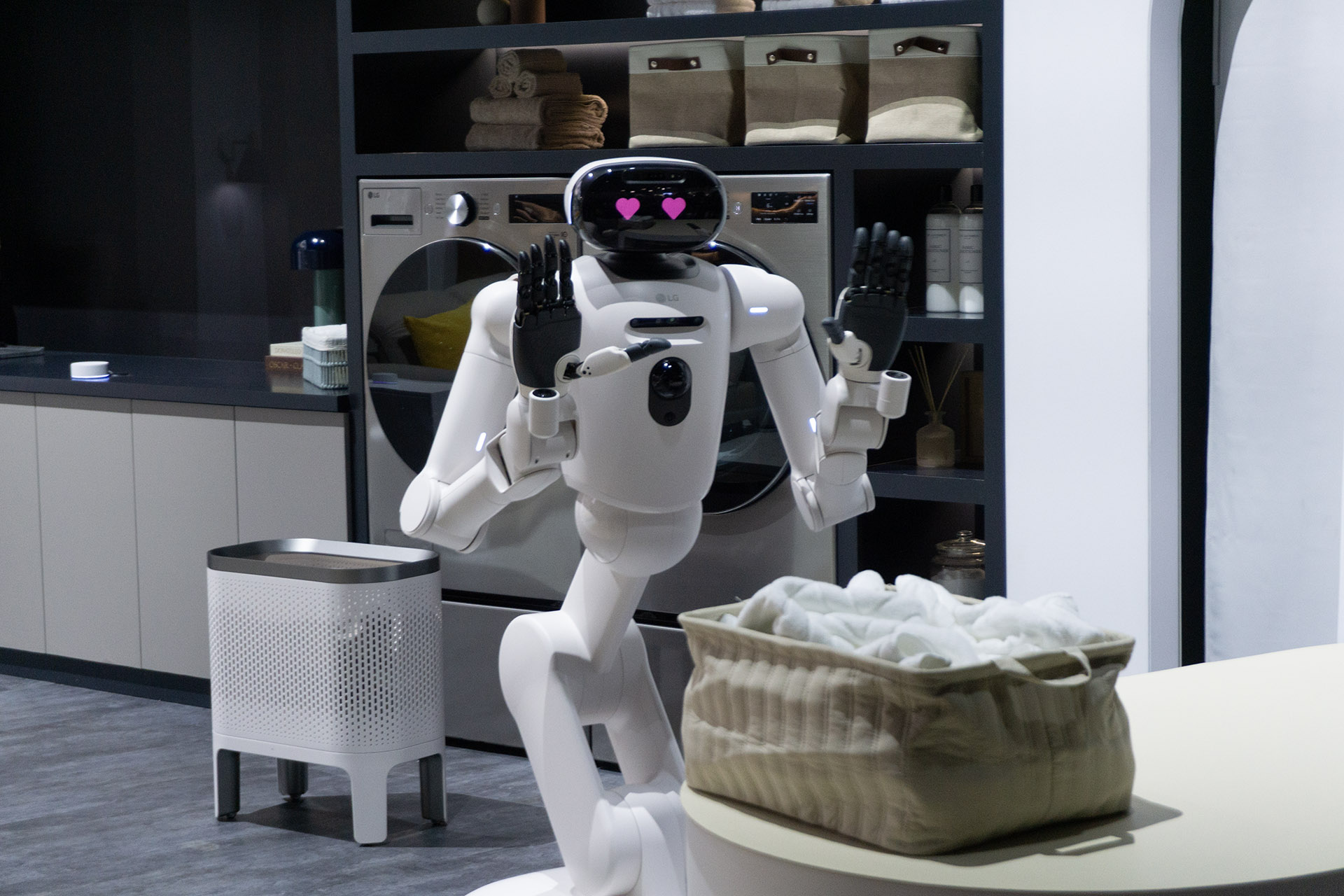
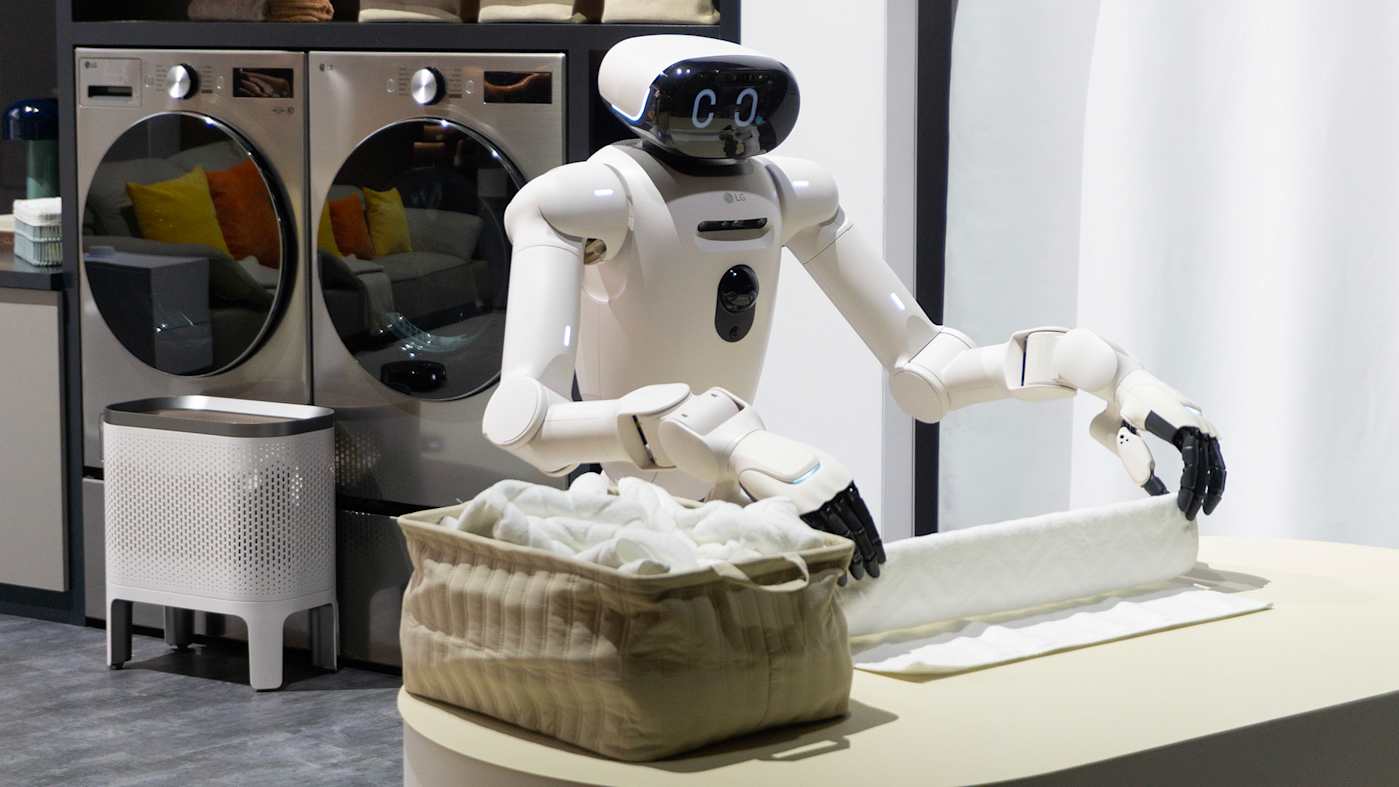
CLOiD
CLOiD folded laundry at LG's CES booth.
Karissa Bell for Engadget
LG's CLOiD was definitely the most ambitious robot we saw at CES 2026. The company showed its home helper concept (slowly) folding and sorting laundry, fetching drinks from the fridge, putting food in the oven and retrieving a set of lost keys. But while the 15-minute demo gave us a tantalizing look at the appliance maker's vision for a "zero labor home," it's unlikely to be anything more than a slick demo anytime soon. The company has made no commitment to actually make a version of CLOiD people can actually buy. — KB
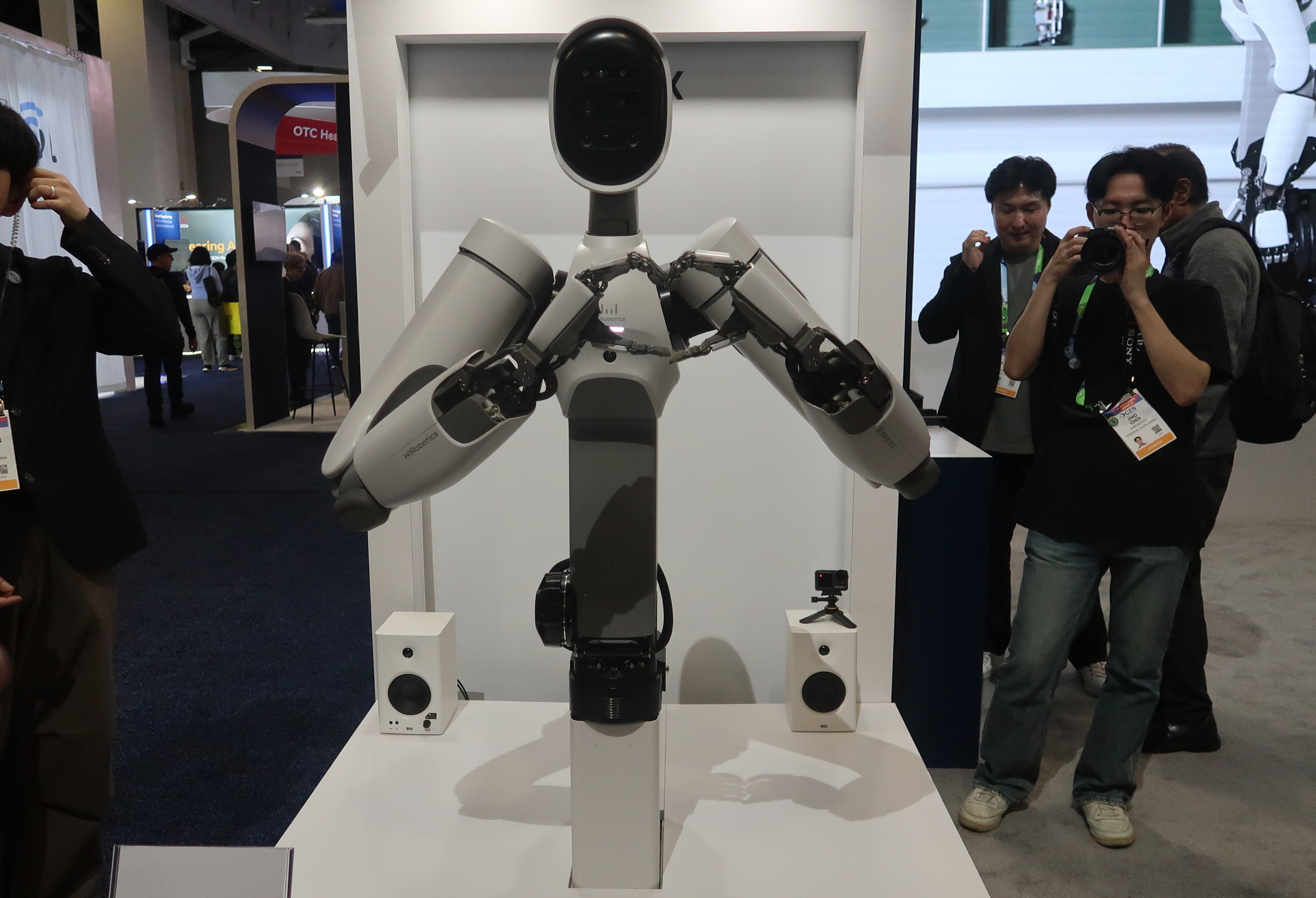
Allex
WIRobotics' Allex robot makes a heart sign with its hands.
Cheyenne MacDonald for Engadget
WIRobotics brought its new humanoid, Allex, to CES, and the robot was really hamming it up when we stopped by the booth, striking poses and engaging with visitors. It's a waist-up robot with articulated parts, from its arms to its fingers, and is meant to be a general purpose tool that could be used in manufacturing, the service industry or even households. Each hand can hold objects of up to about 6.6 lbs, and the robotic hand has 15 degrees of freedom. The company's website shows the robot's fingers are dexterous enough to do the Gen-Z heart sign, but when it looked at Karissa and me it threw a millennial heart up. Did Allex lowkey call us unc? — CM
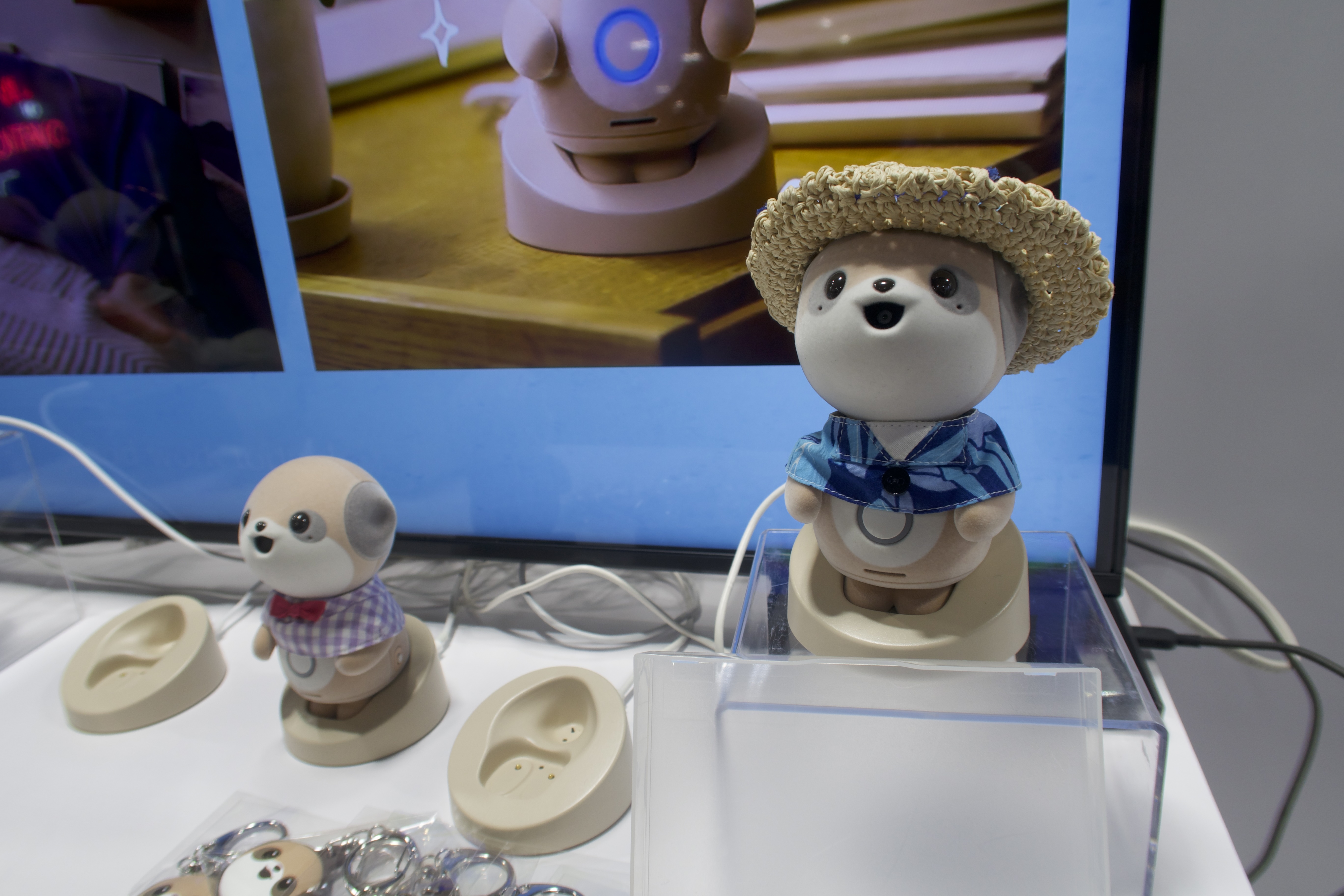
Poketomo
Poketomo in one of the many outfits Sharp brought to CES.
Cheyenne MacDonald for Engadget
Sharp's Poketomo is an improbably adorable tiny meerkat. Well, technically it's an AI companion shaped like a fuzzy, portable meerkat. It might look like a toy, but the company says it's actually to be a companion for adults.
It’s small enough you can carry it around with you throughout the day (Sharp even makes a tiny Poketomo-sized clear backpack). Like a lot of AI companion devices we saw at CES, it’s equipped with a small camera and microphone that enables it to constantly interact with you. The camera also enables its “memory” so the pet can recognize and deliver personalized updates to its person. Poketomo launched recently in Japan, but sadly Sharp says it has no current plans to sell it in other markets. — KB
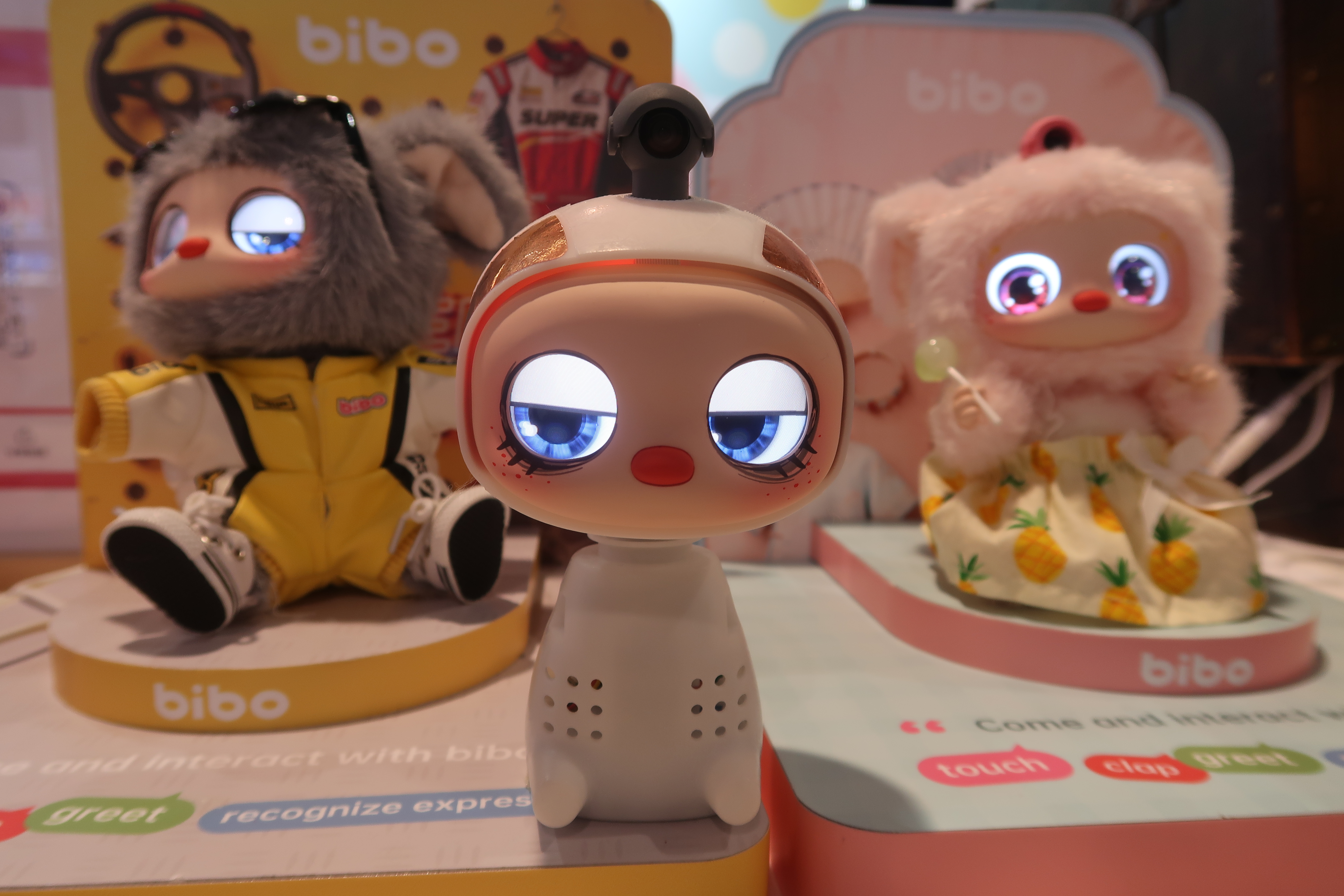
Bibo
Moony bibo (I-Type).
Cheyenne MacDonald for Engadget
It seemed like everyone was trying to cash in on Labubu hype at CES 2026. There were Pop Mart-style bag charms all over the place and countless products that looked suspiciously like the now ubiquitous toy monster. We even got one pitch for a "a labubu-like robot that talks to you" that, in fact, did not look like a Labubu in any way, shape or form. But there was one truly Labubu-like tiny robot that managed to stand out from the rest and kind of stole my heart, even though I'm not particularly into Labubus. (Please don't make me say Labubu ever again.)
Bibo is a cute-as-hell AI toy that's meant to be a companion you bring with you everywhere. It has a little camera on its head that it uses to see the world around it, and can recognize its owner's face and tone of voice, so it can respond to interactions in an emotionally appropriate way. It'll keep a daily diary of its activities, and while the toy comes in two starting personality "types" — Sunny bibo (E-Type), the bubbly extrovert, and Moony bibo (I-Type), the gentle, sensitive one — they'll develop more unique personalities over time. Their fur is soft and warm, so it feels like you're petting a kitten.
Why is it even cuter like this?
Cheyenne MacDonald
At the booth, the team had several of them on display wearing various outfits, in little dioramas showing them in classroom and camping scenes, and even deconstructed with the fur removed, which somehow made it look even cuter. Bibo isn't available to purchase yet, and when it is, it'll launch first in China before potentially expanding depending on its success at home. — CM
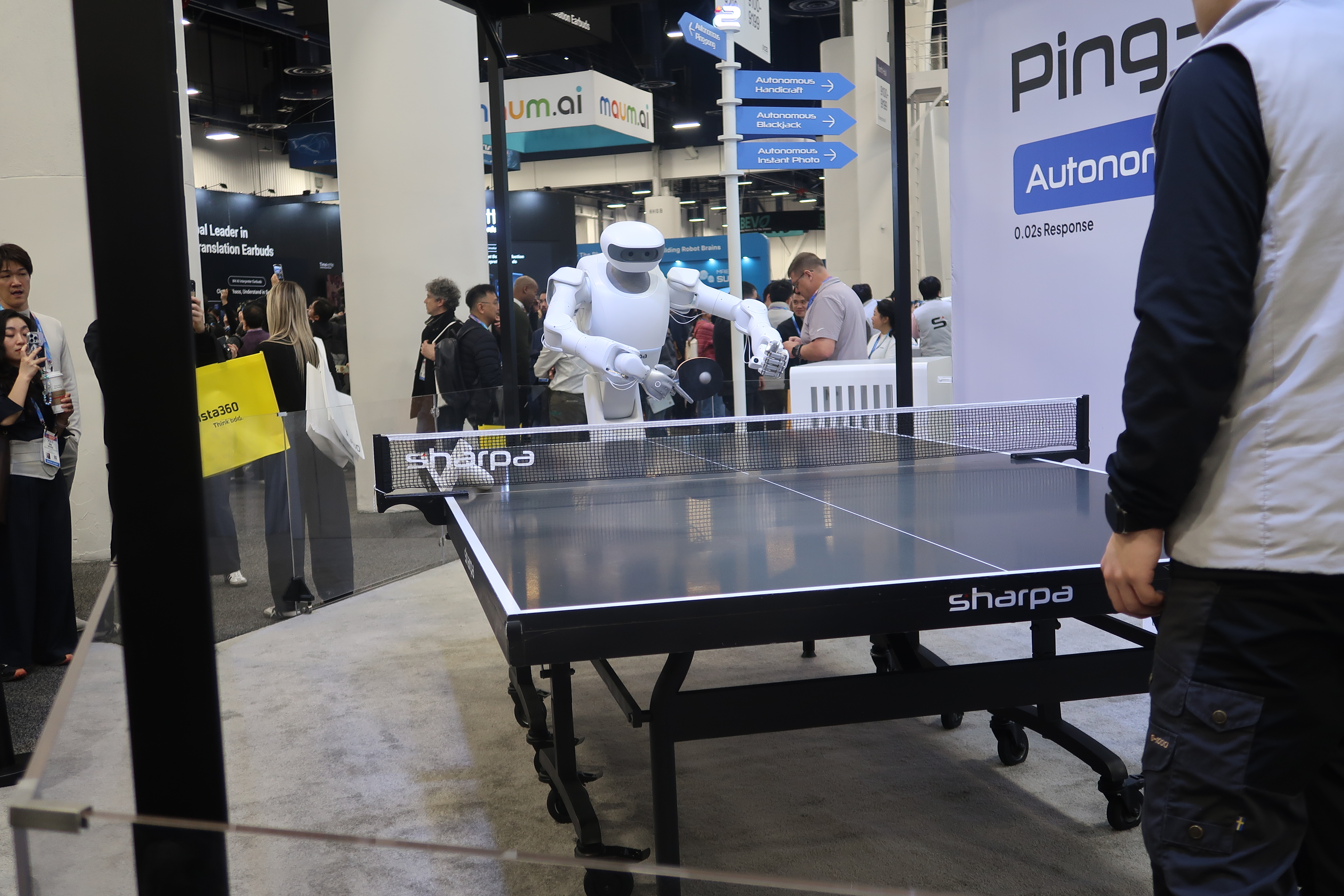
Sharpa
Sharpa's humanoid robot is seen playing ping-pong.
Cheyenne MacDonald for Engadget
Sharpa's booth had a lot going on and was definitely one of the bigger crowd-pullers. There was a humanoid robot playing ping-pong, another taking selfies with people and another dealing blackjack, along with a disembodied robotic hand that could mirror visitors' finger movements. The autonomous demos showed off what that highly dexterous hand can do, and it was pretty impressive — especially seeing it draw individual cards from the deck. — CM
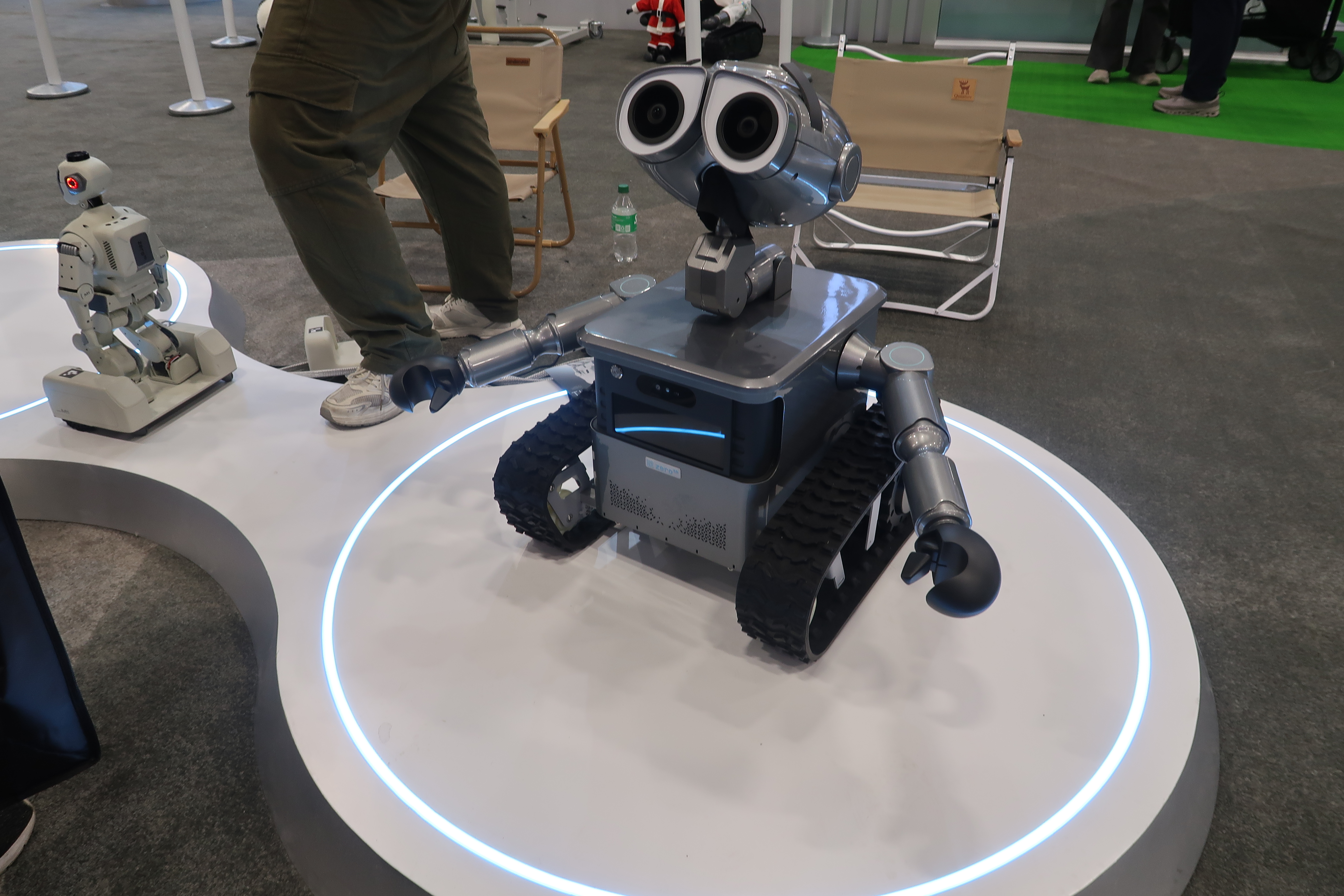
Zeroth
Zeroth's W1 robot.
Cheyenne MacDonald for Engadget
Chinese robotics startup Zeroth brought two adorable home robots to CES: a pint-sized humanoid companion bot and a rolling robot that looks like Wall-E, with tank-style tracked treads so it can ride around outside. We didn't see these guys doing too much, but they sure were cute. The one that resembles Wall-E, called W1, kind of melted my heart just looking at it. (Don't get attached, you can't afford it.)
The tiny humanoid, M1, costs $2,400 while W1 costs $5,000. Both are expected to ship this spring, with a tentative date of April 15. — CM
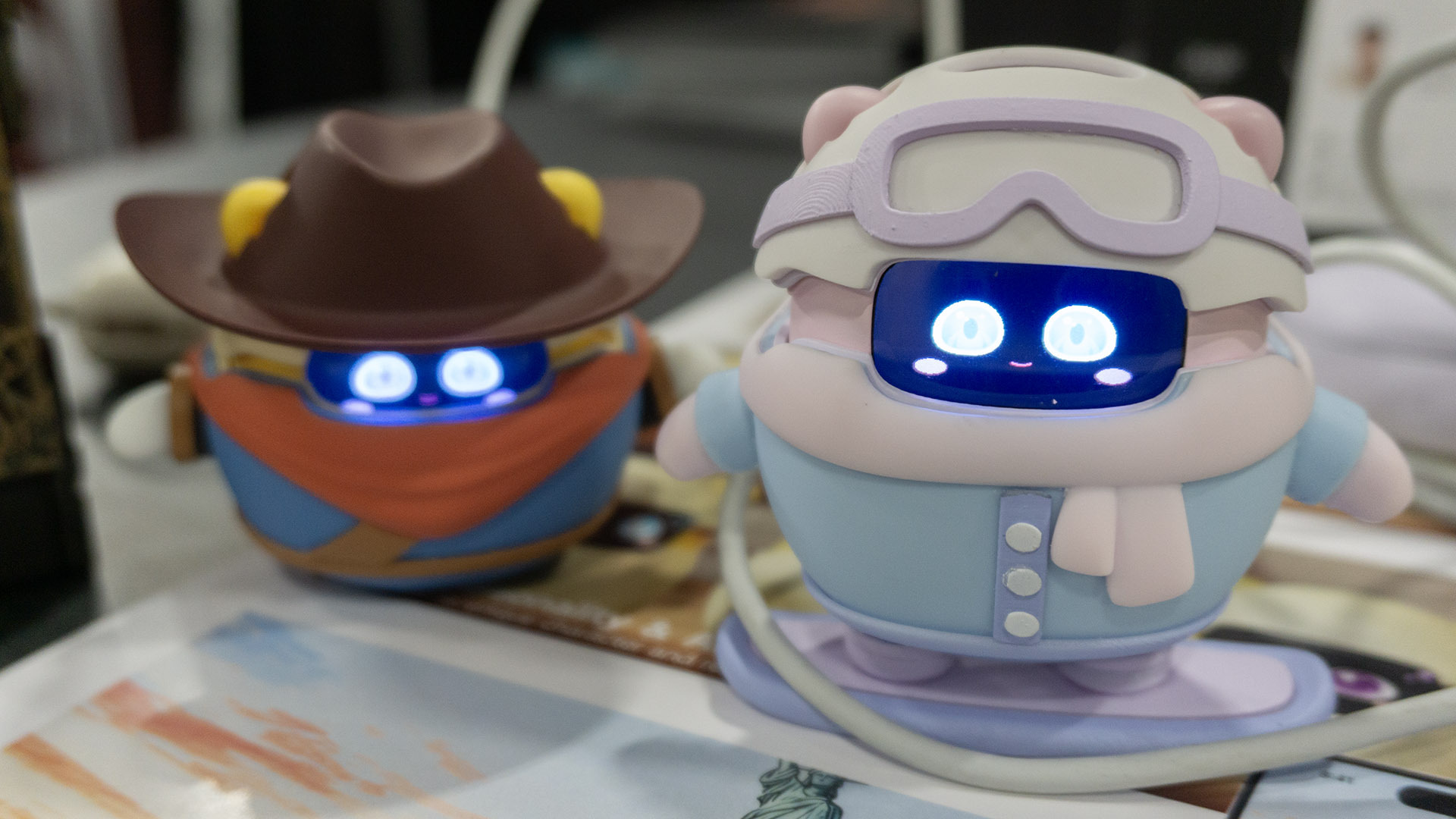
Sweekar
Sweekars in their little outfits.
Karissa Bell for Engadget
Takway's Sweekar pocket pet was something I looked at and immediately thought, sigh, I'm going to buy that. It's a Tamagotchi-like virtual pet with AI smarts so it can form a personality based on your interactions with it and the activities you do together. The idea is that it "grows" with you. Like a Tamagotchi, it will require more frequent care in the younger stages of its life cycle. But after it reaches the adult level, it autonomously cares for itself, and it never dies. It can eventually keep itself entertained, and go off on its own virtual adventures and bring you back tales of its travels.
Sweekar is super cute as is, and it can be dressed up in little outfits for more personalization. The device comes in light yellow, pink, and blue, and we saw it sporting a snowboarder outfit and a full cowboy getup. — CM
Realbotix
One of Realbotix' robots.
Cheyenne MacDonald for Engadget
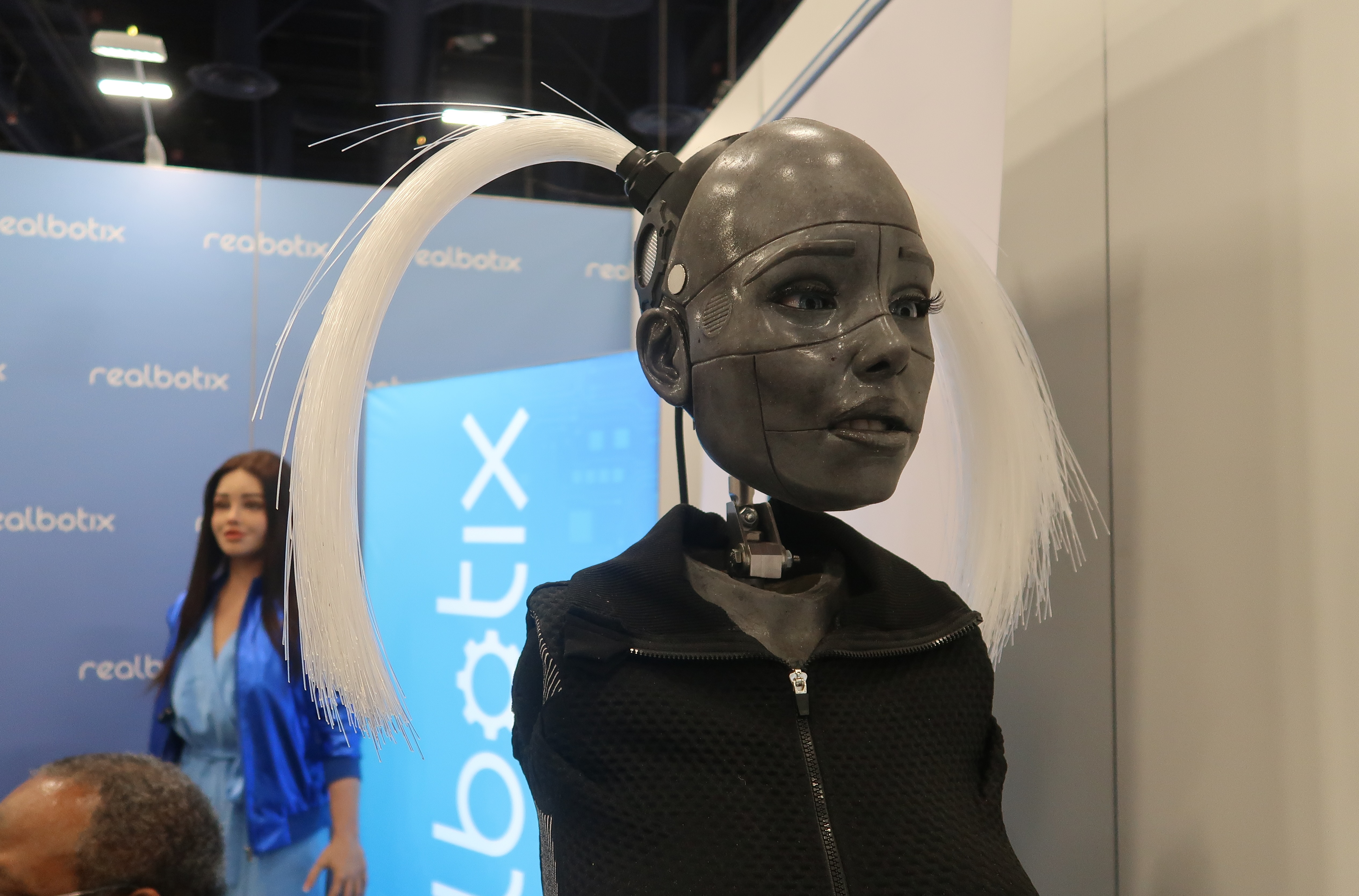
Realbotix is a company we've seen a lot at CES over the years, and it was at the show again for 2026 with several of its highly customizable, realistic humanoid robots. As always, it was among the most unnerving exhibits we saw. New for this year, Realbotix was demonstrating its Robotic Vision System, which allows its robots to see and react to their surroundings more naturally, tracking faces to look directly at whoever is talking and better reading emotion from facial expressions. Damn, it can sense my fear now… — CM
Onero H1
Onero H1 had an endearingly blank stare.
Karissa Bell for Engadget
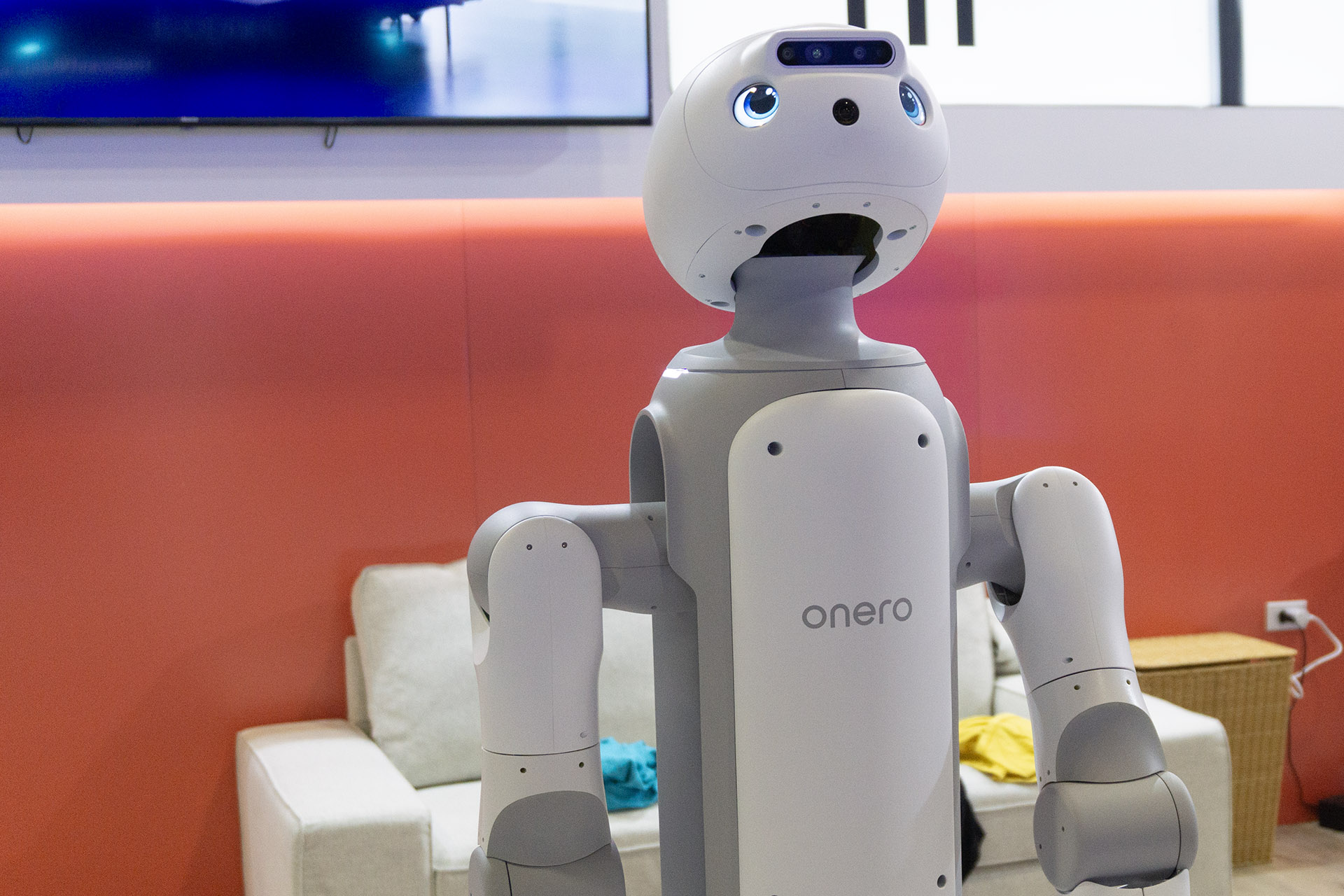
Switchbot surprised us with its own chore-handling robot, Onero H1, which also won Engadget editors' pick for best robot of CES 2026. We were immediately taken by its weirdly long body and endearingly blank stare as it slowly wheeled around picking up laundry and depositing the items in a washing machine.
Like a lot of robot demos we saw at CES, we only saw Onero performing a small part of what Switchbot says it's actually capable of. But Onero also seemed much more realistic in terms of the type of robot helpers that people might actually see outside of CES, and the company told us it does plan to sell Onero (albeit in limited quantities) by the end of the year. — KB
Cocomo
Ludens AI Cocomo robot.
Cheyenne MacDonald for Engadget
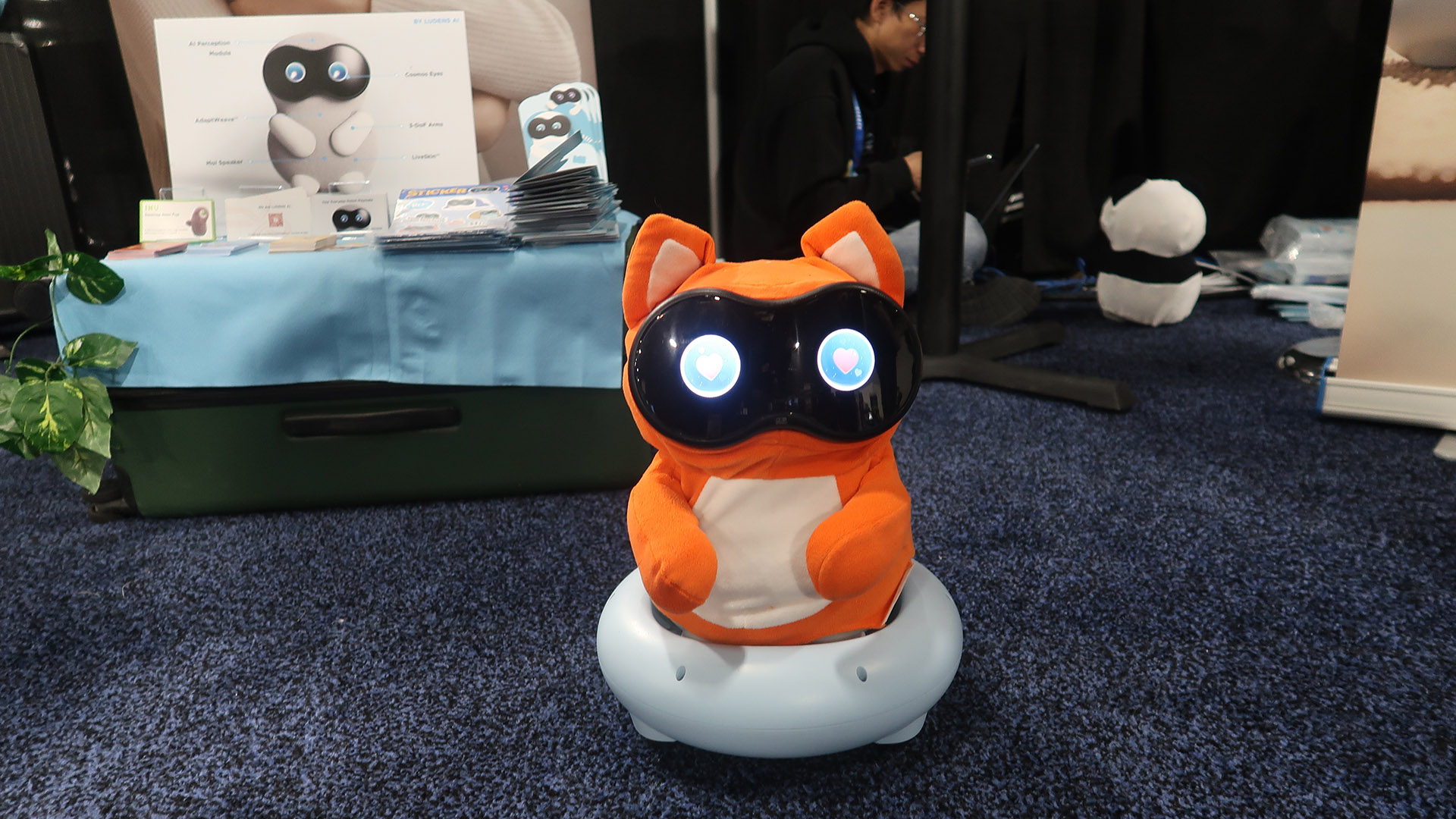
Another robot pet that won us over immediately was Cocomo. Created by Japanese startup Ludens AI, Cocomo is an autonomous robot friend that yes, uses AI to respond to voice and touch and is meant to bond with its owners over time. The egg-shaped creature can scoot around on a wheeled base, or you can carry it around with you.
But what we loved about Cocomo is that it's not trying to be yet another AI assistant, give out life advice or perform tasks. Its goal is to provide companionship and well, be your friend. And while it can respond to voice input it doesn't exactly have a voice of its own: it communicates via cute humming sounds, which is a lot less creepy than some of the talking robots we saw. — KB
Yonbo
Yonbo at CES.
Cheyenne MacDonald for Engadget
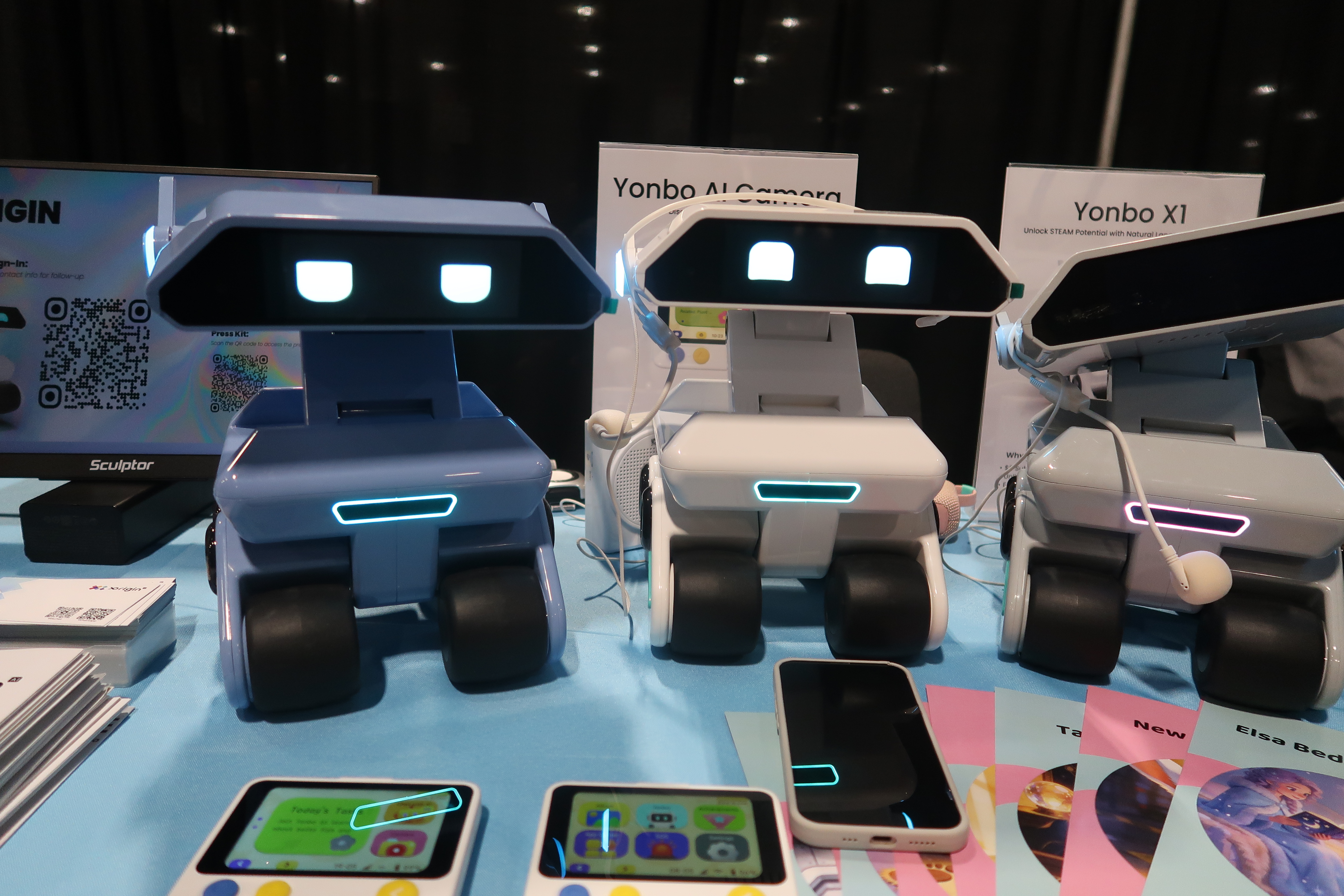
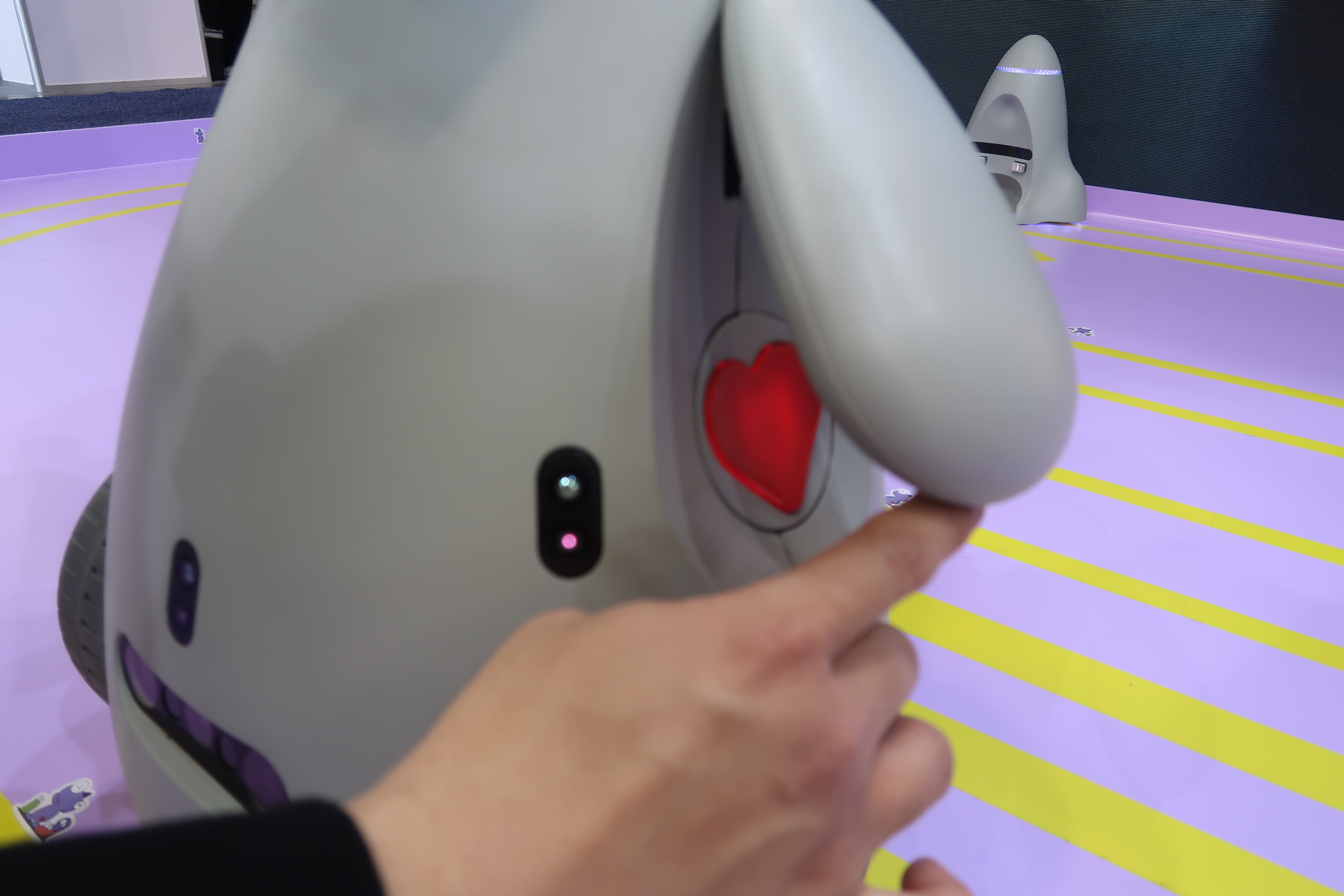
Yonbo is a kids' AI companion robot that totally charmed us. It kind of looks like a dog, and when we visited its booth at Unveiled, there were four of them playfully bopping their heads to a pop song and cycling through different cute facial expressions and emoji eyes (including bowls of ramen). It's designed to be an intelligent playmate that can tag along for activities, talk with a child and read them stories, and even help them work through emotions, like getting frustrated during a game.
Yonbo's movement is controlled by a wristband, so it doesn't require a phone to play with. It can also be used as an extra pair of eyes for parents around the house. In Parental Monitor mode, which the team says is the only time its camera will be able to stream and store video, parents are able to see what Yonbo sees. The robot costs $800 and is available now. — CM
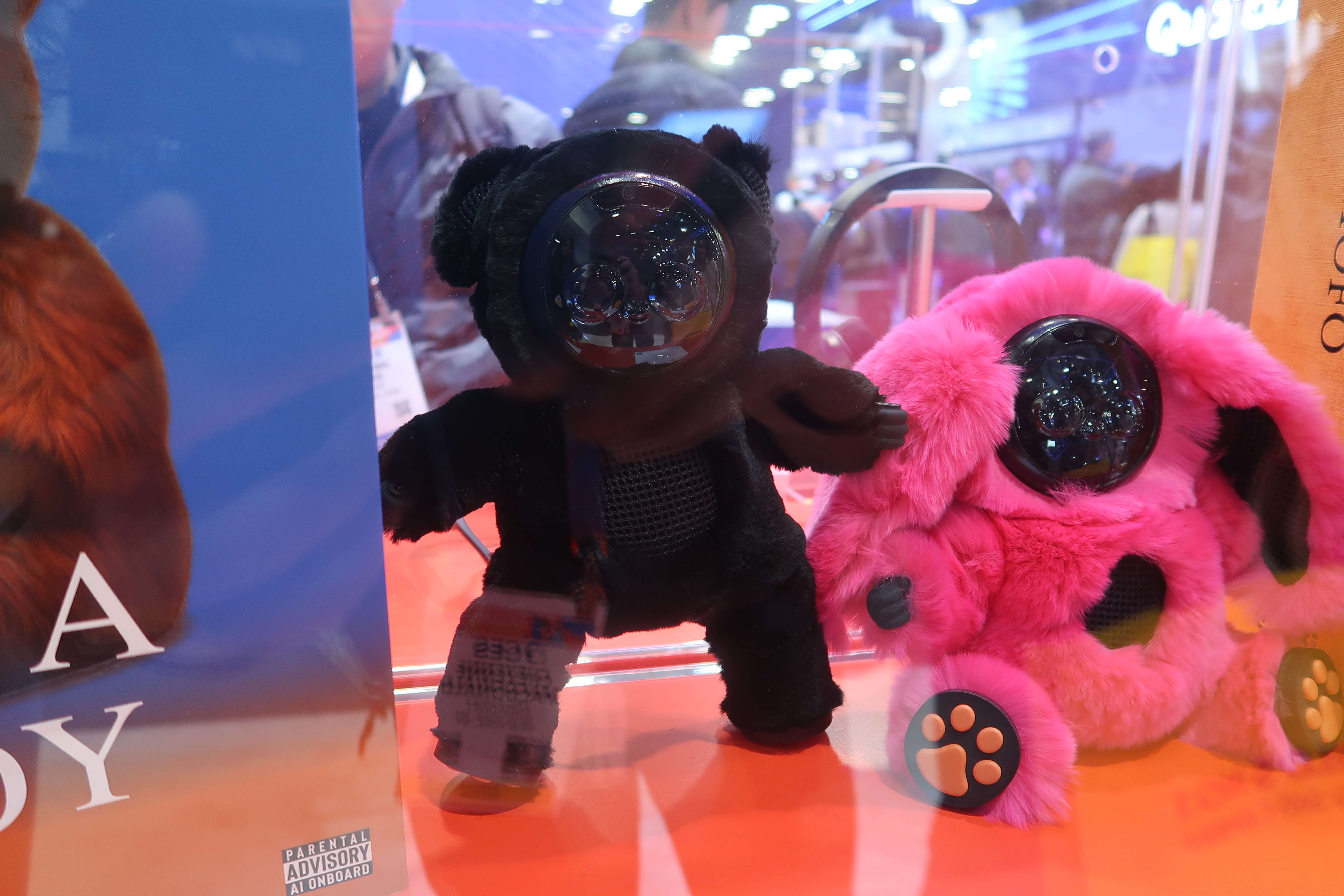
MÖFO
MÖFO in a glass case at CES.
Cheyenne MacDonald for Engadget
If we're being completely honest, the pitch for will.i.am's MÖFO (yes, MOFO, like motherfucker) had us a bit, um, perplexed for a hot second. We read it and all the accompanying materials over and over trying to figure out what, exactly, this thing does. Some of the claims that added to this confusion: "the agent 'octopuses' across your digital ecosystem through its eight USB-C connections"; it "converts moments into objects"; it "turns life notes into a life operating system."
We get it now, (we think): It's agentic AI hardware, kind of like a Rabbit R1 or AI Pin but in the form of a teddy bear. Sadly, we didn't get to see MÖFO up close or watch it do anything, but we are nonetheless intrigued, if still a bit confused, by this strange teddy bear. — CM and KB
This article originally appeared on Engadget at https://www.engadget.com/ai/the-robots-we-saw-at-ces-2026-the-lovable-the-creepy-and-the-utterly-confusing-153537930.html?src=rss
LG opened CES 2026 by outlining its vision to reduce the physical effort and mental burden of life. Buy enough of the devices it’s presently working on and you’ll exist in an environment of “ambient care,” coddled by the machinery in your home. It sounds positively utopian: When the sensors in your bed know you’ve not slept well and are getting a cold, a robot will wake you with a glass of freshly squeezed orange juice. When you’re in a rush to get to work, the robot will make you a sandwich for you to eat on the go, sparing you the effort of making it yourself. The more I roamed the halls of the show after that, the more I couldn’t help feeling uneasy about what so many companies here were pitching. To me, the vision of the future on show here is equal parts solitary and infantilized.
There’s obvious reasons for this: AI swallowed the tech industry’s oxygen, sapping any chance of innovation in consumer hardware. The advent of Panther Lake is a win for Intel, but it’s not going to enable dramatic changes in how people work with their PCs on a daily basis. The US policy shift away from EVs and toward fossil fuel-powered vehicles, too, means that the big names in auto manufacture have similarly shied away from the show. That left CES full of various robotics startups offering early visions of humanoid robots designed to work on production lines, take care of your home and replace your pet. I saw more than a few stands where booth attendants were pretending to delight in teaching their wheeled robot pets to play fetch. At least, I hope they were pretending.
I’m painfully aware of how many devices felt like they were only a hop, skip and a jump away from the Sharper Image catalog. Gadgets that are designed to fill some perceived hole in your life that won’t actually make things better or easier in the long run. I’m leery about denigrating assistive technology that offers a vital lifeline to people with accessibility needs. I’m also leery about knocking devices that may enable people to keep working despite wrestling with long term injuries — I've got one eye on the raft of exoskeletons exhibited at the show which might help me work in the garden despite the weakness in my lower back. But I’m also not quite sold on how many toilet computers, massage chairs and scootcases we all need in our daily lives.
There’s also the elephant in the room that many of these innovations seem intent on acting as a replacement, substitute or supplement for real interaction. Robotic panda bears scuttling around your home to save you the effort of caring for a real flesh-and-blood pet. Holographic AI waifus that will obsequiously respond to whatever you ask of it with nothing but flattery and agreement. The sheer volume of AI Labubus operating as friend, enemy, companion or a combination of all the above. Cuddly home robots that are little more than a tablet on a moveable base that’ll keep your kids entertained so you don’t have to. Yes, I’m being unfair, but sometimes shows like this make me sound like someone’s grandpa angrily insisting you darn kids get off your screens.
I feel some of these gadgets are specifically designed to enable a degree of detachment from our own bodies. We’re spending so much time getting dopamine from our devices that we’re no longer able to pay attention to how our bodies are feeling. In LG’s vision of the future, moving around for ourselves and making our own food is a thing of the past, which will, surely, put a dent in our physical and mental health. We lose the ability to connect with the people around us because we’ve spent too long being flattered by our AI lackeys. We need a machine to monitor the food we eat and the crap we excrete because we’re not willing to pay attention to what we’re doing. Much in the same way that AI encourages us to take shortcuts rather than enjoy the process of being creative, the rest of the tech industry seemingly wants us to shortcut the fundamentals of life.
This article originally appeared on Engadget at https://www.engadget.com/ces-2026-offered-a-lonely-vision-of-the-future-160000993.html?src=rss
There were no idle hands at Sharpa's CES booth. The company's humanoid may have been the busiest bot at show, autonomously playing ping-pong, dealing blackjack games and taking selfies with passersby. On display wasn't just the robot and its smarts, but also SharpaWave, a highly dexterous 1:1 scale human hand.
The hand has 22 active degrees of freedom, according to the company, allowing for precise and intricate finger movements. It mirrored my gestures as I wiggled my hand in front of its camera, getting everything mostly right, which was honestly pretty cool. Each fingertip contains a minicamera and over 1,000 tactile pixels so it can pick up objects with the appropriate amount of delicateness for the task at hand, like plucking a playing card from a deck and placing it gently on the table.
Sharpa's robot was a pretty good ping-pong player, too. We've seen ping-pong robots plenty of times before, but these typically come in the form of a disembodied robotic arm, not one that's humanoid from the waist up. The company's products are meant to be general-purpose, with the ability to handle a wide range of jobs, and its humanoid wore a lot of hats at CES to drive the point home.
This article originally appeared on Engadget at https://www.engadget.com/ai/sharpas-ping-pong-playing-blackjack-dealing-humanoid-is-working-overtime-at-ces-2026-150000488.html?src=rss
Cute, alien-inspired companion robots are a fixture at CES, but have I ever seen one with a furry telescoping neck that's also warm to the touch? No, I can't say I have before this year. OlloBot — which had possibly the cutest booth at CES 2026 — is a home robot and "cyber pet" that looks something like if you put ET's head on a penguin's body, plus a splash of fur and color.
Its face is essentially a large tablet that displays its expressions, pictures and videos, and allows it to communicate with people in the home. OlloBot speaks its own language, but will put text on the screen when it has a message that's meant to actually be understood. There's also a companion app where family members can message with the robot, see its diary updates and play games. Like other family-oriented robots, OlloBot is designed to capture special moments and "grow" with the people using it.
Based on the interactions, it will over time develop a personality based on the Meyers-Briggs personality types. The robot responds to voice and touch, and can do tasks like make calls and help find lost objects. It will be able to control Matter-compatible smart home devices, too. All data is stored locally in a heart-shaped removable module underneath one of its flapping arms. Not only is that intended to be a privacy move, but if the robot ever breaks, the family's cyber pet (along with its "memories") can be restored by putting the old heart into a new body.
OlloBot's heart
Cheyenne MacDonald for Engadget
According to a member of the OlloBot team, a Kickstarter campaign to fund the robot's production is planned for this summer. There will be two versions of OlloBot to choose from: a small one with a fixed, short neck that will cost around $1,000 and a more advanced model that can extend its neck by two feet or so (just eyeballing it) to see from different vantage points, which will run you about $2,000. At the booth, the team also showed off several outfits for OlloBot, including a plush giraffe suit and a sort of cottagecore apple and gingham outfit.
This article originally appeared on Engadget at https://www.engadget.com/home/smart-home/i-cant-get-over-this-goofy-long-necked-cyber-pet-robot-at-ces-175900062.html?src=rss
CES 2026’s second day was all about hands on time with new tech. From Lego’s most ambitious play experiment yet to assistive mobility tech, smart home ideas that actually feel affordable and robots that might one day fold your laundry, here’s what stood out most on January 7.
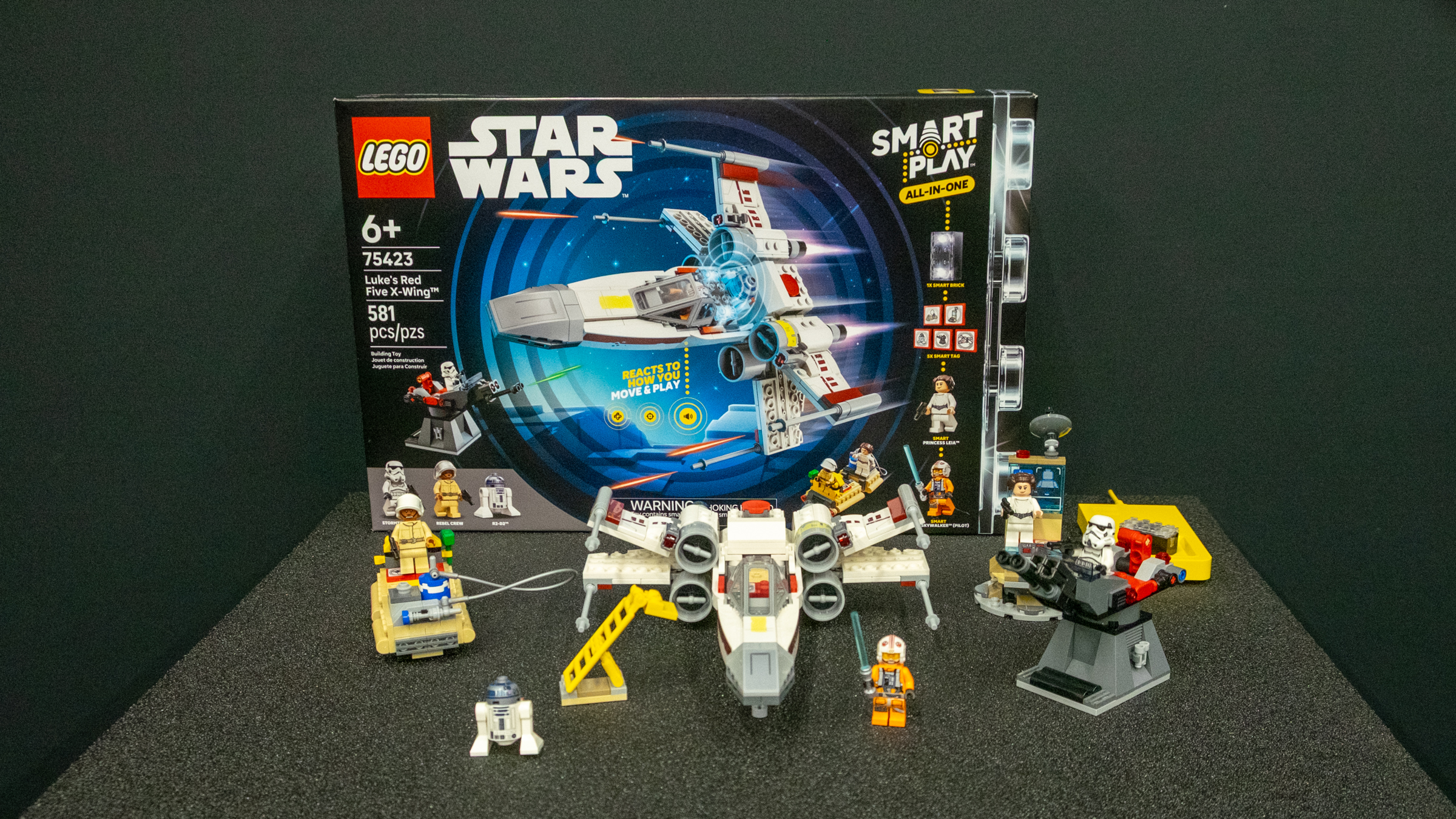
Lego Smart Play
Lego Star Wars Smart Play: Luke's Red Five X-Wing
Nathan Ingraham for Engadget
LEGO’s new Smart Play system feels far more compelling in person than it did on stage. The Smart Brick, combined with Smart Tags and Smart Minifigures, responds dynamically to movement, proximity and context, triggering sounds and interactions without screens or apps. Seeing kids physically act out Star Wars battles while the bricks reacted in real time made it clear this is designed first and foremost for active social play, not digital distraction.
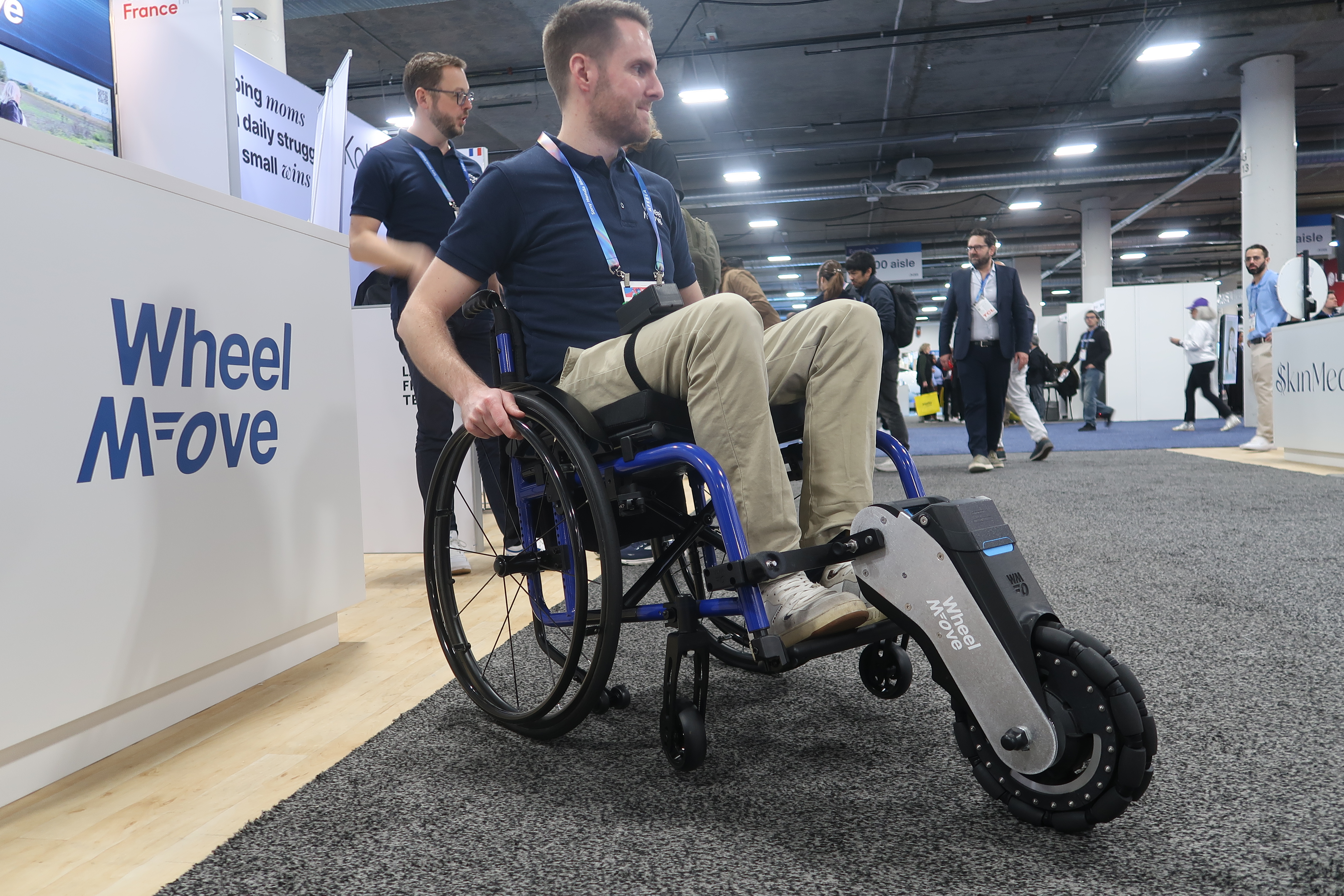
WheelMove
A man sits in a manual wheelchair with an add-on attached that gives it a large central front wheel and raises the casters off the ground
Cheyenne MacDonald for Engadget
WheelMove’s motorized wheelchair attachment is compact, surprisingly quick to install and genuinely empowering in action. The add-on lifts a chair’s front wheels and adds powered assistance, making grass, cobblestones and slopes far easier to navigate. After seeing it demonstrated on uneven surfaces, it’s easy to imagine this opening up spaces that would otherwise be exhausting or inaccessible for manual wheelchair users.
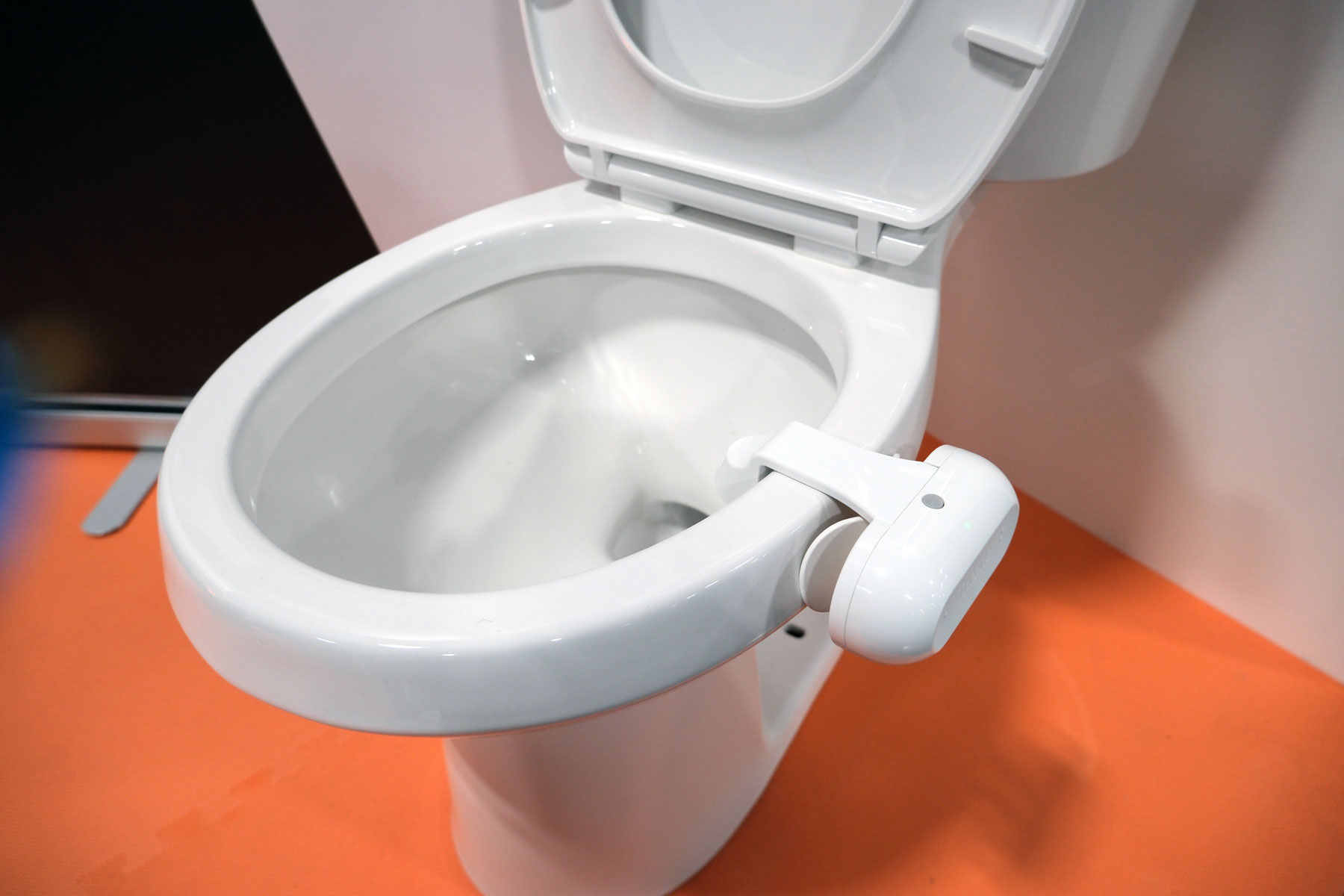
Throne
Image of the Throne Toilet Computer perched on the side of a toilet.
Daniel Cooper for Engadget
Throne’s toilet-mounted health tracker is exactly as strange as it sounds, but it’s also thoughtfully designed. Using computer vision to analyze bowel movements and urination, the device aims to establish a personal baseline and flag changes over time, with gut health and GLP-1 users firmly in mind. It’s too early to judge accuracy, but seeing it in person made it feel less gimmicky and more like a niche wellness tool worth testing.
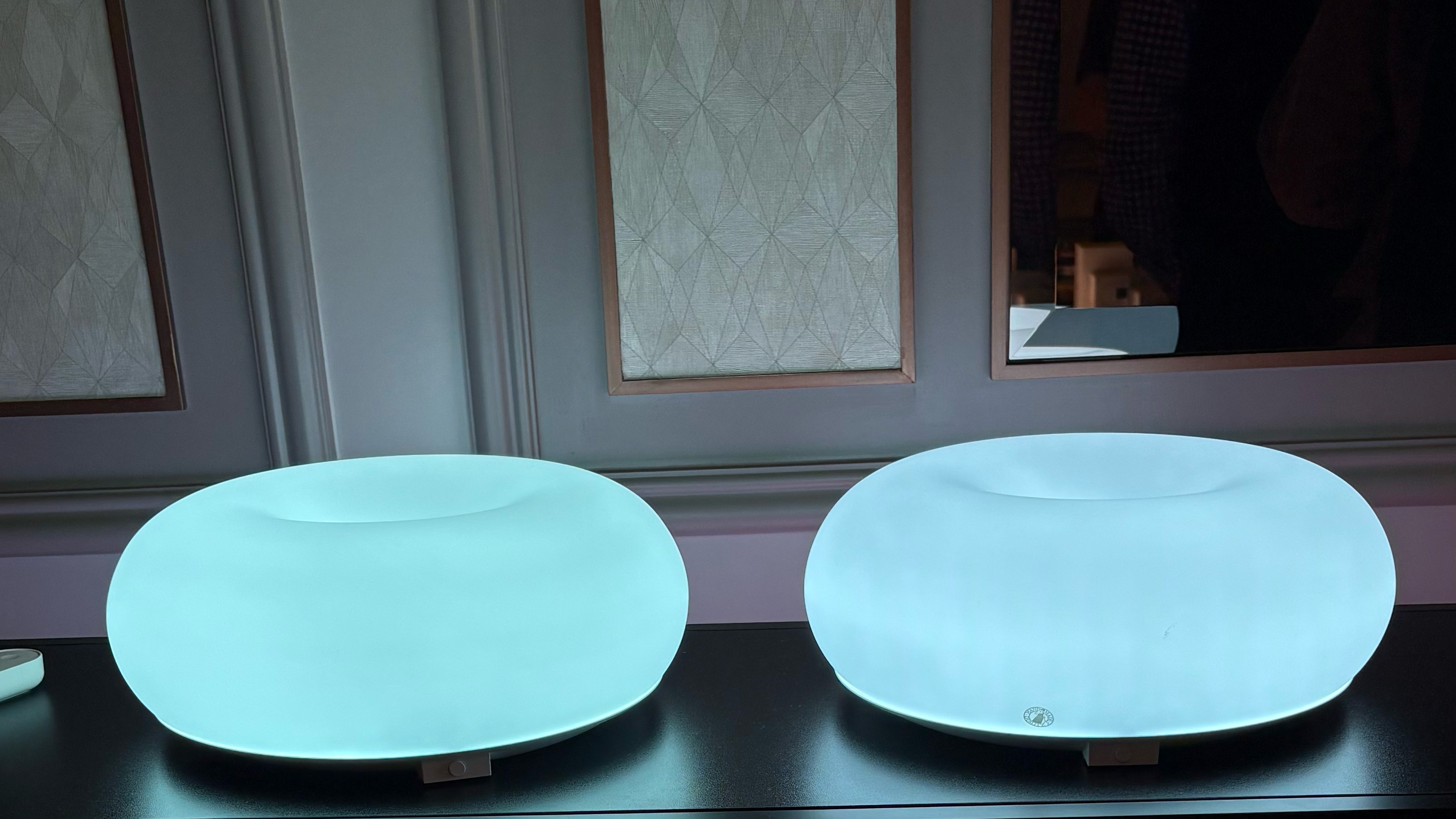
IKEA smart home gear
The popular VARMBLIXT donut lamp is now smart.
Amy Skorheim for Engadget
IKEA’s first CES appearance leaned heavily into what it does best: simple, affordable design. The new Matter-compatible smart home range includes bulbs, plugs, remotes and sensors priced low enough to make smart homes feel accessible again. Standouts like the magnetically mounted BILREA remote and playful TEKLAN lamps showed that IKEA hasn’t sacrificed charm in its push toward interoperability.
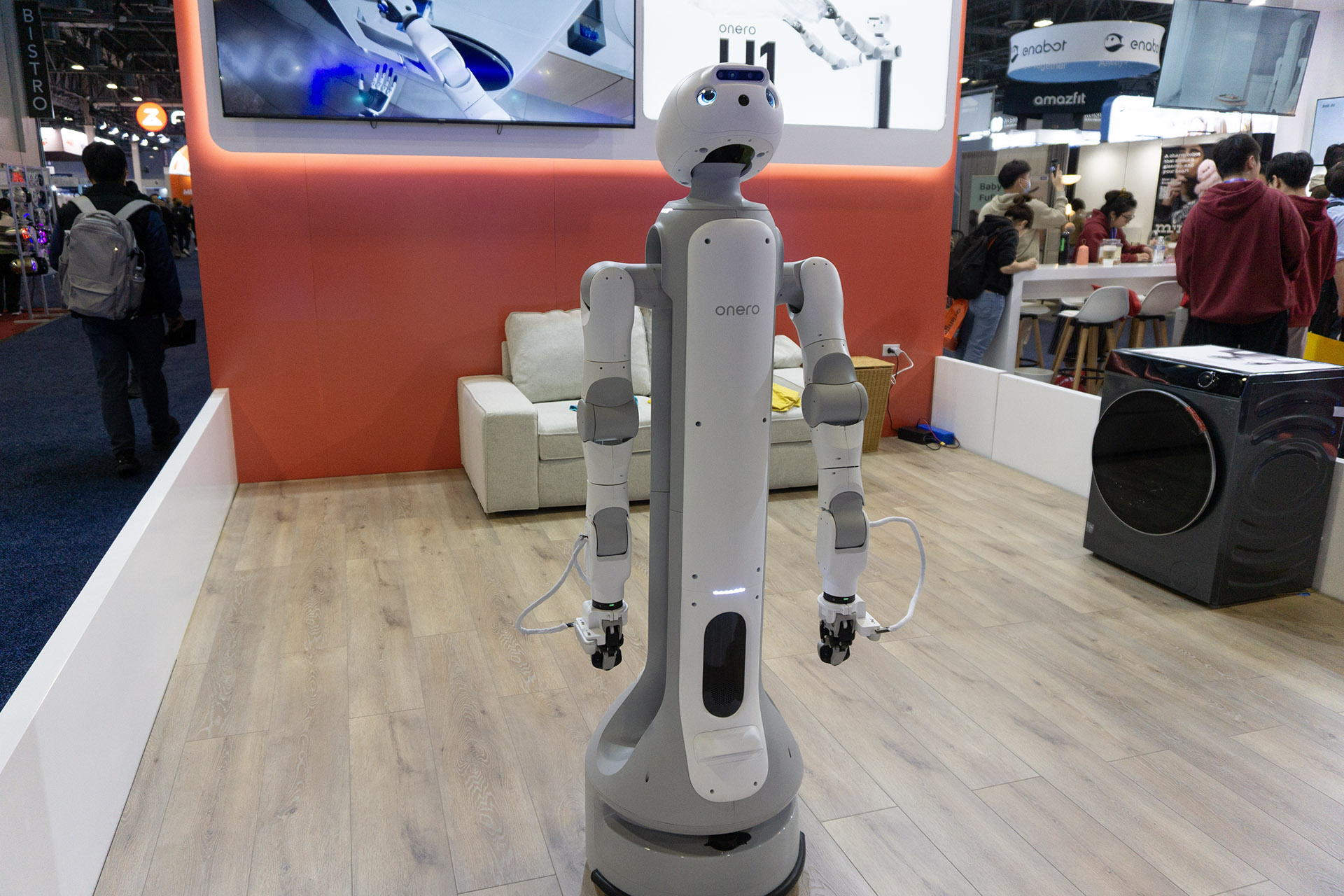
SwitchBot
Switchbot's Onero H1.
Karissa Bell for Engadget
SwitchBot’s Onero H1 was one of the most intriguing robots on the show floor because it’s meant to ship this year. The wheeled humanoid robot uses articulated arms and onboard AI to perform household chores, like loading a washing machine, albeit at a deliberate pace. Watching it work made the case that speed matters less than reliability when a robot can handle tasks while you’re not home.
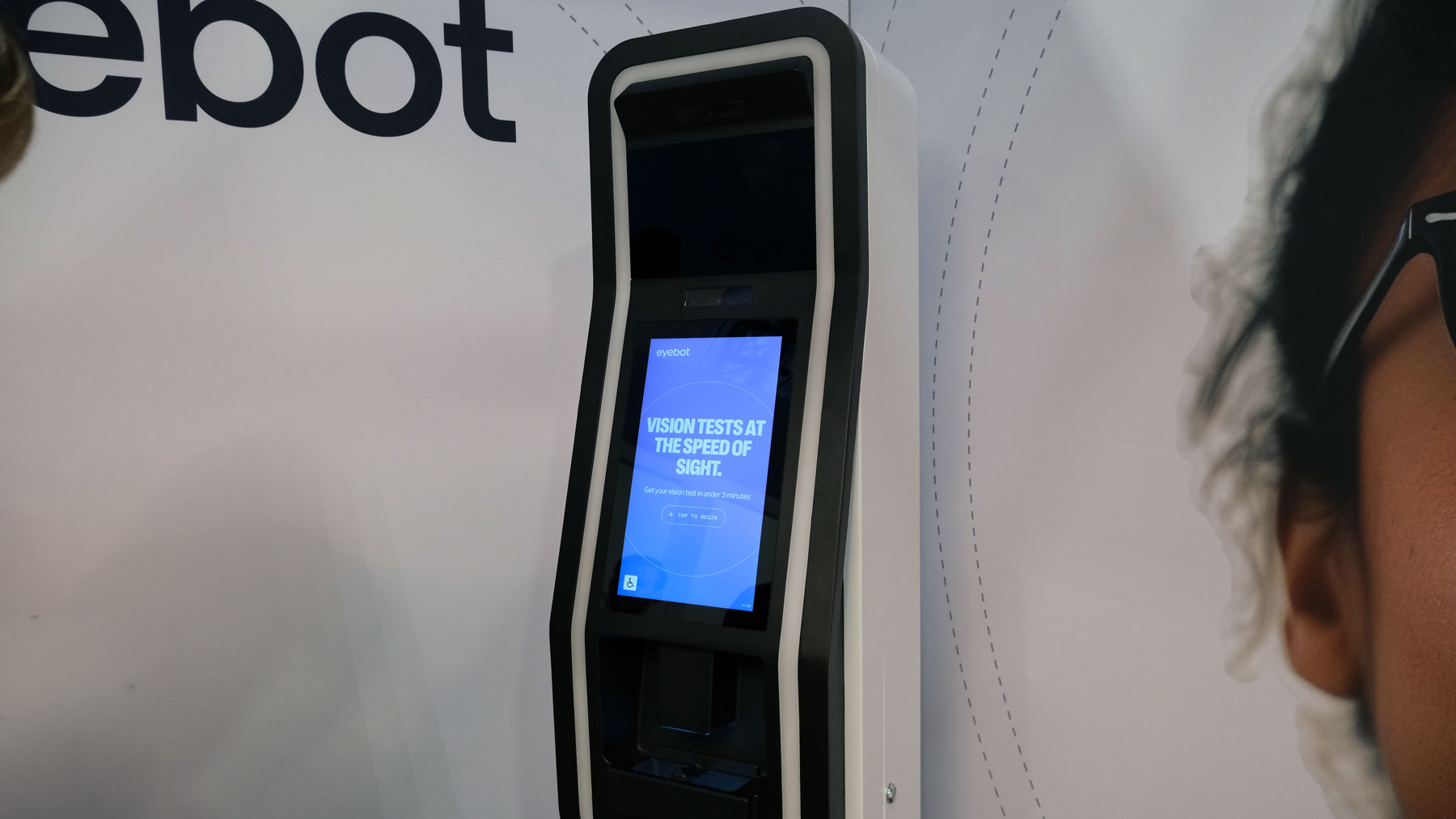
Eyebot vision testing
Image of the Eyebot Kiosk
Daniel Cooper for Engadget
Eyebot’s self-service vision testing kiosk turns a 20-minute optometrist visit into a process that takes just a few minutes. The test is guided by a large touchscreen and reviewed remotely by a licensed eye doctor, striking a balance between automation and oversight. After comparing results with a recent traditional exam, the accuracy felt reassuring, even if it doesn’t replace full eye health screenings.
Dephy Sidekick sneakers
Dephy's Sidekick, which the company describes as "footwear."
Karissa Bell for Engadget
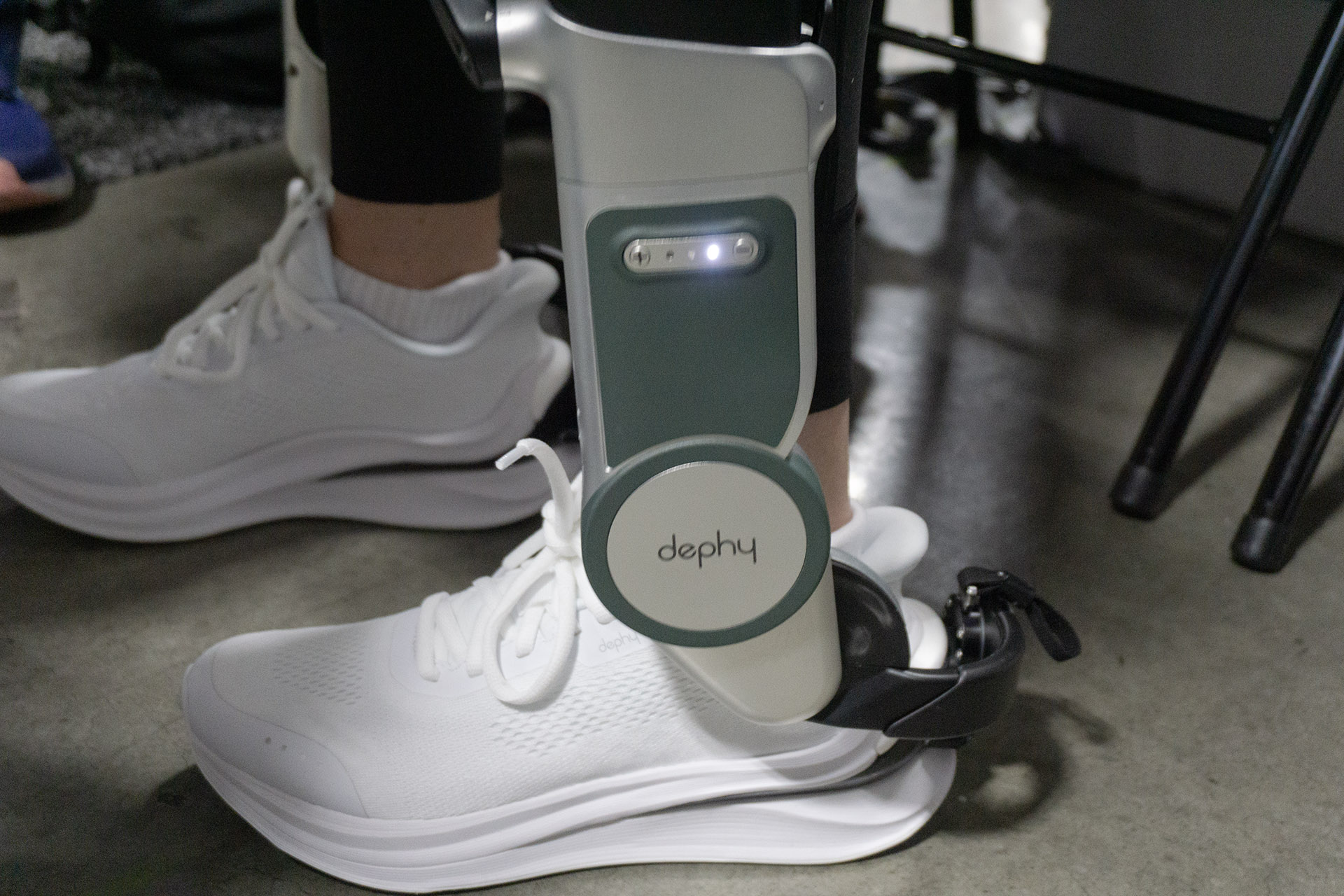
Dephy’s Sidekick robotic sneakers deliver a subtle but noticeable boost with each step. The ankle-mounted exoskeleton adapts to your gait, and walking with it feels bouncy rather than overpowering, especially at lower assist levels. It’s not for everyone, but after hours on the CES floor, the idea of powered help for people with limited mobility started to make a lot of sense.
Klipsch headphones
Klipsch Atlas HP-1
Billy Steele for Engadget
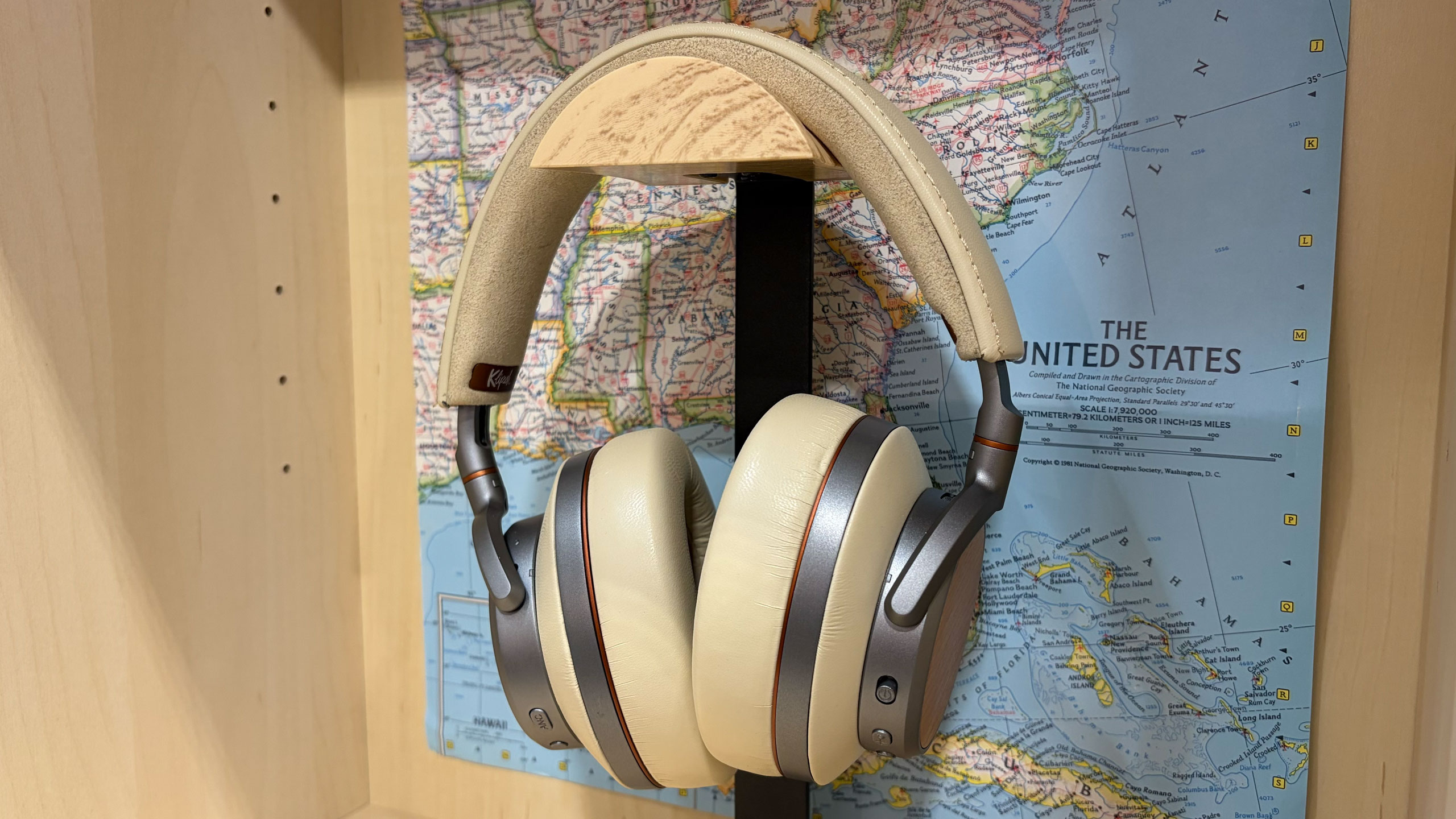
Klipsch’s return to headphones starts strong with the Atlas HP-1. The wireless ANC model looks premium, borrows familiar design cues and delivers the brand’s warm, balanced sound in early demos. Pricing is still unknown, but based on build quality and audio alone, these feel positioned firmly at the high end.
Clear Drop
The Clear Drop soft plastics compactor next to a pile of the bricks it produces.
Amy Skorheim for Engadget
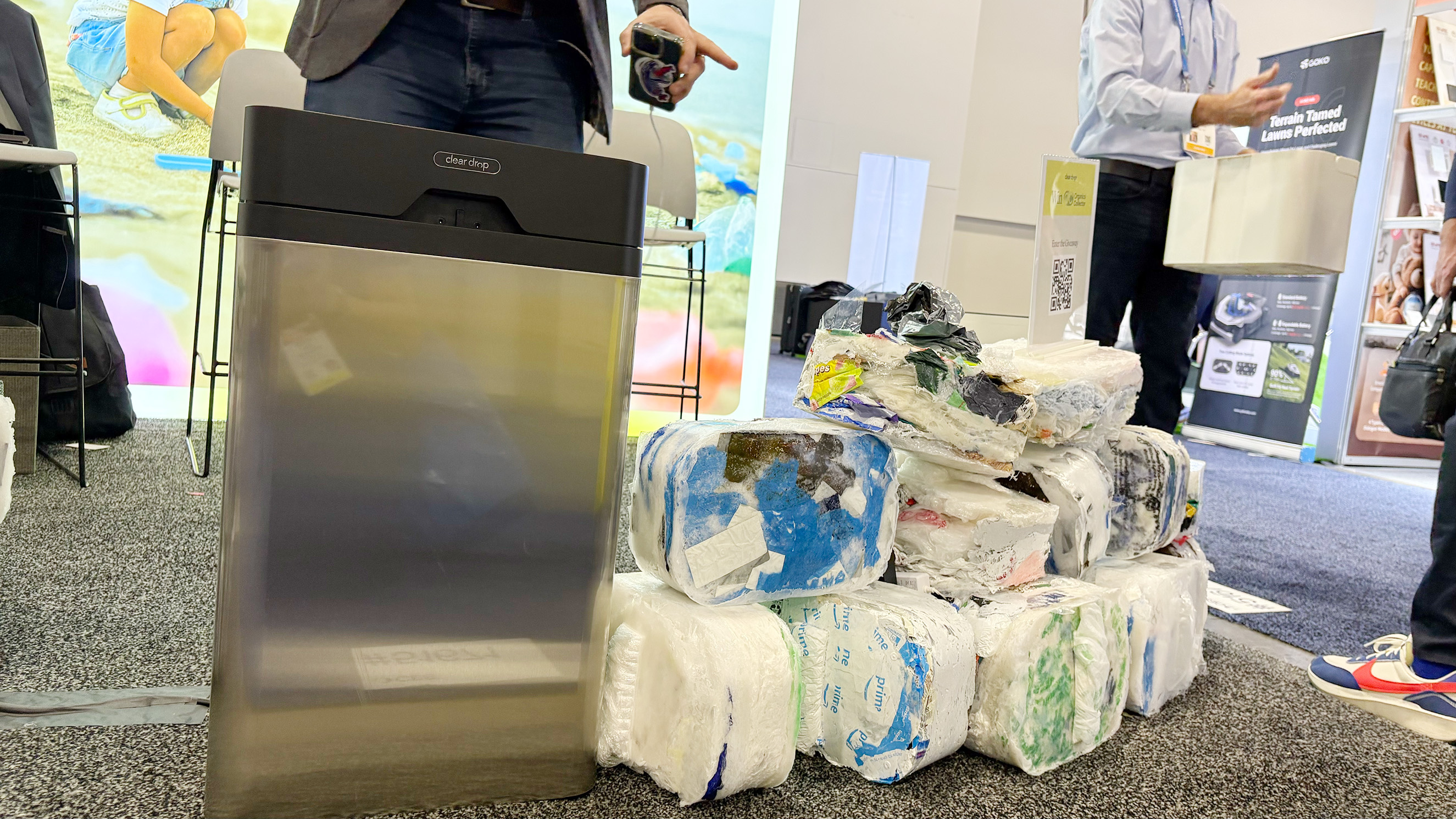
Clear Drop’s home plastic compactor tackles a real recycling problem most households face. The machine takes bags and wraps them into dense bricks that can be shipped to partner recycling facilities, and watching it swallow soft plastics was oddly satisfying. It’s expensive and not perfect, but it’s one of the more practical attempts at dealing with waste outside municipal systems.
Nosh cooking robot
Nosh
Daniel Cooper for Engadget
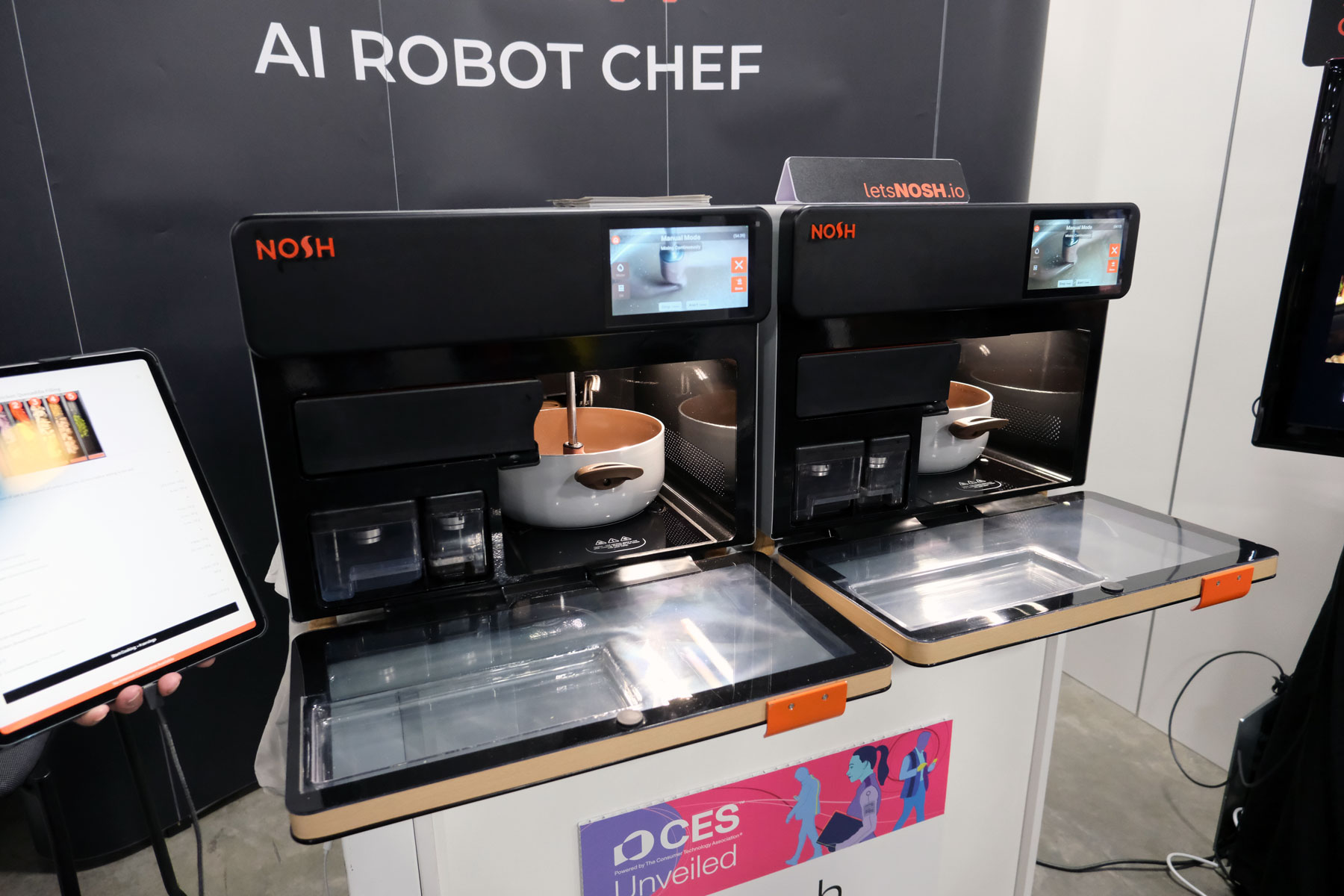
Nosh is an AI cooking robot designed for low-effort, sauce-heavy meals like soups, curries and pasta. Multiple ingredient trays allow you to prep meals ahead of time, then slide them in when you’re ready to eat. It’s not replacing real cooking anytime soon, but as an alternative to microwaved meals, it’s more appealing than expected.
Day two leaned heavily toward tech you could physically interact with, whether that meant flying Lego ships through the air, watching a robot load laundry or testing a vision exam in a kiosk. With more show-floor time still ahead, we’ll be back with additional hands-ons, impressions and daily recaps as CES 2026 continues.
This article originally appeared on Engadget at https://www.engadget.com/big-tech/ces-2026-day-2-all-of-the-coolest-tech-we-saw-on-the-show-floor-during-the-second-day-134608348.html?src=rss
For years, we’ve been wondering when Samsung would actually bring Ballie, its cute household companion robot, to market and now we finally have our answer: it won’t. After the planned summer 2025 release window came and went, the company has opted not to release the gizmo as a consumer product, at least not for the foreseeable future.
According to Bloomberg, Samsung has "indefinitely shelved" the robot. A spokesperson told the publication that the company will keep Ballie around as an "active innovation platform" internally. "After multiple years of real-world testing, it continues to inform how Samsung designs spatially aware, context-driven experiences, particularly in areas like smart home intelligence, ambient AI and privacy-by-design," the spokesperson added.
There’s a sliver of a chance that Samsung will eventually bring Ballie to market, but that seems unlikely as things stand. So, six years after we first clapped eyes on the robot at CES 2020, (and two years after a redesigned larger version debuted), it appears to be doomed as a consumer device.
It’s a bit of a shame, as Ballie seemed like a fun gadget. In fairness to Samsung, companies are now likely having to be more judicious about what products — especially more experimental ones — go into full production amid rising costs of things like RAM.
This article originally appeared on Engadget at https://www.engadget.com/home/smart-home/you-wont-be-able-to-buy-samsungs-household-ballie-robot-after-all-104529942.html?src=rss
A startup called ReviMo has developed a robotic system that provides a way for people with limited mobility to lift and transfer themselves — like from a bed to a wheelchair, or to the toilet — without the assistance of a caregiver. ReviMo's Niko has two sets of arms: one that forms a "scooping seat" that slides underneath the person to lift them up, and the other encircling their torso and providing a backrest. It can be operated both by remote and using the controls on its dashboard. Niko in its current iteration can carry up to 250 pounds, but the team says it's working on a version that can support up to 400 pounds.
In addition to aiding in transfers, Niko can lift the rider to a standing level and offers retractable handlebars for support. It also has the potential to be a big help to caregivers, who in many cases assist with multiple transfers every day. Even in a situation where a person isn't able to operate it by themselves, Niko facilitates a transfer that requires much less physical exertion than today's common methods, like sling-based mechanical lift systems. At CES, founder Aleksandr Malaschenko gave a demonstration of its lifting capabilities, using it to scoop him up from a chair and bring him out into the aisle.
Niko is designed to work with most wheelchairs and be compact enough to navigate small bathrooms. It can position a person right above a toilet, and there are disposable seat covers. The goal is to help people with limited ability achieve more independence.
It is the kind of device that, if it delivers on its promises, could be a game-changer for people with limited mobility and paralysis, and their loved ones. My dad was diagnosed with ALS when I was a kid, and I learned how to operate a Hoyer lift by the time I was in middle school. This strikes me as something we would have really appreciated having around. Malaschenko has said the inspiration for the robotic system came from being a caregiver for his grandfather following a stroke.
Niko will cost about $15,000, though the team said it's working to get it covered by insurance. The company is also offering lower prices for customers who sign up for one of its premium waitlists, and there are options to rent it for those who would only need a lift and transfer system temporarily.
This article originally appeared on Engadget at https://www.engadget.com/transportation/niko-is-a-robotic-lift-for-people-with-limited-mobility-that-doesnt-require-a-caregivers-help-184500703.html?src=rss
When LG announced that it would demo a laundry-folding, chore-doing robot at CES 2026, I was immediately intrigued. For years, I've wandered the Las Vegas Convention Center halls and wondered when someone might create a robot that can tackle the mundane but useful tasks I despise like folding laundry. With CLOiD (pronounced like "Floyd"), LG has proven that this is theoretically possible, but probably not likely to happen any time soon.
I went to the company's CES booth to watch its demonstration of CLOiD's abilities, which also include serving food, fetching objects and fitness coaching. During a very carefully choreographed 15-minute presentation, I watched CLOiD grab a carton of milk out of the fridge, put a croissant in an oven, sort and fold some laundry and grab a set of keys off a couch and hand them to the human presenter.
Throughout the demonstration, LG showed off how its own appliances can play along with the robot. When it rolled over to the fridge, the door automatically opened, as did the oven. When the LG-branded robot vacuum needed to move around a hamper, CLOiD helpfully cleared the path. But the robot also moved very slowly, which you can see in the highlight video below.
The appliance maker is selling the setup as a part of its vision for a "zero labor home" where its appliances and, I guess, robotics technology can come together to take care of all your chores and household upkeep. Maybe I'm jaded from a decade of watching CES vaporware, but I left the slick demo thinking the concept is unlikely to amount to much anytime soon.
On one hand, it is exciting to see robots competently performing tasks that would actually be useful to most people. But this technology is still far from accessible. Even LG isn't making any firm commitments about CLOiD's future as anything more than a CES demo. The company has instead said that CLOiD is a signal of its interest in creating "home robots with practical functions" and "robotized appliances," like fridges with doors that can open automatically.
That may be a more reasonable target for the company (and yet another way for LG to sell us more appliance upgrades). But it's still pretty far from anything approaching the fantasy of a "zero labor home."
This article originally appeared on Engadget at https://www.engadget.com/home/smart-home/lgs-cloid-robot-can-fold-laundry-and-serve-food-very-slowly-181902306.html?src=rss
After years of testing its humanoid robot (and forcing it to dance), Boston Dynamics' Atlas is entering production. The robotics company said at CES 2026 that the final product version of the robot is being built now, and the first companies that will receive deployments are Hyundai, Boston Dynamics' majority shareholder, and Google DeepMind, the firm's newly minted AI partner.
This final enterprise version of Atlas "can perform a wide array of industrial tasks," according to Boston Dynamics, and is specifically designed with consistency and reliability in mind. Atlas can work autonomously, via a teleoperator or with "a tablet steering interface," and the robot is both strong and durable. Boston Dynamics says Atlas has a reach of up to 7.5 feet, the ability to lift 110 pounds and can operate at temperatures ranging from minus 4 to 104 degrees Fahrenheit. "This is the best robot we have ever built," Boston Dynamics CEO Robert Playter said in the Atlas announcement. "Atlas is going to revolutionize the way industry works, and it marks the first step toward a long-term goal we have dreamed about since we were children."
Boston Dynamics has been publicly demoing its work on humanoid robots since at least 2011, when it first debuted Atlas as a DARPA project. Since then, the robot has gone through multiple prototypes and revisions, most notably switching from a hydraulic design to an all-electric design in 2024. Later that year, Boston Dynamics demonstrated the robot's ability to manipulate car parts, which appears to be one of the first ways Atlas will be put to work.
Hyundai plans to use Atlas in its car plants in 2028, focused on tasks like parts sequencing. In 2030, the car maker hopes to have the robot's responsibilities "extend to component assembly, and over time, Atlas will also take on tasks involving repetitive motions, heavy loads, and other complex operations," Hyundai says. Google DeepMind, meanwhile, is receiving Atlas robots so it can work on integrating its Gemini Robotics AI foundation models into Boston Dynamics' system.
This article originally appeared on Engadget at https://www.engadget.com/big-tech/boston-dynamics-unveils-production-ready-version-of-atlas-robot-at-ces-2026-234047882.html?src=rss

 Anmelden