Blue Origin has successfully reused its first-stage New Glenn booster for the first time after it landed in a cloud of smoke and fire on a recovery ship. It marks the second flight and reuse of Never Tell me the Odds, after the booster was recovered from New Glenn's previous launch in November last year. However, the rocket company's first commercial mission was marred by a failure to place the communications satellite payload into orbit.
The launch went smoothly to start with, with the first-stage GS1 booster separating from New Glenn after three minutes and landing smoothly 10 minutes after launch following two braking burns, as shown in a post on X from Blue Origin's owner, Jeff Bezos.
However, several hours later the Blue Origin team and satellite manufacturer, AST SpaceMobile, announced that the payload had failed to reach orbit. "We have confirmed payload separation," Blue Origin announced on X. "AST SpaceMobile has confirmed the satellite has powered on. The payload was placed into an off-nominal orbit. We are currently assessing and will update when we have more detailed information."
Later on in a press release, AST SpaceMobile revealed that "the satellite separated from the launch vehicle and powered on, [but] the altitude [was] too low to sustain operations with its on-board thruster technology and will de-orbited. The cost of the satellite is expected to be recovered under the company’s insurance policy."
The upper stage was supposed to position the satellite into a 285 mile orbit after completing two burns. It would have then unfolded a 2,400 square-foot antenna and linked with six other satellites in a test for AST's high-speed direct-to-cell network. However, early telemetry data showed that the satellite only reached 95 miles, well below a sustainable orbit. It's not yet clear how the failure occurred.
Despite that, Blue Origin can take some solace in its successful first-stage reuse, particularly since it happened on just the third New Glenn mission (NG-3). It took SpaceX, by comparison, 32 flights before its first successful reflight of a previously flown orbital-class booster.
Blue Origin will definitely want to solve the upper stage issue soon. Its next flight is the first New Glenn launch of Amazon Leo (formerly Project Kuiper) broadband satellites. It plans to put 48 of those into orbit to significantly expand the Starlink rival's constellation, which currently sits at 241 satellites.
This article originally appeared on Engadget at https://www.engadget.com/science/space/blue-origin-landed-its-recycled-new-glenn-booster-but-failed-to-put-payload-in-orbit-055846419.html?src=rss
CAPE CANAVERAL, FLORIDA, UNITED STATES - APRIL 19: A Blue Origin New Glenn rocket carrying an AST SpaceMobile Bluebird 7 satellite launches from pad 36 at Cape Canaveral Space Force Station on April 19, 2026 in Cape Canaveral, Florida. The rocket will carry the second satellite in the AST SpaceMobile next-generation satellite constellation to low Earth orbit. The satellite is designed to support space-based cellular broadband for mobile phones. This is the third launch of a New Glenn rocket. (Photo by Paul Hennesy/Anadolu via Getty Images)
Casely has reannounced a recall of its Power Pods 5,000mAh MagSafe E33A charger after dozens of people were injured and one even killed by the defective devices, the US Consumer Product Safety Commission (USCPSC) announced. It's recommended that you stop using the devices immediately, dispose of them safely and seek a replacement from the manufacturer.
A year ago, Casely and the USPSC published a recall of 429,000 units of the power bank with the model number E33A. That followed 51 incidents of the devices "overheating, expanding or catching fire" and burning users in multiple cases.
However, many of the devices have remained in use and are even more dangerous than initially thought. "In August 2024, a 75-year-old woman from New Jersey, was charging her cell phone with the power bank on her lap when it caught on fire and exploded," the USCPSC reported. "The victim suffered second and third degree burns and later passed away from complications from her injuries." In another incident this year, a 47-year-old woman was charging her phone on a plane when it caught on fire and exploded, giving her first degree burns.
As a result, the recall has been reissued due to "a risk of serious injury or death from fire and burn hazards to consumers," according to the Commission.
The defective Casely Power Pods 5,000mAh charger is identifiable by the Casely embossed logo on the front and model number E33A on the back. It was sold at various online retailers including getcasely.com and Amazon between 2022 and 2024.
Casely is offering free replacement units as a remedy (it's not clear if you can get a full refund). Those seeking one should write "recalled" on the battery pack in permanent marker and submit a photo, along with a second photo showing the E33A model number as pictured above. Owners are instructed to dispose of them by contacting a facility that handles lithium-ion batteries. Do NOT throw them away with regular household waste, recycling, or standard battery disposal bins due to the risk of fire and explosion.
This article originally appeared on Engadget at https://www.engadget.com/general/psa-stop-using-your-casely-power-pods-wireless-charger-immediately-062120825.html?src=rss
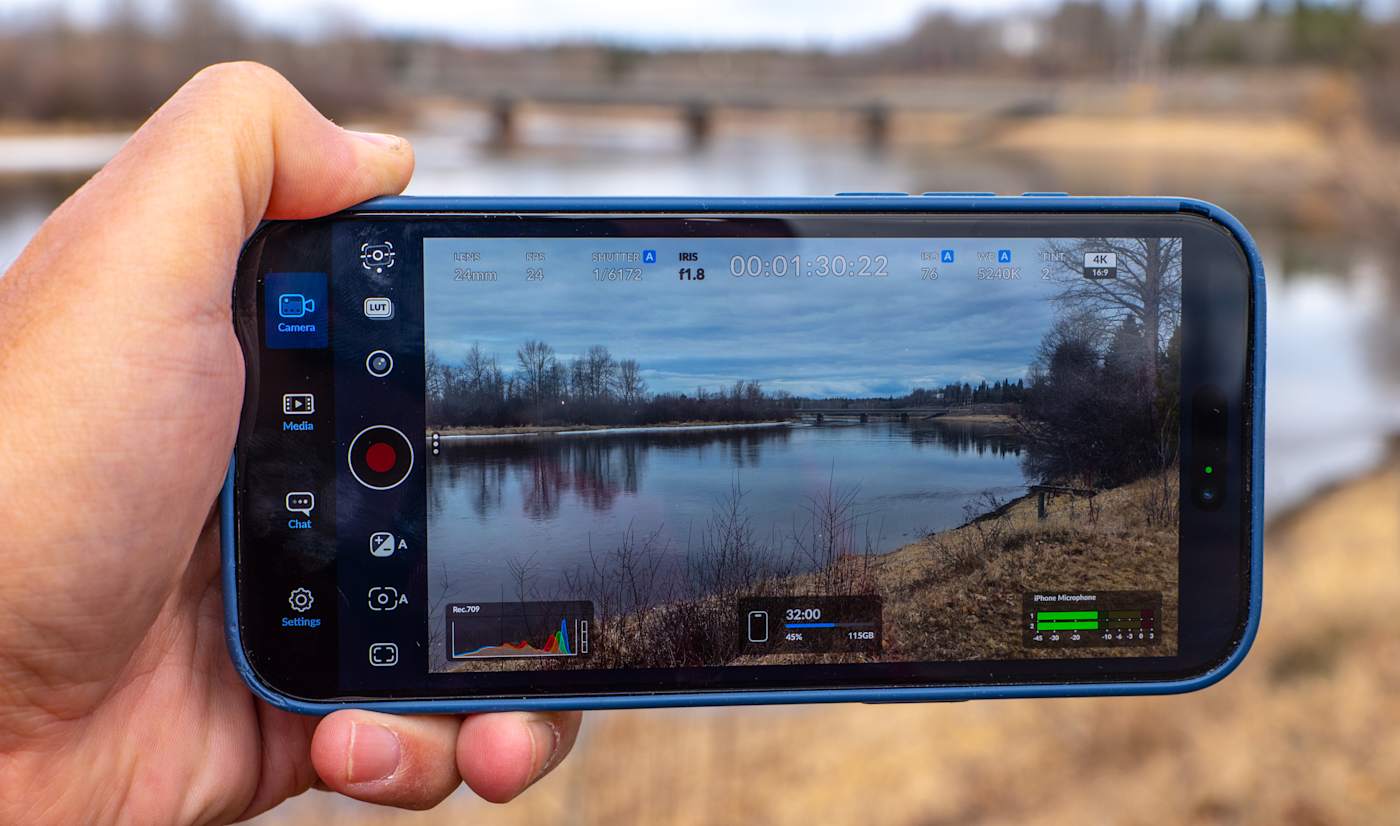
Blackmagic Camera is one of the more powerful third-party smartphone camera apps available and it's now even more useful for solo creators. Blackmagic Design just announced that the latest iOS version 3.3 now supports Apple Watch, letting you control the app and monitor video remotely from your wrist. It also includes ATEM camera control so you can use your iPhone as a live studio camera.
With the new Camera Apple Watch companion app, you can remotely control and monitor your iPhone from anywhere within Wi-Fi range. It lets you start and stop recording, control zoom and adjust settings like frame rate, shutter speed (angle), white balance and ISO with a tap. You can also see a view of your video for framing control, though a Watch screen is probably a bit too small to accurately check focus.
The Watch app will benefit solo creators who want to mount their iPhone on a tripod to record standup or vlogging activities. To set it up, you install the Watch app through your iPhone and it will automatically connect and sync to your device.
Use your iPhone as a broadcast camera? Sure, why not
Blackmagic Design
The other key feature is iPhone control from Blackmagic's ATEM Mini switcher used by streamers and broadcasters. To use it, you need the $420 Blackmagic Camera ProDock that gives your iPhone 17 Pro or iPhone 17 Pro Max an HDMI output, timecode, USB-C and other ports. Blackmagic Camera now lets you connect a single HDMI cable from the ProDock to an ATEM Mini switcher, then adjust settings, trigger recording, focus and zoom. It also offers a DaVinci primary color corrector so you can match and create digital film looks during live production.
Finally, Camera now supports Blackmagic's "Focus and Zoom Demand" controls (a knob and handle) designed for broadcast cameras. When those controls and an iPhone 17 Pro/Pro Max are connected via USB-C to a ProDock as shown above, you can zoom and focus Camera app video without taking your hands off the tripod handles. Together with the ATEM feature, it lets you use an iPhone as a full broadcast camera, which looks slightly weird but is pretty cool.
On top of those features, Blackmagic Design also added ProRes RAW stabilization and general bug fixes and improvements. Blackmagic Camera for iOS 3.3 is available now as a free download from the Apple App Store.
This article originally appeared on Engadget at https://www.engadget.com/apps/blackmagic-camera-for-ios-now-has-a-companion-watch-app-194529980.html?src=rss
Fresh off the box office success of Project Hail Mary, Amazon MGM Studios has announced its theatrical release lineup for the next year. Most of the titles aren't likely to hit the highs of the Ryan Gosling starrer which has grossed $515 million in theaters. However, there are a number of promising releases like Spaceballs: The New One and Highlander starring Henry Cavill, both sequels to '80s films. Another is The Sheep Detectives with Hugh Jackman, the trailer for which has been a hit on YouTube.
Earlier this year, Amazon MGM promised to release up to 14 films in theaters over the next year and leave them to run for as long as 45 days — a far cry from its previous policy of releasing just a few films for several weeks at most. That strategy is paying off so far. "Four months. Four films. Over $670 million at the box office. And we have nine more on the way,” said Amazon MGM's head of domestic theatrical distribution, Kevin Wilson.
The company said that it's not about volume, but impact. "We are building films that give audiences a reason to leave the house. Films with scale. Ambition," Wilson said. Looking at the slate, though, some of those films are likely to be hits and some not so much.
First up is The Sheep Detectives set to arrive on May 8th. You may scoff at the title, but the trailer has racked up 20 million views and mainly positive comments. It looks like fun, family-friendly fare and stars a popular actor, so one could easily see this being a hit for Amazon MGM.
Masters of the Universe is next up on June 5, 2026. "Director Travis Knight brings the world of Eternia to life on a massive scale with stars Nicholas Galitzine, Camila Mendes, and Idris Elba," Amazon explains. The film is based on the Mattel toy franchise and animated series so again, it could be another magnet for kids and their nostalgic parents.
How to Rob a Bank is a heist comedy with a solid cast including Nicholas Hoult, Zoë Kravitz, Anna Sawai, Pete Davidson, and John C. Reilly, set to arrive on September 4. That's followed by Verity (October 2, 2026) based on the Colleen Hoover novel and Peter Farrelly's I Play Rocky Sylvester Stallone biopic about the production of the 1976 film Rocky.
2027 starts with the The Beekeeper 2 (January 15) starting Jason Statham, followed by The Thomas Crown Affair (March 5, 2027) directed by and starring Michael B. Jordan. Spaceballs: The New One, a sequel to the classic Mel Brooks movie arrives on April 23, 2027 with Rick Moranis, Josh Gad, Keke Palmer, Lewis Pullman, Daphne Zuniga, Bill Pullman, and Mel Brooks.
Other films expected but without release dates yet include The Chosen: Crucifixion, A Colt is My Passport, Your Mother Your Mother Your Mother and Highlander starring Henry Cavill based on the 1986 cult classic.
This article originally appeared on Engadget at https://www.engadget.com/entertainment/amazon-mgms-2026-theatrical-slate-includes-highlander-and-spaceballs-the-new-one-094505690.html?src=rss
OpenAI has closed a yawning gap in its ChatGPT subscription pricing with a new $100 per month Pro plan that slots between the $20 per month Plus plan and $200 per month Pro plan. Offering five times more Codex than the $20 option, it appears designed to challenge Anthropic's $100 per month Claude option. "Compared with Claude Code, Codex delivers more coding capacity per dollar across paid tiers," an OpenAI spokesperson told TechCrunch.
So what's the difference between OpenAI's two Pro plans? The $200 version does offer four times the Codex. However, you get the same advanced tools and models with $100 plan, according to OpenAI's product page. To encourage users to jump in, it will offer double the Codex for a limited time, or 10 times what you get with the Plus plan.
Users have been screaming for such a plan for a while now, according to posts on OpenAI's developer community forums. "The Plus plan will continue to be the best offer at $20 for steady, day-to-day usage of Codex, and the new $100 Pro tier offers a more accessible upgrade path for heavier daily use," OpenAI said in a post on X.
With the launch of GPT 5.2 late last year and GPT-5.3-Codex in February, OpenAI significantly boosted the speed and reasoning capabilities of Codex, giving developers a tough choice between ChatGPT and Claude Opus. However, the sticking point for many power users was ChatGPT's $200 per month price — so OpenAI no doubt hopes the new plan will convince those on the fence to switch.
This article originally appeared on Engadget at https://www.engadget.com/ai/openai-has-a-new-100-chatgpt-pro-plan-to-better-match-up-with-claude-062705626.html?src=rss
07 March 2026, Bavaria, Munich: The logo of the ChatGPT app can be seen on the display of a smartphone in Munich (Bavaria, Germany) on March 7, 2026, while a finger taps on the application's icon. ChatGPT, also known as Generative Pretrained Transformer (GPT), is a state-of-the-art AI chatbot (Artificial Intelligence, Chatbot, Large Language Model, LLM) developed by the software company OpenAI. It uses advanced machine learning algorithms to generate human-like responses to a seemingly limitless range of queries. (company, symbol, icon, pointing finger, symbol image, symbol photo, illustration, symbolic photo, illustrative photo, theme image, general image, theme photo) Photo: Matthias Balk/dpa (Photo by Matthias Balk/picture alliance via Getty Images)
This year at CES 2026 everybody was pretty confused about the new "Micro RGB" and "RGB Mini LED" TVs that use similar technology but carry different names. Now, Sony has come up with another label for its own Mini LED TVs with RGB backlighting: True RGB. The idea is to emphasize that the individual red, green and blue LED backlights allow for "purer color, greater brightness, and the largest color volume ever achieved in Sony’s home TV history," the company said.
To be clear, this is not some new technology that Sony just came up with — it's the same Micro RGB tech we saw earlier this year from Samsung, LG, HiSense and others. These TVs use pure red, green and blue LED backlights along with an LCD layer (rather than solid blue LEDs and quantum dots like Mini LED TVs) to produce the final picture. This display tech is supposed to deliver better color accuracy and more brightness than regular Mini LED TVs. (It's not the same as OLED tech, in which each pixel acts as a light source.)
Sony's True RGB backlight tech (right) compared to current Mini LED TVs
Sony
However, Sony says that the way it processes the image makes its True RGB TVs stand out from rivals. To control the LEDs more precisely, it borrowed algorithms from its wildly expensive professional reference monitors. That supposedly allows for more precise color control and higher brightness that allow movies and series to look more like the creators intended. It also reduces the "blooming" that occurs when light leaks into neighboring pixels, while improving color accuracy when viewing the TVs from an angle.
Every TV maker claims to have the best technology, but Sony has a lot of credibility due to its history with cinema cameras, Hollywood productions and reference monitors. We'll have to wait until spring this year to see the new Bravia True RGB TVs for ourselves, but prior to that, the company has promised to release "additional details" about them in the near future.
This article originally appeared on Engadget at https://www.engadget.com/home/home-theater/sony-teases-its-next-gen-true-rgb-mini-led-tv-technology-064732375.html?src=rss
Apple has run into "more issues than expected" with its foldable iPhone that may set back its release, according to Nikkei. The engineering problems reportedly cropped up during the device's early test production phase and may delay first shipments by months, according to multiple sources briefed on the matter. However, a separate report in Bloomberg refutes the gist of Nikkei's claims.
"The current situation could put the mass production timeline at risk," one of Nikkei's sources said. "April will mark a crucial stage of the engineering verification test, and this month till early may is extremely critical." Component suppliers have supposedly been notified that the foldable iPhone's production schedule will be delayed, and Apple is working to address the problems.
In a separate article inBloomberg, however, the usually reliable Apple reporter Mark Gurman wrote that the device is still on track for a September 2026 release. "The company is scheduled to introduce the foldable model in September alongside the iPhone 18 Pro and Pro Max, said the people, who asked not to be identified because the plans haven’t been announced," according to the report.
The complexity of the foldable iPhone's display and other components may "limit initial supply for several weeks," but Apple plans to put it on sale at the same time or shortly after the other non-foldable devices, Gurman wrote. That said, the timing isn't final and issues could still crop up ahead of production. Engadget has reached out to Apple, but so far the company has declined to comment on either the Bloomberg or Nikkei reports.
A foldable iPhone has been rumored since 2017, and Apple's biggest rival, Samsung, released its first one back in 2019. According to multiple sources, Apple was aiming to launch its debut foldable iPhone in fall 2026 alongside the iPhone 18. However, as we detailed in an explainer last month, "the project could slip into 2027 if Apple runs into manufacturing or durability issues, particularly around the hinge or display."
Apple was reportedly prioritizing the foldable iPhone and other premium models for its September event this year due to constrained supplies of components like memory chips. "Apple and the supply chain are working under a pressured timeline and the current solutions are not enough to completely solve the engineering challenge... more time is needed," Nikkei's source stated.
The problems reportedly arose during Apple's production verification tests. That's the fourth of six steps the company's new products must go through before shipping, prior to the key pilot production and mass production phases. Since the foldable would be an all-new design, it would likely need to pass each stage with flying colors before proceeding to the next.
Though likely to account for less than 10 percent of iPhone production, the foldable will be a key product for Apple designed to boost interest in iPhones across its range. Apple reportedly plans to produce seven to eight million of the devices initially, Nikkei reported. Apple has yet to announce the device.
Update April 7, 2026 at 3:02 PM ET: The article has been updated with information from Bloomberg's Mark Gurman stating that the foldable iPhone is still on schedule for a September 2026 launch.
This article originally appeared on Engadget at https://www.engadget.com/mobile/smartphones/apples-foldable-iphone-may-be-delayed-due-to-engineering-snags-073813890.html?src=rss
SHENZHEN, CHINA - MARCH 24: A delivery worker carrying takeout walks while looking at a smartphone past an Apple Store featuring an iPhone 17 advertisement inside a shopping mall on March 24, 2026 in Shenzhen, Guangdong province, China. Apple continues to promote its latest smartphone lineup in China as competition in the consumer electronics market remains intense alongside the growth of app-based delivery services. (Photo by Cheng Xin/Getty Images)
Every now and then, I test a gadget so wild that I can’t believe a company actually made it. Soundcore’s $5,000 Nebula X1 Pro projector is the embodiment of that: an ultra bright projector and a 400-watt Dolby Atmos 7.1 speaker system combined in a massive enclosure. With a fast and flexible setup, it lets you screen movies or watch sports nearly anywhere.
It’s not just a projector crammed into a big speaker system, though. Everything is elegantly integrated and setup is nearly automatic, thanks to the clever design and motorization. The weight and price are the biggest strikes against it, but if you can afford it, and love hosting movie nights, the Nebula X1 Pro is one of the coolest devices you can buy.
Design
Made by Anker sub-brand Soundcore, the Nebula X1 Pro has a professional-looking enclosure housing a Nebula X1 laser projector and five speakers — a subwoofer, two front satellites and two rear satellites. With all that crammed in, the projector is big and heavy at 30 inches high and 72 pounds. Fortunately, it has a pair of wheels on the back and a telescoping handle so it’s easy to roll from room to room or dolly outside. Good luck carrying it up a set of stairs or unloading it from a vehicle by yourself, though.
Steve Dent for Engadget
Soundcore made the Nebula X1 Pro as outdoor-friendly as possible, with IP43 and IP54 ratings on the body and speakers, respectively, to withstand short periods of rain. If you want to use it away from home, the company sells optional kits with a 200-inch inflatable screen or an Anker Solix C1000 battery that can power it for several hours.
The four wireless satellite speakers have seven horizontal and four overhead channels, and the two-speaker subwoofer is inside the main enclosure. The rear speakers pop out of a spring-loaded storage dock with a light press, same for the telescoping speaker legs.
The front satellite speaker docking system is even more slick. To release them, you press a button on top and they fold out of the side via a motorized system. You can either leave them there or detach them at the touch of a button. All speakers can be charged externally over USB-C or inside their docks. They have eight hours of battery life, though I found the bigger front ones held a charge for slightly longer than that.
The X1 Pro also includes a pair of high-quality Soundcore wireless microphones for DJ-ing or karaoke, tucked under the top panel. Those feature AI vocal removal from songs, one-touch reverb and 40 hours of battery life — everything you need for a karaoke party.
There’s only a single HDMI 2.1 port at the back (which is odd considering that the Nebula X1 has two) with eARC support for Dolby Atmos sound. It also comes with two USB-C ports for external file playback, charging and a PC connection. Lastly, the power cable is retractable, which is another nice design touch.
Features
Steve Dent for Engadget
I also reviewed the Nebula X1 projector that's inside the X1 Pro, but here’s a summary in case you missed it. The projector uses Soundcore’s proprietary “LaserForge 2.0” liquid-cooled, triple-laser engine that beams a bright, color-accurate image with very little fan noise (26 db). It promises high native contrast thanks to the 6-blade dynamic iris and NebulaMaster 2.0 image engine. The 0.9:1 to 1.5:1 optical zoom lens allows for flexible installation and employs 14 high-quality, long-lasting glass elements.
The X1 Pro uses the same 0.47-inch DLP chip found in many other projectors (and not the bigger, better 0.67-inch chip coming soon in XGIMI’s Titan Noir). The lasers are beamed through a color phosphor wheel twice to achieve excellent 90 percent color and brightness uniformity across the screen.
The projector’s motorized gimbal tilts 25 degrees upward so you can position it well below the screen. The “spatial adaptation” feature scans the projection area then beams the final image to precisely fit the screen or wall. It worked nicely for me, though overhead lights or other obstacles can throw it off. The projector can adapt to ambient light and the wall color, and another function called Spatial Recall lets you save all your settings for later.
Once I detached them, the speakers paired automatically to the X1 Pro over 5.8Ghz Wi-Fi with no difficulty. I placed them around the room to maximize soundstage, then the Nebula X1 Pro’s “Flexwave” tech used a built-in four-mic array to detect their positions and calibrate the audio. I was seated off to the side, so I used the “smart sweet spot” feature to drag the center point toward my position for optimal sound balance.
Google TV is included, offering a large library of streaming apps and an easy-to-use projector control interface via the included remote (tucked into the top so you hopefully won’t lose it). You get Netflix’s official app with support for 4K Dolby Vision and Dolby Atmos, plus the X1 Pro has Chromecast support and Google Assistant for voice control. The interface can occasionally be sluggish, though Soundcore has improved its latency since I tested the Nebula X1.
Image quality
Steve Dent for Engadget
Even after testing other high-end projectors including Valerion’s VisionMaster Max, the Soundcore Nebula X1 Pro is still the brightest and sharpest I’ve seen. The company’s luminosity claim is accurate; I measured 3,514 ANSI lumens in “Standard” mode from the center of the screen and 3,310 in the cinematic “NebulaMaster” mode. It can output a whopping 4,175 lumens in Conference mode, albeit with a heavy blue color cast.
That brightness allowed me to comfortably watch content on a sunny day with the shades up. The X1 Pro also offers high dynamic contrast up to 56,000:1, aided by the automatic iris and NebulaMaster image engine, which also keeps the image from washing out in daytime conditions.
When used in more ideal dark conditions, the image was bright, sharp and incredibly color accurate. Soundcore claims 110 percent coverage of the challenging BT.2020 HDR color space (with a Delta E less than 0.8), putting the X1 Pro in elite company with a few select models from Samsung, Hisense and a few others. I measured around 94 percent BT.2020 coverage in ISF mode, which falls short of the company’s claim but is still impressive.
The high color accuracy meant that the TV series and movies I watched like Iron Man 2, Dune 2, Andor and F1 looked beautifully cinematic. If the colors aren’t quite to your liking, you can make fine adjustments manually. Like other 4K projectors with a 0.47-inch DLP chip, the X1 has a slight amount of light spill around the edge of the screen, but it’s only noticeable when the projected image is particularly dark.
With HDMI 2.1 the Nebula X1 Pro supports 4K 120 fps sources, but can only display 4K at 60 fps. Because of that, and the relatively high input lag, it’s not ideal for gaming.
Audio
Steve Dent for Engadget
The 400-watt audio setup is what elevates the Nebula X1 Pro above its rivals. Thanks to their Wi-Fi connectivity, the satellites have a latency of just 25 milliseconds, compared to 150 milliseconds or more for typical Bluetooth speakers. That keeps sound and picture perfectly synced, something that can be a problem with other wireless speaker setups.
The X1’s two internal subwoofers can pump out sound as low as 38Hz at up to 87 decibels. That allowed for the loud and punchy (but not boomy) bass I love for action movies like Spider-Man: No Way Home and Once Upon a Time in Hollywood. At the same time, that bass is clear and subtle for less bombastic films like Eternal Sunshine of the Spotless Mind. To avoid vibrating the projector, the subwoofer is mounted on a suspension system, and I found it didn’t affect the picture even during loud scenes.
With the four wireless speakers spread around a big room, I got an outstanding soundstage with Dolby Atmos-supported content including Star Wars: A New Hope and The White Lotus:Season 3. The speakers delivered crisp and accurate highs, while the dedicated front voice drivers let me hear even soft dialogue, though midrange sound could occasionally be a bit tinny. It faithfully reproduced tricky film soundtracks like Lord of the Rings: The Two Towers and did justice to the industrial metal and symphonic music in The Matrix. Yes, you’d get better sound from a dedicated high-end 7.1 Dolby system, but with far more setup hassle and zero portability.
Wrap-up
Steve Dent for Engadget
Soundcore’s Nebula X1 Pro is a home theater marvel that’s so well-designed almost anyone can set it up. By integrating one of the best triple-laser projectors with a 400-watt Dolby Atmos 7.1.4 surround system, and then putting all of that on wheels, you can enjoy an immersive cinema experience nearly anywhere.
This Nebula X1 Pro has no true rivals, but competitors with similar projectors (but no sound systems) include the Valerion VisionMaster Max and XGIMI Horizon 20 Max, both triple-laser systems with comparable brightness and color accuracy. Once you add an audio surround system, though, you’ll be spending the same amount and won’t get the X1 Pro’s convenience and portability.
The catch, of course, is the $5,000 price. However, if you have the money and want the ultimate home theater experience that’s portable and easy to use, Soundcore’s beastly Nebula X1 Pro is actually a good deal.
This article originally appeared on Engadget at https://www.engadget.com/home/home-theater/soundcore-nebula-x1-pro-review-the-king-of-party-projectors-010018484.html?src=rss
Google's $20 per month AI Pro plan, which includes Gemini, Veo and Nano Banana, got a big storage boost and some other new perks. Users of the plan (also available for $200 per year) will see their cloud space jump from 2TB to 5TB at no extra cost. That extra storage can be used not only for AI but also Gmail, Google Drive and Google Photos backups.
Gemini can now pull context from Gmail and the web for Drive, Docs, Slides and Sheets, provide summaries for your Gmail inbox and proofread emails before you send them. It's also introducing additional agentic help with Chrome auto browse "that handles those tedious, multi-step chores — like planning a trip or filling out forms," Google VP Shimrit Ben-Yair wrote on X.
Finally, Google announced that it's bundling its Home Premium subscription into AI Pro, a perk that usually costs $10 per month by itself. The storage and extra features are now available for new and existing subscribers. You may not see the benefits appear in your plan yet but it's definitely not an April Fool's joke, Ben-Yair assured X commenters.
This article originally appeared on Engadget at https://www.engadget.com/ai/googles-20-per-month-ai-pro-plan-just-got-a-big-storage-boost-044502621.html?src=rss
After releasing DLSS 4.5's Super Resolution feature earlier this year, NVIDIA has released an update with DLSS 4.5 features designed to boost frame rates on RTX 50 series cards. Those include DLSS 4.5 Dynamic Multi Frame Generation and DLSS 4.5 Multi Frame Generation 6X. With those, NVIDIA is promising the "smoothest path-traced gaming yet" to unlock the potential for high-refresh 4K 240Hz OLED gaming displays, or 1080p and 1440p monitors at 360Hz and beyond.
The first feature, DLSS 4.5 Dynamic Multi Frame Generation, is like an "automatic transmission" for your RTX 50 series card, NVIDIA said. Rather than multiplying the frame rate by a fixed amount, the AI-powered feature changes it dynamically to strike a balance between refresh rate, image quality and responsiveness. To optimize computing power, it ensures that a game's frame rate doesn't exceed your monitor's native refresh rate, so you won't play at 240 fps on a 120Hz monitor.
The other key feature, Multi Frame Generation 6X, is designed to deliver even higher levels of performance. Based on NVIDIA's second-gen transformer model, along with frame pacing and image quality improvements, the feature boosts the maximum multiplier to 6X, generating up to five extra frames for every natively rendered frame on GeForce RTX 50 series GPUs. That will boost 4K frame rates up to 35 percent "with minimal impact to responsiveness," NVIDIA wrote.
As with Super Resolution, the native frame rate of a game is not accelerated by these features. Rather, the DLSS 4.5 feature uses AI to create interpolated intermediate frames the machine "thinks" should be there. Normally this works fine, but the scheme can create odd artifacts in certain types of scenes, particularly with fine details like rain, hair and phone wires.
Still, the tech allows for smoother gaming with a minimal increase on your GPU's burden. It's now available for NVIDIA RTX 50 series cards, and as NVIDIA announced earlier, there are a number of games supporting the MFG features. Those include 007 First Light (May 27th), CONTROL Resonant, Directive 8020 (May 12th) and Tides of Annihilation.
This article originally appeared on Engadget at https://www.engadget.com/gaming/pc/nvidias-dlss-45-multi-frame-generation-tech-is-now-available-to-boost-your-hz-130035249.html?src=rss
Following discussions first reported on earlier this year, ByteDance has agreed to sell its games unit Moonton to Savvy Games Group for $6 billion. Moonton is known for mobile titles popular in Asia like Mobile Legends: Bang Bang, which has been downloaded 1.5 billion times. The transaction is set to be finalized in the "near future," according to an internal memo from Moonton's CEO seen by Bloomberg.
ByteDance has been winding down its gaming arm and shopping Moonton since 2023, just two years after it first acquired the developer. Around that same period, the TikTok parent was shuttering its Nuverse gaming arm, which published notable titles like Marvel Snap and Ragnarok X: Next Generation. The company has since shifted its focus to AI, competing with Chinese rivals to develop chatbots and foundational models.
Savvy Games, which is owned by Saudi Arabia's Public Investment Fund (PIF), has been going in the opposite direction. Last year the company (via its subsidiary Scopely) acquired Pokémon Go developer Niantic for $3.5 billion. PIF was also among the key investors that purchased Electronic Arts in a blockbuster $55 billion deal last year. The Saudi fund holds a 7.5 percent stake in Nintendo as well.
The sale is the latest chapter in the recent gaming industry consolidation that saw around 45,000 jobs lost in a brutal three-year period between 2022 and 2025. According to a recent GDC study, one-third of US video game industry workers were laid off over the last two years.
This article originally appeared on Engadget at https://www.engadget.com/gaming/bytedance-is-selling-its-moonton-game-unit-to-savvy-games-for-a-cool-6-billion-124131595.html?src=rss
After letting us drive a prototype around in the snow earlier this month, BMW has fully unveiled its all-new i3 electric vehicle. It's a far cry from the original funky hatch launched way back in 2013, offering more of everything including power, range and space. It also looks like you'd hope a 3-series EV would: a sporty sedan, minus the polarizing grille on the gas-powered M3.
The i3 uses BMW's Neue Klasse platform and indeed borrows inspiration from the company's Vision Neue Klasse concept unveiled in 2023. With motors on the front and rear in the 50 xDrive configuration, along with the 800-volt electrical system, it delivers a combined 463 HP and 476 lb-ft of torque, just a touch less than BMW's G80 M3.
BMW
That will make the BMW quick (the automaker didn't say how quick yet), but it will also be efficient. BMW estimates that the i3 will go 440 miles on a charge according to EPA guidelines and offer quick energy replenishment as well via DC charging speeds up to 400kW — up to 30 percent faster than its previous Gen5 tech. The battery pack will also be directly integrated into the chassis to reduce weight and increase torsional rigidity, while allowing bidirectional charging so you'll be able to use it as a battery on wheels to power your home in a blackout.
Styling-wise, the i3 is much simpler up front with the grille and headlights incorporated as a single unit. A recess down the center of the hood draws your eye to the badge, while giving the EV muscle car allure. The side intakes add to that impression, as do the bulgy fenders, "Le Catellet Blue" metallic paint and optional lighting animations (Relaxed, Excited and Balanced).
Fabian Kirchbauer Photography
On the tech side, the i3 supports BMW's Digital Key Plus so you can open the doors or trunk with a smartphone or smartwatch. The interior, meanwhile, looks as futuristic as I've seen in any recent EV thanks to the 17.9-inch Panoramic Vision display that's angled toward the driver, along with an optional 3D heads-up display. The system features a self-learning voice assistant with Amazon Alexa+ AI and supports customizable themes, colors and background images. It also includes a wireless charging pad for your smartphone or other devices.
Inside, you can choose between multifunction and M Sport seats trimmed in different themes, including imitation leather in Agave Green, Digital White, Castanea or Black, or an M Design World theme in Black Veganza with M Performtex material. Alternatively, you can go for the BMW Individual scheme with real black Merino leather. For controls, BMW is using a hybrid system with physical buttons for the hazard lights and parking brake and "Shy Tech" buttons on the steering wheel that activate only when required.
BMW will start i3 production in August 2026 and deliveries later in the fall, with pricing set to be revealed around that time. From what we've seen so far it's going to offer outstanding performance and range, but don't expect it to be cheap.
Fabian Kirchbauer Photography
This article originally appeared on Engadget at https://www.engadget.com/transportation/evs/bmws-i3-is-reborn-as-a-sporty-440-mile-range-ev-sedan-124614369.html?src=rss
It’s hard for most people to justify spending $3,299 on a monitor, but creative pros will gladly do so if it makes their jobs easier. Apple’s 27-inch 5K Studio Display XDR is aimed straight at those folks and it costs considerably less than the company’s previous high-end monitor, the 6K Pro Display XDR.
Thanks to the Mini LED IPS panel, the Studio Display XDR has higher brightness and color accuracy than nearly any other monitor on the market. It also has tech that boosts contrast to outperform similar displays. With its unique combination of features, the Studio Display XDR isn’t as overpriced as you might think, and it has high appeal for me as a video editor. I do, however, wish it was bigger.
Design and features
If you’re familiar with Apple’s previous Studio Display, you’ll have a good idea of the Studio Display XDR’s design. The body has a high-quality brushed aluminum finish, with small holes across the top and bottom designed to vent heat from the built-in, nearly silent fan.
It has enough internal hardware to be a standalone computer, as it’s equipped with an A19 Pro processor and 12GB (!) of RAM — more than Apple’s new MacBook Neo laptop. That extra horsepower is required for all of the image processing, dimming algorithms, webcam operation and HDR tone-mapping.
Steve Dent for Engadget
A tilt- and height-adjustable stand was a cool $1,000 option on the more expensive Pro Display XDR, but it’s thankfully included with this new model. The stand’s motion is delightfully smooth, with just a slight amount of pressure required to move it up and down. However, it only offers four inches of height adjustment and no ability to swivel the screen. You can also get this monitor with a VESA mount instead at the same base price, in case you want to mount it on your own stand or a wall.
The Studio Display XDR comes with two high-speed 120Gbps Thunderbolt ports to connect your Mac, storage or another display, along with two 10Gbps USB-C inputs, but there’s no HDMI port in sight. One of the Thunderbolt ports supports 140W charging, which can replenish a 16-inch MacBook Pro at the maximum possible speed. Apple has also thrown in a Thunderbolt 5 cable that is thicker than any USB-C cable I’ve seen. The power cable also looks nice, but is not removable.
Up front, the monitor has surprisingly thick bezels (0.75 inches) that detract from the otherwise sleek design. In comparison, my ASUS ProArt PA32UCX display’s bezels are just a quarter of an inch thin. Built into the top bezel is a 12-megapixel camera with Apple’s Center Stage feature that keeps your face front and center during Zoom calls. Note that if you prefer less glare, you can get nano-texturing on the display for an extra $300.
The Studio Display XDR is designed mainly for use with Macs, and recent ones at that. Mac models with M1, M1 Pro, M1 Max, M1 Ultra, M2 and M3 chips only support this monitor at up to 60Hz — not the maximum 120Hz. Apple doesn’t mention support for Intel Macs or Windows PCs, but I tested the monitor on both and it worked fine at the 60Hz limit.
Image quality
Steve Dent for Engadget
Apple has largely stuck with Mini LED and quantum dot technology for its MacBook Pro laptop screens and monitors because of the higher brightness levels and lack of “burn in” compared to OLED displays. The tradeoff for that is lower contrast, as I explained here. Mini LED displays also show a phenomenon called “blooming” not present in OLED panels, which is caused by light bleed from neighboring pixels.
However, Apple has largely solved those issues on the Studio Display XDR by boosting the number of local dimming zones (individual LED backlights) to 2,304, four times as many as the XDR Display Pro. That allows not only more brightness, but higher contrast and minimal blooming.
This model doesn’t offer 6K like the Pro Display XDR, but its 5K resolution is still higher than most rivals. That’s a big benefit for designers, animators, photographers and others who want the sharpest image possible. The higher 120Hz refresh rate is also easier on the eyes and better for gaming. However, creators used to screens that are 32 inches or larger may be turned off by the Studio Display XDR’s smaller size.
Brightness is where this monitor really shines; XDR stands for “extended dynamic range,” after all. Apple promises a peak level of 1,000 nits in SDR and 2,000 nits in HDR mode. I was able to verify those claims: I measured 1,991 nits on a Calibrite colorimeter in a 25 percent window and 988 nits at full screen — making this the brightest monitor I’ve ever tested. When I watched HDR material on YouTube and Netflix graded for brightness levels over 1,000 nits, I didn’t see any of the highlight clipping that occurs on my 1,400-nit ASUS ProArt display.
What’s more, the Studio Display XDR’s 1,000,000:1 contrast ratio is among the highest of any non-OLED display (though not infinite like OLED displays). On top of that, I saw virtually no blooming with bright light points against black. Finally, this monitor has the best off-axis performance I’ve seen with very little drop in gamma even at fairly sharp viewing angles.
Steve Dent for Engadget
Color accuracy is also a strong point. Apple promises a Delta E of less than one, and my measurements (around 0.8) bore that out. And like the Pro Display XDR, this model has a true 10-bit IPS panel, which means you get one billion colors total. Apple notes that the Studio Display XDR is the first Apple monitor to include both the P3 wide color Adobe RGB primaries, unlocking "deeper greens and cyans than P3 alone," it said in a white paper. For HDR work, it covers 81 percent of the challenging BT.2020 color gamut, which is excellent though a bit below some OLED monitors.
The Studio Display XDR can handle a variety of work thanks to the huge number of color profiles included with the display, which total 16 in all. Those include HDR profiles, P3 Digital Cinema, Photography, HDR photography, Design and Print and even Medical Imaging. To verify that, I tested it with several apps including Lightroom Classic and DaVinci Resolve, and was astounded by the color accuracy and brightness. Unlike some rivals, most notably ASUS, it doesn’t support Dolby Vision, however.
On top of being an excellent content creation monitor, the Studio Display XDR is solid for entertainment and gaming. I watched scenes from movies and TV shows including Spider-Man No Way Home, Game of Thrones and Tenet, and enjoyed the extra brightness, high color accuracy and contrast ratio that allowed me to see what the heck was going on in the Night King battle in GoT. For gaming I tried Cyberpunk 2077 for Mac, and the 120Hz refresh rate (it also supports Adaptive Sync 47-120Hz refresh rates), along with the brightness and color accuracy, makes it Apple’s best display yet for gaming.
Camera and speakers
Though it has the same name, the 12MP Center Stage webcam is much improved from the previous Studio Display. The resolution may be the same, but the new camera provides a much brighter and sharper image in dim conditions. However, to use the Desk View feature I needed to tilt the screen forward more than I’d like.
The built-in six speaker sound system is surprisingly good too, offering what is easily the best sound I’ve ever heard coming from a monitor. It supports Spatial Audio and Dolby Atmos sound as before, but now offers deeper bass. It still can’t match a dedicated soundbar or separate speakers, of course, but the audio on this display is clear and surprisingly loud.
Wrap-up
Steve Dent for Engadget
As I said at the outset of this review, Apple’s Studio Display XDR is overpriced, but not by a lot. It’s the brightest monitor I’ve measured and has among the highest number of dimming zones for a Mini LED display for maximum contrast. At the same time, it offers superb color accuracy out of the box, supports up to 5K 120Hz resolution and oozes quality. Few monitors in any category and price range, whether Mini LED or OLED, can boast all of that.
There are cheaper options that can do some of those things. If you prefer OLED, the ASUS ProArt PA27 4K model offers 1,000 nits of max brightness and similar color performance, with better contrast and double the refresh rate for $1,299. And if you want a bigger display that’s nearly as bright as the Studio Display XDR, ASUS also makes the $3,199 PA32UCG-K Mini LED 32-inch monitor with 1,600 nits peak brightness, albeit with half the number of dimming zones.
However, if you require the best image quality possible and don’t mind a 27-inch display, Apple’s Studio Display is the best choice. It will never be a mainstream product, but thanks to its versatility and better value than the Pro Display XDR, I think it will be a surprisingly popular option.
This article originally appeared on Engadget at https://www.engadget.com/computing/accessories/apple-studio-display-xdr-review-expensive-but-theres-no-monitor-like-it-120018426.html?src=rss
MindsEye developer Build a Rocket Boy (BARB) has gone through serious drama recently including layoffs and accusations of sabotage. Now, the company is parting ways with its MindsEye co-publisher IOI Partners (the company behind Hitman publisher IO Interactive) and assuming sole publishing responsibilities going forward. It also means that a planned MindsEye and Hitman collaboration will be cancelled, the companies announced in a press release.
"IOI Partners’ involvement with MindsEye comes to an end, except for any essential transitional functions required to transfer publisher-of-record status to Build A Rocket Boy," the companies stated. "In light of this separation, the Hitman mission announced in June 2025, planned as a crossover event within MindsEye, will no longer be released." They acknowledged that the announcement is likely to spur disappointment among funs and thanked the community for its support.
The publishing deal was a first for IOI partners and looked promising, considering the pedigree of BARB's co-CEO Leslie Benzies as a former Rockstar North president and GTA producer. However, MindsEye was widely criticized upon release due to bugs, a lackluster story and mediocre gameplay.
At the same time, employees penned an open letter accusing Benzies of mismanaging the game and bungling layoffs. In response, Benzies and co-CEO Mark Gerhard said that negative pre-release feedback came about to due internal and external sabotage, a claim that employees reportedly doubted. In any case, BARB is now on its own and has a tall order to save MindsEye, particularly after recent layoffs.
This article originally appeared on Engadget at https://www.engadget.com/gaming/io-interactive-splits-with-mindseye-developer-and-ends-hitman-collab-110028292.html?src=rss
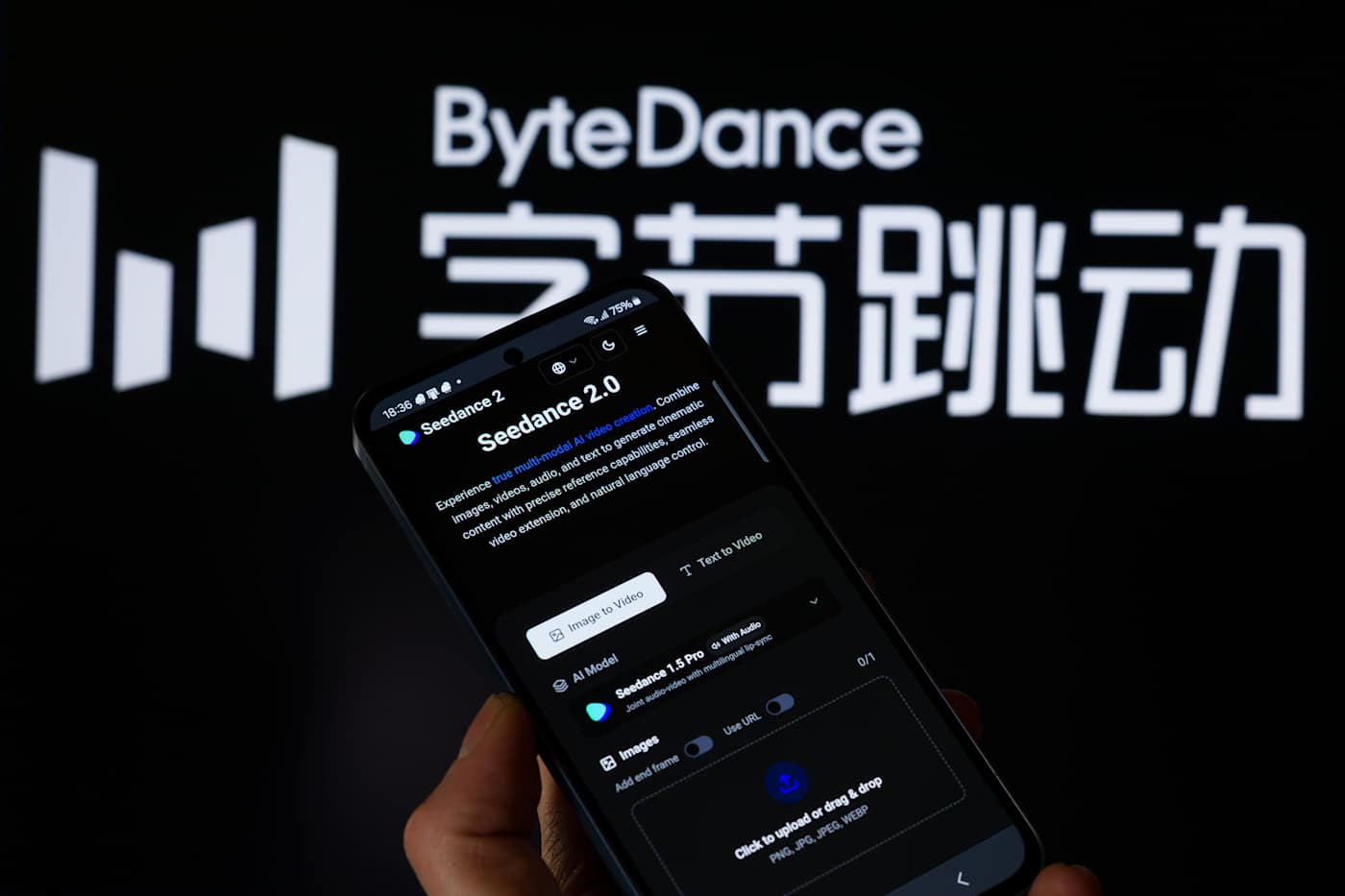
After ByteDance suspended the global rollout of its new Seedance 2.0 AI video generator on the weekend, US senators have now told the company to "immediately shut down" the app. "Seedance 2.0 poses a direct threat to the American intellectual property system and, more broadly, to the constitutional rights and economic livelihoods of our creative community," Senators Marsha Blackburn and Peter Welch wrote in a letter to the company.
The letter reflects an increasing worry in government about AI companies training their apps on copyrighted materials from artists, actors and filmmakers without permission. "Responsible global companies follow the law and respect core economic rights, including intellectual property and personal likeness protections," the senators wrote. They cited Seedance AI examples including an AI generated Thanos and Superman battle, a rewritten Stranger Things ending and that famous (fake) Tom Cruise and Brad Pitt battle.
After pulling Seedance 2.0, ByteDance said on the weekend that it "respects intellectual property rights" and that it is "taking steps to strengthen current safeguards as we work to prevent the unauthorized use of intellectual property and likeness by users."
However, Blackburn and Welch called that pledge "a delay tactic to continue to abuse the innovators and profit from their success," adding that its regard for American IP is "part of a larger trend of artificial intelligence companies stealing protected work at the expensive of the creative community."
Filmmakers have also taken action against Seedance 2.0, including the Motion Picture Association with recently sent a cease-and-desist letter to ByteDance. Yesterday, senators including Blackburn and Welch unveiled a partisan bill to help artists protect their IP by allowing them to access training records used for AI models, among other measures.
This article originally appeared on Engadget at https://www.engadget.com/ai/senators-tell-bytedance-to-shut-down-seedance-20-ai-video-app-immediately-112146241.html?src=rss
The Seedance2.0 app appears on a mobile phone with the company branding visible in the background in this photo illustration in Brussels, Belgium, on February 16, 2026. (Photo by Jonathan Raa/NurPhoto via Getty Images)
Ahead of its acquisition by Paramount Skydance, Warner Bros. dominated the 2026 Oscars with 11 wins primarily for Ryan Coogler's Sinners and Paul Thomas Anderson's One Battle After Another. Netflix also put in a strong showing with seven Academy Awards, including two for KPop Demon Hunters and three for Guillermo Del Toro's Frankenstein.
All told, dedicated streaming services chalked up eight awards, but were shut out of the major prizes. Frankenstein took the trophies for for Best Production Design, Best Costume Design and Best Makeup and Hairstyling, while KPop Demon Hunters took Best Animated Feature and Best original Song. Netflix also took prizes for All The Empty Rooms (Best Documentary Short Film) and The Singers (Best Live Action Short Film). Apple TV garnered the other streaming service Oscar for F1 (Best Sound).
Warner Bros. dominated the more prestigious awards. The studio took its first Oscar for Best Picture (One Battle After Another) since Argo won in 2012, while also winning Anderson the prizes for Best Director and Best Adapted Screenplay, and giving Sean Penn the Best Supporting Actor Oscar. Sinners, meanwhile, won for Best Cinematography, giving Autumn Durald Arkapaw the first ever win for a woman and woman of color in that category. Michael B. Jordan took the Best Actor prize for that film, while Director Ryan Coogler won for Best Original Screenplay.
Other notable acting prizes were won by Jessie Buckley (Best Actress, Hamnet) and Amy Madigan (Best Support Actress, Weapons).
Host Conan O'Brien joked that it was the "first time in a theater" for Netflix CEO Ted Sarandos. It remains to be seen, however, whether Netflix losing out to Paramount Skydance on the Warner Bros. acquisition will be to the film industry's benefit or detriment. One clear loser of late is broadcast television as the 2026 Oscars will be the third-to-last aired by Walt Disney's ABC, with YouTube set to stream the ceremony exclusively starting in 2029.
This article originally appeared on Engadget at https://www.engadget.com/entertainment/warner-bros-dominates-oscars-with-11-wins-ahead-of-its-acquisition-by-paramount-093916527.html?src=rss
HOLLYWOOD, CALIFORNIA - MARCH 15: Lynette Howell Taylor onstage during the 98th Oscars at Dolby Theatre on March 15, 2026 in Hollywood, California. (Photo by Richard Harbaugh/Bill Barnes/The Academy/Getty Images)
NVIDIA's GeForce Now game streaming platform has added a few minor but useful updates, especially for GOG and VR headset users, the company announced at Game Developer's Conference (GDC). The biggest technical improvement is for virtual reality headsets that support GeForce Now like the Apple Vision Pro and Meta Quest. Starting next week (March 19), those devices will be able to stream at 90 fps for Ultimate members (up from 60 fps) for improved smoothness, responsiveness and realism.
Another helpful update is in-app labels coming "soon" to GeForce Now. Once you connect an Xbox or Ubisoft_ account, you'll see clear labels directly on game art inside the GeForce Now app showing exactly what's available to play from your subscription services. NVIDIA is also expanding account linking, adding GOG to the roster of services on top of Gaijin single-sign announced at CES.
GeForce Now is also expanding its Install-to-Play library with select Xbox titles including Brutal Legend from Double Fine Productions and Compulsion Games' Contrast. The service will also see several anticipated games directly on the cloud service at launch, namely Remedy's Control Resonant and Samson: A Tyndalston Story from Liquid Swords.
As a reminder, NVIDIA's GeForce Now is one of the better cloud gaming services out there, particularly since it added GeForce RTX 5080-powered servers that Engadget's Devindra Hardawar called "indistinguishable from a powerful rig." The service recently came to Fire TV sticks and is available on Windows and Mac PCs, NVIDIA's Shield, Android TV, smartphones and many other devices.
This article originally appeared on Engadget at https://www.engadget.com/gaming/geforce-now-adds-gog-syncing-and-90fps-game-streaming-in-vr-headsets-130656731.html?src=rss
US regulators have approved eight pilot programs across 26 states that will allow Archer, Joby and other eVTOL companies to finally start testing aircraft this summer, according to a US Department of Transportation (DoT) press release. That will allow those manufacturers to run trials for use cases like urban air taxi services, regional passenger transportation, cargo, emergency medical operations and autonomous flight technology.
The new projects were made possible by the White House's Advanced Air Mobility and eVTOL Integration Pilot Program (e-IPP) approved last year to allow certification for such aircraft to progress after being stuck in the mud for years. "By safely testing the deployment of these futuristic air taxis and other AAM vehicles, we can fundamentally improve how the traveling public and products move," US Transportation Secretary Sean Duffy said at the time.
Other FAA aircraft partners include Beta, Electra, Elroy Air, Wisk, Ampaire and Reliable Robotics. Key pilot programs were approved for the Texas, Utah, Pennsylvania, Louisiana and North Carolina Departments of Transportation, along with New York and New Jersey Port Authority and the City of Albuquerque. We've already glimpsed some of the ideas, like Archer's plan to use air taxis between New York's major airports and city heliports.
A number of eVTOL startups have launched in recent years, but so far none of the aircraft have received "type certificates" for carrying passengers or other commercial purposes. Archer and Joby are the farthest along in that process, having been granted the FAA's final airworthiness criteria — the final step before full approval.
The delays are mostly about safety and working eVTOL planes into existing aviation flows. "The gap isn't technical capability anymore. It's regulatory synchronization," the FAA's Kalea Texeira said last year on LinkedIn. "[That includes factors like] vertiports. Energy supply chains. Part 135 [commercial] integration. Pilot training frameworks that match the aircraft timeline." In the same post, Texeira added that Joby wouldn't certify until mid-2027 at the earliest, with Archer following in 2028.
The new program could help accelerate plane-makers' plans. In a YouTube video, Beta CEO Kyle Clark said selection for the program will help his company start operations a year earlier than it previously expected. Archer, meanwhile, compared the program to robotaxi testing and said it will help build trust with the public for its Midnight aircraft. "This is the clearest sign yet... that bringing air taxis to market in the United States is a real priority," said Archer CEO Adam Goldstein.
This article originally appeared on Engadget at https://www.engadget.com/transportation/faa-opens-up-real-world-testing-for-air-taxi-startups-112219316.html?src=rss
Qualcomm, which purchased microcontroller board manufacturer Arduino last year, just announced a new single-board computer that marries AI with robotics. Called the Arduino Ventuno Q, it uses Qualcomm's Dragonwing IQ8 processor along with a dedicated STM32H5 low-latency microcontroller (MCU). "Ventuno Q is engineered specifically for systems that move, manipulate and respond to the physical world with precision and reliability," the company wrote on the product page.
The Ventuno Q is more sophisticated (and expensive) than Arduinio's usual AIO boards, thanks to the Dragonwing IQ8 processor that includes an 8-core ARM Cortex CPU, Adreno Arm Cortex A623 GPU and Hexagon Tensor NPU that can hit up ot 40 TOPs. It also comes with 16GB of LPDDR5 RAM, along with 64GB of eMMC storage and an M.2 NVME Gen.4 slot to expand that. Other features include Wi-Fi 6, Bluetooth 5.3, 2.5Gbps ethernet and USB camera support.
The Ventuno Q includes Arudino App Lab, with pre-trained AI models including LLMs, VLMs, ASR, gesture recognition, pose estimation and object tracking, all running offline. It's designed for AI systems that run entirely offline like smart kiosks, healthcare assistants and traffic flow analysis, along with Edge AI vision and sensing systems. It also supports a full robotics stack including vision processing combined with deterministic motor control for precise vision and manipulation. It's also ideal for education and research in areas like computer vision, generative AI and prototyping at the edge, according to Arduino.
"With Ventuno Q, AI can finally move from the cloud into the physical world," Qualcomm wrote. "This platform enables building machines that perceive, decide, and act — all on a single board. Our goal is to make advanced robotics and edge AI accessible to every developer, educator, and innovator." The Arduino Ventuno Q will be available in Q2 2026 from the Arduino Store and elsewhere and is expected to cost under $300.
This article originally appeared on Engadget at https://www.engadget.com/ai/qualcomms-new-arduino-ventuno-q-is-an-ai-focused-computer-designed-for-robotics-113047697.html?src=rss
If you're looking to pre-order Apple's new Studio Display XDR monitor today but have an older Mac, beware of some potential issues. According to the compatibility list spotted by Apple Insider, the new display will only work at 60Hz and not at its full 120Hz refresh rate on some older and less powerful Silicon models. Moreover, support for older Intel Macs isn't mentioned at all for either the Studio Display XDR or cheaper Studio Display.
All Apple Silicon Macs will work with both monitors, including those with the oldest M1 chips, according to the support pages. However, the compatibility list for the Studio Display XDR includes this nugget: "Mac models with M1, M1 Pro, M1 Max, M1 Ultra, M2, and M3 support Studio Display XDR at up to 60Hz. All other Studio Display XDR features are supported." So even if you have a hotrod M1 Ultra-based Mac, the Studio Display XDR's refresh rate is capped at 60Hz — despite the fact that the chip can drive third-party monitors at 120Hz.
Similarly, only the iPad Pro M5 supports the Studio Display XDR at 120Hz, with all other compatible models (in the iPad Pro and iPad Air family) limited to 60Hz.
Intel Mac support isn't mentioned at all in the compatibility list for either display, though they may function in some limited manner when connected. Intel Macs just received their last new OS update with macOS Tahoe (and only three more years of security updates), but it's still surprising that they're not compatible with Apple's latest monitors.
This article originally appeared on Engadget at https://www.engadget.com/computing/accessories/apples-new-studio-display-xdr-monitor-has-limited-functionality-on-older-silicon-macs-082212069.html?src=rss

 Anmelden