❌

Normale Ansicht

How to get your grill ready for the outdoor season

If you're like me, you've absolutely had enough of winter and you're hoping warm weather is right around the corner. When it's finally more enjoyable to spend time outside, you're likely going to be cooking on the grill, so now is a great time to give everything a deep clean to prepare for your upcoming culinary adventures. 

I don’t blame you if you opted to let your grill hibernate during the winter months, but if that’s the case, it’ll probably need a tune-up before spring arrives. If you did keep the grill in working order over the last few months, this is a good time for a scrub and polish before warmer temperatures inspire heavy use. Here are a few tips and tricks that will hopefully make things easier.

Disassemble, scrub, reassemble

One large metal deflector sends grease to the bottom of the Searwood.
Billy Steele for Engadget

A good rule of thumb when it comes to cleaning anything you haven’t used in a while is to take it apart as much as you feel comfortable and give it a thorough wipe down. For grills, this means removing the grates and any bars or burner covers – basically, anything you can take out that’s not the heating element. This gives you a chance to inspect the burners of your gas grill or the fire pot of a pellet model for any unsightly wear and tear. If those components are worn out or overly rusted, most companies offer replacements that you can easily swap out with a few basic tools.

Once all the pieces are out, start by scraping excess debris off all sides of the interior – with the help of some cleaner if needed. For a gas grill, this likely means pushing everything out through the grease trap. On a pellet grill, you’ll want to scrape the grease chute clear and out into the catch can, but you’ll also need to vacuum the interior with a shop vac – just like you would after every few hours of use. And while you’re at it, go ahead and empty the hopper of any old pellets that have been sitting since Labor Day. Fuel that’s been sitting in the grill for months won’t give you the best results when it comes time to cook so you might as well start fresh.

Thankfully, pellet grill companies have made easy cleaning a key part of their designs. Weber’s Searwood, for example, has minimal internal parts that need to be removed to open up the bottom of the chamber. This is also a design feature of the company’s gas grills. Simply vacuum or push the debris out the grease chute. The catch pan where all of the garbage ends up is also easy to access from the front of the grill, and you can remove the aluminum liner and replace it with a new one in seconds.

Traeger’s most recent pellet grills were also redesigned to improve cleaning. Most notably, grease and ash end up in the same “keg” that’s easy to detach from the front of the grill. The company also allows you to quickly remove all of the interior components, though they’re larger than what you find on the SmokeFire. Lastly, Traeger moved the pellet chute to the front of the Timberline and Ironwood, making it a lot more convenient to swap out wood varieties or empty an old supply.

You’ll want to get as much of the food leftovers out of your grill as possible for a few reasons. First, that stuff is old and lots of build-up over time can hinder cooking performance and might impact flavor. The last thing you want is old food or grease burning off right under an expensive ribeye. Second, in the case of pellet grills, not properly clearing out grease and dust can be dangerous. It’s easy for grease fires to start at searing temperatures and if there’s enough pellet dust in the bottom of your grill, it can actually ignite or explode. That’s why companies tell you to vacuum it out after every few hours of use.

Weber's first pellet grill has potential to be a backyard powerhouse, but the smart features need work.
All of that dust, grease and debris should be removed before you fire the grill back up.
Billy Steele/Engadget

To actually clean the surfaces, you’ll want to get an all-natural grill cleaner. There are tons of options here, and it may take some time to find one you like. I typically use Traeger’s formula since it’s readily available at the places I buy pellets and I’ve found it works well cutting through stuck-on muck. You want an all-natural grill cleaner over a regular household product as it’s safe to use on surfaces that will touch your food. They’re also safe to use on the exterior of your grill without doing any damage to chrome, stainless steel or any other materials.

Spray down the inside and give things a few minutes to work. Wipe it all clean and go back over any super dirty spots as needed. Ditto for the grates, bars and any other pieces you removed. I like to lay these out on a yard waste trash bag (they’re bigger than kitchen bags) so all the stuff I scrape or clean off doesn’t get all over my deck. You can use shop towels if you want to recycle or paper towels if not, but just know whatever you choose will be covered in nasty black grime so you won’t want to just toss them in the clothes washer when you’re done. A pre-wash in a bucket or sink is needed to make sure you don’t transfer gunk from your grill to your business casuals.

In terms of tools, you don’t need much. I’ve tried that grill robot that claims to do the job for you, but I’ve found sticking to the basics is more efficient. And honestly, when you get the hang of it, it doesn’t take all that long. It’s a good idea to have a wire brush specifically for the grates that you don’t use to clean anything else. After all, this will be touching the same surfaces you put food on. I recommend another, smaller wire brush – the ones that look like big toothbrushes – for cleaning the burners on a gas grill. If you notice the flame isn’t firing through one of the holes, you can use this to clean the pathway. Lastly, plastic is the way to go for a scraper, anything else and you risk scratching the surfaces of your grill. Sure, any damage done would be on the inside, but it’s still not a great feeling to knick up your previous investment.

Check for updates before your first cook

Traeger App
Traeger

If you have a smart grill from the likes of Traeger, Weber or another company, you’ll want to plug it in and check for software updates well in advance of your first grilling session. Chances are you haven’t cooked much since last fall, which means companies have had months to push updates to their devices. Trust me, there’s nothing worse than spending an hour trimming and seasoning a brisket only to walk outside to start the grill and it immediately launches into the update process. This could extend the whole cooking time significantly depending on the extent of the firmware additions and strength of your WiFi.

Thankfully, checking for updates is quick and easy. All you need to do is turn on your grill and open up the company’s app on your phone. If there’s a download ready for your model, the mobile software will let you know and it’s usually quite prominent. If there’s not a pop-up alert that displays immediately, you can check the settings menu just to make sure. Sometimes for smaller updates, a company might not beat you over the head to refresh. However, starting a fresh slate of firmware is always a safe bet and will ensure your grill is running at its best when it comes time to cook.

For a good time every time, clean after each use

Overall, the Traeger Woodridge performs like a much more expensive grill.
Billy Steele for Engadget

I’ll be the first to admit I don’t adhere to my own advice here, but it’s nice to have goals. I will also be the first to tell you every single time I smoke a Boston Butt or some other super fatty cut of meat that I wish I would’ve done at least a quick cleaning right after the meal. Grease buildup is not only highly flammable but it’s much harder to clean once it cools and solidifies. Ditto for stuck-on sauce or cheese that’s left on your grates after chicken or burgers. It’s best to attack these things while the grill is still warm, but cooled down from the cook.

You don’t necessarily have to break out the shop vac each time for your pellet grill or empty the grease bin. But you’ll want to make sure that stuff is away from the main cooking area for safety and so any burn off won’t impact the flavor of your food. A few cups of hot water can cleanse the grease run-off while that wire brush I mentioned is best for the grates. It also doesn’t hurt to do a light wipe down with an all-natural cleaner so everything is ready to go when you want to cook again.

New grills for 2026

If you're looking for something brand new this spring, Weber is the only big grill company that has announced its 2026 lineup thus far. That collection of new models includes the Performer Smart Charcoal Grill, the company's first Wi-Fi-enabled charcoal grill, that offers automatic temperature control and remote monitoring via the Weber Connect app. There are two options which vary based on how big of a cart/storage space you need. The company will also sell non-smart versions that are more in line with previous Performer offerings. 

If you already have a Weber Kettle, the upcoming Kettle Smart Ring adds a touch of Wi-Fi and automation for $280. It too works with the Weber Connect app and supports two food probes. Plus, there's the basic LCD display and knob-based navigation for ease of use. Lastly, both the Genesis and Spirit gas grill lines have been updated with the display from the Weber Slate Griddle and side shelves that accommodate handy Weber Works accessories. 

Notable smart grills that debuted late last year include the X-Fire Pro and Flagship 1600 from Recteq. The former is a dual-mode pellet grill with options for smoking and searing. It functions like a traditional pellet grill for low-and-slow cooking and then the controls are more like a gas grill for high-heat grilling. The Flagship 1600 is an updated version of "the grill that built the brand" with 1,667 square inches of cooking space. Both models sync with the Recteq app for monitoring and controls. I should have a full review of the X-Fire Pro in the coming weeks. 

Both Kamado Joe and Masterbuilt won't be unveiling any new models this year. Traeger hasn't announced anything new for 2026 yet either, but the company is currently facing both a financial crisis and a class-action lawsuit from former brand ambassadors over employment terms. As part of the so-called Project Gravity restructuring, Traeger no longer hosts its roadshow program at Costco and points would-be buyers to retail partners (Ace Hardware, etc.) rather than facilitating direct sales through its website. 

Check out more from our spring cleaning guide.

This article originally appeared on Engadget at https://www.engadget.com/home/kitchen-tech/how-to-clean-your-grill-for-summer-outdoor-season-spring-cleaning-140040826.html?src=rss

©

© Billy Steele for Engadget

Weber redesigned the cook chamber on the Smoque
  •  

Dyson announces the PencilWash wet floor cleaner

Last year Dyson introduced the PencilVac, which it immediately declared the "world’s slimmest vacuum cleaner." Presumably, then, the title of world’s slimmest wet floor cleaner goes to the newly unveiled PencilWash.

Promising a "lighter, slimmer and smaller solution to wet cleaning without compromising on hygiene," the PencilWash is designed to let you clean everywhere you need to with minimal hassle. Like the vacuum cleaner with which it shares the first part of its name, the handle measures just 1.5 inches in diameter from top to bottom, and the whole thing weighs little more than 2kg.

The ultra-thin design allows the cleaner to lie almost completely flat, allowing you to get into tight corners or under low furniture, where more traditionally bulky devices might struggle. Its slender proportions also make it easier to store if your home is on the smaller side.

Dyson says the PencilWash only applies fresh water to floors, and after swiftly eliminating spills and stains it should dry up pretty quickly. Its high-density microfiber roller is designed to tackle both wet and dry debris in one pass, and because it doesn’t have a traditional filter, you won’t have to worry about trapped dirt or lingering smells.

Above the power buttons there’s a screen displaying remaining battery level, and the handle can be slotted into a charging dock when not in use.

The Dyson PencilVac will cost $349, with a release date yet to be announced.

This article originally appeared on Engadget at https://www.engadget.com/home/dyson-announces-the-pencilwash-wet-floor-cleaner-230152299.html?src=rss

©

© Dyson

Dyson PencilWash
  •  

The best robot vacuum for 2026

Looking to keep your home clean without having to vacuum and mop every day, pick up dirt, the dinner your child threw on the floor or your furry friend’s endless pet hair? Join the club. Smart home gadgets have come a long way over the years, and that includes robot vacuums. With newer technology including voice controls, object detection and more automation features, investing in a robot vacuum cleaner makes more sense now than ever before. Some of the best robot vacuum cleaners even have mopping capabilities, roller brush options and self-emptying bases, too, and there are plenty that don't cost a fortune either. If you’re ready to adopt a less hands-on approach and let a robot vacuum cleaner do the hard work for you, consider our recommendations below.

Best robot vacuums 2026

Latest robot vacuum news

CES is typically a time for robovac manufacturers to unveil new innovations and this year was no different. Companies like Eufy announced new models, many of which are on the higher end of the price spectrum. Those flagship announcements are often paired with more minor ones that usher in mildly upgraded versions of midrange and entry-level machines.

Now that robot vacuums are ubiquitous, the new models that make headlines tend to have some sort of gimmick like a built-in arm for picking up clothes, or offer (supposedly) top-tier suction power and a slew of extras. They also tend to be super expensive. However, most people will be served just fine with a robot vacuum that doesn’t choke at the first sign of dust bunnies or pet hair, and maybe has mopping capabilities if you want a machine that can tackle hard floors in addition to carpet. Those other innovations are nice-to-haves, not necessities.

Arguably even bigger than CES announcements is the fact that iRobot, a name synonymous with smart cleaning robots, filed for Chapter 11 bankruptcy at the end of 2025. What does that mean for Roomba owners? Not too much immediately, as the company stated that it will continue to operate with “no anticipated disruption to its app functionality, customer programs, global partners, supply chain relationships or ongoing product support." However, this also means that buying a new Roomba in 2026 is a questionable decision.

What to look for in the best robot vacuums

TLDR

Despite companies coming out with gimmicky extras and new software perks in their robot vacuum lineups, the core competency of these devices have remained the same for years: sucking up dirt without needing your attention. You want a robot vacuum with the strongest suction power you can afford. Those with tile and hardwood floors can consider robovacs with mopping capabilities, and those who want peak convenience should opt for a model with a self-emptying base. However, both of those extra features will cost extra.

Floor type

First and foremost, we recommend considering the floors in your home: Do you have carpet throughout, or tile and hardwood floors, or a mix? Robots with stronger suction power will do a better job picking up dirt on carpets as they can get into high piles more easily. Some machines have “max” modes as well, which ups suction power, but also typically eats battery life faster than the “normal” floor cleaning mode.

Vacuum suction

Suction power is an important factor to consider. Unfortunately, there isn’t a standard power scale that all robovacs adhere to, so it’s difficult to compare among a bunch of devices. Some companies provide Pascal (Pa) levels and generally the higher the Pa, the stronger the vacuum cleaner will be. But other companies don’t rely on Pa and simply say their robots have X-times more suction than other robots. If you’re looking for the best vacuum for your needs, it’s helpful to pay attention to real-world testing and how well the machine can pick up fine dust, crumbs and pet hair in an environment similar to that of your home.

Wi-Fi connectivity

Wi-Fi connectivity is a key feature for most robot vacuums. Some of the affordable devices aren’t Wi-Fi connected, so it’s best to double check before you buy something on the low end of affordable. Wi-Fi lets a robot vacuum cleaner do things like communicate with a mobile app, which then allows you to control the device from your phone.

Mapping features and object detection

Past a certain price threshold, you’ll find advanced perks like home mapping features and improved object detection. Home mapping is exactly what it sounds like: The vacuum uses sensors to map your home’s layout as it cleans, allowing you to send it to particular rooms or avoid no-go zones where you don’t want it to roam.

Most robo-vacs have object detection, but some will be better than others at actually avoiding things like chair legs and children’s toys. High-end models even go so far as to promise obstacle avoidance to steer clear of things like pet poop that can potentially ruin your machine.

Mopping capabilities

Mopping features are much more common now in robot vacuums than they were just five years ago. Machines that support this will have a water tank either built into the robot’s chassis, the auto-empty bin or as a separate piece that you swap in for the dustbin when you want to mop your floors. It makes the robo-vac more useful if you have hard floors in your home that you like to keep squeaky clean, but it does require more work on your part.

Filling and emptying the reservoir remains a human’s job for the most part (except on the most expensive machines), as does adding cleaning solutions if the mopping robot comes with this feature to ensure it uses clean water for every cycle.

Self-empty station inclusion

Finally, for peak convenience, consider a robot vacuum that comes with a self-empty station. These are basically garbage bins attached to the machine’s docking station. At the end of each job, the robo-vac automatically empties its small dustbin into the large clean base – that means you won’t have to empty the dustbin yourself and you’ll only have to tend to the base once every few weeks.

Just keep in mind that many self-emptying bins require proprietary garbage bags – another long-term expense you’ll have to factor in (look for mentions of “bagless” to avoid this all together). Also, any vac-and-mop robot with a water tank will not dump its dirty water into the clean base, so you’ll still have to clean up that yourself.

Robot vacuum maintenance tips

First and foremost, always empty your robot vacuum’s dustbin after every cleaning job. If you have a model with a self-emptying base, there’s less work for you to do yourself. If not, simply detach and empty the dustbin as soon as the robot is done cleaning. It’s also a good idea to take a dry cloth to the inside of the dustbin every once in a while to remove any small dust and dirt particles clinging to the insides.

In addition, you’ll want to regularly examine the machine’s brush roll to see if any hair has wrapped around them, or if any large debris is preventing them from working properly. Some brushes are better than others at not succumbing to tangled hair, but it’s a good idea to check your robot’s brushes regardless — both their main brush and any smaller roller brushes or corner brushes they have. These parts are often easy to pop off of the machine (because they do require replacements eventually) so we recommend removing each brush entirely, getting rid of any tangled hair or other debris attached to them and reinstalling them afterwards.

Robot vacuums also have filters that need replacing every couple of months. Check your machine’s user manual or the manufacturer’s website to see how long they recommend going in between filter replacements. Most of the time, these filters cannot be washed, so you will need to buy new ones either directly from the manufacturer or from other retailers like Amazon or Walmart.

How we test robot vacuums

We primarily test robot vacuums by using them as they are intended to be used: in a home, across different types of flooring and in the face of all sorts of messes including pet hair, spilt coffee grounds and other food debris, dust bunnies, stairs (gasp) and more. We set up all robot vacuums according to their provided instructions and run multiple cleaning jobs during a testing period of at least one to two weeks per machine.

If the robot has mopping capabilities, we also test those as well on hardwood and tile flooring. For models with self-emptying bases, we rely on those built-in trash cans for all post-job cleaning, and we make sure to test the robot vacuum's mobile app for usability and convenience. As we're testing, we make note of things like how loud the robot and its components are, how much human attention the robot needs on a regular basis, how the robot handles large messes and big dust bunnies, if the robot gets stuck on rugs, doormats or other furniture and more.

Robot vacuum FAQs

Are robot vacuums worth it?

We tackled this question when we reviewed budget robot vacuums and the answer is yes, especially if vacuuming is one of your least favorite chores. Robots take the hard work out of cleaning your floors – just turn the thing on and watch it go. Any robot vacuum cleaner worth buying is semi-autonomous in that it will suck up dirt around your home until its battery is low and then make its way back to its charging dock. Unlike a regular vacuum, you should only have to interact with it to turn it on, empty its dustbin and untangle it if it were to get stuck somewhere.

That’s not to say robot vacuums are perfect. They’re almost always less powerful and less flexible than traditional vacuums. Since most robo-vacs are much smaller than traditional models, they often don’t have the same level of suction you’ll get in an upright machine. Plus, their dustbins are smaller, so they will need to be emptied more frequently. While Wi-Fi-connected robot vacuums give you the flexibility to start a cleaning job from anywhere using an app, targeting a small area of your home can be more complicated. Some robo-vacs have spot-cleaning features that focus the machine’s attention on a specific area, which almost – but not quite – mimics the spot-cleaning you’d be able to do yourself with a regular or cordless vacuum.

How long do robot vacuums last?

Robot vacuums can last many years, if you take care of them properly. Check out our recommendations for robot vacuum maintenance above, but in a nutshell, you should make sure that you're emptying the machine's bin after every job and periodically cleaning the interior of the bin and the brushes. It's also a good idea to check the user manual to see how often your robot vacuum's filter needs changing.

Do robot vacuums work better than handheld vacuums?

There's no straight answer to this question. Robot vacuums offer more convenience than handheld vacuums, so for those who are looking to automate a chore, that could mean one of these devices works better for them than a standard vacuum. However, handheld vacuum cleaners often have stronger suction power, and they give the user a bit more control. It ultimately depends on how you intend to use your main vacuum cleaner and what you want to prioritize most.

How often do you have to clean a robot vacuum?

Cleaning a robot vacuum isn’t too much of a chore, but you’ll want to give it a little TLC every few weeks or so, depending on how often you’re running it and how much dirt it’s picking up. The dustbin usually needs to be emptied after each cleaning run, especially if you have pets or lots of carpet where dirt can hide. Many newer models have self-emptying docks, which means you won’t have to empty the dustbin yourself after every use, but the main bin will still need a good clean once a month or so. Also, it’s a good idea to check the side brushes and main brush for any hair tangles or debris every couple of weeks to keep things running smoothly.

What are the negatives of robot vacuums?

Robot vacuums won’t work for everyone. One of the biggest drawbacks is that they usually don’t have the same suction power as a full-sized upright vacuum or even a cordless stick vacuum, so they might struggle with deep-cleaning thick carpets. They’re also designed for floors only, so if you’re looking to clean furniture, stairs or other tricky spots, you’ll still need a traditional vacuum to do that. Plus, they can sometimes get stuck or miss spots, especially if you’ve got a lot of furniture or obstacles in the way. While their sensors help, they might still bump into things or need a little help getting out of tight spots. And while most have decent dirt detection features, they’re best for keeping things tidy rather than doing heavy-duty cleaning.

Check out more from our spring cleaning guide.

This article originally appeared on Engadget at https://www.engadget.com/home/smart-home/best-robot-vacuums-130010426.html?src=rss

©

© iRobot / Engadget

Best robot vacuums
  •  

The 7 best cordless vacuums for 2026

Old-school, upright vacuums left a lot to be desired, and cordless models are here to right many of those wrongs. These types of vacuums tend to be thinner, lighter and easy to maneuver around a home, and you don’t really have to sacrifice suction power anymore to get those benefits. Dyson isn’t your only option anymore either — like the robot vacuum space, there are dozens of cordless vacuums to choose from today. Variety is great, but it can also lead to decision fatigue and confusion.

We at Engadget can help make that decision a bit easier. After testing a bunch of the best cordless stick vacuums available today, we’ve come up with our top picks, plus loads of buying advice to help you figure out which is the best cordless vacuum for you.

Table of contents

Best cordless vacuums for 2026

Other cordless stick vacuums we tested

Dyson Gen 5 Detect

The Dyson Gen 5 Detect has a single-button start and stronger suction power than our top pick, but it’s otherwise quite similar. However, since the Gen 5 Detect is more expensive at $950 (although it does receive discounts at Dyson online), the V15 Detect still provides greater value for your money. The Gen 5 Detect is arguably best for those who want the latest Dyson, or care about getting a more future-proof machine, since it came out just last year.

Levoit Aero

The biggest selling point of the Levoit Aero is the attached bin into which the vacuum will empty its dustbin when you press a button once it's docked after a cleaning. I hesitate to call it a self-emptying base because the "self" part isn't really there — instead, there's a dedicated button on the machine that you press to empty the dustbin. It's convenient, for sure, but otherwise the vacuum itself is just ok. It did a decent job cleaning up hard and carpeted floors, but it did struggle a bit with large clumps of pet hair. The handling is a little awkward as well.

LG CordZero Q3

The $329 CordZero Q3 is a perfectly capable vacuum with a single-button start, two manual power modes, adjustable suction technology that detects carpets and hard flooring and a cleaner head outfitted with LEDs to help you better spot all the dirt on your floors. But it's ultimately just fine in comparison to our top picks; it's not the most unique cordless vacuum or the most powerful, even though it will be enough to get the job done for many people. My biggest gripes with it are that you must charge it using the included base (which really works best when mounted on a wall — otherwise it's just awkward) and it doesn't have the smoothest handling.

Shark Detect Pro

The Shark Detect Pro provides a lot of value for the money, but it was ultimately beat by the Tineco Pure One Station 5 for our runner-up slot thanks to the Tineco’s stronger suction power. The kicker for the Detect Pro is that it includes a self-emptying base in its $450 price, which is super handy. It’ll automatically dump the contents of the vacuum into the larger bin in the base after every cleaning, and you only need to empty the base’s container every month or so. The Detect Pro did a good job cleaning up messes across different types of flooring, and it’ll auto-adjust suction power depending on the amount of debris and whether you’re cleaning hard or carpeted floors. However, it’s not as smooth to use as any of our top picks and its main cleaner head is a bit tall, making it difficult to use to clean under low furniture.

Factors to consider before buying a cordless vacuum

Design and bin capacity

Most of the cordless models you’ll find today have stick designs, with a handle at the top attached to a debris bin, which has a space to connect different attachments at one end. These designs are more versatile than old-school, upright vacuums of yesteryear because, while you may use the long stick attachment most of the time to clean your floors, many cordless vacuums come with other attachments as well. Some allow you to clean hard to reach spaces like the interior of your car, while others make it easier to vacuum furniture and clean up inside crevices.

Some modern cordless vacuums also include practical features like an on/off button placed near your thumb for quick access, or an integrated LED light to help you see dust and debris under furniture or in darker corners.

Bin volume is worth keeping in mind when you’re choosing a cordless vacuum. The larger the bin, the more debris it can hold, but it might also mean a heavier machine. All of the cordless vacuums we tested had a bin size between 0.1 and 0.8 gallons and all were able to handle cleaning an entire one-pet home (roughly 2,000 square feet) in a single run without needing to be emptied. Anything smaller and you may have to deal with more frequent emptying during each cleaning session.

If you prefer a bagless design, all of the cordless vacuums in this guide fall into that category, making them easier and cheaper to maintain than bagged models. Some cordless models also have removable, replaceable battery packs, which is super handy. That means you can buy a replacement battery and install it easily, without needing to seek out professional assistance. Also, these extra batteries cost around $150-$200 a pop — expensive, yes, but nowhere near as costly as buying a whole new cordless vacuum.

Suction and power modes

Cordless vacuum suction power is typically measured in air wattage (AW), but you’ll see some that list the power of the motor in wattage (W) instead. Typically the higher the air or motor wattage the stronger the suction power, offering improved cleaning performance. And often strength is proportional to price — more expensive cordless vacuums tend to have stronger suction power. A general rule of thumb is that those with precocious pets or mess-making children would benefit from a cordless stick vacuum cleaner with stronger-than-average suction power.

Most cordless stick vacuums will have two different power modes: a “normal” or default power mode that balances suction power with battery life, as well as a “max” or stronger mode that kicks suction strength up a notch. Some vacuums, like Dyson vacuums, also have an “eco” mode, or one that prioritizes run time over strength.

Separate from power modes you can select yourself, some cordless vacuums will automatically adjust motor strength depending on the detected floor type or the amount of mess in its wake. This not only improves ease of use but ensures the vacuum is working as efficiently as possible.

If allergens are a concern in your home, look for models equipped with HEPA filters, which are designed to trap fine dust, pollen and other particles that can irritate sensitive noses and lungs.

Floor type

The best vacuum cleaners in the cordless category will be able to clean any standard floor type — hardwood, tile, carpet and everything in between. As mentioned previously, some can even detect floor type and adjust suction power accordingly. That said, it's still worth thinking about the types of flooring you have in your home. If you primarily have carpet, you may want to consider a cordless vacuum with the most powerful suction you can afford, since there are more nooks and crannies for debris to get suck in with carpet.

Battery life

Obviously, battery life is important since you’ll probably want to clean more than one room in a shot. All of the cordless vacuums we tested had a battery life of at least 40 minutes in standard cleaning mode. I tested each by cleaning all three floors of my home (upstairs, downstairs and basement) on a single charge with the machine running in its standard (“auto”) mode and none of them ran out of juice before I could finish the third floor. That said, extra battery life can come in handy if you’re switching between power modes since “max” or high-power programs use more energy.

Base style

Most cordless stick vacuums come with some sort of base or mount where the machine lives when you’re not using it. Wall mounts are the most common, but some have free-standing bases where you dock and charge the vacuum. Consider the space in your home where you want the cordless vacuum to live, since it will have to have an outlet or another power source nearby.

Some high-end cordless vacuums come with auto-empty bases that act much like those included with expensive robot vacuums. After cleaning and returning the vacuum to the base, it will automatically empty the dustbin into a larger dustbin that you can then detach from the base when you need to empty it. This is great for anyone concerned about allergens, as you’ll only need to empty the larger dustbin every month or two, reducing your contact with dust and debris.

“Smart” features

Yes, some cordless vacuums have “smart” features like Wi-Fi and app connectivity. But before we get into those, let’s talk about the extra perks scattered among these devices. Some models, like the latest from Dyson, include particle sensors that show you how many different sized pieces of debris it’s sucking up in real time. Dyson’s, for example, is a piezo acoustic sensor that detects particle size and frequency and displays that information on the vac’s LCD screen. Tineco’s iLoop sensor is similar, controlling its vacuums’ automatic suction power adjustment and changing a circle on the display from red to blue as you fully clean an area.

Higher-end cordless vacuums may also have companion apps that show things like battery level, filter status and cleaning logs. It’s an added level of convenience, but by no means necessary. Unlike the best robot vacuums, or even the best budget robot vacuums, which rely on their apps to set cleaning schedules, manually control the machines and more, cordless vacuums that you operate yourself really don’t need Wi-Fi or an app connectivity.

Price

Cordless stick vacuums range in price from $150 all the way up to over $1,000. The best ones for most people lie in the middle, in the $400 to $700 range. You’ll notice most of our picks land in the higher end of that range, but for good reason: More expensive machines tend to have more sucking power, which means less time wasted going over the same spots over and over. But does that mean everyone needs the most premium cordless vacuum? Definitely not. We’ve come up with top picks at various price points that should work well for people with different budgets, lifestyles, home sizes and more.

How we test cordless vacuums

Engadget doesn’t have a dedicated lab in which we can test cordless vacuums, but I used each model in my home for weeks. I ran them over hardwood and tile flooring, as well as low-pile carpet. And my first runthrough consisted of cleaning all three floors of my home on a single battery charge. I performed the same cleaning job as many times as possible, but also intermittently cleaned a single floor as needed, or sucked up isolated messes like crumbs, cat litter spills and tufts of pet fur. Over the course of many cleanings with each model, I made note of how loud the machine was, how easy it was to maneuver around my home, how easily it sucked up pieces of large debris (or if it pushed it around my floor instead) and if they got warm or hot.

Cordless stick vacuums FAQs

How long does the battery last on a cordless vacuum?

Most cordless vacuums will run for at least 30-40 minutes on a single charge, but you can find cordless vacuums with battery lives of up to 60 or 70 minutes. Manufacturers will outline an estimated battery life for each model, and they’re usually based on using the vacuum’s standard power mode for the entire runtime; if you switch between modes or prefer to use a higher-powered program for improved suction, you’ll drain the battery faster.

Can cordless vacuums be as powerful as corded ones?

Cordless vacuums do sacrifice a bit in overall power when compared to corded models, but that doesn’t mean they can’t handle everyday messes just as well. If suction power is your biggest concern, we recommend springing for a high-powered, high-end cordless vacuum since, typically, the more expensive a cordless vacuum is, the stronger the suction. Also, cordless vacuums have the edge over corded models when it comes to weight and convenience: cordless vacuums are much lighter than their corded counterparts, and you’ll never have to worry about placement or picking a fight with a cord while cleaning your living room.

Are cordless vacuums effective on pet hair?

Yes, cordless vacuums can handle pet hair well, but we recommend getting a model with strong suction power to get the best results. It’s also wise to get one with a larger bin, since pet hair can quickly fill up smaller bins, which may force you to stop cleaning to empty the vacuum before finishing.

What are the best methods for maintaining a cordless vacuum cleaner?

Maintaining a cordless vacuum is super easy and helps to keep it running like new. First, make sure to empty the dustbin regularly — don’t let it overfill, as this can impact suction. Many models have washable filters, so rinse them out every few weeks (check your manual for specifics) and let them dry completely before putting them back.

Next, take a look at the brush roll — hair and debris can get tangled up in there over time. Most vacuums make it simple to remove the brush roll, so you can snip away any tangles with scissors. If your vacuum has a replaceable battery, try not to let it fully drain too often, as this can reduce its lifespan. A quick wipe-down of the vacuum’s exterior and attachments will also keep everything looking fresh.

Lastly, keep an eye on the sensors and charging contacts, as dust can build up there too. A gentle wipe with a dry cloth every now and then will do the trick.

Can cordless vacuums also be used to clean curtains and upholstery?

Cordless vacuums are surprisingly versatile, and many come with attachments specifically designed for surfaces like curtains, upholstery and even mattresses. A handheld vacuum mode, which is common in cordless models, makes it easy to tackle these areas. Look for a soft brush or an upholstery tool in the attachments for the vacuum you’re considering — it’ll help remove dust and pet hair without damaging fabrics. For curtains, it’s a good idea to use a lower suction setting if your vacuum has adjustable modes. This prevents the fabric from getting pulled into the nozzle.

Check out more from our spring cleaning guide.

This article originally appeared on Engadget at https://www.engadget.com/home/smart-home/best-cordless-vacuum-130007125.html?src=rss

©

© Engadget

Best cordless vacuums
  •  

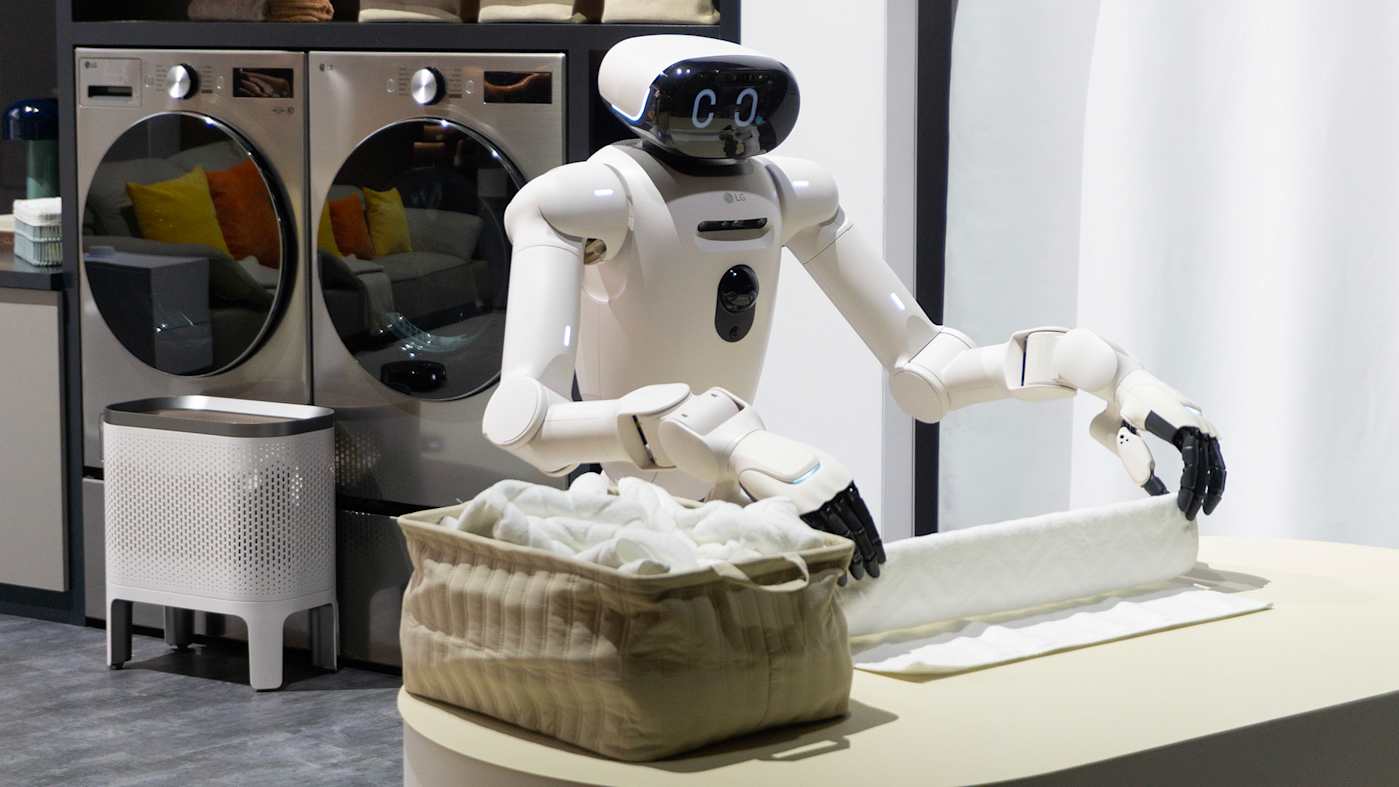
LG's CLOiD robot can fold laundry and serve food… very slowly

When LG announced that it would demo a laundry-folding, chore-doing robot at CES 2026, I was immediately intrigued. For years, I've wandered the Las Vegas Convention Center halls and wondered when someone might create a robot that can tackle the mundane but useful tasks I despise like folding laundry. With CLOiD (pronounced like "Floyd"), LG has proven that this is theoretically possible, but probably not likely to happen any time soon. 

I went to the company's CES booth to watch its demonstration of CLOiD's abilities, which also include serving food, fetching objects and fitness coaching. During a very carefully choreographed 15-minute presentation, I watched CLOiD grab a carton of milk out of the fridge, put a croissant in an oven, sort and fold some laundry and grab a set of keys off a couch and hand them to the human presenter.

Throughout the demonstration, LG showed off how its own appliances can play along with the robot. When it rolled over to the fridge, the door automatically opened, as did the oven. When the LG-branded robot vacuum needed to move around a hamper, CLOiD helpfully cleared the path. But the robot also moved very slowly, which you can see in the highlight video below. 

The appliance maker is selling the setup as a part of its vision for a "zero labor home" where its appliances and, I guess, robotics technology can come together to take care of all your chores and household upkeep. Maybe I'm jaded from a decade of watching CES vaporware, but I left the slick demo thinking the concept is unlikely to amount to much anytime soon.

On one hand, it is exciting to see robots competently performing tasks that would actually be useful to most people. But this technology is still far from accessible. Even LG isn't making any firm commitments about CLOiD's future as anything more than a CES demo. The company has instead said that CLOiD is a signal of its interest in creating "home robots with practical functions" and "robotized appliances," like fridges with doors that can open automatically. 

That may be a more reasonable target for the company (and yet another way for LG to sell us more appliance upgrades). But it's still pretty far from anything approaching the fantasy of a "zero labor home."

This article originally appeared on Engadget at https://www.engadget.com/home/smart-home/lgs-cloid-robot-can-fold-laundry-and-serve-food-very-slowly-181902306.html?src=rss

©

  •  
❌