❌

Normale Ansicht

Nothing Phone 4a Pro review: A midrange phone that rivals the Pixel 10a

Nothing takes a different tack with its phone series. For the second time in a row, its midrange entry-level A-series smartphones debuted ahead of its next flagship device. The company has even warned that we won’t be getting the Nothing Phone 4 until next year. Until then, the Phone 4a Pro is here to make an impact, with a more restrained design, a less obtrusive camera bump and specs that beat out last year’s Nothing Phone 3 — all for $499. In 2026, Nothing is truly aiming to dethrone the Pixel 10a.

Hardware

Nothing Phone 4a Pro review
Mat Smith for Engadget

It’s a new look. That’s often the case with Nothing’s smartphones as the company typically reimagines or rejigs what you can see through the clear back panel. This year, however, Nothing is making bigger changes: this is its first metal (aluminum) unibody phone.

With a new periscope telephoto camera design, the jarringly thick camera bump of last year’s Phone 3a Pro is thankfully gone, resulting in a slice of smartphone that feels — and to some, looks — more premium and more refined than Nothing’s “flagship” Phone 3.

However, compared to the Nothing phones that came before, it also feels muted, and a little safe. The playfulness of Nothing has been hemmed in a little. You might prefer it, but I’m not sure I do.

Those identifiable Nothing design flourishes — red details, visible screens, lots and lots of circles — are now squeezed into a camera panel. This oblong area with curved corners houses a trio of cameras, a “Now Recording” red light and a tweaked Glyph Matrix, which we last saw on the Nothing Phone 3.

This new Glyph Matrix is bigger and brighter, but at a lower “resolution,” that’s made of 137 mini-LEDs. That’s fewer than the Nothing Phone 3’s 489-strong dot-matrix, but the LEDs here are 100 percent brighter. So bright, in fact, that I had to turn them down to their lowest brightness when I was using them.The 4a Pro, however, lacks the rear button on the Phone 3 that lets you cycle through Glyph functions. Does this mean the company has made it easy to switch between Glyph toys and notifications in the phone’s UI? Sadly not.

You can dip into the Glyph options through the main settings menu, but to change what the Glyph displays is hidden in a sub-tab. I also noticed that the offering of “toys” was limited, with fewer items than even the Nothing Phone 3 had at launch. Hopefully, this will expand once the phone officially launches.

The 4a Pro packs a bigger screen than the company’s flagship, with a 6.83-inch AMOLED screen running at 1.5K resolution. It also has a higher refresh rate than the 6.67-inch Phone 3. And on top of that, the Phone 4a Pro’s display has a peak brightness of 5,000 nits, making it Nothing’s brightest smartphone yet.

I’ve handled so many phones over the last four weeks that it’s often hard to discern the difference between brighter displays. Fortunately, I have the Nothing Phone 3 (and 3a Pro) to compare against the Phone 4a Pro. It’s noticeably brighter, and as we slowly get into sunnier weather, a smartphone that’s easier to read outdoors is always very welcome.

The Phone 4a Pro also has improved IP65 water and dust resistance, while Nothing says it's 42 percent more bend-resistant than the Phone 3a Pro as well. It’s also almost 0.5mm thinner, if you ignore the camera bump for those measurements. Factor that in and the Phone 4a Pro is almost 1.5mm thinner than its predecessor. This design change also makes Nothing’s newest phone feel far less top-heavy than the 3a Pro. Regardless of the aesthetic changes, this is unmistakably refined hardware.

Cameras

Nothing Phone 4a Pro review
Mat Smith for Engadget

Besides the streamlined camera unit, with a new tetraprism periscopic lens that takes up less space, the Phone 4a Pro has improved imaging capabilities (almost) across the board. The new 50-megapixel periscope telephoto lens (which Nothing says also uses less power) has a 3.5x optical zoom, plus computational photography magic that can now crank it up to a (mostly unusable) 140x hybrid zoom.

The main 50MP sensor also features a bigger sensor for improved low-light performance. With an f/1.88 lens though, it doesn’t quite match the Phone 3’s main camera (f/1.68), both on paper and in practice. The array is rounded out with an 8MP ultrawide camera, which sounds like the weakest link, but I rarely use the ultrawide cameras on any phone aside from review testing. Oddly, the selfie camera is a technical downgrade in resolution, with a 32MP sensor on the 4a Pro, down from 50MP on the 3a Pro.

Nothing Phone 4a Pro sample photos
Mat Smith for Engadget

One new addition was co-developed by Google. Ultra XDR blends Android’s native HDR processing with Nothing’s own approach, capturing 13 RAW frames at different exposures and combining them to deliver greater dynamic range and detail. However, as proof of how new they are, your Ultra XDR images can’t be shared as easily. They do work with Google Photos and Instagram, at least. If it’s any consolation, Ultra XDR so far doesn’t seem hugely far away from typical HDR capture. I’ll keep testing the cameras and if I figure out where it really shines, I’ll update this review.

Nothing Phone 4a Pro sample photos
Mat Smith for Engadget

If one thing disappoints on the 4a Pro, it’s recording video. Switching between zoom levels will often completely derail exposure settings. Even if you record on a single camera at the same focal length, exposure levels seem extremely sensitive and struggle to stay locked. Footage is often muddy and low-light performance isn’t great, even if using the Ultra XDR video mode. You aren’t forced to endure this with the Pixel 10a, but then again, there’s no zoom on Google’s mid-range phone — just a lossless crop. In more forgiving lighting, video is adequate, but quality drops off beyond the 3.5x optical zoom. Still, the versatility and quality of the still images from both the main camera and the telephoto lens put it above every other smartphone at this price.

Performance and software

The Phone 4a Pro is now powered by a more capable processor: Qualcomm’s Snapdragon 7 Gen 4. Nothing claims that, in addition to its own on-device optimizations, it improved CPU performance by 27 percent, GPU performance by 30 percent and AI performance by 65 percent compared to the Phone 3a series.

There’s certainly a big difference in performance while gaming. While the 3a series struggled with more complex games, the 4a Pro kept up with Red Dead Redemption and Diablo Immortal. It’s not the most polished interpretation of Decard Cain and the lands of Sanctuary, but it's responsive and playable, even at 60 fps, with only a few frame drops.

The Phone 4a has a 5,080mAh battery, roughly equivalent to its predecessor. It supports up to 50W fast charging, a tad faster than the Pixel 10a, though it lacks wireless charging support, unlike Google’s midranger. It’s one of the few signs that this isn’t Nothing’s “true” flagship, even if it looks the part.

I was pleasantly surprised by the battery life, too. Typically, phones are getting increasingly bigger batteries, but as I mentioned, that’s not the case here.. However, the 4a Pro lasted 24 hours in our battery rundown test, five hours more than last year’s model.

The Phone 4a Pro has all the software features either present or teased in older Nothing Phones. Essential Search is a system-wide search that can find terms in messages, files and the rest of your phone. There’s also a new Breathing Break widget; we definitely need that in 2026.

Essential Memory is Nothing’s name for its background algorithms and analysis, scrutinizing your phone’s contents as well as whatever’s saved in Essential Space. Nothing has added cloud storage for Space, aimed at devoted upgraders, meaning everything you saved on older compatible Nothing phones can be transferred over. Sure, it’s a little niche, but it was an early frustration while testing the Phone 3 after the 3a series. If, for some reason, you have to reset your device, keeping everything in Space backed up elsewhere is a boon.

Nothing Phone 4a Pro review
Mat Smith for Engadget

Also, while it’s technically a hardware tweak, Nothing has also moved the Essential Key to the left edge of the phone, making it far less likely to be triggered when you’re adjusting the volume and more in line with other phones and my own smartphone muscle memory.

One caveat from previous Nothing devices remains. The company says it will deliver three years of Android updates and an additional three years of security patches. Compare that to Samsung’s seven years of Android updates for this year’s S26 series (and Google’s Pixel 10a), and you can see how it falls short.

Wrap-up

The Phone 4a Pro punches well above its $499 price tag. Nothing has successfully refined its hardware into a more premium, all-metal unibody, losing the jarring camera bump of its predecessor in favor of a sleek design that houses a genuinely impressive camera. The improved camera versatility, coupled with its class-leading 24-hour battery life and a more capable processor, makes this a serious threat to the Pixel 10a.

However, some of Nothing's signature playfulness has been dialed back. The Glyph Matrix, while brighter, is lower-resolution and its “toys” are disappointingly limited at launch. The lack of wireless charging is another nod to its midrange status.

Nothing’s Phone 4a Pro is a device with a clear identity, delivering on the essentials for half the price of many rivals.

This article originally appeared on Engadget at https://www.engadget.com/mobile/smartphones/nothing-phone-4a-pro-review-glyph-matrix-130042005.html?src=rss

©

© Mat Smith for Engadget
Nothing Phone 4a Pro review
  •  

Oppo’s Find N6 might be the foldable of your dreams

Oppo is back with another high-spec foldable phone you may never see outside a tech journalist's hands. The Find N6 is its new, sub-9mm device that is headed to Asian markets and, for now, not many other places. That means no US or European availability. So why write about it? With its build quality, hardware specs and camera array, not only is it a very good phone, but it's also proof that another device maker can go toe-to-toe with Samsung’s dominance in flagship foldable phones.

Hardware

Oppo Find N6 hands-on
Image by Mat Smith for Engadget

Oppo is obsessed with the foldable crease. More than me, more than most of you, more than it should, probably. A focus of its presentation last month in London detailed all the effort put into its “zero-feel crease.” The idea is that you can’t really feel where the device folds, with 3D liquid printing and laser scanning used to fill the hinge's surface precisely. The company says this reduces hinge height variance from 0.2mm to only 0.05mm.

Oppo has improved the glass used on the foldable display, and according to TÜV Rheinland testing (again), the Find N6 reduces long-term crease formation by up to 82 percent compared to last year’s Oppo model. It apparently takes a lot of engineering to make a foldable that looks pristine for longer. It’s definitely still early days, but after a few weeks of use, the crease does seem perceptibly shallower than that of other devices, especially the older Find N5. However, there is still a crease. You might not feel it as much, but you can see it. 

Despite that particular obsession, it’s another incredibly thin foldable, measuring 8.93mm (0.35 inches) thick. That means, folded, it seems roughly equivalent to most typical smartphone form factors. For reference, the iPhone 17 Pro is 8.75mm (0.34 inches) thick. Even with its slim profile, it also offers improved protection with IP59 certification against dust and water. The new foldable also picks up a new custom hardware button, like the Find X9, which can be assigned to launch the camera, switch sound profiles and other quick action settings.

The screens are the same size and resolution as its predecessor: a 6.62-inch front display and an 8.12-inch inner screen. There have been notable improvements here, too. Peak brightness has been punched up to 3,500 nits on the front screen and 2,500 nits on the foldable screen, making them brighter than on Oppo’s last foldable, but behind Motorola’s latest, most luminous foldable.

The Find N6 also has another custom 7-core Snapdragon 8 Elite Gen 5 processor — the flagship processor of the moment. The more impressive spec may be the battery: a huge 6,000mAh Silicon-Carbon power pack. That’s 400mAh more than the Find N5 and 1,600mAh more than the ZFold 7. And it goes and goes: Doing a battery rundown test on the front display playing non-stop video lasted just shy of 30 hours, while using the bigger internal screen still hit 24 hours.

Another area where it bests Samsung is in charge speeds, supporting up to 80W SUPERVOOC wired charging through Oppo’s proprietary adapter and up to 55W with other high-wattage chargers. There’s also 50W AIRVOOC wireless charging — again, only if you have Oppo’s particular flavor of wireless charger, which I do not. Sadly, there are no Qi2/PixelSnap/MagSafe docking magnets.

The cameras

Oppo Find N6 hands-on
Image by Mat Smith for Engadget

Oppo has made major improvements to the cameras with several features showcased on the Find X9, now making their way to its foldables. There's a new 200-megapixel main camera with an f/1.8 lens and a new 50MP ultrawide camera that lets in 50 percent more light. The telephoto camera captures 50MP images, with 3X periscope optical zoom and telemacro focus up to 10cm away. All three cameras also support 4K 60 fps Dolby Vision video capture, with the main sensor also capable of 120 fps recording.

Oppo Find N6 sample images
Image by Mat Smith for Engadget

Oppo’s new foldable has cameras that rival those of Samsung's Galaxy Z Fold series. The addition of the high-resolution 200MP main sensor adds more detail to images and more versatility, too. The company continues to collaborate with Hasselblad on camera hardware and software. A new Hi-Res mode that captures stills using the full pixel count of each sensor, while other shooting modes from previous devices are still here. That includes the Hasselblad Master Mode, with full control over the camera settings and the iconic XPAN mode for 65:24 panoramic stills and video.

While I was already impressed by Oppo’s recent Find X9, the Find N6 still surprised me. It’s versatile, consistent, and it’s almost the best foldable camera phone — if only its telephoto matched the Pixel 10 Pro Fold’s 5x zoom.

Software

Oppo Find N6 hands-on
Image by Mat Smith for Engadget

When it comes to multitasking, the Find N6 really wants to deliver, even if the end result is a little messy. You can run a full-screen app, while three Free-Flow Windows each run a different app or web page, all concurrently. Every window is interactive and it almost immediately gave me a stress headache. Oppo has baked in a system of swipes and pinches to aid navigation, but I’d argue that even an 8.1-inch screen isn’t enough for all those windows. Still, for the true power user, there is a lot to tap into. If you’re the kind of person who bounces between work chats in Slack, your calendar and umpteen Chrome tabs — this phone is aimed at you.

Oppo wasn’t done with the productivity bonafides. It’s added a new stylus to its foldable series, which comes with its own holster/case that attaches to the back of the Find N6. In most instances, this would make a chunky foldable too bulky, but the base phone is so slim that it's passable. The case also serves as a charging cradle that can recharge the stylus via reverse wireless charging. I’m not a huge stylus user, but for those who miss the S Pen, this is an option if you live in a country where it’s being sold.

The stylus, officially called the Oppo AI Pen (hate that name), has a button to summon an onscreen palette of tools and features. Double-pressing the button switches between writing and erasing, which is pretty handy. Screen-off note-taking will apparently arrive in a later software update.

Oppo is also continuing to bridge ecosystems with iPhone Connect, which adds AirDrop-style file sharing to Apple phones. Remote PC control is still a cute feature, making the Find N6 into a tiny pocketable PC, if you’re willing to work on your laptop through a tiny screen.

Wrap-up

Oppo Find N6 hands-on
Image by Mat Smith for Engadget

It’s another impressive foldable from Oppo, one that sadly most folks will never be able to buy. What’s stopping Oppo from testing the waters outside of Asia? The Find N6 is an incredibly powerful, technically impressive device. What is Oppo afraid of?

The foldable will arrive in both silver and orange, although the latter is a little more muted than I’d hoped. For now, Oppo is launching the Find N6 on March 20 in China, Japan, Malaysia, Thailand and other Asian territories. The company just announced that prices will start at ¥9999 in China (approximately $1,450), with 12GB of RAM and 256GB of storage.

This article originally appeared on Engadget at https://www.engadget.com/mobile/smartphones/oppos-find-n6-might-be-the-foldable-of-your-dreams-131036055.html?src=rss

©

© Image by Mat Smith for Engadget

Oppo Find N6 hands-on
  •  

The Morning After: Apple's surprise AirPods Max refresh

You may have a little Apple fatigue after last week's barrage of Macs, iPhones and iPads. The company wasn't done, however. Surprise! Here is an updated pair of AirPods Max. It's a predictable surprise, perhaps, but one I wasn't expecting after so many other new devices.

It's also the first true update. The AirPods Max 2 look identical to their predecessor, but now have an H2 chip. First, the AirPods Pro 2 improve noise cancellation by 50 percent and add support for Adaptive Audio and Live Translation. It's a much-needed update for headphones that, barring a USB-C option, haven't changed since 2020.

They're still priced at $549. In Apple's recent press images for its cheapest MacBook ever, a child was using AirPods Max while working on their $599 MacBook Neo. Love it.

The new headphones are up for pre-order on March 25 and will ship in early April.

– Mat Smith

The other big stories (and deals) this morning


MacBook Pro M5 Max 16-inch review

Still the pinnacle.

TMA
Engadget

What did I just say? Wrapping up the barrage of reviews of all that new Apple hardware (besides those new AirPods), we test out Apple's most powerful new MacBook. The new Pro has an M5 Max chip, plenty of memory and is a beast. Thankfully, it still has all the ports you'd want.

Continue reading.


xAI is being sued by teens who say Grok created CSAM using their photos

The class action lawsuit says that the lives of three teens have been "shattered."

xAI is facing a class-action lawsuit in California, after its Grok AI reportedly generated sexualized images of children. Three teenagers filed suit, alleging Grok used their photos to create child exploitation material. One teen was alerted in December that AI-generated, sexually explicit images of her and other minors were being shared "in settings with which she was familiar, but morphed into sexually explicit poses." The Center for Countering Digital Hate estimated in January that Grok produced millions of sexualized images, including 23,000 potentially depicting children.

Continue reading.


Finally, Android tablets and foldables are getting a Chrome bookmark bar

Hello, power users.

Google is rolling out a new feature for Chrome that will add a bookmark bar to the browser on Android foldables and tablets. Spotted by 9to5Google, this move will make the browsing experience on larger mobile devices more akin to that of laptops and desktops running Chrome. Perfect if you managed to grab Samsung's Galaxy Z TriFold before it disappears forever.

Continue reading.

This article originally appeared on Engadget at https://www.engadget.com/general/the-morning-after-engadget-newsletter-111501781.html?src=rss

©

  •  

The Morning After: The new iPad Air M4 is Apple's best overall tablet

Now that Apple is designing and engineering its own silicon, the updates come fast. It’s been less than two years since the company released the M2-powered iPad Air and we’re already on our third iPad Air iteration, one with the M4 inside. That’s the same chip that was inside the iPad Pro in 2024.

That’s one way of expressing how powerful 2025's iPad Air now is – and it remains a step above the base iPad in most ways. However, there’s room for improvement. Apple has stuck with the same display for another year. The 11-inch iPad Air that Nathan Ingraham reviewed seems to have has the same screen in 2026 as it did when the first no-Home button iPad Air was released in late 2020. (And that’s the one I’m still using!) Also, why still no FaceID?

– Mat Smith

The other big stories (and deals) this morning


Qualcomm's new Arduino Ventuno Q goes all-in on AI and robotics

It’s a more sophisticated board.

Qualcomm, which bought microcontroller board manufacturer Arduino last year, just announced a new single-board computer that marries AI with robotics. The Ventuno Q is more sophisticated (and expensive) than Arduino's usual AIO boards, thanks to the Dragonwing IQ8 processor that includes an 8-core ARM Cortex CPU, Adreno Arm Cortex A623 GPU and Hexagon Tensor NPU that can reach up ot 40 TOPs. It also pacs in Arduino App Lab, with pre-trained AI models including LLMs, VLMs, gesture recognition and object tracking, all running offline.

Continue reading.


Apple may delay its smart display launch until fall

Siri's ongoing AI overhaul could be to blame for the wait.

Bloomberg’s Mark Gurman is back with the latest rumors on new Apple hardware and the company’s continued Siri woes. His sources say that Apple is expected to postpone its smart home display until later in 2026, possibly September, when it often introduces another barrage of new gadgets. The hardware has reportedly been finished for months, but the AI-centric overhaul of Siri is still not done.

Continue reading.


Dell XPS 14 (2026) laptop review

That one flaw...

TMA
Engadget

Dell’s revamped XPS 14 is more powerful than ever. The XPS series has long been a favorite at Engadget, and this one’s lightweight and features a gorgeous OLED screen. However, Dell’s keyboard this year has a baffling flaw: its keyboard. It somehow forces you to type more slowly to log each key press. And this isn’t a capacitive touchscreen or anything complicated. According to Dell, “a small batch of early XPS units” have these quick typing issues. They also say the issue is currently resolved and doesn’t affect XPS units shipping now. We’ll be checking once a firmware update, meant to fix the issue, lands.

Continue reading.


This article originally appeared on Engadget at https://www.engadget.com/general/the-morning-after-engadget-newsletter-111539860.html?src=rss

©

  •  

MWC 2026’s most bizarre phone can start fires (on purpose)

This isn’t a Galaxy Note 7 debacle. Oukitel's WP63 is a ruggedized smartphone that’s meant to set things alight. It has a built-in electric igniter, aimed at emergency response and camping, helping to start fires when you forgot matches, but you brought this beastly phone along for the adventure. It’s got several other notable features, like a 20,000mAH battery, a loudspeaker, and even its own built-in USB-C cable for charging other devices.

Still, the igniter was why I was here. The WP63 has an electric coil that heats up, similar to cigarette lighters in cars circa 1987. This is hidden away behind a protective cover at the top of the device, and once it pops out, you activate it using an app. An Oukitel spokesperson was able to light some rolled-up paper, and I was surprised how gentle and seemingly in control it was. (The paper looked like a cigarette, too.)

Unfortunately, another spokesperson told me that it can’t be used to light candles, although I can’t understand why. I don’t start campfires, but I do light candles.

Oukitel WP63 at MWC 2026
Image by Mat Smith for Engadget

The phone will be priced around $500, and completely ignoring the tendency for thinner and thinner phones, it’s 27mm thick. Another outdoor use? If a bear decided to attack you in the woods, you might be able to concuss it with the WP63.

This article originally appeared on Engadget at https://www.engadget.com/mobile/smartphones/oukitel-wp630-mwc-2026-smartphone-igniter-101046023.html?src=rss

©

© Image by Mat Smith for Engadget

Oukitel WP63 at MWC 2026
  •  

At MWC, Tecno’s super-thin modular concept phone doesn't even have a wired charging port

On its own, at 4.9mm thin, Tecno's modular phone concept barely feels like a smartphone. It has a screen, a basic camera module, four low-profile pogo-pin connectors and that's about it. From there, you can seemingly build your conceptual phone however you want.

At its booth at MWC 2026, Tecno had two families of modular components in two different colorways, which is surprising at this concept stage. The chunky telephoto lens and housing must weigh over three times as much as the base phone, adding up to 20x zoom capabilities, even if it was a little glitchy during my hands-on. The barrel also offers manual focus, which is always a nice touch. The lens itself is huge, though, making even Vivo's latest 400mm telephoto lens peripheral look reasonable by comparison.

Tecno's modular concept phone at MWC 2026
Image by Mat Smith for Engadget

There are more subtle camera modules, including ultrawide options and a more streamlined periscope telephoto. There's even an action cam that can attach through Wi-Fi and be used on its own. Depending on the module, transmission is also done through Bluetooth and even mmWave. One module has an antenna that folds out, turning the phone into a walkie-talkie messenger… thing that can communicate without cell service or Wi-Fi. There were also lanyard connectors, grip clips, and several that I may have forgotten. Sadly, the game controller mod wasn't on the stand, though I'm not sure how you'd use it blindly on the back. 

It's a lot of fun to swap out and even stack the modules, most of which were functionally working. There are plenty of questions left to answer, and I'm concerned about how rigid the magnetic connection would be when pulling this kind of phone out of your pocket repeatedly. Also, who's going to carry around an attaché case filled with all these things? 

Tecno's modular concept phone at MWC 2026
Who doesn't love an aerial?
Image by Mat Smith for Engadget

Naturally, due to its thickness, the phone has a tiny battery cell (I don't know the capacity), but you can add 3,000mAh battery packs to the back. And another. And even another, topping out at around 10,000mAh, beating the capacity of most mainstream smartphones. It was only then that I realized it lacked any traditional USB-C charging port. Instead, a charging module can be attached to either of the two pairs of connectors. (And you can add further modules on top of that.)

Tecno often has thrilling concepts and one-off devices at trade shows, so we can't vouch that this will eventually make its way to consumers. Modular phones are a tricky sell, as they can often lose the efficiencies that come from unified components. Google ended its Project Ara modular concept over 10 years ago, while Motorola's Moto Mods just weren't very good and even I struggle to remember LG's G5 modules.

Adding to that, the company also rarely sells its phones in Western Europe and the US. Judging by the moves being made by other Chinese phone manufacturers in the last year, that could change.

This article originally appeared on Engadget at https://www.engadget.com/mobile/smartphones/at-mwc-tecnos-super-thin-modular-concept-phone-doesnt-even-have-a-wired-charging-port-123129135.html?src=rss

©

© Image by Mat Smith for Engadget

Tecno's modular concept phone at MWC 2026
  •  

TCL is upgrading its easy-on-the-eyes glare-free NXTPAPER display tech with AMOLED

TCL has been making smartphones and tablets at an impressive clip for years. While most companies have focused on foldable display tech — and TCL has dabbled — the focus has been on its NXTPAPER screens. Aimed at being friendlier on the eyes, and pitched as a device somewhere between e-ink slates and traditional tablets, NXTPAPER has gradually been upgraded and refined, reaching an apex at CES 2026 earlier this year with the Kindle Scribe-alike, the Note A1 NXTPAPER and its latest smartphone, the NXTPAPER 70 Pro.

At MWC, just a couple of months later, it's preparing for a major leap forward on future phones and tablets. It's been announced (and backed up with tech demos) that it's developing AMOLED NXTPAPER displays, aiming to combine the eye comfort benefits of TCL's current displays with flagship visual performance. This involved fundamentally redesigning and re-engineering the display architecture. Still, it should address the biggest problems with current LCD-based NXTPAPER, such as mediocre brightness, poor outdoor performance, and dull colors.

This NXTPAPER AMOLED screen, well, it looks like AMOLED:

TCL NXTPAPER AMOLED at MWC 2026
Image by Mat Smith for Engadget

On the showfloor at CES, the company had several demo devices showcasing the new screen technology's brightness. While still photos don't really do it justice, it's impressive, and the anti-glare effect seems premium compared to third-party anti-glare protective films. 

TCL says its incoming AMOLED display — it hasn't announced a device yet — will reach 3,200 nits of brightness. For reference, TCL's 70 Pro topped out at a mere 900 nits. TCL says it will also feature 120Hz refresh rates, 100 percent color gamut coverage, and blue light reduction that can go as low as 2.9 percent, which is 15 percent less than existing NXTPAPER displays.

The company plans to launch an AMOLED NXTPAPER smartphone before the end of the year.

This article originally appeared on Engadget at https://www.engadget.com/mobile/smartphones/tcl-is-upgrading-its-easy-on-the-eyes-glare-free-nxtpaper-display-tech-with-amoled-085736065.html?src=rss

©

© Image by Mat Smith for Engadget

TCL NXTPAPER AMOLED at MWC 2026
  •  

Motorola Razr Fold hands-on at MWC 2026: Bright screens, inside and out

After briefly announcing its new foldable at CES, Motorola is now ready to debut its first book-style foldable in full at MWC 2026. There are several features we already knew, including support for Motorola’s new Pen Ultra stylus and no fewer than five cameras. However, many specs were still unknown. There are some pleasant surprises.

Motorola decided to make both screens brighter than any of its rivals by quite a margin. The main 8.1-inch foldable display of the Razr Fold has a peak brightness of 6200 nits, while the external screen almost matches it with 6000 nits. For comparison, both screens on the Pixel 10 Fold Pro have a peak brightness of 3000 nits and other foldables’ internal screens typically have substantially lower brightness levels. Inside Motorola's demo room, filled with windows and Barcelona sun, I had no trouble reading either screen.

The main display is a 2K (2,484 x 2,232) LTPO display that can reach a peak refresh rate of 120Hz, while the external display has a 2,520 x 1,080 resolution and peaks at 165Hz. Both screens also support Dolby Vision.

Motorola Razr Fold at MWC 2026
Image by Mat Smith for Engadget

With those high-brightness levels, Motorola has opted for a silicon-carbon 6,000mAh battery, another leading specification among foldables at the time of writing. It’ll be interesting to see how battery life fares, powering those big, bright screens. The Razr Fold also supports fast charging at up to 80W with the company’s own (sold separately) TurboPower charger and up to 50W wireless charging.

With a silicon-carbon battery that offers higher energy density, Motorola’s biggest foldable yet remains surprisingly svelte, despite its huge battery. The Razr Fold is 4.6mm (0.181 inches) thin when open and 9.9mm (0.39 inches) when closed. Yes, Samsung’s latest Z Fold is thinner (4.2 mm; 8.9 mm), but it has a substantially smaller 4,400mAh battery.

Motorola Razr Fold at MWC 2026
Image by Mat Smith for Engadget

The Razr Fold’s hardware continues with many of the design touches found on recent Razr phones. I spent most of my time with the Blackened Blue iteration of the Razr Fold, with a woven piqué design that felt both easy to hold and didn’t seem to hold onto fingerprints. There will also be a Lily White color that doesn’t have the piqué design, but a more satin finish.

The Razr Fold has a Snapdragon 8 Gen 5 processor, the de facto flagship Android processor at this point. The foldable also has its own liquid-cooling system to maintain consistent performance during tougher tasks and gaming sessions.

The Razr Fold’s cameras will have to do more than what we’re used to seeing on the flip-style Razr smartphones, which have underwhelmed in the past. Fortunately, it looks like it could be a very capable smartphone camera. The main 50-megapixel sensor has a f/1.6 lens and 3.5 degrees of optical image stabilization. It’ll also work alongside a multi-spectral 3-in-1 light sensor to improve color accuracy. The Razr Fold’s ultrawide camera has a 50MP sensor, a 122-degree field of view, and support for macro photography. The 50MP periscope telephoto camera can reach up to 3x optical zoom and 100x SuperZoom, through image cropping and AI-boosted image processing. And finally, there are two selfie cameras: a 32MP internal camera that can record up to 4K video and a 20MP external selfie cam, both with a f/2.4 lens.

Motorola Razr Fold at MWC 2026
Image by Mat Smith for Engadget

Motorola is already claiming this is the best camera on a foldable smartphone, with the highest DXOMARK score among foldables. If you haven’t heard of DXOMARK before, it’s a benchmarking website and lab in France that offers professional image quality testing for smartphones, camera lenses and cameras. It also offers a consultancy service to help manufacturers improve their devices’ camera performance.

It’s too early to tell whether this is objectively a better cameraphone than Samsung’s Z Fold 7, but I was particularly impressed by the Razr Fold’s telephoto camera results. Similarly, I’m intrigued by Motorola’s decision to support its newest stylus, the Moto Pen Ultra. It warrants further testing when the foldable lands for review.

Motorola hasn’t announced pricing and availability for the Razr Fold. It’ll be coming to North America “in the coming months.”

This article originally appeared on Engadget at https://www.engadget.com/mobile/smartphones/motorola-razr-fold-hands-on-mwc-2026-050027092.html?src=rss

©

© Image by Mat Smith for Engadget

Motorola Razr Fold at MWC 2026
  •  

Lenovo's robot concept can help you digitally sign documents (and maybe annoy coworkers)

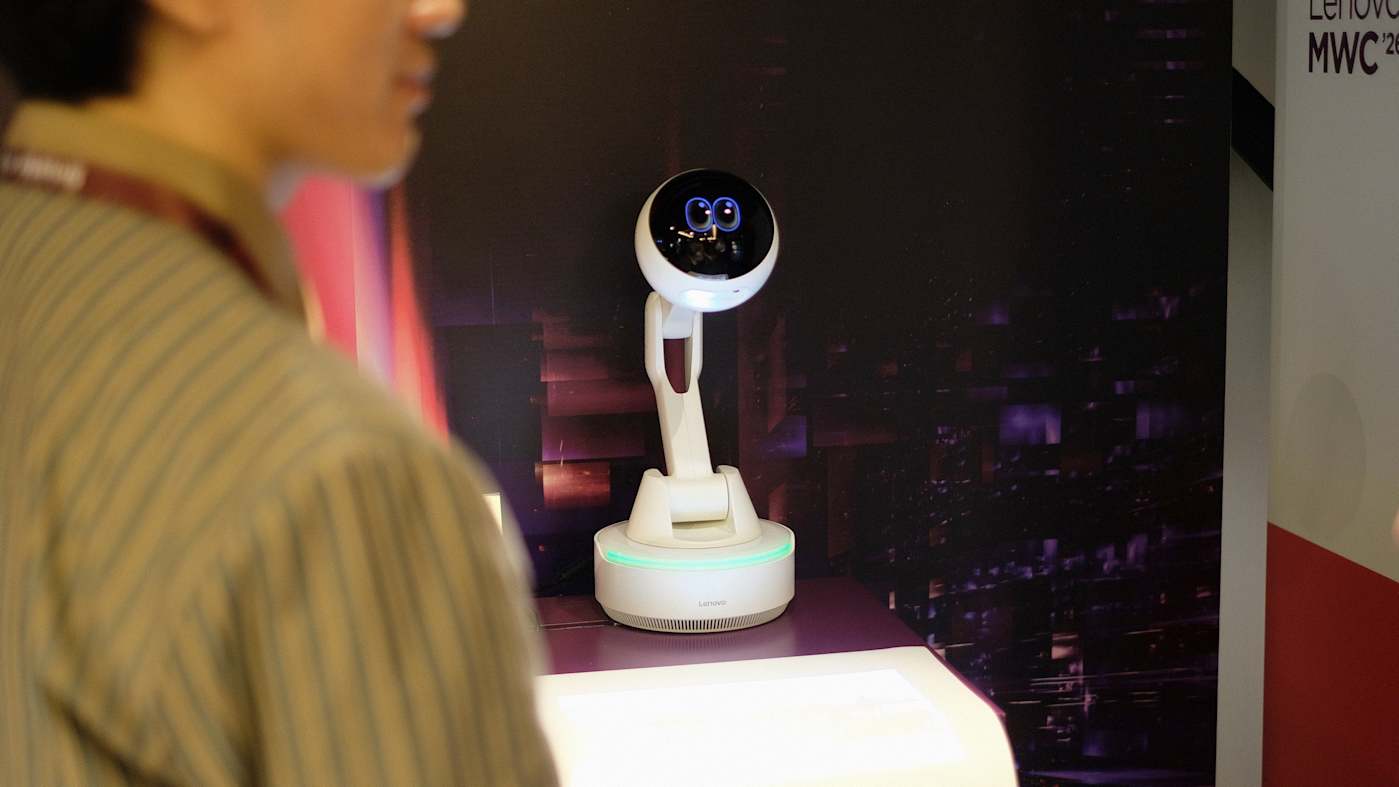
Lenovo can make a robot, too. Alongside proof-of-concept foldable gaming PCs and modular laptops, it introduced the AI Workmate Concept at MWC 2026. With its own Intel Core Ultra processor, 64GB of memory and its own Pico projector, it’s an AI-laced “workmate” meant to streamline office tasks and collaboration. And it has an LCD face.

For now, it’s a proof of concept, musing on how to integrate voice commands and LLMs (large language models) into workplace settings. It's meant to sit on your desk, but preferably also near a wall – more on that later.

Voice commands aside, the concept bot supports writing, voice and gestures with on-device AI processing. While it can answer the usual voice assistant questions, it can also scan and summarize documents (both digitally and physically) and even assist with creating a PowerPoint presentation – though you might want to check its work.

Lenovo AI Workmate Concept at MWC 2026
Mat Smith for Engadget

The 3.4-inch 480 x 480 screen doesn’t seem to offer any data visualization or numbers. During my demo, it only seemed to show the bot's eyes and facial expressions: it’ll sip coffee as it listens (with a moustache), cup a floating hand to the side of its face when it needs you to repeat a command, or twinkle when it’s processing more complicated tasks, like that fictional PowerPoint presentation.

With its articulated head, which houses the projector, cameras and LCD face, you can ask it to project images or documents on either the desk in front of it or a wall nearby. No need to flip around your monitor or laptop to share with colleagues. In one example, a spokesperson asked for a postcard. The Workmate then projected a (Lenovo-branded) image of Barcelona onto the desk. The rep laid paper down, then signed the ‘postcard’ and got the robot to scan it (with two downward-facing 5-megapixel cameras), and then send the file to a nearby printer.

Lenovo AI Workmate Concept at MWC 2026
Image by Mat Smith for Engadget

In theory, this sort of flow could transition to document signing or adding notation to images and files. However, one caveat here is whether those of us who work in offices want the extra workplace noise of a chatty robo and the person barking orders at it.

Lenovo says this concept (and it has a few at MWC) is meant to demonstrate the company’s “exploration of spatial and physical AI experiences” that integrate “seamlessly into professional environments.” Hopefully, further evolutions offer a text-based way to make using it a little less noisy.

Lenovo was also showing a simpler AI work device, the AI Work Companion Concept. It’s a completely different premise, despite the name being a little too close to the AI Workmate Concept.

Lenovo AI Workmate Concept at MWC 2026
Image by Mat Smith for Engadget

The AI Work Companion is not a robot, but a handsome chunky desk clock, with a solid, satisfying dial on the top and programmable buttons. The front is almost entirely display, able to show calendars, task lists and other work-centric dashes. It runs independently, plugging into a USB-C port for power and pulling data down wirelessly, while also acting as a port hub for charging other accessories and devices.

It’s certainly not as high-concept as the robot, but there are some AI smarts inside.

The Work Companion’s “Thought Bubble” uses AI to sync a user’s tasks and daily schedule across devices, synthesizing a daily action plan. It will even suggest times to break up bursts of work and attempt to monitor screen time to better manage burnout.

According to the press release, Lenovo says it also has “playful interactions with the user” and will, kind of bleakly, offer an end-of-week celebration report of tasks completed. It’s lucky it’s a good-looking desk clock.

This article originally appeared on Engadget at https://www.engadget.com/ai/lenovo-concept-robot-ai-workmate-mwc-2026-230159746.html?src=rss

©

© Image by Mat Smith for Engadget

Lenovo AI Workmate Concept at MWC 2026
  •  

A closer look at Honor’s Robot Phone

While Honor has already made plenty of product announcements, with tablets, foldables and more, its most interesting device at MWC 2026 is the Robot Phone — and maybe the humanoid robot that came alongside it.  

After briefly showing off a model at CES, Honor isn't quite ready to launch its Robot Phone. However, we got more specs, tech demos and a closer look following the company's MWC press event in Barcelona. The Robot Phone is currently set to launch later this year.

Honor Robot Phone at MWC 2026
Image by Mat Smith for Engadget

Honor has put a lot of effort into ensuring its camera gimbal is highly mobile, to the point of creating a tiny personal robot that is, dare I say, adorable? The Robot Phone's pop-up camera can cock its head, shake to say no, nod to agree, and even "flip" – or at least rotate 360 degrees. According to Honor's presentation, it can even bop along to songs. A spokesperson told me that it's got five songs in its repertoire, so it's not clear whether they're programmed for these kind of demos, or will be a feature of the final retail device.

Another demo here at MWC showed how you could make the Robot Phone "sleep" by covering its gimbal eye, though it's odd that the camera is still exposed rather than folded away. My main concern with the Robot Phone is the robustness and durability of its robotic mechanisms. We've lived through several waves of smartphones that attempted much simpler mechanical camera functions and the threat of dust or heavy-handed users can't be ignored.

Honor Robot Phone at MWC 2026
Image by Mat Smith for Engadget

The company says it's taken what it learned from foldables, regarding high-performance materials and simulation accuracy, and applied it to shrinking the camera module. On stage, Honor CEO James Li revealed what he calls the industry's smallest micro motor, much smaller than a 1-euro coin and, he added, 70 percent smaller than existing micro motors. 

As this component has been reduced substantially, the Robot Phone's gimbal will be the industry's smallest 4-degrees-of-freedom gimbal system. That's a spec – we finally got a spec! It'll also offer three-axis stabilization in this tiny camera package, with the primary camera using a 200-megapixel sensor. 

The fold-away panel that the primary camera tucks into also reveals more typical cameras, so you're not forced to use the gimbal if you don't need it. Still, that's one very thick camera unit:

Honor Robot Phone at MWC 2026
Image by Mat Smith for Engadget

Honor has already started building out camera modes and features, with a Super Steady Video mode that enhances stability while swinging the Robot Phone around to capture video. AI Object Tracking will apparently intelligently follow subjects, while AI SpinShot supports intelligent 90-degree and 180-degree rotational movement for more cinematic transitions. We've seen these sorts of pre-programmed movements and functions in full-size phone gimbals and action cams. If Honor can nail it in such a tiny form, it'll be impressive. 

Other specifications during Honor's press event were sparse, although the company announced a collaboration with ARRI Image Science to bring its cinematic smarts to the Robot Phone's gimbal camera. 

In a press release, Honor's Li said the collaboration would bring ARRI's "cinematic standards and professional workflows" into mobile imaging. It's apparently the first time elements of ARRI Image Science are being integrated into a consumer device. Dr. Benedikt von Lindeiner, VP at ARRI, said the goal is to bring a true cinematic aesthetic, such as "natural color, gentle highlight roll-off, and a sense of depth," to shooting with an Honor smartphone.

Honor Robot Phone at MWC 2026
Image by Mat Smith

Honor also made a humanoid robot companion for its Robot Phone. The bot took to the stage alongside the Robot Phone, danced alongside human dancers, did a backflip and shook hands with CEO James Li. It didn't say a thing, but fortunately, during some on-the-rails banter between the robot, Robot Phone and Honor's CEO, the Robot Phone was particularly chatty.

Like the many humanoid robots we've reported on and seen in person, Honor hopes to put it to work in both industrial and domestic settings, pitching it as a central part of the company's multi-million-dollar push into AI. For now, it's being called Honor Robot.  

This article originally appeared on Engadget at https://www.engadget.com/mobile/smartphones/a-closer-look-at-honors-robot-phone-145935198.html?src=rss

©

© Image by Mat Smith for Engadget

Honor Robot Phone at MWC 2026
  •  

Leica’s Leitzphone by Xiaomi has a huge 1-inch camera sensor and a stylish new design

Alongside a global launch for Xiaomi's 17 Ultra (read about that right here), the company announced a further deepening of its relationship with Leica. The CEO of Leica, Matthias Harsch, took to the stage to announce a new Leitzphone, which appears to be an even deeper collaboration than 17 Ultra by Leica, which is a different phone. Confused? That's fair. 

Design-wise, Leica has shifted back to a single tone body color, which looks more "Leica" to this camera dilettante's eyes. And if you’re thinking you’ve heard of the Leitzphone before, you probably have: it was a series of phones made by Sharp that launched in Japan in 2021. They all had a 1-inch camera sensor, as does Xiaomi’s first Leitzphone. It also has a mechanical, physical ring dial around the camera unit to control settings like zoom, exposure and shutter speed.

The camera interface is also designed by Leica. It's designed to be as intuitive as possible, with an Essential mode in the camera app that strips away all those modes and labels, showcasing whatever you're looking to shoot. You can switch between a monochrome shooting mode and a more familiar punchy, contrasty Leica filter. And that's it.

Aside from that there's no major standout interface or UI changes that I could spot while trying out the Leitzphone briefly at Xiaomi's MWC keynote. However, if you're intrigued by the functionality — or the cameras — check out our hands-on coverage and sample photos of the Xiaomi 17 Ultra. The cameras are good.

Leica Leitzphone by Xiaomi hands-on at MWC 2026§
Image by Mat Smith for Engadget

All three iterations (the regular Xiaomi 17 Ultra , the "by Leica" edition and the Leitzphone) have a Snapdragon 8 Elite Gen 5 chip and a 6.9-inch 120Hz display that can reach up to 3,500 nits of peak brightness. While cameras are naturally the focus, it’s a flagship device by pretty much any metric. It also has a 6,000mAh battery for extended vacation photo shoots.

Barring some Leica-tinged wallpapers and design accents, it's a lot like the 17 Ultra by Leica, just with different messaging. This is Leica's phone, made by Xiaomi, but does a rose by any other name still have great low-light photography? Maybe increased Leica branding will be enough to coax its camera fans into making this their next smartphone, perhaps.

Leica Leitzphone by Xiaomi hands-on at MWC 2026§
Image by Mat Smith for Engadget

After years of collaboration (and cute little badges), this may be the first pure "Leica phone" manufactured by Xiaomi but sold directly by both companies. It's priced at €1,999 (roughly $2,362), but it's not known yet whether this phone will launch in the US. Welcome to MWC, everyone.

This article originally appeared on Engadget at https://www.engadget.com/mobile/smartphones/leica-leitzphone-xiaomi-mwc-2026-135744417.html?src=rss

©

© Image by Mat Smith for Engadget

Leica Leitzphone by Xiaomi hands-on at MWC 2026§
  •  

Xiaomi 17 Ultra hands-on: Incredible cameras, but maybe hard to get

China’s biggest phone makers continue to relentlessly forge ahead with high-spec phones that you may never see in the US. With the Xiaomi 17 Ultra this year, the company has continued its pattern from previous iterations by focusing on powerful camera sensors, huge batteries and… being selective about global availability.

Xiaomi’s 17 series is launching across multiple European territories months after its Asia debut, but at the time of writing, no word yet on US availability. Another logistical point of interest? When we last checked out Xiaomi’s devices, it was the 15 series, and the company has decided to skip 16 and leap straight to 17, conveniently matching Apple’s latest number.

Storied camera brand Leica has been involved with Xiaomi’s phones for a few years and its newest flagship doesn’t disappoint in that regard, because this is another Xiaomi device dedicated to photography.

Xiaomi 17 Ultra hands-on at MWC 2026
Image by Mat Smith for Engadget

The 17 Ultra has a huge 1-inch 50-megapixel main camera sensor with a f/1.67 lens, and a telephoto setup with a 200MP 1/1.4-inch sensor and going up to 4.3x optical zoom. Xiaomi claims it’s capable of up to 17x “optical-level zoom,” but quality doesn’t measure up to, say, the Oppo Find X9, with its dedicated telescopic lens add-on. There’s also a 50MP ultrawide camera to round things out.

The main camera is very impressive, delivering plenty of detail and performing incredibly well in low light, seemingly before any computational photography kicks in. A new Light Fusion 1050L sensor features LOFIC HDR technology, delivering stronger control over highlights and more detail in darker areas of your shots. I've been impressed by the balanced color tone and contrast, without having to edit or add one of the (many) Leica camera filters.

If anything, the slightly heavy-handed algorithms can sometimes ruin parts of a shot. For instance, by scrambling lettering or capturing blurry, AI-mutated faces where computational photography takes a swing (and a miss) at people in the distance.

Xiaomi 17 Ultra hands-on photo samples
Mat Smith for Engadget

The telephoto camera alone is also technically interesting in a few ways. It offers continual optical zoom across the 75-100mm range without in-sensor cropping. This means the lenses physically move to deliver lossless zoom across a range of distances, without jarring leaps between camera sensors and crops. This doesn’t run across the full gamut, but it does roughly cover the 3-4x optical zoom range, which is often used in portrait photography.

The APO (apochromatic) lens design on the telephoto is more immediately useful and effective. An APO lens significantly reduces chromatic aberration by focusing three wavelengths of light (red, green and blue) onto the same focal plane. This lens design means it can correct color fringing and improve image sharpness.

Xiaomi 17 Ultra hands-on photo samples
At full optical zoom, this light fitting at Soho Theatre Walthamstow doesn't bloom or fringe to the extent that most smartphone zooms suffer from.
Mat Smith for Engadget

At higher zoom levels, fringing and lighting bloom often hamper telephoto photos on smartphones, and Xiaomi’s solution has some appeal. I noticed less fringing than on other zoom-capable Android phones from Samsung, Oppo and Google. It also supports macro photography, but is hindered this time by a minimum focal distance of 30cm (11.8 inches). Most smartphone cameras’ macro modes let you get much closer.

The 17 Ultra can capture up to 8K video (at 30 fps), 4K Dolby Vision up to 120 fps, and 4K 120 fps Log video, ensuring you can make the most of that huge 1-inch sensor in video, too. That said, it seems to struggle with stabilization at times, while its low-light performance doesn’t match its prowess in still photography, lagging behind flagship phones from Apple, Google and Samsung.

There's also a special Leica edition of the 17 Ultra, which is largely the same, specification-wise, but with a manual zoom ring around the camera unit. It's a cool gimmick, but felt oddly loose on a few devices I've handled. 

Xiaomi made a few design changes to its Ultra line this year, with a new, entirely flat display, and flattened edges that look like a certain family of devices. In fairness, it’s not the only company using imitation as flattery. There’s also IP68 protection against dust and water.

While cameras may be the highlight, this is a flagship device by any specification metric. With a 6.9-inch display, this expansive OLED display has variable refresh rates (1-120Hz) and peaks at 3,500 nits of brightness.

At that size, the Xiaomi 17 Ultra is in the territory of devices like the iPhone 17 Pro Max and S26 Ultra. A phone this size isn’t for everyone, but it is the thinnest Ultra phone from Xiaomi to date, with a profile measuring 8.29mm. Xiaomi has also reduced the camera unit’s diameter and raised it on the device, making it easier to use and helping keep fingers out of your shots.

Xiaomi 17 Ultra hands-on at MWC 2026
Image by Mat Smith for Engadget

Also, I’d be remiss if I didn’t mention the huge 6,000mAh silicon-carbon battery, with support for Xiaomi’s 90W HyperCharge (if you have the right charger) and 50W wireless HyperCharge (which also requires Xiaomi’s own dock) speeds. Other phone makers: Please put a battery this huge in your flagship.

At MWC 2026, the company announced the global launch and rollout of the device across Europe, including the UK where the Ultra will start priced at £1,299 (roughly $1,750). We're still waiting to confirm US availability and pricing.

While the specs are powerful, “launching” a flagship device that’s already been in the wild for a few months — even if elsewhere in the world — reduces the spectacle.

This article originally appeared on Engadget at https://www.engadget.com/mobile/smartphones/xiaomi-17-ultra-global-launch-hands-on-leica-camera-143006810.html?src=rss

©

© Image by Mat Smith for Engadget

Xiaomi 17 Ultra hands-on at MWC 2026
  •  

The Morning After: The Galaxy S26 Ultra’s Privacy Display is pretty cool

Samsung’s Unpacked event midweek revealed three new phones and two sets of earbuds, but the real standout, as usual, is the Galaxy S26 Ultra. This year, the Ultra actually features a bit of genuine tech innovation — and no, we don’t mean it folds.

Let’s talk about its new Privacy Display. This isn't a shimmery, holographic screen protector that’s hard to read and constantly peels off at the corners; this tech is engineered directly into the S26 Ultra’s OLED display.

Samsung Display revealed its Flex Magic Pixel technology back in 2024. The S26 Ultra’s Privacy Display is built off the back of this. It controls the direction of light emitted from the AMOLED at the pixel level, integrating wide-angle and narrow-angle pixel arrays so the display can switch between a wide-angle viewing experience and more private, straight-on views.

While HP’s SureView tech is similar, the amount of customization possible is incredible — and we all have our phones out in public much more than our… HP laptops. It could be perfect for keeping prying eyes off your banking apps, messaging apps and even dating apps.

Otherwise, the rest of the S26 series offers incremental updates with better cameras and newer processors. This makes the base S26 and S26+ a harder sell unless your current Galaxy phone is several years old. Also, following the 2026 trend, they are all pricier this year.

Make sure you check out our early impressions (S26 Ultra, S26, Galaxy Buds 4); reviews are coming soon.

— Mat Smith

The other big stories (and deals) this morning

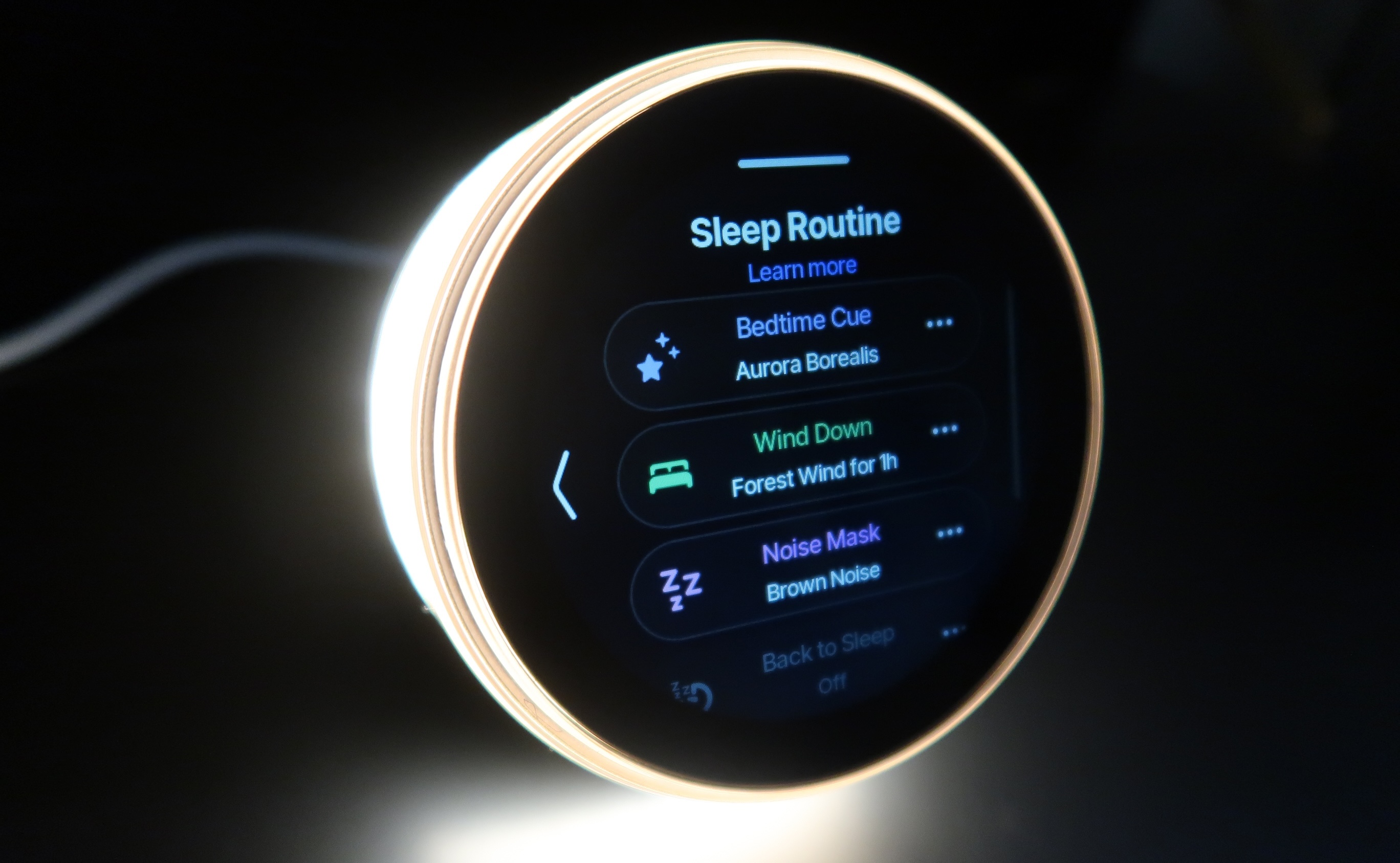
Ambient Dreamie bedside companion review

How much for a good night’s sleep? $250?

Dreamie alarm clock with its light ring on, and the screen displaying a sleep routine: Bedtime Cue, Wind Down, and Noise Mask
Cheyenne MacDonald for Engadget

Ambient’s dedicated alarm clock offers many of the conveniences of your smartphone alarms — highly customizable alarm schedules, a library of soundscapes and noise masks and even Bluetooth so you can connect earbuds. There’s no subscription, it sounds great and sleep insights are supposedly incoming. However, $250 is a lot. Check out our full review.

Continue reading.

An AI-generated Resident Evil Requiem review briefly made it on Metacritic

By a video game news site owned by ClickOut Media.

Review aggregator Metacritic has removed a review of Resident Evil Requiem because it was AI generated. Kotaku explained the review was published by UK gaming site VideoGamer, but appears to be “written” by a fake AI journalist rather than a real person. “Brian Merrygold” doesn’t seem to exist.

The author’s profile on VideoGamer is just as awkwardly written as the review, and the profile picture of the account also appears to be AI-generated. Literally, the file name includes “ChatGPT-Image.”

ClickOut Media, the company that owns VideoGamer and a collection of other publications, reportedly laid off the staff of its gaming sites earlier this month to pivot to AI-generated content. Here it is.

Continue reading.

This article originally appeared on Engadget at https://www.engadget.com/general/the-morning-after-engadget-newsletter-144951777.html?src=rss

©

  •  

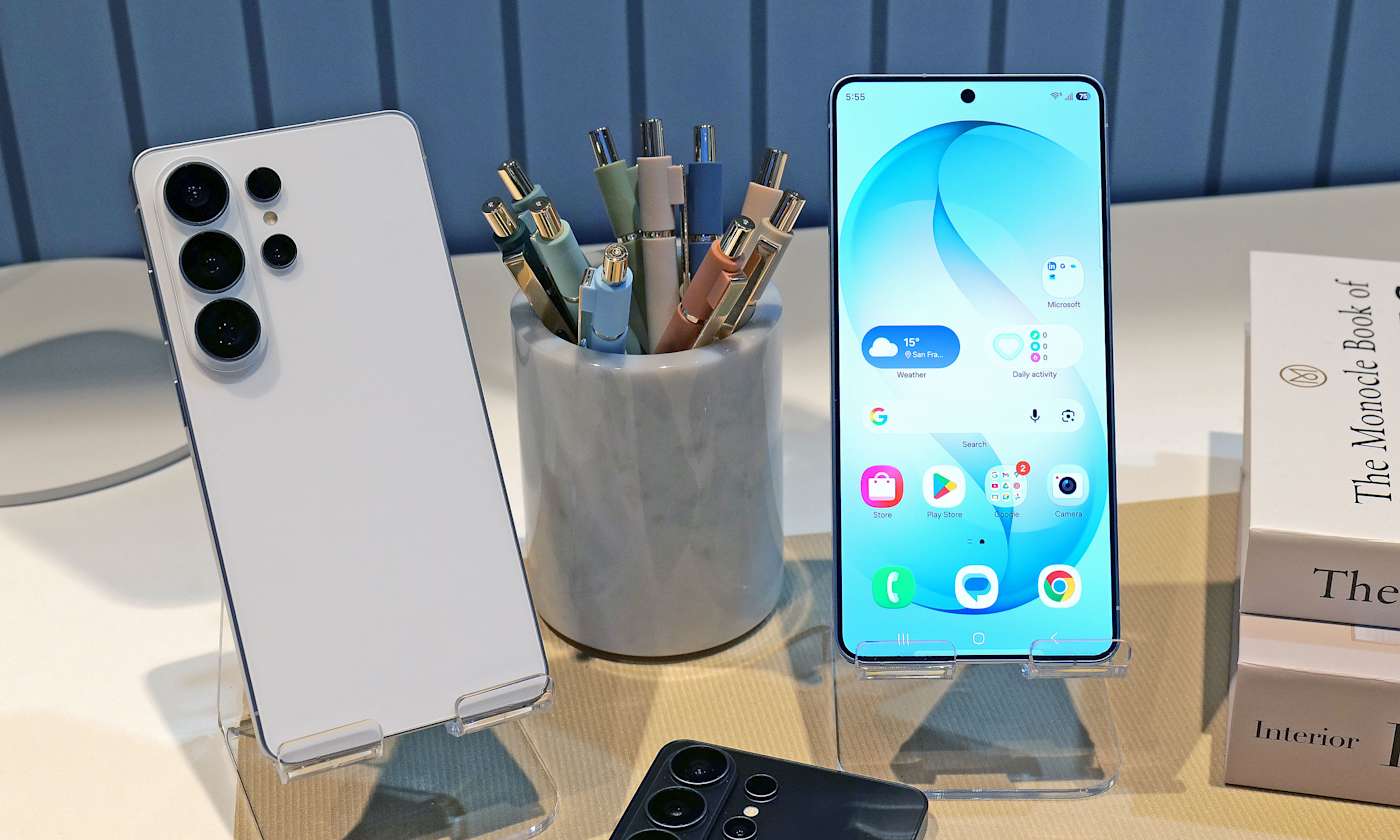
Samsung Galaxy S26 hands-on: A lot more of the same for a little more money

As we prepare to leave the winter months, Samsung announced another family of Galaxy S flagships for those looking to upgrade. As usual, the company put its best components and features into the Galaxy S26 Ultra, but it also added more to the base S26 and S26+. The company has hit its groove with its smaller (and cheaper) flagships, delivering solid devices with increasingly better cameras, occasionally even offering feature parity with its most expensive smartphone.

In 2026, that’s what we’re getting, with the 6.3-inch S26 ($899) and 6.7-inch S26+ ($1,099). Both phones are more expensive than last year, and it’s often a game of spot-the-difference when it comes to showing what’s new.

Fortunately, the best parts have been retained, too. Samsung has unified the design style across the entire S26 series, with the same corner ratios, curved edges and other design touches. While I tested both phones, I’ll focus on the S26. Barring screen differences and battery size, they’re identically specced.

This year’s S26 color selection has a premium Samsung ‘mood’ to it that I can’t quite explain. Does purple mean Samsung to my brain? Maybe. Cobalt Violet is the particular shade I’m talking about, but there are also blue, black and white colors. Additional silver and pink-gold options will be available as online exclusives. There’s not much else to say about the design: it’s another Galaxy S flagship, and if it ain’t broke…

Samsung Galaxy S26 and S26+ hands-on
Mat Smith for Engadget

Samsung has increased the battery capacity to 4,300 mAh on the S26, while somehow maintaining the same thickness as last year’s S25. However, the S26+ has the same 4,900mAH battery as its predecessor. All S26 devices will launch with 256GB of storage and 12GB of RAM, with bigger storage options available. With the S26, Samsung has slightly increased the screen size to 6.3 inches, up from last year's 6.2-inch S25.

The S26 comes with a familiar camera trio: a 50-megapixel main sensor, 12MP ultrawide, and 10MP telephoto with up to 3x optical zoom. On paper, that’s identical to last year’s base S25. However, Samsung has improved performance with its ProScaler technology for upscaling images and an MDNIe chip, which the company says provides four times the color precision compared to previous devices.

There are software improvements too, with video features being the most tangible upgrade, among more AI-assisted photo editing tools. Super Steady video has been upgraded to a 360-degree horizontal lock. This camera mode uses the S26’s gyroscopes to maintain a consistent horizon even as you rush to chase a pet or family member while recording, or to capture snowboarding buddies. (There’s always a snowboarding example when a company mentions horizontal lock.) It’s nice to see a feature we’re used to finding on gimbals and action cams built into an unashamedly mainstream phone like the S26.

Auto Framing is another new feature coming to both 4K and 8K video capture. It uses AI to lock onto subjects and automatically tighten framing to what you want to capture. Even during brief testing, I was intrigued and liked the dramatic punch-in effect as I recorded nearby people. It creates a faux-panning effect as it tracks moving subjects, something you might have experienced with Center Stage on Apple devices.

Samsung has also upgraded image processing on its front-facing cameras with a new Object Aware Engine for improved portrait mode shots, hair textures and more accurate skin tones. Based on my early testing, images seemed sharper than on my older Samsung devices, even though this is (again) largely the same 12MP camera as last year.

With processors, it's getting a little more complicated. In the US, Samsung's entire S26 series will use the Snapdragon 8 Elite Gen 5 for Galaxy, but in Europe, both the S26 and S26+ will be powered by the company’s own Exynos 2600, apparently the world’s first 2nm chipset. Comparing it to Snapdragon’s top mobile processor, however, will have to wait until review time.

With more power for AI functions, Samsung has continued to evolve and expand its AI software, although it seems less of a priority this year. Only one AI feature stood out during my briefing: Audio Eraser. While this launched on the S25, it only worked on audio and video you captured yourself. Now, Samsung expanded it to most major video platforms, including Netflix, Instagram and YouTube, adding the ability to strip out noise and distractions and amplify the volume of voices. It was especially effective with a rowdy replay of an Arsenal football soccer match, and sounded like I was listening to a dedicated commentary channel. Interestingly, unlike many sound editing apps and features, it will work on downloaded videos on those platforms without an internet connection.

Elsewhere, Now Nudge will attempt to suggest actions based on what’s happening onscreen, such as sharing contact numbers with someone or suggesting calendar times while dealing with work emails. Samsung’s Now Brief can pull information and notifications from a wider array of apps and sources to deliver in its daily briefings. However, again, that’s hard to assess at this early stage.

There are several more quality–of-life software updates, too, like the ability to sift through all those screenshots after they’ve been automatically categorized into sections like barcodes, events and more. If you can’t get enough AI image generation, you can now use Photo Assist to edit your photos using descriptive prompts. Elsewhere, Circle-to-Search now supports multiple, well, circles, if you’re looking to tag and search for multiple objects at once.

Samsung Galaxy S26 and S26+ hands-on
Mat Smith for Engadget

It’s not the most exciting year for Samsung’s smaller flagship phones. While the S26 Ultra can boast a new Privacy Display that’s the first of its kind, the rest of the S26 family have a little too much in common with their predecessors. The new video features seem useful and intuitive, so there’s more to explore there. We’ll have more to say in our full reviews soon.

Both the Galaxy S26 and S26+ launch on March 11th and are available to preorder now.

This article originally appeared on Engadget at https://www.engadget.com/mobile/smartphones/samsung-galaxy-s26-hands-on-launch-date-price-180005654.html?src=rss

©

© Mat Smith for Engadget

Samsung Galaxy S26 and S26+ hands-on
  •  

The Morning After: What to expect at Samsung’s Galaxy Unpacked event tomorrow

Samsung’s ready to launch its first new devices of 2026, and it’s got a Galaxy Unpacked event in San Francisco to stream everything. The keynote starts at 10AM PT (1PM ET) and will be livestreamed on YouTube. The announcement on February 10 also said this launch will mark “a new phase in the era of AI as intelligence becomes truly personal and adaptive.”

What are we expecting? Based on leaked images of the new lineup, the company is not likely to have radically reinvented the look of the Galaxy S26, Galaxy S26+ or Galaxy S26 Ultra, sticking instead with a similar design to the Galaxy S25.

We’re expecting Qualcomm’s new Snapdragon 8 Elite Gen 5 chip to be in all Samsung Galaxy S26 phones, though Korean news site Yonhap News reports Samsung’s relatively new Exynos 2600 chip could be in some devices, depending on the region.

Despite the launch of the Qi 2 wireless charging standard, which added support for convenient magnetic alignment, Samsung still hasn’t brought the feature to its phones. Rumours suggest the S-series will have the spec’s higher speed wireless charging rates but will lack built-in magnets and have to depend on cases to add MagSafe-style charging and mounting.

Honestly? It could be a pretty mild launch event, especially after wowing everyone with the Galaxy TriFold at the start of the year.

Are you more interested in foldables than traditional candy bar devices? (If so, get ready for MWC 2026, kicking off next week. We’re expecting a lot of foldables.)

— Mat Smith

The other big stories (and deals) this morning

A new Evangelion series is coming

Yoko Taro, creator of NieR, will pen it.

TMA
Gainmax

Yes, a truly new Neon Genesis Evangelion series is coming. The announcement came during a 30th-anniversary event in Japan. However, franchise creator Hideaki Anno won’t write the scripts. His replacement will be Yoko Taro, creator of the NieR video game series, who wears a giant spooky moon mask for interviews and game briefings. He’s also a cool guy underneath. Evangelion veteran Kazuya Tsurumaki will be on hand to direct episodes, produced by Studio Khara and Cloverworks.

Continue reading.

Bungie says ‘no second chances’ if you’re caught cheating in its new game

Marathon players found cheating or developing cheats will receive a permaban.

In a detailed blog post, Bungie took a very declarative position against those caught trying to cheat: “We are taking a strong stance against cheating and anyone found to be cheating or developing cheats will be permanently banned from playing Marathon forever, no second chances.” The blog post added that an appeals system will be in place.

However, Bungie’s anti-cheat standards go beyond punishment. In the blog post, Bungie explained that Marathon’s dedicated servers have full authority on movement, shooting, actions and inventory. Since these key actions rely on the server, it will translate to smoother gunplay for players as well as the prevention of cheats related to teleportation, unlimited ammo or damage manipulation.

Continue reading.

This is the Nothing Phone 4(a)

And it’s coming March 5.

TMA
Nothing

Looks like Nothing.

Continue reading.

This article originally appeared on Engadget at https://www.engadget.com/general/the-morning-after-engadget-newsletter-122906428.html?src=rss

©

  •  

The Morning After: What to expect from Apple’s March 4 hardware event

Apple has lined up its first event of the year. Already! It’s taking place in New York City on March 4 at 9AM ET, but the company hasn’t confirmed if it will stream the media event.

It seems likely the event will be mainly iPads and MacBooks — so business as usual. However, it could include new entry-level MacBooks in a fresh array of colors. I think that’s what everyone’s reading into the lemon-and-lime tinged invitation.

I’m very much up for a return of the colorful Mac. The first Mac I ever used was one of those bubbly orange iMacs, interning at a video-game magazine. Yes, a magazine.

We’re also expecting a 2026 MacBook Air and refreshed 14- and 16-inch MacBook Pros, with the M5 Pro and M5 Max chips also breaking cover. Is it too early for an iPhone 17e? Perhaps. We’ll be reporting from the event.

And for those asking about yesterday's newsletter, thanks for your continued support and we'll have more to say soon. 

— Mat Smith

The other big stories (and deals) this morning

Netflix’s first MMA livestream is coming in May

Rousey v. Carano.

Netflix is streaming its very first live MMA fight on May 16. The combatants are Ronda Rousey, (last match 2016) and Gina Carano (2009). The streamer has had to pluck fighters out of retirement because more contemporary stars are under contract with various promotional entities. The featherweight bout will take place inside a hexagon cage and stream globally — hopefully, Netflix can keep its stream up. The fight is co-hosted by Most Valuable Productions, Jake Paul’s production company. Because of course it is.

Continue reading.

The Pixel 10a is your next midrange Android phone

It launches March 5.

TMA
Engadget

The worst-kept secret in value-for-money phones remains Google’s Pixel A series. In recent years, the Android phone series has offered a great balance of specs, hardware design and software features that embarrass most phones in the same price point. Its camera performance is often better than devices that cost several hundred dollars more.

It’s more of the same with the Pixel 10a. For $500, you get a 6.3-inch OLED screen with a 120Hz refresh rate and 3,000 nits of peak brightness, 8GB of RAM and a 48MP main camera, paired with a 13MP ultra-wide. Also: No. Camera. Bump. Innovation for $500, right there.

Continue reading.

Dyson’s tiny PencilVac gets turned into a floorwasher

This is the PencilWash.

TMA
Engadget

I won’t shut up about floor cleaning. I’m 41. Dyson has crunched its wet-floor tech into the same cylindrical profile of its Penac. I like the size, but how does it clean? I’ll hold judgment till I’ve tried it.

$600 is a lot more than a mop. Yes, I know that’s not the point.

Continue reading.

This article originally appeared on Engadget at https://www.engadget.com/general/the-morning-after-engadget-newsletter-122534537.html?src=rss

©

  •  

The Morning After: Meta turned Threads algorithm complaints into an official feature

Threads users have complained about its recommendation algorithm since the dawn of time 2023. Users even started writing posts addressed to the algorithm, specifying the topics they wanted to see more of. Now, that’s part of the system: Users can write a post that begins with “dear algo” to adjust their preferences, officially.

For example, you could write: “Dear algo, show me more posts about sous vide recipes.” You can also ask to see fewer posts about topics you don’t want to see, like “Dear algo, stop showing me posts about air fryers.” You can even retweet other users’ “dear algo” posts to have those topics reflected in your feed. “Dear algo” posts will work for Threads users in the US, UK, Australia and New Zealand, with more countries coming “soon.”

— Mat Smith

The biggest stories in tech you might have missed.

Elon Musk’s latest scheme is a satellite catapult on the Moon

I think that’s a Drag Race song.

With a bigger focus on the Moon, Elon Musk is making some wild new plans. According to audio heard by The New York Times, Musk said xAI needed to build an AI satellite factory on the Moon with a gigantic catapult to launch the satellites into space. Sometimes you just want to be the Bond villain.

“You have to go to the Moon” to build the required AI capabilities, Musk told employees. “It’s difficult to imagine what an intelligence of that scale would think about, but it’s going to be incredibly exciting to see it happen.” Such a catapult would certainly need to be powerful — though the Moon has only one-sixth Earth’s gravity, the minimum escape velocity required for orbit is still around 3,800 mph, or five times the speed of sound. That’s currently possible with electromagnetic railguns, but the satellites would have to withstand that force.

Continue reading.

Pokémon Pokopia is cosy AF

Stardew Valley + Animal Crossing X Pokémon.

TMA
TMA
Nintendo

In a bid to distract from a lot of things, Nintendo’s new Pokémon game is a gently paced game where, instead of playing as a generic trainer, you take control of a sole Ditto. 

As a Ditto, you can transform into other Pokémon, though the process is sort of incomplete, meaning you can only learn one skill from the monsters you befriend. Instead of using tools, you can transform into other Pokémon (like Lapras or Dragonite) to use their abilities to traverse obstacles or shape the world around you.

Continue reading.

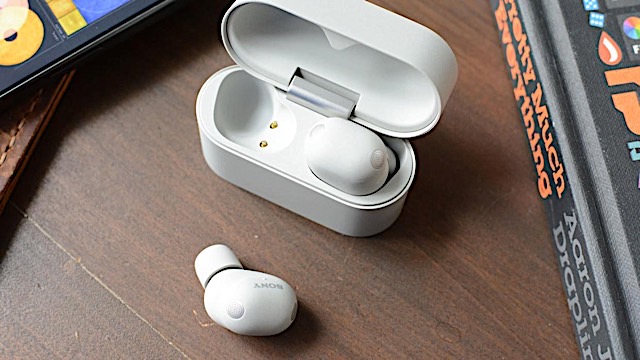
Sony WF-1000XM6 headphones review

Facing tougher competition.

TMA
TMA
Engadget

Sony unveiled the latest entry in its best wireless earbud series, the WF-1000XM6, featuring yet another redesign, both inside and out. Once again, strong features and audio performance remain, but competition from all sides is tougher than ever. As Billy Steele explains in his review, if you want the strongest active noise cancellation, that will be Bose’s QuietComfort Ultra Earbuds. If the best sound quality is your goal, the Technics AZ100 is your best bet in this price range. I’ll also mention Sennheiser’s Momentum True Wireless 4, which offers great sound quality, respectable ANC and a comfier fit than the M6. The WF-1000XM6 is available now for $330.

Continue reading.

This article originally appeared on Engadget at https://www.engadget.com/general/the-morning-after-meta-turned-threads-algorithm-complaints-into-an-official-feature-121500663.html?src=rss

©

  •  

The 7 best air fryers for 2026, tested and reviewed

Air fryers have gone from novelty appliances to everyday kitchen staples surprisingly fast. They’re quick to heat up, easy to use and well suited to everything from frozen snacks to roasted vegetables and simple desserts. For many people, they’ve replaced the oven for smaller meals, cutting down on cook time without adding extra cleanup.

The category has also expanded well beyond basic basket-style models. Some air fryers are designed for small kitchens or single servings, while others offer larger capacities and preset cooking modes for roasting, reheating or dehydrating. After testing a wide range of machines, the Instant Vortex Plus continues to stand out for its reliable performance, straightforward controls and consistently good results.

Below, we’ve gathered the best air fryers you can buy right now across different sizes and price points. Whether you’re replacing an older unit or trying one for the first time, these picks focus on appliances that are easy to live with and deliver crisp food without the need for deep frying.

Best air fryers for 2026

What does an air fryer do?

Let’s clear one thing up first: it’s not frying. Not really. Air fryers are more like smaller convection bake ovens, ones that are often pod-shaped. Most work by combining a heating element and fan, which means the hot air can usually better crisp the outside of food than other methods. They often reach higher top temperatures than toaster ovens – which is part of the appeal.

For most recipes, a thin layer of oil (usually sprayed) helps to replicate that fried look and feel better. However, it will rarely taste precisely like the deep-fried or pan frying version when it comes out of the air fryer basket. Don’t let that put you off, though, because the air fryer, in its many forms, combines some of the best parts of other cooking processes and brings them together into an energy-efficient way of air fryer cooking dinner. Or breakfast. Or lunch.

Buying guide for air fryers

Convection ovens

You can separate most of these machines into two types of air fryers, and each has different pros and cons. Convection ovens are usually ovens with air fryer functions and features. They might have higher temperature settings to ensure that food crisps and cooks more like actually fried food. Most convection ovens are larger than dedicated air fryers, defeating some of the purpose of those looking to shrink cooking appliance surface area. Still, they are often more versatile with multiple cooking functions, and most have finer controls for temperatures, timings and even fan speed.

You may never need a built-in oven if you have a decent convection oven. They often have the volume to handle roasts, entire chickens or tray bakes, and simply cook more, capacity-wise, making them more versatile than the pod-shaped competition.

The flip side of that is that you’ll need counter space in the kitchen to house them. It also means you can use traditional oven accessories, like baking trays or cake tins, that you might already own.

Pod-shaped air fryers

Pod-shaped air fryers are what you imagine when you think “air fryer.” They look like a cool, space-age kitchen gadget, bigger than a kettle but smaller than a toaster oven. Many use a drawer to hold ingredients while cooking, usually a mesh sheet or a more solid, non-stick tray with holes to allow the hot air to circulate. With a few exceptions, most require you to open the drawer while things cook and flip or shake half-cooked items to ensure the even distribution of heat and airflow to everything.

That’s one of a few caveats. This type of air fryer typically doesn't have a window to see how things are cooking (with only a few exceptions), so you’ll need to closely scrutinize things as they cook, opening the device to check progress. Basket-style air fryers also generally use less energy – there’s less space to heat – and many have parts that can be put directly into a dishwasher.

Some of the larger pod-shaped air fryers offer two separate compartments, which is especially useful for anyone planning to cook an entire meal with the appliance. You could cook a couple of tasty chicken wings or tenders while simultaneously rustling up enough frozen fries or veggies for everyone. Naturally, those options take up more space, and they’re usually heavy enough to stop you from storing them in cupboards or shelves elsewhere.

As mentioned earlier, you might have to buy extra things to make these pod fryers work the way you want them to. Some of the bigger manufacturers, like Philips and Ninja, offer convenient additions, but you’ll have to pay for them.

Air fryer pros and cons

Beyond the strengths and weaknesses of individual models, air fryers are pretty easy to use from the outset. Most models come with a convenient cooking time booklet covering most of the major foods you’ll be air frying, so even beginners can master these machines.

One of the early selling points is the ability to cook fries, wings, frozen foods and other delights with less fat than other methods like deep frying, which gets foods the crispiest. As air fryers work by circulating heated air, the trays and cooking plates have holes that can also let oil and fat drain out of meats, meaning less fat and crisper food when you finally plate things up. For most cooking situations, you will likely need to lightly spray food with vegetable oil. If you don’t, there’s the chance that things will burn or char. The oil will keep things moist on the surface, and we advise refreshing things with a dash of oil spray when you turn items during cooking.

Most air fryers are easy to clean – especially in comparison to a shallow or deep fryer. We’ll get into cleaning guidance a little later.

With a smaller space to heat, air fryers are generally more energy-efficient for cooking food than larger appliances like ovens. And if you don’t have an oven, air fryers are much more affordable – especially the pod options.

There are, however, some drawbacks. While air fryers are easy enough to use, they take time to master. You will adjust cooking times for even the simplest types of food – like chicken nuggets, frozen French fries or brussels sprouts. If you’re the kind of person that loves to find inspiration from the internet, in our experience, you can pretty much throw their timings out of the window. There are a lot of air fryer options, and factors like how fast they heat and how well distributed that heat is can – and will – affect cooking.

There’s also a space limitation to air fryers. This is not a TARDIS – there’s simply less space than most traditional ovens and many deep fat fryers. If you have a bigger family, you’ll probably want to go for a large capacity air fryer – possibly one that has multiple cooking areas. You also might want to consider a different kitchen appliance, like a multicooker, sous vide or slow cooker to meet your specific cooking needs.

You may also struggle to cook many items through as the heat settings will cook the surface of dishes long before it’s cooked right through. If you’re planning to cook a whole chicken or a roast, please get a meat thermometer!

Best air fryer accessories

Beyond official accessories from the manufacturer, try to pick up silicone-tipped tools. Tongs are ideal, as is a silicon spatula to gently loosen food that might get stuck on the sides of the air fryer. These silicone mats will also help stop things from sticking to the wire racks on some air fryers. They have holes to ensure the heated air is still able to circulate around the food.

Silicone trivets are also useful for resting any cooked food on while you sort out the rest of the meal. And if you find yourself needing oil spray, but don’t feel like repeatedly buying tiny bottles, you can decant your favorite vegetable oil into a permanent mister like this.

How to clean an air fryer

We’re keeping clean up simple here. Yes, you could use power cleaners from the grocery store, they could damage the surface of your air fryer. Likewise, metal scourers or brushes could strip away the non-stick coating. Remember to unplug the device and let it cool completely.

Remove the trays, baskets and everything else from inside. If the manufacturer says the parts are dishwasher safe – and you have a dishwasher – the job is pretty much done.

Otherwise, hand wash each part in a mixture of warm water, with a splash of Dawn or another strong dish soap. Use a soft-bristled brush to pull away any crumbs, greasy deposits or bits of food stuck to any surfaces. Remember to rinse everything. Otherwise, your next batch of wings could have a mild Dawn aftertaste. Trust us.

Take a microfiber cloth and tackle the outer parts and handles that might also get a little messy after repeated uses. This is especially useful for oven-style air fryers – use the cloth to wipe down the inner sides.

If Dawn isn’t shifting oily stains, try mixing a small amount of baking soda with enough water to make a paste, and apply that so that it doesn’t seep into any electrical parts or the heating element. Leave it to work for a few seconds before using a damp cloth to pull any greasy spots away. Rinse out the cloth and wipe everything down again, and you should be ready for the next time you need to air fry.

How to find air fryer recipes

Beyond fries, nuggets and – a revelation – frozen gyoza, there are a few ways to find recipes for air-fried foods. First, we found that the air fryer instruction manuals often have cooking guides and recipe suggestions for you to test out in your new kitchen gadget. The good thing with these is that they were made for your air fryer model, meaning success should be all but guaranteed. They are often a little unimaginative, however.

Many of the top recipe sites and portals have no shortage of air fryer recipes, and there’s no harm in googling your favorite cuisine and adding the words “air fryer” on the end of the search string. We’ve picked up some reliable options from Delish, which also has a handy air fryer time converter for changing oven and traditional fryer recipes. BBC Good Food is also worth browsing for some simple ideas, as is NYT Cooking, with the ability to directly search for air fryer suggestions. Aside from that, you can also grab plenty of cookbooks from your local bookshop with lots of recipes that you can use in your favorite air fryer.

And if you have a killer recipe or unique use for your air fryer, let us know in the comments. What’s the air fryer equivalent of the Instant Pot cheesecake? We’re ready to try it.

How we test air fryers

We put each air fryer we test through its paces by cooking a variety of foods in it including raw proteins like fish and chicken, raw vegetables like potatoes and cauliflower and frozen snacks like mozzarella sticks. We attempt to use each cooking method that the machine has pre-programmed, and when possible, follow a couple of recipes in any provided recipe booklets that come with the air fryer. We also clean the cooking basket and all other removable components as many times as possible, and will put those components into a dishwasher if they claim to be dishwasher-safe. We also make note of how loud the machine is when using different cooking settings and how warm the surrounding area becomes.

This article originally appeared on Engadget at https://www.engadget.com/home/kitchen-tech/best-air-fryers-133047180.html?src=rss

©

© Cosori / Engadget

Best air fryers
  •  

The Morning After: The Switch is officially Nintendo’s most popular console ever

With over 155 million sold, Nintendo’s Switch is officially the company’s biggest console hit ever. It’s been a long road to surpassing the DS, which reached 154 million consoles over its seven-year lifespan. The Switch, meanwhile, is a year shy of its 10-year anniversary. 

We’ve seen the original console, the non-hybrid Lite and the OLED versions of the Switch over the decade, but despite being replaced by Switch 2, the original is still selling at a strong pace: 1.36 million units in Q3. Just think how many Joy-Cons it sold/replaced?

Next goal: try to be the best-selling console of all time. Currently, that’s the PlayStation 2. 

Nintendo is just shy of five million units to go. 

— Mat Smith

The biggest stories you might have missed

Explained: Moltbook, the social network for AI agents

Are they talking about us behind our backs?

TMA
TMA
TMA

Moltbook is a “digital petri dish,” a Reddit-style forum populated entirely by AI agents that post, follow and even gossip about their owners in dedicated submolts. Built using vibe coding, it’s a surreal experiment in autonomous socialization — though there’s no shortage of user-data security flaws. Is Moltbook a profound look at the dead internet theory or just a very loud AI echo chamber? Or something in the middle? Karissa explains it all. (Sorry, Karissa.)

Continue reading.

Nintendo’s Virtual Boy is a niche slice of gaming history.

Lean in.

TMA
TMA
Engadget

Nintendo’s worst-selling console was probably the Virtual Boy. It sold less than 800,000 units, with only 22 games in Japan and 14 in North America. And it didn’t even have the guts to launch in Europe or Australia.

But Nintendo doesn’t care. It’s brought the Virtual Boy back, baby, as an add-on for the Switch 2, in all its red monochrome ’90s-tech glory. And we finally got to test it. 

It even includes the original bipod, which you use to prop it up and lean into it. Yes, you still can’t just wear the thing like modern VR headsets. The Switch 2 console, sans Joy-Cons, then slides in, acting as display, battery and processor. 

It seems more of a historical nod than anything else. This is pretty much 30-year-old VR tech, as-is. But… I still want one as a gaming objet d’art. A hundred bucks is a fair chunk of change for that, though. Read on for our full impressions.

Continue reading.

Surprise! Google teases the Pixel 10a

Pre-orders open later this month.

TMA
TMA
Google

Google posted a teaser video revealing its new entry-level smartphone, the Pixel 10a, in a lovely lilac colorway. We don’t know much more, however. You can see it’s another dual-camera Pixel, with that same flush body — which I like. (How does that already seem retro?) 

Leaks suggest a 6.3-inch display and a large 5,100 mAh battery. It otherwise looks and seems like the Pixel 9a, although Google promises that there’s “more in store.” Last year’s A-series launched at $500 — will this land at a similar price? You can pre-order the Pixel 10a on February 18. 

Continue reading.

AMD suggests a 2027 launch for next-gen Xbox

Shouldn’t Microsoft be saying this?

AMD CEO Lisa Su revealed on the company’s latest earnings call that Microsoft’s development of an Xbox with a semi-custom SOC from AMD is “progressing well to support a launch in 2027.” Maybe Microsoft can chase that best-selling console crown too?

Continue reading.

This article originally appeared on Engadget at https://www.engadget.com/general/the-morning-after-the-switch-is-officially-nintendos-most-popular-console-ever-121500738.html?src=rss

©

  •  

Apple AirTag (2026) review: Simply better

It’s hard to tell the difference between Apple’s second-generation AirTag and the almost-five-year-old original just by looking at them. In fact, the only way to tell is the many scratches on my old tracker, picked up from all those years attached to my keyring, living in my pocket. 

While the price is still $29, Apple’s latest tracker packs some core upgrades. The new AirTag has a second-generation ultra-wideband (UWB) chip that extends its Precise Finding range up to 50 percent, though it requires an iPhone 15 or newer to do so. It’s also apparently 50 percent louder and has a new, higher-pitched chime. Still no keyring hole, though.

The new AirTag looks… the same. It’s arguably the most understated hardware design Apple has ever made, with no buttons or ports, just a company logo on one side. It’s made from a combination of a stainless steel plate and a (now 85-percent recycled) plastic enclosure. It’s like a thick coin, a little bigger than a quarter, and slips into any small pocket or wallet. The battery can be replaced by rotating the backing off, but it's still solid enough that I never felt there was a risk of coming off accidentally. 

Apple’s accessories to attach the AirTag to your keys are still more expensive than the tracker itself. However, compared to when the original tracker launched, there’s now a rich collection of third-party options from the likes of Mophie, Belkin and more, many of which are more reasonably priced at around $15. A $35 keyring for a $29 tracker is a very tough sell, Apple.

Apple's new AirTag promises increased range and a louder ring chime.
Mat Smith for Engadget

Setting up a new AirTag is just as effortless as its predecessor. Pull out the plastic tag, connecting the battery, and a notification will pop up on your nearby iPhone. You can then name it, assign it to an item and it’ll join your list of findable Apple hardware. 

I’ve been testing the range of the new AirTag, and if anything, the 50 percent increase in Precision Finding range is a conservative estimate. Naturally, tracking can be affected by building structure, walls, a lack of nearby Find My network devices and other interference, but the next-generation AirTag’s “getting closer” screen consistently appeared on my phone when I was around 80 feet away. The older tracker, however, needed me to be around 30-40 feet away to do the same. The benefit of Precision Finding was limited on the debut AirTag, because its range was so tiny — especially in busy environments. The hardware upgrades now make it truly useful. The new AirTag is also faster to connect and more responsive to my movements and sudden turns, thanks, I expect, to the new ultra-wideband chip. 

You can now also use newer Apple Watches (Series 9, Ultra 2 and up) with precision location detection. After updating her Apple Watch Series 11 to the latest software, my colleague Cherlynn Low reported that locating the new AirTag was pretty much the same as on an iPhone. She did find it slightly counterintuitive to have to first add the Find My shortcut to the Control Center on the watch instead of going to the Find My Items app to do so, but ultimately, once she did that, it mirrored the existing setup for Precision Finding on iPhones. 

Apple's new AirTag promises increased range and a louder ring chime.
Mat Smith for Engadget

Apple also redesigned the AirTag’s speaker assembly, which it says makes sounds 50 percent louder. Possibly the most effective audio upgrade is a higher-pitched chime that’s easier to hear over ambient noise and in busy public spaces. I could hear it ringing out from the other side of my gym’s locker room, while inside a locker, over music playing in the background. My old AirTag was inaudible until I was a few feet away from my locker. I always thought the sound on the original AirTag was a little too low-key for something you were urgently trying to find. (I’d love to be able to customize the chime, though.)

It’s the Find My network that makes the AirTag shine. Apple’s massive footprint of over a billion devices, from iPhones to Macs, continues to offer a tracking range and finer precision than GPS and Bluetooth alone. If anything, this network is even more built out since the launch of the first Apple tracker.

Since we tested the first AirTag, Apple has added multiple new features, usually through iOS updates, that expanded the utility and versatility of its trackers. In iOS 17, you could share an AirTag through Family Sharing. In iOS 18.2, Share Item Location allowed you to share your tracking information with third parties (such as airlines or train companies), improving the chances of finding the AirTag. 

There have also been subsequent safety upgrades, including expanding unknown tracker alerts to Android devices without needing to install an app. Apple also reduced the time an AirTag takes to emit a sound when separated from its owner, shifting the interval to a random range between 8 and 24 hours. At launch, this was a three-day span.

Wrap-up

Apple's second-gen AirTag.
Apple's second-gen AirTag is still $29.
Mat Smith for Engadget

Do you need the new AirTag? While improved in every way, it’s pretty much the same device. However, the AirTag’s simplicity and ease of use are second to none when it comes to Bluetooth trackers. If you already own a single AirTag for your keys or wallet, upgrading to the second-gen iteration and repurposing the old one to track, say, your luggage, makes a lot of sense. You get the more precise location tracking and sensing for your smaller item, while you can reduce your bag anxiety if your suitcase doesn’t make it to your destination.

There's no doubt the second-gen AirTags are improved, and thankfully, upgrading to the new capabilities doesn’t come at too steep a cost.

This article originally appeared on Engadget at https://www.engadget.com/computing/accessories/apple-airtag-2026-review-143000427.html?src=rss
©

  •  
❌