Alphabet's life sciences business Verily is restructuring and raising money as a new corporate entity. Verily announced that with its $300 million investment round, it will change from an LLC to a corporation and rename itself Verily Health Inc. As a result, Alphabet now has a minority stake rather than a controlling one in the business.
Similar to every other tech business, this chapter for Verily will be focused on AI. “From research to care, our customers need solutions that bring the best of clinical and scientific rigor together with AI to deliver the next generation of healthcare - one that is as precise as it is personal," Chairman and CEO Stephen Gillett said.
This article originally appeared on Engadget at https://www.engadget.com/big-tech/alphabet-no-longer-has-a-controlling-stake-in-its-life-sciences-business-verily-221718631.html?src=rss
Amazon has acquired Rivr, a startup focused on autonomous robotics. Rivr is based in Zurich and was valued at $110 million in a funding round from August 2024, which both Amazon and its CEO's Bezos Expeditions participated in. Financial details of the acquisition were not disclosed.
Rivr's robots have four legs and wheels that allow it to maneuver on stairs and other potentially uneven surfaces. The company just released its second generation of the robot. The purchase will likely further Amazon's capabilities for ever-faster and more efficient package deliveries.
"This acquisition reflects our commitment to a continued investment in research, which we believe has the potential to further improve safety outcomes and the overall delivery experience for delivery service partners and their delivery associates," a representative from Amazon told The Information.
Amazon has been working toward introducing automations and robotics at various stages of its shopping business. It deployed its 1 millionth robot last summer and has future goals for automating 75 percent of all its operations.
This article originally appeared on Engadget at https://www.engadget.com/big-tech/amazon-acquires-autonomous-robotics-startup-rivr-212839750.html?src=rss
DoorDash has launched a new option for its gig economy workers to earn some extra cash. The delivery service introduced Tasks, which it describes as "short activities Dashers can complete between deliveries or in their own time." It gives taking pictures of restaurant dishes or recording video of unscripted conversations in languages other than English as examples. These materials will be used to train artificial intelligence and robotics models.
A representative from DoorDash told Bloomberg News that it will use Tasks content for evaluating its in-house AI models as well as those made by its partner companies in retail, insurance, hospitality and tech. DoorDash is piloting a standalone app for Tasks where Dashers will submit their content. The blog post notes that pay will be displayed upfront, and compensation will vary based on the complexity of the activity.
This idea isn't new. We've seen otherstartups in AI and robotics offering payment for content filmed by regular people. Considering how many lawsuits are underway against AI companies that have already benefited from unauthorized use of copyrightedmaterials, at least this approach lets people be directly compensated for training content.
This article originally appeared on Engadget at https://www.engadget.com/ai/doordash-will-start-paying-gig-workers-for-creating-content-to-train-ai-models-204048743.html?src=rss
The Steam Spring Sale is underway and as usual, there's plenty of good stuff to add to your library. The seasonal discounts will run through Thursday, March 26 at 1PM ET. If there's anything you've been waiting to buy, it's worth checking to see if it's on sale now, because huge chunks of the Steam catalog are at least a little bit off.
Recent releases don't usually receive big price cuts during Steam sales, but you can save at least a couple bucks on several 2025 hits this time. The excellent Arc Raiders is $32, Doom: The Dark Ages is about $23 and Battlefield 6 is $42. Silent Hill f is half off at $35 for the horror fans, and indie appreciators can snag Hades 2 for less than $23.
No Man's Sky is $24 for endless space adventures. Check out Ghost of Tsushima on PC for $36 or be the meanest cowboy in the west in Red Dead Redemption 2 for $15.
We usually spy some indie excellence on the sale list and this year is no different. Is This Seat Taken? is a few bucks off, as is Megabonk. Explore the islands of Tchia for 75 percent off. No Rest for the Wicked, a newer title from the team behind Ori and the Blind Forest, is $28. Perennial Steam Sale fave Stardew Valley is half off for the five of you who don't already own it.
This spring, the steep discount section has a few especially notable titles. Teenage Mutant Ninja Turtles: Splintered Fate, Fallout New Vegas and Totally Accurate Battle Simulator are among the games that are 90 percent off.
Now you'll just need to play everything you buy before the Summer Sale.
This article originally appeared on Engadget at https://www.engadget.com/gaming/the-steam-spring-sale-is-here-with-discounts-on-arc-raiders-hades-2-and-much-more-184000691.html?src=rss
There was once a time in which many people couldn't wait to toss their smartphone aside every two years (and sometimes even more frequently) in order to get the latest model as soon as it hit shelves. But that world has faded for the most part now as shoppers demand devices that last for years so they can hold on to them for longer. And when the time finally comes to upgrade, many are being more conscientious about what happens to their old gadgets.
You may want to trade in your smartphone or sell it when you're ready to upgrade; either option can keep your device out of a landfill in addition to scoring you some extra cash. There are also options to recycle part or all of your phone if it's too old to make a trade-in worthwhile. Whatever path you choose, there are important steps to take to prepare a phone you're about to get rid of. These instructions apply to any model you might have, including both iPhones and Android phones. Here's what you need to know.
Back up your data
Let's start with a very important reminder to do regular backups for all of your gear, not just your phone. It's a task you should keep up with routinely even when you aren't about to recycle or trade-in a device.
Most hardware manufacturers have an automatic cloud backup system, but you'll like your new phone a lot less if it doesn't have your full, up-to-date library of contacts, photos and other information. This is the time to manually back everything up with all of your latest data.
Also, before you get any further into the process, make sure that you know the critical details for your phone and the main accounts associated with it. Halfway through is the worst time to lose access to your device because you can't remember your username or password.
Unpair wireless accessories
Most people connect their phone to many other gadgets via Bluetooth. There are obvious ones, like smartwatches and wireless headphones, but you might also have your phone paired with something like a car stereo or a portable speaker. All of them should be unpaired from the phone you're about to trade in.
If you use your phone in two-factor authentication for sensitive accounts, you'll want to make sure that you disconnect the device from those services, too.
Log out of apps and services
Next, you'll sign out of the device's cloud-based service. For iPhone owners, that's iCloud, and on Android, it's the Google suite. This will avoid any confusion with your new device. You'll also want to turn off Find My on iPhones or Find My Device on Android phones. iPhone users should also deregister iMessage on their old iPhone, particularly if they’re moving to a non-Apple smartphone. These steps might seem unnecessary when you'll end up wiping your device entirely, but you don't want to risk having your personal information accidentally made available to whoever might get your phone next.
Also, if you are under a plan that protects your phone, such as Apple Care or Preferred Care, you can usually cancel that coverage early. You'll get a refund on any unexpired coverage, and given how expensive gadgets can be now, it's worth getting that money back if you can.
Swap to the new device
At this point, your to-do list will vary. If you're planning to trade up to a newer model from the same manufacturer and you already have your new phone, then you'll want to transfer your data before moving on to wiping your old phone. Either in the store or on your own, in most cases you can wirelessly migrate your data from the old device to the new one.
If you're changing lanes between the Apple and Google universes, you can also do most data swapping yourself. There's a Google Play app called Move to iOS and one in the App Store called Android Switch that can walk you through the process. Just be sure that your device meets the requirements to use those programs.
However, if you aren't immediately setting up a new device, then you can skip this and move on to the next phase.
Factory reset your old device
Once you double-check that you have everything backed up (seriously, don't take chances on this), then it's time to perform a factory reset. This will remove all of your data and apps, and bring the phone back to its original state. It’s ideal to do this reset as the final step of trading in, selling or recycling a device.
Whatever phone model you have, the reset option will be in the Settings app. It will commonly be nested under a tab like General or About, or you can search “reset” within Settings to find exactly where it is on your device.
Remove any accessories
This might seem obvious, but right before handing off your phone, make sure that you remove any accessories. Cases, grips and screen protectors should stay with you, not with the phone when it goes to its new home.
This article originally appeared on Engadget at https://www.engadget.com/mobile/smartphones/how-to-prepare-your-phone-for-trade-in-120000724.html?src=rss
While both sport very similar designs, the Pixel 8a (left) has a slightly smaller 6.1-inch screen with larger bezels than the standard Pixel 8 (right).
Subnautica 2 has weathered the storm and has rescheduled its early access release. IGN reported today that the sequel to the underwater survival game will begin early access on PC and Xbox in May, although a more specific date was not provided.
The news comes a day after a judge ruled that former Unknown Worlds Entertainment CEO Ted Gill should be rehired at the game studio. That decision capped off a dramatic year for the team behind Subnautica, which was acquired by Krafton in 2021. The studio and its new owners entered a legal battle because the purchase of Unknown Worlds included a promise of an up to $250 million payout from Krafton if the team met certain performance goals by the end of 2025. In July of that year, however, Krafton fired several studio leaders and then delayed the sequel's early access launch. The court case has raised questions about which side was trying to either secure or avoid making that multi-million payment.
With yesterday's ruling, a rep from Krafton said that "we are evaluating our options as we determine our path forward." It's unclear if that path, or the other litigation still underway over the project, will create further delays to the planned early access date.
This article originally appeared on Engadget at https://www.engadget.com/gaming/subnautica-2-might-finally-be-entering-early-access-in-may-223747369.html?src=rss
Apple has started providing small security updates to iOS, iPadOS and macOS devices. These are dubbed Background Security Improvements that will offer minor system updates between the larger software updates. According to the company, these are meant to "deliver lightweight security releases for components such as the Safari browser, WebKit framework stack, and other system libraries that benefit from smaller, ongoing security patches between software updates."
These updates should download in the background, as the name implies, although the device will need to be restarted to complete the process. In practice, we found that applying a Background Security Improvement was faster than a typical software update from Apple. On an iPhone, the restart was more of a power cycle taking under a minute compared with the 5 to 10 minutes a standard update takes a device out of commission.
The inaugural Background Security Improvement was released today with a patch for WebKit. These updates will be supported and enabled on devices running iOS 26.1, iPadOS 26.1 and macOS 26.1. Details can be reviewed under the Privacy & Security section of the Settings menu.
This article originally appeared on Engadget at https://www.engadget.com/computing/apple-releases-its-first-background-security-improvement-for-macos-ios-and-ipados-214052311.html?src=rss
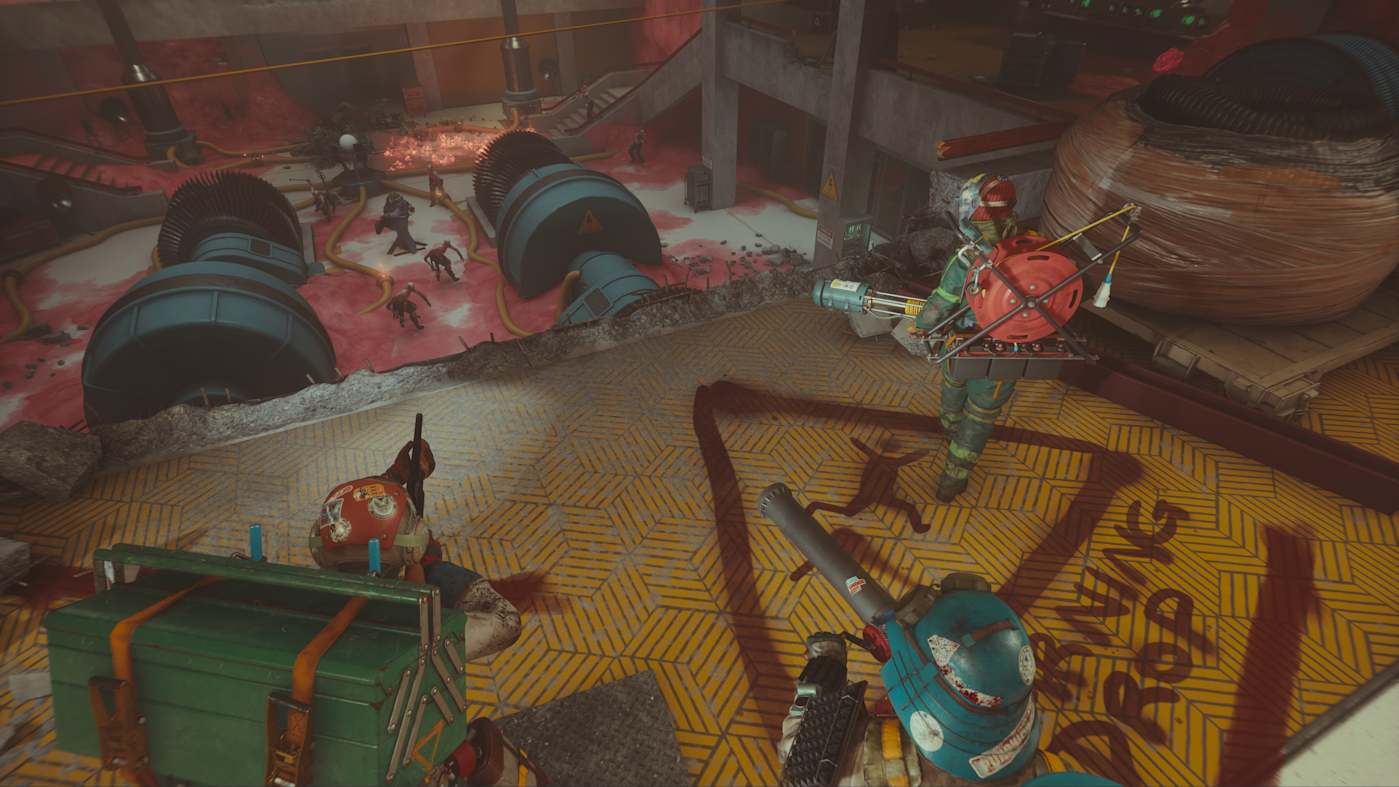
What a short, strange journey it's been for FBC: Firebreak; Remedy announced that the final update for the online multiplayer game is available today. But while this Open House update will be the end of new content, the studio said it plans to keep the game available.
"FBC: Firebreak will stay online and continue to be playable for years to come," Remedy said. "We have done engineering work to ensure we can sustain the upkeep of the relay servers when the player volume is lower."
Remedy has won lots of fans for creating the eerie, surreal world where its hits Control and Alan Wake are set. FBC: Firebreak, which was released last year, is also based in that universe. However, this multiplayer game took a beating in reviews, largely due to its poorly received onboarding experience and Remedy shared plans to improve the first few hours of the game. Its CEO also left the company last year and sparked a shakeup in the leadership at the studio.
The Open House update will add some new in-game content, but the more interesting changes seem aimed at making FBC: Firebreak more accessible. The base price has been dropped to $20, and the game has added a feature called Friend's Pass that will allow people who don't own the game to accept match invites from players who do own it.
This article originally appeared on Engadget at https://www.engadget.com/gaming/remedy-releases-its-final-content-update-for-fbc-firebreak-212000463.html?src=rss
Kalshi has been sued by Arizona's attorney general for operating an illegal gambling business in the state and unlawfully allowing people to place bets on elections. "Kalshi may brand itself as a 'prediction market,' but what it's actually doing is running an illegal gambling operation and taking bets on Arizona elections, both of which violate Arizona law," the state's Attorney General Kris Mayes said.
The company defines itself as a prediction markets platform, where users make bets on the outcomes of events ranging from sporting matches to political actions. Kalshi has claimed that it operates under the auspices of the Commodity Futures Trading Commission and shouldn't be faced with the state-level charges of running unlicensed gambling.
The case follows a similar action against Kalshi filed in Nevada last month. Kalshi also made headlines this year when an employee of popular YouTuber MrBeast was accused of insider trading on the platform.
This article originally appeared on Engadget at https://www.engadget.com/big-tech/arizona-attorney-general-sues-kalshi-on-illegal-gambling-charges-172006290.html?src=rss
Sometimes, it's the little details in a software update that make the biggest improvements. Google is rolling out a new feature for Chrome that will add a bookmark bar to the browser on Android foldables and tablets. Spotted by 9to5Google, this move will make the browsing experience on larger mobile devices more akin to that of laptops and desktops running Chrome. For those people who do like to do more robust computing on their mobile gadgets, this will be a hugely welcome addition. It's rolling out in version 146 of the browser's Android version, which just dropped today.
The mobile version of the bookmarks bar will appear below the Omnibox, displaying Favicons and site names. A chevron will appear to scroll deeper into the list of bookmarks, and a long press on a bookmark will display the entire URL.
If you're excited to take advantage of this new tool, you'll have to manually enable it. By default, devices will be set to "Hidden on narrow screens." Go to Settings, then Appearance and finally select "Show bookmarks bar."
This article originally appeared on Engadget at https://www.engadget.com/mobile/android-tablets-and-foldables-are-getting-a-chrome-bookmark-bar-222533702.html?src=rss
Sony's upgraded PlayStation Spectral Super Resolution (PSSR) tech is rolling out as part of the PlayStation 5 Pro system update that's available today. The company had teased last month that this update was in the works. These improvements should be a better reflection of why you might pay a premium price for the more powerful console if you value peak image quality in gaming.
For a very surface-level definition, PSSR is Sony's upscaling tech. It uses an AI library for a pixel-by-pixel analysis to display a game with better visuals even while running at a lower resolution. Today's update revamped the algorithm and neural networked in use, which in practice means that "image reconstruction is more precise, motion stability is improved, and developers have greater flexibility to balance performance and fidelity on PS5 Pro," according to the latest blog post from the company. For those who want more technical definition, you'll likely be familiar with the folks at Digital Foundry, who have a more detailed analysis with comparisons between the old and new upscaling on four titles.
The improved PSSR is only available for supported games, but several familiar Sony partners are already on board. PS5 Pro owners can enable the enhanced PSSR image quality for all supported titles via a toggle in the Screen and Video settings menu. The following games are joining Resident Evil Requiem in offering the better upscaling experience:
Silent Hill 2
Silent Hill f
Dragon Age: The Veilguard
Control
Alan Wake 2
Senua’s Saga: Hellblade II
Final Fantasy VII Rebirth
Nioh 3
Rise of the Ronin
Monster Hunter Wilds
Dragon’s Dogma 2
This article originally appeared on Engadget at https://www.engadget.com/gaming/playstation/sonys-enhanced-pssr-upscaling-arrives-on-ps5-pro-today-201020423.html?src=rss
Amazon has secured a temporary win in its fight with Perplexity over the use of AI shopping bots. Bloomberg reported that a San Francisco federal court has determined that Perplexity must stop using its Comet web browser's AI agent to make purchases for users on Amazon's marketplace. The AI company will have a week to appeal the decision, otherwise it has been ordered to stop accessing any password-protected areas of Amazon's systems and destroy its copies of Amazon's data while the two companies continue to argue their cases.
"Amazon has provided strong evidence that Perplexity, through its Comet browser, accesses with the Amazon user's permission but without authorization by Amazon, the user's password-protected account," District Judge Maxine Chesney wrote in placing the temporary block.
"The preliminary injunction will prevent Perplexity’s unauthorized access to the Amazon store and is an important step in maintaining a trusted shopping experience for Amazon customers," an Amazon spokesperson told Bloomberg.
Amazon sent a cease-and-desist letter to Perplexity over the AI company's shopping bots in November. According to Amazon, use of the Comet agent to make purchases is a violation of its terms of service. "Perplexity will continue to fight for the right of internet users to choose whatever AI they want," a representative from Perplexity said of this week's decision.
This article originally appeared on Engadget at https://www.engadget.com/ai/amazon-wins-a-temporary-injunction-against-perplexitys-comet-browser-184000462.html?src=rss
People can block the xAI's Grok chatbot from creating modifications of their uploaded images on social network X. Neither X or xAI, both Elon Musk-owned businesses, have made a public announcement about this feature, which users began noticing on the iOS app within the image/video upload menu over the past few days.
This option is likely a response to Grok's latest scandal, which began at the start of 2026 when the addition of image generation tools to the chatbot saw about 3 million sexualized or nudified images created. An estimated 23,000 of the images made in that 11-day period contained sexualized images of children, according to the Center for Countering Digital Hate. Grok is now facing two separateinvestigations by regulators in the EU over the issue.
The positive side of the recent feature addition is that X and xAI have taken a step toward limiting inappropriate uses of Grok. This block is a simple toggle and it hasn't been buried in the UI. So that's nice.
The negative side, however, is that this token gesture that doesn't amount to any serious improvement to how Grok works or can be used. It's great that the chatbot won't alter the file uploaded by one person, but as reported by The Verge, the block only limits tagging Grok in a reply to create an image edit. There are plenty of workarounds for those dedicated individuals who insist on being able to use generative AI to undress people without their consent or knowledge.
Hopefully xAI has more powerful protective tools in the works. The limitations Grok on putting real people in scanty clothing that X announced in January seem to have had only partial success at best. If this additional and narrow use case is all the company offers, then the claims of being a zero-tolerance space for nonconsensual nudity are going to ring hollow. Especially since, as we noted at the time, xAI could stop allowing image generation at all until the issue is properly and thoroughly fixed.
This article originally appeared on Engadget at https://www.engadget.com/ai/you-can-sort-of-block-grok-from-editing-your-uploaded-photos-215356117.html?src=rss
The Netherlands’ military intelligence service and domestic intelligence agency have issued a join warning claiming that Russian hackers have launched "a large-scale global cyber campaign to gain access to Signal and WhatsApp accounts belonging to dignitaries, military personnel and civil servants." According to the Dutch alert, hackers are imitating support chatbots to trick key targets into revealing their PINs for those communication platforms, which allows the bad actors to access incoming messages.
Last year in the US, the Pentagon advised members not to use Signal after the platform was subjected to similar phishing scams by Russian hackers. (Although the same US military leaders proved capable of creating their own security breaches without foreign interference just days prior.)
Having another national government raise concerns about Signal and WhatsApp phishing scams offers yet another reminder to never provide security details or click links without a check on who is really asking for your info.
This article originally appeared on Engadget at https://www.engadget.com/cybersecurity/dutch-intelligence-services-warn-of-russian-hackers-targeting-signal-and-whatsapp-203707202.html?src=rss
Mark Gurman at Bloomberg is back with the latest rumors about what's afoot with Apple's future plans, and how its ongoing difficulties with artificial intelligence seem to be creating further delays for its next wave of product launches. His sources say that Apple is expected to postpone the debut of its smart home display until later in 2026, likely September when it often introduces new gadgets. Although the hardware has reportedly been finished for months, this delay is being credited to the company's AI-centric overhaul of Siri still not being complete.
The device, internally known as J490, has been one of Apple's many poorly-kept secrets. Rumors about a HomePod smart speaker coupled with a screen first emerged back in 2022 and have resurfaced from time to time in the interim, often with promises that the device's arrival was imminent. The latest claims anticipated that the official announcement was coming this spring, possibly as soon as this month. However, appears to Apple once again be hamstrung by an AI strategy that has left it scrambling to catch up to other industry leaders.
Apple has been working to incorporate more AI capabilities into Siri for more than a year as part of its Apple Intelligence package. Gurman reports that the new timeline from Apple aims to have the revamp completed for the launch of the iPhone 18 Pro, which is also expected for September. Apple may unveil this long-awaited Siri-as-chatbot during its WWDC keynote in the summer before it shows up in any devices.
This article originally appeared on Engadget at https://www.engadget.com/home/smart-home/apple-reportedly-delays-its-planned-smart-display-launch-to-fall-194539082.html?src=rss
Today the White House announced that several major players in tech and AI have agreed to steps that will keep electricity costs from rising due to data centers. Under this Ratepayer Protection Pledge, companies are agreeing to practices that are intended to protect residents from seeing higher electricity costs as more and more businesses create power-hungry data centers. Amazon, Google, Meta, Microsoft, OpenAI, Oracle and xAI have all apparently signed on. A few of the participants — Amazon, Google and Meta — had conveniently timed press releases patting themselves on the back for their participation and touting whatever other policies they have for mitigating the negative impacts of data center construction.
The main provisions of the federal pledge have tech companies agreeing to "build, bring, or buy the new generation resources and electricity needed to satisfy their new energy demands, paying the full cost of those resources." It also claims they will pay for any needed power infrastructure upgrades and operate under separate rate structures for power that will see payments made whether or not the business uses that electricity.
The pledge doesn't appear to be any form of binding agreement and there's no discussion of enforcement or a penalty for companies that don't honor the stipulated provisions. It also doesn't address any of the other impacts data centers and AI development might be having, either on local communities, on other utilities and resources, or on access to critical computing elements like RAM.
This article originally appeared on Engadget at https://www.engadget.com/ai/big-tech-companies-agree-to-not-ruin-your-electric-bill-with-ai-data-centers-230102956.html?src=rss
The Nuclear Regulatory Commission has granted approval to TerraPower to begin construction of a reactor in Wyoming. The project is the first new US commercial nuclear reactor in about a decade, according to The New York Times. TerraPower was founded by Bill Gates, and it took years for the business to receive regulatory approval for this construction effort.
TerraPower is part of a push to create more efficient and less expensive nuclear facilities as an alternative power source, particularly as AI companies and data center construction places more demands on the US' current infrastructure. TerraPower's project involves tech it has dubbed Natrium in its planned reactor. Using this liquid sodium approach rather than a traditional light-water reactor is part of how the company aims to reduce costs and time frames.
Advocates see nuclear reactors as a way to generate power without the climate impact of coal or gas plants. Critics point to the safety risks as a severe downside to this approach, while others question whether the creation and disposal of nuclear waste counter the environmental gains. The Gates-backed operation still isn't coming in cheap. The proposed facility could cost at least $4 billion and still faces logistical challenges before coming online as planned in 2031.
This article originally appeared on Engadget at https://www.engadget.com/big-tech/bill-gates-backed-terrapower-begins-nuclear-reactor-construction-221132639.html?src=rss
Ubisoft shared its upcoming plans for the Assassin's Creed franchise today. Along with the news of a remake for its piratical entry, the game company also announced that a visual upgrade is coming for a title from way back in 2014. Assassin's Creed Unity will receive a free patch tomorrow to offer 60 fps performance on the PlayStation 5 and the Xbox Series X/S.
The company bringing a performance upgrade more than a decade after launch feels like a fitting close to Unity's development. The game suffered from bugs and performance issues from the jump, and while most of those did get addressed, no amount of big fixes or free DLC could fix this howler of a story or make Arno any more compelling as a protagonist. But every fan has their own passionately argued take on which titles are the worst, so just because I found Unity to be a particularly low point in the series doesn't mean it's not going to be a fave for somebody else. So if you are someone who, as Ubisoft put it, has been waiting a long time for a chance to dive into Unity on modern hardware, then tomorrow is your lucky day. Amuse-toi bien.
This article originally appeared on Engadget at https://www.engadget.com/gaming/assassins-creed-unity-is-getting-a-free-60-fps-patch-tomorrow-210109721.html?src=rss
It happened much later than we expected, but Apple's announcement of MacBook Pros with its M5 Pro and M5 Max chips has finally arrived. These more powerful variants on Apple's silicon will be available in the 14-inch and 16-inch models of the laptops. Pre-orders will open on March 4 with an expected ship date of March 11. You’ll want to save some extra coin this time, though, as prices have gone up compared to the prior generation.
The new 14-inch MacBook Pro can be kitted out with either an M5 Pro or M5 Max. The Pro option for the chip boasts a CPU with 15 or 18 CPU cores and 16 or 20 GPU cores. For the M5 Max, users will have 18 CPU cores along with 32 or 40 GPU cores. The base model with an M5 Pro has either 24 or 48GB of RAM and now starts with 1TB of storage, up from 512GB as was standard before.
If you're eyeing the 16-inch MacBook Pro, it starts with the M5 Pro with 18 CPU cores and 20 GPU cores. You can also get the same two M5 Max configurations as you can on the 14-inch model.
Perhaps most significantly, Apple has raised prices on its entire MacBook Pro lineup. The 14-inch M5 model previously started at $1,599; it’s now priced at $1,699. At least you’re getting something for that cash, as Apple has doubled its base storage to 1TB.
The same goes for the new M5 Pro and Max options. The 14-inch with the M5 Pro now starts at $2,199 instead of $1,999, while the 16-inch starts at a whopping $2,699 instead of $2,499. That 16-inch model comes with 24GB of RAM and 1TB of storage now as standard; that’s again double the storage space from the prior model. The M5 Max model starts with 2TB of storage and 36GB of RAM for $3,599 (14-inch) or $3,899 (16-inch).
Running down the rest of the specs: Apple says the storage in the new MacBook Pro is twice as fast as the prior generation — so you’re getting more, faster storage than before for the extra cash. The laptops also include the Apple-designed N1 chip for Wi-Fi 7 and Bluetooth 6 connectivity, and Apple says the MacBook Pro is rated for up to 24 hours of battery life. It has the same excellent Liquid Retina XDR display as we’ve seen for multiple years now, as well as a 12-megapixel “Center Stage” front-facing camera.
It's a little unusual for these heavy-duty upgrades to Apple's MacBook Pros to be announced so much later from the news of its latest silicon updates. The company debuted the M5 chip last fall as usual, but spent several months before it revealed these major hardware additions for housing it. And the M5 MacBook Pro that was announced in October shortly after the M5 chip news came with zero fanfare.
This article originally appeared on Engadget at https://www.engadget.com/computing/laptops/apple-brings-its-m5-pro-and-max-silicon-to-the-next-macbook-pro-generation-141553279.html?src=rss
Australia's government may take a strict stance on ensuring younger users cannot access AI chatbots. Reuters reports that Australian regulators may require app storefronts to block AI services that do not implement age verification for restricting mature content by March 9.
"eSafety will use the full range of our powers where there is non-compliance," a representative for the commissioner said in a statement to the publication. Those paths could include "action in respect of gatekeeper services such as search engines and app stores that provide key points of access to particular services."
A review by Reuters found that of 50 leading text-based AI chat services in the region, only nine had introduced or shared plans for age assurance. Eleven services reportedly "had blanket content filters or planned to block all Australians from using their service," according to the report, leaving a large number that had not taken public action a week ahead of the country's deadline. Failure to comply could see AI companies face fines of up to A$49.5 million ($35 million).
The question of which parties are responsible for keeping children from accessing potentially harmful content is being debated around the world. In the US, for instance, Apple and Google have been lobbying to have the task delegated to platforms rather than app store operators. The language from the Australian regulators about all stores is hardly definitive at this stage, but given the breadth of its sweeping ban on the use of social media and some highly social digital platforms for citizens under age 16 enacted last year, an aggressive stance seems to align with leaders' priorities.
This article originally appeared on Engadget at https://www.engadget.com/ai/australia-will-consider-requiring-app-stores-to-block-ai-services-without-age-verification-221714252.html?src=rss

 Anmelden