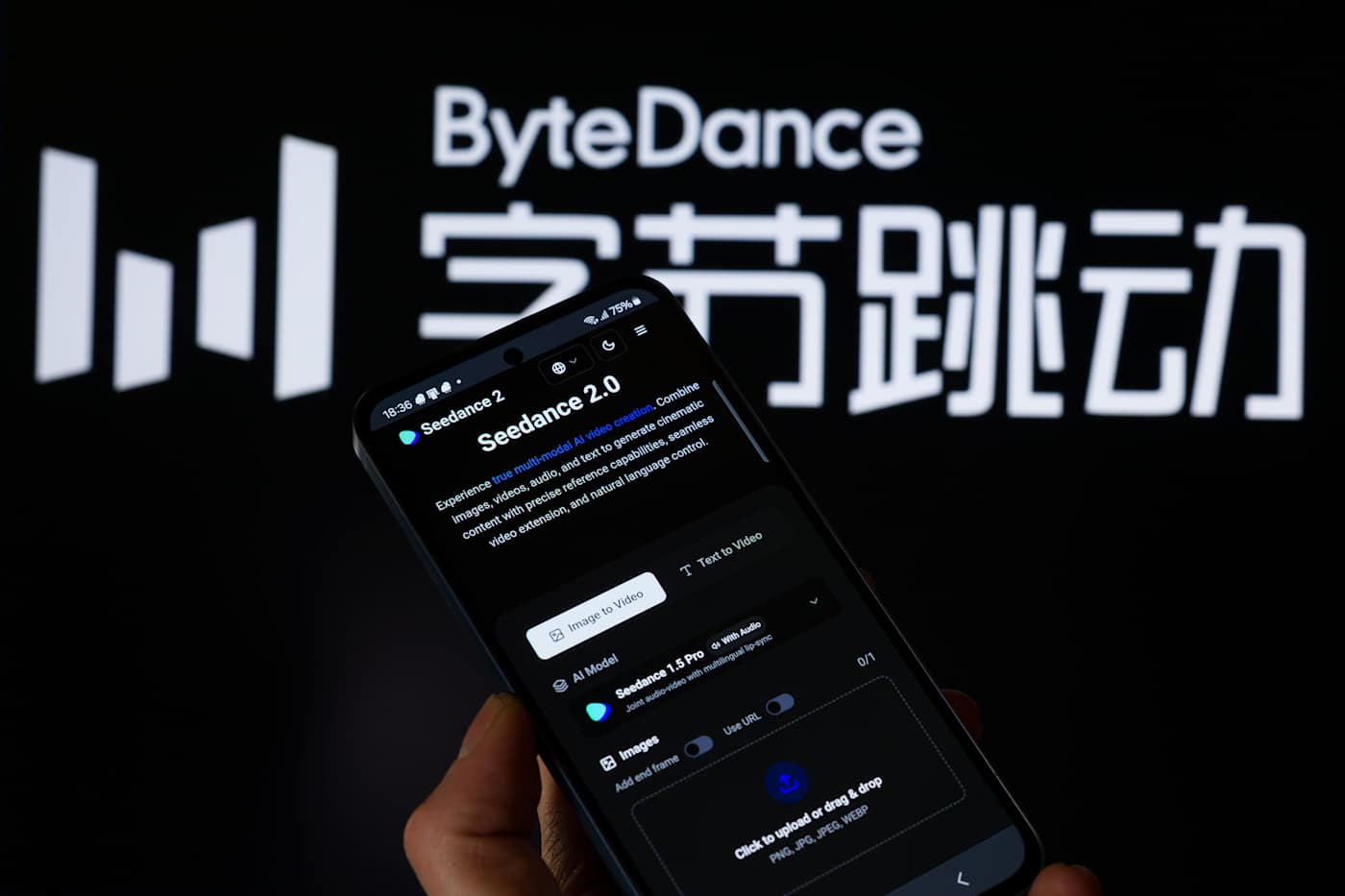
After ByteDance suspended the global rollout of its new Seedance 2.0 AI video generator on the weekend, US senators have now told the company to "immediately shut down" the app. "Seedance 2.0 poses a direct threat to the American intellectual property system and, more broadly, to the constitutional rights and economic livelihoods of our creative community," Senators Marsha Blackburn and Peter Welch wrote in a letter to the company.
The letter reflects an increasing worry in government about AI companies training their apps on copyrighted materials from artists, actors and filmmakers without permission. "Responsible global companies follow the law and respect core economic rights, including intellectual property and personal likeness protections," the senators wrote. They cited Seedance AI examples including an AI generated Thanos and Superman battle, a rewritten Stranger Things ending and that famous (fake) Tom Cruise and Brad Pitt battle.
After pulling Seedance 2.0, ByteDance said on the weekend that it "respects intellectual property rights" and that it is "taking steps to strengthen current safeguards as we work to prevent the unauthorized use of intellectual property and likeness by users."
However, Blackburn and Welch called that pledge "a delay tactic to continue to abuse the innovators and profit from their success," adding that its regard for American IP is "part of a larger trend of artificial intelligence companies stealing protected work at the expensive of the creative community."
Filmmakers have also taken action against Seedance 2.0, including the Motion Picture Association with recently sent a cease-and-desist letter to ByteDance. Yesterday, senators including Blackburn and Welch unveiled a partisan bill to help artists protect their IP by allowing them to access training records used for AI models, among other measures.
This article originally appeared on Engadget at https://www.engadget.com/ai/senators-tell-bytedance-to-shut-down-seedance-20-ai-video-app-immediately-112146241.html?src=rss
The Seedance2.0 app appears on a mobile phone with the company branding visible in the background in this photo illustration in Brussels, Belgium, on February 16, 2026. (Photo by Jonathan Raa/NurPhoto via Getty Images)
Ahead of its acquisition by Paramount Skydance, Warner Bros. dominated the 2026 Oscars with 11 wins primarily for Ryan Coogler's Sinners and Paul Thomas Anderson's One Battle After Another. Netflix also put in a strong showing with seven Academy Awards, including two for KPop Demon Hunters and three for Guillermo Del Toro's Frankenstein.
All told, dedicated streaming services chalked up eight awards, but were shut out of the major prizes. Frankenstein took the trophies for for Best Production Design, Best Costume Design and Best Makeup and Hairstyling, while KPop Demon Hunters took Best Animated Feature and Best original Song. Netflix also took prizes for All The Empty Rooms (Best Documentary Short Film) and The Singers (Best Live Action Short Film). Apple TV garnered the other streaming service Oscar for F1 (Best Sound).
Warner Bros. dominated the more prestigious awards. The studio took its first Oscar for Best Picture (One Battle After Another) since Argo won in 2012, while also winning Anderson the prizes for Best Director and Best Adapted Screenplay, and giving Sean Penn the Best Supporting Actor Oscar. Sinners, meanwhile, won for Best Cinematography, giving Autumn Durald Arkapaw the first ever win for a woman and woman of color in that category. Michael B. Jordan took the Best Actor prize for that film, while Director Ryan Coogler won for Best Original Screenplay.
Other notable acting prizes were won by Jessie Buckley (Best Actress, Hamnet) and Amy Madigan (Best Support Actress, Weapons).
Host Conan O'Brien joked that it was the "first time in a theater" for Netflix CEO Ted Sarandos. It remains to be seen, however, whether Netflix losing out to Paramount Skydance on the Warner Bros. acquisition will be to the film industry's benefit or detriment. One clear loser of late is broadcast television as the 2026 Oscars will be the third-to-last aired by Walt Disney's ABC, with YouTube set to stream the ceremony exclusively starting in 2029.
This article originally appeared on Engadget at https://www.engadget.com/entertainment/warner-bros-dominates-oscars-with-11-wins-ahead-of-its-acquisition-by-paramount-093916527.html?src=rss
HOLLYWOOD, CALIFORNIA - MARCH 15: Lynette Howell Taylor onstage during the 98th Oscars at Dolby Theatre on March 15, 2026 in Hollywood, California. (Photo by Richard Harbaugh/Bill Barnes/The Academy/Getty Images)
NVIDIA's GeForce Now game streaming platform has added a few minor but useful updates, especially for GOG and VR headset users, the company announced at Game Developer's Conference (GDC). The biggest technical improvement is for virtual reality headsets that support GeForce Now like the Apple Vision Pro and Meta Quest. Starting next week (March 19), those devices will be able to stream at 90 fps for Ultimate members (up from 60 fps) for improved smoothness, responsiveness and realism.
Another helpful update is in-app labels coming "soon" to GeForce Now. Once you connect an Xbox or Ubisoft_ account, you'll see clear labels directly on game art inside the GeForce Now app showing exactly what's available to play from your subscription services. NVIDIA is also expanding account linking, adding GOG to the roster of services on top of Gaijin single-sign announced at CES.
GeForce Now is also expanding its Install-to-Play library with select Xbox titles including Brutal Legend from Double Fine Productions and Compulsion Games' Contrast. The service will also see several anticipated games directly on the cloud service at launch, namely Remedy's Control Resonant and Samson: A Tyndalston Story from Liquid Swords.
As a reminder, NVIDIA's GeForce Now is one of the better cloud gaming services out there, particularly since it added GeForce RTX 5080-powered servers that Engadget's Devindra Hardawar called "indistinguishable from a powerful rig." The service recently came to Fire TV sticks and is available on Windows and Mac PCs, NVIDIA's Shield, Android TV, smartphones and many other devices.
This article originally appeared on Engadget at https://www.engadget.com/gaming/geforce-now-adds-gog-syncing-and-90fps-game-streaming-in-vr-headsets-130656731.html?src=rss
US regulators have approved eight pilot programs across 26 states that will allow Archer, Joby and other eVTOL companies to finally start testing aircraft this summer, according to a US Department of Transportation (DoT) press release. That will allow those manufacturers to run trials for use cases like urban air taxi services, regional passenger transportation, cargo, emergency medical operations and autonomous flight technology.
The new projects were made possible by the White House's Advanced Air Mobility and eVTOL Integration Pilot Program (e-IPP) approved last year to allow certification for such aircraft to progress after being stuck in the mud for years. "By safely testing the deployment of these futuristic air taxis and other AAM vehicles, we can fundamentally improve how the traveling public and products move," US Transportation Secretary Sean Duffy said at the time.
Other FAA aircraft partners include Beta, Electra, Elroy Air, Wisk, Ampaire and Reliable Robotics. Key pilot programs were approved for the Texas, Utah, Pennsylvania, Louisiana and North Carolina Departments of Transportation, along with New York and New Jersey Port Authority and the City of Albuquerque. We've already glimpsed some of the ideas, like Archer's plan to use air taxis between New York's major airports and city heliports.
A number of eVTOL startups have launched in recent years, but so far none of the aircraft have received "type certificates" for carrying passengers or other commercial purposes. Archer and Joby are the farthest along in that process, having been granted the FAA's final airworthiness criteria — the final step before full approval.
The delays are mostly about safety and working eVTOL planes into existing aviation flows. "The gap isn't technical capability anymore. It's regulatory synchronization," the FAA's Kalea Texeira said last year on LinkedIn. "[That includes factors like] vertiports. Energy supply chains. Part 135 [commercial] integration. Pilot training frameworks that match the aircraft timeline." In the same post, Texeira added that Joby wouldn't certify until mid-2027 at the earliest, with Archer following in 2028.
The new program could help accelerate plane-makers' plans. In a YouTube video, Beta CEO Kyle Clark said selection for the program will help his company start operations a year earlier than it previously expected. Archer, meanwhile, compared the program to robotaxi testing and said it will help build trust with the public for its Midnight aircraft. "This is the clearest sign yet... that bringing air taxis to market in the United States is a real priority," said Archer CEO Adam Goldstein.
This article originally appeared on Engadget at https://www.engadget.com/transportation/faa-opens-up-real-world-testing-for-air-taxi-startups-112219316.html?src=rss
Qualcomm, which purchased microcontroller board manufacturer Arduino last year, just announced a new single-board computer that marries AI with robotics. Called the Arduino Ventuno Q, it uses Qualcomm's Dragonwing IQ8 processor along with a dedicated STM32H5 low-latency microcontroller (MCU). "Ventuno Q is engineered specifically for systems that move, manipulate and respond to the physical world with precision and reliability," the company wrote on the product page.
The Ventuno Q is more sophisticated (and expensive) than Arduinio's usual AIO boards, thanks to the Dragonwing IQ8 processor that includes an 8-core ARM Cortex CPU, Adreno Arm Cortex A623 GPU and Hexagon Tensor NPU that can hit up ot 40 TOPs. It also comes with 16GB of LPDDR5 RAM, along with 64GB of eMMC storage and an M.2 NVME Gen.4 slot to expand that. Other features include Wi-Fi 6, Bluetooth 5.3, 2.5Gbps ethernet and USB camera support.
The Ventuno Q includes Arudino App Lab, with pre-trained AI models including LLMs, VLMs, ASR, gesture recognition, pose estimation and object tracking, all running offline. It's designed for AI systems that run entirely offline like smart kiosks, healthcare assistants and traffic flow analysis, along with Edge AI vision and sensing systems. It also supports a full robotics stack including vision processing combined with deterministic motor control for precise vision and manipulation. It's also ideal for education and research in areas like computer vision, generative AI and prototyping at the edge, according to Arduino.
"With Ventuno Q, AI can finally move from the cloud into the physical world," Qualcomm wrote. "This platform enables building machines that perceive, decide, and act — all on a single board. Our goal is to make advanced robotics and edge AI accessible to every developer, educator, and innovator." The Arduino Ventuno Q will be available in Q2 2026 from the Arduino Store and elsewhere and is expected to cost under $300.
This article originally appeared on Engadget at https://www.engadget.com/ai/qualcomms-new-arduino-ventuno-q-is-an-ai-focused-computer-designed-for-robotics-113047697.html?src=rss
If you're looking to pre-order Apple's new Studio Display XDR monitor today but have an older Mac, beware of some potential issues. According to the compatibility list spotted by Apple Insider, the new display will only work at 60Hz and not at its full 120Hz refresh rate on some older and less powerful Silicon models. Moreover, support for older Intel Macs isn't mentioned at all for either the Studio Display XDR or cheaper Studio Display.
All Apple Silicon Macs will work with both monitors, including those with the oldest M1 chips, according to the support pages. However, the compatibility list for the Studio Display XDR includes this nugget: "Mac models with M1, M1 Pro, M1 Max, M1 Ultra, M2, and M3 support Studio Display XDR at up to 60Hz. All other Studio Display XDR features are supported." So even if you have a hotrod M1 Ultra-based Mac, the Studio Display XDR's refresh rate is capped at 60Hz — despite the fact that the chip can drive third-party monitors at 120Hz.
Similarly, only the iPad Pro M5 supports the Studio Display XDR at 120Hz, with all other compatible models (in the iPad Pro and iPad Air family) limited to 60Hz.
Intel Mac support isn't mentioned at all in the compatibility list for either display, though they may function in some limited manner when connected. Intel Macs just received their last new OS update with macOS Tahoe (and only three more years of security updates), but it's still surprising that they're not compatible with Apple's latest monitors.
This article originally appeared on Engadget at https://www.engadget.com/computing/accessories/apples-new-studio-display-xdr-monitor-has-limited-functionality-on-older-silicon-macs-082212069.html?src=rss
Apple continues its gradual unveiling of new products this week with the launch of the Studio Display and an all-new 27-inch Studio Display XDR. The latter is a higher-end model aimed at content creators with a 27-inch 5K Retina XDR display that features a mini-LED display with 2,000-plus dimming zones, up to 2,000 nits of peak HDR brightness and a wider color gamut for improved accuracy. It looks like a replacement for the expensive, nearly seven-year-old 32-inch 6K Pro XDR Display, which is no longer for sale on Apple's website.
The Studio Display XDR also has a 120Hz refresh rate, addressing complaints about the relatively anemic 60Hz refresh rate of previous models. At the same time, it comes standard with a new tilt- and height-adjustable stand, with a height range of 105mm.
Apple
Apple calls the Studio Display XDR the "world's best pro display" for things like HDR video editing and medical displays. Brightness levels are certainly outstanding at 1,000 nits SDR and 2,000 nits HDR, and the 1,000,000:1 contrast ratio and 80 percent Rec.2020 coverage are also top-notch. The new model should even be fine for some light gaming thanks to the 120Hz refresh rate and Adaptive Sync support, though many buyers may want a 32-inch or larger display like the now-discontinued Pro XDR model.
Other features include a 12MP Center Stage camera with Desk View support and Thunderbolt 5 connectivity with a second port for downstream high-speed accessories or additional daisy-chained displays. It can also act as a Thunderbolt hub, while offering up to 140W of charging power through the included Thunderbolt 5 Pro cable, enough to fast-charge a 16-inch MacBook Pro.
Apple
Along with the Display XDR, Apple also announced a new version of the standard Studio Display. As before, it comes with a 27-inch 5K Retina display with up to 600 nits of brightness and P3 wide color, either with standard or optional nano-texture glass (a $300 option). However, it now includes an improved 12MP Center Stage camera along with Desk View to show your face and an overhead view of your desk at the same time. You also get a studio-quality three-microphone array and six speaker sound system with Spatial Audio.
That display now supports Thunderbolt 5 connectivity as well, providing higher-speed connections for accessories and the ability to daisy-chain displays. However, max charging power on this model is limited to 96W, still enough to fast-charge a 14-inch MacBook Pro. The Studio Display comes standard with a tilt-adjustable stand, but you can get it with a tilt- and height-adjustable standard for $400 more as before.
The Studio Display XDR will be available tomorrow for pre-order starting at $3,299, while the new Studio Display also goes on pre-order on March 4 starting at $1,599 without the nano-texture display or heigh-adjustable stand.
This article originally appeared on Engadget at https://www.engadget.com/computing/accessories/apple-reveals-its-new-5k-mini-led-studio-display-xdr-141515587.html?src=rss
Users of Meta's AI smart glasses in Europe may be unknowingly sharing intimate video and sensitive financial information with moderators outside of the bloc, according to a report from Sweden's Svenska Dagbladetreleased last week. Employees in Kenya doing AI "annotation" told the journalists that they've seen people nude, using the toilet and engaging in sexual activity, along with credit card numbers and other sensitive information.
With Meta's Ray-Ban Display and other glasses with AI capabilities, users can record what they're looking at or get answers to questions via a Meta AI assistant. If a wearer wants to make use of that AI, though, they must agree to Meta's terms of service that allow any data captured to be reviewed by humans. That's because Meta's large language models (LLMs) often require people to annotate visual data so that the AI can understand it and build its training models.
This data can end up in places like Nairobi, Kenya, often moderated by underpaid workers. Such actions are subject to Europe's GDPR rules that require transparency about how personal data is processed, according to a data protection lawyer cited in the report.
However, Svenska Dagbladet's reporters said they needed to jump through some hoops to see Meta's privacy policy for its wearable products. That policy states that either humans or automated systems may review sensitive data, and puts the onus on the user to not share sensitive information.
Meta declined to comment directly on the story, and simply said that "when live AI is being used, we process that media according to the Meta AI Terms of Service and Privacy Policy." To find out more, check out Svenska Dagbladet's detailed reporting on the subject.
This article originally appeared on Engadget at https://www.engadget.com/ai/metas-ai-display-glasses-reportedly-share-intimate-videos-with-human-moderators-135939855.html?src=rss
Google Home has some significant new quality-of-life updates and a new AI-powered feature, the division's head honcho Anish Katturkan announced on X. Many of them, including a function called "Live Search," are powered by the company's Gemini for Home service launched in October 2025 as the official replacement for Google Assistant on smart devices.
"We launched Gemini for Home in Early Access specifically to learn from real-world usage," Katturkaran said. "With millions of you now testing and shaping this experience every day, we're pushing regular voice improvements to address your feedback."
The Live Search feature does just what it says, letting you query Gemini about the current state of your home based on what the cameras see. For instance, you can ask things like "Hey Google, is there a car in the driveway?" However, the feature is only available for Google Home Premium advanced subscribers who pay a $20 per month ($200 per year) fee.
Gemini for Home now uses updated models to improve the quality and accuracy of answers too and will more reliably play newly-released songs. Other key updates include better targeting for smart home devices by room, house and device, reduced instances of cutting off a speaker prematurely, better reliability for user-created automations by voice and more. Too see all those changes, check out Google Home's latest changelog,
Finally, Google Home announced "enhanced support" for the Nest x Yale lock, including comprehensive passcode management (including for guests), a more robust activity history, real-time notifications for lock events and enhanced lock settings like single touch locking.
This article originally appeared on Engadget at https://www.engadget.com/home/smart-home/googles-homes-latest-feature-is-gemini-powered-live-search-for-cameras-112216551.html?src=rss
Vivo barely has a presence outside of China but that seems to be changing with the company's next flagship phone. At Mobile World Conference 2026, the company unveiled the X300 Ultra smartphone that comes with a 200MP telephoto sensor, along with multiple accessories designed for pro photographers and content creators, including a SmallRig video cage and 400mm Zeiss telephoto extender lens.
Vivo didn't go into detail about the phone's specs, but you can likely expect a high-end processor, screen, battery and other internal components when it's fully unveiled later on. Vivo did say that like the X300 Pro, the X300 Ultra will have an impressive 200MP telephoto sensor, and is likely to offer features like 4K 120fps Dolby Vision HDR recording. Vivo's Daniel Goetz said it couldn't yet reveal the specs for its primary camera sensor — which will likely be deeply involved with the new device's push into video.
Mat Smith for Engadget
Another thing Vivo revealed is that you'll be able to get the Vivo X300 Ultra with a 400mm equivalent lens accessory called the Vivo Zeiss Telephoto Extender Gen 2 Ultra. That will allow about an 8x zoom compared to the native field-of-view, plus much more when combined with the high-quality digital zoom. It will also offer "gimbal-grade" optical image stabilization and motion-tracking focus technology, Vivo says.
The device's camera mount is part of an ecosystem that remains consistent with the X200 Pro, so the camera automatically reads the connected lens. This means the first-gen telephoto extender will also work with Vivo's newest flagship. The large 1/1.4-inch telephoto sensor and high megapixel count allow shooting up to 30x zoom (roughly 800mm) while retaining high levels of detail, according to Vivo.
Along with the lens, Vivo is introducing a "pro-grade camera cage" designed by the well-known accessory company SmallRig. It's expandable and offers multiple cold shoe mounts and quick-release ports so you can easily add things like handles, lights and microphones. It also comes with dedicated physical buttons for tactile shutter and zoom adjustment, plus a multi-level piezo cooling fan to keep the phone running cool. You also get an "External Lens Expansion Frame" to accommodate the X300 Ultra Telephoto Extender. Other SmallRig collaborations include Bluetooth connected gri controllers, which you can see above, mounted on the X300 Pro.
During a brief teaser presentation, we learned a few more details. The telephoto camera will include three degrees of optical image stabilization, and you'll be able to shoot video in Log with your favorite LUT active in the X300 Ultra's preview view. The video you record, however, will still be an unedited Log file. Color grading will also be available inside the device.
For videographers, it will also natively support ACES (Academy Color Science), making it easier to fit into professional workflows in DaVinci Resolve or Final Cut Pro without requiring specific color conversion.
Mat Smith for Engadget
Vivo showed off the phone at MWC 2026 in Barcelona to a fair amount of enthusiasm. The company emphasized that the X300 Ultra will be the first device in the series to reach international markets, including all European regions in which it already does business. It didn't specify the price. The X300 Pro costs about €1,400 in Europe. Availability in the US is still TBC.
The move, Vivo said, "signals Vivo's more proactive and confident approach to expanding its presence in the global premium smartphone segment." Given the likely price, though, it's debatable if pro creators will want to buy this instead of, say, a pretty nice mirrorless camera and lens.
This article originally appeared on Engadget at https://www.engadget.com/mobile/smartphones/vivos-x300-ultra-goes-global-and-gets-a-huge-400mm-zeiss-telephoto-lens-105058478.html?src=rss
Motorola has unveiled the Edge 70 Fusion, its latest mid-range model with an impressive display and OIS-enabled camera with a Sony sensor. Though other specs are modest, the cameras, display and Pantone-inspired, fabric-like colors make it a good choice for fashion-forward and budget conscious buyers in Europe and other (non-US) territories.
The Edge 70 Fusion is a more modestly specced version of last year's Edge 70 that's thicker at 7.2mm compared to 5.9mm but has a better screen. Motorola says it has the world's first "quad-curved" display that folds into the sides for smoother lines and a more elegant look. The AMOLED screen is also huge at 6.78 inches and has a 144Hz refresh rate with Pantone-validated color accuracy, while hitting a peak 5,200 nit brightness, easily enough for sunny outdoor use.
Motorola
The 50MP main camera is also impressive, using Sony's Lytia 710 sensor with optical image stabilization and an f/1.8 aperture. That's accompanied by a 13MP ultra-wide macro camera and a 32MP from selfie camera with 4K recording.
The Edge 70 fusion is powered by Qualcomm's Snapdragon 7s Gen 3 with Cortex-A720 and A520 cores, along with an Adreno 810 GPU, promising about a 15 percent bump in performance over the last model. It supports 68W wired (no wireless) fast charging and carries a 5,200mAh battery. It will be relatively tough as well, with IP68 and IP69 dust and water resistance ratings and MIL-STD-810H durability.
It's a solid value with prices starting at $430 in Europe (about $503) when it goes on sale later this month in colors like Patone Orient Blue, Pantone Country Air and Pantone Sporting Green. There's no indication that it will be available in the US, though.
This article originally appeared on Engadget at https://www.engadget.com/mobile/smartphones/motorolas-edge-70-fusion-phone-has-a-huge-curved-144hz-display-093035809.html?src=rss
Qualcomm's Snapdragon Elite chips are reserved for the best Android phones and laptops, and now the company has introduced the first in the Elite series for wearables. The Snapdragon Wear Elite processor is designed for smartwatches and AI devices like pendants and promises up to a fivefold increase in single-thread CPU performance, Qualcomm announced.
The new processor is built on a 3nm process to improve speed and efficiency over previous models, while boosting the number of cores to five (one big core at 2.1GHz and 4 little cores at 1.9GHz). With those changes, the company is promising up to five times faster single-threaded performance, with GPU speeds boosted up to seven times.
Qualcomm
The Snapdragon Wear Elite is also equipped with a new NPU that allows low-power AI use cases like keyword recognition along with noise cancellation. It's also the first Snapdragon wearable processor with a dedicated Hexagon NPU supporting AI models with two billion parameters. That will allow new "personal AI experiences," the company said, like context-aware recommendations, natural voice interactions, life logging and AI agents that can orchestrate tasks on your behalf.
Wear OS devices with the chip should see up to 30 percent improved battery life and charging speeds of up to 50 percent in ten minutes. It also allows for more types of connectivity, including 5G reduced capability, micro-power Wi-Fi, NB-NTN for satellites, Bluetooth 6.0, GNSS and UWB. However, manufacturers will be able to source versions of the chip without some of those wireless features.
Whether the Snapdragon Wear Elite will give Wear OS watch manufacturers a better chance to chip into the 50-plus percent market share of Apple's Watch remains to be seen. The first devices using the chip will start to ship in the "next few months," Qualcomm said. "Leading global partners are supporting the platform including Google, Motorola and Samsung."
This article originally appeared on Engadget at https://www.engadget.com/wearables/qualcomms-snapdragon-wear-elite-chip-is-made-for-smartwatches-and-ai-devices-080744412.html?src=rss
Google will finally be able to provide real-time driving and walking directions in South Korea, The New York Times reported. The company has received permission from the nation's Transport Ministry to export geographic data out of the country, which will allow it to provide GPS services as well as detailed listings for restaurants and other businesses.
"We welcome today’s decision and look forward to our ongoing collaboration with local officials to bring a fully functioning Google Maps to Korea," Google's senior executive Cris Turner told the NYT in a statement. However, the approval is contingent “on the condition that strict security requirements are met,” a spokesperson from the Transport Ministry said. Those conditions reportedly restrict Google from displaying sensitive military sites and longitude and latitude coordinates.
South Korea has generally restricted the export of 1/5000 scale map data over national security concerns, as it's still technically at war with its neighbor North Korea. Google hasn't been able to provide mapping directions or business details since it arrived in the nation, though it has applied twice in 2007 and 2016.
This lack of data sharing has reportedly been a bone of contention in trade talks with the US. Google argued that it was unfairly handicapped by the restrictions that allowed local apps like Naver to thrive.
However, critics in the nation have expressed concern that Google could now come in and monopolize the market. "If Naver and Kakao are weakened or pushed out and Google later raises prices, that becomes a monopoly. Then, even companies that rely on map services — logistics firms, for example — become dependent [on Google]," geography professor Choi Jin-mu told Reuters.
This article originally appeared on Engadget at https://www.engadget.com/apps/google-maps-will-finally-be-usable-in-south-korea-104301396.html?src=rss
Despite an ultimatum from Defense Secretary Pete Hegseth, Anthropic said that it can't "in good conscience" comply with a Pentagon edict to remove guardrails on its AI, CEO Dario Amodei wrote in a blog post. The Department of Defense had threatened to cancel a $200 million contract and label Anthropic a "supply chain risk" if it didn't agree to remove safeguards over mass surveillance and autonomous weapons.
"Our strong preference is to continue to serve the Department and our warfighters — with our two requested safeguards in place," Amodei said. "We remain ready to continue our work to support the national security of the United States."
In response, US Under Secretary of Defense Emil Michael accused Amodei in a post on X of wanting "nothing more than to try to personally control the US military and is OK putting our nation's safety at risk."
The standoff began when the Pentagon demanded that Anthropic its Claude AI product available for "all lawful purposes" — including mass surveillance and the development of fully autonomous weapons that can kill without human supervision. Anthropic refused to offer its tech for those things, even with a "safety stack" built into that model.
Yesterday, Axios reported that Hegseth gave Anthropic a deadline of 5:01 PM on Friday to agree to the Pentagon's terms. At the same time, the DoD requested an assessment of its reliance on Claude, an initial step toward potentially labelling Anthropic as a "supply chain risk" — a designation usually reserved for firms from adversaries like China and "never before applied to an American company," Anthropic wrote.
Amodei declined to change his stance and stated that if the Pentagon chose to offboard Anthropic, "we will work to enable a smooth transition to another provider, avoiding any disruption to ongoing military planning, operations or other critical missions." Grok is one of the other providers the DoD is reportedly considering, along with Google's Gemini and OpenAI.
It may not be that simple for the military to disentangle itself from Claude, however. Up until now, Anthropic's model has been the only one allowed for the military's most sensitive tasks in intelligence, weapons development and battlefield operations. Claude was reportedly used in the Venezuelan raid in which the US military exfiltrated the country's president, Nicolás Maduro, and his wife.
AI companies have been widely criticized for potential harm to users, but mass surveillance and weapons development would clearly take that to a new level. Anthropic's potential reply to the Pentagon was seen as a test of its claim to be the most safety-forward AI company, particularly after dropping its flagship safety pledge a few days ago. Now that Amodei has responded, the focus will shift to the Pentagon to see if it follows through on its threats, which could seriously harm Anthropic.
This article originally appeared on Engadget at https://www.engadget.com/ai/anthropic-refuses-to-bow-to-pentagon-despite-hegseths-threats-085553126.html?src=rss
The Anthropic AI logo is displayed on a mobile phone screen in this photo illustration in Brussels, Belgium, on February 24, 2026. (Photo by Jonathan Raa/NurPhoto via Getty Images)
Netflix has unveiled a trailer for its upcoming documentary Louis Theroux: Inside the Manosphere set to arrive on March 11th. It will be the first full-length Netflix documentary for Theroux, and see him interview "manosphere" influencers like Sneako, Justin Waller and HS Tikky Tokky, aka Harrison Sullivan. "I’ve made documentaries for over 30 years now, and in a way, this subject feels like the final boss," the filmmaker told GQ.
"From Miami to Marbella, meet the men that are reshaping and radicalising young men’s ideas about masculinity and manhood," Netflix's description reads. In the trailer, we see Theroux interview the influencers and get the tables turned on himself. "I know that they would be streaming or filming me and would put that content out," Theroux told Deadline. "And I hoped we’d get this feedback loop where there was a meta narrative that was then affecting my approach to the story."
On top of making documentaries (and being famous for Jiggle Jiggle), Theroux is known for his Louis Theroux Interviews... podcast in which he interviews stars like Sean Penn and Florence Pugh. Prior to that, he did stories on conspiracy theories, UFOS and the porn industry, topics that he said were once niche but are now driving the internet and culture.
"I wouldn’t be the first to point out that a lot of this is down to the influence of social media and the way in which it has given vent to the darkest parts of the human soul. Not just given vent to them, but actively amplified them and pushed them into our feeds. So yeah, this is not a niche subject."
This article originally appeared on Engadget at https://www.engadget.com/entertainment/streaming/watch-the-trailer-for-louis-therouxs-new-documentary-inside-the-manosphere-131726113.html?src=rss
Like other electronics products, cameras have shot up in price in the US of late due to tariffs and other reasons. Fortunately, there are still many models available for less than the price of a budget smartphone ($750 or less) that offer great features for creators and photographers alike.
If it’s speed you want for sports or action shots of your kids, models like Canon’s R50 can shoot bursts as fast as many high-end cameras. Creators, meanwhile, can choose Sony’s ZV-E10 for vlogging jobs. There are also great, and cheap, models in the action and gimbal camera categories.
Which one to pick therefore depends not only on your budget but what you want to do with your camera. So we’ll not only detail the best picks, but how to home in on the best model for your specific needs.
Best budget cameras for 2026
What to consider before choosing the best budget camera for you
Which camera to buy obviously depends on what you shoot. If it’s mostly things like extreme sports, skiing or other adventurous activities, the best choice is obviously an action camera from GoPro, DJI or Insta360. Then, you just need to decide whether you want to shoot flat or 360 video, and whether you need a tiny or regular-sized model. The same goes for gimbal-style cameras from DJI and others.
Buying a camera for travel photography, sports photos or vlogging is a bit trickier. Here, you need to choose either a compact camera with a fixed lens or a mirrorless model that supports removable lenses.
Compact cameras tend to have smaller sensors and slightly lower quality lenses, but they’re obviously easier to carry — most will fit in a large pocket. So, if budget, convenience and portability is the most important to you, then go for a model in this category.
When you’re trying to make the highest quality videos, though, you’ll want to choose a mirrorless camera with a decent lens. With the larger sensor, you’ll be able to create nice blurred bokeh backgrounds to separate your subject from the foreground. Lenses are usually sharper as well, and you’ll be able to expand your collection over time for even more versatility.
This article originally appeared on Engadget at https://www.engadget.com/cameras/best-budget-camera-130000653.html?src=rss
French AA gaming developer and accessory manufacturer Nacon has filed for insolvency after its majority shareholder Bigben failed to make a loan repayment, the company said in a press release. "To date, the company reports available assets do not allow it to meet its liabilities," Nacon wrote. The objective with insolvency, it said, was to allow "continued operation, protect employees and maintain jobs while renegotiating with its creditors."
Nacon is behind the games Styx: Blades of Greed and was set to publish Terminator: Survivors before that title was delayed. It published Hell is Us last year to some praise, but Test Drive Unlimited Solar Crown was buggy on release and failed to find much of an audience. The company will stream its next Nacon Connect presentation on March 4, and will supposedly show off some new games and footage for previously revealed games like Endurance Motorsport Series and Cthulhu: The Cosmic Abyss.
The company also makes hardware like controllers and headsets and racing sim accessories via its Revosim brand. Those products never really caught on with mainstream gamers but did have some success with the pro gaming crowd.
With Nacon's insolvency, the future of those games and accessories is now in question. A court will decide on the company's insolvency request at a hearing in early March, but in the meantime, trading of its shares is suspended.
This article originally appeared on Engadget at https://www.engadget.com/gaming/gaming-accessory-maker-and-publisher-nacon-files-for-insolvency-104832702.html?src=rss
With its ProArt lineup, ASUS has commendably addressed a glaring hole in the PC market by targeting video editors and other creative pros. Its latest model even uses a popular camera marque in its name: the ProArt GoPro Edition PX13. It’s a true co-branding exercise, with GoPro-like styling, a dedicated GoPro hotkey, mil-spec durability for extreme outdoor users and 12 months of GoPro’s Cloud Plus Premium.
It has a lot going for it on the inside, too. The AMD Ryzen AI Max+ 395 processor offers 16 Zen 5 cores with integrated Radeon 8060S Graphics (40 cores) and AMD Ryzen AI with up to 50 NPU TOPS. It packs a relatively small but pixel-dense 13-inch 2,880 x 1,800 OLED convertible 360 touch display, 1TB of storage and an impressive 128GB of unified memory.
The rub, as you might expect with all that RAM, is the price. The ProArt GoPro Edition PX13 costs $3,000, while a version with the same processor but half the memory is $2,800. That’s high-end MacBook Pro money, and while the ProArt is a good PC creator machine, it falls short of its Apple counterpart in terms of performance and usability.
Design
In place of the ProArt P13’s smooth lines, the ProArt GoPro Edition comes with a ribbed metal back that’s designed to look like the front of a GoPro Hero 13. It also has GoPro-like ridges on the hinge and plastic above the keyboard, along with GoPro and ProArt branding. The rugged design may appeal to the extreme sports crowd, but I’d prefer something a bit sleeker.
The laptop is relatively light at 3.06 pounds, but the dedicated 200W power brick adds an extra pound of weight. Despite the small size, it offers MIL-STD 810H military-grade durability, so it can handle hot and humid conditions while surviving 500Hz vibrations and multiple four-inch drops while running. To help keep the laptop safe outside, ASUS includes a protective padded sleeve with a braided pouch to tuck a selfie stick or another accessory.
Steve Dent for Engadget
The 2,880 x 1,800 OLED touchscreen is nice but not super bright, with up to 400 nits of brightness or 500 nits in HDR mode. That’s the usual tradeoff for OLED compared to super bright MiniLED displays. However, it has deep blacks and very high color accuracy of Delta < 1 with 100 percent DCI-P3 coverage, along with Dolby Vision support, so it’s great for photo and video work or entertainment.
The ProArt is a 360-degree convertible model and ships with an ASUS Pen and Pen charger. That makes it a good option for graphic artists who want to tent the screen or fold it around to use in tablet mode for sketching or painting. The ASUS Pen works well, and though it’s not as accurate as Wacom or other dedicated pen devices, it has nice haptic feedback when you perform actions in the app.
The ProArt GoPro Edition’s keyboard is excellent, with a nice amount of travel for typing or gaming. The touchpad is also one of the better ones I’ve used on a PC thanks to the quality tactile feel. The top left of the touchpad contains ASUS’s control dial designed for jogging video footage or adjusting colors, but it’s a bit fussy and gimmicky.
For ports, you get HDMI, 3.5mm audio, USB-A 3.2 and two USB-C 4.0 with power delivery that allow up to 130 watts of charging. The laptop weirdly comes with a microSD slot to load GoPro footage straight from the camera, but it would be better to have a regular SD port and microSD adapter. As for wireless and audio, it offers Wi-Fi 7, Bluetooth 5.4 and Dolby Atmos support.
Performance
Steve Dent for Engadget
Built on TSMC’s 4nm line, the Ryzen AI Max+ 395 is AMD’s most powerful APU designed to blend performance and low power consumption. It’s married to a Radeon 8060S GPU with 40 compute units (equivalent to an NVIDIA RTX 4060, AMD says) that makes it ideal for creative chores, AI processing and gaming. This unit also comes with 128GB of unified LPDDR5X RAM that’s soldered directly to the motherboard, shared between the CPU and GPU. Given today’s RAM prices, that amount of memory no doubt contributes to the ProArt GoPro Edition’s high price.
AMD finally got its act together for video encoding and decoding. The Ryzen AI Max+’s GPU supports most 8- and 10-bit MP4 codecs, including H.264, H.265, VP9 and AV1. That means you can play back nearly all MP4 or Quicktime camera video files in real time, including the 8K H.265 files recorded by a GoPro Hero 13. At the same time, the large number of cores and threads (16 and 32) helps the ProArt GoPro Edition render certain VFX and do color adjustments quickly. The 1TB of NVMe SSD storage is limited to PCIe 4.0, but it’s relatively speedy with 6.55 GB/s read and 5.86 GB/s write speeds — easily fast enough for 8K video playback.
All of that made video work a breeze in DaVinci Resolve 20, Adobe Premiere Pro or GoPro’s Player that can be activated by a special hotkey on the ASUS laptop. Actions like color correction work in real time as well, and 4K H.264 exports can also be performed quickly.
That said, some functions like OpenFX and stabilization would work better with a more powerful discrete GPU. Also, unlike my MacBook Pro, the ProArt GoPro Edition’s fans need to engage frequently under intense workloads, creating a lot of noise and killing the battery quickly if the unit isn’t plugged in.
Steve Dent for Engadget
For other apps, including Photoshop, Illustrator and Lightroom Classic, the ASUS ProArt is ideal. It’s very responsive and the touch display and pen support fine masking or drawing work, something you can’t do on a MacBook Pro.
The ProArt also handles synthetic benchmarks well for a PC with an integrated GPU. The single/multi Geekbench 6 CPU score of 2,219/19,088 shows the benefit of 16 processor cores. The 93,108 Geekbench 6 GPU mark isn’t that far behind Acer’s NVIDIA RTX 5070-equipped Predator Titan 14 AI. Geekbench AI scores were also up there with the best laptops. However, Handbrake video encoding was slower than several MacBook M4 laptops I’ve tested.
For gaming, it had some of the higher laptop scores I’ve seen on several 3DMark tests (Wildlife Extreme and Port Royal Ray Tracing). It also did pretty darn well on Cyberpunk 2077, hitting 82 fps at 1080p and 60 fps at 1440p in Ultra mode. Considering the machine’s small size, those framerates are really good. However, the laptop is held back gaming-wise by the OLED display that tops out at 500 nits and just 60Hz.
A big benefit of the 128GB of fast unified memory is that you can run AI models locally for improved privacy. While the ProArt GoPro Edition normally allocates 64GB of memory to the CPU and splits the rest between the CPU and iGPU, you can dedicate up to 96GB of memory to the GPU for extra large AI applications via the MyASUS app.
Another plus of this APU is the battery life. The ProArt GoPro Edition lasted a solid 11:31 hours on the PCMark 10 Modern Office battery rundown test, besting all rivals with similar performance. That tells me that AMD is narrowing the performance-per-watt gap with Apple’s silicon to improve gaming and content creation for PCs on battery power alone.
Wrap-up
Steve Dent for Engadget
ASUS is one of the few PC manufacturers trying to compete with Apple in the creator market, and with the ProArt GoPro Edition laptop, it has largely succeeded. This model offers excellent performance and battery life, a huge amount of memory, a very nice OLED HDR display, a nice range of ports and an excellent keyboard and trackpad.
It easily handled my typical video and photo editing chores, even on battery power alone, and the included GoPro features like the Storyblocks cloud storage are a nice option for action cam users. The convertible configuration and touchscreen with pen option are also useful to artists and photo editors.
However, this laptop is not cheap at $3,000, which is the same price as a high-end 16-inch MacBook Pro M4 Pro. The latter offers superior battery life, better overall performance on apps like DaVinci Resolve and a far better macOS user experience than the hot mess that is currently Windows 11. However, if you want a Windows PC with a touchscreen, I think the ASUS ProArt GoPro Edition laptop is the best creator model you can get right now.
This article originally appeared on Engadget at https://www.engadget.com/computing/laptops/asus-proart-gopro-edition-px13-review-an-incredible-if-pricy-windows-creator-laptop-170016800.html?src=rss
Ahead of a full release at Mobile World Conference (MWC), Honor has teased the MagicPad 4 that it calls the world's thinnest Android tablet. The new model is just 4.8mm thick (not counting that camera bump), a full millimeter thinner than the MagicPad 3 and slightly less than the 5.1mm iPad Pro and Samsung Galaxy Tab S11, the company revealed.
On top of being thinner, the MagicPad 4 has a new 12.3-inch 165Hz OLED display. While slightly smaller than before, it should be considerably better than the LCD display on the previous model. The new model weighs 145 grams less than before at 450g thanks to that screen and the slightly smaller 10,100 mAh battery (with a 66W fast charger in the box).
The new tablet is powered by Qualcomm's Snapdragon 8 Gen 5 chipset and comes with up to 16GB of RAM and 512GB of storage. It's equipped with 13MP rear and 9MP front cameras, along with eight speakers for spatial audio. The MagicPad 4 will run MagicOS 10, Honor's flavor of Android 16. There's no word on pricing or availability yet, but we'll likely learn more at the company's press conference on Sunday — along with the company's weird robot revealed yesterday.
This article originally appeared on Engadget at https://www.engadget.com/mobile/tablets/honor-says-its-48mm-thick-magicpad-4-is-the-worlds-slimmest-android-tablet-114346615.html?src=rss
Now that Apple has started blocking users under 18 in certain regions from downloading apps, the company has introduced new age verification tools. Those will help developers "meet their age assurance obligations under upcoming US and regional laws, including in Brazil, Australia, Singapore, Utah and Louisiana," the company said in a news release on its Developer site.
As of February 24, 2026, users in Australia, Brazil and Singapore won't be able to download apps rated 18+ unless their age is confirmed through "reasonable methods." Apple noted that any apps distributed in Brazil that are declared to contain loot boxes will be updated to 18+. While the App Store can perform those checks automatically, "developers may have separate obligations to independently confirm that their users are adults," Apple wrote. For that, developers can employ the company's Declared Age Range API (on iOS, iPadOS and macOS) to get "helpful signals" about a user's age.
In Utah as of May 6, 2026 and Louisiana on July 1, 2026, "age categories will be shared with the developer's app when requested through the Declared Age Range API." That API will also provide "new signals," like whether age-related regulatory requirements apply to the user and if the user must share their age range. "The API will also let you know if you need to get a parent or guardian's permission for significant app updates for a child," Apple says.
Under Utah's new law, users must be over 18 to make a new account with an app store, while underage uses will need to link their account to a parent's in order to get permission to use certain apps. Louisiana and Texas also passed similar laws and California plans to enact age-based rules for app stores in 2027.
Those rules are designed to protect children from predators, financial harm and other problems. However, critics have described the laws as blunt tools that harm privacy and internet anonymity. "A poorly designed system might store this personal data, and even correlate it to the online content that we look at," the Electronic Frontier Foundation notes. "In the hands of an adversary, and cross-referenced to other readily available information, this information can expose intimate details about us."
This article originally appeared on Engadget at https://www.engadget.com/apps/apple-introduces-age-verification-for-apps-in-utah-louisiana-and-australia-080855449.html?src=rss

 Anmelden