Meta has sued the people and groups behind three scam operations that used images and deepfakes of celebrities to lure users to scam websites. According to the company, the three entities were based in China and Brazil and targeted people in the US, Japan and other countries. The ads promoted fraudulent investment schemes and fake health products.
Meta said that it had filed lawsuits against several people in Brazil who promoted fake or unapproved healthcare products and online courses promoting them. The company also sued a China-based entity it says used ads featuring celebrities "as part of a larger fraud scheme that lured people into joining so-called investment groups." The company didn't provide details on how many ads these groups had run on Facebook, how many social media users had seen or interacted with the ads or how long the scammers had been operating on the platform.
So-called "celeb bait" ads have been a long-running issue for the company. Engadget has previously documented celeb bait scams on Facebook, including ones that frequently use Elon Musk and Fox News personalities to hawk fake cures for diabetes. The Oversight Board has also criticized the company for not doing enough to combat such scams. In its update, Meta says that "because scam ads are designed to look real, they’re not always easy to detect." The company also noted that it has now enrolled "more than 500,000" celebrities and public figures into its facial recognition system that's meant to automatically detect scam ads using the faces of famous people.
Meta's handling of scammy advertisers has come under increased scrutiny in recent months after Reutersreported that researchers at the company at one point estimated that as much as 10 percent of its ad revenue could be coming from scams and banned products. The fact that Meta has made billions of dollars from problematic advertisers has also caused the company to be slow to take action against repeat offenders.
In addition to the groups behind the celeb bait ads, Meta says that it's upgraded its ability to detect scam ads that use cloaking, which has at times hindered its internal review systems. The company also sued a Vietnam-based advertiser it says used scam ads to hawk "deeply discounted items from well-known brands," including Longchamp.
Meta also took legal action against eight former "Meta Business Partners," who promoted services that would "un-ban" or other "account restoration services." The company says it will "consider taking additional legal action, including litigation, if they don’t comply" with cease and desist orders.
Update, February 26, 2026, 1:16PM PT: This story was updated to specify that Meta’s internal estimates around ad revenue included scams and banned products.
This article originally appeared on Engadget at https://www.engadget.com/social-media/meta-sues-advertisers-in-brazil-and-china-over-celeb-bait-scams-190000268.html?src=rss
Mark Zuckerberg took the stand Wednesday in a high-profile jury trial over social media addiction. In an appearance that was described byNBC News as "combative," the Facebook founder reportedly said that Meta's goal was to make Instagram "useful" not increase the time users are spending in the app.
On the stand, Zuckerberg was questioned about a company document that said improving engagement was among "company goals," according to CNBC. But Zuckerberg claimed that the company had "made the conscious decision to move away from those goals, focusing instead on utility," according to The Associated Press. "If something is valuable, people will use it more because it’s useful to them,” he said.
The trial stems from a lawsuit brought by a California woman identified as "KGM" in court documents. The now 20-year-old alleges that she was harmed as a child by addictive features in Instagram, YouTube, Snapchat and TikTok. TikTok and Snap opted to settle before the case went to trial.
Zuckerberg was also asked about previous public statements, including his remarks on Joe Rogan's podcast last year that he can't be fired by Meta's board because he controls a majority of the voting power. According to The New York Times, Zuckerberg accused the plaintiffs' lawyer of "mischaracterizing" his past comments more than a dozen times.
Zuckerberg's appearance in court also apparently prompted the judge to warn people in the courtroom not to record the proceedings using AI glasses. As CNBC notes, members of Zuckerberg's entourage were spotted wearing Meta's smart glasses as the CEO was escorted into the courthouse. It's unclear if anyone was actually using the glasses in court, but legal affairs journalist Meghann Cuniff reported that the judge was particularly concerned about the possibility of jurors being recorded or subjected to facial recognition. (Meta's smart glasses do not currently have native facial recognition abilities, but recent reports suggest the company is considering adding such features.)
The Los Angeles trial has been closely watched not just because it marked a rare in-court appearance for Zuckerberg. It's among the first of several cases where Meta will face allegations that its platforms have harmed children. In this case and in a separate proceeding in New Mexico, Meta's lawyers have cast doubt on the idea that social media should be considered a real addiction. Instagram chief Adam Mosseri previously testified in the same Los Angeles trial that Instagram isn't "clinically addictive."
This article originally appeared on Engadget at https://www.engadget.com/social-media/mark-zuckerberg-testifies-in-social-media-addiction-trial-that-meta-just-wants-instagram-to-be-useful-234332316.html?src=rss
Meta went to court this week in two major trials over alleged harms facilitated by its platform. In New Mexico, the state's attorney general has accused the company of facilitating child exploitation and harming children through addictive features. In a separate case in Los Angeles, a California woman sued the company over mental health harms she says she suffered as the result of addictive design choices from Meta and others.
In both cases, Meta has disputed the idea that social media should be considered an "addiction." On the stand this week, Instagram chief Adam Mosseri said that social media isn't "clinically addictive," comparing it to being "addicted" to a Netflix show.
In opening statements in the New Mexico trial, Meta's lawyer Kevin Huff went further. He told the jury that "social media addiction is not a thing" because it's not in the Diagnostic and Statistical Manual of Mental Disorders (DSM), the handbook used by mental health professionals in the US.
"According to the American Psychiatric Association, they don't recognize the concept of social media addiction in the same way as addiction to drugs and alcohol," Huff said during opening arguments that were broadcast by Courtroom View Network. "What you see on the screen is what's called the DSM, which is basically the official manual for recognized mental disorders. The American Psychiatric Association studied this and decided that social media addiction is not a thing."
But the American Psychiatric Association (APA) has never said that social media addiction doesn't exist. The organization provides information and resources about social media addiction on its website. "Social media addiction is not currently listed as a diagnosis in the DSM-5-TR—but that does not mean it doesn’t exist," the APA said in a statement to Engadget.
Dr. Tania Moretta, a clinical pyschophysiology researcher who has studied social media addiction, agrees. "The absence of a DSM classification does not mean that a behavior cannot be addictive, maladaptive or clinically significant," she told Engadget. That argument, she said, "reflects a misunderstanding" of how psychiatry professionals define and classify conditions. "Diagnostic manuals formalize scientific consensus; they do not define the boundaries of legitimate scientific inquiry. Many maladaptive behaviors and clinically significant symptom patterns are studied and treated well before receiving official classification."
Meta's critics have long claimed that the company has profited from addictive features that hook children and teens. The trials in Los Angeles and New Mexico are just the start of several court battles over the issue. The social media company is also facing a high-profile trial with school districts in June, and lawsuits from 41 state attorneys general.
Moretta said that social media addiction is a field that requires more study, but that there is already evidence that it can have harmful effects on some people. "At present, from a scientific perspective, there is documented evidence that social media use disorder is associated with both psychophysiological alterations, including changes in reward/motivational and inhibitory/regulatory systems, and clinically significant negative impacts on functioning (e.g., sleep disturbances, psychological distress, impairment in social, academic, or occupational domains)," she said. "The key question is not whether all social media use is addictive, but whether a subset of users exhibits patterns consistent with behavioral addiction models and whether specific platform design features may exacerbate vulnerability in predisposed individuals."
Both trials are ongoing and expected to last the next several weeks. In New Mexico, jurors have already heard from former employee turned whistleblower Arturo Bejar and former exec Brian Boland, both of whom have publicly criticized the company for not prioritizing safety. In Los Angeles, Mosseri's testimony has wrapped up, but Meta CEO Mark Zuckerberg is expected to testify next week. The trials will also feature extensive internal documents from Meta, including details about the company's own research into the mental health impacts of its platform on young people.
This article originally appeared on Engadget at https://www.engadget.com/social-media/meta-really-wants-you-to-believe-social-media-addiction-is-not-a-real-thing-130000257.html?src=rss
Threads users have been complaining about its recommendation algorithm pretty much since the beginning of the platform. At some point, this turned into a meme, with users writing posts jokingly addressed to the algorithm in which they requested to see more posts about the topics they're actually interested in.
Now, Meta is turning those "Dear algorithm" posts into an official feature that it says will allow Threads users to tune their recommendations in real time. With the change, users can write a post that begins with "dear algo" to adjust their preferences. For example, you could write "dear algo, show me more posts about cute cats." You can also ask to see fewer posts about topics you don't want to see, like "dear algo, stop showing me posts about sick pets."
You can track your requests to the algorithm in the app's settings in order to revisit them or remove them. You can also retweet other users' "dear algo" posts to have those topics reflected in your feed. Importantly, "dear algo" requests are temporary and only last for three days at a time, which Meta says is meant to keep the algorithm feel fresher and more flexible.
The rollout of the feature follows a limited test late last year. Now, "dear algo" posts will work for Threads users in the US, UK, Australia and New Zealand with more countries coming "soon."
This article originally appeared on Engadget at https://www.engadget.com/social-media/meta-turned-threads-algorithm-complaints-into-an-official-feature-180000236.html?src=rss
X is experimenting with a new way for AI to write Community Notes. The company is testing a new "collaborative notes" feature that allows human writers to request an AI-written Community Note.
It's not the first time the platform has experimented with AI in Community Notes. The company started a pilot program last year to allow developers to create dedicated AI note writers. X’s Keith Coleman tells me that AI writers are “prolific” and that one has contributed more than 1,000 notes that were rates as helpful by other contributors. But the latest experiment sounds like a more streamlined process.
According to the company, when an existing Community Note contributor requests a note on a post, the request "now also kicks off creation of a Collaborative Note." Contributors can then rate the note or suggest improvements. "Collaborative Notes can update over time as suggestions and ratings come in," X says. "When considering an update, the system reviews new input from contributors to make the note as helpful as possible, then decides whether the new version is a meaningful improvement."
The idea: when you request a note, AI drafts one — then the community refines it together through ratings and suggestions. You can watch it get better in real time.
According to Coleman, who oversees Community Notes, the AI writer for collaborative notes will be Grok. That would be in-line with how a lot of X users currently invoke the AI on threads with replies like "@grok is this true?" But Coleman says that “if it works well, it could make sense to bring the suggestion-feedback loop to the AI note writer API as well.”
Community Notes has often been criticized for moving too slowly so adding AI into the mix could help speed up the process of getting notes published. Cleman also noted that the update also provides "a new way to make models smarter in the process (continuous learning from community feedback)." On the other hand, we don't have to look very far to find examples of Grok losing touch with reality or worse.
According to X, only Community Note Contributors with a "top writer" status will be able to initiate a collaborative note to start, though it expects to expand availability "over time."
Update, February 5, 2026, 2:42PM PT: This post was updated to reflect additional information from X’s Keith Coleman.
This article originally appeared on Engadget at https://www.engadget.com/social-media/xs-latest-community-notes-experiment-allows-ai-to-write-the-first-draft-210605597.html?src=rss
Mark Zuckerberg says there's an end in sight to Reality Labs' years of multibillion-dollar losses following the company's layoffs to the metaverse division earlier this year. The CEO said he expects to "gradually reduce" how much money the company is losing as it doubles down on AI glasses and shifts away from virtual reality.
Speaking during Meta's fourth-quarter earnings call, Zuckerberg was clear that the changes won't happen soon, but sounded optimistic about the division that lost more than $19 billion in 2025 alone. "For Reality Labs, we are directing most of our investment towards glasses and wearables going forward, while focusing on making Horizon a massive success on mobile and making VR a profitable ecosystem over the coming years," he said. "I expect Reality Labs losses this year to be similar to last year, and this will likely be the peak, as we start to gradually reduce our losses going forward."
The company cut more than 1,000 employees from Reality Labs earlier this month, shut down three VR studios and announced plans to retire its app for VR meetings. Meta has also paused plans for third-party Horizon OS headsets. Instead, Meta is doubling down on its smart glasses and and wearables business, which tie in more neatly to Zuckerberg's vision for creating AI "superintelligence."
During the call, Zuckerberg noted that sales of Meta's smart glasses "more than tripled" in 2025, and hinted at bigger plans for AR glasses. "They [AI glasses] are going to be able to see what you see, hear what you hear, talk to you and help you as you go about your day and even show you information or generate custom UI right there in your vision," he said.
Zuckerberg has spent the last few years laying the groundwork for pivoting Meta's metaverse work into AI. He offered one example if what the means for Meta’s Horizon app.
"You can imagine … people being able to easily, through a prompt, create a world or create a game, and be able to share that with people who they care about. And you see it in your feed, and you can jump right into it, and you can engage in it. And there are 3D versions of that, and there are 2D versions of that. And Horizon, I think fits very well with the kind of immersive 3D version of that.
“But there's definitely a version of the future where, you know, any video that you see, you can, like, tap on and jump into it and, like, engage and kind of like, experience it in a more meaningful way. And I think that the investments that we've done in both a lot of the virtual reality software and Horizon … are actually going to pair well with these AI advances to be able to bring some of those experiences to hundreds of millions and billions of people through mobile."
One thing Zuckerberg didn’t mention, though: the word “metaverse.”
This article originally appeared on Engadget at https://www.engadget.com/social-media/mark-zuckerberg-says-reality-labs-will-eventually-stop-losing-so-much-money-222900157.html?src=rss
LinkedIn has long been a platform for showing off professional accomplishments. Now, the company is leaning into the rise of vibe coding by allowing users to show off their proficiency with various AI coding tools directly on their profiles.
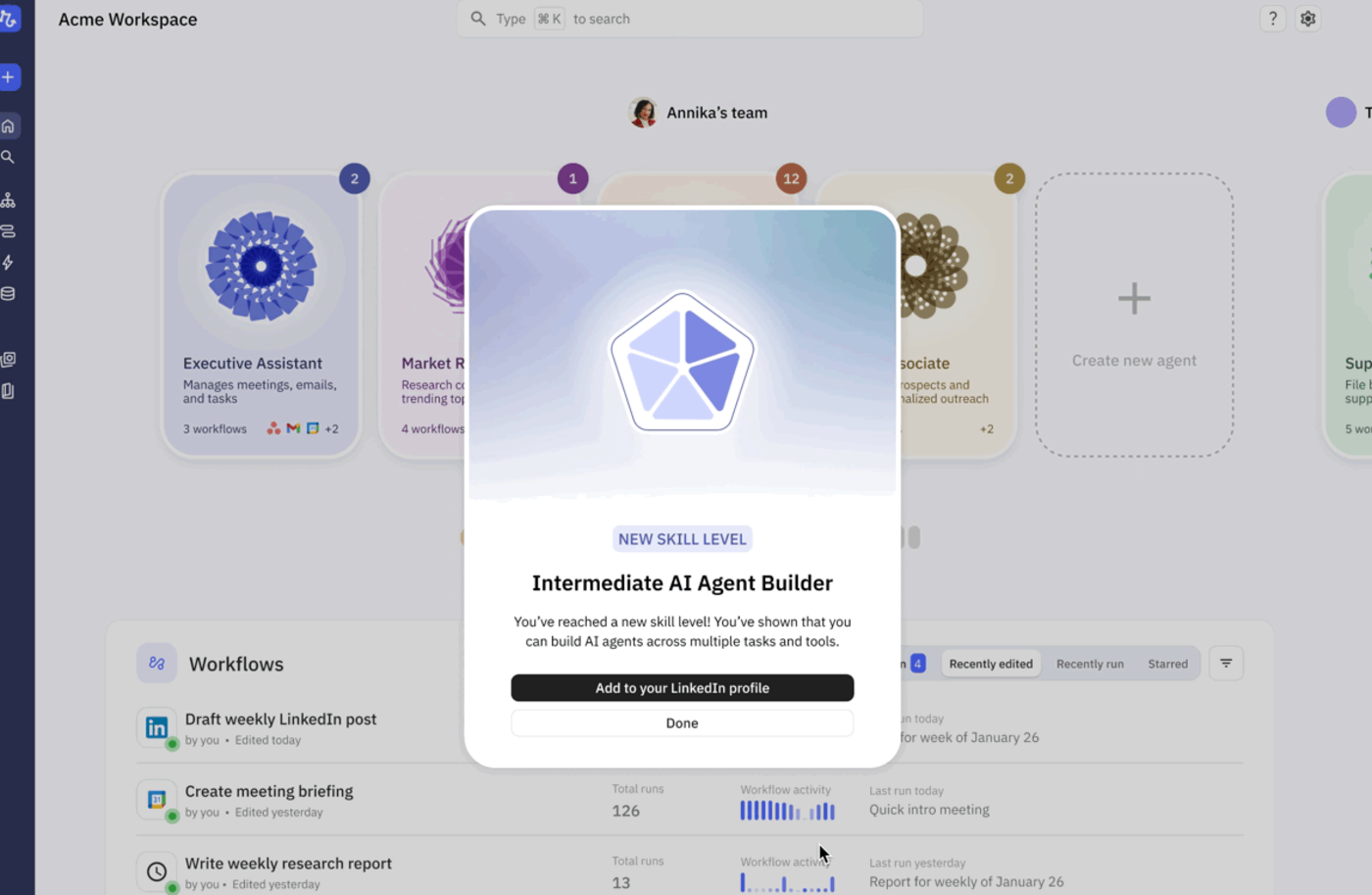
The company is partnering with Replit, Lovable, Descript and Relay.app on the feature and is working on integrations with fellow Microsoft-owned GitHub as well as Zapier. LinkedIn has always allowed users to add various skills and certifications to their profiles. But what makes the latest update a bit different is that users aren't self-reporting their own qualifications. Instead, LinkedIn is allowing the companies behind the AI tools to assess an individual's relative skill and assign a level of proficiency that goes directly to their profile.
For example, AI app maker Lovable could award someone a "bronze" in "vibe coding," while the platform Replit uses numerical levels and Relay.app may determine that someone is an "intermediate" level "AI Agent Builder," according to screenshots shared by LinkedIn. These levels should dynamically update as people get more experience using the relevant tools, according to LinkedIn.
Lovable's vibe coding rating system.
LinkedIn
Of course, the update also comes at a time when companies have used these same kinds of AI tools to lay off thousands of workers. So while there's may be value in showing off your vibe coding skills, there are still many workers who likely aren't as excited about ceding more ground to AI. When I asked, LinkedIn's head of career products Pat Whealan about this he said that
AI-specific skills are an increasingly important signal to recruiters and the latest update will make it easier for them to assess candidates' skills. But he added that the intention isn't to make AI-specific skills the sole focus. "This is less about replacing any of those other existing signals, and more about showing new ways that people are doing work," he tells Engadget. "And how do we give a verifiable signal to both hirers and other people looking at their profile, that they actually are using these tools on a regular basis."
This article originally appeared on Engadget at https://www.engadget.com/ai/linkedin-will-let-you-show-off-your-vibe-coding-expertise-140000776.html?src=rss
Meta has started blocking links to ICE List, a website that compiles information about incidents involving Immigrations and Customs Enforcement (ICE) and Border Patrol agents, and lists thousands of their employees' names. It seems that the latter detail is what caused Meta to take action in a move that was first reported byWired.
ICE List is a crowdsourced Wiki that describes itself as "an independently maintained public documentation project focused on immigration-enforcement activity" in the US. "Its purpose is to record, organize, and preserve verifiable information about enforcement actions, agents, facilities, vehicles, and related incidents that would otherwise remain fragmented, difficult to access, or undocumented," its website states.
Along with notable incidents, the website also lists the names of individual agents associated with ICE, CBP and other DHS agencies. According to Wired, the website's creators said much of that information had come from a "leak," though it appears to be based largely on public LinkedIn profiles. As Wired notes:
The site went viral earlier this month when it claimed to have uploaded a leaked list of 4,500 DHS employees to its site, but a WIRED analysis found that the list relied heavily on information the employees shared publicly about themselves on sites such as LinkedIn.
Links to ICE List have been spreading widely for several weeks, including on Meta's platforms. There are numerous links to the website on Threads, some of which go back several weeks. Now though, clicking on previously-shared links instead results in a message that the link can't be opened. Users who try to share new links on Threads or Facebook also see error messages. "Posts that look like spam according to our Community Guidelines are blocked on Facebook and can't be edited," the notice says.
When reached for comment, a Meta spokesperson pointed to the company's privacy policy barring the disclosure of personally identifiable information (PII). The company didn't address why it chose to start blocking the website after several weeks, or whether it considers public LinkedIn profiles to be in violation of its rules against doxxing.
It is, however, not the first time Meta has opted to remove users' posts tracking information about ICE actions. The social network previously took down a Facebook group that tracked ICE sightings in Chicago after pressure from the Justice Department.
Have a tip for Karissa? You can reach her by email, on X, Bluesky, Threads, or send a message to @karissabe.51 to chat confidentially on Signal.
This article originally appeared on Engadget at https://www.engadget.com/social-media/meta-blocks-links-to-ice-list-a-wiki-that-names-agents-231410653.html?src=rss
TikTok has reached a settlement in a closely-watched lawsuit over social media addiction, narrowly avoiding a trial that's scheduled to begin jury selection Tuesday. Terms of the deal, which was reported by The New York Times, weren't disclosed.
TikTok's settlement comes about one week after Snap reached a settlement in the same case. The trial is expected to move forward in Los Angeles with Meta and YouTube as the only defendants. Mark Lanier, a lawyer for the plaintiff, said in a statement to NYT that they were "pleased" with the settlement and that it was "a good resolution." TikTok didn't immediately respond to a request for comment.
The trial stems from a 2023 lawsuit brought by a California woman known in court documents as "K.G.M." She sued Meta, Snap, TikTok and YouTube and alleged that their platforms were addictive and had harmed her as a child. The judge in the case previously ordered the companies' executives, including Mark Zuckerberg and Adam Mosseri, to testify. YouTube's top exec, Neal Mohan, is also likely to testify, according to The New York Times.
The lawsuit is the first among several high-profile cases against social media companies to go to trial this year. Meta is expected to head to court in New Mexico in early February in a case brought by the state's attorney general, who has alleged that Facebook and Instagram have facilitated harm to children. TikTok and Snap are collectively facing more than a dozen other trials in California courts this year.
This article originally appeared on Engadget at https://www.engadget.com/social-media/tiktok-settles-to-avoid-major-social-media-addiction-lawsuit-183943927.html?src=rss
TikTok's newly formed US entity is off to a very bumpy start. As the app continues to face technical issues affecting the recommendation algorithm, view counts and other features, TikTok is also seeing a wave of frustrated users uninstalling it, according to new data.
Analytics firm Sensor Tower, which tracks downloads and other app store-related metrics, told CNBC that there has been a 150 percent rise in uninstalls of the TikTok app in the United States compared with the last three months. An analyst at Sensor Tower told Engadget that TikTok's US daily active users (DAUs) have increased about 2 percent in the same time period, and are flat week-over-week. TikTok has blamed a power outage at a data center for “multiple bugs,” including those affecting view counts and load times. The company hasn't said when users can expect a fix.
At the same time, an independent app called UpScrolled has seen a surge in interest over the last few days. The app is currently the ninth most-downloaded app in the US App Store and the second most popular social app (Meta's Threads is currently in the number one spot for social apps). The app has also reached the top five in the UK and Australian app stores. In the United States, its sudden popularity seems to be closely tied to recent changes at TikTok.
UpScrolled has seen 41,000 total downloads between Thursday (the day the US joint venture was formalized) and Saturday, according to estimates from App Figures. The app, which was first released last June, has been downloaded about 140,000 times between Apple and Google's app stores, according to App Figures. Prior to last Thursday, the app was averaging less than 500 downloads a day, according to the company. The rapid increase in downloads has apparently caused some issues for the company which asked users to "bear with us" on Monday.
Well, this is new... You showed up so fast our servers tapped out. Frustrating? Yes. Emotional? Also yes. We're a tiny team building what Big Tech stopped being. Right now we're scaling on caffeine to keep up with what YOU started. Bear with us. We're on it. pic.twitter.com/OAlYcN6t5q
Created by an Australian developer, UpScrolled looks a bit like Instagram. Users can share photos and shortform videos. The app defaults to a chronological "following" feed, though it does also recommend content to users. The app is "privately funded by its founder, Issam Hijazi, together with a small group of individual investors who share our mission and values," according to an FAQ on UpScrolled's website. It currently has no ads, though the company says it "probably" will in the future.
This isn't the first time turmoil at TikTok has benefitted a previously little-known app. Chinese app RedNote briefly became the top app in the United States early last year as TikTok faced a potential ban. RedNote's popularity proved to be short-lived, though, as the 2025 TikTok "ban" ended up lasting only a couple of hours.
But with new owners at TikTok and growing frustration over technical issues with the app, there could be an opportunity for a new shortform video service that's not controlled by a huge corporation. And that's what UpScrolled seems to be betting on. "Too often, users are left uncertain about whether their voices will be heard or quietly suppressed," the company writes on its website. "UpScrolled changes that by ensuring every post has a fair chance to be seen, creating an environment that is authentic, unfiltered, and equitable for all."
Update, January 26, 2026, 4:28PM PT: This post was updated to reflect the latest details from TikTok about the ongoing issues affecting the US version of the app.
This article originally appeared on Engadget at https://www.engadget.com/social-media/people-are-uninstalling-tiktok-and-downloading-an-indie-competitor-233345222.html?src=rss
If your TikTok feed has felt a little off lately, it's not just you. TikTok says is still working to fix its service in the US following a power outage at one of its data centers that's caused “multiple bugs” in the app. TikTok users have reported problems logging in and uploading videos, as well as strange behavior from the "for you" algorithm. Creators have also noticed that new uploads are seemingly getting o views or likes and that in-app earnings have disappeared.
"Since yesterday we’ve been working to restore our services following a power outage at a U.S. data center impacting TikTok and other apps we operate," the company wrote in a statement Monday. "We're working with our data center partner to stabilize our service. We're sorry for this disruption and hope to resolve it soon."
Since yesterday we’ve been working to restore our services following a power outage at a U.S. data center impacting TikTok and other apps we operate. We're working with our data center partner to stabilize our service. We're sorry for this disruption and hope to resolve it soon.
In a subsequent update several hours later, the company said that the power outage had caused a “cascading systems failure” that is still affecting the app and leading to “multiple bugs,” including those affecting view counts and load times. “Creators may temporarily see ‘0’ views or likes on videos, and your earnings may look like they're missing,” the company wrote in an update on X. “This is a display error caused by server timeouts; your actual data and engagement are safe.”
The statement didn’t directly address reported issues with the app’s recommendation algorithm. Since Sunday, users have reported seeing a wave of generic videos flood their feeds, which are typically hyper-personalized. Other users have reported seeing the same few videos repeated over and over again.
About a day after the issues started, TikTok said that it had made “significant progress” in recovering from the issues it was facing, but that US users still may “have some technical issues,” specifically when posting new videos.
We've made significant progress in recovering our U.S. infrastructure with our U.S. data center partner. However, the U.S. user experience may still have some technical issues, including when posting new content. We're committed to bringing TikTok back to its full capacity as…
The issues come just days after TikTok finalized a deal to spin off its US business into a separate entity largely controlled by US investors. That timing hasn't gone unnoticed by users, many of whom are already suspicious of the company pushing a terms of service and privacy policy in the hours after the deal was finalized. The problems affecting the app's recommendation algorithm have also raised questions about TikTok USDS Joint Venture's plans to "retrain" TikTok's central feature.
Update, January 26, 2026, 7:18PM ET: This post has been updated to include additional information from TikTok about the outage and bugs affecting users.
Update, January 27, 2026, 11:22AM ET: Added TikTok’s latest statement about recovering from the issues that have hit US users.
This article originally appeared on Engadget at https://www.engadget.com/social-media/a-tiktok-us-power-outage-caused-a-cascading-systems-failure-leading-to-multiple-bugs-173426490.html?src=rss
Meta will no longer allow teens to chat with its AI chatbot characters in their present form. The company announced Friday that it will be "temporarily pausing teens’ access to existing AI characters globally."
The pause comes months after Meta had said it was working on chatbot-focused parental controls following reports that some of Meta's character chatbots had engaged in sexual conversations and other alarming interactions with teens. Reuters reported on an internal Meta policy document that said the chatbots were permitted to have "sensual" conversations with underage users, language Meta later said was "erroneous and inconsistent with our policies." The company announced in August that it was re-training its character chatbots to add "guardrails as an extra precaution" that would prevent teens from discussing self harm, disordered eating and suicide.
Now, Meta says it will prevent teens from accessing any of its character chatbots until "the updated experience is ready." Those updates will include parental controls, according to a Meta spokesperson. The new restrictions, which will be starting "in the coming weeks," will apply to those with teen accounts, "as well as people who claim to be adults but who we suspect are teens based on our age prediction technology." Teens will still be able to access the official Meta AI chatbot, which the company says already has "age-appropriate protections in place."
Meta and other AI companies that make "companion" characters have faced increasing scrutiny over the safety risks these chatbots could pose to young people. The FTC and the Texas attorney general have both kicked off investigations into Meta and other companies in recent months. The issue of chatbots has also come up in the context of a safety lawsuit brought by New Mexico's attorney general. A trial is scheduled to start early next month; Meta's lawyers have attempted to exclude testimony related to the company's AI chatbots, Wired reported this week.
Correction, January 23, 2026, 11:18AM PT: This post was updated to clarify that Meta’s planned chatbot parental control features have not yet rolled out.
This article originally appeared on Engadget at https://www.engadget.com/social-media/meta-is-temporarily-pulling-teens-access-from-its-ai-chatbot-characters-180626052.html?src=rss
Snapchat is updating its parental control features to give parents more detailed information about who their kids are connecting with in the app and which features they use the most. The app's Family Center already gives parents visibility into their child's friend list, but it will now surface contextual details when a new friend is added.
For example, the feature could highlight that the two share mutual friends or have each other's contact info saved in their phones. It could also indicate that they are classmates if both users have joined the same in-app “community.” If the two have no commonalities, then that could be a sign for a parent to "start a productive conversation," Snap says.
The company has long been criticized for making it too easy for teenagers to talk to strangers. The issue has come up in safety-related lawsuits, including an ongoing case brought by New Mexico's Attorney General. Snap says that adding additional "trust signals" to its parental control features "make it easier for parents to understand new connections and have greater confidence that their teen is chatting with someone they know in real life."
The update is also adding more granular stats about how exactly teens are spending their time in the app. Family Center's screen time dashboard now includes a breakdown of how much of their time spent in the app is in its messaging, camera, map or shortform video features. It will still be up to parents to decide what, if any, limits they want to put on their teens. But at a time when there's increasing conversation around banning teens from social media entirely, having access to more stats could better help parents understand their kids' relationship with Snapchat.
This article originally appeared on Engadget at https://www.engadget.com/social-media/snapchat-gives-parents-more-info-on-who-their-kids-are-talking-to-120000077.html?src=rss
The Federal Trade Commission lost its antitrust case against Meta last year, but the regulator hasn't given up on its attempts to punish the social media company for its acquisitions of WhatsApp and Instagram. The FTC is appealing a ruling last year in which a federal judge found that the government hadn't proven that Meta is currently operating as a monopoly.
"Meta has maintained its dominant position and record profits for well over a decade not through legitimate competition, but by buying its most significant competitive threats," the FTC's Bureau of Competition Director Daniel Guarnera said in a statement. "The Trump-Vance FTC will continue fighting its historic case against Meta to ensure that competition can thrive across the country to the benefit of all Americans and U.S. businesses.”
The FTC originally filed antitrust charges against Facebook in 2020 during President Donald Trump's first term in office. The government argued that by acquiring apps it once competed with, Instagram and WhatsApp, the company had depressed competition in the space and ultimately hurt consumers. A trial last year saw testimony from several current and former executives, including CEO Mark Zuckerberg and former COO Sheryl Sandberg, who spoke at length about the pressure to compete with TikTok.
US District Judge James Boasberg was ultimately persuaded by Meta’s arguments, writing that the success of YouTube and TikTok prevented Meta from currently "holding a monopoly" even if the company had acted monopolistically in the past. If the FTC had won, it could have tried to force Meta to undo its acquisitions of WhatsApp and Instagram. Should it be successful in its appeal, that remedy could once again be on the table.
News of the FTC's plan to appeal is also a blow to Zuckerberg, who has spent the last year courting Trump and hyping Meta's plans to spend hundreds of billions of dollars on AI infrastructure in the United States. In a statement, Meta spokesperson Andy Stone said that the original ruling was "correct," and that "Meta will remain focused on innovating and investing in America."
This article originally appeared on Engadget at https://www.engadget.com/big-tech/the-ftc-isnt-giving-up-on-its-antitrust-case-against-meta-225020769.html?src=rss
X seems to be working again after struggling with an outage that took the service offline and made it slow to load for much of the morning. According to X’s developer platform page, there is an ongoing incident related to streaming endpoints that’s caused increased errors. The incident started at 7:39AM PT, according to the page.
That roughly coincides with a spike in reports at Down Detector. The issues seemed to be somewhat intermittent. At some points, X’s website loaded partially and only showed older posts. At other times, the app and website failed to load at all.
As of 9:30AM PT, X’s Explore and trending pages were loading, but the “following” tab wasn’t showing posts and instead suggested users “find some people and topic to follow” (as shown in the screenshot below).
Posts aren't loading.
X
As of 11:15AM PT, X’s developer site was still indicating ongoing issues, so there may still be some lingering problems even though the website seems to be functioning normally again. Reports on Down Detector have also dropped off considerably.
X didn’t immediately respond to a request for comment on the outage. As TechCrunch notes, this is the second time this week that X has experienced significant issues. The service also went down for many users around the world on Tuesday.
Bluesky changed its profile photo earlier in the week.
X
But while the latest issues were widespread, some posts are were still managing to go through. Rival Bluesky, which earlier in the week changed its profile picture on X to its butterfly logo in a bikini, took the opportunity to throw some shade.
At 1PM PT, X updated its status page to indicate the issue had been resolved after nearly six hours. It didn’t elaborate on the underlying cause.
Update, January 16, 2026, 2:09PM PT: Updated with the latest information from X’s status page.
This article originally appeared on Engadget at https://www.engadget.com/social-media/x-is-fully-online-after-going-down-for-most-of-the-morning-171843711.html?src=rss
Last month, Instagram began rolling out a new set of controls that allowed users to personalize the topics recommended to them by the Reels algorithm. Now, Meta is making that feature available to all English users of the app globally, along with the ability to highlight their top topics for the coming year.
The feature begins with a selection of topics Meta's AI thinks you're interested in based on your recent activity, and has controls to remove them or add new categories. There's also a separate field for identifying what you want to see less of, and a new "build your 2026 algorithm" that allows you to highlight three topics in particular.
Meta's algorithm tagged a skiing clip as "snowboarding."
Screenshot via Instagram
I don't yet have the 2026-specific control yet, but I was able to tweak some of my preferred topics and was surprised at how quickly the algorithm seemed to adjust. I added "snowboarding" as a topic and then later, when I clicked over to Reels, the first clip I saw was tagged "snowboarding." Unfortunately, the video wasn't actually about snowboarding — it featured a clip of a freestyle skiing event — so Meta's systems might still need a little work at classifying the actual content. But given how sensitive the Reels algorithm can be, it's nice to have a way of opting out of interests even if you briefly went down a rabbit hole.
The feature won't, however, let you ask to see fewer ads. I tried to add "ads" to my "what you want to see less of" list and received an error. "No results found. Try another topic or interest." I was able to successfully add "sponsored content" and "AI" to my "see less" list, though I'm pretty sure the latter will affect videos about AI rather than those made with the help of it.
This article originally appeared on Engadget at https://www.engadget.com/social-media/instagram-wants-you-to-personalize-your-reels-algorithm-for-2026-215252736.html?src=rss
On the heels of Mark Zuckerberg announcing that Meta's former board member, Dina Powell McCormick, would be formally joining the company as president and vice chairman, the CEO has shared new details about her purview at the company. The executive will play a key role overseeing Meta's sprawling infrastructure investments as part of a newly announced initiative called Meta Compute.
"Meta is planning to build tens of gigawatts this decade, and hundreds of gigawatts or more over time," Zuckerberg said in an update. "How we engineer, invest, and partner to build this infrastructure will become a strategic advantage."
Zuckerberg said that Meta's head of global engineering Santosh Janardhan will lead the "top-level initiative" and that recent hire and former Safe Superintelligence CEO Daniel Gross will "lead a new group responsible for long-term capacity strategy, supplier partnerships, industry analysis, planning, and business modeling." McCormick is expected to "work on partnering with governments and sovereigns to build, deploy, invest in, and finance Meta's infrastructure."
Meta has been investing heavily in infrastructure to fuel its AI "superintelligence" ambitions. The company also recently announced three agreements to buy massive amounts of nuclear power to help power its data centers. Zuckerberg has previously said he expects Meta to spend $600 billion on AI infrastructure and jobs by 2028.
This article originally appeared on Engadget at https://www.engadget.com/ai/mark-zuckerberg-announces-new-meta-compute-initiative-for-its-data-center-and-ai-projects-192100086.html?src=rss
CES always has its share of attention-grabbing robots. But this year in particular seemed to be a landmark year for robotics. The advancement in AI technology has not only given robots better “brains,” it’s enabled new levels of autonomy and given rise to an ambitious, if sometimes questionable, vision for our robot-filled future.
From sassy humanoids to AI-powered pets and chore-handling assistants, we sought out as many cute, strange and capable robots as we could find in Las Vegas. These are the ones that made the biggest impression.
Agibot Humanoids
Agibot's X2 humanoid robot.
Karissa Bell for Engadget
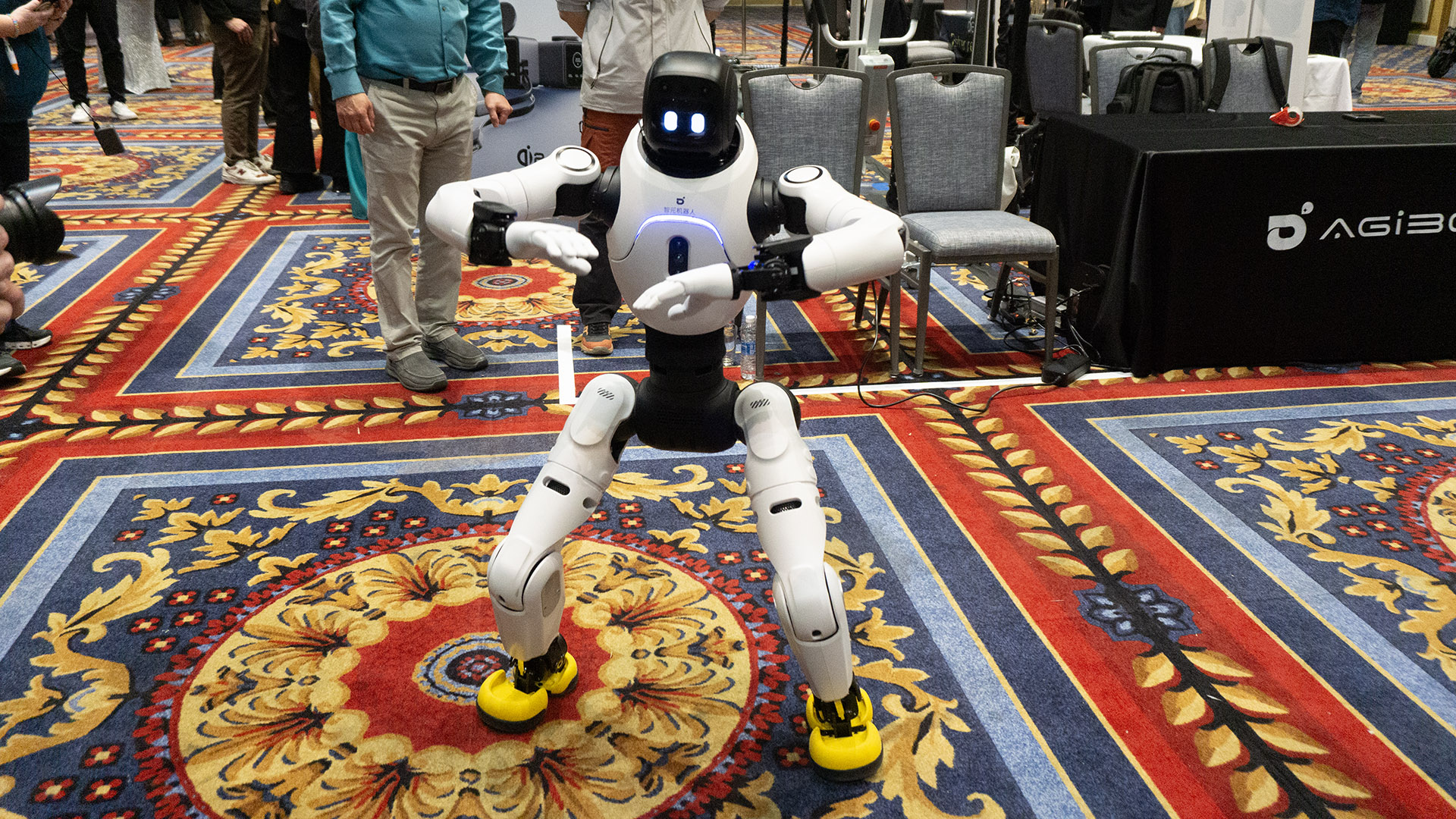
Of all the humanoids we saw at CES, Agibot's made the biggest impression. The company was showing off two models: the larger A2 and the smaller X2 (pictured above). The latter impressed us with its dance moves — the company told us it can learn surprisingly complex choreography — but the A2 turned out to be surprisingly capable at chatting up CES goers.
Later in the show, we came across the A2 at IntBot's booth, where the company had custom versions of both Agibot humanoids "running" their booth. I spent several minutes talking with "Nylo" and was genuinely impressed by its conversational skills, even if its roasts could use a little work. — Karissa Bell, Senior Reporter
Dreame's robo vac arms and legs
Dreame was back this year with some wild robot vacuums. The company showed of the Cyber 10 Ultra, a robot vacuum with a multipurpose extendable arm. The arm, which we got a glimpse of at last year's show, can pick up stuff, but it also has its own cleaning attachments, allowing the robot to clean hard-to-reach corners and other spots that wouldn't otherwise be accessible.
Dreame also brought its latest wild concept, the Cyber X, which has legs that propel it up and down full-size staircases. The legs are somewhat unsettling — they look alarmingly similar to mini chainsaws — but watching it glide up and down stairs was impressive all the same. — KB
OlloBot
The long neck version of OlloBot.
Cheyenne MacDonald for Engadget
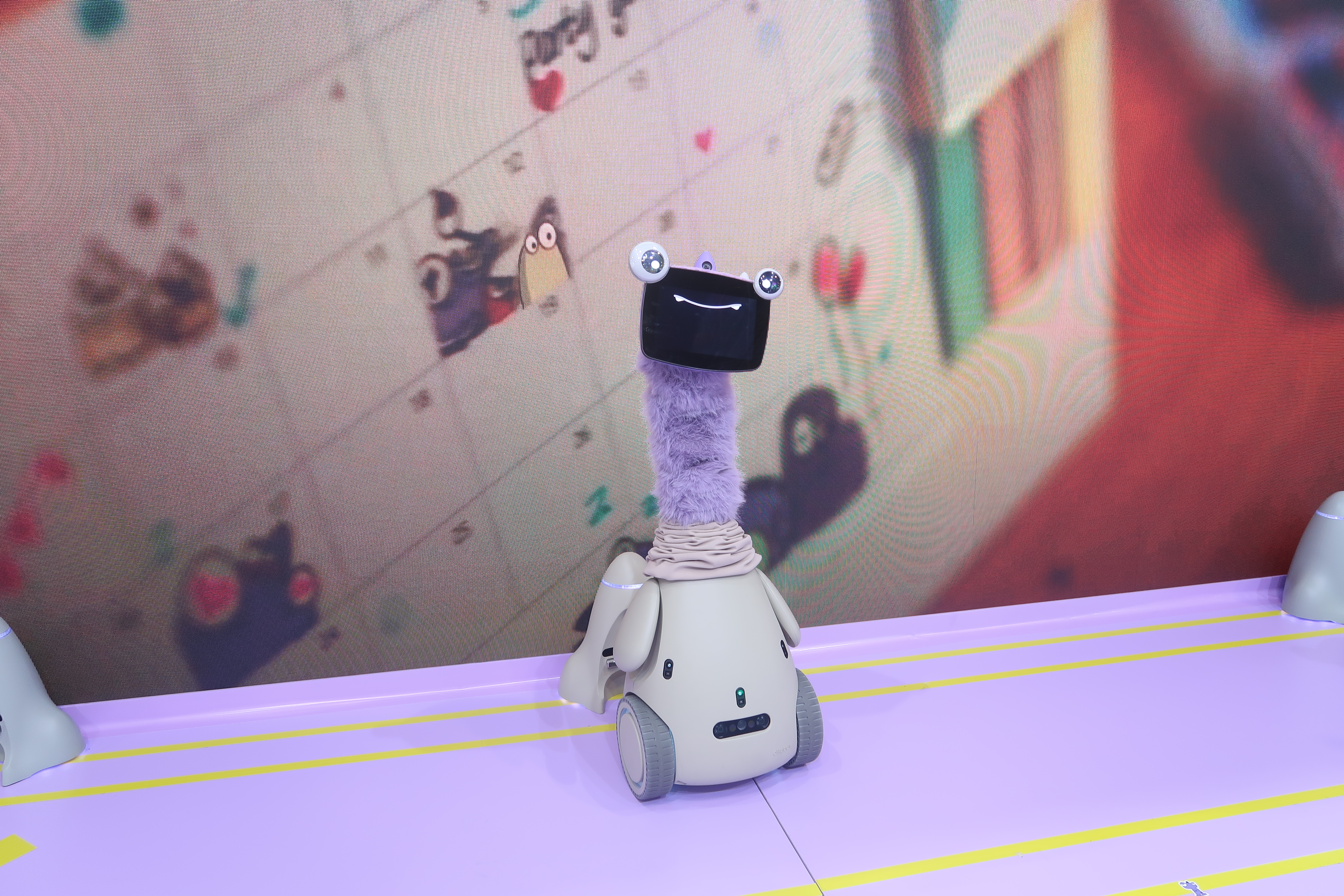
OlloBot is one of those semi-ridiculous CES robots that's just impossible not to smile at. It has the goofiest face, with top-sitting frog eyes slapped onto a tablet where its mouth is displayed. Then, on top of that, it has a patch of soft fur on its neck and nowhere else on its body, which is penguin shaped and complete with flappy little arms. There are two versions of OlloBot, one that's short with a fixed neck and another where the neck can stretch out to make it much taller. And of course, it can be dressed up in silly outfits.
It's a family-focused robot that responds to voice commands and touch, and is meant to capture memories as they happen, snapping pics and videos for its diary of notable moments. It can be used to make calls and control smart home devices. Everything is stored locally in its removable heart module, and there's a companion app for additional interactions. — Cheyenne MacDonald, Weekend Editor
Rovie
A robot with a dust pan like appendage dumps toys into a bin.
Cheyenne MacDonald for Engadget
Sure, we've seen multiple robots (particularly robovacuums) that can pick objects up off the floor and put them away to make homes tidier, but this one is cute and has a little face. Instead of using an arm to grab one thing at a time, Clutterbot's Rovie has a dustpan-style tray with two sweepers that fold out from its front. It drives around and, using computer vision, identifies toys that have been left on the floor and scoops them up. Then, it dumps them in a designated bin where they're consolidated and out of the way.
It's still in the R&D phase, a team member said when I visited the booth, but this is one I'm hoping to see become a real, purchasable product soon. For parents of small children who are constantly leaving their toys around, it would be pretty convenient to have a tiny robot picking up after them. Also for me, who doesn't have children but a very sweet and hardworking cat who loves to steal socks and then deliver them as if they're her kills, leaving socks scattered all over the house. Clutterbot team, if you're reading this, please add socks to the list of items Rovie can sweep up. — CM
Saros Rover
Not to be outdone, Roborock also brought a stairclimbing robot vacuum to CES, Saros Rover. And, unlike Dreame's prototype, the Roborock can also clean the stairs while it climbs. No word on when it will be available or how much it might cost (probably a lot!) but the company says it is "a real product in development." -KB
CLOiD
CLOiD folded laundry at LG's CES booth.
Karissa Bell for Engadget
LG's CLOiD was definitely the most ambitious robot we saw at CES 2026. The company showed its home helper concept (slowly) folding and sorting laundry, fetching drinks from the fridge, putting food in the oven and retrieving a set of lost keys. But while the 15-minute demo gave us a tantalizing look at the appliance maker's vision for a "zero labor home," it's unlikely to be anything more than a slick demo anytime soon. The company has made no commitment to actually make a version of CLOiD people can actually buy. — KB
Allex
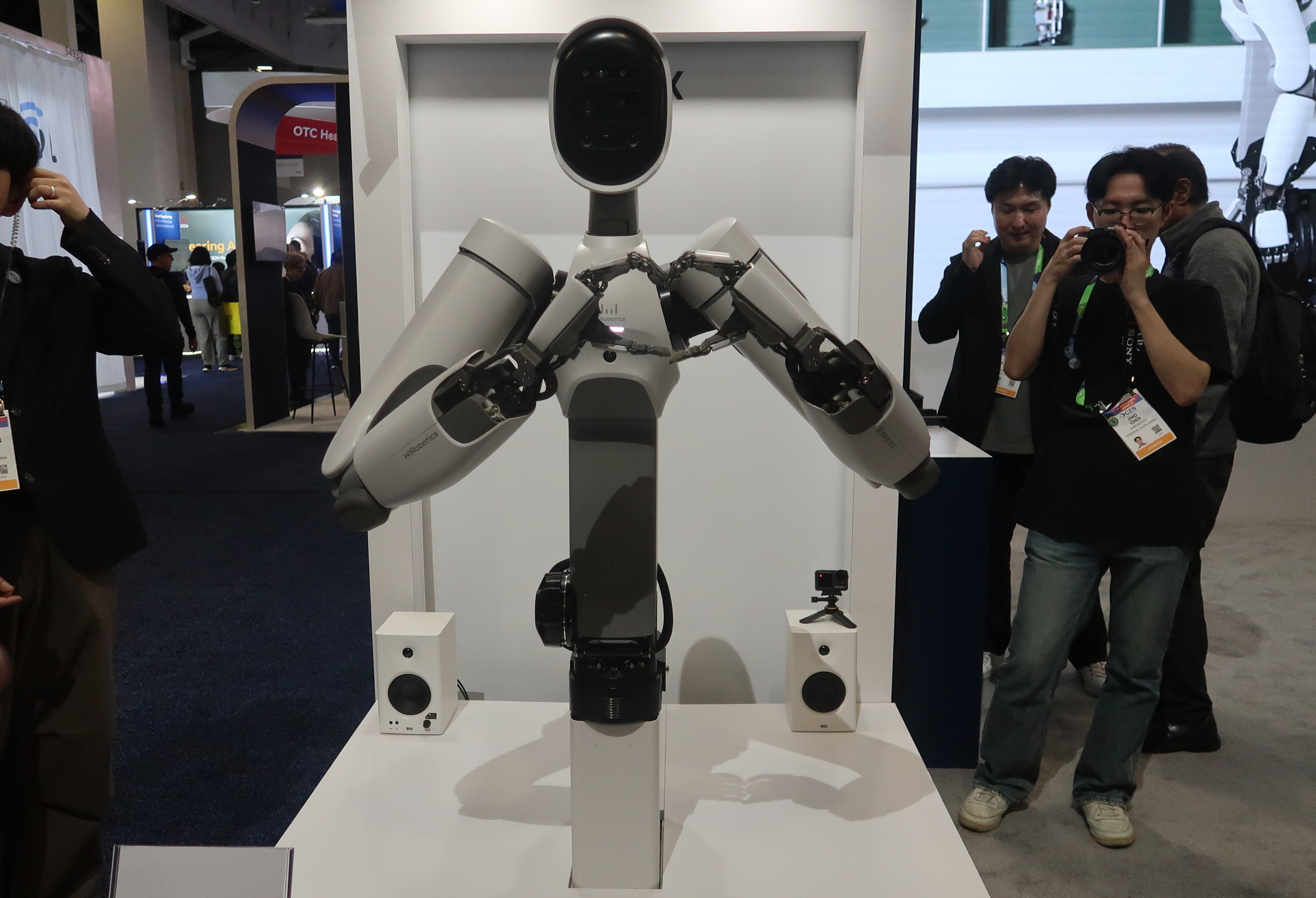
WIRobotics' Allex robot makes a heart sign with its hands.
Cheyenne MacDonald for Engadget
WIRobotics brought its new humanoid, Allex, to CES, and the robot was really hamming it up when we stopped by the booth, striking poses and engaging with visitors. It's a waist-up robot with articulated parts, from its arms to its fingers, and is meant to be a general purpose tool that could be used in manufacturing, the service industry or even households. Each hand can hold objects of up to about 6.6 lbs, and the robotic hand has 15 degrees of freedom. The company's website shows the robot's fingers are dexterous enough to do the Gen-Z heart sign, but when it looked at Karissa and me it threw a millennial heart up. Did Allex lowkey call us unc? — CM
Poketomo
Poketomo in one of the many outfits Sharp brought to CES.
Cheyenne MacDonald for Engadget
Sharp's Poketomo is an improbably adorable tiny meerkat. Well, technically it's an AI companion shaped like a fuzzy, portable meerkat. It might look like a toy, but the company says it's actually to be a companion for adults.
It’s small enough you can carry it around with you throughout the day (Sharp even makes a tiny Poketomo-sized clear backpack). Like a lot of AI companion devices we saw at CES, it’s equipped with a small camera and microphone that enables it to constantly interact with you. The camera also enables its “memory” so the pet can recognize and deliver personalized updates to its person. Poketomo launched recently in Japan, but sadly Sharp says it has no current plans to sell it in other markets. — KB
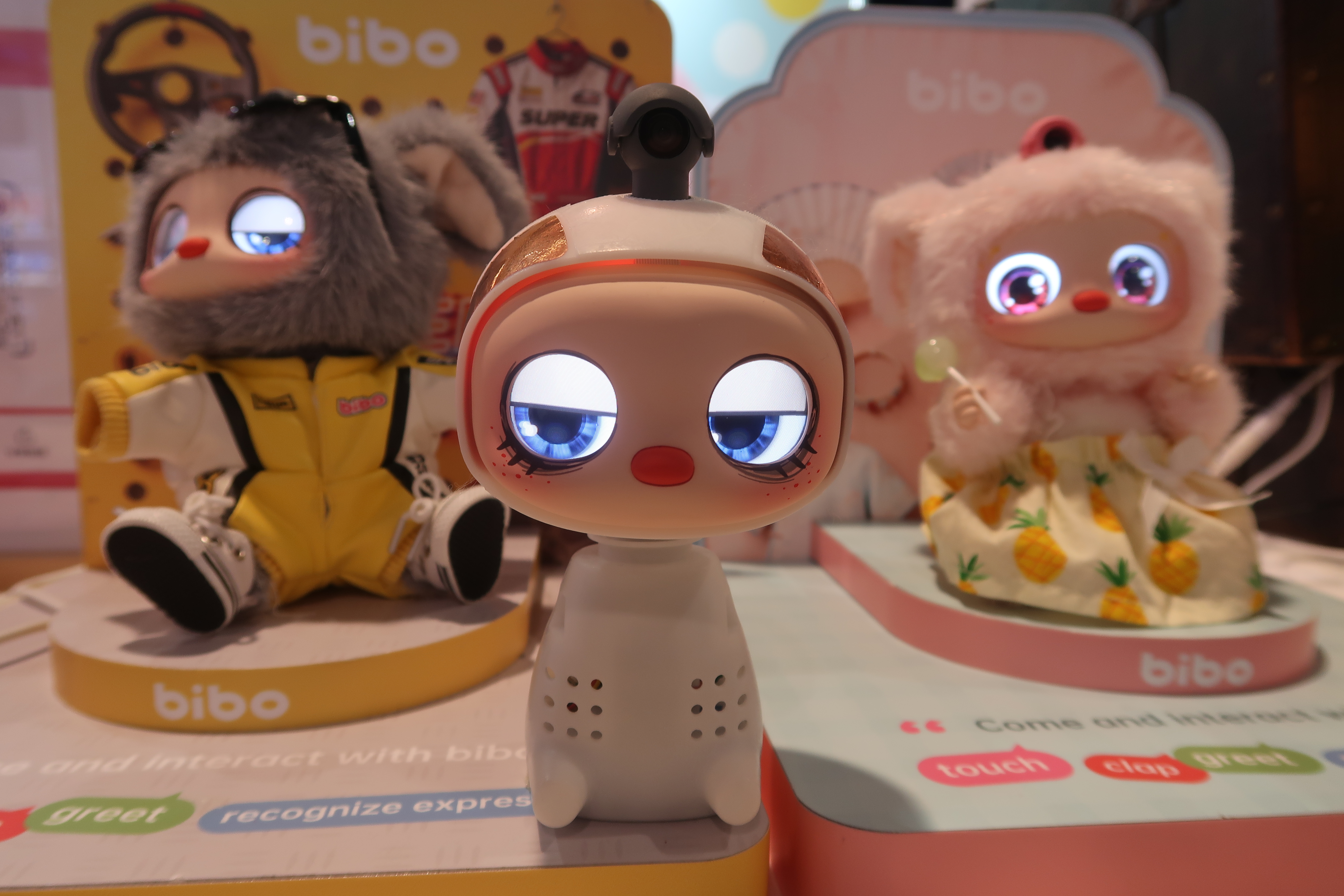
Bibo
Moony bibo (I-Type).
Cheyenne MacDonald for Engadget
It seemed like everyone was trying to cash in on Labubu hype at CES 2026. There were Pop Mart-style bag charms all over the place and countless products that looked suspiciously like the now ubiquitous toy monster. We even got one pitch for a "a labubu-like robot that talks to you" that, in fact, did not look like a Labubu in any way, shape or form. But there was one truly Labubu-like tiny robot that managed to stand out from the rest and kind of stole my heart, even though I'm not particularly into Labubus. (Please don't make me say Labubu ever again.)
Bibo is a cute-as-hell AI toy that's meant to be a companion you bring with you everywhere. It has a little camera on its head that it uses to see the world around it, and can recognize its owner's face and tone of voice, so it can respond to interactions in an emotionally appropriate way. It'll keep a daily diary of its activities, and while the toy comes in two starting personality "types" — Sunny bibo (E-Type), the bubbly extrovert, and Moony bibo (I-Type), the gentle, sensitive one — they'll develop more unique personalities over time. Their fur is soft and warm, so it feels like you're petting a kitten.
Why is it even cuter like this?
Cheyenne MacDonald
At the booth, the team had several of them on display wearing various outfits, in little dioramas showing them in classroom and camping scenes, and even deconstructed with the fur removed, which somehow made it look even cuter. Bibo isn't available to purchase yet, and when it is, it'll launch first in China before potentially expanding depending on its success at home. — CM
Sharpa
Sharpa's humanoid robot is seen playing ping-pong.
Cheyenne MacDonald for Engadget
Sharpa's booth had a lot going on and was definitely one of the bigger crowd-pullers. There was a humanoid robot playing ping-pong, another taking selfies with people and another dealing blackjack, along with a disembodied robotic hand that could mirror visitors' finger movements. The autonomous demos showed off what that highly dexterous hand can do, and it was pretty impressive — especially seeing it draw individual cards from the deck. — CM
Zeroth
Zeroth's W1 robot.
Cheyenne MacDonald for Engadget
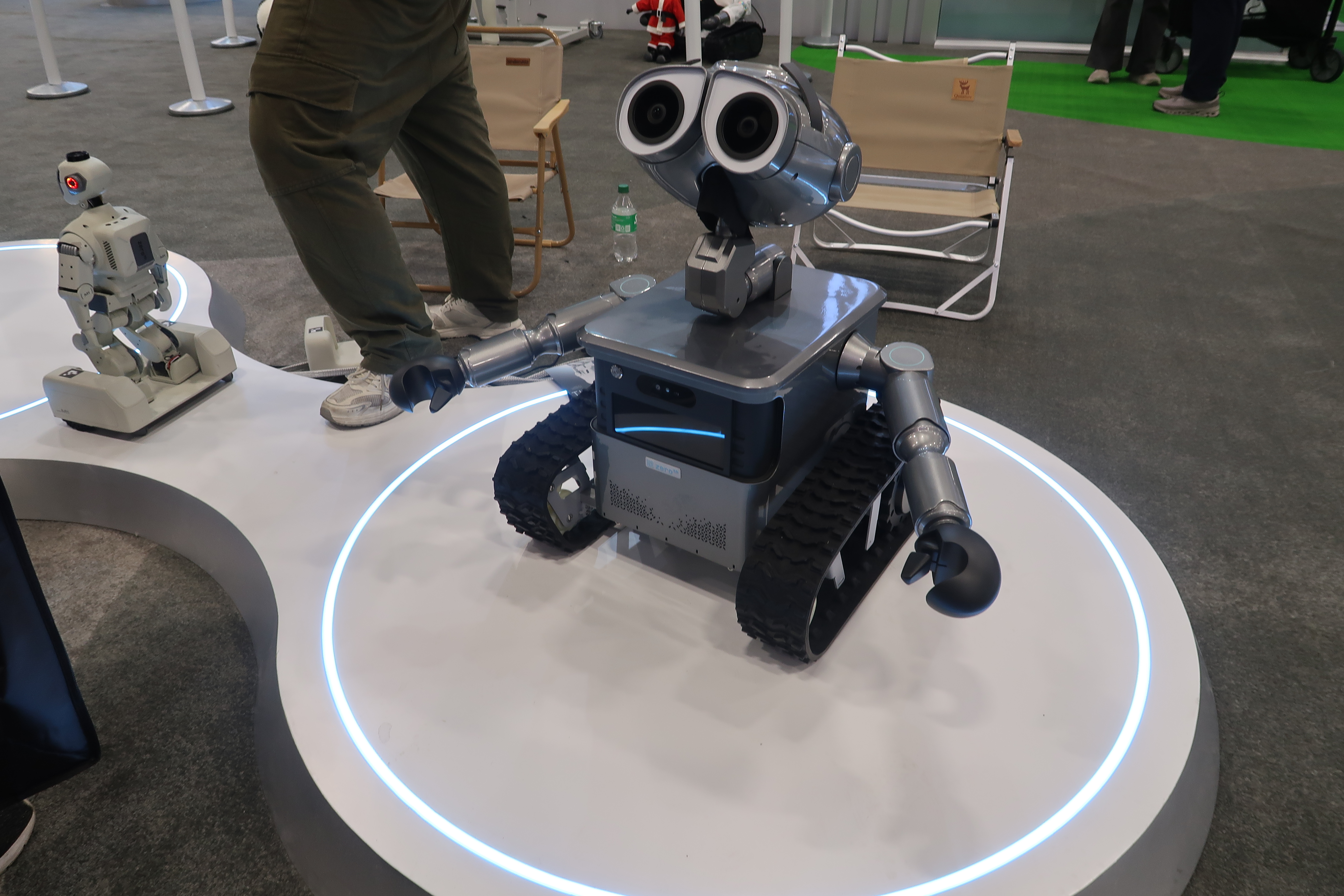
Chinese robotics startup Zeroth brought two adorable home robots to CES: a pint-sized humanoid companion bot and a rolling robot that looks like Wall-E, with tank-style tracked treads so it can ride around outside. We didn't see these guys doing too much, but they sure were cute. The one that resembles Wall-E, called W1, kind of melted my heart just looking at it. (Don't get attached, you can't afford it.)
The tiny humanoid, M1, costs $2,400 while W1 costs $5,000. Both are expected to ship this spring, with a tentative date of April 15. — CM
Sweekar
Sweekars in their little outfits.
Karissa Bell for Engadget
Takway's Sweekar pocket pet was something I looked at and immediately thought, sigh, I'm going to buy that. It's a Tamagotchi-like virtual pet with AI smarts so it can form a personality based on your interactions with it and the activities you do together. The idea is that it "grows" with you. Like a Tamagotchi, it will require more frequent care in the younger stages of its life cycle. But after it reaches the adult level, it autonomously cares for itself, and it never dies. It can eventually keep itself entertained, and go off on its own virtual adventures and bring you back tales of its travels.
Sweekar is super cute as is, and it can be dressed up in little outfits for more personalization. The device comes in light yellow, pink, and blue, and we saw it sporting a snowboarder outfit and a full cowboy getup. — CM
Realbotix
One of Realbotix' robots.
Cheyenne MacDonald for Engadget
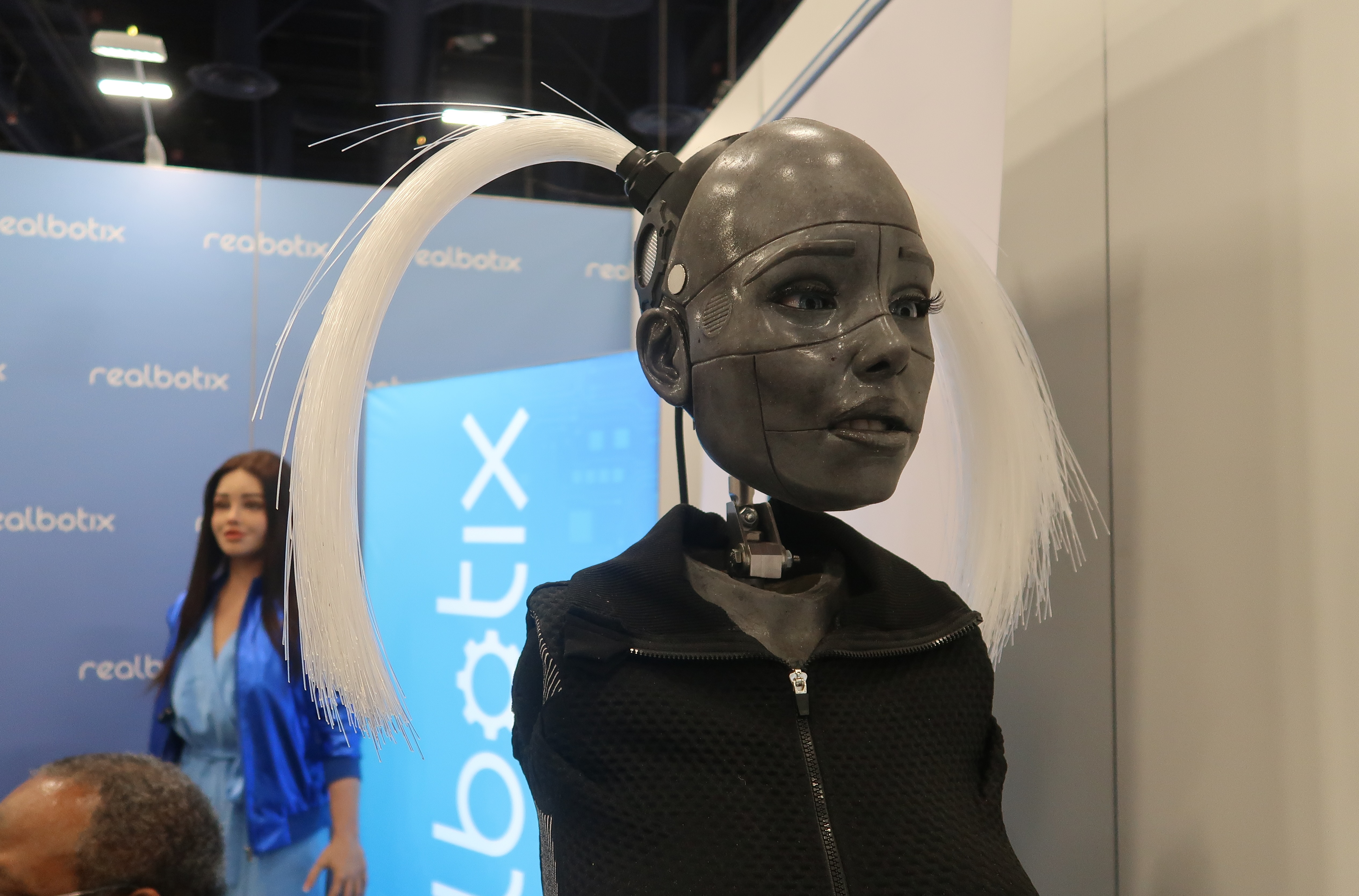
Realbotix is a company we've seen a lot at CES over the years, and it was at the show again for 2026 with several of its highly customizable, realistic humanoid robots. As always, it was among the most unnerving exhibits we saw. New for this year, Realbotix was demonstrating its Robotic Vision System, which allows its robots to see and react to their surroundings more naturally, tracking faces to look directly at whoever is talking and better reading emotion from facial expressions. Damn, it can sense my fear now… — CM
Onero H1
Onero H1 had an endearingly blank stare.
Karissa Bell for Engadget
Switchbot surprised us with its own chore-handling robot, Onero H1, which also won Engadget editors' pick for best robot of CES 2026. We were immediately taken by its weirdly long body and endearingly blank stare as it slowly wheeled around picking up laundry and depositing the items in a washing machine.
Like a lot of robot demos we saw at CES, we only saw Onero performing a small part of what Switchbot says it's actually capable of. But Onero also seemed much more realistic in terms of the type of robot helpers that people might actually see outside of CES, and the company told us it does plan to sell Onero (albeit in limited quantities) by the end of the year. — KB
Cocomo
Ludens AI Cocomo robot.
Cheyenne MacDonald for Engadget
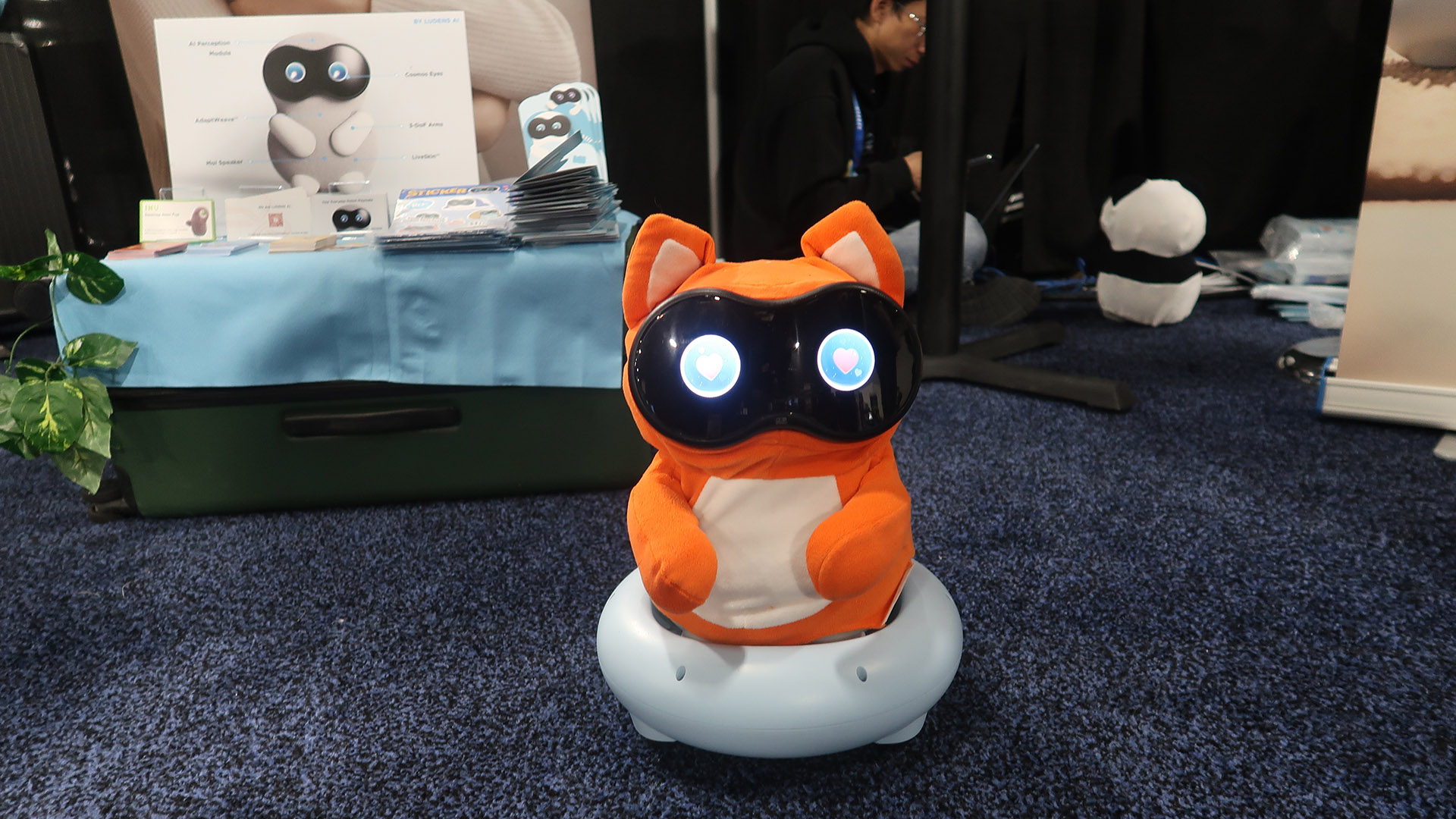
Another robot pet that won us over immediately was Cocomo. Created by Japanese startup Ludens AI, Cocomo is an autonomous robot friend that yes, uses AI to respond to voice and touch and is meant to bond with its owners over time. The egg-shaped creature can scoot around on a wheeled base, or you can carry it around with you.
But what we loved about Cocomo is that it's not trying to be yet another AI assistant, give out life advice or perform tasks. Its goal is to provide companionship and well, be your friend. And while it can respond to voice input it doesn't exactly have a voice of its own: it communicates via cute humming sounds, which is a lot less creepy than some of the talking robots we saw. — KB
Yonbo
Yonbo at CES.
Cheyenne MacDonald for Engadget
Yonbo is a kids' AI companion robot that totally charmed us. It kind of looks like a dog, and when we visited its booth at Unveiled, there were four of them playfully bopping their heads to a pop song and cycling through different cute facial expressions and emoji eyes (including bowls of ramen). It's designed to be an intelligent playmate that can tag along for activities, talk with a child and read them stories, and even help them work through emotions, like getting frustrated during a game.
Yonbo's movement is controlled by a wristband, so it doesn't require a phone to play with. It can also be used as an extra pair of eyes for parents around the house. In Parental Monitor mode, which the team says is the only time its camera will be able to stream and store video, parents are able to see what Yonbo sees. The robot costs $800 and is available now. — CM
MÖFO
MÖFO in a glass case at CES.
Cheyenne MacDonald for Engadget
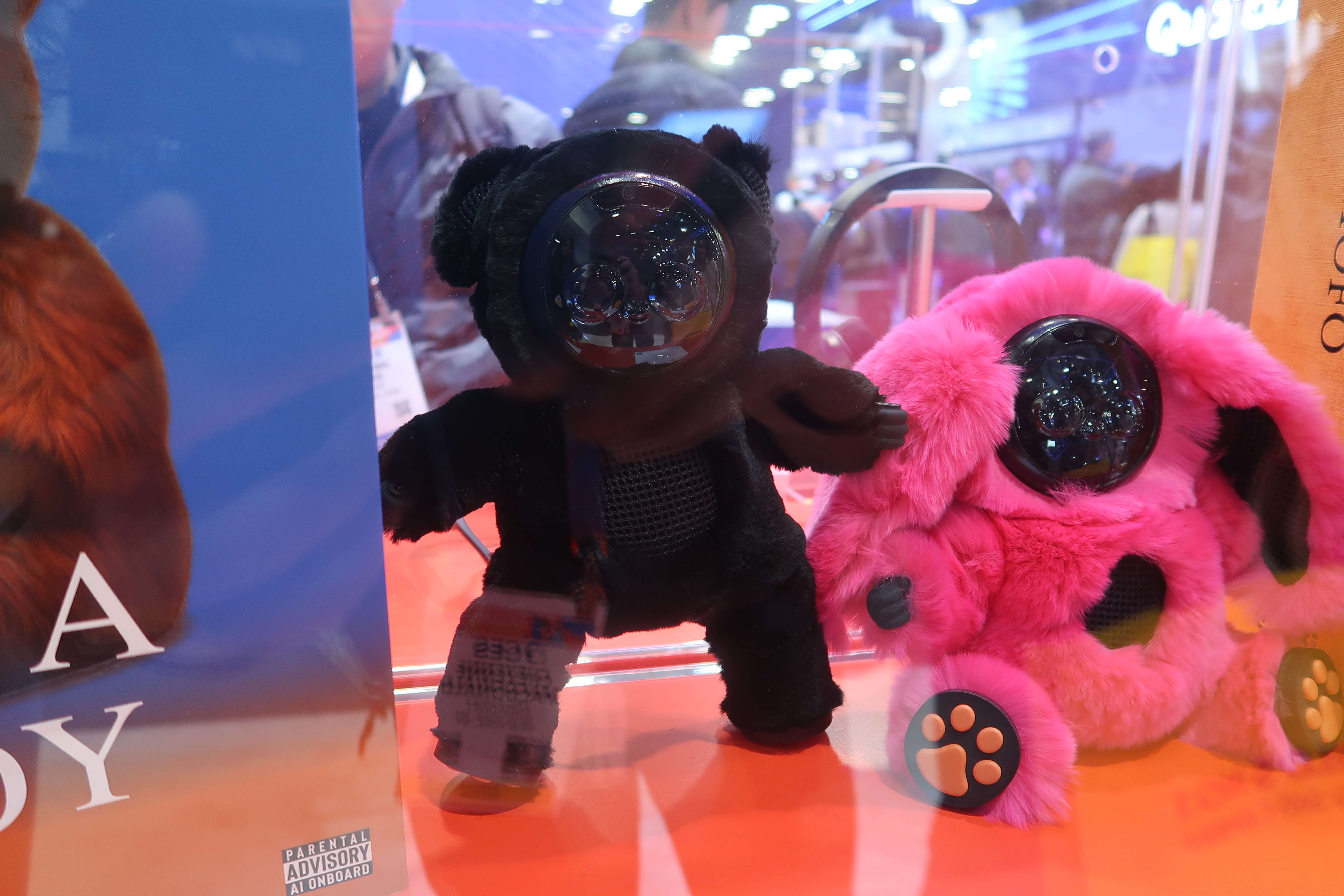
If we're being completely honest, the pitch for will.i.am's MÖFO (yes, MOFO, like motherfucker) had us a bit, um, perplexed for a hot second. We read it and all the accompanying materials over and over trying to figure out what, exactly, this thing does. Some of the claims that added to this confusion: "the agent 'octopuses' across your digital ecosystem through its eight USB-C connections"; it "converts moments into objects"; it "turns life notes into a life operating system."
We get it now, (we think): It's agentic AI hardware, kind of like a Rabbit R1 or AI Pin but in the form of a teddy bear. Sadly, we didn't get to see MÖFO up close or watch it do anything, but we are nonetheless intrigued, if still a bit confused, by this strange teddy bear. — CM and KB
This article originally appeared on Engadget at https://www.engadget.com/ai/the-robots-we-saw-at-ces-2026-the-lovable-the-creepy-and-the-utterly-confusing-153537930.html?src=rss
When Meta first announced its display-enabled smart glasses last year, it teased a handwriting feature that allows users to send messages by tracing letters with their hands. Now, the company is starting to roll it out, with people enrolled in its early access program getting it first,
I got a chance to try the feature at CES and it made me want to start wearing my Meta Ray-Ban Display glasses more often. When I reviewed the glasses last year, I wrote about how one of my favorite tings about the neural band is that it reduced my reliance on voice commands. I've always felt a bit self conscious at speaking to my glasses in public.
Up to now, replying to messages on the display glasses has still generally required voice dictation or generic preset replies. But handwriting means that you can finally send custom messages and replies somewhat discreetly.
Sitting at a table wearing the Meta Ray-Ban Display glasses and neural band, I was able to quickly write a message just by drawing the letters on the table in front of me. It wasn't perfect — it misread a capital "I" as an "H" — but it was surprsingly intuitive. I was able to quickly trace out a short sentence and even correct a typo (a swipe from left to right will let you add a space, while a swipe from right to left deletes the last character).
Alongside handwriting, Meta also announced a new teleprompter feature. Copy and paste a bunch of text — it supports up to 16,000 characters (roughly a half-hour's worth of speech) — and you can beam your text into the glasses' display.
If you've ever used a teleprompter, Meta's version works a bit differently in that the text doesn't automatically scroll while you speak. Instead, the text is displayed on individual cards you manually swipe through. The company told me it originally tested a scrolling version, but that in early tests, people said they preferred to be in control of when the words appeared in front of them.
Teleprompter is starting to roll out now, though Meta says it could take some time before everyone is able to access.
The updates are the among the first major additions Meta has made to its display glasses since launching them late last year and a sign that, like its other smart glasses, the company plans to keep them fresh with new features. Elsewhere at CES, the company announced some interesting new plans for the device's neural band and that it was delaying a planned international rollout of the device.
This article originally appeared on Engadget at https://www.engadget.com/wearables/handwriting-is-my-new-favorite-way-to-text-with-the-meta-ray-ban-display-glasses-213744708.html?src=rss
It's only been a few months since Meta announced that it would open its smart glasses platform to third-party developers. But one startup at CES is already showing off how the glasses can help power an intriguing set of accessibility features.
Hapware has created Aleye, a haptic wristband that, when paired with Ray-Ban Meta smart glasses, can help people understand the facial expressions and other nonverbal cues of the people they are talking to. The company says the device could help people who are blind, low vision or neurodivergent unlock a type of communication that otherwise wouldn't be available.
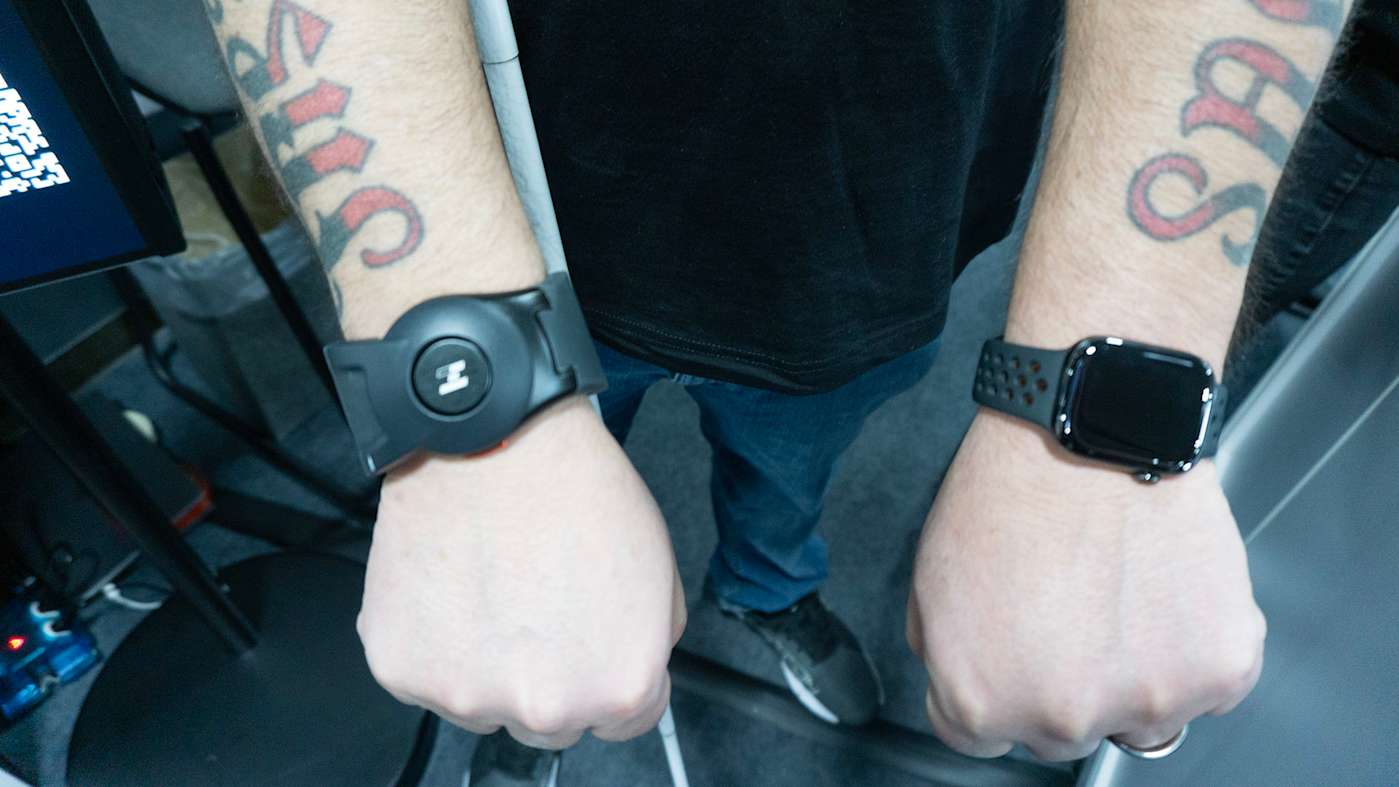
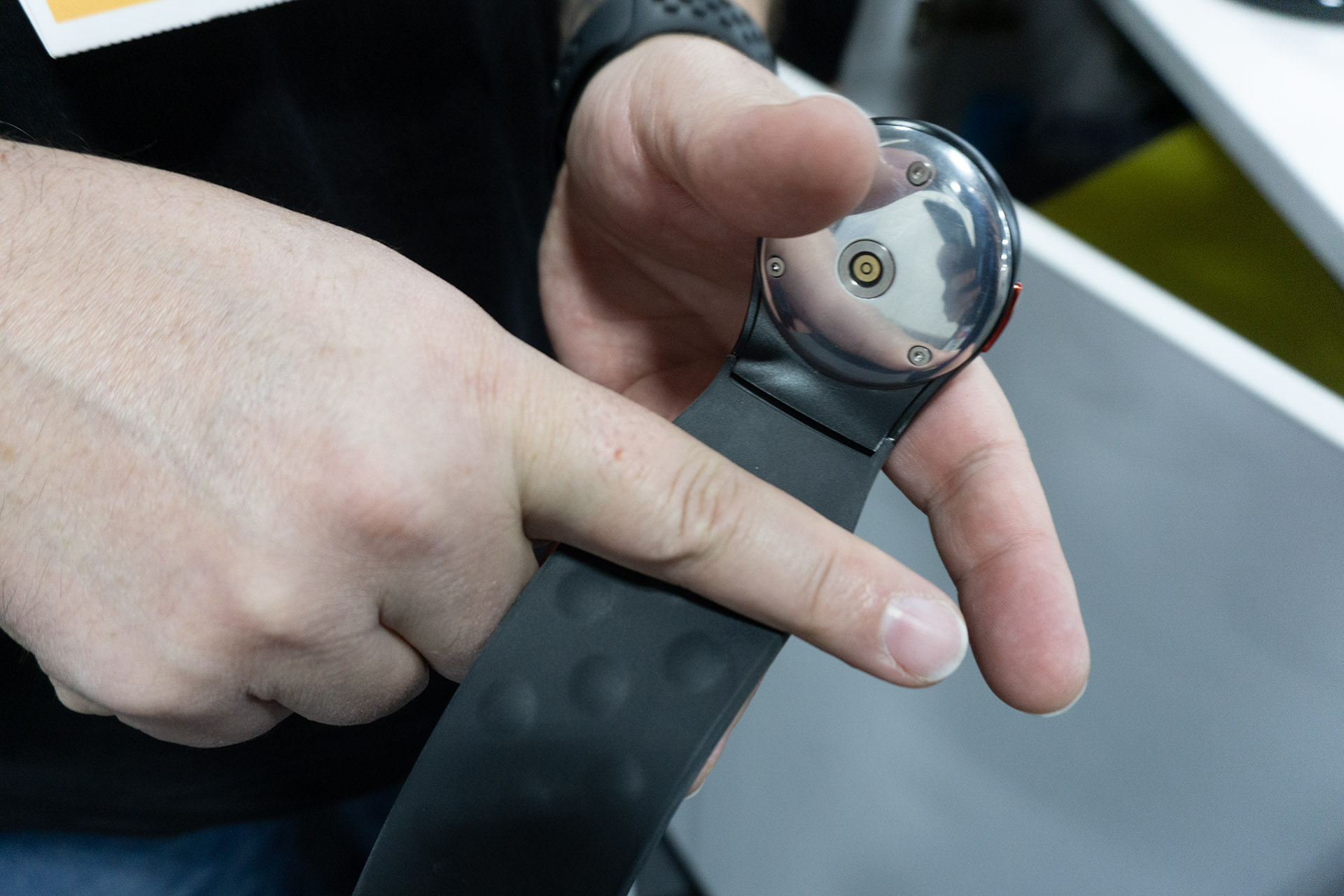
Aleye is a somewhat chunky wristband that can vibrate in specific patterns on your wrist to correspond to the facial expressions and gestures of the person you're talking to. It uses the Meta Ray-Ban glasses's computer vision abilities to stream video of your conversation to the accompanying app, which uses an algorithm to detect facial expressions and gestures.
The bumps on the underside of the Aleye vibrate to form unique patterns.
Karissa Bell for Engadget
Users can customize which expressions and gestures they want to detect in the app, which also provides a way for people to learn to distinguish between the different patterns. Hapware CEO Jack Walters said in their early testing people have been able to learn a handful of patterns within a few minutes. The company has also tried to make them intuitive. "Jaw drop might feel like a jaw drop, a wave feels more like a side to side haptics," he explains.
The app is also able to use Meta AI to give vocal cues about people's expressions, though Hapware's CTO Dr. Bryan Duarte told me it can get a bit distracting to talk to people while the assistant is babbling in your ear. Duarte, who has been blind since a motorcycle accident at the age of 18, told me he prefers Aleye to Meta AI's other accessibility features like Live AI. "It will only tell me there's a person in front of me," he explains. "It won't tell me if you're smiling. You have to prompt it every time, it won't just tell you stuff."
Hapware has started taking pre-orders for the Aleye, which starts at $359 for the wristband or $637 for the wristband plus a year subscription to the app (a subscription is required and otherwise will cost $29 a month). A pair of Ray-Ban Meta glasses is also not included, though Meta has also been building a number of its own accessibility features for the device.
This article originally appeared on Engadget at https://www.engadget.com/wearables/this-haptic-wristband-pairs-with-meta-smart-glasses-to-decode-facial-expressions-214305431.html?src=rss

 Anmelden