Web designers of the world: The Automattic-owned WordPress.com is further embracing AI on its platform. On Tuesday, it expanded its one-off AI site builder into a persistent AI assistant for editing and media creation.
In the site editor, the AI assistant can help with site-wide structure and design choices. For example, you can ask the chatbot to "give me more font options that feel clean and professional or “change my site colors to be brighter and bolder." It also includes image generation and writing assistance, such as "rewrite this to sound more confident." (Who needs learning when you have automation!)
The assistant can also now be integrated into your site's media library. It can generate new images or make prompted edits to your existing ones. Examples include "update this image to be black and white" or "replace this stack of pancakes with waffles." (Just don't fake that if your business sells breakfast food, okay?) WordPress says the assistant understands your website's look and brand and can tailor the media accordingly.
WordPress also added the AI assistant to the platform's team chat, Block Notes. You can summon the chatbot from within your team chat threads.
The tool is available for WordPress.com's Business or Commerce plans. (Or, if you made your site using the AI builder, it's enabled by default, no matter which plan you use.) The feature works best with the platform's block themes; it's much more limited with classic ones. You'll find the toggle to activate the AI assistant in your site settings under the "AI tools" section.
This article originally appeared on Engadget at https://www.engadget.com/ai/wordpress-adds-an-ai-assistant-174719676.html?src=rss
The head of the antitrust division is out at the US Department of Justice. Gail Slater, a former JD Vance adviser and Fox Corp VP, reportedly clashed with Attorney General Pam Bondi. Their longstanding feud is said to have centered around Slater's skepticism of corporate mergers.
"It is with great sadness and abiding hope that I leave my role as [Assistant Attorney General] for Antitrust today," Slater posted on X. "It was indeed the honor of a lifetime to serve in this role."
Although Slater technically resigned, The Guardianreports that she was forced out. The fallout was said to be over her differences with Bondi (who just yesterday yelled, insulted and deflected her way through a hearing over the DOJ's stonewalling of the Epstein files). In recent weeks, Bondi reportedly reiterated to the White House that Slater's views on the antitrust division's direction made the pair's relationship irreconcilable.
Attorney General Pam Bondi (Photo by Win McNamee/Getty Images)
Win McNamee via Getty Images
The tensions reportedly began simmering last summer, when Slater sought to block the merger between Hewlett-Packard Enterprise and Juniper Networks. She opposed the deal out of concerns that it would create a duopoly in cloud computing and wireless networking. In addition, Slater reportedly told Bondi that US intelligence hadn't raised any concerns about blocking the merger. However, CIA Director John Ratcliffe later claimed that blocking it would pose national security risks because it could lead to the loss of business to China. The Trump administration's merger-friendly DOJ ultimately approved the deal.
Alongside Bondi, Slater was overseeing the DOJ's review of Netflix's proposed acquisition of Warner Bros. Discovery. In December, Trump said he would be involved in the regulatory review. That followed intense lobbying by Netflix and Paramount, the latter of which launched a hostile takeover bid. Earlier this month, The Wall Street Journal reported that the department was investigating whether Netflix was involved in anticompetitive practices during the process.
Slater's ousting also comes weeks ahead of the DOJ's antitrust trial against Ticketmaster owner Live Nation. The department's lawsuit was filed during the Biden administration. It claims that Live Nation is operating as a monopoly, harming competition, fans, industry promoters and artists.
This article originally appeared on Engadget at https://www.engadget.com/big-tech/antitrust-head-overseeing-netflix-warner-merger-resigns-192854114.html?src=rss
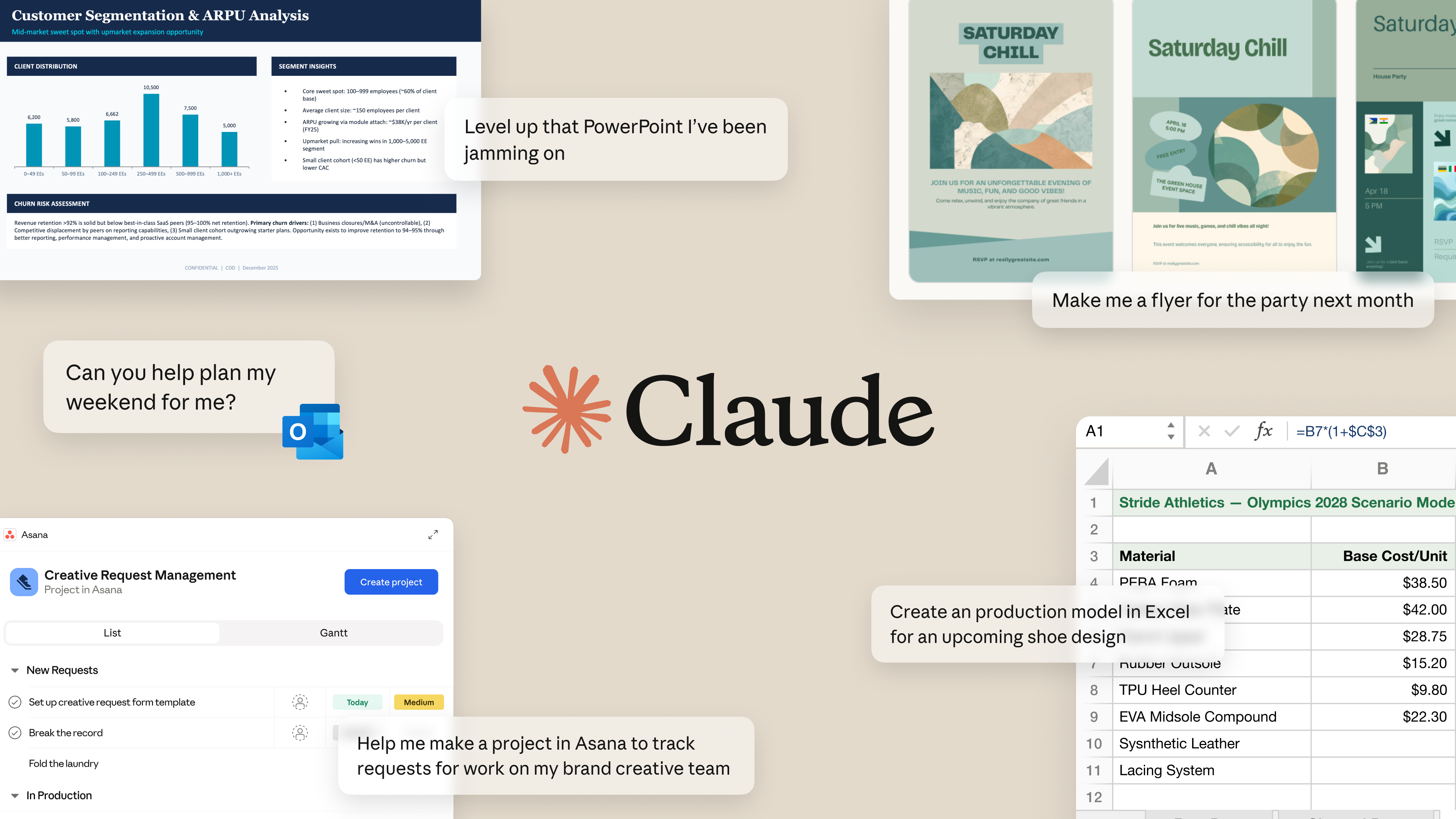
Anthropic is upgrading Claude's free tier, apparently to capitalize on OpenAI's planned integration of ads into ChatGPT. On Wednesday, Anthropic said free Claude users can now create files, connect to external services, use skills and more.
Anthropic added the ability for paid users to create files in September. Starting today, free users of the chatbot can also create and edit Excel spreadsheets, PowerPoint presentations, Word docs and PDFs. Claude's file creation abilities are powered by Sonnet 4.5.
Free users can now create and edit Excel spreadsheets, PowerPoint presentations, Word docs, and PDFs.
Anthropic
Meanwhile, Connectors allow free users to link Claude to third-party services. There's a long list of available ones, including Canva, Slack, Notion, Zapier and PayPal.
Skills, on the other hand, let you teach Claude to "complete specific tasks in repeatable ways." In short, the chatbot loads folders of instructions, scripts and other resources when performing relevant tasks. Other upgrades to the free tier include longer conversations, interactive responses and improved voice and image search.
Claude's free-tier upgrades appear to be a direct response to ChatGPT's planned introduction of ads for its free users. Anthropic's announcement today ended with the tag line, "No ads in sight." This follows the company's promise last week that Claude will remain ad-free. Anthropic even poked fun at OpenAI's cash-seeking move in a Super Bowl ad (below), which also took a swipe at GPT-4o's penchant for kissing ass.
This article originally appeared on Engadget at https://www.engadget.com/ai/anthropic-beefs-up-claudes-free-tier-as-openai-prepares-to-stuff-ads-into-chatgpts-194100939.html?src=rss
Fitbit's founders have a new startup. Two years after leaving Google, James Park and Eric Friedman announced a new platform that shifts the focus from the individual to the family. They say the Luffu mobile app "uses AI quietly in the background" to collect and organize family health information.
"At Fitbit, we focused on personal health — but after Fitbit, health for me became bigger than just thinking about myself," Park said in a press release. The app is particularly focused on the "CEO of the family" — the person who manages appointments, prescriptions and other health-related tasks.
But the definition of family isn't limited to parents raising children. The company sees its tool as especially valuable for caregivers in their 40s and 50s who may be managing the needs of both aging parents and kids. It even tracks pets' health habits.
"We're managing care across three generations — kids at home, busy parents in the middle, and my dad in his 80s who's living with diabetes and still wants to stay fiercely independent," Friedman wrote. "And the moments that matter most are often the most chaotic: a late-night fever, a sudden urgent care visit, a doctor asking questions you can't answer quickly because the details are scattered."
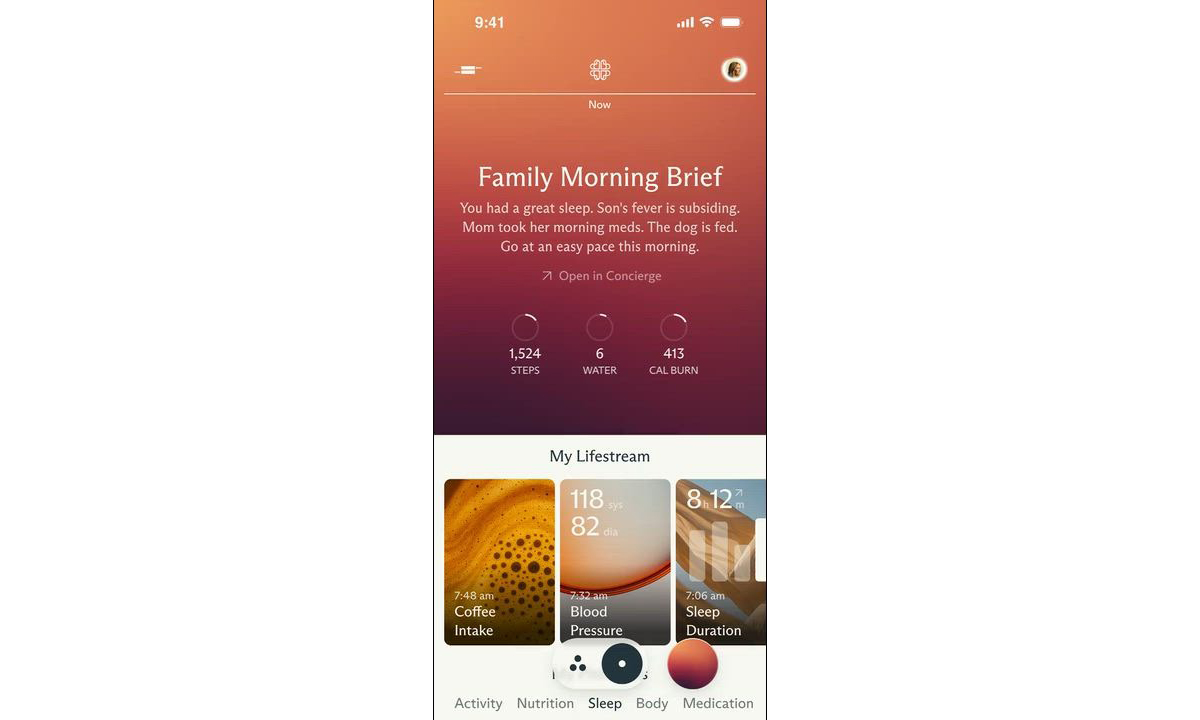
The app's AI includes a Morning Brief that recaps everyone's health.
Luffu
The company claims the app's AI "isn't a chatbot layer." Rather, it serves as a "guardian" — proactively monitoring for changes silently in the background. The AI then provides insights and triggers alerts when something is out of whack. You can also ask the app health data questions using plain language (so, there is some kind of chatbot) and share data with family members.
The company clearly wants to make entering data as easy as possible. Luffu allows family members to log info using voice, text or photos. It integrates with health platforms such as Apple Health and Fitbit. And the company eventually wants to expand into a hardware ecosystem — presumably, devices that make health data collection even easier.
Speaking of data collection, Luffu says, "Users are always in control of exactly what is shared, with whom, and privacy and security are paramount for all family data." In addition, the company told Axios that users can choose whether their data is used to train its AI. On the other hand, Big Tech has repeatedly shown that its most egregious data-collection practices are always wrapped in comforting language. So, at the very least, I'd take their pitch with grains of salt and, most importantly, make sure each family member knows exactly what they're consenting to. After all, this is a for-profit company, and we don’t yet know its monetization strategy.
Luffu is currently taking waitlist sign-ups for a forthcoming limited public beta. You can learn more and sign up for the waitlist on the company website.
Update, February 3, 2026, 1:14PM ET: This story has been updated to note that the Luffu public beta hasn’t started yet, but you can sign up for a waitlist to eventually get access when it starts.
This article originally appeared on Engadget at https://www.engadget.com/mobile/fitbit-founders-launch-luffu-a-way-to-integrate-your-familys-health-data-173251994.html?src=rss
America’s once-promising EV transition may have taken a U-turn, but at least some in Hollywood are trying to do their part. Rivian partnered with Grey’s Anatomy to make a custom electric ambulance for the long-running series.
The ambulance is a modified version of Rivian’s Commercial Van. The custom “vanbulance” serves a dual purpose: preventing on-set exhaust fumes (which could harm the cast and crew) and integrating a green storyline. “As an added benefit, the elimination of engine noise brought a welcome quiet while cameras were rolling,” Rivan wrote in a blog post.
Among other modifications, it has rear double doors instead of a roll-up one.
Rivian
The vehicle includes some production-specific touches. Its walls and roof panels are removable, allowing cameras to reach angles required for interior shots. In addition, Rivian replaced the standard van’s rear roll-up door with double doors while adding a side entry to the cargo area. The company also added custom lighting and an exterior wrap reading “Seattle Emergency Response Services.”
The team consulted with the Huntington Beach Fire Department and the Los Angeles Fire Department to inform the interior layout. “Their feedback was invaluable to understand how first responders actually use their vehicles,” Rivian wrote.
At least Hollywood's fictional worlds are transitioning to electric.
Rivian
The Hollywood Reporternotes that the electric ambulance debuted in the November 13, 2025, episode of Grey’s Anatomy. However, it was featured more prominently in Thursday’s episode — hence Rivian choosing this week to highlight it.
This article originally appeared on Engadget at https://www.engadget.com/transportation/evs/rivian-made-an-electric-ambulance-for-greys-anatomy-194358967.html?src=rss
It's big-game season, which means it's a good time to look for home theater gear on sale ahead of Super Bowl 2026. There are plenty of Super Bowl TV deals to consider, but if you have arguably the most important piece of the puzzle down, you may want to upgrade your sound system instead. Sonos' latest sale may have just what you need; a bunch of the company's home theater gear is up to 20 percent off right now. You can save $130 on the Beam (Gen 2) soundbar, bringing its price down to $369, and you'll also find deals on the flagship Arc Ultra soundbar, subwoofers, and more.
The Sonos Beam is the company's sub-$500 soundbar. Engadget's pick for the best midrange model, the compact speaker has impressive sound for its size. Part of that is its Dolby Atmos support. Although the soundbar lacks upward-firing speakers, it uses software tricks to compensate. Audio timing and frequency adjustments make sound seem to come from the side or slightly above.
One of the biggest drawbacks is that the Beam only has one HDMI port. Regardless, that compromise may be easier to accept at Beam's current $369 than at its usual $499.
Several more home theater speakers are included in Sonos's sale. If you have a loftier budget for a soundbar, there's the Arc Ultra. Typically $1,099, it's now $899. The company's pair of subwoofers is included as well. You can get the Sub Mini for $399 (down from $499) or the Sub 4 for $759 (from $899).
Although they aren't explicitly sold as home theater products, the Era 100 ($179) and Era 300 ($379) are also included in the sale. The portable Move 2 isn't discounted individually, but you will find it in a couple of bundles. You can check out the sale page for the complete list.
This article originally appeared on Engadget at https://www.engadget.com/deals/sonos-soundbars-and-home-theater-gear-is-up-to-20-percent-off-right-now-174053415.html?src=rss
Two Elon Musk companies are reportedly planning to merge. On Thursday, Reutersreported that SpaceX and xAI are holding merger talks ahead of a planned IPO. Part of their plan is to launch AI data centers into space (but unfortunately, only as far as Earth's orbit).
Last week, it was reported that Musk planned to take SpaceX public despite having once said it wouldn’t happen until the company had a presence on Mars. Now, the IPO could happen as early as this year. Shares of xAI would reportedly be exchanged for shares in SpaceX under the merger. Reuters reports that two entities were set up in Nevada on January 21 to facilitate the deal.
The latest idea Musk is pitching is blasting AI data centers off into space. At last week's gathering of the rich and powerful in Davos, Switzerland, he said, "The lowest cost place to put AI will be in space. And that will be true within two years, maybe three at the latest." The idea is that data centers in orbit could harness solar power and reduce cooling costs. However, industry analysts and executives consider it a risky bet, questioning whether the savings would warrant the massive investment. If or when the AI bubble bursts, the plan could go down in flames — if not literally, then figuratively.
This article originally appeared on Engadget at https://www.engadget.com/big-tech/elon-musks-spacex-and-xai-are-reportedly-holding-merger-talks-211740150.html?src=rss
As fans and media prepare to descend on the Bay Area for Super Bowl LX, what does a high-tech city like San Francisco do? Why, call in the robotaxis, of course. On Thursday, Alphabet's Waymo began offering fully autonomous rides at San Francisco International Airport (SFO).
There are some limits. For now, SFO access is restricted to "a select number of riders." However, access will gradually expand over the coming months. The service is also limited to the SFO Rental Car Center (pickups and drop-offs) at launch. Waymo says it will expand to other airport locations, including terminals, "in the future."
The San Francisco Standardnotes that SFO is now the third airport in Waymo's repertoire. The San Francisco launch follows the company's service at Phoenix Sky Harbor and San Jose Mineta. As for the Bay Area, Waymo now serves more than 260 square miles in the region.
Unfortunately, this isn't Waymo's only appearance in the news this week. On Wednesday, the company said one of its robotaxis struck a child, who sustained minor injuries. The incident took place on January 23 in Santa Monica. The National Highway Traffic Safety Administration (NHTSA) has opened an investigation.
This article originally appeared on Engadget at https://www.engadget.com/transportation/evs/waymo-begins-service-at-san-francisco-international-airport-192913050.html?src=rss
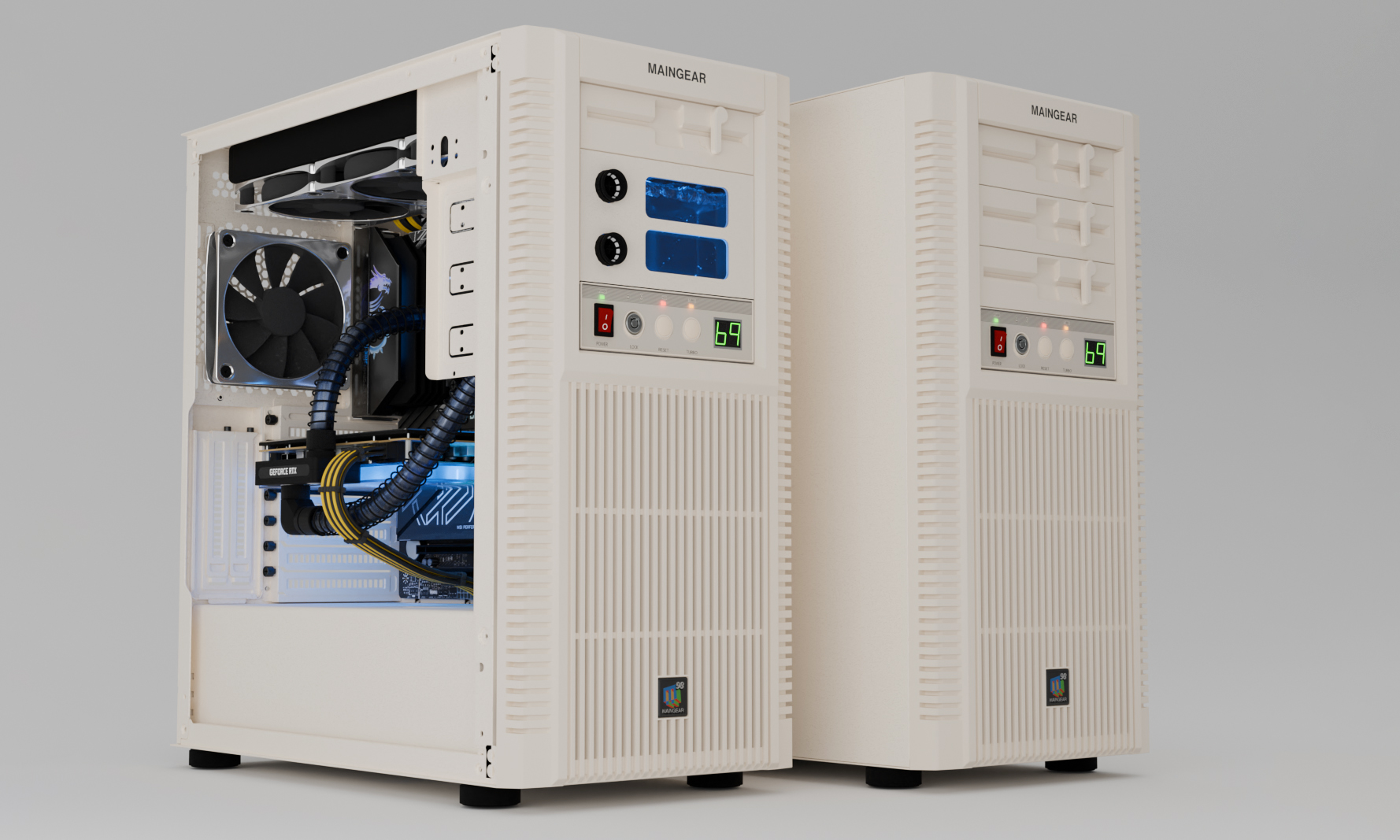
Maingear is back with another nostalgia-fueled gaming PC. The Retro98 may look like it's made for playing Quake while you wait for The Phantom Menace trailer to drop. But on the inside, the beige box is powerful enough to slay today's most demanding AAA games. "You're not going to find this PC at your local Radio Shack," Maingear promises.
If you're at least middle-aged, the Retro98's exterior is instantly familiar. The hand-built tower includes an LED fan-speed display, a working turbo button and a power-lockout key. Sticking with the nostalgic motif, its front I/O is hidden behind the Maingear logo. I can already hear The Beastie Boys' “Intergalactic” playing in the background.
Fortunately, you won't be limited to 1998 games. (Dope as they are.) It has up to a Ryzen 9 9950X3D processor, GeForce RTX 5090 graphics, 64GB Kingston Fury RAM and 4TB Kingston FURY Renegade NVMe Gen5 SSD. The maxed-out version (described by Maingear as "unapologetically overkill") even includes open-loop liquid cooling.
The Retro98 starts at $2,500 and goes all the way up to $9,799.
Maingear
Now for the bad news. As you might expect from a retro novelty PC like this, you'll have to pay a pretty penny. The base model (Intel Core Ultra 7 265K / NVIDIA GeForce RTX 5070) costs $2,499. There are two other standard tiers, priced at $3,499 and $4,999. Finally, the open-loop-cooled "Alpha" build is a whopping $9,799. Hey, those aren't 1998 prices!
The Retro98 also has an extremely limited run. Maingear is producing only 32 standard units and six alpha units. The company says it won't bring this build back once those sell out. However, there is a workaround for tinkerers: Since it's based on the SilverStone FLP02 tower PC case, you could grab one of those and build your own.
Those wealthy and nostalgic enough to take the plunge can order the Retro98 today from Maingear’s website.
This article originally appeared on Engadget at https://www.engadget.com/gaming/pc/maingears-latest-retro-gaming-desktop-takes-you-back-to-the-quake-era-174958445.html?src=rss
Patreon creators will need to make some changes soon, thanks to Apple. On Wednesday, Patreon said Apple has renewed its requirement that all Patreon creators must move to subscription billing. The deadline to do so is November 1, 2026.
Patreon's blog post announcing the change made it clear that it had no other choice. "We strongly disagree with this decision," the company wrote. "Creators need consistency and clarity in order to build healthy, long-term businesses. Instead, creators using legacy billing will now have to endure the whiplash of another policy reversal — the third such change from Apple in the past 18 months."
Up to this point, Patreon’s billing model has operated in a gray area, allowing its creators to charge fans outside the App Store without paying Apple’s fees. When the issue first surfaced, TechCrunchdescribed it as stemming from how paid content was accessed (only some creators offered content that could be consumed in-app). On Wednesday, a Patreon representative described the gray area as being “because Apple’s In-App Purchase system doesn’t support some of Patreon’s longstanding billing models.”
But now Apple has reimposed its subscription mandate, eliminating the gray area. "We know that Apple is serious about enforcing this mandate," Patreon wrote. "Late last year, they blocked a Patreon app update and made it clear that in order to remain in the App Store, we have to comply with their billing requirement. Because millions of fans use iOS as their primary way to access Patreon and connect with creators, having our app blocked — or not available in the App Store at all — isn't an option."
Patreon’s "whiplash" description isn't hyperbole. Apple first announced the mandate in 2024. At that time, the deadline for all Patreon creators to make the switch was set to November 2025 — one that Patreon grudgingly accepted. But according to the company, Apple told it last May that the original 2025 deadline was no longer in effect. Now, it appears to have reversed that again.
If there's a silver lining, TechCrunchnotes that only 4 percent of Patreon creators are using the affected (legacy) billing models. And fans can still bypass Apple's fees on iOS by joining via their iPhone's web browser. Patreon has much more detail for creators in its announcement post.
DAVOS, SWITZERLAND - JANUARY 21: U.S. President Donald Trump (R) speaks to Apple CEO Tim Cook (L) as he attends a reception for business leaders (Photo by Chip Somodevilla/Getty Images)
To top it all off, Tim Cook decided that Saturday — the day Alex Pretti was shot and killed by federal agents — would be a good time to attend the screening of Melania at the White House. He even posed for a selfie with accused rapist Brett Ratner, the film’s director.
Update, January 28, 2026, 5:22 PM ET: This story has been updated to clarify how the Patreon app operated in a gray area before Apple’s changes.
This article originally appeared on Engadget at https://www.engadget.com/big-tech/patreon-creators-have-to-switch-to-subscription-billing-by-november-thanks-to-apple-203759852.html?src=rss
When deciding which video game to buy, "Is it fun?" is no longer the only consideration. Given the state of the industry, "Do I want to support this company?" is arguably more important. Take, for example, Ubisoft, where things seem to unravel more each day. After the floundering publisher floated even more layoffs this week, workers at its Paris headquarters said, "Enough is enough." They're now calling for a three-day strike.
Unions representing Ubisoft employees plan to strike from February 10 to 12. "With management being stubbornly entrenched in its authoritarian ways, we are calling Ubisoft employees across France to join this strike, along with the five unions present within the company," The Syndicat des Travailleureuses du Jeu Vidéo (Video Game Worker's Union) wrote in a statement.
Then, earlier this week, the Assassin's Creed publisher proposed cutting 200 jobs at its Paris headquarters. Under French labor law, the company would organize the cuts through the nation's Rupture Conventionnelle Collective (RCC) process. It would require a mutual agreement between the company and the labor union.
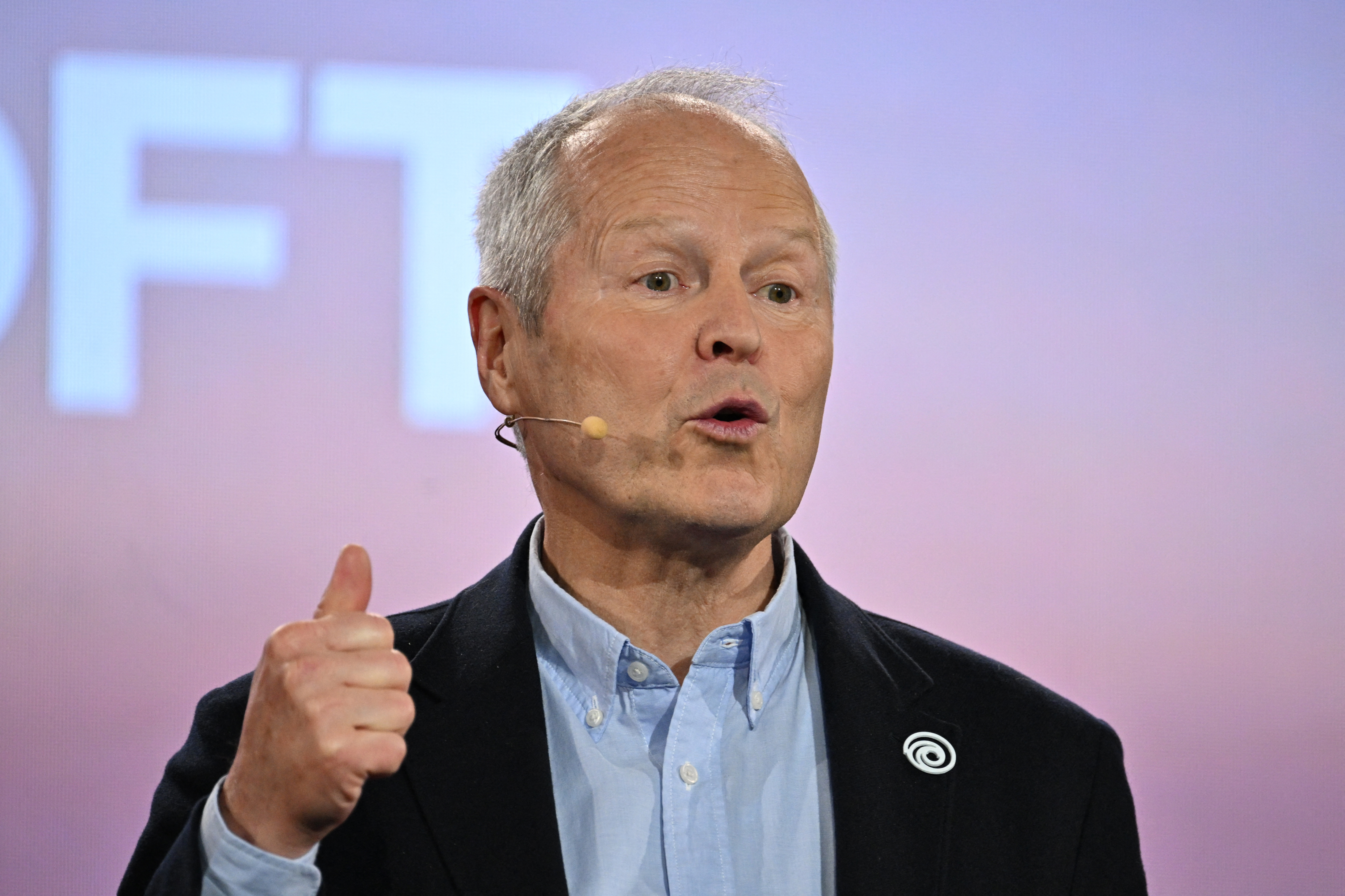
Ubisoft CEO Yves Guillemot
ROBYN BECK via Getty Images
Adding even more fuel to the fire, Ubisoft will now require workers to return to the office five days each week. (The company had previously agreed to two work-from-home days per week.) Although Ubisoft framed the mandate as being about efficiency and collaboration, it's easy to view this as a cudgel to further reduce its headcount. One Ubisoft developer, who hinted as much while voicing his opposition to the mandate on LinkedIn, said he was suspended without pay for three days as a punitive measure.
The workers' union saw all of this and decided it was time to act. "We're calling for a HALT to management's obsession with penny-pinching and worsening our working conditions," the Syndicat des Travailleureuses du Jeu Vidéo wrote. "It's time for a real accountability from company executives, starting from the top! Without the workers, and generous public funding, Ubisoft would never have been able to grow this much. WE are Ubisoft, and WE are shutting it down February 10th to 12th!"
This article originally appeared on Engadget at https://www.engadget.com/gaming/ubisoft-173241918.html?src=rss
Here's a use of AI that appears to do more good than harm. A pair of astronomers at the European Space Agency (ESA) developed a neural network that searches through space images for anomalies. The results were far beyond what human experts could have done. In two and a half days, it sifted through nearly 100 million image cutouts, discovering 1,400 anomalous objects.
The creators of the AI model, David O'Ryan and Pablo Gómez, call it AnomalyMatch. The pair trained it on (and applied it to) the Hubble Legacy Archive, which houses tens of thousands of datasets from Hubble's 35-year history. "While trained scientists excel at spotting cosmic anomalies, there's simply too much Hubble data for experts to sort through at the necessary level of fine detail by hand," the ESA wrote in its press release.
After less than three days of scanning, AnomalyMatch returned a list of likely anomalies. It still requires human eyes at the end: Gómez and O'Ryan reviewed the candidates to confirm which were truly abnormal. Among the 1,400 anomalous objects the pair confirmed, more than 800 were previously undocumented.
Most of the results showed galaxies merging or interacting, which can lead to odd shapes or long tails of stars and gas. Others were gravitational lenses. (That's where the gravity of a foreground galaxy bends spacetime so that the light from a background galaxy is warped into a circle or arc.) Other discoveries included planet-forming disks viewed edge-on, galaxies with huge clumps of stars and jellyfish galaxies. Adding a bit of mystery, there were even "several dozen objects that defied classification altogether."
"This is a fantastic use of AI to maximize the scientific output of the Hubble archive," Gómez is quoted as saying in the ESA's announcement. "Finding so many anomalous objects in Hubble data, where you might expect many to have already been found, is a great result. It also shows how useful this tool will be for other large datasets."
This article originally appeared on Engadget at https://www.engadget.com/ai/astronomers-discover-over-800-cosmic-anomalies-using-a-new-ai-tool-205135155.html?src=rss
In Big Tech's never-ending quest to increase AI adoption, Google has unveiled a meme generator. The new Google Photos feature, Me Meme, lets you create personalized memes starring a synthetic version of you.
Google describes Me Meme as "a simple way to explore with your photos and create content that's ready to share with friends and family." You can choose from a variety of templates or "upload your own funny picture" to use in their place.
The feature isn't live for everyone yet, so you may not yet have access to it. (A Google representative toldTechCrunch that the feature will roll out to Android and iOS users over the coming weeks.) But once it arrives, you can use it in the Google Photos app by tapping Create (at the bottom of the screen), then Me Meme. It will then ask you to choose a template and add a reference photo. There’s an option to regenerate it if you don’t like the result.
Google says Me Meme works best with well-lit, focused and front-facing portrait photos. "This feature is still experimental, so generated images may not perfectly match the original photo," the company warns.
This article originally appeared on Engadget at https://www.engadget.com/ai/google-photos-can-now-turn-you-into-a-meme-213930935.html?src=rss
File this one under "Things that make you go, 'Hmmm…'" Retro handheld maker Anbernic is launching a new controller with a screen. But unlike Nintendo's Wii U controller, there's no second-screen gaming capability here. Instead, the display is designed to "make customization intuitive and effortless." Oh, and the controller also has a heart rate sensor. Because, hey, if you're going weird, I say fully commit!
The Anbernic RG G01 has a 2.5-inch HD display that the company describes as an "HD smart screen." The idea is to remap buttons, program macros and change other settings without requiring software on a connected device.
You, too, can monitor your heart rate while gaming.
Anbernic
Meanwhile, Anbernic says the heart rate detection helps you "monitor your well-being during intense sessions." I would hope that folks with heart conditions would use something other than a gamepad to monitor their pulse. And I don’t know why anyone else would be worried about that while gaming. (Too many Red Bulls?) Regardless, Anbernic seems to be leaning into the novelty / curiosity space here, so at least it fits the motif.
The RG G01 connects in three ways: Bluetooth 5.0, 2.4Ghz wireless and over a wire. It supports onboard calibration for the triggers, joystick and 6-axis gyroscope. There are four programmable buttons (including macro support) on the backside. The company promises a 1,000Hz polling rate in wired and wireless modes. The gamepad is compatible with PC, Switch, Android and iOS.
We don't yet know when this glorious oddity will arrive, other than "coming soon." We also don't know how much it will cost. But you can watch the launch video below and see if it's your type of strange.
This article originally appeared on Engadget at https://www.engadget.com/gaming/retro-handheld-maker-anbernic-has-a-new-gamepad-with-a-screen-and-heart-rate-sensor-201651899.html?src=rss
Tesla just objectively decreased the value of the Model 3 and Model Y. On Thursday, the company said it’s paywalling its lane-centering feature, Autosteer, for new purchases of the two EVs in the US and Canada. This was previously a standard feature. Lane centering is now part of the Full Self-Driving Supervised (FSD) package, which costs $99 per month.
Speculating on why Tesla would do this doesn't require much imagination. Remember the pay package Tesla shareholders approved for Musk in November? One of his requirements for receiving up to $1 trillion is reaching 10 million active FSD subscriptions.
One of Musk's stipulations for receiving $1 trillion is reaching 10 million active FSD subscriptions. (Photo by ANGELA WEISS/AFP via Getty Images)
ANGELA WEISS via Getty Images
As for the details, Tesla killed the Basic Autopilot feature that was standard on the Model 3 and Model Y. That package included both Autosteer and Traffic-Aware Cruise Control (TACC). Now, the latter will remain a standard feature, but Autosteer now requires that $99-per-month FSD subscription. The change applies only to new purchases, not existing owners.
The move comes ahead of FSD's switch to a subscription-only service. After February 14, you'll no longer be able to buy the package for a one-time $8,000 upfront fee. If you want FSD (or just lane centering) from now on, your annual cost will be $1,188.
Making matters worse, Musk warned that FSD won't remain at $99 monthly forever. "I should also mention that the $99/month for supervised FSD will rise as FSD's capabilities improve," the Tesla CEO posted on X. He didn't indicate when that might happen or what the increase would be.
This article originally appeared on Engadget at https://www.engadget.com/transportation/evs/tesla-paywalls-lane-centering-on-new-model-3-and-model-y-purchases-184000707.html?src=rss
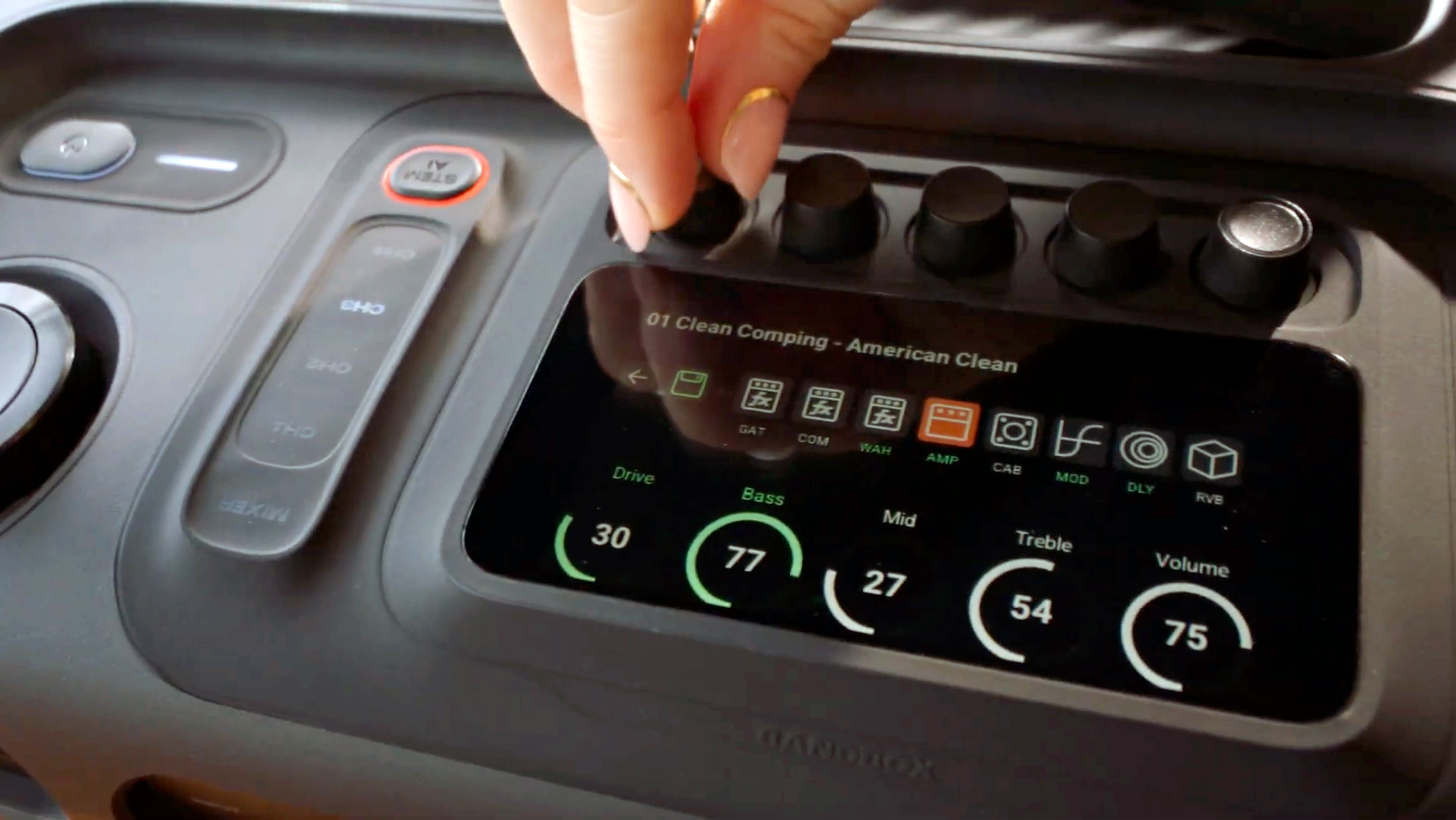
JBL is trying its hand at something new, with a pair of AI-powered practice amps. The BandBox Solo and BandBox Trio include an onboard Stem AI that purportedly lets you separate or remove vocals and instruments from any music streamed over Bluetooth. So, say you're a young guitarist learning “Stairway to Heaven” (as one does). At least in theory, you could use the speaker to remove Jimmy Page's part and hone your chops with the rest of the band.
The $250 BandBox Solo, designed for individual musicians, has a single guitar / mic input. And the $600 BandBox Trio, better for bands, supports up to four instrument inputs. The latter also has a few extra perks not found in the Solo: onboard controls (to reduce reliance on the app) and an LCD.
The more expensive BandBox Trio has an LCD and more onboard controls.
JBL
The JBL One app lets you add filters to match a variety of modern and vintage amp models. You'll also find effects like phaser, chorus, and reverb, as well as a pitch shifter and tuner. A built-in looper will allow for layering, but JBL says that feature will arrive via a software update in October.
JBL says the BandBox Solo supports up to six hours of battery life. The BandBox Trio is said to last up to 10 hours. But the latter has a replaceable battery, so you could buy a spare (for an as-yet-unknown price) and double that time.
The $250 BandBox Solo and $600 BandBox Trio are available to pre-order from JBL's website starting today. Shipments and third-party retail availability are scheduled for March 1.
This article originally appeared on Engadget at https://www.engadget.com/audio/speakers/jbl-made-a-pair-of-ai-powered-practice-amps-221000631.html?src=rss
It was only 16 months ago that Substack expanded into live video. Since then, it's become a widely adopted medium on the platform, including by its ever-growing list of cable news expats. Now, the company has decided it's ready for a bigger screen. Starting today, you can install a new Substack TV app on Apple TV and Google TV devices.
Substack describes the app's initial launch as focusing on "reliable, high-quality viewing" for the platform's long-form videos. It centers around video posts and livestreams from the creators and publications you follow. There's also a "For You" section that combines those videos with algorithmic recommendations. And you can browse dedicated pages for each channel.
Viewing access aligns with your subscription level. So, if a channel restricts videos to paying subscribers on Substack’s mobile app and website, the same paywall applies here. However, the company says it's working on adding previews of paid content for free subscribers. It also plans to add audio posts, search, improved discovery and separate sections for different shows within a single publication.
At least one of those legacy media expats who moved to Substack is optimistic about the feature. "This is a game-changing moment for the rise of independent media," former CNN anchor Jim Acosta wrote in the announcement post. "Substack has proven that legacy media consumers are not only searching for fresh alternatives; they are finding them."
Based on the comments in Substack’s announcement, some of the platform’s die-hards are less enthusiastic than Acosta. “File this under – thing we didn’t ask for,” Ashli Pollard wrote. “This is not YouTube,” a commenter named Dustin added. “Elevate the written word.” I personally don’t see any harm in another way to watch the videos Substack already hosts. (Its newsletters aren’t going anywhere.) But given how Big Tech companies tend to pivot further toward the most en vogue (and profitable) medium of the day, I can see why purists feel the need to dig in their heels.
Regardless, you can find the Substack TV app by searching for its name in the tvOS App Store or the Apps section on Google and Android TV devices. You can sign in by scanning a QR code with your phone.
This article originally appeared on Engadget at https://www.engadget.com/entertainment/streaming/substack-now-has-a-tv-app-195408592.html?src=rss
We already knew xAI's Grok was barraging X with nonconsensual sexual images of real people. But now there are some numbers to put things in perspective. Over an 11-day period, Grok generated an estimated 3 million sexualized images — including an estimated 23,000 of children.
Put another way, Grok generated an estimated 190 sexualized images per minute during that 11-day period. Among those, it made a sexualized image of children once every 41 seconds.
On Thursday, the Center for Countering Digital Hate (CCDH) published its findings. The British nonprofit based its findings on a random sample of 20,000 Grok images from December 29 to January 9. The CCDH then extrapolated a broader estimate based on the 4.6 million images Grok generated during that period.
The research defined sexualized images as those with "photorealistic depictions of a person in sexual positions, angles, or situations; a person in underwear, swimwear or similarly revealing clothing; or imagery depicting sexual fluids." The CCDH didn't take image prompts into account, so the estimate doesn't differentiate between nonconsensual sexualized versions of real photos and those generated exclusively from a text prompt.
The CCDH used an AI tool to identify the proportion of the sampled images that were sexualized. That may warrant some degree of caution in the findings. However, I'm told that many third-party analytics services for X have reliable data because they use the platform's API.
On January 9, xAI restricted Grok's ability to edit existing images to paid users. (That didn't solve the problem; it merely turned it into a premium feature.) Five days later, X restricted Grok's ability to digitally undress real people.
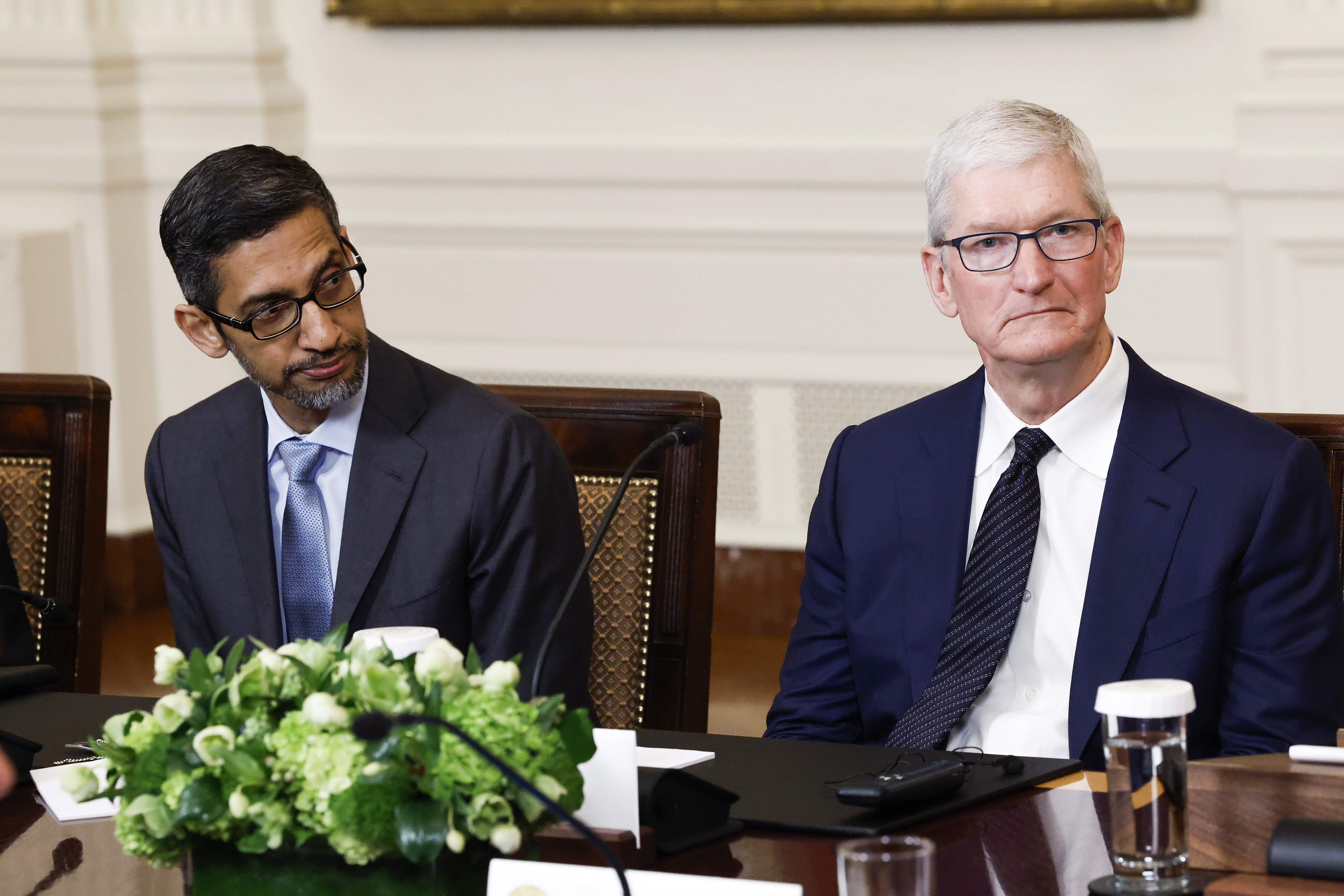
WASHINGTON, DC - JUNE 23: Google CEO Sundar Pichai (L) and Apple CEO Tim Cook (R) listen as U.S. President Joe Biden speaks during a roundtable with American and Indian business leaders in the East Room of the White House on June 23, 2023 in Washington, DC. Biden and Indian Prime Minister Narendra Modi held the meeting to meet with a range of leaders from the tech and business worlds and to discuss topics including innovation and AI. (Photo by Anna Moneymaker/Getty Images)
Anna Moneymaker via Getty Images
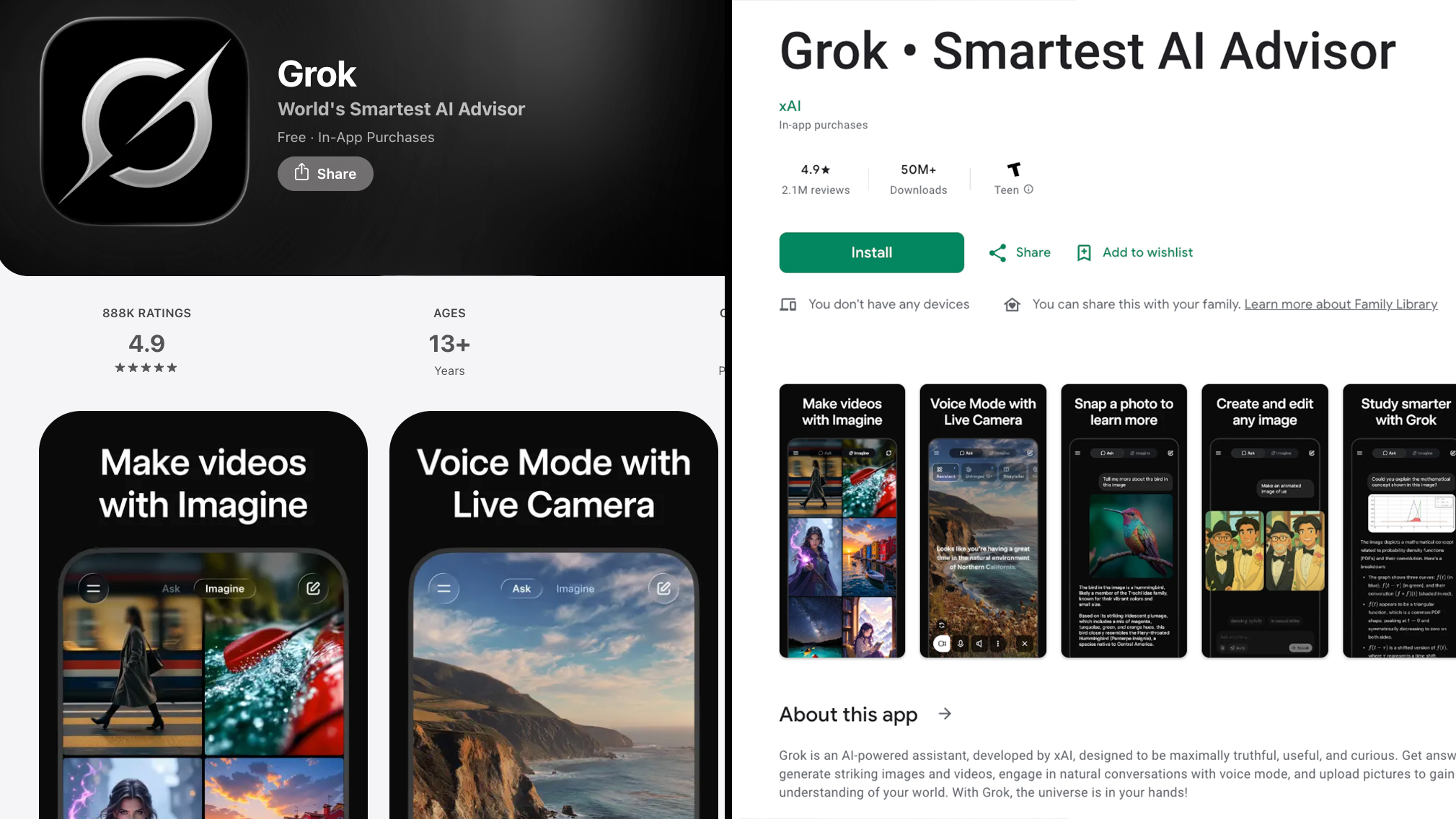
But that restriction only applied to X; the standalone Grok app reportedly continues to generate these images. Since Apple and Google host the apps — which their policies explicitly prohibit — you might expect them to remove them from their stores. Well, in that case, you'd be wrong.
So far, Tim Cook's Apple and Sundar Pichai's Google haven’t removed Grok from their stores — unlike similar “nudifying” apps from other developers. The companies also didn’t take any action on X while it was producing the images. That’s despite 28 women’s groups (and other progressive advocacy nonprofits) publishing an open letter calling on the companies to act.
The companies haven't replied to multiple requests for comment from Engadget. To my knowledge, they haven't acknowledged the issue publicly in any format, nor have they responded to questions from other media outlets.
Grok - App Store and Play Store listings
Apple / Google
The research’s findings on sexualized images included numerous outputs of people wearing transparent bikinis or micro-bikinis. The CCDH referred to one of a "uniformed healthcare worker with white fluids visible between her spread legs." Others included women wearing only dental floss, Saran Wrap or transparent tape. One depicted Ebba Busch, Sweden's Deputy Prime Minister, "wearing a bikini with white fluid on her head."
Other public figures were part of that group. They include Selena Gomez, Taylor Swift, Billie Eilish, Ariana Grande, Ice Spice, Nicki Minaj, Christina Hendricks, Millie Bobby Brown and Kamala Harris.
Examples of children include someone using Grok to edit a child's "before-school selfie" into an image of her in a bikini. Another image depicted "six young girls wearing micro bikinis." The CCDH said that, as of January 15, both of these posts were still live on X.
In total, 29 percent of the sexualized images of children identified in the sample were still accessible on X as of January 15. The research found that even after posts were removed, the images remained accessible via their direct URLs.
You can read the CCDH's report for more details on the results and methodology. We’ll update this story if we receive a reply from Apple or Google.
This article originally appeared on Engadget at https://www.engadget.com/ai/grok-generated-an-estimated-3-million-sexualized-images--including-23000-of-children--over-11-days-175053250.html?src=rss
1Password has a new tool designed to counteract the advantages AI has given to phishing scammers. A new feature for the company's browser extension gives you a "second pair of eyes" to help you catch a bogus website before entering your login info.
Before AI, phishing attempts often included telltale signs like obvious typos or rudimentary graphic design. Now that AI makes it much easier to design and code convincingly, scams are on the rise. According to Fortune, 60 percent of companies reported an increase in fraud-related losses from 2024 to 2025. And the advent of AI browsers could make things even worse.
“Our new phishing feature adds an extra layer of protection,” 1Password says. Once the feature is activated, the extension actively watches for suspicious sign-ins. To be clear, even before this feature's arrival, 1Password wouldn't autofill saved credentials for a bogus website impersonating it. But that still left room for people to manually paste their login info, handing it over to those with the worst intentions.
That moment when you try to paste your login manually is where the new feature comes in. "The website you're on isn't linked to a login in 1Password," the feature's warning pop-up reads. "Make sure you trust this site before continuing."
1Password says that's the "breakthrough" moment that can help you avoid a major hassle. "That single moment of pause, that tiny bit of friction, is often all it takes to disrupt the attackers' entire plan."
The new feature is available today. You can enable it in the 1Password browser extension's settings. Under the Notifications section, activate the setting for "Warn about pasted logins on non-linked websites."
This article originally appeared on Engadget at https://www.engadget.com/cybersecurity/1password-adds-an-extra-layer-of-phishing-protection-140000293.html?src=rss
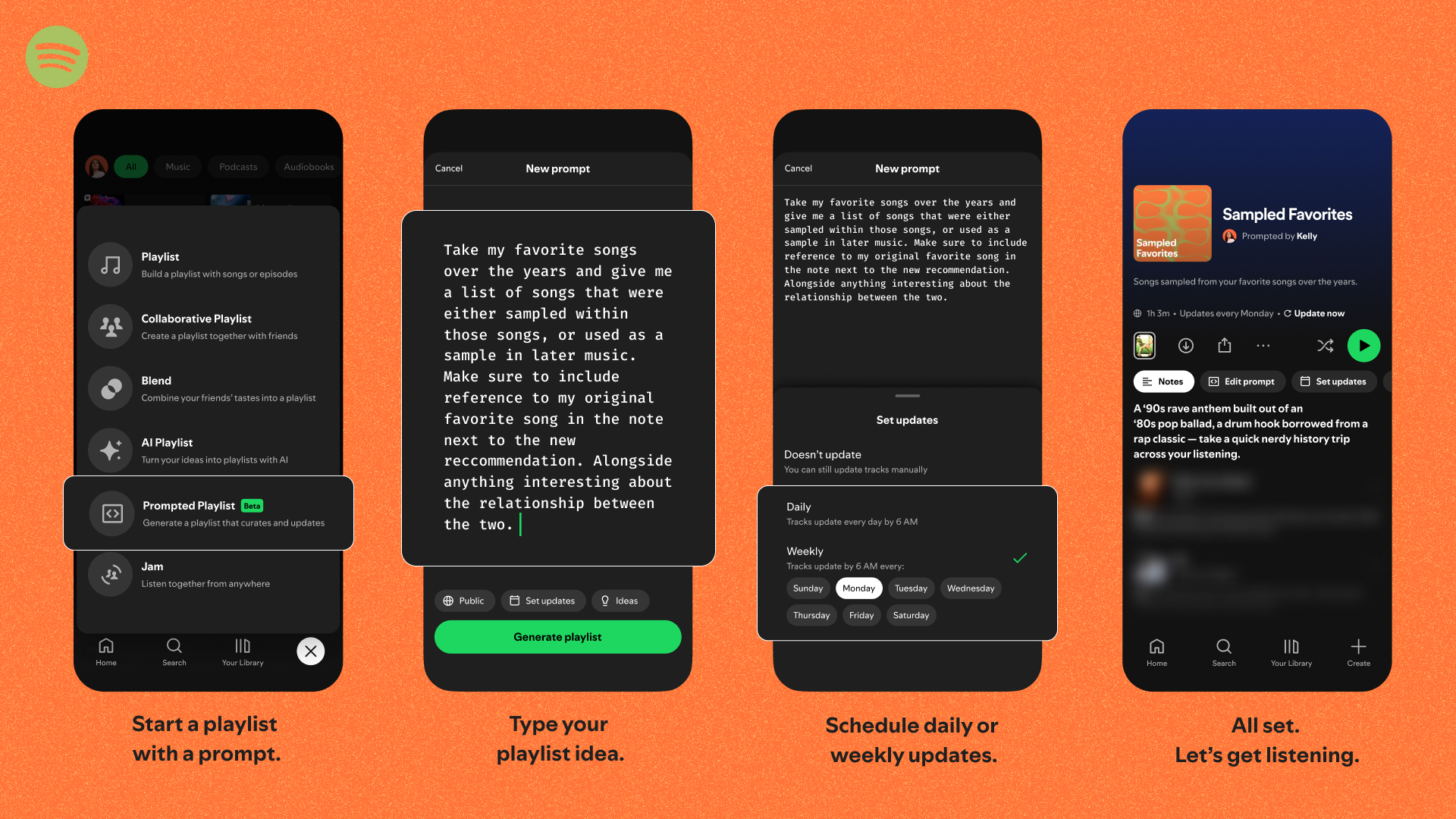
Ahead of its upcoming price hike, Spotify is rolling out a more advanced AI playlist feature in the US and Canada. Prompted Playlist, which the company trialed in New Zealand late last year, lets subscribers "control the Spotify algorithm," as the company describes it. "You're not just asking for music, you're shaping how Spotify goes about discovering it for you."
For example, you can guide it to make a playlist of songs you've saved to your Library but haven't listened to yet. (It can tap into your entire Spotify history.) Or, you can tell it to round up songs from a specific television show or movie. (It uses real-time information about pop culture, charts, and history.)
The feature includes options to refresh the playlist over time (daily or weekly). You can edit each playlist's prompt at any time. Each track will include a short note to explain why it was chosen.
The standard AI Playlist creator will remain alongside the new Prompted Playlist.
Spotify
Spotify says beta testers have used Prompted Playlist to revisit songs tied to specific moments and filter out tracks they've overplayed lately. "Others are asking for long, lyric-free electronic playlists to power through a workday, or mixing in artists connected to current pop culture moments and viral trends," the company wrote.
There's room for some confusion here because Spotify already has an "AI Playlist" feature. That simpler type will stick around alongside the new "Prompted" variety, which allows for finer tuning and can sift through more data.
Prompted Playlist will be available to Spotify Premium subscribers in the US and Canada "by the end of the month." Once you have access, you can try it by tapping Create, then selecting Prompted Playlist.
This article originally appeared on Engadget at https://www.engadget.com/audio/spotifys-prompted-playlist-lets-you-describe-exactly-what-you-want-to-hear-140000153.html?src=rss

 Anmelden