❌

Normale Ansicht

Apple just made Xcode better for vibe coding

Apple has just released Xcode 26.3, and it's a big step forward in terms of the company's support of coding agents. The new release expands on the AI features the company introduced with Xcode 26 at WWDC 2025 to give systems like Claude and ChatGPT more robust access to its in-house IDE. 

With the update, Apple says Claude and OpenAI's Codex "can search documentation, explore file structures, update project settings, and verify their work visually by capturing Xcode Previews and iterating through builds and fixes." This is in contrast to earlier releases of Xcode 26 where those same agents were limited in what they could see of a developer's Xcode environment, restricting their utility. According to Apple, the change will give users tools they can use to streamline their processes and work more efficiently than before.

Developers can add Claude and Codex to their Xcode terminal from the Intelligence section of the app's setting menu. Once a provider is selected, the interface allows users to also pick their preferred model. So if you like the outputs of say GPT 5.1 over GPT 5.2, you can use the older system. 

The tighter integration with Claude and Codex was made possible by Model Context Protocol (MCP) servers Apple has deployed. MCP is a technology Anthropic debuted in fall 2024 to make it easier for large language models like Claude to share data with third-party tools and systems. Since its introduction, MCP has become an industry standard — with OpenAI, for instance, adopting the protocol last year to facilitate its own set of connections. 

Apple says it worked directly with Anthropic and OpenAI to optimize token usage through Xcode, but the company’s adoption of MCP means developers will be able to add any coding agent that supports the protocol to their terminal in the future. Xcode 26.3 is available to download for all members of the Apple Developer Program starting today, with the Mac Store availability “coming soon.”

This article originally appeared on Engadget at https://www.engadget.com/ai/apple-just-made-xcode-better-for-vibe-coding-195653049.html?src=rss

©

  •  

Publishers are blocking the Internet Archive for fear AI scrapers can use it as a workaround

The Internet Archive has often been a valuable resource for journalists, from it's finding records of deleted tweets or providing academic texts for background research. However, the advent of AI has created a new tension between the parties. A few major publications have begun blocking the nonprofit digital library's access to their content based on concerns that AI companies' bots are using the Internet Archive's collections to indirectly scrape their articles.

"A lot of these AI businesses are looking for readily available, structured databases of content," Robert Hahn, head of business affairs and licensing for The Guardian, told Nieman Lab. "The Internet Archive’s API would have been an obvious place to plug their own machines into and suck out the IP."

The New York Times took a similar step. "We are blocking the Internet Archive's bot from accessing the Times because the Wayback Machine provides unfettered access to Times content — including by AI companies — without authorization," a representative from the newspaper confirmed to Nieman Lab. Subscription-focused publication the Financial Times and social forum Reddit have also made moves to selectively block how the Internet Archive catalogs their material.

Many publishers have attempted to sue AI businesses for how they access content used to train large language models. To name a few just from the realm of journalism:

Other media outlets have sought financial deals before offering up their libraries as training material, although those arrangements seem to provide compensation to the publishing companies rather than the writers. And that's not even delving into the copyright and piracy issues also being fought against AI tools by other creative fields, from fiction writers to visual artists to musicians. The whole Nieman Lab story is well worth a read for anyone who has been following any of these creative industries’ responses to artificial intelligence.

This article originally appeared on Engadget at https://www.engadget.com/ai/publishers-are-blocking-the-internet-archive-for-fear-ai-scrapers-can-use-it-as-a-workaround-204001754.html?src=rss

©

  •  

Music publishers sue Anthropic for $3 billion over ‘flagrant piracy’

A group of music publishers led by Concord Music Group and Universal Music Group are suing Anthropic, according to a report by Reuters. The suit accuses the AI company of illegally downloading more than 20,000 copyrighted songs, including sheet music, lyrics and compositions.

These songs were then allegedly fed into the chatbot Claude for training purposes. There are some iconic tunes named by Universal in the suit, including tracks by The Rolling Stones, Neil Diamond and Elton John, among many others. Concord is an independent publisher that handles artists like Common, Killer Mike and Korn.

The publishers issued a statement saying that the damages could amount to more than $3 billion. This would make it one of the largest non-class action copyright cases in US history.

"While Anthropic misleadingly claims to be an AI 'safety and research' company, its record of illegal torrenting of copyrighted works makes clear that its multibillion-dollar business empire has in fact been built on piracy," the lawsuit says.

The suit was filed by the same legal team as last year's Bartz v. Anthropic case. The music publishers say they found that Anthropic had been illegally downloading thousands of songs during the discovery process of that suit.

For the unfamiliar, the Bartz v. Anthropic case ended with an award of $1.5 billion to impacted writers after it was found that the company had illegally downloaded their published works for similar training purposes. The terms of that agreement dictated that the 500,000 authors involved in the case would get $3,000 per work. The $1.5 billion looks like a big number, but not so much when broken down like that. Also, Anthropic is worth around $350 billion.

In the Bartz case, Judge William Alsup ruled that it was legal for Anthropic to train its models on copyrighted content but not legal to acquire that content via piracy. We'll have to wait and see how this new suit shakes out. The legal precedent here seems to suggest that if Anthropic would have just spent a buck on each copyrighted song, then they'd be in the clear. That's an odd distinction when it comes to building an entire company around snatching up copyrighted content, but whatever.

This article originally appeared on Engadget at https://www.engadget.com/ai/music-publishers-sue-anthropic-for-3-billion-over-flagrant-piracy-185459358.html?src=rss

©

© Anthropic

A logo.
  •  

Google will pay $135 million to settle illegal data collection lawsuit

Google has agreed to a preliminary $135 million settlement in a class action lawsuit brought by Android users who accused it of harvesting their data without consent. The suit alleged that since November 12, 2017, Google has been illegally collecting cellular data from phones purchased through carriers, even when apps were closed or location features were disabled.

As reported by Reuters, the affected users believed Google using their data for marketing and product development meant it was guilty of "conversion." In US law, conversion occurs when one party takes the property of another with "the intent to deprive them of it" or "exert property rights over it."

Subject to approval from a judge, a settlement of $135 million was filed in a San Jose federal court earlier this week. The payout would be one of, if not the largest ever in a case of this nature, according to Glen Summers, a lawyer for the plaintiffs.

Each user involved in the lawsuit would be entitled to up to $100 from Google, which denies any wrongdoing and has agreed to seek consent during the setup process of a new phone from now on. A toggle will be added to enable users to easily disable data transfer, while the Alphabet-owned company will also adjust its terms of service accordingly. A trial is scheduled for August 5.

This is the second settlement this week for Google. On January 26, the company also agreed to a $68 million settlement regarding claims that Google Assistant had been spying on users after being triggered by what it had misheard as wake words. Again, Google denied any wrongdoing in the class action suit.

This article originally appeared on Engadget at https://www.engadget.com/big-tech/google-will-pay-135-million-to-settle-illegal-data-collection-lawsuit-133012112.html?src=rss

©

© Reuters / Reuters

A Google logo is seen at a company research facility in Mountain View, California, U.S., May 13, 2025. REUTERS/Carlos Barria
  •  

LinkedIn will let you show off your vibe coding expertise

LinkedIn has long been a platform for showing off professional accomplishments. Now, the company is leaning into the rise of vibe coding by allowing users to show off their proficiency with various AI coding tools directly on their profiles.

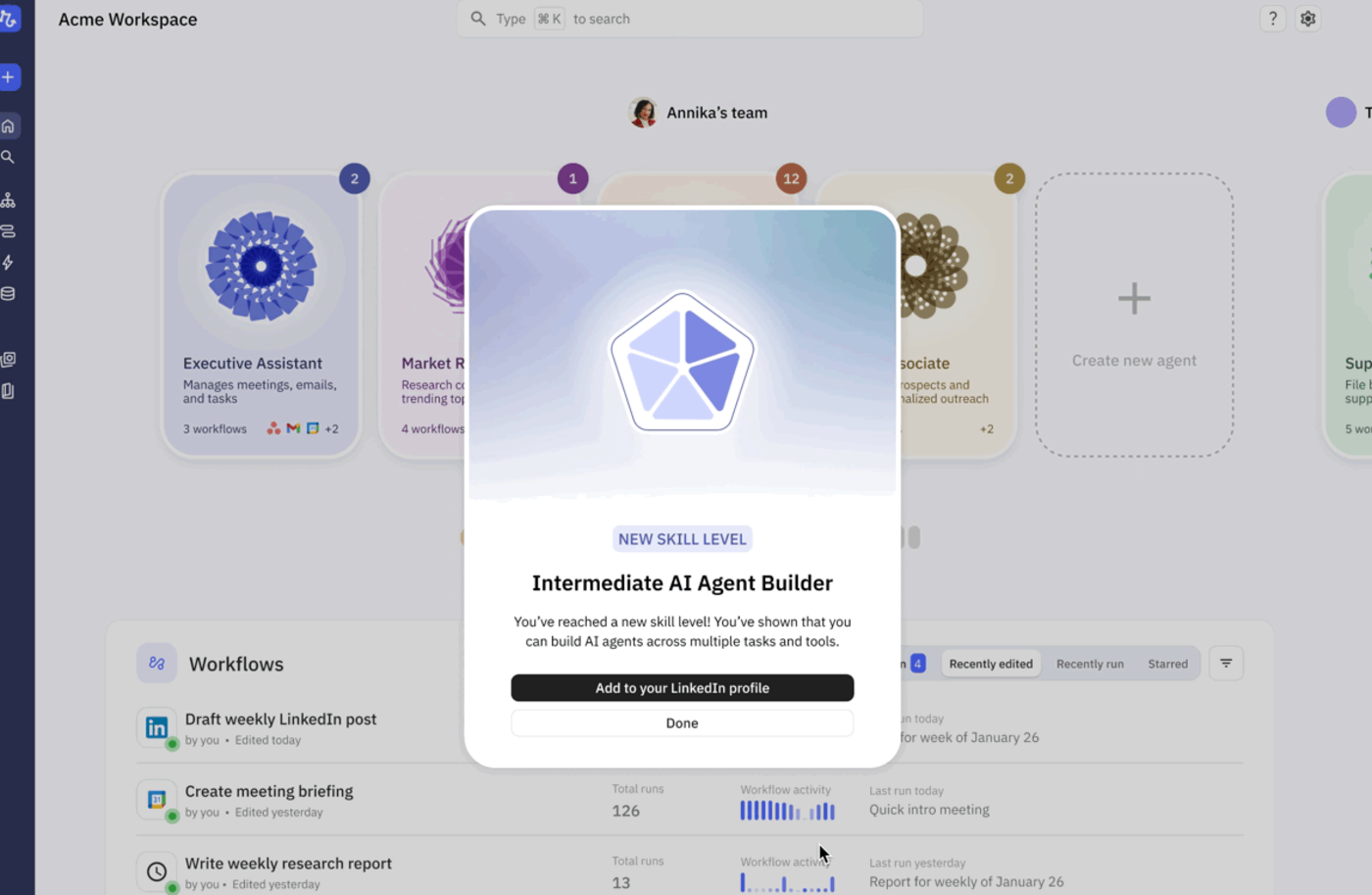
The company is partnering with Replit, Lovable, Descript and Relay.app  on the feature and is working on integrations with fellow Microsoft-owned GitHub as well as Zapier.  LinkedIn has always allowed users to add various skills and certifications to their profiles. But what makes the latest update a bit different is that users aren't self-reporting their own qualifications. Instead, LinkedIn is allowing the companies behind the AI tools to assess an individual's relative skill and assign a level of proficiency that goes directly to their profile. 

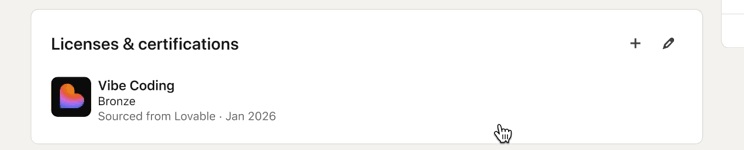
For example, AI app maker Lovable could award someone a "bronze" in "vibe coding," while the platform Replit uses numerical levels and Relay.app may determine that someone is an "intermediate" level "AI Agent Builder," according to screenshots shared by LinkedIn. These levels should dynamically update as people get more experience using the relevant tools, according to LinkedIn.

Lovable's vibe coding rating system.
LinkedIn

Of course, the update also comes at a time when companies have used these same kinds of AI tools to lay off thousands of workers. So while there's may be value in showing off your vibe coding skills, there are still many workers who likely aren't as excited about  ceding more ground to AI. When I asked, LinkedIn's head of career products Pat Whealan about this he said that 

 AI-specific skills are an increasingly important signal to recruiters and the latest update will make it easier for them to assess candidates' skills. But he added that the intention isn't to make AI-specific skills the sole focus. "This is less about replacing any of those other existing signals, and more about showing new ways that people are doing work," he tells Engadget. "And how do we give a verifiable signal to both hirers and other people looking at their profile, that they actually are using these tools on a regular basis."


This article originally appeared on Engadget at https://www.engadget.com/ai/linkedin-will-let-you-show-off-your-vibe-coding-expertise-140000776.html?src=rss

©

  •  

TikTok settles to avoid major social media addiction lawsuit

TikTok has reached a settlement in a closely-watched lawsuit over social media addiction, narrowly avoiding a trial that's scheduled to begin jury selection Tuesday. Terms of the deal, which was reported by The New York Times, weren't disclosed. 

TikTok's settlement comes about one week after Snap reached a settlement in the same case. The trial is expected to move forward in Los Angeles with Meta and YouTube as the only defendants. Mark Lanier, a lawyer for the plaintiff, said in a statement to NYT that they were "pleased" with the settlement and that it was "a good resolution." TikTok didn't immediately respond to a request for comment. 

The trial stems from a 2023 lawsuit brought by a California woman known in court documents as "K.G.M." She sued Meta, Snap, TikTok and YouTube and alleged that their platforms were addictive and had harmed her as a child. The judge in the case previously ordered the companies' executives, including Mark Zuckerberg and Adam Mosseri, to testify. YouTube's top exec, Neal Mohan, is also likely to testify, according to The New York Times. 

The lawsuit is the first among several high-profile cases against social media companies to go to trial this year. Meta is expected to head to court in New Mexico in early February in a case brought by the state's attorney general, who has alleged that Facebook and Instagram have facilitated harm to children. TikTok and Snap are collectively facing more than a dozen other trials in California courts this year.

This article originally appeared on Engadget at https://www.engadget.com/social-media/tiktok-settles-to-avoid-major-social-media-addiction-lawsuit-183943927.html?src=rss

©

  •  

The EU tells Google to give external AI assistants the same access to Android as Gemini has

The European Commission has started proceedings to ensure Google complies with the Digital Markets Act (DMA) in certain ways. Specifically, the European Union’s executive arm has told Google to grant third-party AI services the same level of access to Android that Gemini has. "The aim is to ensure that third-party providers have an equal opportunity to innovate and compete in the rapidly evolving AI landscape on smart mobile devices," the Commission said in a statement. 

The company will also have to hand over "anonymized ranking, query, click and view data held by Google Search" to rival search engines. The Commission says this will help competing companies to optimize their services and offer more viable alternatives to Google Search. 

"Today’s proceedings under the Digital Markets Act will provide guidance to Google to ensure that third-party online search engines and AI providers enjoy the same access to search data and Android operating system as Google's own services, like Google Search or Gemini," said Henna Virkkunen, the Commission’s executive vice-president for tech sovereignty, security and democracy. "Our goal is to keep the AI market open, unlock competition on the merits and promote innovation, to the benefit of consumers and businesses."

The Commission plans to wrap up these proceedings in the next six months, effectively handing Google a deadline to make all of this happen. If the company doesn't do so to the Commission's satisfaction, it may face a formal investigation and penalties down the line. The Commission can impose fines of up to 10 percent of a company's global annual revenue for a DMA violation.

Google was already in hot water with the EU for allegedly favoring its own services — such as travel, finance and shopping — over those from rivals and stopping Google Play app developers from easily directing consumers to alternative, cheaper ways to pay for digital goods and services. The bloc charged Google with DMA violations related to those issues last March. 

In November, the EU opened an investigation into Google's alleged demotion of commercial content on news websites in search results. The following month, it commenced a probe into Google's AI practices, including whether the company used online publishers' material for AI Overviews and AI Mode without "appropriate compensation" or offering the ability to opt out.

This article originally appeared on Engadget at https://www.engadget.com/ai/the-eu-tells-google-to-give-external-ai-assistants-the-same-access-to-android-as-gemini-has-154157081.html?src=rss

©

  •  

Apple will begin showing more App Store ads starting in March

More ads are coming to App Store search results starting in March, Apple shared on an advertising help page. The company first said that it would increase the number of App Store ads last month, and this new rollout of search ads will begin on Tuesday, March 3, according to a developer email viewed by MacRumors.

"Search is the way most people find and download apps on the App Store, with nearly 65 percent of downloads happening directly after a search," Apple says. "To help give advertisers more opportunities to drive downloads from search results, Apple Ads will introduce additional ads across search queries." Up until this point, ads for related apps have appeared at the top of search results, but now they'll also appear "further down in search results," according to Apple.

App Store activity makes up a significant portion of what Apple calls its "services" business. The company makes money on every App Store transaction, whether it's an app download or an in-app purchase, and increasingly, by selling ad space to companies looking to reach users. App Store ads are hardly new, but the number of ads has steadily increased over the years. Apple added ads to the Today tab in 2022 — a space that's already home to editorial curation that doubles as marketing — and in 2025, Bloomberg reported the company planned to bring ads to Apple Maps.

Apple's decision to rebrand its advertising business from Apple Search Ads to Apple Ads in April 2025 was maybe the best indication that the company was interested in expanding the number of places it would help partners try and reach customers. And it makes sense: the company's billions of devices, each pre-installed with default apps, are some of the most valuable real estate it owns.

This article originally appeared on Engadget at https://www.engadget.com/apps/apple-will-begin-showing-more-app-store-ads-starting-in-march-192031226.html?src=rss

©

  •  

OpenAI is launching age prediction for ChatGPT accounts

OpenAI is the latest company to hop on the bandwagon of gating access by users' age. The AI business is beginning a global rollout of an age prediction tool to determine whether or not a user is a minor. “The model looks at a combination of behavioral and account-level signals, including how long an account has existed, typical times of day when someone is active, usage patterns over time,and a user’s stated age,” the company’s announcement states. If an individual is incorrectly characterized by ChatGPT as underage, they will need to submit a selfie to correct the mistake through the Persona age verification platform. 

Most AI companies have been willing to push new features first and then attempt to layer on a patchwork of protections and safety guards on top of them after they cause harm. OpenAI was implicated in a wrongful death suit for a teen who allegedly used ChatGPT to plan his suicide, and only in the following months began pondering automatic restrictions on content for underage users and launching a mental health advisory council. In this instance, OpenAI is attempting to prepare for the launch of an "adult mode" that will allow users to create and consume content that would be dubbed NSFW. Considering how well a similar change has been going over at Roblox, another platform with a shaky history around protecting minors, it seems probable that underage users will find ways to circumvent the existing tools if they want to use ChatGPT as adults.

This article originally appeared on Engadget at https://www.engadget.com/ai/openai-is-launching-age-prediction-for-chatgpt-accounts-222650340.html?src=rss

©

  •  

The Morning After: Elon Musk wants a $134 billion payout from OpenAI and Microsoft

Part of a lawsuit accusing OpenAI of abandoning its non-profit status claims Musk is owed anywhere from $79 billion to $134 billion in damages for the “wrongful gains” of OpenAI and Microsoft.

Musk claims in the filing that he’s entitled to a chunk of the company’s recent $500 billion valuation, after contributing $38 million in “seed funding” during the AI company’s early years. It wasn’t just money — according to the filing, Musk helped advise on key employee recruitment, introductions with business contacts and startup advice.

If this sounds familiar, it’s because the lawsuit dates back to March 2024. It’s still going.

— Mat Smith

The other big stories (and deals) this morning


Anthropic opens up Claude Cowork to anyone with a $20 subscription

Anthropic’s AI assistant can handle simple tasks on your PC for you.

TMA
Engadget

Claude Cowork, Anthropic’s AI assistant for handling simple tasks on your computer, is now available to anyone with a $20-per-month Pro subscription. It was previously an exclusive feature for its Max subscribers, who pay a minimum of $100 per month.

As a reminder, the intriguing part of Claude Cowork is its ability to work on its own. If you have the macOS Claude app and a Pro subscription, you can prompt Claude Cowork to work on tasks on your local computer, like creating documents based on files you have saved or organizing your folders. Don’t expect it to deal with high-level PC work just yet, but it can handle simple organizational tasks.

Continue reading.


Dr. Gladys West, whose mathematical models inspired GPS, dies at 95

Her decades-long career finally received wider recognition in 2018.

Pioneering mathematician Dr. Gladys West has passed away at the age of 95. Her name may not be familiar to you, but her contributions will be. West’s work laid the foundation for the global positioning system, GPS, we all use (sometimes daily). Beyond DoorDash requests and Google Maps navigation, GPS is now an essential component of industries ranging from aviation to emergency response systems.

Continue reading.


ASUS will not release any new smartphones this year

Will the company be joining the likes of LG?

TMA
Engadget

ASUS might step back from smartphones. According to translations of recent quotes from Chair Jonney Shih, the company does not plan to release new phone models in the future. Previous reports suggested ASUS would not introduce any smartphones in 2026, but Shih’s recent comments indicate the pause may last longer, if not indefinitely. We’ve reached out to ASUS for additional comment. It's not like the company changes its mind...

Continue reading.

This article originally appeared on Engadget at https://www.engadget.com/general/the-morning-after-engadget-newsletter-121509123.html?src=rss

©

  •  

Elon Musk is looking for a $134 billion payout from OpenAI and Microsoft

We now have some idea of what's at stake in the longstanding feud between Elon Musk and OpenAI. As first reported by Bloomberg, the latest filing, as part of a lawsuit that accuses the AI giant of abandoning its non-profit status, claims that Musk is owed anywhere between $79 billion and $134 billion in damages from the "wrongful gains" of OpenAI and Microsoft.

Musk claimed in the filing that he's entitled to a portion of OpenAI's recent valuation at $500 billion, after contributing $38 million in "seed funding" during the AI company's startup years. Along with providing "roughly 60 percent of the nonprofit's seed funding," Musk offered recruiting of key employees, introductions with business contacts and startup advice, according to the filing. The monetary estimate comes from C. Paul Wazzan, a financial economist who's serving as Musk's expert in the case. According to Wazzan's calculations, OpenAI earned between $65.5 billion and $109.43 billion in wrongful gains, while Microsoft saw between $13.3 billion and $25.06 billion.

The lawsuit between Elon Musk and OpenAI dates back to March 2024, when the xAI CEO first filed a legal action claiming that OpenAI violated its non-profit status. Musk later added Microsoft as another defendant and even tried to get an injunction when OpenAI announced efforts to reorganize its corporate structure. Besides this suit, Musk has named OpenAI in another legal battle, accusing the company, along with Apple, of monopolistic practices that prevent xAI from getting a fair shot in the App Store.

This article originally appeared on Engadget at https://www.engadget.com/big-tech/elon-musk-is-looking-for-a-134-billion-payout-from-openai-and-microsoft-171824945.html?src=rss

©

© REUTERS / Reuters

Tesla CEO Elon Musk attends a cabinet meeting held by U.S. President Donald Trump at the White House in Washington, D.C., U.S., April 30, 2025. REUTERS/Evelyn Hockstein
  •  

Google is appealing the ruling from its search antitrust case to avoid sharing data with rivals

Google has filed its appeal to the Department of Justice’s antitrust case that ended with a federal judge ruling that the company was maintaining a monopoly with its search business. While the company goes through the appeals process, it’s also asking that implementation of the remedies from the case, which include a requirement that Google share search data with its competitors, also be paused.

“As we have long said, the Court’s August 2024 ruling ignored the reality that people use Google because they want to, not because they’re forced to,” Google said in a statement. “The decision failed to account for the rapid pace of innovation and intense competition we face from established players and well-funded start-ups. And it discounted compelling testimony from browser makers like Apple and Mozilla who said they choose to feature Google because it provides the highest quality search experience for their consumers.”

The company says that the requirement that it “provide syndication services to rivals” and share search data is a privacy risk and could “discourage competitors from building their own products.” Both remedies where compromises based on what the Justice Department originally proposed, which included forcing Google to sell its Chrome web browser.

After a 10-week trial held in 2023, Google was found to have a search monopoly in 2024 because of the placement it maintained as the default search engine on multiple platforms, and the control it exerted over the ads that appear in search results. Both arguments were key points in the DOJ’s original 2020 lawsuit.

This article originally appeared on Engadget at https://www.engadget.com/big-tech/google-is-appealing-the-ruling-from-its-search-antitrust-case-to-avoid-sharing-data-with-rivals-215107905.html?src=rss

©

  •  

XREAL files lawsuit against rival smart glass maker Viture

San Francisco-founded Smart glasses maker Viture has been sued in a US court by rival XREAL over claims it infringed on its patents, XREAL announced in a press release. The complaint, lodged in a federal Texas court, accuses Viture of illegally incorporating XREAL's patented tech into its products including the Luma Pro, Luma Ultra and Beast models. 

"The lawsuit is not merely about enforcing a single patent," the company wrote. "It is about stopping a pattern of intellectual property infringement that undermines the integrity of innovation and endangers continued technological development in this industry." 

XREAL has already won a preliminary injunction against Viture in Germany. That resulted in a sales freeze in that country, which could spread to nine other European nations including France, Italy and Spain. That injunction affects Viture's Pro, Luma and Luma Pro smart glasses.

Both companies make augmented reality (AR) glasses with built-in displays that connect to smartphone or laptops, letting you play games, watch movies or do productivity tasks. Their products offer similar display resolutions and fields of view, both of which are key specifications for those products. 

In response, Viture issued its own statement: "Our product does not infringe upon the cited patent in any way," the company told Tom's Guide. "We encourage everyone to look closely at the patent itself and form their own judgment, it becomes clear very quickly how weak and questionable it is. XREAL has simultaneously circulated false claims suggesting that Viture is 'banned across nine European countries.' This is entirely untrue." The company added that it's taking legal action itself because of XREAL's comments. 

Viture is a relatively new player in the AR/VR world, but XREAL's lawsuit could be a prelude to similar actions, judging by the wording in its press release. XREAL holds over 800 patent and patent applications around the world around AR, VR and other tech, and claims that Viture has fewer than 70 and none in the US and Europe. At CES 2026, XREAL unveiled several new products, including the ROG X R1 AR glasses built in conjunction with ASUS. 

This article originally appeared on Engadget at https://www.engadget.com/wearables/xreal-files-lawsuit-against-rival-smart-glass-maker-viture-133018692.html?src=rss

©

© Viture

Viture Luma Pro XR glasses
  •  

Mark Zuckerberg announces new 'Meta Compute' initiative for its data center and AI projects

On the heels of Mark Zuckerberg announcing that Meta's former board member, Dina Powell McCormick, would be formally joining the company as president and vice chairman, the CEO has shared new details about her purview at the company. The executive will play a key role overseeing Meta's sprawling infrastructure investments as part of a newly announced initiative called Meta Compute.

"Meta is planning to build tens of gigawatts this decade, and hundreds of gigawatts or more over time," Zuckerberg said in an update. "How we engineer, invest, and partner to build this infrastructure will become a strategic advantage."

Zuckerberg said that Meta's head of global engineering Santosh Janardhan will lead the "top-level initiative" and that recent hire and former Safe Superintelligence CEO Daniel Gross will "lead a new group responsible for long-term capacity strategy, supplier partnerships, industry analysis, planning, and business modeling." McCormick is expected to "work on partnering with governments and sovereigns to build, deploy, invest in, and finance Meta's infrastructure."

Meta has been investing heavily in infrastructure to fuel its AI "superintelligence" ambitions. The company also recently announced three agreements to buy massive amounts of nuclear power to help power its data centers. Zuckerberg has previously said he expects Meta to spend $600 billion on AI infrastructure and jobs by 2028.

This article originally appeared on Engadget at https://www.engadget.com/ai/mark-zuckerberg-announces-new-meta-compute-initiative-for-its-data-center-and-ai-projects-192100086.html?src=rss

©

  •  
❌