The peak time for deals on streaming services — the holiday shopping season — has come and gone, but Disney is back with a fresh offer for the new year. New and eligible returning subscribers can get one month of the ad-supported Disney+ Hulu bundle for just $10. That's $3 off the usual monthly rate for the bundle, and more than 58 percent off if you consider the prices for each service individually (Disney+ at $12 per month and, separately, Hulu also at $12 per month).
We'd be remiss if we didn't mention that this isn't quite as good as the Black Friday deal we saw last year, which offered the same bundle for $5 per month for one year. However, if you missed that offer or just want to try out Disney+ and Hulu for a brief period of time, this is a good way to do so.
Disney+ and Hulu make one of the most balanced streaming pairs available, blending family-friendly favorites with acclaimed originals and network TV staples. Disney+ brings a vast library of animated classics, blockbuster franchises and exclusive content from Marvel, Pixar, Star Wars and National Geographic. It’s the place to stream nearly every Star Wars film and series, plus the full Marvel Cinematic Universe lineup and Disney’s most recent theatrical releases.
Hulu balances things out with a more adult-oriented lineup of current TV shows, next-day network episodes and a growing roster of award-winning originals. The platform hosts series like The Bear,The Handmaid’s Tale and Only Murders in the Building, alongside comedies, thrillers and documentaries that regularly feature in awards conversations. It’s also the home for next-day streaming of ABC and FX shows, making it especially useful if you’ve already cut the cable cord but still want to keep up with primetime TV.
The Duo Basic bundle ties these two services together under a single subscription, offering a simple way to expand your library without juggling multiple accounts. This tier includes ads on both platforms, but the trade-off is significant savings compared with paying for each service separately. For many households, that’s an acceptable compromise when it means access to such a wide range of content.
This article originally appeared on Engadget at https://www.engadget.com/deals/disney-and-hulu-deal-get-the-bundle-for-10-for-one-month-192814789.html?src=rss
Even as CES 2026 wraps up soon, there’s no shortage of standout hardware hiding in plain sight. From genuinely quieter yard tools to ultra-light EVs and companion robots that want to remember your family, Day 3 was all about tech that felt a little more considered — and in some cases, refreshingly practical.
If you can’t get enough of CES, be sure to check out our picks for best of CES 2026, which highlights the most impressive new tech we’ve seen in Las Vegas. We’ve also rounded up the CES gadgets you can buy right now if you’re itching to place an order, along with a look at the weirdest tech at CES 2026, because it wouldn’t be CES without a few delightfully unhinged ideas.
Tone Outdoors T1 leaf blower
Tone Outdoors T1
Billy Steele for Engadget
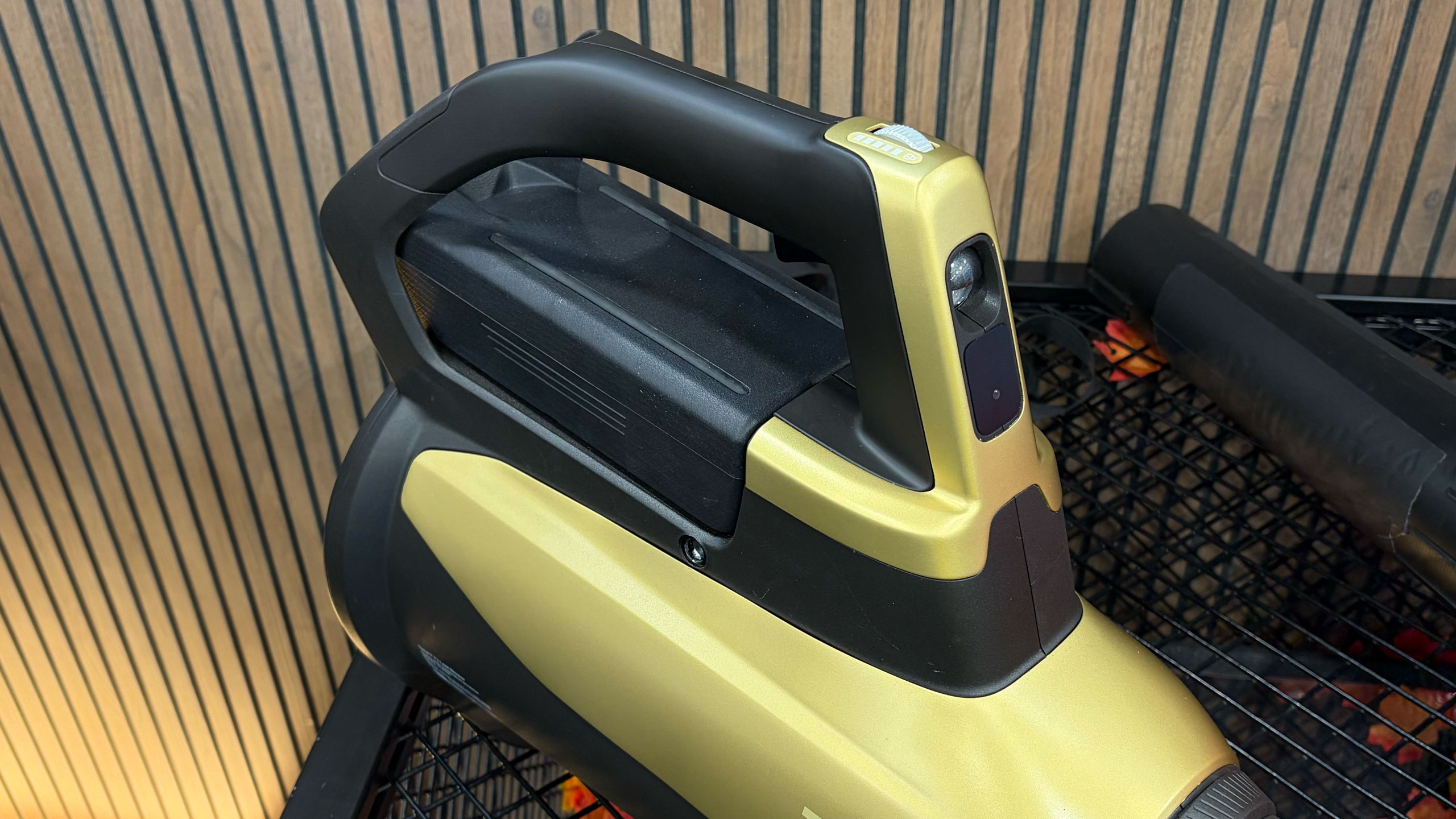
The Tone Outdoors T1 leaf blower is one of the rare CES gadgets that makes an immediate, obvious impression — mostly because it’s shockingly quiet. Whisper Aero’s aerospace-derived motor redesign delivers 880 CFM of airflow at around 52 decibels, which we could confirm even amid the noise of the show floor. It also runs up to 50 minutes in Eco mode, supports a forthcoming battery backpack and even includes an LED for nighttime cleanup. Pre-orders are open now for $599, with shipping expected in September.
GE Profile Smart Fridge
Finally! A reasonably sized fridge screen.
Sam Rutherford for Engadget
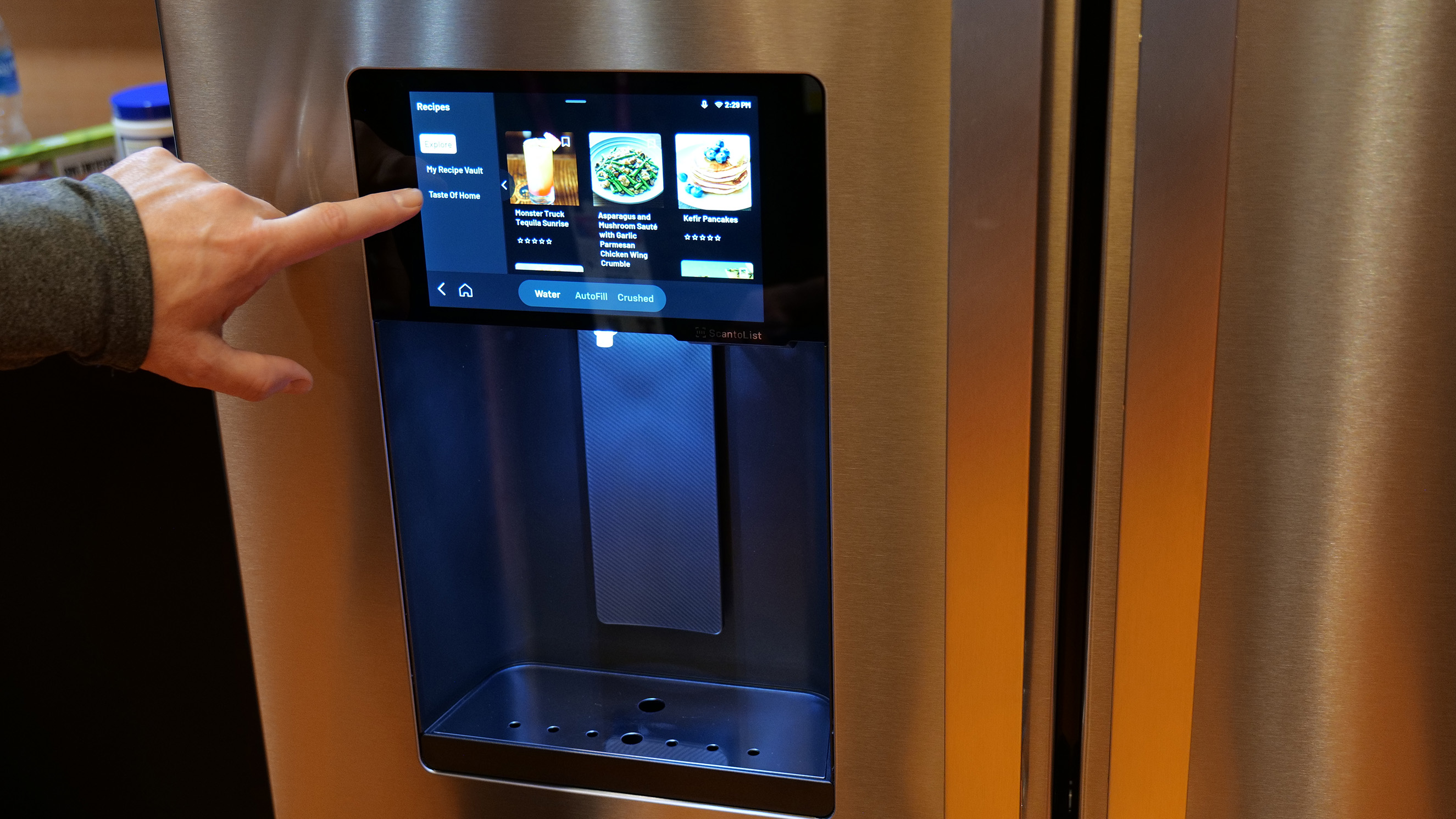
The GE Profile Smart Fridge is the first smart fridge we’ve seen that feels like it was designed around real problems instead of just slapping a massive screen on the door. GE’s AI assistant can answer practical questions like where your water filter is, scan groceries via a built-in barcode reader and keep tabs on produce with a crisper drawer camera. The eight-inch display feels refreshingly restrained, while integrations with Instacart and recipe suggestions add utility. It launches in March for $4,899, and for once, we’re genuinely curious what it would be like to live with it.
Longbow Motors Speedster EV
Longbow Motors Speedster
Billy Steele for Engadget
Longbow Motors brought one of the most emotionally compelling EVs we’ve seen to CES, and it’s unapologetically minimalist. The Speedster uses in-wheel motors from Donut Labs to hit a jaw-dropping curb weight of just 2,200 pounds, lighter than a Miata. Its stripped-back interior, mystery shift lever and exposed motors feel like a direct rejection of touchscreen-heavy modern cars. It’s wildly expensive at just under $100,000, but also one of the few EVs here that got us excited to drive.
OlloBot companion robot
A robot with eyes on top of a screen showing a smile.
Cheyenne MacDonald for Engadget
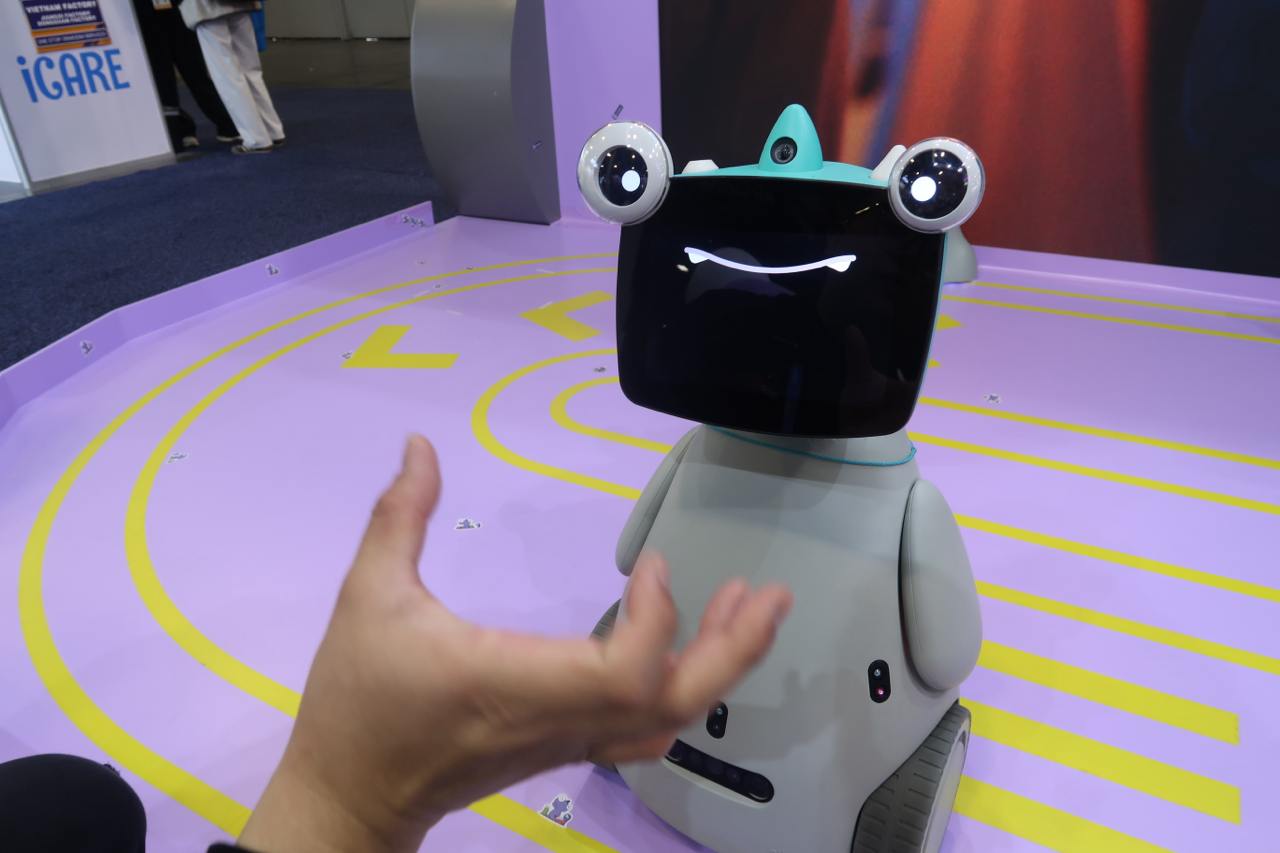
OlloBot might win the award for most charmingly strange robot on the show floor. Designed as a family “cyber pet,” it responds to voice and touch, develops a personality over time and stores all its memories locally in a removable heart-shaped module. The robot can help find lost items, make calls and eventually control Matter smart home devices. A Kickstarter is planned for summer, with pricing starting around $1,000.
Bluetti Charger 2
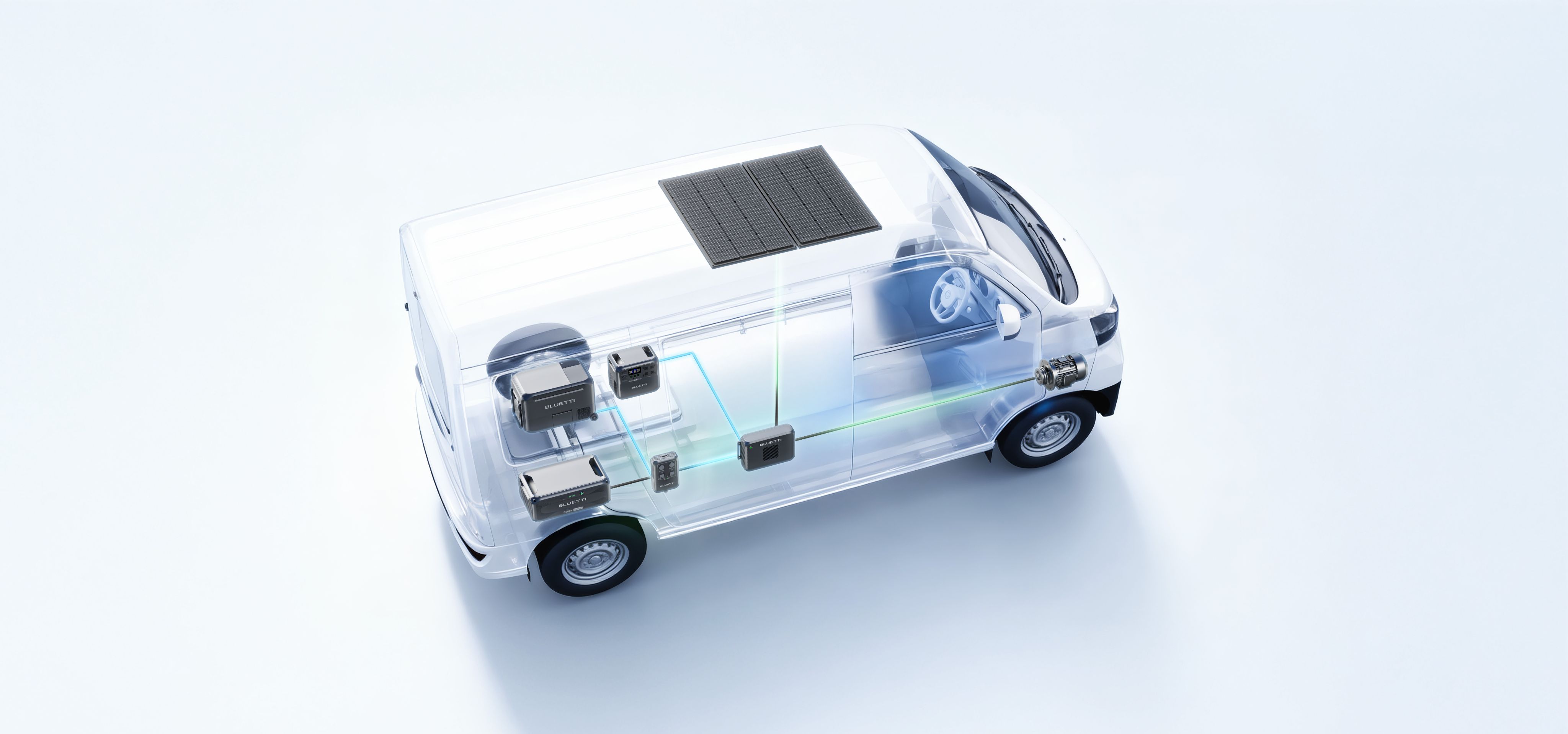
Here's how the Bluetti Charger 2 would work with dual charging sources.
Bluetti
Bluetti’s Charger 2 fixes a very specific but real problem for off-grid users: charging from your engine and solar panels at the same time. The dual-input system supports up to 600W from solar and 800W from an alternator, dramatically speeding up battery top-ups. It also works with multiple Bluetti power stations and can even jump-start your vehicle in a pinch. Early pricing is $349 through February 7, after which it jumps to $499.
CES is ending, but we’ve got more stories to tell
The CES show floor will soon be closing down, but Engadget still has a lot of stories in our pipeline. As the crowds thin out, we’re continuing to surface the tech that actually stands out — whether it’s solving everyday annoyances or simply doing something bold and different. Stay tuned to our CES 2026 hub for more hands-ons, deep dives and final takeaways even after CES 2026 comes to a close at the end of this week.
This article originally appeared on Engadget at https://www.engadget.com/big-tech/ces-2026-day-3-the-most-interesting-tech-thats-still-on-the-show-floor-134724231.html?src=rss
CES 2026 is nearly over and it’s been a fruitful one with a lot of new, weird and impressive tech. But you don’t have to wait until later this year to get your hands on some of the things announced this week in Las Vegas. A surprising number of gadgets are up for pre-order, if not outright available to buy already, from chargers and docks to projectors, keyboards and smart home gear. CES remains a place for companies to showcase concepts and big ideas, but these are the gadgets that have real prices and real order buttons as of today. Check out all of the CES 2026 gadgets you can buy right now below.
This article originally appeared on Engadget at https://www.engadget.com/19-ces-gadgets-you-can-buy-right-now-164325541.html?src=rss
CES 2026’s second day was all about hands on time with new tech. From Lego’s most ambitious play experiment yet to assistive mobility tech, smart home ideas that actually feel affordable and robots that might one day fold your laundry, here’s what stood out most on January 7.
Lego Smart Play
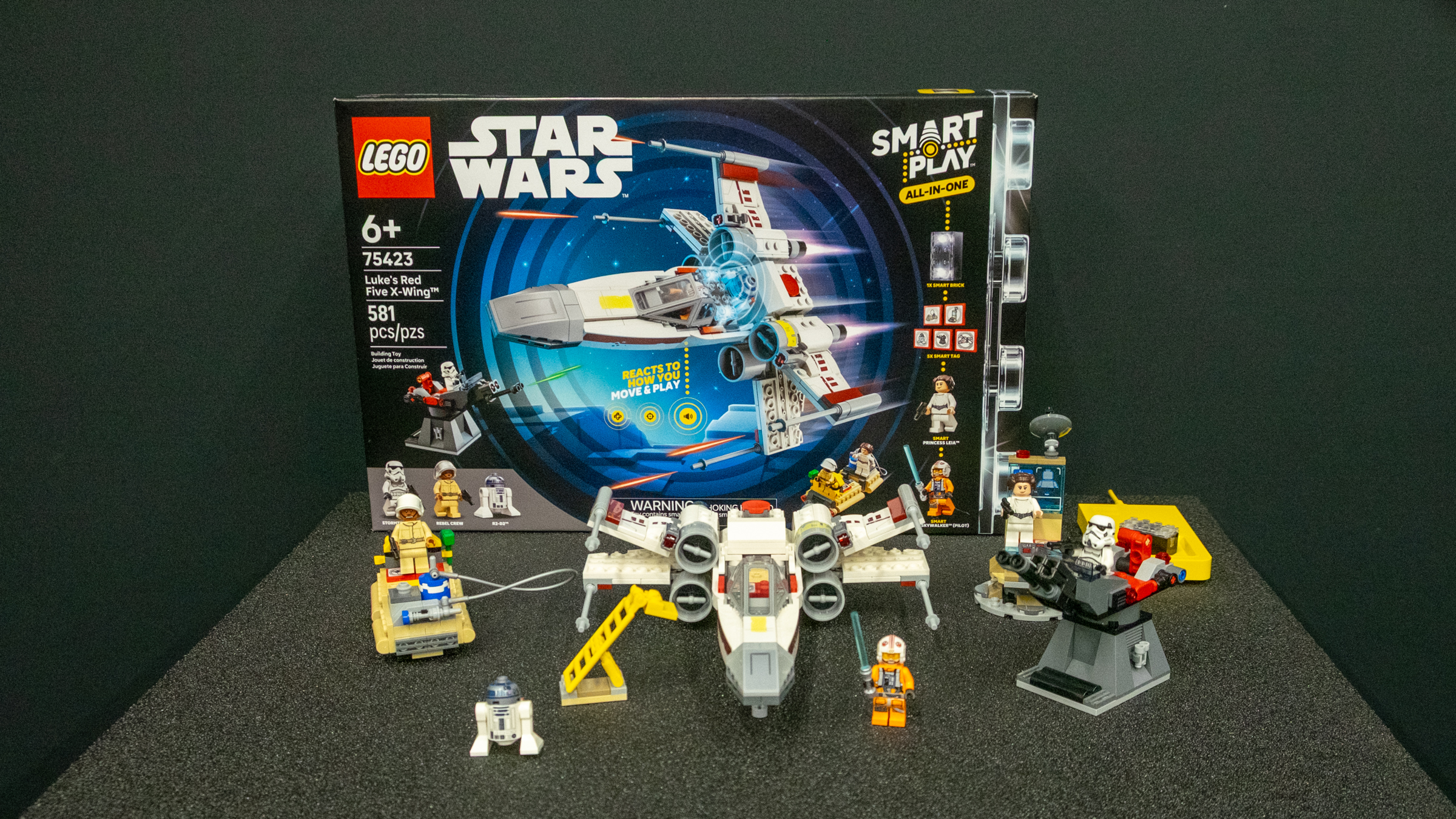
Lego Star Wars Smart Play: Luke's Red Five X-Wing
Nathan Ingraham for Engadget
LEGO’s new Smart Play system feels far more compelling in person than it did on stage. The Smart Brick, combined with Smart Tags and Smart Minifigures, responds dynamically to movement, proximity and context, triggering sounds and interactions without screens or apps. Seeing kids physically act out Star Wars battles while the bricks reacted in real time made it clear this is designed first and foremost for active social play, not digital distraction.
WheelMove
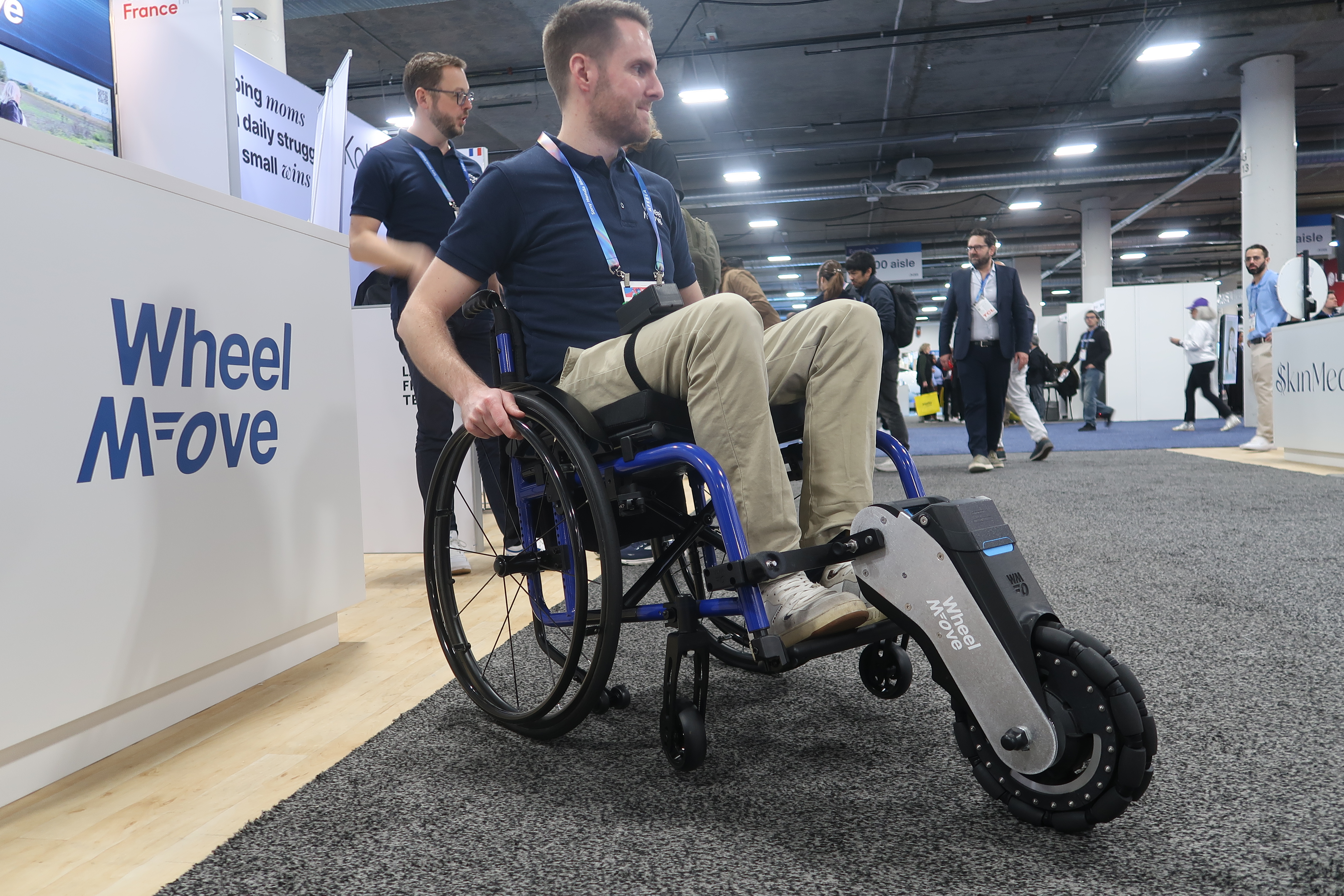
A man sits in a manual wheelchair with an add-on attached that gives it a large central front wheel and raises the casters off the ground
Cheyenne MacDonald for Engadget
WheelMove’s motorized wheelchair attachment is compact, surprisingly quick to install and genuinely empowering in action. The add-on lifts a chair’s front wheels and adds powered assistance, making grass, cobblestones and slopes far easier to navigate. After seeing it demonstrated on uneven surfaces, it’s easy to imagine this opening up spaces that would otherwise be exhausting or inaccessible for manual wheelchair users.
Throne
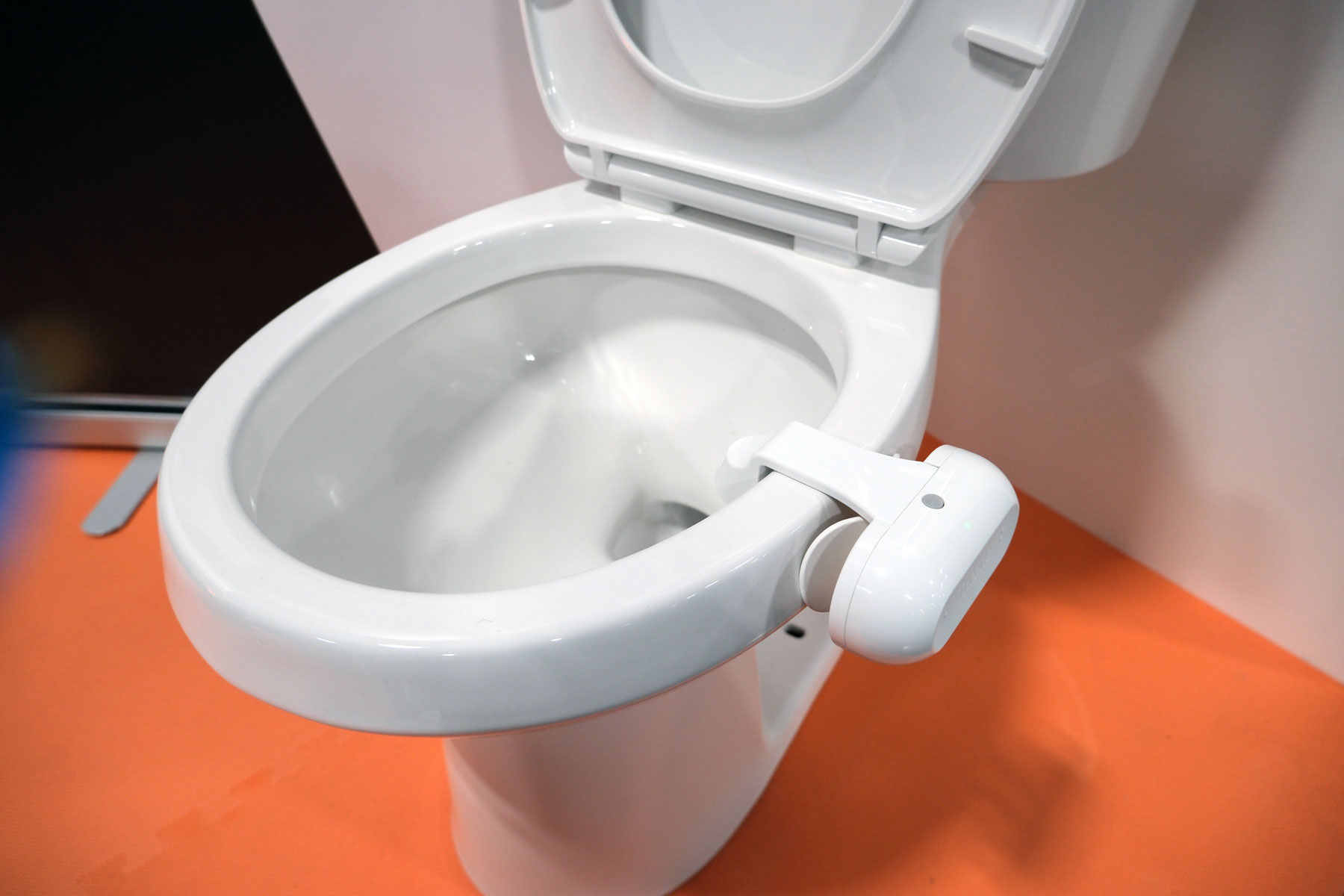
Image of the Throne Toilet Computer perched on the side of a toilet.
Daniel Cooper for Engadget
Throne’s toilet-mounted health tracker is exactly as strange as it sounds, but it’s also thoughtfully designed. Using computer vision to analyze bowel movements and urination, the device aims to establish a personal baseline and flag changes over time, with gut health and GLP-1 users firmly in mind. It’s too early to judge accuracy, but seeing it in person made it feel less gimmicky and more like a niche wellness tool worth testing.
IKEA smart home gear
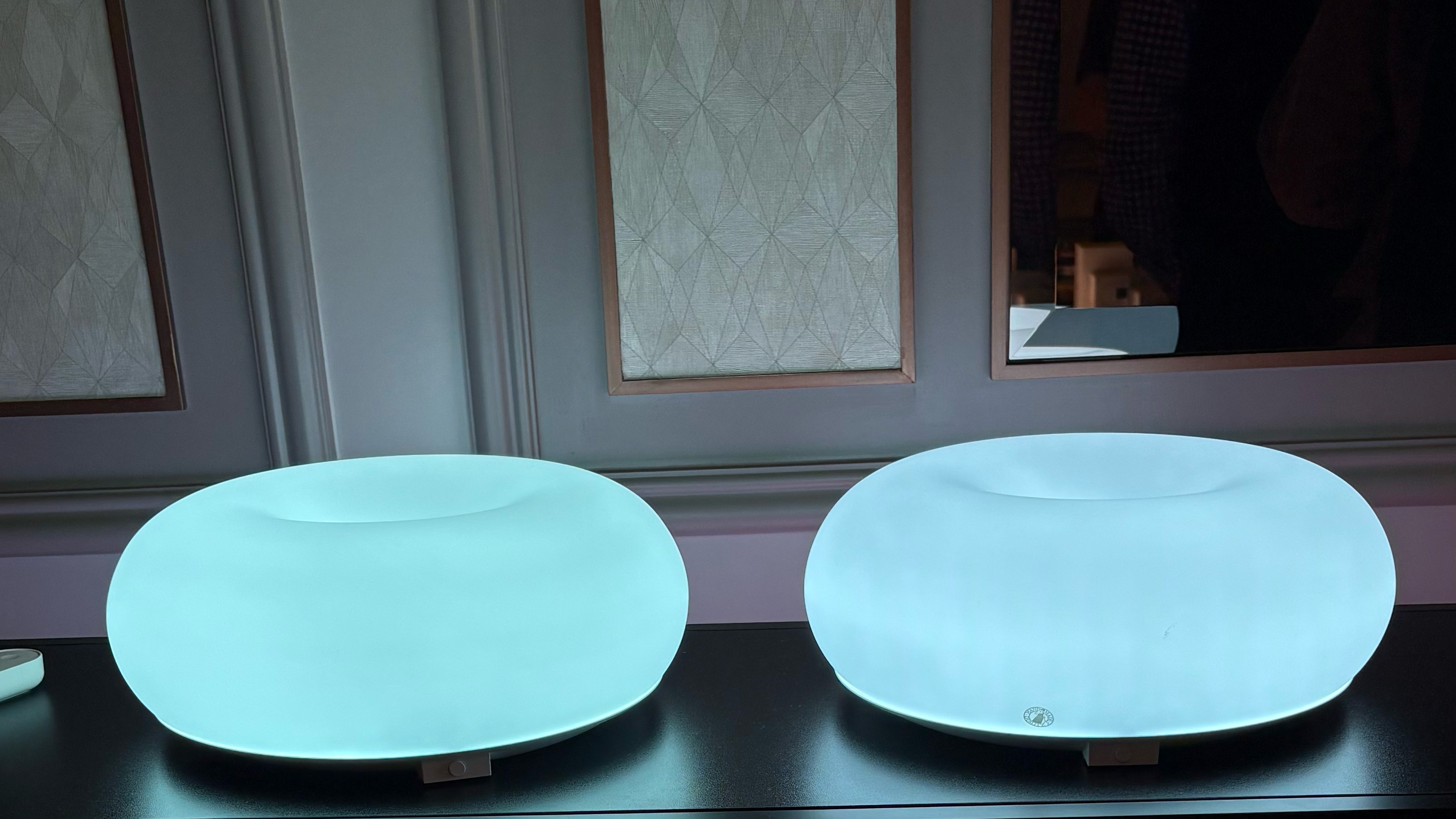
The popular VARMBLIXT donut lamp is now smart.
Amy Skorheim for Engadget
IKEA’s first CES appearance leaned heavily into what it does best: simple, affordable design. The new Matter-compatible smart home range includes bulbs, plugs, remotes and sensors priced low enough to make smart homes feel accessible again. Standouts like the magnetically mounted BILREA remote and playful TEKLAN lamps showed that IKEA hasn’t sacrificed charm in its push toward interoperability.
SwitchBot
Switchbot's Onero H1.
Karissa Bell for Engadget
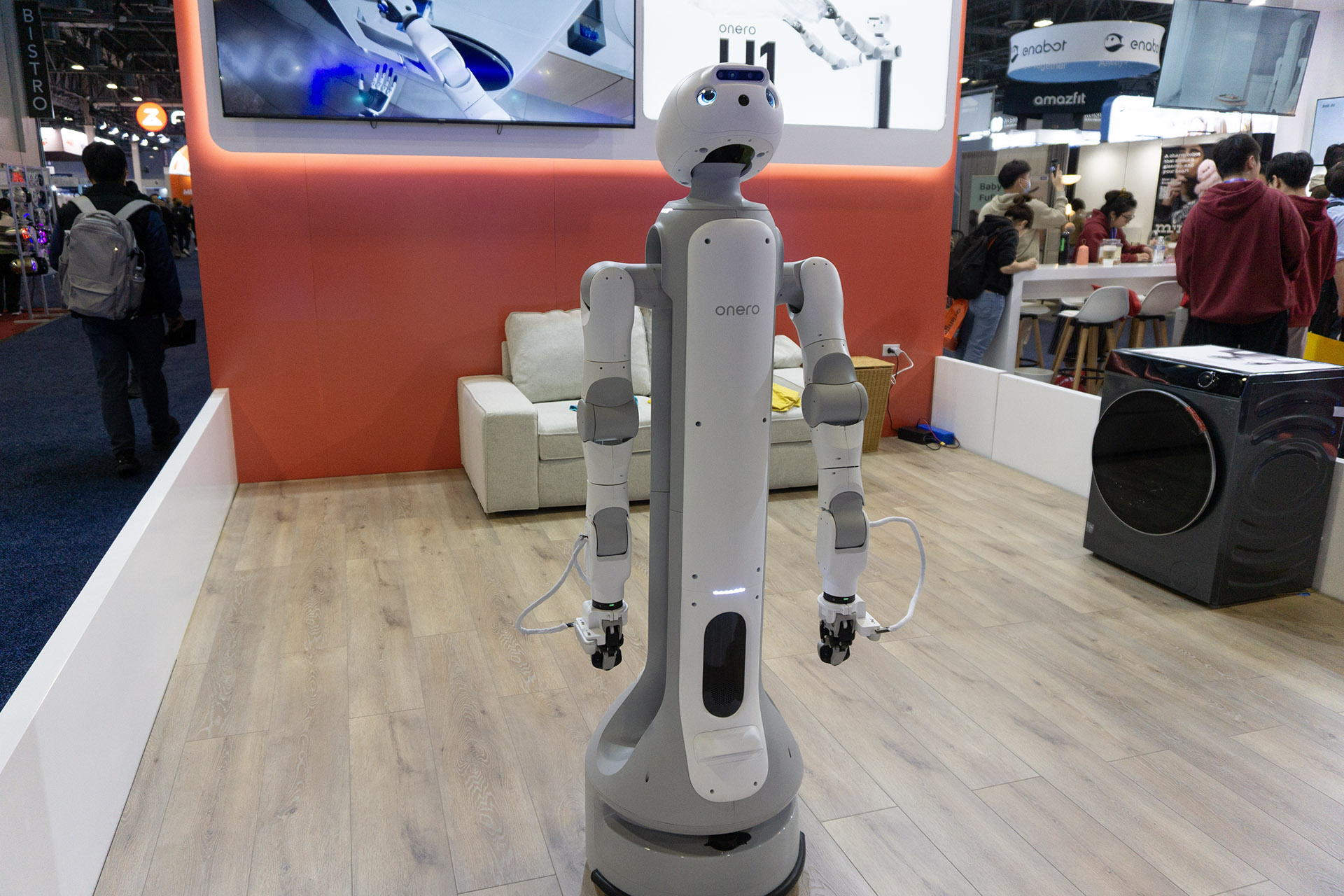
SwitchBot’s Onero H1 was one of the most intriguing robots on the show floor because it’s meant to ship this year. The wheeled humanoid robot uses articulated arms and onboard AI to perform household chores, like loading a washing machine, albeit at a deliberate pace. Watching it work made the case that speed matters less than reliability when a robot can handle tasks while you’re not home.
Eyebot vision testing
Image of the Eyebot Kiosk
Daniel Cooper for Engadget
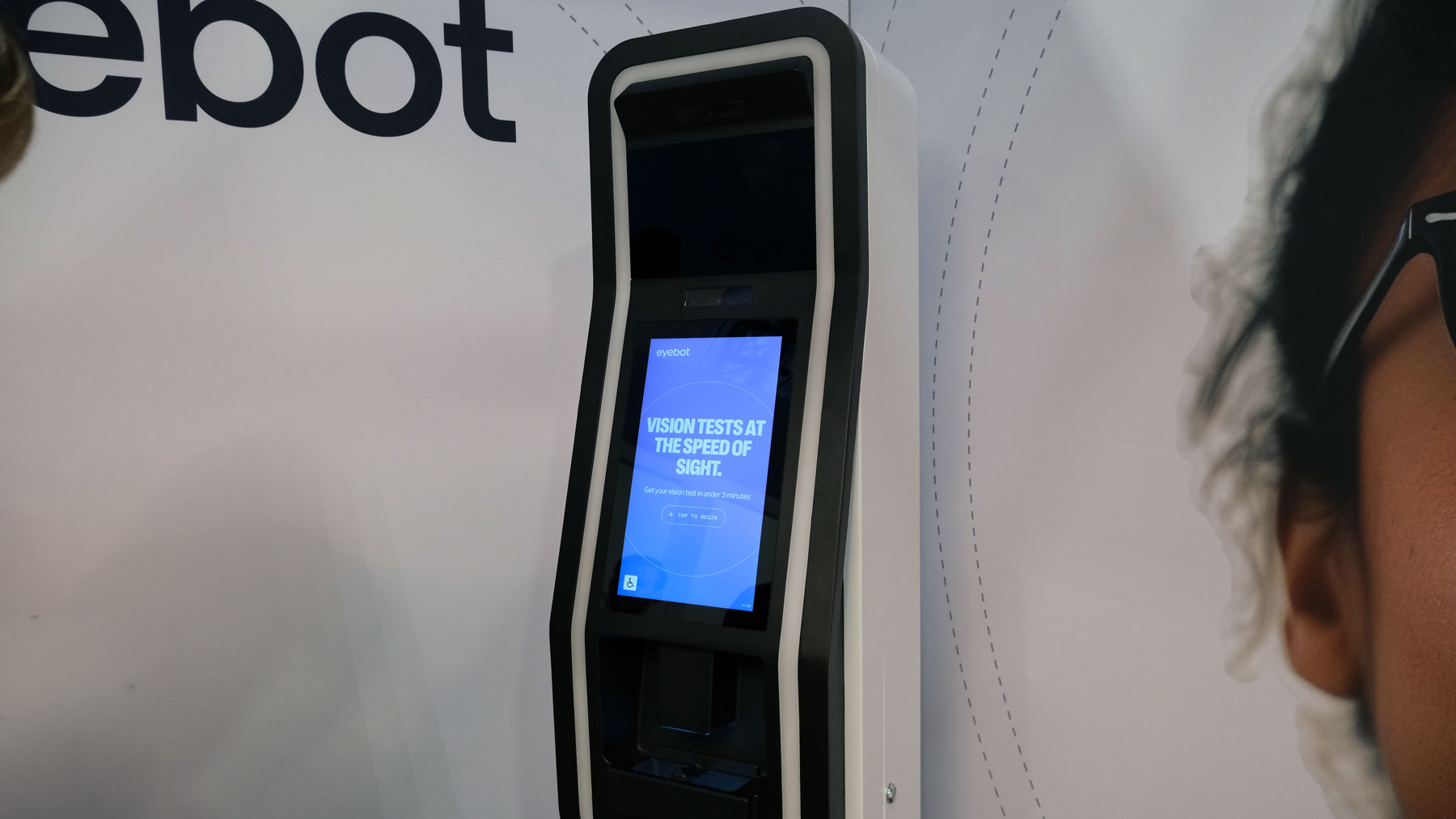
Eyebot’s self-service vision testing kiosk turns a 20-minute optometrist visit into a process that takes just a few minutes. The test is guided by a large touchscreen and reviewed remotely by a licensed eye doctor, striking a balance between automation and oversight. After comparing results with a recent traditional exam, the accuracy felt reassuring, even if it doesn’t replace full eye health screenings.
Dephy Sidekick sneakers
Dephy's Sidekick, which the company describes as "footwear."
Karissa Bell for Engadget
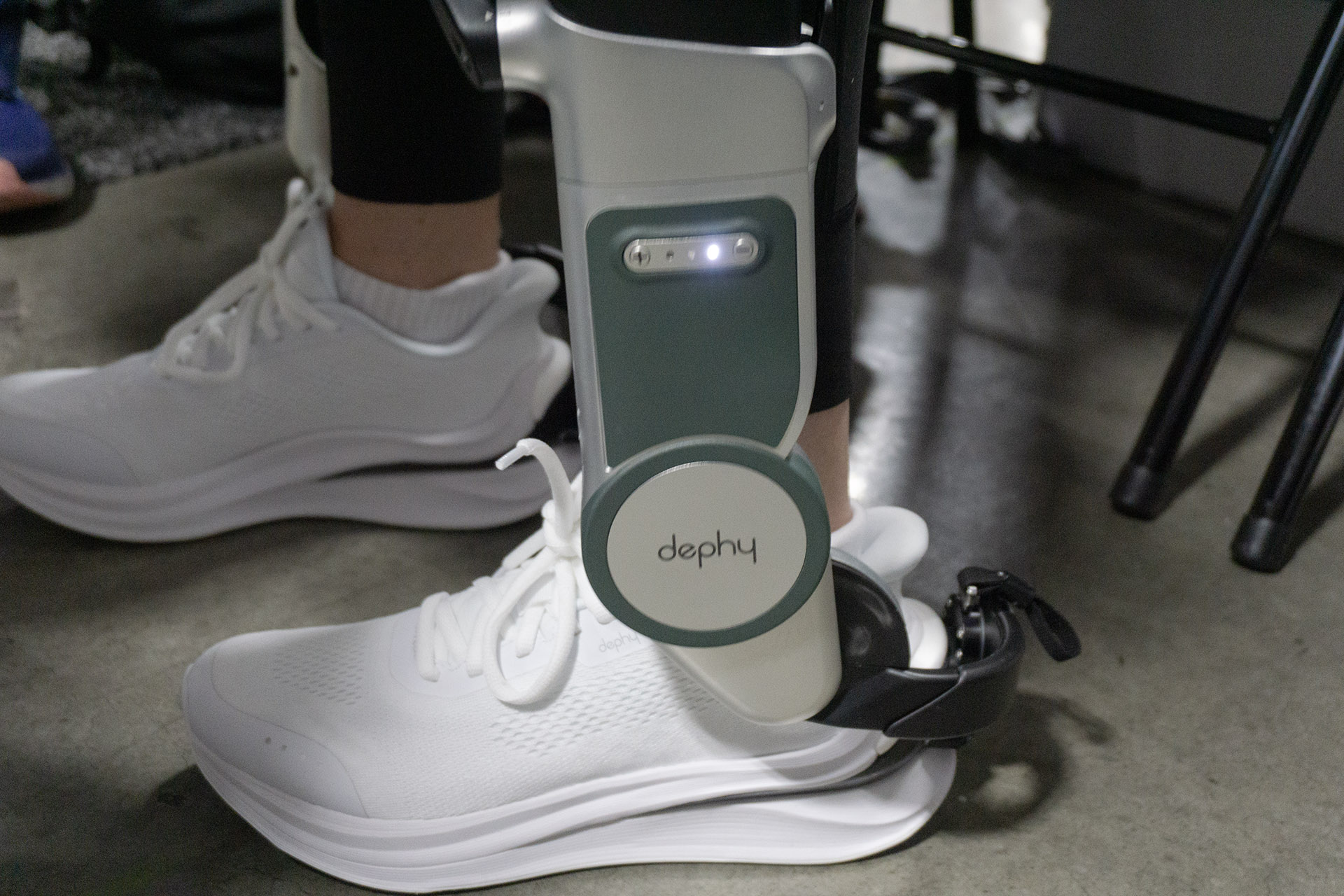
Dephy’s Sidekick robotic sneakers deliver a subtle but noticeable boost with each step. The ankle-mounted exoskeleton adapts to your gait, and walking with it feels bouncy rather than overpowering, especially at lower assist levels. It’s not for everyone, but after hours on the CES floor, the idea of powered help for people with limited mobility started to make a lot of sense.
Klipsch headphones
Klipsch Atlas HP-1
Billy Steele for Engadget
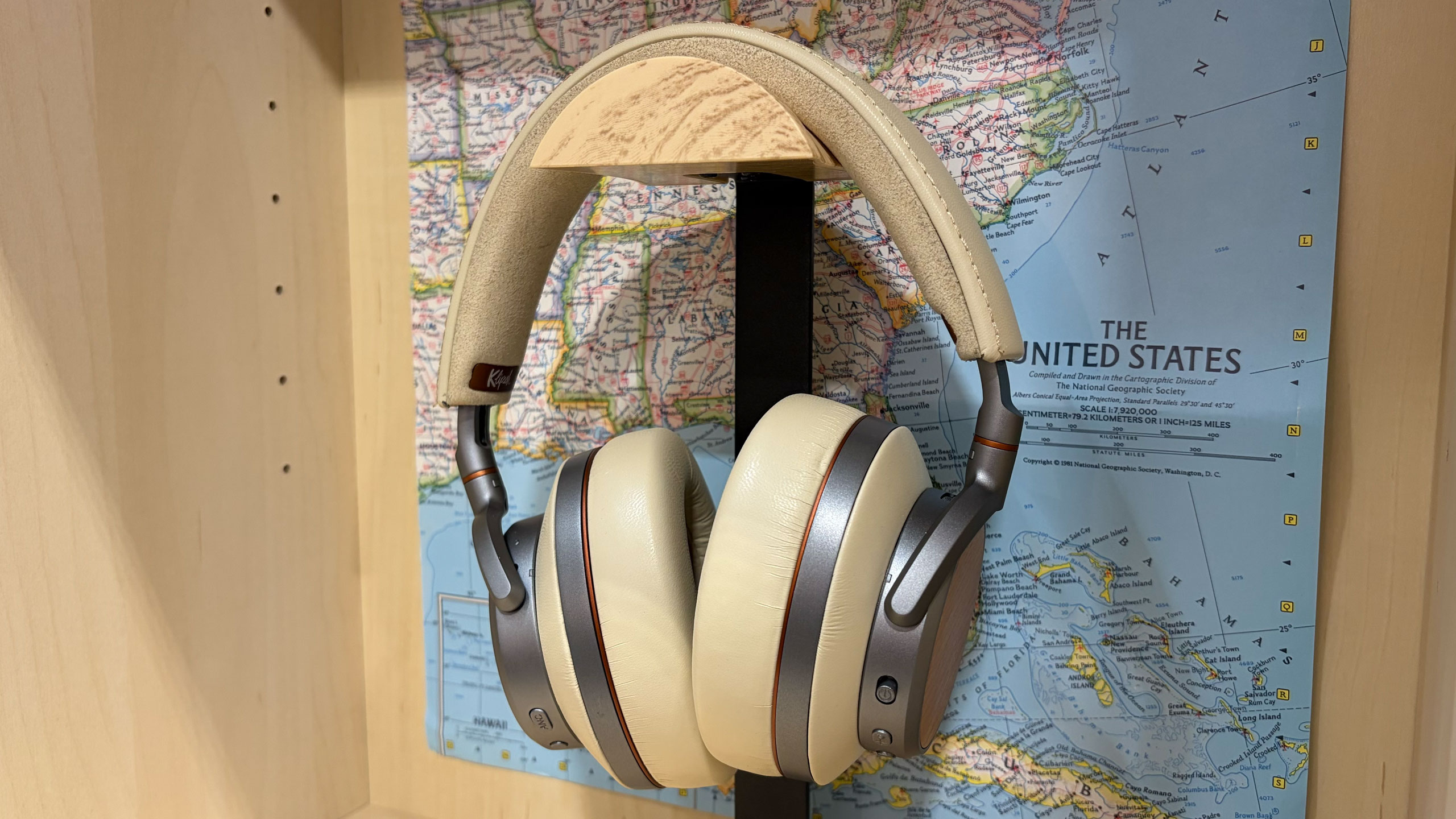
Klipsch’s return to headphones starts strong with the Atlas HP-1. The wireless ANC model looks premium, borrows familiar design cues and delivers the brand’s warm, balanced sound in early demos. Pricing is still unknown, but based on build quality and audio alone, these feel positioned firmly at the high end.
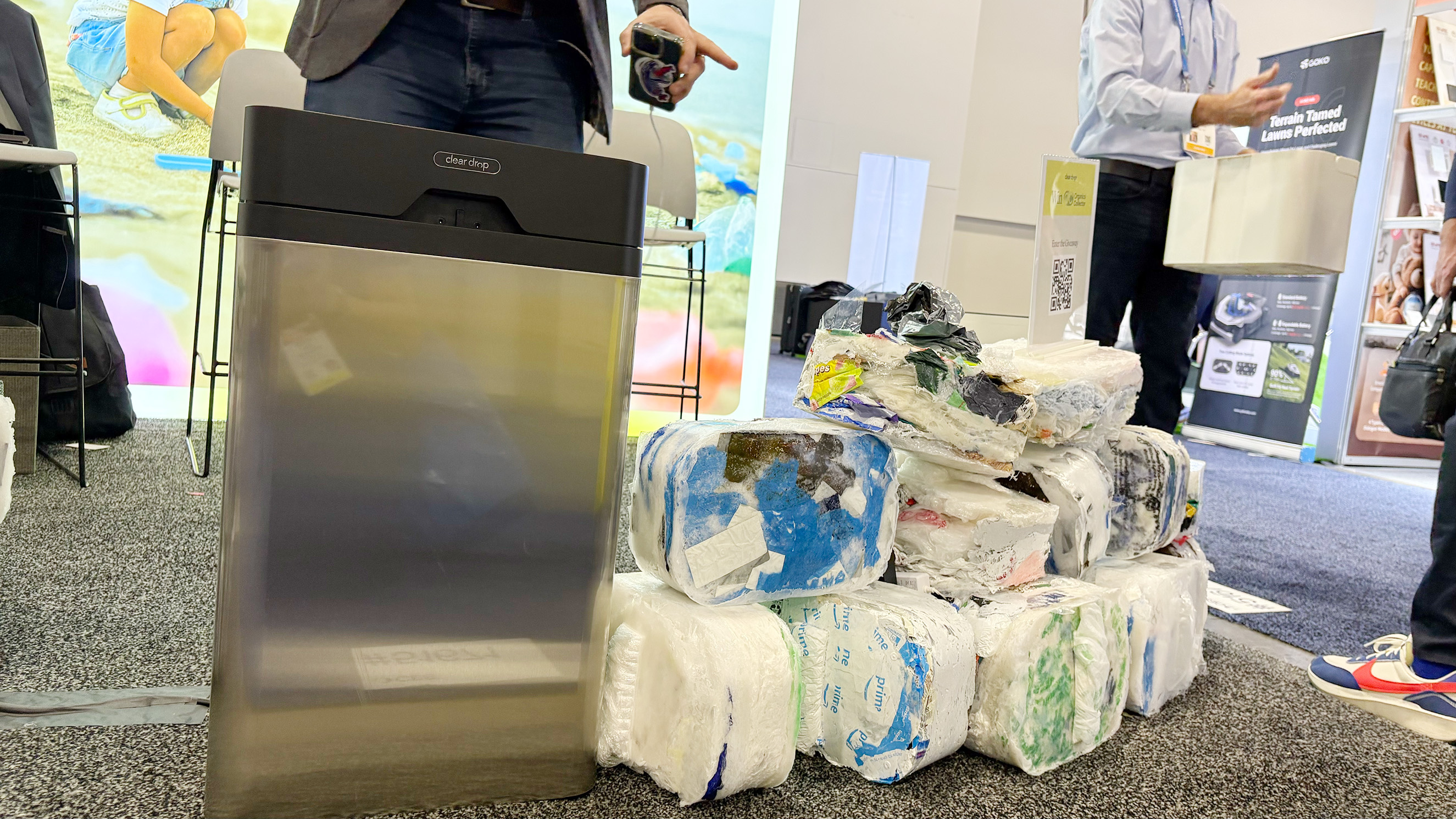
Clear Drop
The Clear Drop soft plastics compactor next to a pile of the bricks it produces.
Amy Skorheim for Engadget
Clear Drop’s home plastic compactor tackles a real recycling problem most households face. The machine takes bags and wraps them into dense bricks that can be shipped to partner recycling facilities, and watching it swallow soft plastics was oddly satisfying. It’s expensive and not perfect, but it’s one of the more practical attempts at dealing with waste outside municipal systems.
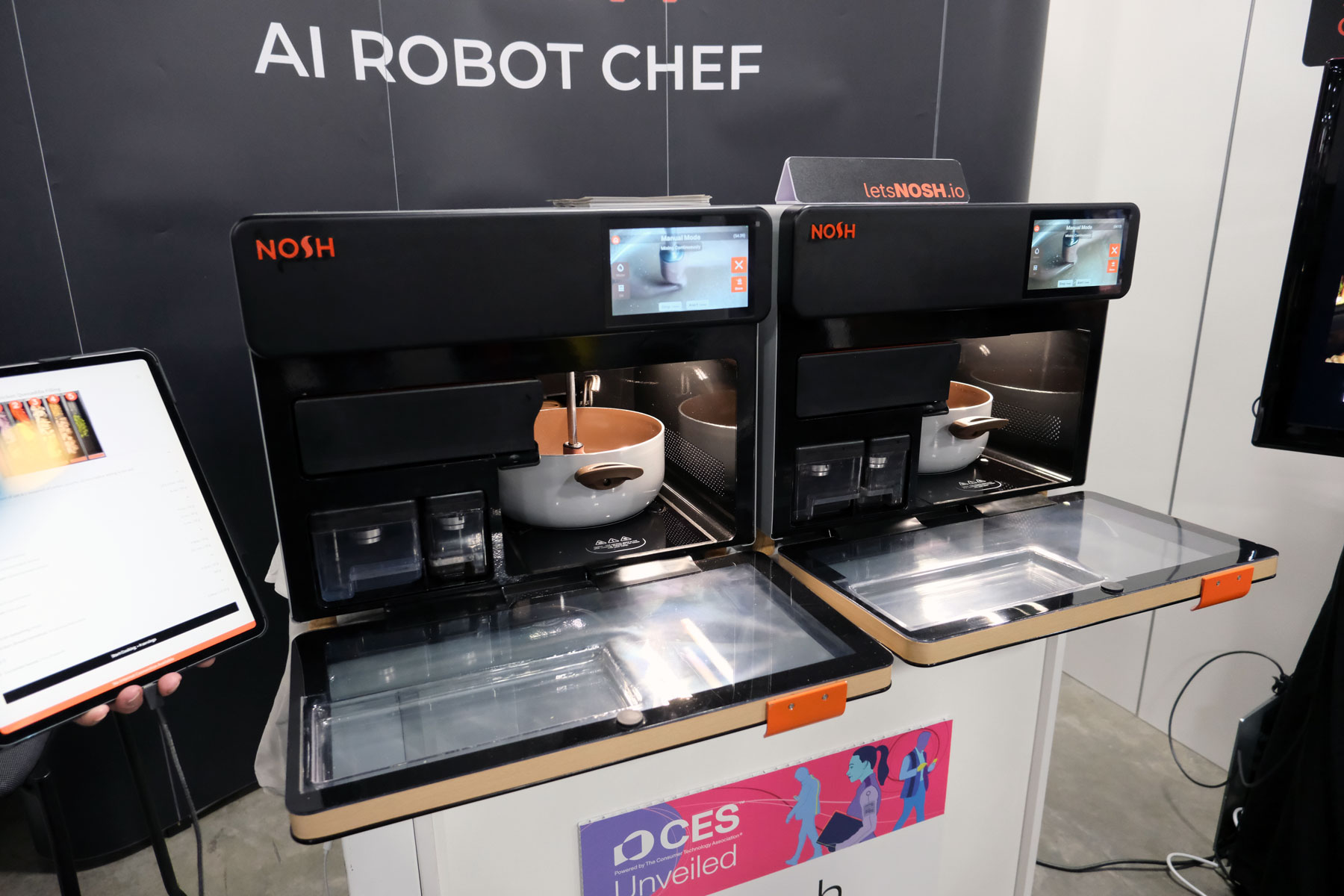
Nosh cooking robot
Nosh
Daniel Cooper for Engadget
Nosh is an AI cooking robot designed for low-effort, sauce-heavy meals like soups, curries and pasta. Multiple ingredient trays allow you to prep meals ahead of time, then slide them in when you’re ready to eat. It’s not replacing real cooking anytime soon, but as an alternative to microwaved meals, it’s more appealing than expected.
Day two leaned heavily toward tech you could physically interact with, whether that meant flying Lego ships through the air, watching a robot load laundry or testing a vision exam in a kiosk. With more show-floor time still ahead, we’ll be back with additional hands-ons, impressions and daily recaps as CES 2026 continues.
This article originally appeared on Engadget at https://www.engadget.com/big-tech/ces-2026-day-2-all-of-the-coolest-tech-we-saw-on-the-show-floor-during-the-second-day-134608348.html?src=rss
CES is a launchpad for serious tech, but it’s also where companies proudly unveil devices that make you stop mid-scroll and whisper, “Wait, this is real?” We’ve been keeping a running list of the strangest, funniest and most unexpectedly compelling gadgets we’ve spotted in Las Vegas, from bathroom computers to robots that look like they escaped a Pixar pitch meeting.
Also, be sure to check out our list of the best CES tech we saw this year at the show.
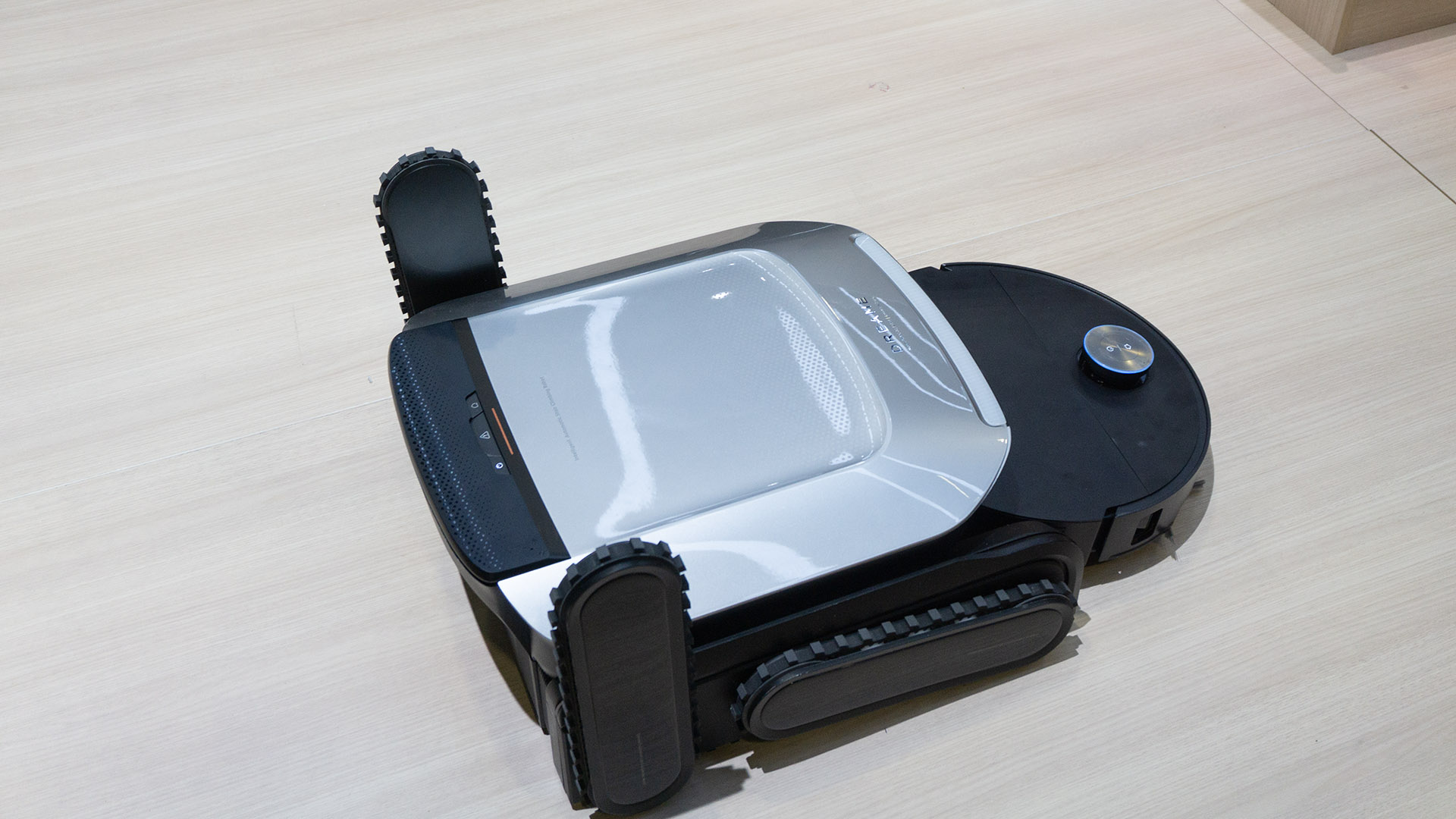
Dreame Cyber X robot vacuum
Dreame Cyber X
Engadget
Robot vacuums can be a little unsettling already, but Dreame’s Cyber X takes it up a level by sprouting chunky treaded “legs” and hauling itself up a full staircase like a tiny cleaning tank. In person, it navigated both up and down with surprising confidence, using its treads horizontally rather than actually stepping. The vacuum itself docks inside the climbing rig, so it’s more about getting your bot to the next floor than scrubbing the stairs, which still feels like a fair trade if you hate hauling appliances around.
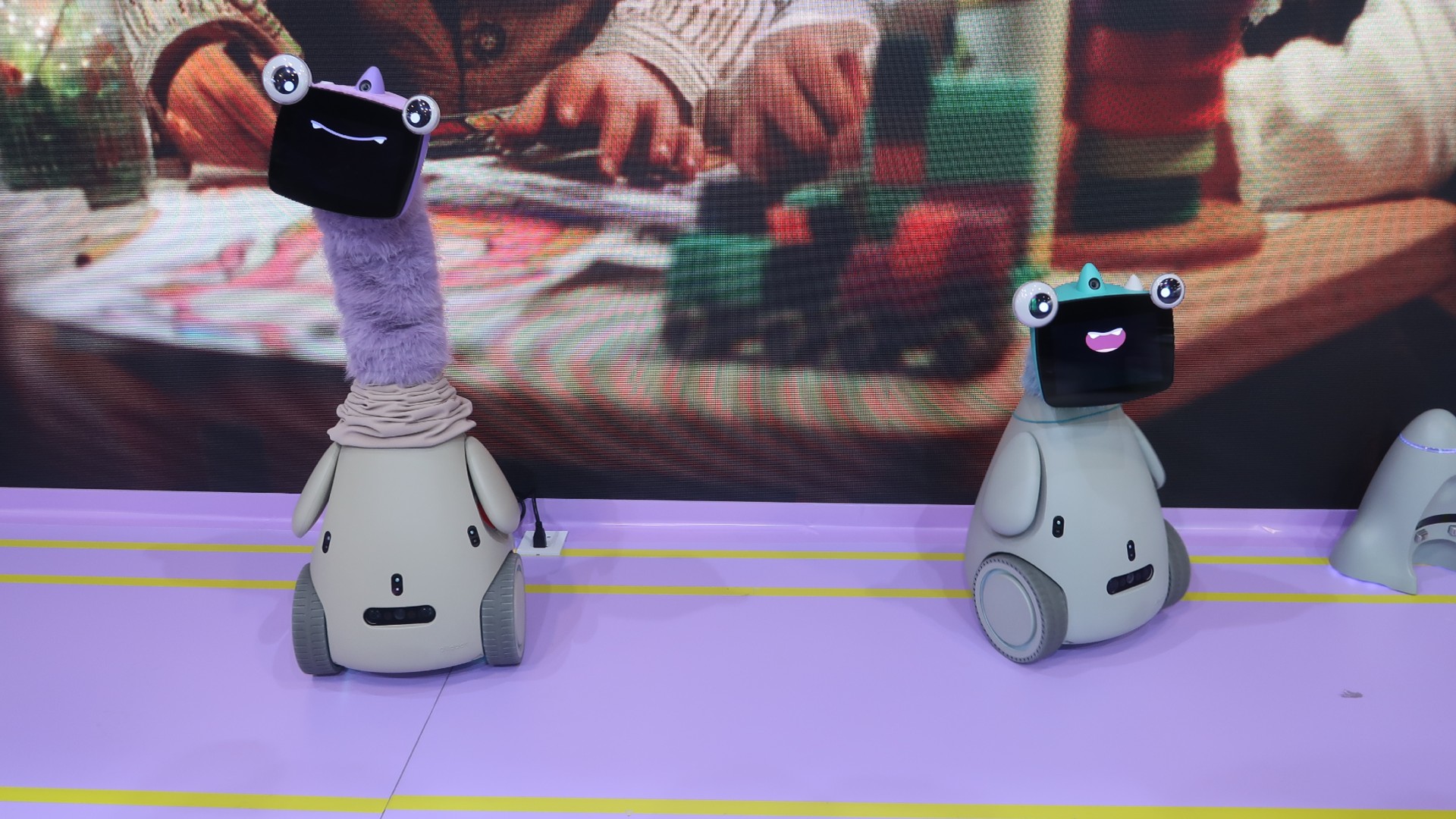
OlloBot
Two OlloBots — one with a long furry purple neck, making it about two feet taller than the other — are pictured on a light purple floor, in front of a screen displaying a closeup of a child playing with blocks.
CES loves a companion robot, but OlloBot might be the first one we’ve met that’s part cyber pet, part penguin, part ET and somehow comes with a warm, furry, telescoping neck. Its “face” is basically a tablet for expressions, photos and messages, and it’s meant to evolve a personality over time based on how your household interacts with it. Bonus: its memories live in a removable heart-shaped module, so if the body breaks, you can (theoretically) transplant your robot’s soul into a new shell.
ASUS ROG Zephyrus Duo
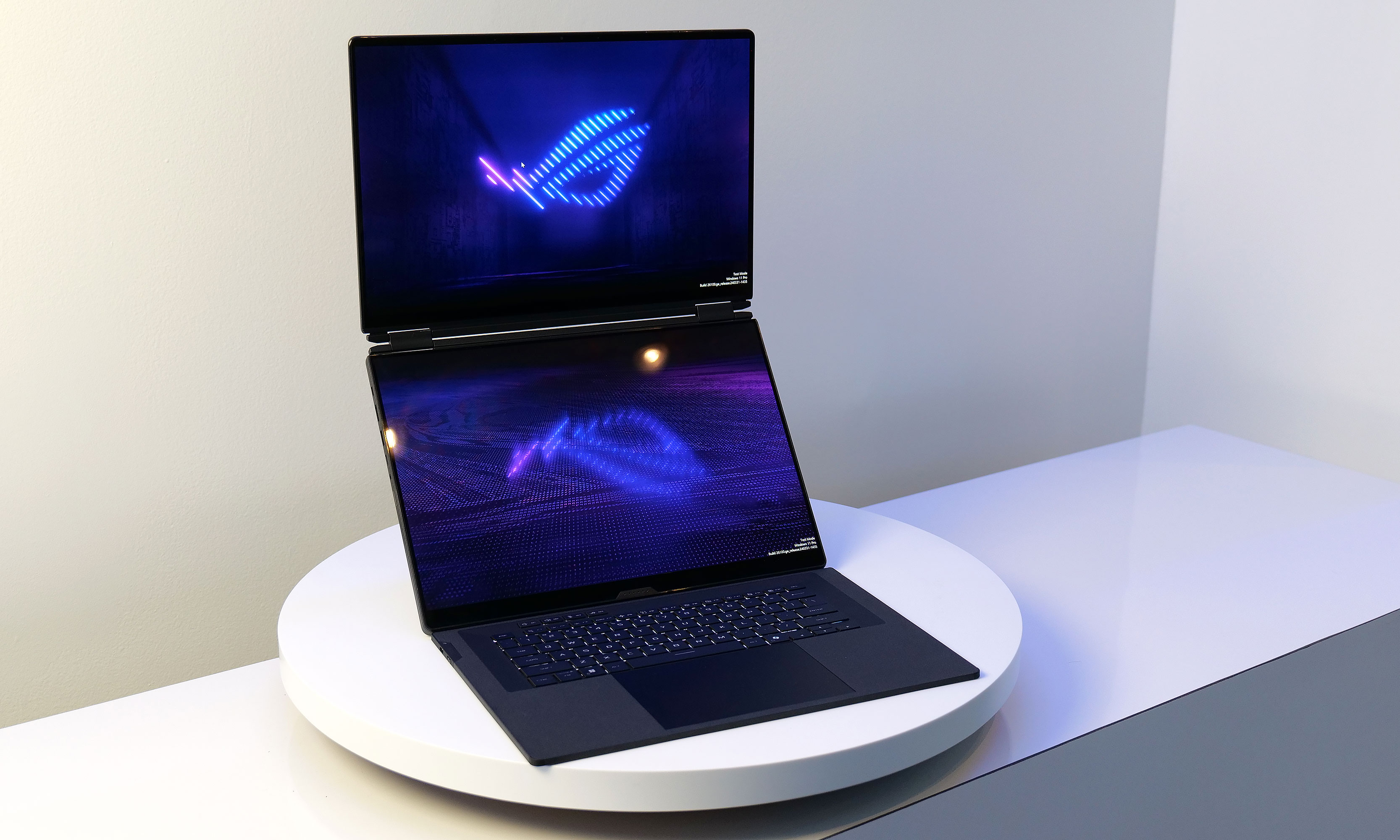
On top of having two displays, the Zephyrus Duo's screens also feature excellent brightness at up to 1,100 nits.
Dual screens on a laptop aren’t new, but ASUS cramming two 16-inch OLED panels into a gaming notebook is the kind of chaotic CES energy we respect. The Zephyrus Duo uses a detachable keyboard and a built-in kickstand so you can stack screens, spread out, or generally arrange your portable battle station however you like. It’s hefty, it’s ambitious and it almost certainly won’t be cheap — but if you’ve ever wanted your gaming rig to moonlight as a two-screen creator setup, this is the loudest possible way to do it.
Throne toilet computer
The Throne device perched on the side of a toilet.
Daniel Cooper for Engadget
Throne is a toilet-mounted computer that uses cameras and microphones to analyze your bowel movements, which is a sentence we did not expect to type this week. Designed to establish a personal “baseline” for your bathroom habits, it aims to flag changes that could indicate digestive or metabolic issues, including for people on GLP-1 drugs. We can’t speak to its effectiveness yet… but if knowledge is power, this thing might know way too much.
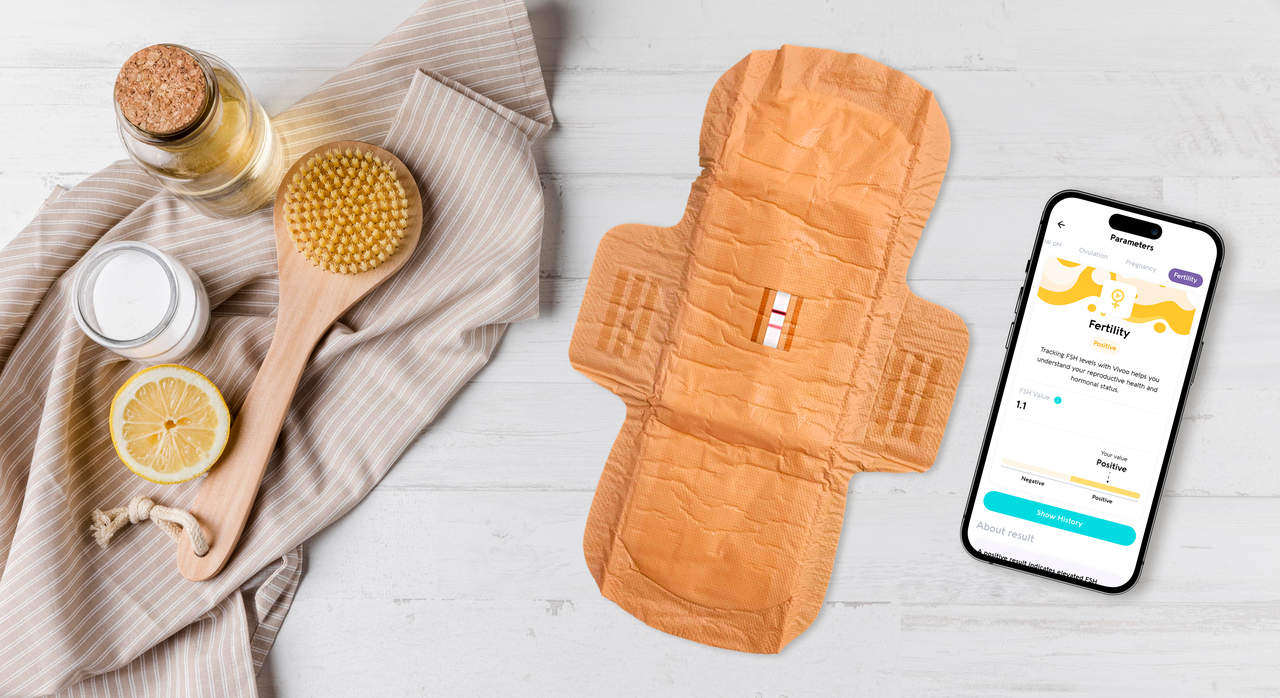
Vivoo Hygienic FlowPad smart menstrual pad
Vivoo's FlowPad
Vivoo
Vivoo looked at at-home health tracking and decided the bathroom was still underutilized. Alongside its clip-on smart toilet that analyzes your hydration by literally monitoring your pee, the company also unveiled a menstrual pad infused with microfluidics that can track fertility and hormone markers once you scan it with your phone. It’s a bold reminder that CES 2026 is fully committed to quantifying everything — even the stuff we’d rather not discuss over brunch.
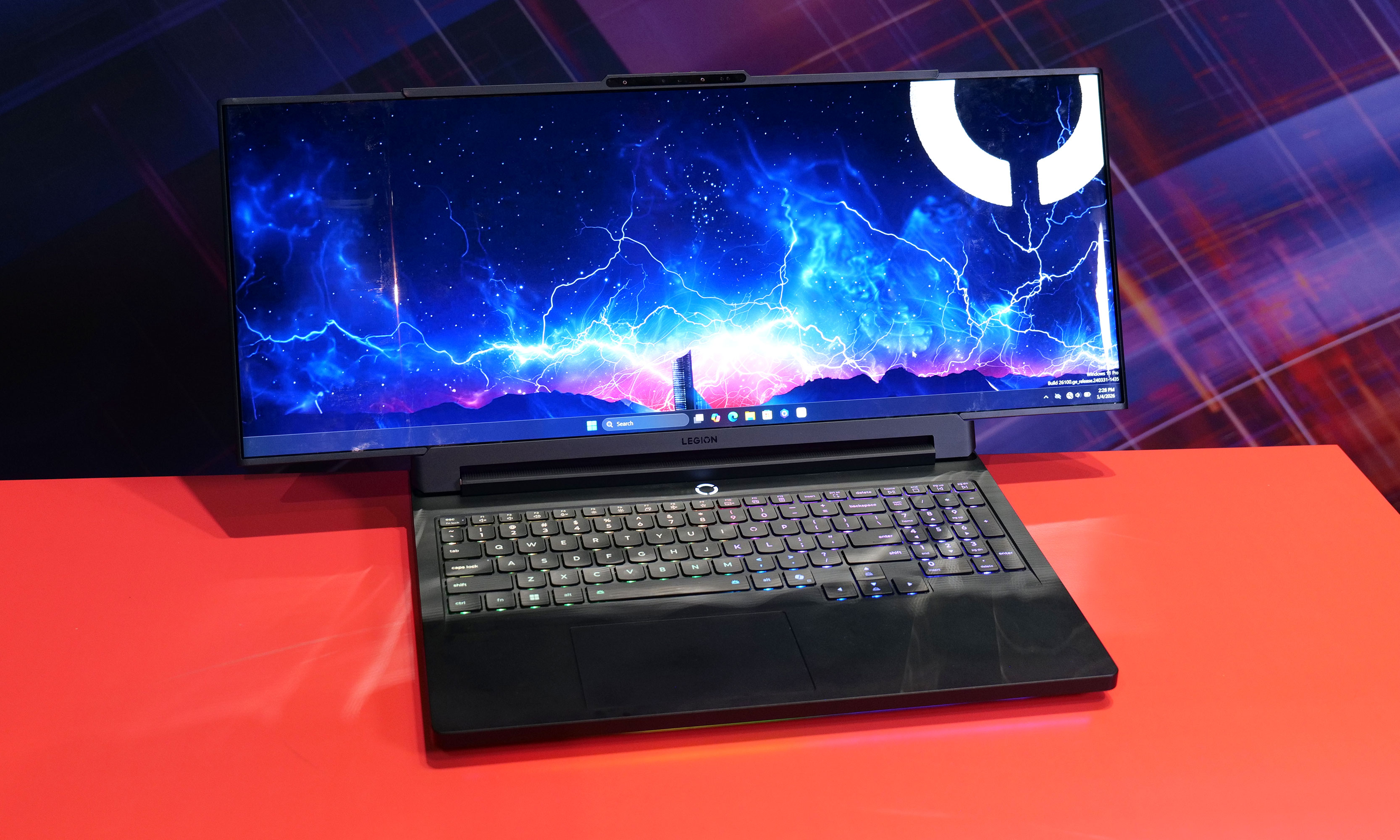
Lenovo Legion Pro Rollable
While it normally has a 16-inch display, the Lenovo Legion Pro Rollable concept's screen can expand up to 23.8 inches across.
Sam Rutherford for Engadget
Lenovo’s Legion Pro Rollable is what happens when a gaming laptop decides it wants to be a widescreen monitor mid-match. Its 16-inch display can physically expand sideways into ultra-wide formats, turning flight sims and racing games into full cockpit experiences at the press of a couple of keys. It’s impractical, faintly ridiculous and absolutely the kind of CES concept we hope survives long enough to escape the demo floor.
Lenovo ThinkBook XD Rollable
With its XD Rollable concept, Lenovo took the Thinkbook Plus Gen 6's basic design and made it even more futuristic by allowing its flexible display to wrap around onto its lid.
Sam Rutherford for Engadget
If the Legion Pro Rollable is excessive, the ThinkBook XD Rollable is philosophically confusing. Its flexible display doesn’t just grow taller, it wraps over the lid to create a “world-facing” screen for people sitting across from you, which feels either futuristic or deeply unnecessary depending on your mood and situation (maybe this is the perfect device for hotel check-ins and other points of sale?). Still, it’s a gorgeous piece of hardware theater and proof Lenovo is determined to roll screens onto every surface it can reach.
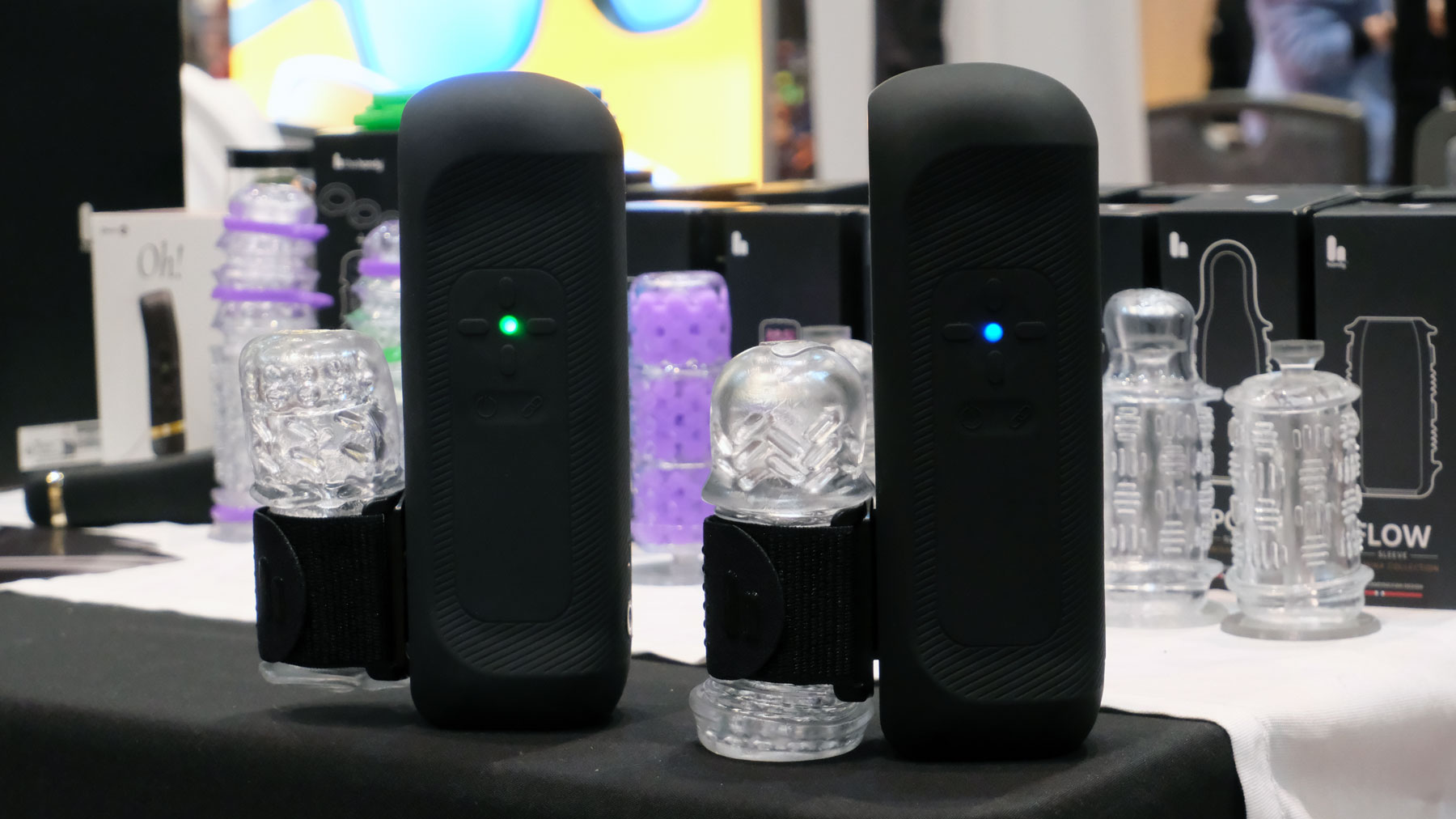
OhDoki Handy 2 Pro
Image of The Handy 2 and Handy 2 Pro
Daniel Cooper for Engadget
OhDoki’s Handy 2 Pro arrived at CES with one clear message: more power, fewer limits and absolutely no chill. The upgraded sex toy model cranks battery life up to five hours and unlocks a Turbo mode so aggressive it was described as “overclocked,” which is not a term we expected to hear in this category. It can also charge your phone, because apparently even pleasure tech needs to justify itself with productivity.
iPolish
iPolish
Daniel Cooper for Engadget
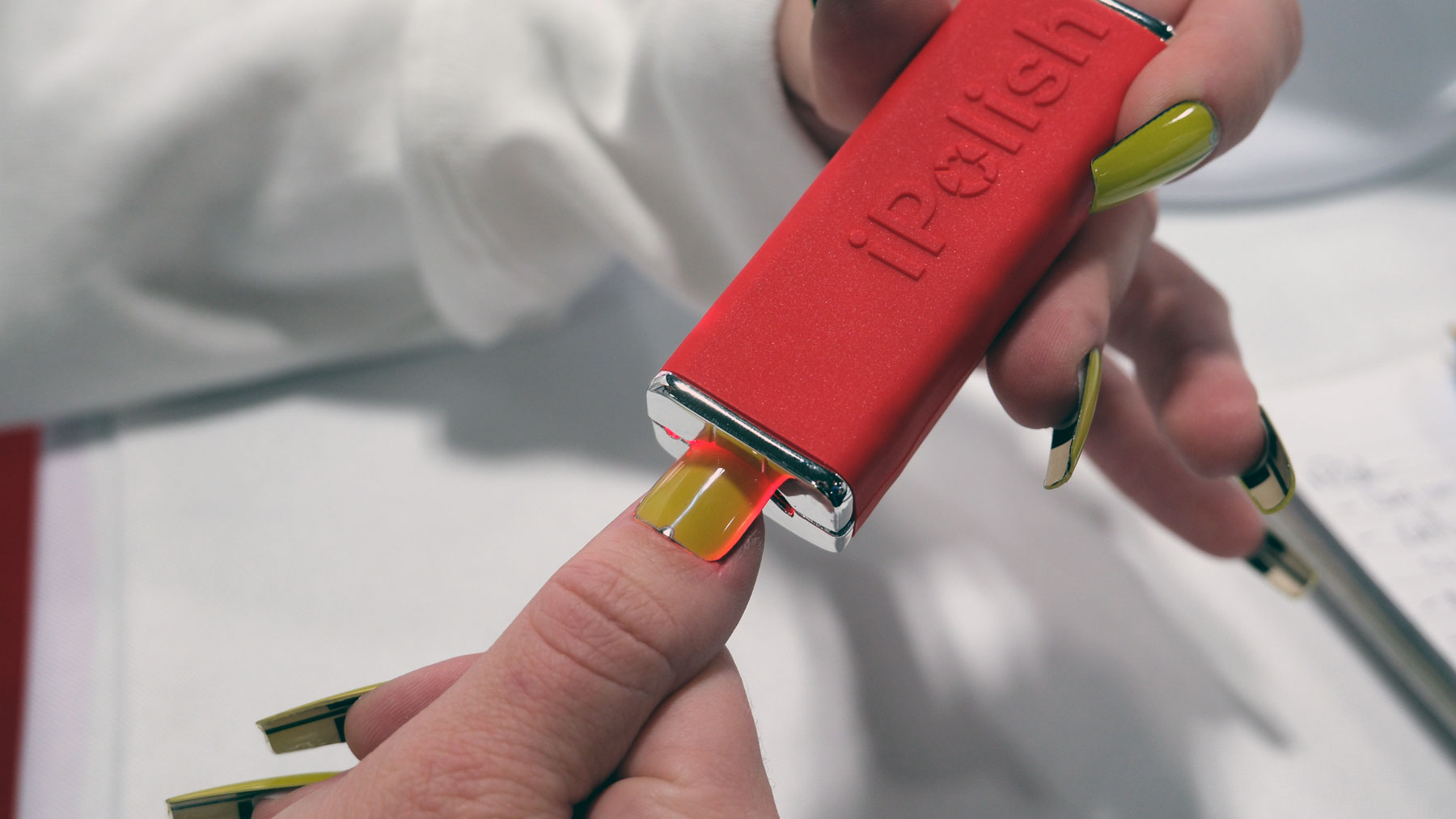
iPolish finally made Total Recall nail tech real, minus the dystopia and Schwarzenegger. These press-on acrylic nails use an electric charge to switch between hundreds of colors in seconds, letting you change your manicure as often as your outfit. It’s delightfully impractical, surprisingly affordable and the most convincing argument yet for treating your nails like a customizable display.
Hisense S6 FollowMe display
Hisense S6 FollowMe display
Hisense
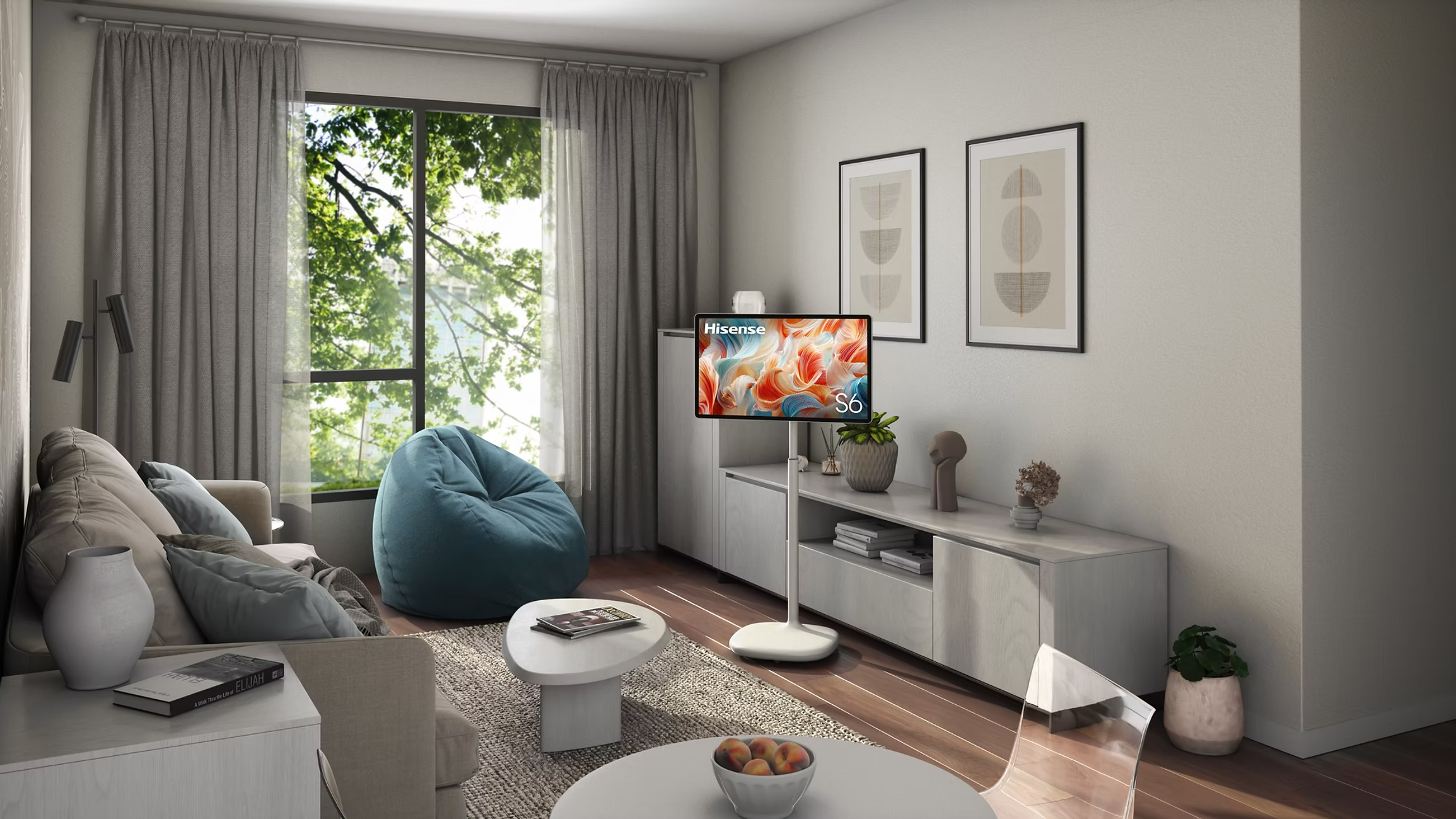
Despite the name, Hisense’s FollowMe doesn’t actually follow you at all. It’s a 32-inch 4K smart display on wheels that you manually drag from room to room, delivering strong TV-and-VCR-on-a-cart energy, just with Wi-Fi 6, a built-in camera, far-field mics and a 10-hour battery. It won’t judge you, chase you or demand attention, which might make it one of the least emotionally exhausting smart displays at CES.
GE Profile Smart Fridge
Finally! A reasonably sized fridge screen.
Sam Rutherford for Engadget
If you’ve ever bought a “just in case” bag of spinach and discovered three more at home, GE’s latest smart fridge wants to be your grocery reality check. A camera in the crisper records what’s inside, while a built-in barcode scanner in the water dispenser can add items to your shopping list with a quick wave, no app fumbling required. The AI bits are mostly there to answer practical questions like “Where’s my water filter?” which is the most convincing argument we’ve heard for putting a voice assistant on a fridge.
L’Oréal LED eye mask
A pair of transparent eye masks with wires and bulbs inside them.
L'Oréal
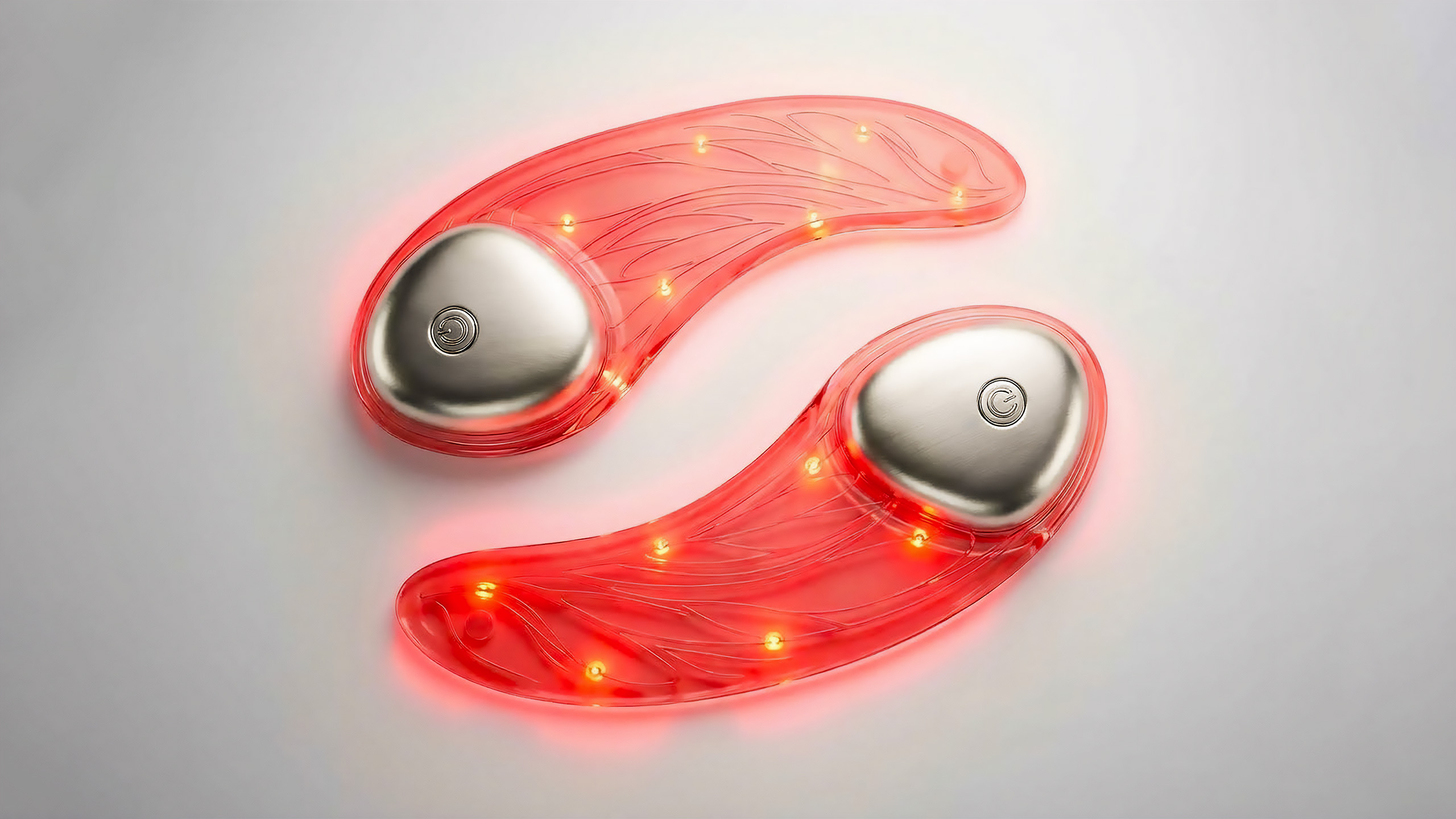
L’Oréal’s beauty tech lineup includes an LED eye mask that looks delightfully ridiculous in the best way: ultra-thin, semi-transparent silicone with visible microcircuitry that makes it feel like sci-fi skincare. The company says it precisely controls red and near-infrared wavelengths in 10-minute sessions, and it’s working on a companion serum so your skin doesn’t feel like it’s been left out to dry.
This article originally appeared on Engadget at https://www.engadget.com/the-weirdest-tech-weve-seen-at-ces-2026-so-far-134056504.html?src=rss

 Anmelden