❌

Normale Ansicht

Amazon is adding AI-powered assistant to One Medical

Amazon is introducing an AI-powered assistant to One Medical, the tech-forward primary care provider it acquired in 2023. Dubbed 'Health AI,' Amazon says the tool "provides 24/7 personalized health guidance based on your medical records."

The company says Health AI can explain lab results, help manage medications, and book appointments for patients. Amazon also says it can "analyze images" but doesn't specify whether this means medical imaging or user uploaded photos. While the company specifically says the tool "complements, but does not replace," a patient's healthcare provider, it also vaguely says the AI can "answer general and complex health questions" while "considering your unique health history."

"Health AI recognizes when symptoms, situations, or specific queries require or benefit from human clinical judgment," reads the company's announcement, while giving few details on just how much medical advice the AI tool is empowered to give.

Use of AI tools brings up data privacy concerns, and Amazon says it follows HIPAA-compliant privacy and security practices. The company says that a user's conversations with Health AI are "not automatically added to your medical record." This of course implies the option to do just that. It also says the company doesn't sell members' protected health information.

One Medical has a limited number of brick-and-mortar offices in major metros throughout the US, but the focus of the company seems to be telehealth services. These services are offered as part of an annual subscription, which is discounted for Amazon Prime members. This is only the latest investment Amazon has made in the healthcare space. In recent years the tech giant has begun same-day prescription deliveries in certain markets, and built vending machines for prescription drugs.

Health AI follows the trend of AI companies competing to enter healthcare with their AI-powered chatbots. Google added an AI health coach to the Fitbit app last year, and OpenAI announced a dedicated health portal within ChatGPT in January.

This article originally appeared on Engadget at https://www.engadget.com/ai/amazon-is-adding-ai-powered-assistant-to-one-medical-180803368.html?src=rss

©

© Amazon/One Medical

Amazon's Health AI in the One Medical app
  •  

The 512GB Samsung P9 microSD Express card is 33 percent off

If you're looking to expand the storage on your Switch 2, the 512GB Samsung P9 microSD Express card is on sale right now for 33 percent off, marked down to $80 from $120. With component prices skyrocketing these days, it's getting increasingly rare to see good storage on sale, and 512GB for $80 is a much better deal than you'll currently find directly from Nintendo.

The P9 boasts transfer speeds of up to 800MB/s, making moving games to the card that much faster. As for load times, in our testing we found that any microSD Express, the standard the Switch 2 requires, will offer roughly the same performance. This format is pretty new, so there aren't a ton of cards on the market. As such, the P9 makes our list of best microSD cards for the Nintendo Switch 2.

The P9 microSD Express is also compatible with the Steam Deck or any other gaming console that accepts the format, as well as cameras and more.

Follow @EngadgetDeals on X for the latest tech deals and buying advice.

This article originally appeared on Engadget at https://www.engadget.com/deals/the-512gb-samsung-p9-microsd-express-card-is-33-percent-off-143849572.html?src=rss

©

© Samsung

Two microSD cards.
  •  

Musk claims Tesla will restart work on its Dojo supercomputer

Elon Musk posted on X that Tesla will be restarting work on Dojo3, the third generation of its in-house supercomputer project. The Dojo team had been disbanded last year as the company prioritized the AI chips that run on board Tesla vehicles. Musk said the company is returning to the project "now that the AI5 chip design is in good shape."

The purpose of the Dojo project is to process video recordings and other data from Tesla vehicles and use that to train the "neural net" behind the company's Full Self-Driving software. Last year, however, Musk posted on X that "It doesn’t make sense for Tesla to divide its resources and scale two quite different AI chip designs. The Tesla AI5, AI6 and subsequent chips will be excellent for inference and at least pretty good for training. All effort is focused on that."

The AI chips Musk is referring to are ones developed for running FSD onboard Tesla vehicles and are not optimized for training. The AI6 chips will be made by Samsung in the company's Texas factory, after it struck a $16 billion agreement with Tesla.

Musk has also claimed a lot of things over the years, and many of those assertions either were misrepresentations or simply didn't pan out. Working against this chip project: Musk said that Dojo3 will be "space-based AI compute," as he and others believe that data centers in orbit are a superior alternative to the land-based behemoths currently being built. The idea is that space provides easier access to the sun's energy, and the cold temperatures there might greatly reduce the power needed, among other benefits. While it's an increasingly popular if entirely speculative idea, experts have their doubts.

This article originally appeared on Engadget at https://www.engadget.com/ai/musk-claims-tesla-will-restart-work-on-its-dojo-supercomputer-173127863.html?src=rss

©

© Reuters / Reuters

Tesla Chief Executive Officer Elon Musk gets in a Tesla car as he leaves a hotel in Beijing, China May 31, 2023. REUTERS/Tingshu Wang/File Photo
  •  

Threads has more global daily users than X on mobile for the first time

Meta’s Threads is pulling further ahead of Elon Musk’s X on mobile, based on recent estimates from analytics firm Similarweb, Forbes reports. In the first stretch of January, Threads averaged roughly 143 million daily active users worldwide on mobile devices, compared with about 126 million for X.

Similarweb’s year-over-year snapshot shows Threads growing sharply, up 37.8 percent year-over-year, while X’s daily mobile audience fell 11.9 percent across the same period. The picture is more mixed in the US, where X still holds a narrow edge on mobile. Similarweb data puts X at about 21.2 million daily active US mobile users in early January versus roughly 19.5 million for Threads.

However, Threads’ US mobile usage has risen substantially faster over the past year, surging almost 42 percent to X's 18 percent. X remains far larger on desktop, where it draws around 150 million daily users or visits worldwide, while Threads’ web presence sits at just 9 million.

Forbes also reported on Similarweb data for Bluesky, another competing text-based platform started by Twitter founder Jack Dorsey. Dorsey left the board in the summer of 2024, later telling Pirate Wires he believed Bluesky was "literally repeating all the mistakes we made as a company," in reference to Twitter. The social network opened registrations in 2024, and sits now with a daily mobile user base of 3.6 million, which Similarweb says is down 44.4 percent year-over-year.

X has found itself in hot water yet again over xAI's Grok chatbot, which was altering pictures of women on the platform to create lewd images at the request of users without the consent of those pictured. In some cases, the chatbot also altered the images of underage girls. The uproar in response led the company to shut off image generation for nonsubscribers and place firmer guardrails on what types of images can be generated. The delayed action came after weeks of Grok creating tens of thousands of these images, and after the Attorney General of California launched an investigation.

This article originally appeared on Engadget at https://www.engadget.com/social-media/threads-has-more-global-daily-users-than-x-on-mobile-for-the-first-time-144936831.html?src=rss

©

© Unsplash/Dave Adamson

A logo on a phone.
  •  

Canada cuts tariffs on Chinese EVs as part of new deal

Canada has agreed to drastically reduce its tariffs on imported Chinese EVs from 100 percent to 6.1 percent as part of a

between the two countries. In return, China will be reducing tariffs on Canadian canola seeds from 84 percent to about 15 percent.

The move is a break from the United States, which maintains a 100 percent tariff on EVs from China, effectively banning them in the country. Mexico currently tariffs the vehicles at 50 percent after

last year.

Under the agreement, which Canadian Prime Minister Mark Carney

"preliminary," Canada will allow up to 49,000 Chinese EVs into the country, with that number rising to 70,000 after five years. Until now the three major North American trading partners had been aligned in trying to protect their domestic electric vehicle manufacturing. Chinese EV companies benefit from

, and as such can often be priced at a far better value than domestic alternatives.

“Our relationship has progressed in recent months with China. It is more predictable and you see results coming from that,” Carney

. A warmer relationship may be forming in response to the Trump administration's

, with China hoping that alienated nations may

with the Eastern power.

As to concerns that cheaper electric vehicles from China could hurt the Canadian auto market, the prime minister was unconcerned, saying "it’s still in low, single-digit proportion of the size of the Canadian auto sector," Carney added, “Canadians buy about 1.8 million autos a year.” China remains Canada’s second-largest trading partner after the United States.

This article originally appeared on Engadget at https://www.engadget.com/transportation/evs/canada-cuts-tariffs-on-chinese-evs-as-part-of-new-deal-174241990.html?src=rss

©

© BYD

Promo image of BYD Han EV
  •  

How to claim Verizon's $20 credit for Wednesday's service outage

Verizon is offering a very small mea culpa after Wednesday's massive outage, which drew more than 1.5 million reports on Downdetector and lasted hours. Initially, the carrier posted on X that it will offer a $20 credit, but customers must redeem it in the myVerizon app. The company then said the credit could be claimed though customer service (via phone or chat), but our editors’ attempts to do so via chat were met with a message to wait for a text with further instructions.

Engadget editors began receiving the texts this morning (Jan 16) with a link to redeem. From there, you need to log into your account and visit the Account Overview section. Up top, there should be a Take Action or Mobile Actions button with a red notification circle. Click that and you’ll see a pop-up about the credit and a Redeem Now button. After you click that, you’re done, and Verizon says you should see the credit in one or two billing cycles. Of course, you’ll want to keep an eye out that it actually happens and contact the company if it doesn’t show up.

"This credit isn’t meant to make up for what happened. No credit really can," the company wrote. "But it’s a way of acknowledging your time and showing that this matters to us." Incensed customers have largely replied with incredulity, both at the miniscule amount, and that it isn't being applied automatically. The entire redemption process takes a few clicks and about a minute to complete, which makes it even more frustrating that it can’t be automatically applied to every customer’s bill.

Update, January 15 2026, 11:57 PM ET: Verizon says the credit can be claimed through customer service via phone, chat and online in addition to the myVerizon app. 

Update, January 16 2026, 10:29 AM ET: This story has been updated with detailed info about the redemption process which Verizon now says is completed with a link that will be texted to customers.

This article originally appeared on Engadget at https://www.engadget.com/mobile/how-to-claim-verizons-20-credit-for-wednesdays-service-outage-171909695.html?src=rss

©

© Unsplash / Marques Thomas

A logo on a phone.
  •  

Italian regulators are investigating Activision Blizzard's monetization practices

The Italian Competition Authority (AGCM) has opened two investigations into Microsoft-owned game studio Activision Blizzard, centered around the mobile games Diablo Immortal and Call of Duty: Mobile. The AGCM alleges the free-to-play games use "misleading and aggressive practices" to encourage in-game purchases.

Regulators say the games rely on a "deceptive user interface design" meant to encourage longer and more frequent play sessions while bombarding players with reminders and opportunities to spend real money in-game. Players might be reminded to buy a limited-time item before it's gone or urged not to miss out on rewards, with in-app messages and push notifications that reach players during and outside gameplay. The authority also raised concerns about virtual currency and in-game currency bundles that can make it harder to understand real-world costs.

Parental control settings are also being scrutinized as the AGCM says the default settings are too permissive, such as allowing in-game purchases and unlimited play time. The watchdog will also investigate potential violations of consumer contractual rights and practices that may encourage players to unknowingly give up those rights, such as the EU's 14-day right of withdrawal.

Free-to-play games have long leaned on loot boxes and other in-game purchases to drive monetization. Unlike full-priced games like Diablo IV, these systems can blur the line between natural progression and pay-to-win. For an idea of how quickly costs can add up, consider one player who reportedly spent $100,000 on Diablo Immortal.

This article originally appeared on Engadget at https://www.engadget.com/gaming/italian-regulators-are-investigating-activision-blizzards-monetization-practices-135057481.html?src=rss

©

© Reuters / Reuters

FILE PHOTO: A view shows a Microsoft logo at Microsoft offices in Issy-les-Moulineaux near Paris, France, March 21, 2025. REUTERS/Gonzalo Fuentes/ File Photo
  •  

Wikimedia announces AI partners including Meta and Microsoft

As part of Wikipedia's 25th anniversary, parent company Wikimedia announced a slew of partnerships with AI-focused companies like Amazon, Meta, Perplexity, Microsoft and others. The deals are meant to alleviate some of the cost associated with AI chatbots accessing Wikipedia content in enormous volumes by giving the tech companies streamlined access.

As noted by The Verge, the timeline on these deals is a little squirrely. The Wikipedia foundation says that several companies became enterprise partners "over the past year," while listing Amazon, Google and Meta as "existing" partners. It appears today is the first time they have been officially announced.

The organization sounded the alarm on this issue last year, saying the reduction in traffic due to LLMs and AI summaries could prove existential for the nonprofit and the world's largest online encyclopedia. Wikipedia's 65 million free articles have served as rich training data for AI chatbots, but all that scraping has driven up server costs at the organization.

Wikimedia had been hoping to move these large firms over to its enterprise platform to help with costs. "It took us a little while to understand the right set of features and functionality to offer if we're going to move these companies from our free platform to a commercial platform ... but all our Big Tech partners really see the need for them to commit to sustaining Wikipedia's work," Lane Becker, president of Wikimedia Enterprise told Reuters.

Under the deal, these companies will have access to high-throughput APIs that can supply chatbot systems with content from Wikipedia as well as Wikimedia’s other projects, including Wikivoyage, Wikibooks, Wikiquote and more.

This article originally appeared on Engadget at https://www.engadget.com/ai/wikimedia-announces-ai-partners-including-meta-and-microsoft-162834383.html?src=rss

©

© DeFodi Images via Getty Images

ANKARA, TURKEY - JANUARY 15: (BILD ZEITUNG OUT) In this photo illustration, The logo of Wikipedia is seen on the screen of a laptop with a magnifying glass on January 15, 2021 in Ankara, Turkey. (Photo by Altan Gocher/DeFodi Images via Getty Images)
  •  

NBA League Pass is up to 55 percent off

Basketball fans can save on NBA League Pass right now, which lets you catch a bunch of out-of-market NBA games via streaming. The League Pass Premium subscription is on sale for $75, down from the usual $160, and League Pass Standard is marked down to $50 from $110. Considering we're almost halfway though the season, the discount makes sense and is a good deal for anyone who wants to keep a close eye on the rest of the games to be played this year.

The Standard plan includes commercials and support for only one device at a time, while the Premium tier offers no commercials, in-arena streams during breaks in the game, offline viewing of full games and concurrent streams on up to three devices at once.

Last year, League Pass added multiview, which allows you to view up to four games at once on a single screen. This is included across both subscription tiers. The service also added a smart rewind tool that automatically selects key highlights and plays from each game.

Outside the US and Canada, League Pass carries every single NBA game live, but within these countries a bevy of restrictions apply. In the US, any games being shown on your regional sports network will be blacked out as the service is meant for out-of-market games only. Also, any nationally broadcast games will not be available live, but instead will be available for on-demand viewing at 6AM ET the following day. The service is only for regular-season games.

If you're an avid NBA fan that follows multiple teams then the League Pass almost certainly carries dozens of games you can watch even with the restrictions in the US. Subscribers can get a list of applicable blackouts by entering their ZIP code before signing up.

Follow @EngadgetDeals on X for the latest tech deals and buying advice.

This article originally appeared on Engadget at https://www.engadget.com/deals/nba-league-pass-is-up-to-55-percent-off-163421368.html?src=rss

©

© NBA

An ad for the service during a game.
  •  

It's the last day to get up to $90 off reMarkable E Ink tablet bundles

E Ink tablet maker reMarkable is running a bundle deal right now that can save you between $80 and $90 when buying a reMarkable 2 along with a Marker stylus and a folio case. The savings vary depending on the bundle you configure, but this can bring your out-the-door cost down to $449 from $529 for the tablet, Marker stylus and polymer weave book folio. The offer runs through January 17.

The company also sells a newer stylus called Marker Plus that lets you erase by flipping it around just like a real pencil, but that will cost you an extra $50. If you’ve been eyeing a dedicated writing tablet for work, school or just jotting down notes without the distraction of endless apps, this bundle deal is an ideal opportunity to pick one up.

The reMarkable 2 earned our top pick for best e-ink tablet. In our review, we said the tablet was prettier than ever with a 10.3-inch display and a handsome aluminum frame. The tablet is only 4.7mm thick and weighs less than a pound, helping it feel lean and portable.

The display can detect over 4,000 different levels of pressure with the Marker stylus, allowing for precise shading when sketching and the latency between the stylus and the screen is just 21ms. reMarkable fitted the display with a resin layer on top of the glass to make writing on it feel more realistic. We didn't think this passed muster, but we found writing on it was a joy nonetheless.

The tablet supports PDFs and ePUBs, which can be added via the companion mobile app or a desktop computer. You can also pair the reMarkable 2 with Google Drive, Microsoft OneDrive or Dropbox to access files. The battery is rated for an impressive two weeks between charges.

The reMarkable Paper Pro, a higher-end model with a richer feature set like a full color display and a built-in reading light, is our pick for best premium e-ink tablet. The pricier tablet also has bundle deals right now with savings up to $80 depending on configuration.

Follow @EngadgetDeals on X for the latest tech deals and buying advice.

This article originally appeared on Engadget at https://www.engadget.com/mobile/tablets/its-the-last-day-to-get-up-to-90-off-remarkable-e-ink-tablet-bundles-150242090.html?src=rss

©

© reMarkable

A person looking at a tablet.
  •  

Insta360 releases AI-powered follow-up to its Link webcams

Insta360, a company most known for its action cameras, has released two new AI-powered 4K webcams, the Link 2 Pro and Link 2C Pro, aimed at creators, educators and remote professionals. The company's goal with these models is "a webcam experience that looks and sounds remarkably close to a professional camera and microphone setup."

Both models use a larger 1/1.3-inch sensor with dual native ISO for improved low-light performance over the previous generation, and both support HDR. Insta360 says the audio on both models leverages beamforming technology as well as AI noise canceling to help voices sound clearer in noisy environments. Users can choose from four pickup modes designed for different sound sources like "Focus" that isolates a single voice or "Wide" if there are multiple speakers.

Video resolution on both models tops out 4K at 30 fps, and Insta360 says its updated True Focus system uses phase-detection autofocus to lock onto subjects, keeping them in focus while they move. There's also a "Natural Bokeh" mode meant to mimic the shallow depth-of-field look of a traditional DSLR camera, for users who enjoy that look.

As for what sets them apart, the Link 2 Pro sports a 2-axis gimbal for AI-assisted tracking, which offers single or group-mode framing, while the Link 2C Pro is static and designed for fixed-position setups. Both models offer gesture control features, allowing users to control certain functions hands-free. These include starting or stopping tracking and zooming in or out. Both models also include a magnetic mount for easy placement on metal surfaces.

Several different modes are offered that aid in teaching and presenting. Among them are Smart Whiteboard mode, which will automatically detect a user's whiteboard and keep it clearly in frame, and DeskView mode, which captures an overhead view of a user's desk. There's also a green screen mode, a portrait mode and support for virtual backgrounds.

The new webcams also support Insta360 InSight, the company's subscription AI-powered meeting assistant. InSight can record meetings, generate transcripts, create summaries and more.

The Link 2 Pro will retail for $250 while the Link 2C Pro will go for $200. Both models are available for purchase now.

This article originally appeared on Engadget at https://www.engadget.com/cameras/insta360-releases-ai-powered-follow-up-to-its-link-webcams-130003572.html?src=rss

©

© Insta360

Insta360 Link 2C Pro
  •  

Paramount won't quit, files suit against Warner Bros. Discovery over rejected bid

Paramount Skydance just does not want to take no for an answer. After having multiple bids to acquire Warner Bros. Discovery (WBD) rejected, including a recent hostile bid that the WBD board recommended that shareholders reject, Paramount is turning to the courts and mounting a proxy fight.

In a letter to shareholders on Monday, Paramount CEO David Ellison said the company has filed suit in Delaware Chancery Court seeking more disclosure about WBD’s pending Netflix deal and the process that led to its acceptance. Paramount argues WBD hasn’t provided “basic information” shareholders need to evaluate competing offers, including how WBD valued the planned cable-networks spinout Discovery Global (or Global Networks, depending on the filing). The Netflix acquisition would leave Discovery Global to become its own publicly traded company, while the Paramount offer included these assets.

Paramount is also escalating the corporate pressure campaign, with Ellison saying it intends to nominate a slate of directors for election at WBD’s 2026 annual meeting. The end goal would be installing a board that would “engage” on Paramount’s offer under the terms of WBD’s merger agreement with Netflix.

If WBD were to call a special meeting to approve the Netflix transaction before the annual meeting, Paramount says it will solicit proxy votes against the deal. It also plans to push a bylaw change requiring shareholders to approve any separation of Discovery Global. This change seems like Paramount stoking the flames (whether real or imagined) surrounding shareholders having their WBD shares bought out without the value of Discovery Global built-in under the Netflix merger.

Paramount remains convinced that its offer is "superior" to that of Netflix, while WBD maintains Paramount's bid offers "insufficient value" and that Paramount has failed to submit a true best proposal "despite clear direction from WBD on both the deficiencies and potential solutions." The lawsuit now aims to force WBD to spell out exactly how it arrived at recommending the Netflix deal over Paramount's bid.

WBD expressed concerns over whether a potential Paramount deal would even reach closing, citing the substantial debt the smaller studio would have to take on to pull off a leveraged buyout.

This article originally appeared on Engadget at https://www.engadget.com/entertainment/paramount-wont-quit-files-suit-against-warner-bros-discovery-over-rejected-bid-175317166.html?src=rss

©

© REUTERS / Reuters

A Paramount water tower is shown on the Paramount studio lot in Hollywood before the Paramount Global $8.4 billion merger with Skydance Media is expected to be completed this week, in Los Angeles, California, U.S., August 5, 2025. After the deal closes, the company will be renamed Paramount Skydance Corp.  REUTERS/Mike Blake
  •  

India is proposing another far-reaching security rule for smartphones

India is considering new smartphone security rules that would require device makers to allow government access to source code for “vulnerability analysis.” It would also require companies to notify the government of major software updates and security patches before rollout, according to Reuters.

This is the latest in a raft of unprecedented proposals by the Indian government under the guise of security, as it weighs making a package of 83 security standards drafted in 2023 legally binding in the world’s second-largest smartphone market with nearly 750 million smartphones.

Under the proposals, any source code review would be analyzed and potentially tested at designated labs in India. Major phone manufacturers have reportedly warned the Indian government that such a move risks revealing proprietary information.

The source code proposal comes alongside a series of additional recommendations such as restrictions on background permissions for apps and the option to remove all preinstalled apps. Reuters also reports the package would mandate periodic malware scanning and require phones to store system logs for at least 12 months, requirements that industry groups told the publication would drain battery life, run into storage limits and slow the rollout of necessary security updates.

The nation’s IT ministry told Reuters it "refutes the statement" that it is proposing manufacturers hand over their source code. This was despite a review of internal government and industry documents as part of the reporting. Government officials and industry executives are reportedly due to meet Tuesday for more discussions.

Last month, India was set to require a state-owned cybersecurity app be preinstalled on every smartphone in the nation before backpedaling after intense backlash. Just two days later, there was reportedly a proposal to require that smartphones keep location services on at all times with no way to turn them off.

This article originally appeared on Engadget at https://www.engadget.com/cybersecurity/india-is-proposing-another-far-reaching-security-rule-for-smartphones-155204829.html?src=rss

©

© Hindustan Times via Getty Images

NEW DELHI, INDIA - OCTOBER 17: Union Minister of Communications and Development of North Eastern Region Jyotiraditya M. Scindia with Sukanta Majumdar and others address media person at National Media Centre, Raisina Road on October 17, 2025 in New Delhi, India. (Photo by Sonu Mehta/Hindustan Times via Getty Images)
  •  

Save up to 81 percent on ExpressVPN two-year plans right now

ExpressVPN is back on sale again, and its two-year plans are up to 81 percent off right now. You can get the Advanced tier for $88 for 28 months. This is marked down from the $392 that this time frame normally costs. On a per-month basis, it works out to roughly $3.14 for the promo period.

We’ve consistently liked ExpressVPN because it’s fast, easy to use and widely available across a large global server network. In fact, it's our current pick for best premium VPN. One of the biggest drawbacks has always been its high cost, and this deal temporarily solves that issue.

In our review we were able to get fast download and upload speeds, losing only 7 percent in the former and 2 percent in the latter worldwide. We found that it could unblock Netflix anywhere, and its mobile and desktop apps were simple to operate. We gave ExpressVPN an overall score of 85 out of 100.

The virtual private network service now has three tiers. Basic is cheaper with fewer features, while Pro costs more and adds extra perks like support for 14 simultaneous devices and a password manager. Advanced sits in the middle and includes the password manager but only supports 12 devices.

This article originally appeared on Engadget at https://www.engadget.com/deals/save-up-to-81-percent-on-expressvpn-two-year-plans-right-now-180602273.html?src=rss

©

© ExpressVPN

ExpressVPN logo, white lettering on red background
  •  

Meta announces a slew of nuclear energy agreements

Meta has announced three new agreements to purchase nuclear power for its AI infrastructure as well as the Prometheus supercluster, a 1-gigawatt data center being built in Ohio. The social media giant is partnering with power companies Vistra, TerraPower and Oklo to deliver an expected 6.6 gigawatts of generation to its projects by 2035.

The company's agreement with TerraPower will fund the development of two new reactors capable of delivering up to 690 megawatts of power as early as 2032. The deal also gives Meta rights to energy from six other reactors that could deliver an additional 2.1 gigawatts by 2035. All this power would come from TerraPower's "Natrium" reactors, which use sodium instead of water as a coolant.

A partnership with Oklo will bring 1.2 gigawatts of nuclear power online as early as 2030. Meta says the agreement opens the door to the construction of multiple Oklo reactors, which it claims will create thousands of construction and long-term operations jobs in Ohio. OpenAI CEO Sam Altman is one of Oklo's largest investors, and owns just over 4 percent of the company.

Meta’s agreement with Vistra focuses on keeping existing nuclear plants running longer and boosting their output. Through new 20-year deals, Meta will buy more than 2.1 gigawatts of electricity from some of Vistra’s existing plants in Ohio, while also backing added capacity at those sites, plus another in Pennsylvania. Vistra expects the added capacity, totaling 433 megawatts, to come online in the early 2030s.

Big tech is increasingly turning to nuclear to power its AI ambitions. Meta signed a 20-year agreement with Constellation Energy for nuclear power last year. Meanwhile Microsoft is famously reopening Three Mile Island and will be the plant’s sole customer as part of a 20-year deal.

This article originally appeared on Engadget at https://www.engadget.com/ai/meta-announces-a-slew-of-nuclear-energy-agreements-165337159.html?src=rss

©

© ASSOCIATED PRESS

Meta Founder and CEO Mark Zuckerberg speaks at LlamaCon 2025, an AI developer conference, in Menlo Park, Calif., Tuesday, April 29, 2025. (AP Photo/Jeff Chiu)
  •  

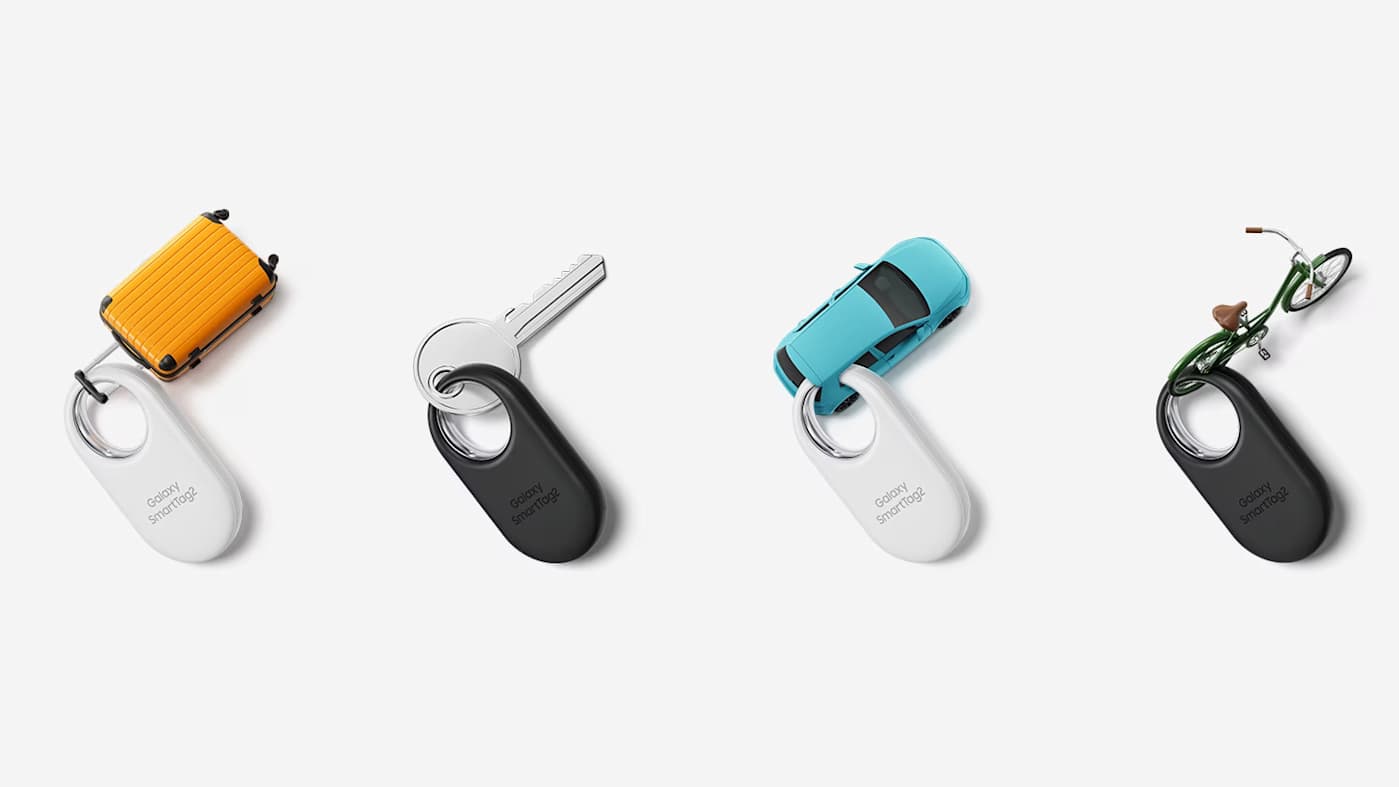
You can get a four-pack of Samsung SmartTag 2 trackers for just $45

Samsung SmartTag 2 trackers are back on sale if you're willing to pick up a bundle. Woot has a four-pack down to just $45, which undercuts the previous all-time low we’ve seen on Amazon ($55) by $10. That's a discount of 55 percent from the retail price of $100. It's a compelling opportunity to stock up if you're already in Samsung's ecosystem.

We named the SmartTag 2 the best Bluetooth tracker for Samsung devices. The companion SmartThings Find app is easy to use, showing locations on a Google Maps-based interface. Much like Apple's Find My network, the location of a SmartTag is pinpointed using nearby Samsung phones. While nothing can beat the sheer size of Apple's tracking infrastructure given the number of iPhones in the US, it still worked well in our tests.

The SmartTag 2's design is more practical than some competitors since the oblong fob has a built-in hole that lets you easily attach your keys without buying an extra accessory. It’s IP67 rated for water and dust resistance, and uses a replaceable battery that Samsung says offers about 16 months of juice. The volume on the tag is pretty loud and users can select from multiple ringtones. Additionally, a double-squeeze of the SmartTag 2 will ping your handset, something you can't do with an AirTag.

The tracking is not quite as precise as Apple's AirTag, but it's a solid option for Samsung users looking to keep track of their things and can be scooped up at a bargain price.

Follow @EngadgetDeals on X for the latest tech deals and buying advice.

This article originally appeared on Engadget at https://www.engadget.com/deals/you-can-get-a-four-pack-of-samsung-smarttag-2-trackers-for-just-45-173936230.html?src=rss

©

© Samsung

Four Samsung SmartTag 2 item trackers, attached to (tiny versions of) luggage, a key, a car and a bike.
  •  

The next Xbox Developer Direct showcase is on January 22

Xbox will kick off the fourth installment of its Developer Direct event on January 22 at 1PM ET. As usual, we'll get a glimpse at what the upcoming year has in store along with news, new gameplay footage and more directly from the teams behind this year's slate of games.

It's officially Developer_Direct season!

Join us on January 22 at 10am PT for an exclusive look at Fable, Forza Horizon 6, and Beast of Reincarnation: https://t.co/FvFUT7RzVZ | #DeveloperDirect pic.twitter.com/GMRpVDxucs

— Xbox (@Xbox) January 8, 2026

In a blog post announcing the event, Xbox Wire Editor-in-Chief Jon Skrebels said Xbox's 25-year anniversary will be marked by the return of some beloved franchises. Gamers will also get their first extended look at Fable, a reboot of the iconic series. The event will also be unveiling gameplay footage for Forza Horizon 6, the upcoming open-world racing game set in Japan. UK studio Playground Games is behind both titles.

The showcase will also include new details and gameplay from Beast of Reincarnation, the "one-person, one-dog" role-playing game. The game is being developed by Game Freak, the studio best known for its series of Pokémon games, and follows protagonist Emma and her canine companion in post-apocalyptic Japan.

This article originally appeared on Engadget at https://www.engadget.com/gaming/xbox/the-next-xbox-developer-direct-showcase-is-on-january-22-154444166.html?src=rss

©

© Xbox

Developer Direct 2026
  •  

Pick up AirPods Pro 3 while they're down to $199 right now

AirPods Pro 3 have returned to an all-time-low price. You can pick them up for $199 right now, which is $50 off and the best discount we've seen since the earbuds came out at the end of last year.

We gave these AirPods a score of 90 out of 100 in our review and we consider them the best wireless earbuds for iPhone users. The third generation model is a substantial update to an already impressive product, bringing new features like live translation to the table.

The AirPods Pro 3 also offer heart-rate tracking, allowing them to stream live data to Apple Fitness and other third-party workout apps. This lets you track your fitness and close activity rings similarly to when using an Apple Watch.

Apple also improved the sound quality of this generation thanks in large part to a redesigned acoustic architecture that improves how air is delivered into the ear canal. Additionally, the company changed the angle of the drivers to help more sound get where it needs to go instead of bouncing off the sides of your ear. We felt the jump in audio quality from the last generation to this one was substantial.

The ANC on the AirPods Pro 3 has also been improved. Apple claims this model filters out twice as much noise as the AirPods Pro 2 and four times as much as the original AirPods Pro. We found the noise cancellation to be top-notch.

Live Translation is as neat as it sounds, leveraging the AirPods' noise cancellation tech, Apple's AI and beam-forming mics to help you understand a speaker in a different language. Right now, this is limited to a handful of languages with more being added over time.

It's not often you see one of Apple's best and most recent products on sale for 20 percent off, so if you're in the market for an upgrade or your first set of AirPods, consider taking advantage of this deal. If you're looking to spend a little less, the AirPods 4 with ANC are on sale right now, too, for $119.

Follow @EngadgetDeals on X for the latest tech deals and buying advice.

This article originally appeared on Engadget at https://www.engadget.com/deals/pick-up-airpods-pro-3-while-theyre-down-to-199-right-now-140752986.html?src=rss

©

© Billy Steele for Engadget

The AirPods Pro 3 pictured inside a case with the top open, propped up against two books
  •  

Elevation Lab's extended battery AirTag case is down to only $16

AirTags already have a decently long battery life, but you will end up needing to replace the coin cell every two years or so. If you don't even want to be bothered with that, Elevation Lab made just the accessory for you: its AirTag battery case that can power the tracker for up to 10 years is on sale for 30 percent off. You can pick one up for only $16, and it's available in two- and four-packs as well at a discount.

The TimeCapsule case uses two AA batteries to offer up to 14 times the lifespan of the CR2032 battery that powers an AirTag. The company based those estimates on Energizer Ultimate Lithium batteries, so your mileage may vary. Once an AirTag is seated inside the case, which is a compact 4.45 x 1.57 inches, it is sealed shut with four screws at the corners. The case is fiber-reinforced, according to Elevation Lab, and rated IP69 waterproof.

The company says it’s intended for use cases where you might place an AirTag for long periods of time, like in a vehicle, a piece of luggage or a work bag. We've already got a couple of Elevation Lab products on our list for best AirTag accessories, so while we haven't reviewed the battery case, we tend to like this company's products.

Follow @EngadgetDeals on X for the latest tech deals and buying advice.

This article originally appeared on Engadget at https://www.engadget.com/deals/elevation-labs-extended-battery-airtag-case-is-down-to-only-16-162308748.html?src=rss

©

© Elevation Lab

Elevation Lab 10-Year Battery case for AirTag
  •  

Dell unveils a massive 52-inch 6K ultrawide curved monitor at CES 2026

PC and gaming monitors are among the CES 2026 announcements, and Dell may just have one of the most impressive. The company launched an ultrawide, curved 52-inch 6K monitor at the show this year, a productivity behemoth designed for stock traders, engineers and other professionals. Dell claims the UltraSharp 52 Thunderbolt Hub Monitor is the first 52-incher to market that’s also ultrawide, curved and supports 6K resolution (but with that many qualifiers almost anything can be a world first).

Given Dell’s experience in the monitor realm, this could be a dream display for professionals who handle vast data sets such as trading platforms, AutoCAD, 3D rendering software, spreadsheets and more. It sports a 120Hz refresh rate on an IPS Black panel and emits up to 60 percent less blue light when compared to competing monitors. It delivers an impressive 129 ppi (for comparison a 4K 32-inch monitor delivers 138 ppi) and an ambient light sensor helps avoid eye strain during long work sessions.

Users can connect up to four PCs to the monitor simultaneously, which can use picture-by-picture to treat each partitioned screen as an individual monitor. It also features built-in KVM (keyboard, video, mouse) features that let users control all connected PCs via a single mouse and keyboard. The monitor can also charge your laptop with up to 140W of power via a Thunderbolt 4 connection.

Dell also rolled out a new 32-inch 4K QD-OLED monitor with support for both True Black 500 HDR and Dolby Vision. It claims true-to-life color accuracy out of the box and excellent gamut coverage at 99 percent of DCI-P3. This monitor would be a strong fit for film and photo editing.

The Dell UltraSharp 52 Thunderbolt Hub Monitor is priced at $2,900 with stand or $2,800 without. It will be widely available starting January 6. The Dell UltraSharp 32 4K QD-OLED Monitor comes in at $2,600 and will be available beginning February 24.

This article originally appeared on Engadget at https://www.engadget.com/computing/dell-unveils-a-massive-52-inch-6k-ultrawide-curved-monitor-at-ces-2026-140024842.html?src=rss

©

© Dell

Dell UltraSharp 52 Thunderbolt Hub Monitor
  •  
❌